The Transportation Research Board (TRB) held its annual meeting in Washington, D.C. last January. The event brought together leading transportation experts, researchers, and professionals from around the world to exchange knowledge and ideas about the latest developments in transportation.
The Transportation Research Board (TRB) annual meeting is a crucial gathering for transportation professionals, providing a platform for the exchange of knowledge and ideas, and the opportunity to learn about the latest advancements in the field. The event serves as a catalyst for the advancement of transportation research and the development of innovative transportation solutions that will help to create a better future for everyone.
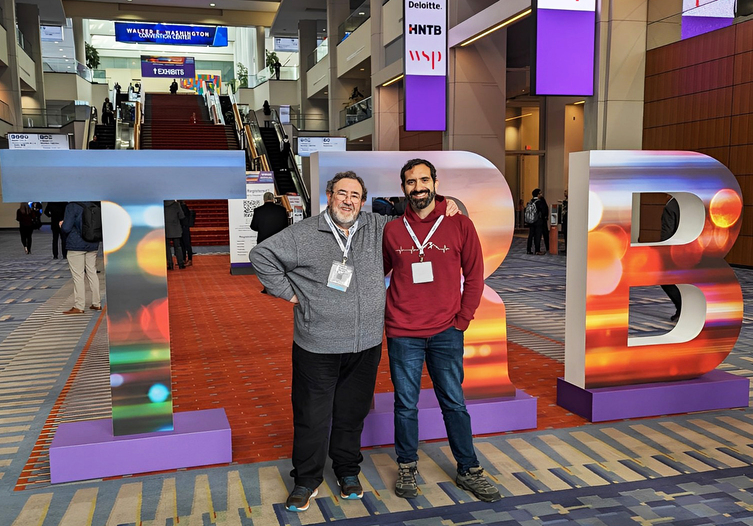
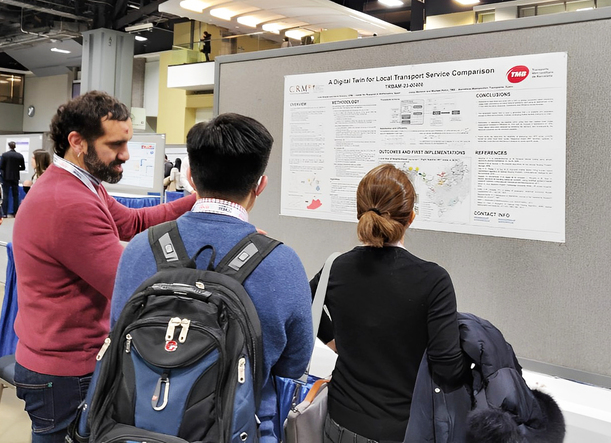
The Centre de Recerca Matemàtica was present at this year’s TRB annual meeting. David Romero, from the CRM Knowledge Transfer Unit, and Lluís Alsedà, CRM Director, attended the meeting in Washington D.C. and had the opportunity to exhibit a poster presenting the Bus on-demand project developed by the CRM and promoted by Transports Metropolitants de Barcelona (TMB). They were accompanied by Josep Mensión, Director of the Bus Central Services Division at TMB.
 The project studies the feasibility and advantages of using Demand-responsive transport (DRT) to replace local fixed routes within the city of Barcelona. It offers a service based on pre-established or dynamic routes and stops, which are adapted to the needs of origin or destination of the users. The aim is to optimize vehicle routes by maximizing the number of passengers and reducing travel time, by using cutting edge technology, custom made algorithms. These algorithms are inspired by aspects found on genetics and the natural selection mechanism, due to their adaptability, and that are also involved in the creation of Artificial Intelligence systems.
“Our goal by attending the TRB Annual Meeting is two-fold”, says David Romero, doctor in mathematics and member of the CRM KTU team. “On the one hand, we want to bring attention to the fact that there are mathematicians currently working on solving transport related problems, but we also want to explore what other challenges affecting society are out there that could be approached from a mathematical perspective to optimise procedures, whether it’s the use of certain materials to build roads or the impact of traffic lights frequency on traffic flow.”
The meeting offered an open forum to discuss the role of transportation in addressing global challenges such as climate change, equity, safety, and economic growth. Over the course of five days, participants attended technical sessions, workshops, and plenary sessions to hear presentations on cutting-edge research and innovative transportation solutions.
Transportation Innovation for a Better Future
 In terms of what the future of the project developed together with TMB has in store, Romero believes that ‘’working with TMB brings a great opportunity for us to explore other problems and challenges affecting their activity, that could be improved or systematized. We would like to keep collaborating with them to strengthen our participation in international events from a research standpoint, such as the TRB Annual Meeting in the future.’’
The TRB meeting also featured several interactive sessions, including roundtable discussions, and networking opportunities. These sessions provide attendees with opportunities to discuss transportation challenges and explore potential solutions with their peers, with an emphasis on research and scientific advancement. In addition, the TRB showcases several exhibitions featuring the latest in transportation technology, products, and services. Events such as this stress the importance of collaboration and cooperation in advancing the transportation field and serves as an excellent opportunity to highlight the role that mathematics and math-based solutions can play when addressing global challenges to create a better future for all.

CRM Comm Team
Anna Drou | Pau Varela
CRMComm@crm.cat
Subscribe for more CRM News
When the reward comes within reach, the brain changes what it compares
As the tokens piled up, choices got faster and more accurate at the same time. The yardstick for judging each offer had moved.CRM CommPau VarelaCRMComm@crm.catGet the latest CRM news and activities in your inbox.Recent newsletters →Two subjects...

Almost every automaton can be reset with a short word
Guillaume Chapuy (Université Paris Cité, CNRS) and Guillem Perarnau (UPC, CRM) have shown that a random finite automaton with n states can, with high probability, be reset by a word of length of order √n log n. The result, published in ACM Transactions on Algorithms, pins the exponent at 1/2, the lower end of a decade of numerical estimates, and addresses the random version of the synchronization problem behind a conjecture Ján Černý posed in 1964 and which still remains open.
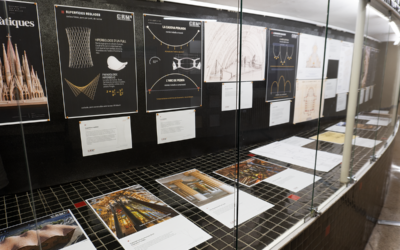
Exposició ‘Les matemàtiques de Gaudí’
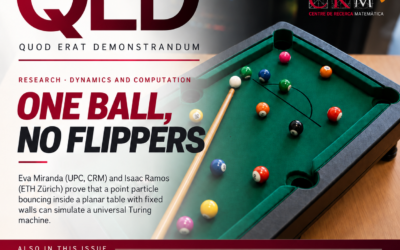
CRM quod erat demonstrandum | 48

ADA: Decoding Brain Signals Misaligned in Time
The study addresses a key limitation of current brain decoding techniques: the difficulty of interpreting internal mental processes whose temporal dynamics vary from trial to trial.Decoding what is happening in a person’s mind from their brain activity is one of the...
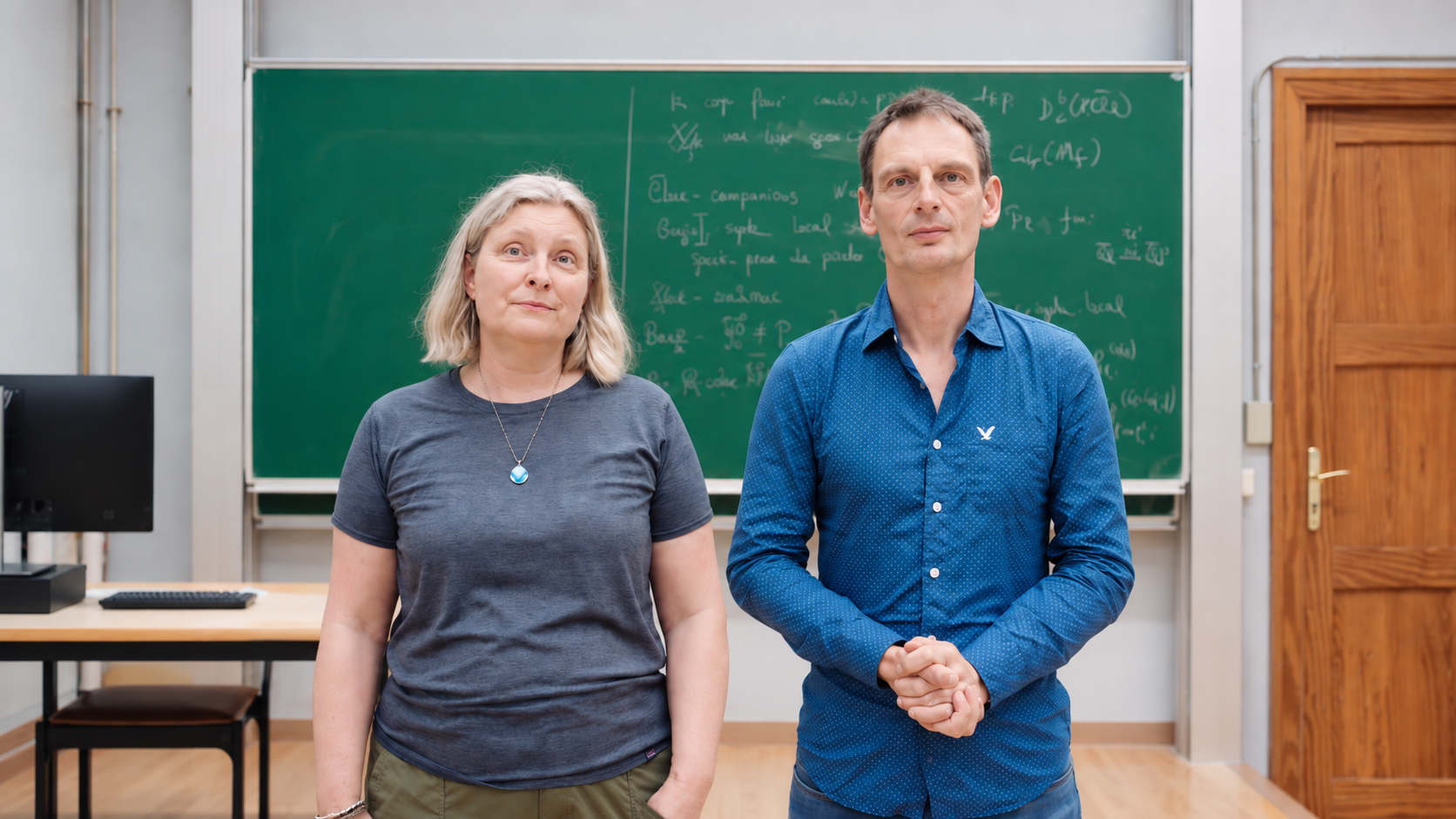
Rare curves, many points: Christophe Ritzenthaler and Rachel Pries on their research and the work around it
Christophe Ritzenthaler (Université de Rennes) and Rachel Pries (Colorado State University) both work on curves over finite fields: he hunts curves with as many points as possible, she hunts curves that almost never occur. In conversation with the CRM during their...
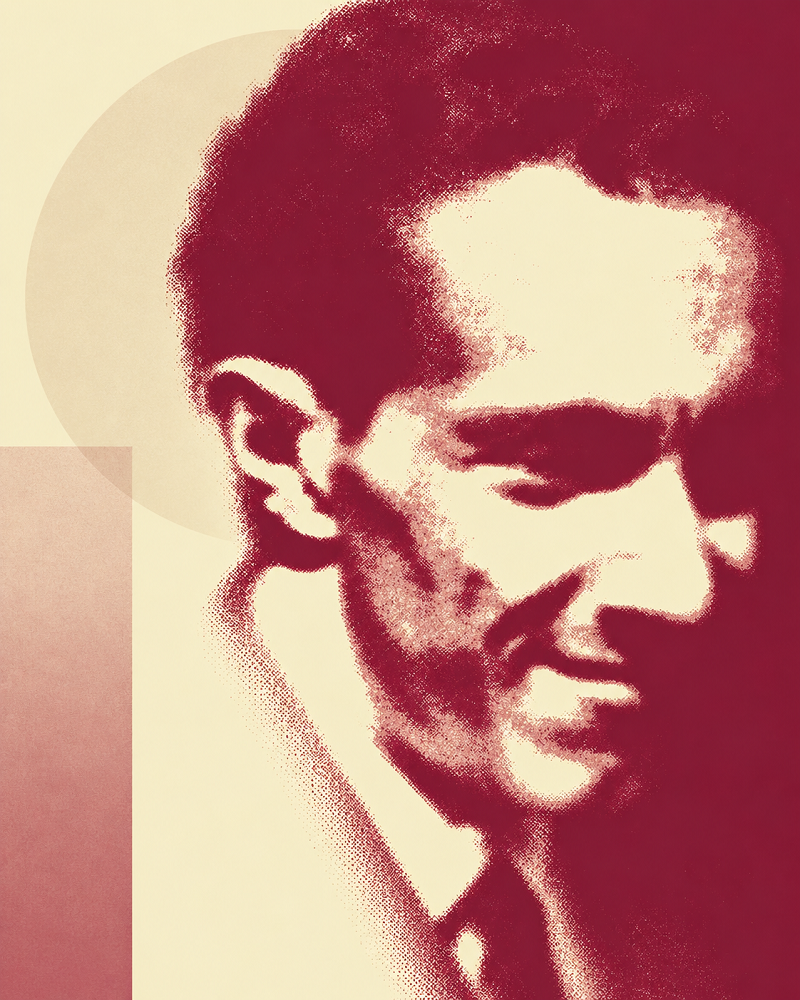
Call open for the 2027 Ferran Sunyer i Balaguer Prize
The Ferran Sunyer i Balaguer Foundation is accepting submissions for its 2027 prize, which awards 15,000 euros and publication in Birkhäuser's Progress in Mathematics series to an expository monograph on an active area of mathematical research. The deadline is 27...
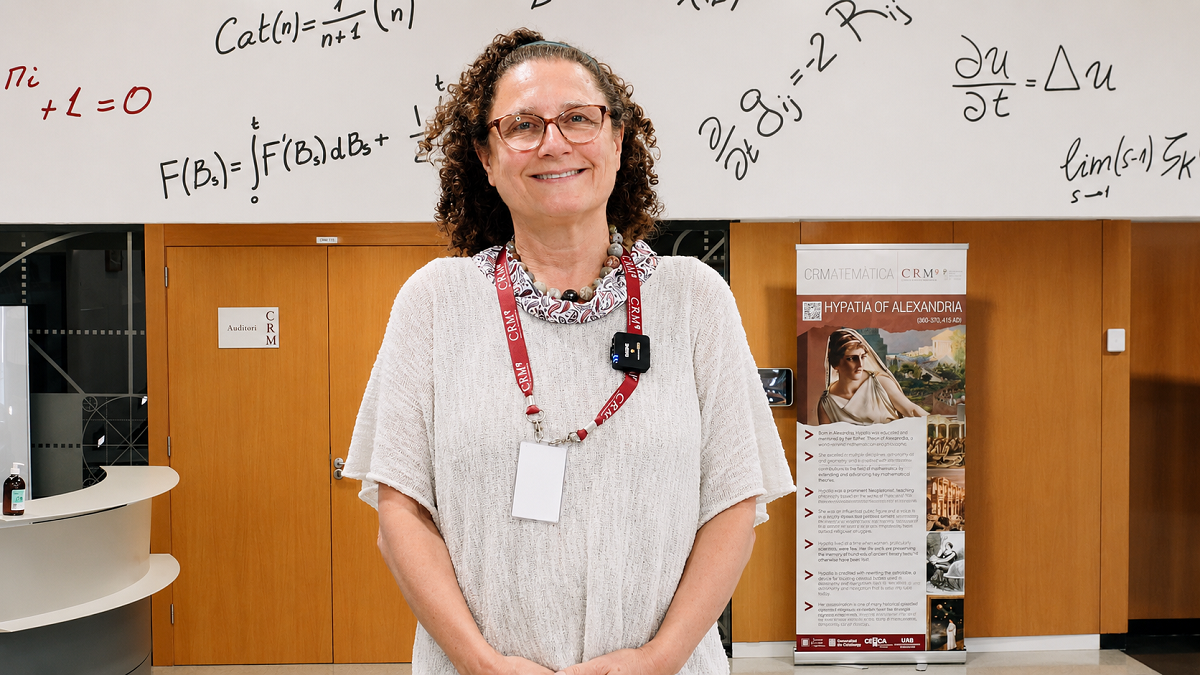
Susanna Terracini delivers the CRM Colloquium 2026
Susanna Terracini (Università di Torino) delivered the CRM Colloquium 2026 on 14 July, presenting a rigidity result for Kepler billiards obtained with Stefano Baranzini, Vivina Barutello and Irene De Blasi. She was at the centre as a member of the CRM Scientific...
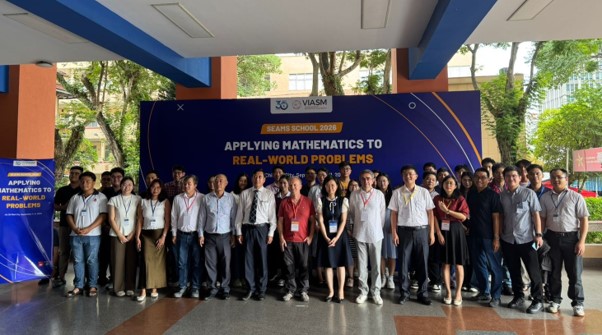
Ho Chi Minh City hosts the SEAMS School on applying mathematics to real-world problems
Students from across the region took courses and worked on group projects at a school co-organised by CRM researcher Tim Myers.CRM CommPau VarelaCRMComm@crm.catGet the latest CRM news and activities in your inbox.Recent newsletters →Between 4 and...

A single ball on a fixed table can compute: Eva Miranda and Isaac Ramos prove that two-dimensional billiards are Turing complete
Eva Miranda (UPC, CRM) and Isaac Ramos (ETH Zürich) show that a point particle bouncing inside a planar table with fixed walls can simulate a universal Turing machine, settling a question Cristopher Moore left open in 1990. The result grew out of a master’s project...
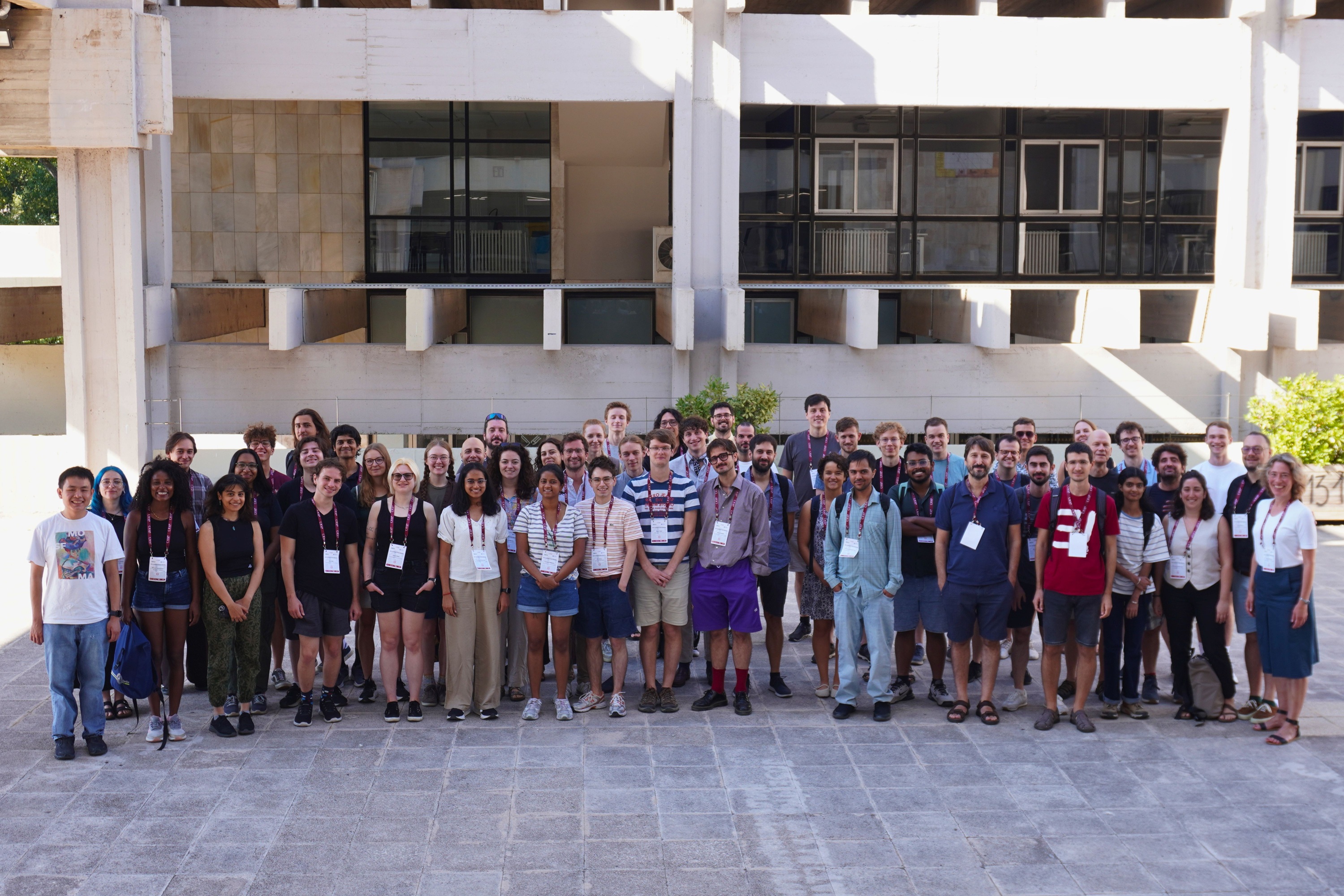
BMS-BGSMath Junior Meeting 2026: Barcelona and Berlin Strengthen Scientific Ties
From 2 to 4 September 2026, the Centre de Recerca Matemàtica (CRM) hosted the BMS-BGSMath Junior Meeting 2026, a three-day event jointly organised by the Berlin Mathematical School (BMS) and the Barcelona Graduate School of Mathematics (BGSMath), with the Centre de...
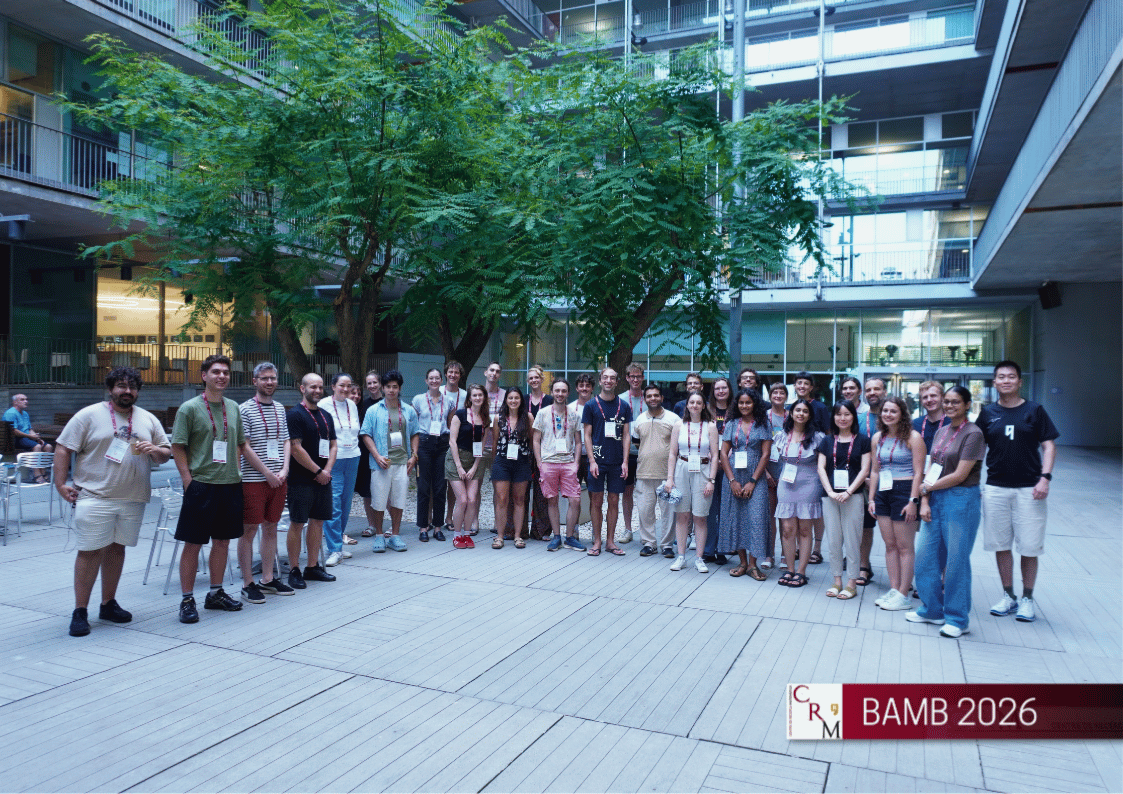
The CRM organises the 2026 Barcelona Summer School for Advanced Modeling of Behavior
The Centre de Recerca Matemàtica held the sixth edition of BAMB!, the Barcelona Summer School for Advanced Modeling of Behavior, from 12 to 23 July 2026 at the Parc de Recerca Biomèdica de Barcelona. Thirty early-career researchers from fourteen countries followed...