
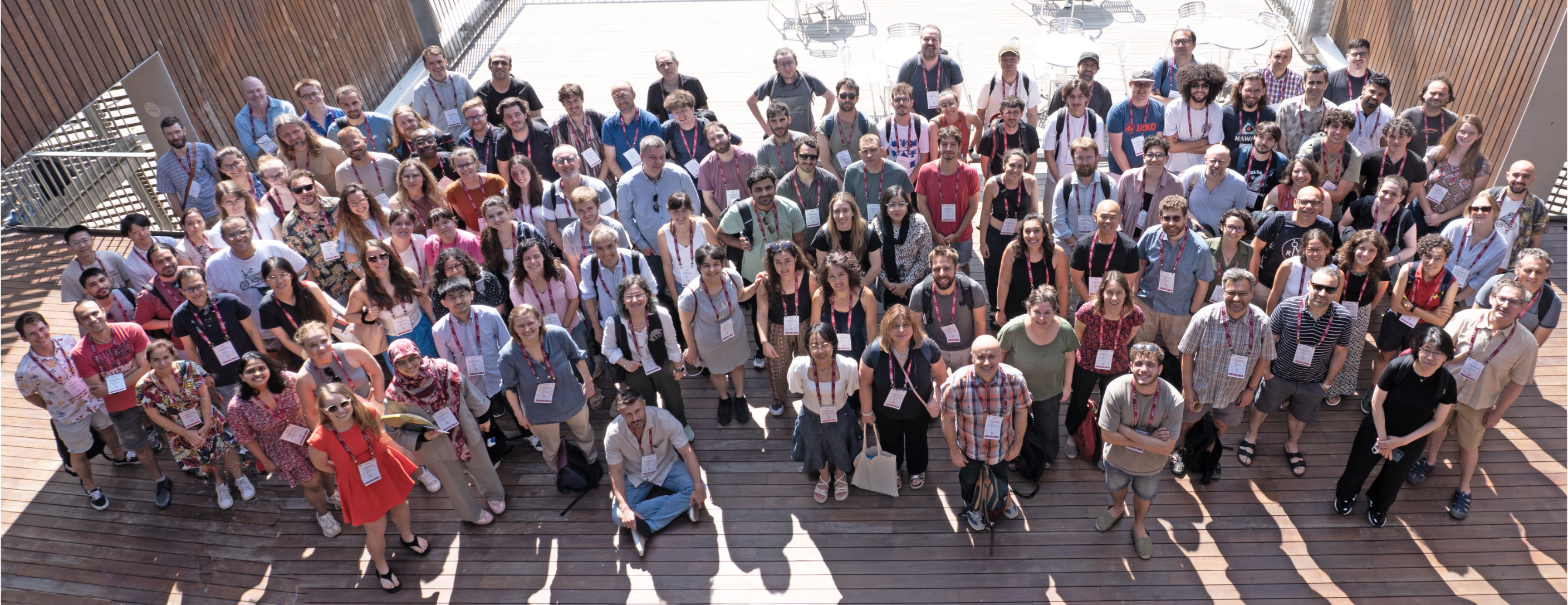
From June 17 to 20, the International Conference on Mathematical Neuroscience (ICMNS) held its 10th anniversary edition in Barcelona, drawing more than 150 participants from over 25 countries. Hosted at the Parc de Recerca Biomèdica de Barcelona (PRBB), this year’s conference confirmed its place as a major international gathering for those working at the intersection of mathematics, neuroscience, and theory-driven biology.
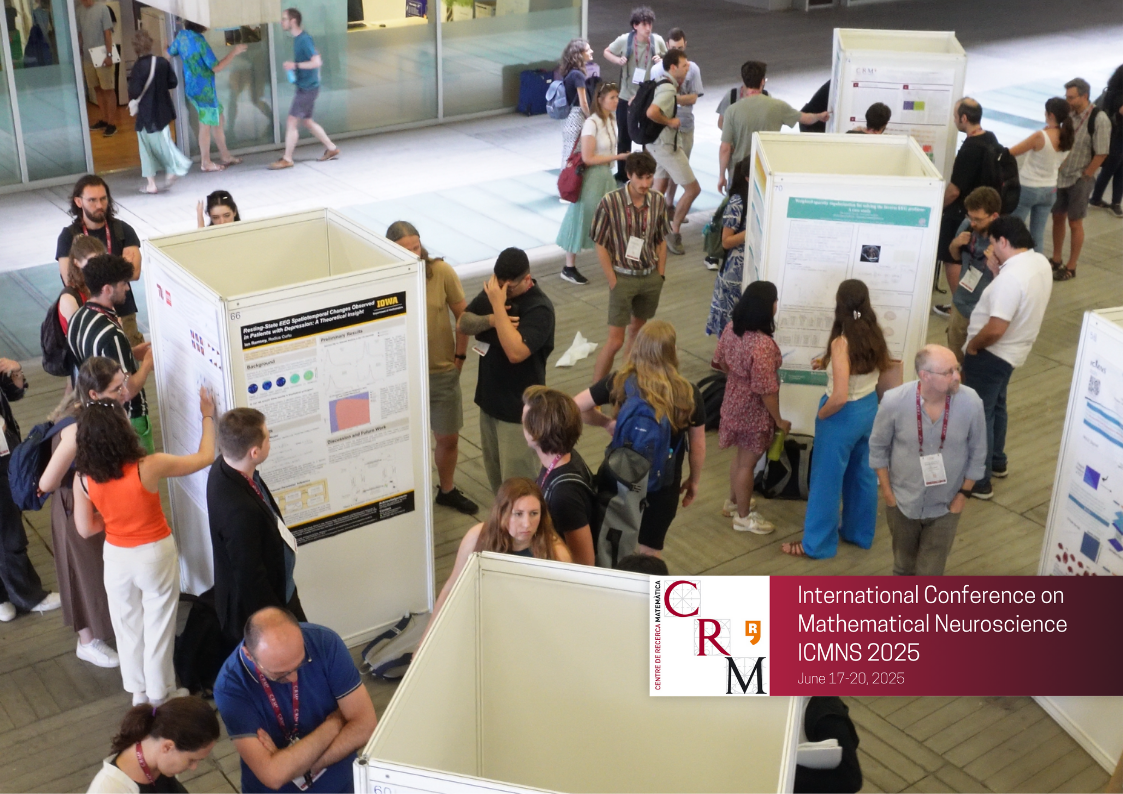
Organised by the Centre de Recerca Matemàtica (CRM), the 2025 edition featured a scientific programme that included 44 contributed oral presentations and more than 80 posters, complementing keynote lectures, invited talks, and various informal exchanges. The talks and posters explored topics such as neural coding, network dynamics, plasticity and learning, cognitive representations, field models, and the biophysics of information processing. With parallel sessions held in the PRBB Auditorium and the Marie Curie Room, the conference maintained a steady rhythm of discussion and cross-disciplinarity.
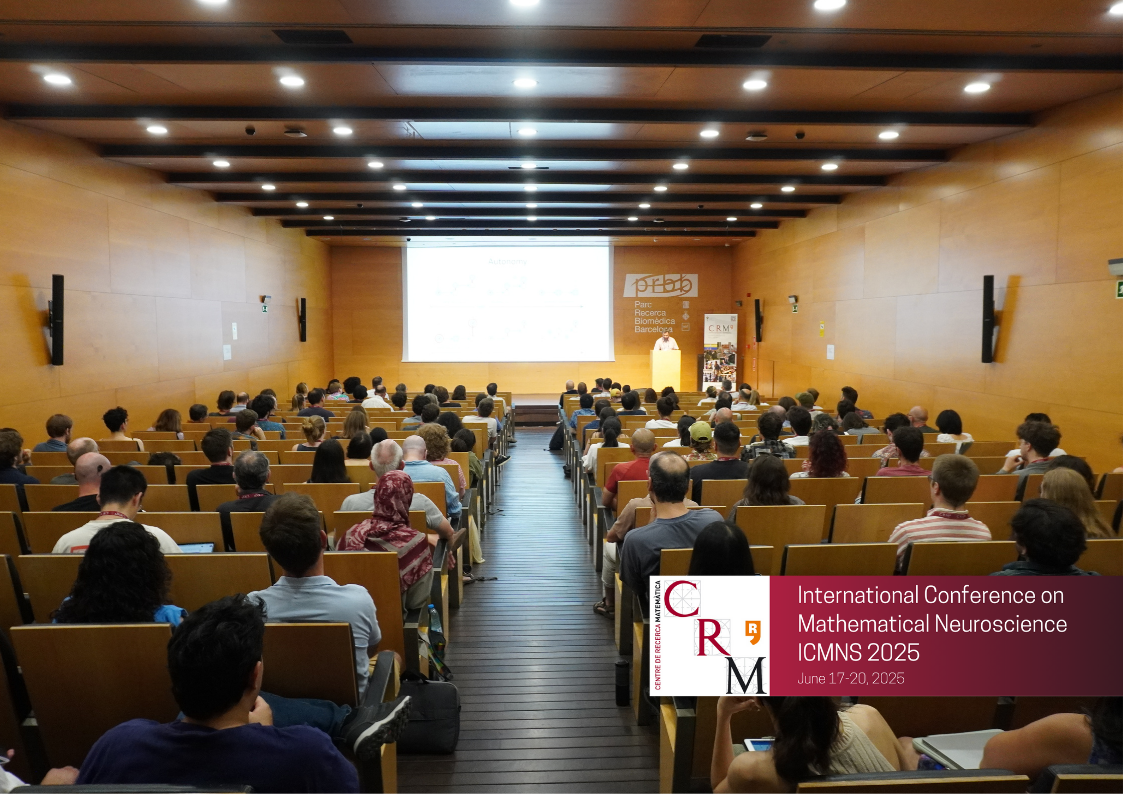
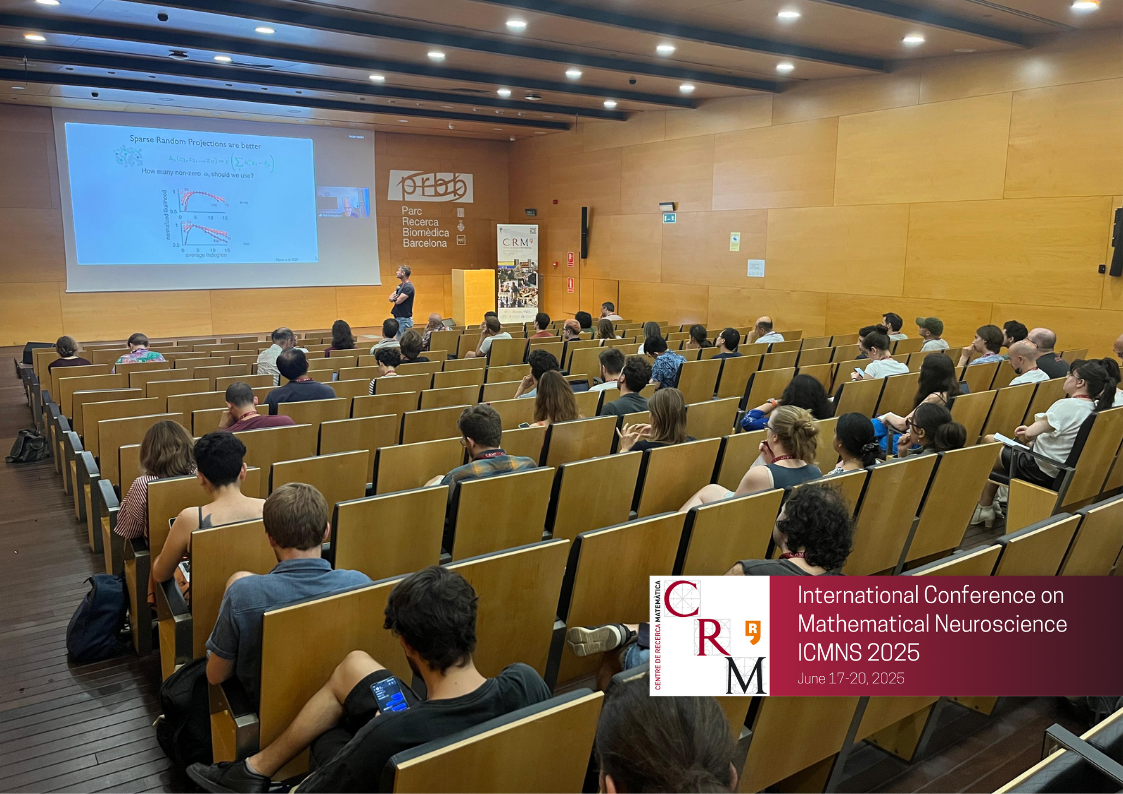
Each morning began with a keynote lecture that set the tone for the day. Elad Schneidman, from the Weizmann Institute, opened the conference by presenting a new class of models for decoding neural population activity. These models are based on sparse, nonlinear projections that require surprisingly small amounts of training data. They scale efficiently to populations of hundreds of neurons and are compatible with biologically plausible neural circuits. Schneidman also introduced a simple noise-driven learning rule and showed how homeostatic synaptic scaling enhances both efficiency and accuracy. The models not only represent a computational advance but also suggest a mechanism by which the brain might perform Bayesian inference and learn structure in high-dimensional neural code spaces.
On Wednesday, Tatyana Sharpee, from the Salk Institute, introduced a geometric perspective on learning in the brain. Her talk showed that neural responses in the hippocampus are organised according to a low-dimensional hyperbolic geometry, and that this geometry expands logarithmically as animals explore their environment. This expansion aligns with the theoretical maximum rate of information acquisition, indicating that neural representations continue to function optimally as they adapt with experience. Sharpee also proposed that similar geometric and entropic principles may apply to other biological systems, such as viral evolution and cell differentiation.
Thursday’s keynote was given by Tatjana Tchumatchenko, from the University of Bonn, who explored how neurons solve the complex problem of distributing thousands of protein species across extensive dendritic trees. Using a reaction-diffusion model, her team demonstrated that the task could be governed by an energy minimisation principle. Their predictions, based on computational simulations, aligned with large-scale experimental data on neuronal proteomes and translatomes. This suggests that neurons may favour energetically efficient strategies to maintain synaptic balance and support plasticity across their full morphology.
In addition to the keynotes, the invited speaker sessions brought technical depth and thematic diversity. Rafal Bogacz, from the University of Oxford, presented a predictive coding framework that respects biological constraints on synaptic plasticity. Áine Byrne, from University College Dublin, examined how the choice of neuron model influences the dynamics of gap junction coupled systems. Alexis Dubreuil (University of Bordeaux) explored how subpopulation structure in neural networks supports flexible computation. Stephanie Jones from Brown University introduced the Human Neocortical Neurosolver (HNN), a modelling tool designed to interpret EEG and MEG signals by linking them to circuit-level phenomena. Other invited speakers included Soledad Gonzalo Cogno, Anna Levina, Sukbin Lim, and Jonathan Touboul, each bringing distinct methodologies and perspectives to the ongoing dialogue between theory and neuroscience.
A Thriving Computational Neuroscience Ecosystem in Barcelona
The conference showcased a growing and increasingly diverse field. “The variety of approaches has expanded enormously,” noted Ernest Montbrió (University Pompeu Fabra), one of the organisers of the event, “and we’re seeing more interest every year from mathematicians, physicists, and engineers working on these problems. This diversity of perspectives truly enriches the programme.”
For Gemma Huguet (Universitat Politècnica de Catalunya-CRM), one of the local organisers, the strength of the Barcelona community played a central role. “Hosting this conference is a recognition of the vibrant neuro-computational scene we’ve built here. There’s a strong tradition of collaboration and interaction, and being able to welcome the ICMNS is also a way of giving visibility to the work we do.”
Her colleague Toni Guillamon (Universitat Politècnica de Catalunya-CRM) highlighted the evolution of the field itself: “Twenty years ago, computational neuroscience was focused on single cells or small networks. Today, with the explosion of data and new tools, the mathematical models have to be more sophisticated. We’re seeing more topology, more graph theory, and more mathematical depth, even if sometimes it’s hidden beneath the surface of the applications.”
The conference also placed a special emphasis on young researchers. As Alex Roxin (CRM) put it, “ICMNS offers a balanced environment. It’s not too small, not overwhelming. It’s the kind of setting where early-career scientists can step out of their comfort zone just enough to grow, present their work, get feedback, and connect with the wider community.”
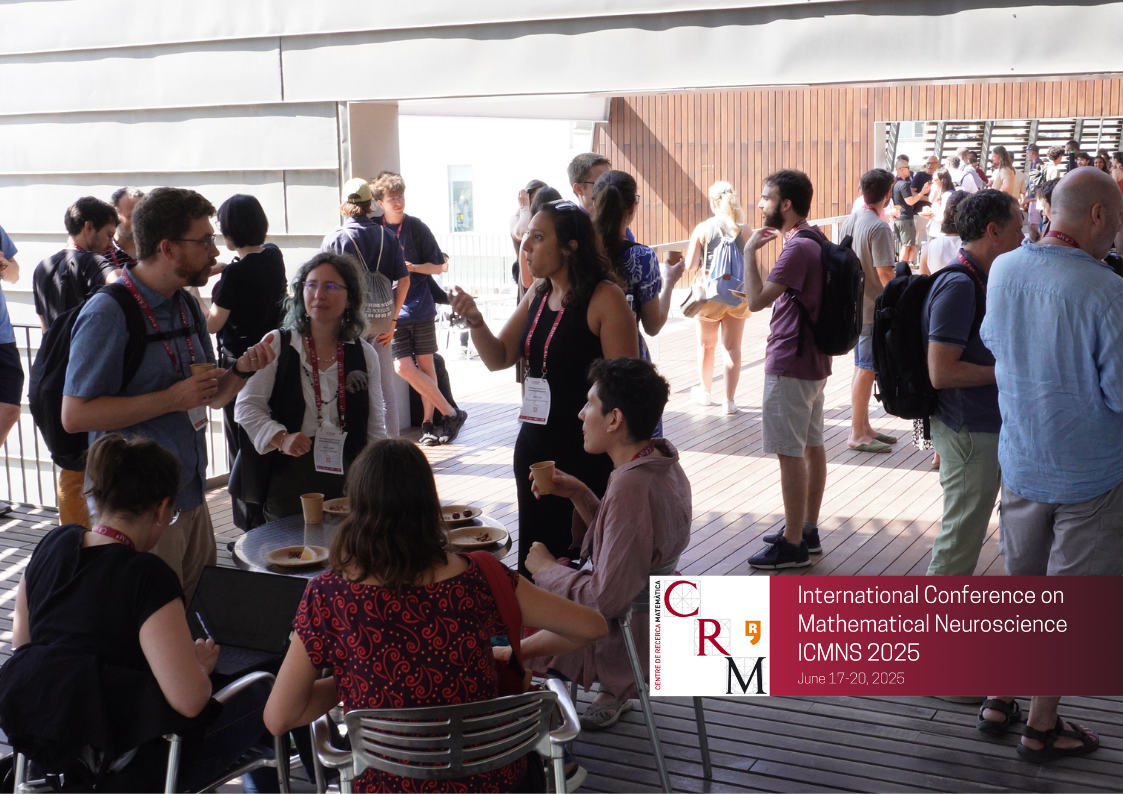
ICMNS 2025 marked a decade of growth for a field still in expansion. As mathematics continues to reveal the hidden structures of brain function, and as neuroscience raises new questions for mathematical modelling, the future of this interdisciplinary partnership looks more promising than ever.
|
|
CRM CommPau Varela
|

When the reward comes within reach, the brain changes what it compares
As the tokens piled up, choices got faster and more accurate at the same time. The yardstick for judging each offer had moved.CRM CommPau VarelaCRMComm@crm.catGet the latest CRM news and activities in your inbox.Recent newsletters →Two subjects...

Almost every automaton can be reset with a short word
Guillaume Chapuy (Université Paris Cité, CNRS) and Guillem Perarnau (UPC, CRM) have shown that a random finite automaton with n states can, with high probability, be reset by a word of length of order √n log n. The result, published in ACM Transactions on Algorithms, pins the exponent at 1/2, the lower end of a decade of numerical estimates, and addresses the random version of the synchronization problem behind a conjecture Ján Černý posed in 1964 and which still remains open.
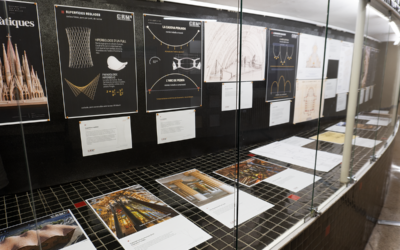
Exposició ‘Les matemàtiques de Gaudí’

CRM quod erat demonstrandum | 48
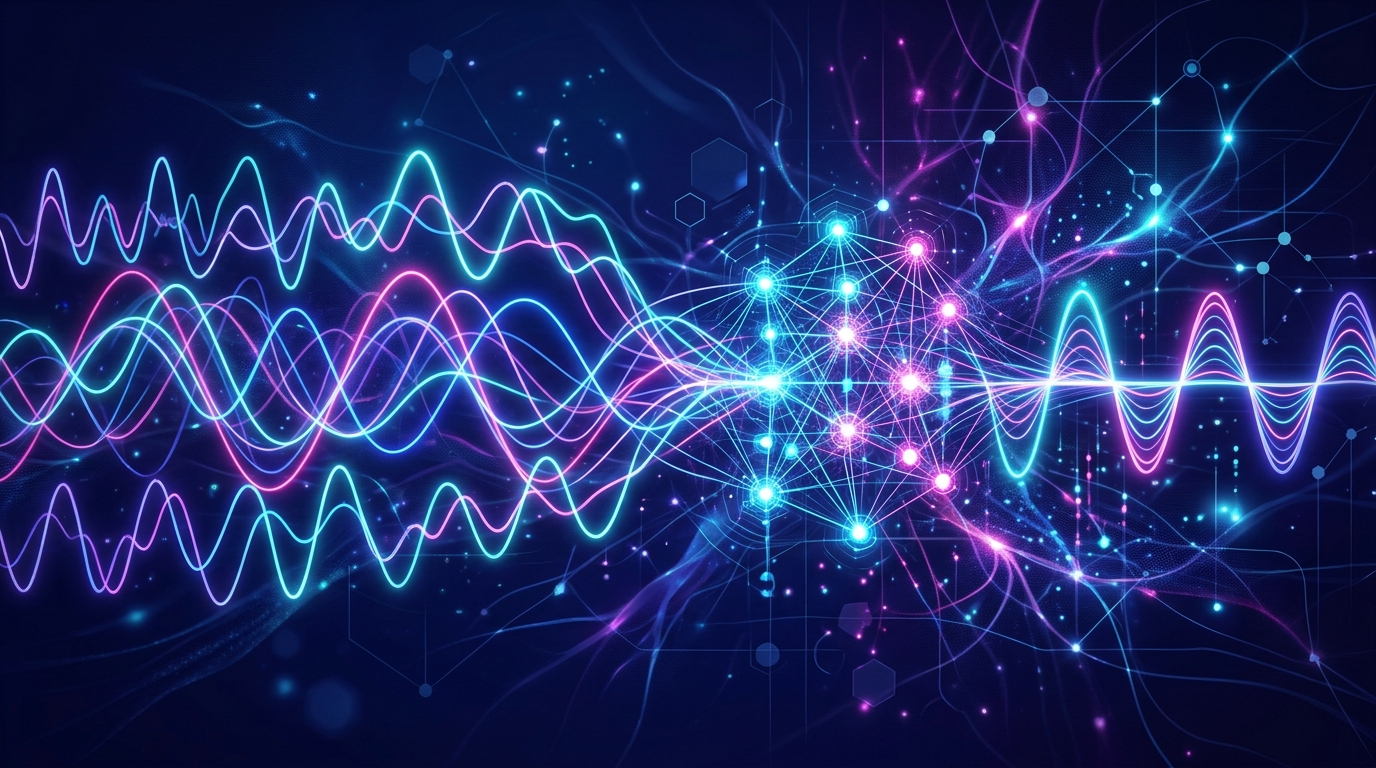
ADA: Decoding Brain Signals Misaligned in Time
The study addresses a key limitation of current brain decoding techniques: the difficulty of interpreting internal mental processes whose temporal dynamics vary from trial to trial.Decoding what is happening in a person’s mind from their brain activity is one of the...
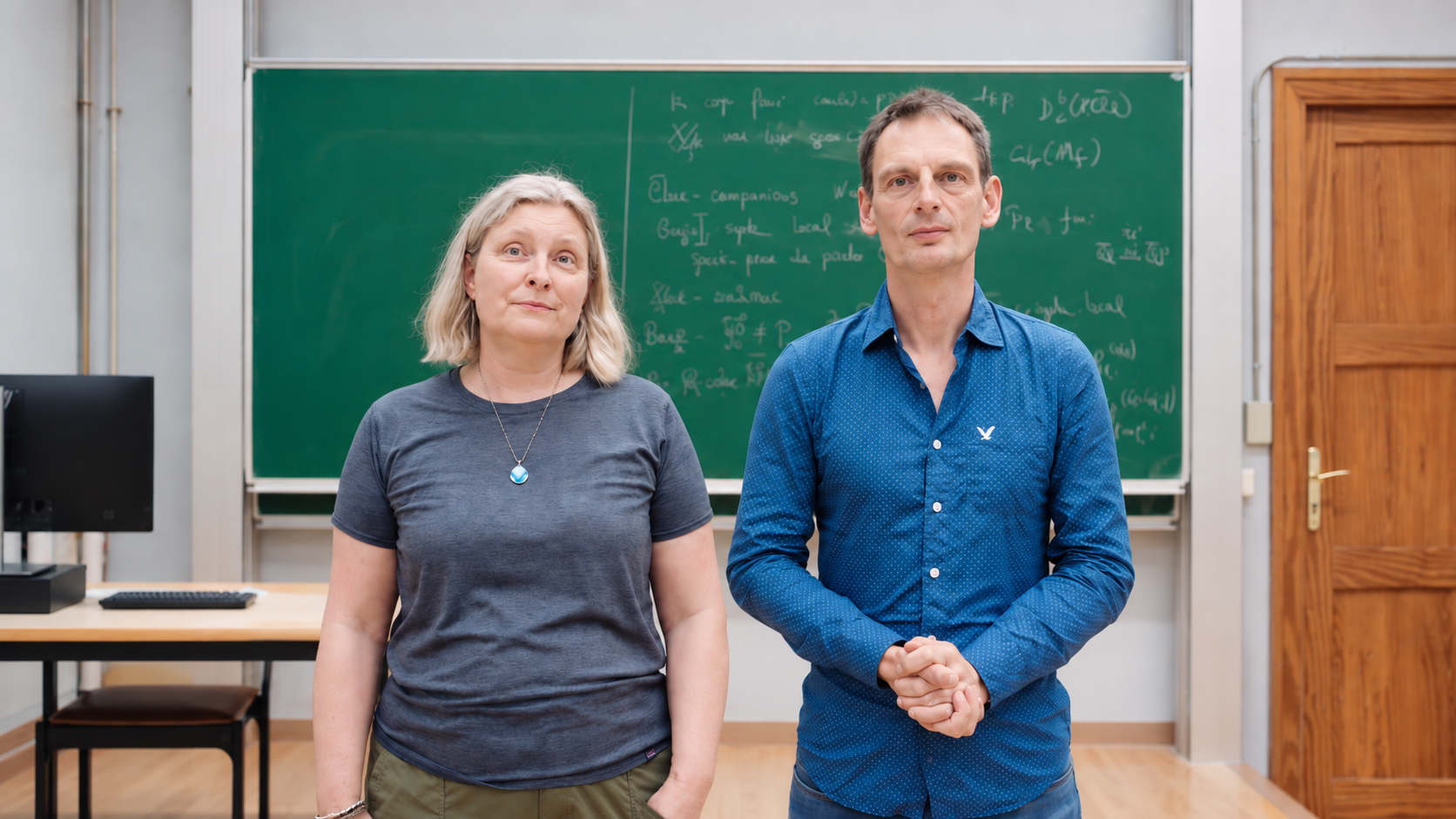
Rare curves, many points: Christophe Ritzenthaler and Rachel Pries on their research and the work around it
Christophe Ritzenthaler (Université de Rennes) and Rachel Pries (Colorado State University) both work on curves over finite fields: he hunts curves with as many points as possible, she hunts curves that almost never occur. In conversation with the CRM during their...

Call open for the 2027 Ferran Sunyer i Balaguer Prize
The Ferran Sunyer i Balaguer Foundation is accepting submissions for its 2027 prize, which awards 15,000 euros and publication in Birkhäuser's Progress in Mathematics series to an expository monograph on an active area of mathematical research. The deadline is 27...
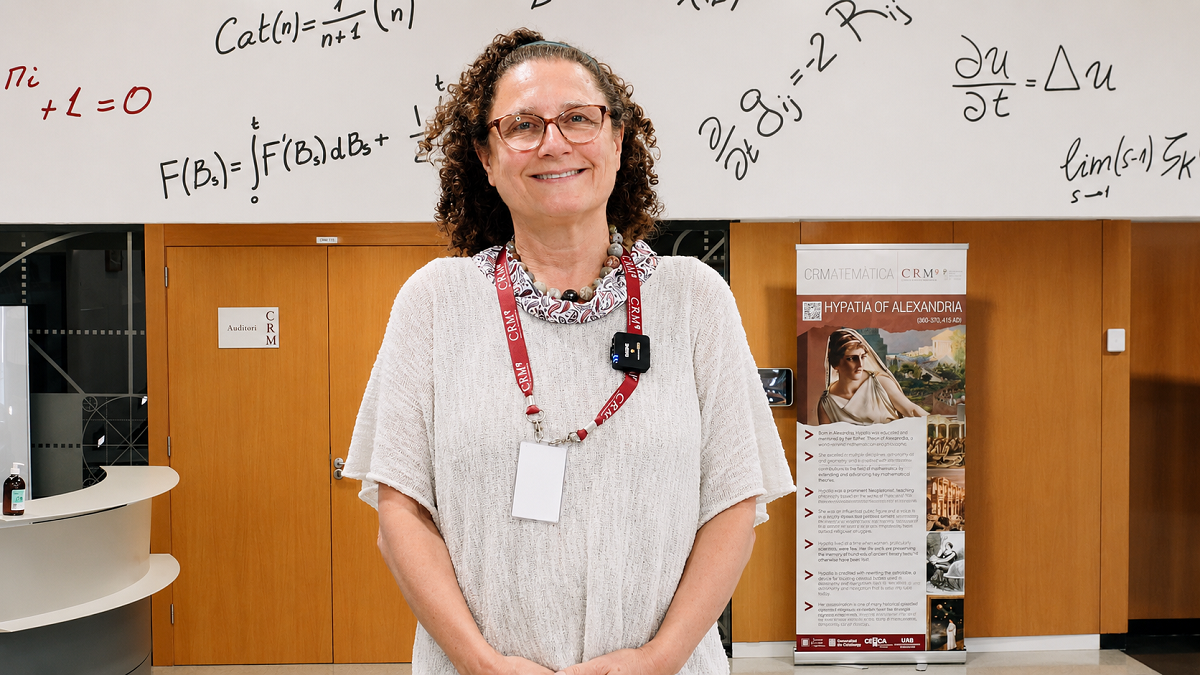
Susanna Terracini delivers the CRM Colloquium 2026
Susanna Terracini (Università di Torino) delivered the CRM Colloquium 2026 on 14 July, presenting a rigidity result for Kepler billiards obtained with Stefano Baranzini, Vivina Barutello and Irene De Blasi. She was at the centre as a member of the CRM Scientific...
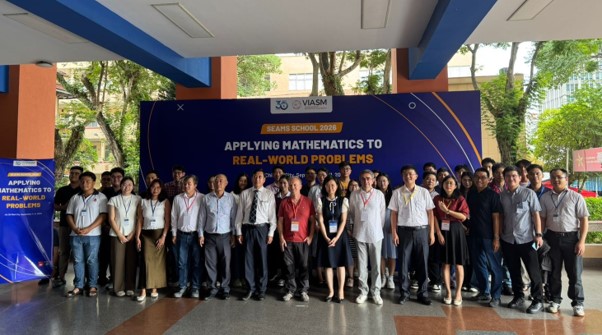
Ho Chi Minh City hosts the SEAMS School on applying mathematics to real-world problems
Students from across the region took courses and worked on group projects at a school co-organised by CRM researcher Tim Myers.CRM CommPau VarelaCRMComm@crm.catGet the latest CRM news and activities in your inbox.Recent newsletters →Between 4 and...

A single ball on a fixed table can compute: Eva Miranda and Isaac Ramos prove that two-dimensional billiards are Turing complete
Eva Miranda (UPC, CRM) and Isaac Ramos (ETH Zürich) show that a point particle bouncing inside a planar table with fixed walls can simulate a universal Turing machine, settling a question Cristopher Moore left open in 1990. The result grew out of a master’s project...
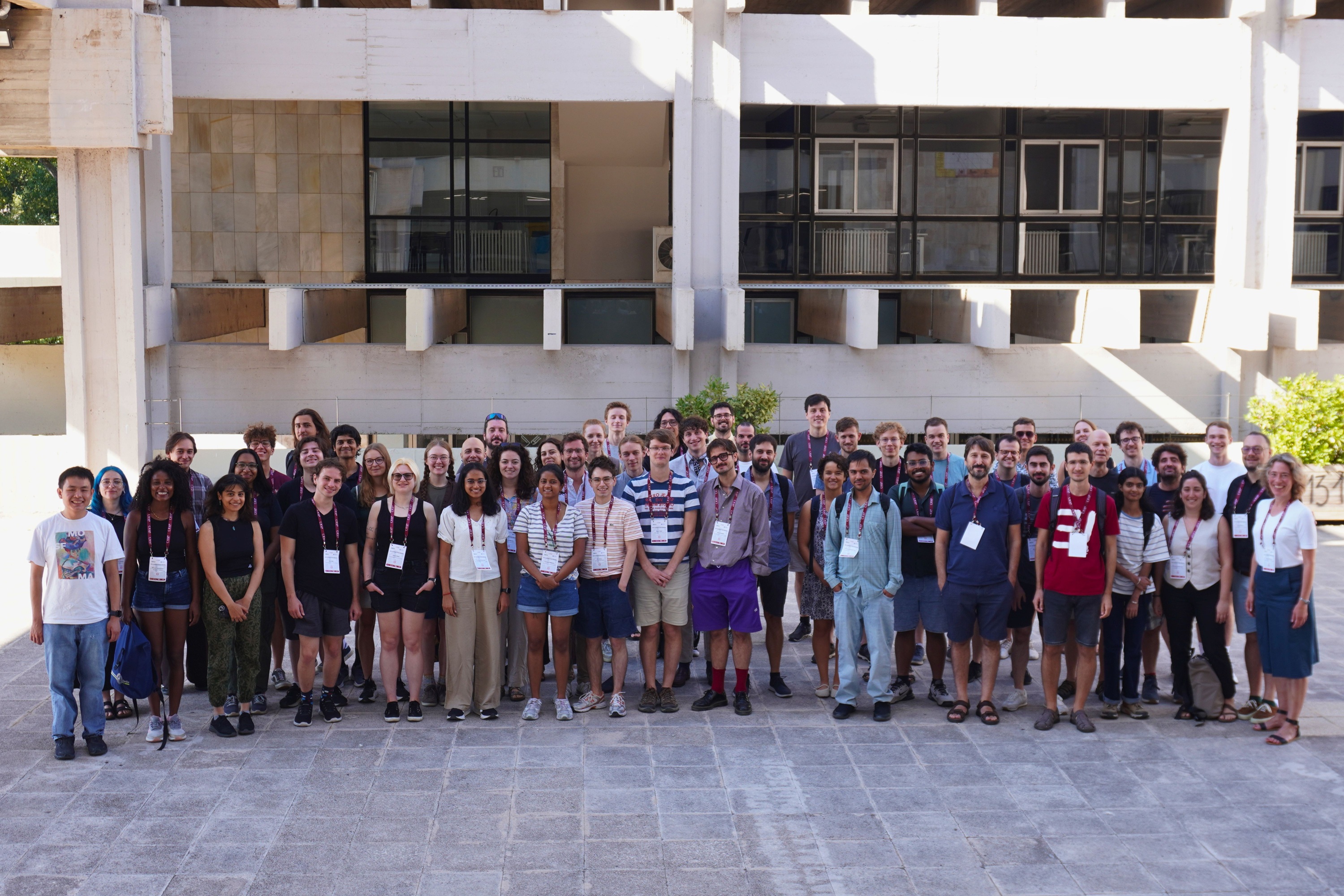
BMS-BGSMath Junior Meeting 2026: Barcelona and Berlin Strengthen Scientific Ties
From 2 to 4 September 2026, the Centre de Recerca Matemàtica (CRM) hosted the BMS-BGSMath Junior Meeting 2026, a three-day event jointly organised by the Berlin Mathematical School (BMS) and the Barcelona Graduate School of Mathematics (BGSMath), with the Centre de...
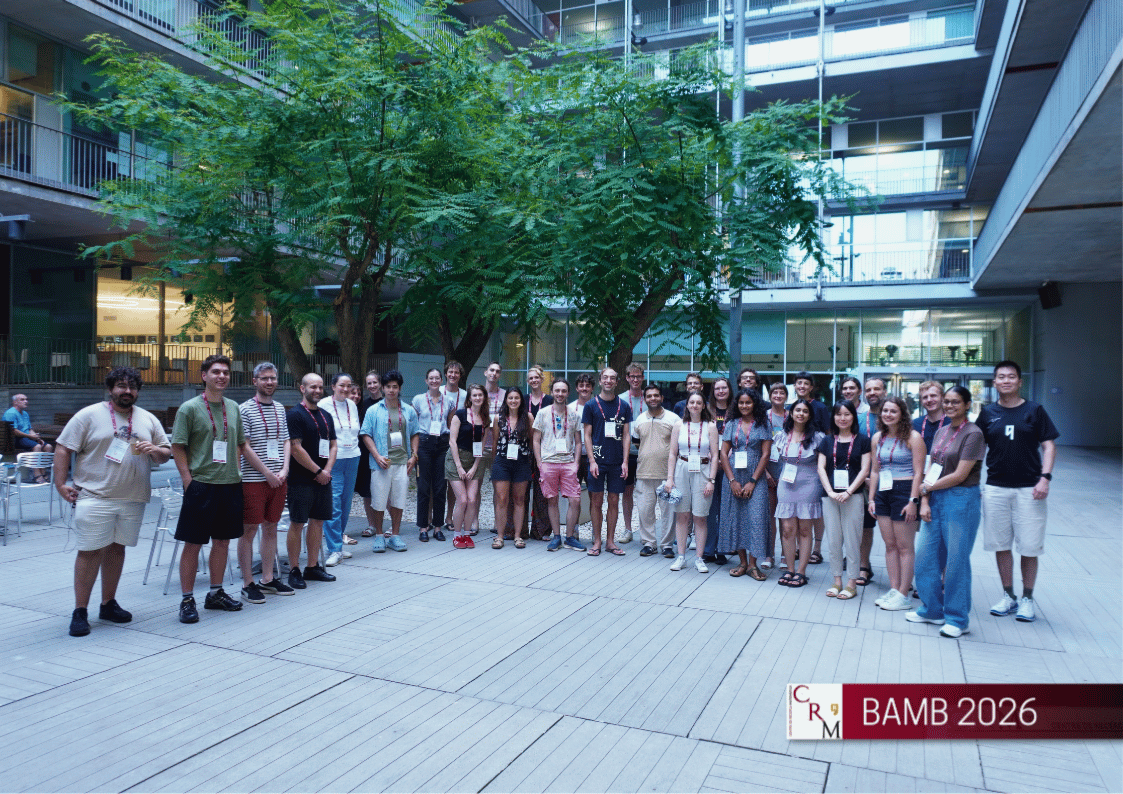
The CRM organises the 2026 Barcelona Summer School for Advanced Modeling of Behavior
The Centre de Recerca Matemàtica held the sixth edition of BAMB!, the Barcelona Summer School for Advanced Modeling of Behavior, from 12 to 23 July 2026 at the Parc de Recerca Biomèdica de Barcelona. Thirty early-career researchers from fourteen countries followed...