On June 11, the Centre de Recerca Matemàtica (CRM) hosted the Open Science Day, bringing together researchers to explore the principles, challenges, and transformative potential of open science. With a central talk by Ignasi Labastida and a roundtable featuring leading experts, the event offered valuable insights into how transparency, accessibility, and collaboration can shape the future of scientific research.
On June 11, the Centre de Recerca Matemàtica (CRM) hosted the Open Science Day, an initiative designed to reflect on the principles, challenges, and opportunities that open science presents in the context of mathematical and scientific research.
The event was structured into three main parts. The welcome address was delivered by Klaus Wimmer, researcher in the CRM’s neuroscience group, who emphasized the importance of the event as an opportunity to foster a culture of openness, collaboration, and responsibility in research.
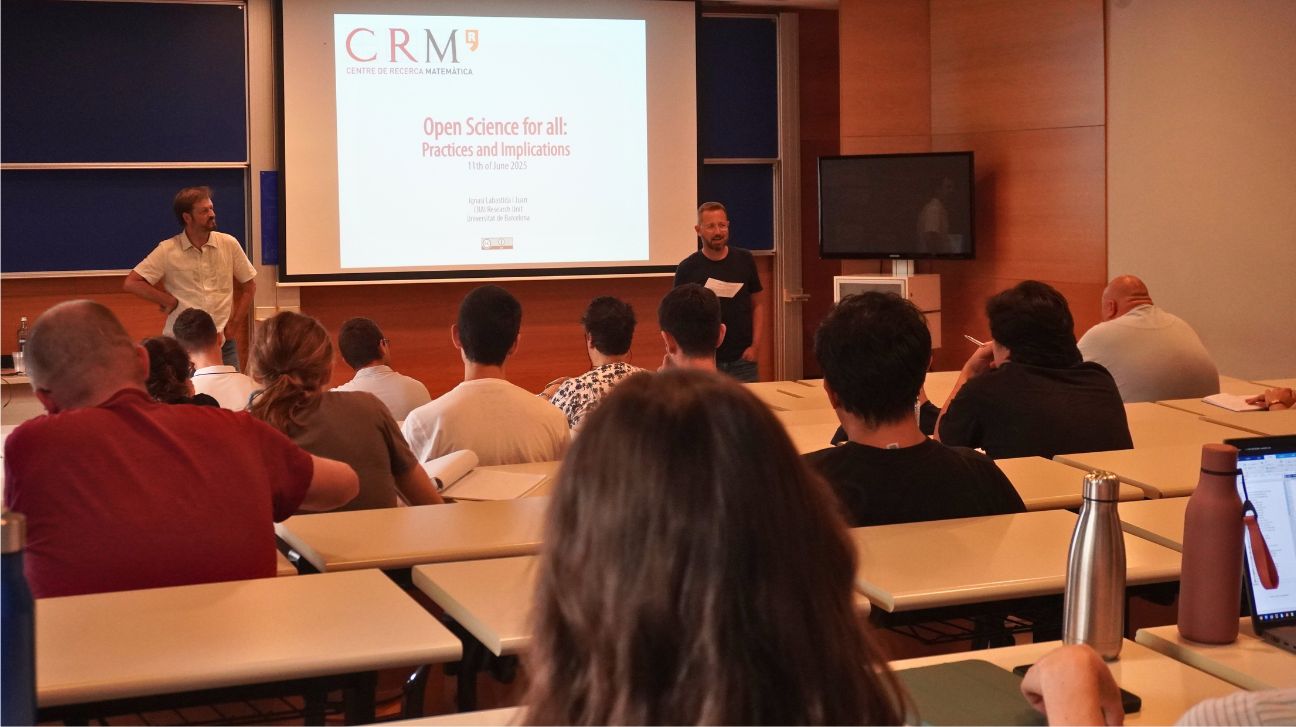
Welcome by Klaus Wimmer
This was followed by a central talk by Ignasi Labastida, head of the Research Unit at the CRAI of the University of Barcelona and one of the most recognized voices in the field of open science within the Catalan academic context. The day concluded with a roundtable discussion featuring Enrico Valdinoci, professor at the University of Western Australia, editor-in-chief of Nonlinear Analysis and Mathematics in Engineering, and expert in partial differential equations, nonlocal equations, calculus of variations, and dynamical systems; and Francesc Perera, professor at the Universitat Autònoma de Barcelona, CRM researcher, and editor-in-chief of Publicacions Matemàtiques, whose research focuses on operator algebras, noncommutative algebra, and semigroup theory. The roundtable was moderated by Labastida himself, generating a rich dialogue between diverse perspectives on the implementation of open practices in mathematical research.
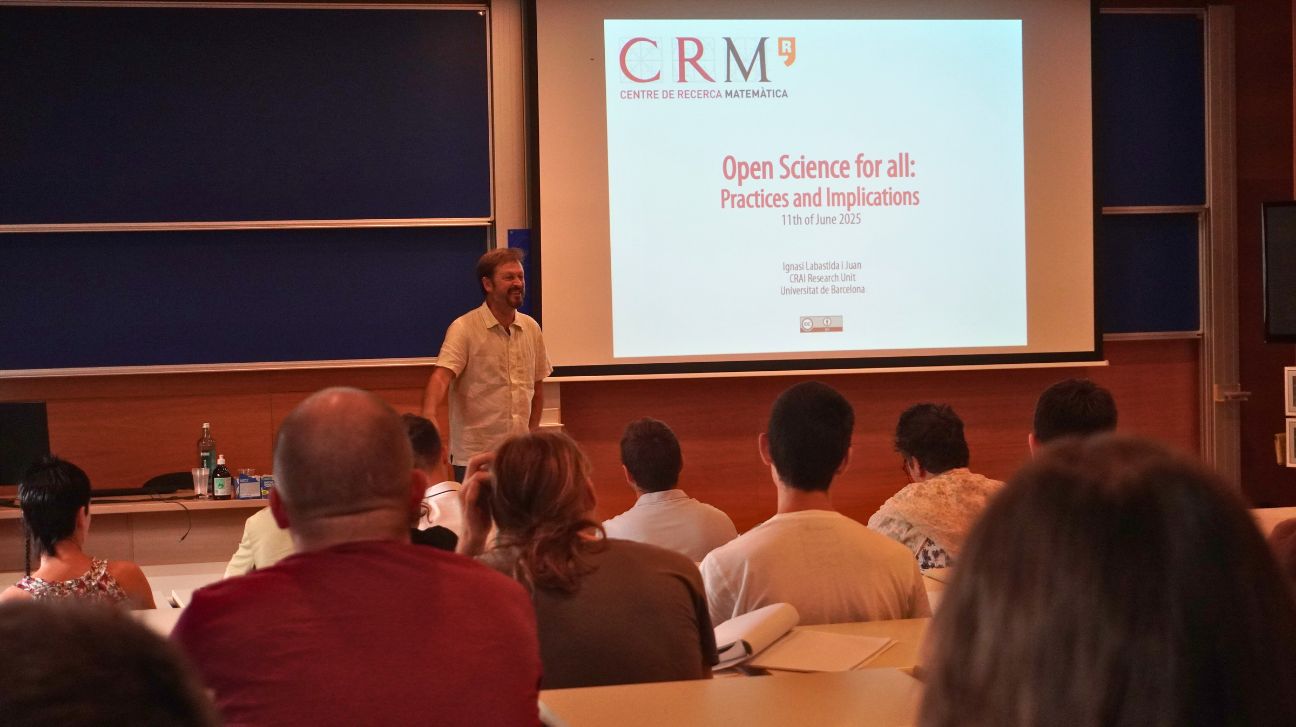
Ignasi Labastida at the beginning of his talk.
Labastida’s talk, titled “Open Science for All: Practices and Implications”, was the central focus of the day. In his presentation, he offered a critical yet inclusive view of open science, emphasizing that it goes far beyond free access to research results. Open science involves transparency, accessibility, and active participation at every stage of the scientific process—from data planning and generation, through analysis and peer review, to publication and impact assessment. His message was clear: anyone involved in research, regardless of their career stage, can contribute to a more open, inclusive, and responsible science.
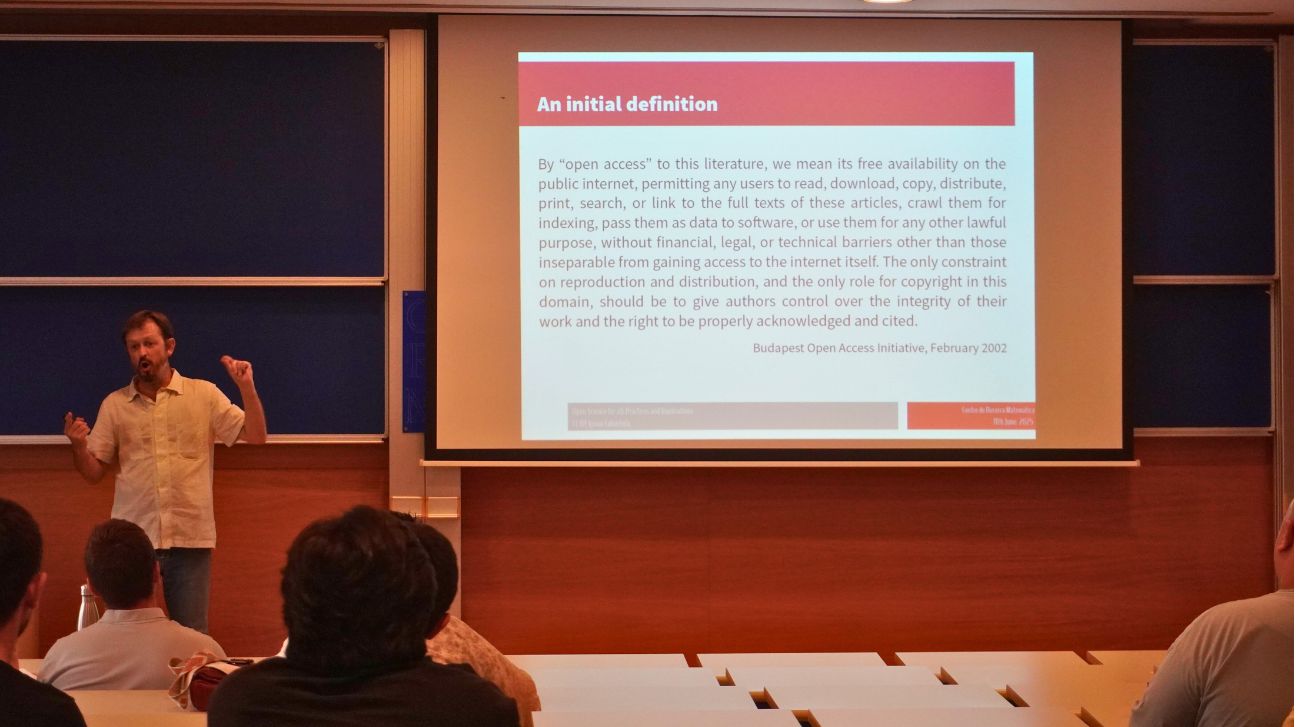
Ignasi Labastida giving definitions of open access
Labastida unpacked the complexity of the open science ecosystem by addressing its main dimensions:
- Open access to publications: ensuring that scientific articles are freely available to everyone, without economic or subscription barriers.
- Open research data: promoting the availability and reuse of data generated in scientific projects, while respecting privacy and ethical standards.
- Open peer review: encouraging more transparent evaluation processes, where reviewers’ comments and authors’ responses can be made public.
- Free and open-source software: supporting the use and development of software tools whose source code is accessible, allowing verification, improvement, and reuse.
- Scientific integrity: ensuring ethical and responsible practices in the production and communication of knowledge.
- Responsible evaluation: rethinking how research quality is assessed, prioritizing real impact and quality over quantitative metrics.
- Skills and training: equipping researchers with the digital, legal, and ethical skills needed to operate in an open environment.
- Public participation: involving society in the scientific process, whether through citizen science projects or active communication of results.
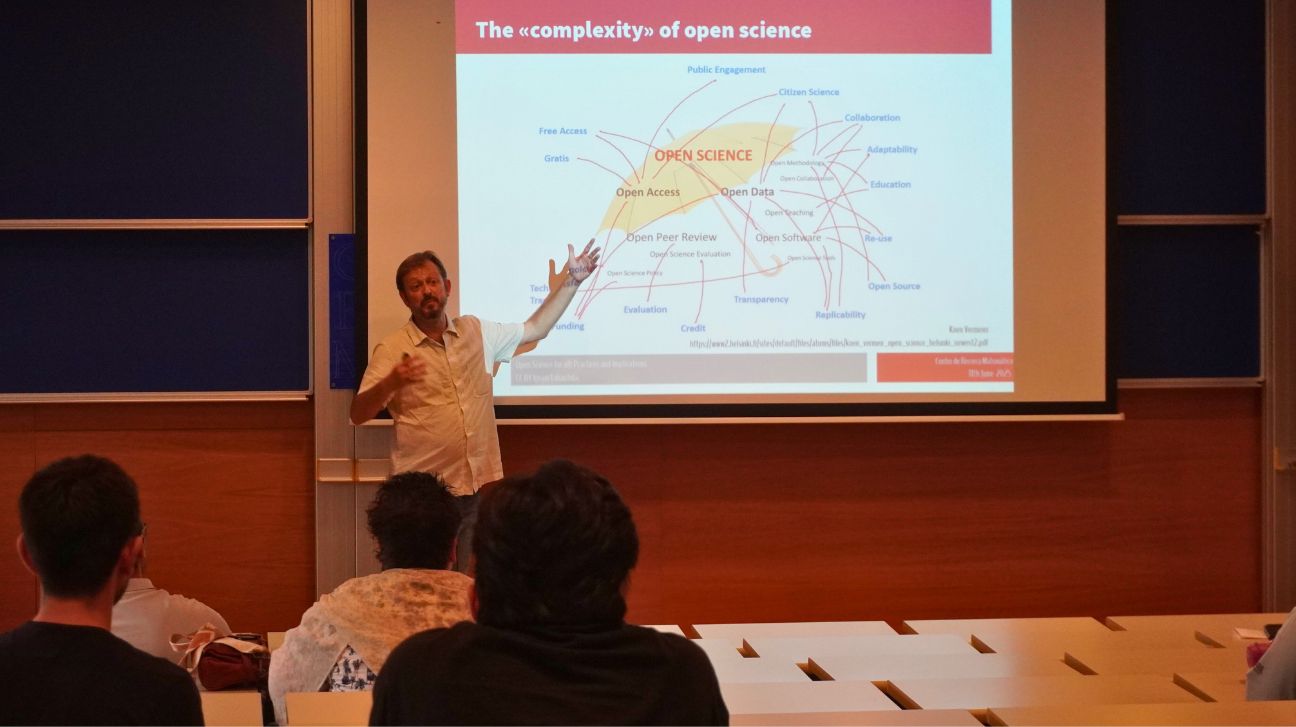
Ignasi Labastida teaching the complexity of open science in a scheme.
He also outlined the main open access publishing strategies:
- Green Open Access: the author publishes in a subscription-based journal and, after an embargo period, deposits an accepted version (postprint) in a digital repository. These repositories allow free access without publication fees.
- Gold Open Access: the article is published directly in an open access journal, available immediately and permanently. In this model, publication costs (APCs) are usually covered by institutions or funders, and authors retain rights through licenses such as Creative Commons.
- Hybrid model: subscription journals that allow individual articles to be published open access upon payment of a fee. While this facilitates the transition to open models, it has been criticized for the “double dipping” it can entail for institutions.
- Diamond Open Access: access is free for both readers and authors. Journals following this model—often managed by universities or public institutions—cover editorial costs through internal budgets or public funding. Labastida highlighted initiatives such as the Diamond Capacity Hub, which supports this type of publishing by developing sustainable, inclusive, and community-led infrastructures.
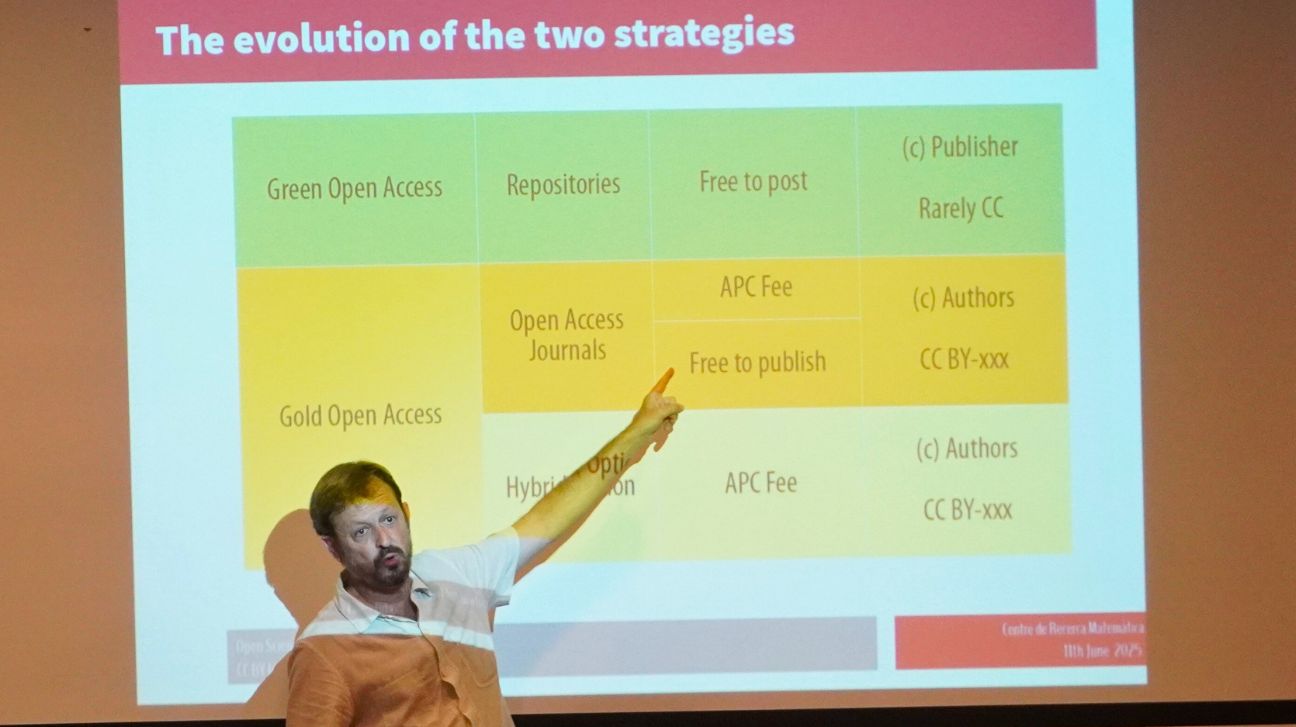
Ignasi Labastida showing in a table the different strategies for publishing openly.
Labastida’s clarity and deep expertise enabled attendees—especially early-career researchers at the CRM—to better understand the challenges and opportunities of adopting open practices in their daily work. His participation was undoubtedly a privilege for the CRM, and we are deeply grateful for his generosity and commitment.
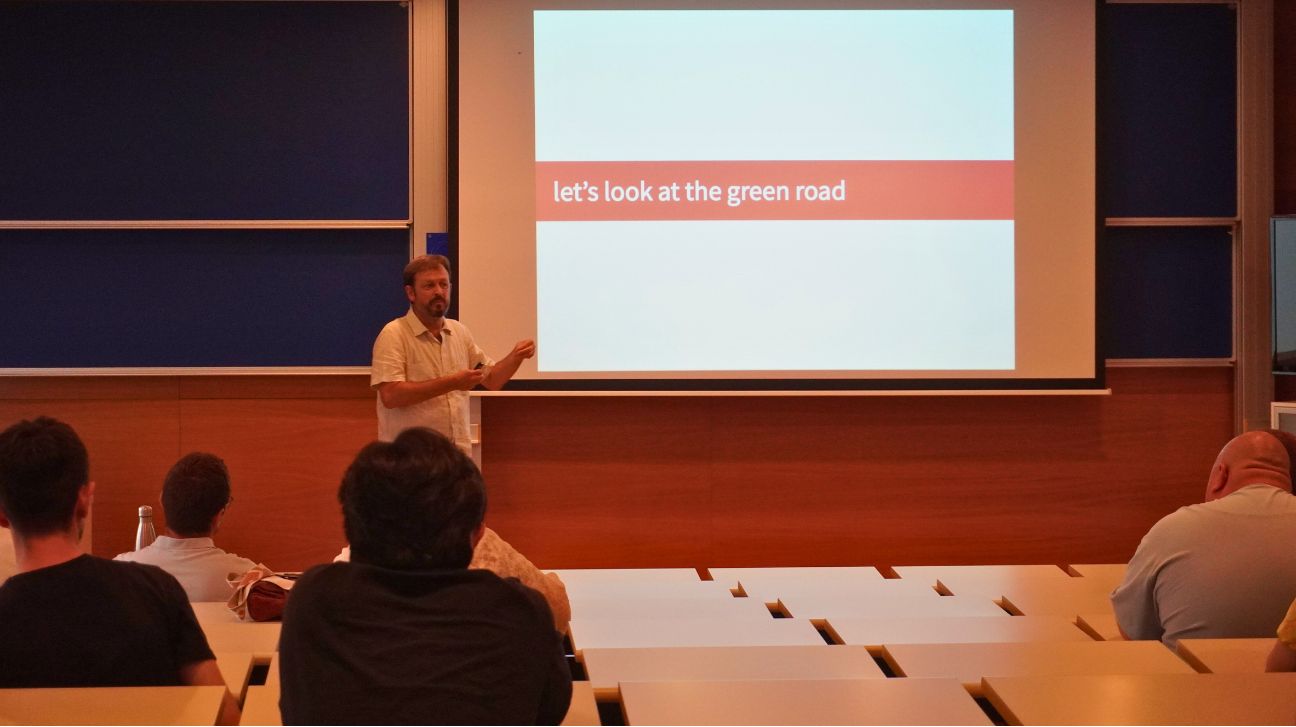
Ignasi Labastida explaining the green open access model.
We also extend our sincere thanks to the roundtable participants, whose experience and insights enriched the discussion. This event was an excellent opportunity to strengthen a culture of openness, collaboration, and responsibility in mathematical research.
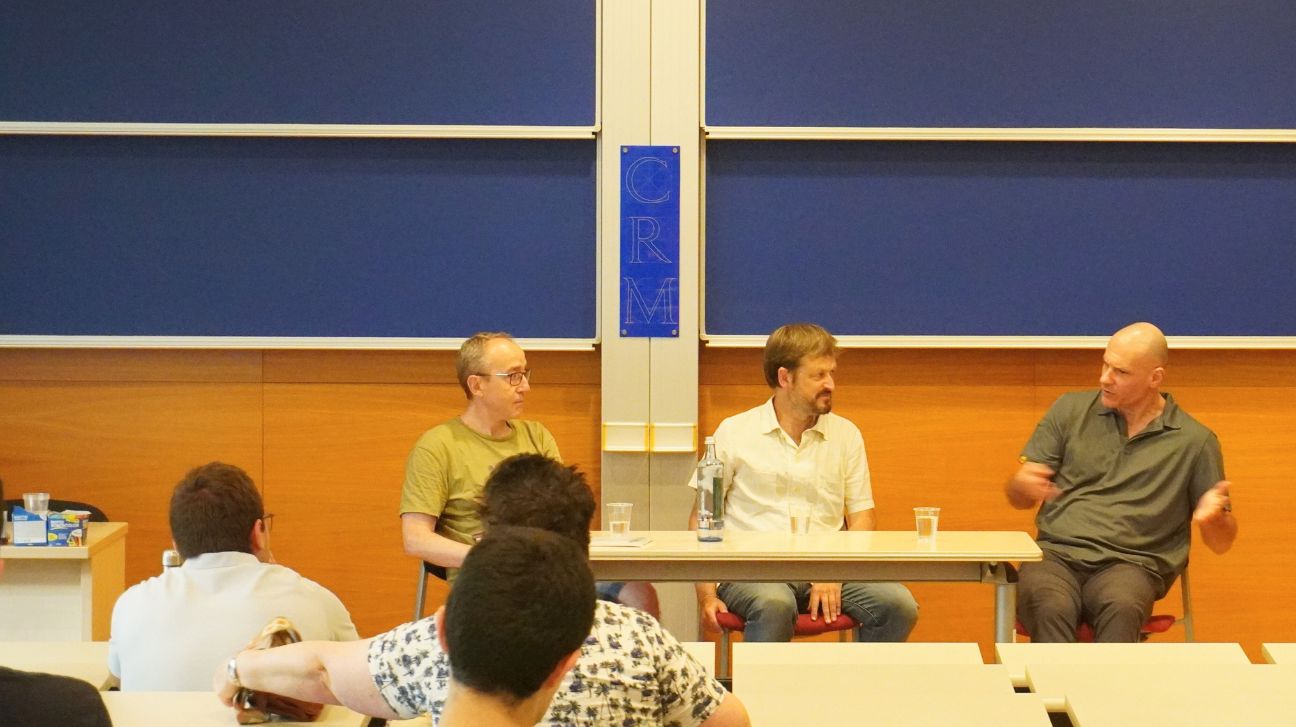
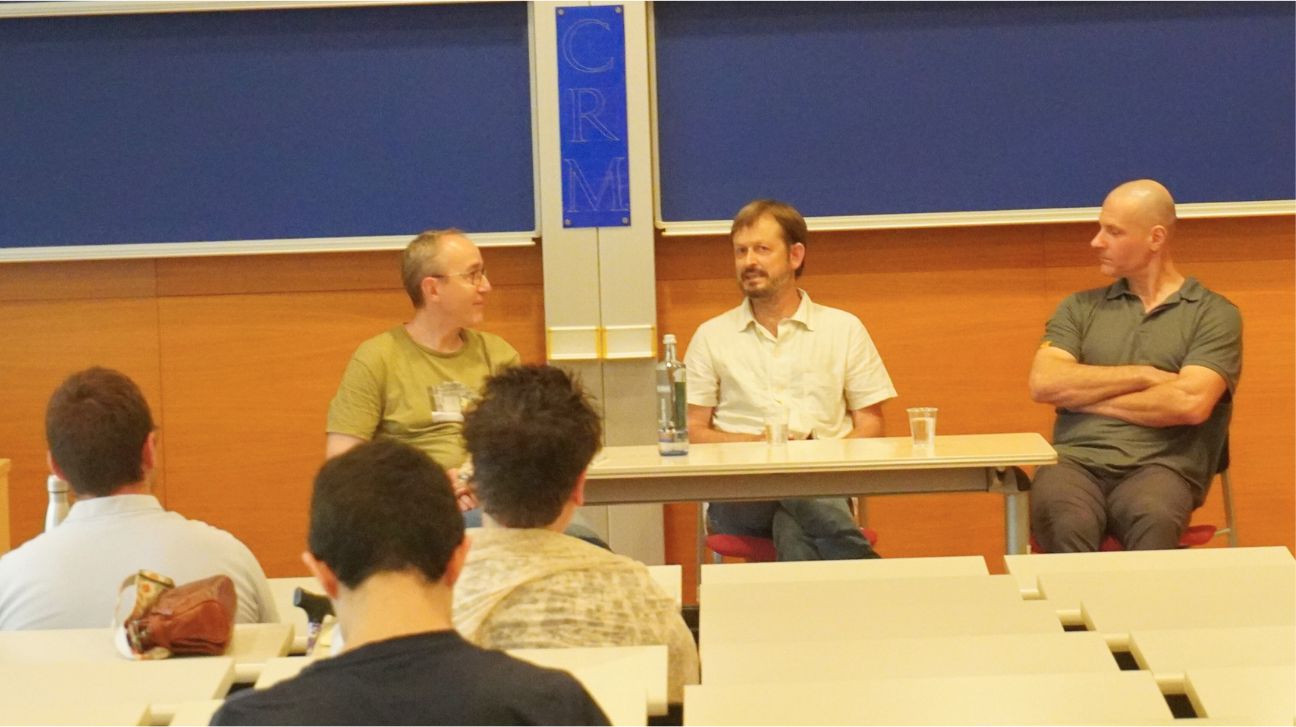
Enrico Valdinoci, Francesc Perera and Ignasi Labastida during the roundtable discussion.
|
|
CRM CommNatalia Vallina
|
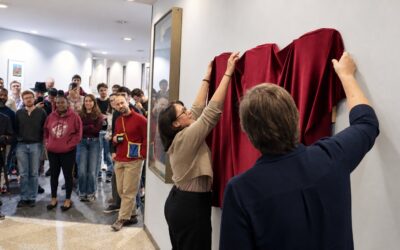
The CRM opens the academic year and unveils its Directors’ Gallery
A review of the year, the Communication Plan 2026–2030 and three research talks filled the morning of 19 October.The unveiling of the Directors’ Gallery.CRM CommPau VarelaCRMComm@crm.catGet the latest CRM news and activities in your inbox.Recent...
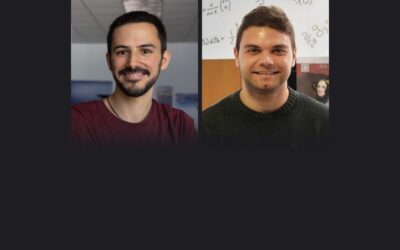
The CRM Mentoring Programme, as Told by One of Its Pairs
PhD student Joaquim Duran and mathematician Robert Cardona, one of the pairs in the CRM Mentoring ProgrammeJoaquim Duran (left) and Robert Cardona.CRM CommPau VarelaCRMComm@crm.catGet the latest CRM news and activities in your inbox.Recent...
When the reward comes within reach, the brain changes what it compares
As the tokens piled up, choices got faster and more accurate at the same time. The yardstick for judging each offer had moved.CRM CommPau VarelaCRMComm@crm.catGet the latest CRM news and activities in your inbox.Recent newsletters →Two subjects...

Almost every automaton can be reset with a short word
Guillaume Chapuy (Université Paris Cité, CNRS) and Guillem Perarnau (UPC, CRM) have shown that a random finite automaton with n states can, with high probability, be reset by a word of length of order √n log n. The result, published in ACM Transactions on Algorithms, pins the exponent at 1/2, the lower end of a decade of numerical estimates, and addresses the random version of the synchronization problem behind a conjecture Ján Černý posed in 1964 and which still remains open.
Exposició ‘Les matemàtiques de Gaudí’
CRM quod erat demonstrandum | 48

ADA: Decoding Brain Signals Misaligned in Time
The study addresses a key limitation of current brain decoding techniques: the difficulty of interpreting internal mental processes whose temporal dynamics vary from trial to trial.Decoding what is happening in a person’s mind from their brain activity is one of the...
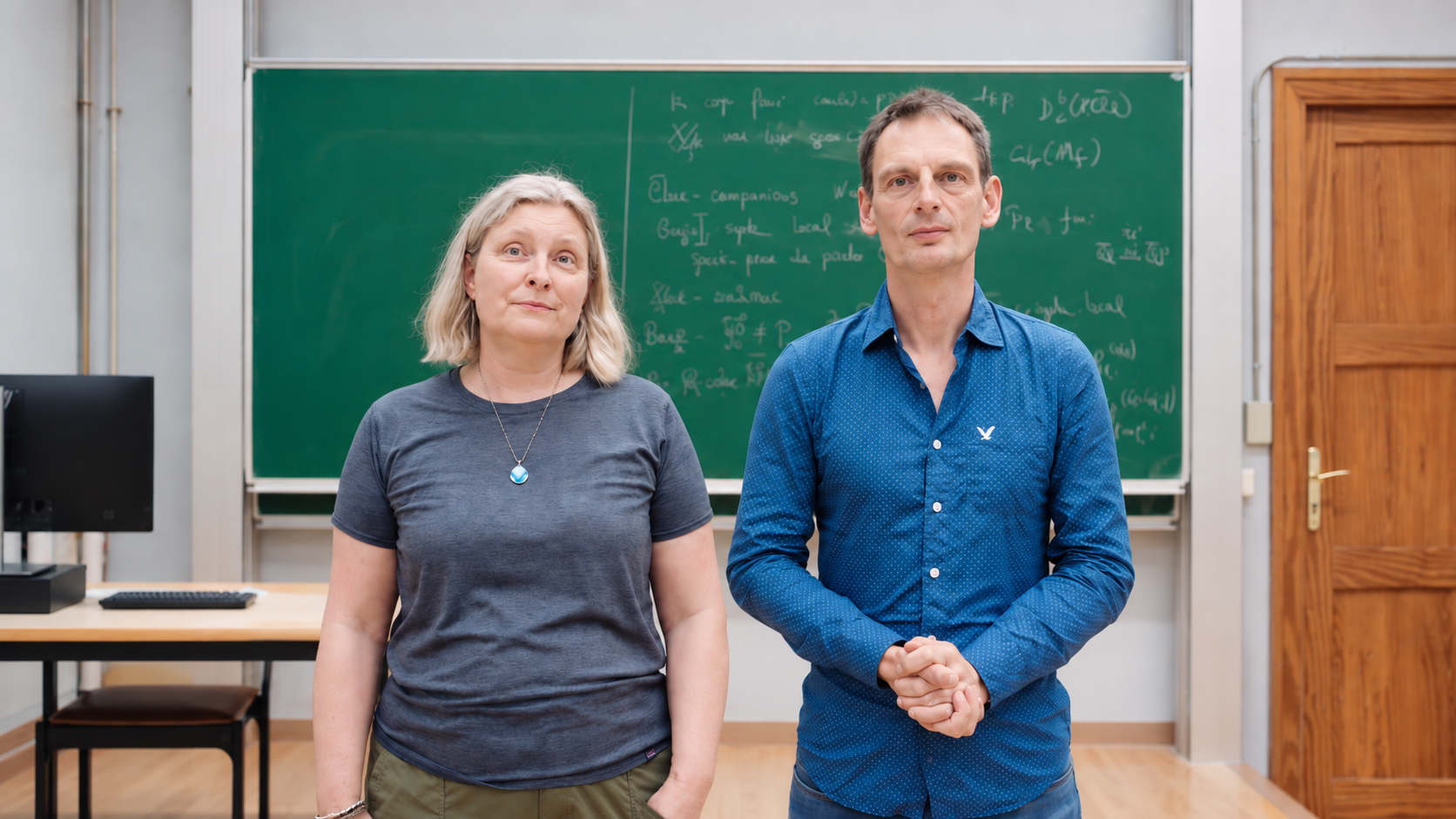
Rare curves, many points: Christophe Ritzenthaler and Rachel Pries on their research and the work around it
Christophe Ritzenthaler (Université de Rennes) and Rachel Pries (Colorado State University) both work on curves over finite fields: he hunts curves with as many points as possible, she hunts curves that almost never occur. In conversation with the CRM during their...
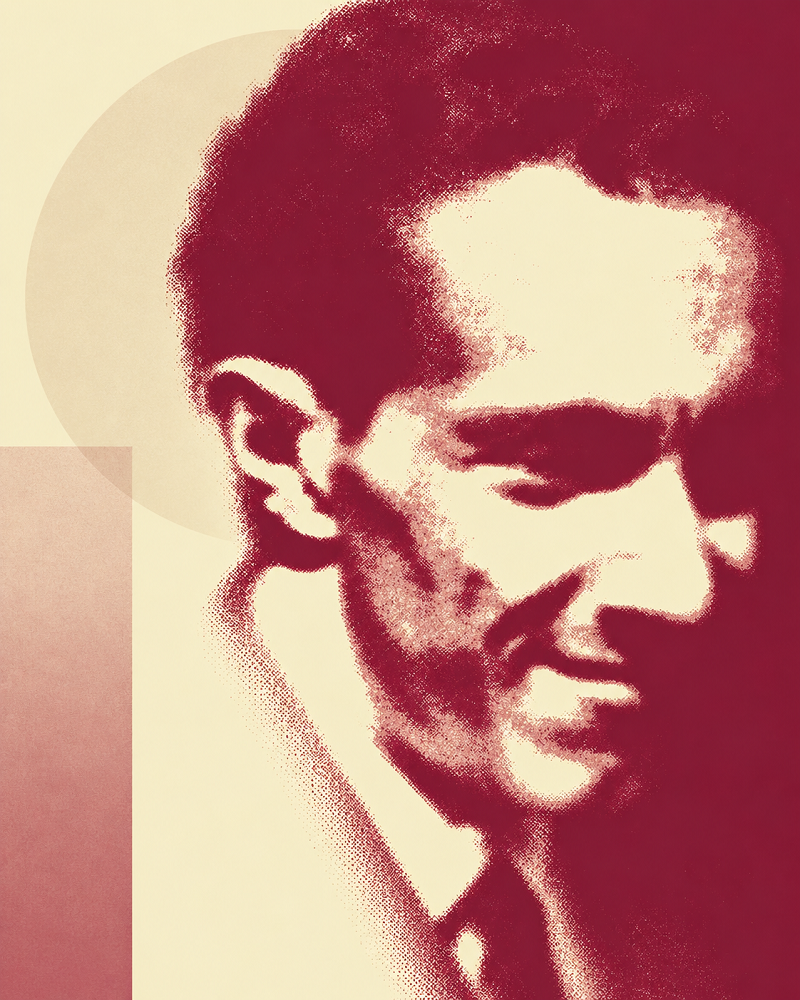
Call open for the 2027 Ferran Sunyer i Balaguer Prize
The Ferran Sunyer i Balaguer Foundation is accepting submissions for its 2027 prize, which awards 15,000 euros and publication in Birkhäuser's Progress in Mathematics series to an expository monograph on an active area of mathematical research. The deadline is 27...
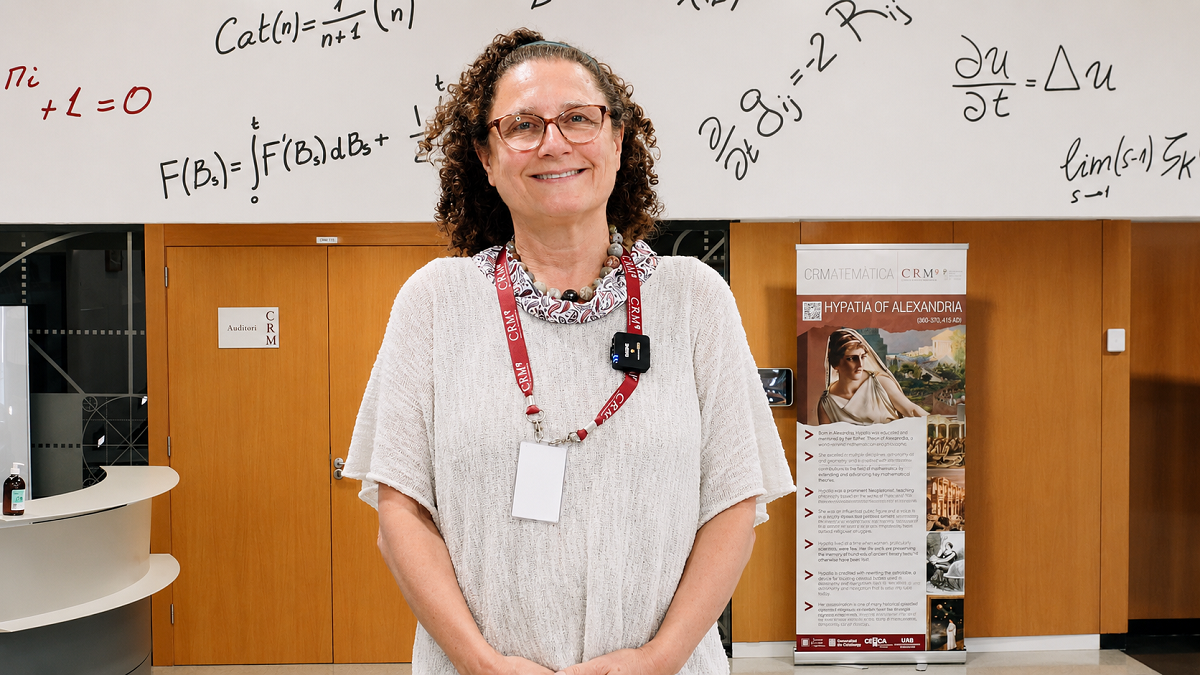
Susanna Terracini delivers the CRM Colloquium 2026
Susanna Terracini (Università di Torino) delivered the CRM Colloquium 2026 on 14 July, presenting a rigidity result for Kepler billiards obtained with Stefano Baranzini, Vivina Barutello and Irene De Blasi. She was at the centre as a member of the CRM Scientific...
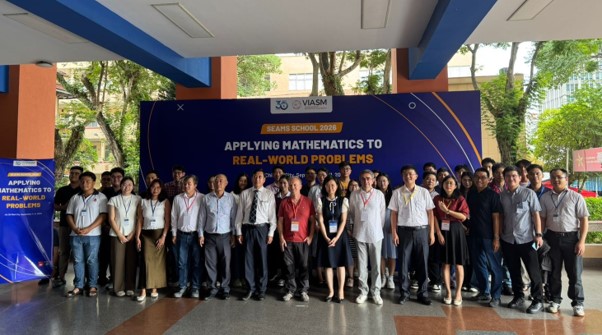
Ho Chi Minh City hosts the SEAMS School on applying mathematics to real-world problems
Students from across the region took courses and worked on group projects at a school co-organised by CRM researcher Tim Myers.CRM CommPau VarelaCRMComm@crm.catGet the latest CRM news and activities in your inbox.Recent newsletters →Between 4 and...

A single ball on a fixed table can compute: Eva Miranda and Isaac Ramos prove that two-dimensional billiards are Turing complete
Eva Miranda (UPC, CRM) and Isaac Ramos (ETH Zürich) show that a point particle bouncing inside a planar table with fixed walls can simulate a universal Turing machine, settling a question Cristopher Moore left open in 1990. The result grew out of a master’s project...