
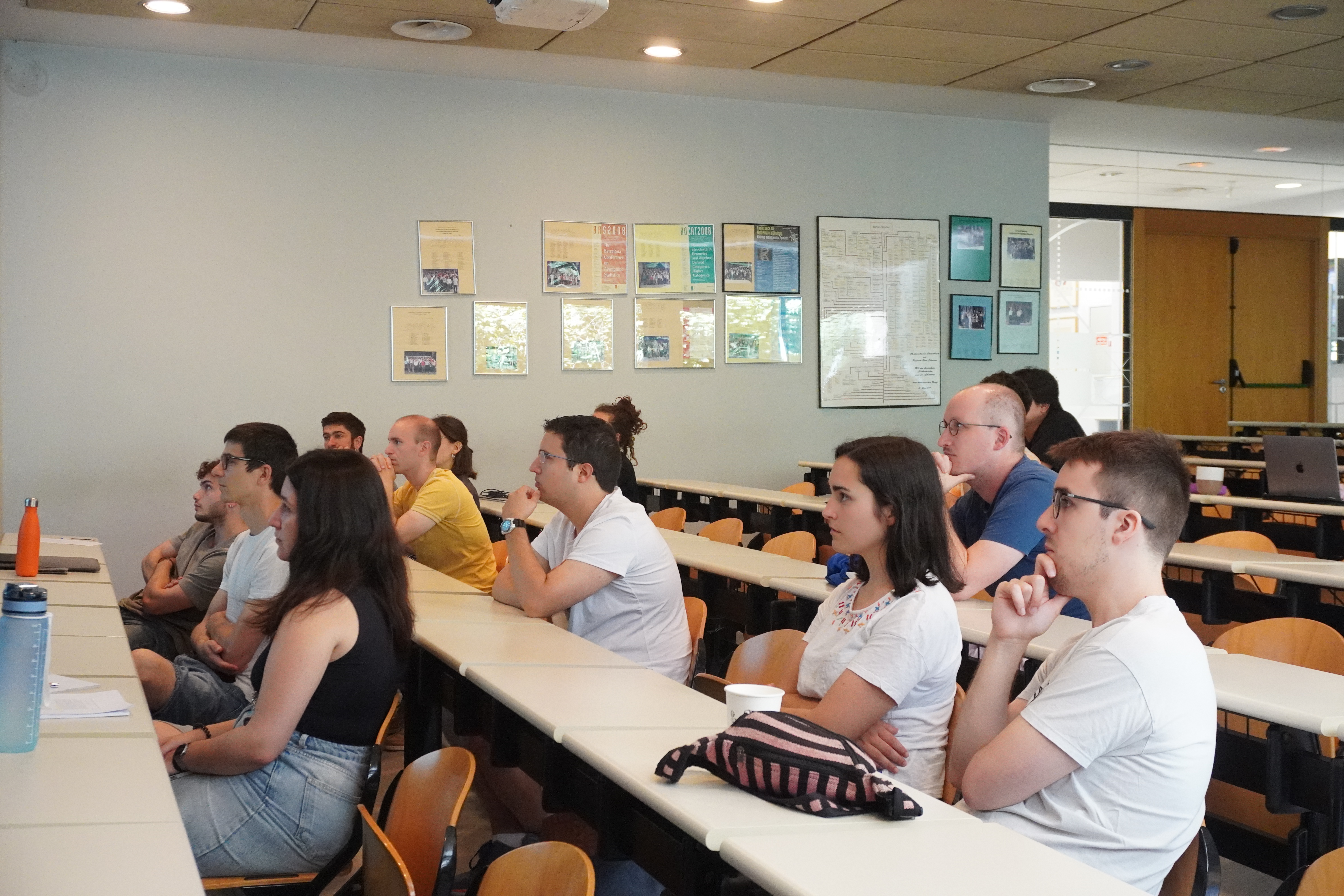
Four young researchers (S. Dhyr, A. Garcia, L. Unamuno and R.Homs) at CRM present their work in geometry, neuroscience, environmental statistics, and algebraic methods in the final SIJIMat session of the academic year.
On June 12, the Centre de Recerca Matemàtica (CRM) hosted the closing session of the SIJIMat seminar, a space designed to foster interaction among early-career researchers at the center. This final event of the academic year was a celebration of emerging mathematical talent, featuring accessible presentations and a collaborative atmosphere.
Throughout the year, SIJIMat has provided a platform for PhD students and postdoctoral researchers to share their work in an engaging and interdisciplinary format. The closing session brought together four young researchers who presented brief talks on their current projects:
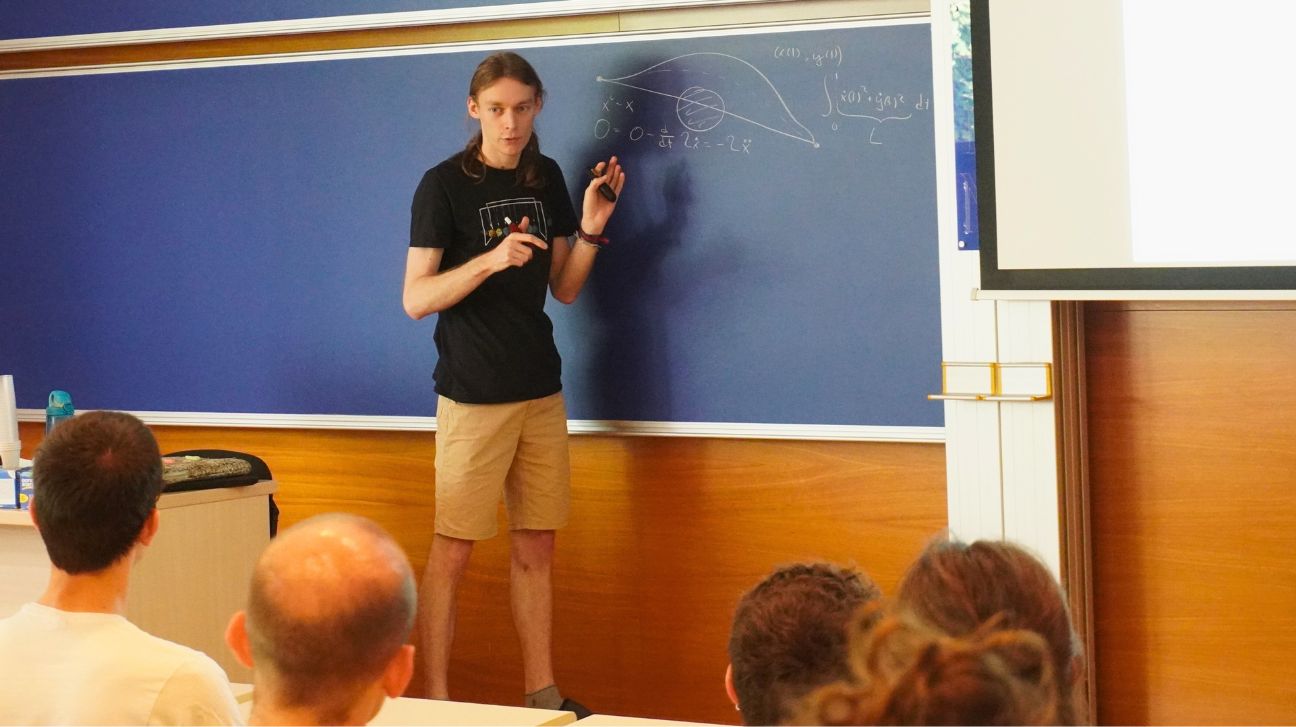
- Søren Dhyr, PhD student at the CRM, gave a visual introduction to cosymplectic geometry, a branch of mathematics that studies three-dimensional spaces built from stacked planes. By adding a metric, one can analyze how angles and lengths change when moving between these planes, leading to a notion of “energy” associated with the structure. Without assuming prior knowledge of differential geometry, Dhyr guided the audience through this geometric world and introduced a recent joint work with Ángel González-Prieto, Eva Miranda, and Daniel Peralta-Salas, which investigates when this energy is minimized.
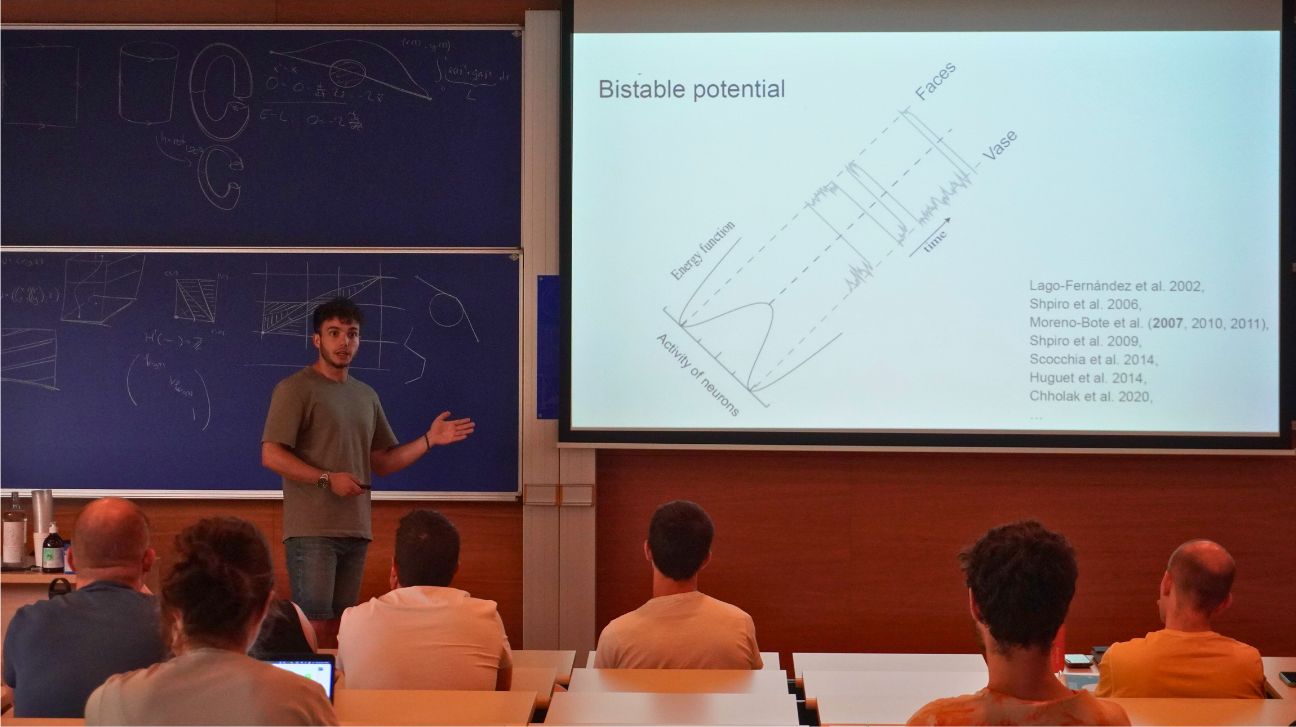
- Alexandre Garcia, also a PhD student, explored the phenomenon of bistable perception, where a single stimulus can lead to two mutually exclusive interpretations. Although perception is a fundamental brain process, the mechanisms behind this bistability remain unclear. Alexandre presented a mathematical framework developed to study these mechanisms and explained how the team validates its predictions using experimental data.
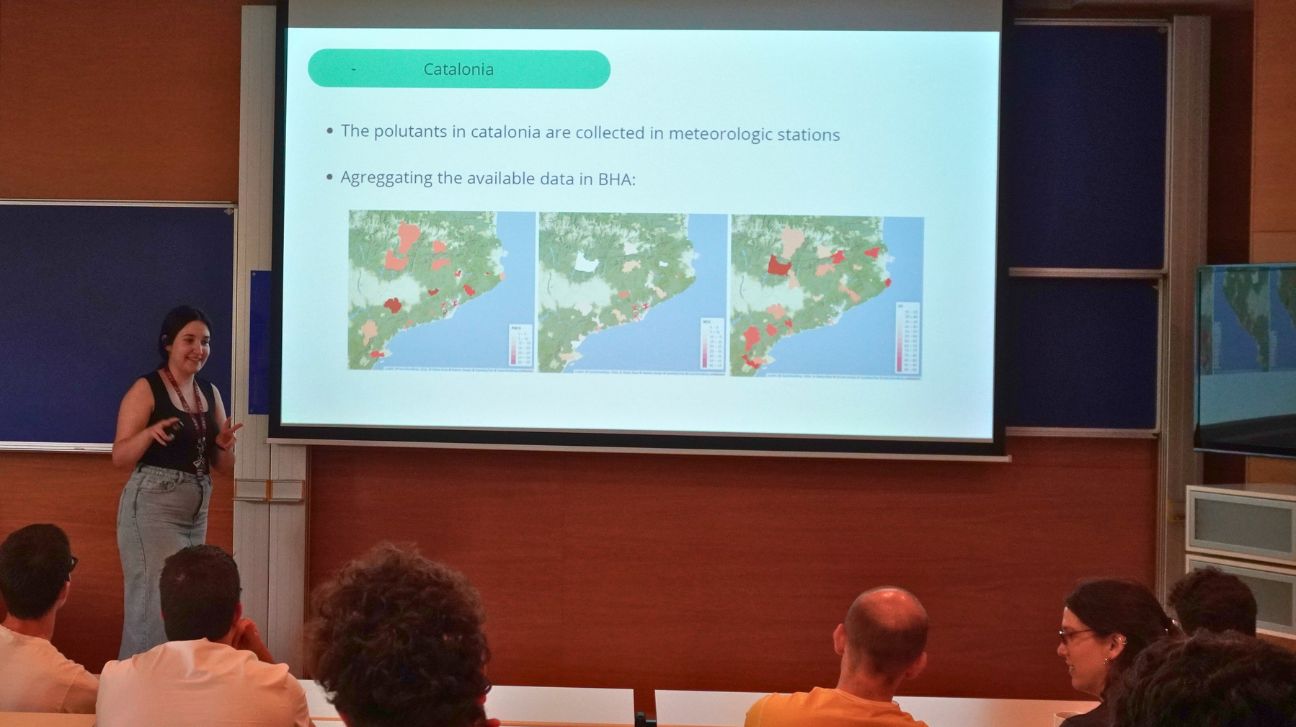
- Leire Unamuno, research technician at the CRM, focused on the link between air pollution and mental health, particularly in children and adolescents. She presented an ongoing project that investigates this association across Catalonia, explaining the general idea behind the spatio-temporal model they use and how it is implemented. Her talk highlighted the intersection of statistics, environmental health, and social impact.
- Roser Homs, Beatriu de Pinós postdoctoral fellow, introduced the field of Algebraic Statistics, which applies tools from algebraic geometry, commutative algebra, combinatorics, and computational algebra to statistical problems. Her talk focused on graphical models—statistical models where a graph encodes dependencies among random variables. She showcased a range of applications, from reconstructing phylogenetic trees to causal discovery, and concluded by addressing a fundamental question: how much data is minimally required for reliable statistical inference?
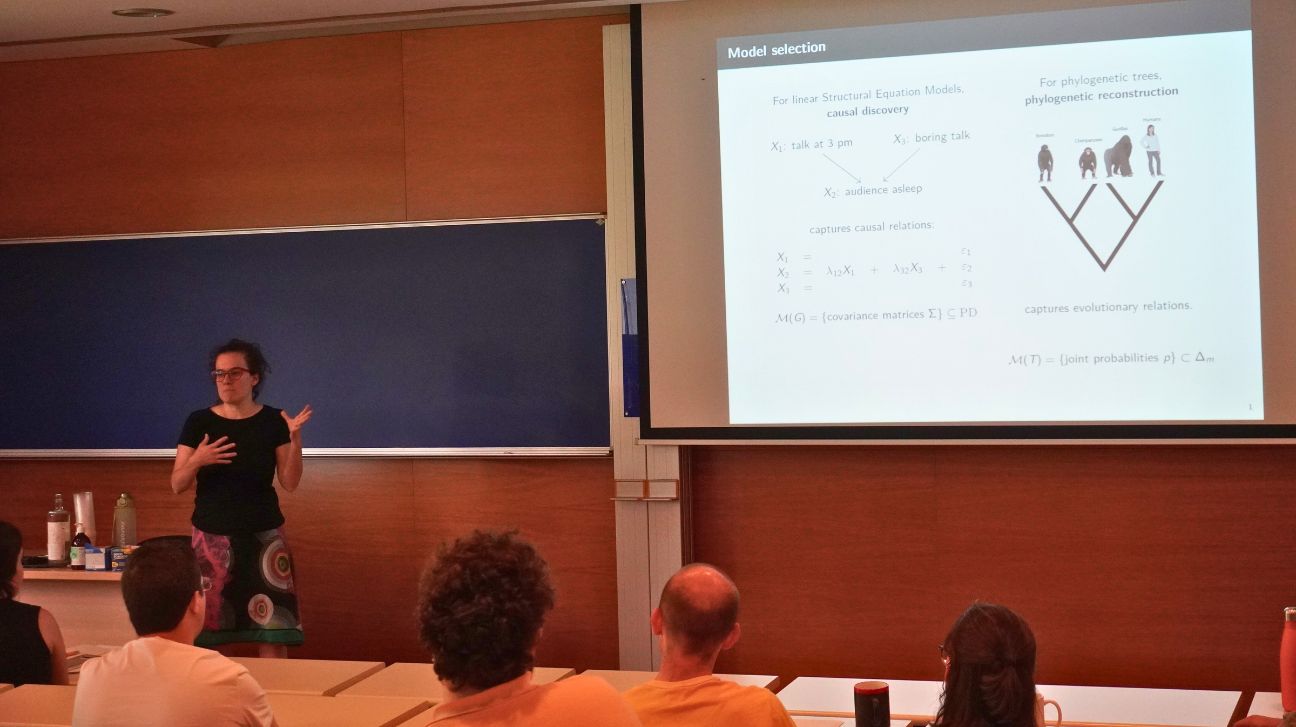
The session was a vivid reflection of the diversity and dynamism of the CRM research community. Beyond the scientific content, it strengthened connections among researchers and celebrated the collaborative spirit that drives mathematical discovery.
|
|
CRM CommNatalia Vallina
|

The CRM opens the academic year and unveils its Directors’ Gallery
A review of the year, the Communication Plan 2026–2030 and three research talks filled the morning of 19 October.The unveiling of the Directors’ Gallery.CRM CommPau VarelaCRMComm@crm.catGet the latest CRM news and activities in your inbox.Recent...
The CRM Mentoring Programme, as Told by One of Its Pairs
PhD student Joaquim Duran and mathematician Robert Cardona, one of the pairs in the CRM Mentoring ProgrammeJoaquim Duran (left) and Robert Cardona.CRM CommPau VarelaCRMComm@crm.catGet the latest CRM news and activities in your inbox.Recent...
When the reward comes within reach, the brain changes what it compares
As the tokens piled up, choices got faster and more accurate at the same time. The yardstick for judging each offer had moved.CRM CommPau VarelaCRMComm@crm.catGet the latest CRM news and activities in your inbox.Recent newsletters →Two subjects...

Almost every automaton can be reset with a short word
Guillaume Chapuy (Université Paris Cité, CNRS) and Guillem Perarnau (UPC, CRM) have shown that a random finite automaton with n states can, with high probability, be reset by a word of length of order √n log n. The result, published in ACM Transactions on Algorithms, pins the exponent at 1/2, the lower end of a decade of numerical estimates, and addresses the random version of the synchronization problem behind a conjecture Ján Černý posed in 1964 and which still remains open.
Exposició ‘Les matemàtiques de Gaudí’
CRM quod erat demonstrandum | 48

ADA: Decoding Brain Signals Misaligned in Time
The study addresses a key limitation of current brain decoding techniques: the difficulty of interpreting internal mental processes whose temporal dynamics vary from trial to trial.Decoding what is happening in a person’s mind from their brain activity is one of the...
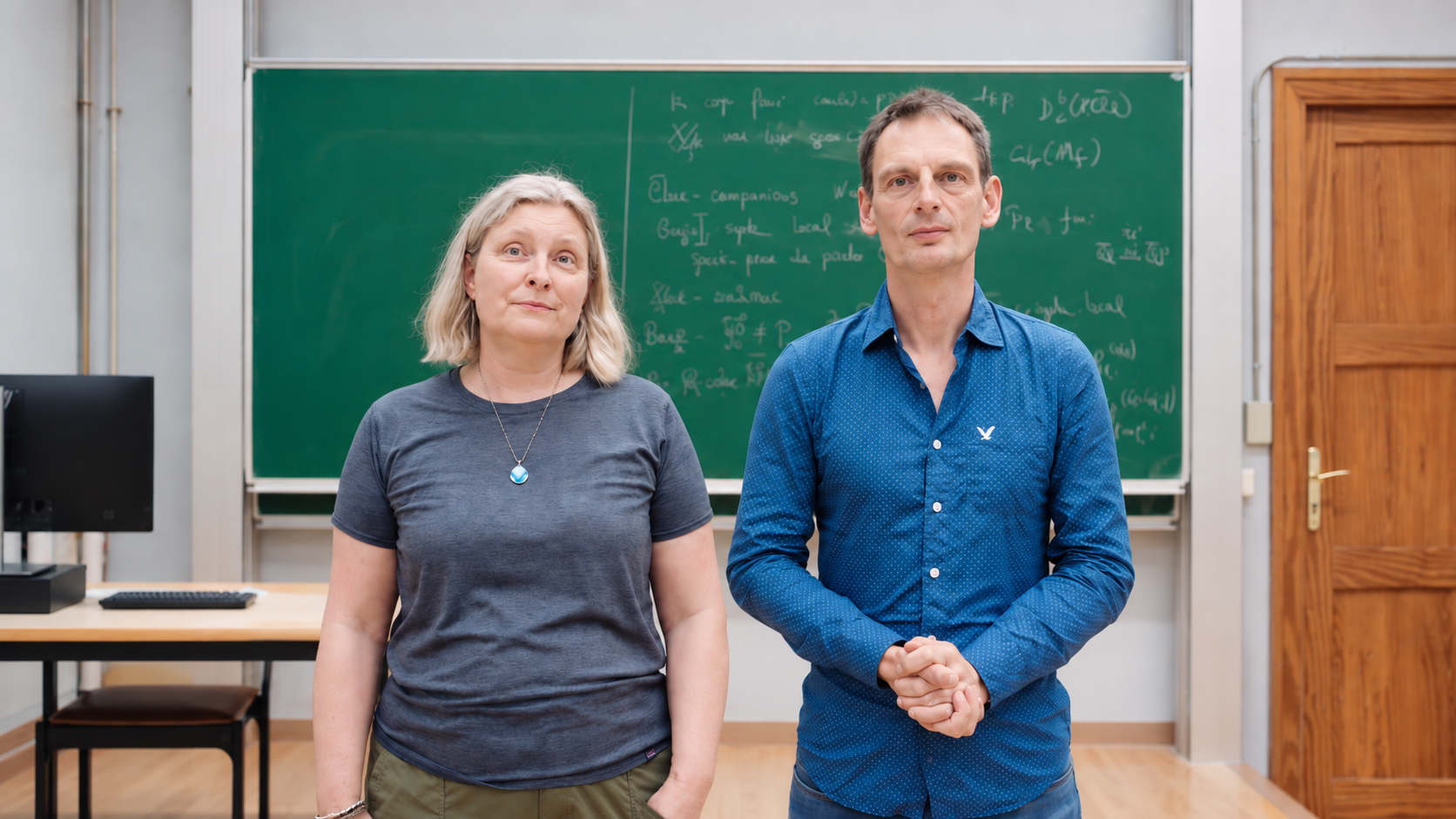
Rare curves, many points: Christophe Ritzenthaler and Rachel Pries on their research and the work around it
Christophe Ritzenthaler (Université de Rennes) and Rachel Pries (Colorado State University) both work on curves over finite fields: he hunts curves with as many points as possible, she hunts curves that almost never occur. In conversation with the CRM during their...

Call open for the 2027 Ferran Sunyer i Balaguer Prize
The Ferran Sunyer i Balaguer Foundation is accepting submissions for its 2027 prize, which awards 15,000 euros and publication in Birkhäuser's Progress in Mathematics series to an expository monograph on an active area of mathematical research. The deadline is 27...
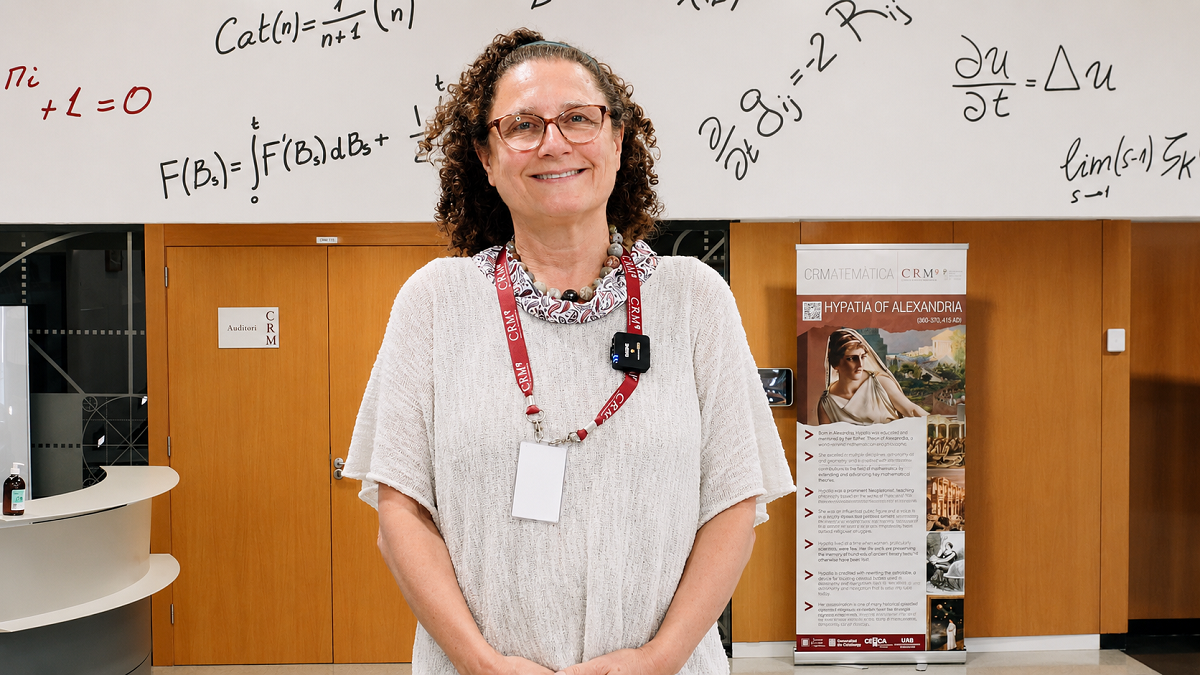
Susanna Terracini delivers the CRM Colloquium 2026
Susanna Terracini (Università di Torino) delivered the CRM Colloquium 2026 on 14 July, presenting a rigidity result for Kepler billiards obtained with Stefano Baranzini, Vivina Barutello and Irene De Blasi. She was at the centre as a member of the CRM Scientific...
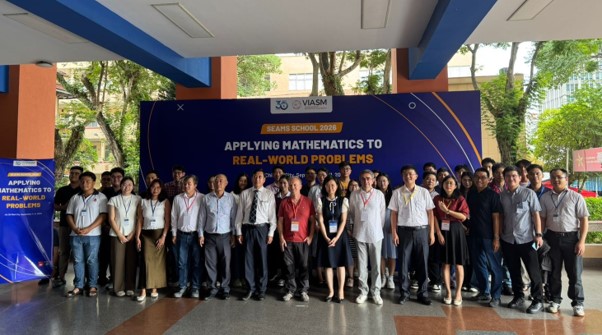
Ho Chi Minh City hosts the SEAMS School on applying mathematics to real-world problems
Students from across the region took courses and worked on group projects at a school co-organised by CRM researcher Tim Myers.CRM CommPau VarelaCRMComm@crm.catGet the latest CRM news and activities in your inbox.Recent newsletters →Between 4 and...

A single ball on a fixed table can compute: Eva Miranda and Isaac Ramos prove that two-dimensional billiards are Turing complete
Eva Miranda (UPC, CRM) and Isaac Ramos (ETH Zürich) show that a point particle bouncing inside a planar table with fixed walls can simulate a universal Turing machine, settling a question Cristopher Moore left open in 1990. The result grew out of a master’s project...