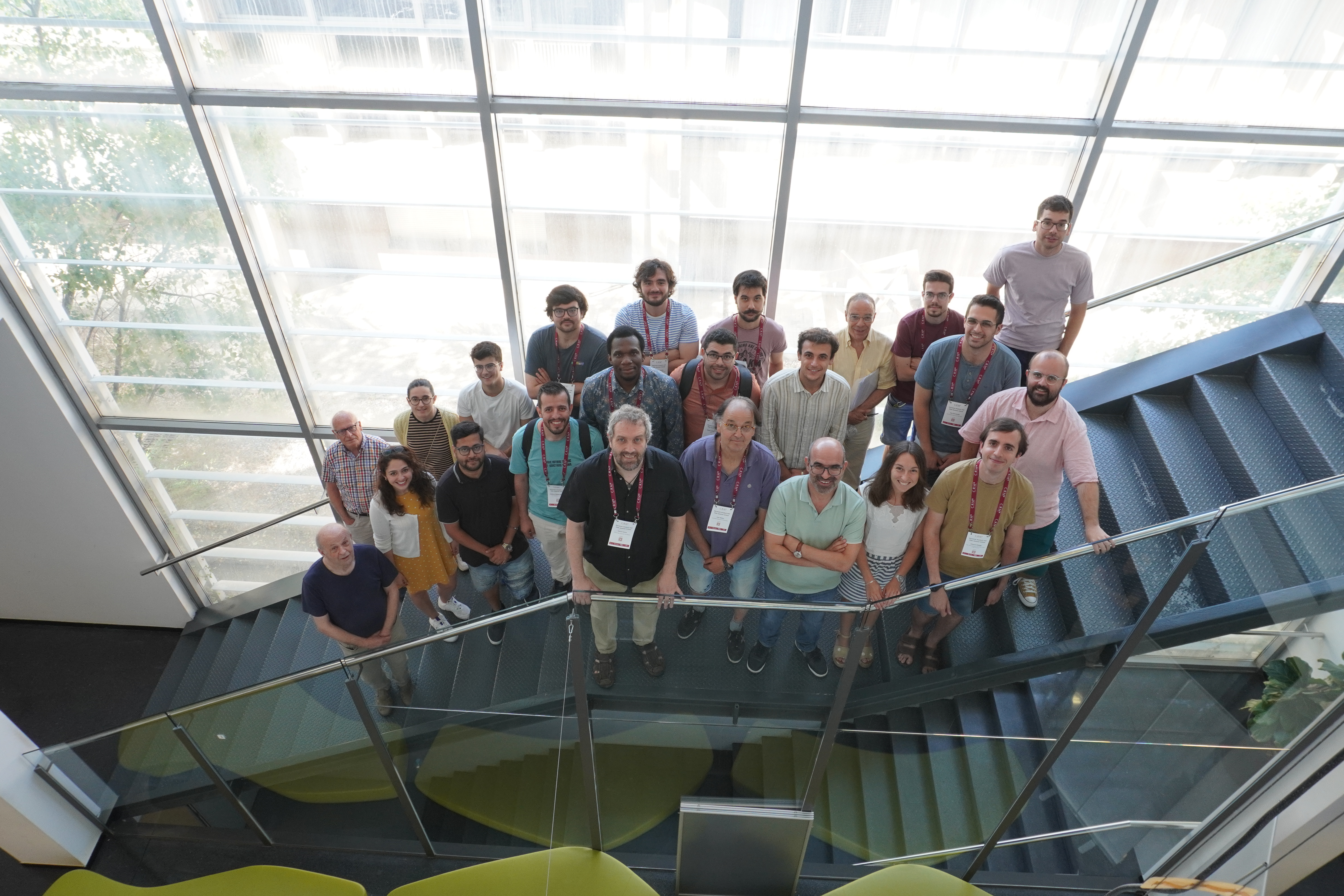
From June 25 to 27, 2025, the Summer School on Harmonic Analysis and PDEs brought together researchers and students for three days of advanced courses and discussion. With lectures by Taoufik Hmidi, Daniel Faraco, and Joan Verdera, the program covered topics like vortex dynamics, convex integration, and non-local energy models—offering a deep dive into modern analysis and its applications.
From June 25 to 27, 2025, the Centre de Recerca Matemàtica (CRM) hosted the Summer School on Harmonic Analysis and PDEs, a three-day advanced training event focused on key topics in modern mathematical analysis. The program explored a wide range of problems, including singular integrals, fluid mechanics, active scalar equations, and the minimization of anisotropic interaction energies. These themes, which lie at the intersection of pure and applied mathematics, have direct relevance to fields such as materials science and biological modeling. The school brought together PhD students, postdoctoral researchers, and international experts to delve into cutting-edge analytical techniques and their applications to real-world phenomena.
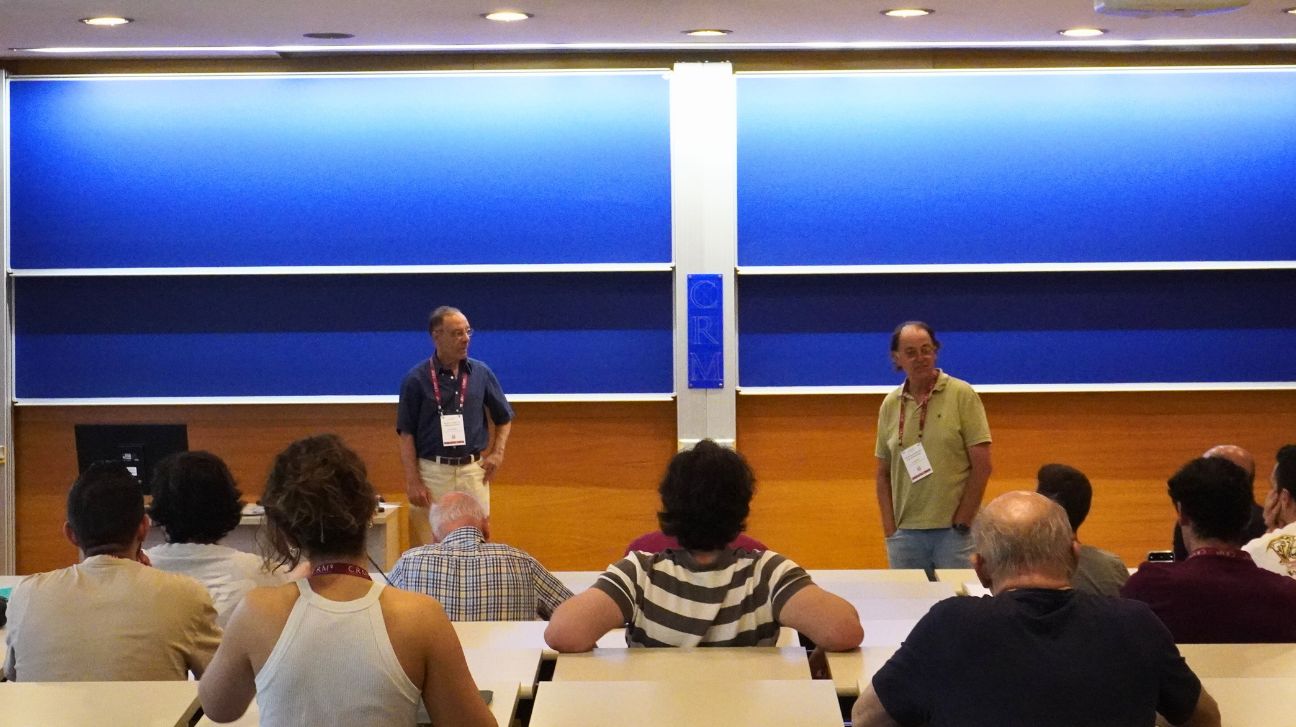
Joan Mateu in his presentation of th event.
Three mini-courses were offered, each led by a distinguished expert.
Taoufik Hmidi, currently at New York University Abu Dhabi, is a leading figure in the study of geophysical fluid dynamics and nonlinear partial differential equations. With a PhD from École Polytechnique in Palaiseau and a previous academic post at Université de Rennes, his research spans vortex dynamics, the formation of relative equilibria in turbulent flows, and the mathematical theory of well-posedness and blow-up phenomena. His work is characterized by a deep analytical approach combined with a strong physical intuition.
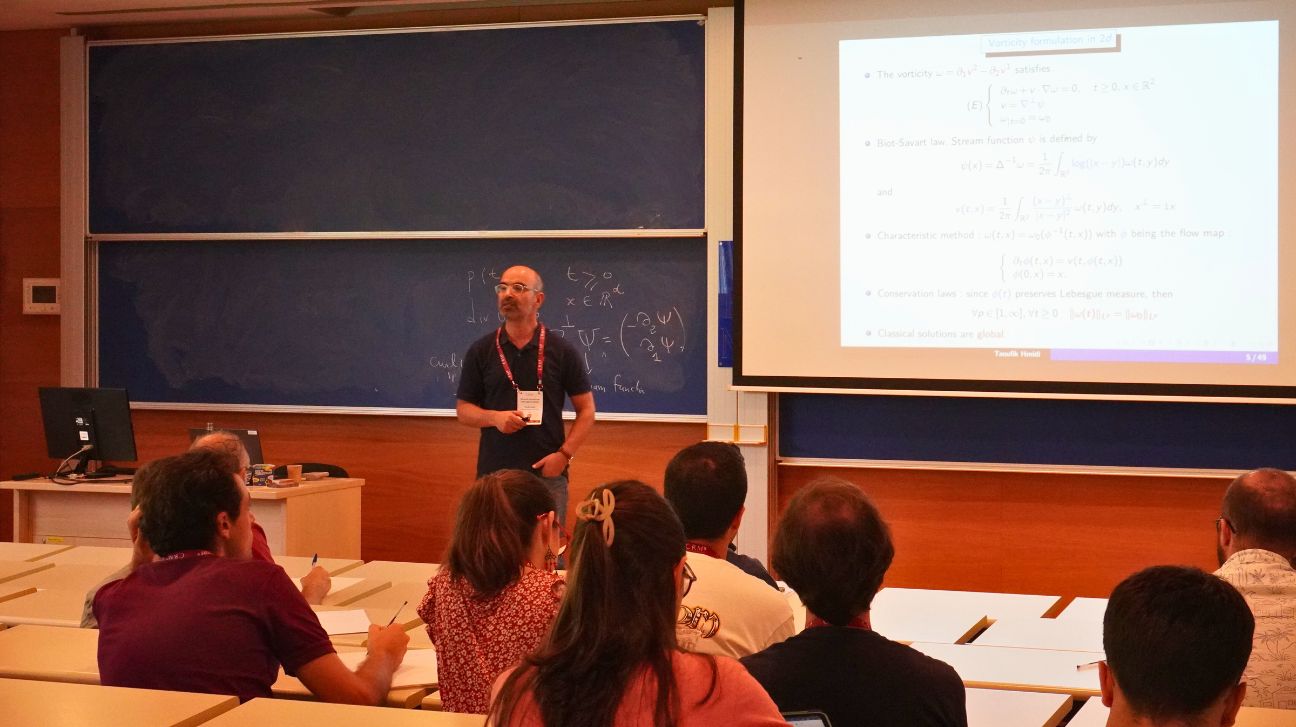
Taoufik Hmidi during a session of the course he delivered.
In his mini-course, Advances in vortex dynamics via KAM theory, Taoufik Hmidi introduced participants to the fascinating world of vortices—those swirling structures that emerge in turbulent fluids like oceans or the atmosphere. Focusing on recent advances in the study of vortex motion near ordered configurations, he showed how mathematical analysis can uncover the hidden structure behind seemingly chaotic flows. A central theme of the course was how to move beyond idealized point-vortex models by constructing smoother, more realistic structures known as vortex patches. Through examples such as periodic vortex motion and confined flows, Hmidi illustrated how advanced mathematics can bridge the gap between abstract theory and physical reality.
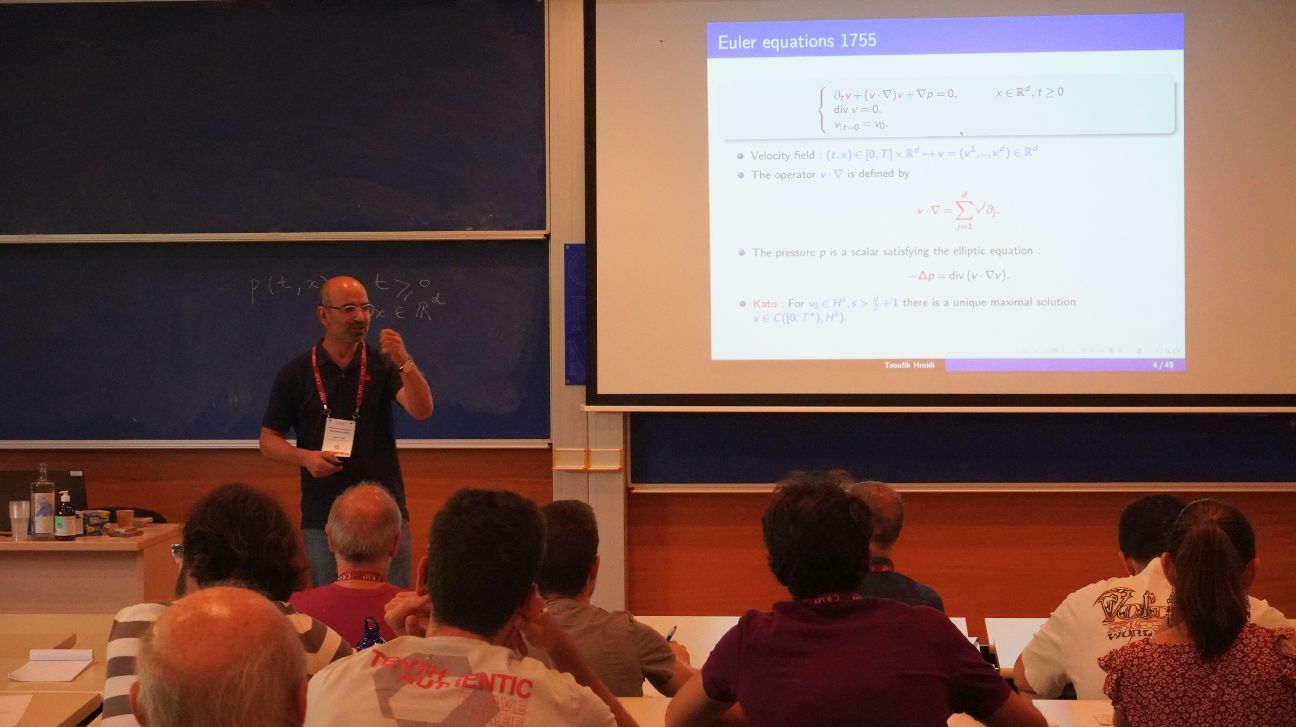
Taoufik Hmidi during a session of the course he delivered.
To tackle these problems, he employed two powerful analytical tools. The Kolmogorov–Arnold–Moser (KAM) theory explains how stable, quasi-periodic patterns can persist in complex systems even when they are slightly disturbed. The Nash–Moser iteration scheme, meanwhile, is a refined method for solving equations in situations where standard techniques fail due to a loss of smoothness. Together, these tools allowed Hmidi to construct smooth approximations of singular vortex structures, offering a rigorous yet accessible perspective on how order can emerge within fluid chaos.
Daniel Faraco is a professor of Applied Mathematics at Universidad Autónoma de Madrid and a member of the executive committee of ICMAT. After completing his PhD in Helsinki under Kari Astala, he joined the Max Planck Institute in Leipzig and later became a Ramón y Cajal fellow. His research lies at the intersection of geometric analysis and applied mathematics, with contributions to quasiconformal mappings, inverse problems, nonlinear elasticity, and fluid mechanics. He currently leads the UAM nodes of two major European research projects—Quamap (ERC Advanced Grant) and Agapi (2022–2026)—and heads the Inverse Problems and Mechanics group at UAM.
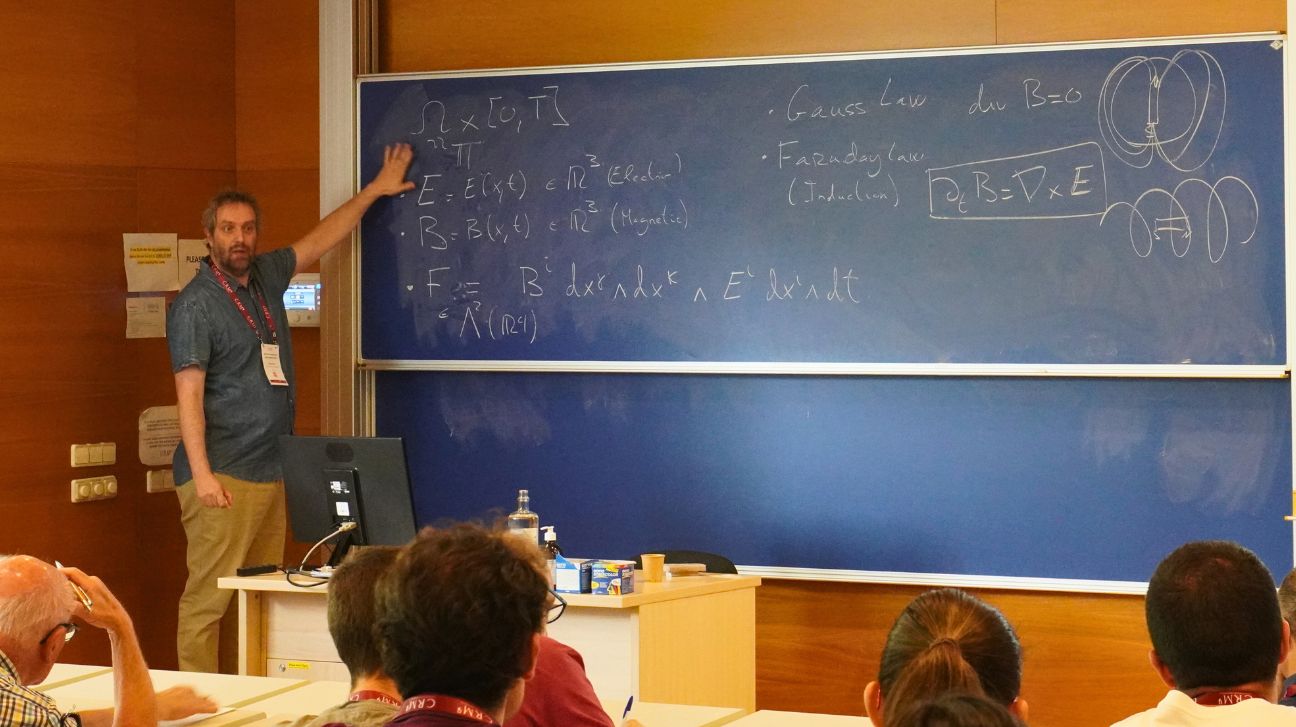
Daniel Faraco during a session of the course he delivered.
In his mini-course, Turbulent solutions to Magnetohydrodynamics: An introduction to convex integration in fluid mechanics, Faraco introduced participants to recent developments in convex integration techniques and their applications to magnetohydrodynamics (MHD)—the study of electrically conducting fluids such as plasmas. Convex integration is a mathematical method that allows for the construction of highly irregular, yet valid, solutions to fluid equations—revealing that under certain conditions, fluids can behave in unpredictable or even counterintuitive ways. Originally from geometry, this technique has been adapted to show that equations in fluid dynamics can admit infinitely many “wild” solutions, with implications for understanding turbulence. Over the past 15 years, it has evolved significantly, enabling new insights into complex behaviors in fluid systems. Faraco explored how these ideas interact with key phenomena in MHD, such as plasma relaxation and dynamo theory. Through a structured sequence of sessions, he guided attendees through topics including bounded solutions, magnetic helicity dissipation, and intermittent constructions, offering a compelling view of how abstract mathematical tools can illuminate the turbulent behavior of physical systems.
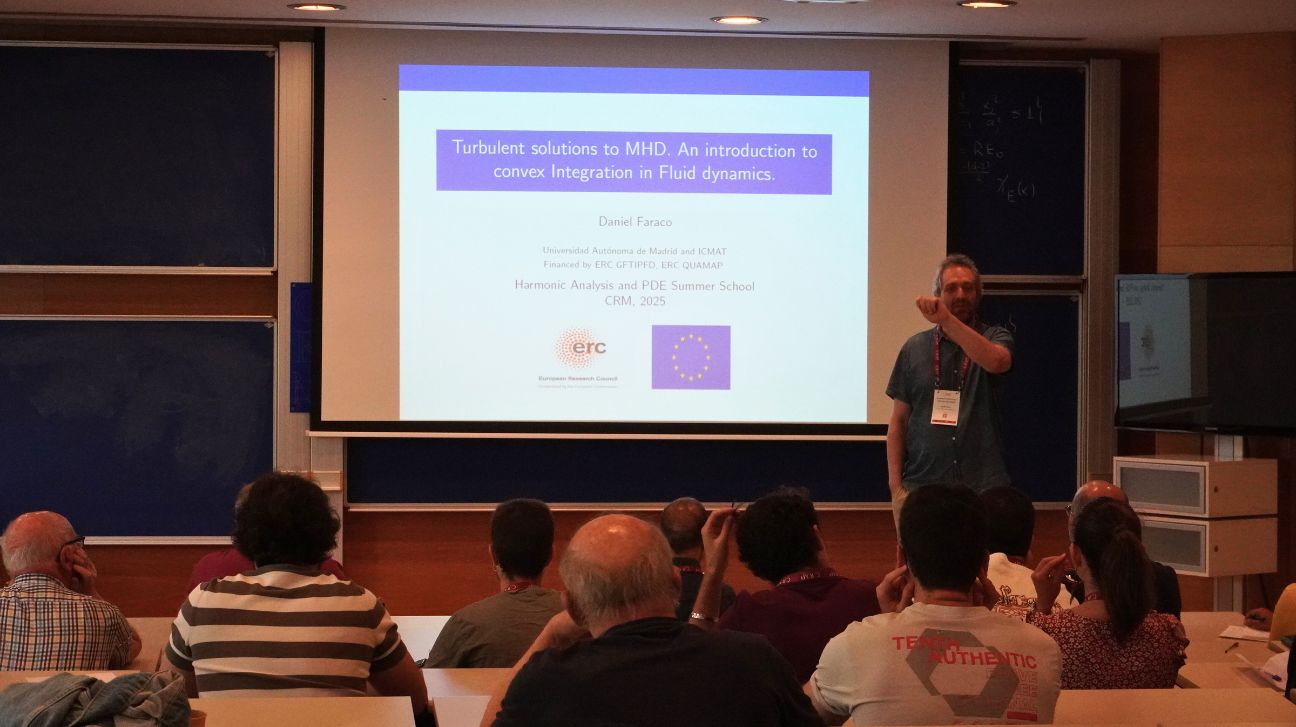
Daniel Faraco during a session of the course he delivered.
Joan Verdera is a professor of Mathematical Analysis at the Department of Mathematics at the Universitat Autònoma de Barcelona (UAB), where he has been a faculty member since 1987. He has also served as a visiting professor at the University of California, Los Angeles (UCLA) during the academic years 1983–1984 and 2001–2002. His research interests include complex analysis, harmonic analysis, potential theory, and geometric measure theory. Verdera has made significant contributions to the understanding of analytic capacity and maximal singular integrals, and his recent work explores problems in fluid dynamics using tools from classical analysis.
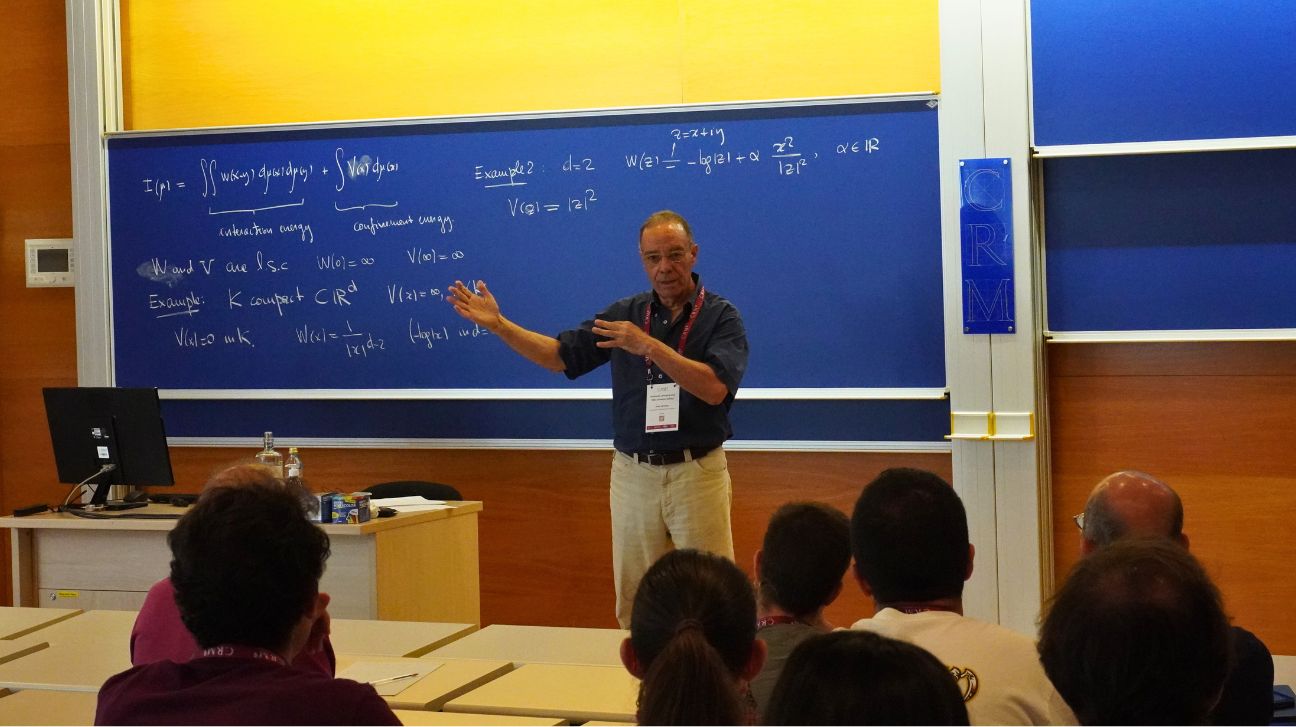
Joan Verdera during a session of the course he delivered.
In his mini-course, Minimizers of some non-local energies, Verdera explored mathematical models that describe how individuals—such as particles or organisms—organize themselves under the influence of both repulsive and confining forces. These models are based on energy functionals defined over probability measures, and key questions include the existence, uniqueness, and structure of minimizers. Verdera presented recent results showing that, under specific conditions—such as quadratic confinement and symmetric, homogeneous interaction kernels with positive Fourier transform away from the origin—the minimizer can be described explicitly. In particular, it takes the form of a measure supported on an ellipsoid, and in the Coulomb (or Newtonian) case, the density is constant. During this course he offered participants a clear example of how abstract mathematical analysis can yield precise and interpretable results in models of collective behavior.
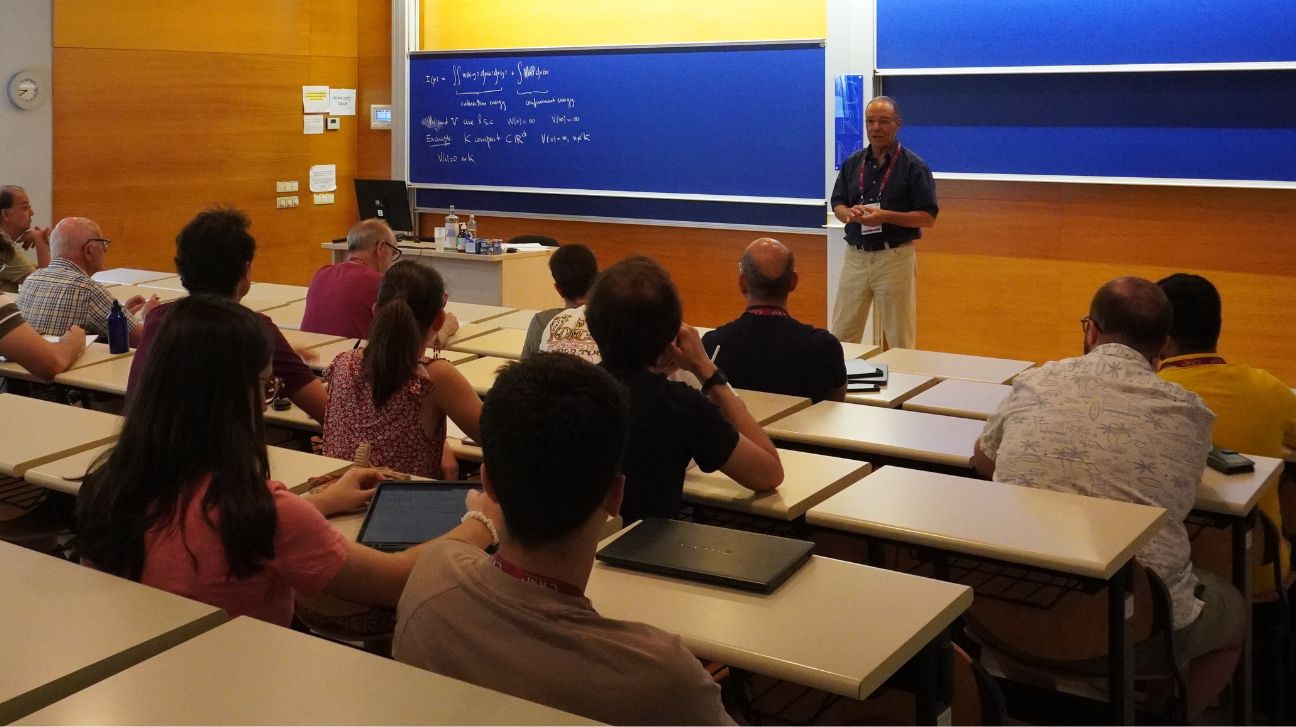
Joan Verdera during a session of the course he delivered.
The activity was organized by Joan Mateu, Juan Carlos Cantero, Joan Orobitg, and Joan Verdera, all researchers at the Universitat Autònoma de Barcelona. The school provided an intensive learning environment and a vibrant space for scientific exchange, reinforcing the CRM’s role as a leading center for advanced training in mathematics. Beyond lectures, it served as a meeting point for high-quality mathematical research—an opportunity to share ideas, ask questions, and discover new connections between theory and application. It was an experience that reminded participants that mathematics is not only about solving equations, but also about understanding the world. For a few days, mathematics became not just a discipline, but a living conversation between generations.
“In this summer school on harmonic analysis and PDE’s, three courses have been presented on topics of great interest to our research group. One of them was given by Prof. Taoufik Hmidi on recent and not so recent results in fluid mechanics. A second course was given by Prof. Joan Verdera on minimizers for interaction energies. This topic has become very important during the last decade. The third course, presented by Prof. Daniel Faraco, was perhaps the most novel for us and dealt with the magnetohydrodynamic equation. This equation has been developed lately and proposes an equation related to physical problems involving electric fields and magnetic fields.
The purpose of this summer school was to attract to these courses both established mathematicians and young researchers.” explains Joan Mateu.
|
|
CRM CommNatalia Vallina
|
When the reward comes within reach, the brain changes what it compares
As the tokens piled up, choices got faster and more accurate at the same time. The yardstick for judging each offer had moved.CRM CommPau VarelaCRMComm@crm.catGet the latest CRM news and activities in your inbox.Recent newsletters →Two subjects...

Almost every automaton can be reset with a short word
Guillaume Chapuy (Université Paris Cité, CNRS) and Guillem Perarnau (UPC, CRM) have shown that a random finite automaton with n states can, with high probability, be reset by a word of length of order √n log n. The result, published in ACM Transactions on Algorithms, pins the exponent at 1/2, the lower end of a decade of numerical estimates, and addresses the random version of the synchronization problem behind a conjecture Ján Černý posed in 1964 and which still remains open.
Exposició ‘Les matemàtiques de Gaudí’
CRM quod erat demonstrandum | 48

ADA: Decoding Brain Signals Misaligned in Time
The study addresses a key limitation of current brain decoding techniques: the difficulty of interpreting internal mental processes whose temporal dynamics vary from trial to trial.Decoding what is happening in a person’s mind from their brain activity is one of the...
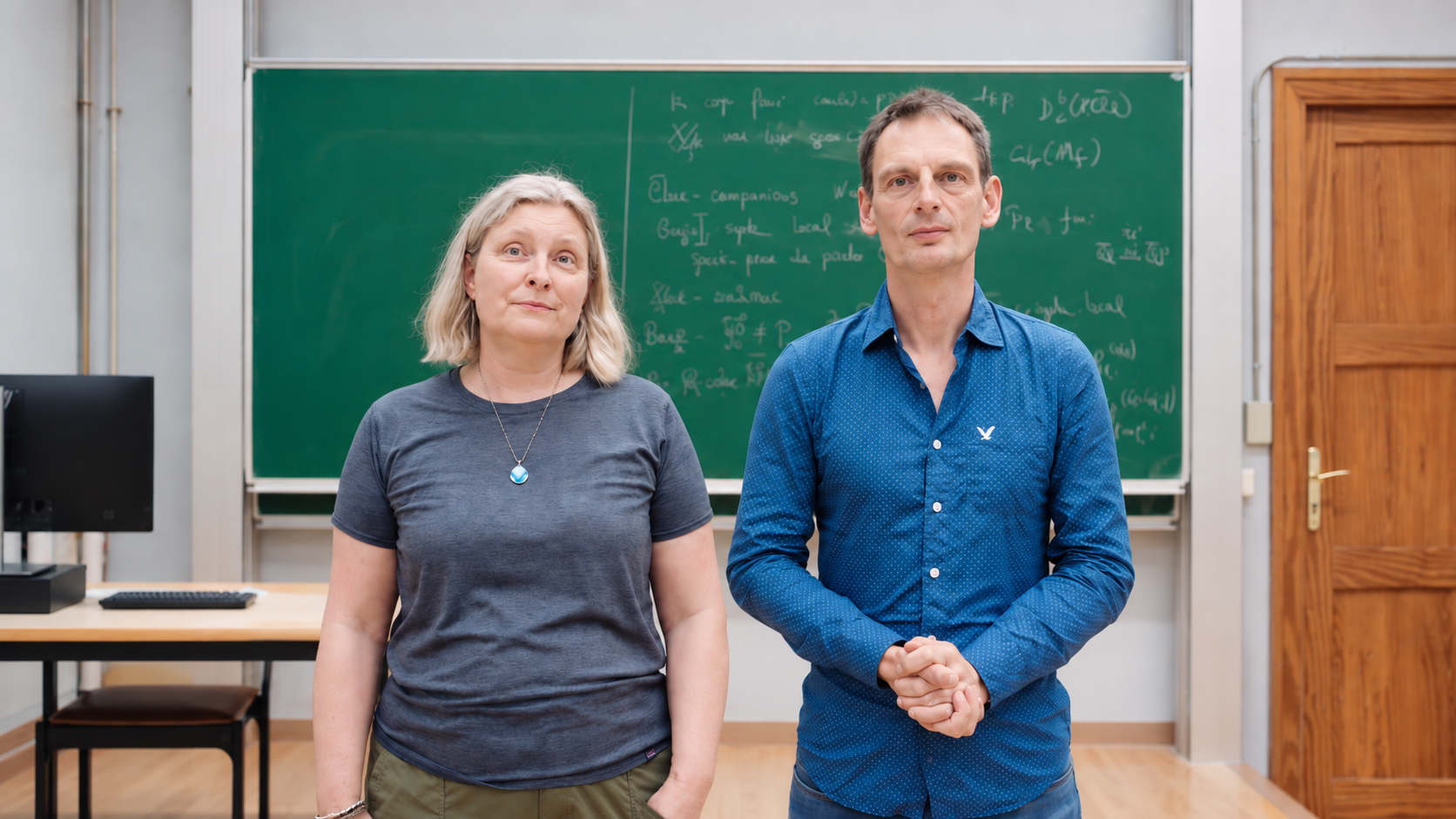
Rare curves, many points: Christophe Ritzenthaler and Rachel Pries on their research and the work around it
Christophe Ritzenthaler (Université de Rennes) and Rachel Pries (Colorado State University) both work on curves over finite fields: he hunts curves with as many points as possible, she hunts curves that almost never occur. In conversation with the CRM during their...

Call open for the 2027 Ferran Sunyer i Balaguer Prize
The Ferran Sunyer i Balaguer Foundation is accepting submissions for its 2027 prize, which awards 15,000 euros and publication in Birkhäuser's Progress in Mathematics series to an expository monograph on an active area of mathematical research. The deadline is 27...
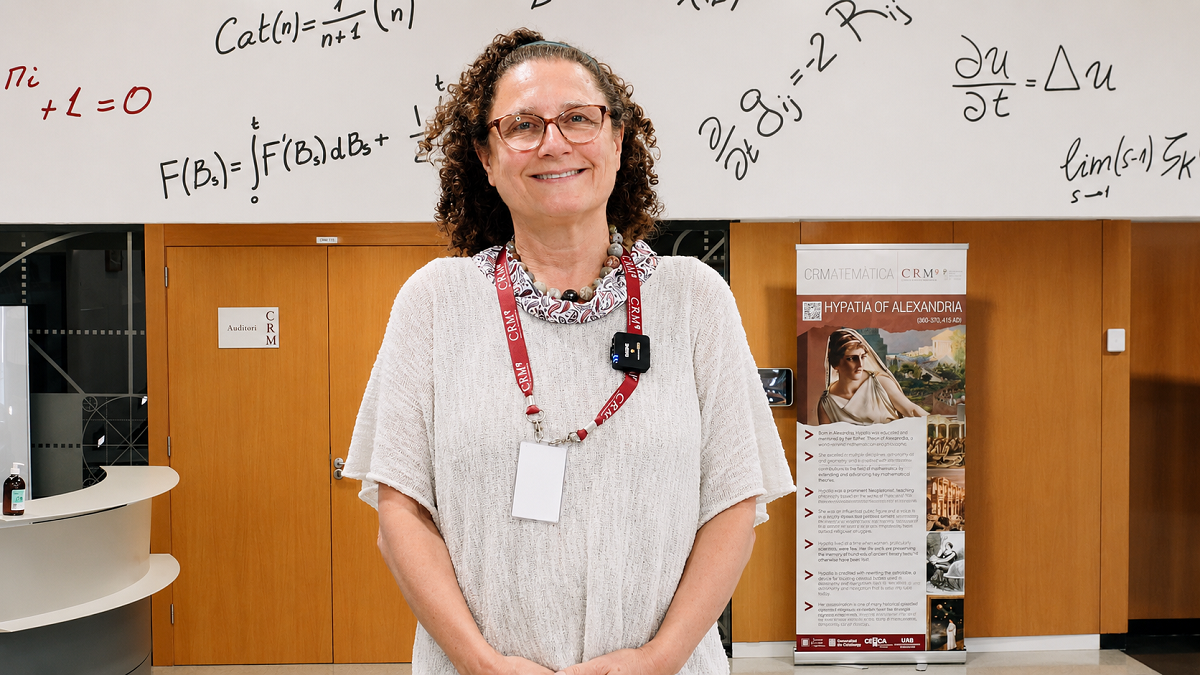
Susanna Terracini delivers the CRM Colloquium 2026
Susanna Terracini (Università di Torino) delivered the CRM Colloquium 2026 on 14 July, presenting a rigidity result for Kepler billiards obtained with Stefano Baranzini, Vivina Barutello and Irene De Blasi. She was at the centre as a member of the CRM Scientific...
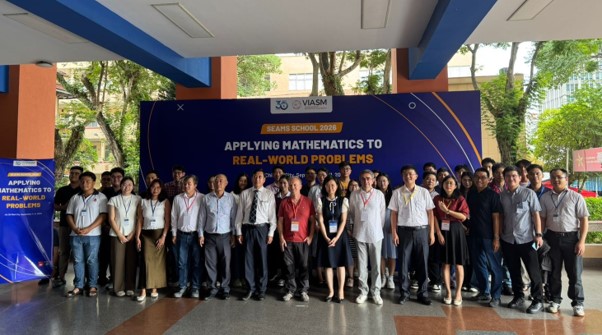
Ho Chi Minh City hosts the SEAMS School on applying mathematics to real-world problems
Students from across the region took courses and worked on group projects at a school co-organised by CRM researcher Tim Myers.CRM CommPau VarelaCRMComm@crm.catGet the latest CRM news and activities in your inbox.Recent newsletters →Between 4 and...

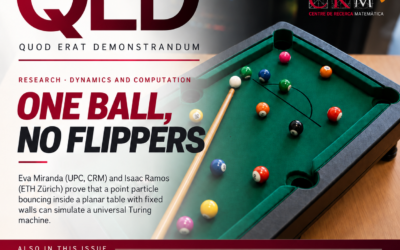
A single ball on a fixed table can compute: Eva Miranda and Isaac Ramos prove that two-dimensional billiards are Turing complete
Eva Miranda (UPC, CRM) and Isaac Ramos (ETH Zürich) show that a point particle bouncing inside a planar table with fixed walls can simulate a universal Turing machine, settling a question Cristopher Moore left open in 1990. The result grew out of a master’s project...
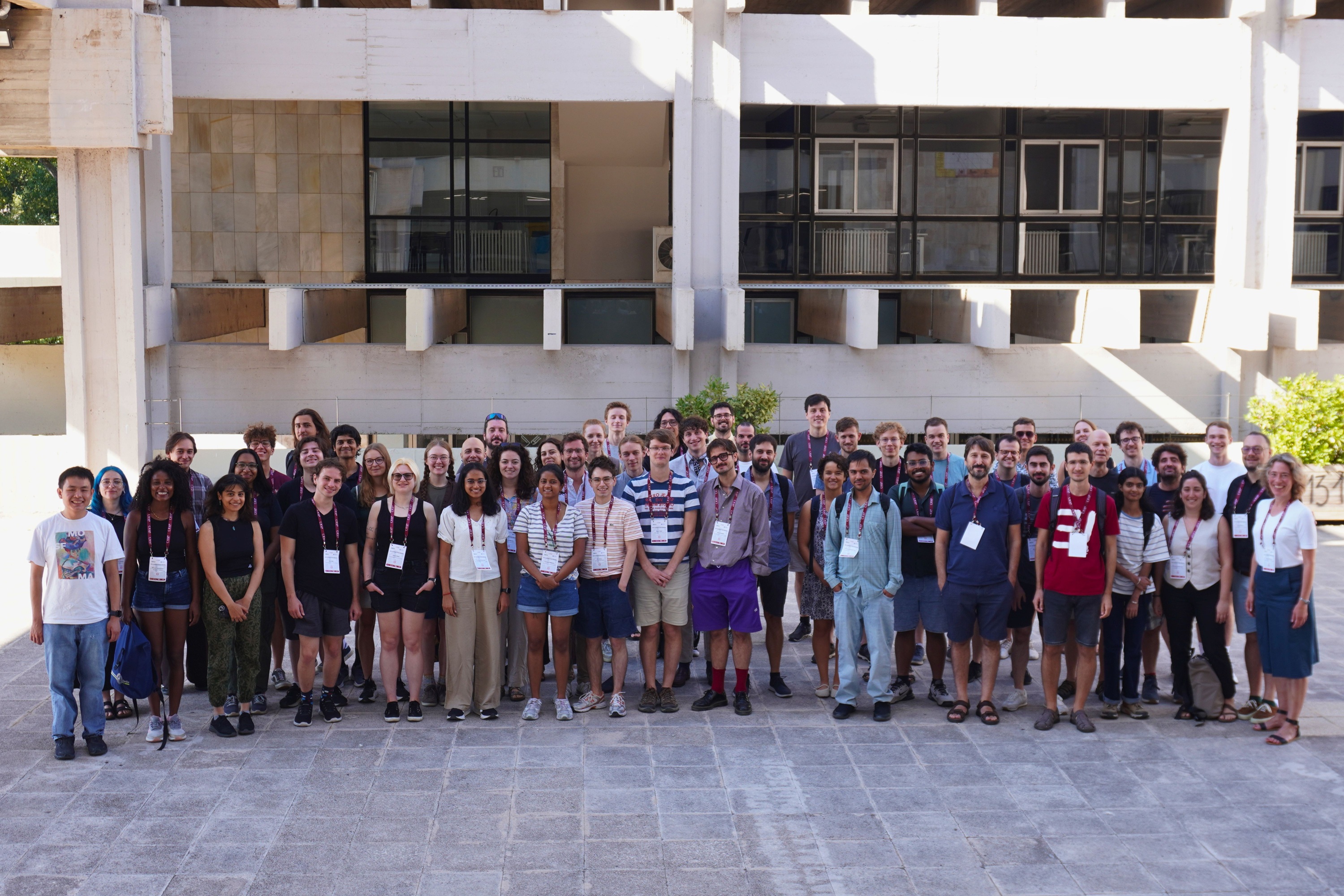
BMS-BGSMath Junior Meeting 2026: Barcelona and Berlin Strengthen Scientific Ties
From 2 to 4 September 2026, the Centre de Recerca Matemàtica (CRM) hosted the BMS-BGSMath Junior Meeting 2026, a three-day event jointly organised by the Berlin Mathematical School (BMS) and the Barcelona Graduate School of Mathematics (BGSMath), with the Centre de...
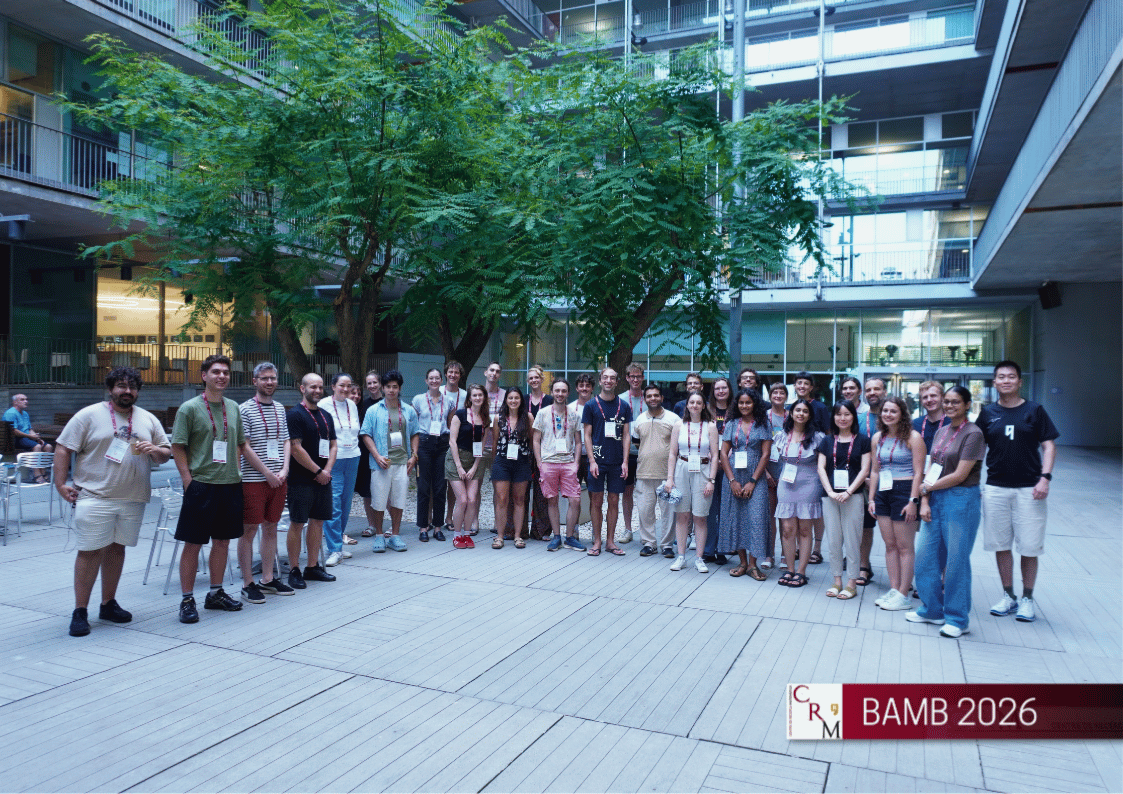
The CRM organises the 2026 Barcelona Summer School for Advanced Modeling of Behavior
The Centre de Recerca Matemàtica held the sixth edition of BAMB!, the Barcelona Summer School for Advanced Modeling of Behavior, from 12 to 23 July 2026 at the Parc de Recerca Biomèdica de Barcelona. Thirty early-career researchers from fourteen countries followed...