
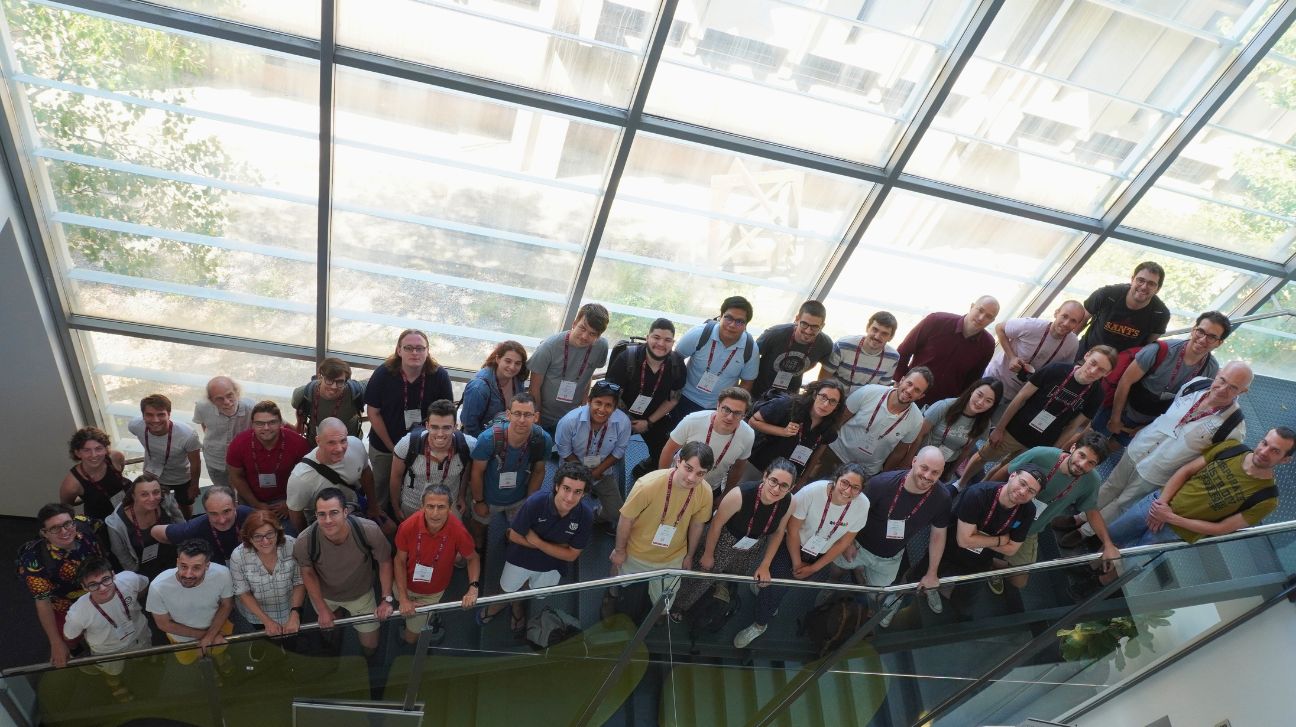
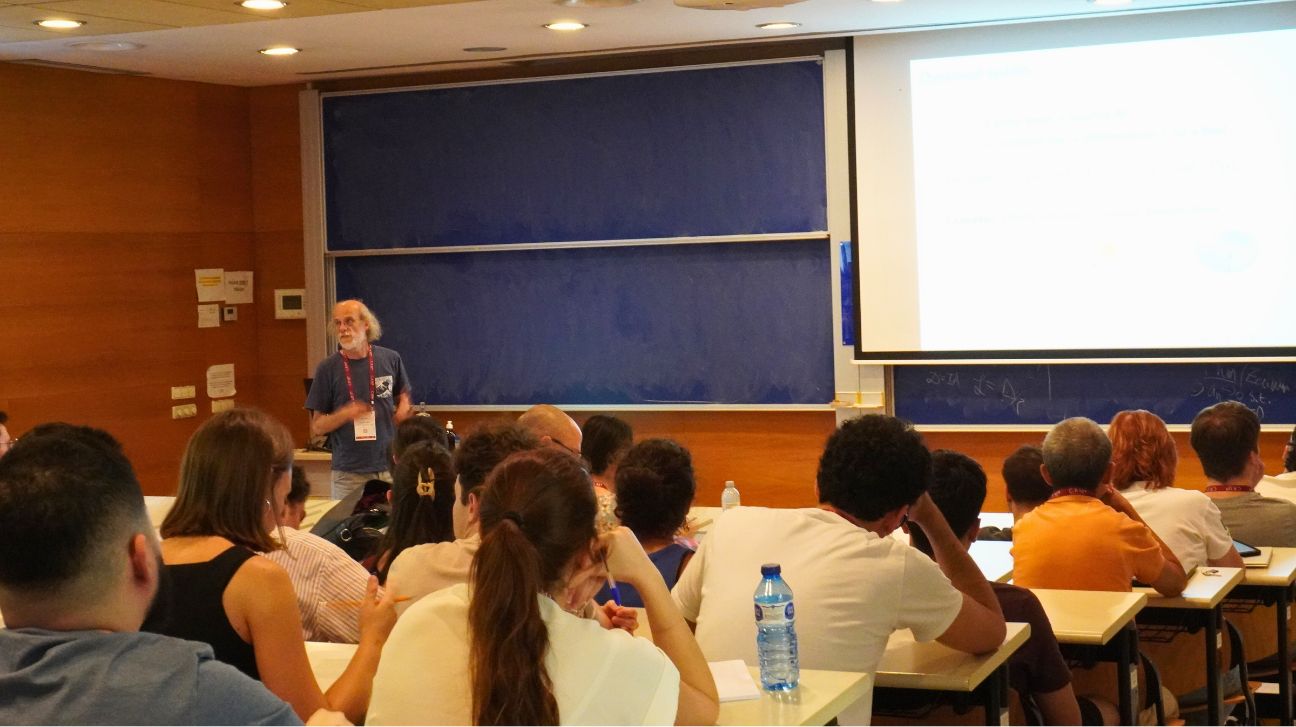
JISD 2025, held at the Centre de Recerca Matemàtica (CRM) from June 30 to July 4, 2025, featured four advanced minicourses delivered by Dmitry Dolgopyat (on averaging and Fermi acceleration in dynamical systems), Serena Dipierro (on the theory of nonlocal minimal surfaces and their connections to phase transitions), Luciano Mari (on Bochner-type techniques in Riemannian geometry and rigidity phenomena), and Sylvain Crovisier (on dynamical decompositions of surface diffeomorphisms). The program also included a lively poster session covering a wide range of topics highlighting the diversity and depth of current research in Dynamical Systems and PDEs.
The 2025 edition of the School on Interactions between Dynamical Systems and Partial Differential Equations (JISD) once again brought together a vibrant community of mathematicians at the Centre de Recerca Matemàtica (CRM). Since its inception in 2002, JISD has grown into a premier international summer school, and this year’s edition reaffirmed its role as a catalyst for collaboration and innovation in the fields of Dynamical Systems and Partial Differential Equations (PDEs).
With a strong cohort of early-career researchers and a diverse international presence, JISD 2025 offered a dynamic environment for learning, networking, and discovery. The school featured four advanced minicourses, a poster session showcasing cutting-edge research, and countless informal discussions that sparked new ideas and potential collaborations.
The heart of JISD 2025 lay in its four intensive minicourses, each led by a distinguished expert:
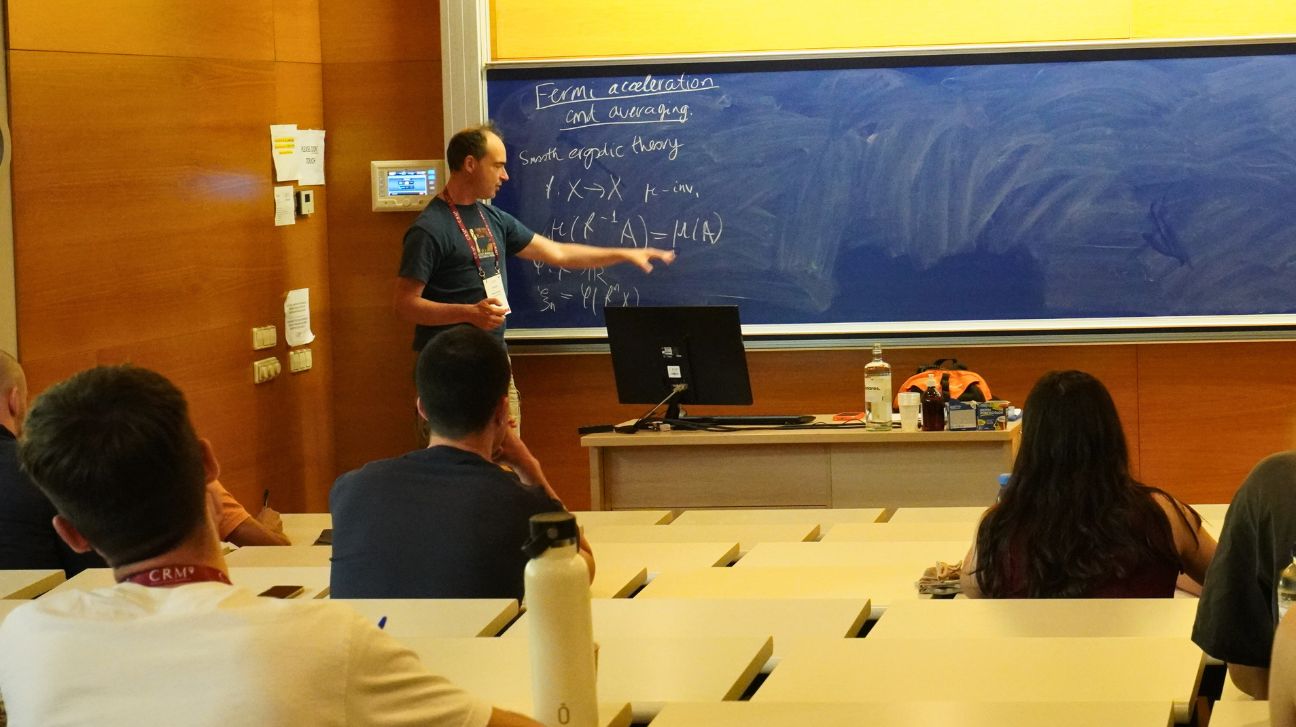
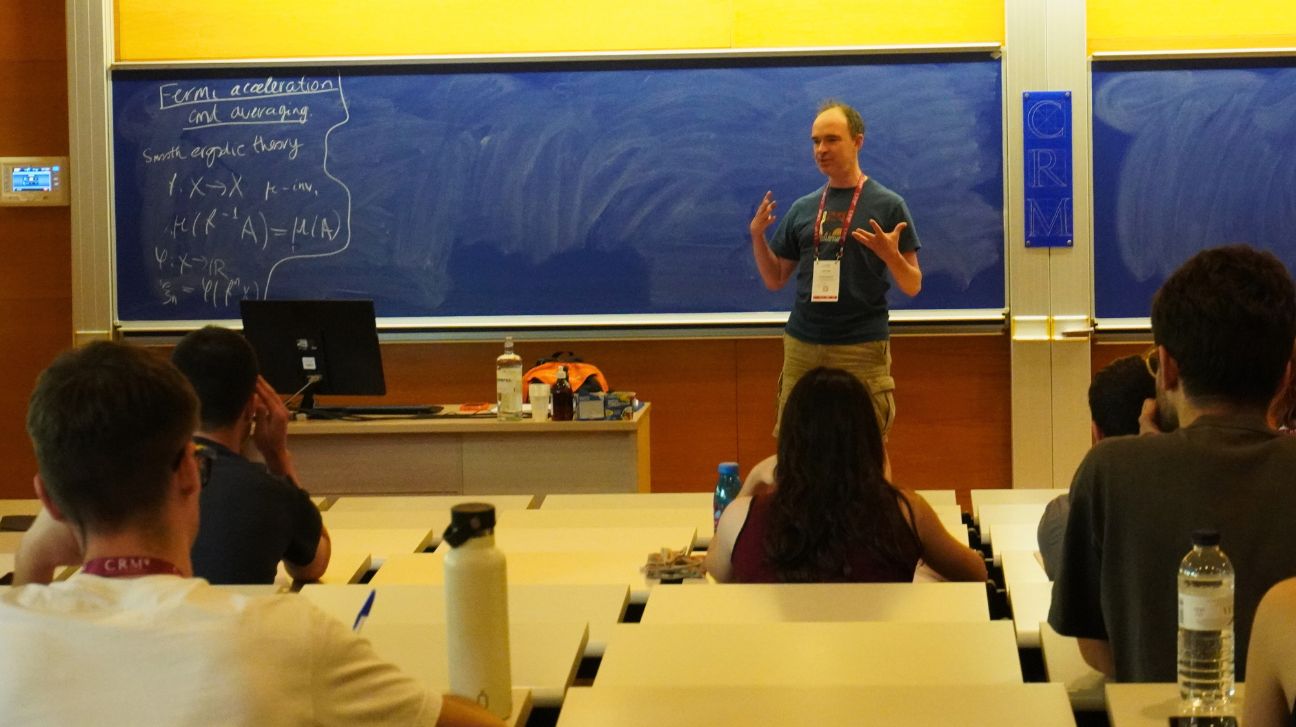
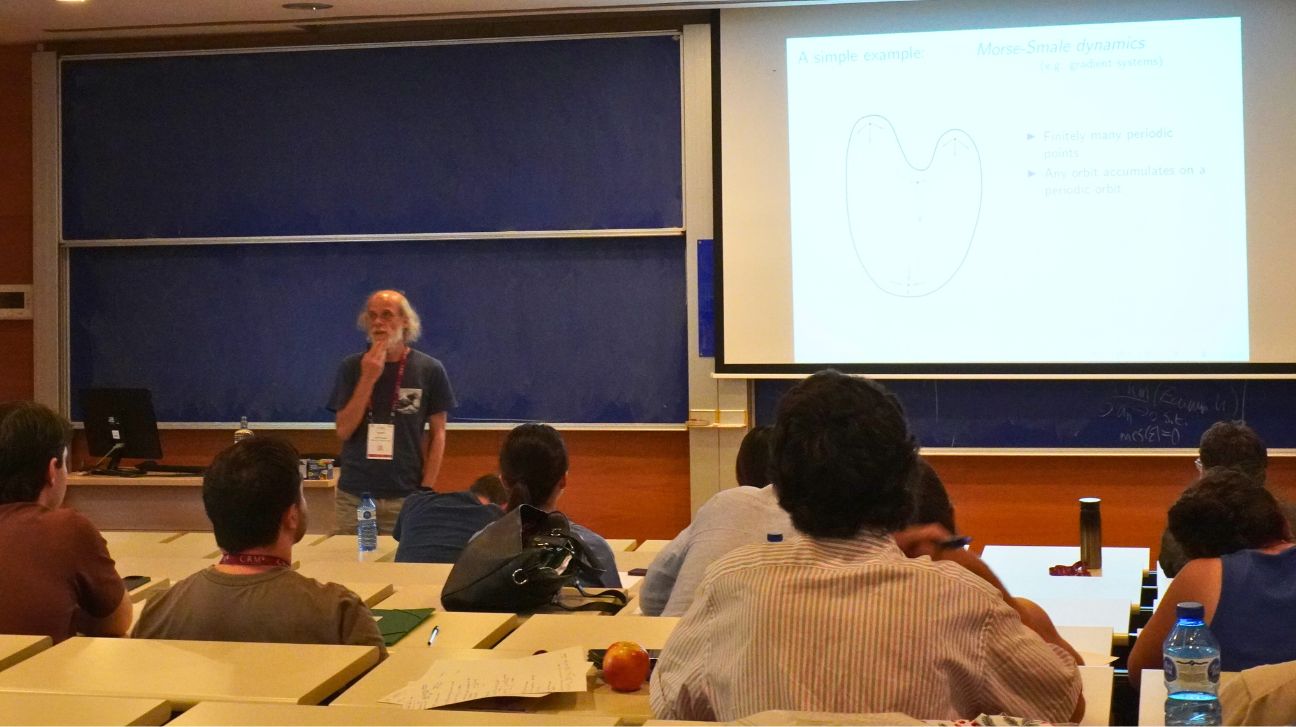
- Dmitry Dolgopyat(University of Maryland) explored Averaging and Fermi Acceleration, revisiting classical tools in dynamics and presenting new insights into energy evolution for a particle with the environment.
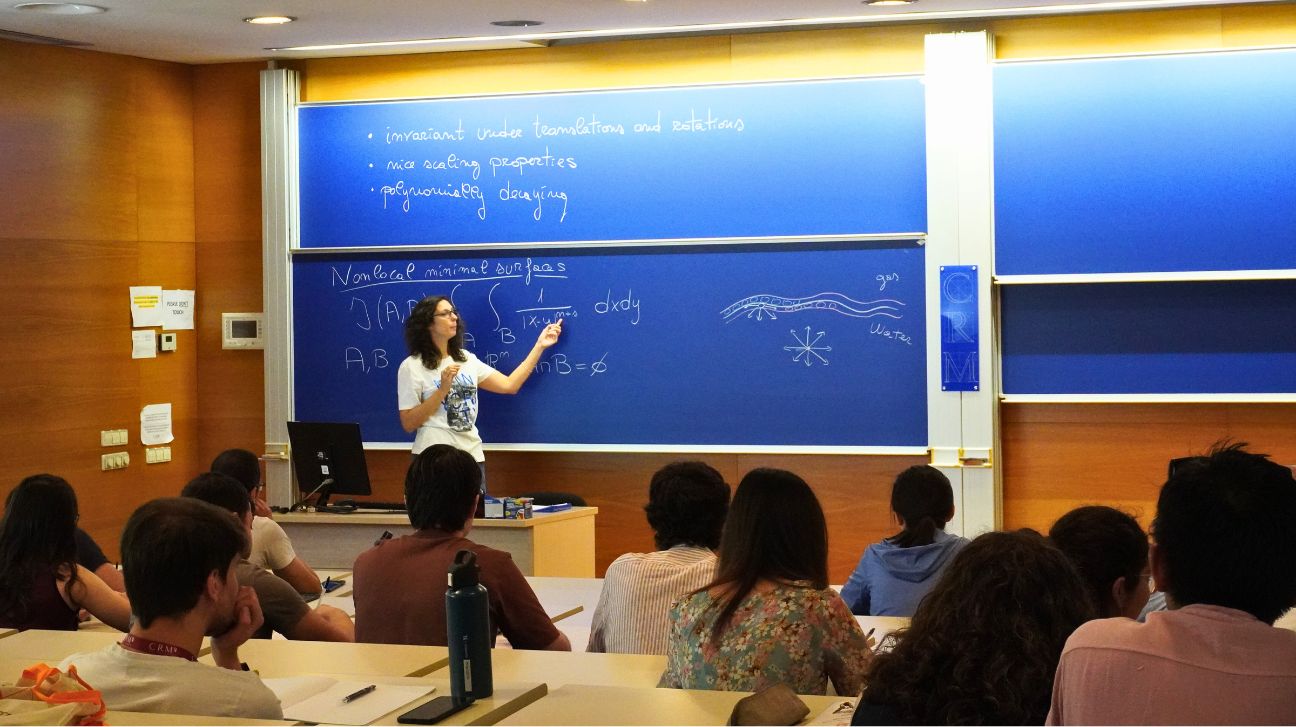
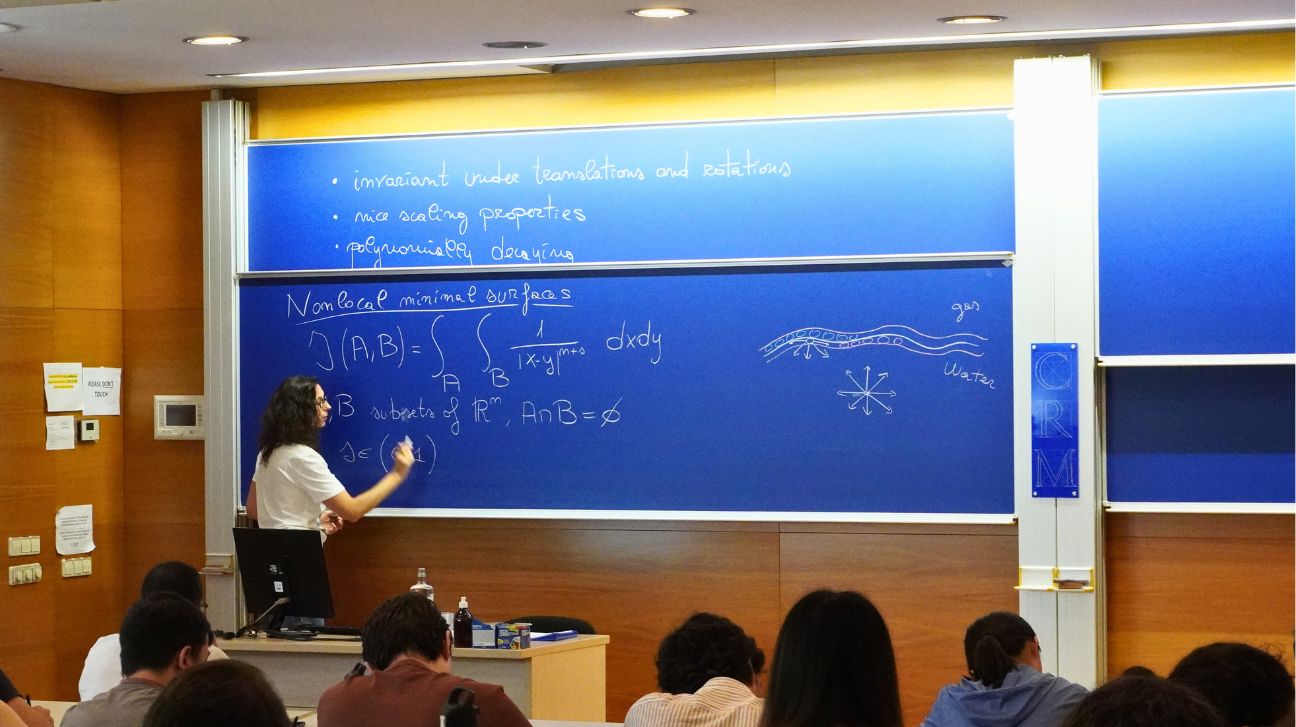
- Serena Dipierro(University of Western Australia) introduced the theory of Nonlocal Minimal Surfaces, focusing on interior regularity, boundary behavior, and connections to phase transitions.
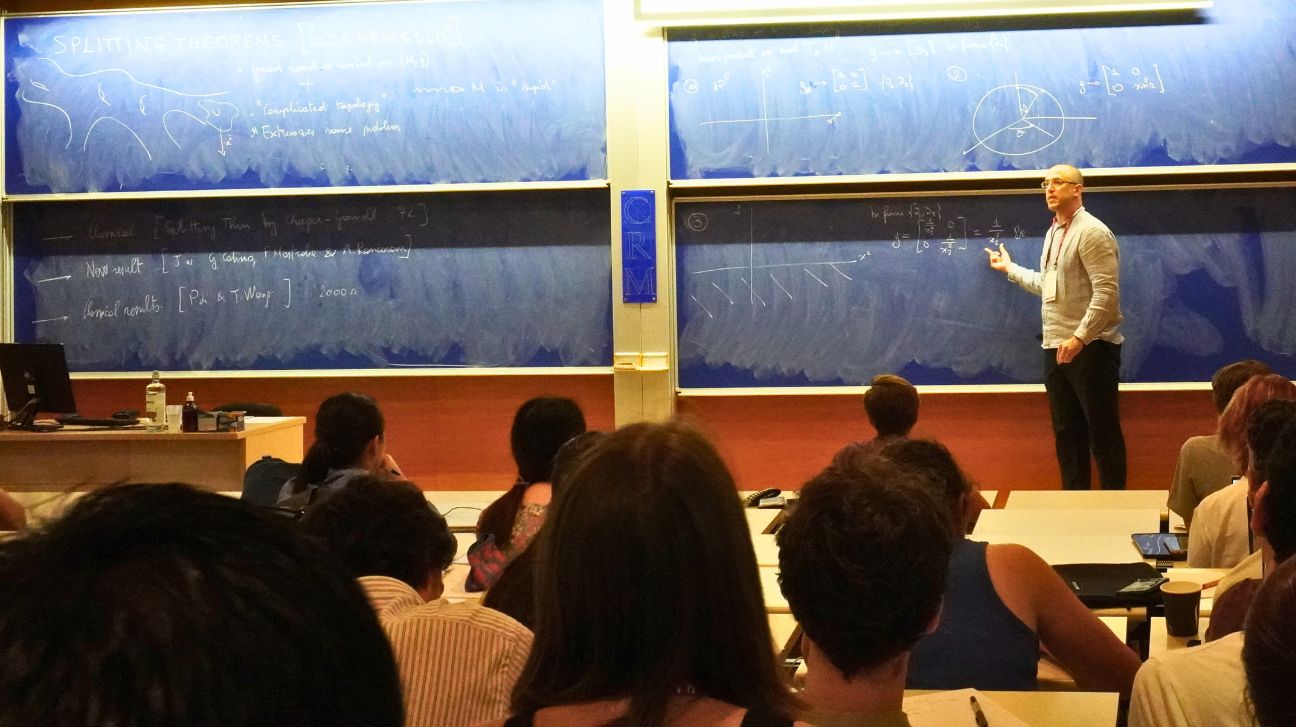
- Luciano Mari(Università degli Studi di Milano Statale) presented Bochner-type techniques in Riemannian Geometry, highlighting how the stability/finite index of a Schrodinger operator naturally appearing in the problem forces the rigidity phenomenon.
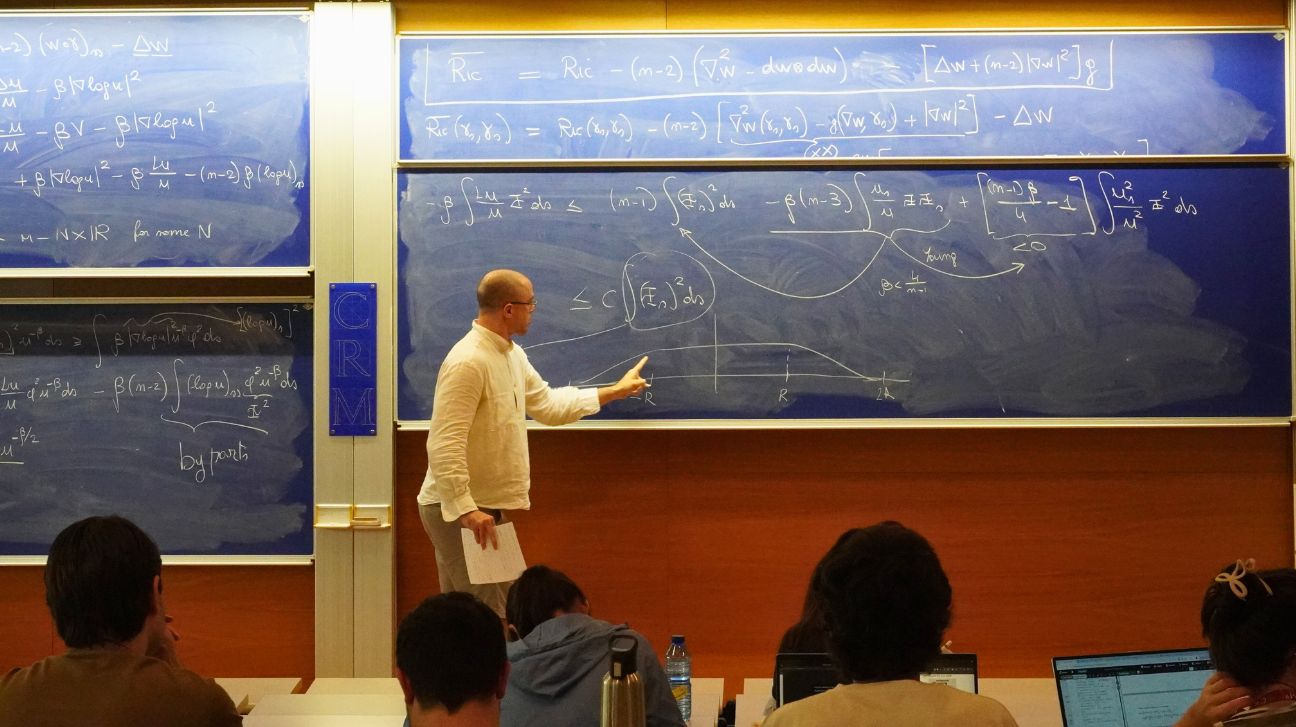
- Sylvain Crovisier(Université Paris-Saclay) delivered a captivating course on Dynamical Decompositions of Surface Diffeomorphisms, examining infinite decompositions and their properties.
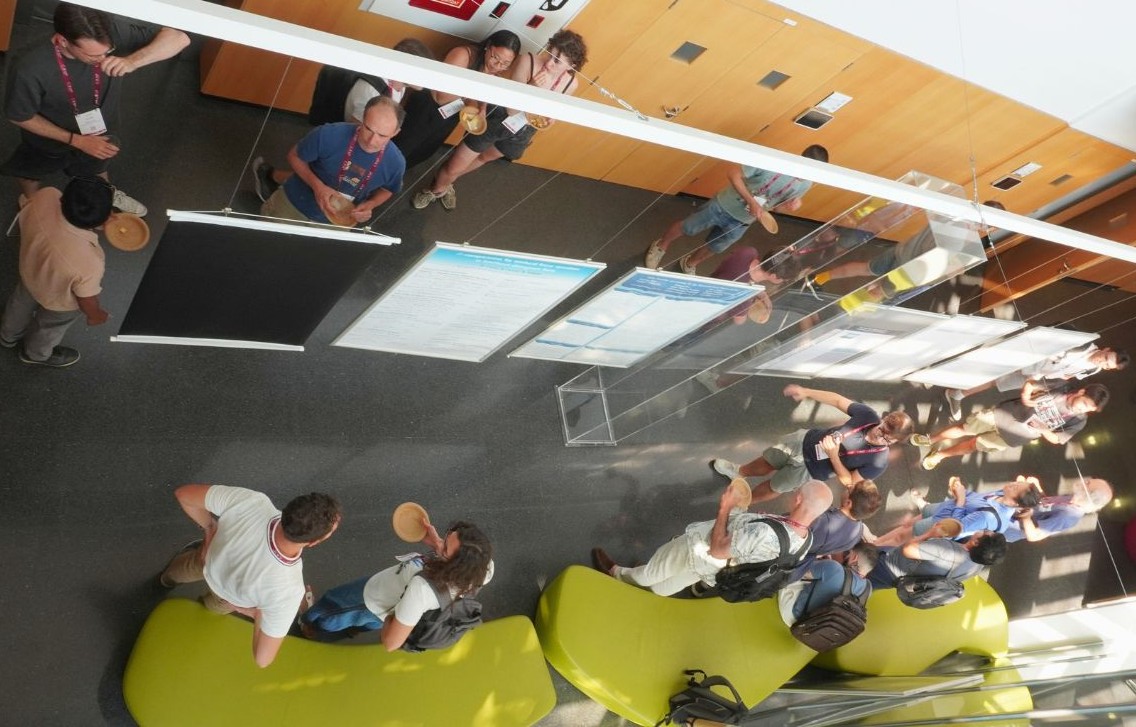
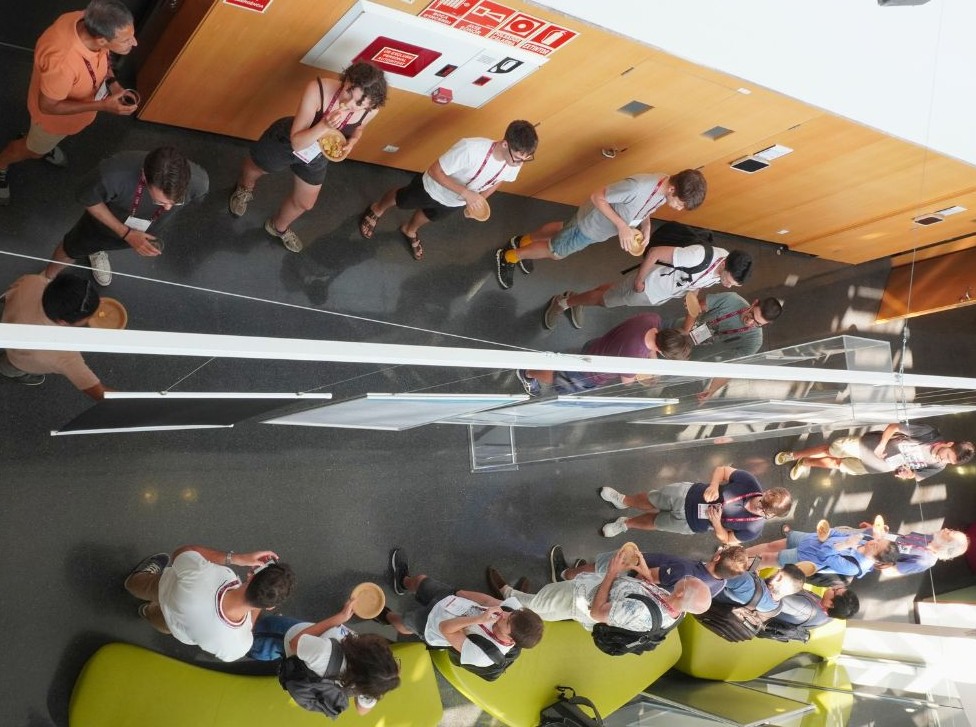
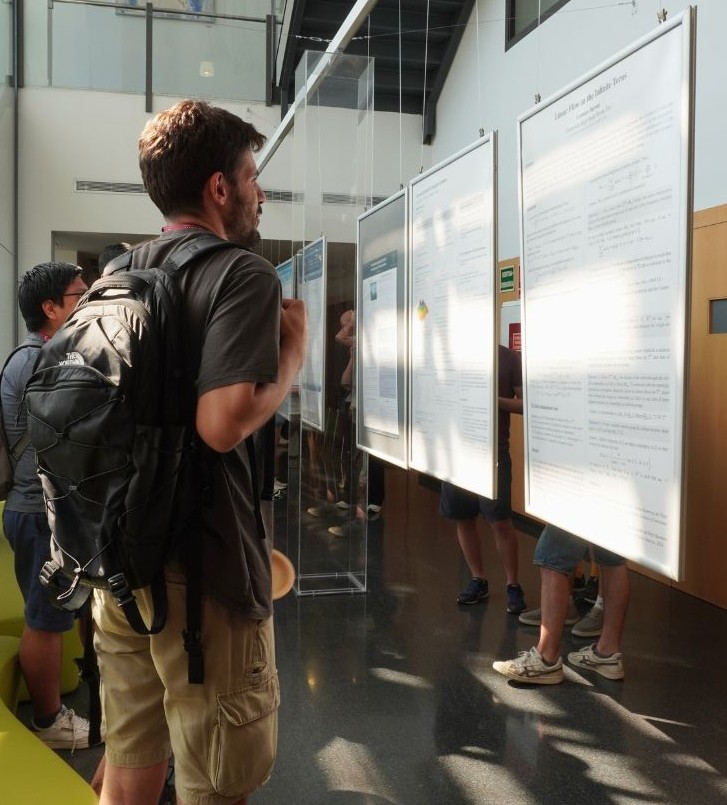
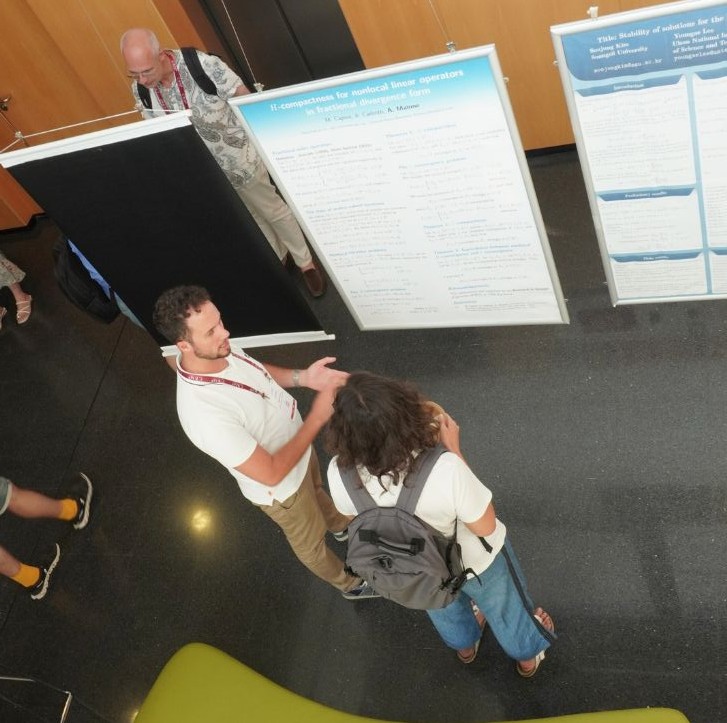
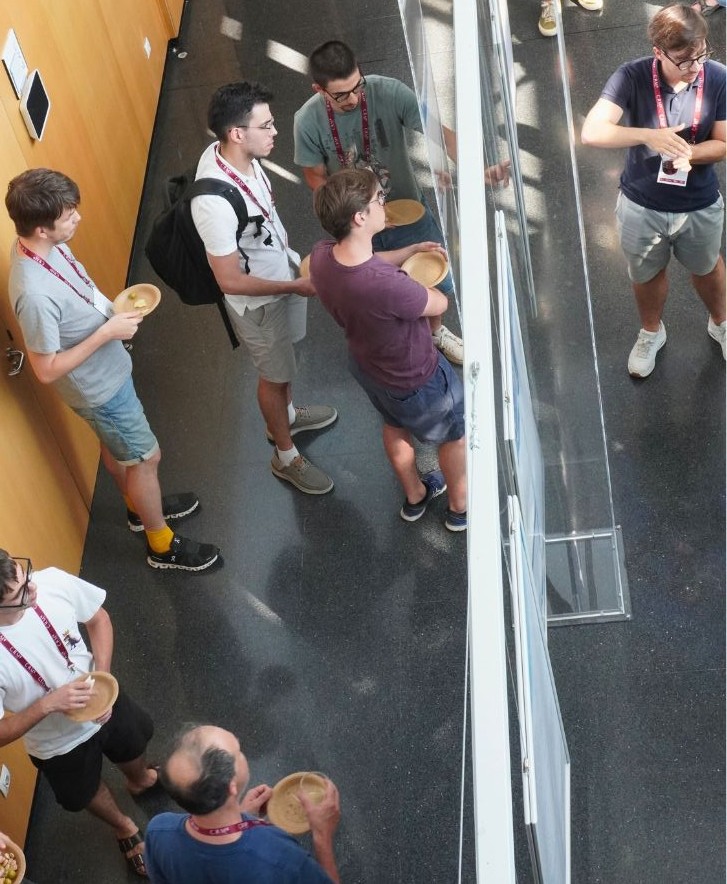
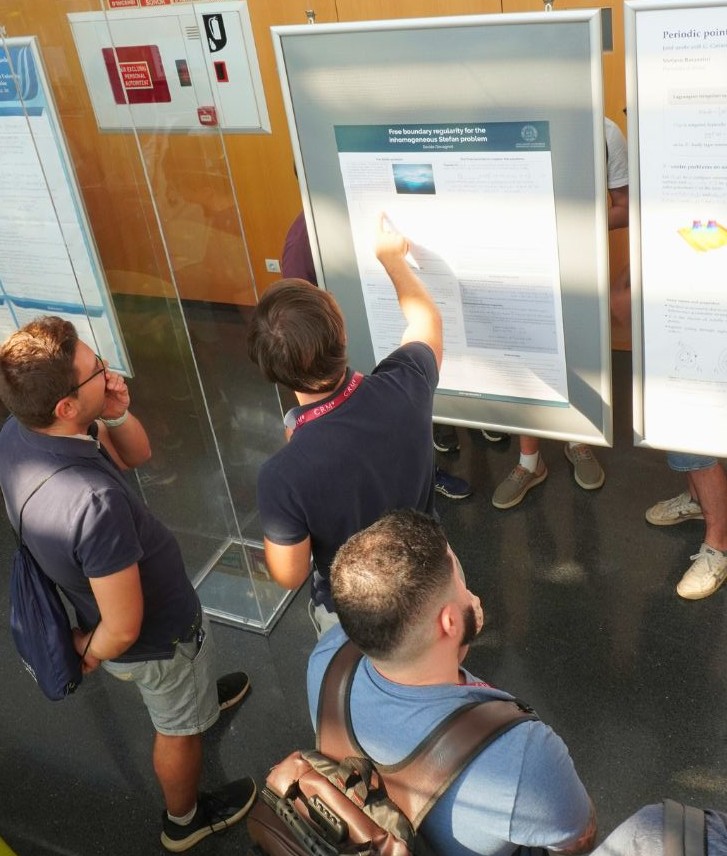
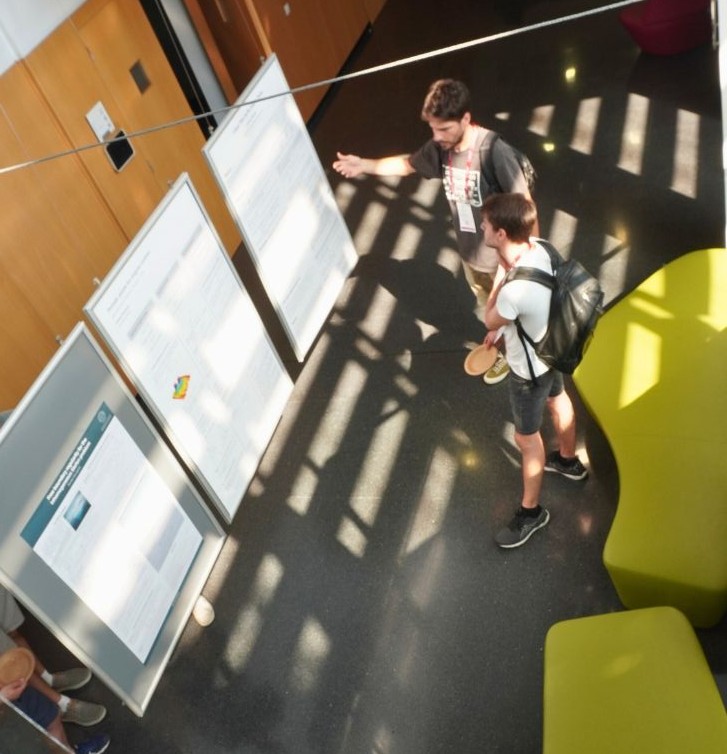
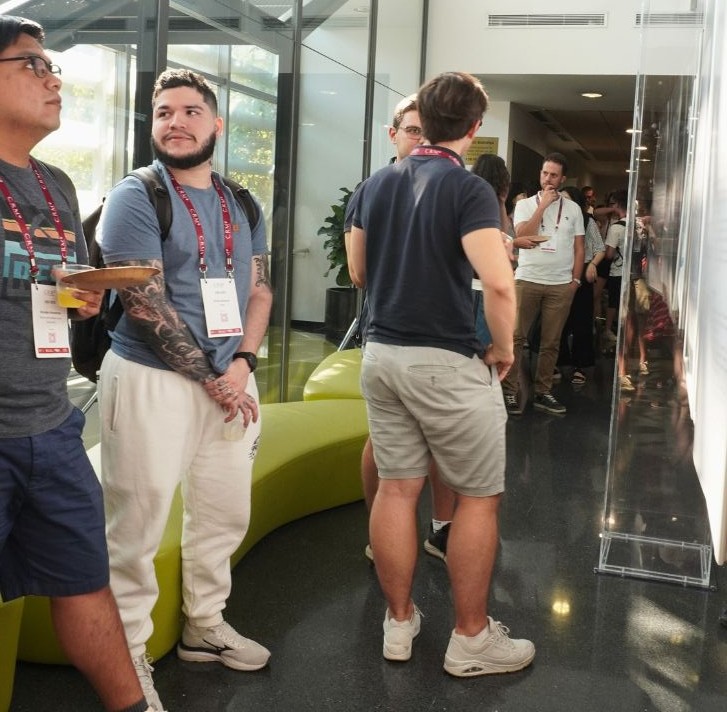
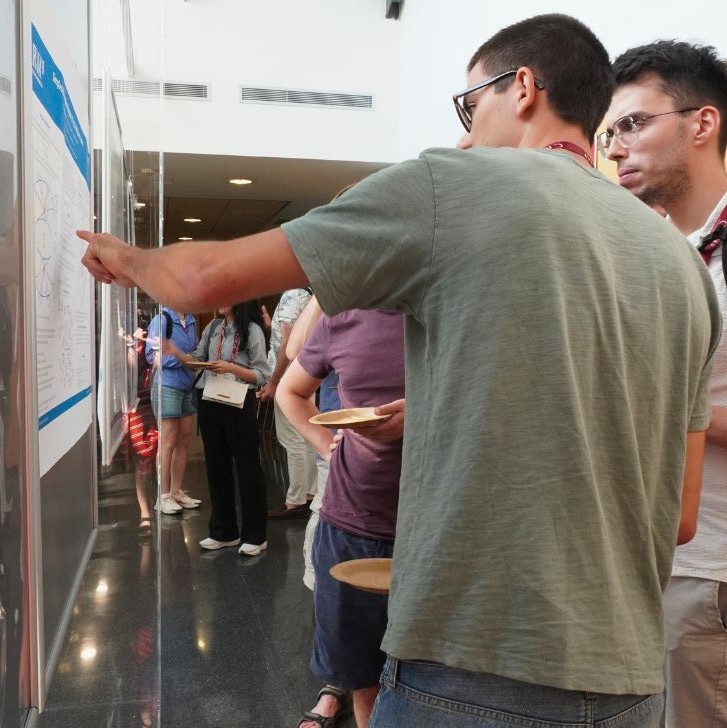
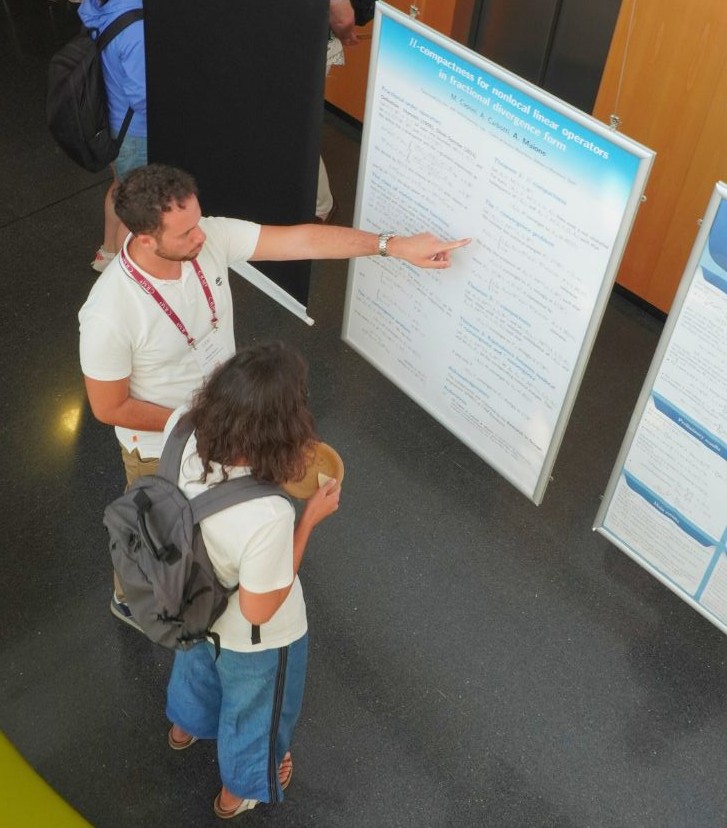
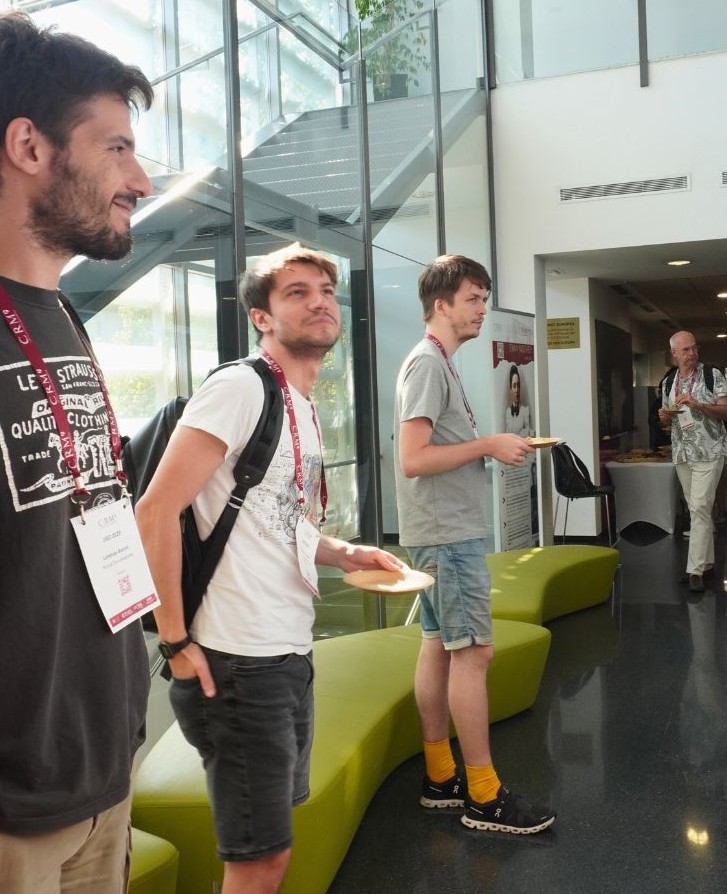
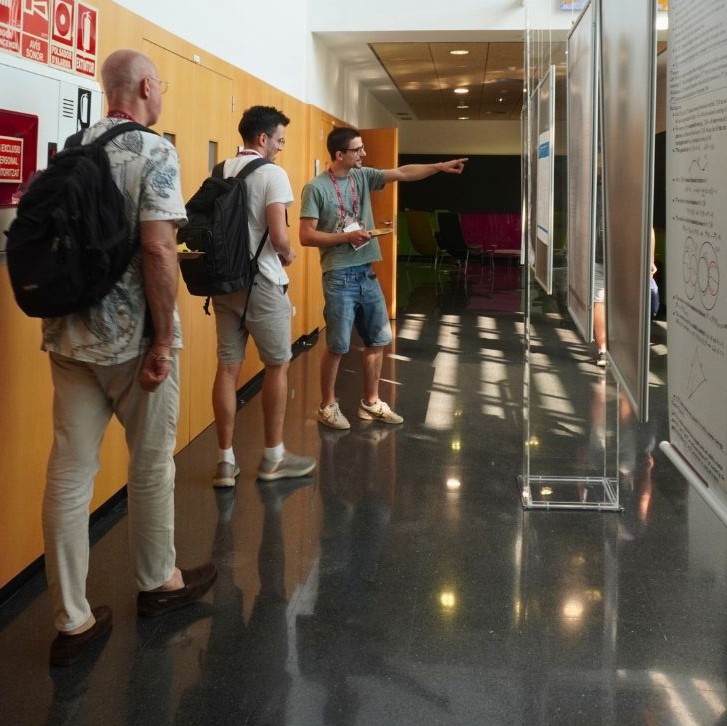
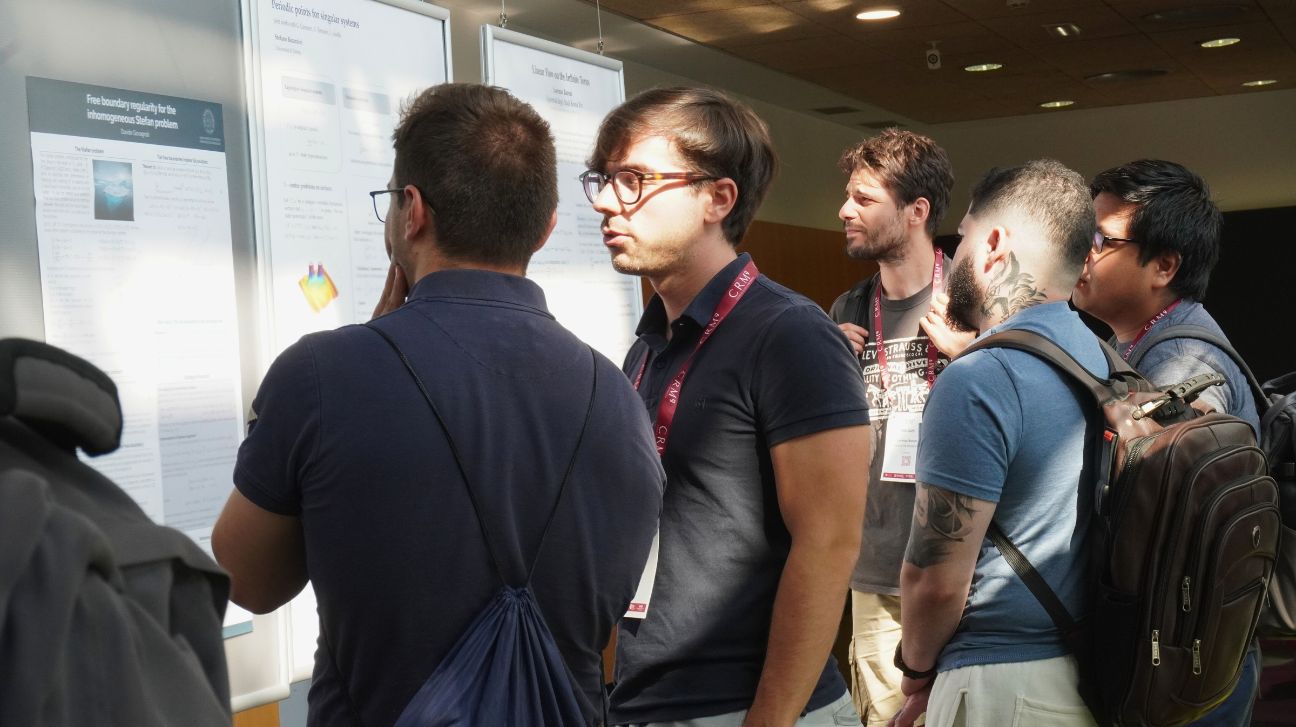
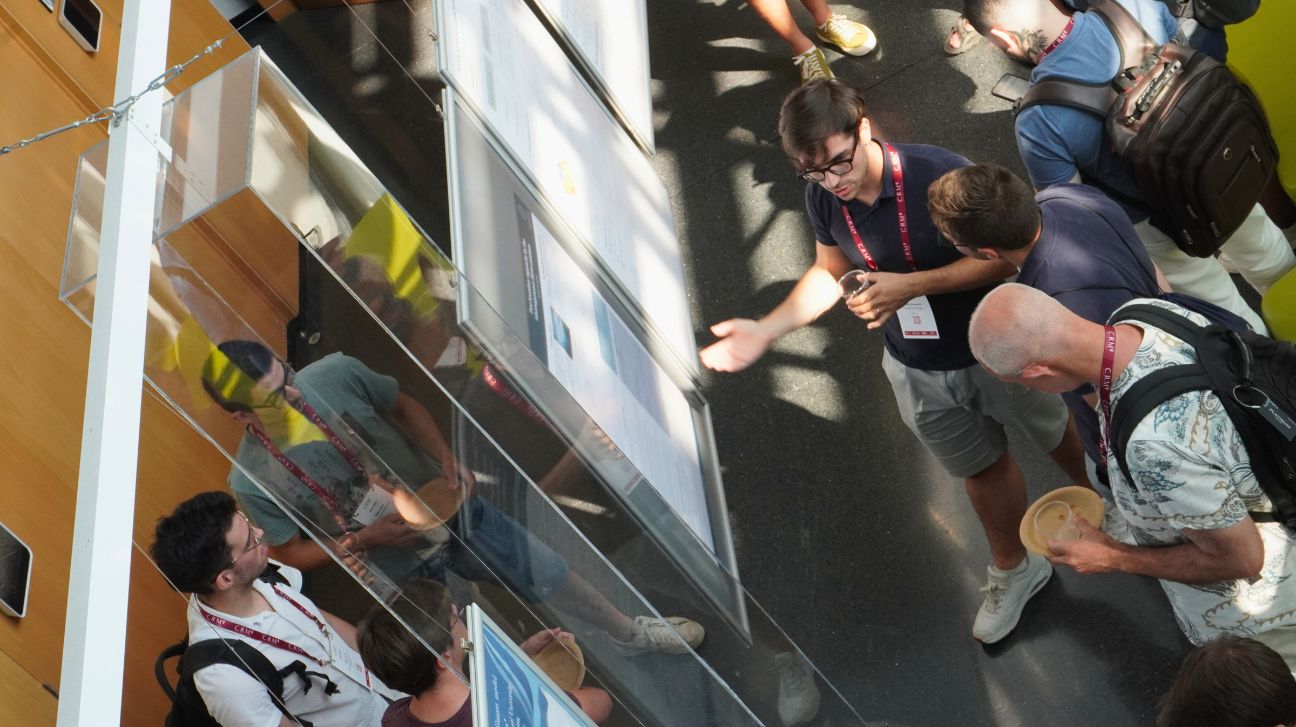
The poster session was a highlight of the week, offering a platform for young researchers to present their work and engage with peers and senior mathematicians. The diversity of topics reflected the richness of the field:
- Stefano Baranzini(University of Turin) explored Periodic Points for Singular Systems, analyzing the N-centre problem, one-dimensional atom model, and integrable deformations of the Kepler problem.
- Lorenzo Baroni(Universit`a degli Studi Roma Tre) discussed Linear Flows on the Infinite Torus, showing that classical characterizations hold to infinite dimensions when the frequency set generates a free abelian group. He also described orbits whose closures are locally homeomorphic to a product of an interval and a Cantor set.
- Huub de Jong(University of British Columbia) examined Least Period Sets of Finitely Presented Systems, linking periodicity in dynamical systems to zeta functions and symbolic dynamics.
- Sallah Eddine Boutiah(Laval University & Setif-1 University) presented work on Keller-Segel Type Particle Systems, focusing on stochastic differential equations with critical interactions.
- Davide Giovagnoli(University of Bologna) addressed Free Boundary Regularity in the Inhomogeneous Stefan Problem, extending classical results to more general settings with heat sources.
- Marc Homs-Dones(University of Warwick) explored the Minimal Bifurcation Diagram of Torus Flows, identifying the simplest bifurcation n diagram of such family would contain a certain list of bifurcation points and curves.
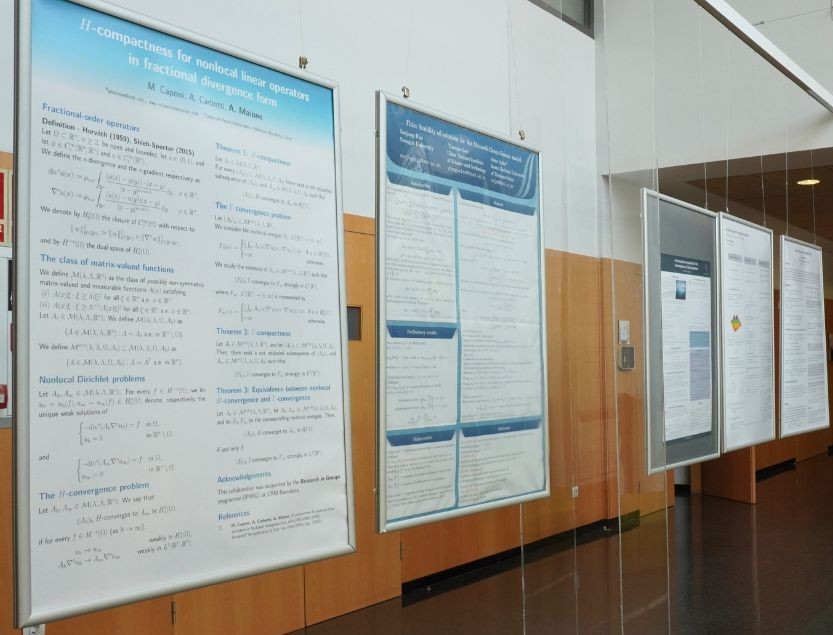
- Alberto Maione(CRM) introduced a novel compactness result for Nonlocal Linear Operators in Fractional Divergence Form. the symmetric case, he established an equivalence between nonlocal H-convergence and Γ-convergence, leading to a fully variational proof of H-compactness.
- Edhin Mamani(Federal University of Minas Gerais) presented a deep investigation into Lagrangian Foliations Invariant by the Geodesic Flow of Manifolds Without Conjugate Points. Their work generalizes classical results from negatively curved manifolds to more general settings, showing that under certain conditions, horospherical foliations are the unique Lagrangian invariant continuous foliations of the unit tangent bundle.
- Juhee Sohn(Korea National University of Transportation) studied an elliptic system arising from the Maxwell-Chern-Simons model, involving two distinct parameters.
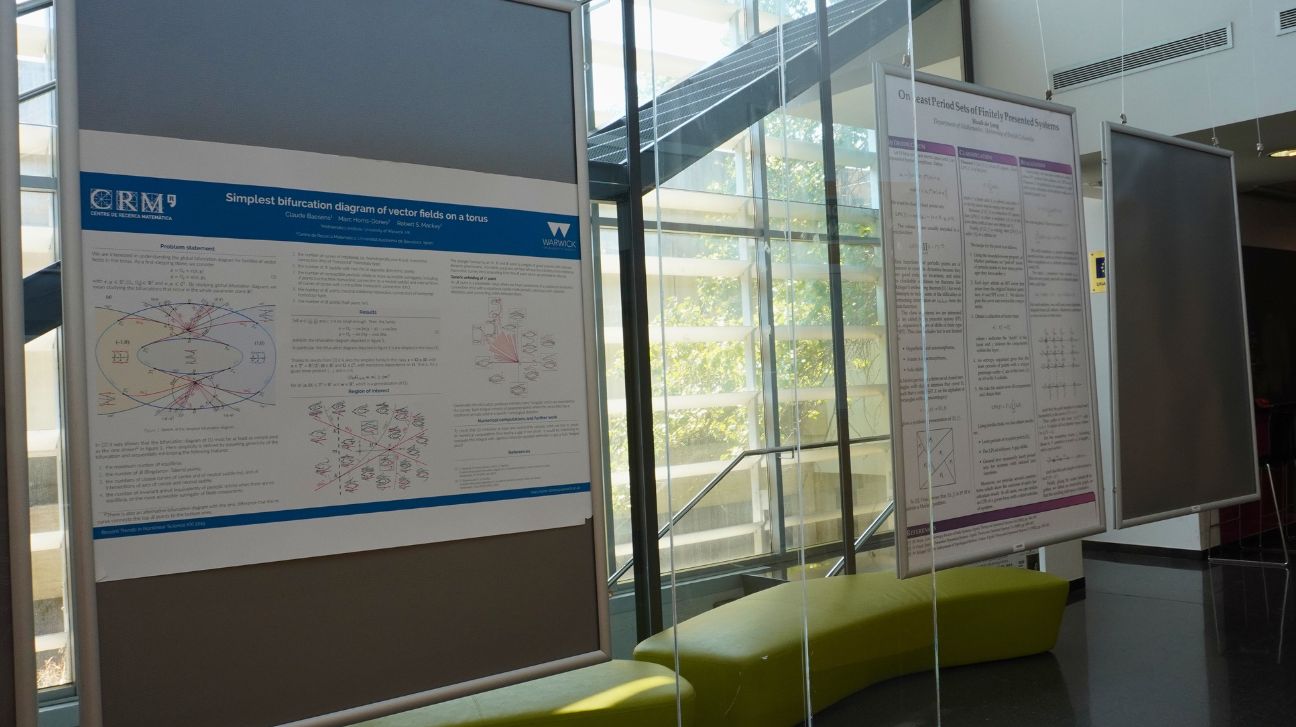
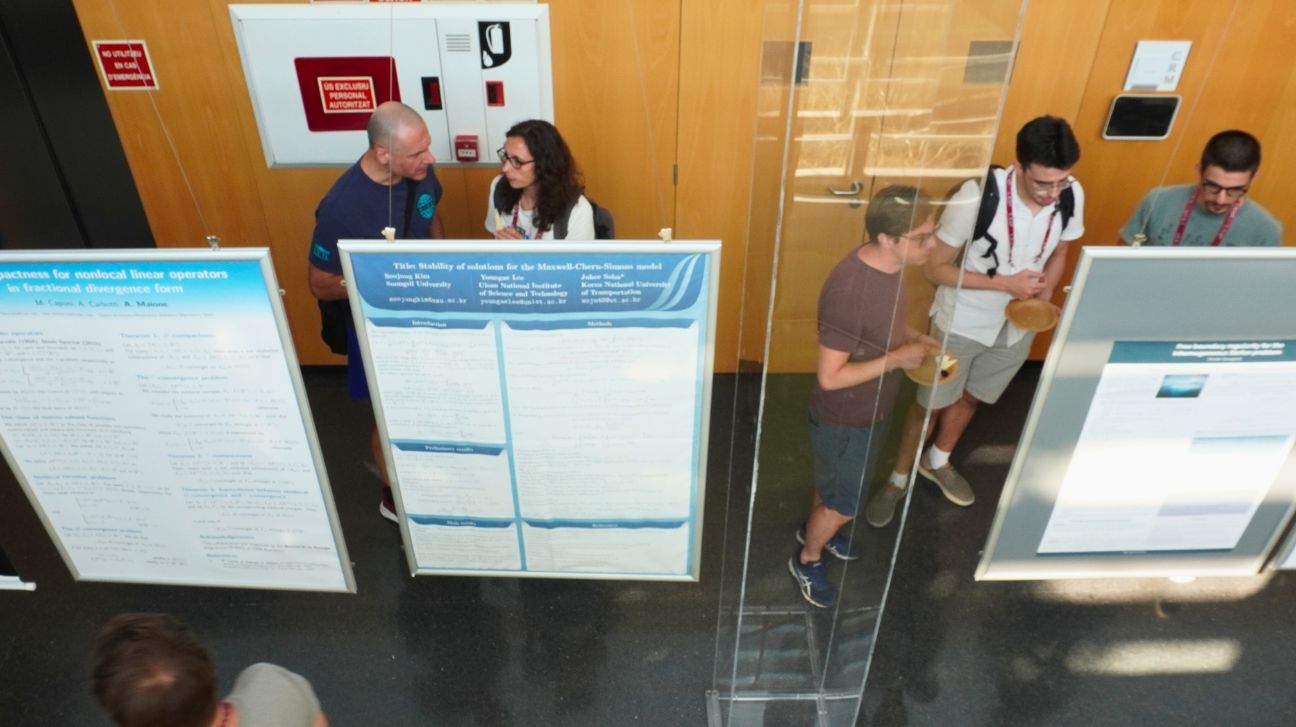
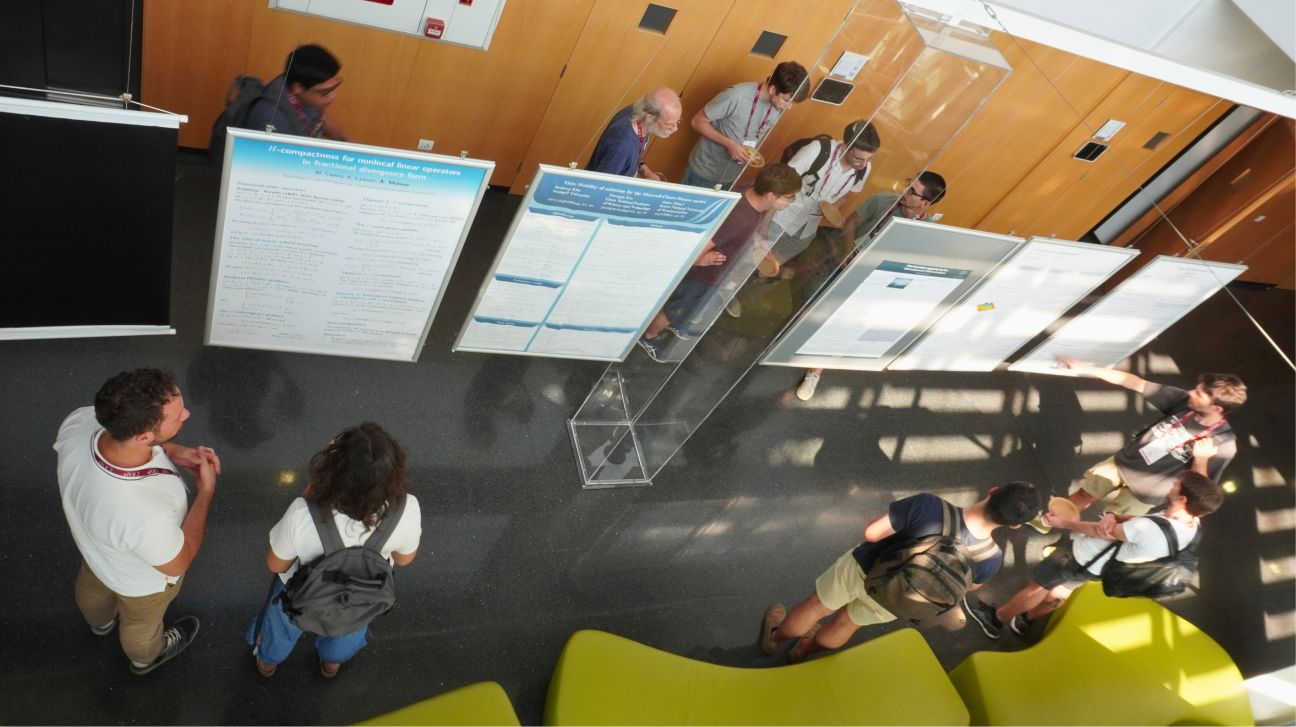
JISD 2025 reaffirmed the enduring value of bringing together diverse mathematical perspectives within a collaborative and intellectually rigorous environment. The depth of the lectures and the originality of the poster contributions not only reflect the vitality of the field but also its dynamic evolution. Beyond the results presented, the school fostered a cohesive network of researchers united by a shared mathematical language and a commitment to analytical precision. As this edition concludes, it leaves behind a strengthened community, new research directions in motion, and the clear conviction that the dialogue between Dynamical Systems and PDEs will remain a fertile ground for mathematical discovery in the years to come.
|
|
CRM CommNatalia Vallina
|

The CRM opens the academic year and unveils its Directors’ Gallery
A review of the year, the Communication Plan 2026–2030 and three research talks filled the morning of 19 October.The unveiling of the Directors’ Gallery.CRM CommPau VarelaCRMComm@crm.catGet the latest CRM news and activities in your inbox.Recent...
The CRM Mentoring Programme, as Told by One of Its Pairs
PhD student Joaquim Duran and mathematician Robert Cardona, one of the pairs in the CRM Mentoring ProgrammeJoaquim Duran (left) and Robert Cardona.CRM CommPau VarelaCRMComm@crm.catGet the latest CRM news and activities in your inbox.Recent...
When the reward comes within reach, the brain changes what it compares
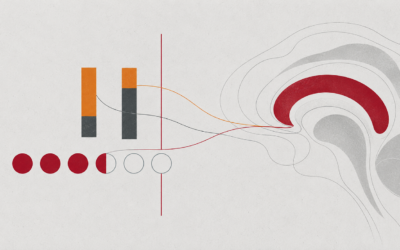
As the tokens piled up, choices got faster and more accurate at the same time. The yardstick for judging each offer had moved.CRM CommPau VarelaCRMComm@crm.catGet the latest CRM news and activities in your inbox.Recent newsletters →Two subjects...

Almost every automaton can be reset with a short word
Guillaume Chapuy (Université Paris Cité, CNRS) and Guillem Perarnau (UPC, CRM) have shown that a random finite automaton with n states can, with high probability, be reset by a word of length of order √n log n. The result, published in ACM Transactions on Algorithms, pins the exponent at 1/2, the lower end of a decade of numerical estimates, and addresses the random version of the synchronization problem behind a conjecture Ján Černý posed in 1964 and which still remains open.
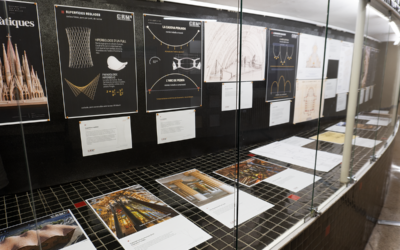
Exposició ‘Les matemàtiques de Gaudí’

CRM quod erat demonstrandum | 48

ADA: Decoding Brain Signals Misaligned in Time
The study addresses a key limitation of current brain decoding techniques: the difficulty of interpreting internal mental processes whose temporal dynamics vary from trial to trial.Decoding what is happening in a person’s mind from their brain activity is one of the...
Rare curves, many points: Christophe Ritzenthaler and Rachel Pries on their research and the work around it
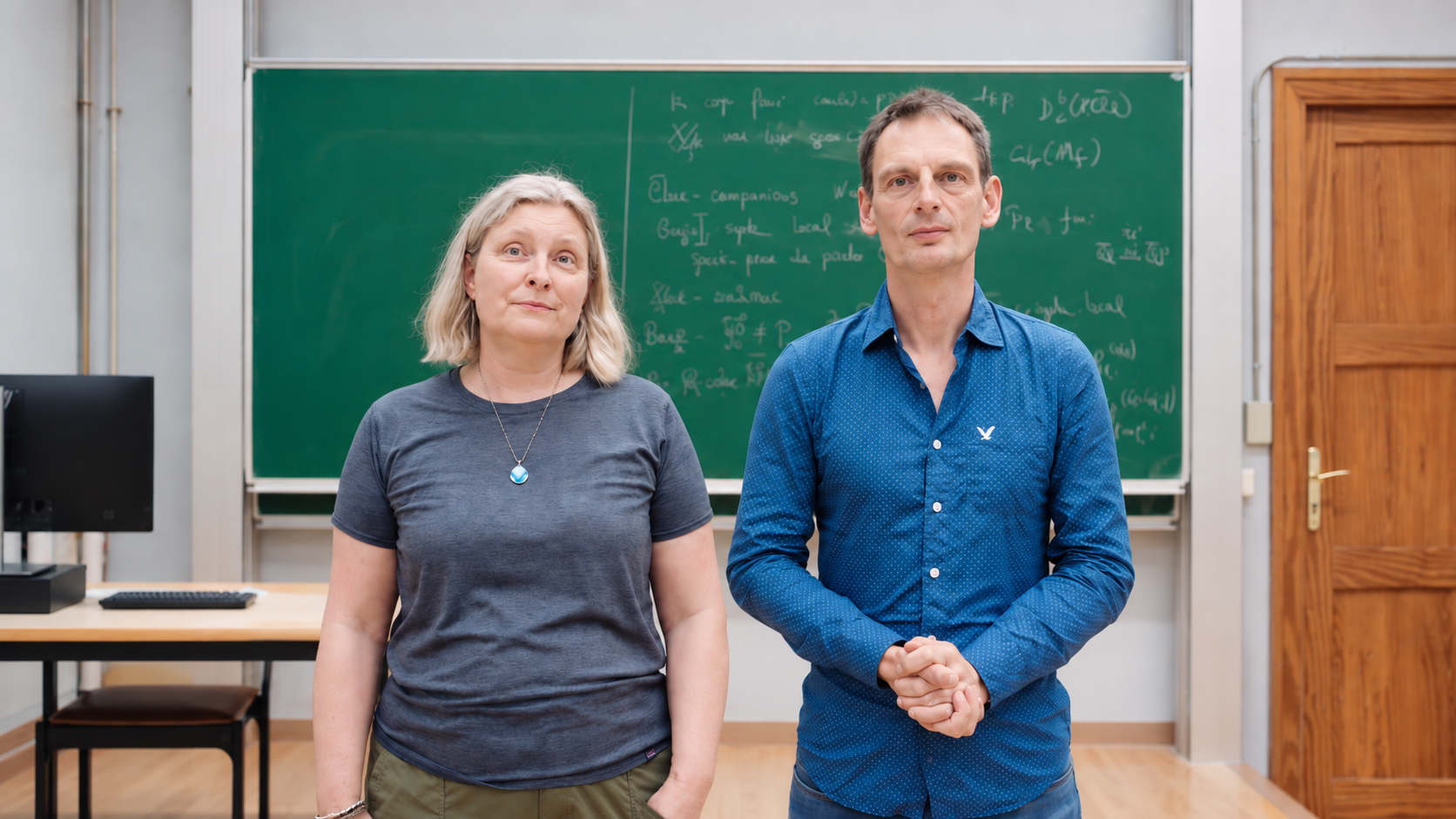
Christophe Ritzenthaler (Université de Rennes) and Rachel Pries (Colorado State University) both work on curves over finite fields: he hunts curves with as many points as possible, she hunts curves that almost never occur. In conversation with the CRM during their...

Call open for the 2027 Ferran Sunyer i Balaguer Prize
The Ferran Sunyer i Balaguer Foundation is accepting submissions for its 2027 prize, which awards 15,000 euros and publication in Birkhäuser's Progress in Mathematics series to an expository monograph on an active area of mathematical research. The deadline is 27...
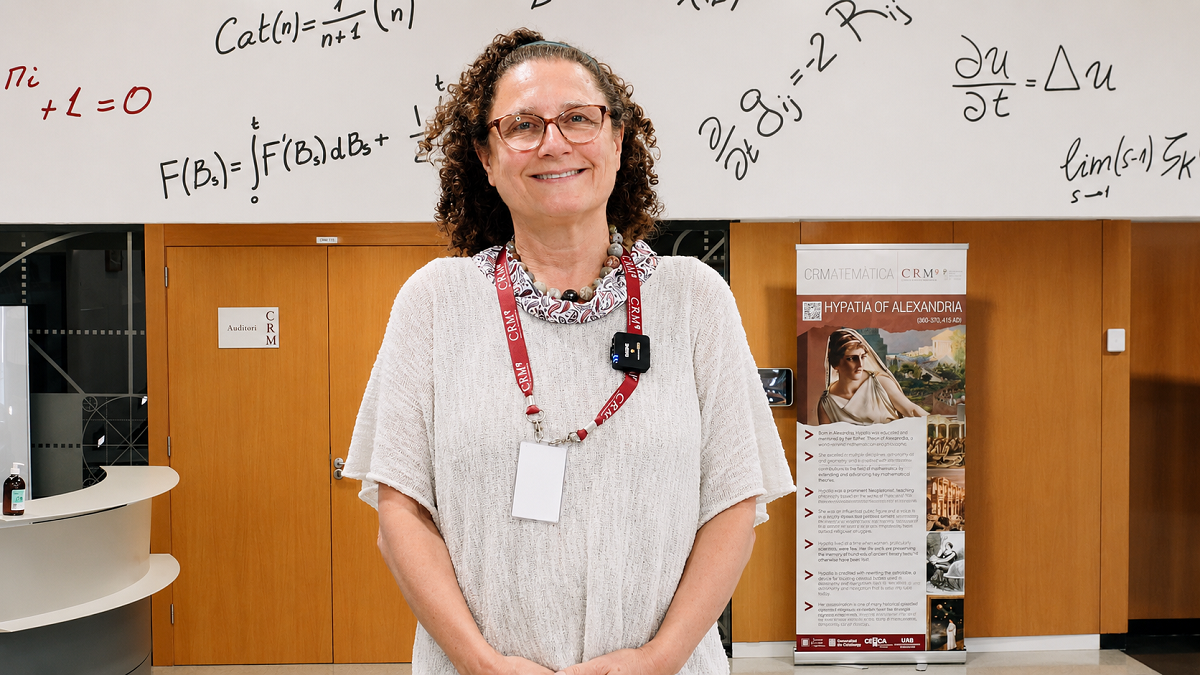
Susanna Terracini delivers the CRM Colloquium 2026
Susanna Terracini (Università di Torino) delivered the CRM Colloquium 2026 on 14 July, presenting a rigidity result for Kepler billiards obtained with Stefano Baranzini, Vivina Barutello and Irene De Blasi. She was at the centre as a member of the CRM Scientific...
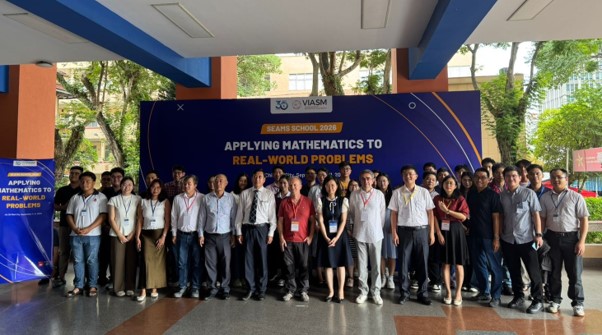
Ho Chi Minh City hosts the SEAMS School on applying mathematics to real-world problems
Students from across the region took courses and worked on group projects at a school co-organised by CRM researcher Tim Myers.CRM CommPau VarelaCRMComm@crm.catGet the latest CRM news and activities in your inbox.Recent newsletters →Between 4 and...

A single ball on a fixed table can compute: Eva Miranda and Isaac Ramos prove that two-dimensional billiards are Turing complete
Eva Miranda (UPC, CRM) and Isaac Ramos (ETH Zürich) show that a point particle bouncing inside a planar table with fixed walls can simulate a universal Turing machine, settling a question Cristopher Moore left open in 1990. The result grew out of a master’s project...