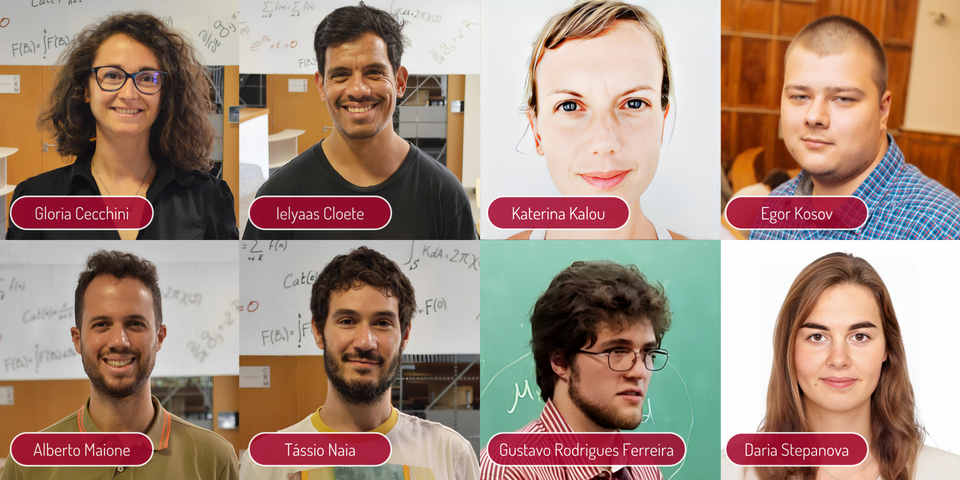
We start the academic year 2023-24 with the addition of eight new researchers to our groups, all of them from different backgrounds and expertise. This new batch of talent joining our community includes four postdoctoral fellows hired thanks to the Maria de Maeztu Unit of Excellence award and one Marie Sklodowska-Curie fellow.
The Centre de Recerca Matemàtica (CRM) is thrilled to extend a warm welcome to eight new postdoctoral researchers who have joined our mathematical community. Hailing from diverse international backgrounds, including Italy, Brazil, New Zealand, Greece and Russia, they bring their unique perspectives and expertise to enrich our diverse research landscape.
Below you will find a short presentation for each of them. Benvinguts, bienvenidos, welcome, benvenuto, bem-vindos, haere mai, καλώς ήρθατε and Добро пожаловать!
Gloria Cecchini (Computational Neuroscience) graduated with both a Bachelor’s and a Master’s in mathematics at the University of Florence (Italy). She earned her PhD in physics, at the University of Aberdeen (UK) and Potsdam (Germany), focusing on improving network inference by overcoming statistical limitations. After the PhD, she moved back to Italy where she did a 2-year postdoc in calcium imaging analysis. In particular, she investigated the impact of focal stroke on brain dynamics by analysing spatio-temporal propagation patterns. In the past 2 years, she was a postdoc researcher at the University of Barcelona (Spain) working on the role of consequence in a decision-making process, by not only analysing data from humans and non-human primates, but also developing mean-field models of consequential reward-driven decision-making.
She is currently a postdoc at CRM working with Alex Roxin on dynamical and network mechanisms in systems neuroscience, with a particular interest in short- and long-term memory in the hippocampus, and more specifically on the representational drift.
Ielyaas Cloete (Mathematical & Computational Biology): I completed my PhD in mathematics at the University of Auckland, under the supervision of Professors James Sneyd and Vivien Kirk, studying the dynamics of calcium oscillations in hepatocytes. I then started a postdoc at the University of Sussex, based at the Brighton & Sussex Medical School, studying the apoptotic signalling network in leukaemia. Thereafter I joined University College London, in the Medical Physics & Biomedical Engineering department where we studied treatment schedule optimisation for combination treatments in glioblastoma patients. At CRM, I have joined the group of Prof. Tomas Alarcon, we’ll be studying the BCL2 protein network in cellular senescence and interactions between BCL2 and calcium signalling networks. Our modelling approach involves using ODEs, SDEs, PDEs, data fitting and applications of dynamical systems theory to study biology. The modelling work is performed in collaboration with experimental biologists.
Katerina Kalou (Computational Neuroscience): Katerina is a Bioengineering and Biorobotics doctoral graduate from the University of Genova, Italy, with an MSc degree in Cognitive Neuroscience from the University of Trento and a Diploma degree in Psychology from the University of Athens, Greece. She has previously worked as a junior postdoc in the lab of Prof.Redmond O’Connell in the areas of visual perception and decision-making using EEG/ fMRI and psychophysics. She is joining the Neuroscience research group to work with Klaus Wimmer.
Egor Kosov (Harmonic Analysis and Approximation Theory): Egor Kosov studied at the Faculty of Mechanics and Mathematics, Lomonosov Moscow State University, where he obtained his PhD with the thesis “Polynomial images and shifts of measures on linear spaces”. Before joining the CRM, he held positions as an assistant at the Department of Theory of Functions and Functional Analysis at the Lomonosov Moscow State University, as an assistant professor at the Faculty of Computer Science at the HSE University, and as a senior research fellow at the Department of Function Theory at the Steklov Mathematical Institute. He has worked on problems related to the discretization of integral norms, and Nikolskii-Besov regularity properties of distributions. He joins the Harmonic Analysis and Approximation Theory group to work with Sergey Tikhonov as a Marie Skłodowska-Curie Actions Fellow.
Alberto Maione (Analysis and Partial Differential Equations): My name is Alberto Maione and I am a Maria de Maetzu Postdoctoral fellow at the Centre de Recerca Matemàtica (CRM) of Barcelona in the research group of Analysis & PDEs, hosted by Prof. Xavier Cabré. I come from Italy, where in 2020 I received my PhD in Mathematics from the University of Trento under the supervision of Prof. Francesco Serra Cassano and Prof. Andrea Pinamonti. After the PhD, I moved to Freiburg, Germany, where I held a postdoctoral position from January 2021 to September 2023, in the research group of Prof. Patrick Dondl. I am very excited to be here and ready for this new experience!
Tássio Naia (Discrete Mathematics and Computer Science): My main research interests lie in Probabilistic and Extremal Combinatorics, which I will pursue working with Prof. Guillem Perarnau, the GAPCOMB group in general, and with whomever else wants to join in! I have a PhD in Mathematics from the University of Birmingham (UK), and have since held postdoctoral positions at the Universidade de São Paulo (Brazil) and Université de Bordeaux (France). Previously, I got an MSc in Computer Science and a Bachelor’s degree in Electrical Engineering, both at the Universidade de São Paulo. Encantat d’unir-me al CRM!
Gustavo Rodrigues Ferreira (Dynamical Systems): Gustavo Rodrigues Ferreira is a postdoctoral researcher who has joined the Centre de Recerca Matemàtica to work with Núria Fagella. He studied molecular sciences at the Universidade de Sao Paulo, obtaining an M. Sc. in dynamical systems at the Instituto de Matemática e Estatística of the Universidade de São Paulo (IME-USP) and a PhD from The Open University (UK). His previous experience includes roles as an LMS Early Career Fellow at Imperial College London and, most recently, a Postdoctoral Research Associate at the University of Liverpool.
Daria Stepanova (Computational & Mathematical Biology): I have a background in mathematical modelling, specializing in theoretical biology. I earned my Ph.D. in 2022 at the CRM (affiliated with UAB) under the guidance of Tomás Alarcón (ICREA, CRM), Helen Byrne, and Philip Maini from the Mathematical Institute, University of Oxford. My research focused on understanding the behavior of endothelial cells during angiogenesis, and the growth of blood vessels. Following my Ph. D., I spent two months at the Mathematical Institute, University of Oxford, investigating cellular interactions in intestinal crypts and mechanisms of mutation fixation leading to polyps and cancer. I then joined the Laboratorio Subterráneo de Canfranc (LSC) in Huesca, Spain, where I supported the Hyper-Kamiokande (HK) experiment by analyzing pressure variations during implosion tests for photomultiplier covers on the HK detector’s surface. Additionally, I conducted research on the effects of low-background radiation on living systems at the LSC, leading to an approved experiment in early 2024. After completing my work at LSC, I returned to CRM for my second postdoc. I am currently collaborating with Tomás Alarcón, Josep Sardanyés, and Helen Byrne from the Mathematical Institute, University of Oxford, to study interactions between epigenetic regulation and 3D chromatin structure. Feel free to reach out, I’m in office 20 on the first floor!

CRM Comm
Pau Varela
CRMComm@crm.cat
Subscribe for more CRM News
The CRM opens the academic year and unveils its Directors’ Gallery
A review of the year, the Communication Plan 2026–2030 and three research talks filled the morning of 19 October.The unveiling of the Directors’ Gallery.CRM CommPau VarelaCRMComm@crm.catGet the latest CRM news and activities in your inbox.Recent...
The CRM Mentoring Programme, as Told by One of Its Pairs
PhD student Joaquim Duran and mathematician Robert Cardona, one of the pairs in the CRM Mentoring ProgrammeJoaquim Duran (left) and Robert Cardona.CRM CommPau VarelaCRMComm@crm.catGet the latest CRM news and activities in your inbox.Recent...
When the reward comes within reach, the brain changes what it compares
As the tokens piled up, choices got faster and more accurate at the same time. The yardstick for judging each offer had moved.CRM CommPau VarelaCRMComm@crm.catGet the latest CRM news and activities in your inbox.Recent newsletters →Two subjects...

Almost every automaton can be reset with a short word
Guillaume Chapuy (Université Paris Cité, CNRS) and Guillem Perarnau (UPC, CRM) have shown that a random finite automaton with n states can, with high probability, be reset by a word of length of order √n log n. The result, published in ACM Transactions on Algorithms, pins the exponent at 1/2, the lower end of a decade of numerical estimates, and addresses the random version of the synchronization problem behind a conjecture Ján Černý posed in 1964 and which still remains open.
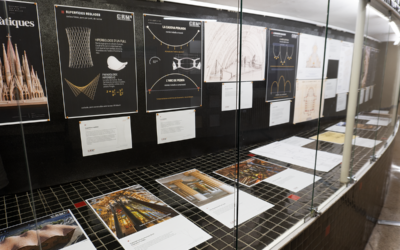
Exposició ‘Les matemàtiques de Gaudí’
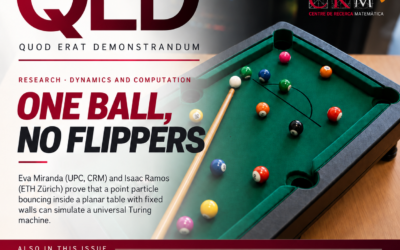
CRM quod erat demonstrandum | 48

ADA: Decoding Brain Signals Misaligned in Time
The study addresses a key limitation of current brain decoding techniques: the difficulty of interpreting internal mental processes whose temporal dynamics vary from trial to trial.Decoding what is happening in a person’s mind from their brain activity is one of the...
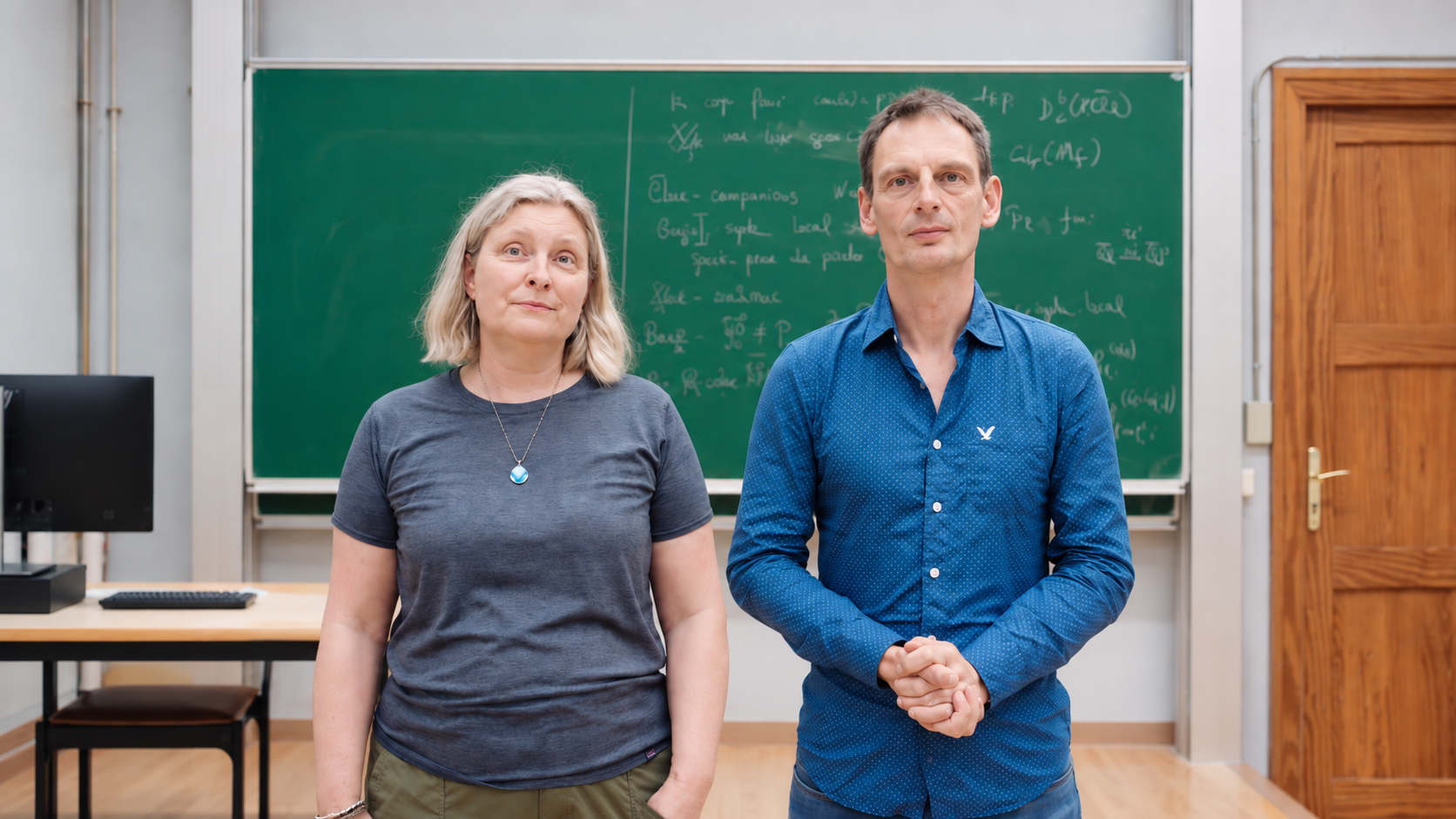
Rare curves, many points: Christophe Ritzenthaler and Rachel Pries on their research and the work around it
Christophe Ritzenthaler (Université de Rennes) and Rachel Pries (Colorado State University) both work on curves over finite fields: he hunts curves with as many points as possible, she hunts curves that almost never occur. In conversation with the CRM during their...
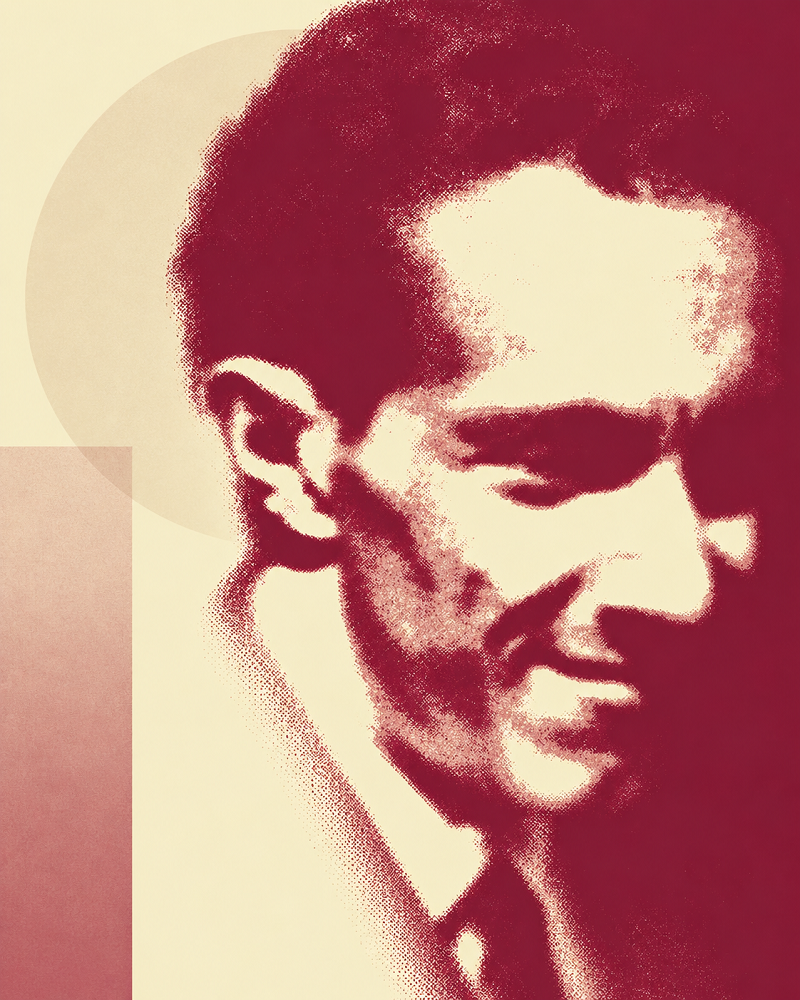
Call open for the 2027 Ferran Sunyer i Balaguer Prize
The Ferran Sunyer i Balaguer Foundation is accepting submissions for its 2027 prize, which awards 15,000 euros and publication in Birkhäuser's Progress in Mathematics series to an expository monograph on an active area of mathematical research. The deadline is 27...
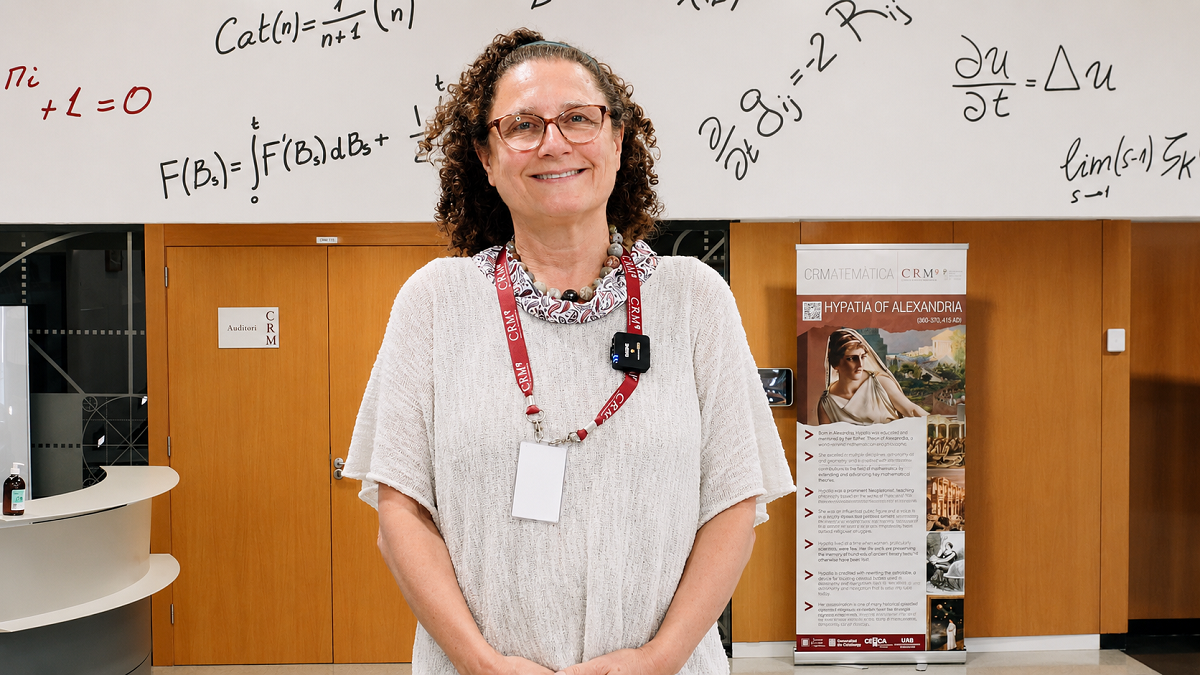
Susanna Terracini delivers the CRM Colloquium 2026
Susanna Terracini (Università di Torino) delivered the CRM Colloquium 2026 on 14 July, presenting a rigidity result for Kepler billiards obtained with Stefano Baranzini, Vivina Barutello and Irene De Blasi. She was at the centre as a member of the CRM Scientific...
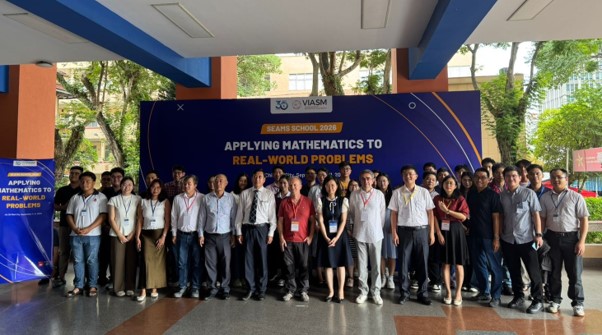
Ho Chi Minh City hosts the SEAMS School on applying mathematics to real-world problems
Students from across the region took courses and worked on group projects at a school co-organised by CRM researcher Tim Myers.CRM CommPau VarelaCRMComm@crm.catGet the latest CRM news and activities in your inbox.Recent newsletters →Between 4 and...

A single ball on a fixed table can compute: Eva Miranda and Isaac Ramos prove that two-dimensional billiards are Turing complete
Eva Miranda (UPC, CRM) and Isaac Ramos (ETH Zürich) show that a point particle bouncing inside a planar table with fixed walls can simulate a universal Turing machine, settling a question Cristopher Moore left open in 1990. The result grew out of a master’s project...