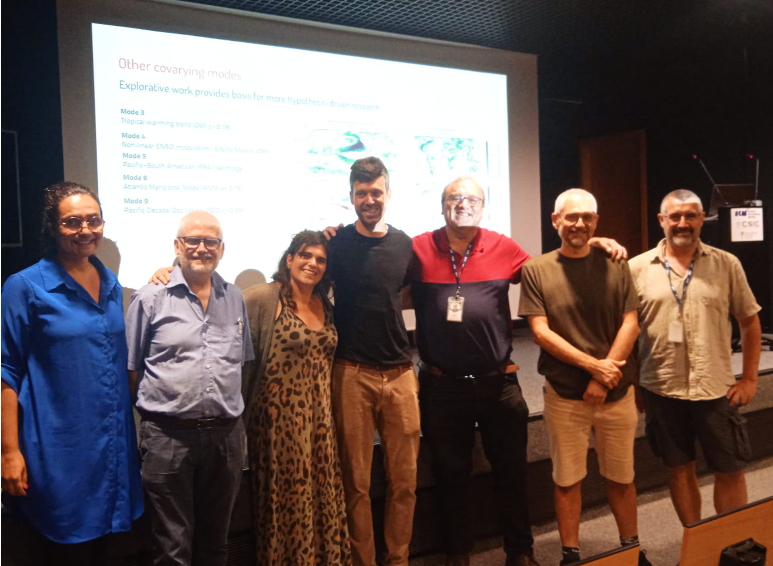
On June 10th, Niclas Rieger successfully defended his doctoral thesis Data-Driven Modelling in Dense and Scarce Data Regimes: Applications to Climate Data and Marine Plastic Pollution at the Institut de Ciències del Mar (ICM), marking the end of a PhD journey that has taken him across institutions, countries and disciplines in pursuit of a simple yet daunting question: how can we extract meaningful insights from data that is either overwhelming in volume or frustratingly incomplete?
The thesis was part of the European project CAFE (Climate Advanced Forecasting of sub-seasonal Extremes), an interdisciplinary training network coordinated by CRM and designed to improve the sub-seasonal predictability of extreme weather events. With climate extremes such as heatwaves, cold surges or tropical storms becoming increasingly disruptive, the CAFE project set out to equip a new generation of researchers with tools from climate science, statistical physics, complex networks and machine learning. Niclas was one of twelve early-stage researchers in the network and collaborated with teams across Europe, including the ICM, the Max Planck Institute for the Physics of Complex Systems, and the European Centre for Medium-Range Weather Forecasts (ECMWF).
Throughout his thesis, carried out at CRM, Niclas tackled a dual challenge that’s becoming increasingly central to environmental science. On one end of the spectrum, massive climate datasets, spanning petabytes, must be processed efficiently to uncover subtle, large-scale patterns. On the other hand, issues like marine plastic pollution often suffer from a lack of data, with scattered, irregular measurements that make trend detection difficult. “I kept running into the same dilemma,” he explains. “Climate data was everywhere, but when I looked for measurements of beach litter, I found just a handful. I wanted to know how we can still reach sound conclusions in both situations.”
To address this, he developed two complementary lines of work. For data-rich scenarios, he created xeofs, an open-source Python library that allows researchers to process climate datasets roughly ten times faster than before, revealing teleconnection patterns and subtle links between weather phenomena in distant regions of the globe. For data-poor contexts, such as beach litter surveys, he turned to Bayesian modelling to build predictive maps of seasonal pollution hotspots in the North-East Atlantic, complete with uncertainty bands that highlight where monitoring needs to improve.
“Whether you’re drowning in data or struggling to find any, the right mathematical tools can still help you extract insights that matter”.
His time in the CAFE network also gave him a broader view of scientific collaboration. “It felt like a tour of Europe’s climate science kitchens. Every institute had its own recipes, data techniques, ways of framing problems, and even cultural habits. That variety really sharpened my skills, but also showed me that meaningful progress tends to come from complementary teams rather than solo efforts.”
That collaborative spirit paid off in unexpected ways. After releasing his climate analysis code as open source, a data scientist from a weather-forecasting company reached out, proposing a new feature. What began as a casual pull request turned into a fruitful co-development that improved the tool for both academic research and operational use.
Looking back, Niclas reflects that the most important lesson from his PhD was “stay curious, but protect your focus.” With so many shiny methods and new ideas on offer, it’s easy to get lost. “The key is to balance exploration with disciplined follow-through. That’s how you turn a sea of possibilities into results you can stand behind.”
The thesis was co-supervised by Álvaro Corral (UAB-CRM), Estrella Olmedo and Antonio Turiel (ICM), and is part of the doctoral program in Physics at the Universitat Autònoma de Barcelona. With this milestone, Niclas joins a new generation of interdisciplinary researchers prepared to confront the complex environmental challenges of our time, not just with more data, but with smarter ways to read it.
Subscribe for more CRM News
|
|
CRM CommPau Varela
|

The CRM opens the academic year and unveils its Directors’ Gallery
A review of the year, the Communication Plan 2026–2030 and three research talks filled the morning of 19 October.The unveiling of the Directors’ Gallery.CRM CommPau VarelaCRMComm@crm.catGet the latest CRM news and activities in your inbox.Recent...
The CRM Mentoring Programme, as Told by One of Its Pairs
PhD student Joaquim Duran and mathematician Robert Cardona, one of the pairs in the CRM Mentoring ProgrammeJoaquim Duran (left) and Robert Cardona.CRM CommPau VarelaCRMComm@crm.catGet the latest CRM news and activities in your inbox.Recent...
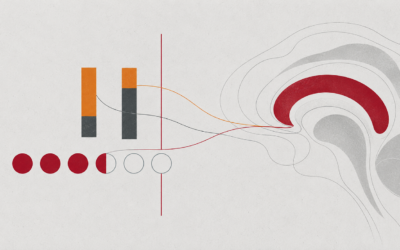
When the reward comes within reach, the brain changes what it compares
As the tokens piled up, choices got faster and more accurate at the same time. The yardstick for judging each offer had moved.CRM CommPau VarelaCRMComm@crm.catGet the latest CRM news and activities in your inbox.Recent newsletters →Two subjects...

Almost every automaton can be reset with a short word
Guillaume Chapuy (Université Paris Cité, CNRS) and Guillem Perarnau (UPC, CRM) have shown that a random finite automaton with n states can, with high probability, be reset by a word of length of order √n log n. The result, published in ACM Transactions on Algorithms, pins the exponent at 1/2, the lower end of a decade of numerical estimates, and addresses the random version of the synchronization problem behind a conjecture Ján Černý posed in 1964 and which still remains open.
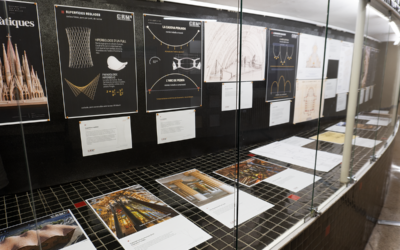
Exposició ‘Les matemàtiques de Gaudí’
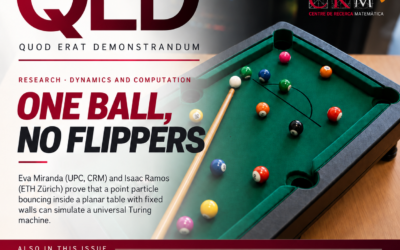
CRM quod erat demonstrandum | 48

ADA: Decoding Brain Signals Misaligned in Time
The study addresses a key limitation of current brain decoding techniques: the difficulty of interpreting internal mental processes whose temporal dynamics vary from trial to trial.Decoding what is happening in a person’s mind from their brain activity is one of the...
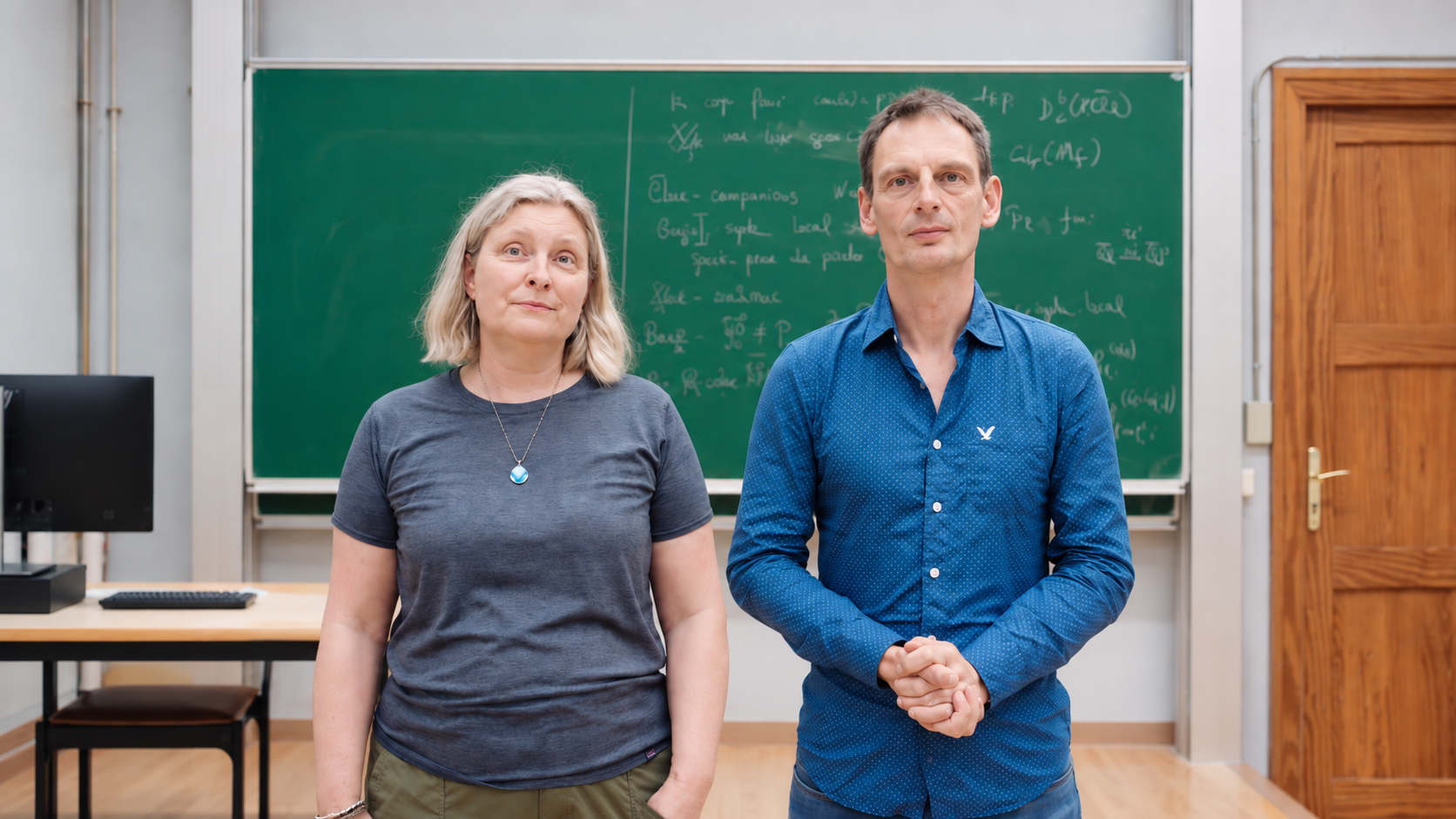
Rare curves, many points: Christophe Ritzenthaler and Rachel Pries on their research and the work around it
Christophe Ritzenthaler (Université de Rennes) and Rachel Pries (Colorado State University) both work on curves over finite fields: he hunts curves with as many points as possible, she hunts curves that almost never occur. In conversation with the CRM during their...
Call open for the 2027 Ferran Sunyer i Balaguer Prize
The Ferran Sunyer i Balaguer Foundation is accepting submissions for its 2027 prize, which awards 15,000 euros and publication in Birkhäuser's Progress in Mathematics series to an expository monograph on an active area of mathematical research. The deadline is 27...
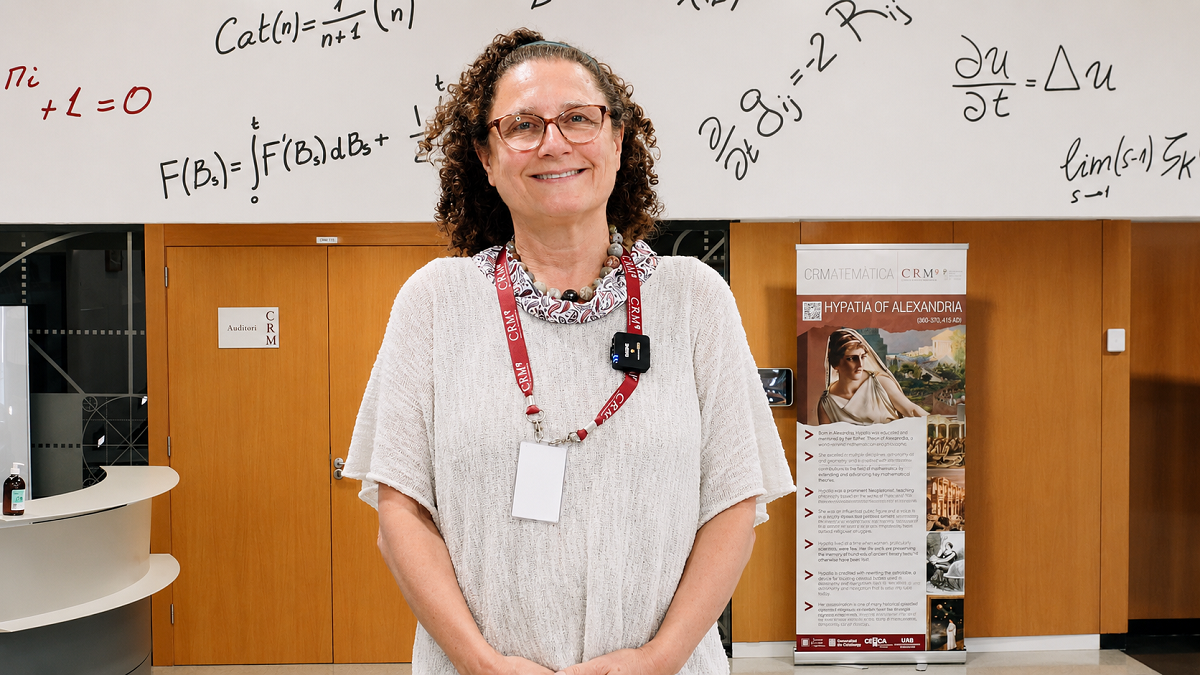
Susanna Terracini delivers the CRM Colloquium 2026
Susanna Terracini (Università di Torino) delivered the CRM Colloquium 2026 on 14 July, presenting a rigidity result for Kepler billiards obtained with Stefano Baranzini, Vivina Barutello and Irene De Blasi. She was at the centre as a member of the CRM Scientific...
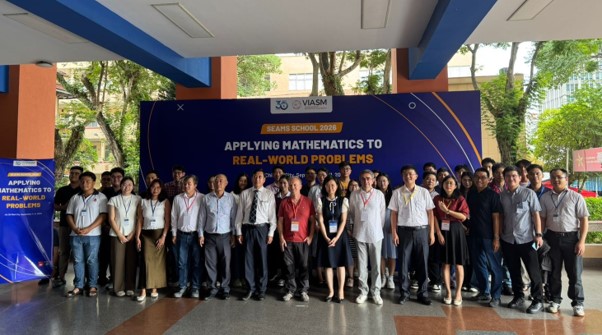
Ho Chi Minh City hosts the SEAMS School on applying mathematics to real-world problems
Students from across the region took courses and worked on group projects at a school co-organised by CRM researcher Tim Myers.CRM CommPau VarelaCRMComm@crm.catGet the latest CRM news and activities in your inbox.Recent newsletters →Between 4 and...

A single ball on a fixed table can compute: Eva Miranda and Isaac Ramos prove that two-dimensional billiards are Turing complete
Eva Miranda (UPC, CRM) and Isaac Ramos (ETH Zürich) show that a point particle bouncing inside a planar table with fixed walls can simulate a universal Turing machine, settling a question Cristopher Moore left open in 1990. The result grew out of a master’s project...