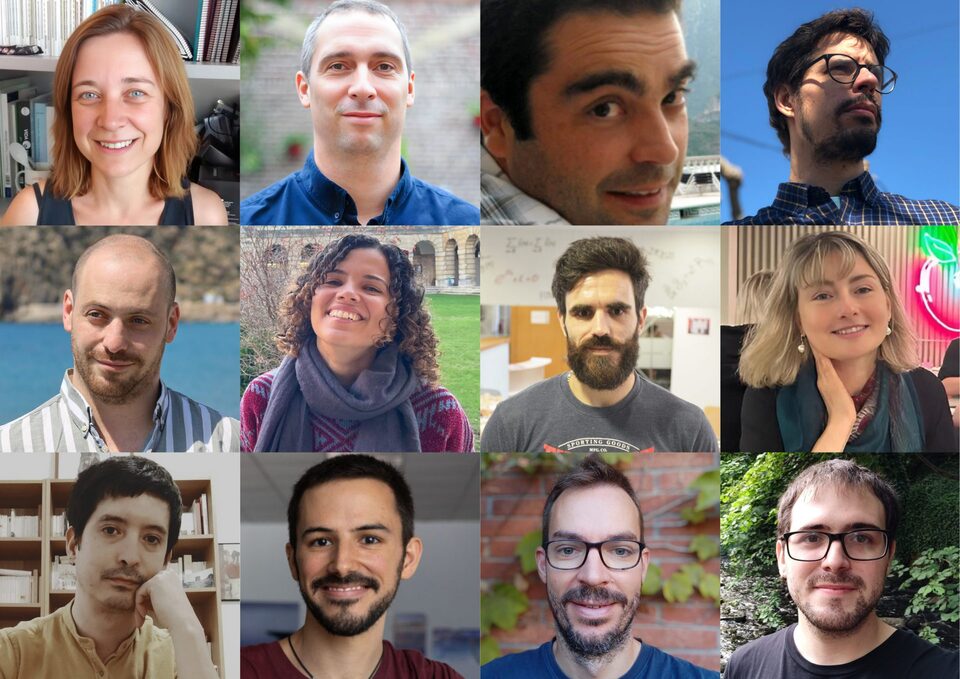
Bellaterra, September 15th, 2024 – This September, the Centre de Recerca Matemàtica (CRM) is delighted to welcome a group of researchers who have recently joined as affiliated members. These researchers bring a wealth of expertise in various fields of mathematics, further enriching the scientific environment at CRM. This collaboration strengthens our centre’s research impact and broadens the horizon for innovative mathematical explorations. The new affiliates come from the Universitat Autònoma de Barcelona (UAB), Universitat Politècnica de Catalunya (UPC), and Universitat de Barcelona (UB), all of which are key institutions in the region’s academic landscape and members of the CRM consortium.
Sílvia Cuadrado joins the CRM from the Universitat Autònoma de Barcelona (UAB). Sílvia holds a PhD in Mathematics from UAB (2003) and has previously conducted research at Utrecht University. In 1998, she was awarded the prestigious Évariste Galois prize by the Societat Catalana de Matemàtiques, recognizing her contributions to the field. Beyond her research, she has served on the board of the European Society for Mathematical and Theoretical Biology. Another addition from UAB is Florent Balacheff, who completed his PhD at Université Montpellier in 2005 after studying at the École Normale Supérieure de Cachan. He’s got a rich academic background and extensive postdoctoral experience at various institutions. Joining from UAB is also, Francesc Bars, another associate professor from UAB. Francesc has been with UAB since 2008, and he previously completed pre-doctoral research at Münster University as part of the Deninger research group. Like Sílvia Cuadrado, he was awarded the Évariste Galois prize in 1998. Lastly, David Moriña brings a strong background in applied statistical methodologies and has held a postdoctoral position at the University of Warwick, where he contributed to the development of advanced statistical tools.
From the Universitat Politècnica de Catalunya (UPC), Andrew Clarke joins as a member of the UPC Dynamical Systems Group. His research primarily focuses on Hamiltonian dynamics, with a particular emphasis on celestial mechanics models, billiards, and geodesic flows. He has proved the existence of various chaotic phenomena in these models, such as the existence of hyperbolic sets, unbounded trajectories, and Arnold diffusion. Gissell Estrada, also from UPC, is an Assistant Professor with a background in partial differential equations. She previously worked as a postdoctoral researcher at the University of Oxford.
Marc Jorba, another addition from UPC, completed his PhD at the Universitat de Barcelona under the supervision of Ariadna Farrés and Àngel Jorba. His research interests lie in Hamiltonian systems and their applications. Also joining from UPC is Marta Mazzocco, a professor specializing in integrable systems, a field that explores complex mathematical structures with applications in mathematical physics. She has recently joined the GEOMVAP research group at UPC as an ICREA researcher. Finally, Adrián Ponce, a theoretical neuroscientist and Ramón y Cajal Research Fellow at UPC, joins CRM with research focused on the general principles of neural computation and the systems that underlie brain function.
The Universitat de Barcelona (UB) has also contributed to the CRM research structure with recent additions. Robert Cardona, an assistant professor at UB, earned his PhD in Mathematics at the Universitat Politècnica de Catalunya. In 2021 he was awarded the Vicent Caselles prize from the Royal Spanish Mathematical Society and his research interests are mostly geometry, topology, and dynamical systems. Vincent Pilaud, who completed his PhD under the supervision of Francisco Santos at the Universidad de Cantabria and Michel Pocchiola at Sorbonne Université, also joins CRM, bringing his research on geometric and combinatorial aspects of mathematics. Tomás Sanz, an Assistant Professor at UB who previously worked at Sorbonne Université, brings expertise in dynamical systems and applied mathematics.
Together, these new affiliated researchers are set to contribute significantly to the CRM’s mission of advancing mathematical knowledge and fostering collaborative research. Their diverse backgrounds and specialized expertise promise to elevate the impact of mathematical research in Catalonia. We look forward to the contributions they will make as part of our vibrant community.
|
|
CRM CommPau Varela
|
Subscribe for more CRM News
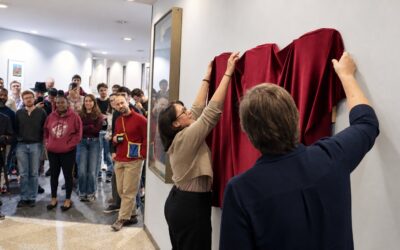
The CRM opens the academic year and unveils its Directors’ Gallery
A review of the year, the Communication Plan 2026–2030 and three research talks filled the morning of 19 October.The unveiling of the Directors’ Gallery.CRM CommPau VarelaCRMComm@crm.catGet the latest CRM news and activities in your inbox.Recent...
The CRM Mentoring Programme, as Told by One of Its Pairs
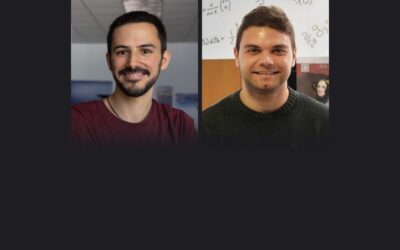
PhD student Joaquim Duran and mathematician Robert Cardona, one of the pairs in the CRM Mentoring ProgrammeJoaquim Duran (left) and Robert Cardona.CRM CommPau VarelaCRMComm@crm.catGet the latest CRM news and activities in your inbox.Recent...
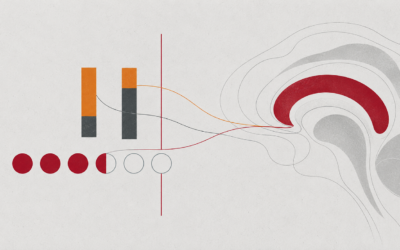
When the reward comes within reach, the brain changes what it compares
As the tokens piled up, choices got faster and more accurate at the same time. The yardstick for judging each offer had moved.CRM CommPau VarelaCRMComm@crm.catGet the latest CRM news and activities in your inbox.Recent newsletters →Two subjects...

Almost every automaton can be reset with a short word
Guillaume Chapuy (Université Paris Cité, CNRS) and Guillem Perarnau (UPC, CRM) have shown that a random finite automaton with n states can, with high probability, be reset by a word of length of order √n log n. The result, published in ACM Transactions on Algorithms, pins the exponent at 1/2, the lower end of a decade of numerical estimates, and addresses the random version of the synchronization problem behind a conjecture Ján Černý posed in 1964 and which still remains open.
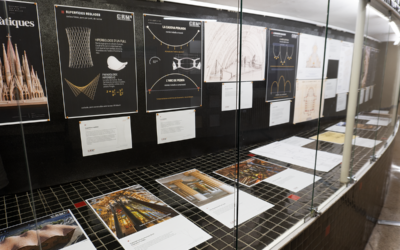
Exposició ‘Les matemàtiques de Gaudí’
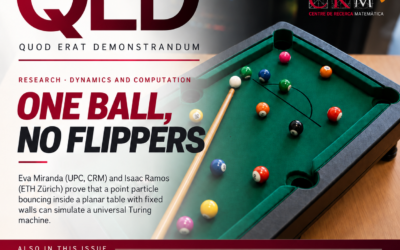
CRM quod erat demonstrandum | 48

ADA: Decoding Brain Signals Misaligned in Time
The study addresses a key limitation of current brain decoding techniques: the difficulty of interpreting internal mental processes whose temporal dynamics vary from trial to trial.Decoding what is happening in a person’s mind from their brain activity is one of the...
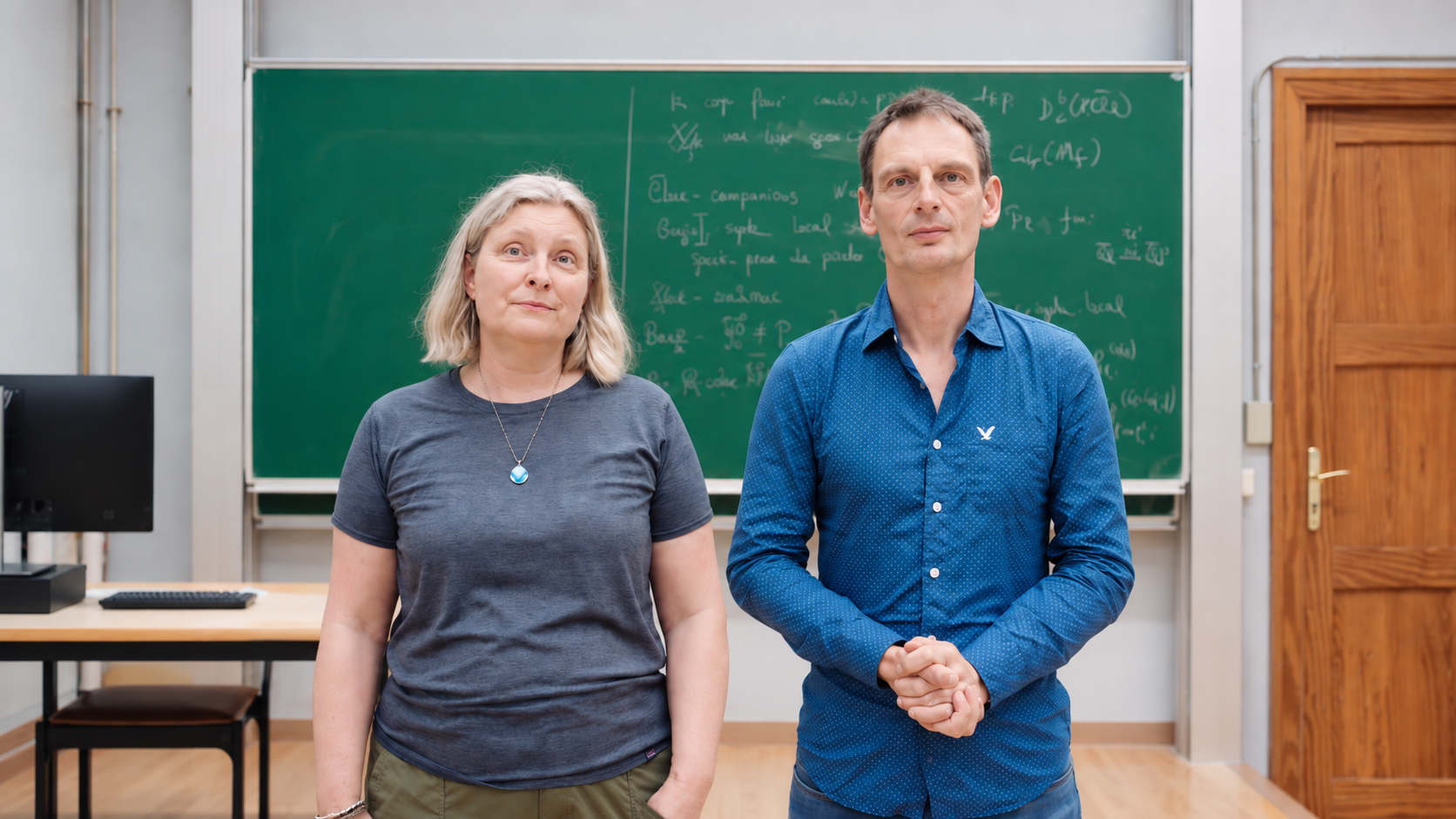
Rare curves, many points: Christophe Ritzenthaler and Rachel Pries on their research and the work around it
Christophe Ritzenthaler (Université de Rennes) and Rachel Pries (Colorado State University) both work on curves over finite fields: he hunts curves with as many points as possible, she hunts curves that almost never occur. In conversation with the CRM during their...

Call open for the 2027 Ferran Sunyer i Balaguer Prize
The Ferran Sunyer i Balaguer Foundation is accepting submissions for its 2027 prize, which awards 15,000 euros and publication in Birkhäuser's Progress in Mathematics series to an expository monograph on an active area of mathematical research. The deadline is 27...
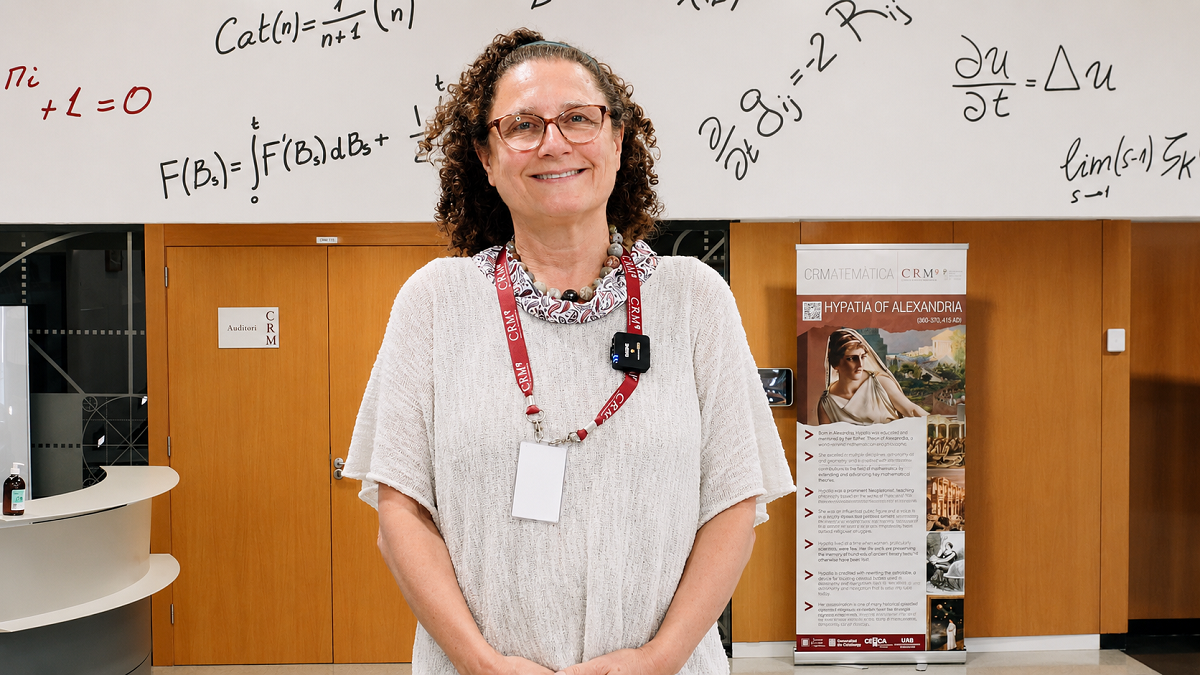
Susanna Terracini delivers the CRM Colloquium 2026
Susanna Terracini (Università di Torino) delivered the CRM Colloquium 2026 on 14 July, presenting a rigidity result for Kepler billiards obtained with Stefano Baranzini, Vivina Barutello and Irene De Blasi. She was at the centre as a member of the CRM Scientific...
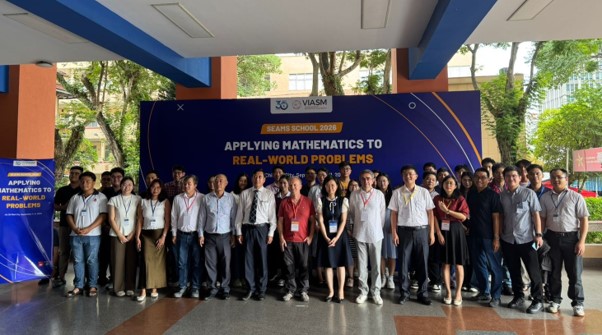
Ho Chi Minh City hosts the SEAMS School on applying mathematics to real-world problems
Students from across the region took courses and worked on group projects at a school co-organised by CRM researcher Tim Myers.CRM CommPau VarelaCRMComm@crm.catGet the latest CRM news and activities in your inbox.Recent newsletters →Between 4 and...

A single ball on a fixed table can compute: Eva Miranda and Isaac Ramos prove that two-dimensional billiards are Turing complete
Eva Miranda (UPC, CRM) and Isaac Ramos (ETH Zürich) show that a point particle bouncing inside a planar table with fixed walls can simulate a universal Turing machine, settling a question Cristopher Moore left open in 1990. The result grew out of a master’s project...