
Inside each one of your cells, there’s enough DNA to stretch more than two metres if laid out end-to-end. Yet somehow, all this DNA fits into a tiny structure called the cell nucleus, so intricately folded and tightly packed that it makes origami seem simple by comparison. But scientists are learning that this incredible folding isn’t just a clever trick to save space; it may also help cells make critical decisions about what kind of cells they become and how they behave.
A study published in the Bulletin of Mathematical Biology by researchers Daria Stepanova (CRM), Meritxell Brunet Guasch (University of Edinburgh), Helen M. Byrne (University of Oxford), and Tomás Alarcón (ICREA–CRM) explores how DNA’s 3D folding influences gene activity. They discovered that the shape of DNA, and how molecules interact with it, may be key to determining whether genes are switched “on” or “off.”
This switching of genes on and off without changing the DNA code is known as epigenetics. Epigenetic changes occur through chemical marks that attach to the DNA molecule or to proteins called histones, around which DNA wraps. Think of these marks as sticky notes placed along the DNA: they don’t change the instructions in our genetic code, but they tell cells which parts of those instructions to read or ignore. These notes are crucial for guiding a cell’s identity, allowing it to specialise into muscle, nerve, skin, or blood cells, even though every cell begins life with the same DNA.
However, a key mystery remains: sometimes these epigenetic marks form smooth patterns across the genome, while other times they become strikingly uneven or “rugged,” marked by abrupt shifts between areas where genes are active and areas where they’re silenced.
Until now, exactly how and why these complex, rugged patterns emerge has not been well understood.
A Virtual Lab Built with Mathematics
To solve this mystery, the research team created a mathematical model, a kind of “virtual lab,” that allows them to test biological rules and see what patterns emerge through computer simulations. Their model specifically explored the interactions between key histone modifications and the enzymes responsible for adding (“writing”) or removing (“erasing”) these chemical marks.
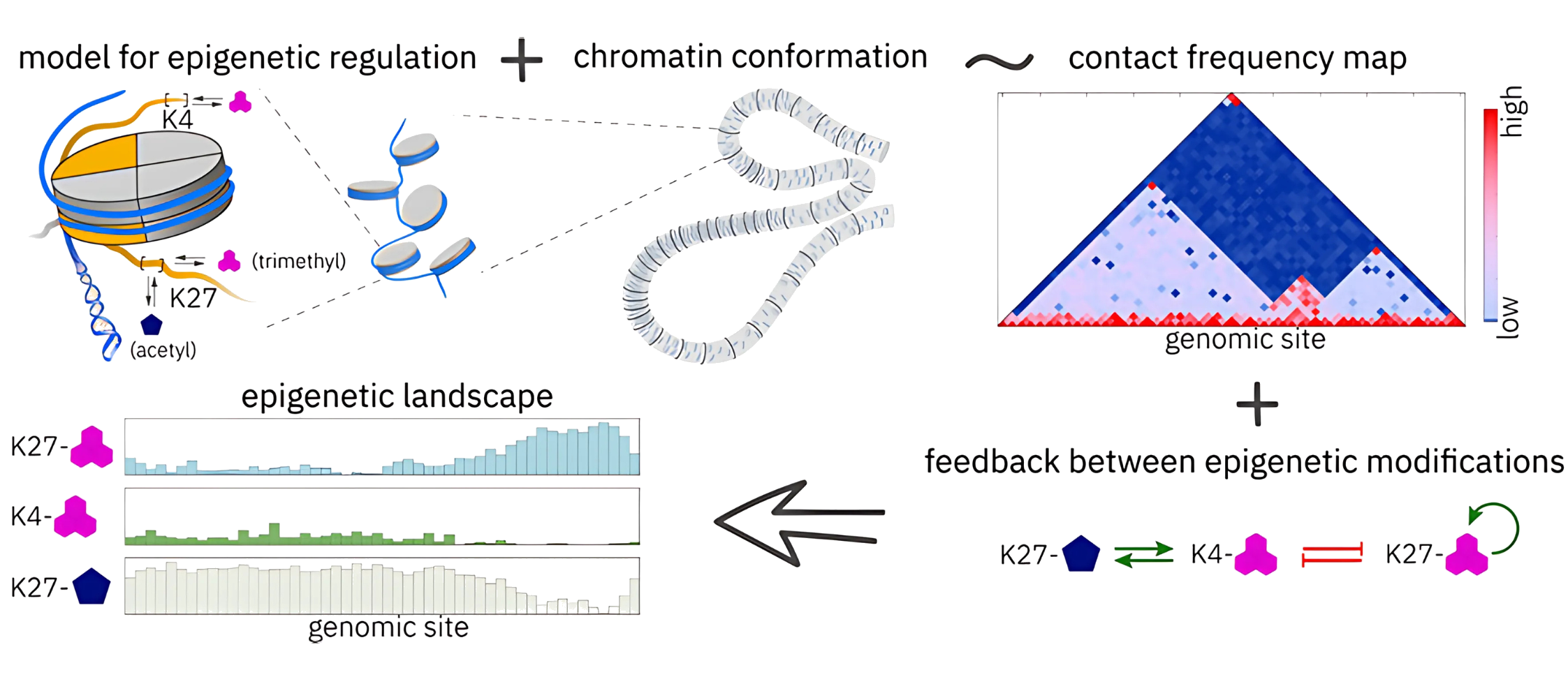
The model considers epigenetic modifications (H3K27me3, H3K4me3, H3K27ac) on histone H3 residues. It divides chromatin into fixed-size genomic regions characterised by these modifications, linked through reinforcing and inhibitory enzyme-driven feedback.
What set their approach apart was the inclusion of two critical elements usually overlooked in other studies. First, they included the actual 3D folding structure of chromatin (DNA wrapped around histones) because how chromatin folds changes which parts of the genome interact. Second, they factored in the limited availability and competition among enzymes. These enzymes constantly “fight” over which sites on the chromatin they modify, creating a microscopic molecular tug-of-war.
“There are not so many models of epigenetic regulation, especially those which also account for chromatin conformation; therefore, previous models have been formulated in a more simplified setting.” As Stepanova explains, “enzyme competition can be important in shaping epigenetic landscapes. It is a more realistic assumption than a constant or uniform concentration of enzyme along the chromatin. Chromatin is folded, and enzyme molecules are ‘floating’ around, ready to bind to any genomic site in their vicinity.” Moreover, she notes, this enzyme competition can “break the symmetry and eventually lead to the emergence of rugged epigenetic patterns.”
By combining chromatin folding and enzyme competition, the team found that remarkably uneven patterns emerged. When distant segments of DNA come into close contact due to folding, they influence each other’s epigenetic states. At the same time, because the enzymes needed to modify these regions are limited, only some areas get marked, leaving others untouched. The result is a patchwork, or rugged landscape, of active and inactive zones that mirrors what scientists see in real cells.
Stepanova further highlights why identifying these rugged and uniform regimes is crucial: “Epigenetic marks are known to have self-reinforcing feedback mechanisms, promoting the addition of the same or similar marks in neighbouring chromatin regions. If the region is extended, these loops would make the entire region uniform. This does not coincide with reality, since we know that, especially in differentiated cells, there are chromatin regions which are silenced and chromatin domains which are active.”
She notes that this raises an important question: “What is the ‘stopping factor’ that maintains the boundaries between these activating and inhibitory regions?” Their research provides “a possible explanation for one of the factors contributing to the emergence of alternating silenced and active genomic regions.”
Interestingly, the team’s model also captured another aspect observed in real cells called bivalent chromatin. These are regions carrying both activating and silencing epigenetic regulators at once, like genes being kept on standby, ready to quickly turn “on” or “off” in response to specific signals. These bivalent states help cells transition smoothly from uniform epigenetic landscapes to more rugged patterns, or vice versa.
Bridging Scales
The researchers designed their model to function effectively across different scales, from individual gene regions to larger chromatin structures known as Topologically Associating Domains (TADs). This mesoscale approach is particularly important. “Higher-order structures, such as loops and small TADs, can be visualised more precisely, and we can investigate how these structures influence the formation of epigenetic patterning,” Stepanova explains. “If we go to large scales of the entire chromosome, these details are also lost. In my view, the mesoscopic approach is ideal for exploring epigenetic landscapes.”
Stepanova also highlights the unique advantages mathematics offers in studying epigenetics. “Using mathematical modelling, we can investigate various aspects of biological processes which cannot be manipulated, visualised, isolated, measured, or controlled in an experimental setting,” she notes. While experimental studies are powerful, they can be costly and time-consuming. Theoretical modelling, she points out, is essentially cost-free, though closer collaboration with biologists is essential.
As an example of this type of collaboration, Stepanova mentions the current work of her master’s student Roger Bosch, who is investigating how various methods of processing chromatin conformation data affect our understanding of epigenetic patterns. These techniques aim to remove experimental artefacts and clarify the true chromatin folding patterns. However, Stepanova remarks, “It is still unclear how much these methods give us a prettier picture and how much they genuinely bring us closer to the accurate structure of cellular DNA.”
Questions like these underline both the importance and potential of integrating theoretical modelling closely with experimental research to improve our understanding of biological data.
Citation:
Stepanova, D., Brunet Guasch, M., Byrne, H.M. et al. Understanding How Chromatin Folding and Enzyme Competition Affect Rugged Epigenetic Landscapes. Bull Math Biol 87, 59 (2025). https://doi.org/10.1007/s11538-025-01434-0
crm researchers
Tomás Alarcón studied Physics, obtaining his PhD in 2000. He then pursued postdoctoral research at Oxford’s Centre for Mathematical Biology, collaborating with Helen Byrne and Philip Maini on mathematical models of tumour growth, a topic he continues researching today. After further postdoctoral positions at University College London and Imperial College, focusing on tumour dormancy, receptor dynamics, and epigenetic evolution, he led the Mathematical Biology group at the Basque Centre for Applied Mathematics (BCAM). Since 2010, he has headed the Computational & Mathematical Biology group at CRM.
Daria Stepanova is a researcher specialising in mathematical modelling applied to theoretical biology. She completed her PhD at the CRM (UAB) under the supervision of Tomás Alarcón (ICREA–CRM), Helen Byrne, and Philip Maini (University of Oxford), focusing on blood vessel growth (angiogenesis). After a research stay at Oxford studying cellular interactions linked to cancer, she joined the Laboratorio Subterráneo de Canfranc (LSC), providing mathematical support for experiments such as Hyper-Kamiokande and investigating how low-background radiation affects biological systems. Currently back at CRM as a postdoc, she continues exploring the complex interactions between epigenetic regulation and the 3D chromatin structure.
Subscribe for more CRM News
|
|
CRM CommPau Varela
|

When the reward comes within reach, the brain changes what it compares
As the tokens piled up, choices got faster and more accurate at the same time. The yardstick for judging each offer had moved.CRM CommPau VarelaCRMComm@crm.catGet the latest CRM news and activities in your inbox.Recent newsletters →Two subjects...

Almost every automaton can be reset with a short word
Guillaume Chapuy (Université Paris Cité, CNRS) and Guillem Perarnau (UPC, CRM) have shown that a random finite automaton with n states can, with high probability, be reset by a word of length of order √n log n. The result, published in ACM Transactions on Algorithms, pins the exponent at 1/2, the lower end of a decade of numerical estimates, and addresses the random version of the synchronization problem behind a conjecture Ján Černý posed in 1964 and which still remains open.
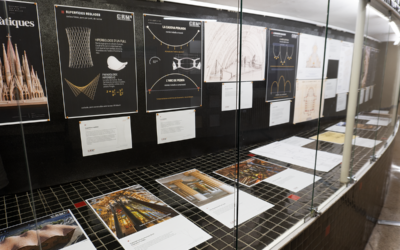
Exposició ‘Les matemàtiques de Gaudí’

CRM quod erat demonstrandum | 48

ADA: Decoding Brain Signals Misaligned in Time
The study addresses a key limitation of current brain decoding techniques: the difficulty of interpreting internal mental processes whose temporal dynamics vary from trial to trial.Decoding what is happening in a person’s mind from their brain activity is one of the...
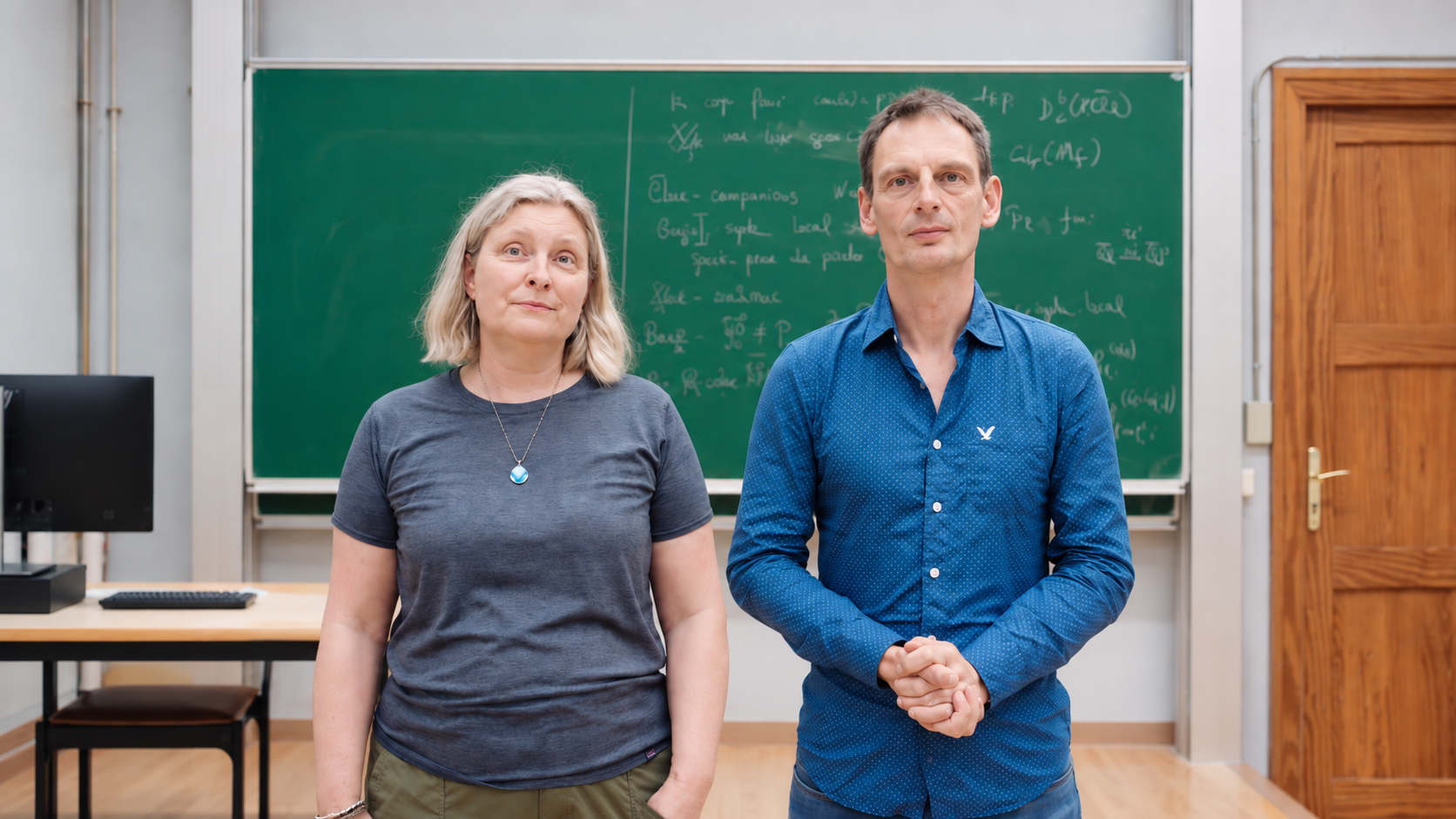
Rare curves, many points: Christophe Ritzenthaler and Rachel Pries on their research and the work around it
Christophe Ritzenthaler (Université de Rennes) and Rachel Pries (Colorado State University) both work on curves over finite fields: he hunts curves with as many points as possible, she hunts curves that almost never occur. In conversation with the CRM during their...

Call open for the 2027 Ferran Sunyer i Balaguer Prize
The Ferran Sunyer i Balaguer Foundation is accepting submissions for its 2027 prize, which awards 15,000 euros and publication in Birkhäuser's Progress in Mathematics series to an expository monograph on an active area of mathematical research. The deadline is 27...
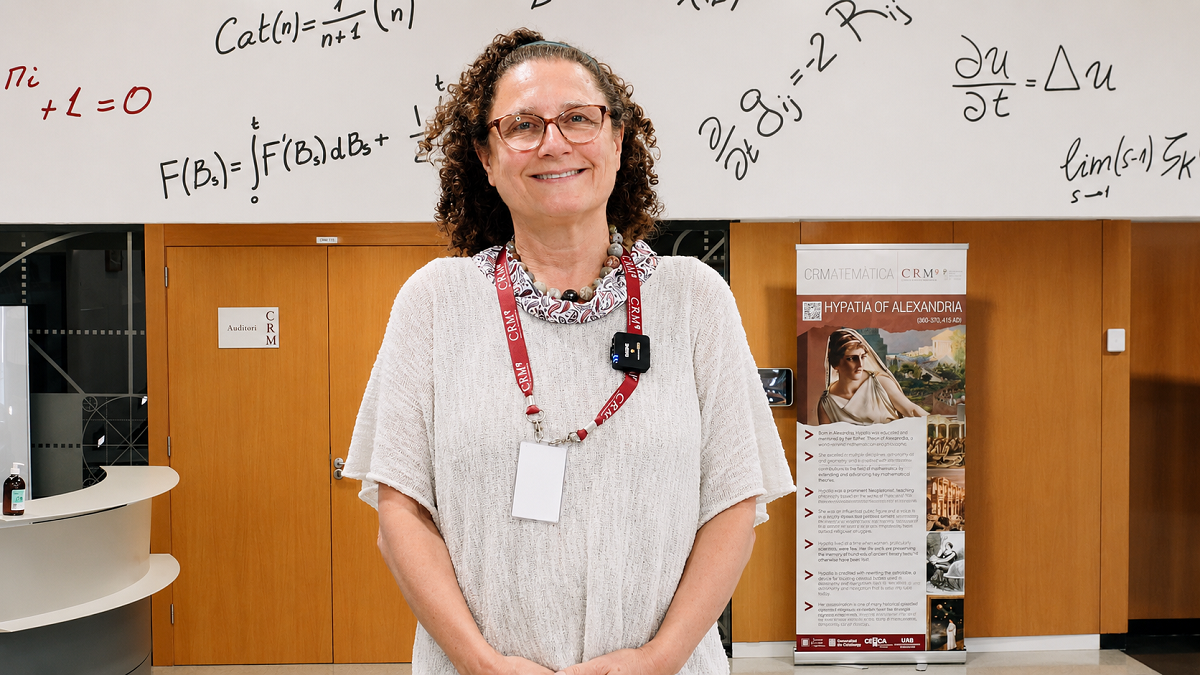
Susanna Terracini delivers the CRM Colloquium 2026
Susanna Terracini (Università di Torino) delivered the CRM Colloquium 2026 on 14 July, presenting a rigidity result for Kepler billiards obtained with Stefano Baranzini, Vivina Barutello and Irene De Blasi. She was at the centre as a member of the CRM Scientific...
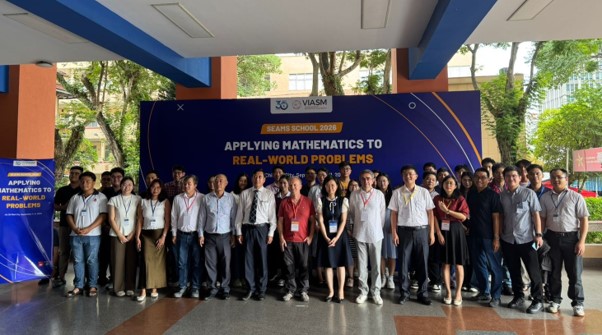
Ho Chi Minh City hosts the SEAMS School on applying mathematics to real-world problems
Students from across the region took courses and worked on group projects at a school co-organised by CRM researcher Tim Myers.CRM CommPau VarelaCRMComm@crm.catGet the latest CRM news and activities in your inbox.Recent newsletters →Between 4 and...

A single ball on a fixed table can compute: Eva Miranda and Isaac Ramos prove that two-dimensional billiards are Turing complete
Eva Miranda (UPC, CRM) and Isaac Ramos (ETH Zürich) show that a point particle bouncing inside a planar table with fixed walls can simulate a universal Turing machine, settling a question Cristopher Moore left open in 1990. The result grew out of a master’s project...
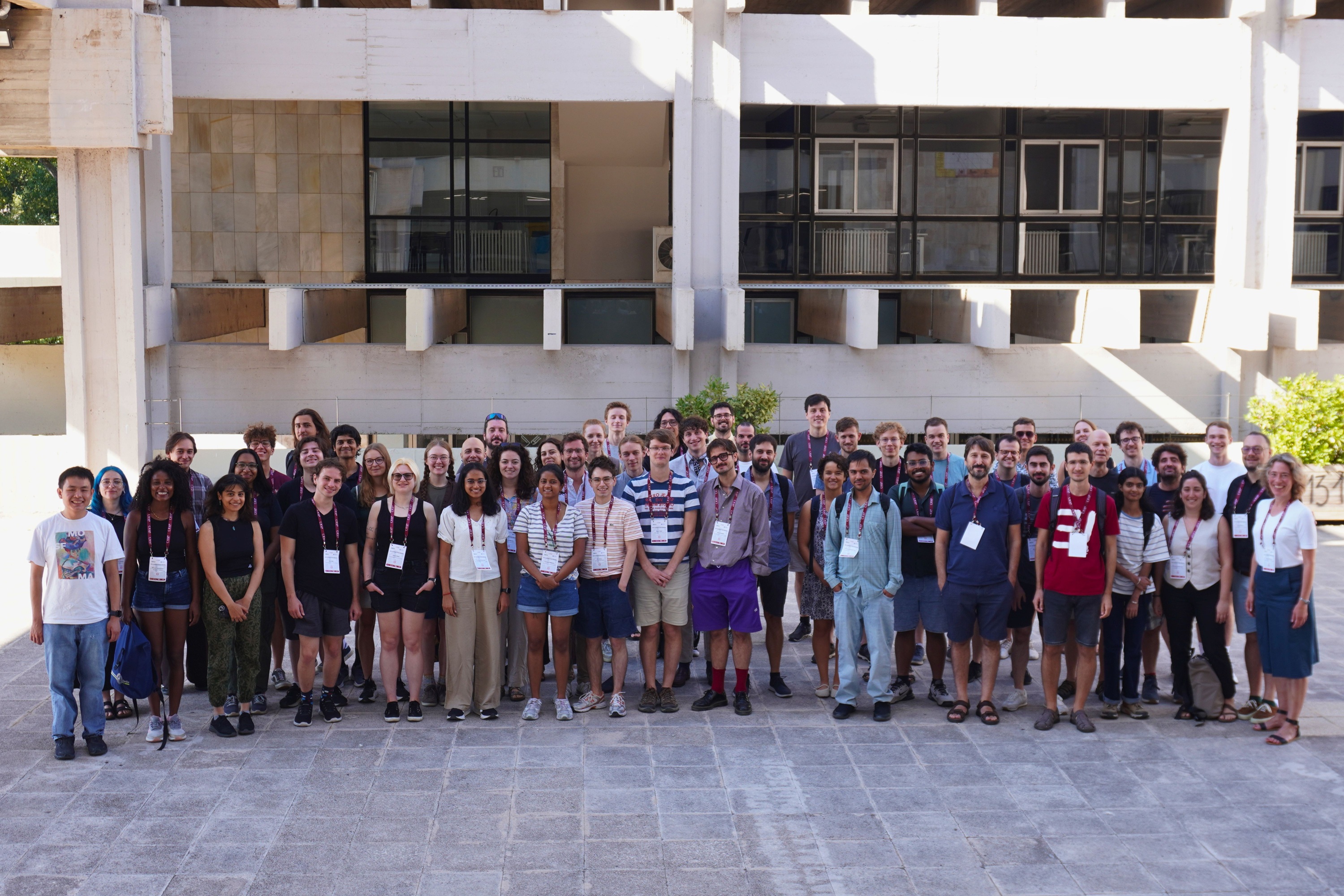
BMS-BGSMath Junior Meeting 2026: Barcelona and Berlin Strengthen Scientific Ties
From 2 to 4 September 2026, the Centre de Recerca Matemàtica (CRM) hosted the BMS-BGSMath Junior Meeting 2026, a three-day event jointly organised by the Berlin Mathematical School (BMS) and the Barcelona Graduate School of Mathematics (BGSMath), with the Centre de...
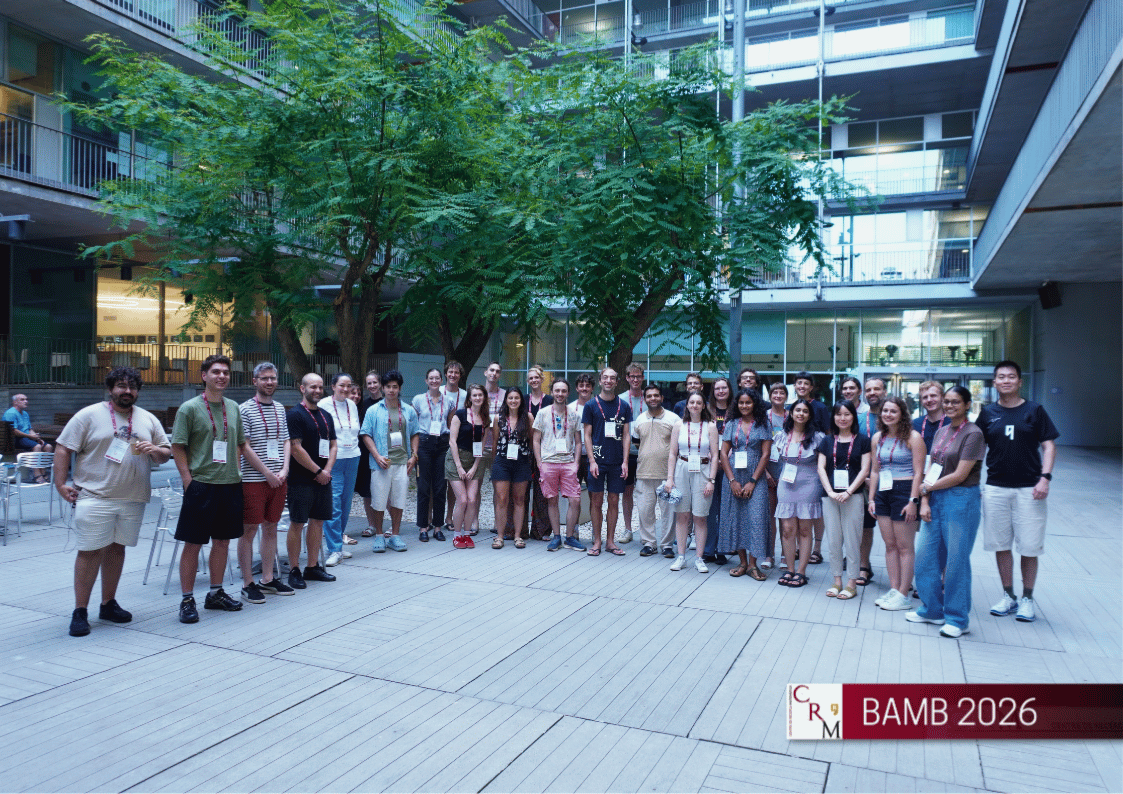
The CRM organises the 2026 Barcelona Summer School for Advanced Modeling of Behavior
The Centre de Recerca Matemàtica held the sixth edition of BAMB!, the Barcelona Summer School for Advanced Modeling of Behavior, from 12 to 23 July 2026 at the Parc de Recerca Biomèdica de Barcelona. Thirty early-career researchers from fourteen countries followed...