Eight CRM Researchers in the 2026 Stanford-Elsevier List of Highly Cited Scientists
The database ranks scientists by citation impact, over their whole careers and in 2025 alone
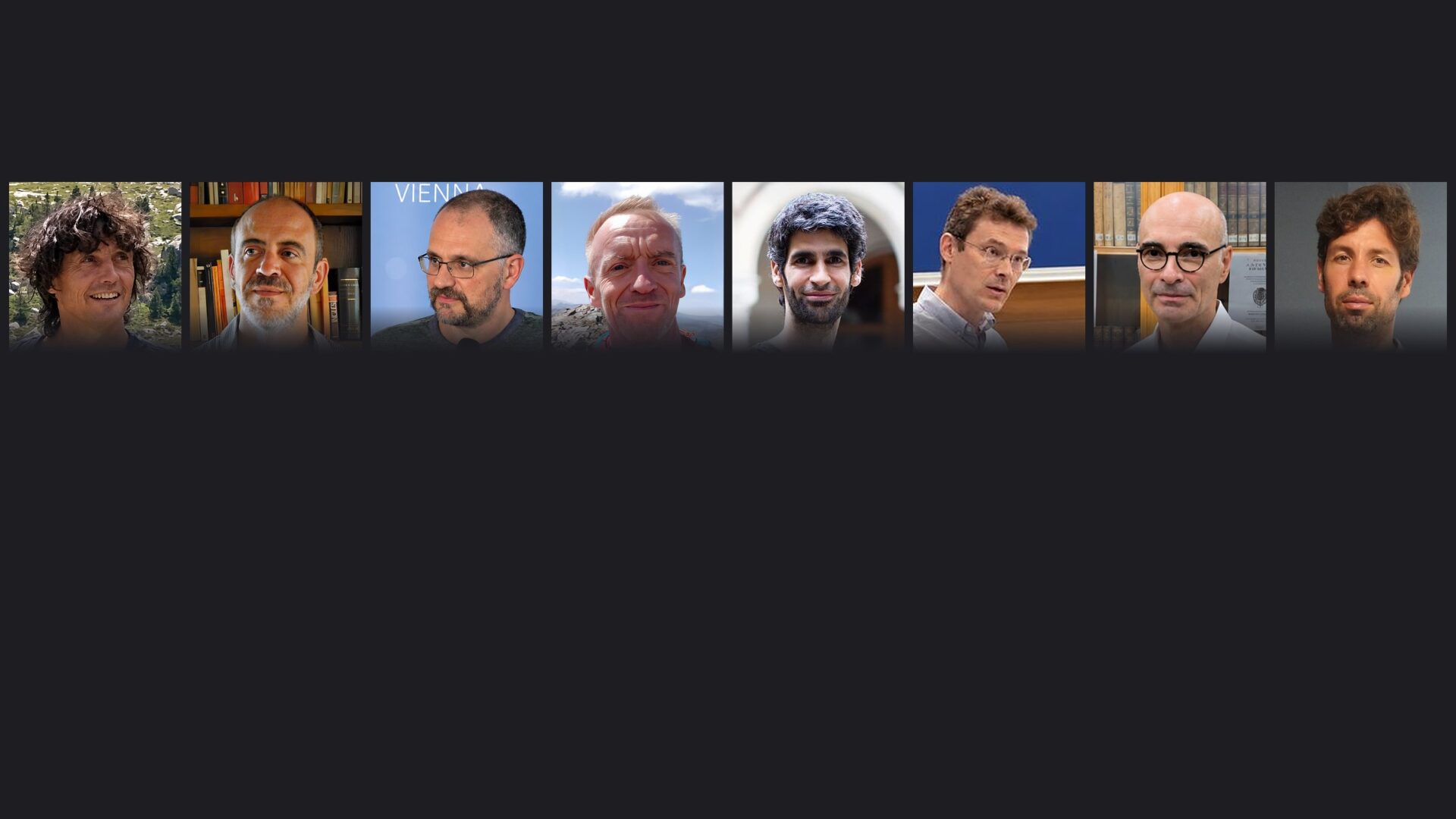
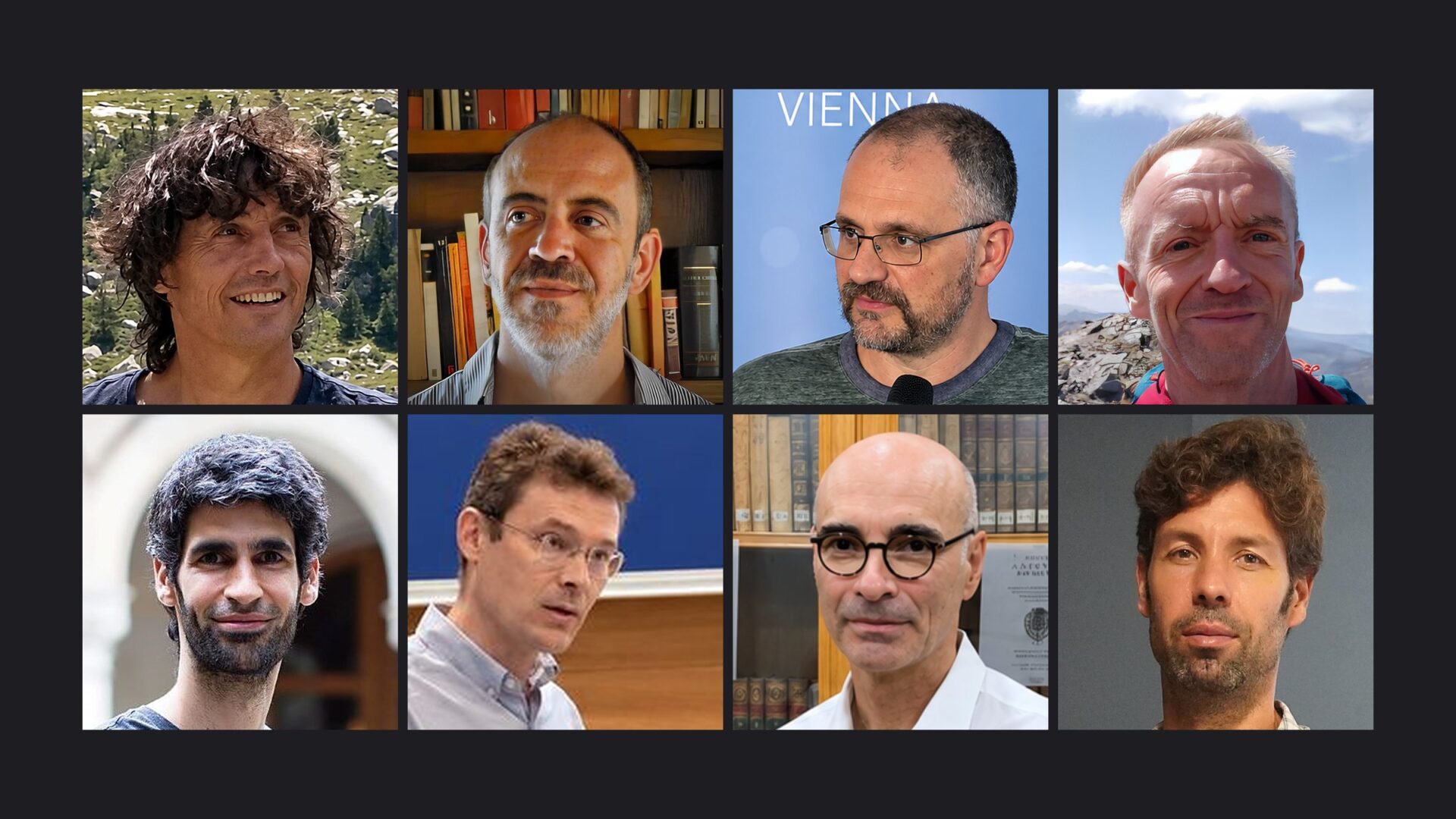
The 2026 edition of the Stanford-Elsevier database of highly cited scientists came out on 7 October, and eight CRM researchers are in it. Four of them, Xavier Cabré, Xavier Ros-Oton, Sergey Tikhonov and Xavier Tolsa, work in analysis and partial differential equations. The other four are spread across the centre. Álvaro Corral studies the statistics of natural hazards, and Tim Myers works on capturing environmental contaminants among other topics. Simeon Ball’s field is error-correcting codes, while Diego Vidaurre, at the CRM since 2025, models the brain’s spontaneous activity.
In the edition the CRM reported in December 2022, Xavier Ros-Oton and Sergey Tikhonov appeared only in the single-year ranking. Both are now in the career-long one as well.
The database is recalculated every year from a fresh snapshot of Scopus, and because each position is measured against every other scientist in it, places can change from one edition to the next even when a researcher’s citations keep growing. This edition works from the author profiles as they stood on 1 August 2026, with career-long citations counted up to the end of 2025. A second ranking looks only at the citations received during 2025. Of the 11.6 million authors it classifies, the career-long ranking keeps 243,949 and the 2025 ranking 249,310, a little over 2% in each case.
Who appears in each ranking
Simeon Ball
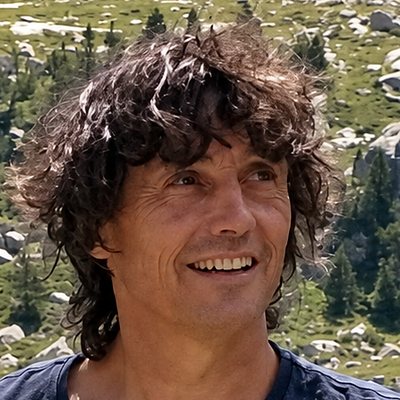
Simeon Ball works on finite geometry and on error-correcting codes, classical and quantum, the codes that add redundancy to a message so that it survives errors in transmission. In a paper published in 2012 he proved the MDS conjecture for prime fields. The conjecture, one of the oldest in the theory of error-correcting codes, says that the linear codes meeting the Singleton bound cannot go beyond a length fixed by the size of their alphabet.
After a degree in mathematics at the University of Cambridge, he earned his PhD at the University of Sussex in 1994, supervised by J. W. P. Hirschfeld. Research posts at the Eindhoven University of Technology, including a Marie Curie fellowship, and an EPSRC Advanced Research Fellowship at the University of London came before his move to the Universitat Politècnica de Catalunya in 2003. He has written or co-written three books, among them Finite Geometry and Combinatorial Applications (Cambridge University Press, 2015), and sits on the editorial boards of IEEE Transactions on Information Theory and the Journal of Combinatorial Theory, Series A. Since 2026 he has been a full professor at the UPC, where he leads the GAPCOMB group.
Xavier Cabré
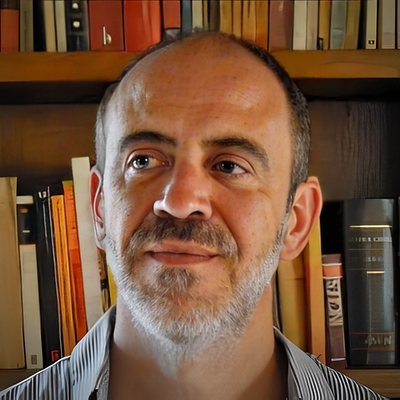
In 2020 Xavier Cabré published a paper in Acta Mathematica with Alessio Figalli, Xavier Ros-Oton and Joaquim Serra showing that stable solutions to semilinear elliptic equations are smooth up to dimension 9. It received a Frontiers of Science Award in 2023, the first year the prize was given. His research centres on elliptic and parabolic equations and the calculus of variations, and also takes in fractional diffusion and isoperimetric and Sobolev inequalities.
Cabré did his PhD at the Courant Institute of New York University under Louis Nirenberg, and his thesis won the Kurt O. Friedrichs Prize in 1995, while he was spending a year at the Institute for Advanced Study in Princeton. After his habilitation at the Université Pierre et Marie Curie in Paris and a tenured post at the University of Texas at Austin, he became an ICREA Research Professor at the Universitat Politècnica de Catalunya in 2003. He was in the inaugural class of Fellows of the American Mathematical Society and gave a plenary lecture at the 8th European Congress of Mathematics in 2021. The Institut d’Estudis Catalans made him a full member of its Science and Technology section in 2025.
Álvaro Corral
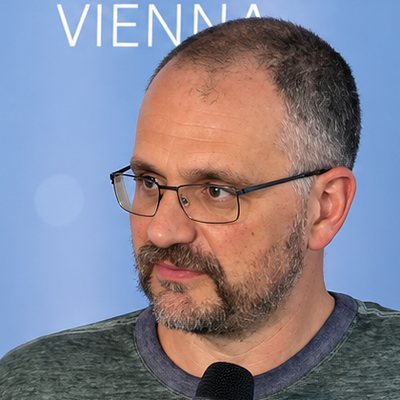
Álvaro Corral’s doctoral thesis, defended at the Universitat de Barcelona in 1997, was about slowly driven dynamical systems such as sandpiles, earthquakes and biological oscillators. Natural hazards are still at the centre of his work, and he studies the statistics of earthquakes, hurricanes, rainfall, forest fires and avalanches, looking for scaling laws and for ways to describe extreme events. He applies similar tools to texts and music through Zipf’s and Heaps’ laws, and works on the statistical fitting of power-law distributions. After his PhD he spent two years as an assistant research professor at the Niels Bohr Institute in Copenhagen. A lectureship at the Universitat Politècnica de Catalunya and a Ramón y Cajal fellowship at the Universitat Autònoma de Barcelona came next. From 2007 to 2024 he was a principal investigator at the CRM. Since 2025 he has been one of the CRM’s affiliated researchers, based at the UAB’s Department of Mathematics, and he also collaborates with the Complexity Science Hub in Vienna.
Tim Myers

Tim Myers has spent more than 30 years turning practical problems into mathematical models. Over those years he has contributed to the modelling of phase change, thin film flow, nanofluids and nanoscale optics, and to the Heat Balance Integral Method, an approximate technique for heat conduction problems.
His latest book, Theoretical and Practical Stefan Problems (Springer, 2025), deals with melting and solidification, where the boundary between solid and liquid moves as the material changes phase.
Myers took his PhD at the University of Leeds in 1990, with a thesis on elastohydrodynamic lubrication. He has worked at universities in the United Kingdom, South Africa, Canada, and South Korea, before joining the CRM. He sits on the board of the European Consortium for Mathematics in Industry and coordinates the European Study Groups with Industry, workshops where companies bring open problems to teams of mathematicians.
Xavier Ros-Oton
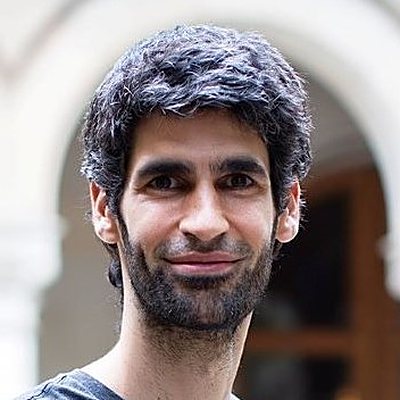
Born in Barcelona in 1988, Xavier Ros-Oton studied at the Universitat Politècnica de Catalunya and did his PhD there under Xavier Cabré, finishing in 2014. He then went to the University of Texas at Austin as an R. H. Bing Instructor and on to the University of Zurich as an assistant professor. In 2020 he returned as an ICREA Research Professor at the Universitat de Barcelona.
His field is the regularity of solutions to nonlinear elliptic and parabolic equations, with a particular interest in free boundary problems and integro-differential equations. In a free boundary problem, the edge of the region where something happens is itself one of the unknowns. With Alessio Figalli and Joaquim Serra he proved the generic regularity of free boundaries in the obstacle problem (2020), and this paper and the one he signed with Cabré each received a Frontiers of Science Award in 2023. In 2024 the three of them published a paper on the singular set in the Stefan problem, the melting model that Tim Myers approaches from the applied side.
Since 2024 he has led an ERC Consolidator Grant, after an ERC Starting Grant that ran from 2019. Among his other prizes are the Princess of Girona Foundation Award for Scientific Research (2019) and the Stampacchia Gold Medal (2021), and in 2022 he joined the Royal Academy of Exact, Physical and Natural Sciences of Spain, the youngest person to do so.
Sergey Tikhonov
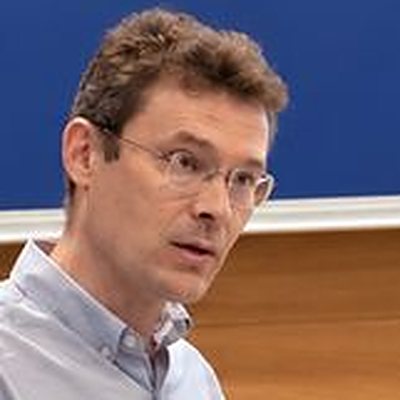
Sergey Tikhonov works in Fourier analysis and approximation theory. He studies how the smoothness of a function relates to how well it can be approximated, or represented, by sums of simple functions, with special attention to the case where those simple functions are waves. The questions take him into function spaces and polynomial inequalities, among other areas.
Tikhonov graduated from Lomonosov Moscow State University in 1999 and stayed on for his PhD, which he completed in 2003, a year before he first came to the CRM as a Marie Curie fellow. After two years as a postdoctoral fellow at the Scuola Normale Superiore in Pisa he returned in 2008 as an ICREA researcher at the CRM. He received the ISAAC Award in 2009 and a Humboldt Research Fellowship for Experienced Researchers in 2013.
Xavier Tolsa
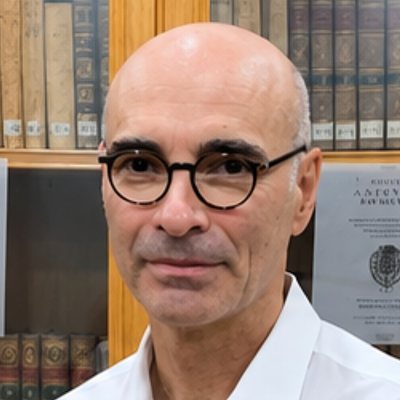
Xavier Tolsa was born in Barcelona in 1966 and studied engineering before he turned to mathematics. His proof of the semiadditivity of analytic capacity, published in 2003, was a contribution to the Painlevé problem, which asks which sets in the plane are removable singularities for bounded analytic functions. He counts it among his main achievements, together with the solution of the David-Semmes problem in codimension 1, which he published in 2014 with Fedor Nazarov and Alexander Volberg. His research combines harmonic analysis with geometric measure theory and potential theory, and it covers questions on harmonic measure and quasiconformal mappings.
His PhD came from the Universitat Autònoma de Barcelona in 1998, while he was working as an assistant professor at the Universitat de Barcelona. Postdoctoral years at Chalmers University of Technology and the Université Paris-Sud came next, then a Ramón y Cajal contract back at the UAB, where he has been an ICREA Research Professor since 2003. The Salem Prize came in 2002 and the Prize of the European Mathematical Society in 2004, followed in 2013 by the Ferran Sunyer i Balaguer Prize for his monograph Analytic Capacity, the Cauchy Transform, and Non-homogeneous Calderón-Zygmund Theory. He has held two ERC Advanced Grants.
Diego Vidaurre
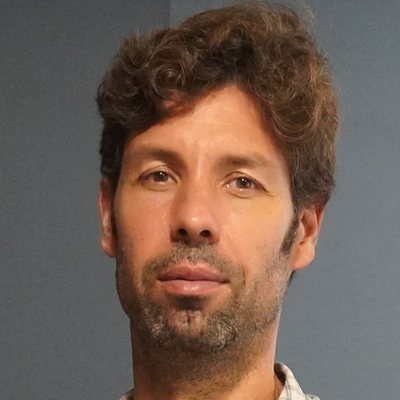
Diego Vidaurre joined the CRM in 2025 through ATRAE, the Spanish government programme for attracting internationally recognised researchers who have recently spent a substantial part of their careers abroad. He completed his PhD in computer science and statistics at the Universidad Politécnica de Madrid in 2012 and moved to Oxford for seven years of postdoctoral work in computational neuroscience, before posts in Osaka and then Aarhus, where he became a professor and built his own research group.
His computational models of spontaneous brain activity draw on several kinds of data, and their aim is to understand how the brain’s intrinsic dynamics shape perception. Because the models are fitted to each person, they can be related to behavioural traits and clinical variables. At the CRM he leads a project to develop statistical tools that combine several data sources to detect the earliest stages of Alzheimer’s disease.
How the database is built
The ranking rests on a composite indicator, the c-score, which combines total citations and the h-index with an hm-index adjusted for co-authorship and gives weight to the citations of papers a scientist signed alone, first or last. The number of papers plays no part. Every author is placed in one of 20 fields and 174 subfields of the Science-Metrix classification. A scientist enters the list by ranking among the top 100,000 on the c-score, with or without self-citations, or by reaching the top 2% of their subfield.
The authors of the database ask for the data to be read with care. In their FAQ they point out that the list measures citation impact, and that being absent from it says nothing against the quality of a scientist’s work.
More from the CRM
El CRM rep els estudiants de la prova de nivell de Bojos per les Matemàtiques 2027
The CRM welcomes students from the Bojos per les Matemàtiques 2027 entrance testVisita guiada al centre i xerrada de Tomás Sanz (UB-CRM) sobre les matemàtiques del soA guided tour of the centre and a talk by Tomás Sanz (UB-CRM) on the mathematics of soundTomás Sanz...
Fish schools and growing tissues: a workshop on how collective behaviour emerges
Mathematicians and biologists met at the Institut d’Estudis Catalans to discuss how local interactions shape tissues and animal groups.A talk in the Pere i Joan Coromines room of the Institut d’Estudis Catalans. Image: CRMCRM CommPau...
The CRM opens the academic year and unveils its Directors’ Gallery
A review of the year, the Communication Plan 2026–2030 and three research talks filled the morning of 19 October.The unveiling of the Directors’ Gallery.CRM CommPau VarelaCRMComm@crm.catGet the latest CRM news and activities in your inbox.Recent...
The CRM Mentoring Programme, as Told by One of Its Pairs
PhD student Joaquim Duran and mathematician Robert Cardona, one of the pairs in the CRM Mentoring ProgrammeJoaquim Duran (left) and Robert Cardona.CRM CommPau VarelaCRMComm@crm.catGet the latest CRM news and activities in your inbox.Recent...
When the reward comes within reach, the brain changes what it compares
As the tokens piled up, choices got faster and more accurate at the same time. The yardstick for judging each offer had moved.CRM CommPau VarelaCRMComm@crm.catGet the latest CRM news and activities in your inbox.Recent newsletters →Two subjects...
Almost every automaton can be reset with a short word
For a random automaton with n states, a word of about √n log n letters is almost always enough to reset it.CRM CommPau VarelaCRMComm@crm.catGet the latest CRM news and activities in your inbox.Recent newsletters →Picture a conveyor belt carrying...
Exposició ‘Les matemàtiques de Gaudí’
CRM quod erat demonstrandum | 48
ADA: Decoding Brain Signals Misaligned in Time
The study addresses a key limitation of current brain decoding techniques: the difficulty of interpreting internal mental processes whose temporal dynamics vary from trial to trial.Decoding what is happening in a person’s mind from their brain activity is one of the...
Rare curves, many points: Christophe Ritzenthaler and Rachel Pries on their research and the work around it
Christophe Ritzenthaler (Université de Rennes) and Rachel Pries (Colorado State University) both work on curves over finite fields: he hunts curves with as many points as possible, she hunts curves that almost never occur. In conversation with the CRM during their...
Call open for the 2027 Ferran Sunyer i Balaguer Prize
The Ferran Sunyer i Balaguer Foundation is accepting submissions for its 2027 prize, which awards 15,000 euros and publication in Birkhäuser's Progress in Mathematics series to an expository monograph on an active area of mathematical research. The deadline is 27...