
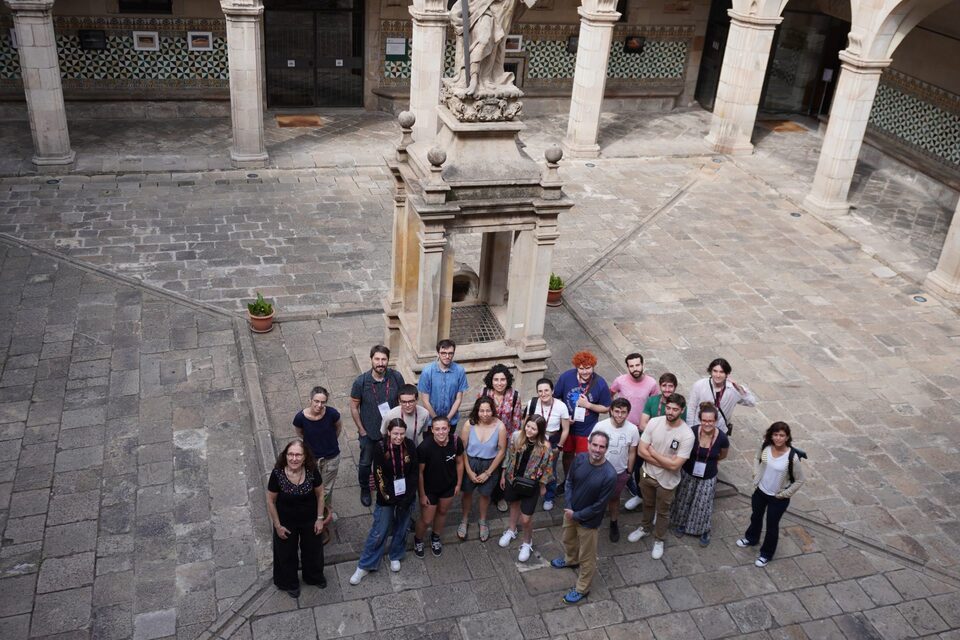
El passat dilluns 3 de juny va començar l’Hypatia 2024, un curs d’estiu que es va estendre fins dijous 6 de juny. L’Hypatia és una iniciativa per formar joves investigadors i investigadores i obrir nous camps d’estudi per aquells més sèniors, centrant-se en els principals problemes en matemàtiques i les seves aplicacions. Amb la idea que la teoria i les aplicacions s’enforteixen mútuament, aquest curs promou una atmosfera informal basada en discussions, intercanvi d’idees i anàlisi crítica dels resultats, mantenint sempre una perspectiva de gènere que destaca el paper i professionalització de la dona en les matemàtiques, complint amb l’esperit d’Hypatia d’Alexandria, la matemàtica, astrònoma i filòsofa que inspira el nom del curs.
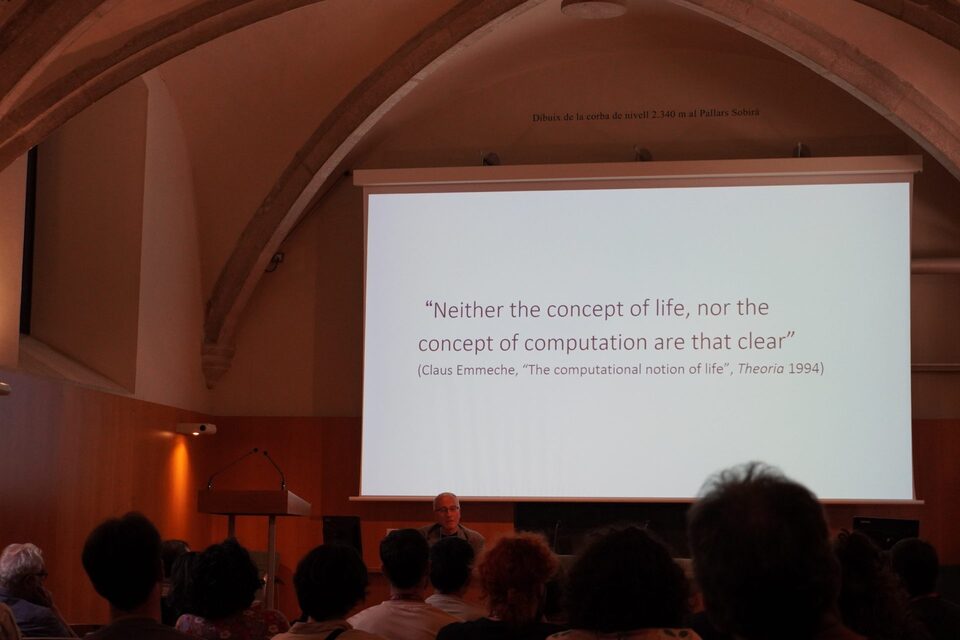
Durant els quatre dies de durada del programa, es van oferir dos cursos principals: “Algebra and Geometry in the Study of Biochemical Reaction Networks”, impartit per Alicia Dickenstein (Universidad de Buenos Aires) i Elisenda Feliu (University of Copenhagen), i “New Perspectives on Algebra from Applied Topology” per Ezra Miller (Duke University). Com a acte destacat, Roderic Guigó, director del Centre de Regulació Genòmica (CRG), va oferir un col·loqui titulat “A Computational Introduction to Life”, en què va subratllar la idea que “Data is life”.
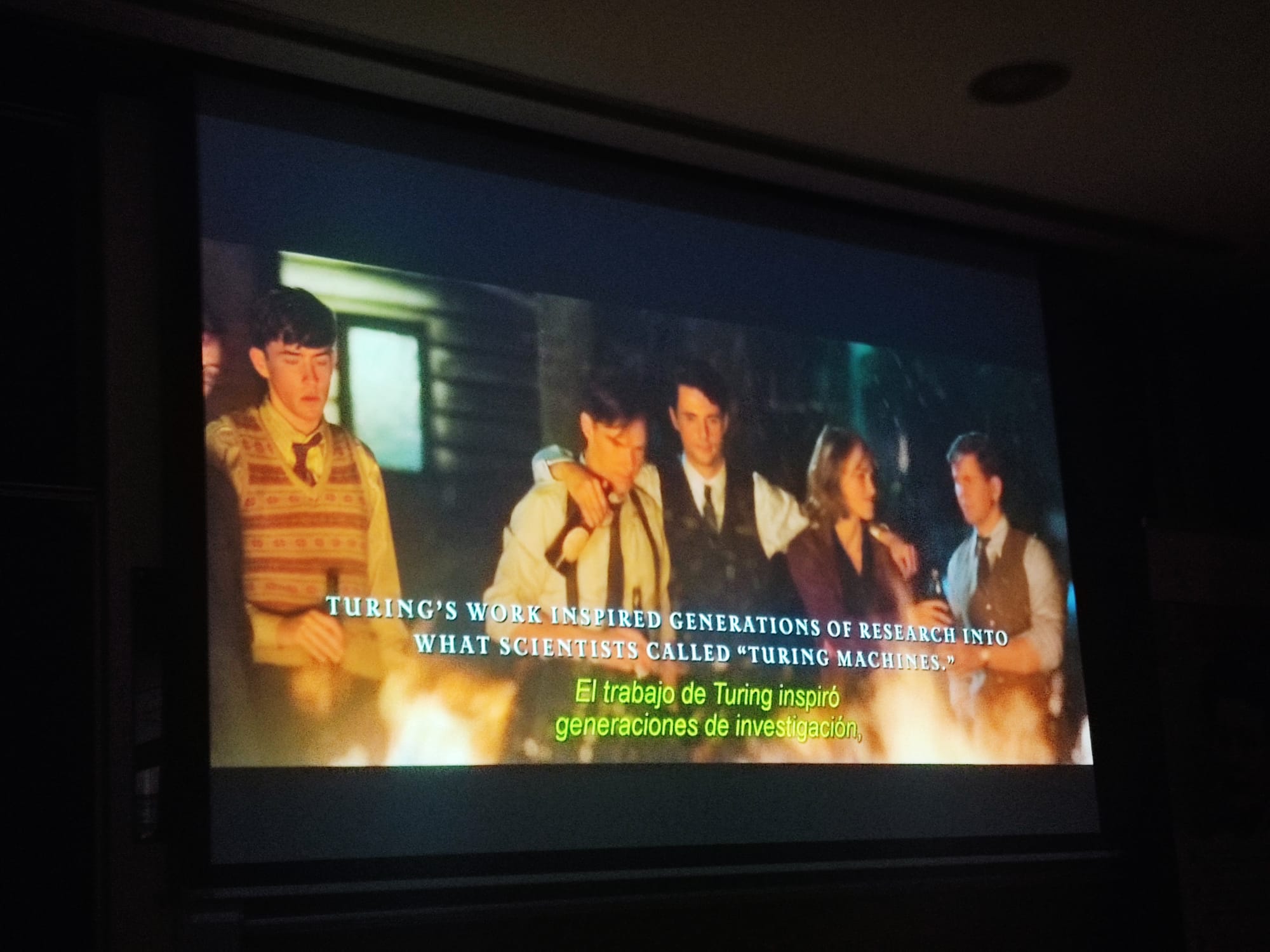
Com a activitats complementàries als cursos, es va organitzar la visualització i posterior col·loqui de la pel·lícula Imitation Game (Morten Tyldum, 2014). En aquest fòrum es van discutir temes com la col·laboració d’Alan Turing i Joan Clarke en les matemàtiques i criptografia, els errors històrics de la pel·lícula, i un debat sobre com aquests errors poden reforçar arquetips sobre la figura de la dona i el tractament de l’homosexualitat a la pantalla gran. Es va destacar el paper inspirador de l’equip de Hut-8, especialment Alan Turing, tant en la seva època com avui dia, influenciant investigadors en Intel·ligència Artificial amb el test de Turing, i treballs de recerca recents com l’article d’Eva Miranda (CRM-ICREA-UPC) amb Cardona, Peralta-Salas i Presas, que proporcionen la base per construir fluid computers, basant-se en el resultat de 1936 de Turing sobre la indecidibilitat del problema de l’halting.
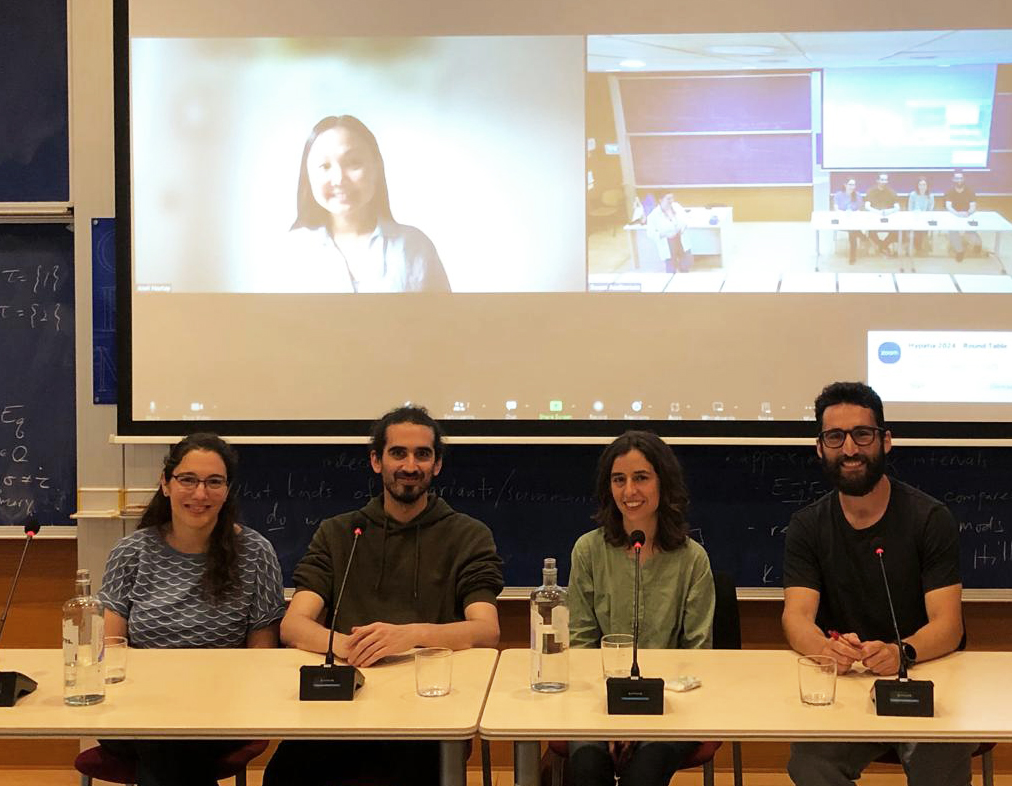
Finalment, vam tenir el plaer de rebre ex-doctorands del centre en una taula rodona: Alberto Debernardi (actual postdoc a la UAB), Núria Folguera (AstraZeneca), Víctor Navas (postdoc a l’Observatori de l’Ebre i professor a la URV), Anel Nurtay (Lead Data Scientist a Aviva) i Marina Vegué (postdoc al grup de Sistemes Dinàmics a la UPC). Van compartir les seves experiències durant el doctorat i la recerca de postdoctorats, oferint consells sobre les opcions després del doctorat, ja sigui en la indústria, l’Acadèmia o postdoctorats en la indústria.
Hypatia 2024 ha estat una trobada enriquidora que ha reafirmat la importància de la col·laboració interdisciplinària.
Subscribe for more CRM News
|
|
CRM CommPau Varela & Mariona Fucho
|

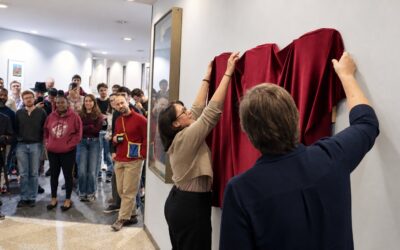
The CRM opens the academic year and unveils its Directors’ Gallery
A review of the year, the Communication Plan 2026–2030 and three research talks filled the morning of 19 October.The unveiling of the Directors’ Gallery.CRM CommPau VarelaCRMComm@crm.catGet the latest CRM news and activities in your inbox.Recent...
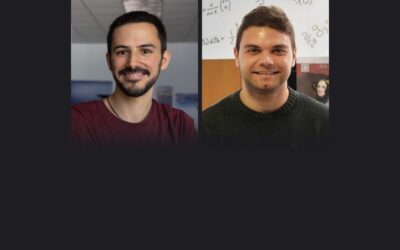
The CRM Mentoring Programme, as Told by One of Its Pairs
PhD student Joaquim Duran and mathematician Robert Cardona, one of the pairs in the CRM Mentoring ProgrammeJoaquim Duran (left) and Robert Cardona.CRM CommPau VarelaCRMComm@crm.catGet the latest CRM news and activities in your inbox.Recent...
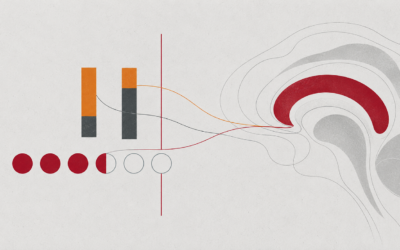
When the reward comes within reach, the brain changes what it compares
As the tokens piled up, choices got faster and more accurate at the same time. The yardstick for judging each offer had moved.CRM CommPau VarelaCRMComm@crm.catGet the latest CRM news and activities in your inbox.Recent newsletters →Two subjects...

Almost every automaton can be reset with a short word
Guillaume Chapuy (Université Paris Cité, CNRS) and Guillem Perarnau (UPC, CRM) have shown that a random finite automaton with n states can, with high probability, be reset by a word of length of order √n log n. The result, published in ACM Transactions on Algorithms, pins the exponent at 1/2, the lower end of a decade of numerical estimates, and addresses the random version of the synchronization problem behind a conjecture Ján Černý posed in 1964 and which still remains open.
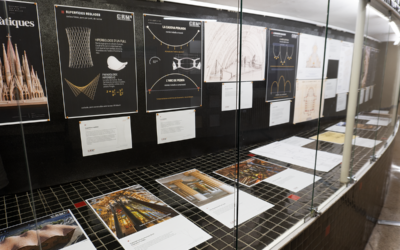
Exposició ‘Les matemàtiques de Gaudí’
CRM quod erat demonstrandum | 48

ADA: Decoding Brain Signals Misaligned in Time
The study addresses a key limitation of current brain decoding techniques: the difficulty of interpreting internal mental processes whose temporal dynamics vary from trial to trial.Decoding what is happening in a person’s mind from their brain activity is one of the...
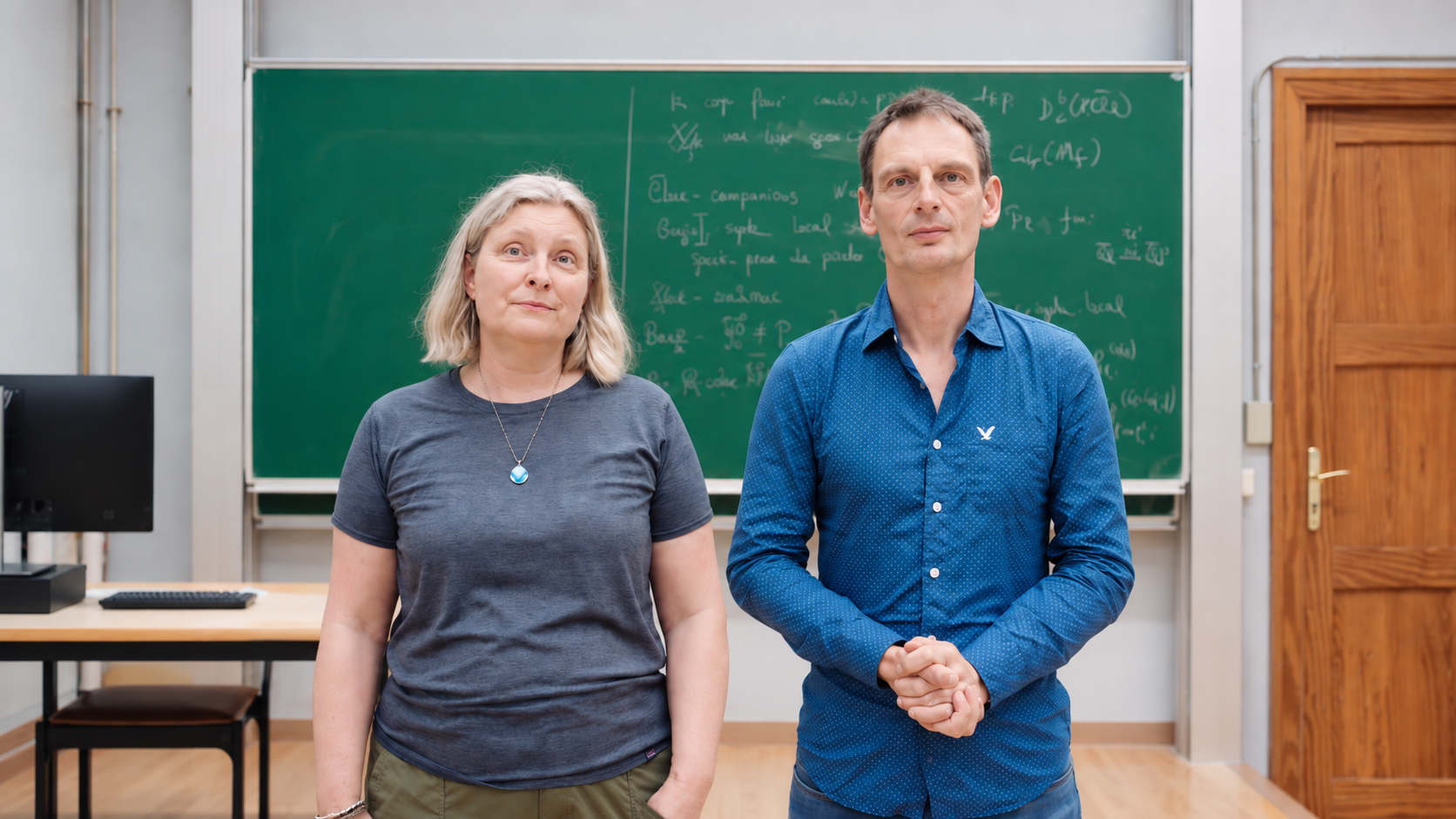
Rare curves, many points: Christophe Ritzenthaler and Rachel Pries on their research and the work around it
Christophe Ritzenthaler (Université de Rennes) and Rachel Pries (Colorado State University) both work on curves over finite fields: he hunts curves with as many points as possible, she hunts curves that almost never occur. In conversation with the CRM during their...

Call open for the 2027 Ferran Sunyer i Balaguer Prize
The Ferran Sunyer i Balaguer Foundation is accepting submissions for its 2027 prize, which awards 15,000 euros and publication in Birkhäuser's Progress in Mathematics series to an expository monograph on an active area of mathematical research. The deadline is 27...
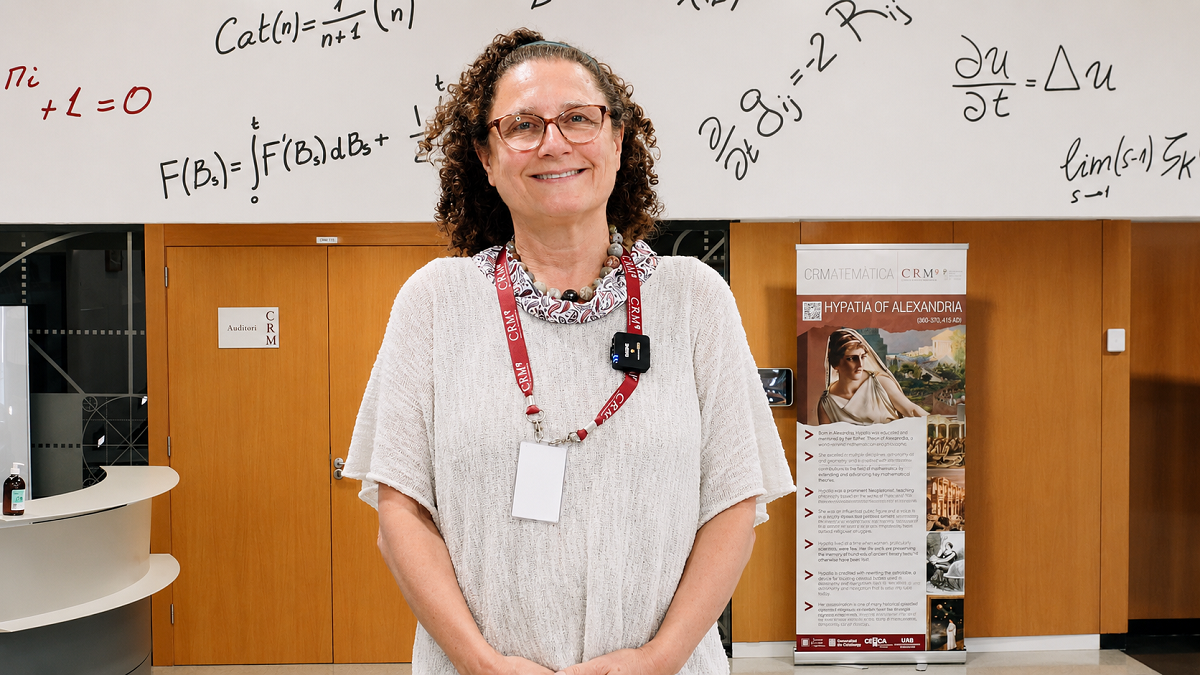
Susanna Terracini delivers the CRM Colloquium 2026
Susanna Terracini (Università di Torino) delivered the CRM Colloquium 2026 on 14 July, presenting a rigidity result for Kepler billiards obtained with Stefano Baranzini, Vivina Barutello and Irene De Blasi. She was at the centre as a member of the CRM Scientific...
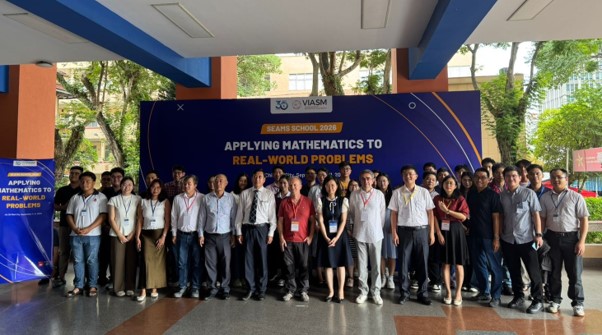
Ho Chi Minh City hosts the SEAMS School on applying mathematics to real-world problems
Students from across the region took courses and worked on group projects at a school co-organised by CRM researcher Tim Myers.CRM CommPau VarelaCRMComm@crm.catGet the latest CRM news and activities in your inbox.Recent newsletters →Between 4 and...

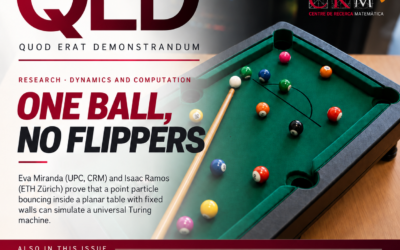
A single ball on a fixed table can compute: Eva Miranda and Isaac Ramos prove that two-dimensional billiards are Turing complete
Eva Miranda (UPC, CRM) and Isaac Ramos (ETH Zürich) show that a point particle bouncing inside a planar table with fixed walls can simulate a universal Turing machine, settling a question Cristopher Moore left open in 1990. The result grew out of a master’s project...