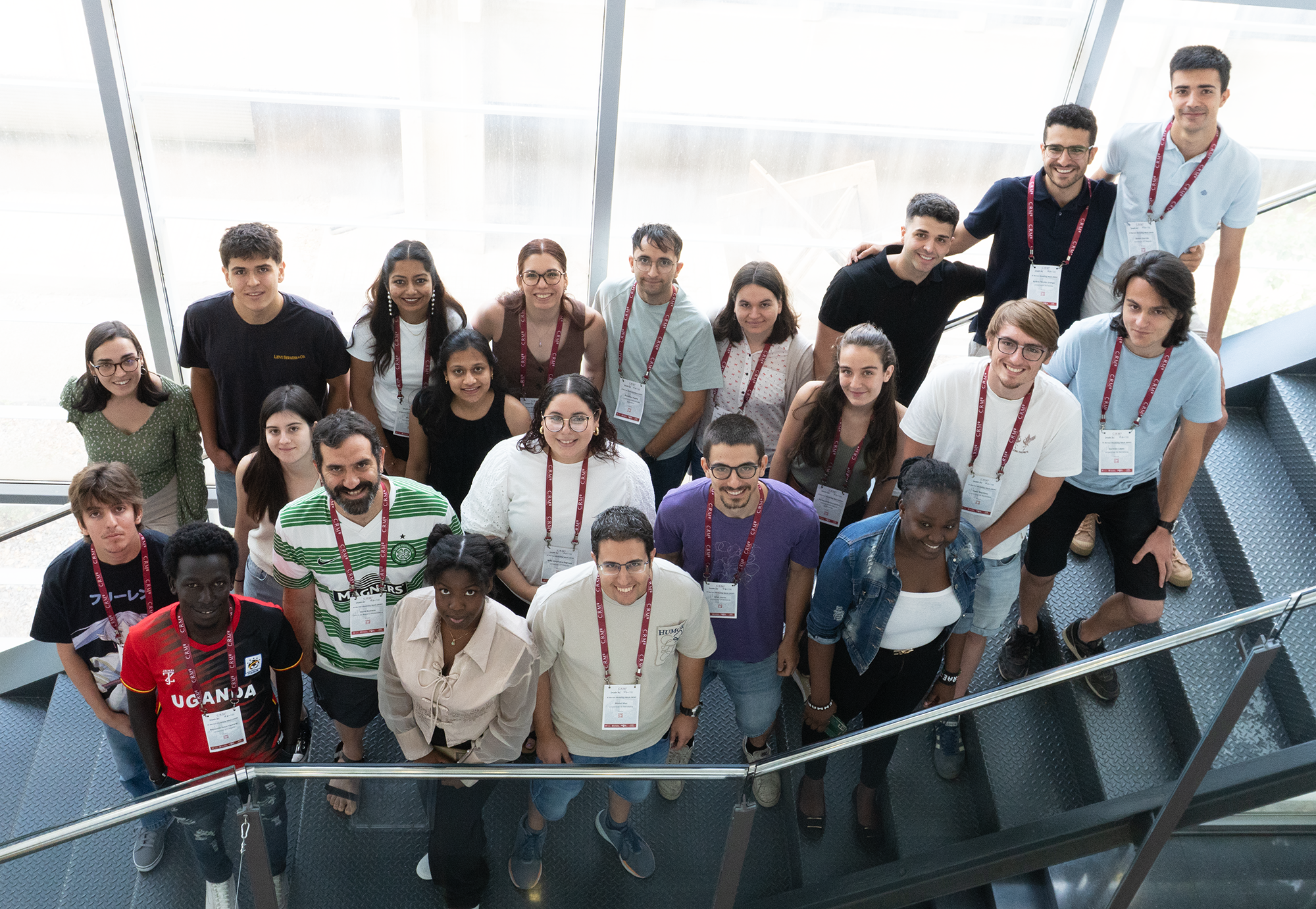
From July 7 to 11, the CRM became a hub for collaborative problem-solving during the XI Iberian Modeling Week, an international training initiative that brought together nearly 30 students from diverse academic backgrounds to tackle real-world challenges using mathematical modeling. Through hands-on work on industrial problems, ranging from public transport and biomedical diagnostics to urban planning and renewable energy, the participants not only applied their skills, but also experienced the power of teamwork and interdisciplinary thinking.
For five days, the CRM classrooms echoed not with lectures but with the buzz of teamwork. From July 7 to 11, 2025, the Centre de Recerca Matemàtica hosted the eleventh edition of the Iberian Modeling Week (IMW), a training experience where mathematics steps outside the classroom and into the messy, fascinating world of real-world problems.
Organised by the CRM, in collaboration with math-in (Spain) and PT-MATHS-IN (Portugal), the IMW brought together nearly 30 students from across Europe (from Barcelona to Lisbon, from Hamburg to L’Aquila) to tackle the applications of mathematics head-on. And not all of them came from a pure mathematics background. Among the participants were students of physics, chemistry, artificial intelligence, biomedical engineering, and aerospace engineering, bringing with them diverse perspectives and problem-solving strategies.
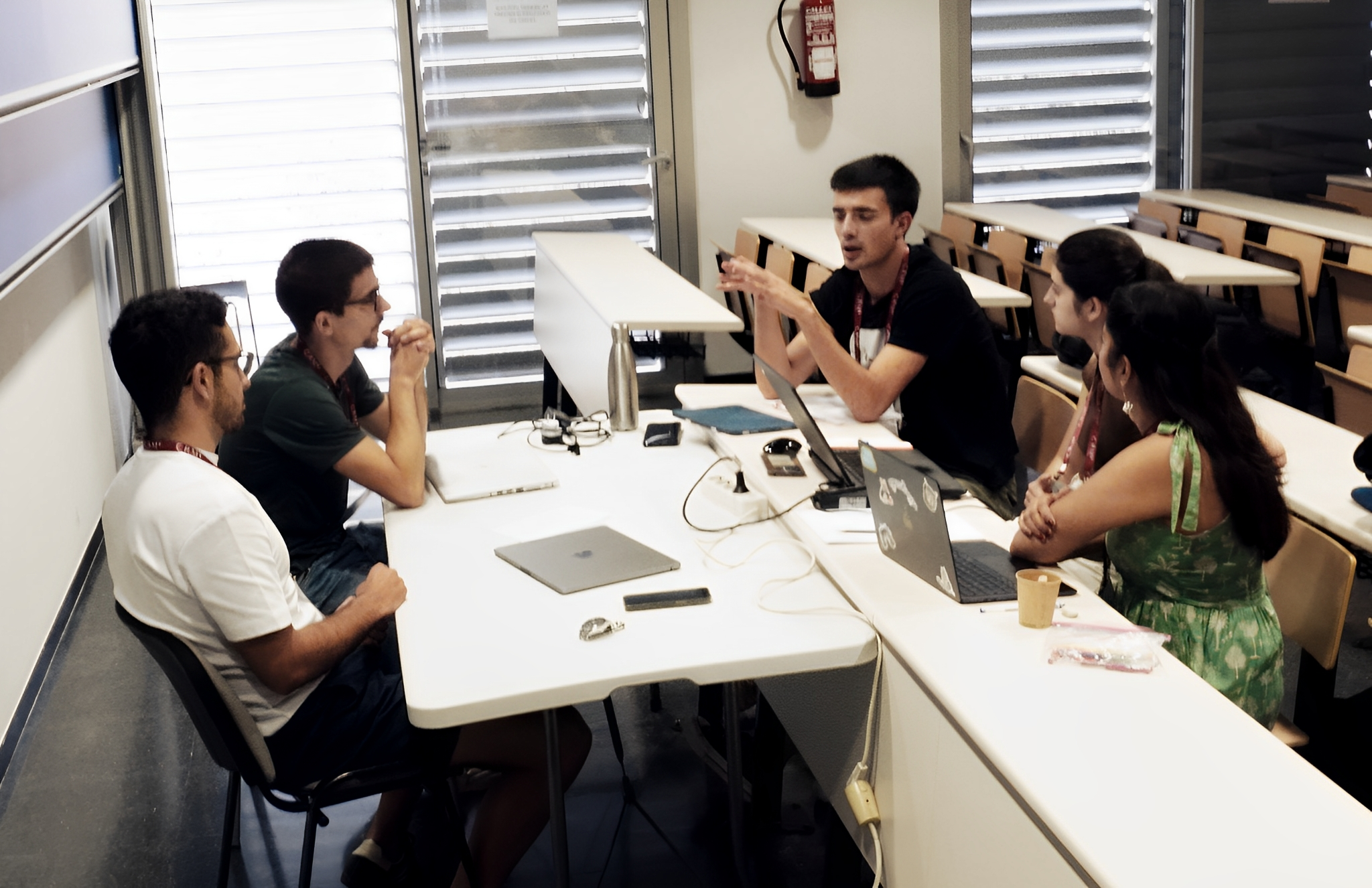
“It was incredible to work on a problem that’s actually useful for society,” said Álvaro Garrido, a participant from the University of L’Aquila, in Italy. “We often study theory, but here we had to make something work under real conditions; with data, with deadlines, with ambiguity.” Over the course of the week, participants worked in teams under the guidance of researchers and industry mentors, navigating challenges that ranged from public transport optimisation to biomedical diagnostics.
Each challenge had a real industrial or societal angle. One group modeled the optimal allocation of buses throughout a city’s daily cycle, factoring in not only trip duration and passenger demand but also synchronisation strategies to minimise fuel use and waiting times. Another team worked on the physics of blood flow, refining the Windkessel model to better understand hemodynamic changes during venous occlusion using real data from non-invasive spectroscopy.
A third team worked on a problem as timely as it was complex: how to place climate shelters in cities to ensure maximum accessibility for vulnerable populations during extreme heat events, using Barcelona as a case study. They used demographic and geographic datasets to develop algorithms that balanced social equity with spatial efficiency. Meanwhile, a fourth team wrestled with the trade-off between energy harvesting and flow efficiency in asphalt solar collectors, a problem at the crossroads of renewable energy, fluid dynamics, and infrastructure design.
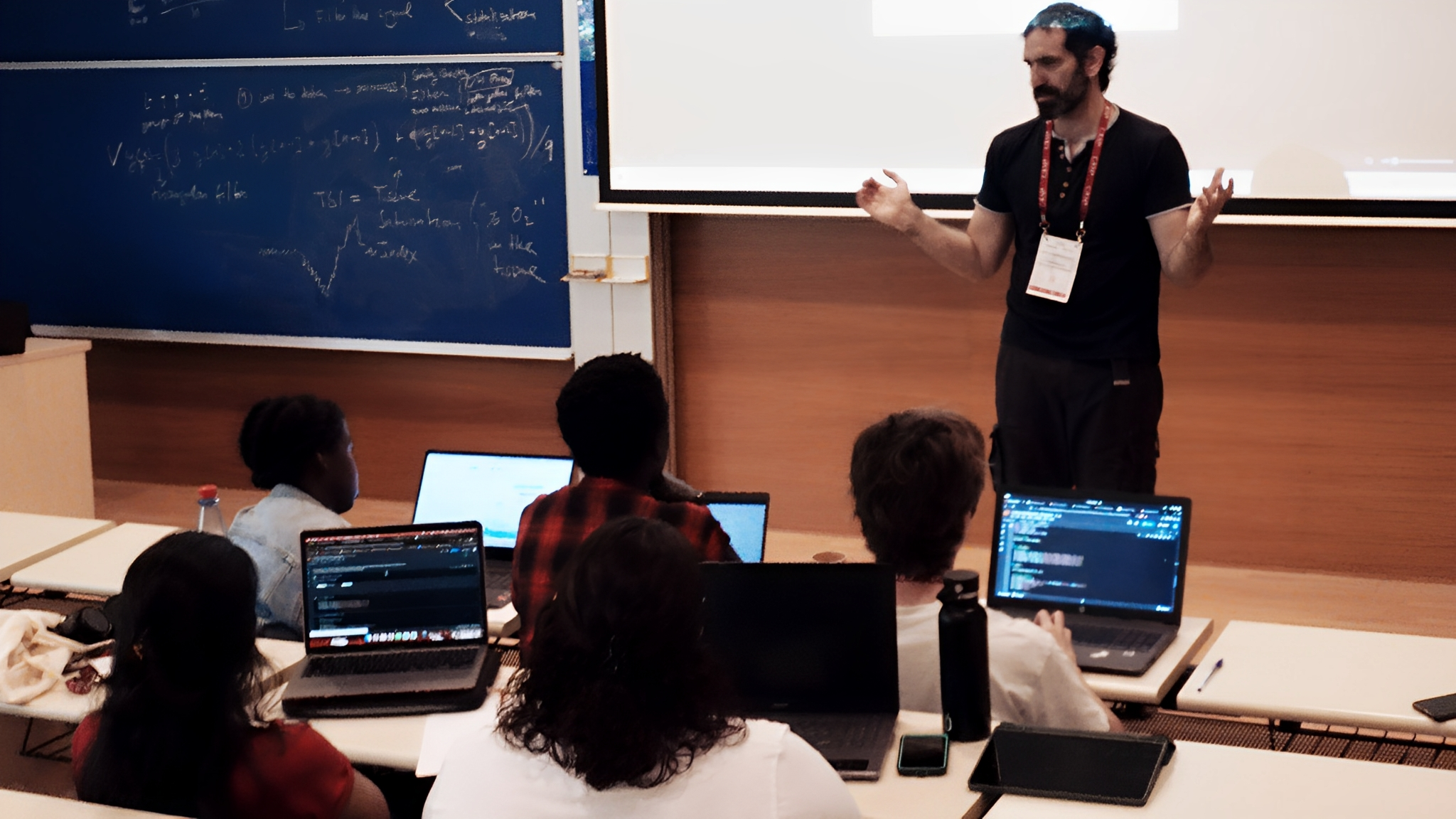
For Angelica Chanvoedou Abaga, a student at Universidad Rey Juan Carlos, the IMW was more than just an academic experience. “You don’t just learn how to model,” she explained. “You learn to communicate with people from different countries, from different fields. That’s what made this week so valuable.”
Throughout the week, participants learnt how to translate the language of mathematics into tools for change. The modeling week emphasised collaboration and critical thinking. It also offered a glimpse into how mathematics connects with everything: engineering, public health, urban planning, and climate resilience.
“I didn’t expect to enjoy it this much,” admitted Natan Sisoev, a mathematics student from Universitat Autònoma de Barcelona. “But working side by side with others, finding new ways to look at a problem, it reminded me why I wanted to study this in the first place.”
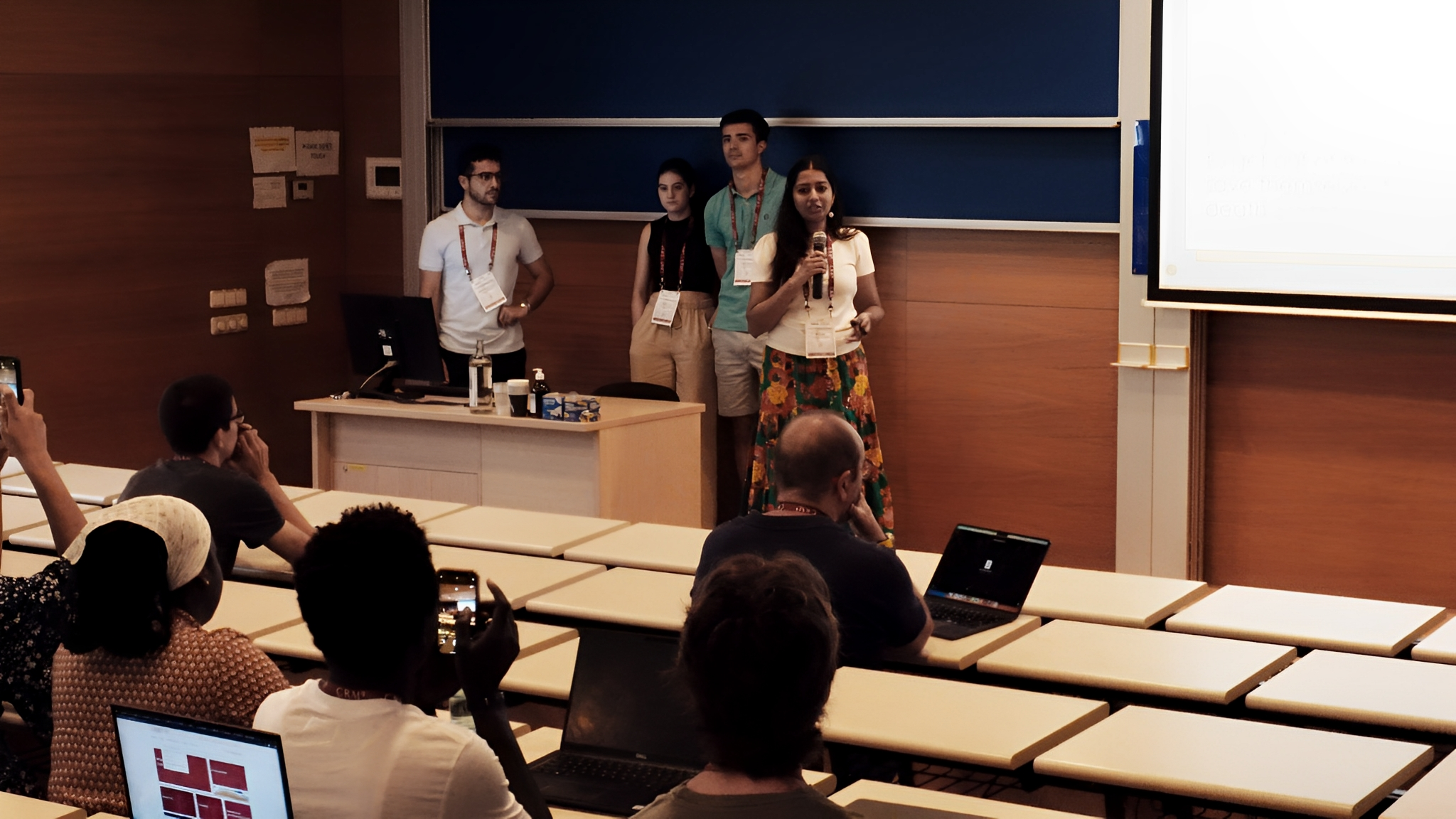
Friday marked the final presentations. Each group stood before their peers and mentors to explain what they’d built: the models they’d refined and the solutions they proposed. And, just as importantly, the open questions that remained.
“Presenting our results to the other teams was a really interesting experience,” said Andrés Uranga, from Universidad de Sevilla. “It was impressive to see how each group approached the problem differently.”
For David Romero, director of the Knowledge Transfer Unit at CRM, this is precisely the point: “This kind of activity puts students in touch with problems that aren’t polished or prepared for a textbook. They’re raw, they’re real, and that forces them to think.” He added: “At CRM, we believe deeply in the connection between knowledge and society. That’s why we organise things like this; to make sure talent doesn’t stay isolated in theory.”
Emilio Carrizosa, professor at Universidad de Sevilla and president of Math-in, echoed this sentiment: “Events like this one are essential. They show that mathematics can, and should, leave the university walls and go solve real-world problems.” But beyond the technical skills, he emphasised what students take with them: “It’s not just about solving a problem. It’s about learning how to work in a team, how to explain your ideas, and how to listen. That’s what they’ll carry with them into any career.”
The IMW was not an isolated event, it preceded the European Study Group with Industry (ESGI), creating a powerful continuity: first the students, then the professionals, tackling problems side by side in the same space. This back-to-back setup maximised opportunities for networking.
Behind the scenes, the activity was coordinated by the Knowledge Transfer Unit at the CRM: Lucía Escudero, Marc Homs-Dones, Manel Mas, and David Romero, who served as the mentors for the four working groups. Their work, in collaboration with representatives from Spanish and Portuguese universities and industrial platforms, ensured that both the scientific content and the organisational logistics of the IMW ran smoothly and effectively.
Subscribe for more CRM News
|
|
CRM CommPau Varela
|
When the reward comes within reach, the brain changes what it compares
As the tokens piled up, choices got faster and more accurate at the same time. The yardstick for judging each offer had moved.CRM CommPau VarelaCRMComm@crm.catGet the latest CRM news and activities in your inbox.Recent newsletters →Two subjects...

Almost every automaton can be reset with a short word
Guillaume Chapuy (Université Paris Cité, CNRS) and Guillem Perarnau (UPC, CRM) have shown that a random finite automaton with n states can, with high probability, be reset by a word of length of order √n log n. The result, published in ACM Transactions on Algorithms, pins the exponent at 1/2, the lower end of a decade of numerical estimates, and addresses the random version of the synchronization problem behind a conjecture Ján Černý posed in 1964 and which still remains open.
Exposició ‘Les matemàtiques de Gaudí’
CRM quod erat demonstrandum | 48

ADA: Decoding Brain Signals Misaligned in Time
The study addresses a key limitation of current brain decoding techniques: the difficulty of interpreting internal mental processes whose temporal dynamics vary from trial to trial.Decoding what is happening in a person’s mind from their brain activity is one of the...
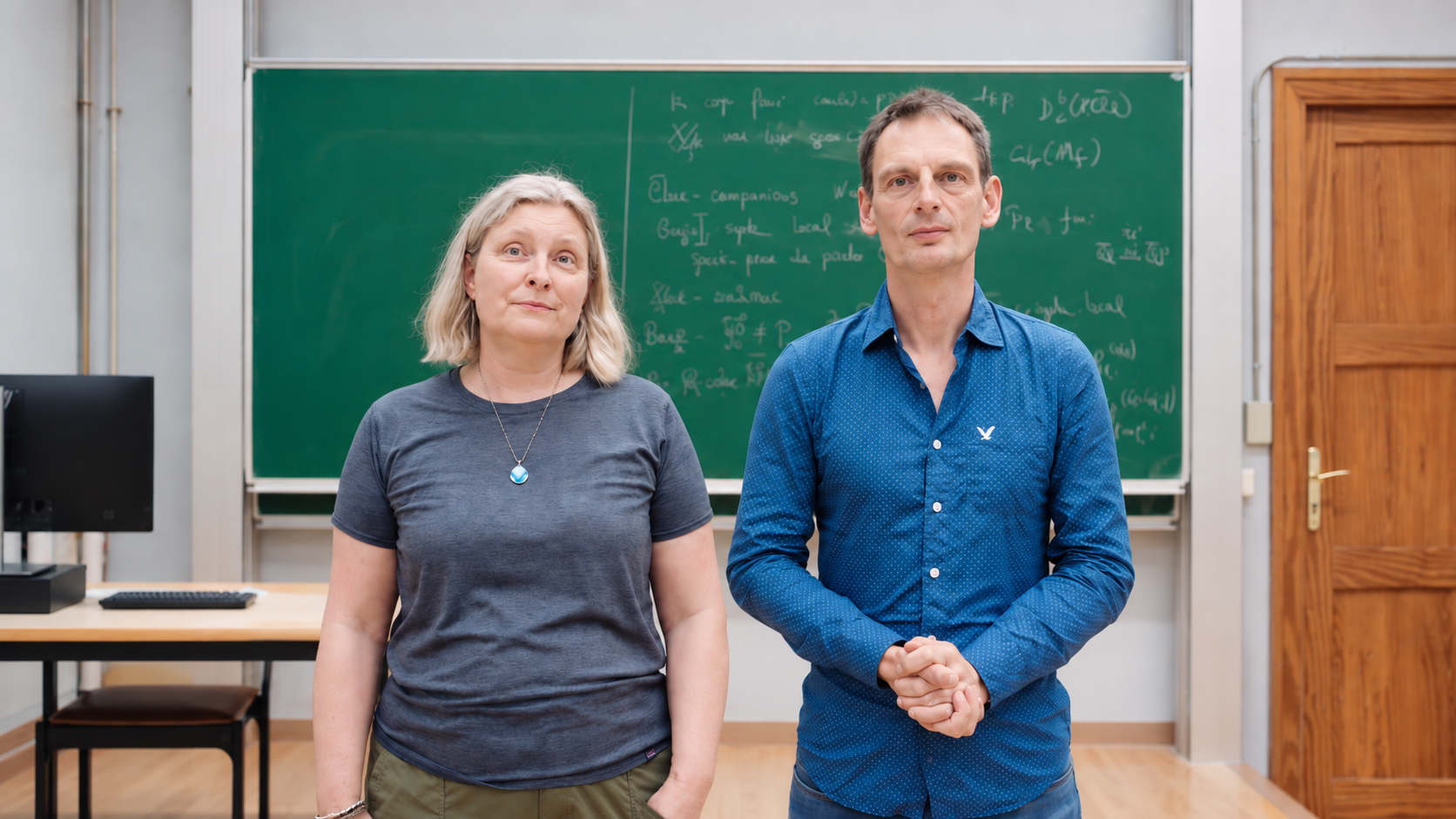
Rare curves, many points: Christophe Ritzenthaler and Rachel Pries on their research and the work around it
Christophe Ritzenthaler (Université de Rennes) and Rachel Pries (Colorado State University) both work on curves over finite fields: he hunts curves with as many points as possible, she hunts curves that almost never occur. In conversation with the CRM during their...
Call open for the 2027 Ferran Sunyer i Balaguer Prize
The Ferran Sunyer i Balaguer Foundation is accepting submissions for its 2027 prize, which awards 15,000 euros and publication in Birkhäuser's Progress in Mathematics series to an expository monograph on an active area of mathematical research. The deadline is 27...
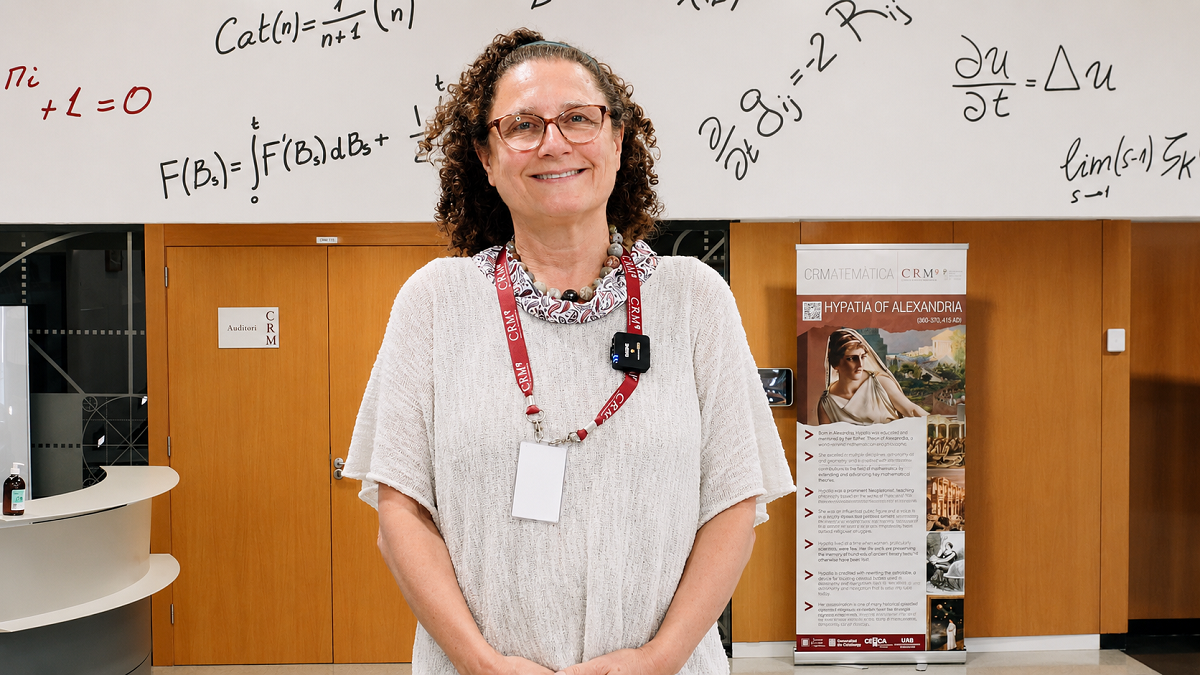
Susanna Terracini delivers the CRM Colloquium 2026
Susanna Terracini (Università di Torino) delivered the CRM Colloquium 2026 on 14 July, presenting a rigidity result for Kepler billiards obtained with Stefano Baranzini, Vivina Barutello and Irene De Blasi. She was at the centre as a member of the CRM Scientific...
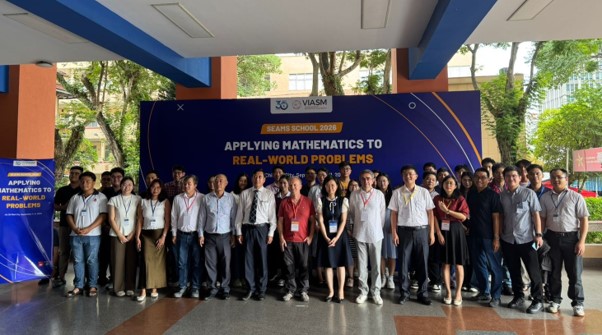
Ho Chi Minh City hosts the SEAMS School on applying mathematics to real-world problems
Students from across the region took courses and worked on group projects at a school co-organised by CRM researcher Tim Myers.CRM CommPau VarelaCRMComm@crm.catGet the latest CRM news and activities in your inbox.Recent newsletters →Between 4 and...

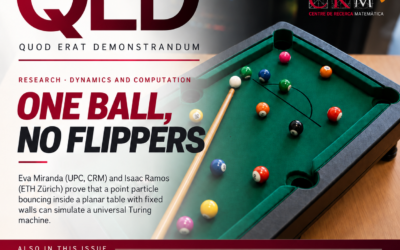
A single ball on a fixed table can compute: Eva Miranda and Isaac Ramos prove that two-dimensional billiards are Turing complete
Eva Miranda (UPC, CRM) and Isaac Ramos (ETH Zürich) show that a point particle bouncing inside a planar table with fixed walls can simulate a universal Turing machine, settling a question Cristopher Moore left open in 1990. The result grew out of a master’s project...
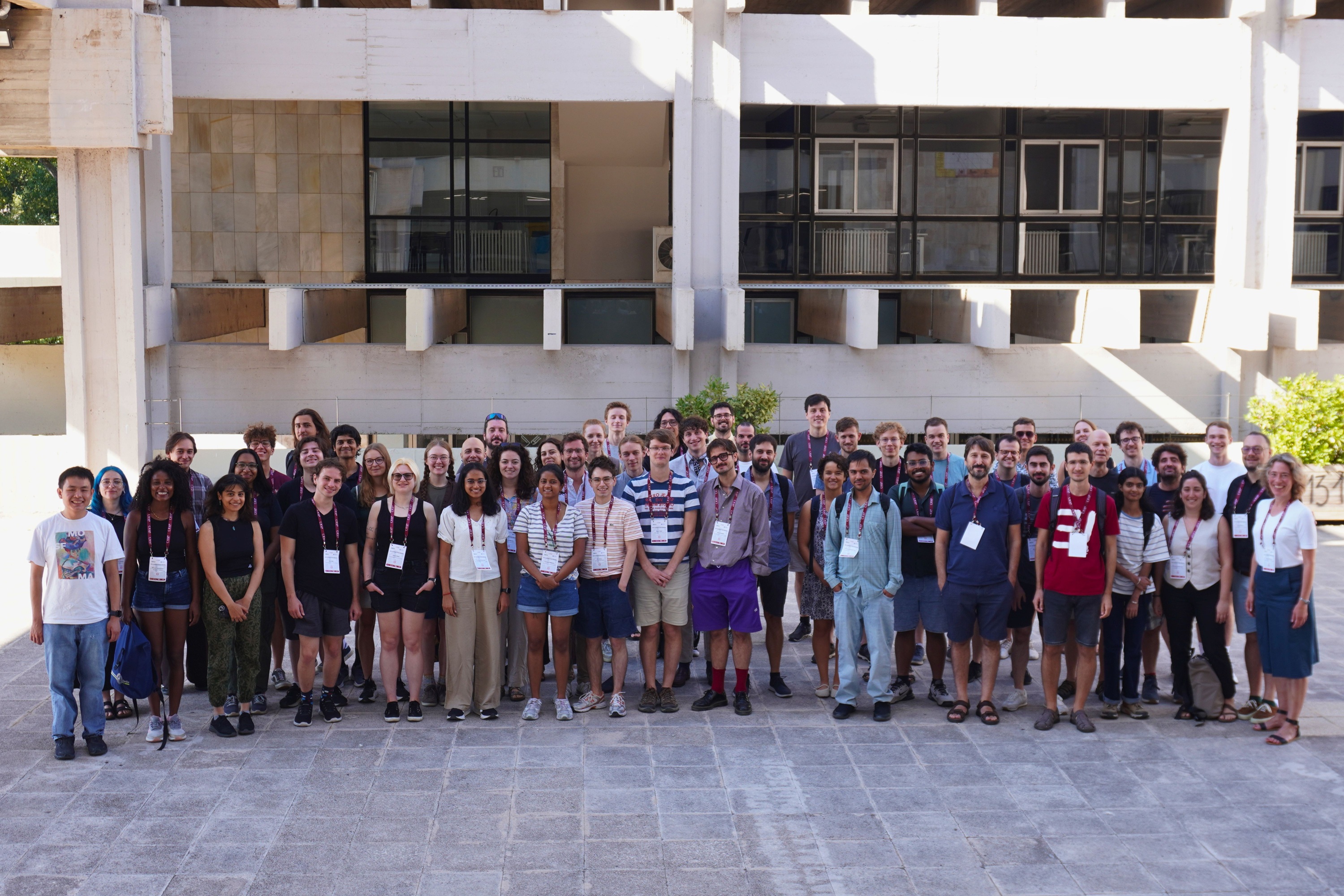
BMS-BGSMath Junior Meeting 2026: Barcelona and Berlin Strengthen Scientific Ties
From 2 to 4 September 2026, the Centre de Recerca Matemàtica (CRM) hosted the BMS-BGSMath Junior Meeting 2026, a three-day event jointly organised by the Berlin Mathematical School (BMS) and the Barcelona Graduate School of Mathematics (BGSMath), with the Centre de...
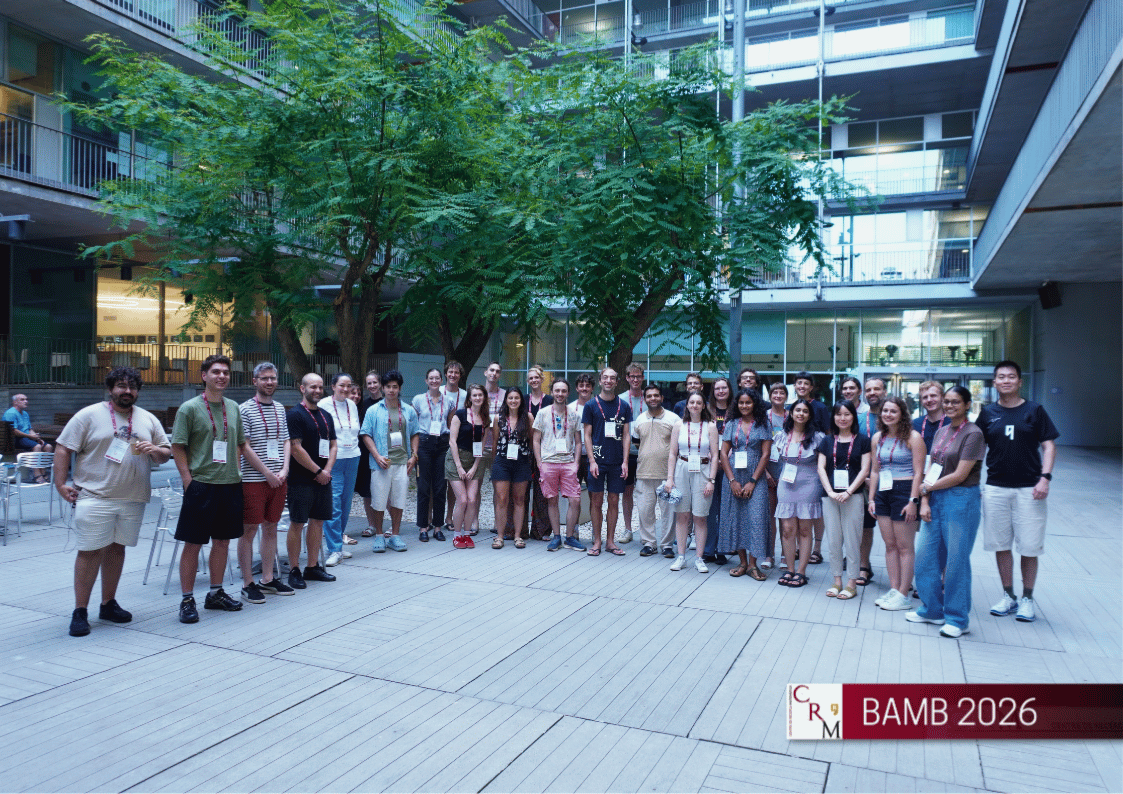
The CRM organises the 2026 Barcelona Summer School for Advanced Modeling of Behavior
The Centre de Recerca Matemàtica held the sixth edition of BAMB!, the Barcelona Summer School for Advanced Modeling of Behavior, from 12 to 23 July 2026 at the Parc de Recerca Biomèdica de Barcelona. Thirty early-career researchers from fourteen countries followed...