
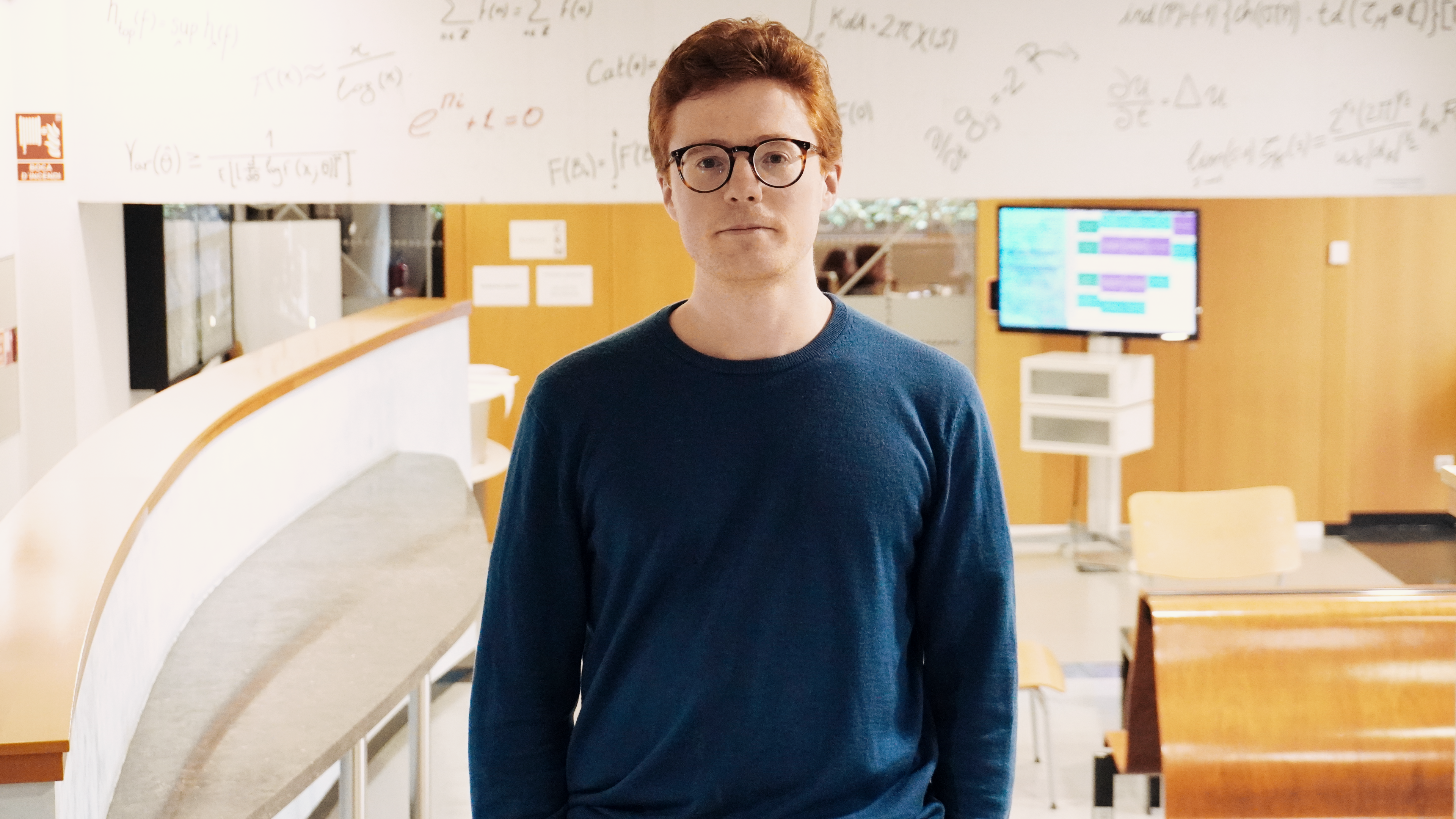
Ander Movilla has joined CRM as a Beatriu de Pinós postdoctoral fellow. Working with Tomás Alarcón, Movilla will develop mathematical models that capture not just the static architecture of DNA but its dynamic behaviour; how chromosome contacts shift as chemical marks on histones change over time.
Ander Movilla Miangolarra has joined the Centre de Recerca Matemàtica with a physicist’s training, a biologist’s curiosity, and a mathematician’s toolkit. His path here traces an unusual trajectory, from studying how droplets form inside cells to understanding how chromosomes fold in three dimensions, but the thread connecting it all is a fascination with how physical principles shape biological behaviour.
Movilla arrives at CRM as a Beatriu de Pinós postdoctoral fellow, a program funded by the Catalan Government’s AGAUR that brings international researchers to Catalonia for three-year research stays.
Working with CRM principal investigator Tomás Alarcón, he’ll join the Mathematical Biology research group at CRM to tackle one of molecular biology’s most intricate puzzles: how the three-dimensional architecture of chromosomes influences which genes get expressed.
A Physicist’s Entry into Biology
Movilla’s background is in physics, he completed his undergraduate degree at the University of the Basque Country, but his PhD at Institut Curie in Paris was already crossing disciplinary boundaries. He worked on reaction-diffusion equations, the mathematical framework that describes how substances spread and interact in space. But these weren’t the textbook versions.
“They weren’t the classic ones that you’d use for solutions where these things don’t happen,” Movilla explains. “They were for cases where, due to different interactions between the solutes, these droplets form.” He was studying liquid-liquid phase separation: how the cytoplasm inside cells spontaneously organises into distinct compartments, like oil separating from water in a vinaigrette. It’s a phenomenon that’s become central to understanding cellular organisation, especially under stress conditions when metabolic components aggregate into visible droplets.
“Describing that mathematically, especially in a way that’s intelligible to a human and not just a thousand-by-thousand matrix that only a computer can understand, that’s also an interesting question from a purely mathematical standpoint.”
The work was computationally driven but biologically motivated. Then, three months into his PhD, reality intervened. “The experimentalists said, well, this can’t actually be done in the end. And so, your project collapses,” he recalls. “You start thinking, okay, now what do we do?” It was an early lesson in research pragmatism. “I think in science, most of the things you try don’t work out,” Movilla says. “Of course, the ones that do work out get published, and everything goes well. But you try many things that don’t work. And I learned that in the first three months of my PhD.”
The Turn Toward Gene Regulation
During his postdoctoral work at the John Innes Centre in Norwich, UK, Movilla shifted his focus to gene regulation and epigenetics. The questions became more explicitly biological: How do cells with identical DNA differentiate into neurons, skin cells, or muscle? How do they maintain their identities across divisions?
The answers involve histones, proteins that bind to DNA and control whether a gene is expressed. Histone modifications form patterns: blocks with one type of modification, others without, and some stretches are empty in the middle. Tomás Alarcón has been working on mathematical models of these patterns for years, and lately he’s been focused on how they relate to chromosome folding. The patterns appear linear when you look at a genome browser, but in the cell nucleus, the DNA is folded in three dimensions, and that matters.
“When you look at the genome browser, as biologists typically do, it shows up as a line,” Movilla explains. “But then in the cell nucleus, it’s all folded.” Regions of the chromosome that are far apart on the linear sequence might be physically adjacent in three-dimensional space, and that proximity matters. “In zones where there are contacts between the chromosomes, it’s much more likely that those histone interactions happen, even if they’re far apart.”
Tomás Alarcón at CRM has been working on mathematical models of histone modifications for years, examining how these chemical patterns relate to chromosome folding. But most of that work has treated the structure as relatively static. Movilla’s project aims to make it dynamic.
Dynamic Networks and Adaptive Systems
When there’s a contact between two parts of the chromosome, you get a network of contacts. If the network is fixed, you know what it is, and how to describe it. But when that network becomes dynamic, the challenge changes entirely. “When that network is no longer static but adaptive, because the histones change due to their own dynamics, which then implies that the contacts change, that network is no longer static,” Movilla says. “And describing that mathematically, especially in a way that’s intelligible to a human and not just a thousand-by-thousand matrix that only a computer can understand, well, that’s also an interesting question from a purely mathematical standpoint.”
This is where the interdisciplinary work becomes essential. Movilla will be working with data from cell lines, clones of pluripotent embryonic cells that can be experimentally differentiated into various cell types. The datasets are massive: expression levels of 20,000 genes at the single-cell level, histone modifications mapped across the genome, and chromosome conformation capture experiments showing three-dimensional contacts. “You end up with gigabytes and gigabytes of data that’s very complicated to work with,” he says. “And I think one of the things that could help us understand it better would be these kinds of mathematical approaches, where you try to extract the most important things from that data.”
One of the aspects of the work Movilla finds compelling is the bidirectional exchange with experimentalists. Mathematical models don’t just analyse data, they generate hypotheses. “At the John Innes Centre, we often tried to encourage information to flow both ways,” he says. “They inform us on how to do the analyses and what would be important in these data. But then our model, based on these analyses, might suggest you could try this experiment, and you might observe this. This model perhaps tells you that this gene could be important.”
Sometimes the predictions are more tentative. “You tell them; I don’t have much confidence, so don’t invest too many resources in this. But I’ll leave it there as an idea.” Other times, given the data and the model’s assumptions, the direction is clearer. “That’s usually what ends up getting done, because experimentalists generally go for what they’re most confident in,” Movilla says.
The work calls for a steady relationship with uncertainty and failure. For Movilla, that feels inseparable from doing research. A project that collapsed three months into his PhD made the point clearly and early. The CRM now welcomes Ander Movilla as a Beatriu de Pinós postdoctoral fellow for the next three years.
About Ander Movilla
Ander Movilla trained as a physicist, earning a bachelor’s degree at the University of the Basque Country before completing a PhD in Paris at the Institut Curie, Université PSL. His doctoral work focused on reaction–diffusion equations, with particular attention to systems where components interact and solutions depart from ideal behaviour. During a postdoctoral stay at the John Innes Centre in Norwich, he turned his attention to gene regulation and epigenetics, developing stochastic models to make sense of data from genomics experiments. At the CRM, working with Tomás Alarcón, he builds on this line of work by studying models that capture the three-dimensional organization of chromosomes and its relationship with gene expression.
About the Beatriu de Pinós Programme
The Beatriu de Pinós fellowship, launched in 2005 and managed by the Catalan Agency for Management of University and Research Grants (AGAUR), is one of Catalonia’s flagship programs for attracting international postdoctoral talent. The fellowship provides three-year contracts and research funding to support early-career researchers as they develop independent research programs within Catalan institutions. The program is open to researchers from any country who have completed at least two years of postdoctoral work outside Spain and aims to strengthen Catalonia’s science and technology ecosystem through international mobility and interdisciplinary collaboration.
|
|
CRM CommPau Varela
|
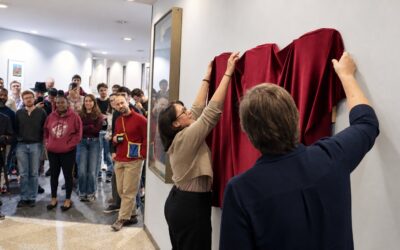
The CRM opens the academic year and unveils its Directors’ Gallery
A review of the year, the Communication Plan 2026–2030 and three research talks filled the morning of 19 October.The unveiling of the Directors’ Gallery.CRM CommPau VarelaCRMComm@crm.catGet the latest CRM news and activities in your inbox.Recent...
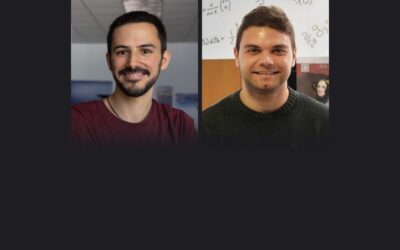
The CRM Mentoring Programme, as Told by One of Its Pairs
PhD student Joaquim Duran and mathematician Robert Cardona, one of the pairs in the CRM Mentoring ProgrammeJoaquim Duran (left) and Robert Cardona.CRM CommPau VarelaCRMComm@crm.catGet the latest CRM news and activities in your inbox.Recent...
When the reward comes within reach, the brain changes what it compares
As the tokens piled up, choices got faster and more accurate at the same time. The yardstick for judging each offer had moved.CRM CommPau VarelaCRMComm@crm.catGet the latest CRM news and activities in your inbox.Recent newsletters →Two subjects...

Almost every automaton can be reset with a short word
Guillaume Chapuy (Université Paris Cité, CNRS) and Guillem Perarnau (UPC, CRM) have shown that a random finite automaton with n states can, with high probability, be reset by a word of length of order √n log n. The result, published in ACM Transactions on Algorithms, pins the exponent at 1/2, the lower end of a decade of numerical estimates, and addresses the random version of the synchronization problem behind a conjecture Ján Černý posed in 1964 and which still remains open.
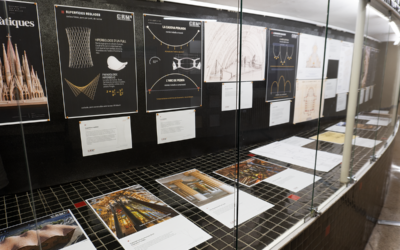
Exposició ‘Les matemàtiques de Gaudí’
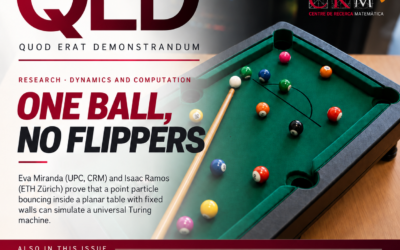
CRM quod erat demonstrandum | 48

ADA: Decoding Brain Signals Misaligned in Time
The study addresses a key limitation of current brain decoding techniques: the difficulty of interpreting internal mental processes whose temporal dynamics vary from trial to trial.Decoding what is happening in a person’s mind from their brain activity is one of the...
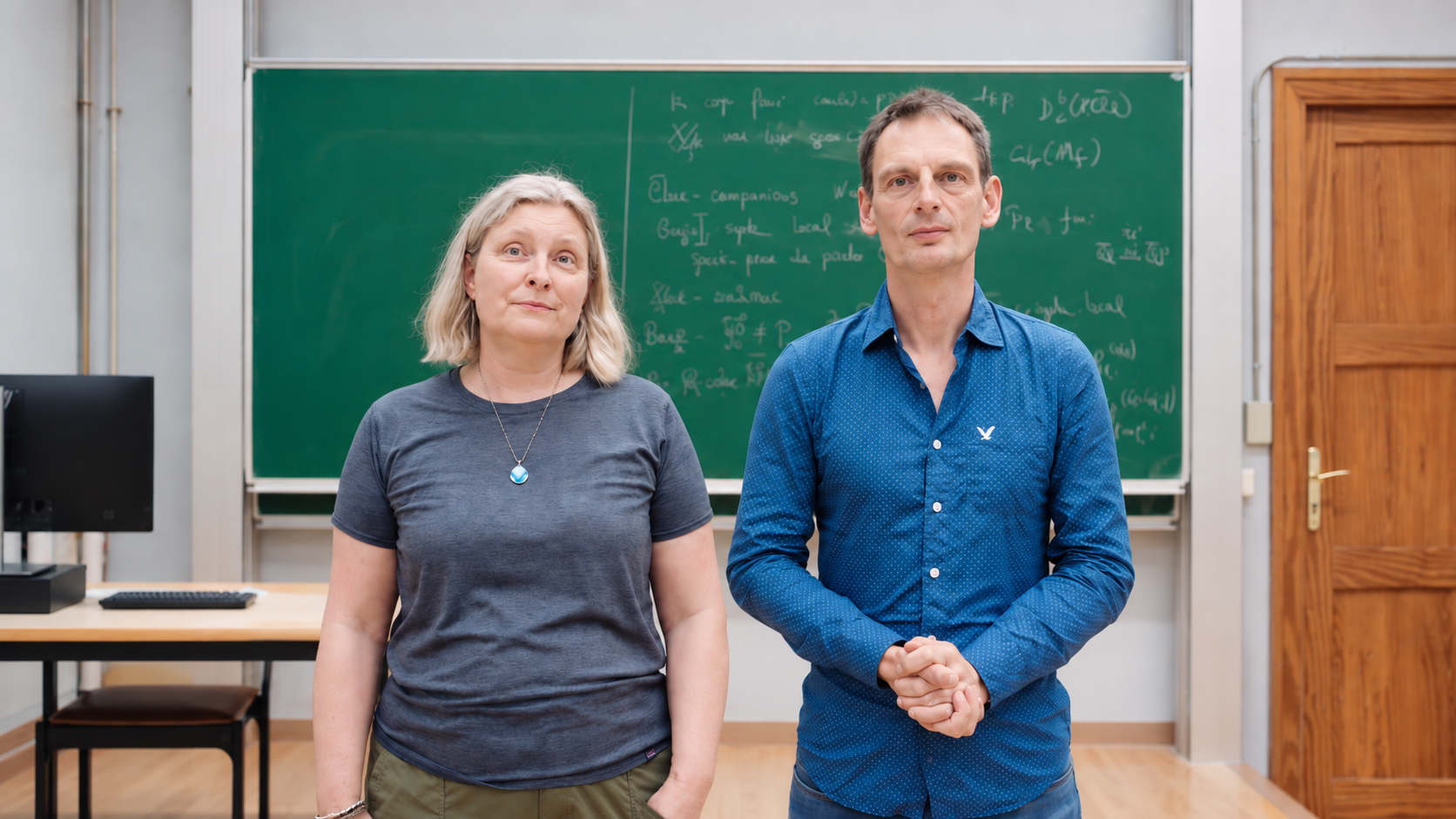
Rare curves, many points: Christophe Ritzenthaler and Rachel Pries on their research and the work around it
Christophe Ritzenthaler (Université de Rennes) and Rachel Pries (Colorado State University) both work on curves over finite fields: he hunts curves with as many points as possible, she hunts curves that almost never occur. In conversation with the CRM during their...
Call open for the 2027 Ferran Sunyer i Balaguer Prize
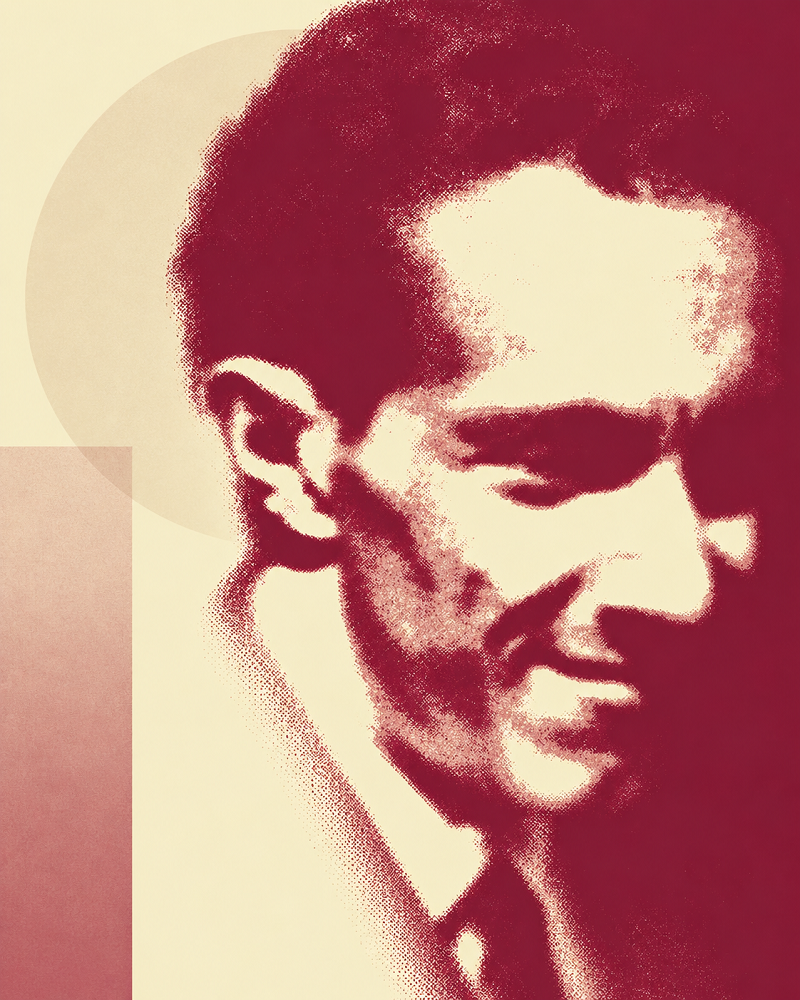
The Ferran Sunyer i Balaguer Foundation is accepting submissions for its 2027 prize, which awards 15,000 euros and publication in Birkhäuser's Progress in Mathematics series to an expository monograph on an active area of mathematical research. The deadline is 27...
Susanna Terracini delivers the CRM Colloquium 2026
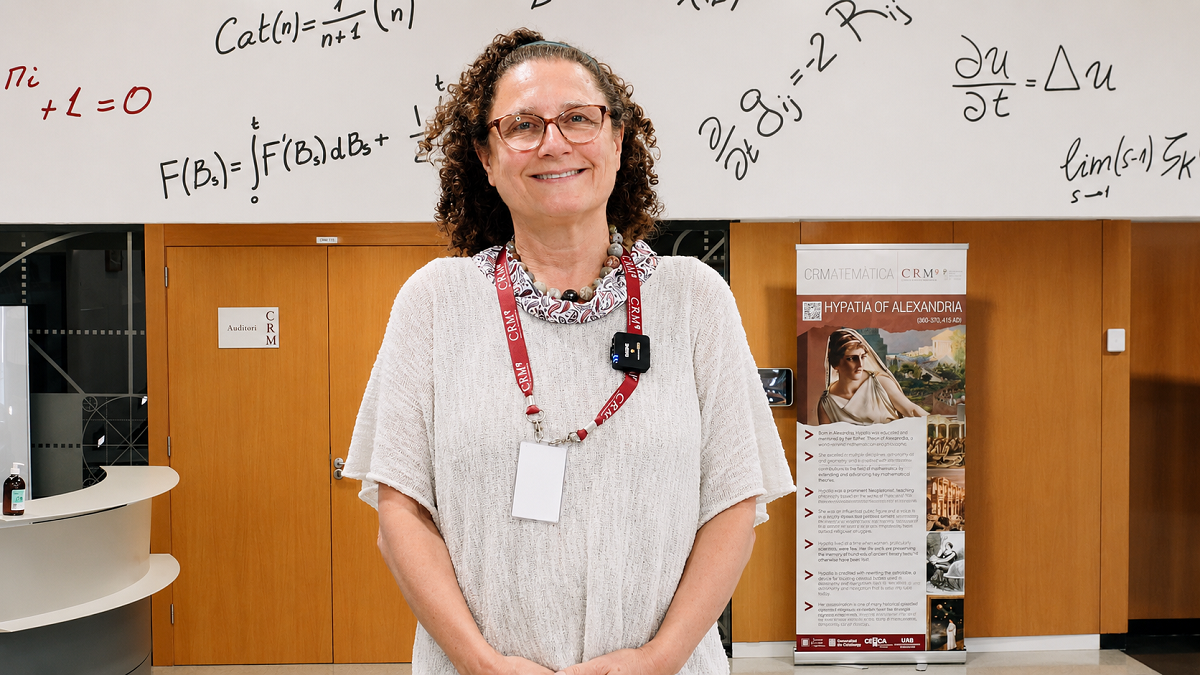
Susanna Terracini (Università di Torino) delivered the CRM Colloquium 2026 on 14 July, presenting a rigidity result for Kepler billiards obtained with Stefano Baranzini, Vivina Barutello and Irene De Blasi. She was at the centre as a member of the CRM Scientific...
Ho Chi Minh City hosts the SEAMS School on applying mathematics to real-world problems
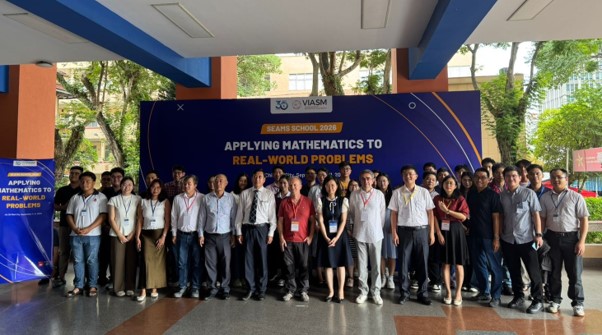
Students from across the region took courses and worked on group projects at a school co-organised by CRM researcher Tim Myers.CRM CommPau VarelaCRMComm@crm.catGet the latest CRM news and activities in your inbox.Recent newsletters →Between 4 and...

A single ball on a fixed table can compute: Eva Miranda and Isaac Ramos prove that two-dimensional billiards are Turing complete
Eva Miranda (UPC, CRM) and Isaac Ramos (ETH Zürich) show that a point particle bouncing inside a planar table with fixed walls can simulate a universal Turing machine, settling a question Cristopher Moore left open in 1990. The result grew out of a master’s project...