
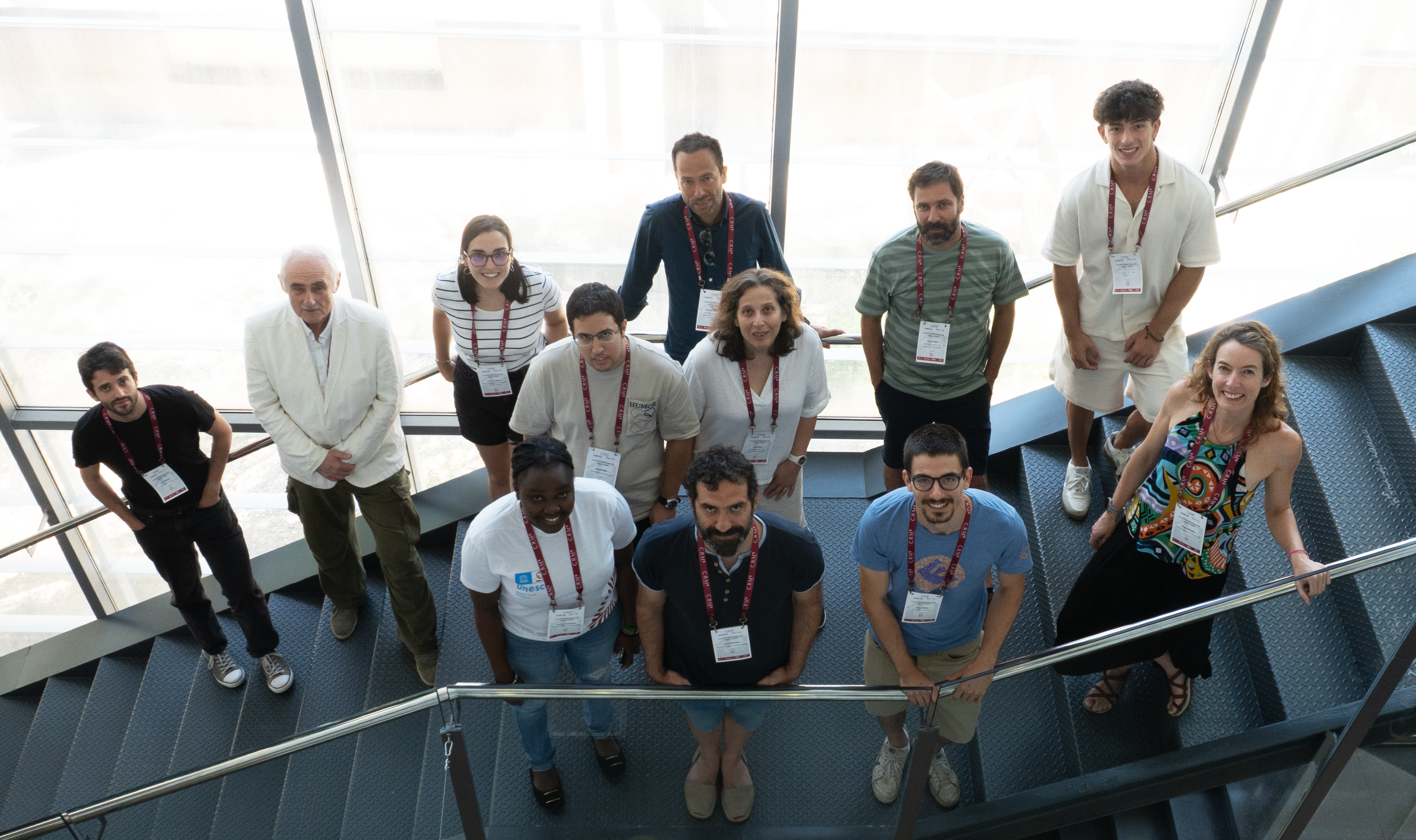
Over the course of five days, ESGI 2025 turned the CRM into a collaborative lab where mathematics tackled questions raised by industry. From safer autonomous driving systems to smart water resource allocation and the financial uncertainties of wind power, participants worked hands-on with real data, constraints, and expectations.
From July 14 to 18, the Centre de Recerca Matemàtica (CRM) hosted the 2025 edition of the European Study Group with Industry (ESGI), a long-standing initiative that connects academic researchers with industry professionals to solve complex real-world problems through applied mathematics. The event, co-organised with Math-In and PT-MATHS-IN, brought together participants from across Europe in a dynamic, collaborative workshop format.
Structured around three industrial challenges proposed by Sener Mobility, Cetaqua, and EDP, the workshop offered a unique opportunity to apply advanced mathematical tools to real, unsolved problems in mobility, resource optimisation, and energy.
Real problems. Real constraints. Real-time solutions.
Sener’s challenge focused on developing a next-generation Advanced Driver Assistance System (ADAS) to support safer overtaking manoeuvres, a functionality still absent in most commercial systems. Teams worked with the open-source CARLA simulator to design and test a prototype ADAS, modelling sensor behaviour and constructing diverse virtual driving scenarios involving weather, traffic, and road degradation. The mathematical demands were high: from probabilistic modelling under uncertainty to optimisation under strict performance constraints like reaction time and accuracy.
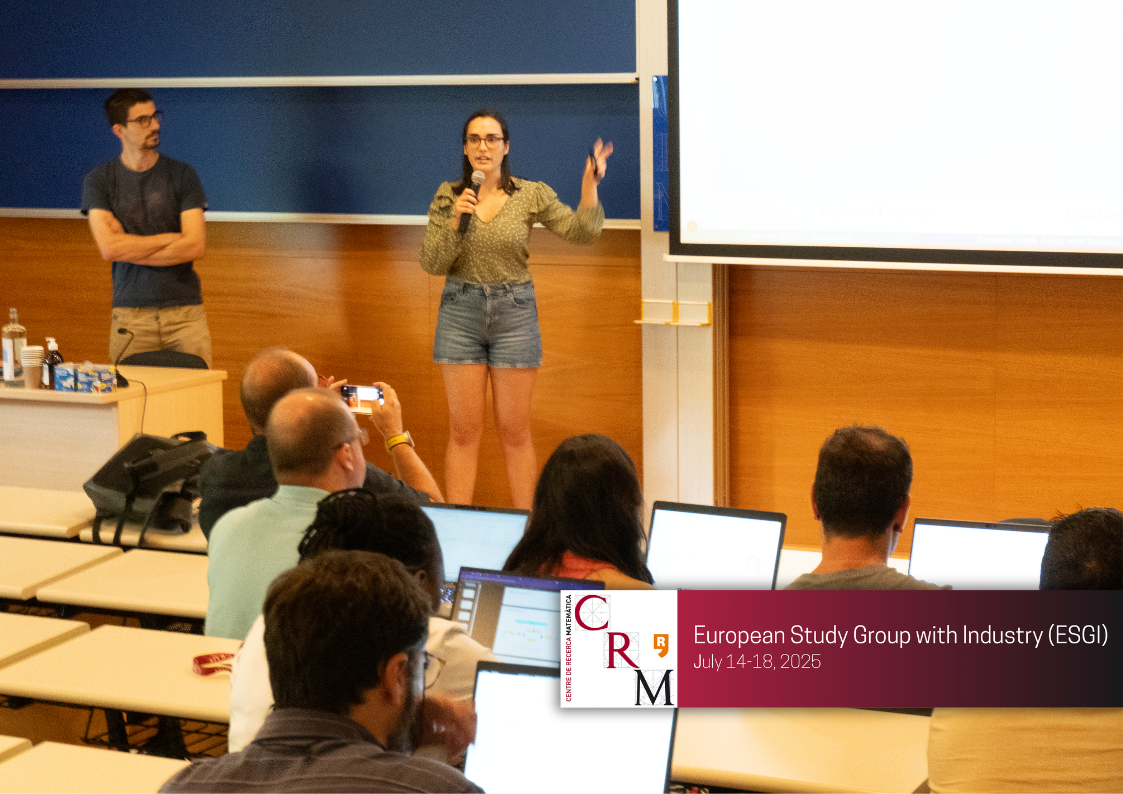
Cetaqua, the water research and technology centre, asked participants to optimise the combined use of multiple water sources (groundwater, surface water, desalinated, reclaimed, and network water), each with different costs, flows, and qualities. The goal: to meet specific demands while ensuring output quality and respecting environmental and regulatory constraints. The problem required balancing realism and simplicity in a non-linear system where treatment efficiency depends on source quality.
EDP’s challenge addressed the little-understood area of volumetric risk in renewable energy production. Unlike price risk (which can be hedged through Power Purchase Agreements), energy volume is inherently weather-dependent, making revenue streams unpredictable. Participants explored how to model and mitigate this exposure, especially for wind energy, where traditional financial tools fall short in simultaneously managing both price and volume volatility.
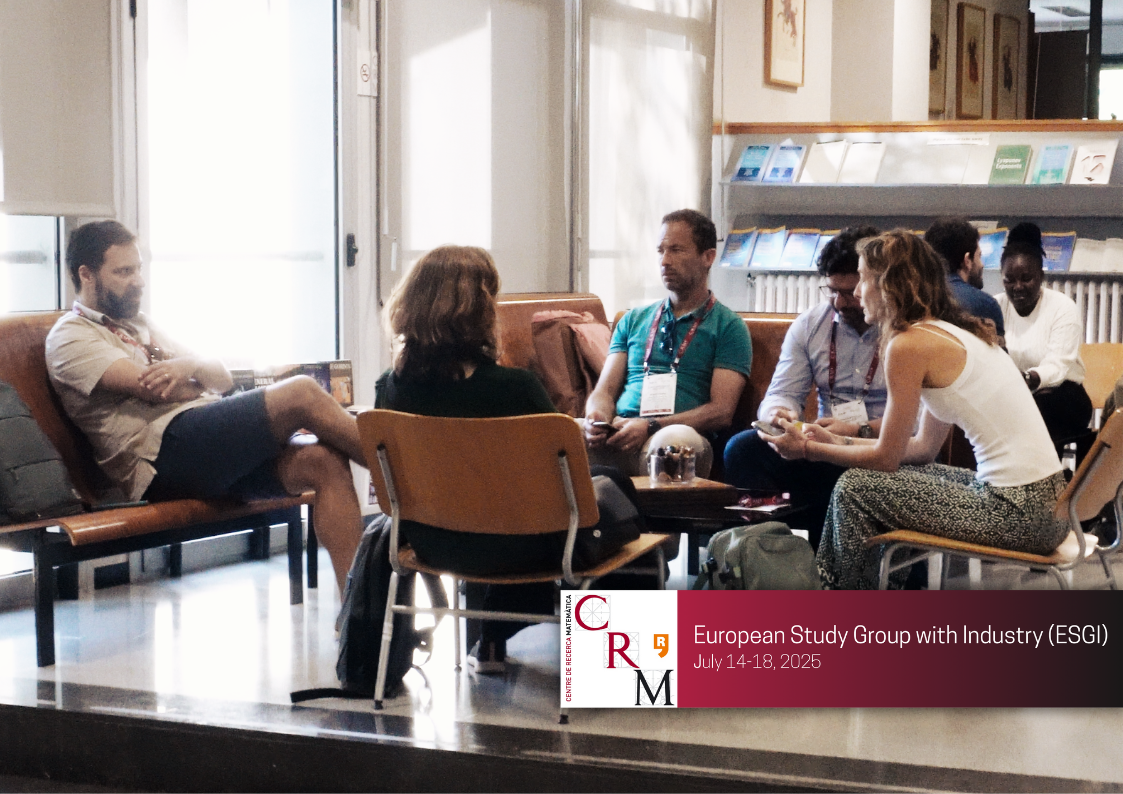
Participants came from a wide range of institutions and countries, including Portugal, Spain, Finland, France, Georgia, Norway, and Italy. Teams were composed of early-career and senior researchers, working side-by-side with industry representatives and academic supervisors throughout the week.
The event was guided by a scientific committee made up of Emilio Carrizosa (Universidad de Sevilla – Math-In), Ricardo Enguiça (Instituto Superior de Engenharia de Lisboa – PT-MATHS-IN), Ana Moura (Polytechnic of Porto – PT-MATHS-IN), and David Romero (CRM). The CRM’s Knowledge Transfer Unit (KTU) coordinated the event on the ground.
ESGI proved that mathematics is more than a theoretical pursuit; it’s a powerful tool for navigating real-world complexity, bridging academia and industry.
Subscribe for more CRM News
|
|
CRM CommPau Varela
|


When the reward comes within reach, the brain changes what it compares
As the tokens piled up, choices got faster and more accurate at the same time. The yardstick for judging each offer had moved.CRM CommPau VarelaCRMComm@crm.catGet the latest CRM news and activities in your inbox.Recent newsletters →Two subjects...

Almost every automaton can be reset with a short word
Guillaume Chapuy (Université Paris Cité, CNRS) and Guillem Perarnau (UPC, CRM) have shown that a random finite automaton with n states can, with high probability, be reset by a word of length of order √n log n. The result, published in ACM Transactions on Algorithms, pins the exponent at 1/2, the lower end of a decade of numerical estimates, and addresses the random version of the synchronization problem behind a conjecture Ján Černý posed in 1964 and which still remains open.
Exposició ‘Les matemàtiques de Gaudí’
CRM quod erat demonstrandum | 48

ADA: Decoding Brain Signals Misaligned in Time
The study addresses a key limitation of current brain decoding techniques: the difficulty of interpreting internal mental processes whose temporal dynamics vary from trial to trial.Decoding what is happening in a person’s mind from their brain activity is one of the...
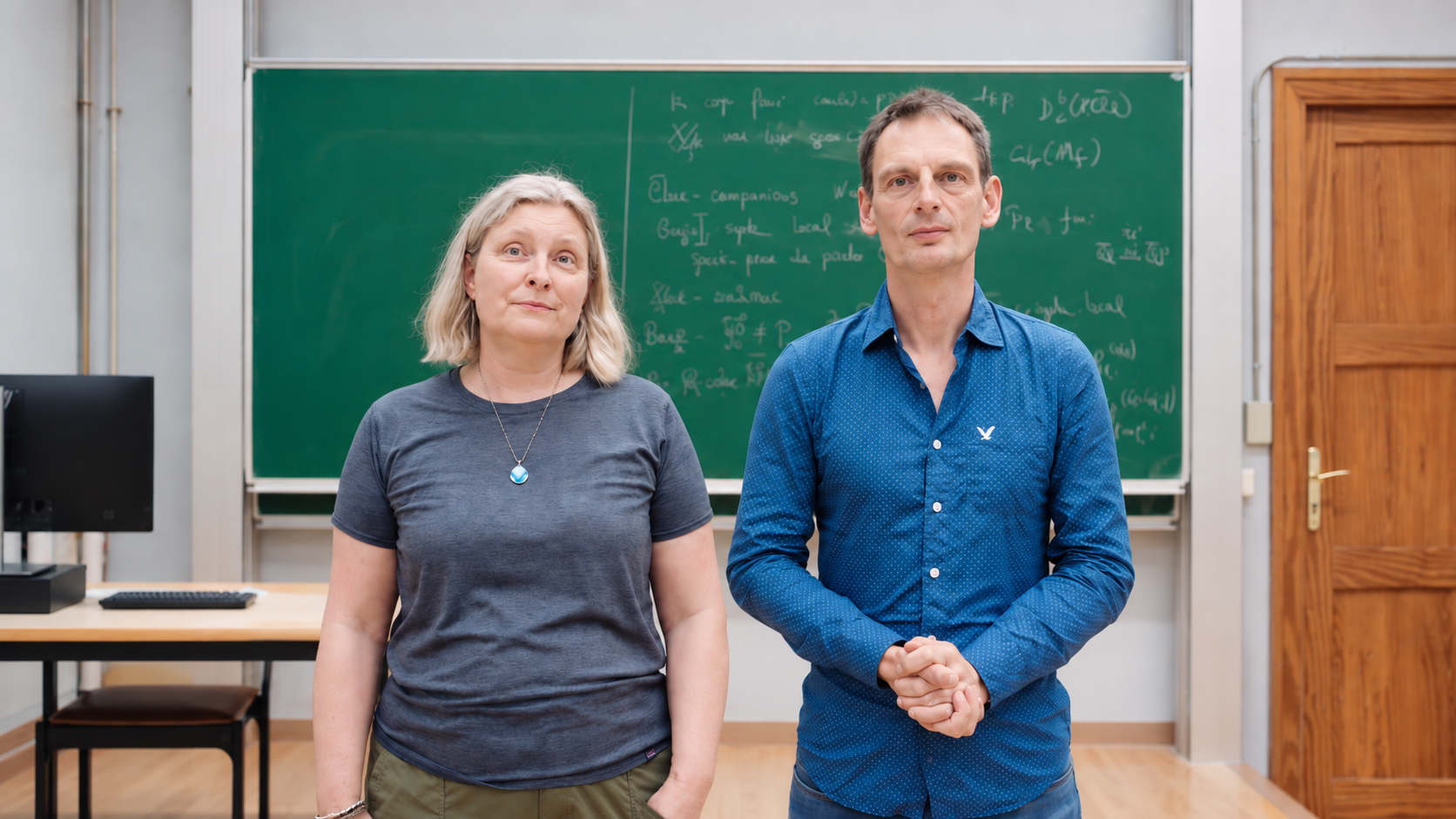
Rare curves, many points: Christophe Ritzenthaler and Rachel Pries on their research and the work around it
Christophe Ritzenthaler (Université de Rennes) and Rachel Pries (Colorado State University) both work on curves over finite fields: he hunts curves with as many points as possible, she hunts curves that almost never occur. In conversation with the CRM during their...

Call open for the 2027 Ferran Sunyer i Balaguer Prize
The Ferran Sunyer i Balaguer Foundation is accepting submissions for its 2027 prize, which awards 15,000 euros and publication in Birkhäuser's Progress in Mathematics series to an expository monograph on an active area of mathematical research. The deadline is 27...
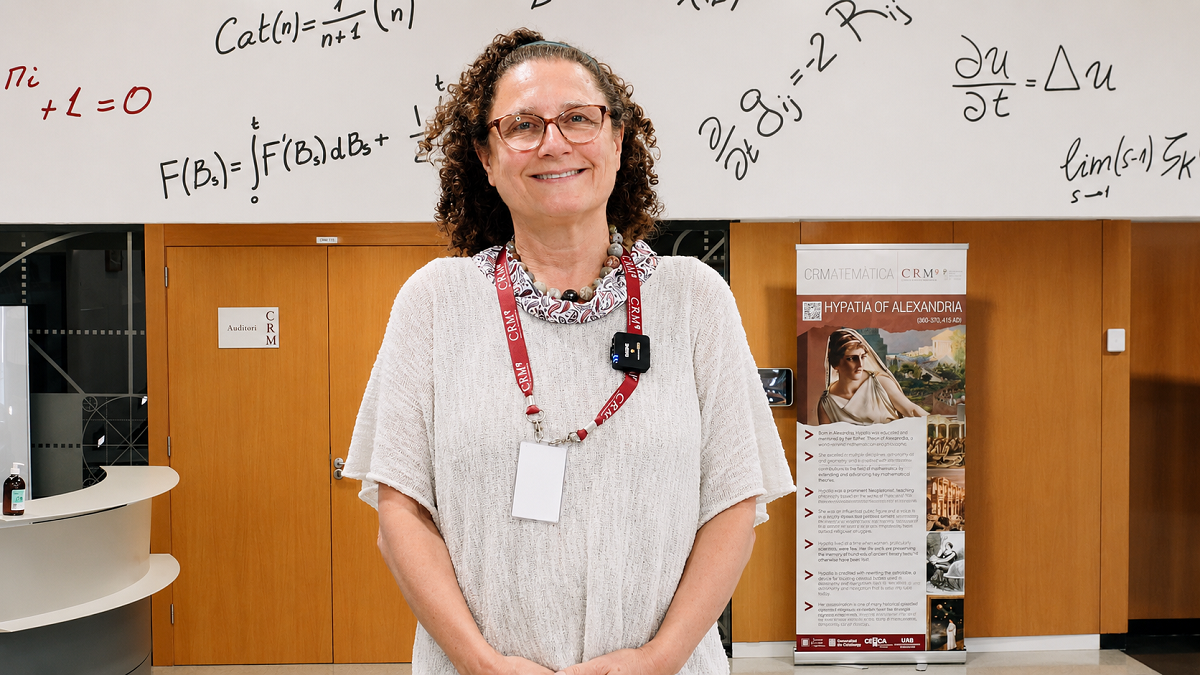
Susanna Terracini delivers the CRM Colloquium 2026
Susanna Terracini (Università di Torino) delivered the CRM Colloquium 2026 on 14 July, presenting a rigidity result for Kepler billiards obtained with Stefano Baranzini, Vivina Barutello and Irene De Blasi. She was at the centre as a member of the CRM Scientific...
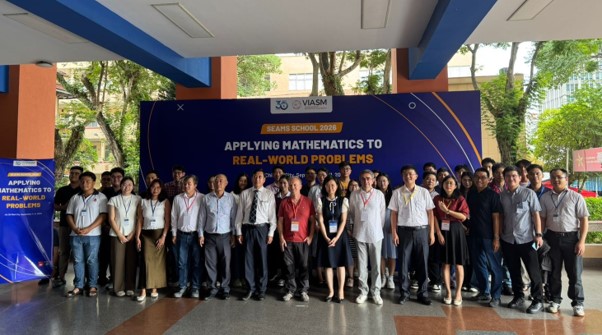
Ho Chi Minh City hosts the SEAMS School on applying mathematics to real-world problems
Students from across the region took courses and worked on group projects at a school co-organised by CRM researcher Tim Myers.CRM CommPau VarelaCRMComm@crm.catGet the latest CRM news and activities in your inbox.Recent newsletters →Between 4 and...

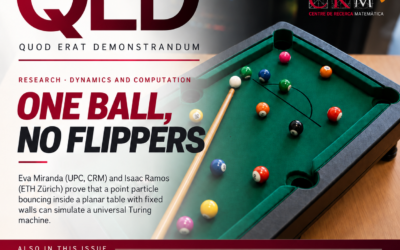
A single ball on a fixed table can compute: Eva Miranda and Isaac Ramos prove that two-dimensional billiards are Turing complete
Eva Miranda (UPC, CRM) and Isaac Ramos (ETH Zürich) show that a point particle bouncing inside a planar table with fixed walls can simulate a universal Turing machine, settling a question Cristopher Moore left open in 1990. The result grew out of a master’s project...
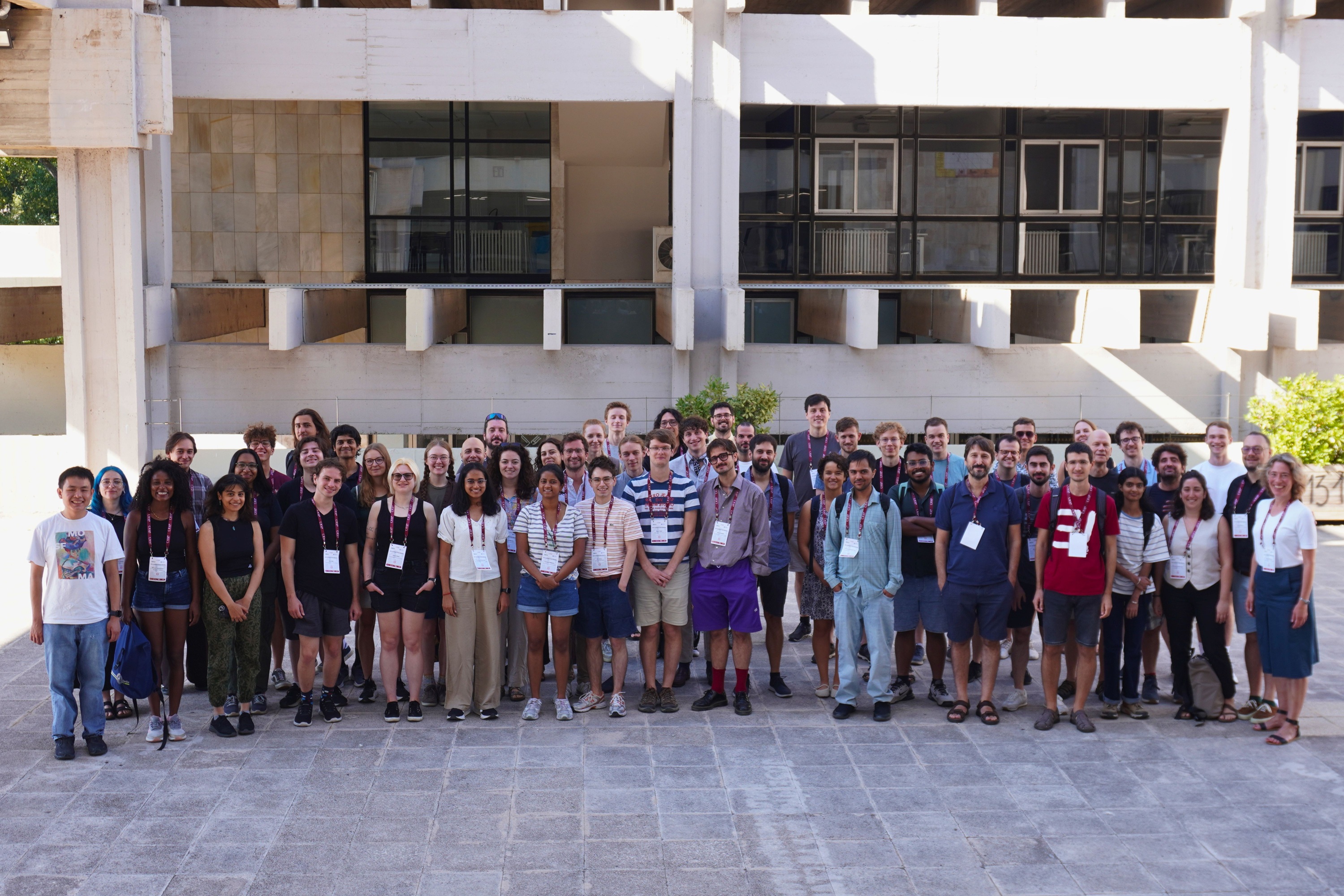
BMS-BGSMath Junior Meeting 2026: Barcelona and Berlin Strengthen Scientific Ties
From 2 to 4 September 2026, the Centre de Recerca Matemàtica (CRM) hosted the BMS-BGSMath Junior Meeting 2026, a three-day event jointly organised by the Berlin Mathematical School (BMS) and the Barcelona Graduate School of Mathematics (BGSMath), with the Centre de...
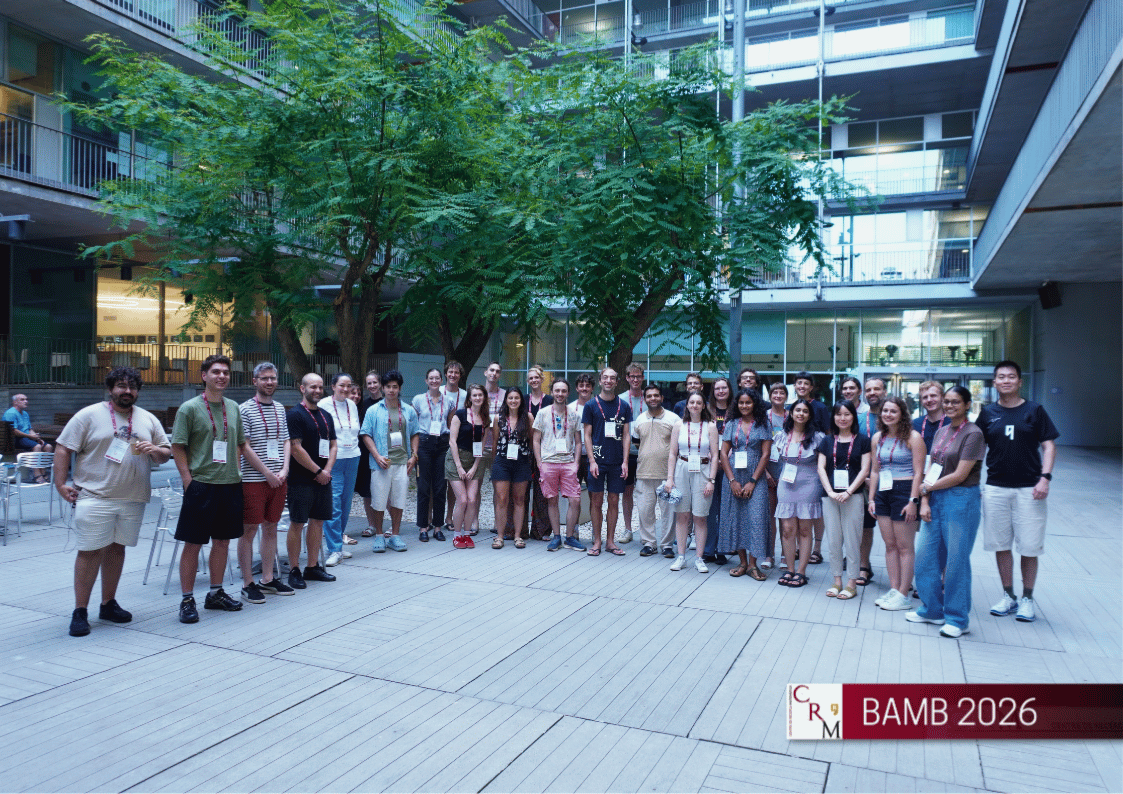
The CRM organises the 2026 Barcelona Summer School for Advanced Modeling of Behavior
The Centre de Recerca Matemàtica held the sixth edition of BAMB!, the Barcelona Summer School for Advanced Modeling of Behavior, from 12 to 23 July 2026 at the Parc de Recerca Biomèdica de Barcelona. Thirty early-career researchers from fourteen countries followed...