
El premi distingeix des de l’any 2019 a la millor tesi doctoral en l’àrea de la ciència dels sistemes complexos defensada a Catalunya en el període anual corresponent.
Blai Vidiella, actualment investigador postdoctoral a Evolution of Networks Lab en el projecte MPA4sustainability Biodiversa i antic membre del grup de recerca de Biologia Matemàtica i Computacional del CRM, ha guanyat el premi Jorge Wagensberg 2023. El premi distingeix a la millor tesi doctoral en l’àrea de la ciència dels sistemes complexos defensada a Catalunya durant l’any anterior.
La tesi, amb el títol Terraformació dels ecosistemes terrestres: enginyeria d’ecosistemes per evitar punts d’inflexió antropogènics, va ser supervisada per Ricard Solé (UPF), Josep Sardanyés (CRM) i Núria Conde (UPF). El treball proposa un procés de terraformació basat en la modificació del genoma de diferents microorganismes per arribar a restaurar l’equilibri d’ecosistemes com els deserts o els oceans, combinant modelització matemàtica i enginyeria genètica.
El treball de Blai Vidiella també ha estat reconegut per la Universitat Pompeu Fabra amb un premi extraordinari per la seva tesi.
El guardó, que està dotat amb un premi en metàl·lic de 1.000 €, ret homenatge a Jorge Wagensberg, professor, investigador i divulgador de la ciència dels sistemes complexos, i és atorgat per l’Associació Catalana per a l’Estudi dels Sistemes Complexos (Complexitat.cat). Complexitat reuneix investigadors de disciplines dispars amb l’objectiu de promoure la recerca i la divulgació de la ciència de la complexitat.
Vols saber-ne més?
Clicant aquí podràs consultar la tesi completa d’en Blai Vidiella
Pots també llegir el fil de Twitter redactat pel mateix autor on explica la seva recerca.
Finalment, podeu assistir a la xarrada que donarà Blai Vidiella el dia 21 de juny durant el Complexitat Day.

CRM Comm Team
Anna Drou | Pau Varela
CRMComm@crm.cat
Subscribe for more CRM News
CRM quod erat demonstrandum | 49
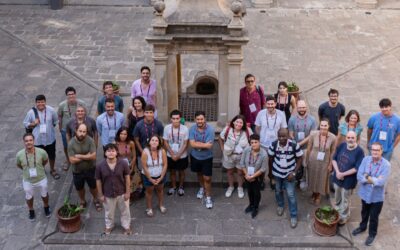
Fish schools and growing tissues: a workshop on how collective behaviour emerges
The Centre de Recerca Matemàtica (CRM) organised the Barcelona Workshop on Kinetic and Macroscopic Models in Biology with Friends II, held from 7 to 10 September at the Institut d’Estudis Catalans. More than thirty researchers discussed how order at the scale of tissues and animal groups arises from local interactions between individuals, in a programme that included talks by CRM researchers Daria Stepanova and Juan Arellano-Tintó. Two of the speakers, James Sharpe (EMBL Barcelona) and Chiara Villa (CNRS, Université Paris Cité), talked to the CRM about their research.
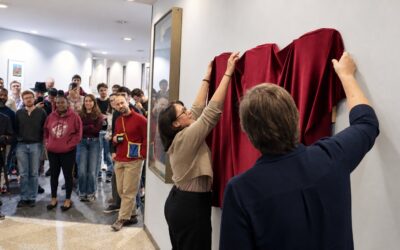
The CRM opens the academic year and unveils its Directors’ Gallery
A review of the year, the Communication Plan 2026–2030 and three research talks filled the morning of 19 October.The unveiling of the Directors’ Gallery.CRM CommPau VarelaCRMComm@crm.catGet the latest CRM news and activities in your inbox.Recent...
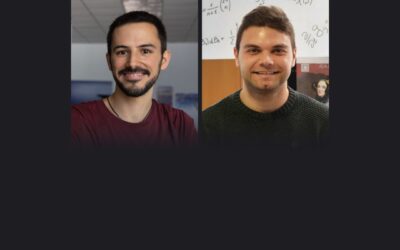
The CRM Mentoring Programme, as Told by One of Its Pairs
PhD student Joaquim Duran and mathematician Robert Cardona, one of the pairs in the CRM Mentoring ProgrammeJoaquim Duran (left) and Robert Cardona.CRM CommPau VarelaCRMComm@crm.catGet the latest CRM news and activities in your inbox.Recent...
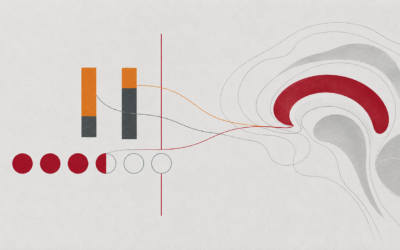
When the reward comes within reach, the brain changes what it compares
As the tokens piled up, choices got faster and more accurate at the same time. The yardstick for judging each offer had moved.CRM CommPau VarelaCRMComm@crm.catGet the latest CRM news and activities in your inbox.Recent newsletters →Two subjects...

Almost every automaton can be reset with a short word
Guillaume Chapuy (Université Paris Cité, CNRS) and Guillem Perarnau (UPC, CRM) have shown that a random finite automaton with n states can, with high probability, be reset by a word of length of order √n log n. The result, published in ACM Transactions on Algorithms, pins the exponent at 1/2, the lower end of a decade of numerical estimates, and addresses the random version of the synchronization problem behind a conjecture Ján Černý posed in 1964 and which still remains open.
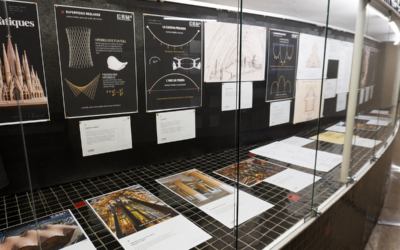
Exposició ‘Les matemàtiques de Gaudí’
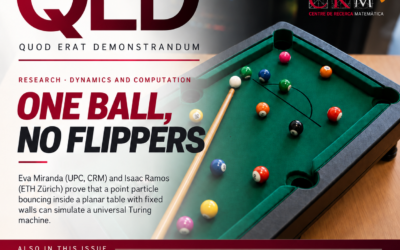
CRM quod erat demonstrandum | 48

ADA: Decoding Brain Signals Misaligned in Time
The study addresses a key limitation of current brain decoding techniques: the difficulty of interpreting internal mental processes whose temporal dynamics vary from trial to trial.Decoding what is happening in a person’s mind from their brain activity is one of the...
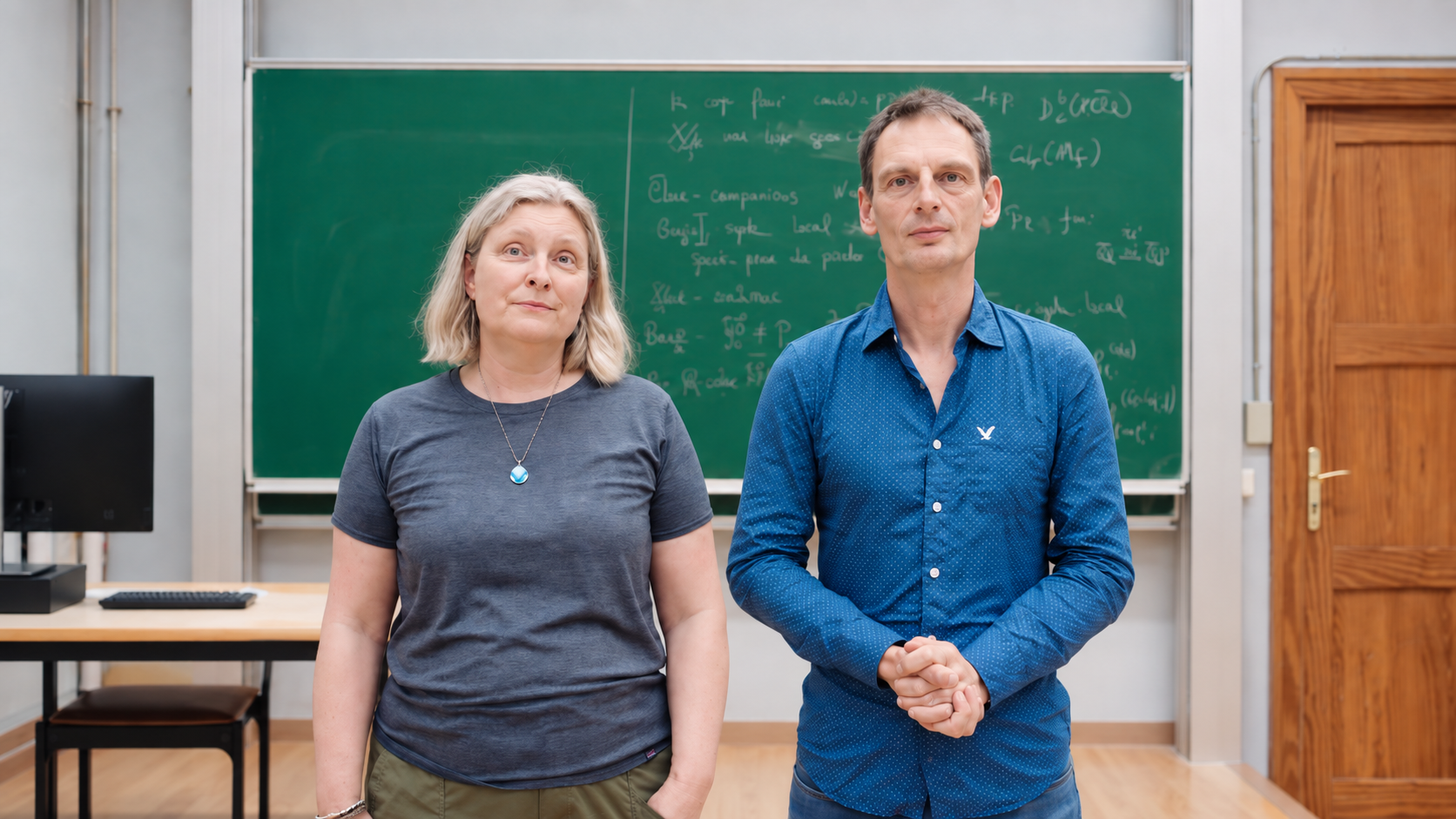
Rare curves, many points: Christophe Ritzenthaler and Rachel Pries on their research and the work around it
Christophe Ritzenthaler (Université de Rennes) and Rachel Pries (Colorado State University) both work on curves over finite fields: he hunts curves with as many points as possible, she hunts curves that almost never occur. In conversation with the CRM during their...
Call open for the 2027 Ferran Sunyer i Balaguer Prize
The Ferran Sunyer i Balaguer Foundation is accepting submissions for its 2027 prize, which awards 15,000 euros and publication in Birkhäuser's Progress in Mathematics series to an expository monograph on an active area of mathematical research. The deadline is 27...
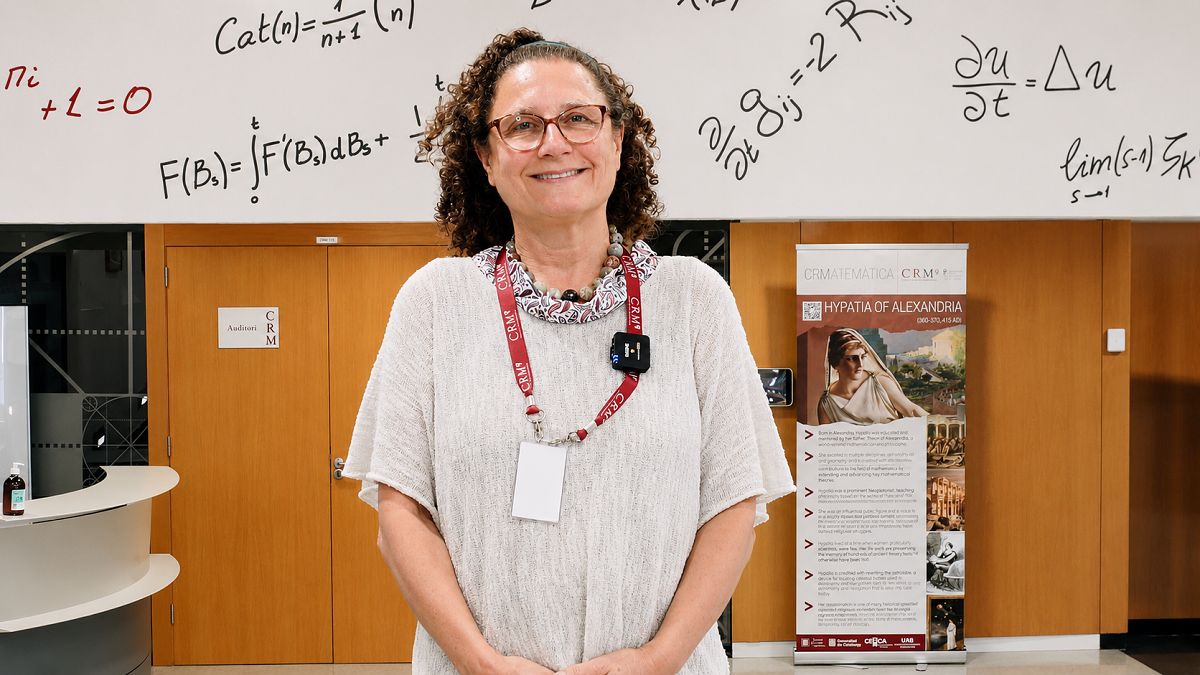
Susanna Terracini delivers the CRM Colloquium 2026
Susanna Terracini (Università di Torino) delivered the CRM Colloquium 2026 on 14 July, presenting a rigidity result for Kepler billiards obtained with Stefano Baranzini, Vivina Barutello and Irene De Blasi. She was at the centre as a member of the CRM Scientific...