
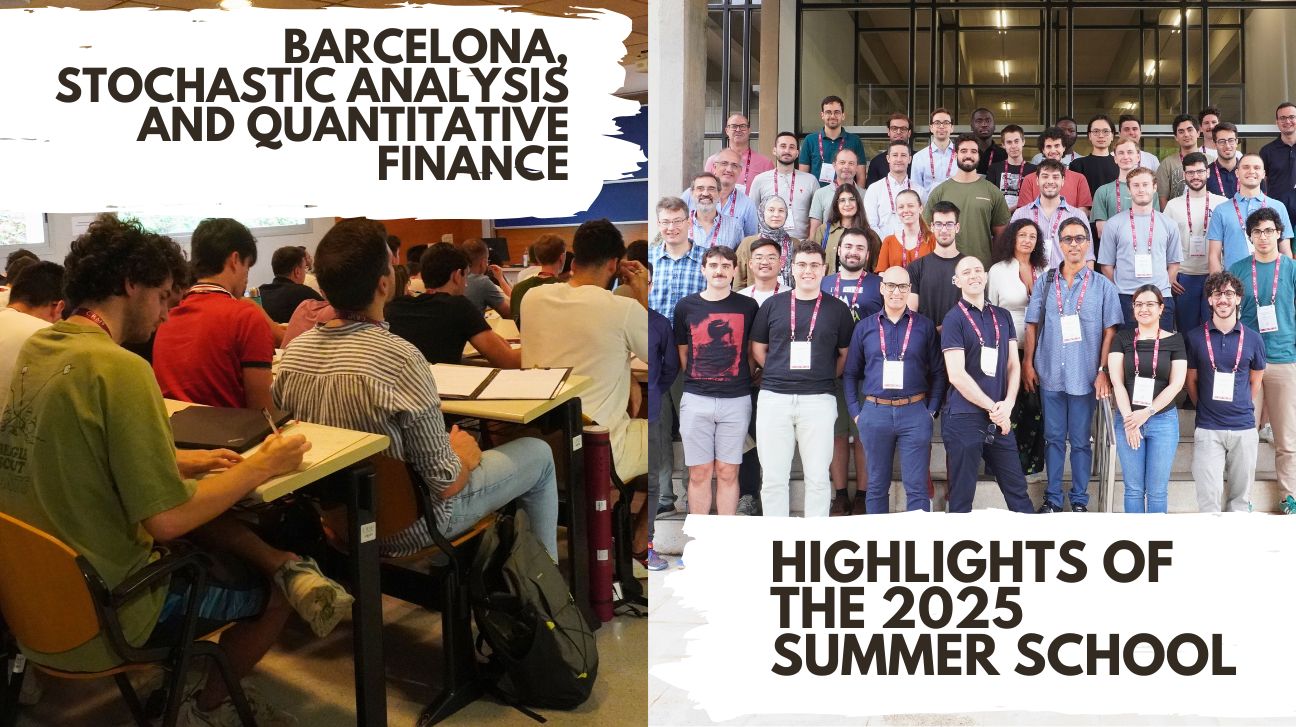
The 5th edition of the Barcelona Summer School on Stochastic Analysis and Quantitative Finance took place from July 21 to 25, 2025, at the Centre de Recerca Matemàtica (CRM), marking the revival of an academic tradition interrupted by the pandemic. The program offered advanced training in cutting-edge topics such as rough volatility, path signatures, and weather derivatives, featuring international experts and a strong presence of early-career researchers.
The 5th Barcelona Summer School on Stochastic Analysis and Quantitative Finance marked an important milestone in the revival of a valued academic tradition. After a hiatus caused by the pandemic, this edition sought to re-establish the series of summer schools previously held at the Centre de Recerca Matemàtica (CRM) between 2012 and 2018. Its main objective was to provide advanced training in cutting-edge topics in stochastic analysis and quantitative finance, delivered by internationally renowned experts. The school was aimed at PhD students, postdoctoral researchers, and academics, fostering both local and international collaboration while reinforcing Catalonia’s position as a leading center for mathematical research.
The academic core of the summer school consisted of three advanced courses, each offering a deep dive into a key area of contemporary research in stochastic analysis and quantitative finance. The lectures were designed not only to present theoretical developments, but also to build intuition and connect with practical applications.
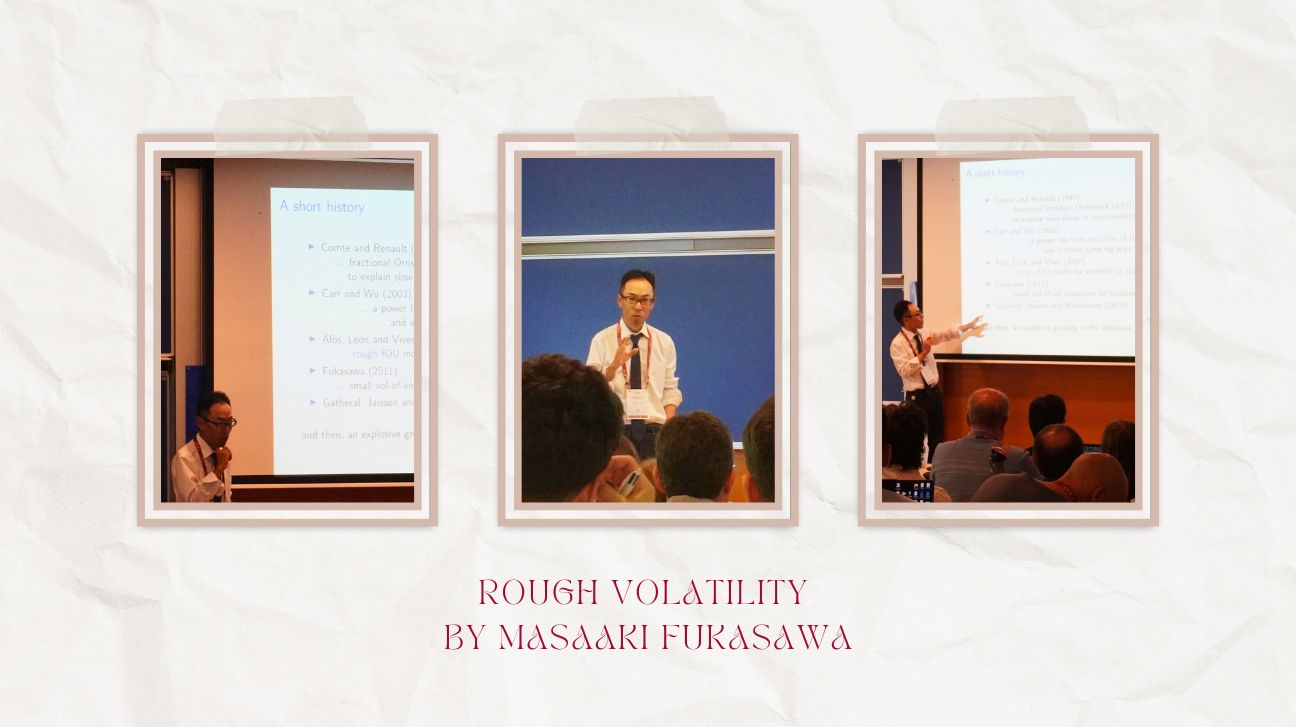
- Rough Volatility by Masaaki Fukasawa (Osaka University)
Professor Fukasawa is a highly respected figure in the field of mathematical finance, known for his influential work on skewness, volatility estimation, and stochastic integration. His research has contributed significantly to the understanding of implied volatility surfaces and their asymptotic behavior, particularly in the context of rough volatility. He is also a key member of the Sekine–Fukasawa–Yano research group at Osaka University.
In his course, he emphasized intuitive understanding through simple computations and highlighted connections with classical models. Fukasawa also offered a conceptual and accessible introduction to rough volatility modeling, focusing on three key perspectives: historical volatility dynamics, the term structure of implied volatility, and market microstructure.
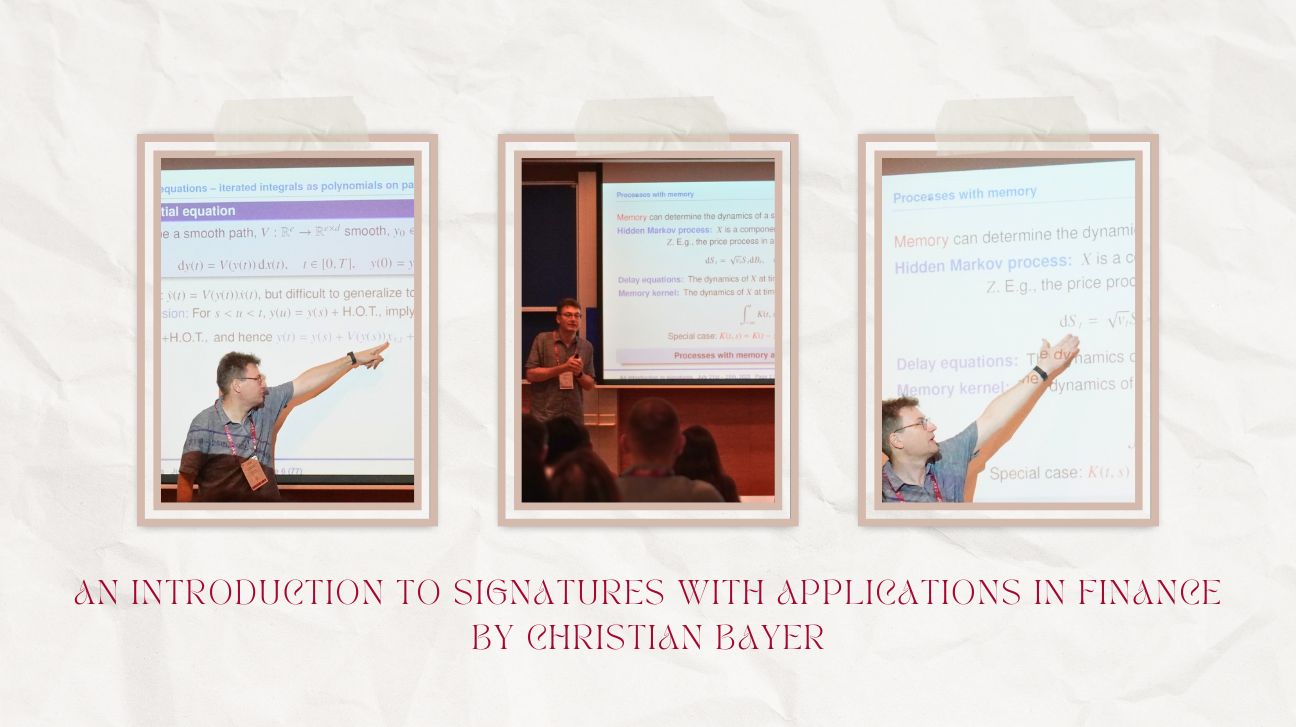
- An Introduction to Signatures with Applications in Finance by Christian Bayer (Weierstrass Institute)
Professor Bayer is a leading researcher in stochastic numerics and quantitative finance. His work on rough volatility, stochastic control, and the application of rough path theory to machine learning has positioned him at the forefront of modern financial mathematics.
The course introduced the theory of path signatures, a powerful tool for encoding time series data. Bayer explained how signatures can be used to encode time series and serve as approximators for functions on path space, and he explored their applications in machine learning and numerical methods for stochastic control. The course was particularly relevant for problems involving non-Markovian dynamics, such as those arising in rough volatility models.
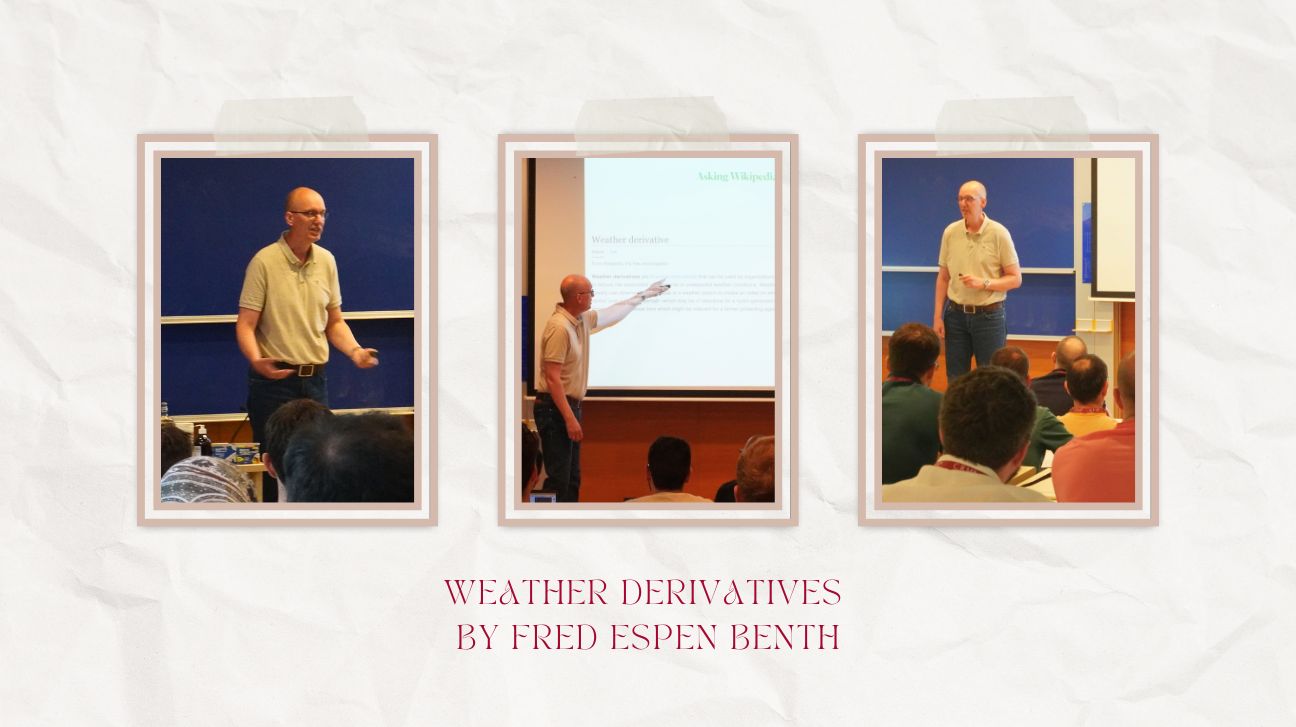
- Weather Derivatives by Fred Espen Benth (University of Oslo)
Professor Benth is a prominent figure in the intersection of stochastic analysis, energy markets, and climate-related financial modeling. He has significantly contributed to the understanding of weather risk and its financial implications.
His course focused on weather derivatives—financial instruments linked to temperature, wind, and solar irradiation. After introducing the concept of weather risk and its role in renewable energy markets, Benth presented stochastic models suitable for describing weather dynamics, with particular emphasis on continuous-time autoregressive processes. The course also addressed pricing techniques for weather futures, including temperature-dependent pricing measures, and concluded with a discussion on hedging strategies and basis risk in standardized contracts.
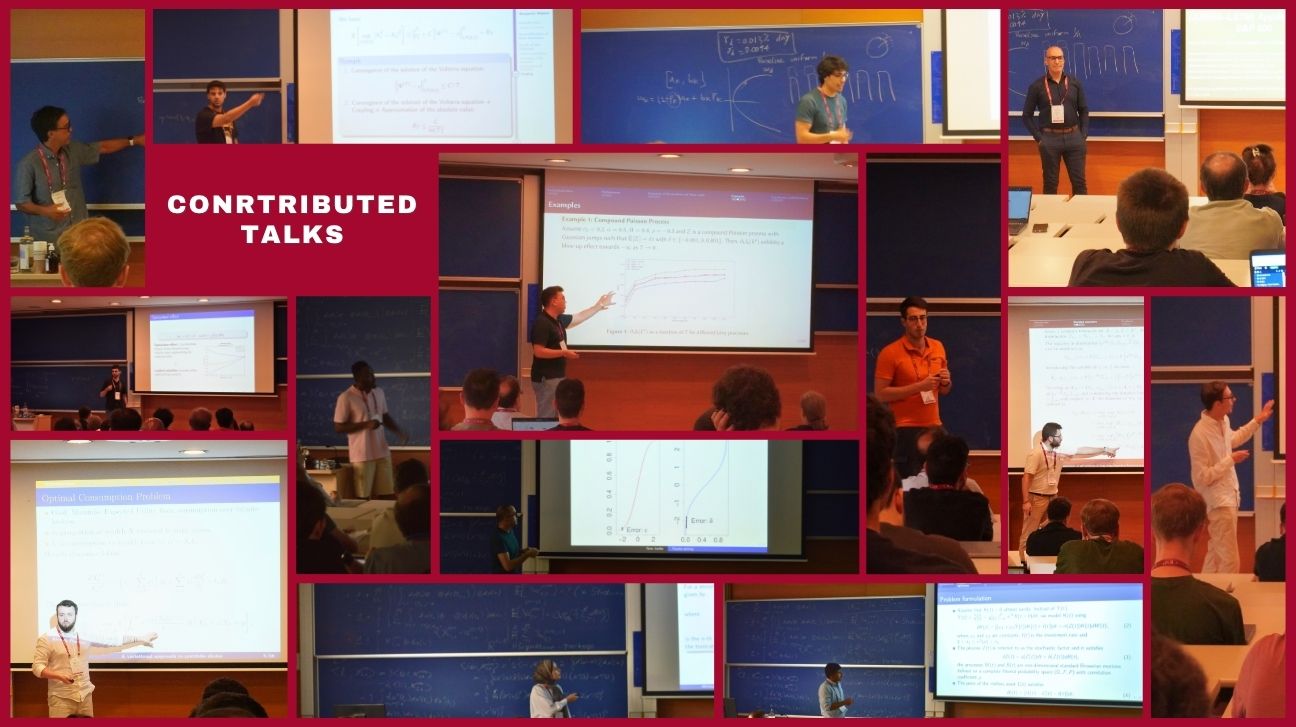
In addition to the three main courses, the summer school featured a program of contributed talks and a poster session, further enriching the academic exchange and showcasing the breadth of current research in the field. Participants from institutions across Europe and beyond presented their work on topics ranging from rough volatility and fractional processes to portfolio optimization and climate-related financial modeling. Highlights included:
- Daniele Angelini (Sapienza University of Rome) – Kolmogorov–Smirnov estimation of self-similarity in long-range dependent fractional processes
- Argimiro Arratia (Universitat Politècnica de Catalunya) – Portfolio risk and diversification strategies
- Martin Bergerhausen (University of Mannheim) – Mean-field stochastic Volterra equations: Results on the existence of weak solutions
- Òscar Burés (Universitat de Barcelona) – Short-time behavior of the At-The-Money implied volatility for the jump-diffusion stochastic volatility Bachelier model
- Mihriban Ceylan (University of Mannheim) – Global approximation theorem for signatures on the Wiener space
- Ranieri Dugo (University of Rome Tor Vergata) – Multivariate Rough Volatility
- Héctor Folgar (Universidade da Coruña and CITIC) – Pricing with rough Bergomi model in commodity markets
- Emmanuel Gnabeyeu (Sorbonne Université and Université Paris Cité) – On a Weak Stationarity Theory for FSVIEs: Finite-Time and Asymptotic Analysis, Application to Stabilized Volatility models
- Azmat Hussain (University of Central Asia) – Optimal Investment and Consumption for Assets with stochastic Volatility and Infinite Delay
- Ruben Jimenez (Universitat de Barcelona) – Fractional signature: a generalisation of the signature inspired by fractional calculus
- Gero Junike (Carl von Ossietzky Universität) – Fourier pricing techniques
- Emmet Lawless (Dublin City University) – A variational approach to portfolio choice
- Benjamin Massat (Université de Toulouse) – Quantification of limit theorem for nearly unstable Hawkes processes
- Ahmed Wafi (LMU München and Cairo University) – Hybrid econometric–ML models for return prediction under climate policy uncertainty
- Giacomo Zarfati (Sapienza Università di Roma) – Optimal Allocation With Weather Risk
The poster session enhanced the diversity of research showcased, with presentations on neural network approaches to implied volatility, Hawkes processes in energy markets, and jump-diffusion models for electricity pricing. Notable contributions included:
- Samira Amiriyan (University of Liverpool) – Neural networks and asymptotic regimes
- Konstantinos Chatziandreou (University of Amsterdam) – Execution strategies in short-term energy markets
- Christoph Gärtner (RPTU Kaiserslautern) – Shot-noise jump-diffusion models for electricity spot prices
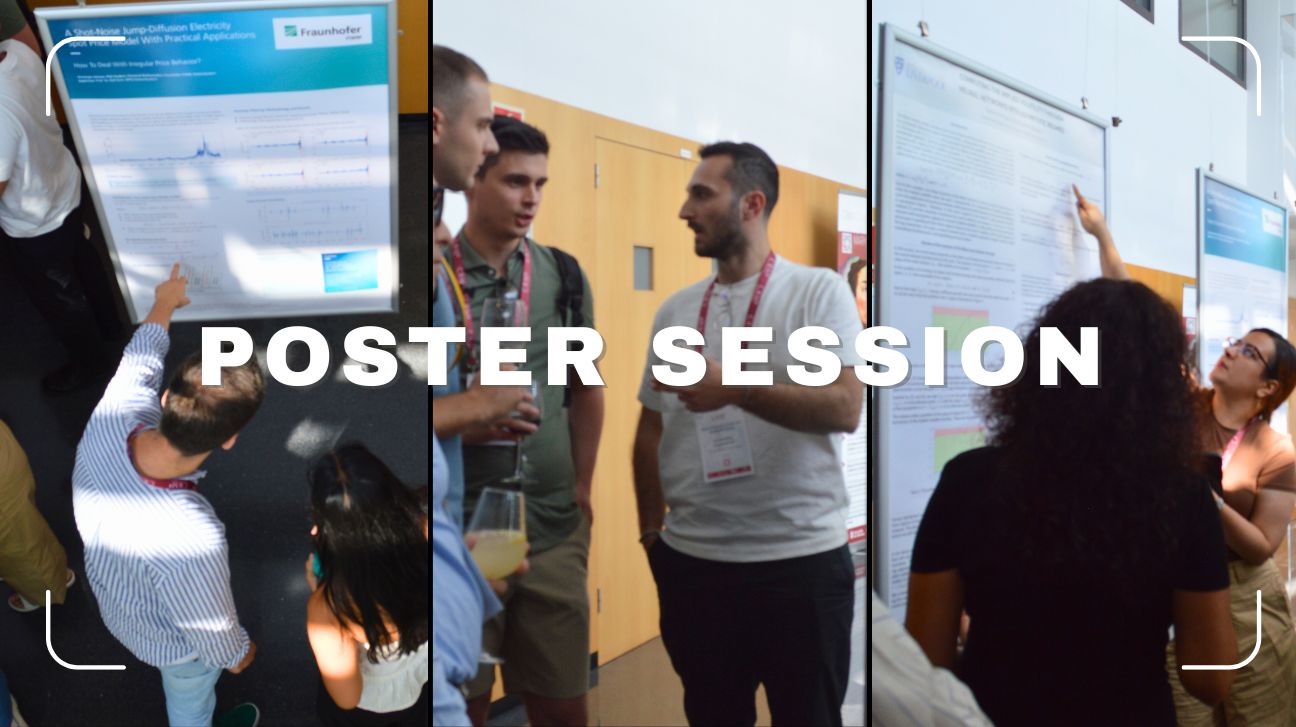
These sessions provided an excellent platform for early-career researchers to engage with peers and senior academics, fostering collaboration and constructive feedback in a supportive environment.
The 5th edition of the Barcelona Summer School successfully rekindled a tradition of academic excellence and international collaboration. With high-level courses, dynamic discussions, and a strong sense of community, the event reaffirmed the importance of in-person scientific exchange. It also strengthened the international visibility of Catalan research in mathematics, setting a promising precedent for future events. The CRM looks forward to building on this renewed momentum in upcoming editions.
|
|
CRM CommNatalia Vallina
|


When the reward comes within reach, the brain changes what it compares
As the tokens piled up, choices got faster and more accurate at the same time. The yardstick for judging each offer had moved.CRM CommPau VarelaCRMComm@crm.catGet the latest CRM news and activities in your inbox.Recent newsletters →Two subjects...

Almost every automaton can be reset with a short word
Guillaume Chapuy (Université Paris Cité, CNRS) and Guillem Perarnau (UPC, CRM) have shown that a random finite automaton with n states can, with high probability, be reset by a word of length of order √n log n. The result, published in ACM Transactions on Algorithms, pins the exponent at 1/2, the lower end of a decade of numerical estimates, and addresses the random version of the synchronization problem behind a conjecture Ján Černý posed in 1964 and which still remains open.
Exposició ‘Les matemàtiques de Gaudí’

CRM quod erat demonstrandum | 48

ADA: Decoding Brain Signals Misaligned in Time
The study addresses a key limitation of current brain decoding techniques: the difficulty of interpreting internal mental processes whose temporal dynamics vary from trial to trial.Decoding what is happening in a person’s mind from their brain activity is one of the...
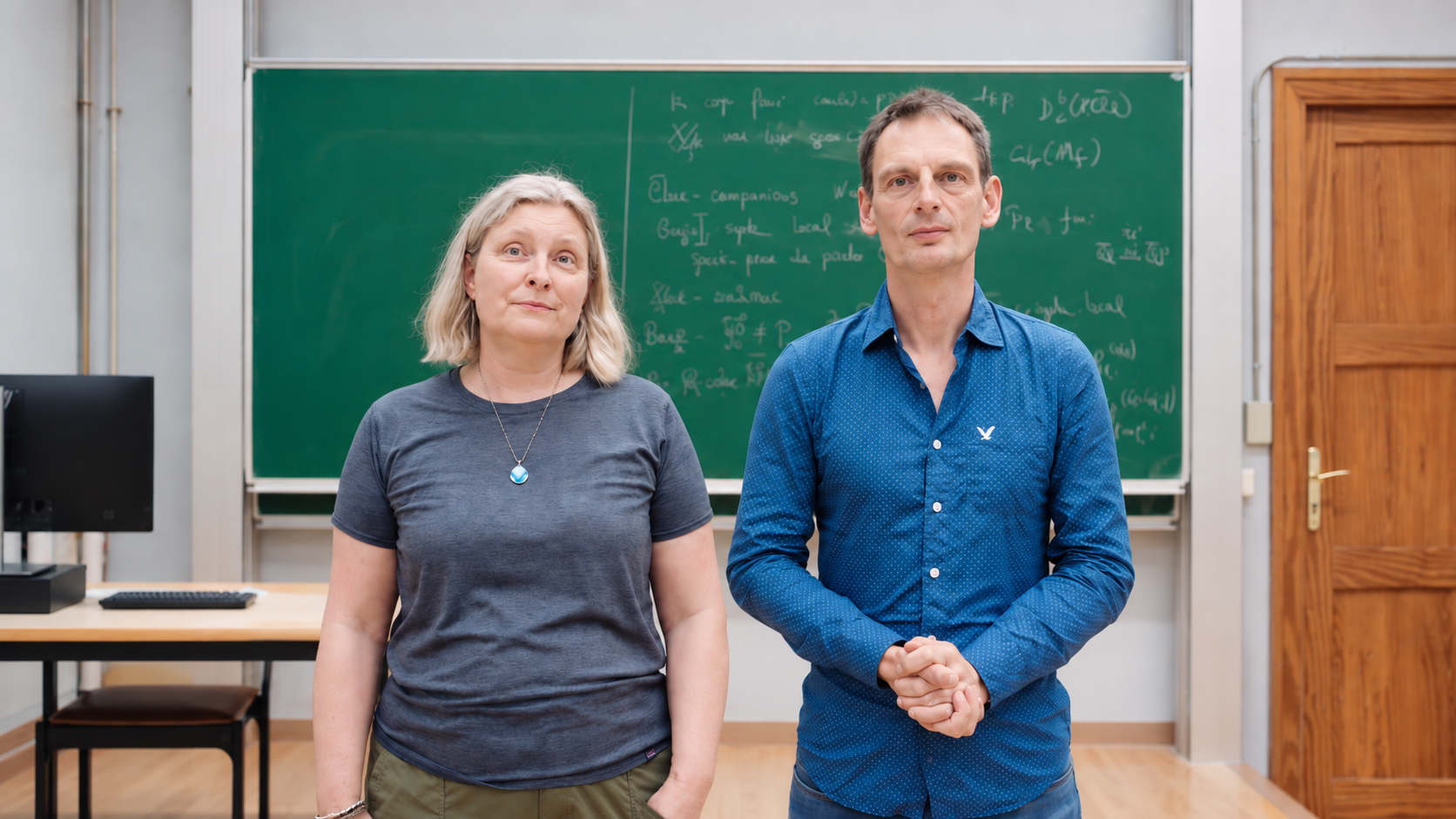
Rare curves, many points: Christophe Ritzenthaler and Rachel Pries on their research and the work around it
Christophe Ritzenthaler (Université de Rennes) and Rachel Pries (Colorado State University) both work on curves over finite fields: he hunts curves with as many points as possible, she hunts curves that almost never occur. In conversation with the CRM during their...

Call open for the 2027 Ferran Sunyer i Balaguer Prize
The Ferran Sunyer i Balaguer Foundation is accepting submissions for its 2027 prize, which awards 15,000 euros and publication in Birkhäuser's Progress in Mathematics series to an expository monograph on an active area of mathematical research. The deadline is 27...
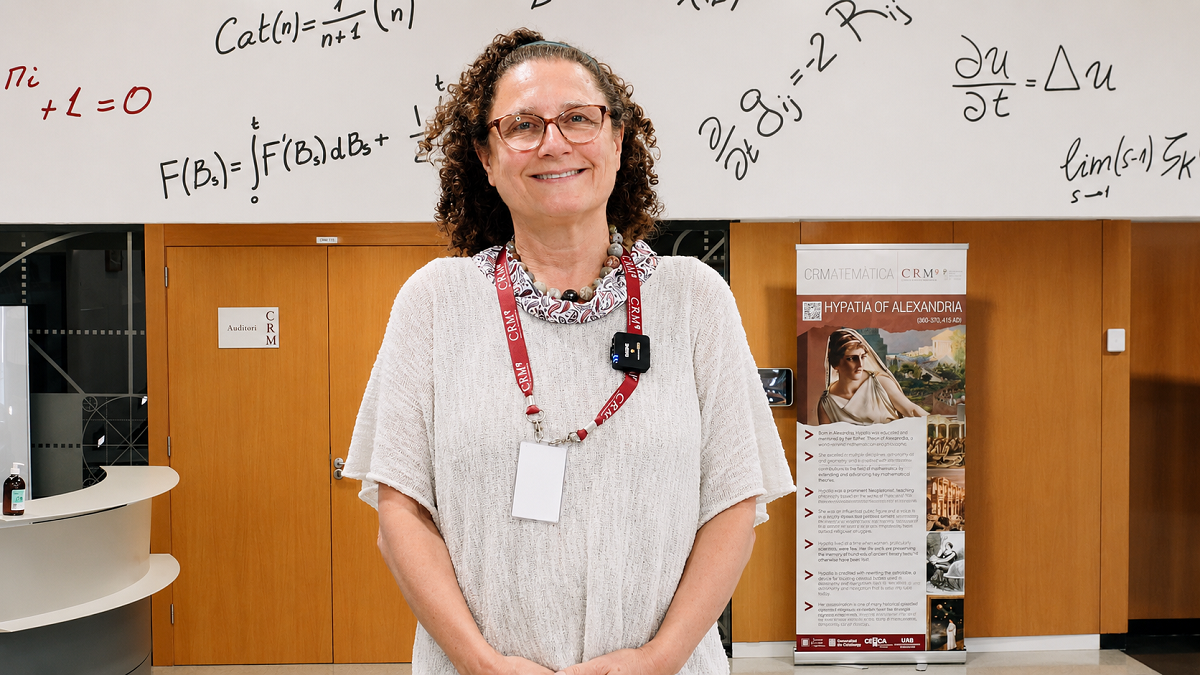
Susanna Terracini delivers the CRM Colloquium 2026
Susanna Terracini (Università di Torino) delivered the CRM Colloquium 2026 on 14 July, presenting a rigidity result for Kepler billiards obtained with Stefano Baranzini, Vivina Barutello and Irene De Blasi. She was at the centre as a member of the CRM Scientific...
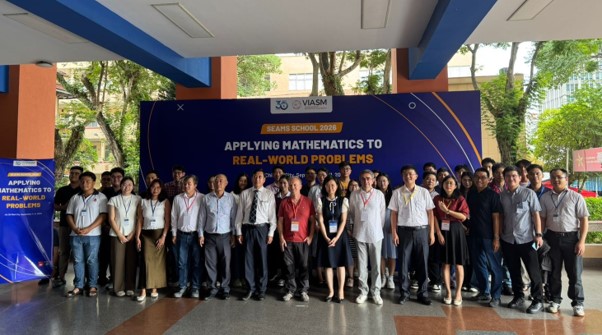
Ho Chi Minh City hosts the SEAMS School on applying mathematics to real-world problems
Students from across the region took courses and worked on group projects at a school co-organised by CRM researcher Tim Myers.CRM CommPau VarelaCRMComm@crm.catGet the latest CRM news and activities in your inbox.Recent newsletters →Between 4 and...

A single ball on a fixed table can compute: Eva Miranda and Isaac Ramos prove that two-dimensional billiards are Turing complete
Eva Miranda (UPC, CRM) and Isaac Ramos (ETH Zürich) show that a point particle bouncing inside a planar table with fixed walls can simulate a universal Turing machine, settling a question Cristopher Moore left open in 1990. The result grew out of a master’s project...
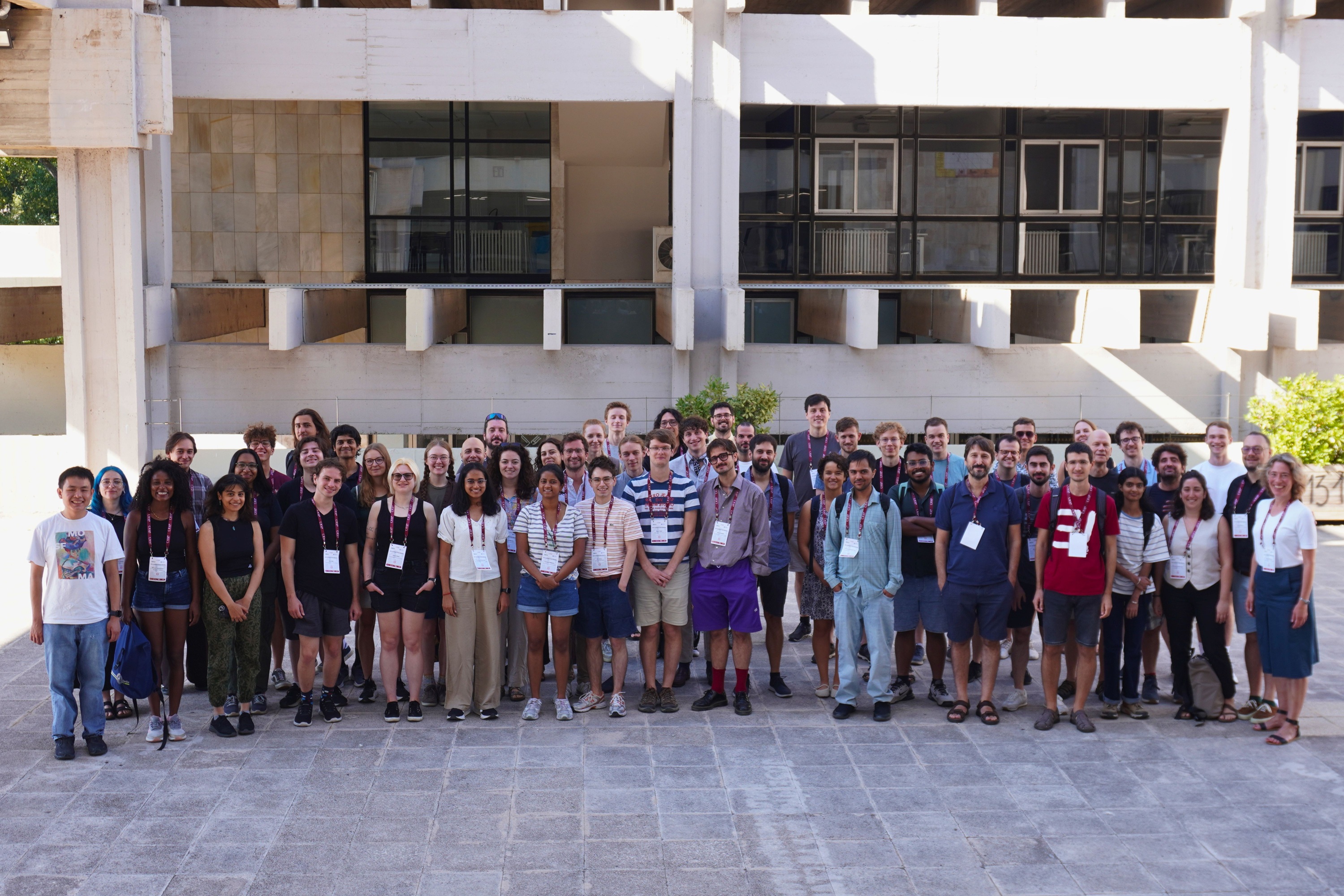
BMS-BGSMath Junior Meeting 2026: Barcelona and Berlin Strengthen Scientific Ties
From 2 to 4 September 2026, the Centre de Recerca Matemàtica (CRM) hosted the BMS-BGSMath Junior Meeting 2026, a three-day event jointly organised by the Berlin Mathematical School (BMS) and the Barcelona Graduate School of Mathematics (BGSMath), with the Centre de...
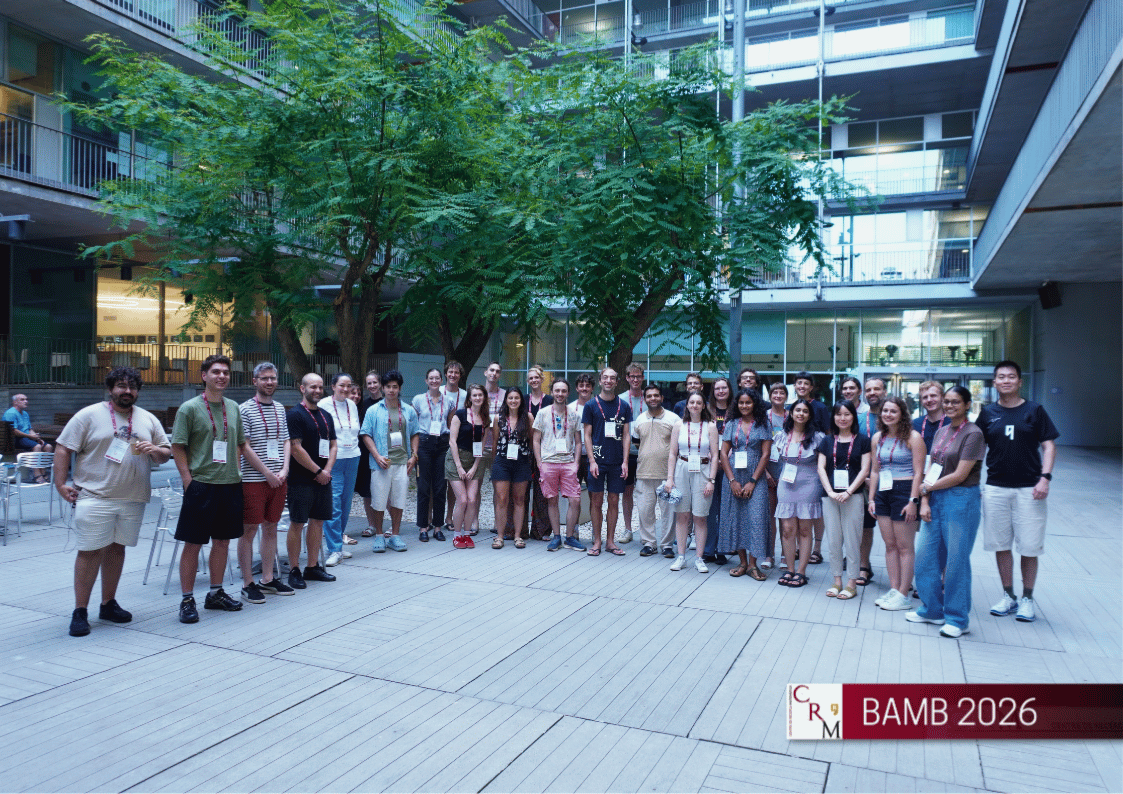
The CRM organises the 2026 Barcelona Summer School for Advanced Modeling of Behavior
The Centre de Recerca Matemàtica held the sixth edition of BAMB!, the Barcelona Summer School for Advanced Modeling of Behavior, from 12 to 23 July 2026 at the Parc de Recerca Biomèdica de Barcelona. Thirty early-career researchers from fourteen countries followed...