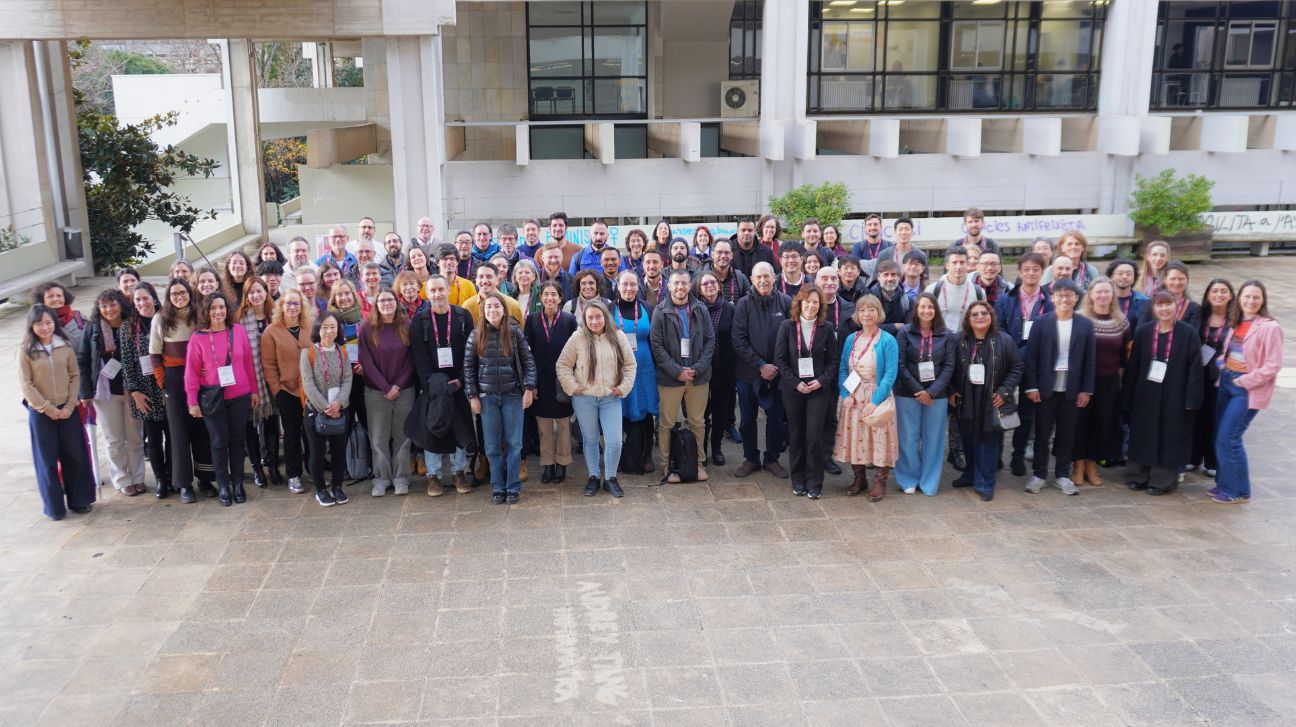
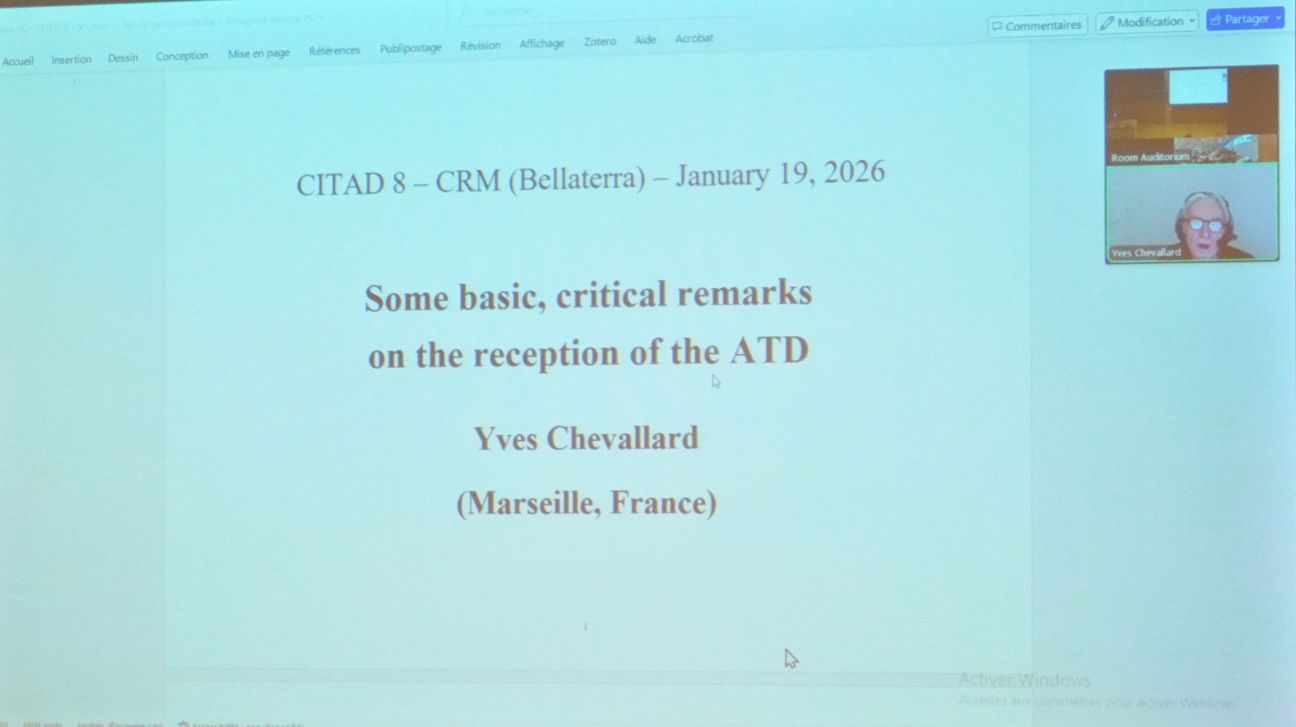
From 19 to 23 January 2026, the CRM hosted the 8th International Conference on the Anthropological Theory of the Didactic (CITAD 8), a leading international event in the field of didactics research that brought together researchers from different countries in Barcelona.
The conference is fully embedded in the study of the processes of teaching, learning and the transmission of knowledge. In this sense, holding CITAD 8 at the CRM strengthens the dialogue between mathematical research and educational reflection, while highlighting the Centre’s openness to hosting interdisciplinary scientific events.
A space to reflect on research in didactics
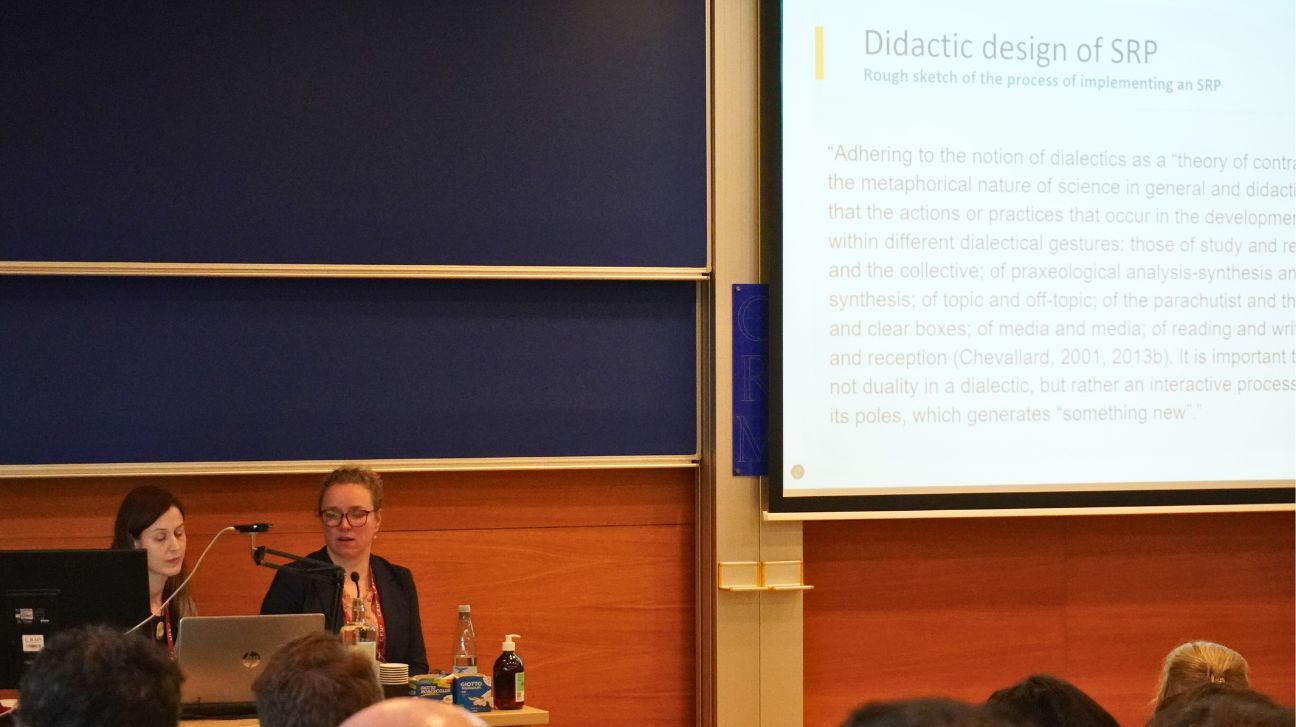
Under the title Research praxeologies in the Anthropological Theory of the Didactic, CITAD 8 aimed primarily to provide an updated overview of advances in ATD, both in terms of basic research and its links with education systems and teacher education. The conference also addressed the main open problems in the field, as well as the challenges involved in extending the conceptual and methodological frameworks of ATD to other domains.
One of the cross-cutting themes of the conference was the reflection on research praxeologies: how research is conducted within ATD, which conceptual tools are mobilised, and what specific characteristics this theoretical framework presents when applied to diverse contexts.
Three scientific axes
The scientific programme of the conference was structured around three main axes:
- Axis 1. Society and the curriculum problem: questioning works, focusing on the analysis of the curriculum as a dynamic object, subject to historical, institutional and epistemological transformations. This axis included descriptive, retrospective and prospective studies on the selection and organisation of the content to be taught, as well as on processes of didactic transposition.
- Axis 2. Society and the curriculum problem: enriching and questioning the world, devoted to exploring the so-called paradigm of questioning the world in educational institutions. Contributions analysed the conditions that enable—or hinder—the existence of teaching practices based on inquiry, the study of open questions, and the articulation of different domains of knowledge.
- Axis 3. The professions, focusing on the professionalisation of teaching and, more broadly, on professional education in diverse contexts. This axis addressed contemporary social changes—such as digitalisation, artificial intelligence and ecological transition—and the role that ATD can play in understanding and accompanying these transformations.
Key figures and international debate
The conference featured the participation of leading international researchers in the field of didactics. Among them, special mention should be made of Yves Chevallard, founder of the Anthropological Theory of the Didactic, whose contribution was one of the highlights of the conference and generated extensive theoretical and methodological discussion.
The diversity of the participants’ institutional and geographical backgrounds enriched the debates and further consolidated CITAD 8 as a high-level international forum.
A space for early-career researchers
As in previous editions, the conference included a seminar specifically devoted to PhD students, held on the first day. This seminar provided doctoral students with the opportunity to present their research projects and discuss them with experienced researchers, fostering intergenerational exchange and academic mentoring.
For the CRM, it was an honour to host CITAD 8, a conference with a long-standing international trajectory that reinforces the Centre’s commitment to high-quality research, scientific exchange and openness to diverse disciplines and approaches. The event also highlights Barcelona’s role as a meeting point for international educational and scientific reflection.
|
|
CRM CommNatalia Vallina
|

The CRM opens the academic year and unveils its Directors’ Gallery
A review of the year, the Communication Plan 2026–2030 and three research talks filled the morning of 19 October.The unveiling of the Directors’ Gallery.CRM CommPau VarelaCRMComm@crm.catGet the latest CRM news and activities in your inbox.Recent...
The CRM Mentoring Programme, as Told by One of Its Pairs
PhD student Joaquim Duran and mathematician Robert Cardona, one of the pairs in the CRM Mentoring ProgrammeJoaquim Duran (left) and Robert Cardona.CRM CommPau VarelaCRMComm@crm.catGet the latest CRM news and activities in your inbox.Recent...

When the reward comes within reach, the brain changes what it compares
As the tokens piled up, choices got faster and more accurate at the same time. The yardstick for judging each offer had moved.CRM CommPau VarelaCRMComm@crm.catGet the latest CRM news and activities in your inbox.Recent newsletters →Two subjects...

Almost every automaton can be reset with a short word
Guillaume Chapuy (Université Paris Cité, CNRS) and Guillem Perarnau (UPC, CRM) have shown that a random finite automaton with n states can, with high probability, be reset by a word of length of order √n log n. The result, published in ACM Transactions on Algorithms, pins the exponent at 1/2, the lower end of a decade of numerical estimates, and addresses the random version of the synchronization problem behind a conjecture Ján Černý posed in 1964 and which still remains open.
Exposició ‘Les matemàtiques de Gaudí’
CRM quod erat demonstrandum | 48

ADA: Decoding Brain Signals Misaligned in Time
The study addresses a key limitation of current brain decoding techniques: the difficulty of interpreting internal mental processes whose temporal dynamics vary from trial to trial.Decoding what is happening in a person’s mind from their brain activity is one of the...
Rare curves, many points: Christophe Ritzenthaler and Rachel Pries on their research and the work around it
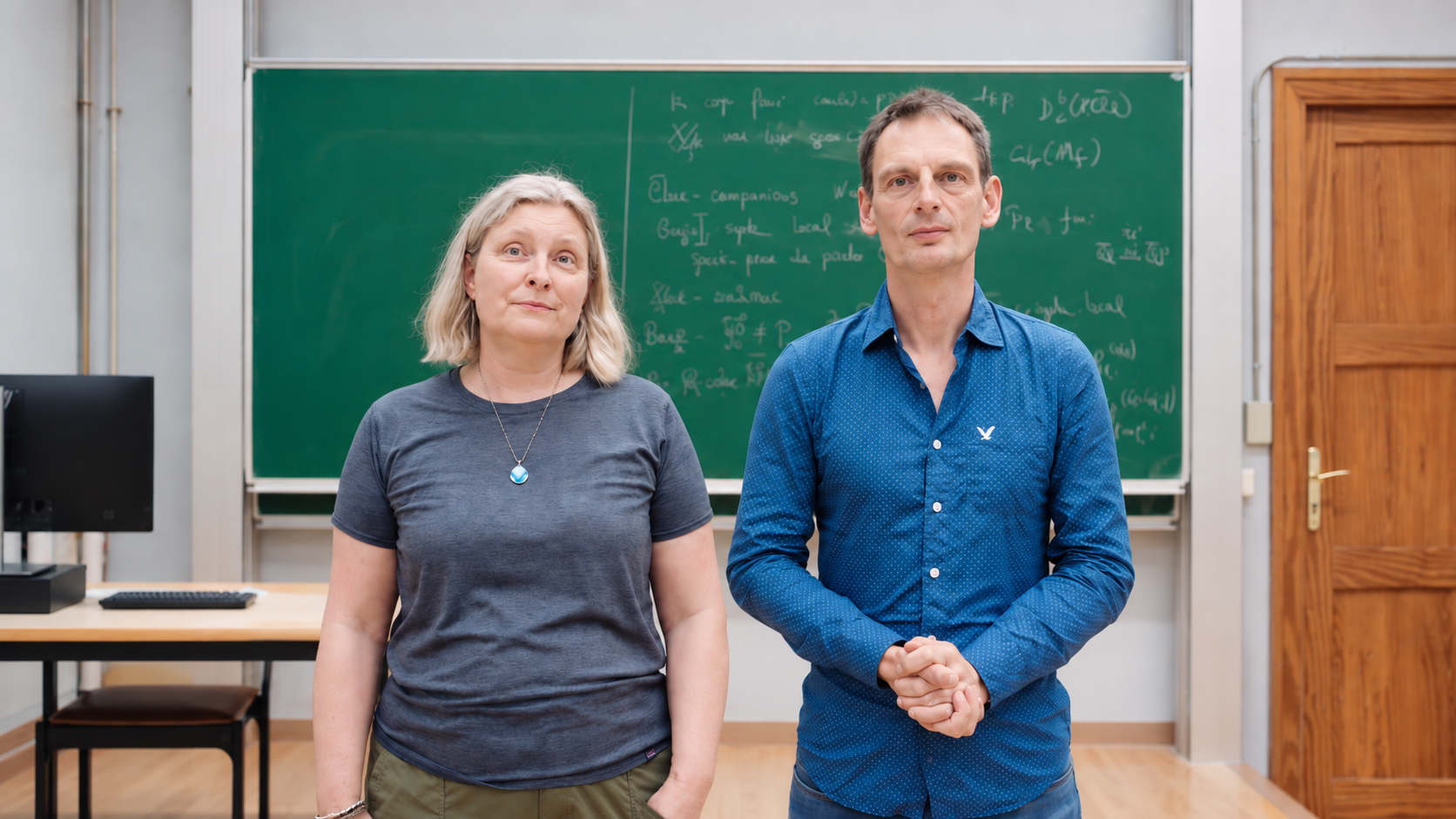
Christophe Ritzenthaler (Université de Rennes) and Rachel Pries (Colorado State University) both work on curves over finite fields: he hunts curves with as many points as possible, she hunts curves that almost never occur. In conversation with the CRM during their...

Call open for the 2027 Ferran Sunyer i Balaguer Prize
The Ferran Sunyer i Balaguer Foundation is accepting submissions for its 2027 prize, which awards 15,000 euros and publication in Birkhäuser's Progress in Mathematics series to an expository monograph on an active area of mathematical research. The deadline is 27...
Susanna Terracini delivers the CRM Colloquium 2026
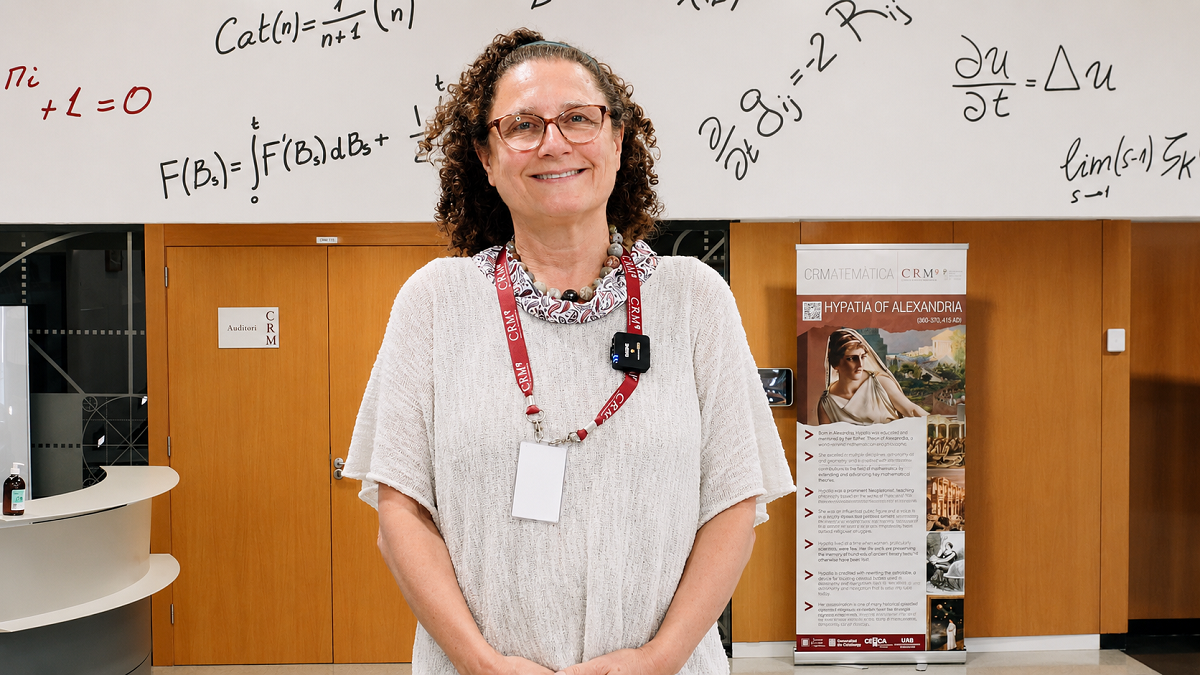
Susanna Terracini (Università di Torino) delivered the CRM Colloquium 2026 on 14 July, presenting a rigidity result for Kepler billiards obtained with Stefano Baranzini, Vivina Barutello and Irene De Blasi. She was at the centre as a member of the CRM Scientific...
Ho Chi Minh City hosts the SEAMS School on applying mathematics to real-world problems
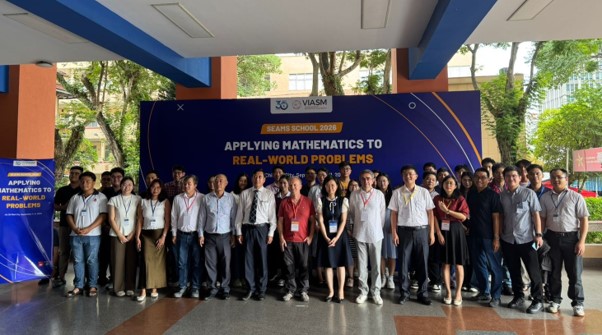
Students from across the region took courses and worked on group projects at a school co-organised by CRM researcher Tim Myers.CRM CommPau VarelaCRMComm@crm.catGet the latest CRM news and activities in your inbox.Recent newsletters →Between 4 and...

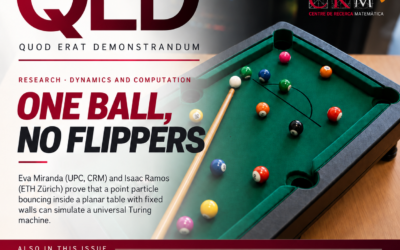
A single ball on a fixed table can compute: Eva Miranda and Isaac Ramos prove that two-dimensional billiards are Turing complete
Eva Miranda (UPC, CRM) and Isaac Ramos (ETH Zürich) show that a point particle bouncing inside a planar table with fixed walls can simulate a universal Turing machine, settling a question Cristopher Moore left open in 1990. The result grew out of a master’s project...