An asteroid has been named (20137) Àngeljorba in honour of Àngel Jorba (1963-2025), UB professor and CRM affiliated researcher. Approved by the IAU, the name recognises his career in dynamical systems and celestial mechanics, from the orbital theory behind ESA’s SOHO mission to his outreach work as an amateur astronomer.
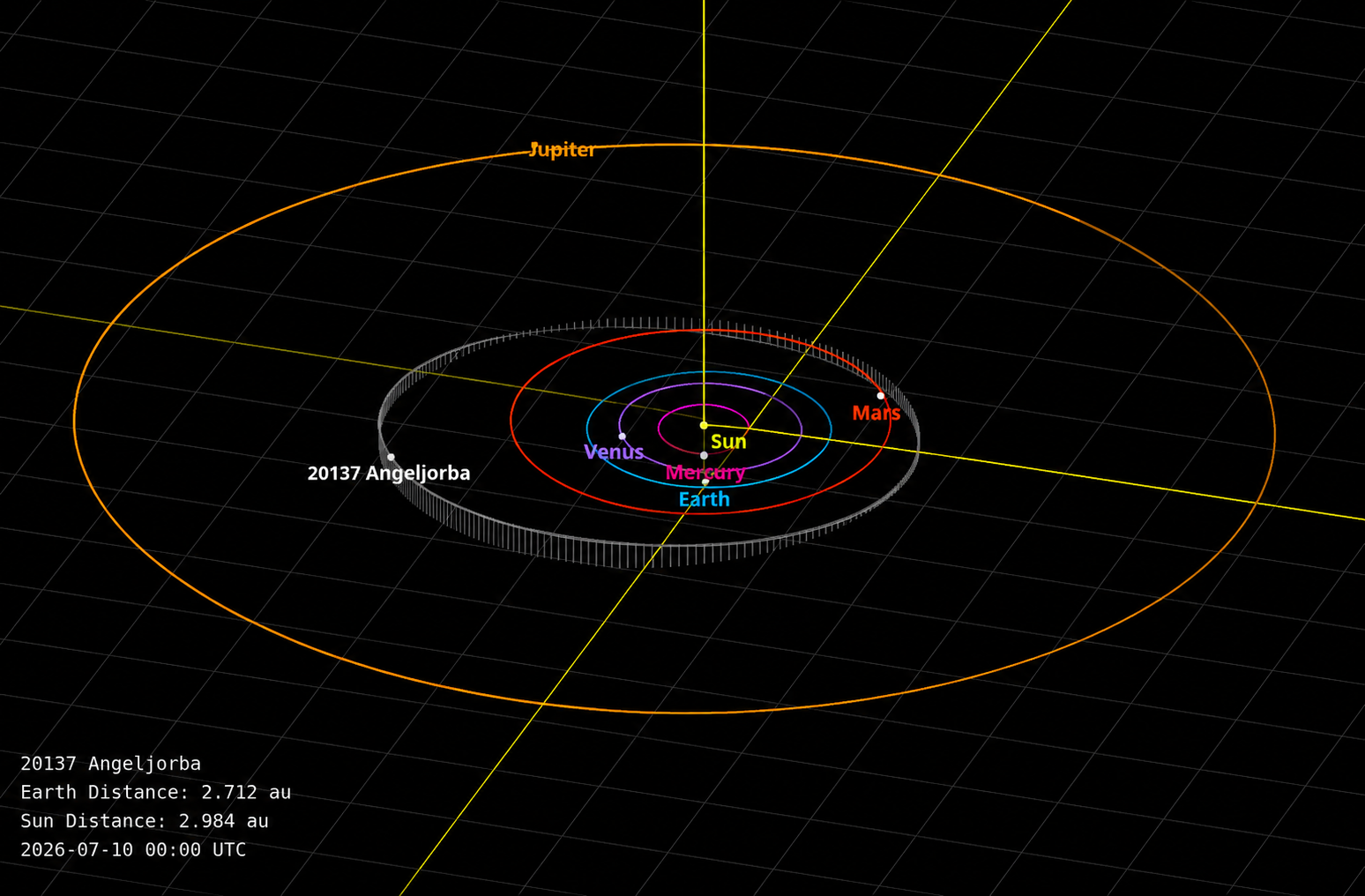
The International Astronomical Union has approved the name (20137) Àngeljorba for a main-belt asteroid, in recognition of the scientific career of Àngel Jorba (1963-2025), professor of mathematics at the Universitat de Barcelona and affiliated researcher at the Centre de Recerca Matemàtica. The name was published on 9 July in the bulletin of the IAU’s Working Group for Small Bodies Nomenclature, the body responsible for naming the minor bodies of the Solar System.
The asteroid, first designated 1996 PX8, was discovered by Eric W. Elst from the La Silla Observatory in Chile on 8 August 1996. It completes an orbit of the Sun every three years and five months, on a path eccentric enough to cross that of Mars. The WGSBN citation describes Jorba as a leading researcher in dynamical systems and celestial mechanics, notes his contributions to the understanding of how minor bodies move, and adds that, as an amateur astronomer, he promoted astronomy and mathematics among the general public.
Jorba completed his doctorate at the UB in 1991 under the supervision of Carles Simó. Much of his research addressed a question with direct consequences for spaceflight: how to keep a spacecraft in orbit around the Lagrange points, positions of equilibrium in the Sun-Earth system where there is no body to orbit in the classical sense. The trajectories that exist there cannot be computed with the methods that serve for a satellite circling a planet. Together with Gerard Gómez, Josep Masdemont and Simó, and under contract with the European Space Agency, Jorba helped develop the semi-analytical theory of these orbits and applied it to the mission analysis of SOHO, the solar observatory that has operated from the L1 point since 1996. The group’s work was collected in four volumes published by World Scientific in 2001 and remains a standard reference in mission design.
His contributions extended to scientific software. The package taylor, developed with Maorong Zou and published in 2005, generates a tailored high-order numerical integrator from a given system of differential equations, and is still cited and used in dynamical astronomy.
Jorba directed the Institut de Matemàtica de la Universitat de Barcelona and the former Departament de Matemàtica Aplicada i Anàlisi, and led the UB’s dynamical systems research group for many years. In January 2025, he received an ICREA Acadèmia award to intensify his research in celestial mechanics and astrodynamics.
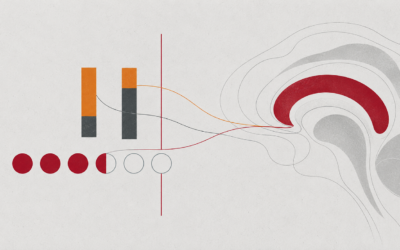
When the reward comes within reach, the brain changes what it compares
As the tokens piled up, choices got faster and more accurate at the same time. The yardstick for judging each offer had moved.CRM CommPau VarelaCRMComm@crm.catGet the latest CRM news and activities in your inbox.Recent newsletters →Two subjects...
Almost every automaton can be reset with a short word
For a random automaton with n states, a word of about √n log n letters is almost always enough to reset it.CRM CommPau VarelaCRMComm@crm.catGet the latest CRM news and activities in your inbox.Recent newsletters →Picture a conveyor belt carrying...
Exposició ‘Les matemàtiques de Gaudí’
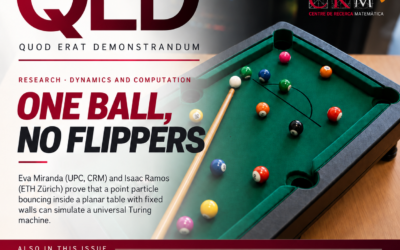
CRM quod erat demonstrandum | 48

ADA: Decoding Brain Signals Misaligned in Time
The study addresses a key limitation of current brain decoding techniques: the difficulty of interpreting internal mental processes whose temporal dynamics vary from trial to trial.Decoding what is happening in a person’s mind from their brain activity is one of the...
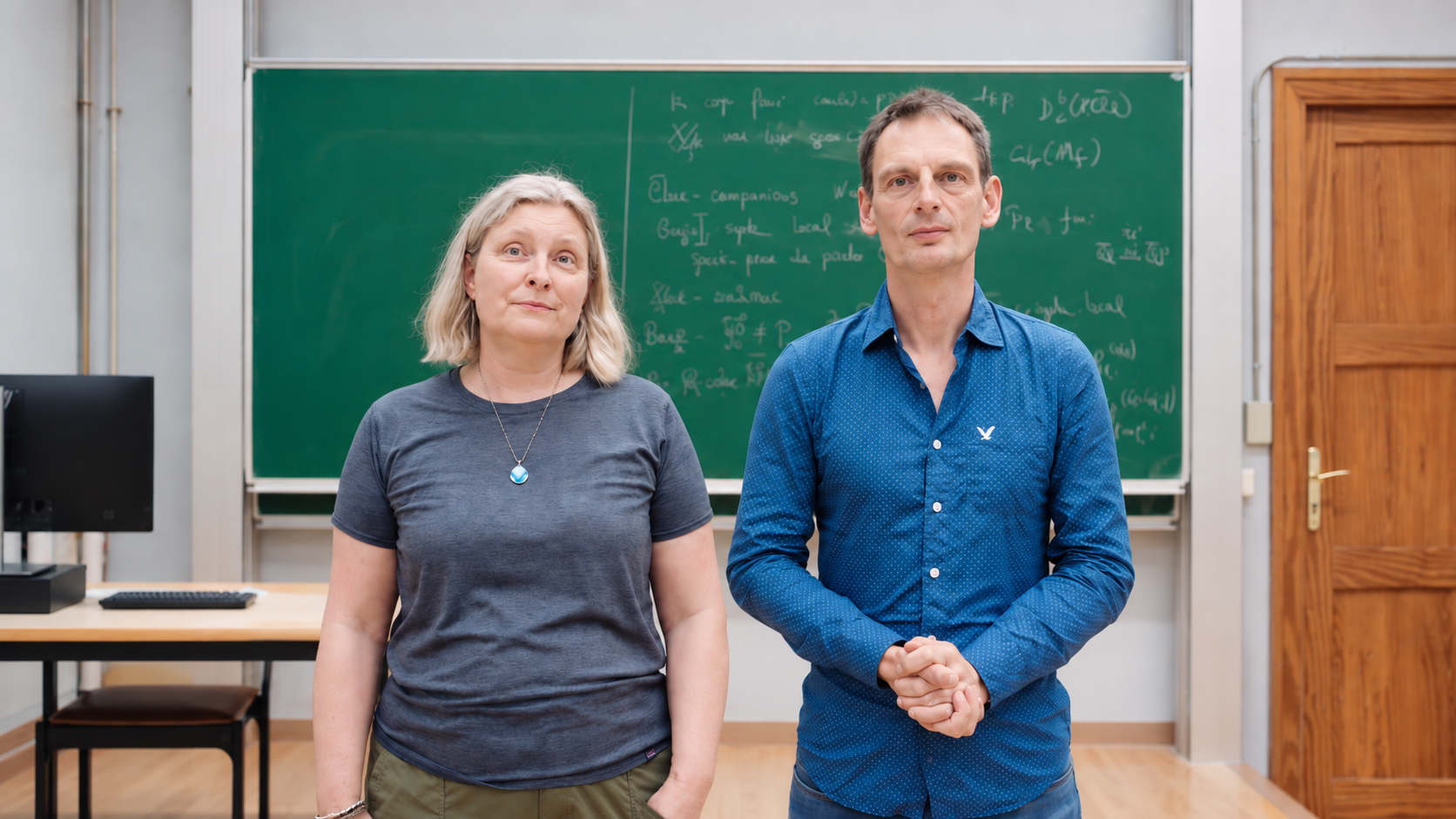
Rare curves, many points: Christophe Ritzenthaler and Rachel Pries on their research and the work around it
Christophe Ritzenthaler (Université de Rennes) and Rachel Pries (Colorado State University) both work on curves over finite fields: he hunts curves with as many points as possible, she hunts curves that almost never occur. In conversation with the CRM during their...
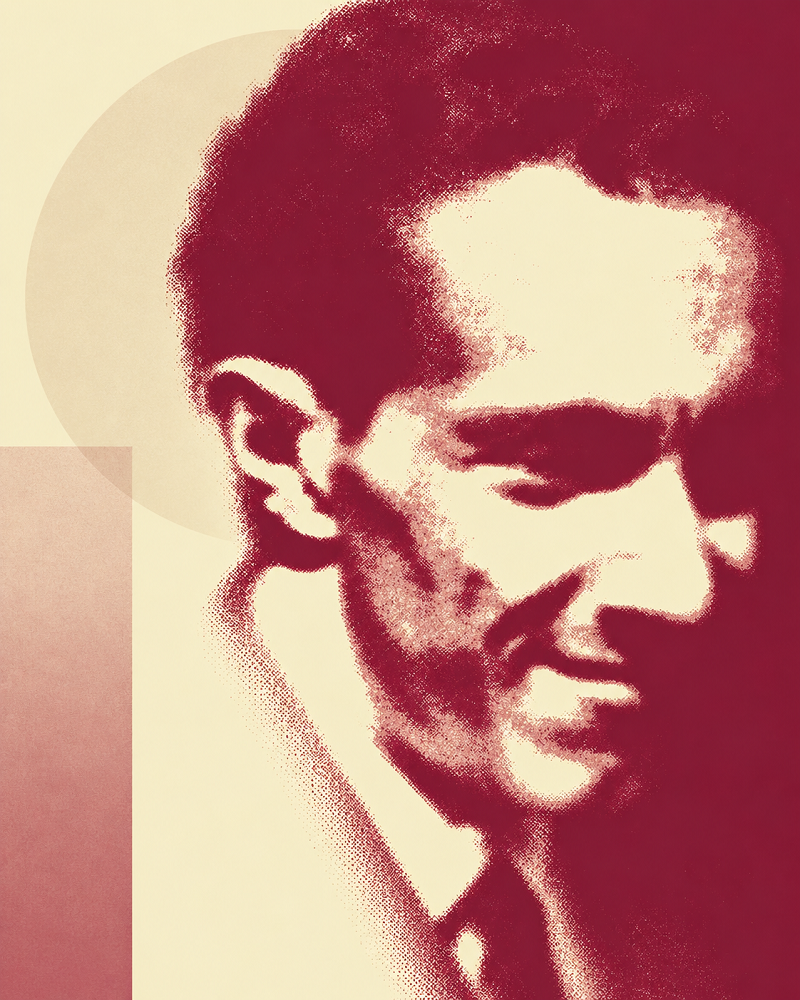
Call open for the 2027 Ferran Sunyer i Balaguer Prize
The Ferran Sunyer i Balaguer Foundation is accepting submissions for its 2027 prize, which awards 15,000 euros and publication in Birkhäuser's Progress in Mathematics series to an expository monograph on an active area of mathematical research. The deadline is 27...
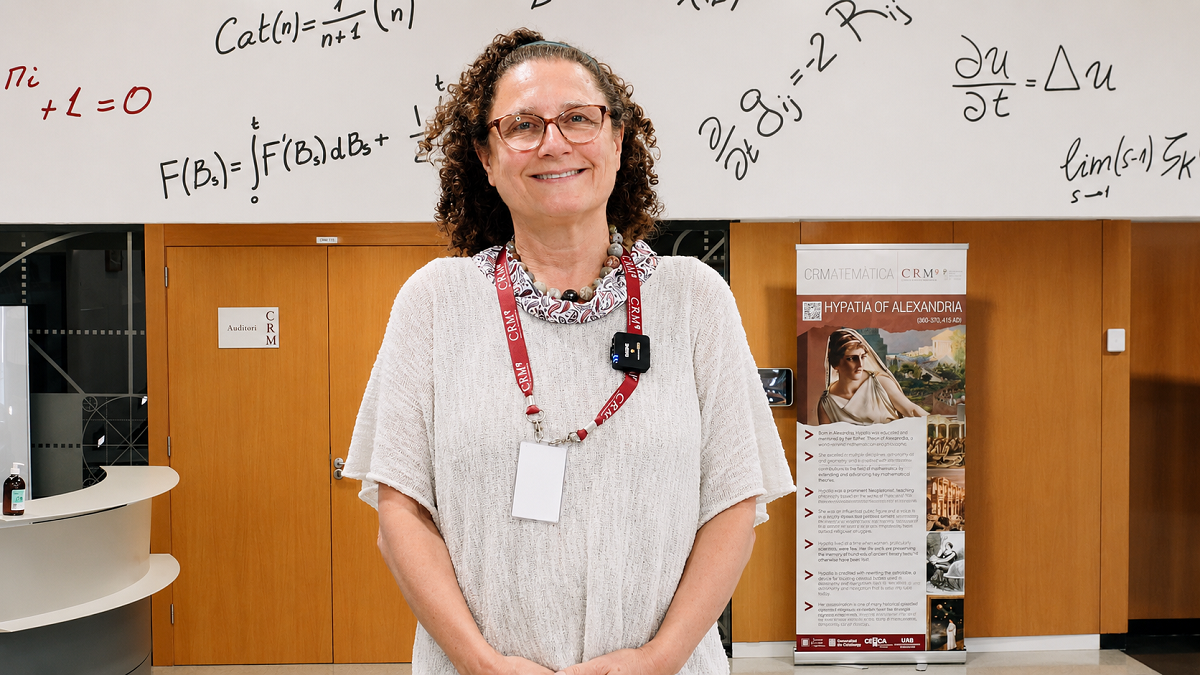
Susanna Terracini delivers the CRM Colloquium 2026
Susanna Terracini (Università di Torino) delivered the CRM Colloquium 2026 on 14 July, presenting a rigidity result for Kepler billiards obtained with Stefano Baranzini, Vivina Barutello and Irene De Blasi. She was at the centre as a member of the CRM Scientific...
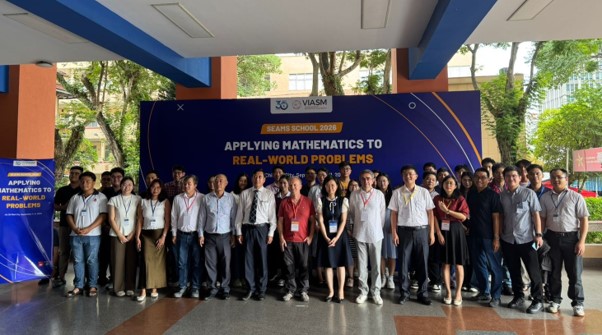
Ho Chi Minh City hosts the SEAMS School on applying mathematics to real-world problems
Students from across the region took courses and worked on group projects at a school co-organised by CRM researcher Tim Myers.CRM CommPau VarelaCRMComm@crm.catGet the latest CRM news and activities in your inbox.Recent newsletters →Between 4 and...

A single ball on a fixed table can compute: Eva Miranda and Isaac Ramos prove that two-dimensional billiards are Turing complete
Eva Miranda (UPC, CRM) and Isaac Ramos (ETH Zürich) show that a point particle bouncing inside a planar table with fixed walls can simulate a universal Turing machine, settling a question Cristopher Moore left open in 1990. The result grew out of a master’s project...
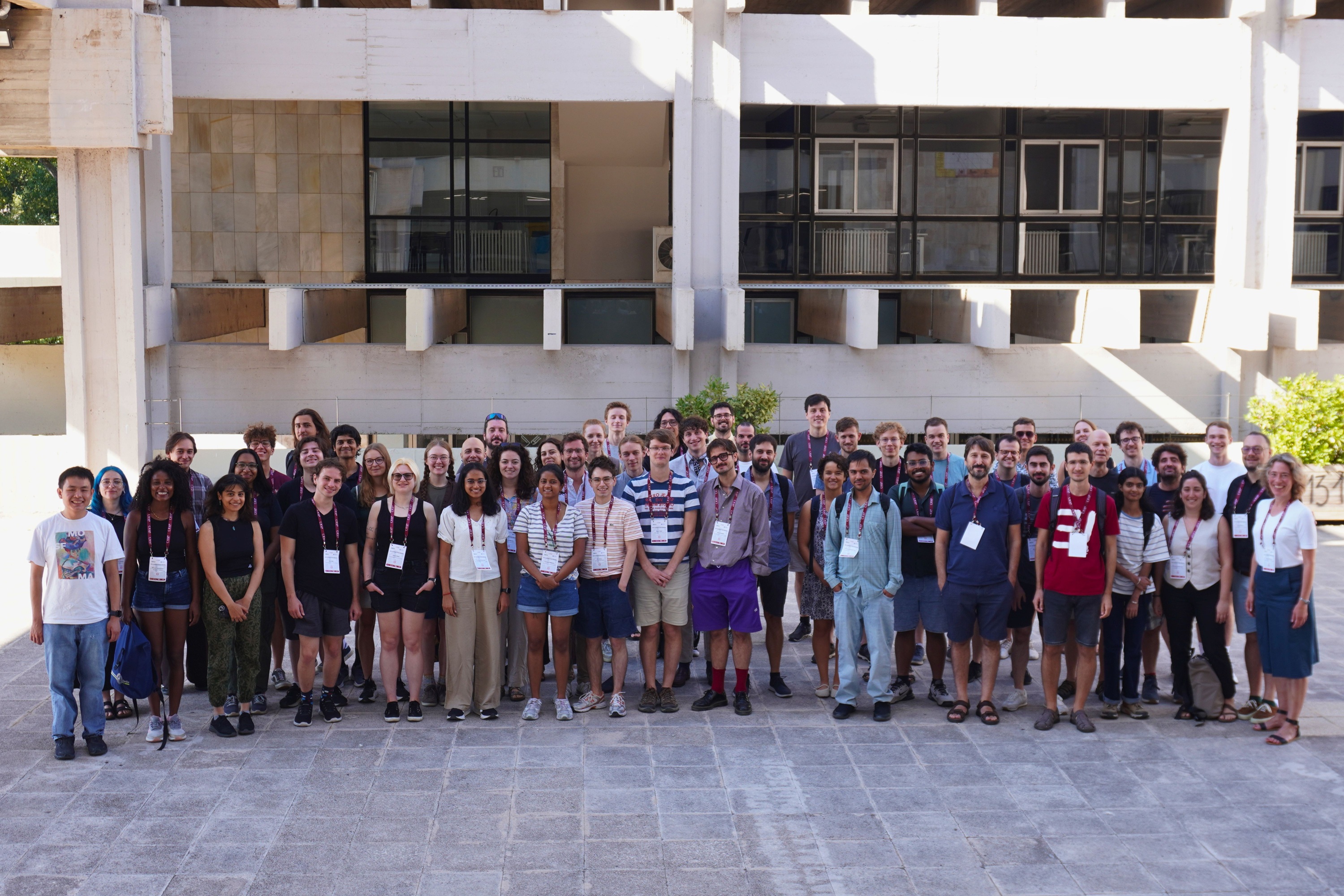
BMS-BGSMath Junior Meeting 2026: Barcelona and Berlin Strengthen Scientific Ties
From 2 to 4 September 2026, the Centre de Recerca Matemàtica (CRM) hosted the BMS-BGSMath Junior Meeting 2026, a three-day event jointly organised by the Berlin Mathematical School (BMS) and the Barcelona Graduate School of Mathematics (BGSMath), with the Centre de...
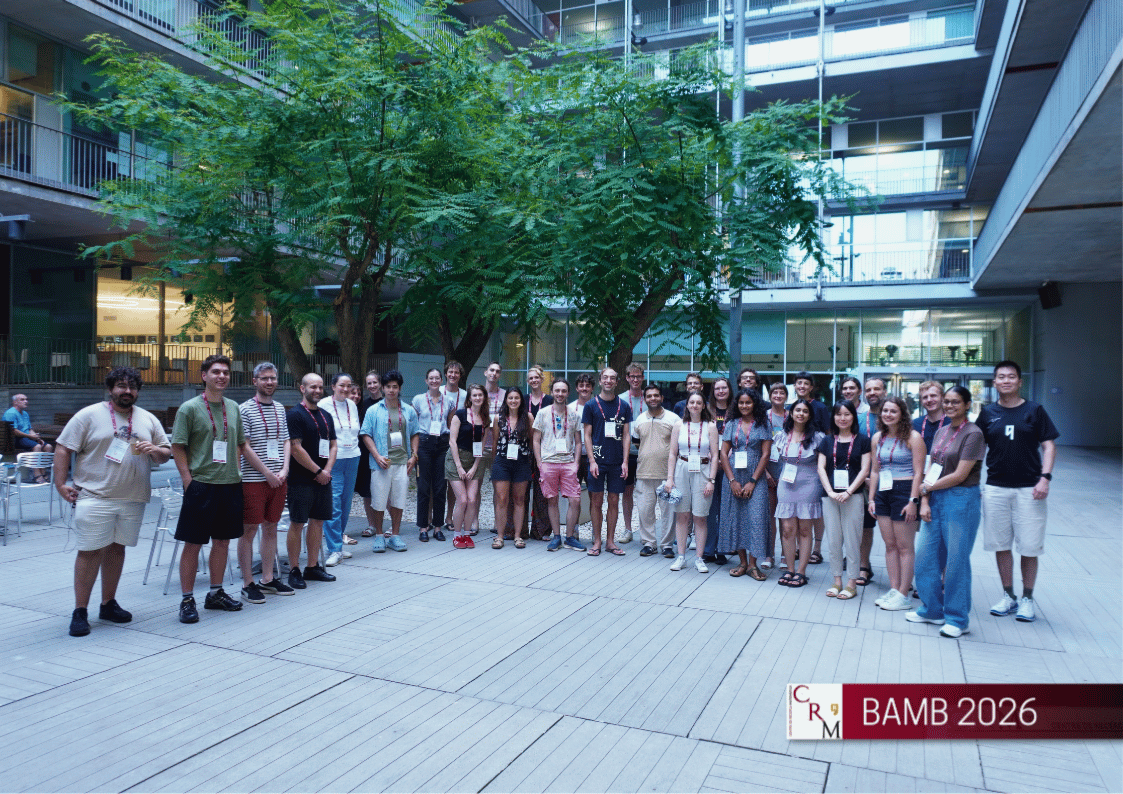
The CRM organises the 2026 Barcelona Summer School for Advanced Modeling of Behavior
The Centre de Recerca Matemàtica held the sixth edition of BAMB!, the Barcelona Summer School for Advanced Modeling of Behavior, from 12 to 23 July 2026 at the Parc de Recerca Biomèdica de Barcelona. Thirty early-career researchers from fourteen countries followed...
|
|
CRM CommPau Varela
|