More than fifty students from six countries spent a week at the University of Science, VNU-HCM, learning how mathematics gets used outside a mathematics department. CRM researcher Tim Myers co-organised the school and lectured on moving boundary problems. The initiative grew out of a 2022 review of Vietnam’s main mathematics institute, which found the country short on applied mathematics and on links with its neighbours.
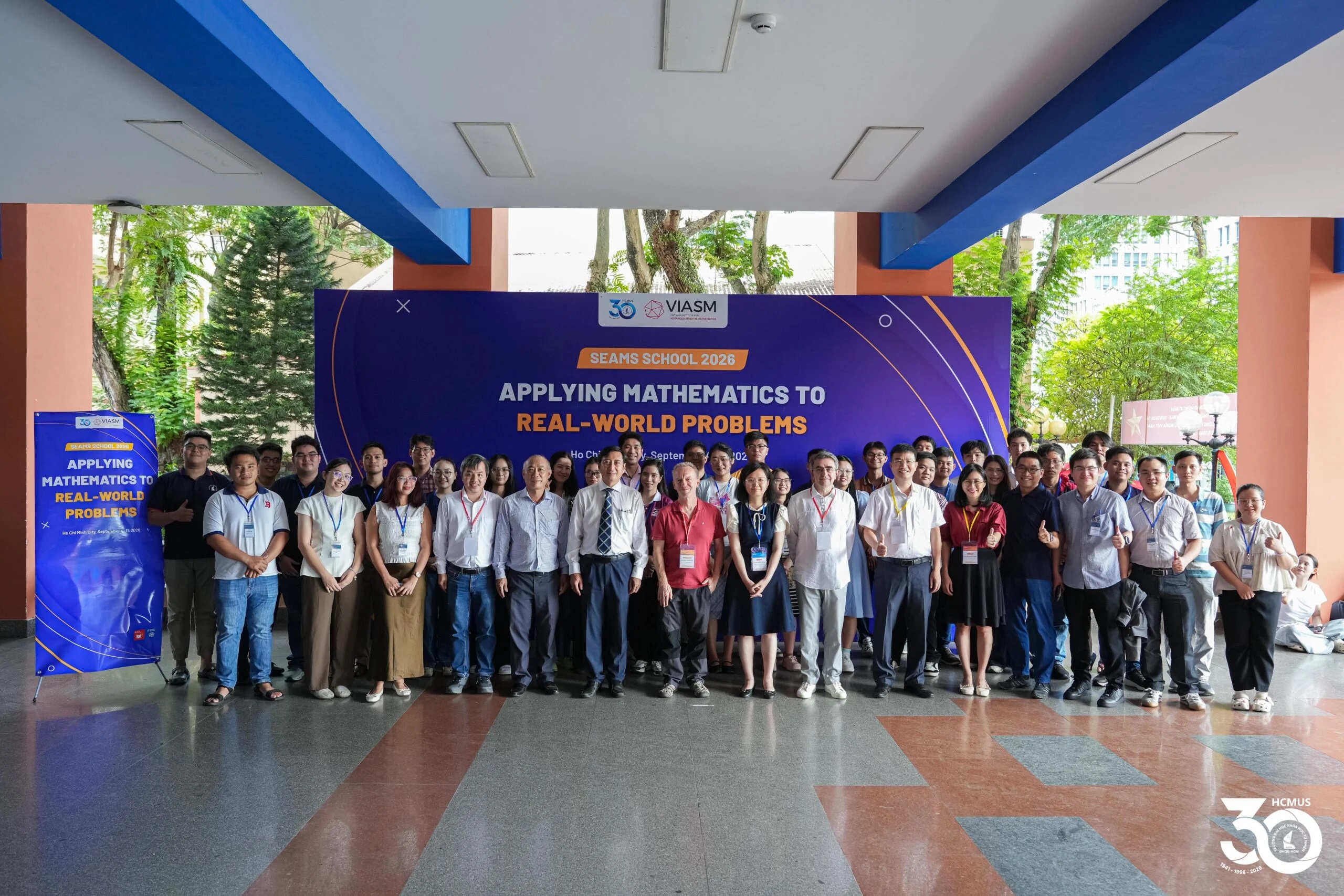
Between 4 and 11 September, more than fifty students from Vietnam, Cambodia, Thailand, Korea, the Philippines and Indonesia gathered at the University of Science, Vietnam National University Ho Chi Minh City (HCMUS) for the first Southeast Asian Mathematical Society (SEAMS) School on Applying Mathematics to Real-World Problems. The course design started from concrete industrial problems and worked outwards: modelling, theory, numerics, simulation. Tim Myers, head of the CRM’s Industrial Mathematics group, was one of four organisers and taught one of the courses.
The school traces back to a report on the state of Vietnamese mathematics. In 2022, Sir John Ball chaired a committee invited to review the Vietnam Institute for Advanced Study in Mathematics (VIASM) and identify where the field needed to grow. Two gaps stood out. One was internationalisation, meaning networks with and support for less developed neighbouring countries. The other was a shortage of mathematics aimed at problems outside the university.
Those two recommendations found a route forward at a committee meeting in early 2025. Myers, who sits on the European Mathematical Society’s Committee for Developing Countries, met Prof. Joaquim Correia (Universidade de Évora), one of the EMS-CDC representatives for VIASM’s ERCE programme. They talked about the Ball report and about what a European contribution to Vietnamese applied mathematics might actually look like.
Ideas became logistics that September. Myers travelled to Hanoi for the ICIAM board meeting hosted by VIASM, which CRM covered at the time, then on to HCMUS, where he met academics and two companies (FPT and Tatoma) at a session on industrial mathematics and study groups. Both HCMUS and VIASM wanted a study group of their own. After discussion, the group settled on something gentler as a first step: a modelling week.
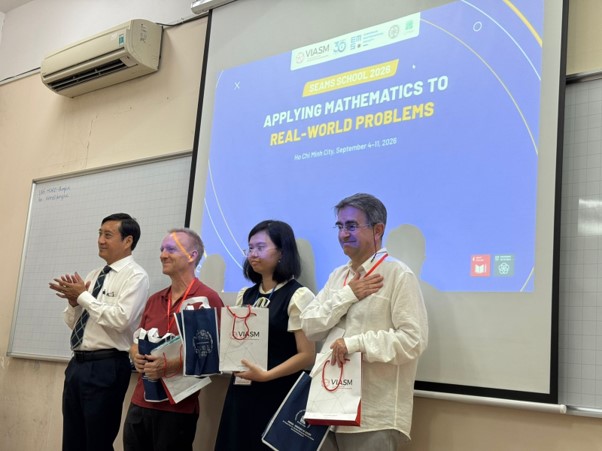
The meeting was officially opened by the President of HCMUS, Prof. Trần Lê Quan, then I gave a few, possibly inspiring, words to the lucky students.
Four courses made up the programme, covering moving boundary problems (Myers), conservation laws (Correia), stochastic processes (Gaël Raoul, CMAP, École Polytechnique) and infectious disease modelling (Thi Minh Thao Lê, IST Lisbon), alongside talks on image restoration and clinical genomics. Students worked together on research projects throughout the week. Tuesday brought a round table on what study groups can do for applied mathematics in a country that doesn’t yet run them.
The school was organised by Prof. Lê Minh Hà (VIASM), Prof. Joaquim Correia (U. Évora), Prof. Hoàng Văn Hà (HCMUS) and Myers, with funding from the Centre International de Mathématiques Pures et Appliquées (CIMPA), the Southeast Asian Mathematical Society (SEAMS) and the EMS Committee for Developing Countries. Trần Lê Quan, president of HCMUS, opened the meeting.
Its stated objective follows Ball’s diagnosis closely: get groups researching in specific industry areas, and get young mathematicians interested in real problems. Whether a Vietnamese study group with industry follows is the question the week leaves open. Both HCMUS and VIASM wanted one before the school existed.
Further reading:
- School programme and details: VIASM – SEAMS 2026
- Previous coverage: Tim Myers represents ECMI at the ICIAM Board Meeting and promotes industrial mathematics in Vietnam (CRM, September 2025)
- Review committee report: VIASM Annual Report 2022, from p. 143
Newsletter
Get the latest CRM news and activities delivered to your inbox
Subscribe now
Recent newsletters →

A single ball on a fixed table can compute: Eva Miranda and Isaac Ramos prove that two-dimensional billiards are Turing complete
Eva Miranda (UPC, CRM) and Isaac Ramos (ETH Zürich) show that a point particle bouncing inside a planar table with fixed walls can simulate a universal Turing machine, settling a question Cristopher Moore left open in 1990. The result grew out of a master’s project...
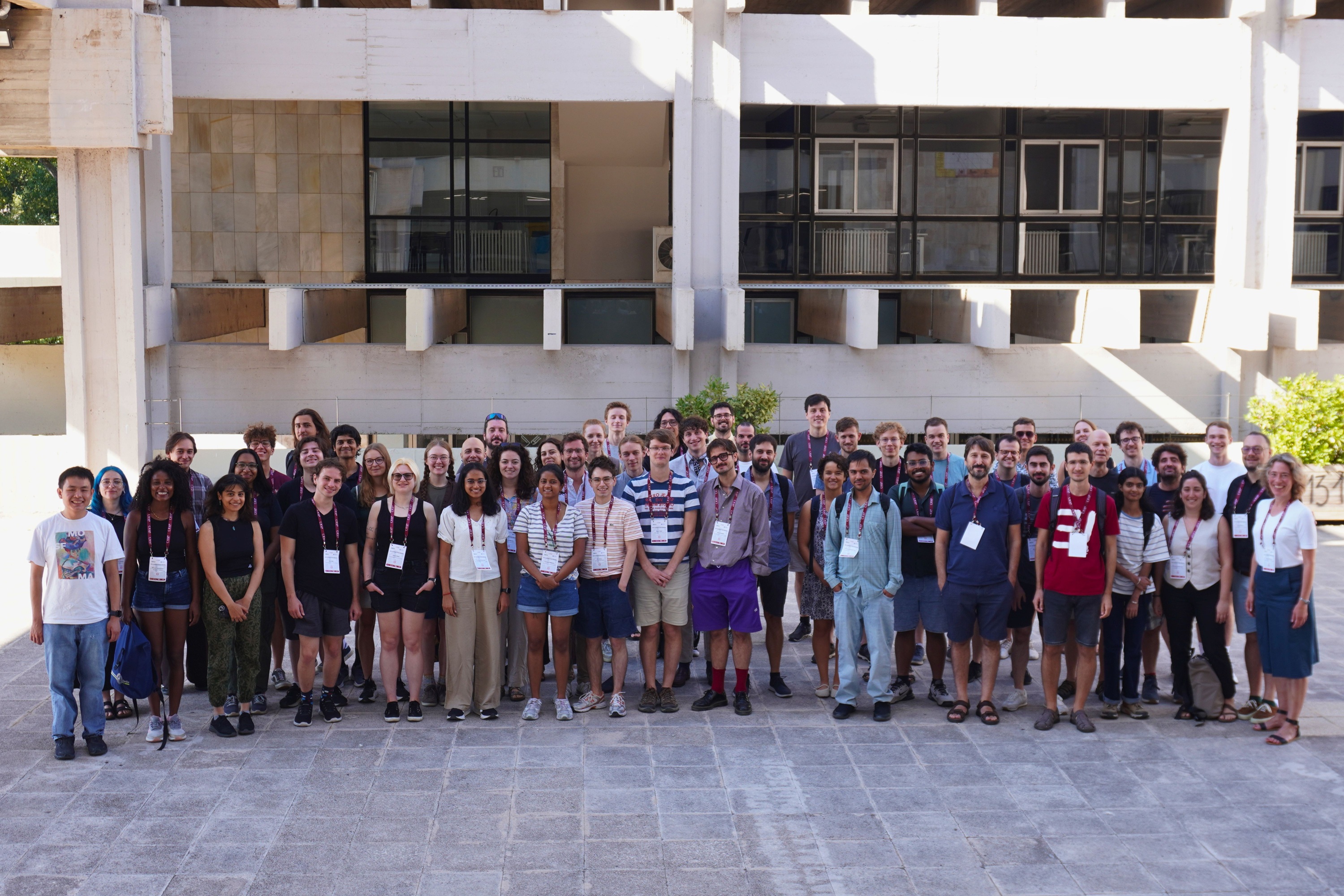
BMS-BGSMath Junior Meeting 2026: Barcelona and Berlin Strengthen Scientific Ties
From 2 to 4 September 2026, the Centre de Recerca Matemàtica (CRM) hosted the BMS-BGSMath Junior Meeting 2026, a three-day event jointly organised by the Berlin Mathematical School (BMS) and the Barcelona Graduate School of Mathematics (BGSMath), with the Centre de...
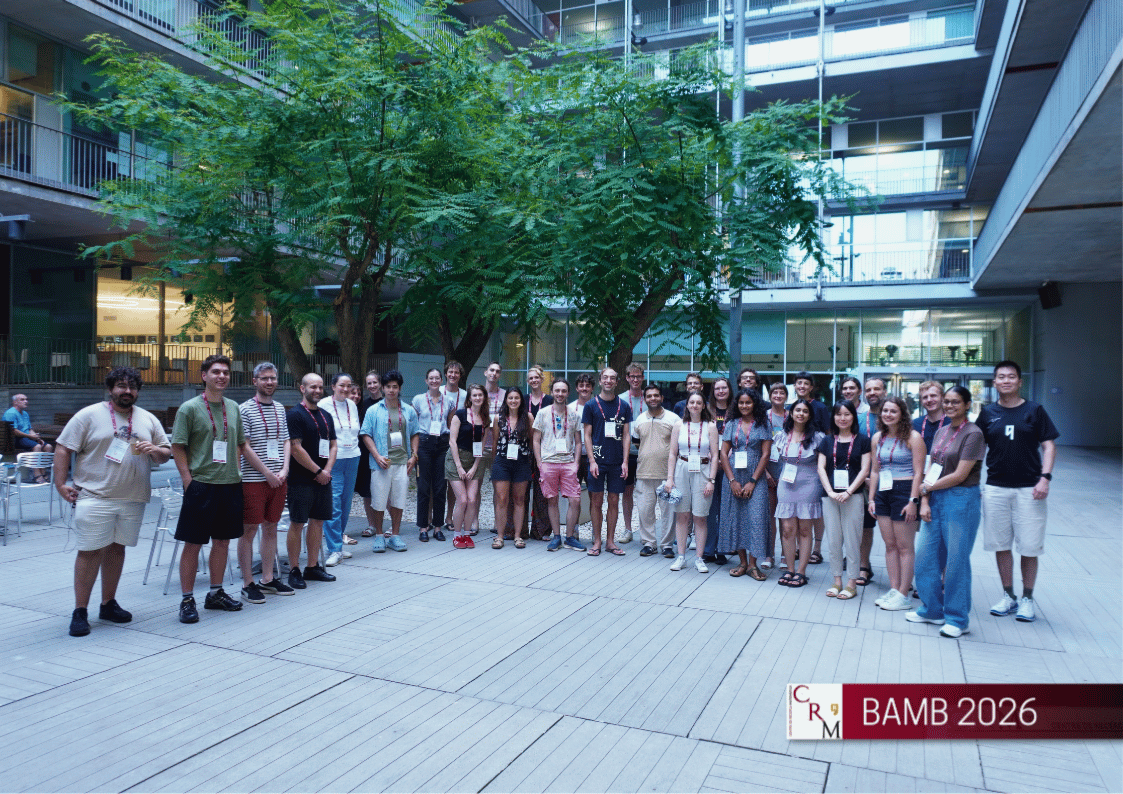
The CRM organises the 2026 Barcelona Summer School for Advanced Modeling of Behavior
The Centre de Recerca Matemàtica held the sixth edition of BAMB!, the Barcelona Summer School for Advanced Modeling of Behavior, from 12 to 23 July 2026 at the Parc de Recerca Biomèdica de Barcelona. Thirty early-career researchers from fourteen countries followed...
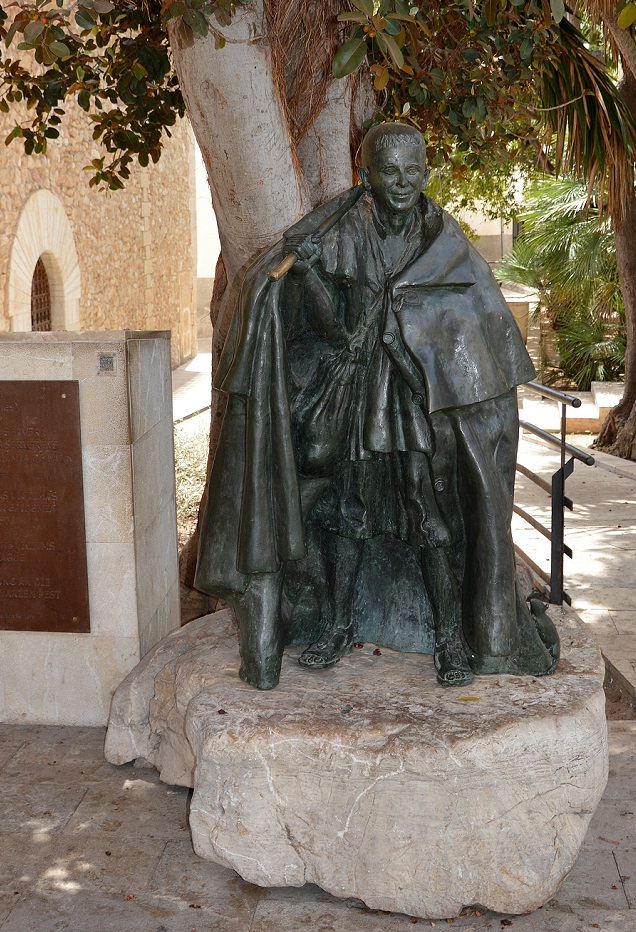
Mallorca’s 1820 plague did not behave like a classic bubonic outbreak, study finds
A study in PNAS by Pere Puig (UAB, CRM) and Joana Maria Pujadas-Mora (UOC, ICREA) reports what happens when the daily health records kept in Son Servera and Capdepera during the 1820 outbreak are analysed with a Bayesian epidemiological model: an unusually short...
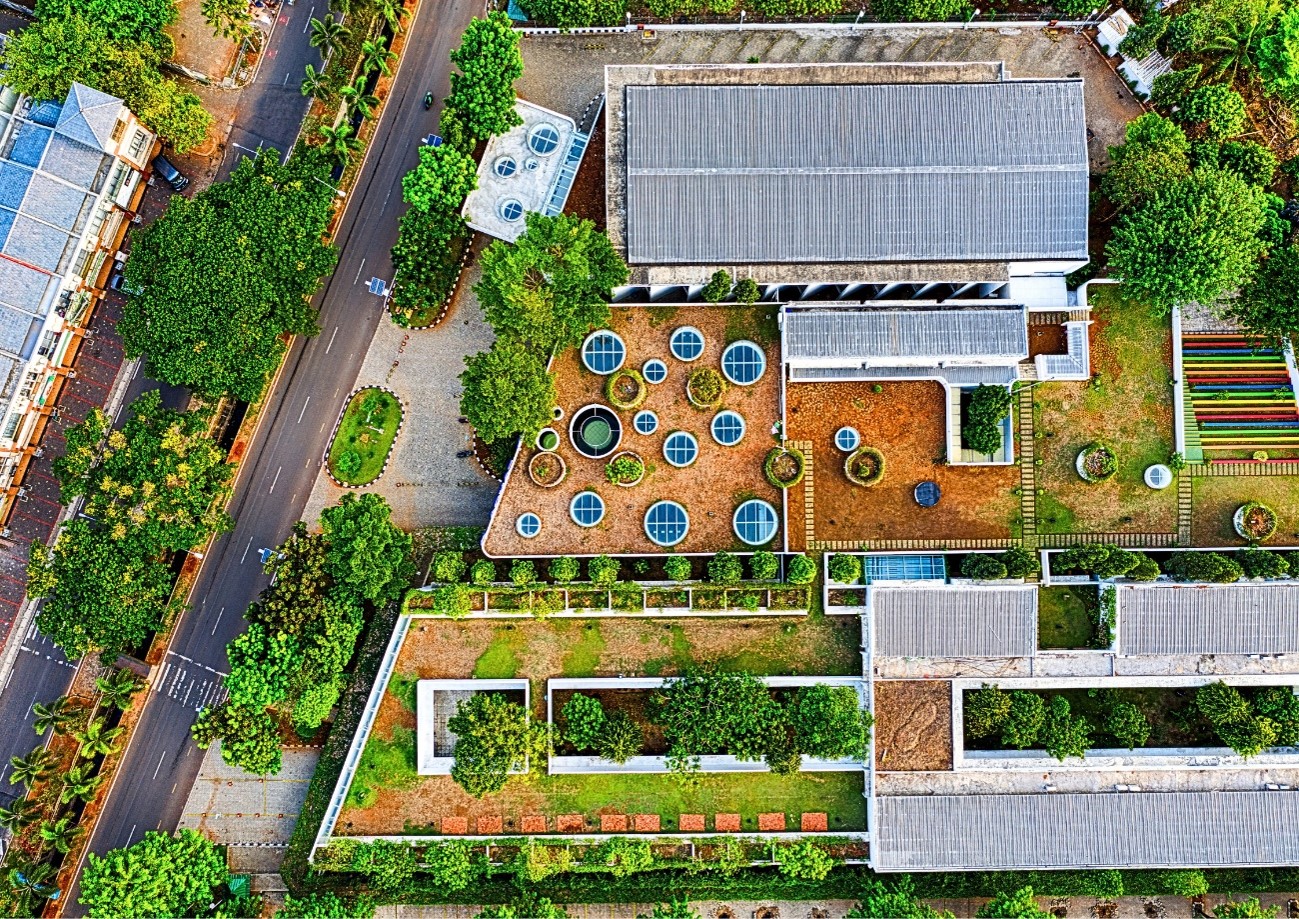
A recent study quantifies the vegetable production potential of Barcelona’s rooftops
A study published in Cities by researchers at ICTA-UAB, with collaboration from the CRM's Knowledge Transfer Unit, estimates that 65 hectares of municipal rooftop could supply 31% of the tomatoes consumed in Barcelona each year.Barcelona has 65 hectares of rooftop...
|
|
CRM CommPau Varela
|