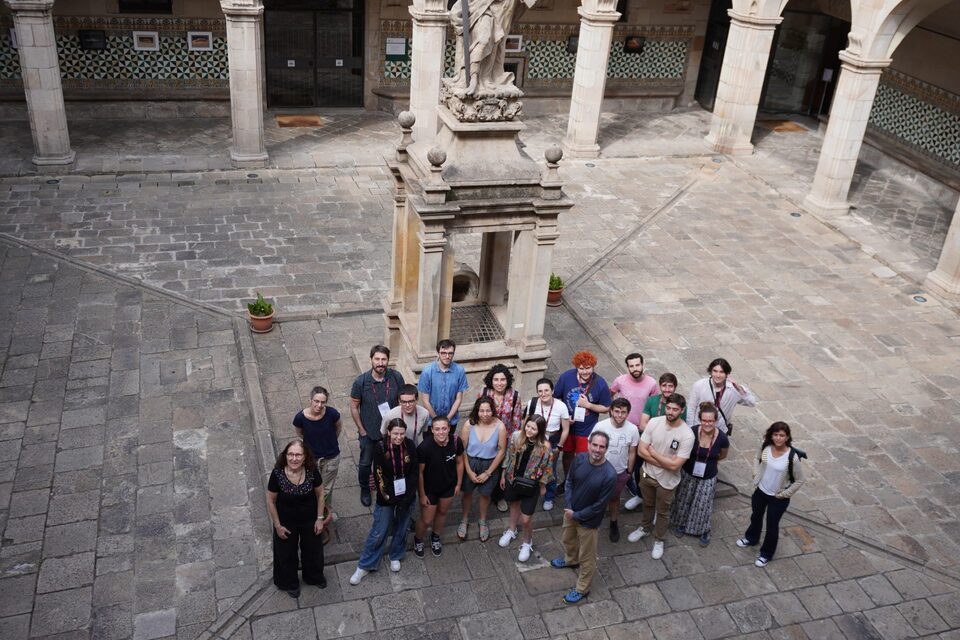
El passat dilluns 3 de juny va començar l’Hypatia 2024, un curs d’estiu que es va estendre fins dijous 6 de juny. L’Hypatia és una iniciativa per formar joves investigadors i investigadores i obrir nous camps d’estudi per aquells més sèniors, centrant-se en els principals problemes en matemàtiques i les seves aplicacions. Amb la idea que la teoria i les aplicacions s’enforteixen mútuament, aquest curs promou una atmosfera informal basada en discussions, intercanvi d’idees i anàlisi crítica dels resultats, mantenint sempre una perspectiva de gènere que destaca el paper i professionalització de la dona en les matemàtiques, complint amb l’esperit d’Hypatia d’Alexandria, la matemàtica, astrònoma i filòsofa que inspira el nom del curs.
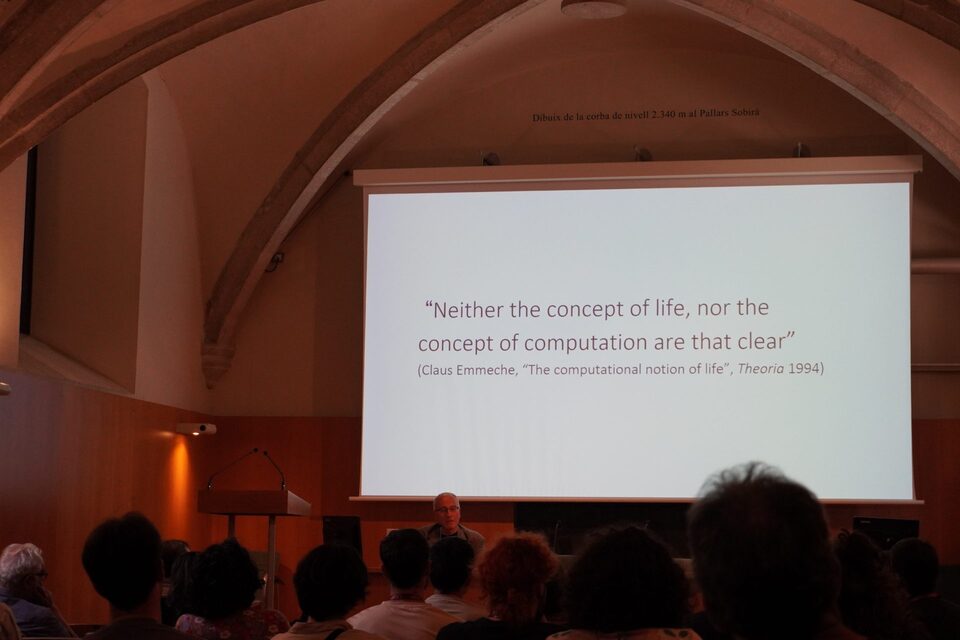
Durant els quatre dies de durada del programa, es van oferir dos cursos principals: “Algebra and Geometry in the Study of Biochemical Reaction Networks”, impartit per Alicia Dickenstein (Universidad de Buenos Aires) i Elisenda Feliu (University of Copenhagen), i “New Perspectives on Algebra from Applied Topology” per Ezra Miller (Duke University). Com a acte destacat, Roderic Guigó, director del Centre de Regulació Genòmica (CRG), va oferir un col·loqui titulat “A Computational Introduction to Life”, en què va subratllar la idea que “Data is life”.
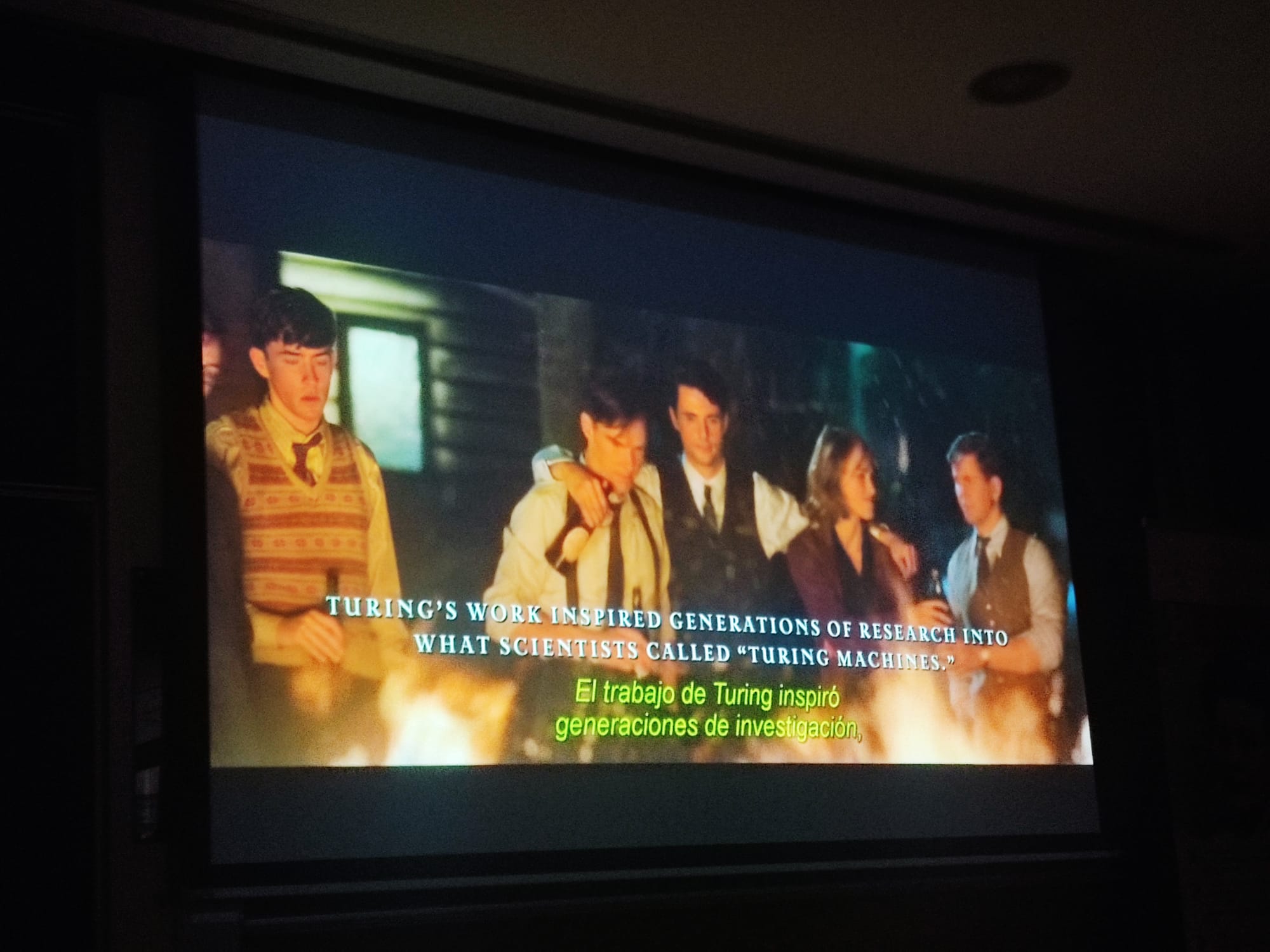
Com a activitats complementàries als cursos, es va organitzar la visualització i posterior col·loqui de la pel·lícula Imitation Game (Morten Tyldum, 2014). En aquest fòrum es van discutir temes com la col·laboració d’Alan Turing i Joan Clarke en les matemàtiques i criptografia, els errors històrics de la pel·lícula, i un debat sobre com aquests errors poden reforçar arquetips sobre la figura de la dona i el tractament de l’homosexualitat a la pantalla gran. Es va destacar el paper inspirador de l’equip de Hut-8, especialment Alan Turing, tant en la seva època com avui dia, influenciant investigadors en Intel·ligència Artificial amb el test de Turing, i treballs de recerca recents com l’article d’Eva Miranda (CRM-ICREA-UPC) amb Cardona, Peralta-Salas i Presas, que proporcionen la base per construir fluid computers, basant-se en el resultat de 1936 de Turing sobre la indecidibilitat del problema de l’halting.
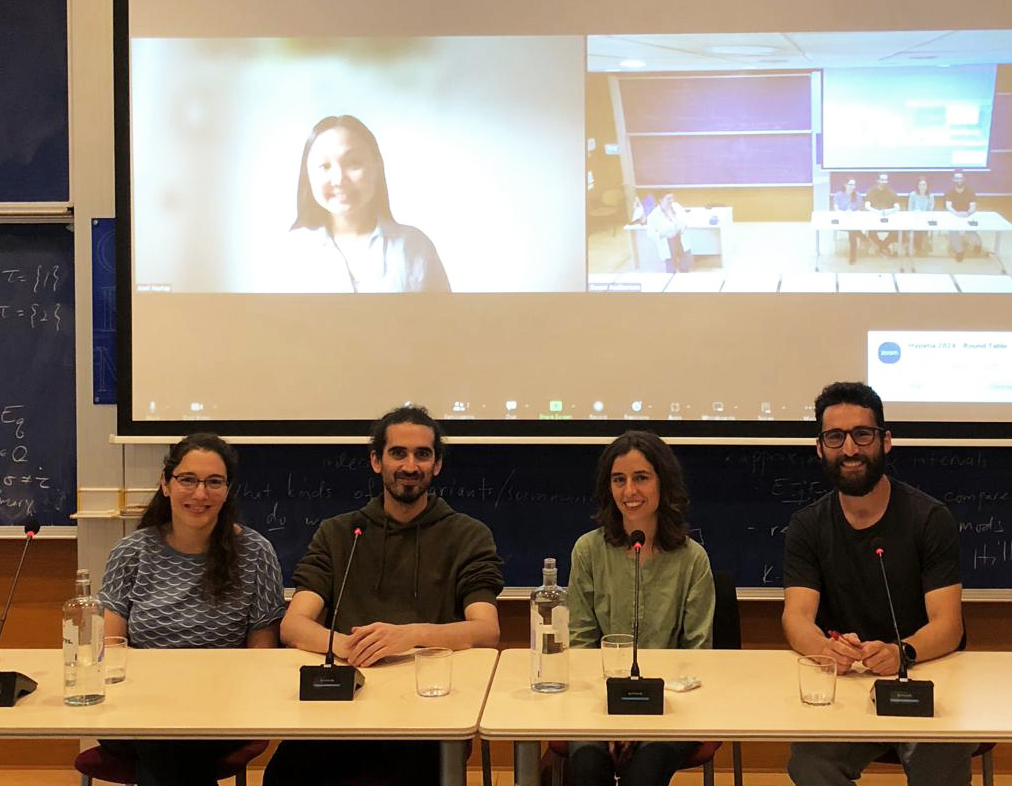
Finalment, vam tenir el plaer de rebre ex-doctorands del centre en una taula rodona: Alberto Debernardi (actual postdoc a la UAB), Núria Folguera (AstraZeneca), Víctor Navas (postdoc a l’Observatori de l’Ebre i professor a la URV), Anel Nurtay (Lead Data Scientist a Aviva) i Marina Vegué (postdoc al grup de Sistemes Dinàmics a la UPC). Van compartir les seves experiències durant el doctorat i la recerca de postdoctorats, oferint consells sobre les opcions després del doctorat, ja sigui en la indústria, l’Acadèmia o postdoctorats en la indústria.
Hypatia 2024 ha estat una trobada enriquidora que ha reafirmat la importància de la col·laboració interdisciplinària.
Subscribe for more CRM News
|
|
CRM CommPau Varela & Mariona Fucho
|
Jagged walls and unknown edges: a workshop on free boundary problems
From 2 to 6 November, the Workshop on Free Boundary Problems brought together more than fifty registered participants from institutions in eleven countries at the CRM. Over five days they heard 21 talks on elliptic and parabolic free boundaries and on geometric measure theory and harmonic analysis in rough domains, with speakers including Guy David, Svitlana Mayboroda, Susanna Terracini and Robin Neumayer. The workshop was the second intensive week of the Intensive Research Programme on Analysis of Free Boundary Problems, which continues at the CRM until 4 December.
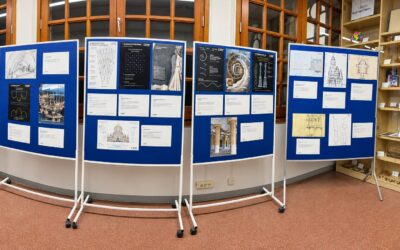
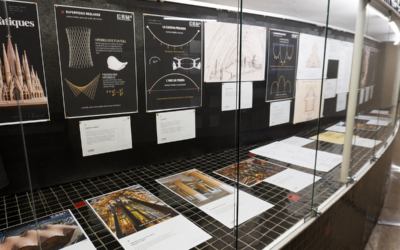
The CRM exhibition ‘Les matemàtiques de Gaudí’ moves to the University of Barcelona
After its October run at the UAB, the exhibition Les matemàtiques de Gaudí, produced by the CRM, can be seen at the University of Barcelona’s CRAI Biblioteca de Matemàtiques i Informàtica from 2 to 30 November 2026.
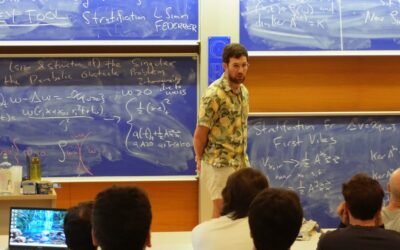
Advanced Course on Free Boundary Problems Opens the Intensive Weeks of the IRP
From 26 to 30 October, around forty researchers attended the Advanced Course on Free Boundary Problems at the CRM, three seven-hour mini-courses given by Bozhidar Velichkov (Università di Pisa), Max Engelstein (University of Minnesota) and Zihui Zhao (Johns Hopkins University). The course was the first of the two intensive weeks of the Intensive Research Programme on Analysis of Free Boundary Problems, which runs until 4 December.
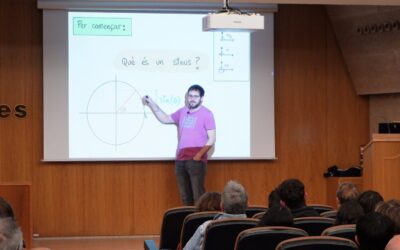
El CRM rep els estudiants de la prova de nivell de Bojos per les Matemàtiques 2027
Els aspirants a Bojos per les Matemàtiques 2027 van visitar el Centre de Recerca Matemàtica (CRM) dissabte 24 d’octubre, després de fer la prova de nivell a la Facultat de Ciències i Biociències de la UAB. En acabat, Tomás Sanz (UB-CRM) els va explicar què té a veure l’escalfament d’una barra de ferro amb els àudios de WhatsApp.
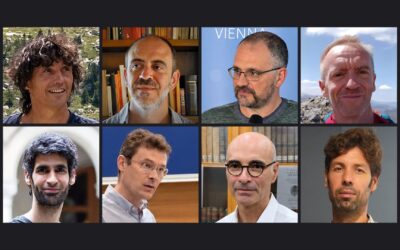
Eight CRM Researchers in the 2026 Stanford-Elsevier List of Highly Cited Scientists
The Centre de Recerca Matemàtica (CRM) has eight researchers in the 2026 update of the Stanford-Elsevier ranking of highly cited scientists, which John P. A. Ioannidis (Stanford University) and Jeroen Baas (Elsevier) compile from Scopus data. Xavier Cabré, Álvaro Corral, Tim Myers, Xavier Ros-Oton, Sergey Tikhonov and Xavier Tolsa appear both in the career-long ranking and in the one for 2025, and Diego Vidaurre and Simeon Ball in the 2025 ranking.
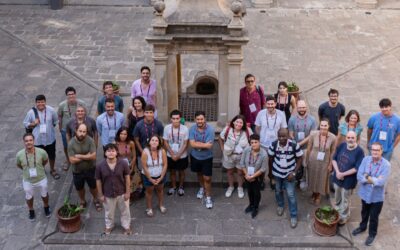
Fish schools and growing tissues: a workshop on how collective behaviour emerges
The Centre de Recerca Matemàtica (CRM) organised the Barcelona Workshop on Kinetic and Macroscopic Models in Biology with Friends II, held from 7 to 10 September at the Institut d’Estudis Catalans. More than thirty researchers discussed how order at the scale of tissues and animal groups arises from local interactions between individuals, in a programme that included talks by CRM researchers Daria Stepanova and Juan Arellano-Tintó. Two of the speakers, James Sharpe (EMBL Barcelona) and Chiara Villa (CNRS, Université Paris Cité), talked to the CRM about their research.
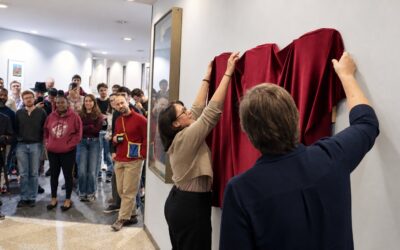
The CRM opens the academic year and unveils its Directors’ Gallery
A review of the year, the Communication Plan 2026–2030 and three research talks filled the morning of 19 October.The unveiling of the Directors’ Gallery.CRM CommPau VarelaCRMComm@crm.catGet the latest CRM news and activities in your inbox.Recent...
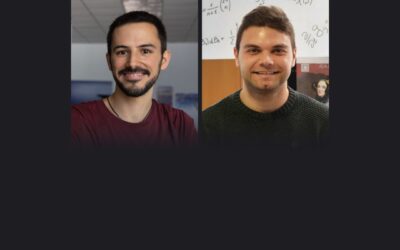
The CRM Mentoring Programme, as Told by One of Its Pairs
PhD student Joaquim Duran and mathematician Robert Cardona, one of the pairs in the CRM Mentoring ProgrammeJoaquim Duran (left) and Robert Cardona.CRM CommPau VarelaCRMComm@crm.catGet the latest CRM news and activities in your inbox.Recent...
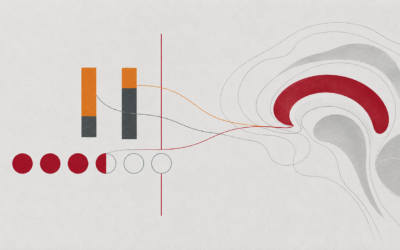
When the reward comes within reach, the brain changes what it compares
As the tokens piled up, choices got faster and more accurate at the same time. The yardstick for judging each offer had moved.CRM CommPau VarelaCRMComm@crm.catGet the latest CRM news and activities in your inbox.Recent newsletters →Two subjects...

Almost every automaton can be reset with a short word
Guillaume Chapuy (Université Paris Cité, CNRS) and Guillem Perarnau (UPC, CRM) have shown that a random finite automaton with n states can, with high probability, be reset by a word of length of order √n log n. The result, published in ACM Transactions on Algorithms, pins the exponent at 1/2, the lower end of a decade of numerical estimates, and addresses the random version of the synchronization problem behind a conjecture Ján Černý posed in 1964 and which still remains open.
Exposició ‘Les matemàtiques de Gaudí’