Jezabel Curbelo, full professor at the Universitat Politècnica de Catalunya and affiliated researcher at the Centre de Recerca Matemàtica, has been awarded the ECCOMAS Jacques-Louis Lions Young Investigator Award 2026, in the field of computational mathematics. The award is handed over at the WCCM-ECCOMAS congress, running in Munich from 19 to 24 July.
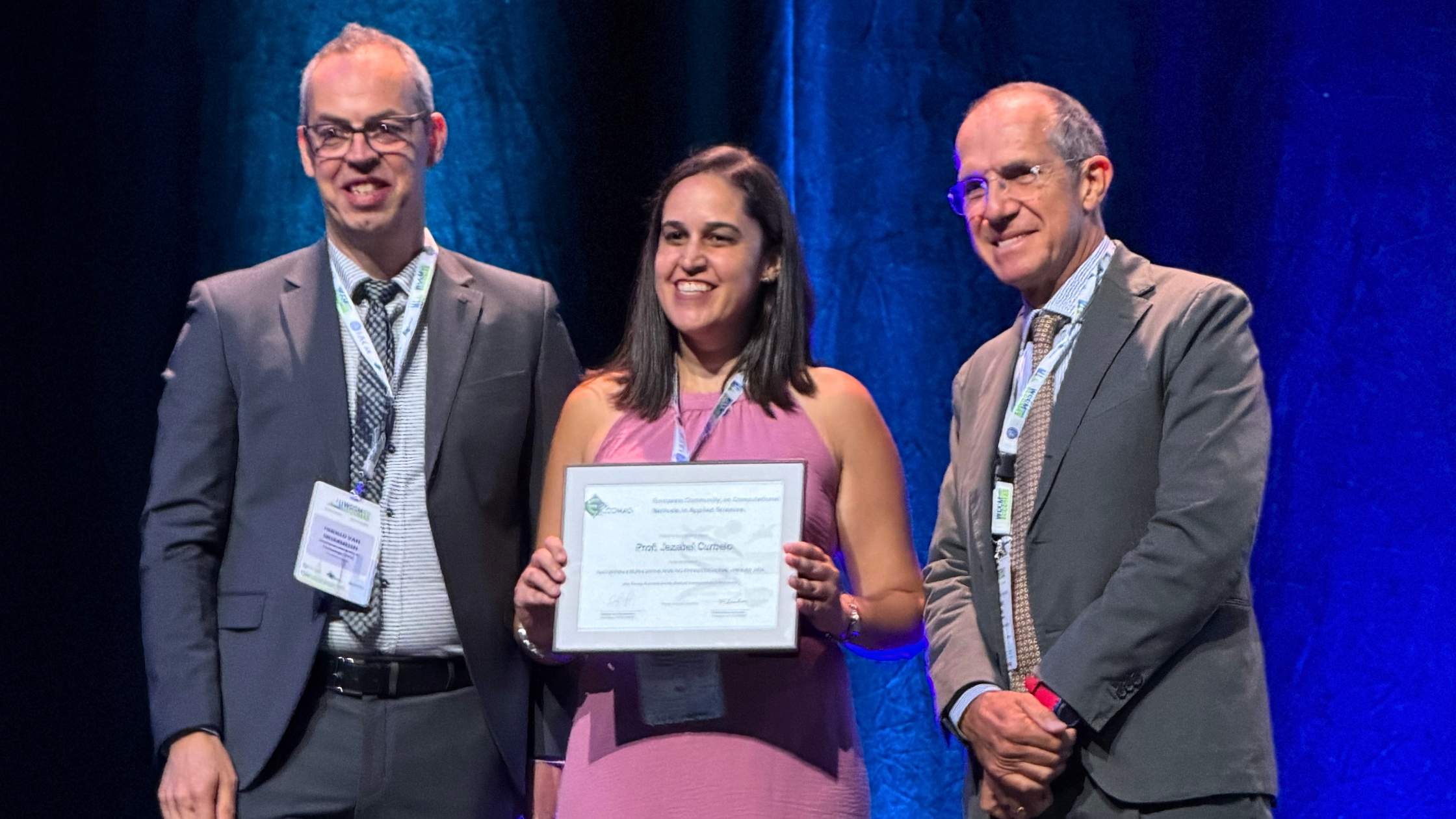
The European Community on Computational Methods in Applied Sciences (ECCOMAS) has awarded the Jacques-Louis Lions Young Investigator Award 2026 to Jezabel Curbelo. The award, named after the French mathematician who spent his last decades treating the atmosphere and the ocean as mathematical problems, recognises young researchers with outstanding contributions in computational mathematics, and it has been given eleven times since 2004, always by a committee of previous medallists and awardees, working from nominations submitted by the ECCOMAS membership.
“For me it is a very special honour to receive an award that bears the name of Jacques-Louis Lions,” says Curbelo. “He was an extraordinary mathematician, with fundamental contributions to the analysis of partial differential equations and to computational mathematics, and at the same time he had a permanent concern for applications. He understood that mathematics should not develop in isolation from reality, but in continuous dialogue with it. That vision, that mathematical research can grow out of real problems and at the same time help solve them, connects deeply with the way I do research. So I am very proud to receive the ECCOMAS Jacques-Louis Lions Award for Young Scientists in Computational Mathematics. This recognition motivates me to keep working in that direction.”
The Lions award is handed over every two years at the ECCOMAS Congress, this year the 17th World Congress on Computational Mechanics, in Munich from 19 to 24 July. Alongside Curbelo, the 2026 list includes Ole Sigmund (Technical University of Denmark) with the Euler medal, Matthias Faes (TU Dortmund) with the Zienkiewicz award for computational engineering sciences, Peter Wriggers (Leibniz University Hannover) with the first ECCOMAS Mentor Award, and Anna Skorupa (Silesian University of Technology) with the Young Investigators Committee grant.
“That vision, that mathematical research can grow out of real problems and at the same time help solve them, connects deeply with the way I do research.”
Curbelo works on fluid that can’t be brought into a laboratory: the atmosphere, the ocean, the rock circulating slowly beneath the Earth’s crust. The approach is Lagrangian. Rather than measuring the flow at fixed points on a grid, she releases fictitious particles across the whole field and follows them forwards and backwards through several days of weather, letting the structures that organise the flow appear where the particles travel farthest.
That was the basis of JetLag, published in April with Louis Rivoire (MIT) and Marianna Linz (Harvard University), which reconstructs 85 years of jet stream positions by treating jets as transport barriers rather than as regions of fast wind. Rivoire and Curbelo call the jet the backbone of the atmosphere. The method’s sensitivity to its own settings is more than fifty times lower than that of the wind-threshold approach it competes with, which starts to matter when the question on the table is whether jet streams are drifting poleward in a warming climate.
The Lions award joins a list that started early. The American Geophysical Union gave her the Donald L. Turcotte Award in 2015, for a thesis on instabilities in convecting geophysical fluids, and the Vicent Caselles prize arrived the same year. Then the SEMA Antonio Valle prize in 2020, a L’Oréal-UNESCO For Women in Science fellowship, a BBVA Foundation Leonardo grant in 2022, and, last May at the Palau de Pedralbes, the Premio Nacional de Investigación for young researchers.
She currently leads CLaCos, a Ramón Areces Foundation project using coherent structures in atmospheric and oceanic flows as indicators of climate change, and serves as Deputy Director of Research in the UPC Department of Mathematics and as Science Officer for turbulence, transport and diffusion at the European Geosciences Union.

Call open for the 2027 Ferran Sunyer i Balaguer Prize
The Ferran Sunyer i Balaguer Foundation is accepting submissions for its 2027 prize, which awards 15,000 euros and publication in Birkhäuser's Progress in Mathematics series to an expository monograph on an active area of mathematical research. The deadline is 27...
Susanna Terracini delivers the CRM Colloquium 2026
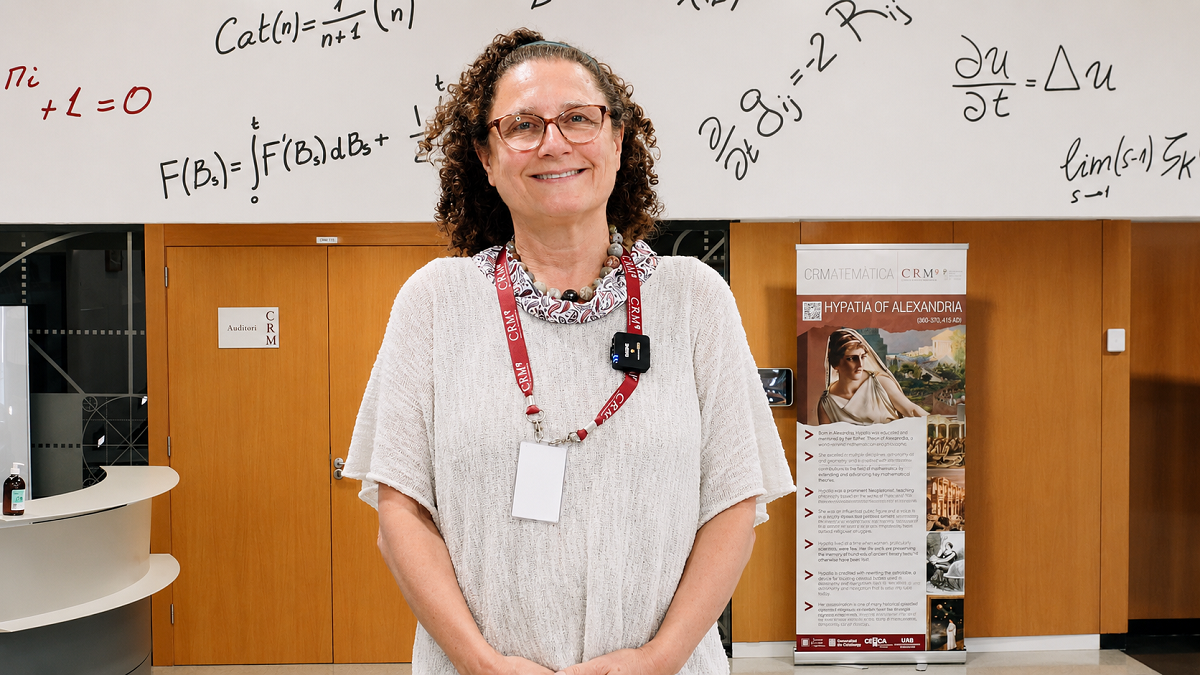
Susanna Terracini (Università di Torino) delivered the CRM Colloquium 2026 on 14 July, presenting a rigidity result for Kepler billiards obtained with Stefano Baranzini, Vivina Barutello and Irene De Blasi. She was at the centre as a member of the CRM Scientific...
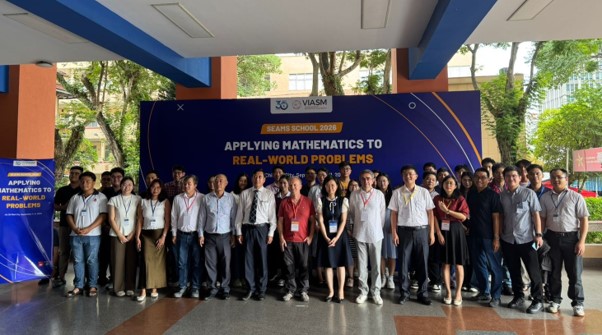
Ho Chi Minh City hosts the first SEAMS School on applying mathematics to real-world problems
More than fifty students from six countries spent a week at the University of Science, VNU-HCM, learning how mathematics gets used outside a mathematics department. CRM researcher Tim Myers co-organised the school and lectured on moving boundary problems. The...

A single ball on a fixed table can compute: Eva Miranda and Isaac Ramos prove that two-dimensional billiards are Turing complete
Eva Miranda (UPC, CRM) and Isaac Ramos (ETH Zürich) show that a point particle bouncing inside a planar table with fixed walls can simulate a universal Turing machine, settling a question Cristopher Moore left open in 1990. The result grew out of a master’s project...
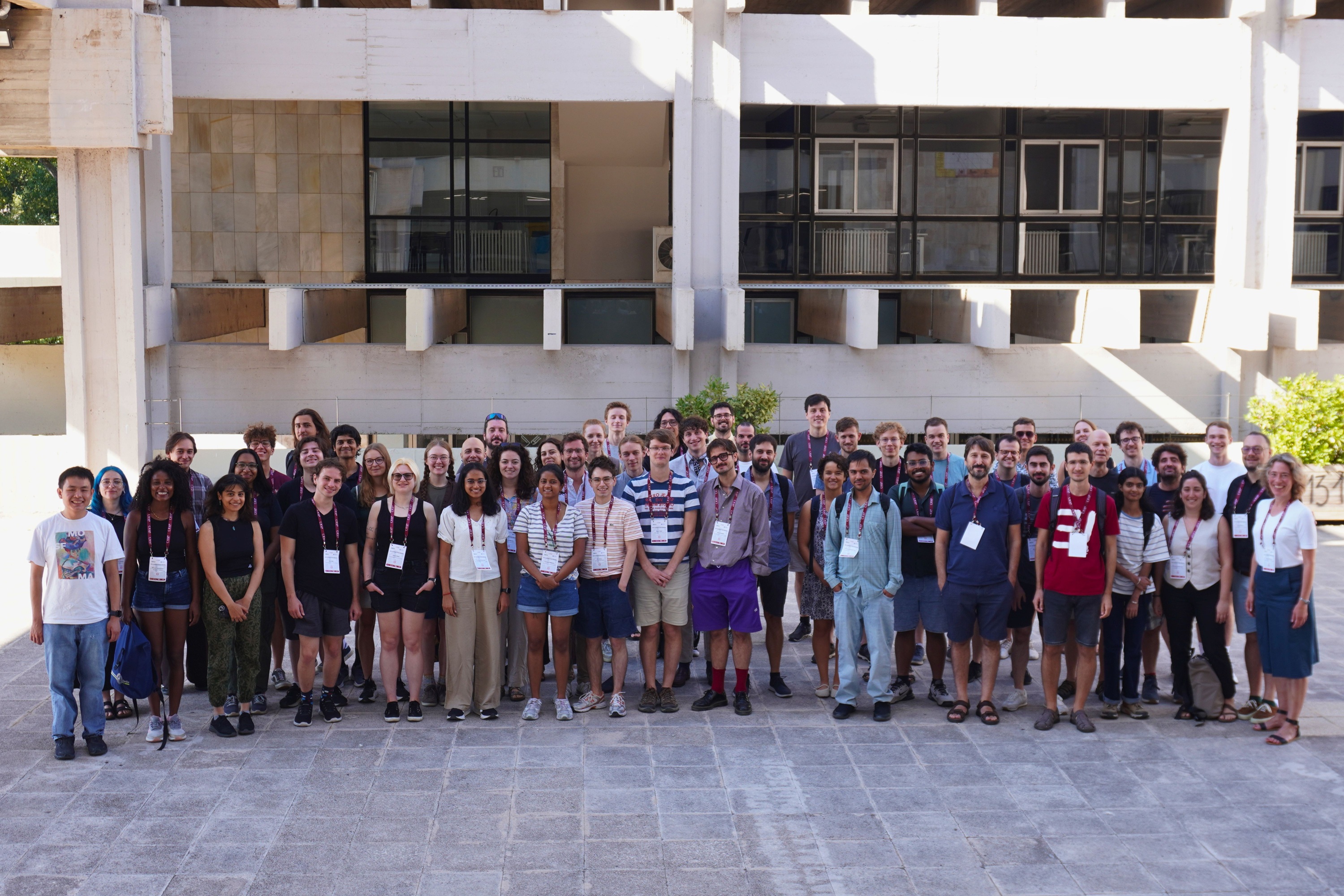
BMS-BGSMath Junior Meeting 2026: Barcelona and Berlin Strengthen Scientific Ties
From 2 to 4 September 2026, the Centre de Recerca Matemàtica (CRM) hosted the BMS-BGSMath Junior Meeting 2026, a three-day event jointly organised by the Berlin Mathematical School (BMS) and the Barcelona Graduate School of Mathematics (BGSMath), with the Centre de...
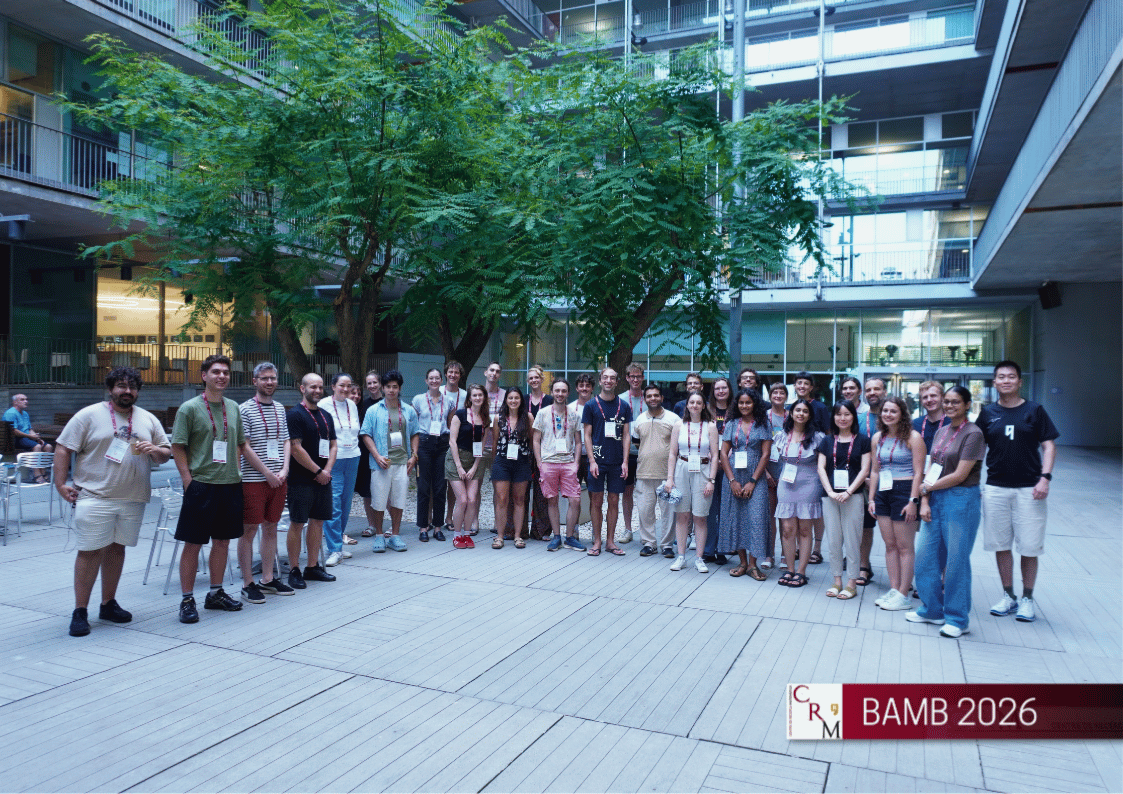
The CRM organises the 2026 Barcelona Summer School for Advanced Modeling of Behavior
The Centre de Recerca Matemàtica held the sixth edition of BAMB!, the Barcelona Summer School for Advanced Modeling of Behavior, from 12 to 23 July 2026 at the Parc de Recerca Biomèdica de Barcelona. Thirty early-career researchers from fourteen countries followed...
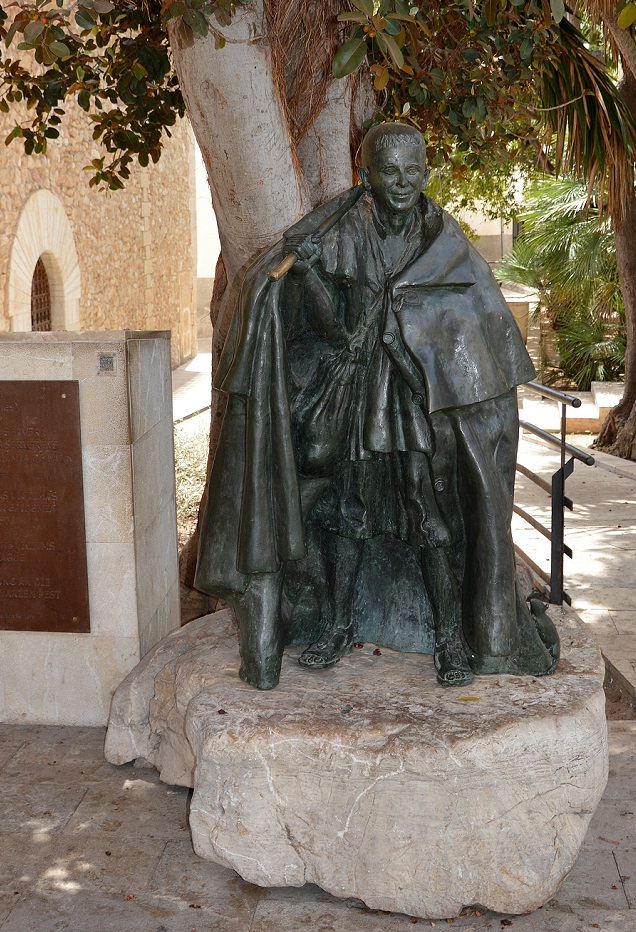
Mallorca’s 1820 plague did not behave like a classic bubonic outbreak, study finds
A study in PNAS by Pere Puig (UAB, CRM) and Joana Maria Pujadas-Mora (UOC, ICREA) reports what happens when the daily health records kept in Son Servera and Capdepera during the 1820 outbreak are analysed with a Bayesian epidemiological model: an unusually short...
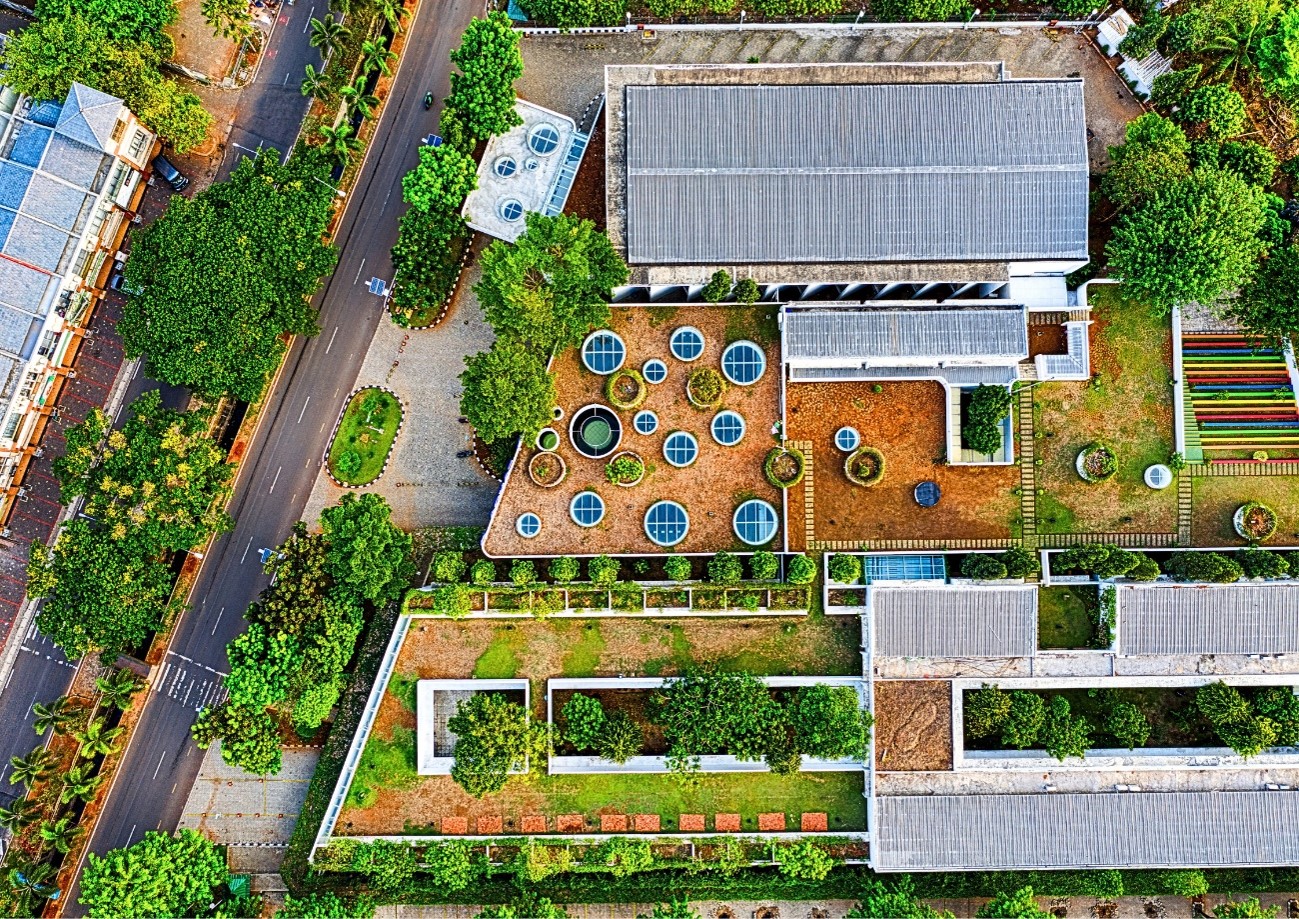
A recent study quantifies the vegetable production potential of Barcelona’s rooftops
A study published in Cities by researchers at ICTA-UAB, with collaboration from the CRM's Knowledge Transfer Unit, estimates that 65 hectares of municipal rooftop could supply 31% of the tomatoes consumed in Barcelona each year.Barcelona has 65 hectares of rooftop...

Boundary Conditions Day

Fixed-Point Day
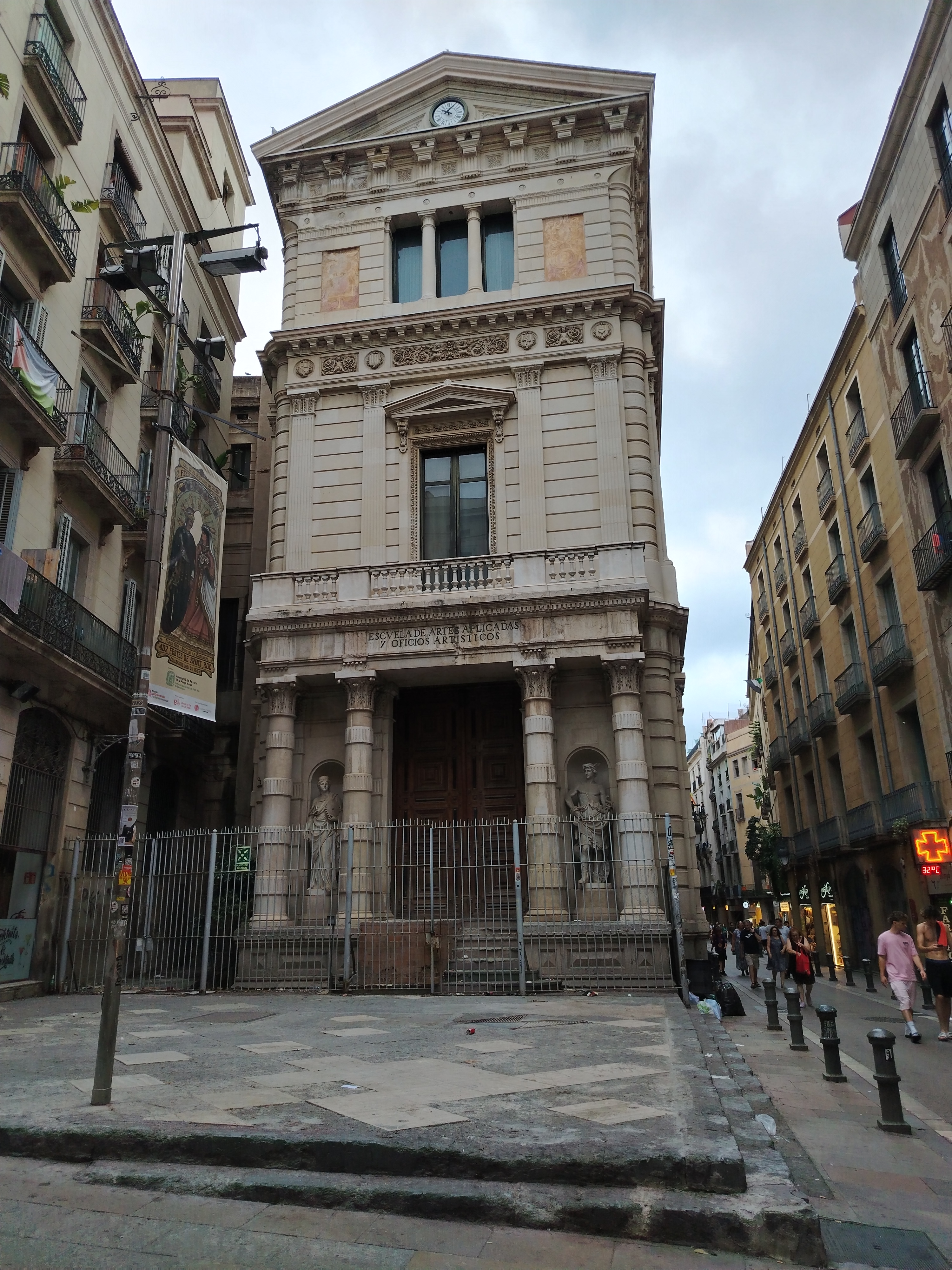
La desfilada dels nombres: una ruta per Barcelona
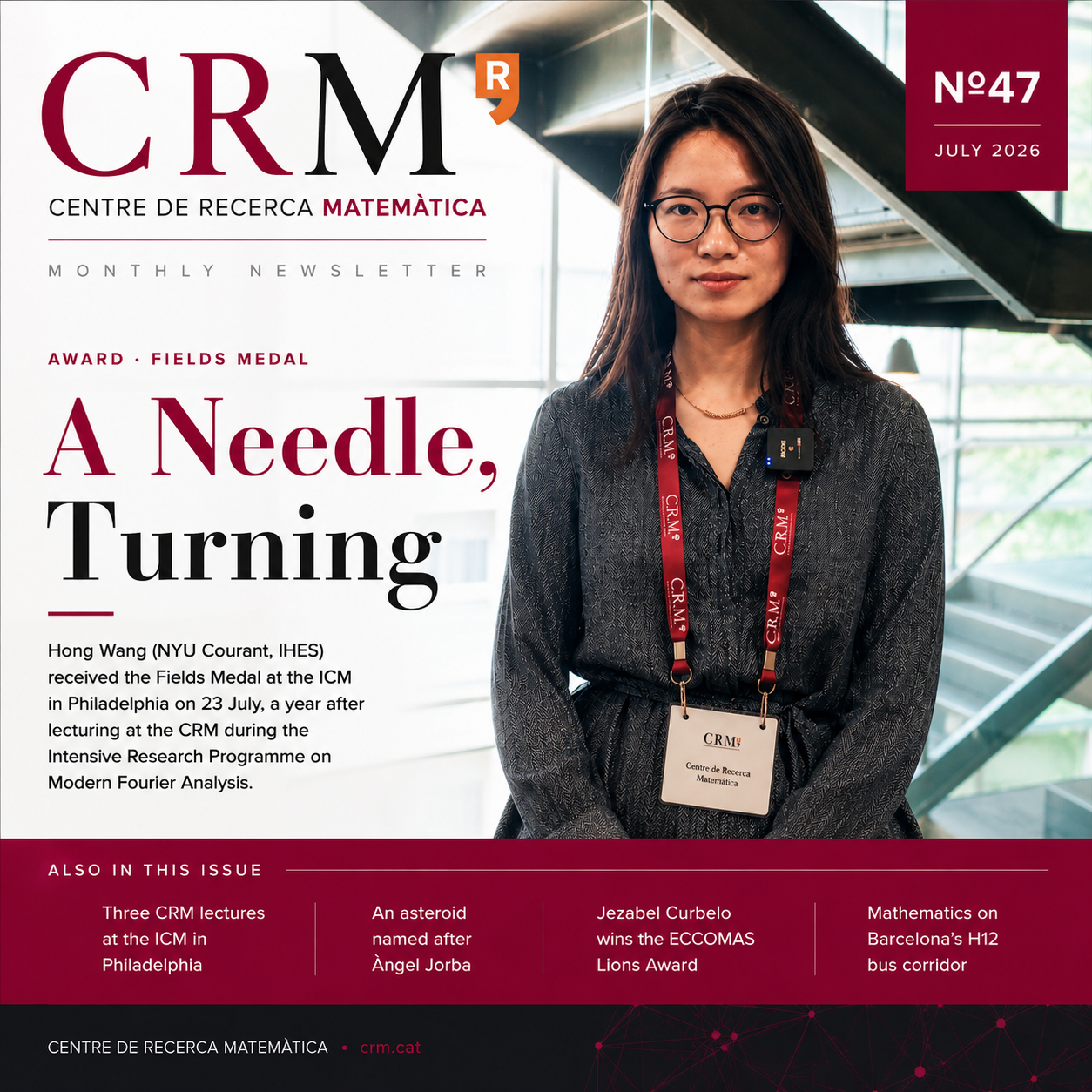
CRM July Newsletter
|
|
CRM CommPau Varela
|