
Researcher Javier Gómez Serrano, a former member of the Centre de Recerca Matemàtica (CRM) from 2020 to 2022, and currently a professor at Brown University, is part of a new project at the intersection between mathematics and artificial intelligence. Together with mathematician Terence Tao, form the University of California, and a team at Google DeepMind, Gómez Serrano is helping to develop AlphaEvolve, a pioneering tool that explores a new way of doing mathematics. We had the opportunity to speak with him during the recent Conference on Modern Trends in Fourier Analysis at the CRM.
AlphaEvolve, publicly announced on May 14, 2025, is an evolutionary coding agent based on language models like Gemini. Its core idea is simple but powerful: generate multiple candidate solutions in code and evolve them iteratively through a process similar to natural selection. This method has already shown its potential by tackling major open problems, such as matrix multiplication or the kissing number problem in 11 dimensions. In this last case, AlphaEvolve discovered a configuration of 593 spheres tangent to a unit sphere, setting a new lower bound for this longstanding geometric challenge.
A new way to do mathematics?
Gómez Serrano first came into contact with DeepMind through a previous collaboration on the Navier–Stokes equations. “I had already been working with them on that topic, and at the end of January 2025 we started this new project,” he explains. For him, the emergence of tools like AlphaEvolve signals a turning point in mathematical research: “I believe the way we do mathematics is going to change, at least for part of the community. These kinds of models or assistants will become more widespread and will help us reach results that now take one or two years in just a few days.”
This acceleration also transforms the kind of questions mathematicians can ask: “We’ll be able to tackle harder problems, because we’ll have more powerful tools,” he says. But he also adds a note of caution: “We still don’t know the best way to interact with these models. The community is figuring out how to get the most insight with the least computational cost.”
Unlike systems like ChatGPT, AlphaEvolve does not operate through natural language. “We don’t talk to it with plain text,” Gómez Serrano explains. “We ask it to write code that tries to solve the problem, and that code then evolves and improves over time.”
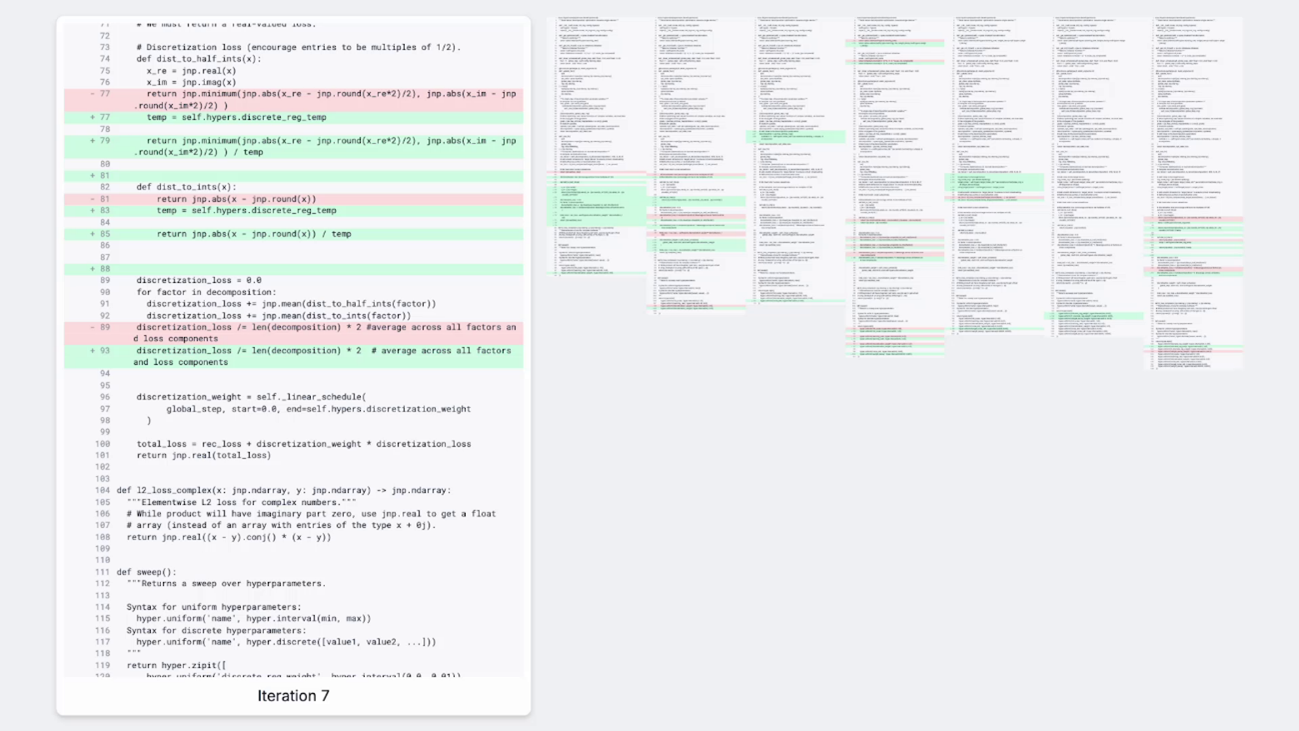
This raises new challenges, especially when it comes to extracting insight from the solutions. “When the model detects structure in a solution, how do we understand and translate that into mathematical intuition? That’s something we still don’t fully grasp.” As Terence Tao explained on Mastodon: “AlphaEvolve can attempt to extremize functions F(x) with x ranging over a high-dimensional parameter space, and can outperform traditional optimization algorithms when the function and space have non-obvious structure”.
When it comes to the role of AI in mathematics, Gómez Serrano is clear: it’s not a competition. “This isn’t about humans versus machines. The real value is in what humans and machines can do together. These tools allow us to go beyond our limits, not in competition, but in collaboration.”
As for the areas of mathematics most likely to be affected, he points to quantitative or concrete domains as natural early adopters. “It’s easier for a computer to handle numbers than to represent abstract concepts like groups. But with the speed these technologies are evolving, we don’t really know where the boundary will be.”
A message to young mathematicians
His advice to early-career mathematicians is simple: keep an open mind. “This landscape is evolving incredibly fast. The pace of results is no longer measured in years, but in months. Staying informed and open-minded is essential to understand how this new mathematical world will work.” He sees it not as a threat, but as an opportunity: “We’re starting from scratch in many ways. That gives us a chance to take the lead, not just in research, but in defining how mathematics is done in the future.”
New tools like AlphaEvolve are reshaping how we approach mathematical discovery. By combining human insight with AI-driven exploration, this project is opening new paths toward solving complex problems; faster, deeper, and with unexpected creativity.
The full interview with Javier is available on the CRM YouTube channel.
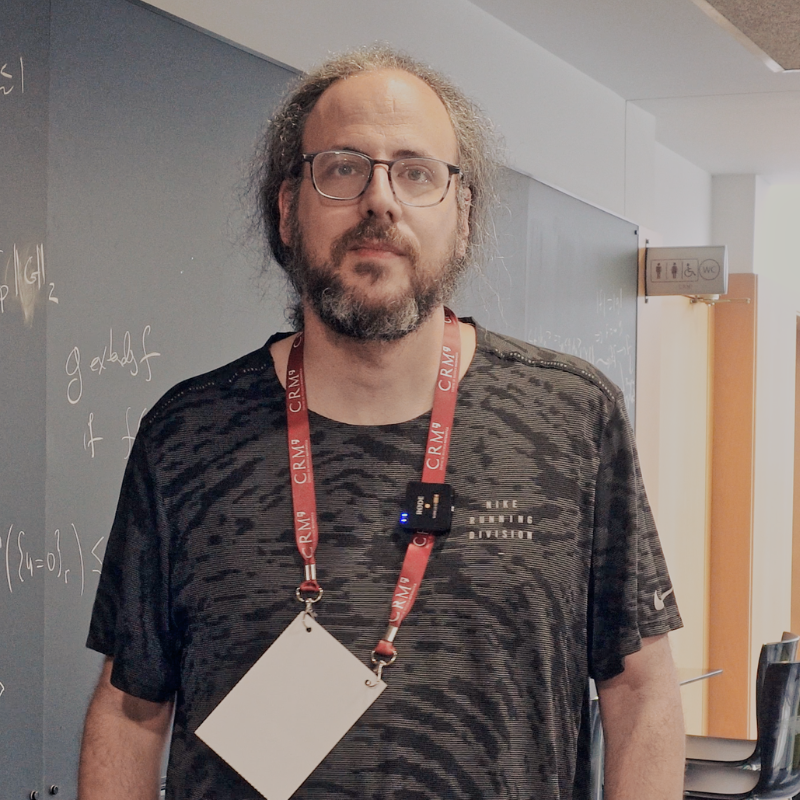
Javier Gómez Serrano is an Associate Professor at Brown University. He was previously a Distinguished Researcher at the University of Barcelona and held positions at Princeton University. From 2020 to 2022, he was an Affiliated Researcher at the Centre de Recerca Matemàtica (CRM).
His work sits at the crossroads of analysis, PDEs, fluid mechanics, spectral geometry, numerical computation, machine learning, and computer-assisted proofs.
Subscribe for more CRM News
|
|
CRM CommPau Varela
|

Mallorca’s 1820 plague did not behave like a classic bubonic outbreak, study finds
A study in PNAS by Pere Puig (UAB, CRM) and Joana Maria Pujadas-Mora (UOC, ICREA) reports what happens when the daily health records kept in Son Servera and Capdepera during the 1820 outbreak are analysed with a Bayesian epidemiological model: an unusually short...
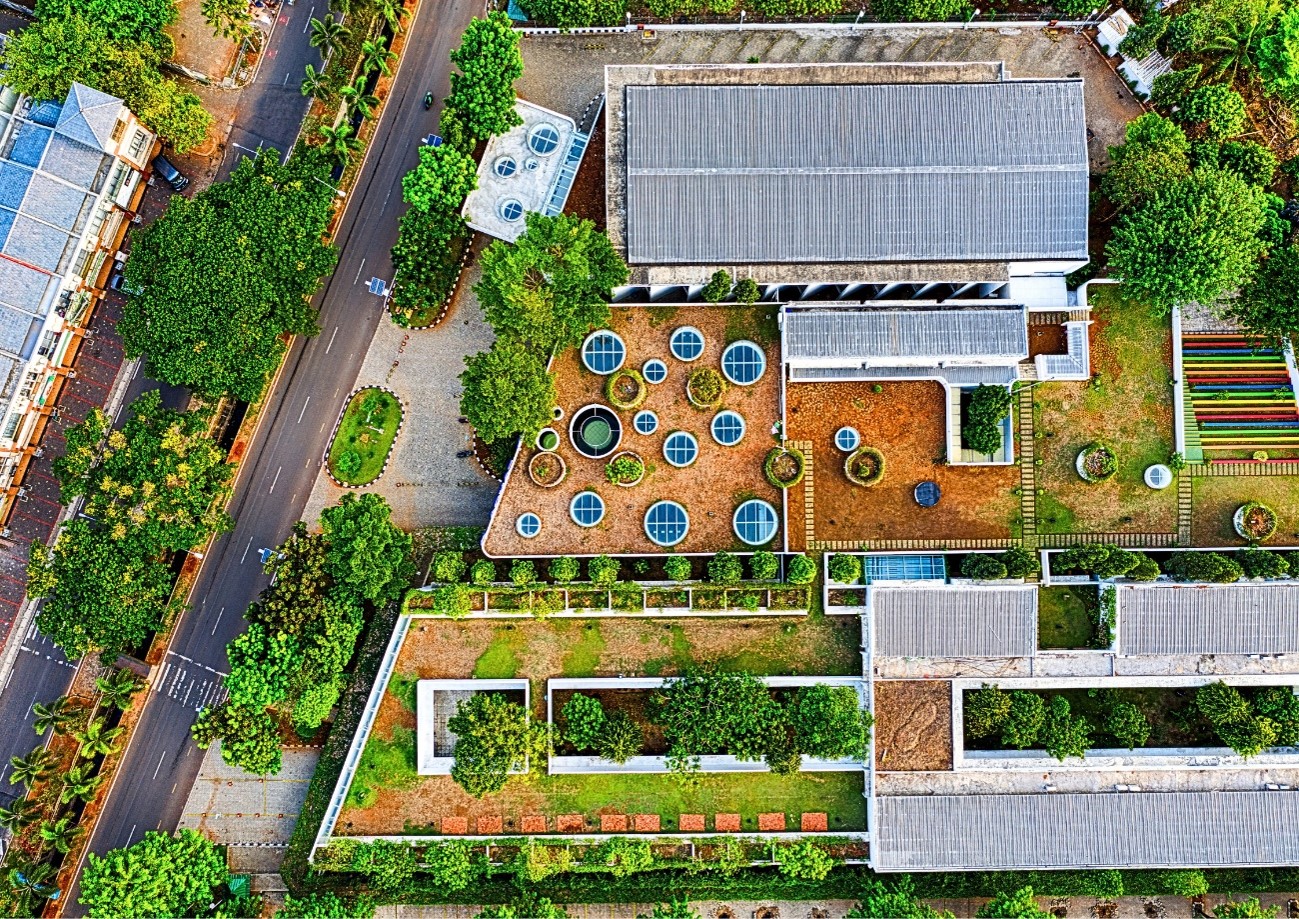
A recent study quantifies the vegetable production potential of Barcelona’s rooftops
A study published in Cities by researchers at ICTA-UAB, with collaboration from the CRM's Knowledge Transfer Unit, estimates that 65 hectares of municipal rooftop could supply 31% of the tomatoes consumed in Barcelona each year.Barcelona has 65 hectares of rooftop...
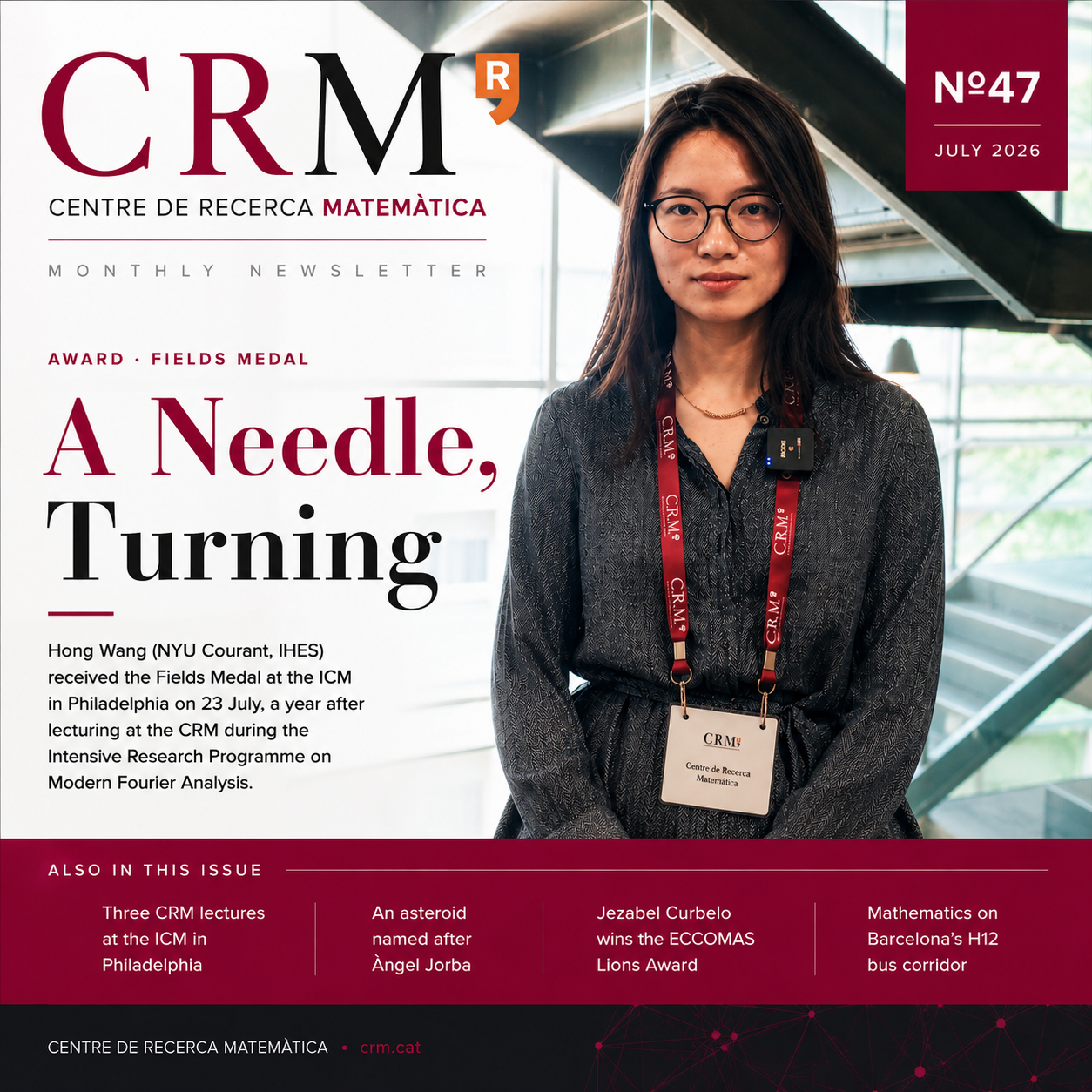
CRM July Newsletter
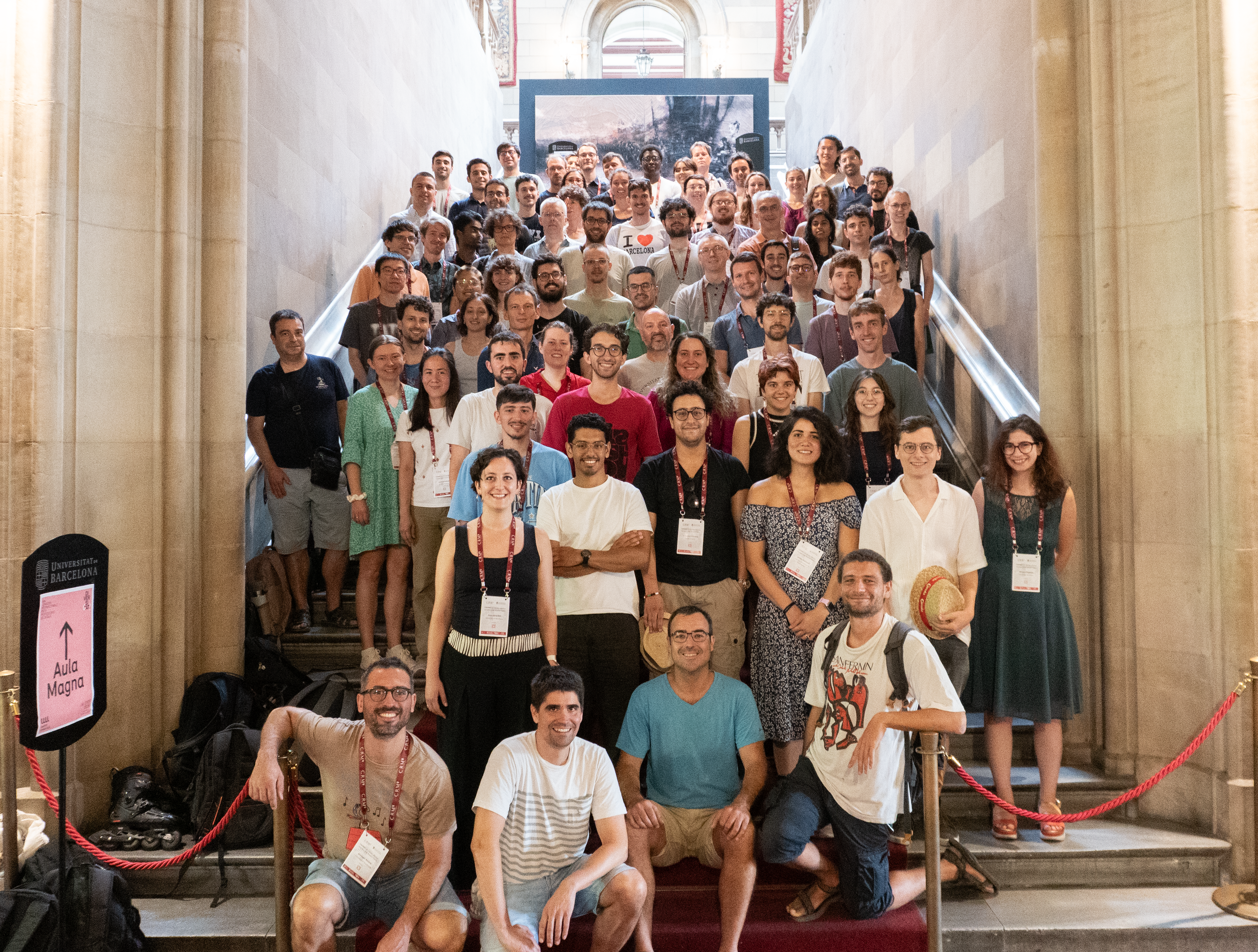
CAVARET 2 brings together 83 researchers on curves and abelian varieties at the Universitat de Barcelona
The second edition of CAVARET, "Curves, Abelian VArieties and RElated Topics", took place at the Faculty of Mathematics and Computer Science of the Universitat de Barcelona from 13 to 17 July 2026. Sixteen invited lectures and ten posters brought together 83...

Mathematics on board: CRM’s demand forecasting model enters service on Barcelona’s H12 corridor
The H12 has run along Gran Via for years. What TMB switched on in July is the set of upgrades designed for it inside eBRT2030, a Horizon Europe project testing electric Bus Rapid Transit in six European cities. Behind it, forecasting passenger demand at every stop...
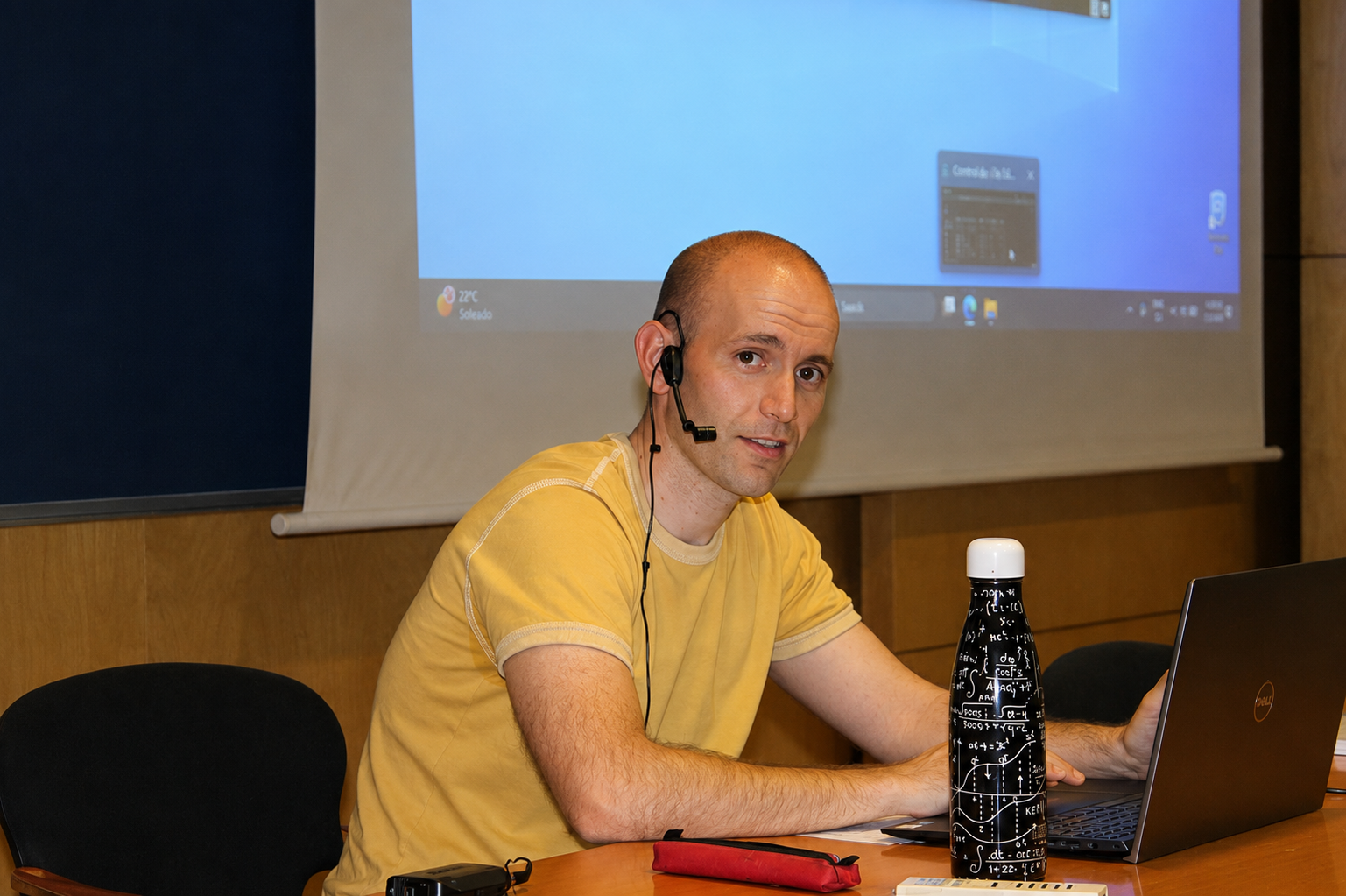
Dídac Gil Rams defends his doctoral thesis on the splitting of separatrices in generalized standard maps
Supervised by Inmaculada Baldomá and Pau Martín, the thesis proves the existence of chaotic dynamics in a broad family of area-preserving maps and combines classical analysis with computer-assisted proof. The defence took place on 3 July 2026 at the FME (UPC).Dídac...
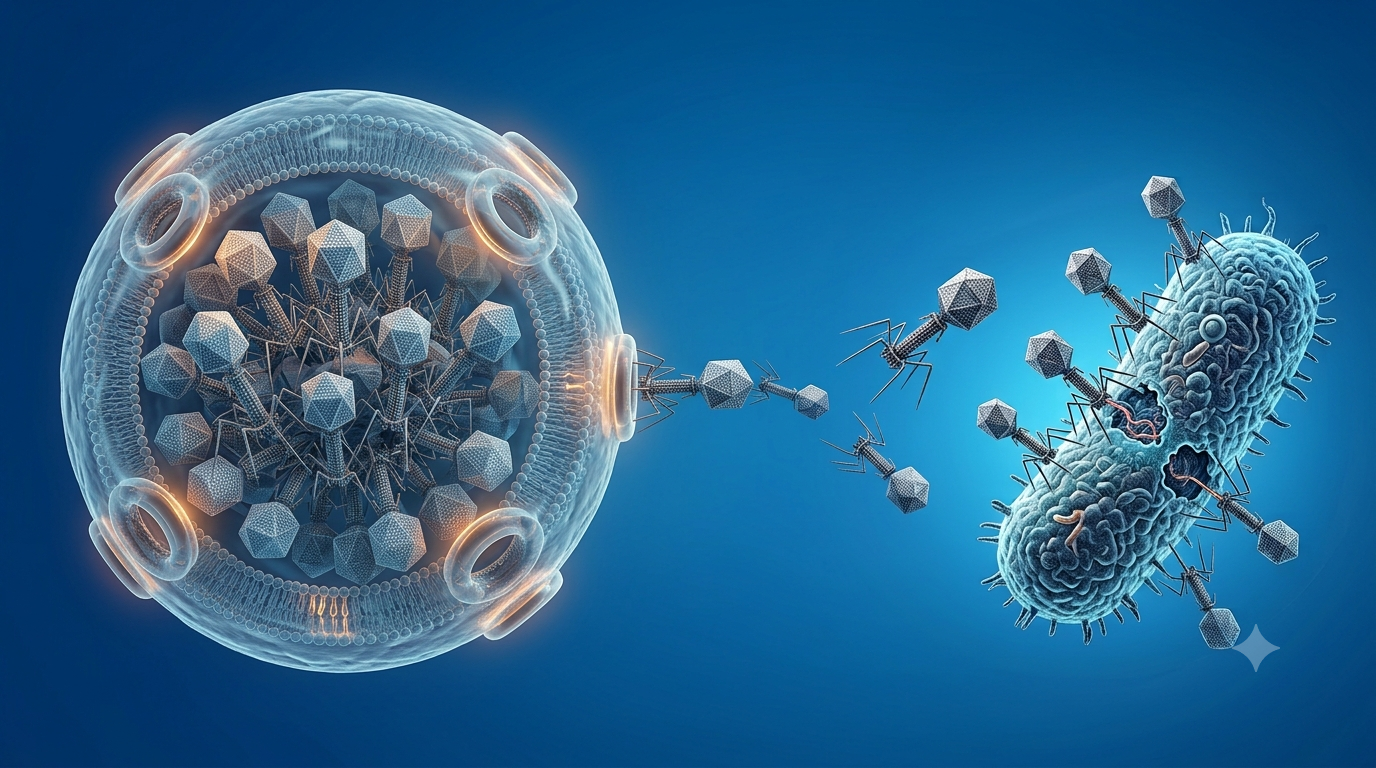
How to Protect Bacteriophages Without Trapping Them? Mathematics to Improve an Alternative to Antibiotics
Bacteriophages — viruses capable of infecting and destroying bacteria — are considered one of the most promising alternatives to tackle the growing problem of antibiotic resistance. However, for these treatments to work, phages must overcome several obstacles before...
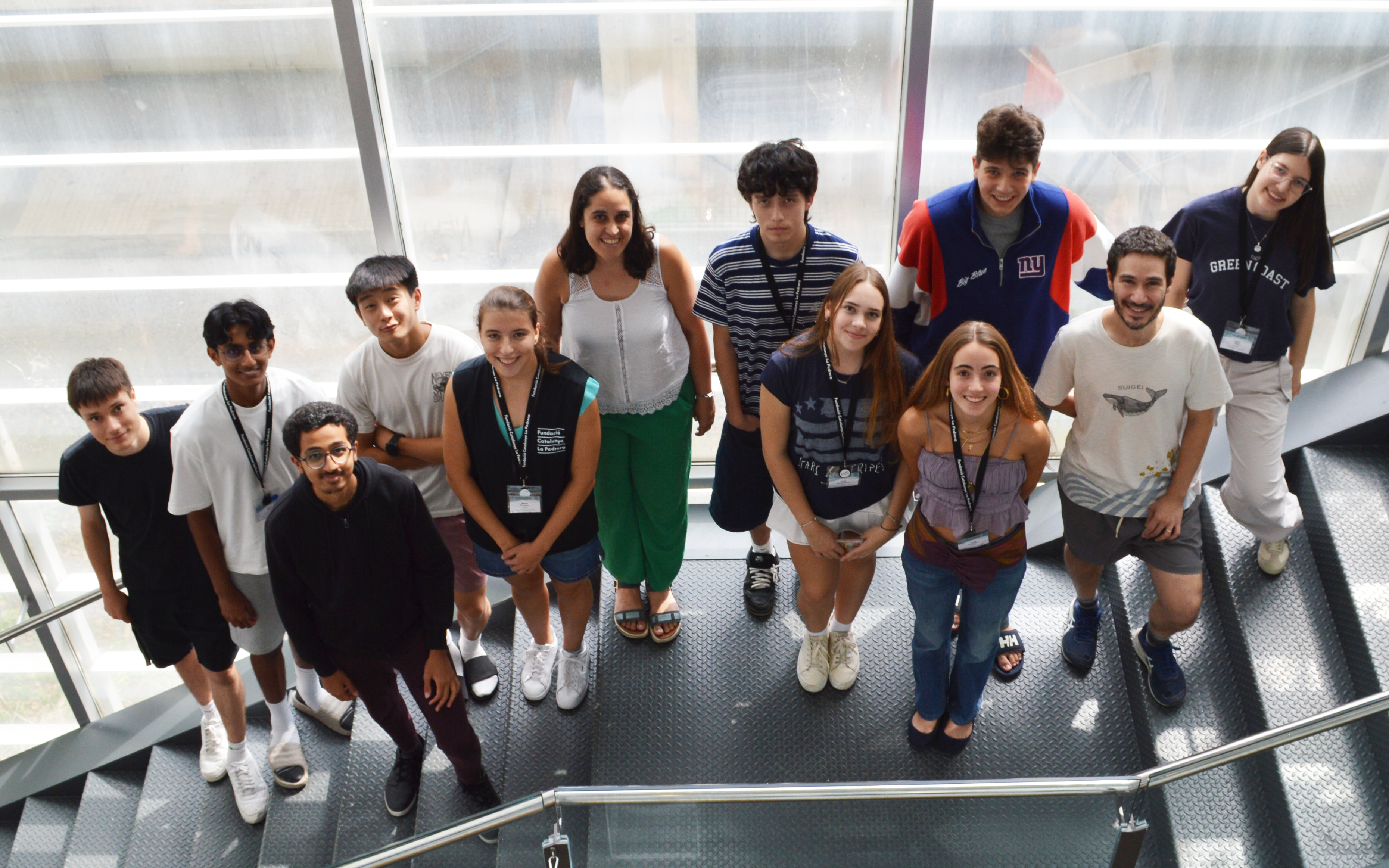
The CRM hosts nine international students for the 10th Barcelona International Youth Science Challenge
Nine secondary school students from six countries spent eight days at the CRM in July, working through four minicourses on fluid dynamics, perturbation methods, iteration and chaos, and randomness from Markov chains to machine learning, plus a session on how...
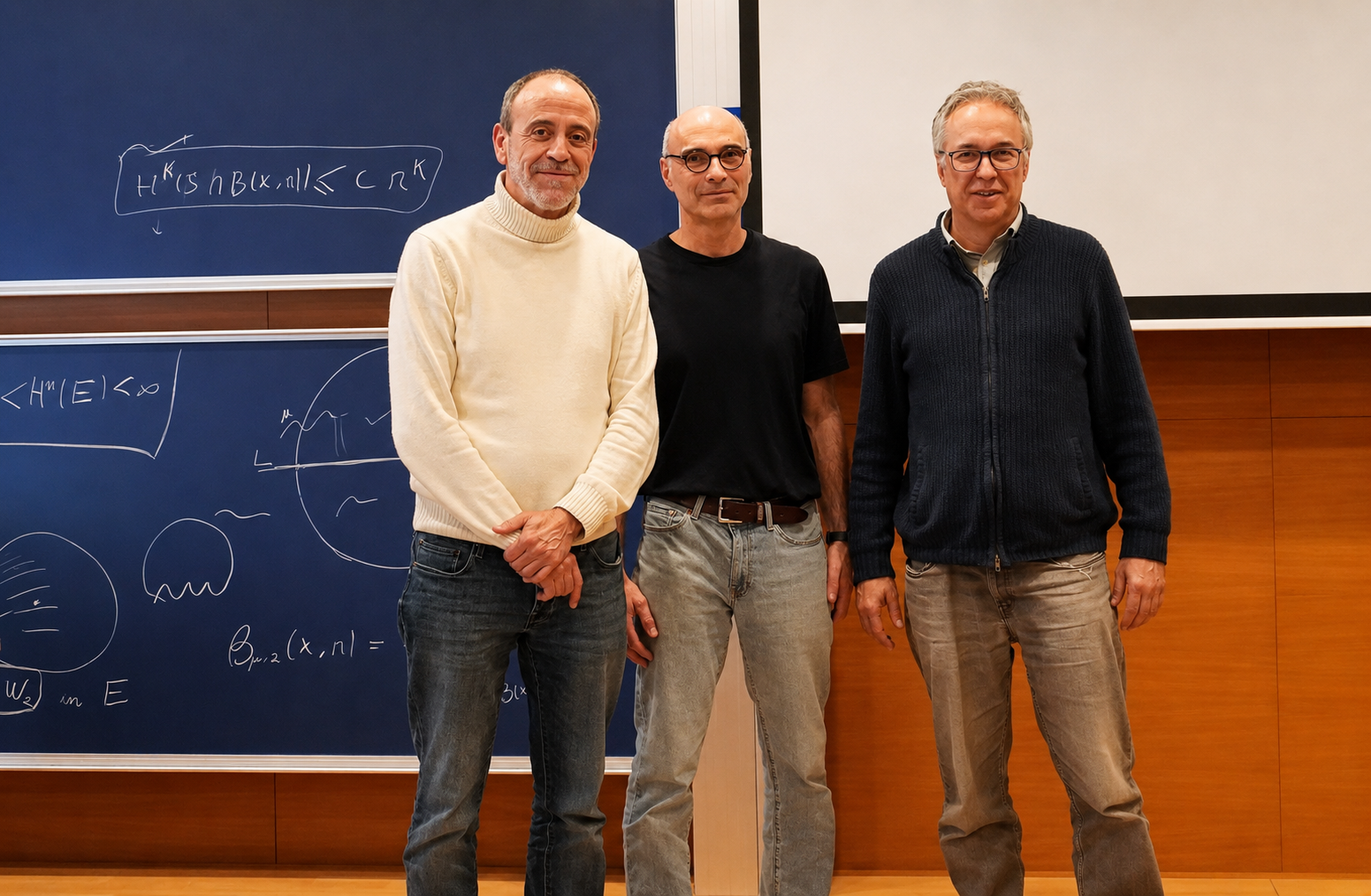
The Mathematics Behind the Three CRM Lectures at ICM 2026
Three CRM-affiliated researchers, Xavier Tolsa (plenary speaker), Xavier Cabré and Joaquim Ortega-Cerdà, lectured at the ICM 2026 in Philadelphia. Cabré surveyed the regularity of stable solutions to reaction-diffusion equations, including his optimal dimension-9...
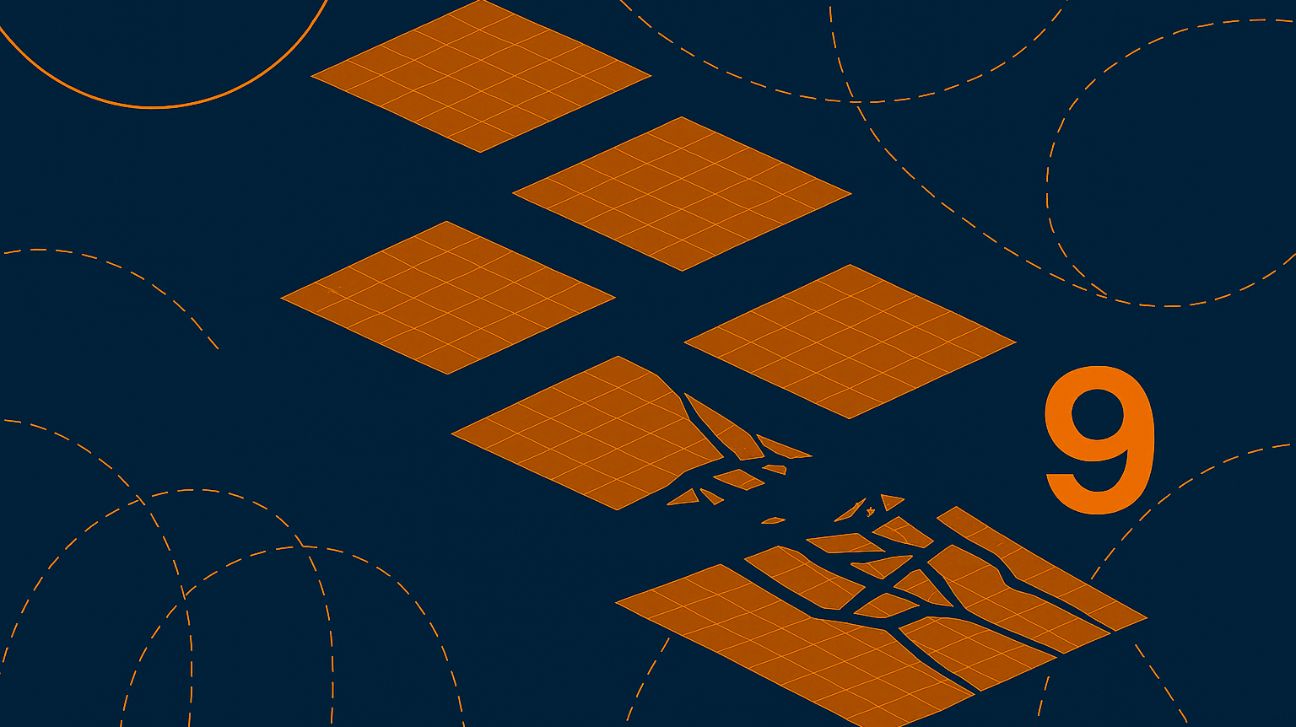
Crossing Dimensional Frontiers: a breakthrough in the shape of stable solutions to semilinear elliptic equations
More than twenty years of efforts were required to solve a central problem in the theory of partial differential equations. A body of work developed over decades —and recognized with the Frontiers of Science Award (2023)— culminates in the resolution of an open...
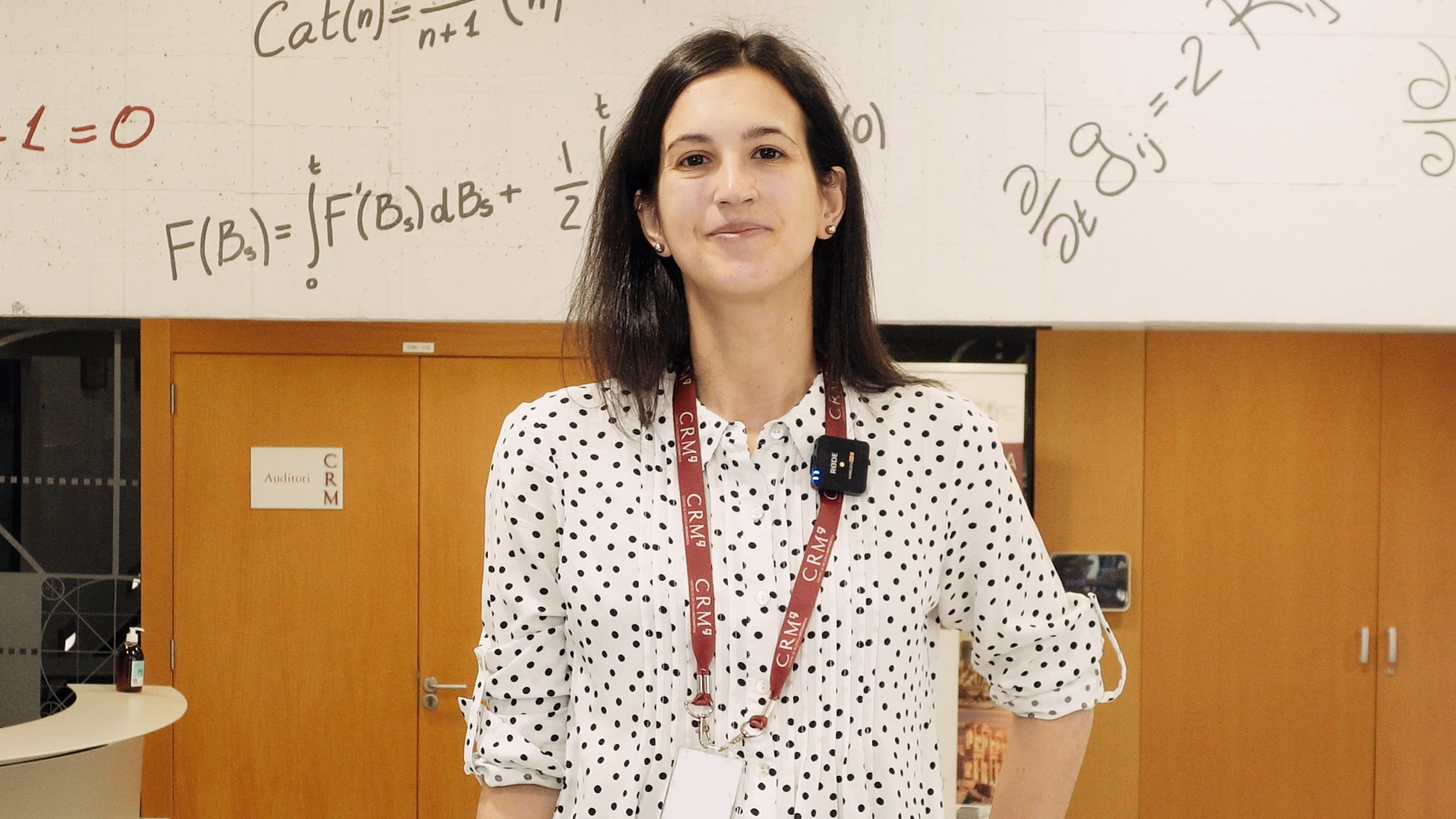
Anna Florio, third CRM Chair of Excellence: billiards, friction, and the value of staying
The dynamicist Anna Florio (CEREMADE, Université Paris Dauphine-PSL) spends the summer at the CRM as the centre's third María de Maeztu Chair of Excellence. She is working with Immaculada Baldomà and Tere Martínez-Seara on billiards in the analytic setting, and on 22...
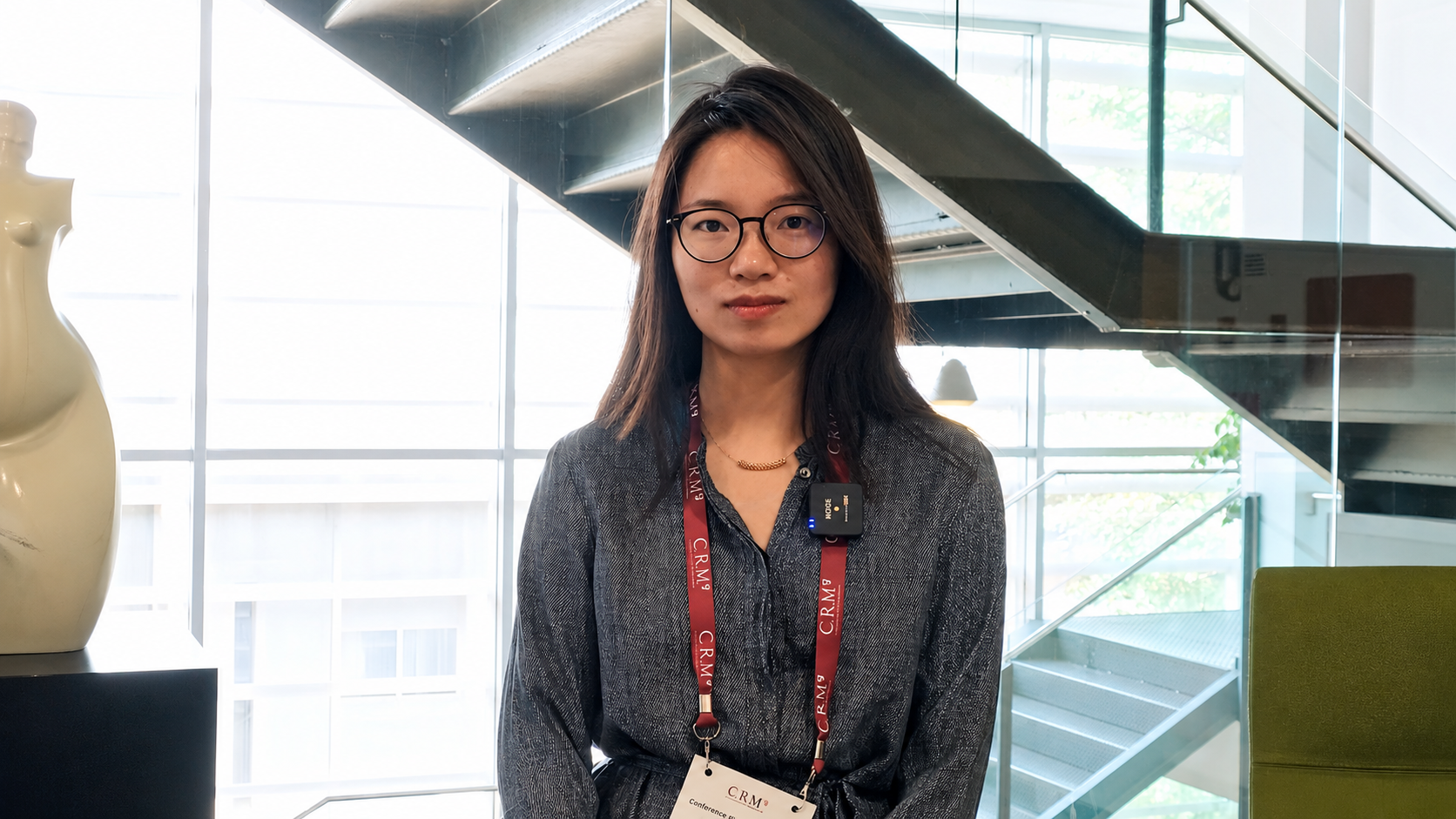
Hong Wang wins the Fields Medal, a year after her Kakeya lecture at the CRM
Hong Wang (NYU Courant and IHES) has received the Fields Medal at the International Congress of Mathematicians in Philadelphia, alongside Yu Deng (University of Chicago), John Pardon (Stony Brook University) and Jacob Tsimerman (University of Toronto). In June 2025,...