

CRM and CNRS researchers introduce a novel concept, Late Warning Signals (LWS), for aiding post-tipping point ecosystem recovery, enhancing resilience in biodiversity management. LWS may offer crucial insights for timely intervention in ecosystem dynamics, potentially revolutionizing conservation strategies.
Scientists are perennially aware that it is best not to trust theory until it is confirmed by evidence. It is equally true . . . that it is best not to put too much faith in facts until they have been confirmed by theory.
Robert MacArthur (Geographical Ecology, 1972)
Conservation Biology is at the forefront of efforts to understand and protect Earth’s ecosystems and biodiversity from threats that erode biotic interactions and lead to extinctions. With the goal of developing research and providing tools for preserving biodiversity and promoting sustainable ecological management, researchers Josep Sardanyés and Filip Ivančić, from the Centre de Recerca Matemàtica (CRM), along with Blai Vidiella, who was affiliated with the Institute of Evolutionary Biology (IBE) at the time of the research and is now with the Station d’Écologie Théorique et Expérimentale (CNRS), have delved into the complexities of ecological dynamics to introduce a novel concept—late warning signals (LWS)—in their recent publication in the journal Biological Conservation. Their article is part of a special Issue about Non-equilibrium perspectives in biological conservation (edited by Sonia Kefi, Pierre Gaüzère, and Daniel Oro).Central to this exploration is the recognition of regime shifts—sudden, often irreversible alterations in the structure and function of ecosystems—that can be triggered by tipping points. These tipping points represent critical thresholds in the system’s behaviour, beyond which small changes can lead to large and often unforeseen consequences.
Ecosystems, despite their resilience and adaptability, are susceptible to abrupt regime shifts driven by tipping points, especially under the scenario of global change; even efforts to reduce or eliminate stressors that trigger these tipping points may not guarantee a return to their previous states. This highlights the importance of understanding not only the factors that lead to regime shifts but also the dynamics that govern the system’s recovery or potential collapse. To effectively mitigate the impacts of tipping points, conservation policies must incorporate monitoring mechanisms to track the indicators of ecosystems’ resilience, allowing for timely intervention and adaptive management strategies.
The research team’s investigation focuses on unravelling the complexities of ecological regime shifts triggered by tipping points in real ecosystems by means of theoretical and computational research. By studying these phenomena, they aim to bridge the gap between theoretical ecology and conservation practice, translating abstract concepts into tangible strategies for ecosystem management and restoration. Furthermore, the team examines how the properties of tipping points, such as hysteresis and resilience, influence ecosystems’ conservation, management, and restoration efforts.
“In our contribution, we discuss the critical transitions (CTs) that ecosystems undergo, emphasizing the need to identify warning signals indicating the approach of tipping points (so-called early warning signals), and especially those signals emerging after a tipping point has occurred” explains lead author Josep Sardanyés (CRM). “These signals are crucial for detecting the potential collapse or recovery of ecosystems.”
Introducing Late Warning Signals: new strategies for ecosystem recovery
One key innovation introduced in the study is the concept of late warning signals (LWS). Unlike early warning signals (EWS) that indicate an approaching tipping point, LWS provide evidence that a tipping point has already been surpassed, but the system remains in a transient state, offering a window of opportunity for recovery efforts.
“We provide evidence of late warning signals as a means to identify when a system has crossed a tipping point, yet the systems typically remain in a long transient state opening the possibility to take actions to avoid the collapse. This concept opens new avenues for conservation strategies aimed at restoring ecosystems even after critical transitions have occurred,” adds co-lead author Blai Vidiella (CNRS).
The paper discusses various mechanisms causing transients, including examples such as coral reef degradation, kelp forests overgrazing, and overexploitation of ocean fish stocks. These real-world instances highlight the challenges ecosystems face and the importance of timely intervention to prevent irreversible damage.
Furthermore, the study emphasizes the importance of incorporating nonlinear dynamics and non-equilibrium phenomena into management and conservation strategies. Ecosystems are complex adaptive systems and their responses to e.g., perturbations, are often highly nonlinear. By understanding the nature of critical transitions through mathematical and computational models, researchers can aid in developing effective conservation policies.
“In our pursuit to prevent ecosystem collapse and promote resilience, it is essential to consider the dynamic nature of ecosystems and the potential for late warning signals,” concludes Sardanyés. “By integrating these concepts into conservation practice, we can enhance our ability to safeguard Earth’s biodiversity for future generations.” The research by Sardanyés, Ivančić and Vidiella presents a significant contribution to conservation biology, offering valuable insights into ecosystem dynamics by integrating theoretical ecology with empirical evidence. Understanding these mechanisms is crucial for effective conservation as it allows policymakers and practitioners to anticipate and respond to ecosystem changes, fostering resilience and promoting sustainable management practices.
References: Sardanyés, J., Ivančić, F. and Vidiella, B. (2024), “Identifying regime shifts, transients and late warning signals for proactive ecosystem management”, Biological Conservation, Vol. 290, p. 110433, doi: 10.1016/j.biocon.2023.110433.
|
|
CRM CommPau Varela & Mariona Fucho
|

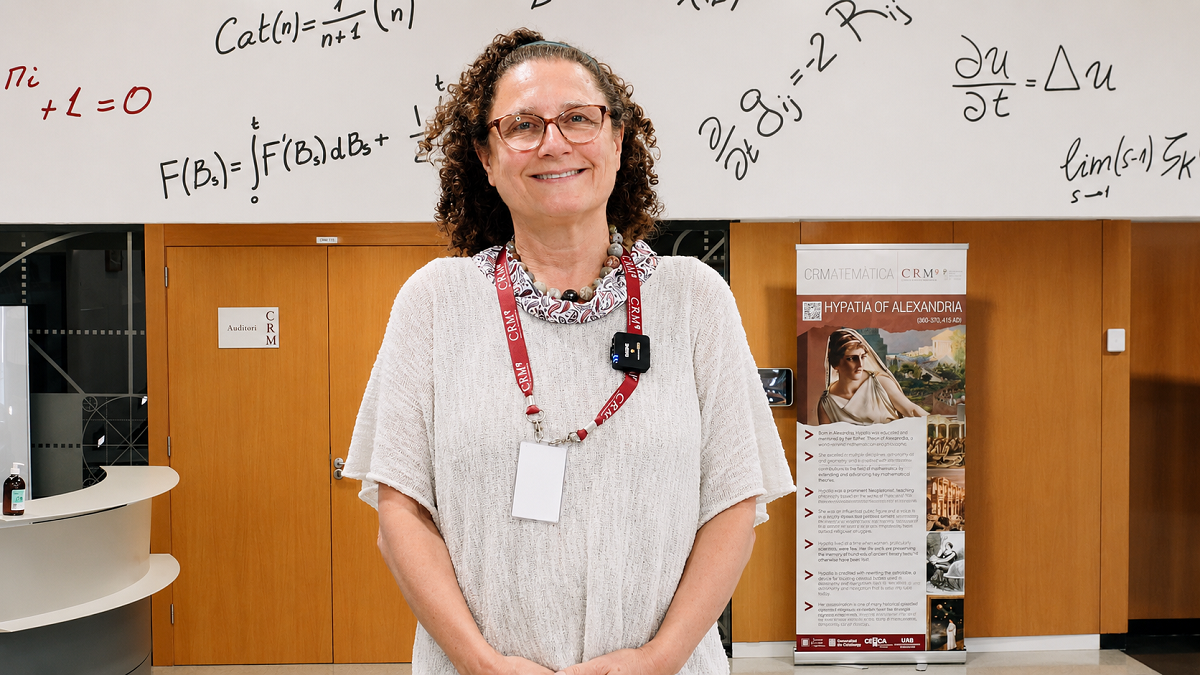
Susanna Terracini delivers the CRM Colloquium 2026
Susanna Terracini (Università di Torino) delivered the CRM Colloquium 2026 on 14 July, presenting a rigidity result for Kepler billiards obtained with Stefano Baranzini, Vivina Barutello and Irene De Blasi. She was at the centre as a member of the CRM Scientific...
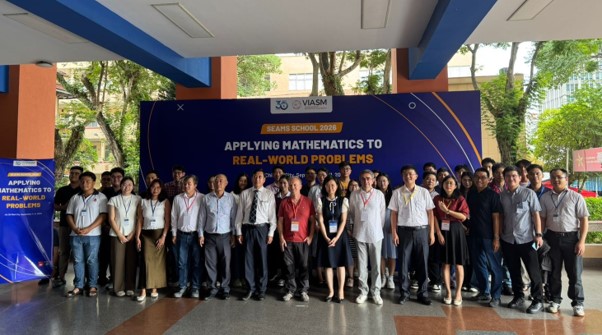
Ho Chi Minh City hosts the first SEAMS School on applying mathematics to real-world problems
More than fifty students from six countries spent a week at the University of Science, VNU-HCM, learning how mathematics gets used outside a mathematics department. CRM researcher Tim Myers co-organised the school and lectured on moving boundary problems. The...

A single ball on a fixed table can compute: Eva Miranda and Isaac Ramos prove that two-dimensional billiards are Turing complete
Eva Miranda (UPC, CRM) and Isaac Ramos (ETH Zürich) show that a point particle bouncing inside a planar table with fixed walls can simulate a universal Turing machine, settling a question Cristopher Moore left open in 1990. The result grew out of a master’s project...
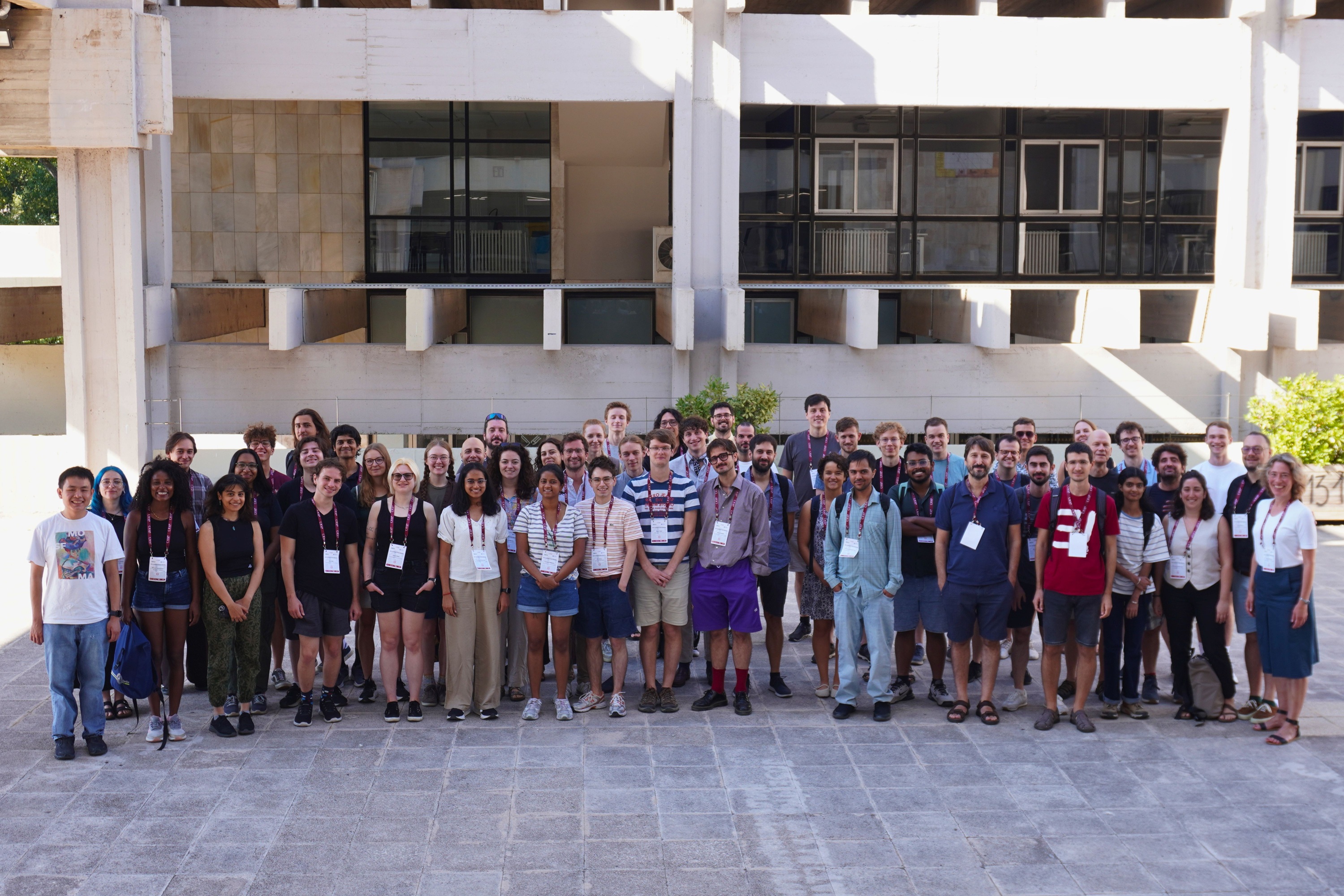
BMS-BGSMath Junior Meeting 2026: Barcelona and Berlin Strengthen Scientific Ties
From 2 to 4 September 2026, the Centre de Recerca Matemàtica (CRM) hosted the BMS-BGSMath Junior Meeting 2026, a three-day event jointly organised by the Berlin Mathematical School (BMS) and the Barcelona Graduate School of Mathematics (BGSMath), with the Centre de...
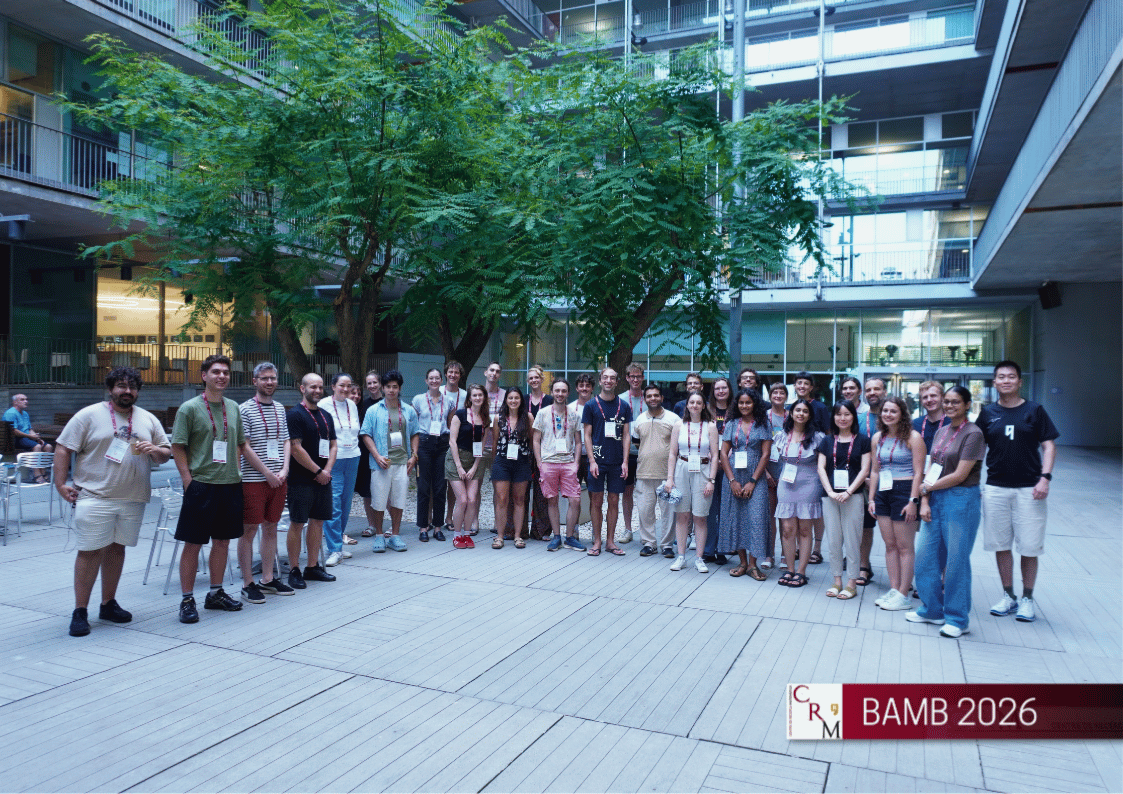
The CRM organises the 2026 Barcelona Summer School for Advanced Modeling of Behavior
The Centre de Recerca Matemàtica held the sixth edition of BAMB!, the Barcelona Summer School for Advanced Modeling of Behavior, from 12 to 23 July 2026 at the Parc de Recerca Biomèdica de Barcelona. Thirty early-career researchers from fourteen countries followed...
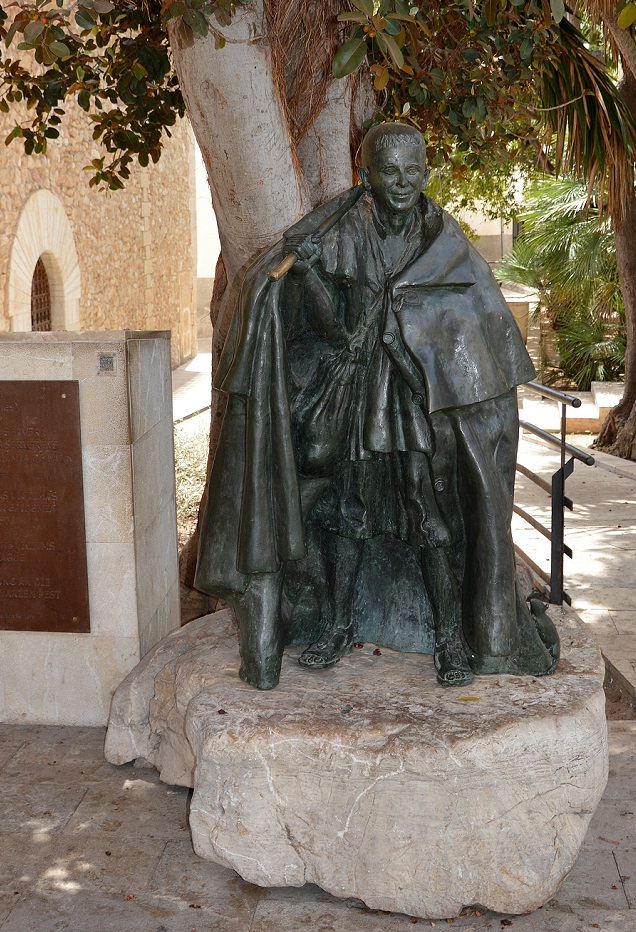
Mallorca’s 1820 plague did not behave like a classic bubonic outbreak, study finds
A study in PNAS by Pere Puig (UAB, CRM) and Joana Maria Pujadas-Mora (UOC, ICREA) reports what happens when the daily health records kept in Son Servera and Capdepera during the 1820 outbreak are analysed with a Bayesian epidemiological model: an unusually short...

A recent study quantifies the vegetable production potential of Barcelona’s rooftops
A study published in Cities by researchers at ICTA-UAB, with collaboration from the CRM's Knowledge Transfer Unit, estimates that 65 hectares of municipal rooftop could supply 31% of the tomatoes consumed in Barcelona each year.Barcelona has 65 hectares of rooftop...

CRM July Newsletter
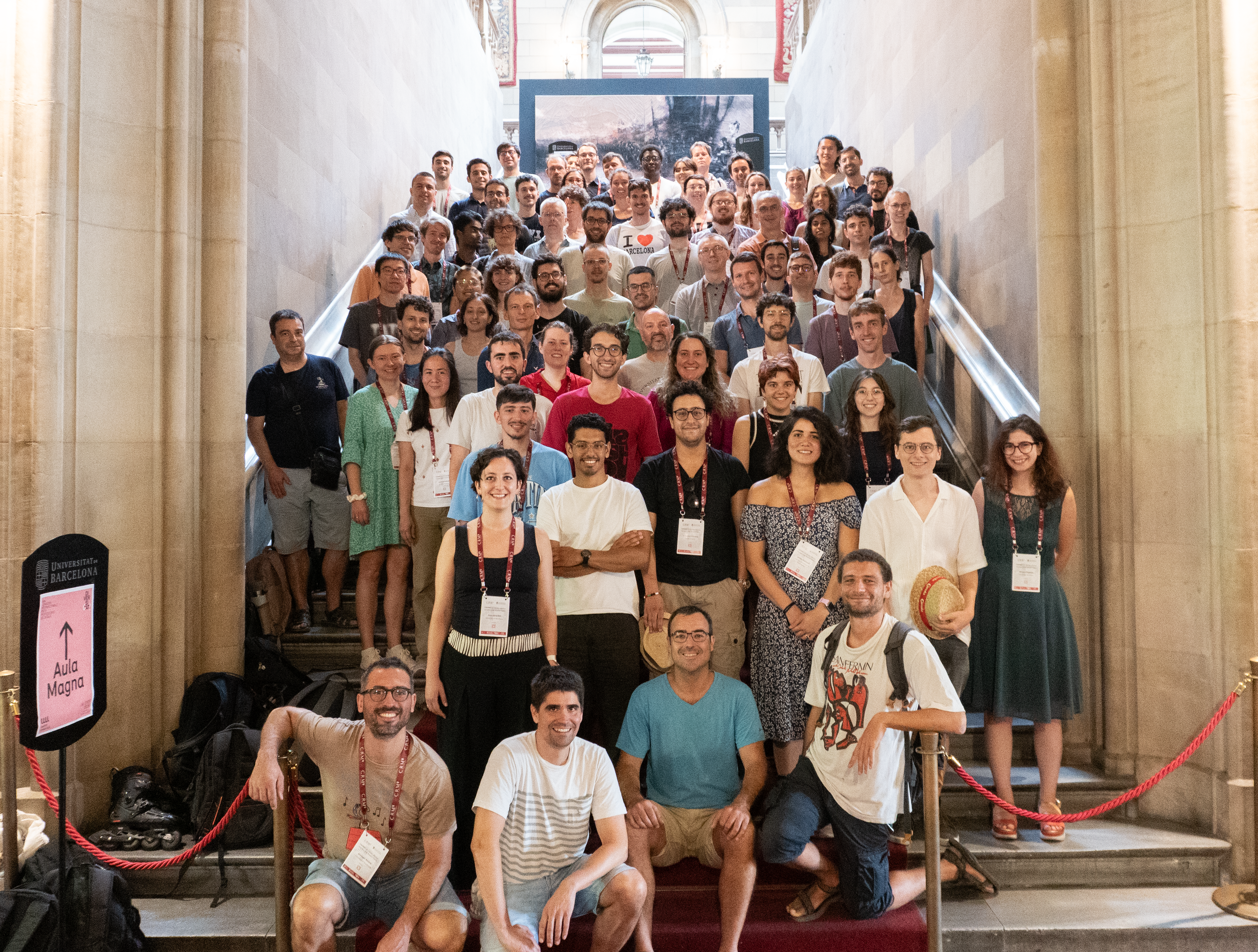
CAVARET 2 brings together 83 researchers on curves and abelian varieties at the Universitat de Barcelona
The second edition of CAVARET, "Curves, Abelian VArieties and RElated Topics", took place at the Faculty of Mathematics and Computer Science of the Universitat de Barcelona from 13 to 17 July 2026. Sixteen invited lectures and ten posters brought together 83...

Mathematics on board: CRM’s demand forecasting model enters service on Barcelona’s H12 corridor
The H12 has run along Gran Via for years. What TMB switched on in July is the set of upgrades designed for it inside eBRT2030, a Horizon Europe project testing electric Bus Rapid Transit in six European cities. Behind it, forecasting passenger demand at every stop...
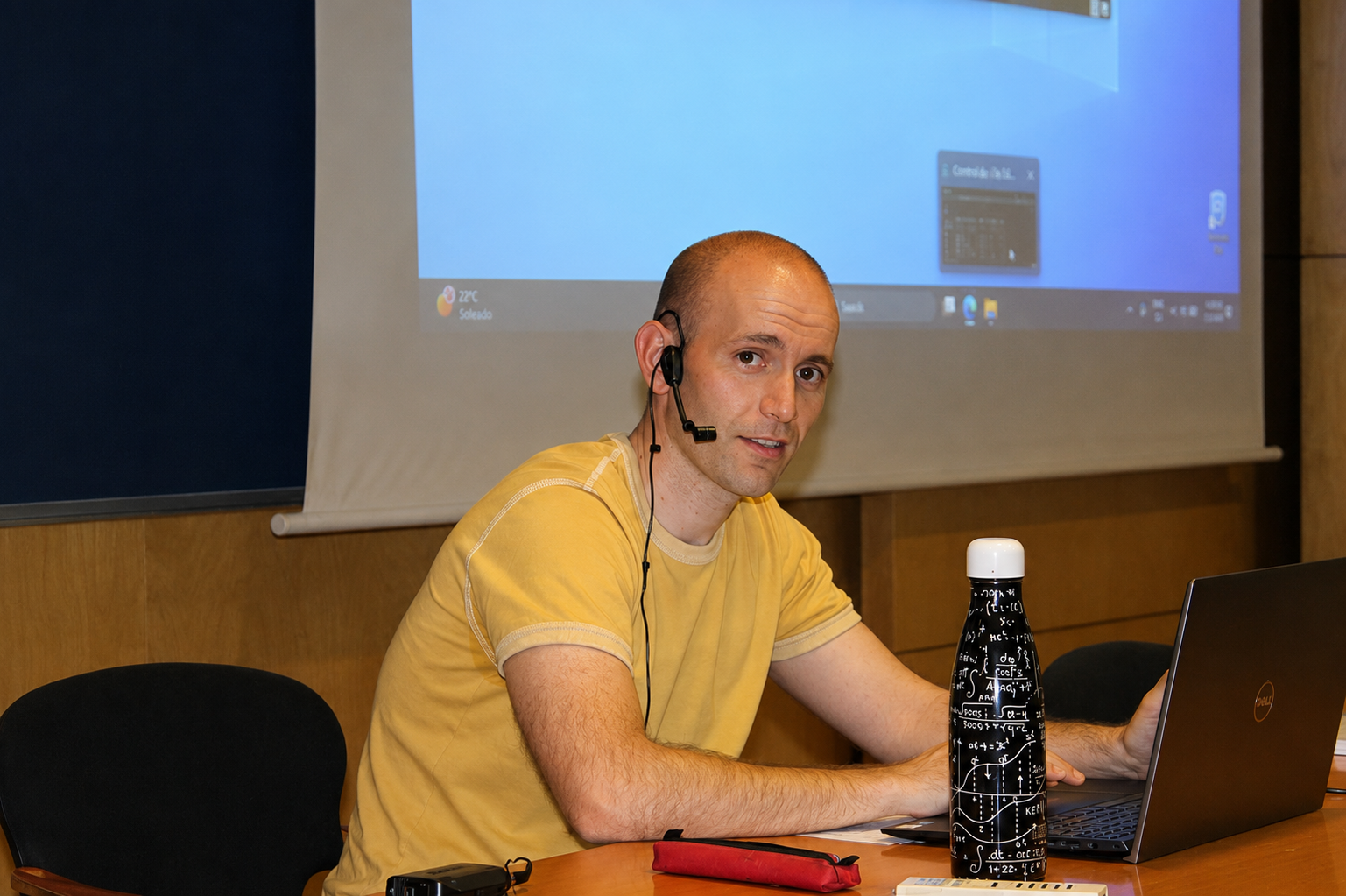
Dídac Gil Rams defends his doctoral thesis on the splitting of separatrices in generalized standard maps
Supervised by Inmaculada Baldomá and Pau Martín, the thesis proves the existence of chaotic dynamics in a broad family of area-preserving maps and combines classical analysis with computer-assisted proof. The defence took place on 3 July 2026 at the FME (UPC).Dídac...

How to Protect Bacteriophages Without Trapping Them? Mathematics to Improve an Alternative to Antibiotics
Bacteriophages — viruses capable of infecting and destroying bacteria — are considered one of the most promising alternatives to tackle the growing problem of antibiotic resistance. However, for these treatments to work, phages must overcome several obstacles before...