
En celebració de l’11 de Febrer, el Dia de la Dona i la Nena en la Ciència, el Centre de Recerca Matemàtica va organitzar el I Concurs Visible Figures – Dones Matemàtiques. En aquest concurs, els i les participants havien de cercar els diferents roll-ups i pòsters distribuïts per tota la Facultat de Ciències juntament amb el CRM i a partir de la informació proporcionada sobre cada matemàtica, respondre un breu qüestionari.
El dilluns 11 de març, vam concedir els premis als guanyadors, l’Ariadna Gutiérrez, Data Steward del centre, i el Fernando Gastón, Tècnic de de la Unitat de Transferència de Coneixement. Aquests van consistir en un exemplar de Cartas a una joven matemática de Ian Stewart i Que las matemáticas te acompañen, de Clara Grima. L’Ariadna i el Fernando, participant en el concurs, van tenir l’oportunitat de conèixer més detalls sobre la vida d’aquestes destacades matemàtiques, des de l’assassinat de la sàvia Hipàtia fins a les dificultats que Katherine Johnson va enfrontar per aconseguir signar articles amb la NASA per raons de gènere.
I ara, vosaltres també podeu posar a prova els vostres coneixements sobre aquestes nou matemàtiques! Podeu fer un cop d’ull a la seva història clicant sobre la seva imatge aquí:
Cartas a una joven matemática (Ian Stewart): el llibre, en format de correspondència dirigida a la Meg, una jove amb talent interessada en estudiar matemàtiques a qui Stewart explica tot allò que li agradés agradat saber mentre era estudiant. En aquest llibre, Stewart explora tot allò que hauria agradat conèixer mentre ella era estudiant. L’obra aborda qüestions des de la naturalesa i bellesa de les matemàtiques, la simetria, la mentalitat dels matemàtics i la distinció entre matemàtiques pures i aplicades fins a les particularitats de la comunitat matemàtica. Amb saviesa, talent i humor, Stewart defensa la vitalitat de les matemàtiques i la seva importància en el món actual.
Que las matemáticas te acompañen (Clara Grima): en el seu llibre, Grima argumenta que les matemàtiques són essencials en tot, des dels nostres gustos personals fins a les grans decisions del món empresarial i polític. Amb un enfocament amè i accessible, destaca com les matemàtiques influeixen en la nostra vida diària, des dels selfies fins a les relacions personals i la cultura popular com Pokémon Go o Joc de Trons. L’autora defensa que tothom gaudeix de les matemàtiques, encara que alguns no ho reconeguin, i el seu llibre busca convèncer els lectors de la seva omnipresència i importància, mostrant-los que les matemàtiques estan més a prop del que podrien pensar.

Subscribe for more CRM News
|
|
CRM CommPau Varela & Mariona Fucho
|
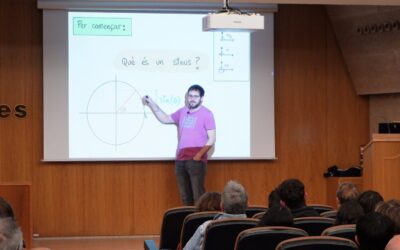
El CRM rep els estudiants de la prova de nivell de Bojos per les Matemàtiques 2027
Els aspirants a Bojos per les Matemàtiques 2027 van visitar el Centre de Recerca Matemàtica (CRM) dissabte 24 d’octubre, després de fer la prova de nivell a la Facultat de Ciències i Biociències de la UAB. En acabat, Tomás Sanz (UB-CRM) els va explicar què té a veure l’escalfament d’una barra de ferro amb els àudios de WhatsApp.
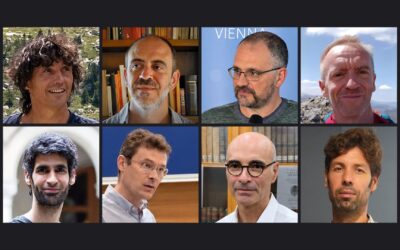
Eight CRM Researchers in the 2026 Stanford-Elsevier List of Highly Cited Scientists
The Centre de Recerca Matemàtica (CRM) has eight researchers in the 2026 update of the Stanford-Elsevier ranking of highly cited scientists, which John P. A. Ioannidis (Stanford University) and Jeroen Baas (Elsevier) compile from Scopus data. Xavier Cabré, Álvaro Corral, Tim Myers, Xavier Ros-Oton, Sergey Tikhonov and Xavier Tolsa appear both in the career-long ranking and in the one for 2025, and Diego Vidaurre and Simeon Ball in the 2025 ranking.
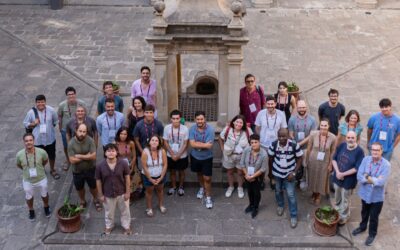
Fish schools and growing tissues: a workshop on how collective behaviour emerges
The Centre de Recerca Matemàtica (CRM) organised the Barcelona Workshop on Kinetic and Macroscopic Models in Biology with Friends II, held from 7 to 10 September at the Institut d’Estudis Catalans. More than thirty researchers discussed how order at the scale of tissues and animal groups arises from local interactions between individuals, in a programme that included talks by CRM researchers Daria Stepanova and Juan Arellano-Tintó. Two of the speakers, James Sharpe (EMBL Barcelona) and Chiara Villa (CNRS, Université Paris Cité), talked to the CRM about their research.
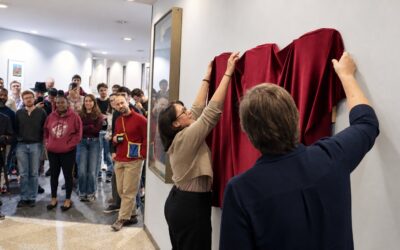
The CRM opens the academic year and unveils its Directors’ Gallery
A review of the year, the Communication Plan 2026–2030 and three research talks filled the morning of 19 October.The unveiling of the Directors’ Gallery.CRM CommPau VarelaCRMComm@crm.catGet the latest CRM news and activities in your inbox.Recent...
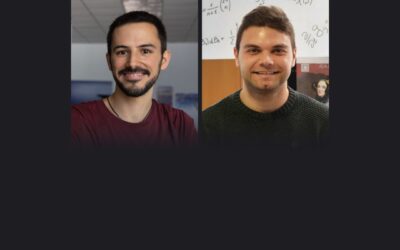
The CRM Mentoring Programme, as Told by One of Its Pairs
PhD student Joaquim Duran and mathematician Robert Cardona, one of the pairs in the CRM Mentoring ProgrammeJoaquim Duran (left) and Robert Cardona.CRM CommPau VarelaCRMComm@crm.catGet the latest CRM news and activities in your inbox.Recent...
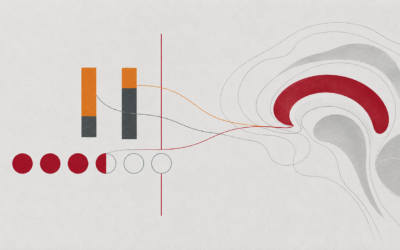
When the reward comes within reach, the brain changes what it compares
As the tokens piled up, choices got faster and more accurate at the same time. The yardstick for judging each offer had moved.CRM CommPau VarelaCRMComm@crm.catGet the latest CRM news and activities in your inbox.Recent newsletters →Two subjects...
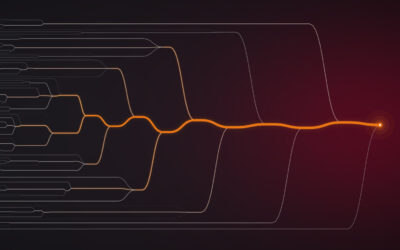
Almost every automaton can be reset with a short word
Guillaume Chapuy (Université Paris Cité, CNRS) and Guillem Perarnau (UPC, CRM) have shown that a random finite automaton with n states can, with high probability, be reset by a word of length of order √n log n. The result, published in ACM Transactions on Algorithms, pins the exponent at 1/2, the lower end of a decade of numerical estimates, and addresses the random version of the synchronization problem behind a conjecture Ján Černý posed in 1964 and which still remains open.
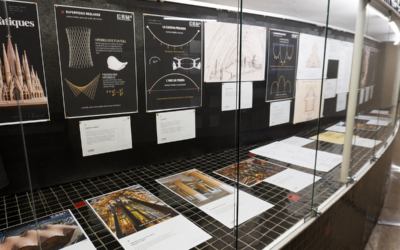
Exposició ‘Les matemàtiques de Gaudí’
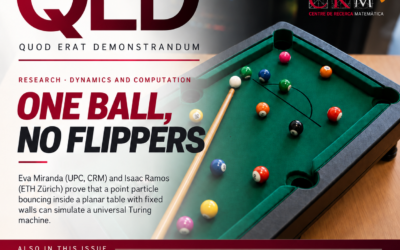
CRM quod erat demonstrandum | 48
ADA: Decoding Brain Signals Misaligned in Time
The study addresses a key limitation of current brain decoding techniques: the difficulty of interpreting internal mental processes whose temporal dynamics vary from trial to trial.Decoding what is happening in a person’s mind from their brain activity is one of the...
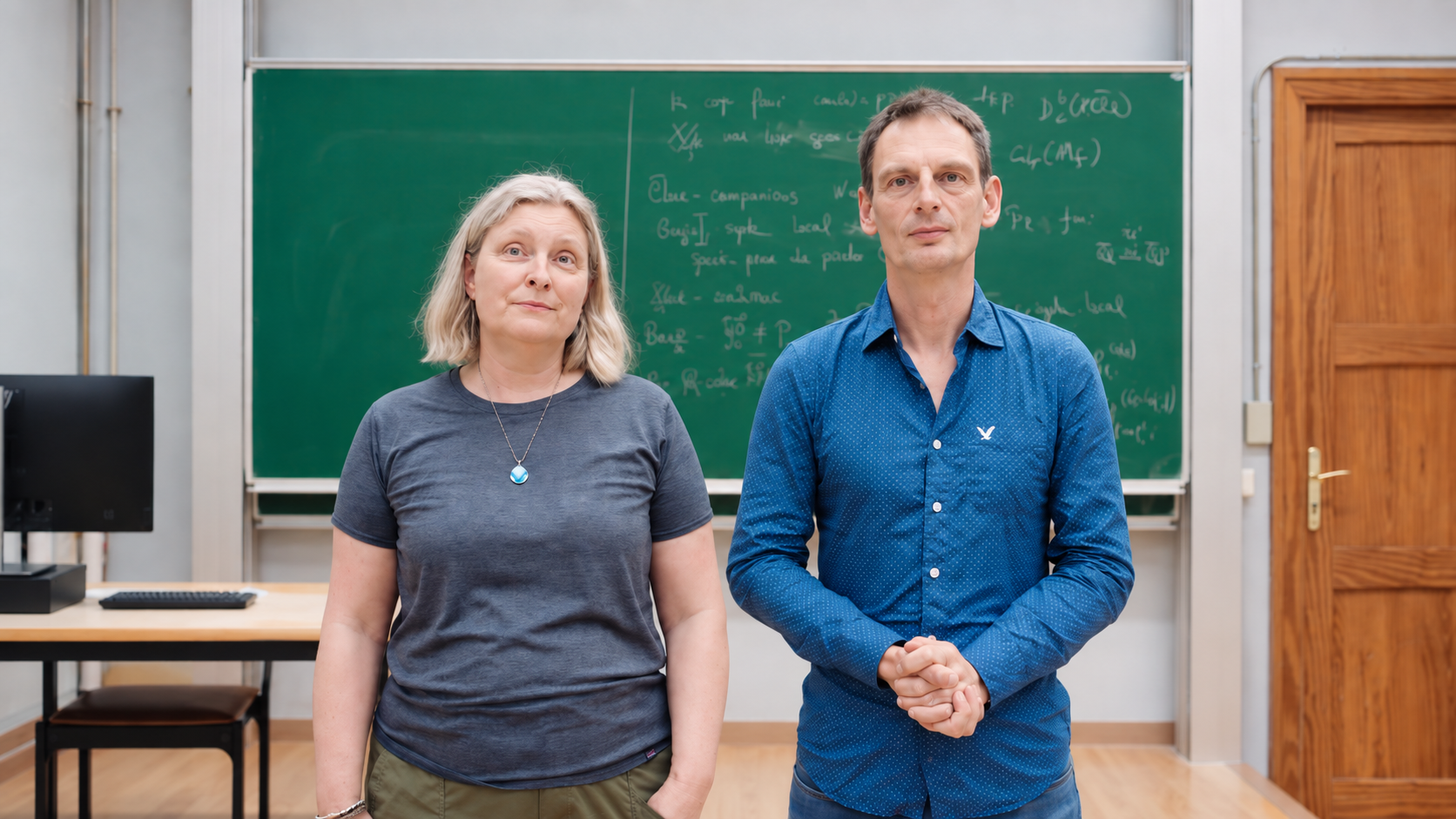
Rare curves, many points: Christophe Ritzenthaler and Rachel Pries on their research and the work around it
Christophe Ritzenthaler (Université de Rennes) and Rachel Pries (Colorado State University) both work on curves over finite fields: he hunts curves with as many points as possible, she hunts curves that almost never occur. In conversation with the CRM during their...
Call open for the 2027 Ferran Sunyer i Balaguer Prize
The Ferran Sunyer i Balaguer Foundation is accepting submissions for its 2027 prize, which awards 15,000 euros and publication in Birkhäuser's Progress in Mathematics series to an expository monograph on an active area of mathematical research. The deadline is 27...