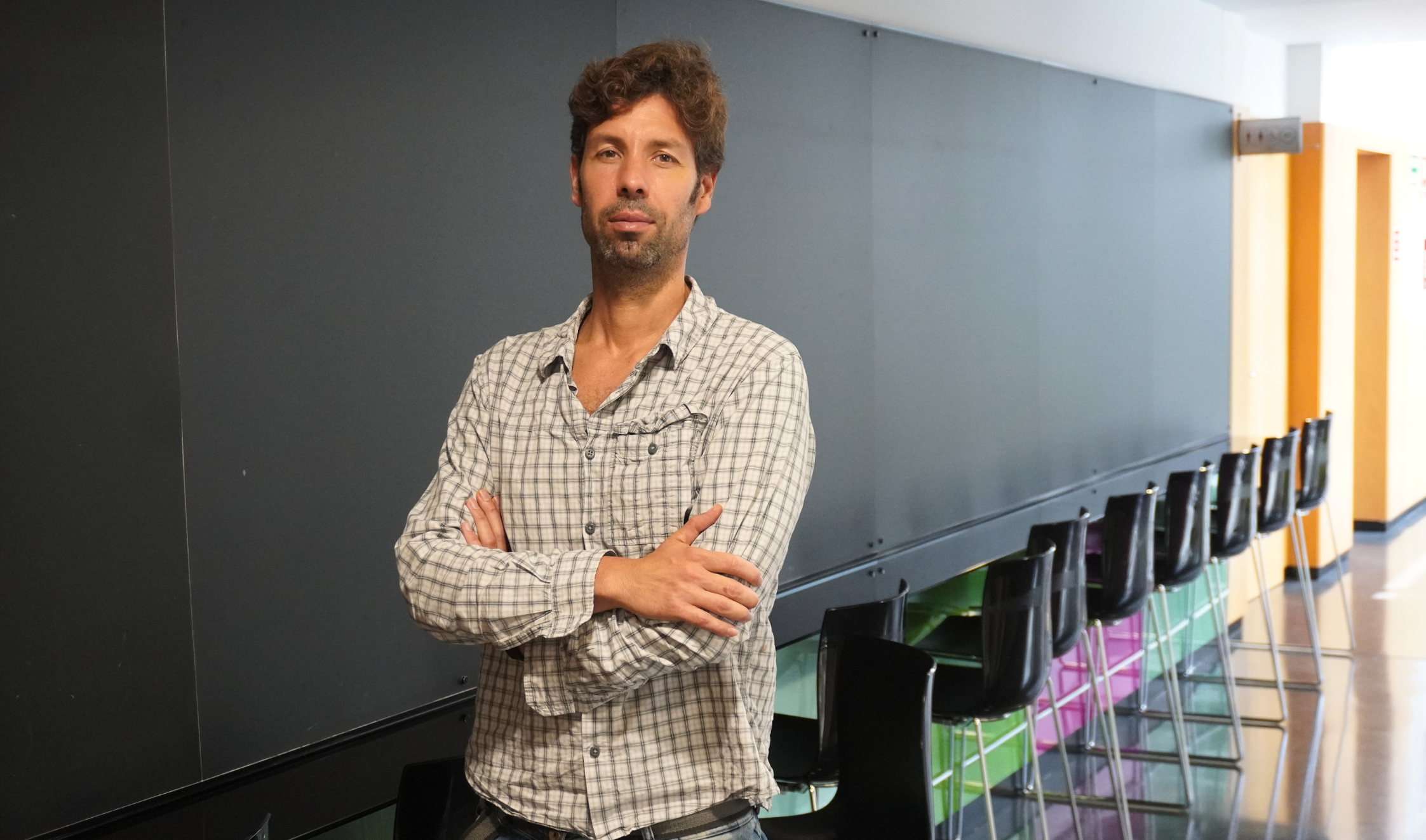
Diego Vidaurre has joined the Centre de Recerca Matemàtica through the ATRAE programme, bringing his expertise in modelling spontaneous brain activity across multiple data modalities. His work focuses on understanding how the brain’s intrinsic dynamics shape perception and relate to behavioural and clinical variables, with a strong emphasis on early stages of neurodegenerative disease.
Diego Vidaurre has joined the Computational and Mathematical Neuroscience group at the Centre de Recerca Matemàtica, supported by the Programa ATRAE. This national initiative brings internationally recognised senior researchers back to Spain after substantial careers abroad, to strengthen the Spanish scientific system through long-term leadership.
Vidaurre’s path to neuroscience began elsewhere. He completed his doctorate in computer science and statistics at the Universidad Politécnica de Madrid in 2012, then moved to Oxford for seven years of postdoctoral work in computational neuroscience. Positions in Osaka and Aarhus followed, where he rose to professor and built his own research group. Along the way, his focus shifted. “Statistics and machine learning were interesting as goals on their own,” he explains, “but I was even more interested in using them as tools for understanding. At the time, I thought neuroscience would be the science of the twenty-first century, the way physics and genetics were in the twentieth. Today I am a bit more sceptical, but the brain remains the most fascinating thing there is.”
“The brain remains the most fascinating thing there is.”
His group, currently split between the CRM and Denmark, operates along three intertwined lines. The first is methodological: developing and implementing pipelines for analysing functional brain data. The second is basic research, focused on understanding the role of spontaneous brain activity, that constant inner hum that never quite switches off, and how it shapes perception. The third is applied, examining how individual differences in these patterns relate to early markers of dementia.
At the CRM, Vidaurre will lead the project A new integrative statistical framework to connect symptoms to mechanisms in brain disease. The challenge is both technical and conceptual in nature. Understanding the brain through any single imaging modality, he notes, is like “trying to understand what research is being done at the CRM by looking from the outside through a frosted window.” Each technique reveals only a sliver of the full picture. The hope is that combining these partial views can compensate for the blind spots of any one method. His project aims to push that integration further, developing statistical tools capable of merging multiple data sources to reveal the earliest stages of Alzheimer’s disease.
The decision to come to Barcelona had personal roots. Vidaurre wanted to be closer to his mother and raise his daughter here. But the scientific reasons carried equal weight. “Barcelona brings together a critical mass of neuroscience and applied mathematics at a top international level,” he says. “And in particular, I think that the CRM, being a centre specifically focused on mathematics, can enrich me a lot in that part.”
His arrival strengthens Barcelona’s growing computational neuroscience ecosystem and opens new collaborative paths within the CRM and across nearby institutions. The CRM is delighted to welcome him.
|
|
CRM CommPau Varela
|

CRM quod erat demonstrandum | 48

ADA: Decoding Brain Signals Misaligned in Time
The study addresses a key limitation of current brain decoding techniques: the difficulty of interpreting internal mental processes whose temporal dynamics vary from trial to trial.Decoding what is happening in a person’s mind from their brain activity is one of the...
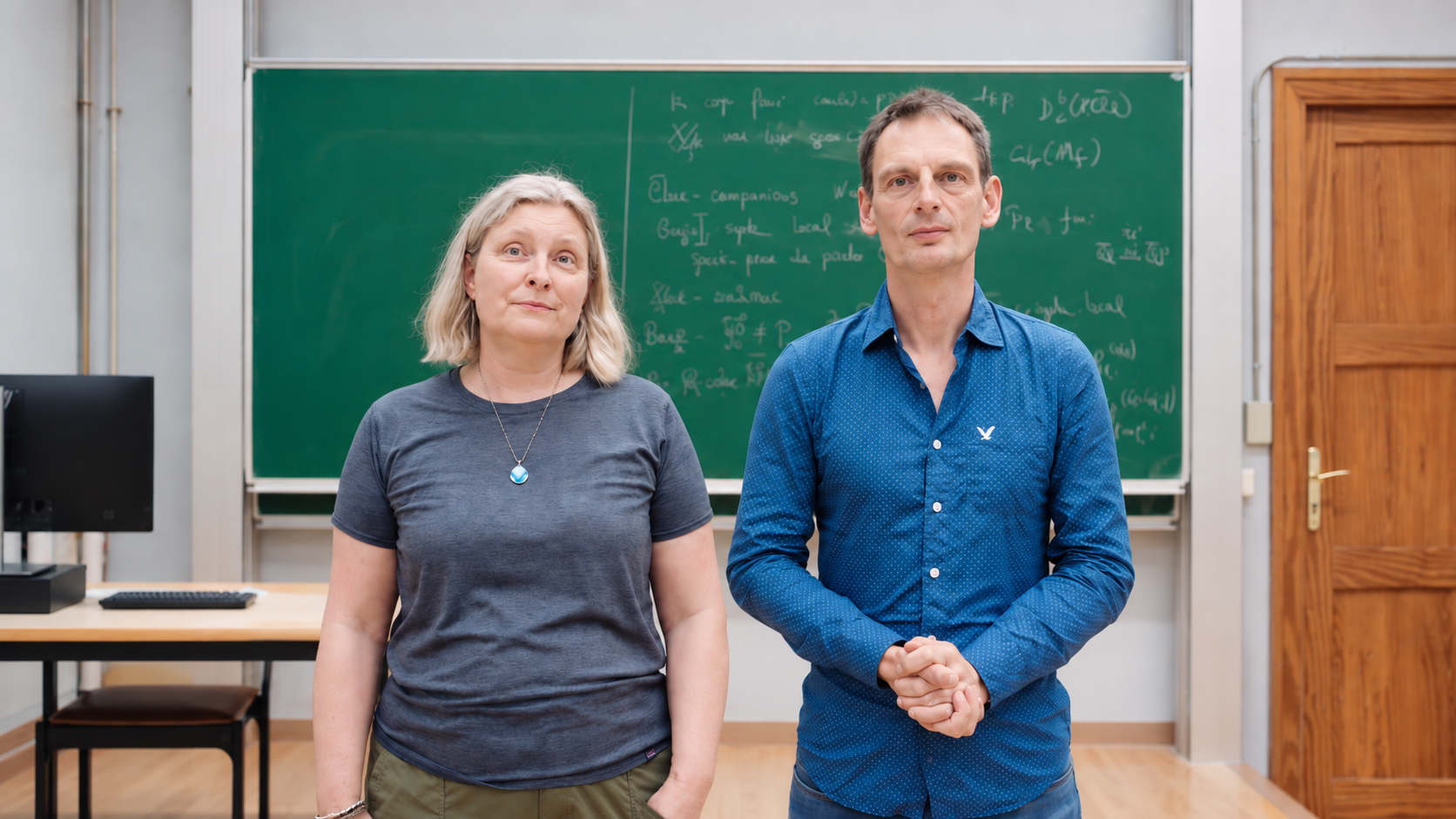
Rare curves, many points: Christophe Ritzenthaler and Rachel Pries on their research and the work around it
Christophe Ritzenthaler (Université de Rennes) and Rachel Pries (Colorado State University) both work on curves over finite fields: he hunts curves with as many points as possible, she hunts curves that almost never occur. In conversation with the CRM during their...

Call open for the 2027 Ferran Sunyer i Balaguer Prize
The Ferran Sunyer i Balaguer Foundation is accepting submissions for its 2027 prize, which awards 15,000 euros and publication in Birkhäuser's Progress in Mathematics series to an expository monograph on an active area of mathematical research. The deadline is 27...
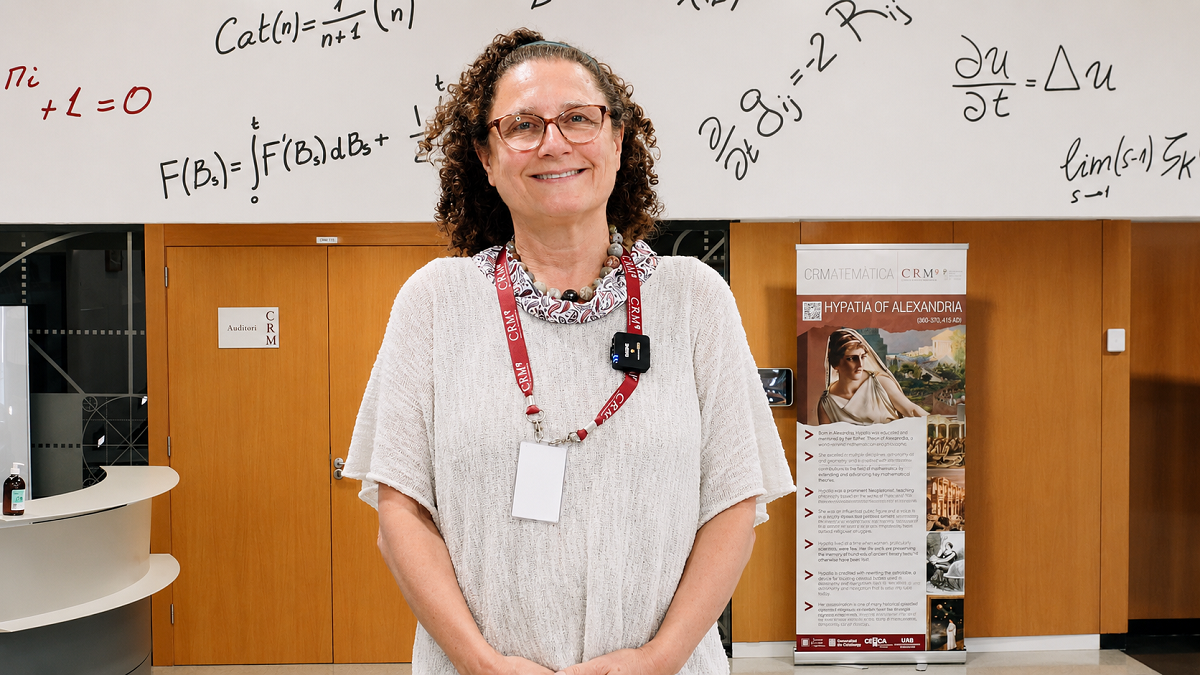
Susanna Terracini delivers the CRM Colloquium 2026
Susanna Terracini (Università di Torino) delivered the CRM Colloquium 2026 on 14 July, presenting a rigidity result for Kepler billiards obtained with Stefano Baranzini, Vivina Barutello and Irene De Blasi. She was at the centre as a member of the CRM Scientific...
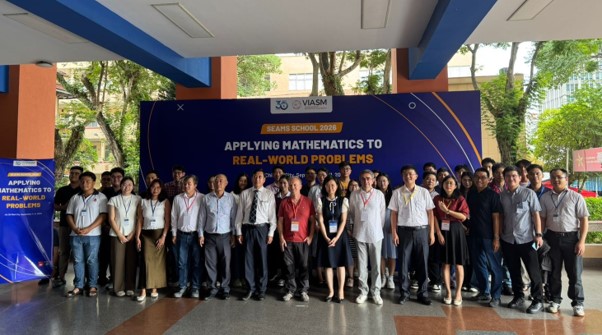
Ho Chi Minh City hosts the first SEAMS School on applying mathematics to real-world problems
More than fifty students from six countries spent a week at the University of Science, VNU-HCM, learning how mathematics gets used outside a mathematics department. CRM researcher Tim Myers co-organised the school and lectured on moving boundary problems. The...

A single ball on a fixed table can compute: Eva Miranda and Isaac Ramos prove that two-dimensional billiards are Turing complete
Eva Miranda (UPC, CRM) and Isaac Ramos (ETH Zürich) show that a point particle bouncing inside a planar table with fixed walls can simulate a universal Turing machine, settling a question Cristopher Moore left open in 1990. The result grew out of a master’s project...
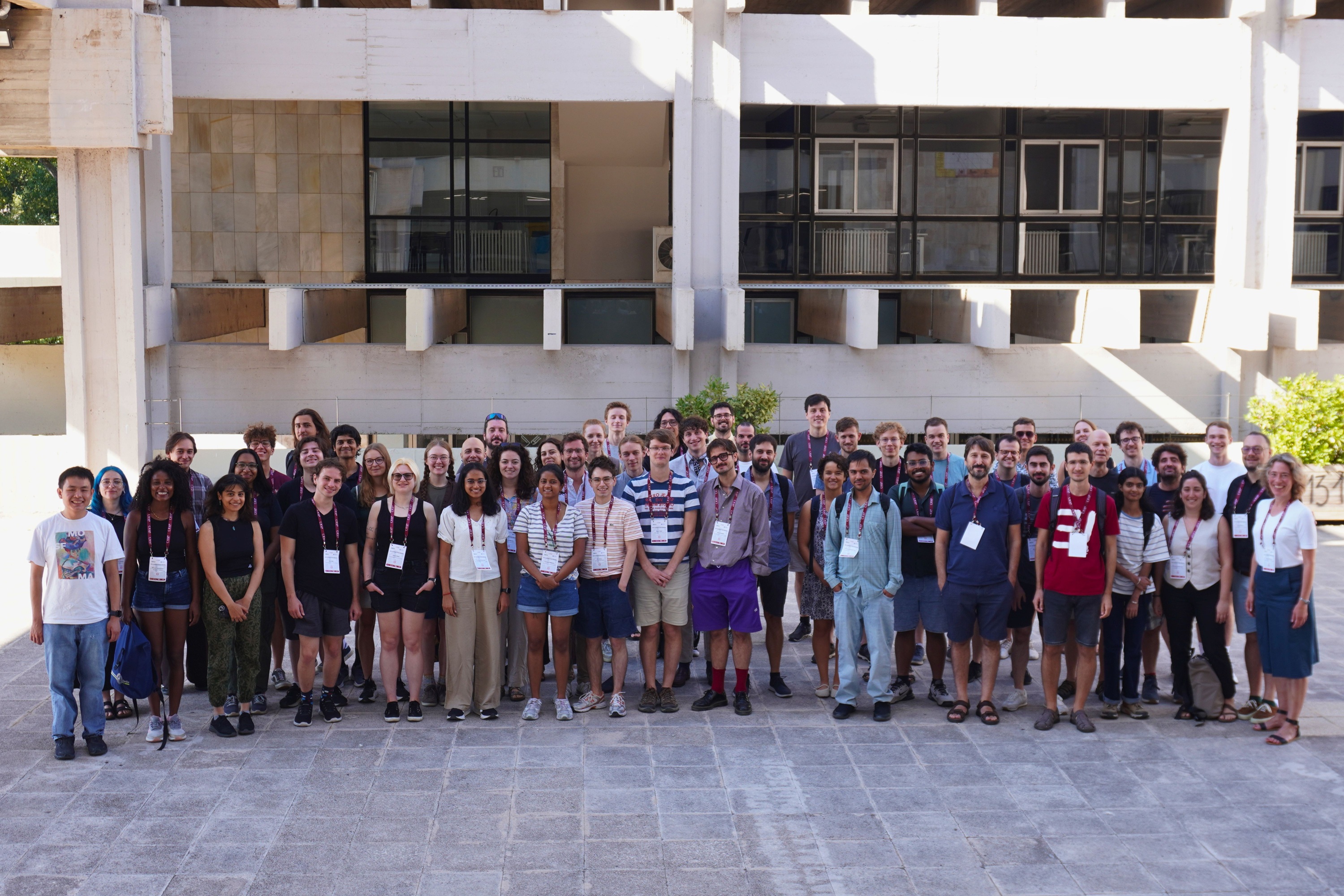
BMS-BGSMath Junior Meeting 2026: Barcelona and Berlin Strengthen Scientific Ties
From 2 to 4 September 2026, the Centre de Recerca Matemàtica (CRM) hosted the BMS-BGSMath Junior Meeting 2026, a three-day event jointly organised by the Berlin Mathematical School (BMS) and the Barcelona Graduate School of Mathematics (BGSMath), with the Centre de...
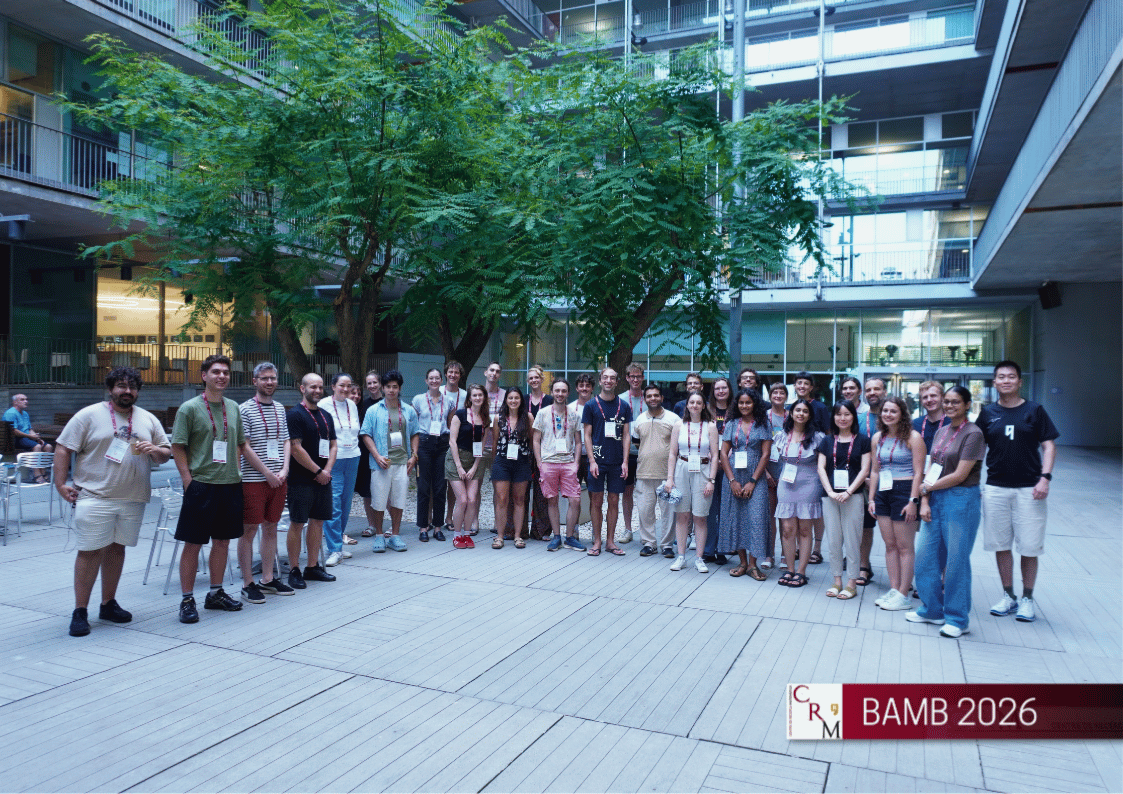
The CRM organises the 2026 Barcelona Summer School for Advanced Modeling of Behavior
The Centre de Recerca Matemàtica held the sixth edition of BAMB!, the Barcelona Summer School for Advanced Modeling of Behavior, from 12 to 23 July 2026 at the Parc de Recerca Biomèdica de Barcelona. Thirty early-career researchers from fourteen countries followed...
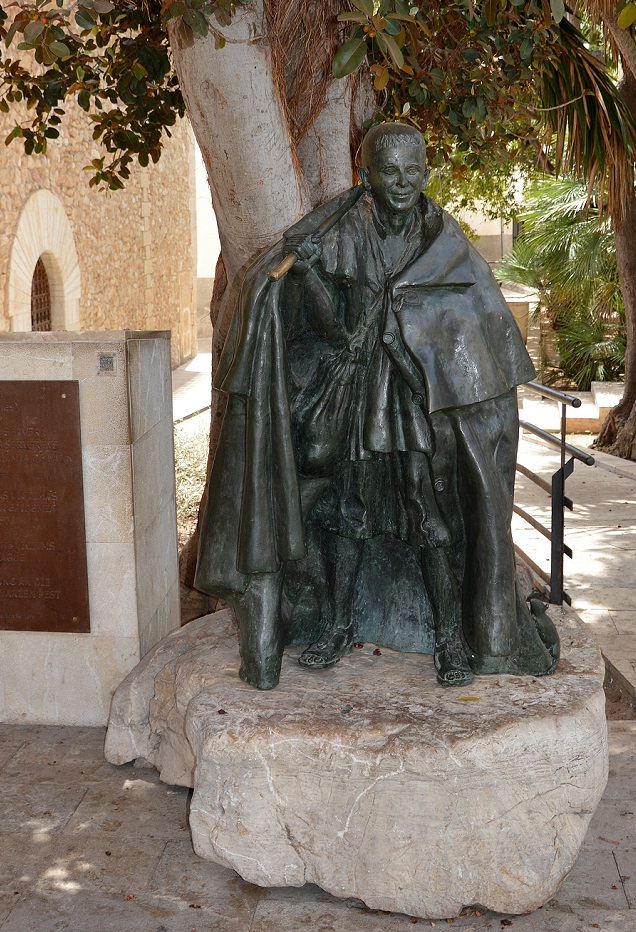
Mallorca’s 1820 plague did not behave like a classic bubonic outbreak, study finds
A study in PNAS by Pere Puig (UAB, CRM) and Joana Maria Pujadas-Mora (UOC, ICREA) reports what happens when the daily health records kept in Son Servera and Capdepera during the 1820 outbreak are analysed with a Bayesian epidemiological model: an unusually short...
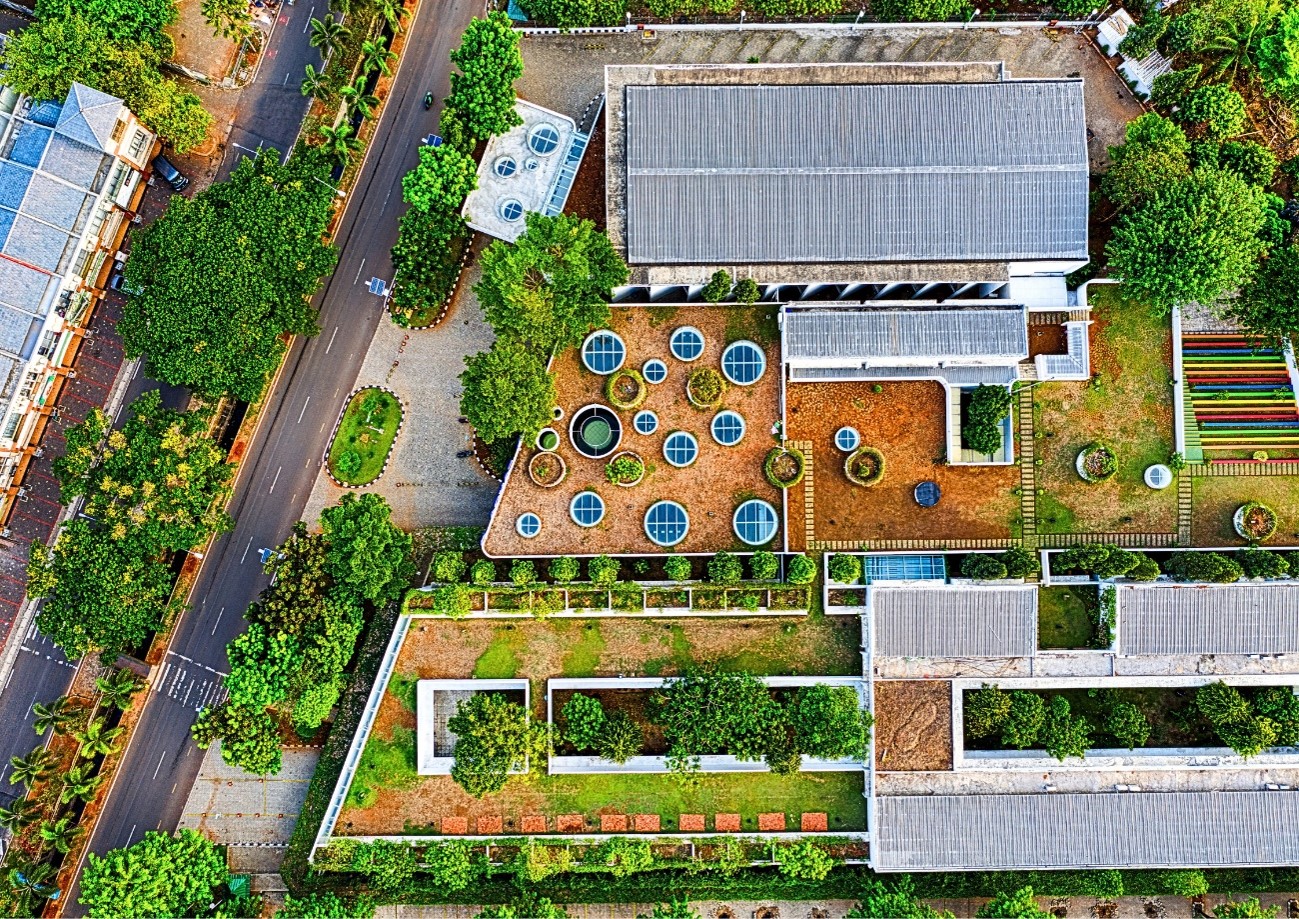
A recent study quantifies the vegetable production potential of Barcelona’s rooftops
A study published in Cities by researchers at ICTA-UAB, with collaboration from the CRM's Knowledge Transfer Unit, estimates that 65 hectares of municipal rooftop could supply 31% of the tomatoes consumed in Barcelona each year.Barcelona has 65 hectares of rooftop...