
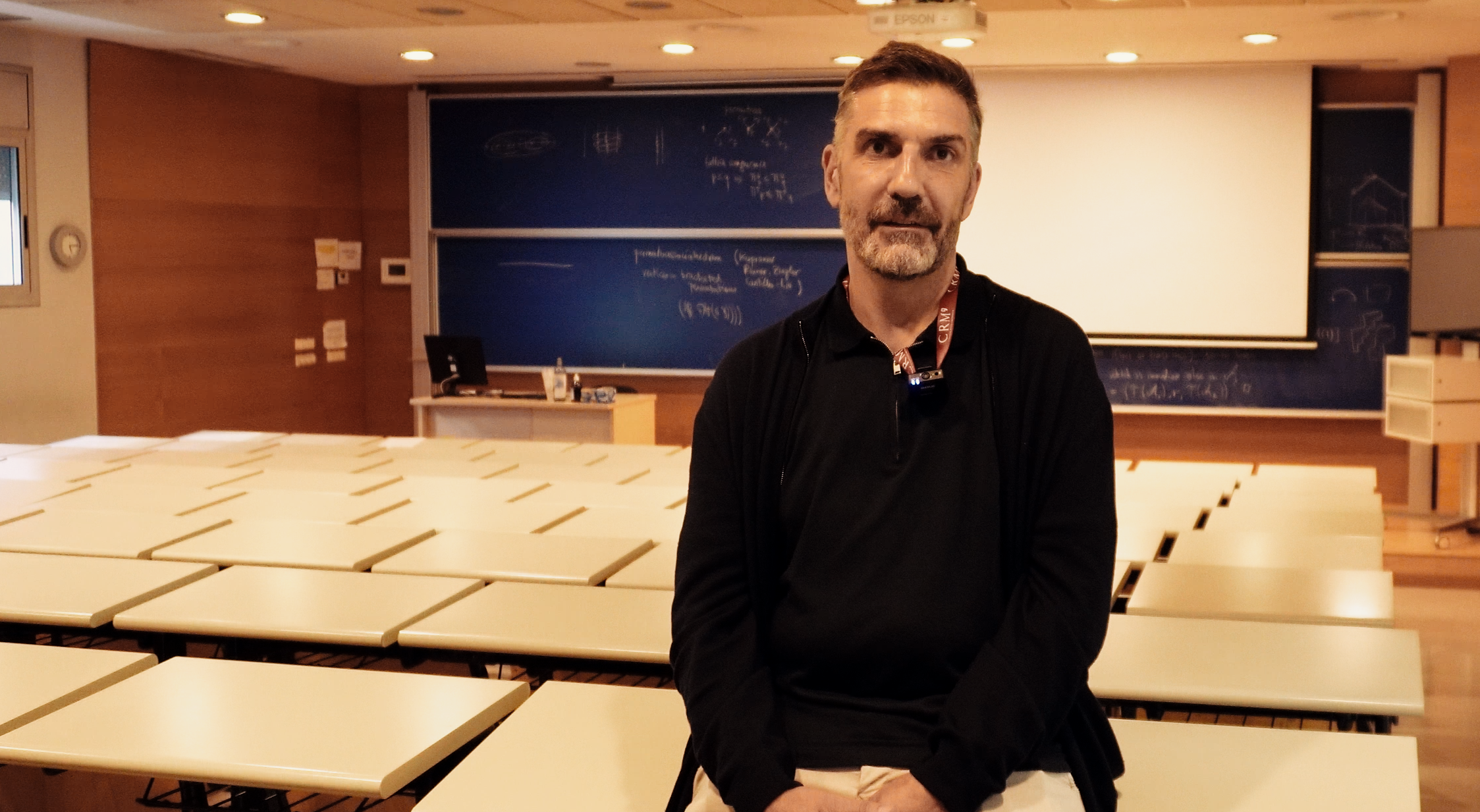
- The XIII GEFENOL-DIFENSC Summer School gathered over thirty researchers from across Europe to explore how statistical physics helps explain complex phenomena in biology, ecology, networks, and social systems.
- In his closing lecture, Jordi Mompart (UAB) examined how artificial intelligence is reshaping sport through data analysis.
- Mompart connected these developments to the broader framework of complex systems physics and reflected on the value of fundamental research.
This year’s edition gathered more than thirty researchers from leading European institutions, including the École Polytechnique Fédérale de Lausanne (EPFL), Universidad Complutense de Madrid, Universitat de Barcelona, Universitat Politècnica de Catalunya, Universitat de les Illes Balears, Universitat Rovira i Virgili, University Grenoble Alpes, and the CRM itself. This diversity of origins and disciplines underscores the school’s interdisciplinary character and its ongoing role as a forum where physics, biology, mathematics, and data science intersect.
The closing talk was delivered by Jordi Mompart, professor at the Universitat Autònoma de Barcelona (UAB), under the title Artificial intelligence in a sports club. Discussing the growing influence of AI, he identified two main areas where its impact is most evident: data analysis and smart stadiums. “In the world of sport, there are two verticals where data and artificial intelligence are beginning to have a very large impact,” he explained. “Tracking data, combined with artificial intelligence algorithms, is used for pre-match, post-match, and scouting analyses in a highly professional way.” He also highlighted how new technologies are changing the infrastructure of sport itself. “Many clubs are renovating or building new stadiums, and these stadiums have many devices. This is the world known as the Internet of Things,” he said. “These devices produce vast amounts of data that are highly relevant for maintenance, operations, and security.”
“Complex systems are everywhere. They can be found in the study of how cancer progresses in the body, in the movement of bees or bird migration, in market behaviour or social network interactions. But they also exist in the world of entertainment and in football.”
Mompart linked these transformations to the core concepts of complex systems physics, one of the main focuses of GEFENOL. “Complex systems are everywhere,” he noted. “They can be found in the study of how cancer progresses in the body, in the movement of bees or bird migration, in market behaviour or social network interactions. But they also exist in the world of entertainment and in football. We all know that individual players are important, but players form associations and ultimately constitute a complex system.”
He also underscored the role of basic research in driving today’s technological breakthroughs. “Things start in the academic world; then, if they work, they move into engineering and eventually reach the market,” he said. “Scientists who work deeply in a specific field of knowledge can see whether one day it will make its way to the market. Those who worked on the foundations of quantum computing knew that sooner or later it would emerge; the same is true for artificial intelligence.”
Mompart emphasised that academic training develops valuable skills applicable beyond research. “The fact that scientists attend conferences, teach, and can explain things in depth but clearly is very valuable,” he said. “These skills developed through research and teaching have been very useful to me in the business world. There’s a certain shortage of people with an academic background who have this analytical and explanatory ability.” For him, mastering the fundamentals of a discipline remains essential. “Having worked on the foundations of a field of knowledge is very rewarding, because there’s depth, there are mistakes, and you learn from mistakes,” he reflected. “Having gone through them before anyone else gives you a competitive advantage.”
With his talk, Mompart closed another edition of the GEFENOL‑DIFENSC Summer School, which continues to consolidate its status as a forum for interdisciplinary dialogue aimed at understanding the collective mechanisms that shape the world.
You can listen to the full interview on CRM’s YouTube channel.
|
|
CRM CommPau Varela
|

When the reward comes within reach, the brain changes what it compares
As the tokens piled up, choices got faster and more accurate at the same time. The yardstick for judging each offer had moved.CRM CommPau VarelaCRMComm@crm.catGet the latest CRM news and activities in your inbox.Recent newsletters →Two subjects...
Almost every automaton can be reset with a short word
Guillaume Chapuy (Université Paris Cité, CNRS) and Guillem Perarnau (UPC, CRM) have shown that a random finite automaton with n states can, with high probability, be reset by a word of length of order √n log n. The result, published in ACM Transactions on Algorithms, pins the exponent at 1/2, the lower end of a decade of numerical estimates, and addresses the random version of the synchronization problem behind a conjecture Ján Černý posed in 1964 and which still remains open.
Exposició ‘Les matemàtiques de Gaudí’
CRM quod erat demonstrandum | 48
ADA: Decoding Brain Signals Misaligned in Time
The study addresses a key limitation of current brain decoding techniques: the difficulty of interpreting internal mental processes whose temporal dynamics vary from trial to trial.Decoding what is happening in a person’s mind from their brain activity is one of the...
Rare curves, many points: Christophe Ritzenthaler and Rachel Pries on their research and the work around it
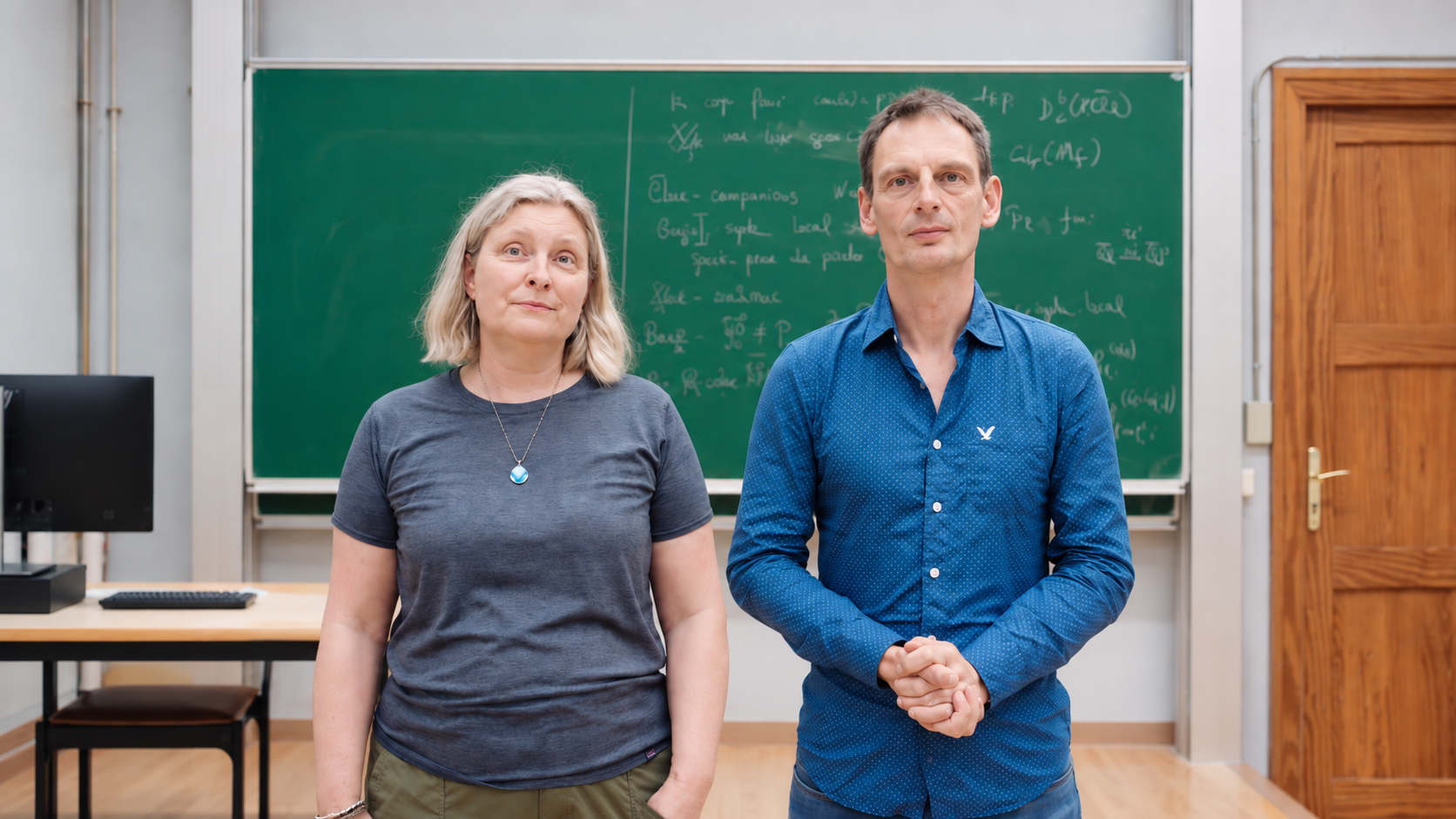
Christophe Ritzenthaler (Université de Rennes) and Rachel Pries (Colorado State University) both work on curves over finite fields: he hunts curves with as many points as possible, she hunts curves that almost never occur. In conversation with the CRM during their...
Call open for the 2027 Ferran Sunyer i Balaguer Prize
The Ferran Sunyer i Balaguer Foundation is accepting submissions for its 2027 prize, which awards 15,000 euros and publication in Birkhäuser's Progress in Mathematics series to an expository monograph on an active area of mathematical research. The deadline is 27...
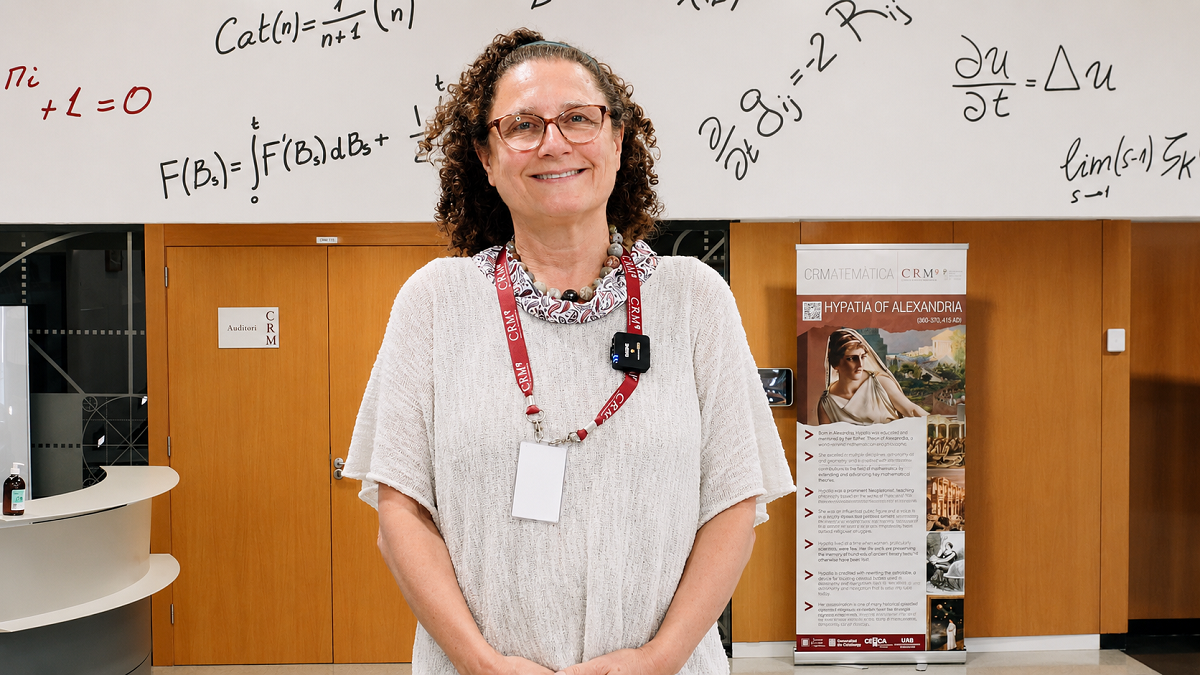
Susanna Terracini delivers the CRM Colloquium 2026
Susanna Terracini (Università di Torino) delivered the CRM Colloquium 2026 on 14 July, presenting a rigidity result for Kepler billiards obtained with Stefano Baranzini, Vivina Barutello and Irene De Blasi. She was at the centre as a member of the CRM Scientific...
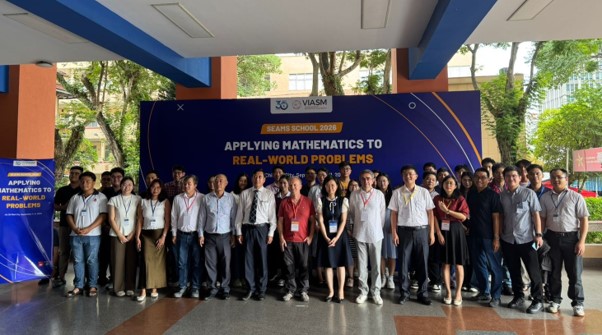
Ho Chi Minh City hosts the SEAMS School on applying mathematics to real-world problems
Students from across the region took courses and worked on group projects at a school co-organised by CRM researcher Tim Myers.CRM CommPau VarelaCRMComm@crm.catGet the latest CRM news and activities in your inbox.Recent newsletters →Between 4 and...

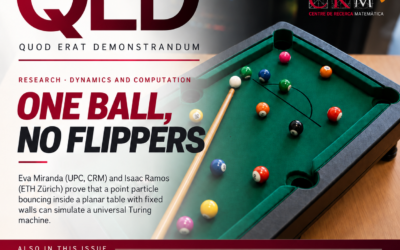
A single ball on a fixed table can compute: Eva Miranda and Isaac Ramos prove that two-dimensional billiards are Turing complete
Eva Miranda (UPC, CRM) and Isaac Ramos (ETH Zürich) show that a point particle bouncing inside a planar table with fixed walls can simulate a universal Turing machine, settling a question Cristopher Moore left open in 1990. The result grew out of a master’s project...
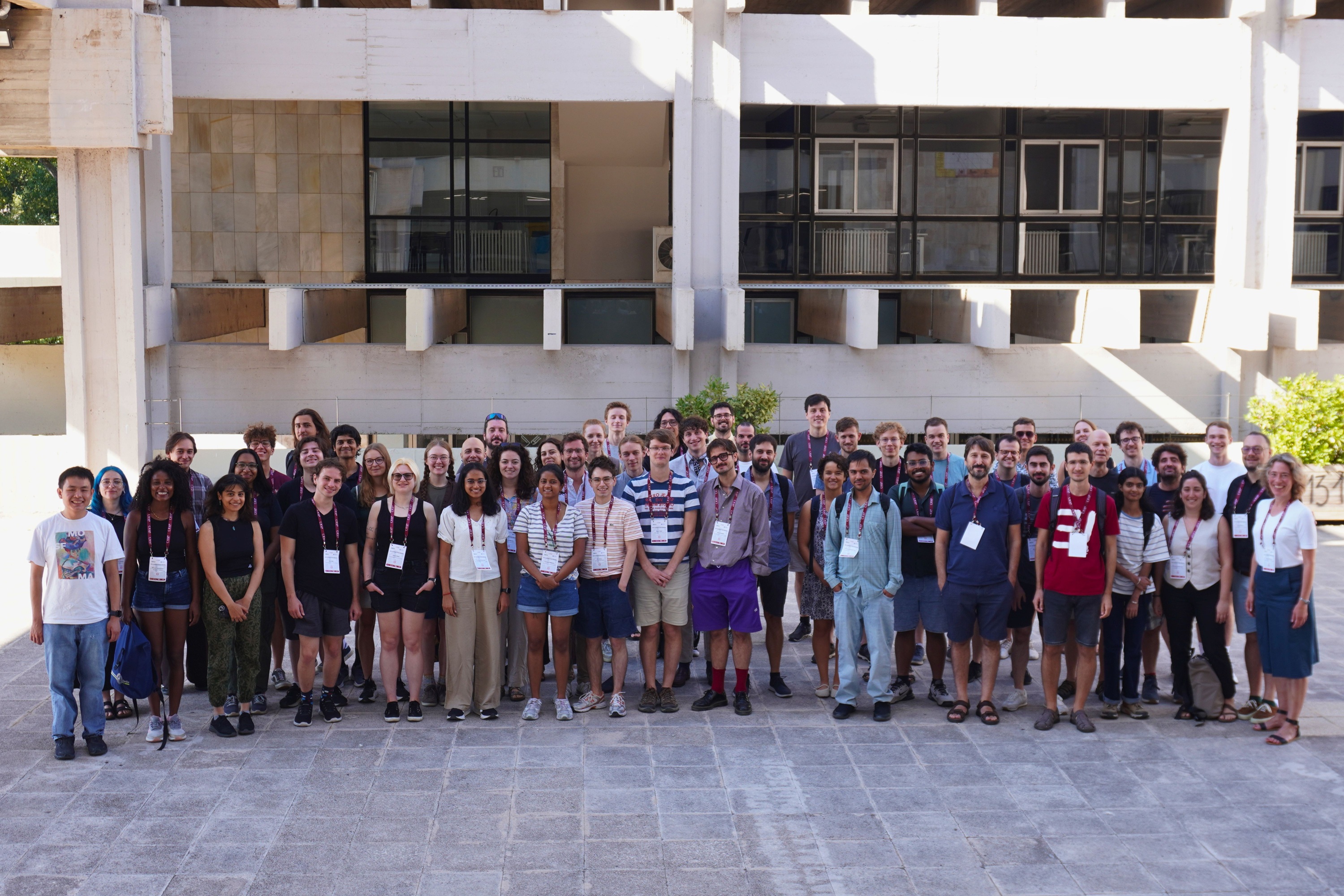
BMS-BGSMath Junior Meeting 2026: Barcelona and Berlin Strengthen Scientific Ties
From 2 to 4 September 2026, the Centre de Recerca Matemàtica (CRM) hosted the BMS-BGSMath Junior Meeting 2026, a three-day event jointly organised by the Berlin Mathematical School (BMS) and the Barcelona Graduate School of Mathematics (BGSMath), with the Centre de...
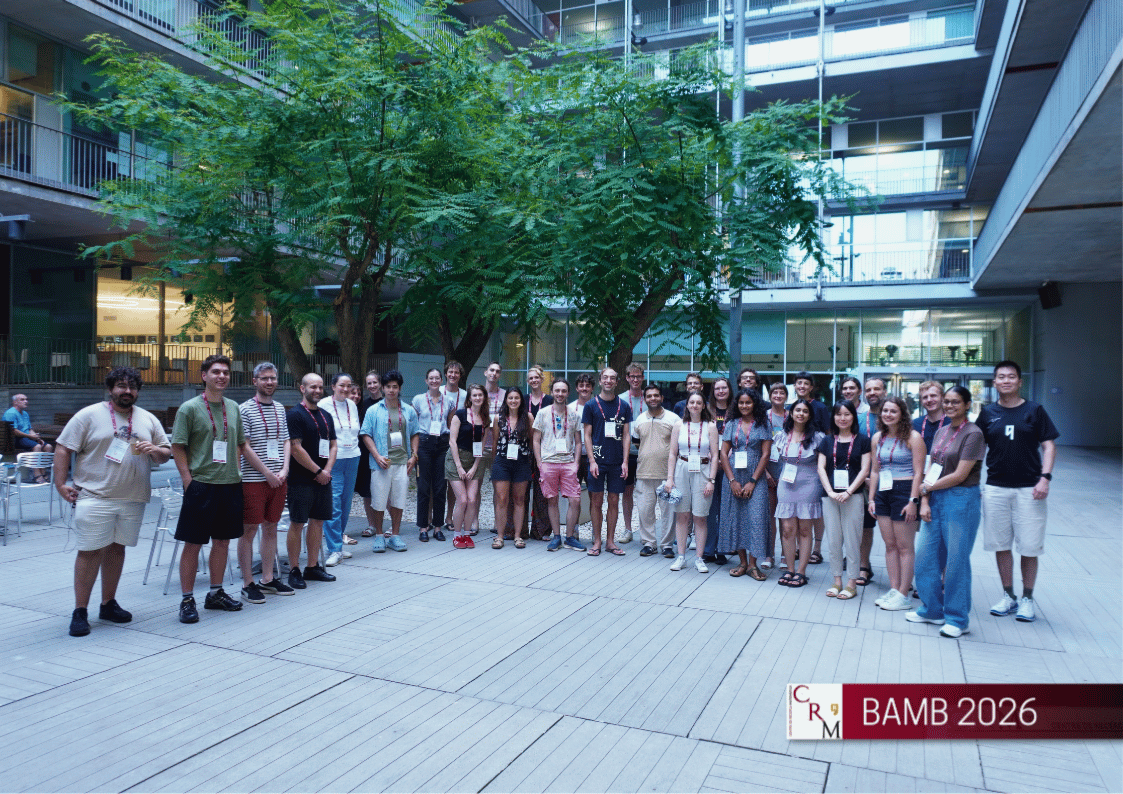
The CRM organises the 2026 Barcelona Summer School for Advanced Modeling of Behavior
The Centre de Recerca Matemàtica held the sixth edition of BAMB!, the Barcelona Summer School for Advanced Modeling of Behavior, from 12 to 23 July 2026 at the Parc de Recerca Biomèdica de Barcelona. Thirty early-career researchers from fourteen countries followed...