
Researchers Tom Koornwinder (U. Amsterdam) and Marta Mazzocco (ICREA-UPC-CRM) published a paper in Indagationes Mathematicae exploring DAHA symmetries. Their work shows that these symmetries shift Askey–Wilson polynomials into a continuous functional setting,and introduce an explicit decomposition of the non‑symmetric Askey–Wilson function into symmetric and anti‑symmetric parts. This work offers new structural insight into how certain DAHA automorphisms act across polynomial and functional settings within the q‑Askey scheme, without altering the established links with representation theory.
 and non‑symmetric Askey–Wilson functions in Indagationes Mathematicae. In this work, the authors analyze the internal symmetries of double affine Hecke algebras (DAHA) and study how these symmetries act on Askey‑Wilson (AW) polynomials and functions, both in the symmetric and non‑symmetric settings.
At first glance, one expects symmetries to move neatly within the world of polynomials. But some symmetries behave like a zoom tool: once applied, the picture demands higher resolution. What looked discrete (polynomials) must be viewed in a continuous setting (functions) for the transformation to make full sense. The paper leverages this change of scale to illuminate where the natural language of DAHA symmetries truly lives.
The work focuses on the relationship between algebraic structures and special functions—fundamental objects in representation theory and mathematical analysis—with deep connections to harmonic analysis and mathematical physics.
A well‑known structure — still with unanswered questions
Double affine Hecke algebras (DAHA), introduced by Cherednik, are central in representation theory and in the study of special functions. In the rank‑one case, the DAHA of type  is closely related to Askey–Wilson polynomials and functions, which occupy the top level of the q‑Askey scheme of orthogonal polynomials.
Previous works had identified actions of various symmetry groups—such as modular groups or Weyl‑type groups—on operators associated with the DAHA and even on the algebra itself. However, a systematic account of how these symmetries act on the relevant eigenfunctions, in particular on Askey–Wilson polynomials and functions, was still missing. In particular, it was unclear whether these symmetries preserve the polynomial world or require a broader functional framework.
Moreover, the DAHA of type is related to the Painlevé VI equation through the quantization of its monodromy group. This naturally raises the question of to what extent the classical symmetries of Painlevé VI can be lifted to the DAHA level.
What happens when a symmetry changes the rules
In this work, the authors initiate a research programme aimed at studying—and potentially classifying—the symmetries of the DAHA of type and of the Zhedanov algebra, as well as understanding how the symmetries of these two structures are related and how they act on Askey–Wilson polynomials and functions.
One of the most striking results is the detailed analysis of a specific symmetry, denoted  , which acts in a simple way on the Askey–Wilson parameters. Surprisingly, this transformation does not preserve the class of polynomials, but instead maps Askey–Wilson polynomials to Askey–Wilson functions, revealing a natural mechanism that connects these two objects and showing that the functional setting is the most appropriate one for studying certain DAHA symmetries.
In other words, the symmetry works best when you change scale: from the discrete grid of polynomials (pixels) to the continuous image of functions.
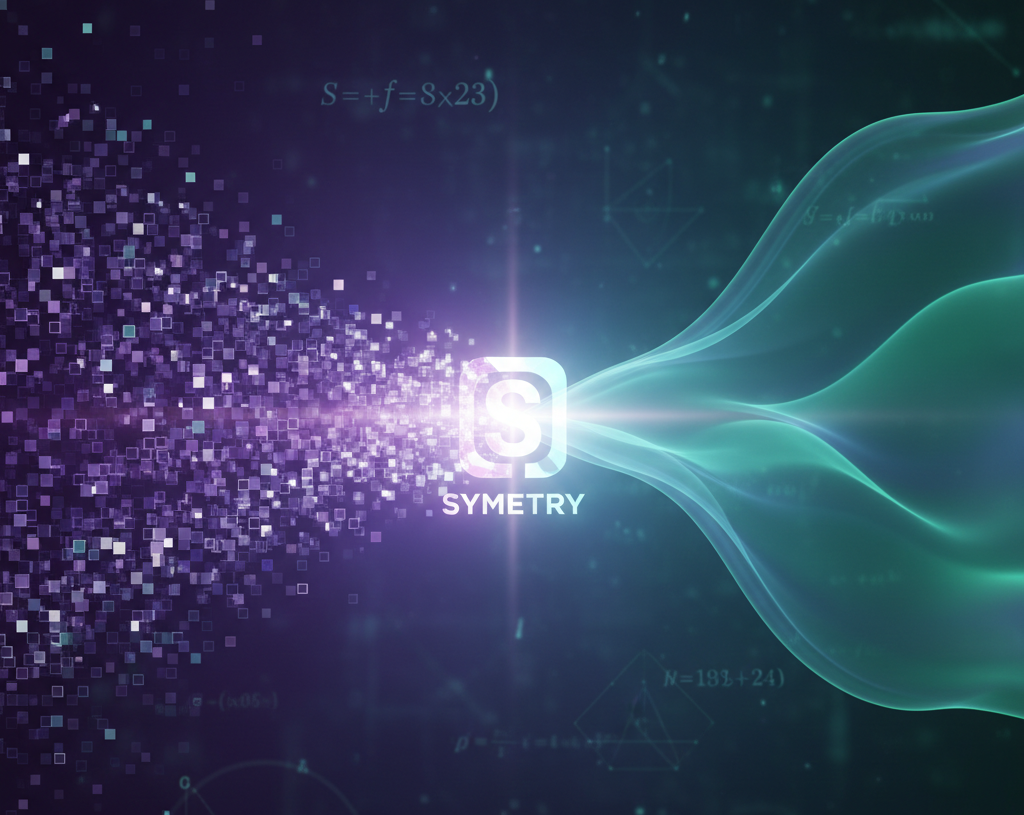
In addition, the authors propose a precise definition of the non-symmetric Askey–Wilson function in the rank‑one case, based on the Cherednik–Stokman kernel, and show that this function admits an explicit decomposition into a symmetric part and an anti-symmetric part. This decomposition allows for a clear description of its spectral properties and its behaviour under DAHA symmetries. Think of the non‑symmetric AW function like an image decomposed into two complementary color layers: warm tones (symmetric layer) and cool tones (anti‑symmetric layer). Each layer is meaningful on its own, but together they render the full picture with contrast and direction. This is exactly what the decomposition achieves: it reveals the internal structure that only becomes visible once you’ve changed scale from polynomials to functions.

Overall, the work combines techniques from algebra, analysis, and the theory of special functions, offering a unified perspective on how algebraic symmetries are reflected in concrete transformations of functions.
A wider landscape for special functions
The results of this article open several promising research directions. On the one hand, they clarify the role of DAHA automorphisms as bridges between different types of special functions, suggesting that analogous transformations may exist in higher rank or for other types of Hecke algebras.
On the other hand, the systematic study of non-symmetric Askey–Wilson functions reinforces their importance as fundamental objects, with potential applications in non-commutative harmonic analysis, representation theory, and models of mathematical physics related to quantum symmetries.
Finally, this work contributes to a deeper understanding of the q-Askey scheme and its internal symmetries, representing an important step towards a more global theory connecting orthogonal polynomials, Hecke algebras, and algebraic geometry.
Symmetry here acts like a change of scale: it asks us to move from the discrete world of polynomials to the continuous world of functions.
By shifting the focus to Askey–Wilson functions, this work shows where the natural language of DAHA symmetries truly lives.
From this unified viewpoint, new paths emerge toward deeper structures, richer connections, and future breakthroughs across mathematics and mathematical physics.

|
|
CRM CommNatalia Vallina
|
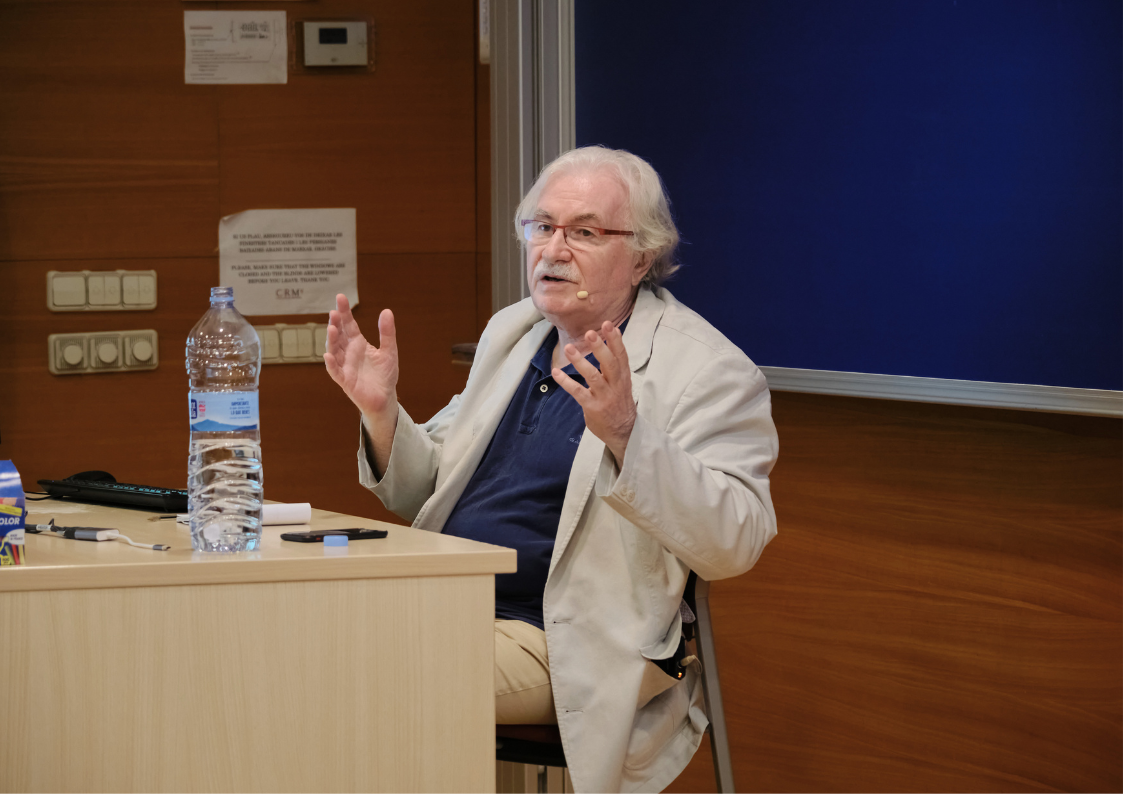
Yves Chevallard (1946–2026)
Yves Chevallard passed away on 16 March 2026. He was 79 years old. Born in Tunis, he trained at the École normale supérieure in Paris, where he earned an agrégation de mathématiques. He went on to become a professor at Aix-Marseille Université, and it was there, over...

The CRM participates in a European project studying decision-making and risk perception in mountain environments
The NeuroMunt project (POCTEFA, coordinated by the Université de Perpignan Via Domitia) studies how people make decisions under risk conditions in mountain environments, bringing together researchers from France and Spain across disciplines ranging from complex...
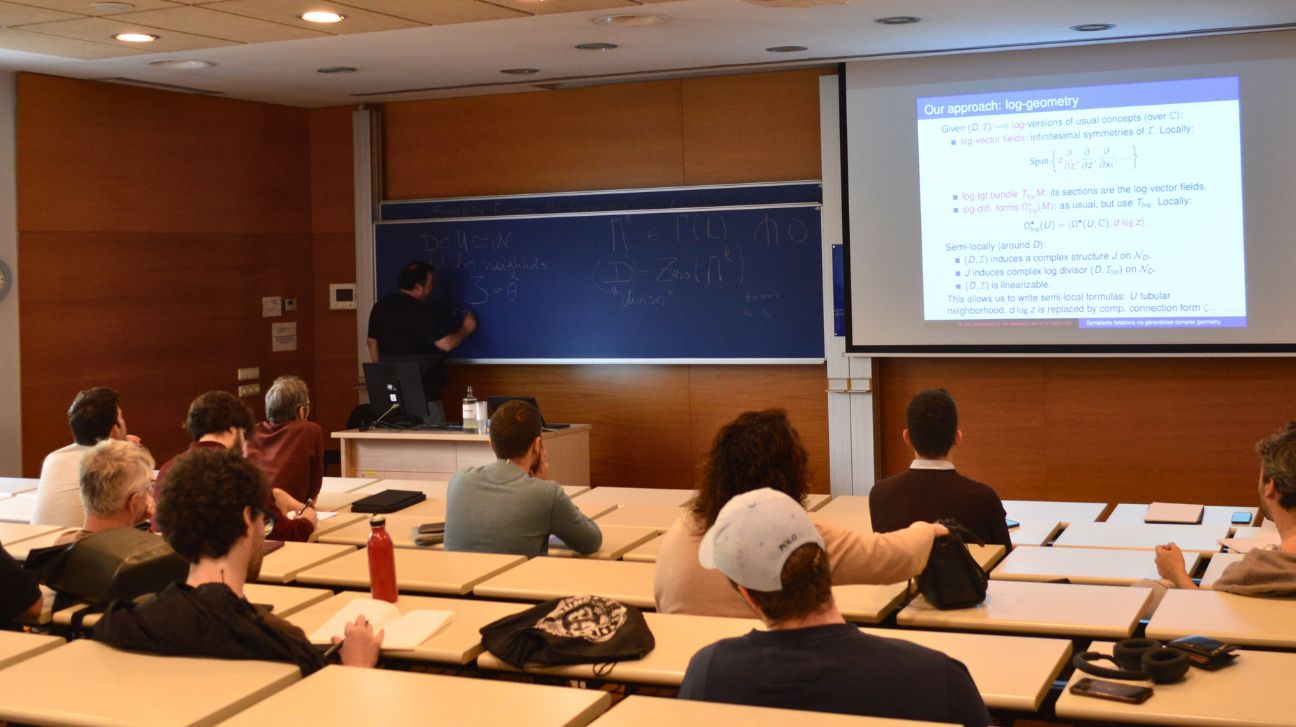
One Day, One Family, One Place: Poisson Geometry at CRM
On March 23rd, 2026, the Centre de Recerca Matemàtica hosted the thematic day “Poisson Geometry and Its Relatives”, a full‑day event that brought together researchers exploring Poisson geometry and several of its neighbouring areas. The programme combined classical...
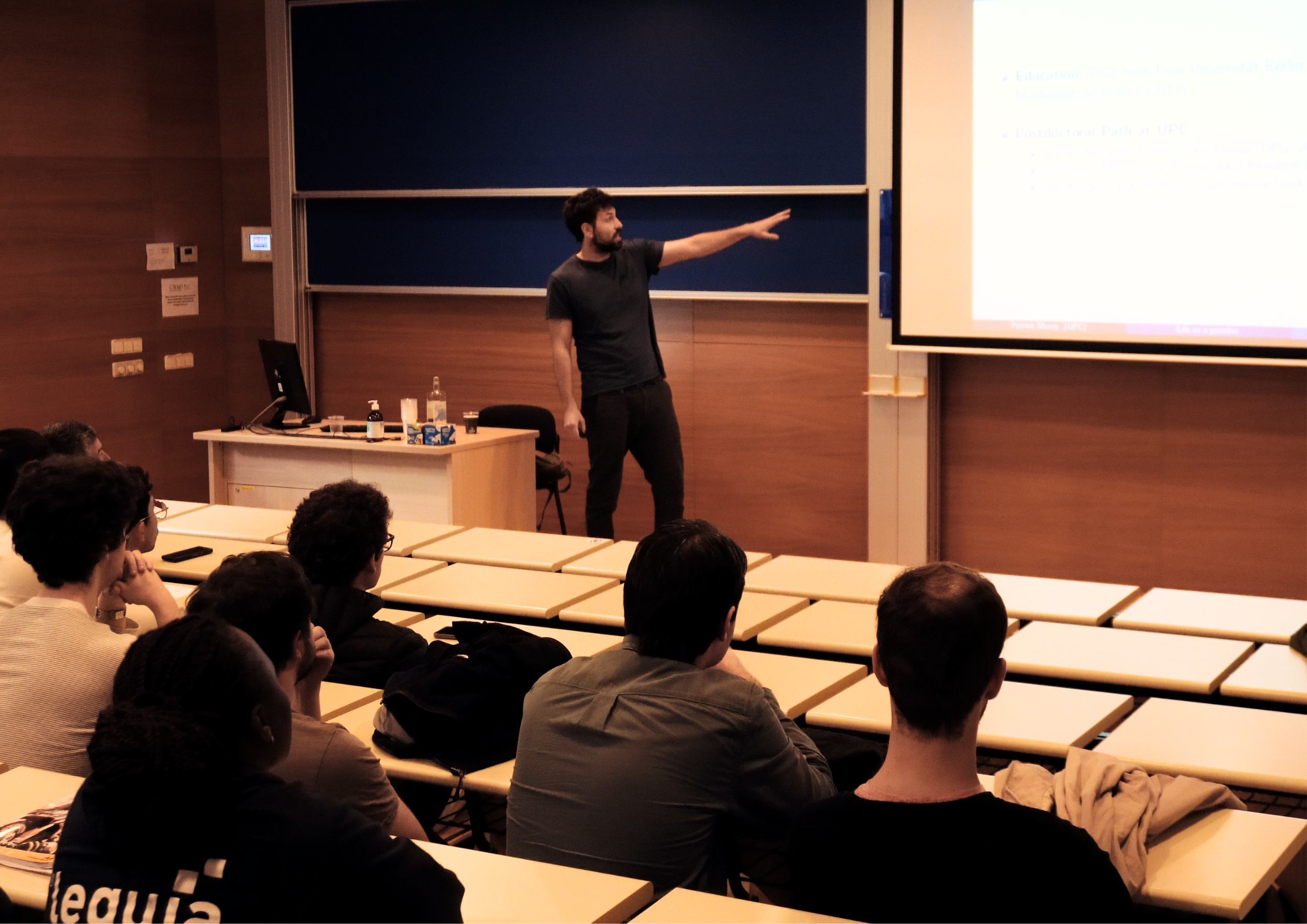
Life After the PhD: Three Roads Forward
On March 18, the BGSMath held its first session on careers after a PhD in mathematics, bringing together three speakers with different professional trajectories and 46 early-career researchers from nine institutions.On March 18, the Barcelona Graduate School of Math...
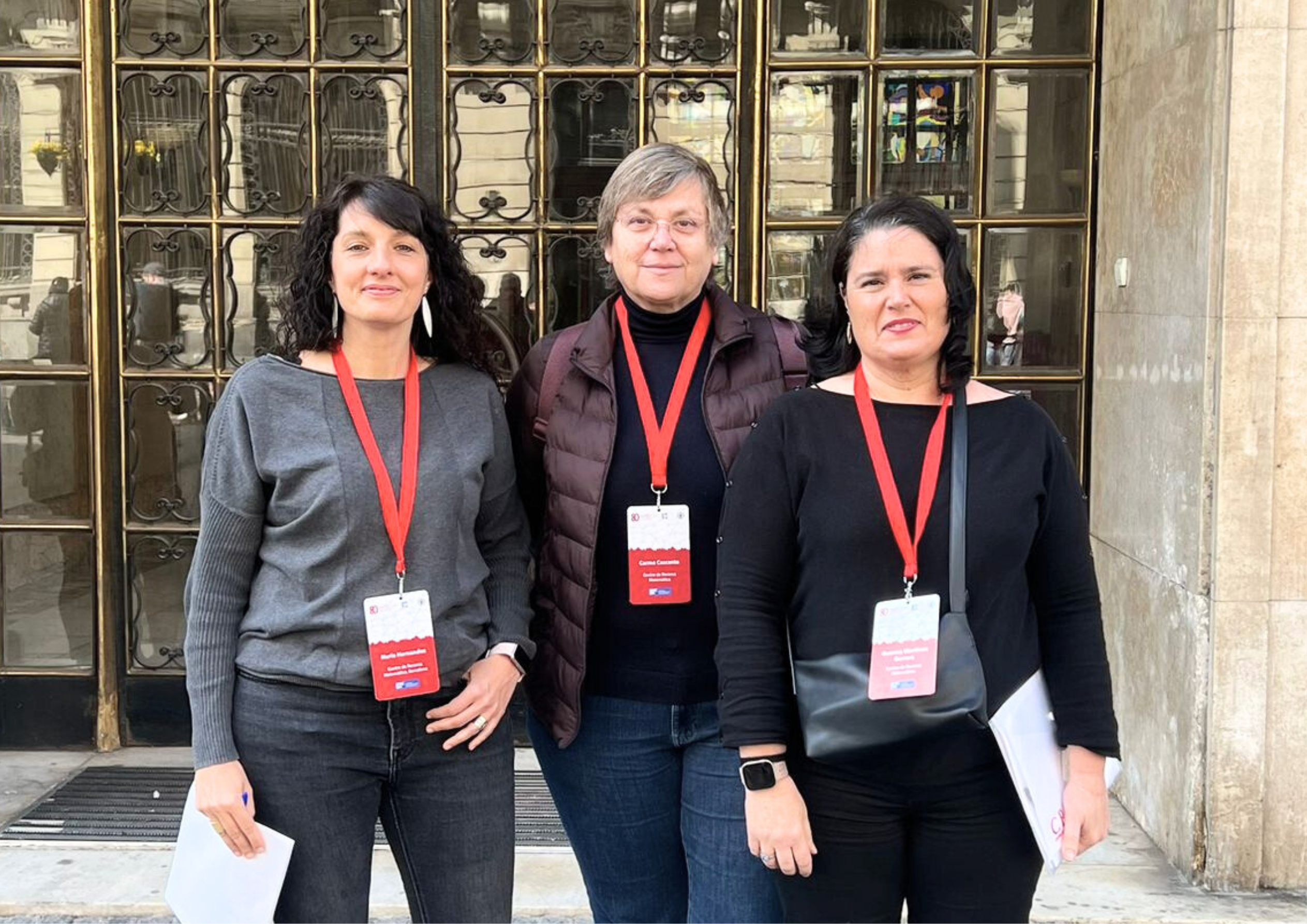
CRM participates in the 2026 ERCOM annual meeting in Belgrade
The CRM participated in the 2026 ERCOM annual meeting in Belgrade (20–21 March), represented by Director Carme Cascante, Manager Gemma Martínez, and Scientific Activities Manager Núria Hernández. The programme focused on multidisciplinarity, mathematics and the arts,...
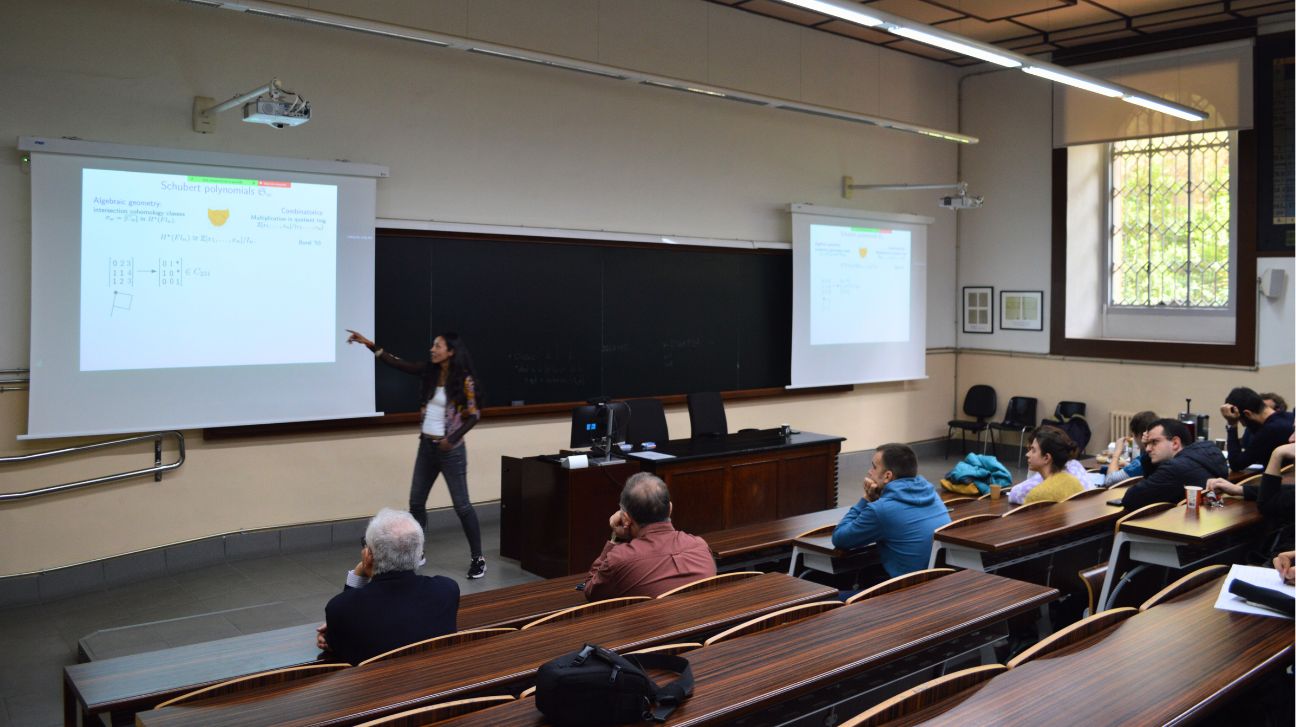
5 Talks, 1 Topic: A Day of Combinatorics
On March 18th, 2026, the 5 Talks in Combinatorics thematic day took place in the Joan Maragall Room at the Faculty of Philology and Communication of the University of Barcelona, in the historic building. The event focused on modern combinatorics and its connections...
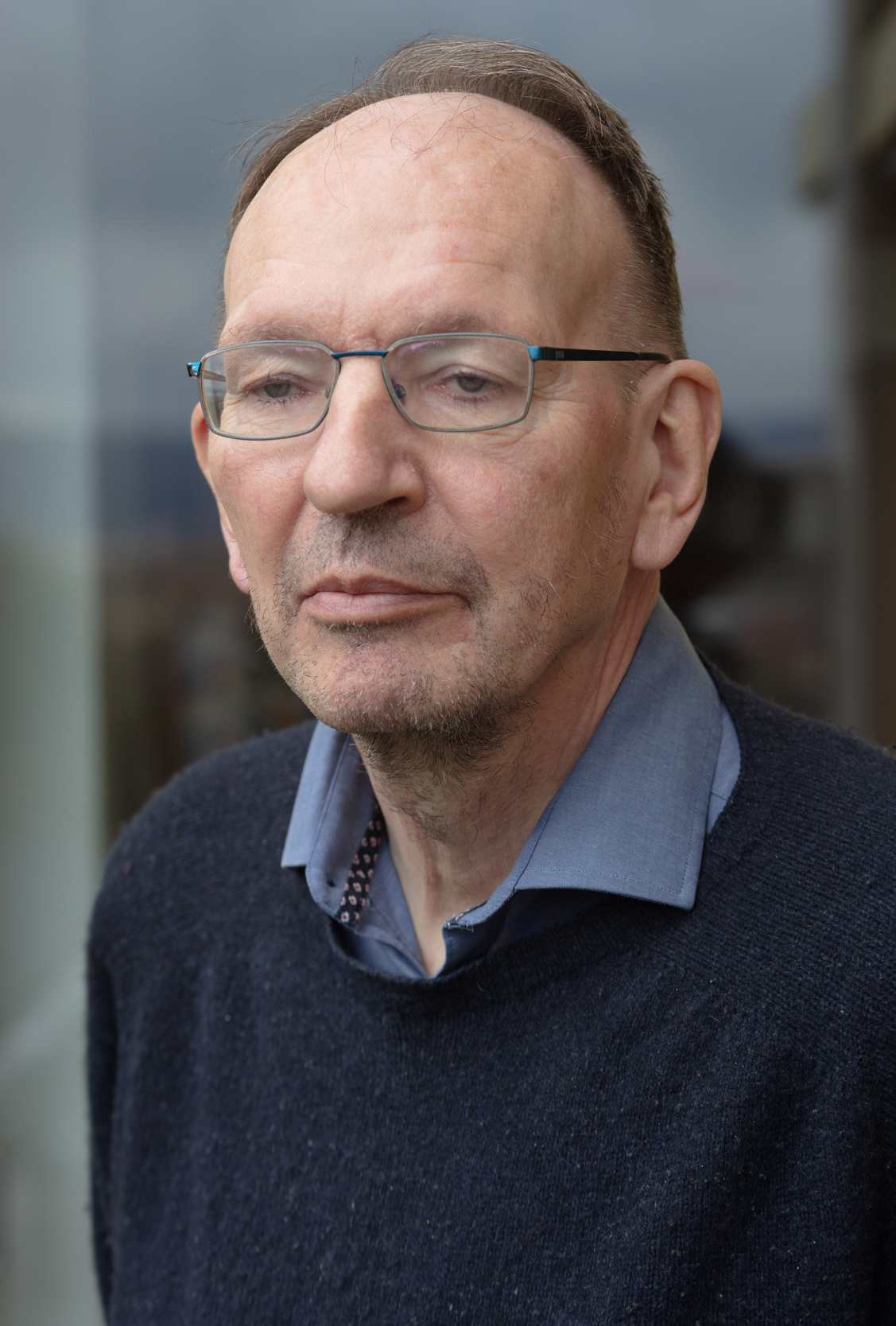
Gerd Faltings Awarded the 2026 Abel Prize for Transformative Work in Arithmetic Geometry
The Norwegian Academy of Science and Letters has recognised the German mathematician for solving two of the most enduring open problems in the field.The Norwegian Academy of Science and Letters announced today that the 2026 Abel Prize goes to Gerd Faltings, director...
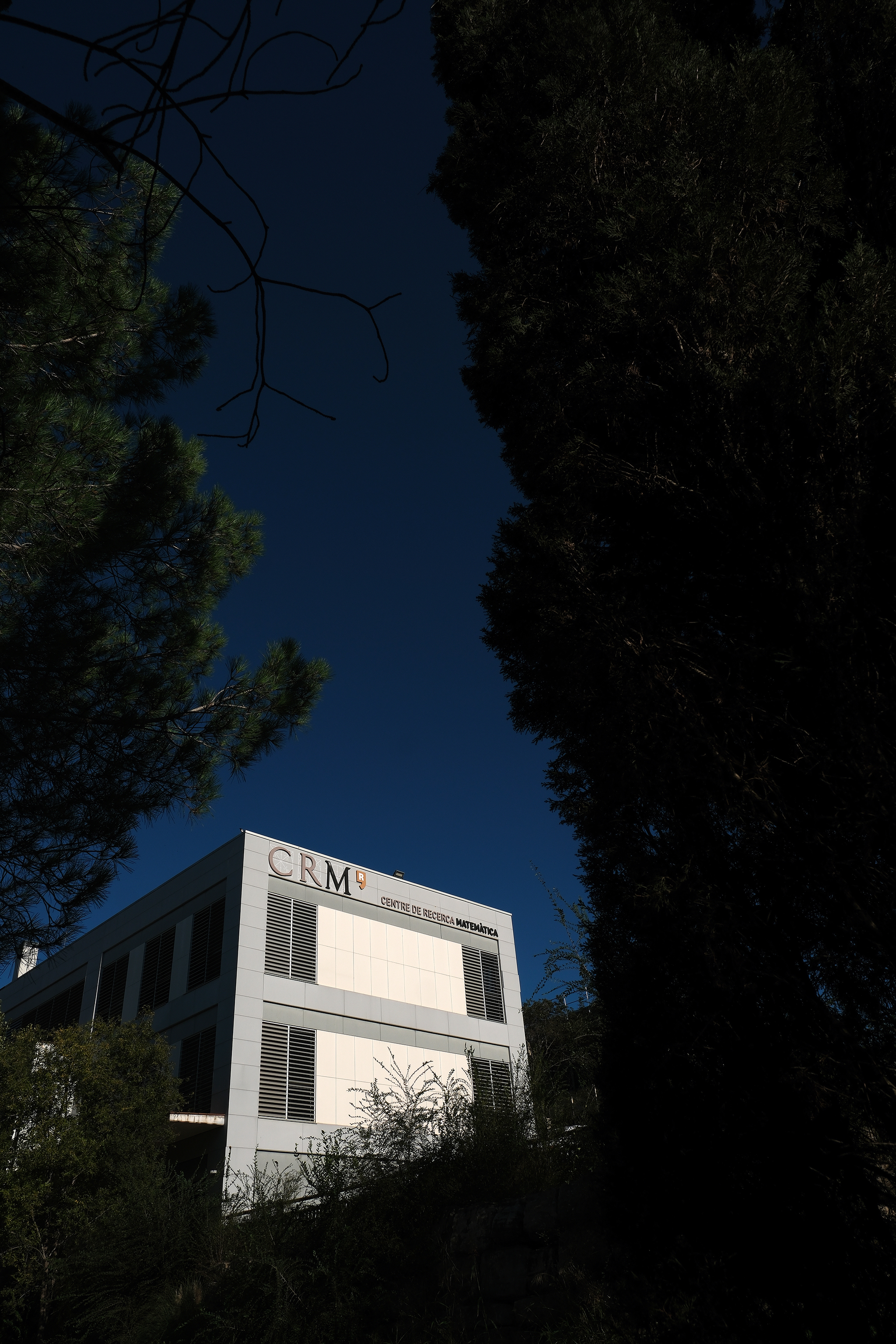
The Centre de Recerca Matemàtica Approves Its Strategic Plan for 2026–2030
The Centre de Recerca Matemàtica has approved its Strategic Plan for 2026 - 2030, setting priorities in research, training, and knowledge transfer. Four flagship initiatives anchor the scientific programme. The Centre de Recerca Matemàtica approved its Strategic Plan...
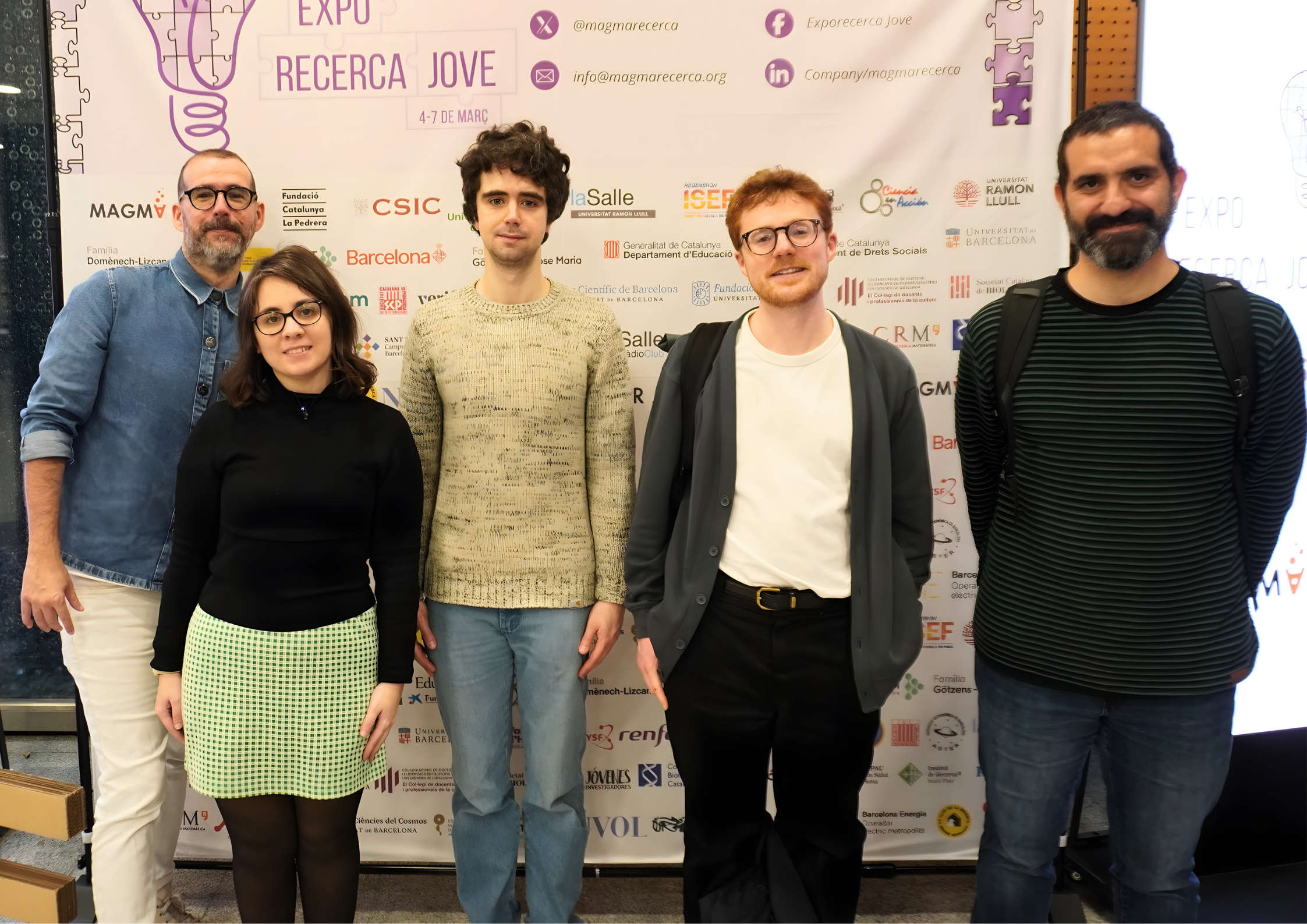
CRM Awards Its Prize at Exporecerca Jove for the Third Time
For the third year running, CRM visited Exporecerca Jove to award its prize to the student project with the strongest mathematical content. This edition, the jury selected two winners: Xavier Ortiz Quintana, who built a real-time 3D scanner using...
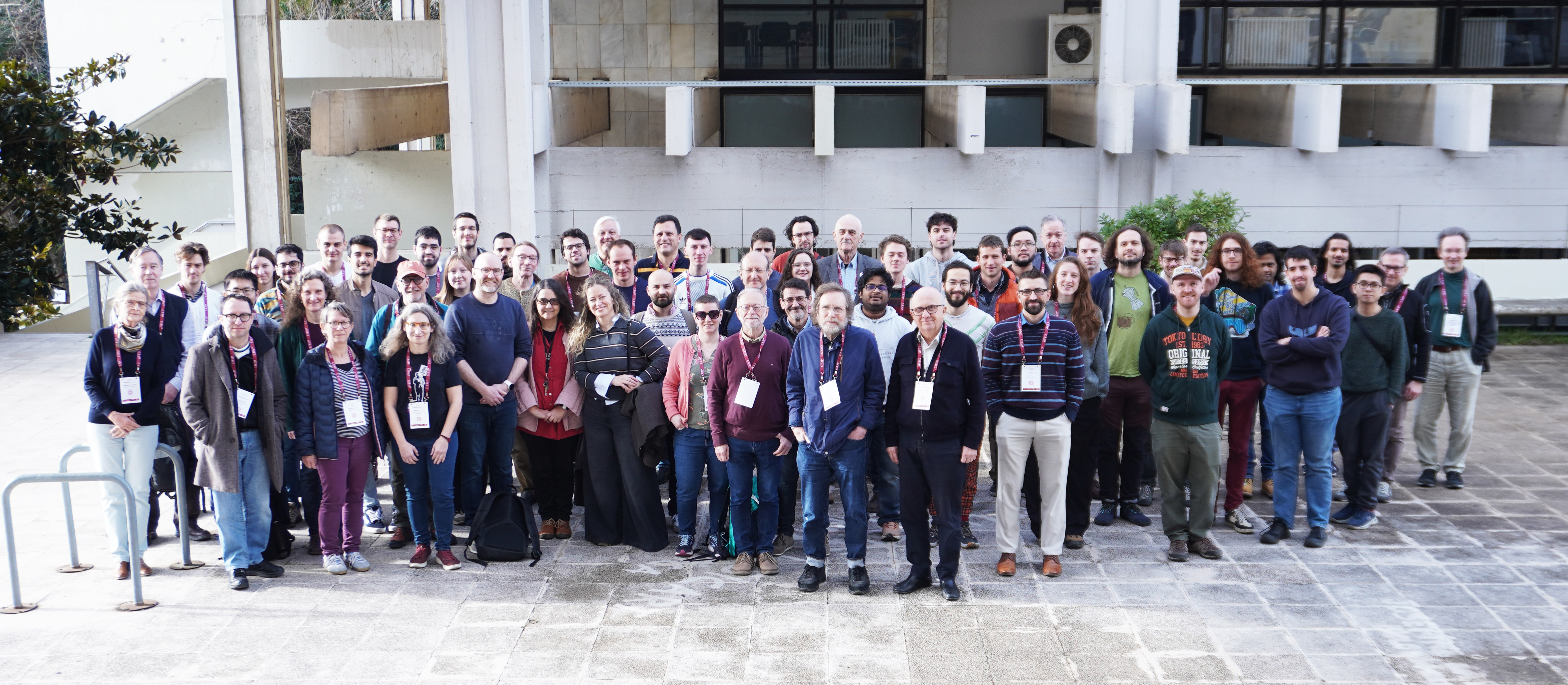
Homotopy Theory Conference Brings Together Diverse Research Perspectives
The Centre de Recerca Matemàtica hosted 75 mathematicians from over 20 countries for the Homotopy Structures in Barcelona conference, held February 9-13, 2026. Fourteen invited speakers presented research spanning rational equivariant cohomology theories, isovariant...
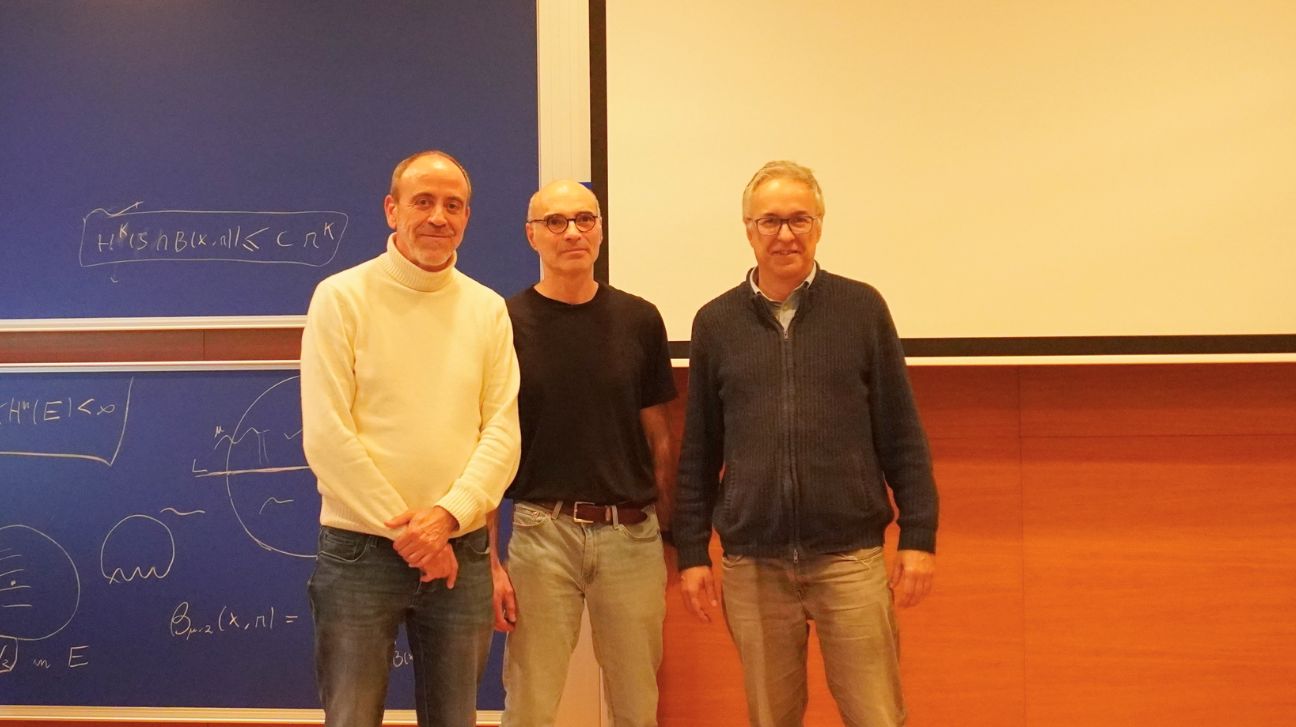
Three ICM speakers headline the first CRM Faculty Colloquium
On 19 February 2026, the Centre de Recerca Matemàtica inaugurated its first CRM Faculty Colloquium, a new quarterly event designed to bring together the mathematical community around the research carried out by scientists affiliated with the Centre. The CRM auditorium...