
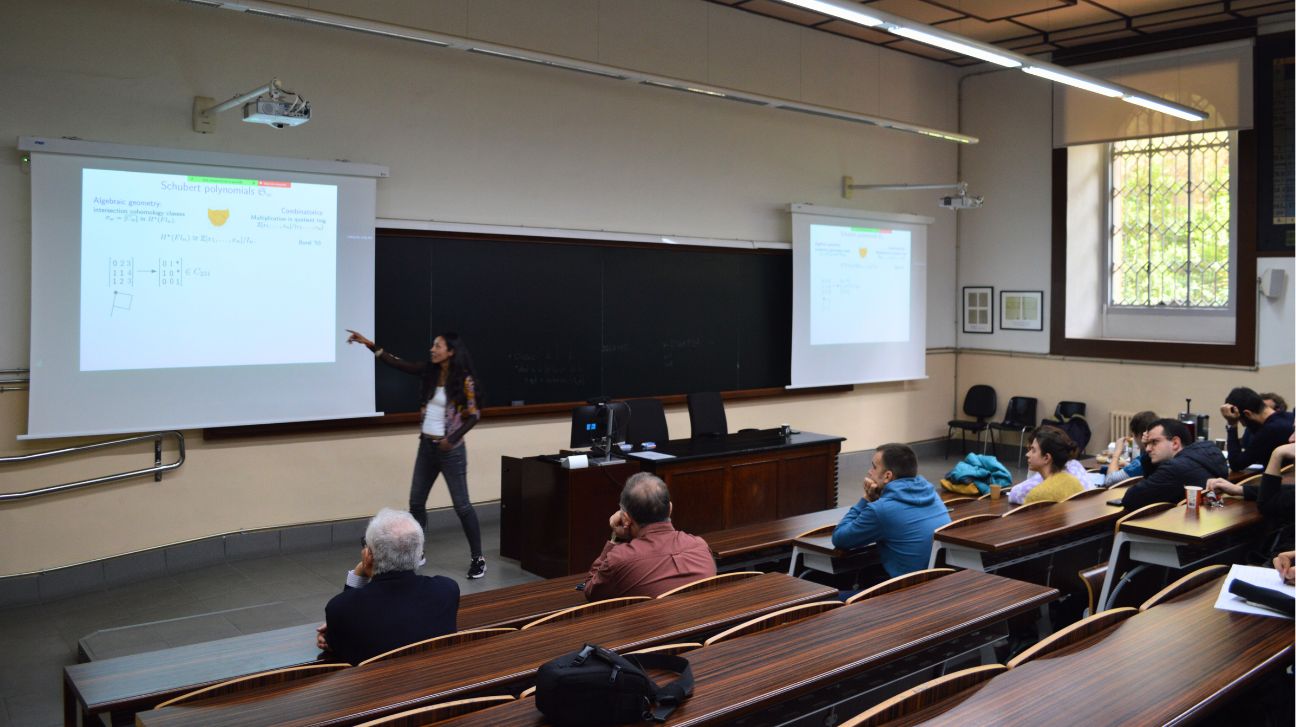
On March 18th, 2026, the 5 Talks in Combinatorics thematic day took place in the Joan Maragall Room at the Faculty of Philology and Communication of the University of Barcelona, in the historic building. The event focused on modern combinatorics and its connections with algebra, geometry, information theory, and discrete mathematics. Five international researchers participated in an intensive one-day programme.
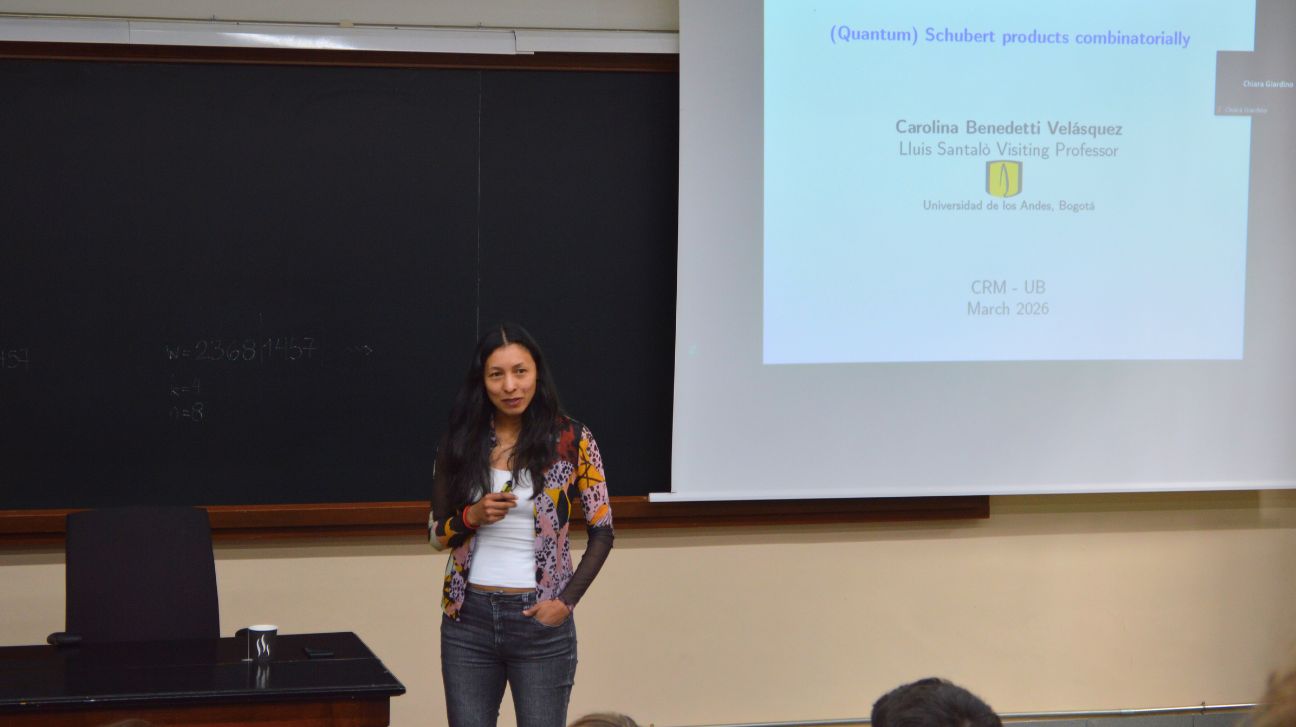
1. Carolina Benedetti Velásquez: opening talk and Lluís Santaló Fellow 2026
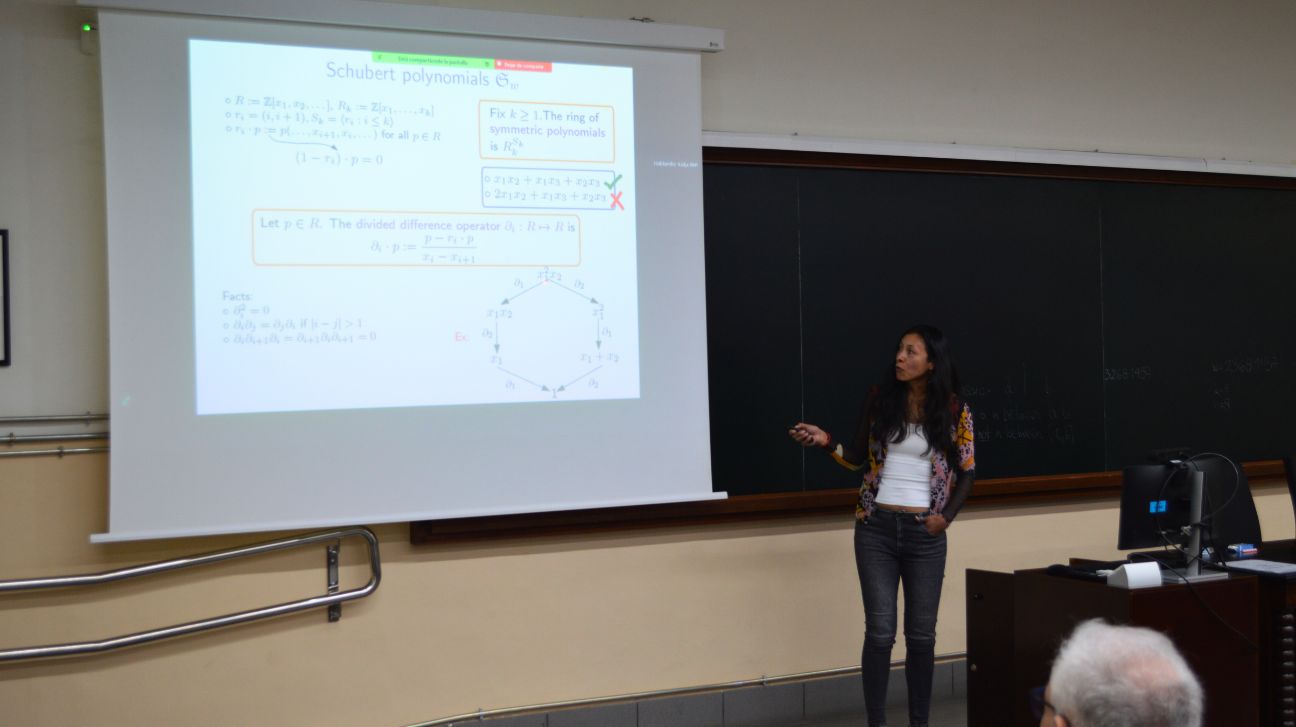
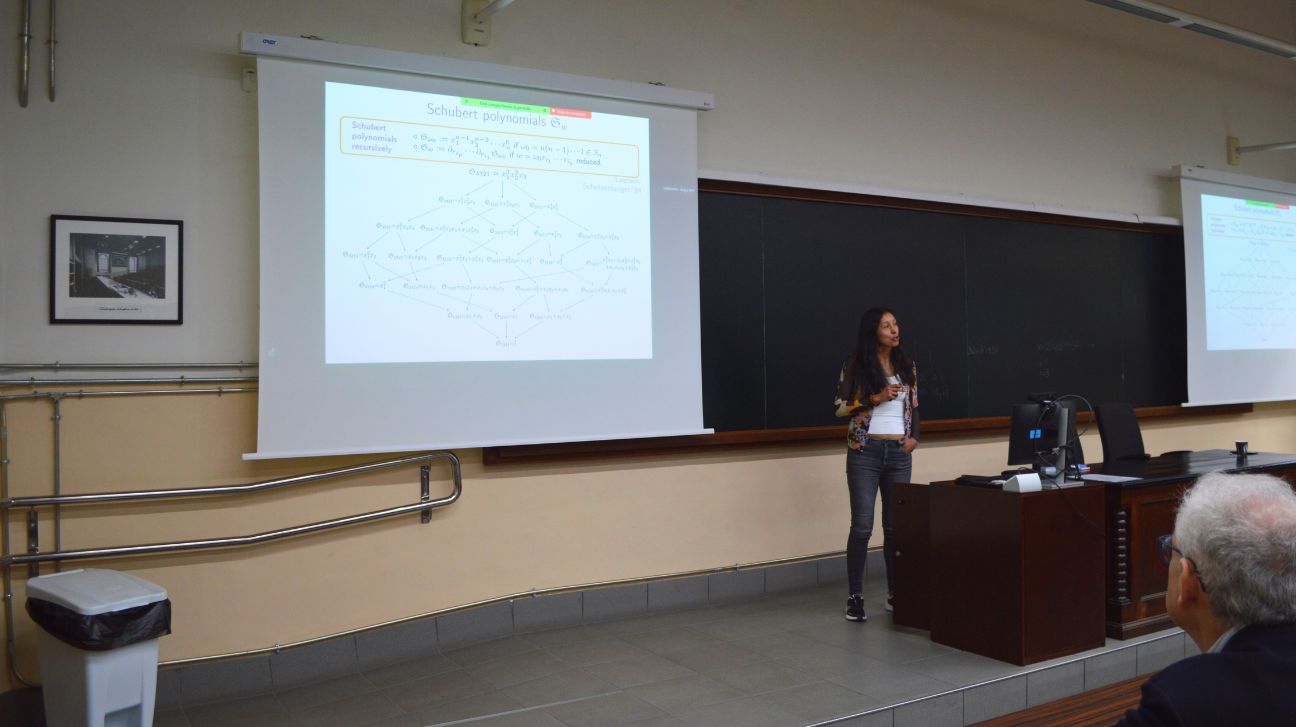
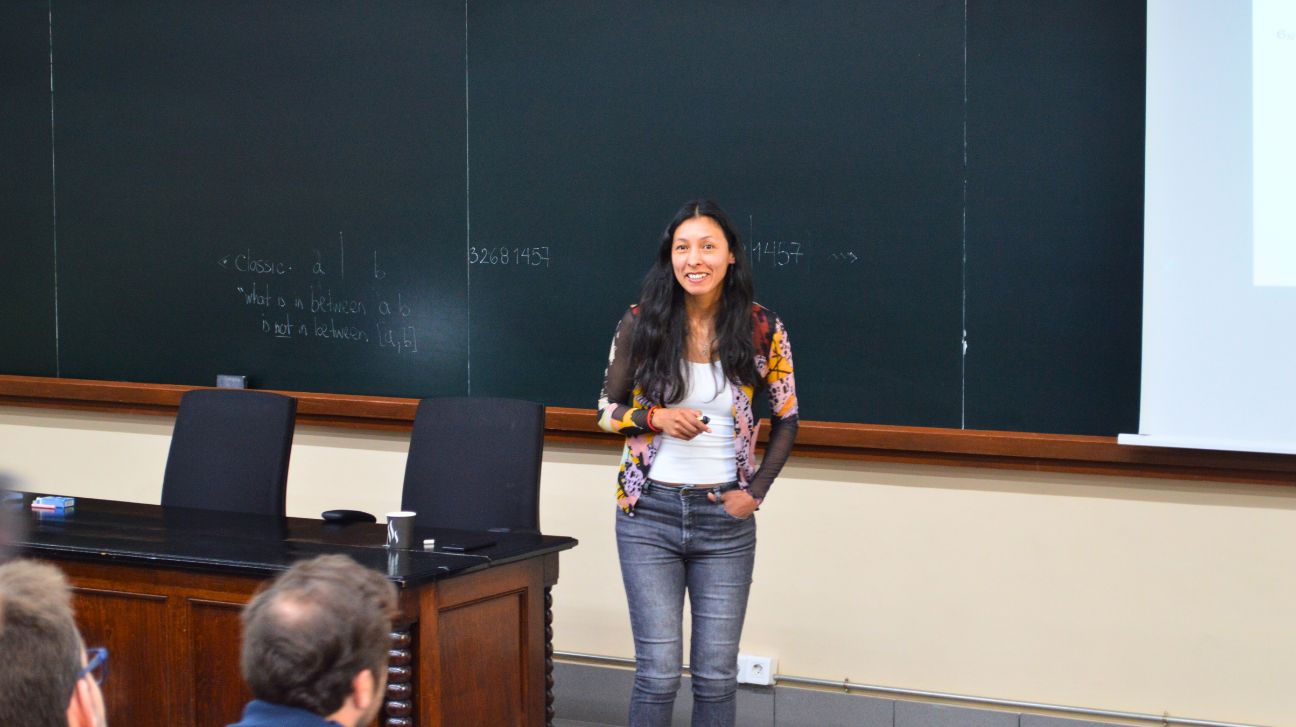
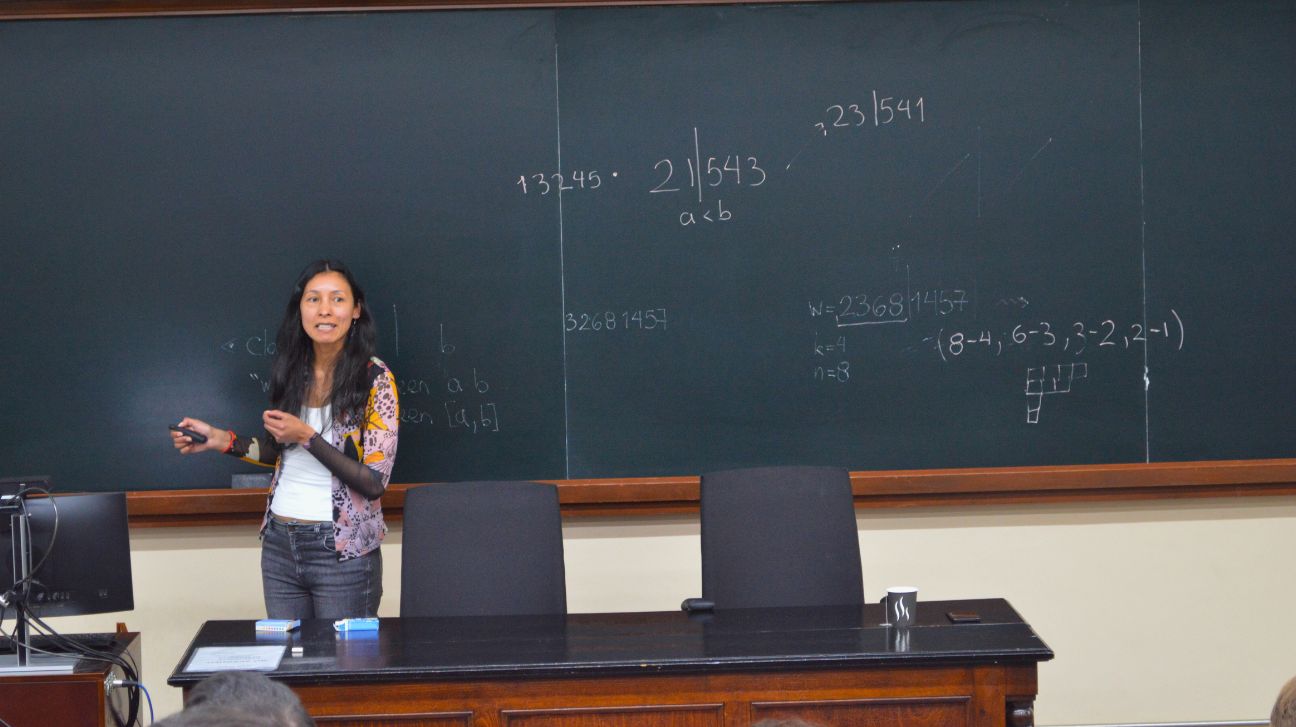
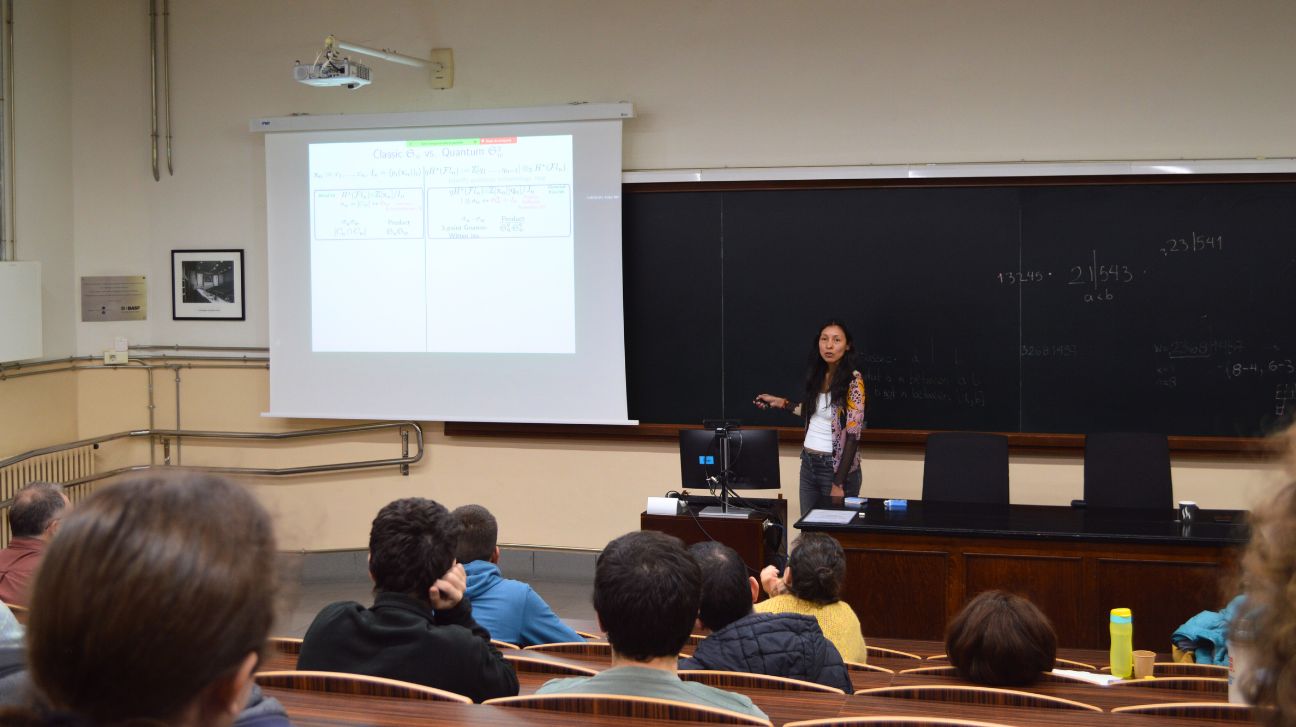
The first talk was delivered by Carolina Benedetti Velásquez, Associate Professor at the Department of Mathematics of the Universidad de los Andes (Bogotá, Colombia) and Lluís Santaló Fellow 2026—a visiting position created in memory of Lluís Santaló to host Latin American researchers during research stays in Catalonia.
Benedetti is a Colombian mathematician whose work focuses on combinatorics, algebraic structures, and geometry. She studied at the Universidad Nacional de Colombia, completed her MSc at the Universidad de los Andes, and obtained her PhD in 2013 from York University (Toronto, Canada), with the dissertation Combinatorial Hopf algebras and supercharacters. She has been a visiting professor at Michigan State University and is currently co–Executive Director of Mathematical Circles Colombia, as well as a member of the Comunidad Colombiana de Combinatoria and the Gender and Equity Commission.
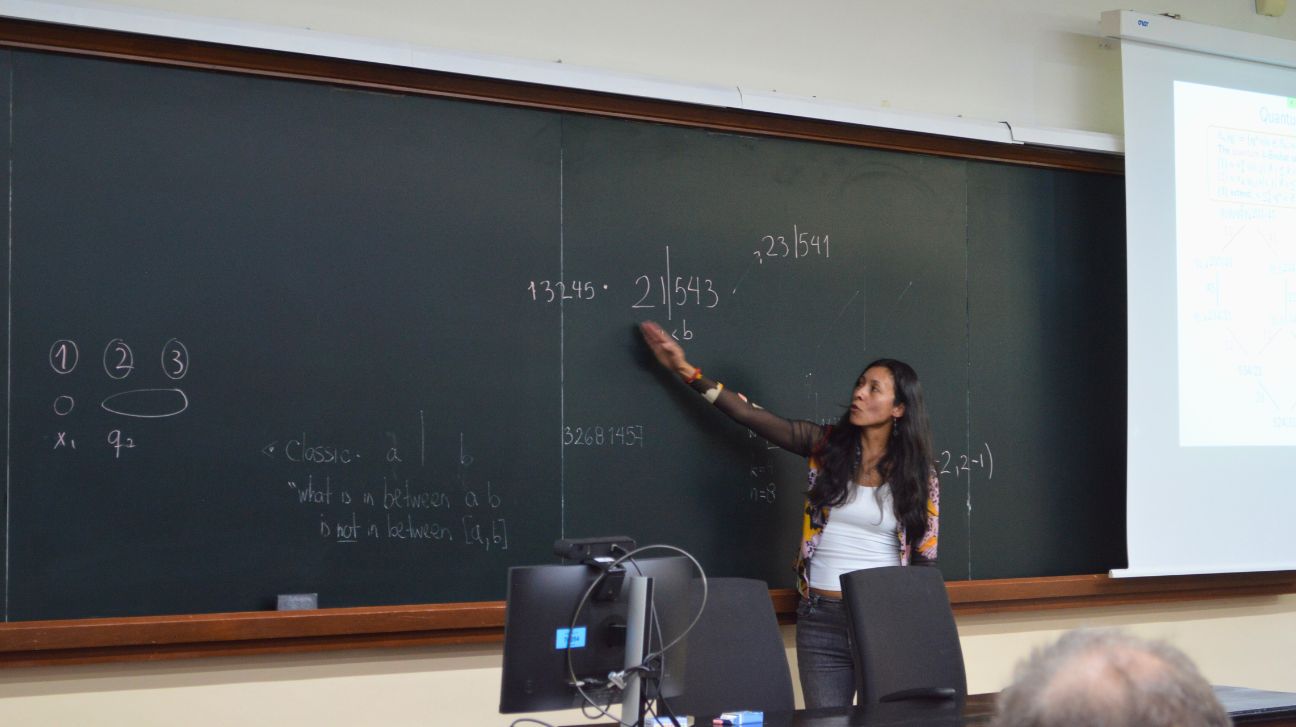
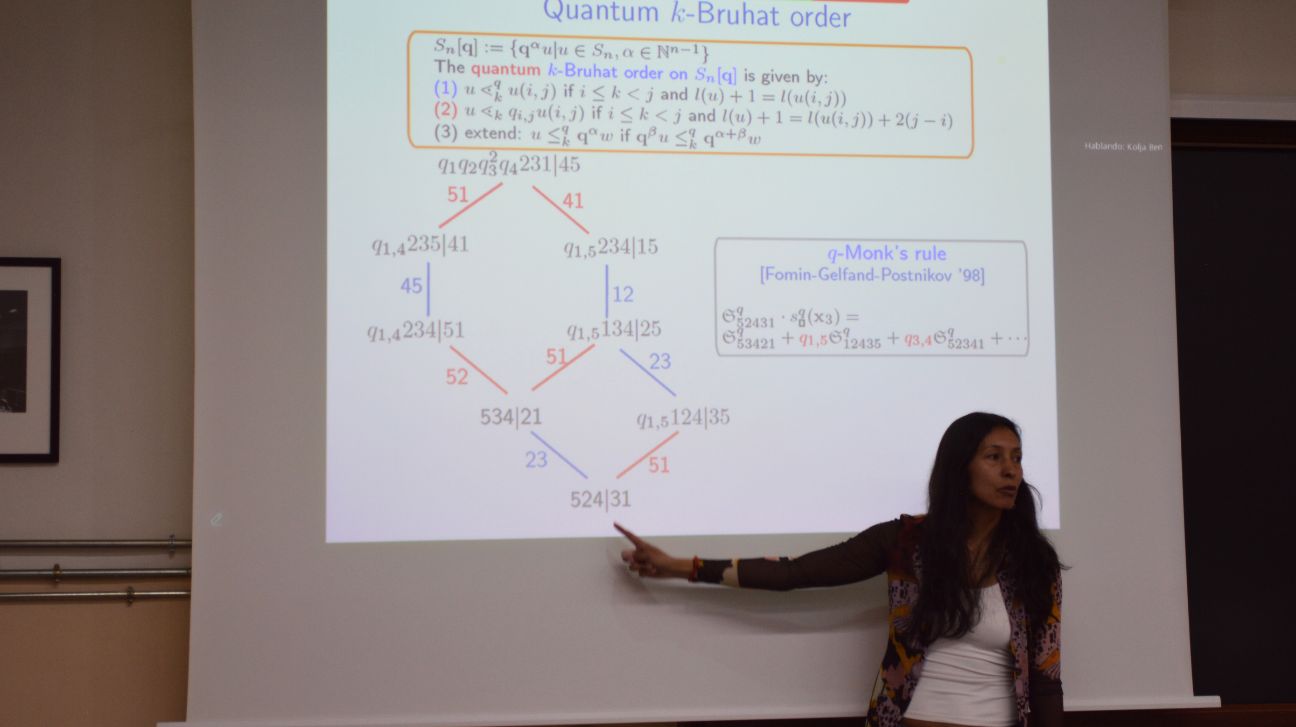
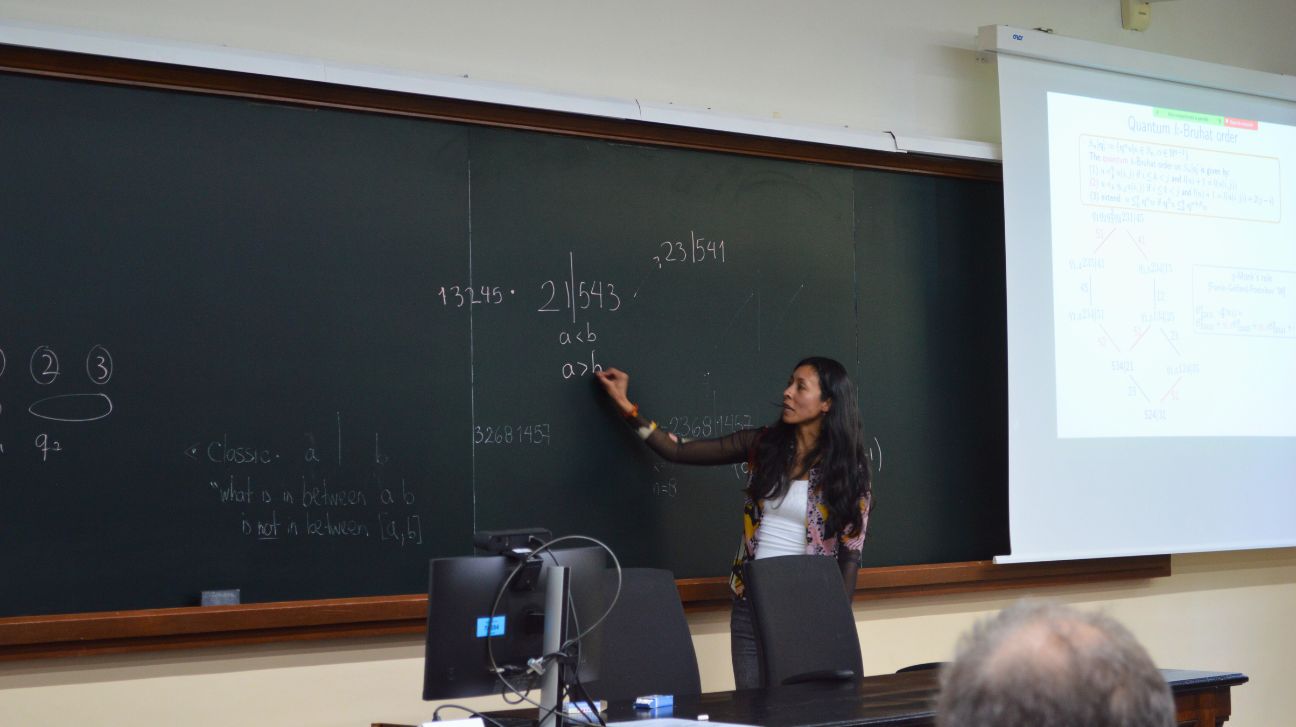
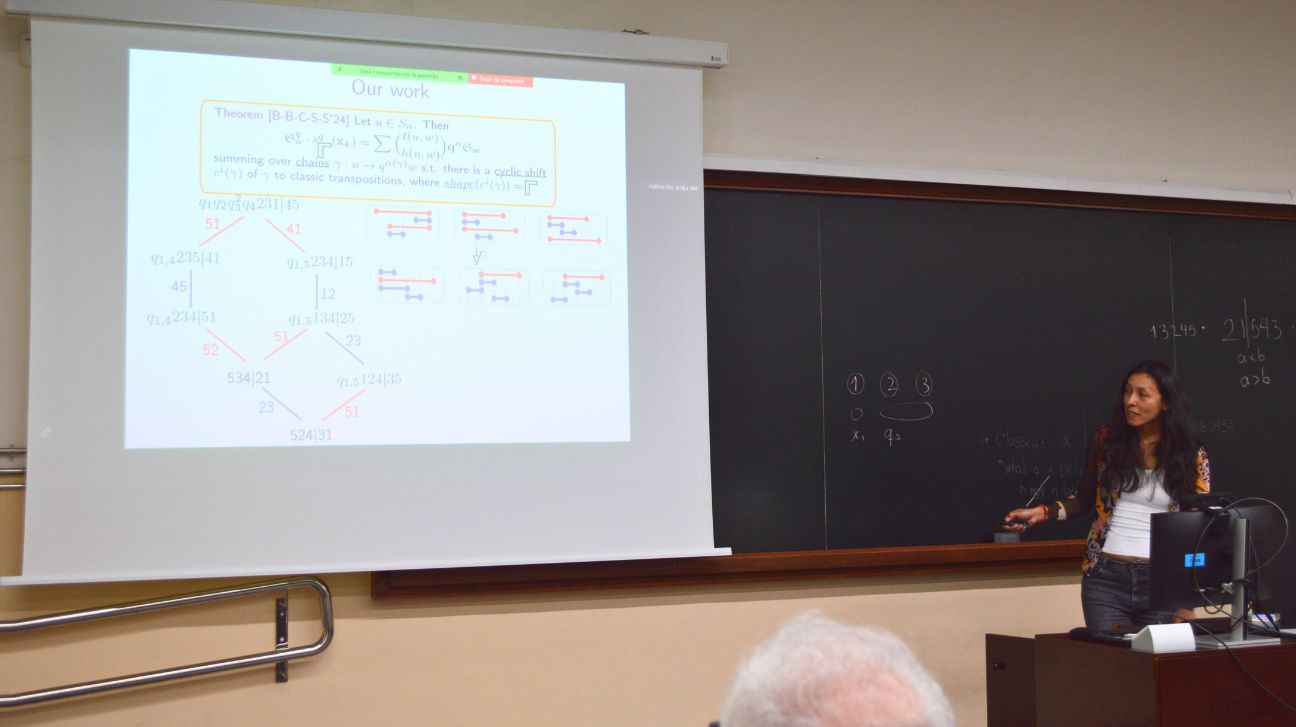
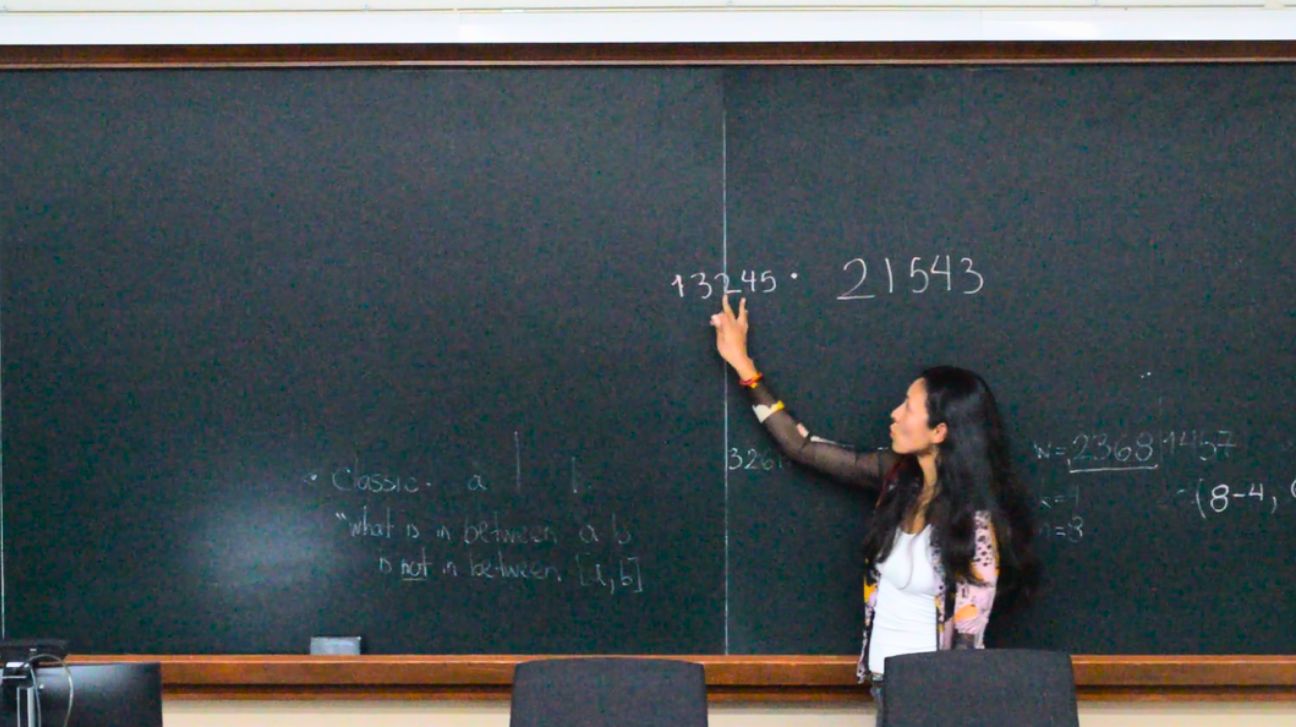
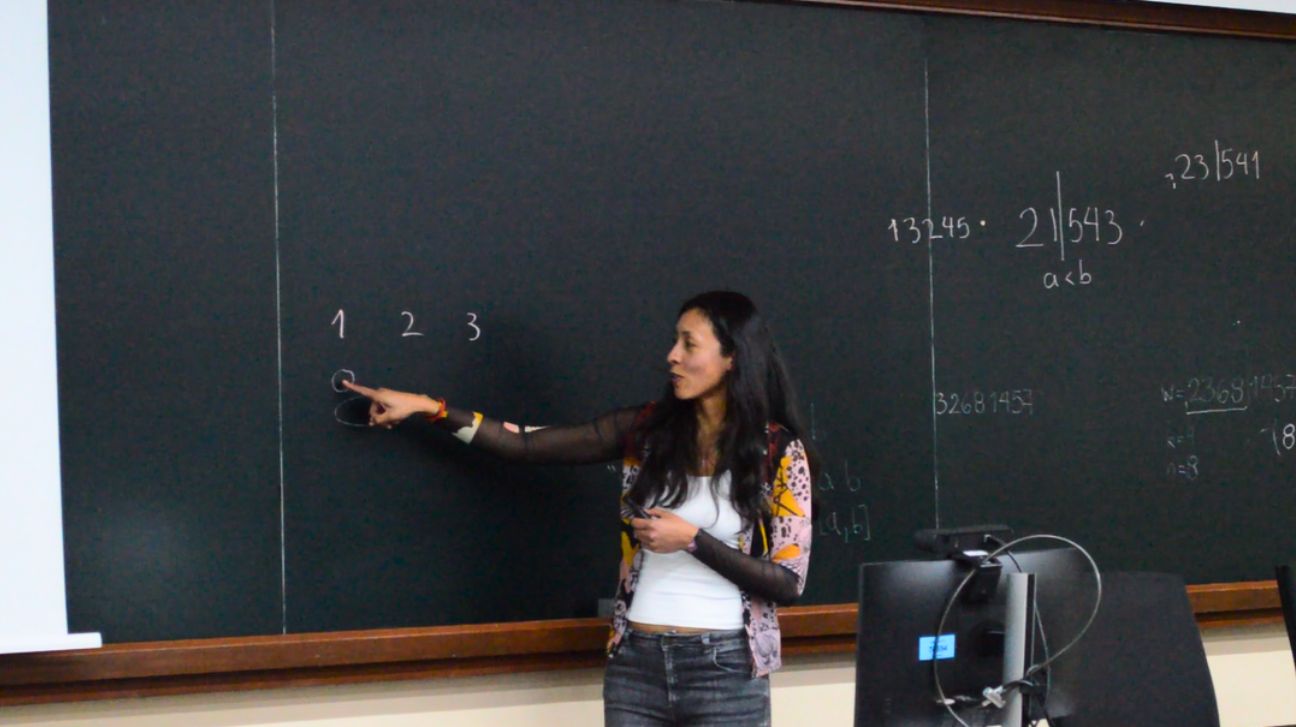
Combinatorics of some products of (quantum) Schubert polynomials
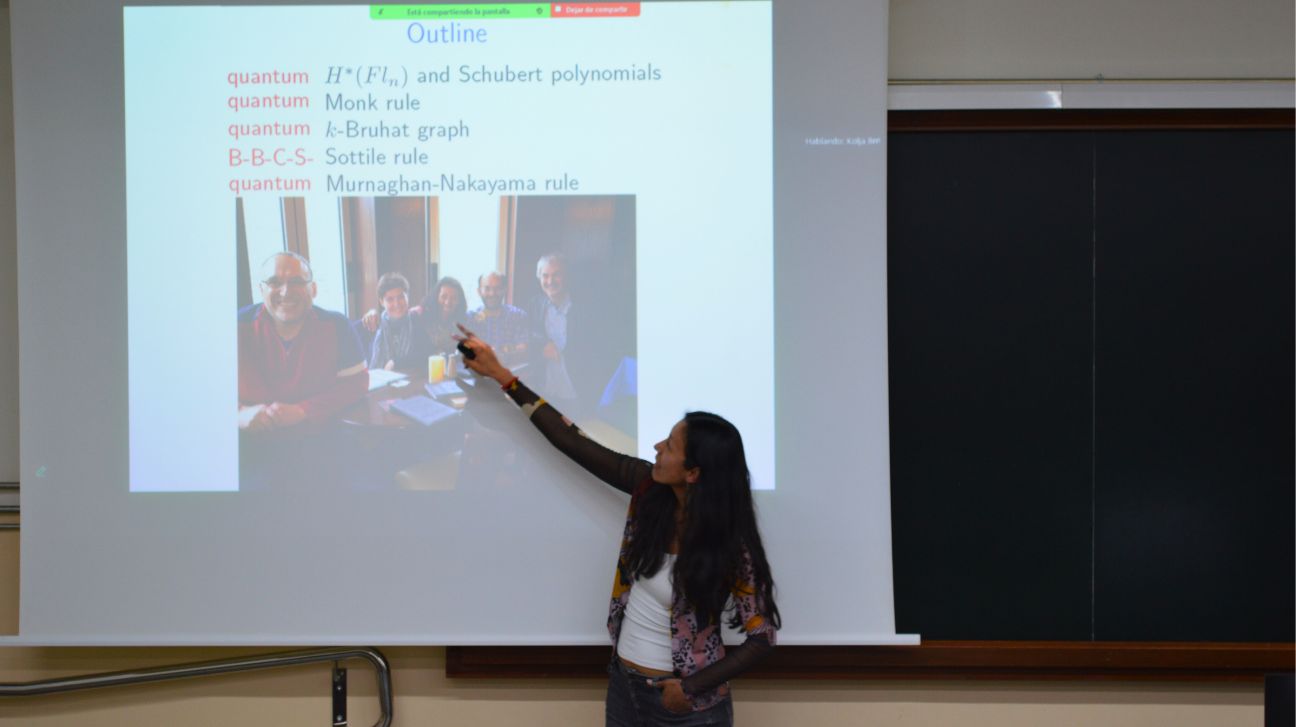
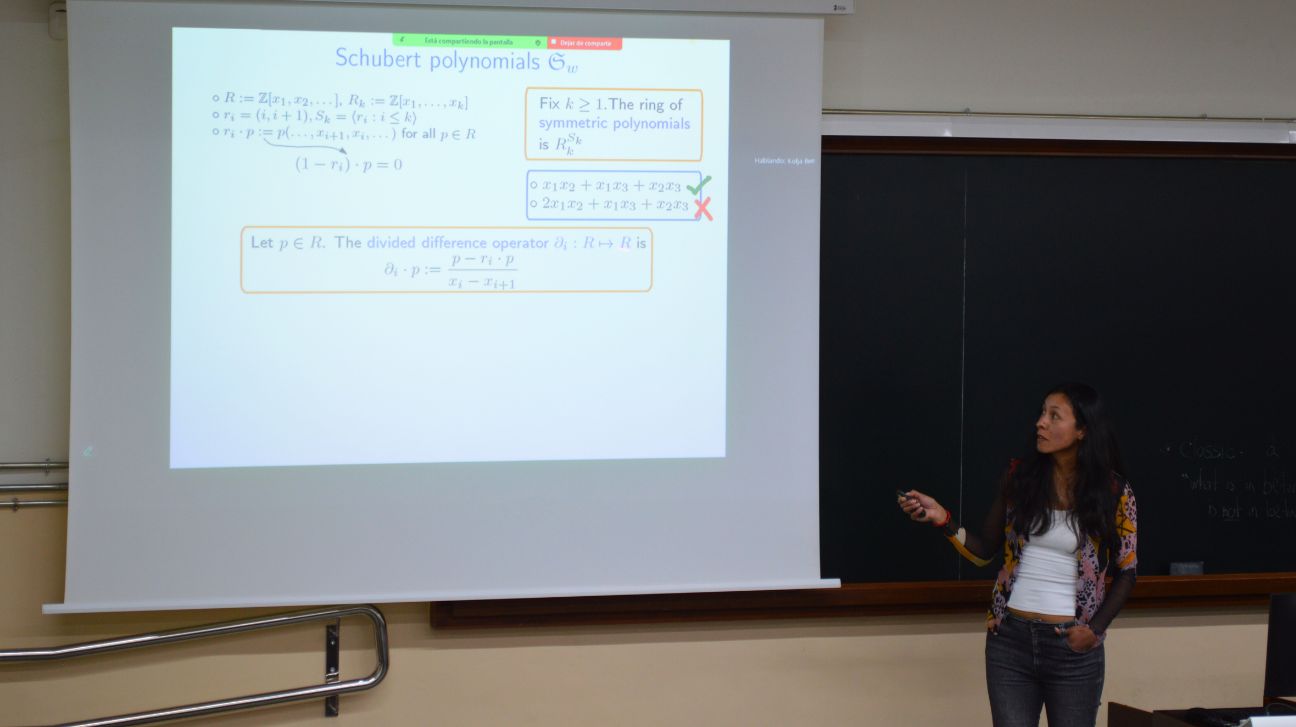
In her talk, Benedetti introduced Schubert polynomials, a fundamental basis of the polynomial ring over the integers, deeply connected to algebraic geometry through Schubert varieties. She showed how many of their properties can be expressed through permutation combinatorics and presented combinatorial rules for products of both classical and quantum versions.
The work presented is joint with N. Bergeron, L. Colmenarejo, F. Saliola, and F. Sottile.
2. Amanda Montejano — Discrete Versions of the Brunn–Minkowski Inequality
Next, Amanda Montejano (Universidad Nacional Autónoma de México) offered an overview of the various discrete formulations of the classical Brunn–Minkowski inequality, a cornerstone of convex geometry. She discussed the historical development of the problem and highlighted the use of heavy sets as a tool to derive meaningful inequalities in arbitrary dimensions.
3. Oriol Farràs Ventura — Polynomial Secret Sharing Schemes and Algebraic Matroids
The third talk was given by Oriol Farràs Ventura (Universitat Rovira i Virgili), who explored the connection between matroid theory and secret sharing schemes—cryptographic methods in which a secret can be recovered only from certain authorised subsets of information. As shown by Brickell and Davenport, the access structure of ideal schemes determines a matroid.
Farràs presented polynomial secret sharing schemes and proved that, over sufficiently large fields, the access structures of ideal polynomial schemes are determined by algebraic matroids.
4. Yannic Vargas — Nested pre-Lie operads on combinatorial species
After the lunch break, Yannic Vargas (CUNEF Universidad Madrid) introduced the concept of nested pre-Lie operads, a non-associative generalisation of classical operads in which horizontal associativity is replaced by a pre-Lie law. He showed how this structure arises naturally in graphs, trees, and set partitions, and discussed potential extensions to the braid arrangement.
5. Eleni Tzanaki — On interval hypergraphic polytopes
To close the day, Eleni Tzanaki (University of Crete) presented interval hypergraphic polytopes, a special class of hypergraphic polytopes whose hyperedges are intervals. These polytopes can be interpreted as deformations of the associahedron, and Tzanaki showed that their vertex posets correspond exactly to intervals in the Tamari lattice. She also characterised the interval hypergraphs that yield simple polytopes and described a new family of directed trees called weeping willows.
The event highlighted the diversity of perspectives that coexist in modern combinatorics—from deep algebraic structures to applications in information theory, as well as discrete geometry and polytope theory. It offered a vivid snapshot of a field that continues to expand in scope and connections.
|
|
CRM CommNatalia Vallina
|

When the reward comes within reach, the brain changes what it compares
As the tokens piled up, choices got faster and more accurate at the same time. The yardstick for judging each offer had moved.CRM CommPau VarelaCRMComm@crm.catGet the latest CRM news and activities in your inbox.Recent newsletters →Two subjects...

Almost every automaton can be reset with a short word
Guillaume Chapuy (Université Paris Cité, CNRS) and Guillem Perarnau (UPC, CRM) have shown that a random finite automaton with n states can, with high probability, be reset by a word of length of order √n log n. The result, published in ACM Transactions on Algorithms, pins the exponent at 1/2, the lower end of a decade of numerical estimates, and addresses the random version of the synchronization problem behind a conjecture Ján Černý posed in 1964 and which still remains open.
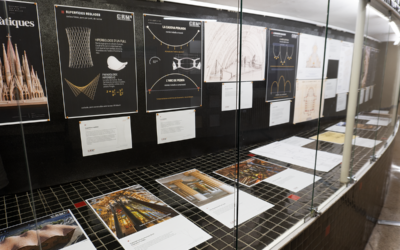
Exposició ‘Les matemàtiques de Gaudí’

CRM quod erat demonstrandum | 48

ADA: Decoding Brain Signals Misaligned in Time
The study addresses a key limitation of current brain decoding techniques: the difficulty of interpreting internal mental processes whose temporal dynamics vary from trial to trial.Decoding what is happening in a person’s mind from their brain activity is one of the...
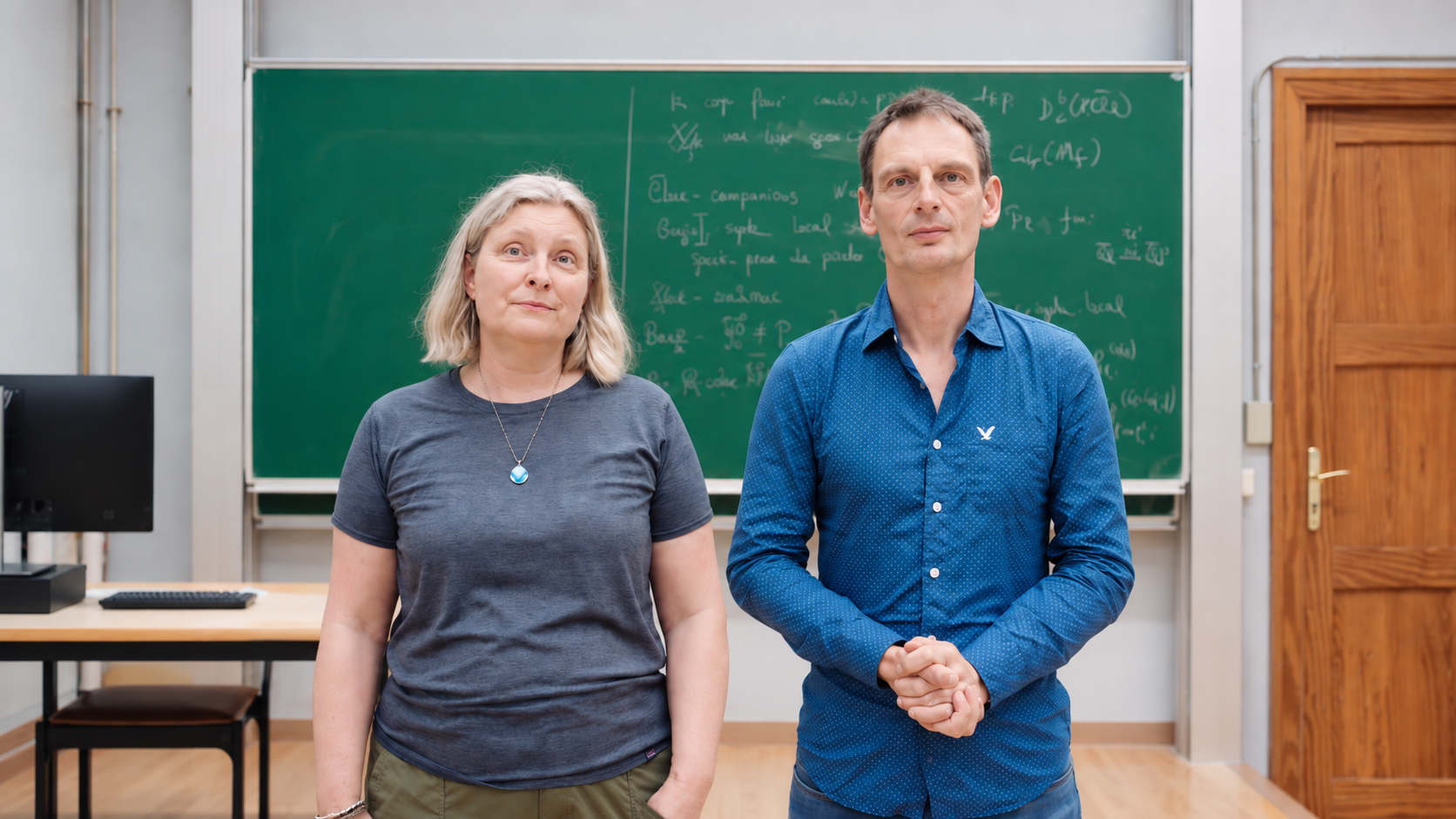
Rare curves, many points: Christophe Ritzenthaler and Rachel Pries on their research and the work around it
Christophe Ritzenthaler (Université de Rennes) and Rachel Pries (Colorado State University) both work on curves over finite fields: he hunts curves with as many points as possible, she hunts curves that almost never occur. In conversation with the CRM during their...

Call open for the 2027 Ferran Sunyer i Balaguer Prize
The Ferran Sunyer i Balaguer Foundation is accepting submissions for its 2027 prize, which awards 15,000 euros and publication in Birkhäuser's Progress in Mathematics series to an expository monograph on an active area of mathematical research. The deadline is 27...
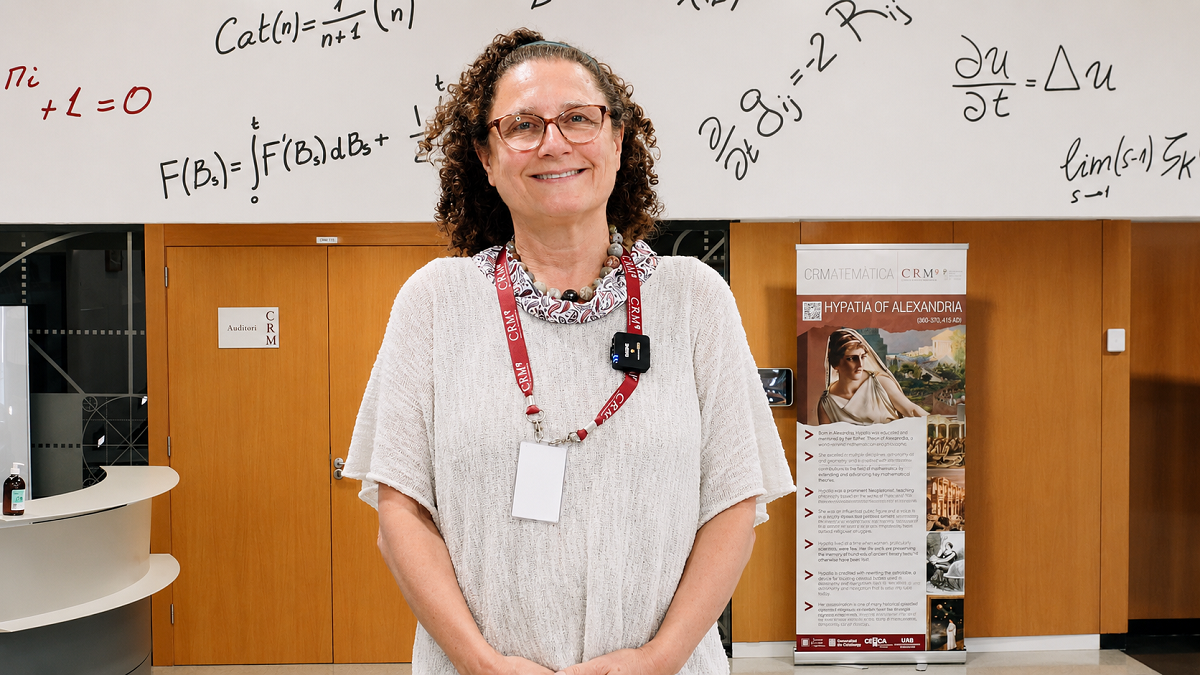
Susanna Terracini delivers the CRM Colloquium 2026
Susanna Terracini (Università di Torino) delivered the CRM Colloquium 2026 on 14 July, presenting a rigidity result for Kepler billiards obtained with Stefano Baranzini, Vivina Barutello and Irene De Blasi. She was at the centre as a member of the CRM Scientific...
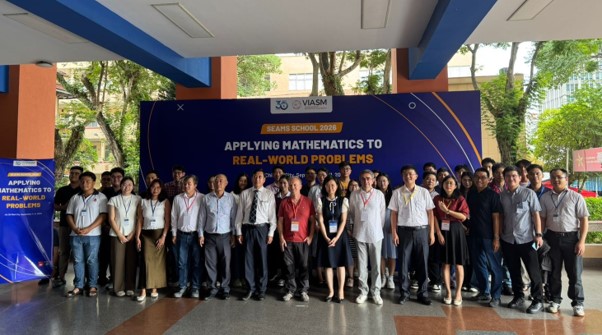
Ho Chi Minh City hosts the SEAMS School on applying mathematics to real-world problems
Students from across the region took courses and worked on group projects at a school co-organised by CRM researcher Tim Myers.CRM CommPau VarelaCRMComm@crm.catGet the latest CRM news and activities in your inbox.Recent newsletters →Between 4 and...

A single ball on a fixed table can compute: Eva Miranda and Isaac Ramos prove that two-dimensional billiards are Turing complete
Eva Miranda (UPC, CRM) and Isaac Ramos (ETH Zürich) show that a point particle bouncing inside a planar table with fixed walls can simulate a universal Turing machine, settling a question Cristopher Moore left open in 1990. The result grew out of a master’s project...
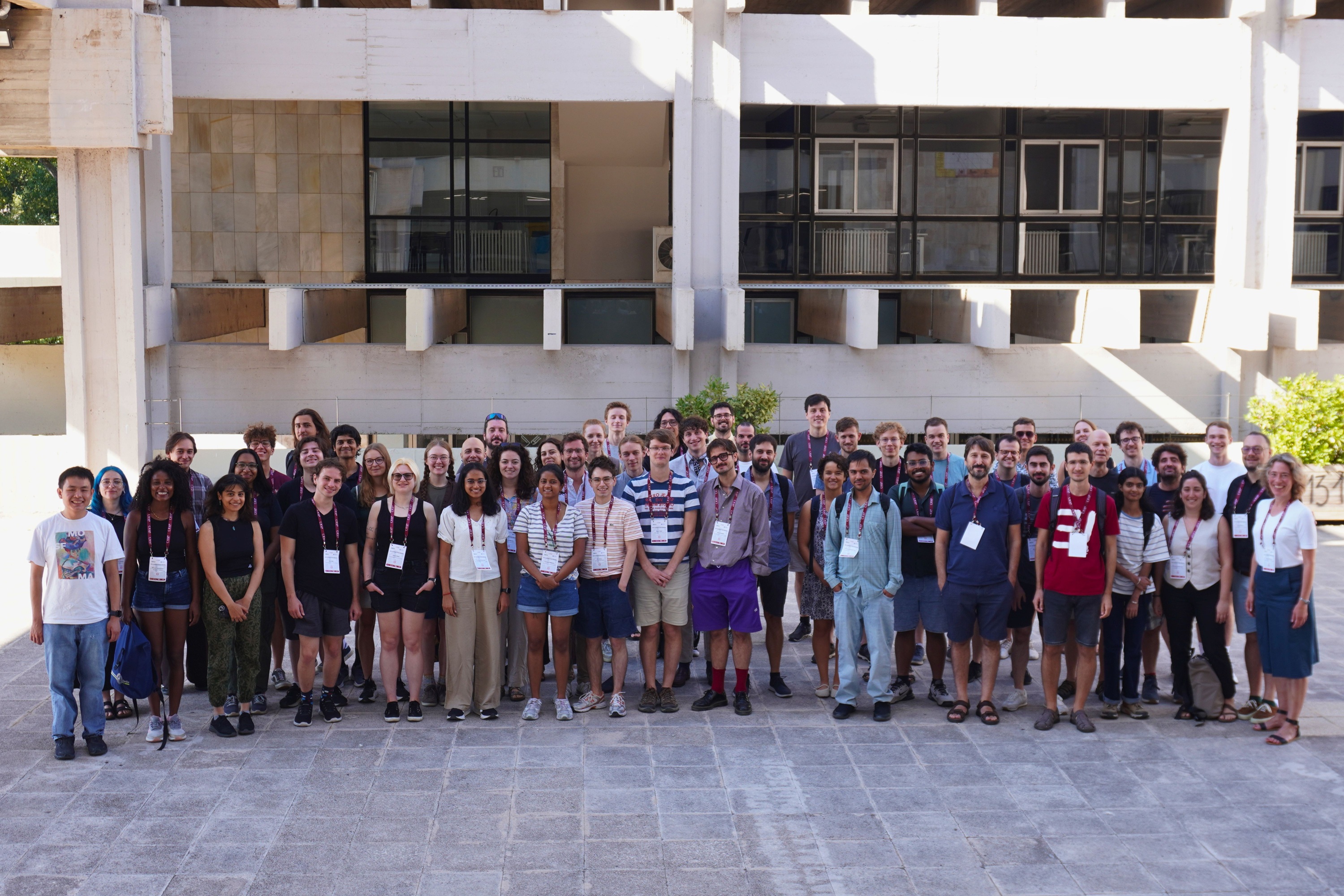
BMS-BGSMath Junior Meeting 2026: Barcelona and Berlin Strengthen Scientific Ties
From 2 to 4 September 2026, the Centre de Recerca Matemàtica (CRM) hosted the BMS-BGSMath Junior Meeting 2026, a three-day event jointly organised by the Berlin Mathematical School (BMS) and the Barcelona Graduate School of Mathematics (BGSMath), with the Centre de...
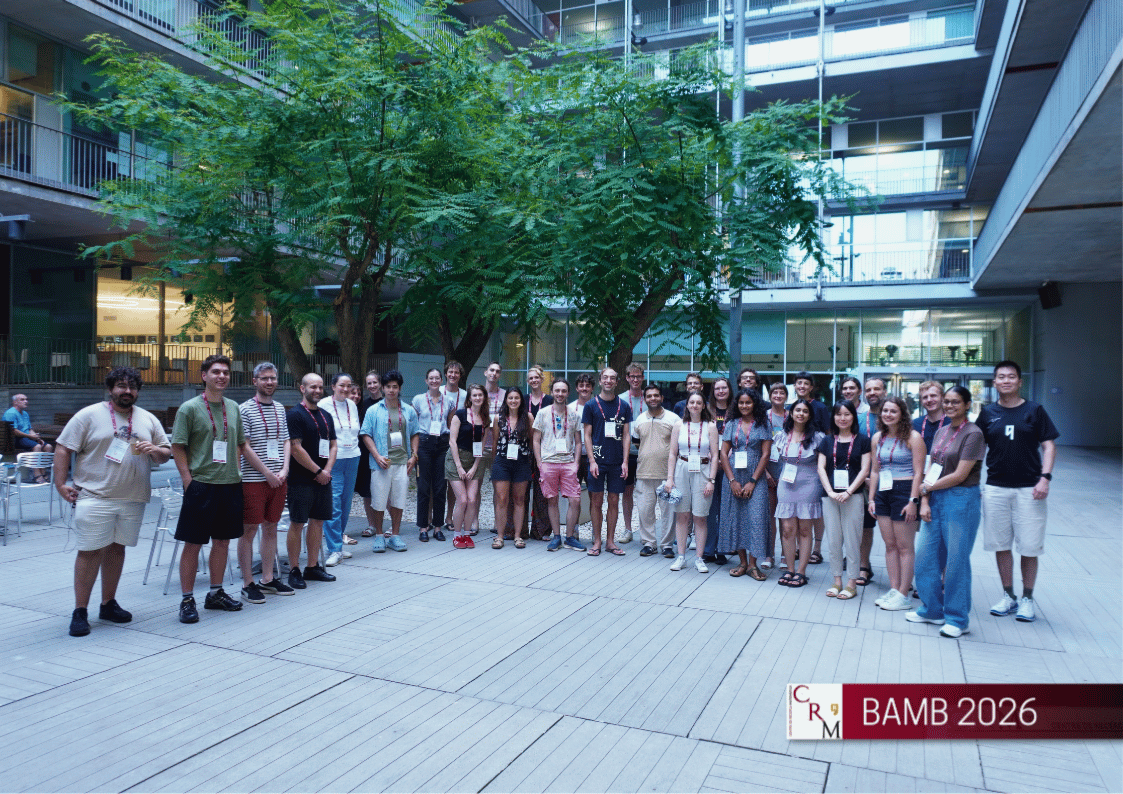
The CRM organises the 2026 Barcelona Summer School for Advanced Modeling of Behavior
The Centre de Recerca Matemàtica held the sixth edition of BAMB!, the Barcelona Summer School for Advanced Modeling of Behavior, from 12 to 23 July 2026 at the Parc de Recerca Biomèdica de Barcelona. Thirty early-career researchers from fourteen countries followed...