
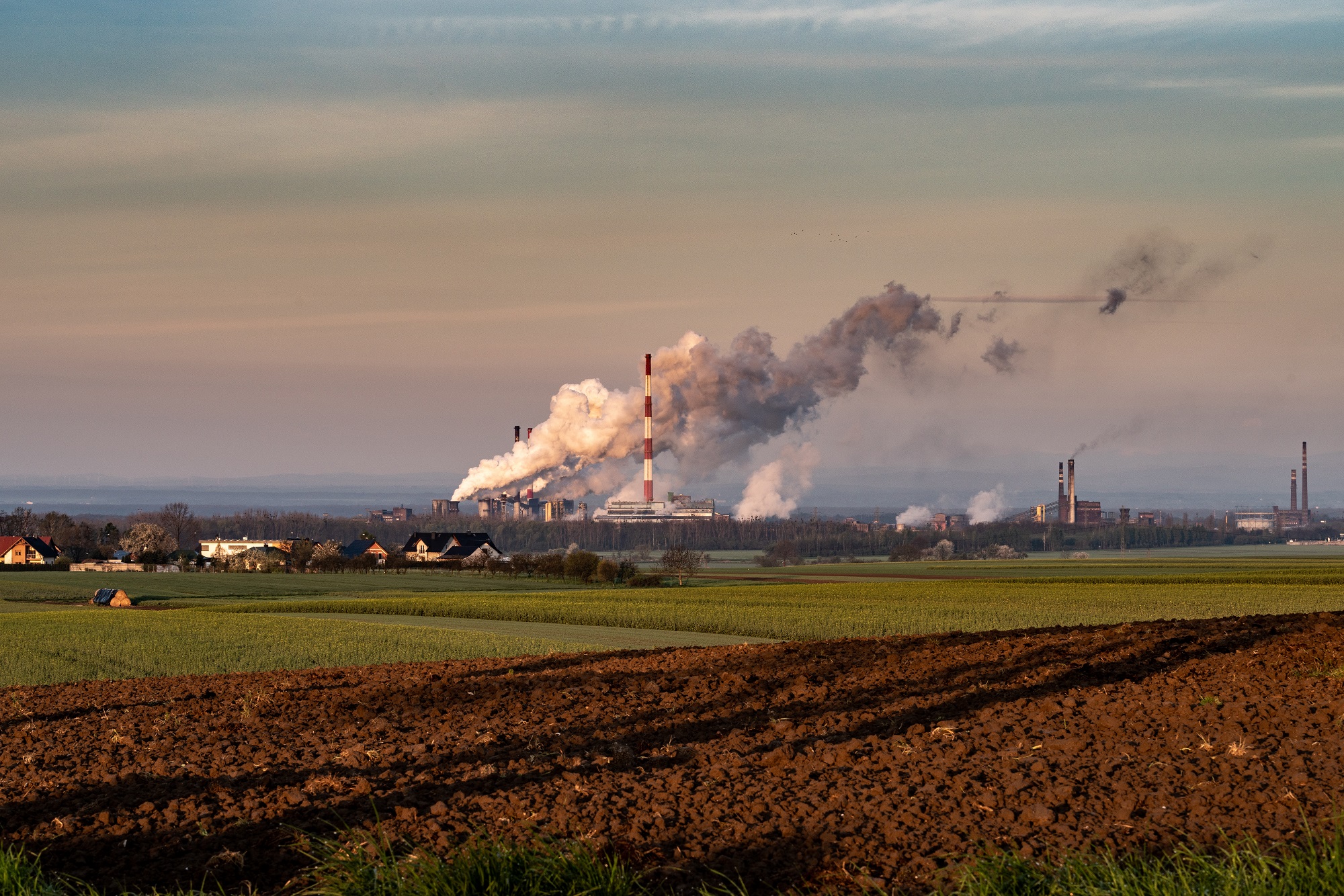
Every time we burn fuel, paint a car, or even produce “green” biogas, we release a cocktail of contaminants into the air. Many of these chemicals, such as siloxanes, toluene, or decane, are harmful to the environment and human health. They need to be captured before they escape into the atmosphere. Standard models deal with the capture of a single contaminant, but here’s the problem: these contaminants rarely come by themselves. They arrive together, often fighting for the same limited spots in the filters designed to trap them.
Imagine a crowded train at rush hour. Some passengers are pushy and determined (think “contaminant A”), while others are more passive (“contaminant B”). When the train (our filtration column) pulls in, who gets on board? And who gets pushed aside? That’s the question mathematicians Marc Calvo-Schwarzwälder (Universitat Politècnica de Catalunya–CRM), Tim Myers (CRM), Alba Cabrera-Codony (Universitat de Girona), and Abel Valverde (UPC) set out to answer. Their study, recently published in the first decile journal, International Journal of Heat and Mass Transfer, introduces a new mathematical model that predicts how two different contaminants behave when they compete for space on a filtering material.
Traditional models focus on a single contaminant and work well in simple cases, but things get complicated when multiple pollutants compete for the same space—one might stick more easily or even displace the other, making accurate predictions much more difficult.
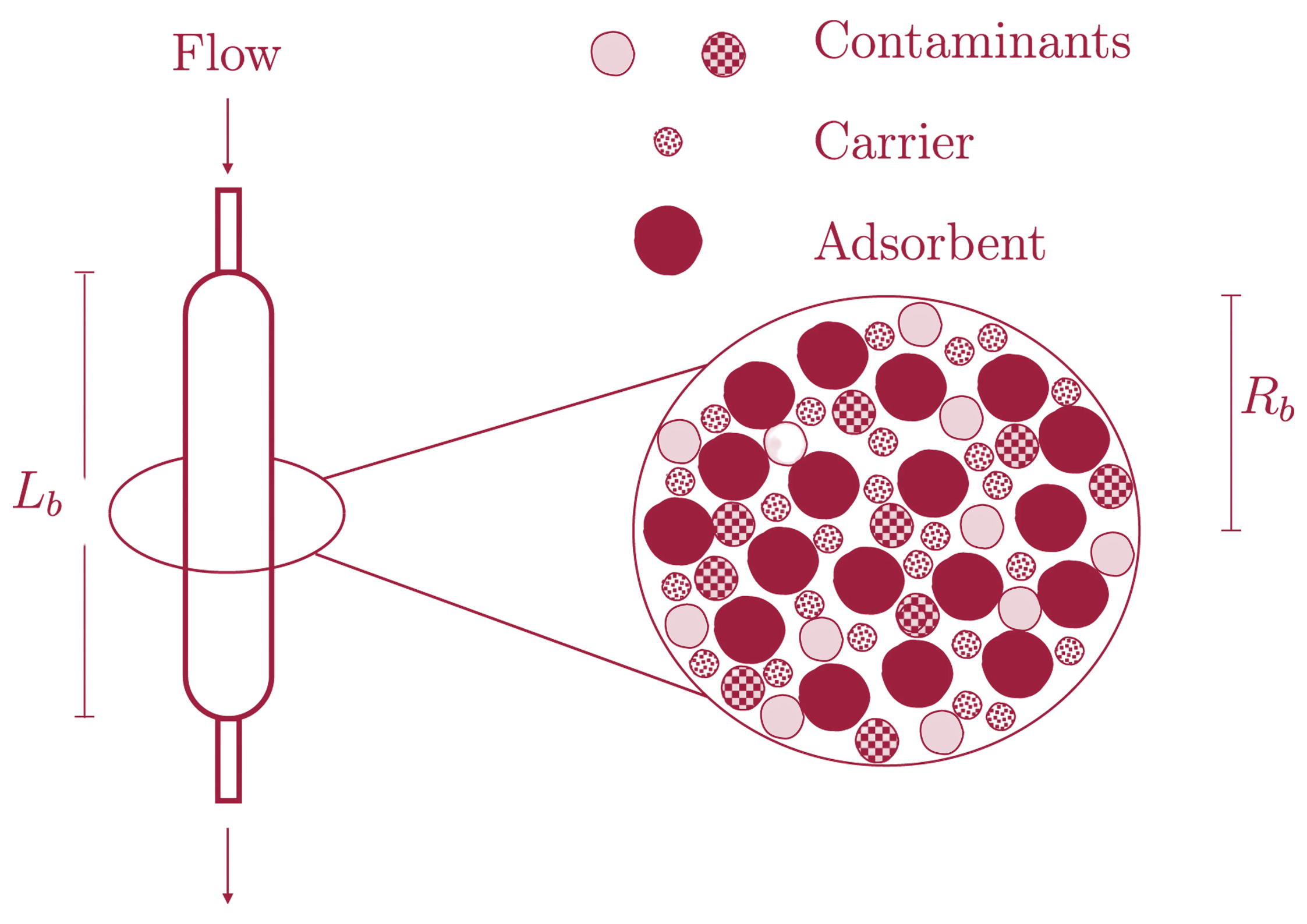
Experimental setup. A gas mixture with two contaminants flows through a column filled with an adsorbent material, the contaminants compete for the adsorption sites.
Let the Math Do the Work
To tackle this, the team developed a mathematical model that treats the filtration column like a one-way street: contaminants flow in, interact with the adsorbent and each other, and slowly advance through the column. The model captures the key physical processes involved: how the pollutants move and spread (advection and diffusion), how they stick to and detach from the filter (adsorption and desorption), and how they compete for the same spots (replacement dynamics).
One of the key tools the researchers used is the idea of a “travelling wave”. This concept, borrowed from mathematical physics, allows the team to simplify a complex system of partial differential equations into a problem involving a single variable. “After the initial stages of the process,” explains Tim Myers, “we have a contaminant wave moving between the region in the column that is full of contaminant and a region far ahead where the adsorbent material is clean. By choosing a coordinate system that travels with this wave, we can find a fixed shape.”
“Mathematically,” he continues, “this means we can reduce a system of partial differential equations to a problem involving a single variable. This is much easier to solve and permits us to make analytical progress. Effectively, we can see how all the system parameters affect the adsorption process and thus how to improve or optimise the system.”
Building on the classic single-contaminant models (developed recently by the group), they introduced a new way to track how much of the filter’s surface each pollutant occupies and how much space remains free. As the pollutants travel through the column, each tries to stick wherever it can. However, because they are competing for the same sites, a stronger contaminant can push a weaker one off the filter and take its place.
The model uses simple chemical reaction rules to describe these behaviours, combined with equations that track the pollutants’ movement. The result is a compact yet powerful representation of a very messy process. To highlight the most influential dynamics, the researchers applied a non-dimensional formulation: all the quantities were rescaled so that only the key effects were retained.
“We let the maths do the work!” says Myers. “Common sense may help in deciding what is important and what isn’t, but we prefer to use non-dimensionalisation techniques. The size of the coefficients tells us which terms matter. Neglecting the small terms, we can simplify a model and have an idea of the expected errors resulting from the approximation.”
This method not only helps simplify the model but also allows researchers to estimate how far off the approximations might be. From there, they applied techniques such as the travelling wave approximations to find analytical solutions, which are more transparent than purely numerical ones.
“With an analytical solution,” adds Myers, “we can see exactly how system parameters affect a process and consequently identify ways to make improvements.”
Real-World Testing
A good model must match reality. The team validated their predictions using experimental data with real contaminants, including siloxanes and toluene on activated carbon, achieving over 98% accuracy (R2>0.98).
“The quality of the experimental data is critical,” says Marc Calvo. “The validation of the model, and therefore the conclusions drawn, depends on it. And it’s not enough for a single experiment to verify the results. To reduce the risk of misinterpretation, it is important to compare our solutions with multiple experiments, as we did in this work.”
This strong agreement suggests the model can better guide filter design and anticipate how more complex mixtures behave. But it also relies on key simplifications—only two contaminants at a time, irreversible attachments, and dominant species behaviour. “Neglecting desorption has been a critical assumption,” acknowledges Calvo. “Numerical simulations indicate that if this mechanism is included, the travelling wave strategy is no longer valid.”
“We have recently been able to solve the problem in the reversible case as well,” he notes. “But when more than two contaminants are considered, the modelling part becomes significantly more complex, and the number of assumptions increases. It will be crucial to have experiments that help us understand the processes and incorporate them into the model.”
And if you’re still wondering whether math can make a difference, Myers shares this anecdote: “A group of engineers once clapped when I finished demonstrating how a simple mathematical model could predict the ice growth on an aircraft. When I asked why they clapped, I was told no one thought a mathematician could solve their problem.”
Citation:
Calvo-Schwarzwälder, M., Cabrera-Codony, A., Valverde, A., Myers, T.G. (2025). An analytical model for column adsorption with two competing contaminants. International Journal of Heat and Mass Transfer, 245, 124938. https://doi.org/10.1016/j.ijheatmasstransfer.2024.124938
crm researchers
Tim Myers has over 30 years of experience in developing and analysing mathematical models for complex physical processes, with contributions spanning phase change, nanoscale optics, thin film flow, nanofluids, and the Heat Balance Integral Method. He promotes the practical use of mathematics as a Board Member of the European Consortium for Mathematics in Industry, co-ordinator of European Study Groups with Industry, and editor for both Mathematics in Industry Reports (CUP) and the Springer-RSME Book Series. He also serves on the European Mathematical Society’s Committee for Developing Countries and the Advisory Committee for the Eastern Africa Universities Mathematics Programme. His current research focuses on applying mathematics to environmental challenges, particularly the capture of contaminants.
Marc Calvo Schwarzwälder completed his doctoral studies at the Centre de Recerca Matemàtica and earned his PhD in Applied Mathematics from the Universitat Politècnica de Catalunya (UPC), where he also completed his Bachelor’s and Master’s degrees. After spending a short time in the consulting industry, he moved to the UAE, where he served as an Assistant Professor. During this time, Dr. Marc continued his collaboration with CRM researchers and, upon returning to Barcelona, took on a full-time research position at CRM. He later joined the Mathematics department of UPC as an Assistant Professor. His research primarily focuses on the mathematical modeling of physical and chemical processes, with a particular emphasis on environmental applications.
Subscribe for more CRM News
|
|
CRM CommPau Varela
|

When the reward comes within reach, the brain changes what it compares
As the tokens piled up, choices got faster and more accurate at the same time. The yardstick for judging each offer had moved.CRM CommPau VarelaCRMComm@crm.catGet the latest CRM news and activities in your inbox.Recent newsletters →Two subjects...

Almost every automaton can be reset with a short word
Guillaume Chapuy (Université Paris Cité, CNRS) and Guillem Perarnau (UPC, CRM) have shown that a random finite automaton with n states can, with high probability, be reset by a word of length of order √n log n. The result, published in ACM Transactions on Algorithms, pins the exponent at 1/2, the lower end of a decade of numerical estimates, and addresses the random version of the synchronization problem behind a conjecture Ján Černý posed in 1964 and which still remains open.
Exposició ‘Les matemàtiques de Gaudí’

CRM quod erat demonstrandum | 48

ADA: Decoding Brain Signals Misaligned in Time
The study addresses a key limitation of current brain decoding techniques: the difficulty of interpreting internal mental processes whose temporal dynamics vary from trial to trial.Decoding what is happening in a person’s mind from their brain activity is one of the...
Rare curves, many points: Christophe Ritzenthaler and Rachel Pries on their research and the work around it
Christophe Ritzenthaler (Université de Rennes) and Rachel Pries (Colorado State University) both work on curves over finite fields: he hunts curves with as many points as possible, she hunts curves that almost never occur. In conversation with the CRM during their...
Call open for the 2027 Ferran Sunyer i Balaguer Prize
The Ferran Sunyer i Balaguer Foundation is accepting submissions for its 2027 prize, which awards 15,000 euros and publication in Birkhäuser's Progress in Mathematics series to an expository monograph on an active area of mathematical research. The deadline is 27...
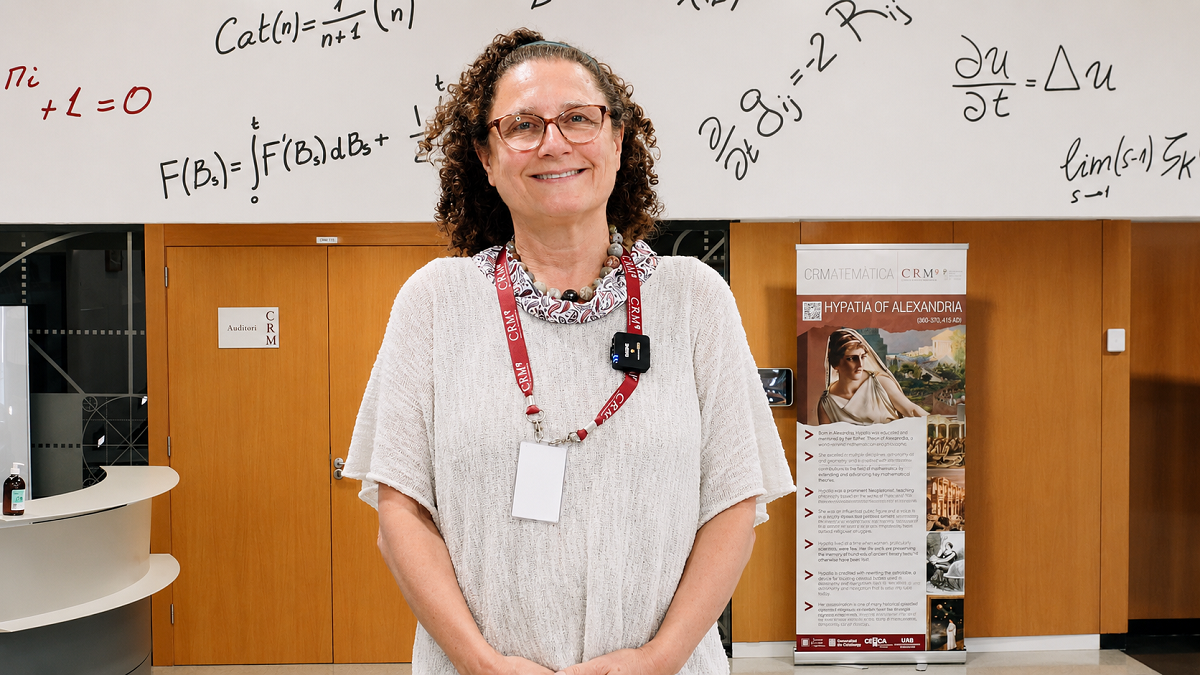
Susanna Terracini delivers the CRM Colloquium 2026
Susanna Terracini (Università di Torino) delivered the CRM Colloquium 2026 on 14 July, presenting a rigidity result for Kepler billiards obtained with Stefano Baranzini, Vivina Barutello and Irene De Blasi. She was at the centre as a member of the CRM Scientific...
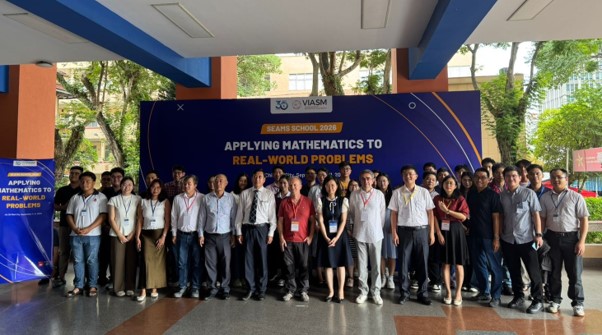
Ho Chi Minh City hosts the SEAMS School on applying mathematics to real-world problems
Students from across the region took courses and worked on group projects at a school co-organised by CRM researcher Tim Myers.CRM CommPau VarelaCRMComm@crm.catGet the latest CRM news and activities in your inbox.Recent newsletters →Between 4 and...

A single ball on a fixed table can compute: Eva Miranda and Isaac Ramos prove that two-dimensional billiards are Turing complete
Eva Miranda (UPC, CRM) and Isaac Ramos (ETH Zürich) show that a point particle bouncing inside a planar table with fixed walls can simulate a universal Turing machine, settling a question Cristopher Moore left open in 1990. The result grew out of a master’s project...
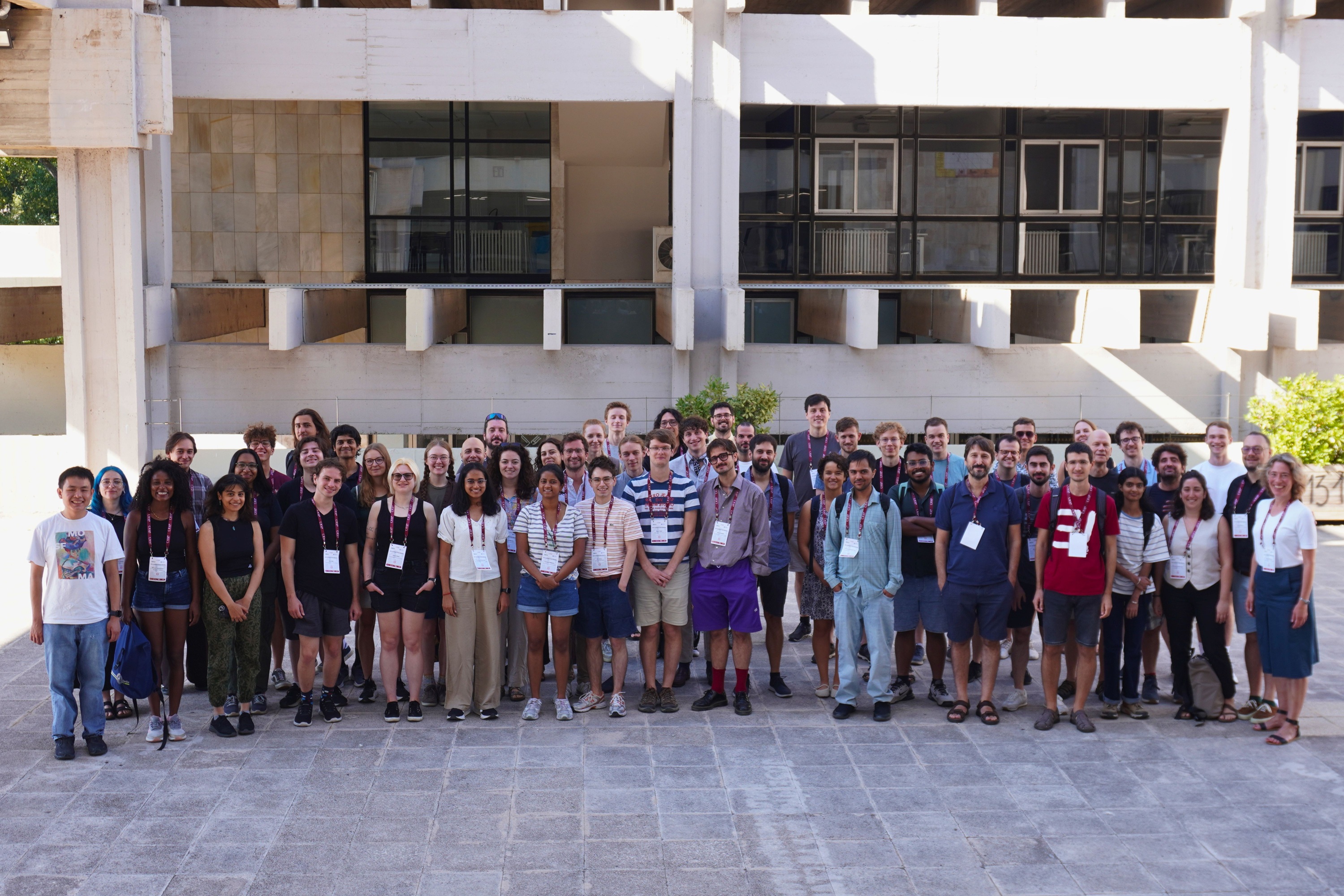
BMS-BGSMath Junior Meeting 2026: Barcelona and Berlin Strengthen Scientific Ties
From 2 to 4 September 2026, the Centre de Recerca Matemàtica (CRM) hosted the BMS-BGSMath Junior Meeting 2026, a three-day event jointly organised by the Berlin Mathematical School (BMS) and the Barcelona Graduate School of Mathematics (BGSMath), with the Centre de...
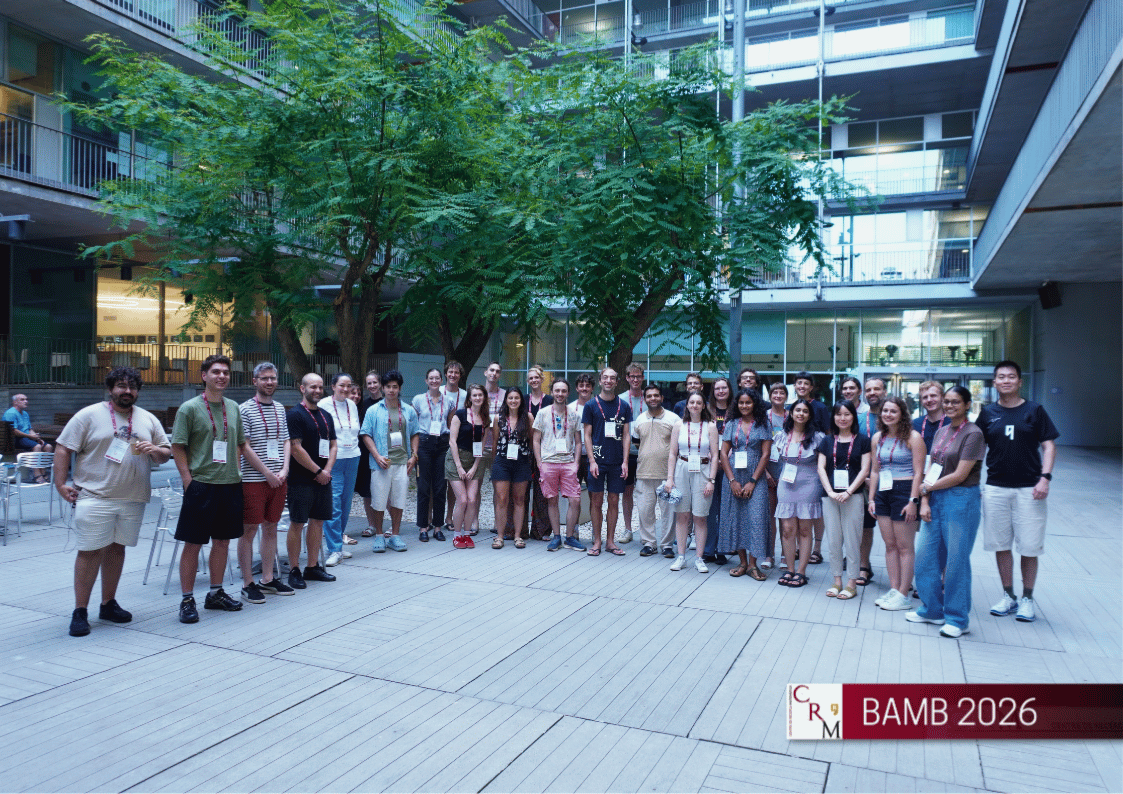
The CRM organises the 2026 Barcelona Summer School for Advanced Modeling of Behavior
The Centre de Recerca Matemàtica held the sixth edition of BAMB!, the Barcelona Summer School for Advanced Modeling of Behavior, from 12 to 23 July 2026 at the Parc de Recerca Biomèdica de Barcelona. Thirty early-career researchers from fourteen countries followed...