
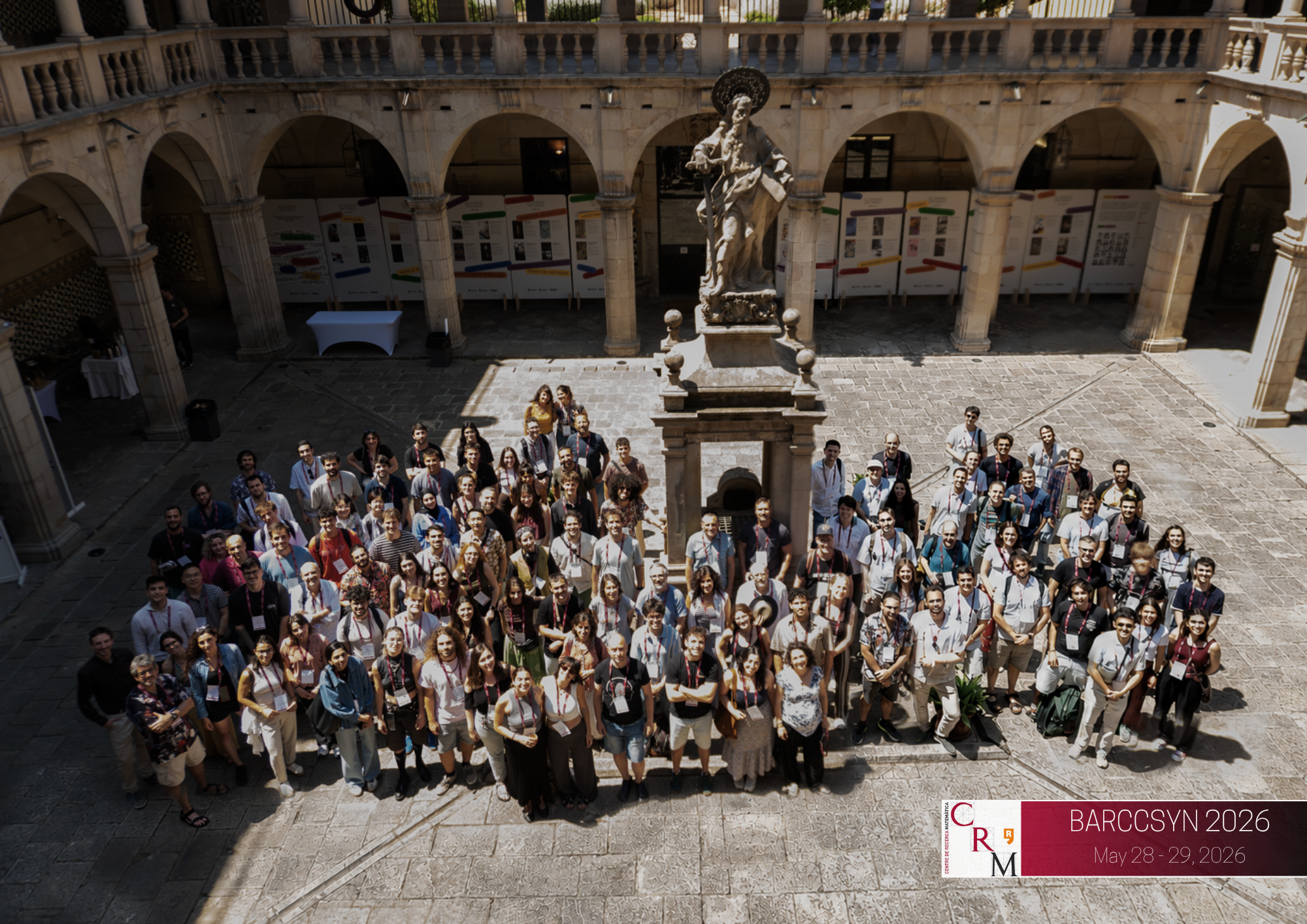
The fourteenth BARCCSYN meeting brought 117 researchers to the Institut d’Estudis Catalans on 28 and 29 May 2026 for two days of computational, cognitive and systems neuroscience. Organised by the CRM with the relevant section of the Catalan societies of biology and mathematics, it gathered eleven talks, three keynote lectures and sixty-three posters, with prizes going to work from IDIBAPS.
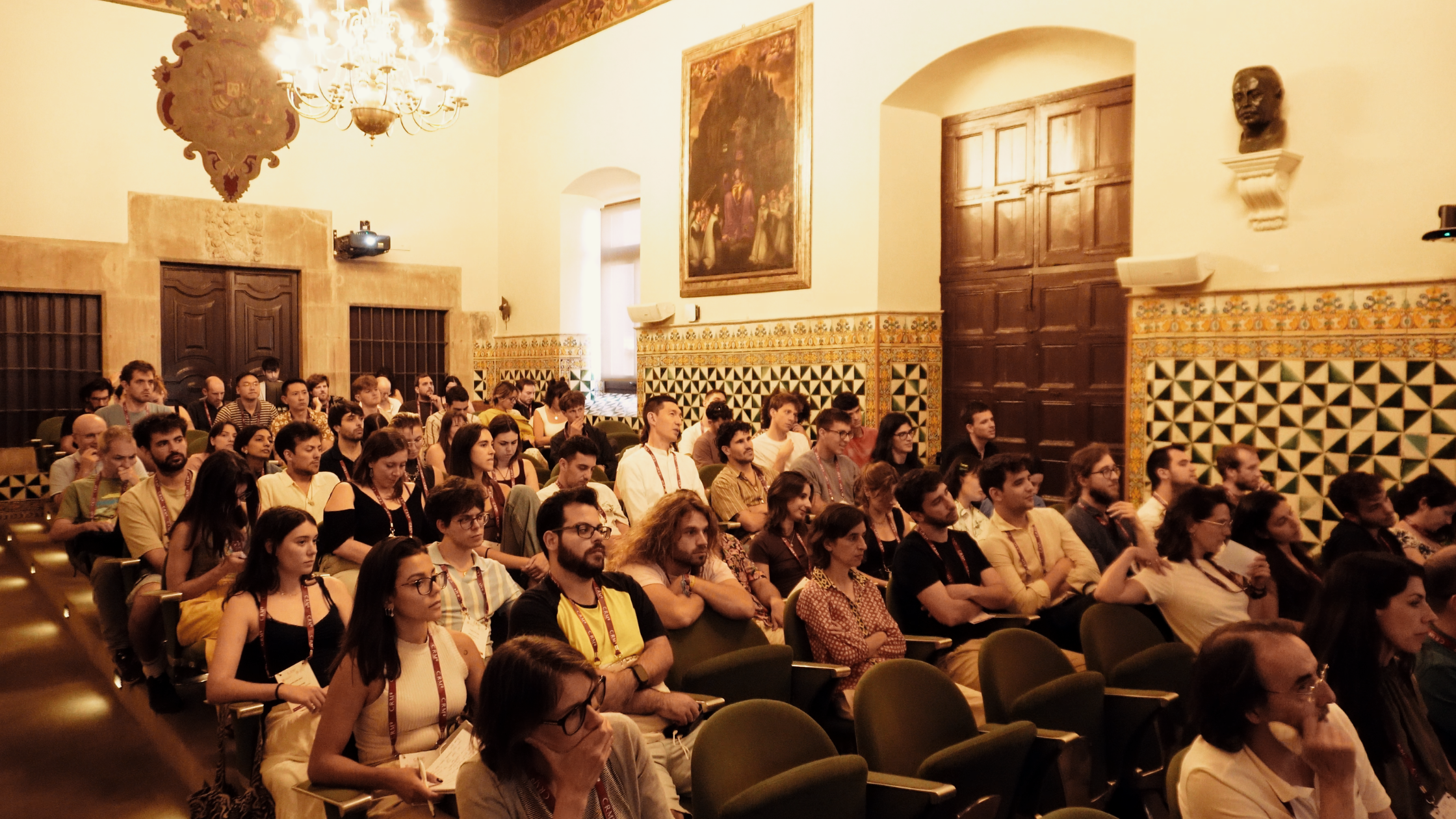
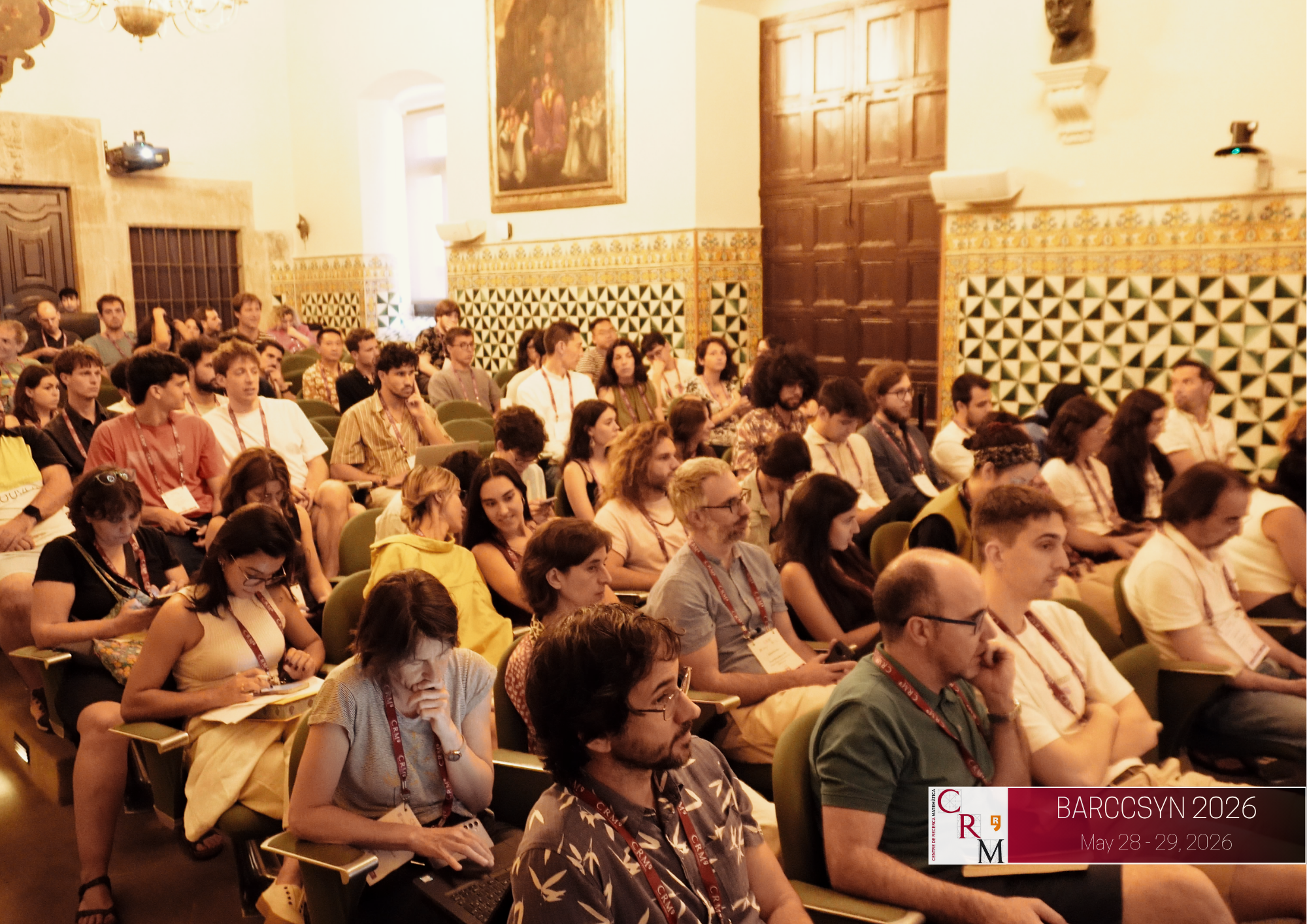
The Institut d’Estudis Catalans hosted the fourteenth edition of the Barcelona Computational, Cognitive and Systems Neuroscience meeting (BARCCSYN) on 28 and 29 May 2026. Two days in the Prat de la Riba room brought together 117 registered participants for what has become the annual meeting point of the city’s computational neuroscience community.
The meeting is organised by the Centre de Recerca Matemàtica (CRM), in collaboration with the Neurociència computacional i de sistemes section, which belongs to the Societat Catalana de Biologia and the Societat Catalana de Matemàtiques. This year’s organising committee paired Jens-Bastian Eppler and Alexandre Hyafil, from the CRM, with Hernando Martínez Vergara and Indre Pileckyte, from IDIBAPS. BARCCSYN exists to keep Barcelona-based groups in conversation, and in particular to put theorists and experimentalists in the same room.
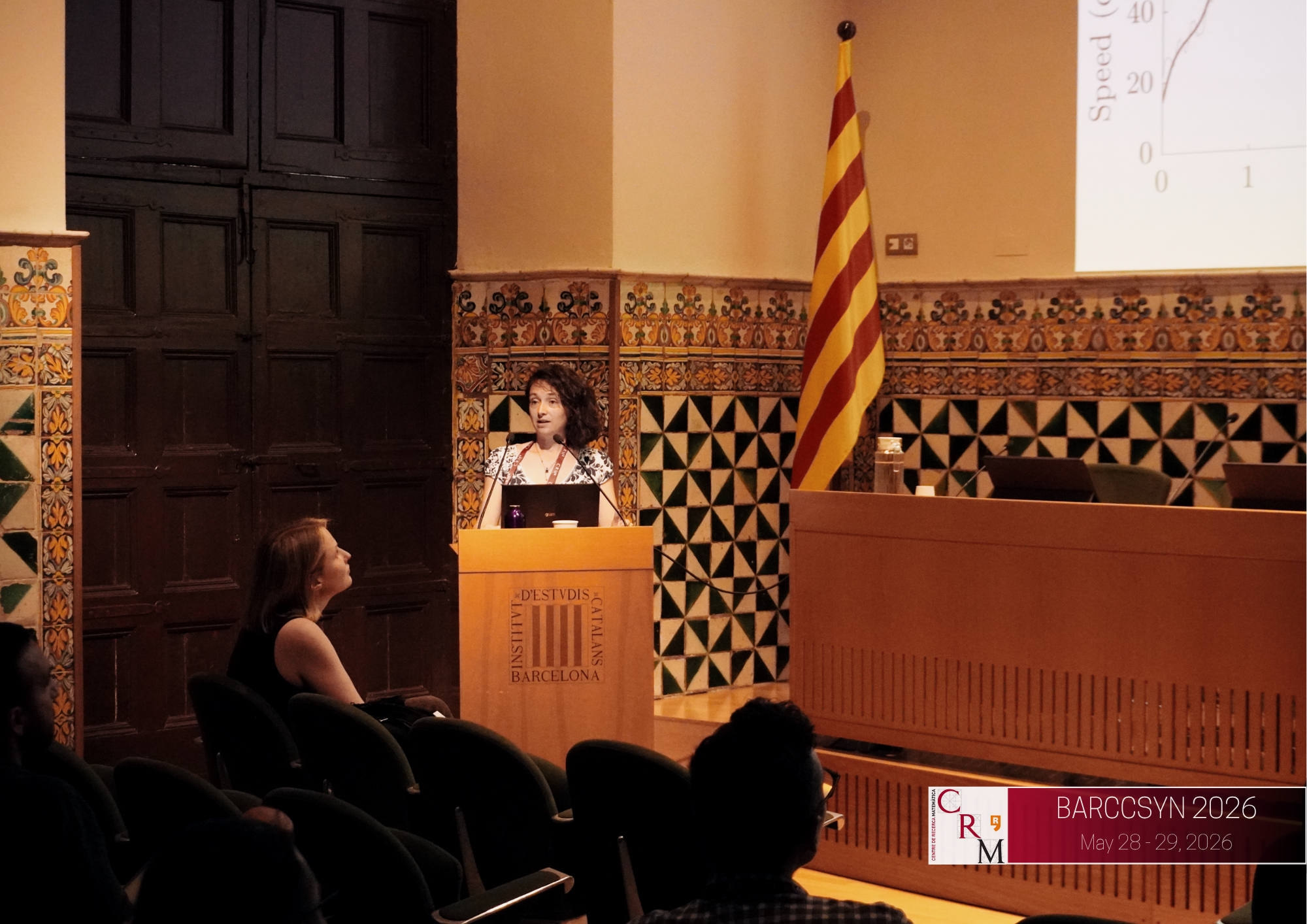
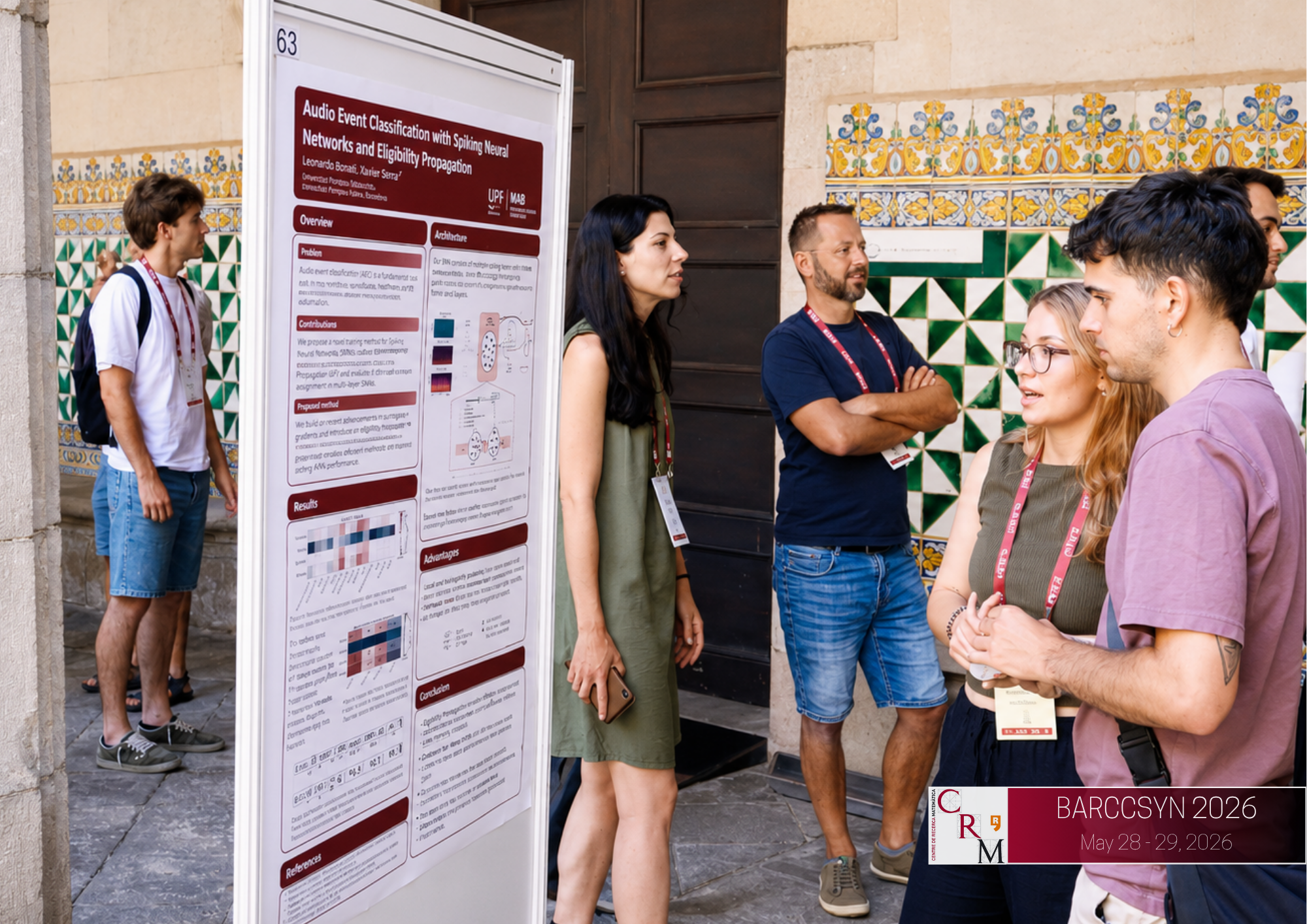
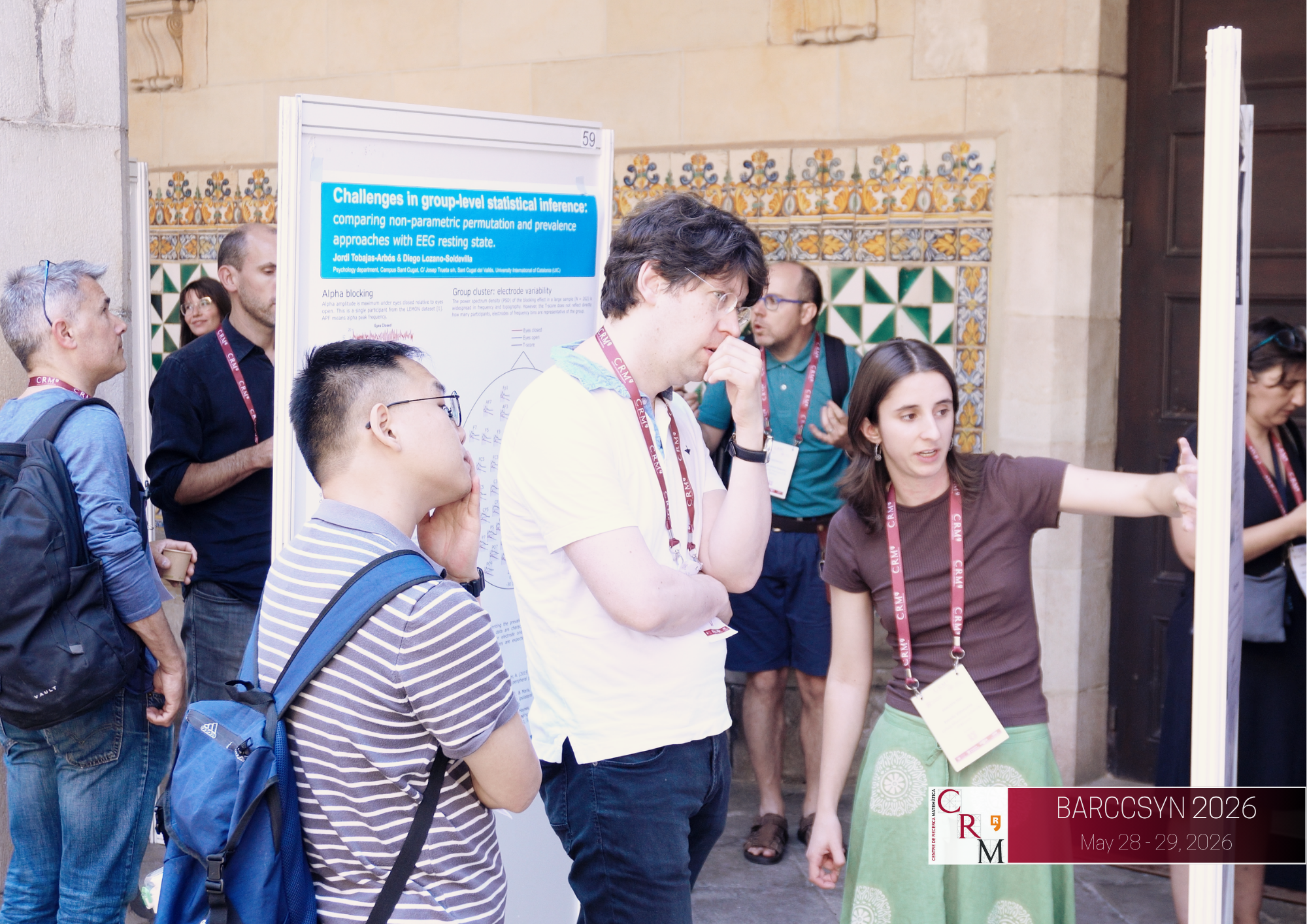
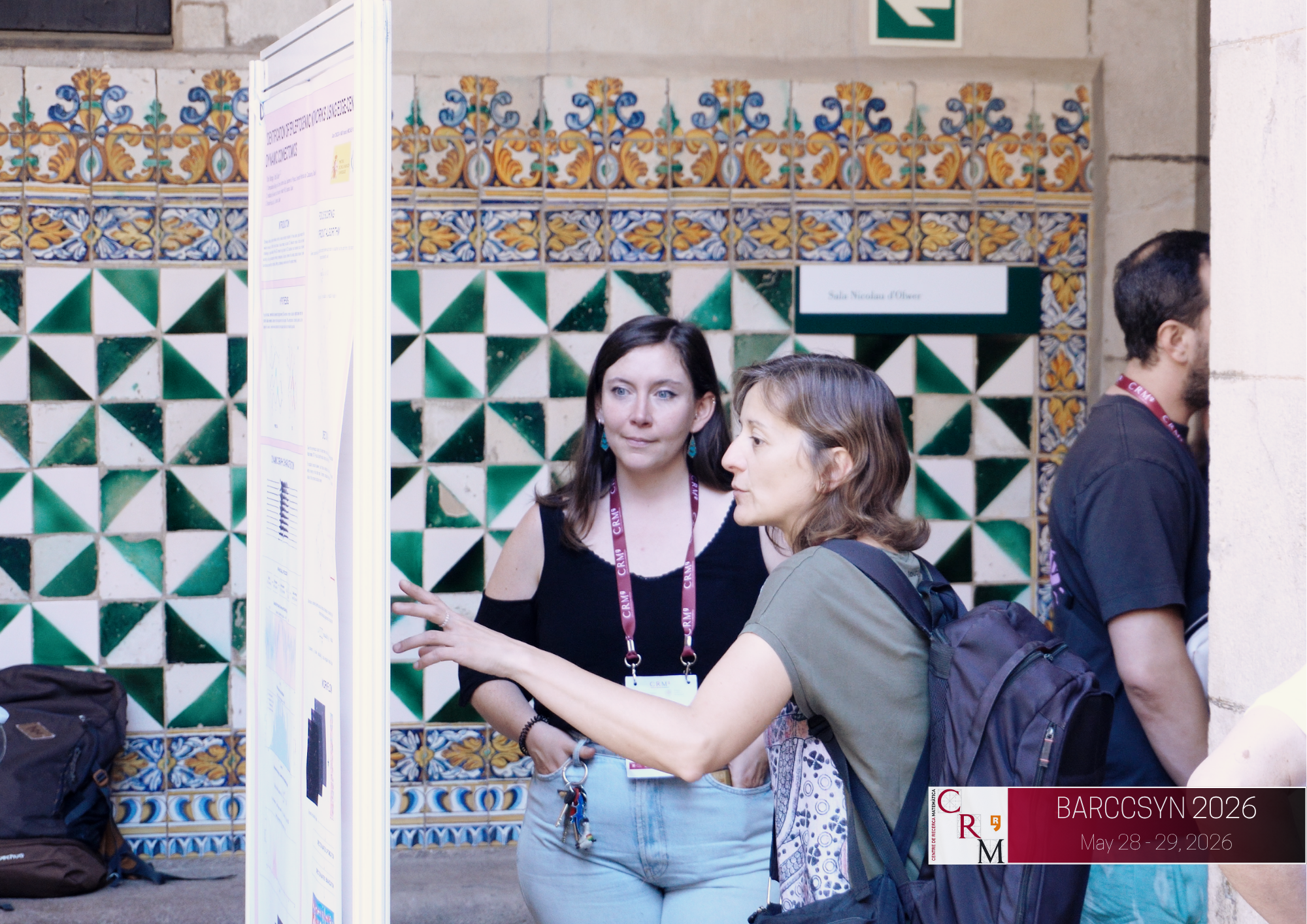
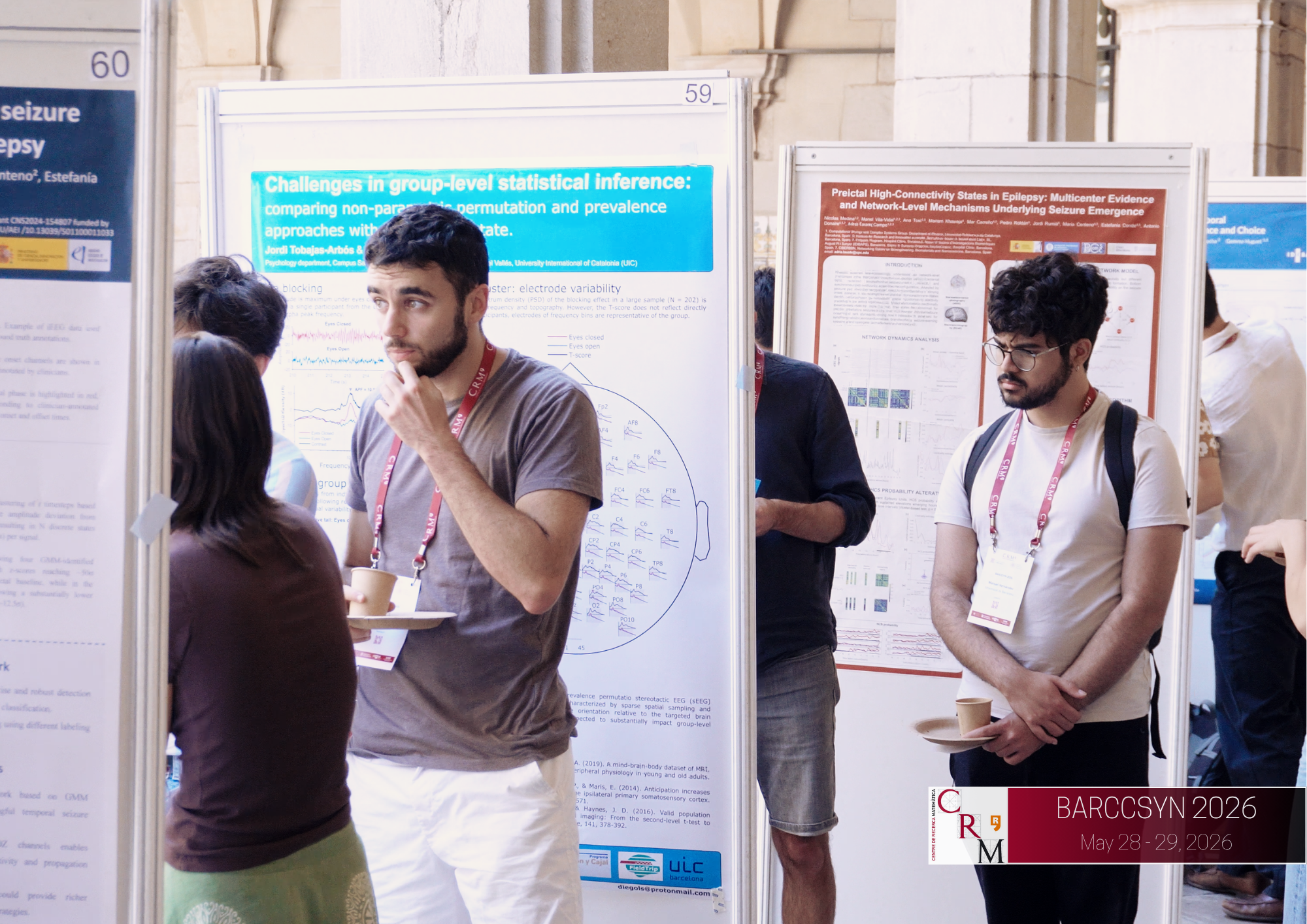
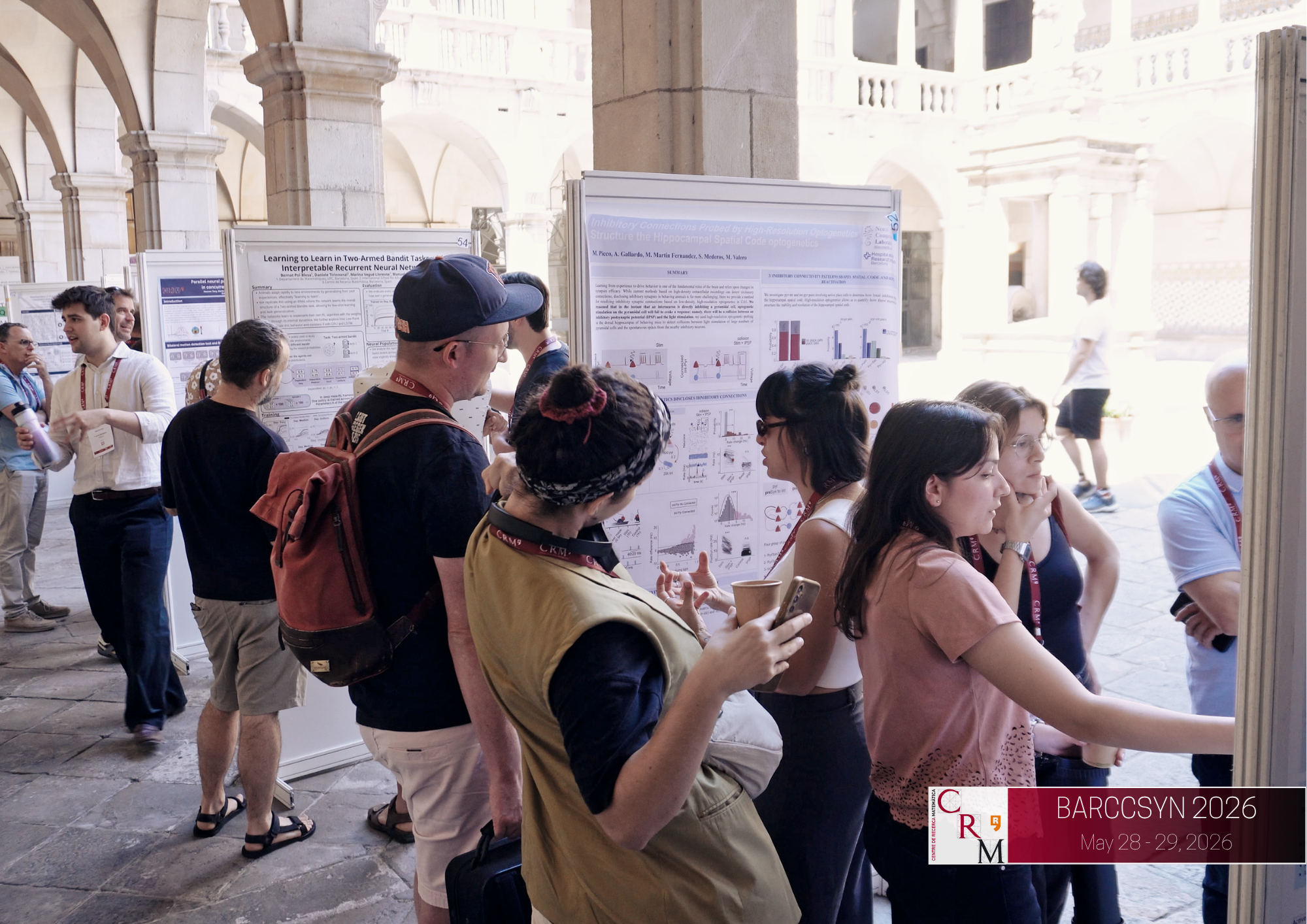
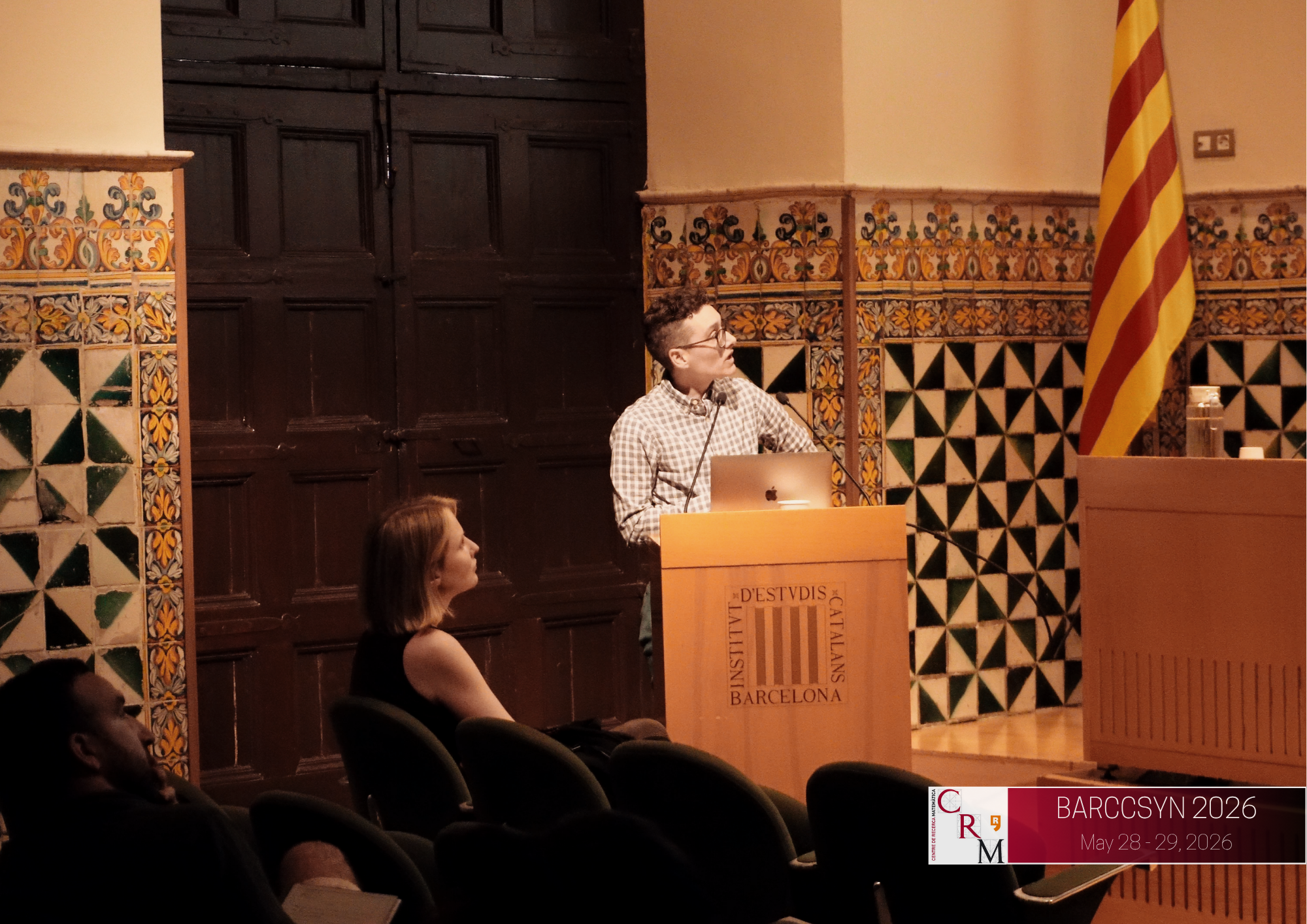
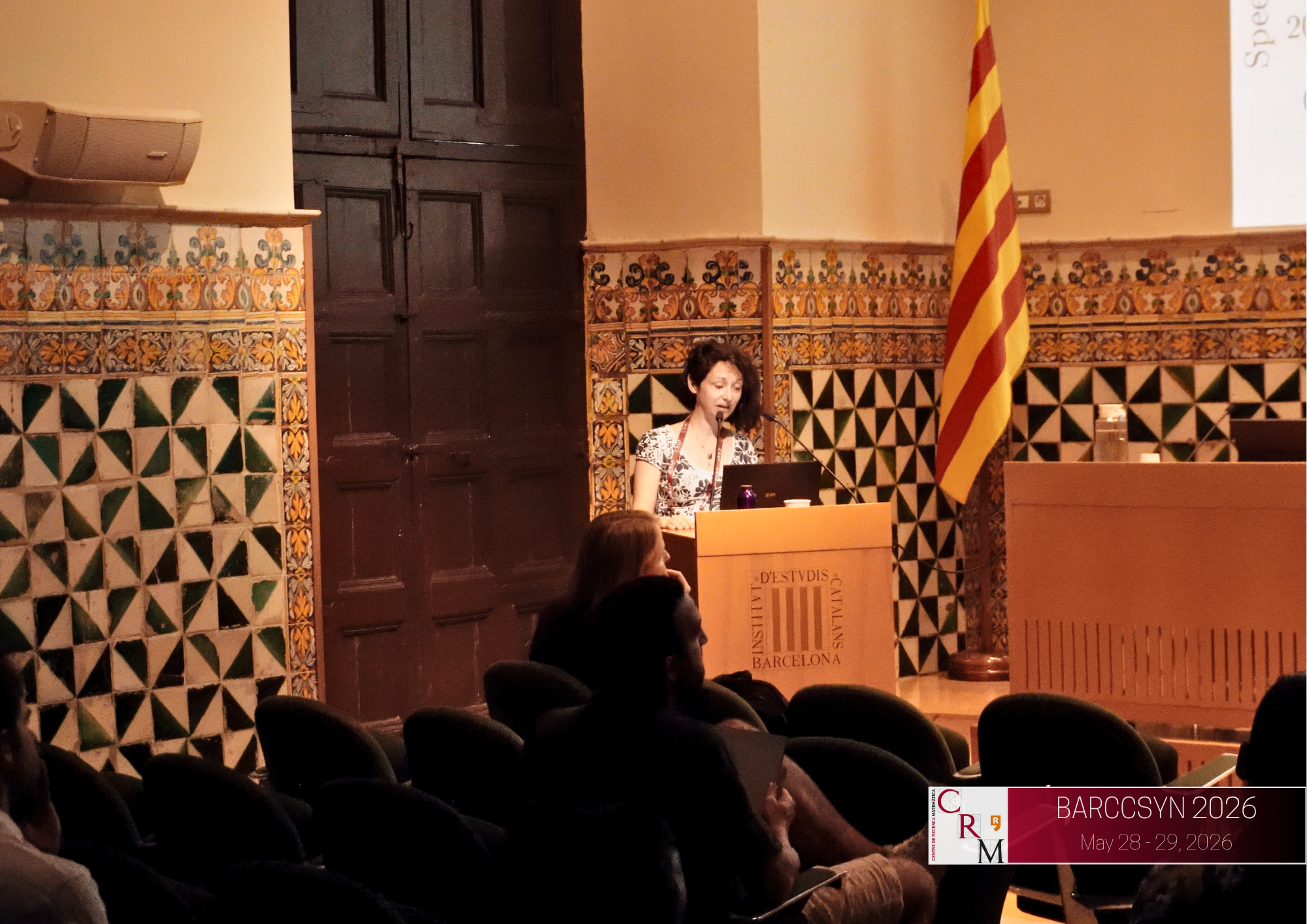
The programme followed that purpose closely. Across the two days, eleven short talks from local researchers shared the schedule with three keynote lectures and a poster exhibition of sixty-three contributions, divided over two sessions. The list of participants ran well beyond the local circuit, with researchers travelling from Bonn, Columbia, Amsterdam, Leicester, Cologne, Munich, Vienna and Prague, among other institutions.
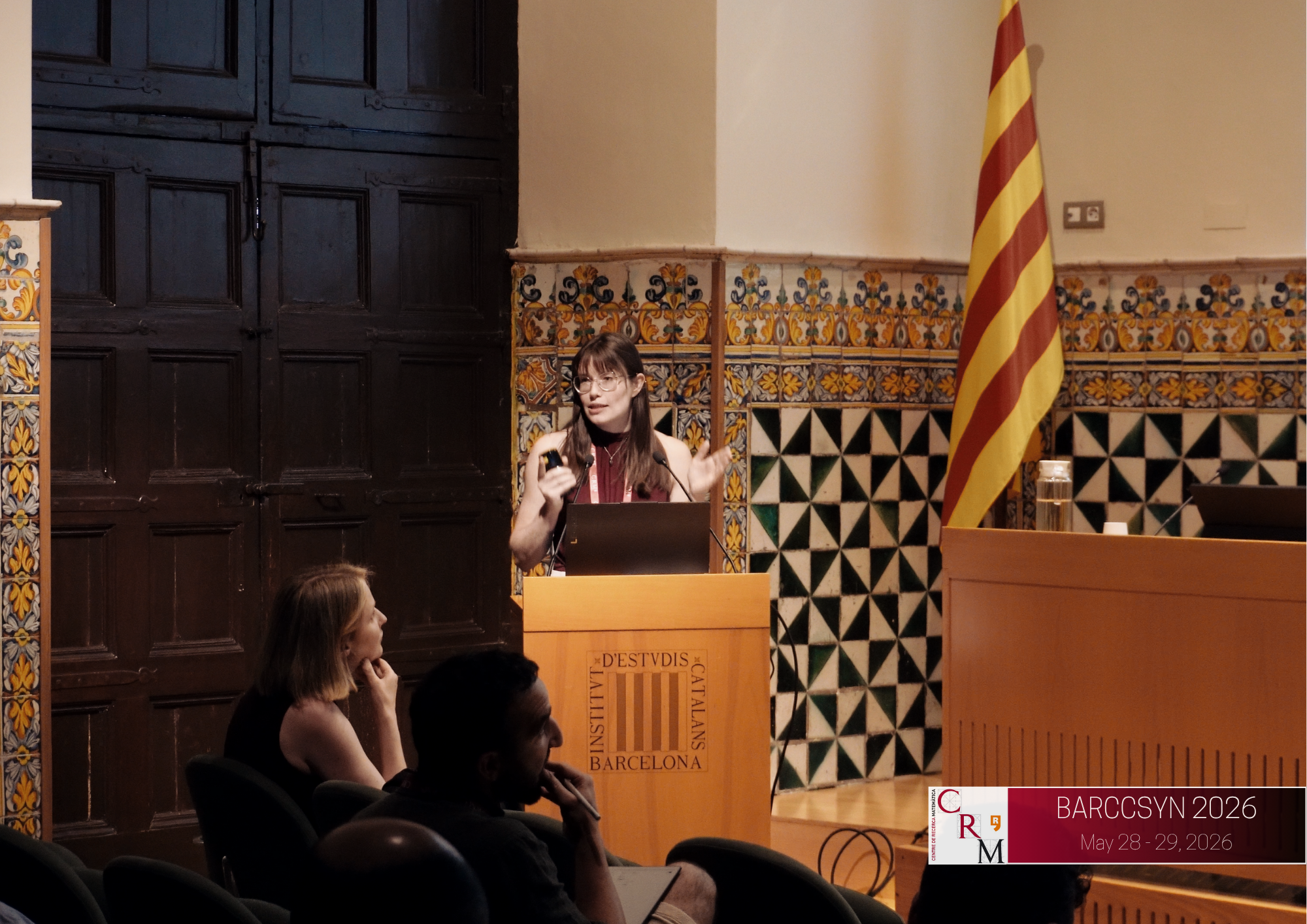
The three keynote lectures set the intellectual range of the meeting. Raoul-Martin Memmesheimer (University of Bonn) opened the series with a memory model that runs against the standard picture. Associative memories are usually thought to live in assemblies of strongly connected neurons that stay put. His group proposes the opposite: that the assemblies remodel completely over time, with neurons swapped in and out as spontaneous synaptic turnover and noisy network activity push the engram around. Plasticity keeps inputs, outputs and the broader structure consistent through the churn, so the memory holds even as its physical substrate moves. Borrowing descriptions from statistical physics, the model treats that drift, part deterministic and part random, as the very thing that redistributes and consolidates a memory rather than something the brain has to fight.
Saskia Haegens (Columbia University) turned to the beta rhythm, between 15 and 30 Hz, as the scaffolding for forming brief, flexible neural ensembles. Using spike and LFP recordings in non-human primates alongside MEG and EEG in human participants on a categorical decision task, they found that beta-frequency shifts in the frontal cortex track the outcome of a decision and predict the behavioural response. The shifts do real work, on this reading: they reactivate the communication channels a task needs, springing from changes in coupling between weakly connected oscillators, which makes them a mechanism rather than a passive spectral signature.
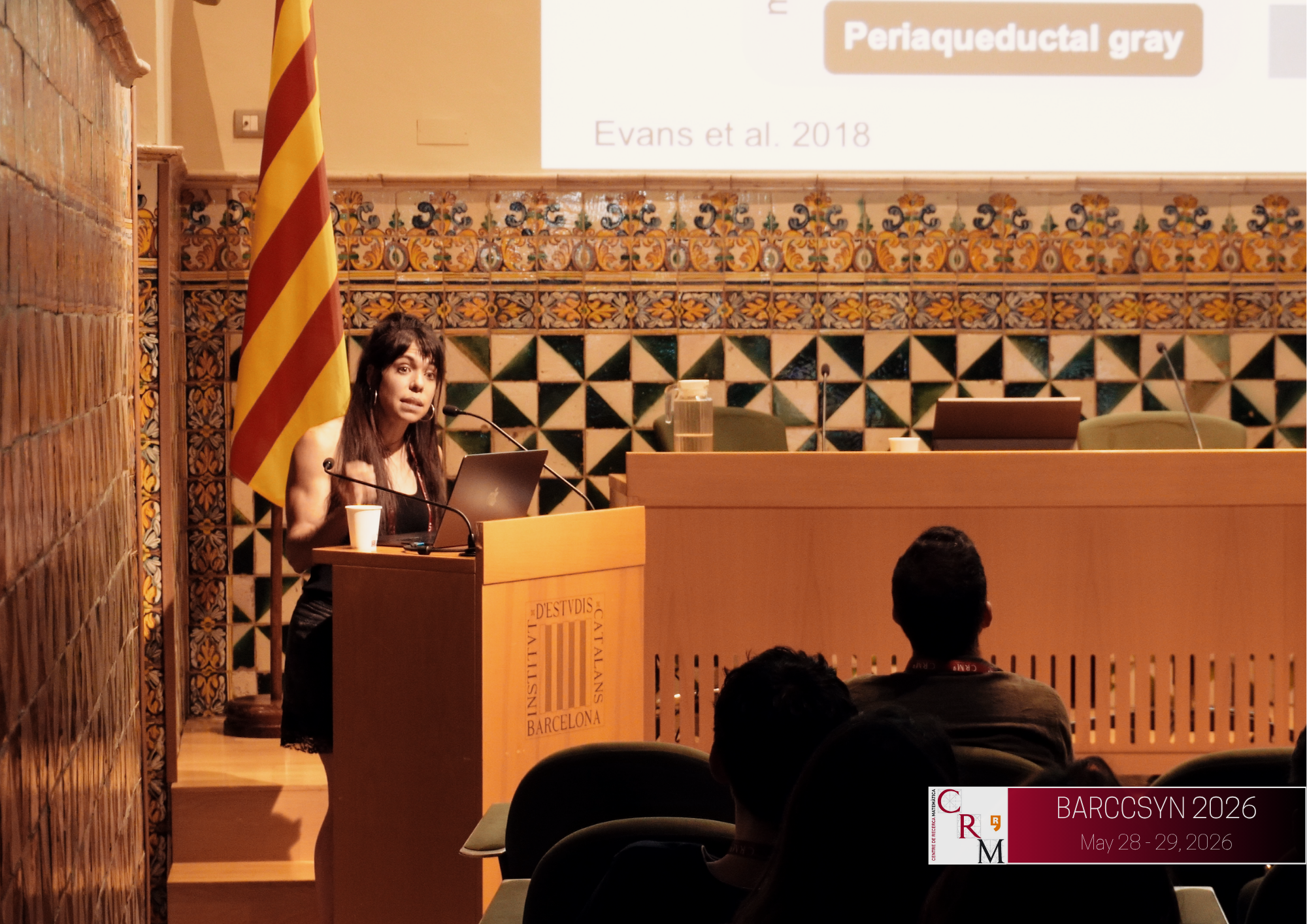
Sara Mederos (Hospital del Mar) closed the lectures with the circuits behind decisions made under threat. In her paradigm, mice escape an overhead looming stimulus that imitates a predator from the air, and repeated exposure gradually suppresses that instinctive flight. Higher visual areas instruct the learning through projections to the inhibitory ventrolateral geniculate nucleus, where particular neurons ramp up their activity across training and turn out to be necessary for the suppression. The same hub weighs safety against exploration by combining signals from retrosplenial cortex and the hypothalamus, and ongoing work links acute stress to lasting changes in hippocampal dynamics that may bear on anxiety and PTSD.
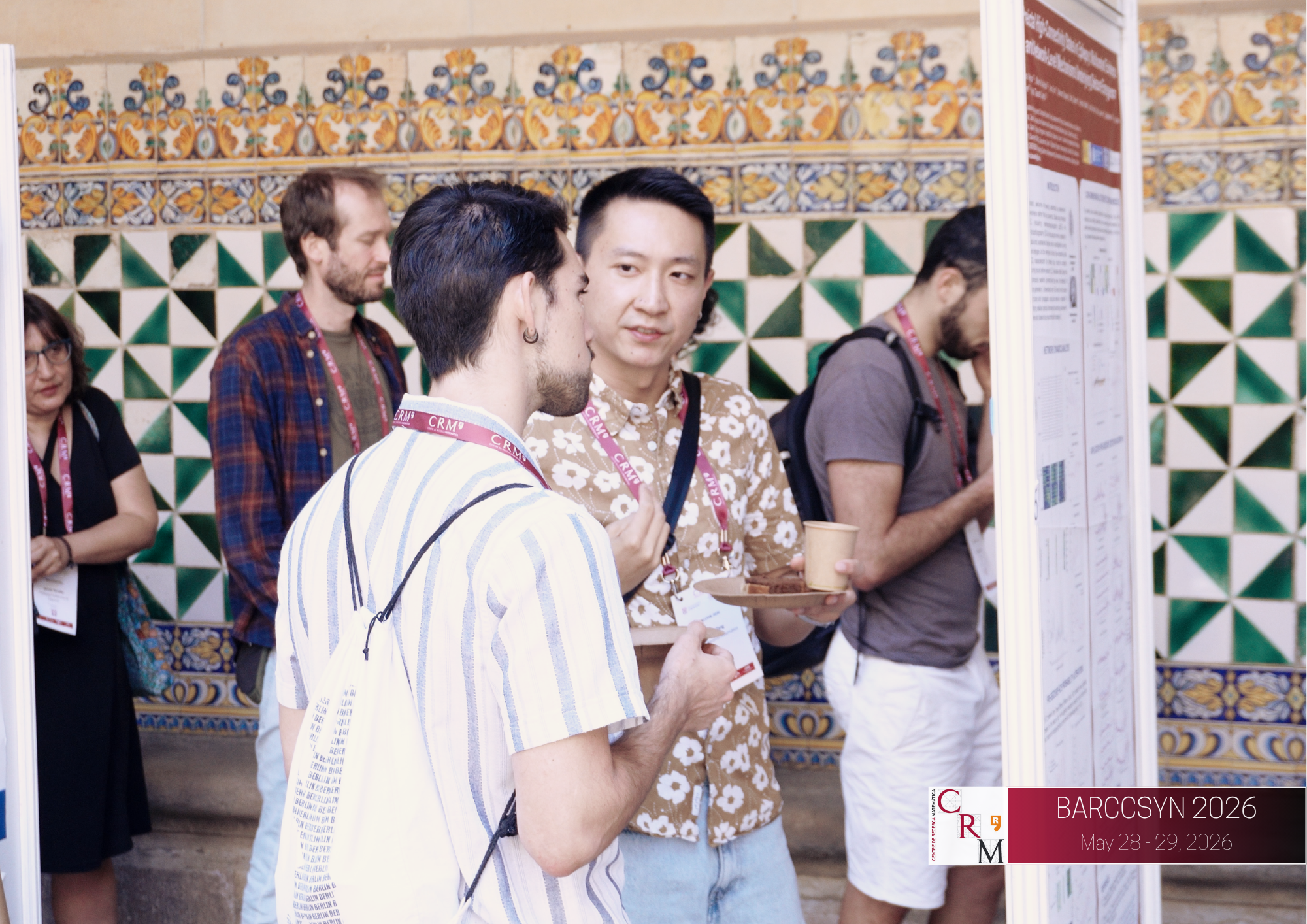
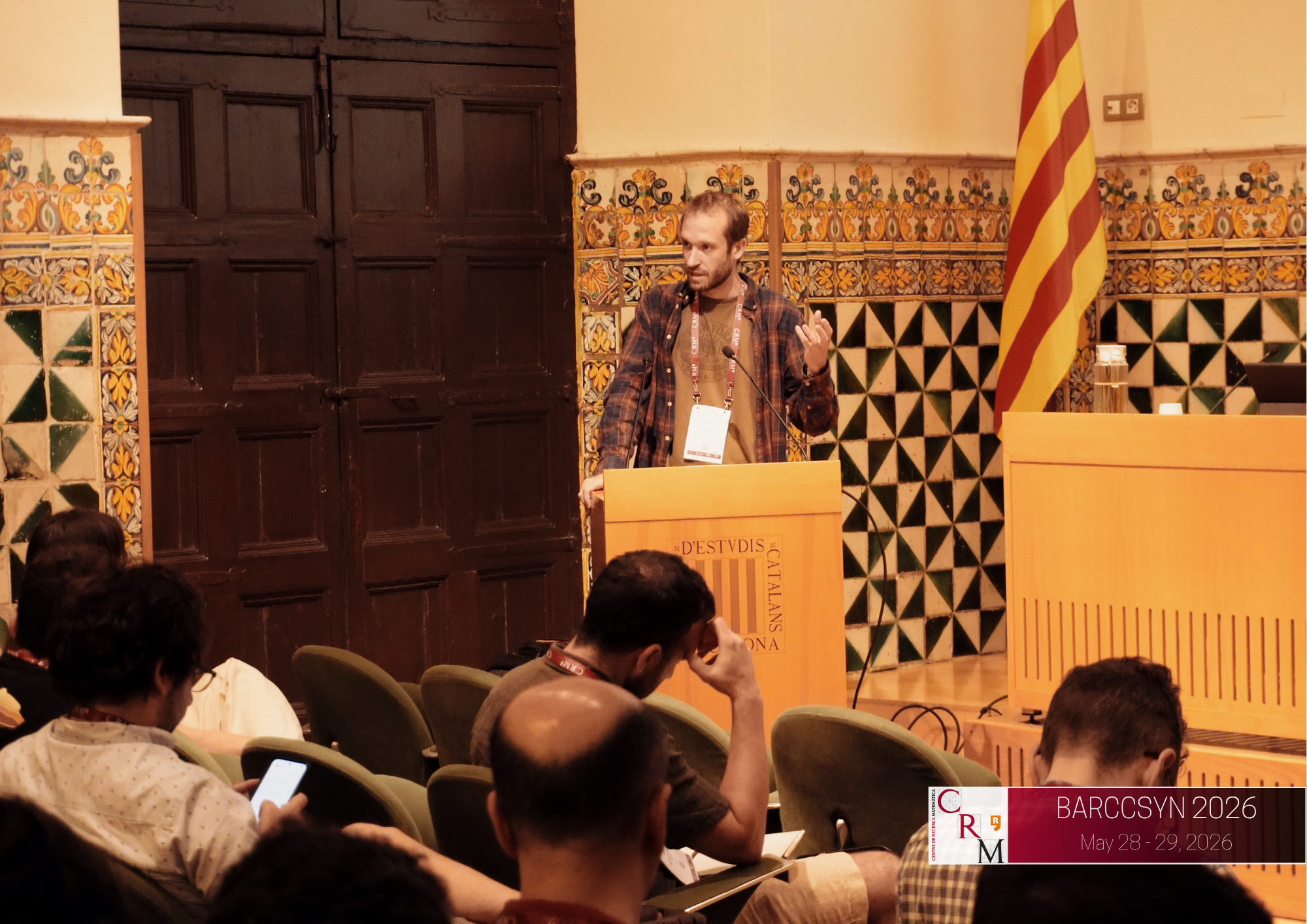
The contributed talks and posters covered much of what currently occupies the field. Several addressed memory: how working memory degrades with age, how prefrontal and parietal activity converge during its maintenance, and how engrams remain stable while the cells that carry them change. Another strand turned to decision-making and the slow accumulation of evidence, including foraging behaviour and choices made under threat. Perception had a strong presence too, from bistable and ambiguous vision modelled through catastrophe theory to the encoding of motion in area MT. Work on the hippocampal spatial code, on neural oscillations and intrinsic timescales, on whole-brain models and connectomics, and on the clinical side of epilepsy and seizure prediction rounded out a programme that moved easily between theory, modelling and experiment.
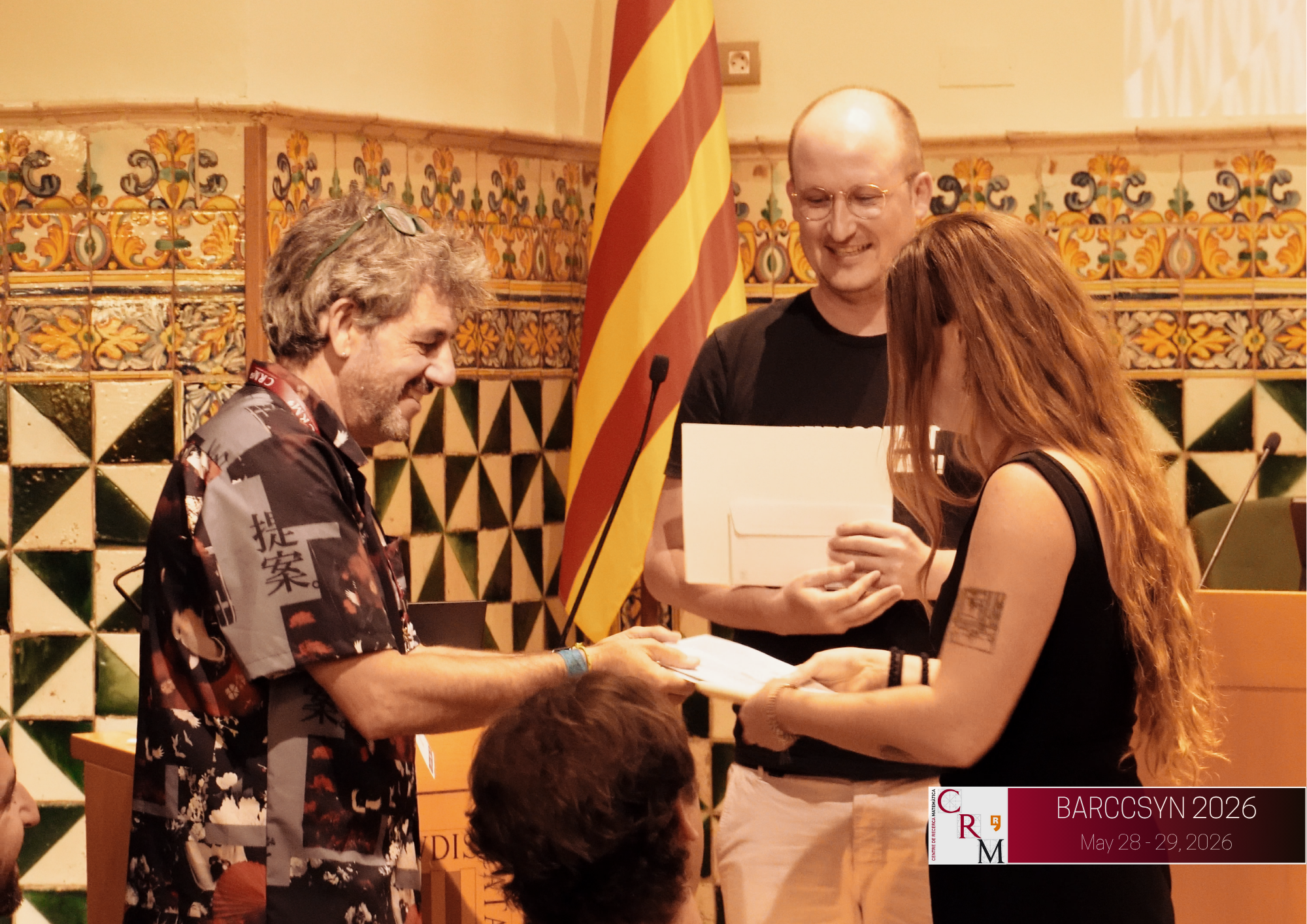
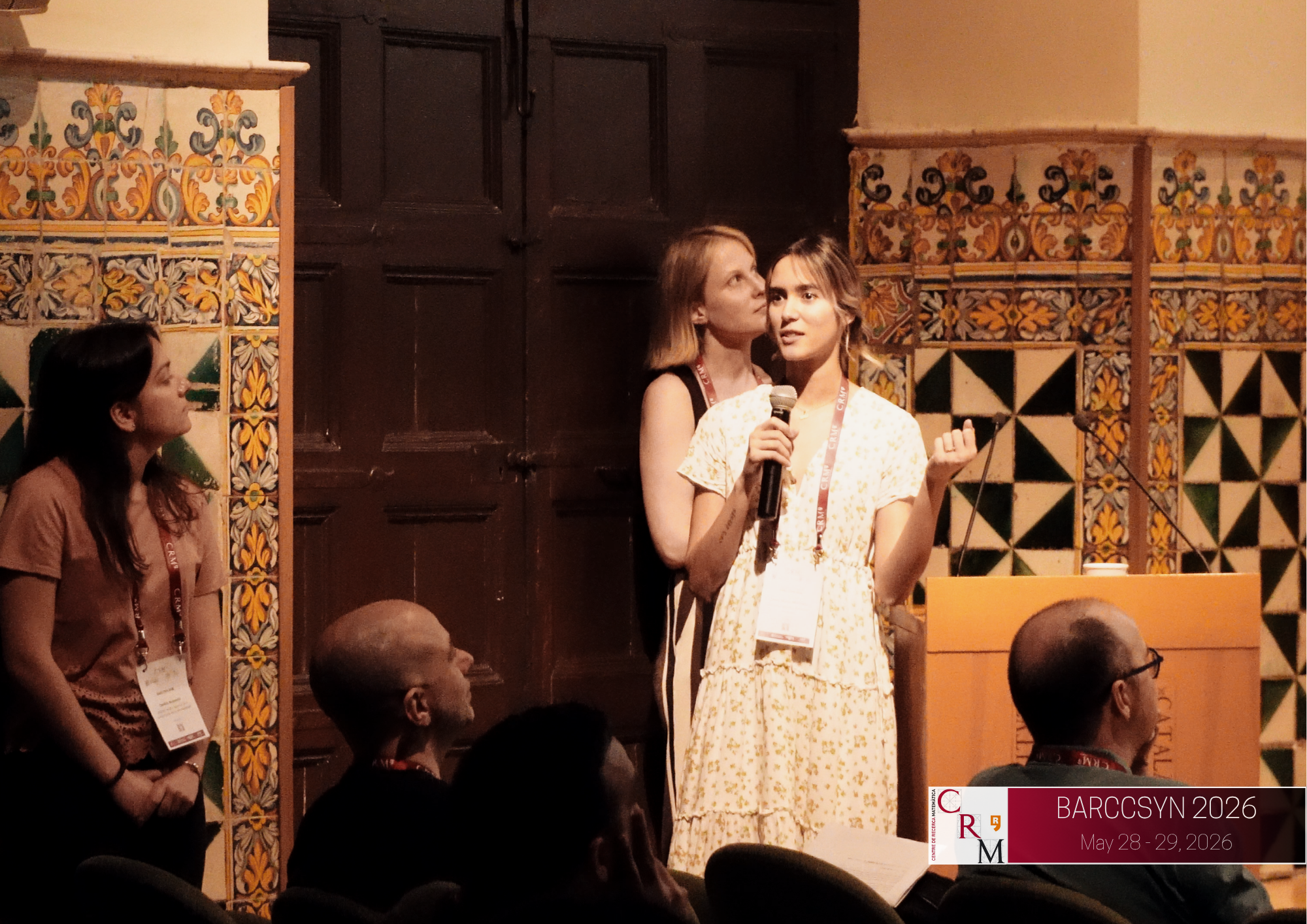
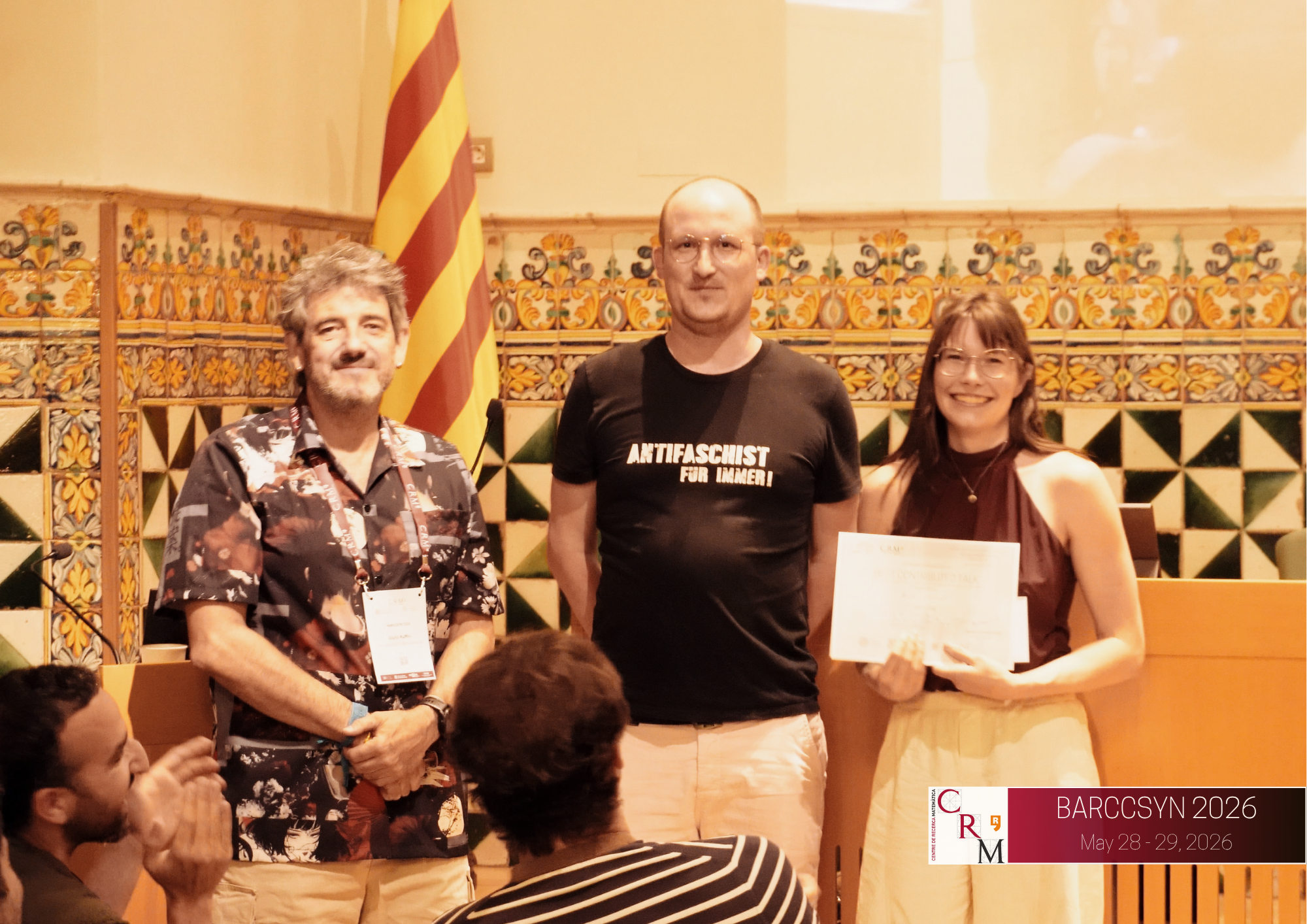
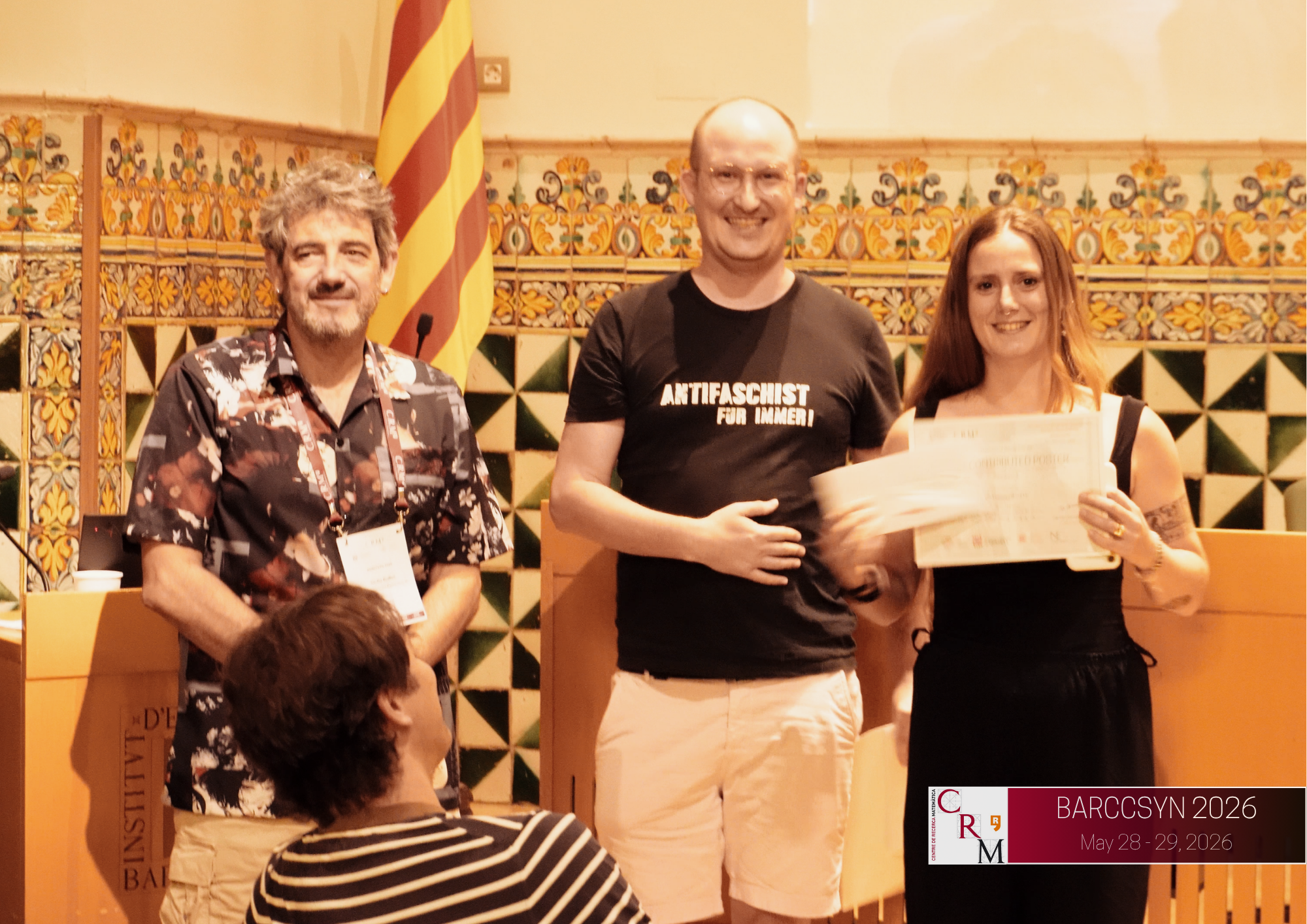
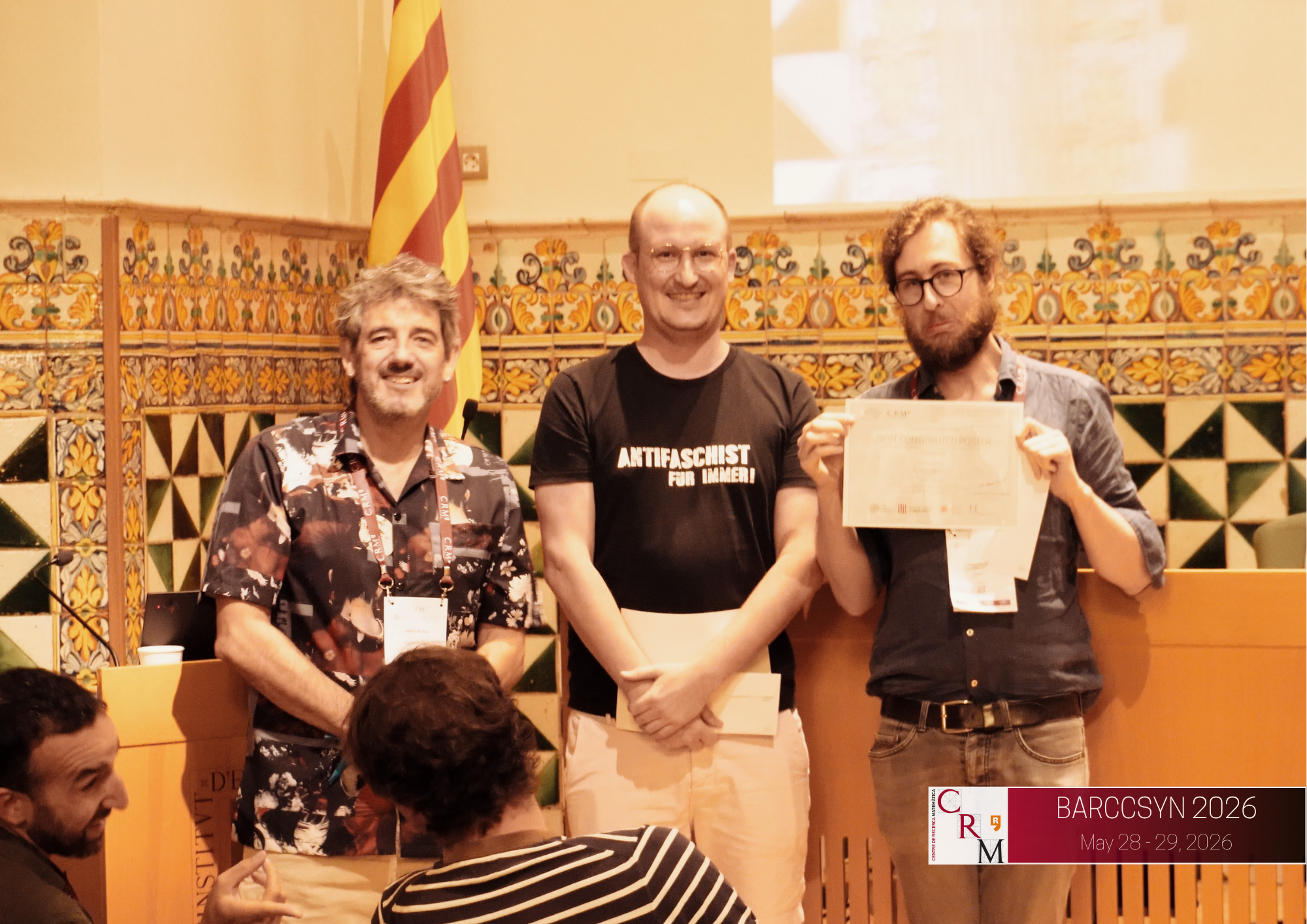
The closing session recognised three contributions. Melanie Tschiersch (IDIBAPS) received the award for best contributed talk, for her work on how prefrontal and parietal activity converge during working memory maintenance. The two prizes for best poster went to Thomas Morvan (IDIBAPS), for a round-the-clock automated evidence accumulation task in mice designed to study deliberation biases, and to Caterina Barezzi (IDIBAPS), for work on how photoinhibition of the medial prefrontal cortex alters decision-making during foraging.
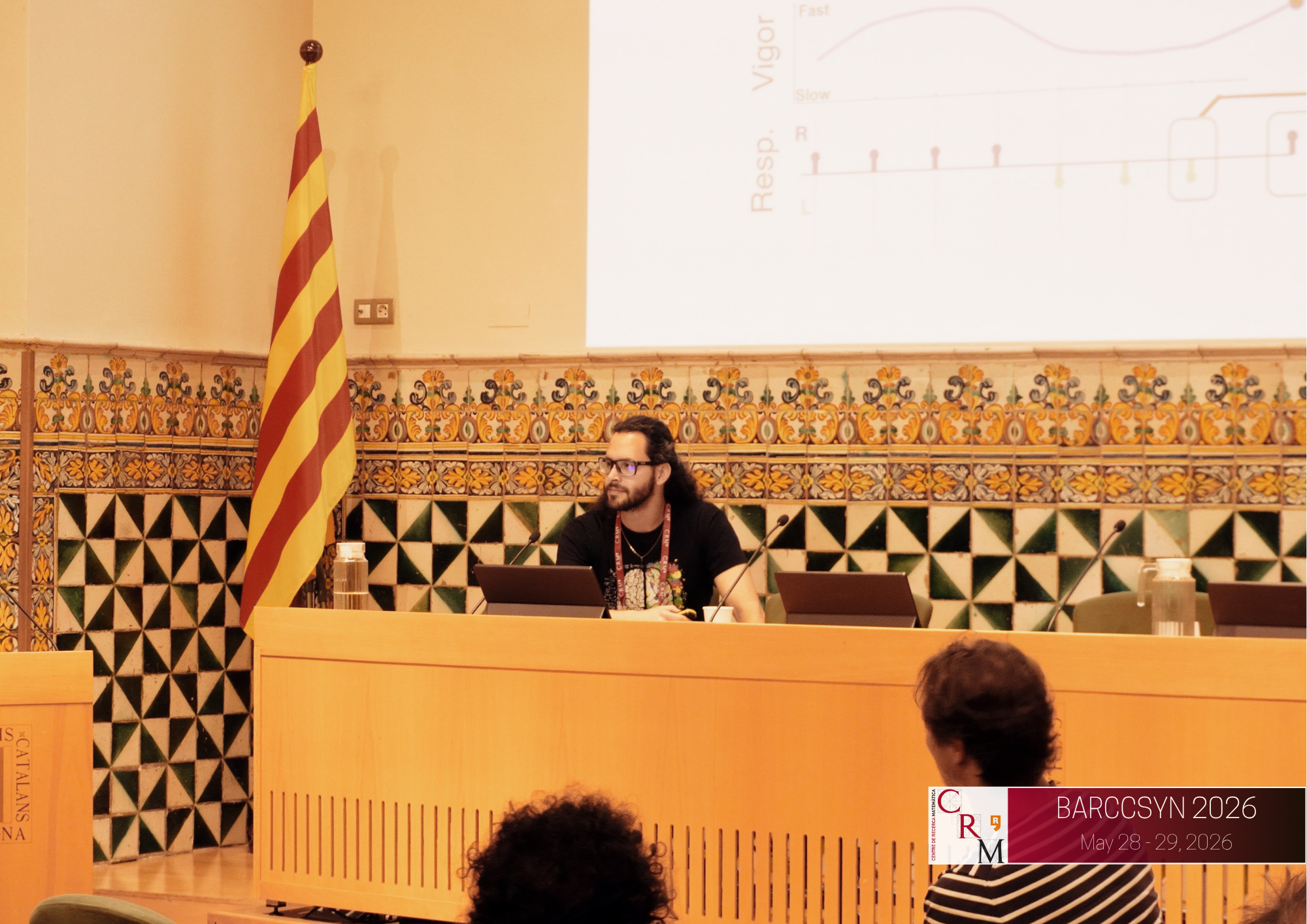
CRM had a strong presence across the two days. Gloria Cecchini presented work on the emergence of spatial fields in mouse CA1, Alexandre Garcia-Duran on bistable perception as a canonical sensory computation, and Lluís Hernández on how the rat striatum encodes the vigour of a task. The centre also brought eight posters to the two sessions. Alexandra Antoniadou and Davide Colella both looked at how ageing perturbs working memory, in a bump attractor model and in a large-scale model of macaque cortex; Lucía Arancibia worked on motion perception in area MT; Pablo Crespo on the neural signatures of evidence accumulation; Demetrio Ferro on adaptive temporal weighting across behaviour and network models; and Haowen Tang on parallel pathways for perceptual decisions under bilateral motion. Jens-Bastian Eppler‘s poster, on how network structure stabilises neural manifolds as representations drift, sat neatly beside Memmesheimer’s keynote.
Fourteen years in, BARCCSYN has kept the same modest format, a couple of rooms, a long coffee break and a wall of posters, and that format continues to do its job: putting the people who build the models next to the people who record the data, and seeing what comes of it.
|
|
CRM CommPau Varela
|
The CRM opens the academic year and unveils its Directors’ Gallery
A review of the year, the Communication Plan 2026–2030 and three research talks filled the morning of 19 October.The unveiling of the Directors’ Gallery.CRM CommPau VarelaCRMComm@crm.catGet the latest CRM news and activities in your inbox.Recent...
The CRM Mentoring Programme, as Told by One of Its Pairs
PhD student Joaquim Duran and mathematician Robert Cardona, one of the pairs in the CRM Mentoring ProgrammeJoaquim Duran (left) and Robert Cardona.CRM CommPau VarelaCRMComm@crm.catGet the latest CRM news and activities in your inbox.Recent...
When the reward comes within reach, the brain changes what it compares
As the tokens piled up, choices got faster and more accurate at the same time. The yardstick for judging each offer had moved.CRM CommPau VarelaCRMComm@crm.catGet the latest CRM news and activities in your inbox.Recent newsletters →Two subjects...

Almost every automaton can be reset with a short word
For a random automaton with n states, a word of about √n log n letters is almost always enough to reset it.CRM CommPau VarelaCRMComm@crm.catGet the latest CRM news and activities in your inbox.Recent newsletters →Picture a conveyor belt carrying...
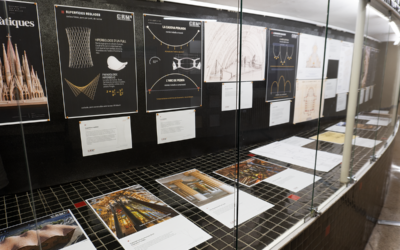
Exposició ‘Les matemàtiques de Gaudí’
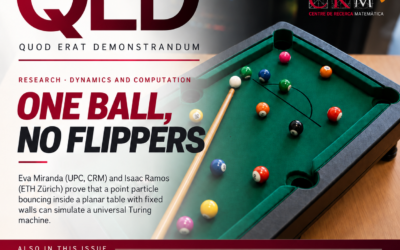
CRM quod erat demonstrandum | 48

ADA: Decoding Brain Signals Misaligned in Time
The study addresses a key limitation of current brain decoding techniques: the difficulty of interpreting internal mental processes whose temporal dynamics vary from trial to trial.Decoding what is happening in a person’s mind from their brain activity is one of the...
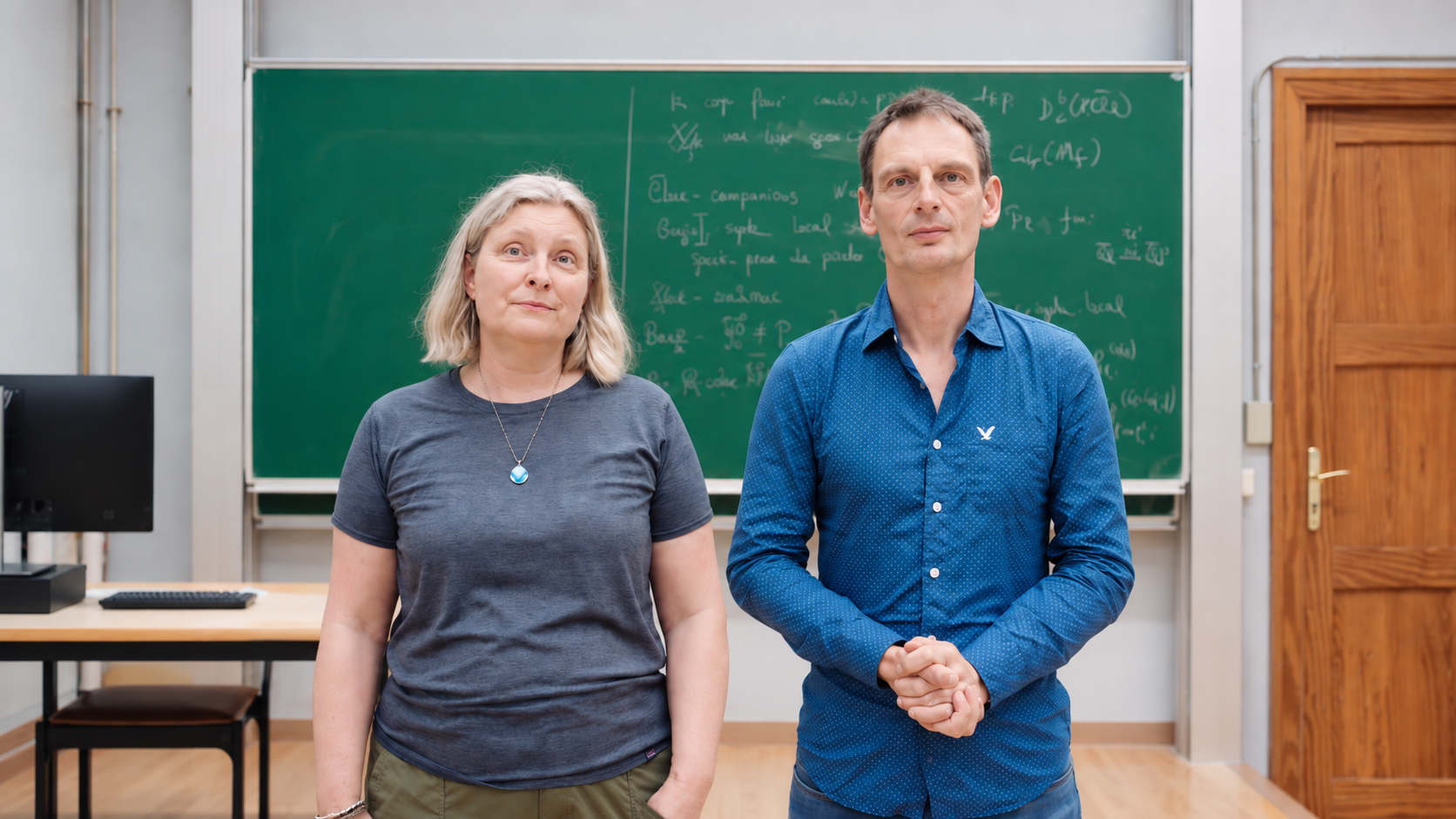
Rare curves, many points: Christophe Ritzenthaler and Rachel Pries on their research and the work around it
Christophe Ritzenthaler (Université de Rennes) and Rachel Pries (Colorado State University) both work on curves over finite fields: he hunts curves with as many points as possible, she hunts curves that almost never occur. In conversation with the CRM during their...
Call open for the 2027 Ferran Sunyer i Balaguer Prize
The Ferran Sunyer i Balaguer Foundation is accepting submissions for its 2027 prize, which awards 15,000 euros and publication in Birkhäuser's Progress in Mathematics series to an expository monograph on an active area of mathematical research. The deadline is 27...
Susanna Terracini delivers the CRM Colloquium 2026
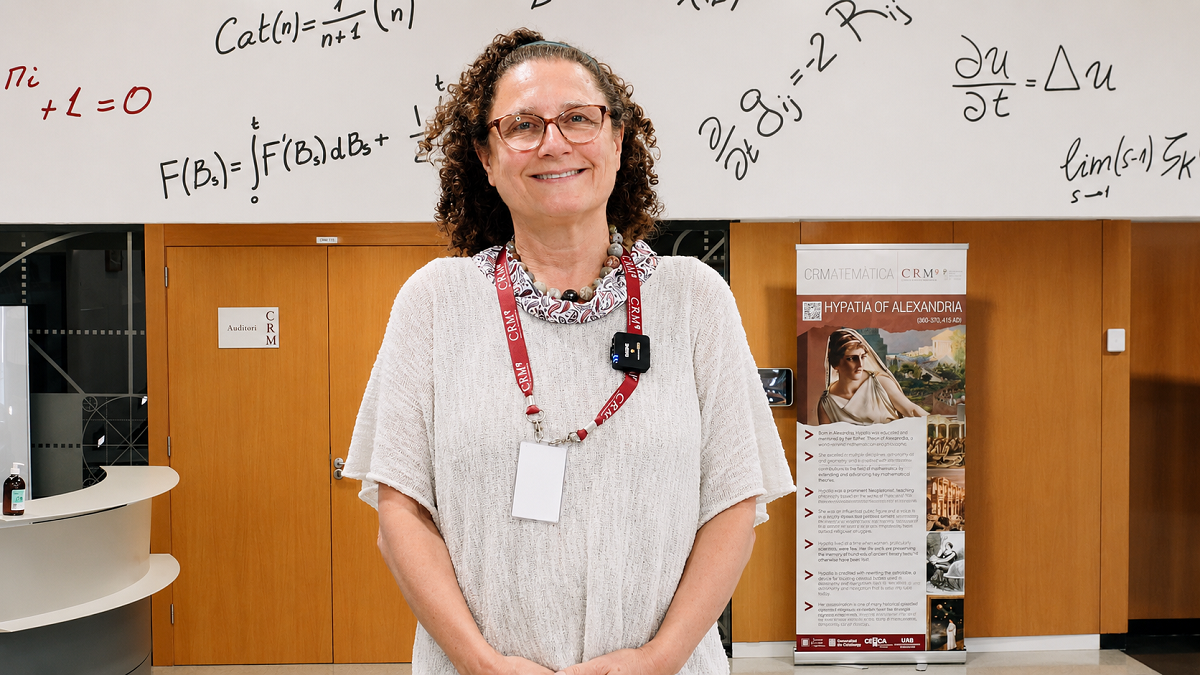
Susanna Terracini (Università di Torino) delivered the CRM Colloquium 2026 on 14 July, presenting a rigidity result for Kepler billiards obtained with Stefano Baranzini, Vivina Barutello and Irene De Blasi. She was at the centre as a member of the CRM Scientific...

Ho Chi Minh City hosts the SEAMS School on applying mathematics to real-world problems
Students from across the region took courses and worked on group projects at a school co-organised by CRM researcher Tim Myers.CRM CommPau VarelaCRMComm@crm.catGet the latest CRM news and activities in your inbox.Recent newsletters →Between 4 and...

A single ball on a fixed table can compute: Eva Miranda and Isaac Ramos prove that two-dimensional billiards are Turing complete
Eva Miranda (UPC, CRM) and Isaac Ramos (ETH Zürich) show that a point particle bouncing inside a planar table with fixed walls can simulate a universal Turing machine, settling a question Cristopher Moore left open in 1990. The result grew out of a master’s project...