
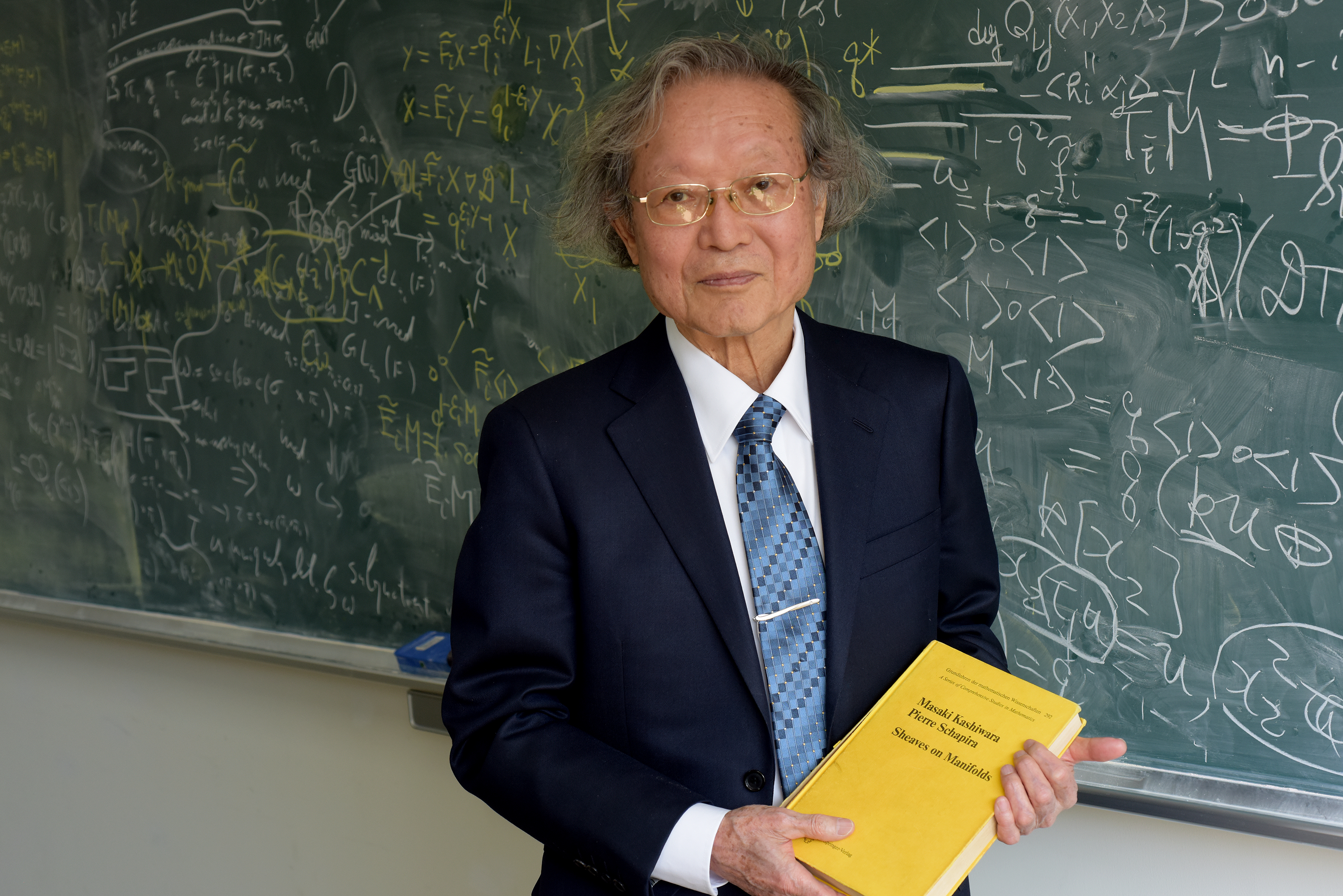
El matemàtic japonès Masaki Kashiwara ha estat guardonat amb el prestigiós Premi Abel 2025, atorgat per l’Acadèmia Noruega de Ciències i Lletres. El jurat destaca les seves contribucions fonamentals a l’anàlisi algebraica i a la teoria de representacions, en especial pel desenvolupament de la teoria dels D-mòduls i el descobriment de les bases cristal·lines.
Kashiwara, nascut el 1947 a Yūki, Ibaraki, Japó, va cursar estudis a la Universitat de Tòquio, on va coincidir amb el seu mentor, el matemàtic Mikio Sato. Fou precisament sota la supervisió de Sato que Kashiwara va presentar el 1970 una tesi sobre D-mòduls analítics, en la qual introduïa conceptes innovadors com la varietat característica, marcant un punt d’inflexió per la investigació de sistemes d’equacions diferencials parcials mitjançant mètodes algebraics.
La seva carrera ha estat caracteritzada per múltiples col·laboracions, especialment fructífera amb Pierre Schapira, amb qui va desenvolupar l’anàlisi microlocal dels feixos, un pont elegant entre equacions diferencials i geometria. El seu treball també ha estat essencial en la resolució de problemes clàssics com el Problema 21 de Hilbert, o correspondència de Riemann-Hilbert, que Kashiwara va generalitzar àmpliament.
Un altre dels grans èxits de Kashiwara va ser la demostració, juntament amb Jean-Luc Brylinski, de la conjectura de Kazhdan-Lusztig, relacionant la teoria de representacions amb la cohomologia d’interseccions. Posteriorment, amb Toshiyuki Tanisaki, va estendre aquesta teoria a l’àlgebra de Lie, mostrant una vegada més la versatilitat de la teoria dels D-mòduls. Als anys 90, Kashiwara va revolucionar la teoria de representacions de grups quàntics amb la introducció de les bases cristal·lines. Aquesta eina combinatòria ha permès resoldre nombrosos problemes dins i fora de les matemàtiques pures, establint noves connexions profundes amb la física teòrica.
Masaki Kashiwara, actualment Professor Emèrit i investigador al Research Institute for Mathematical Sciences (RIMS) de la Universitat de Kyoto, ha estat reconegut prèviament amb prestigiosos guardons com la Medalla Chern (2018), el Premi Kyoto (2018), i l’Ordre del Tresor Sagrat del Japó (2020). Amb el Premi Abel, dotat amb 7,5 milions de corones noruegues (aproximadament 660.000 euros), Kashiwara es converteix en el primer matemàtic japonès en rebre aquesta distinció.
La cerimònia oficial de lliurament del Premi Abel tindrà lloc a Oslo, Noruega, en presència de destacades personalitats del món científic, polític i acadèmic internacional, en una celebració que ret homenatge a tota una vida dedicada a ampliar les fronteres del coneixement matemàtic.
|
|
CRM CommPau Varela
|

Almost every automaton can be reset with a short word
Guillaume Chapuy (Université Paris Cité, CNRS) and Guillem Perarnau (UPC, CRM) have shown that a random finite automaton with n states can, with high probability, be reset by a word of length of order √n log n. The result, published in ACM Transactions on Algorithms, pins the exponent at 1/2, the lower end of a decade of numerical estimates, and addresses the random version of the synchronization problem behind a conjecture Ján Černý posed in 1964 and which still remains open.
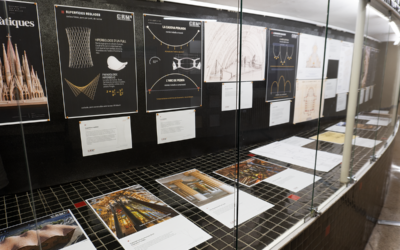
Exposició ‘Les matemàtiques de Gaudí’

CRM quod erat demonstrandum | 48

ADA: Decoding Brain Signals Misaligned in Time
The study addresses a key limitation of current brain decoding techniques: the difficulty of interpreting internal mental processes whose temporal dynamics vary from trial to trial.Decoding what is happening in a person’s mind from their brain activity is one of the...
Rare curves, many points: Christophe Ritzenthaler and Rachel Pries on their research and the work around it
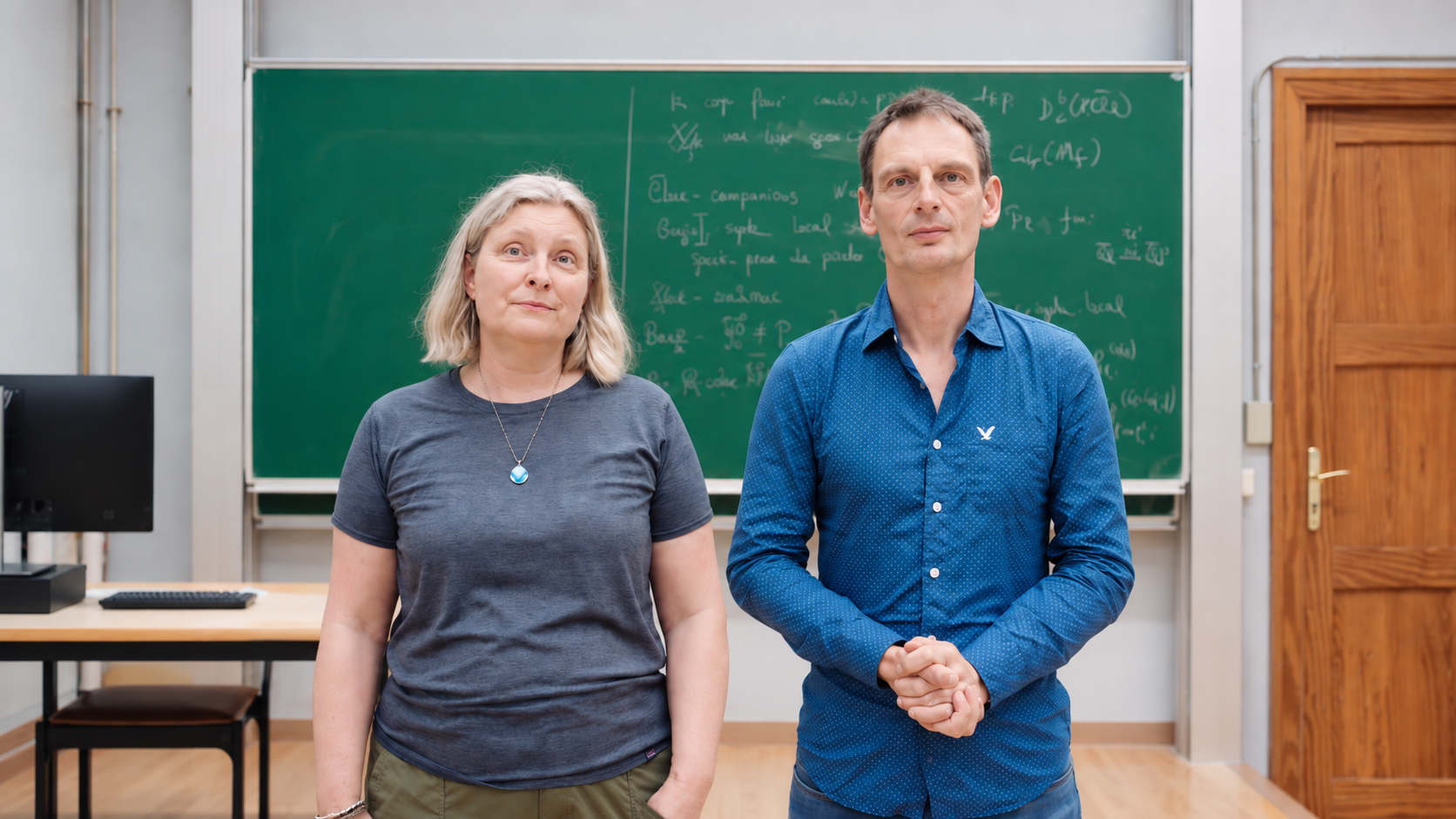
Christophe Ritzenthaler (Université de Rennes) and Rachel Pries (Colorado State University) both work on curves over finite fields: he hunts curves with as many points as possible, she hunts curves that almost never occur. In conversation with the CRM during their...

Call open for the 2027 Ferran Sunyer i Balaguer Prize
The Ferran Sunyer i Balaguer Foundation is accepting submissions for its 2027 prize, which awards 15,000 euros and publication in Birkhäuser's Progress in Mathematics series to an expository monograph on an active area of mathematical research. The deadline is 27...
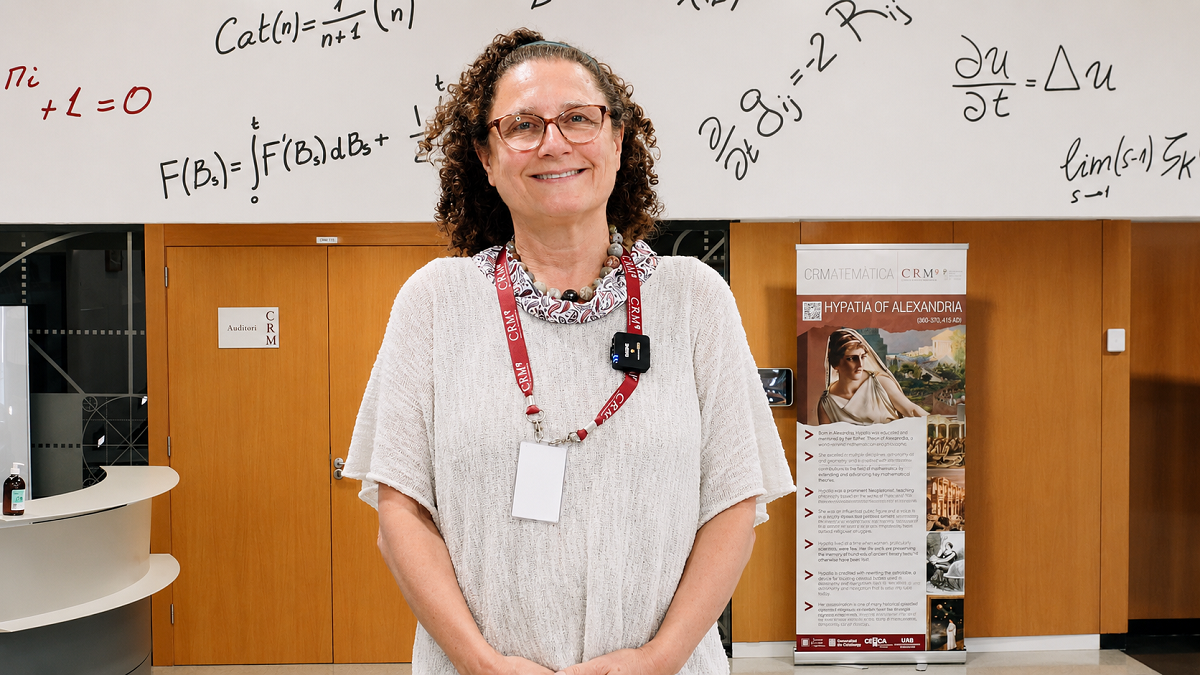
Susanna Terracini delivers the CRM Colloquium 2026
Susanna Terracini (Università di Torino) delivered the CRM Colloquium 2026 on 14 July, presenting a rigidity result for Kepler billiards obtained with Stefano Baranzini, Vivina Barutello and Irene De Blasi. She was at the centre as a member of the CRM Scientific...
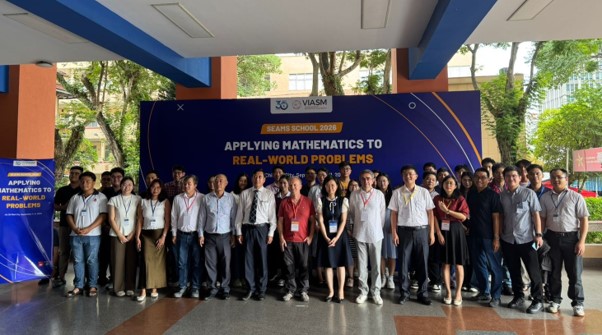
Ho Chi Minh City hosts the SEAMS School on applying mathematics to real-world problems
Students from across the region took courses and worked on group projects at a school co-organised by CRM researcher Tim Myers.CRM CommPau VarelaCRMComm@crm.catGet the latest CRM news and activities in your inbox.Recent newsletters →Between 4 and...

A single ball on a fixed table can compute: Eva Miranda and Isaac Ramos prove that two-dimensional billiards are Turing complete
Eva Miranda (UPC, CRM) and Isaac Ramos (ETH Zürich) show that a point particle bouncing inside a planar table with fixed walls can simulate a universal Turing machine, settling a question Cristopher Moore left open in 1990. The result grew out of a master’s project...
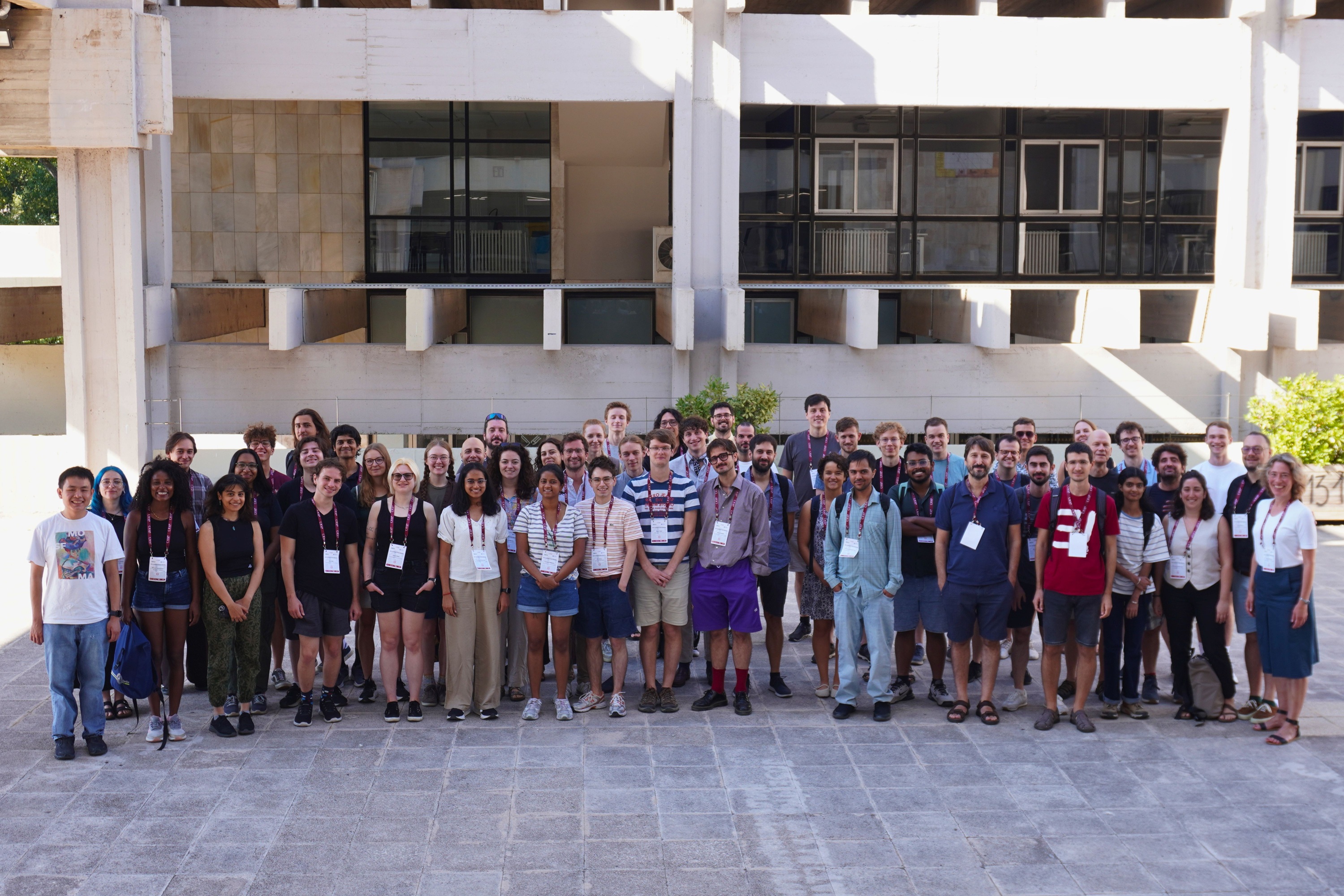
BMS-BGSMath Junior Meeting 2026: Barcelona and Berlin Strengthen Scientific Ties
From 2 to 4 September 2026, the Centre de Recerca Matemàtica (CRM) hosted the BMS-BGSMath Junior Meeting 2026, a three-day event jointly organised by the Berlin Mathematical School (BMS) and the Barcelona Graduate School of Mathematics (BGSMath), with the Centre de...
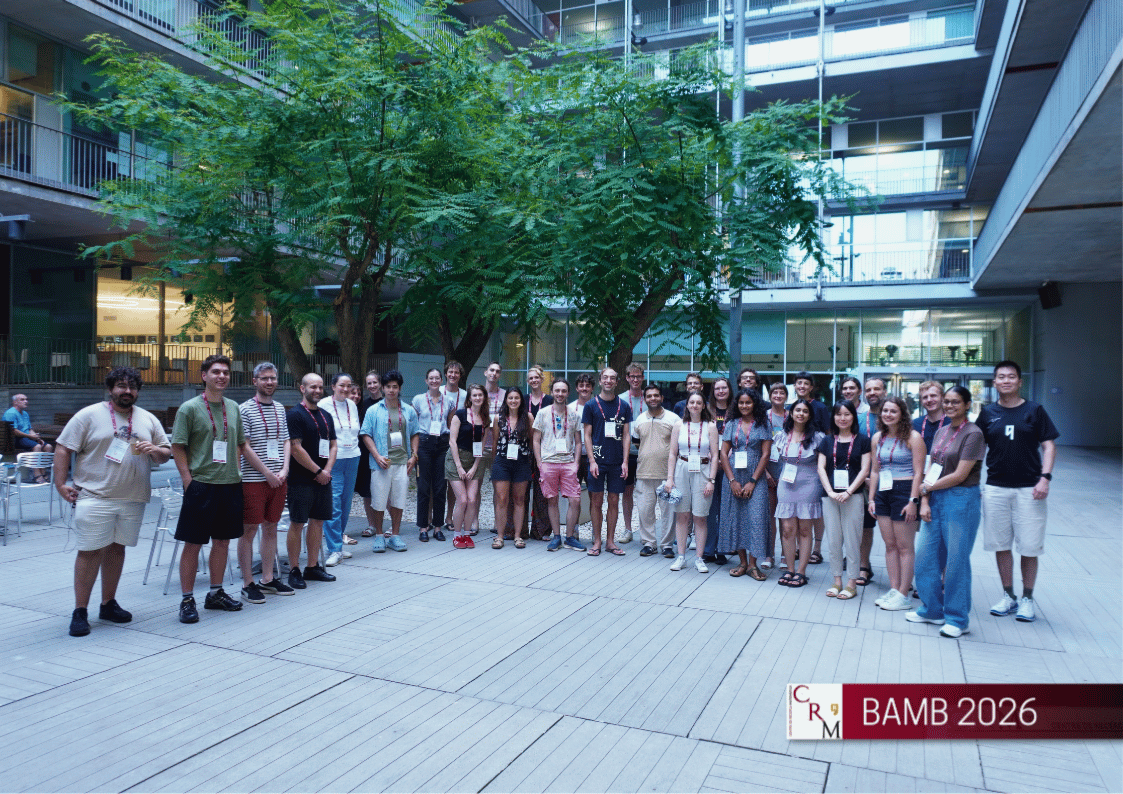
The CRM organises the 2026 Barcelona Summer School for Advanced Modeling of Behavior
The Centre de Recerca Matemàtica held the sixth edition of BAMB!, the Barcelona Summer School for Advanced Modeling of Behavior, from 12 to 23 July 2026 at the Parc de Recerca Biomèdica de Barcelona. Thirty early-career researchers from fourteen countries followed...
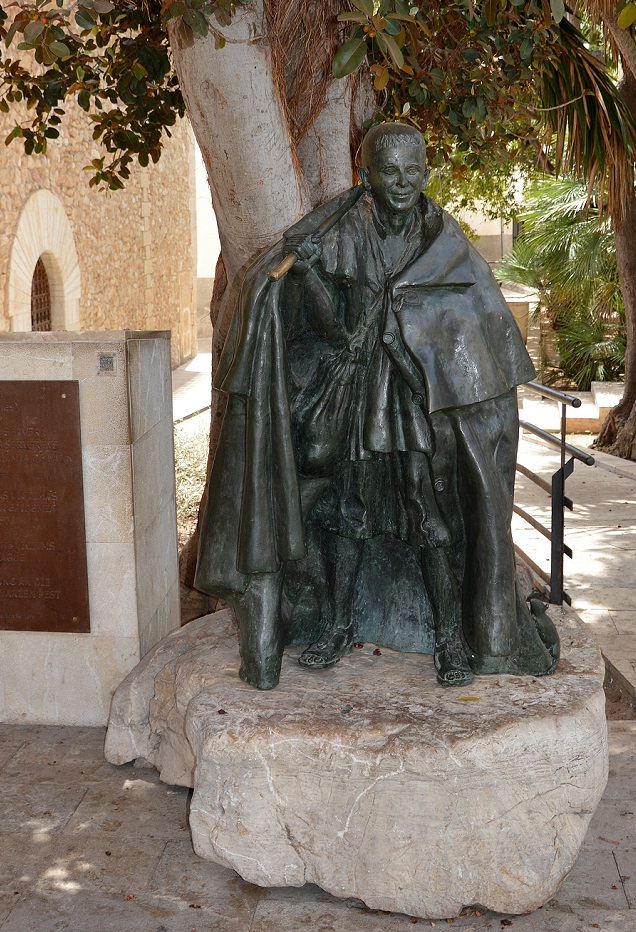
Mallorca’s 1820 plague did not behave like a classic bubonic outbreak, study finds
A study in PNAS by Pere Puig (UAB, CRM) and Joana Maria Pujadas-Mora (UOC, ICREA) reports what happens when the daily health records kept in Son Servera and Capdepera during the 1820 outbreak are analysed with a Bayesian epidemiological model: an unusually short...