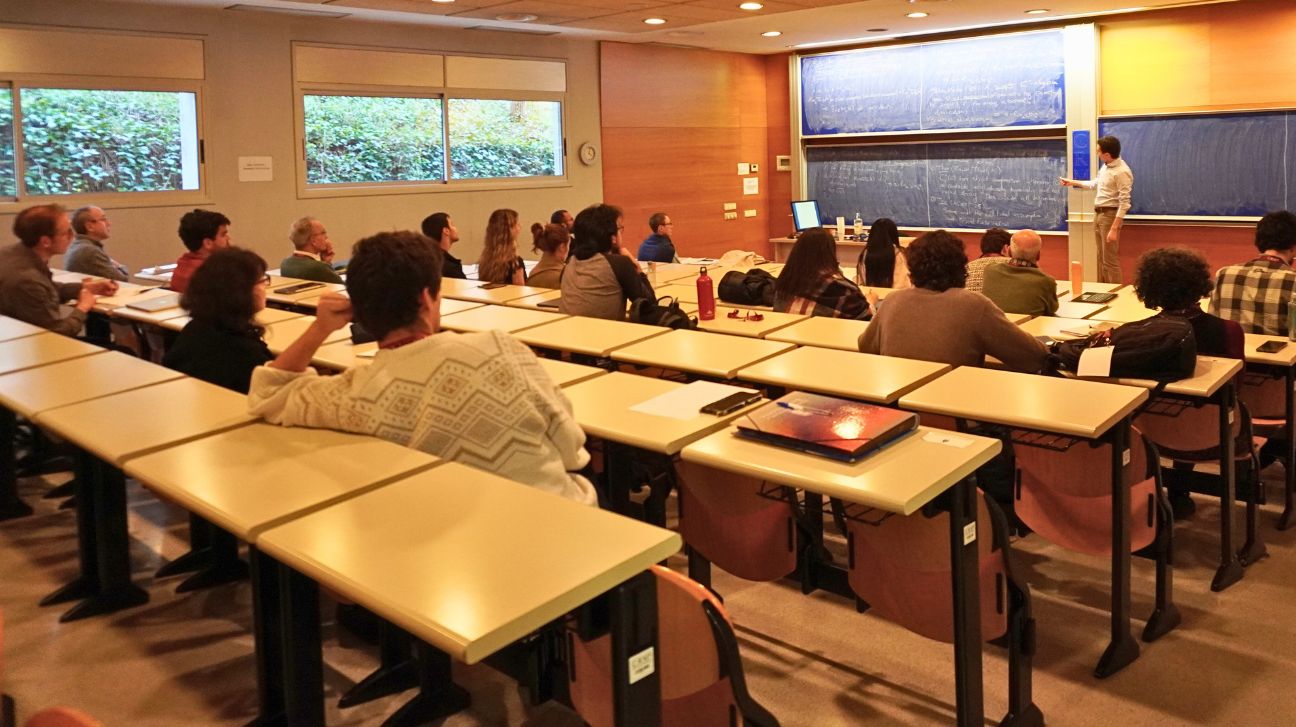
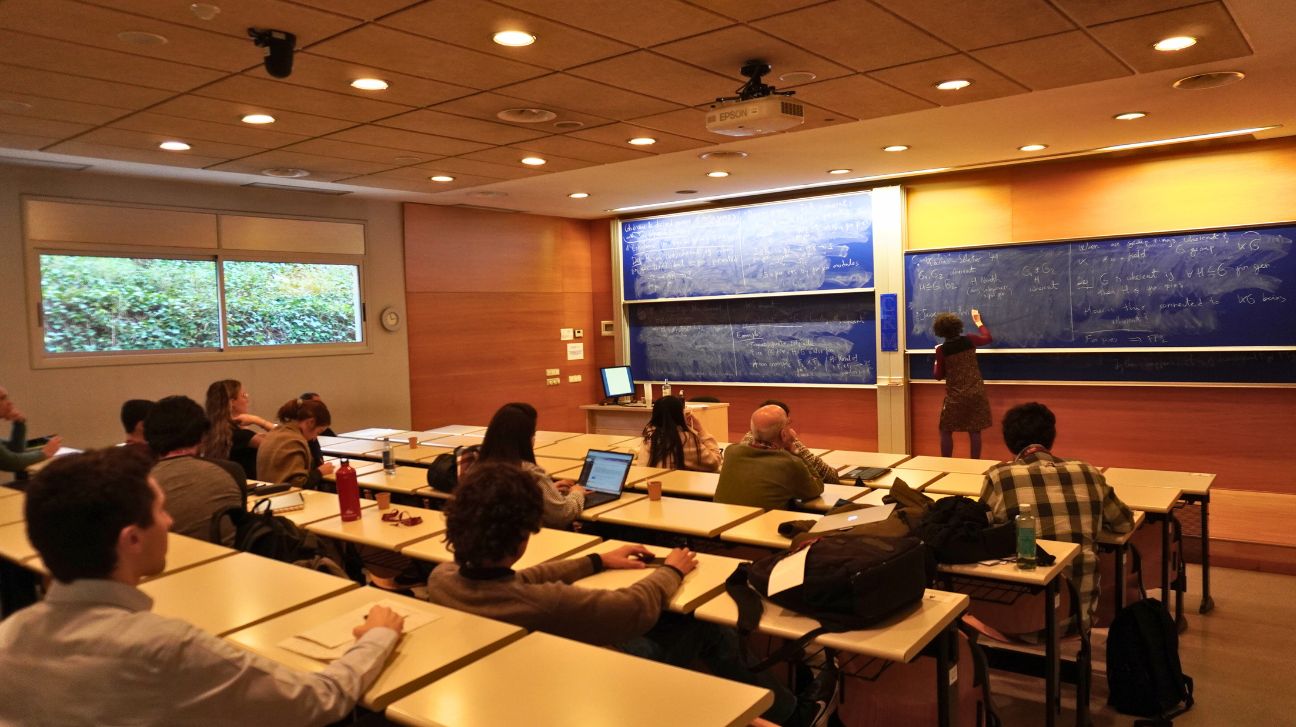
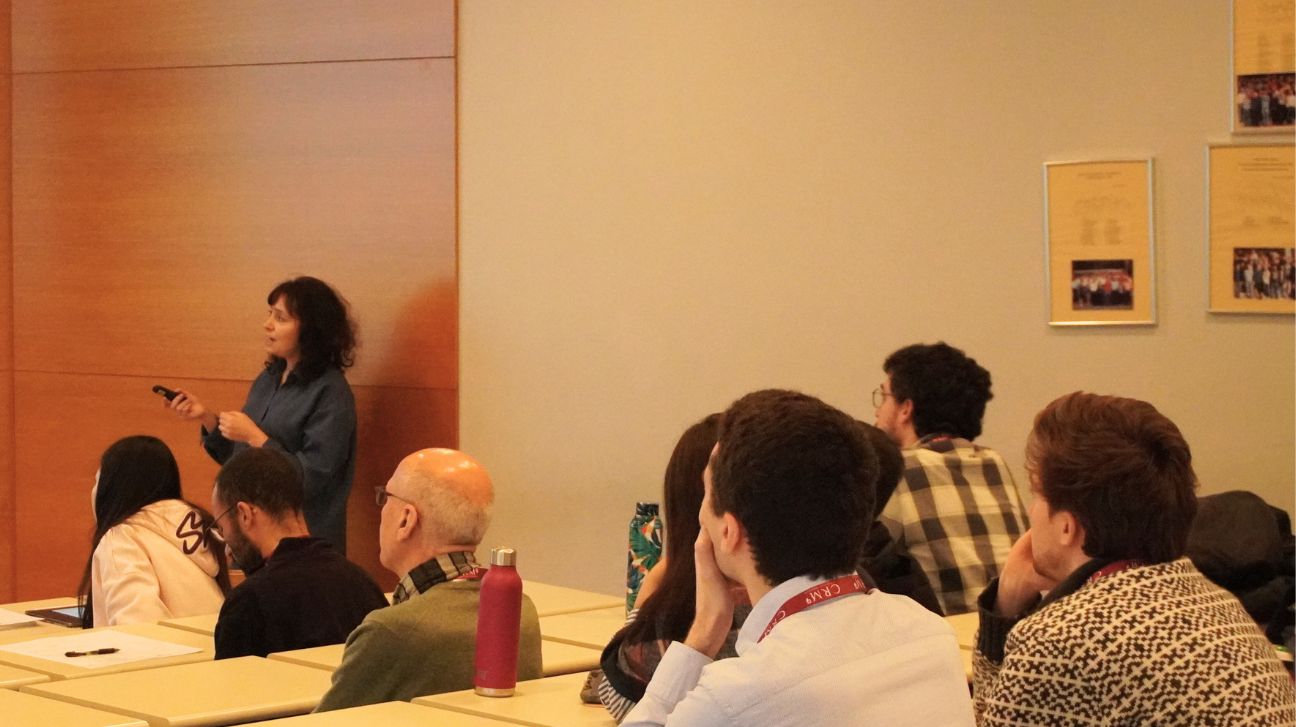
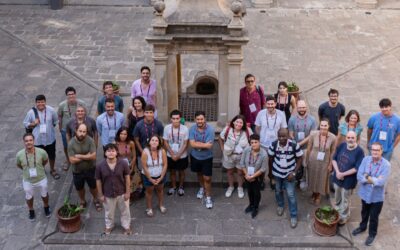
The 4th Barcelona Weekend on Operator Algebras, held at the CRM on January 30–31, 2026, brought together experts to discuss recent advances and open problems in the field.
The event strengthened the exchange of ideas within the community and reinforced the CRM’s role as a key meeting point for research in C*-algebras and related areas.
The Centre de Recerca Matemàtica (CRM) hosted the 4th Barcelona Weekend on Operator Algebras on January 30–31, 2026. The meeting was devoted to the algebraic theory of operator algebras, with a particular focus on C*-algebras, their invariants, and their interactions with group theory, dynamics, and mathematical logic.
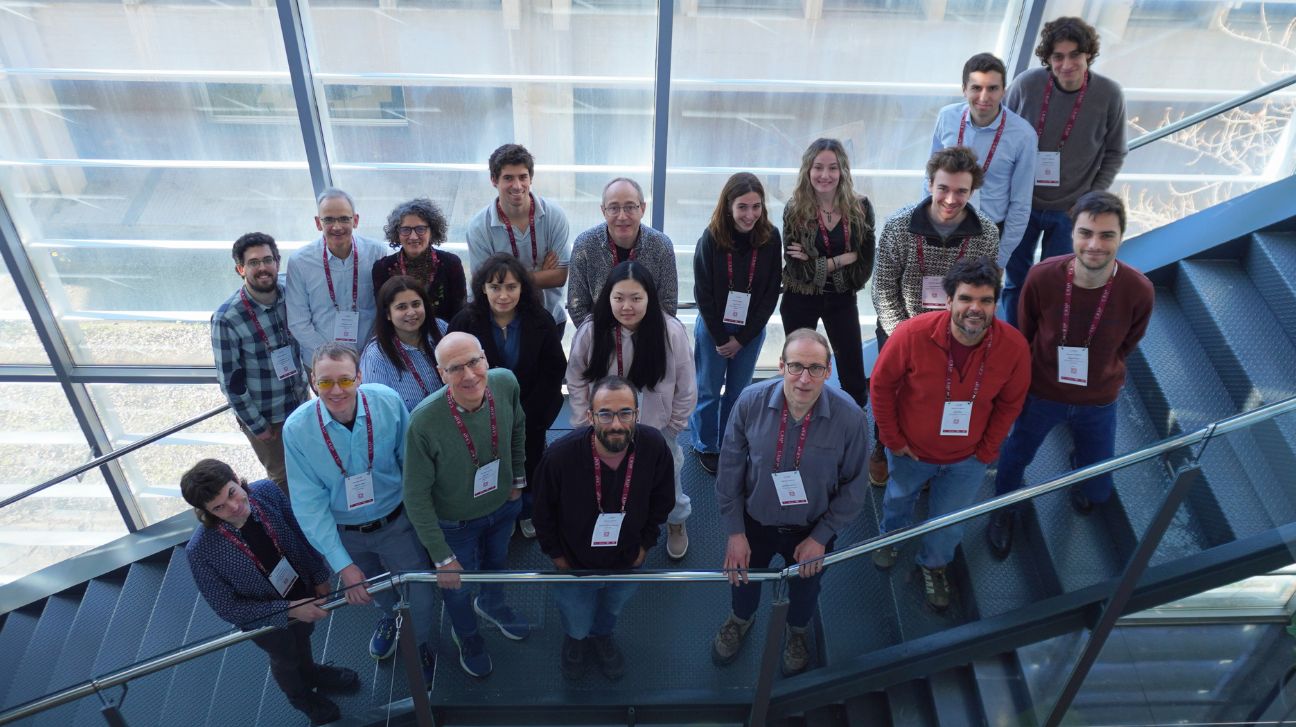
The aim of the event was to bring together international experts and early-career researchers to share recent advances, foster new connections between research lines, and further consolidate this workshop as a reference meeting point for the operator algebras community.
Talks and speakers
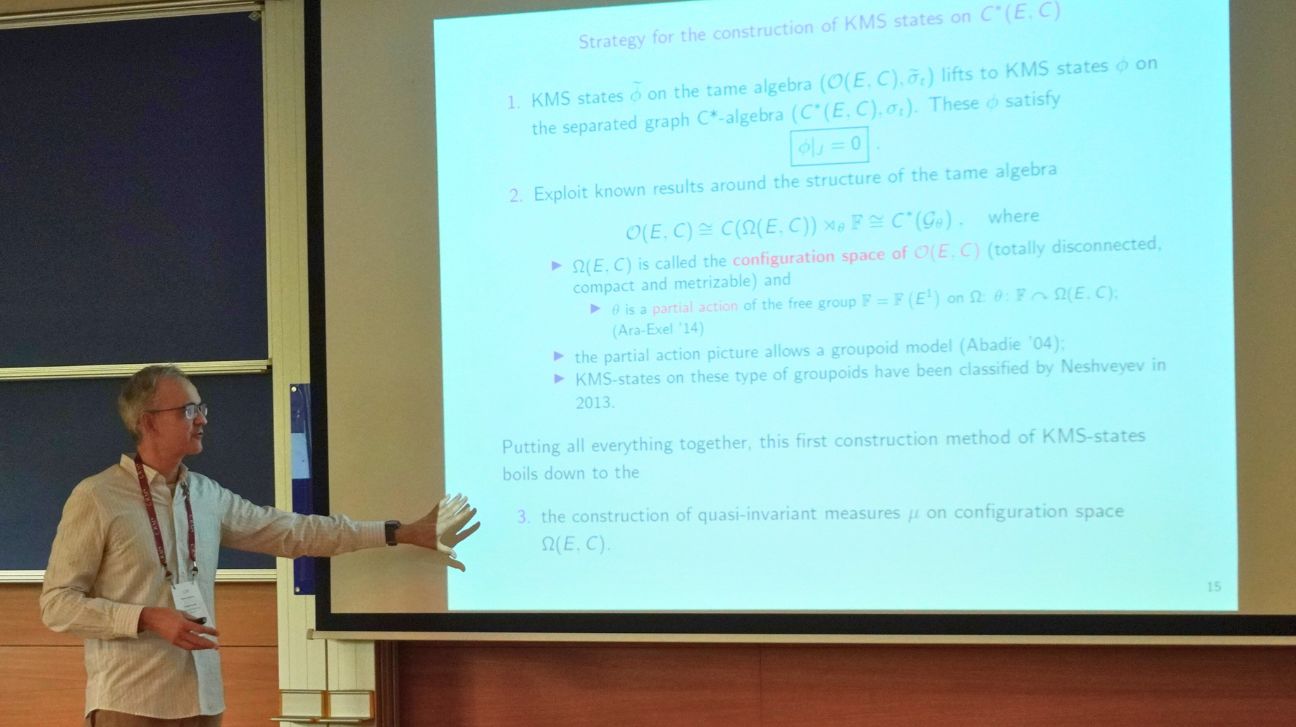
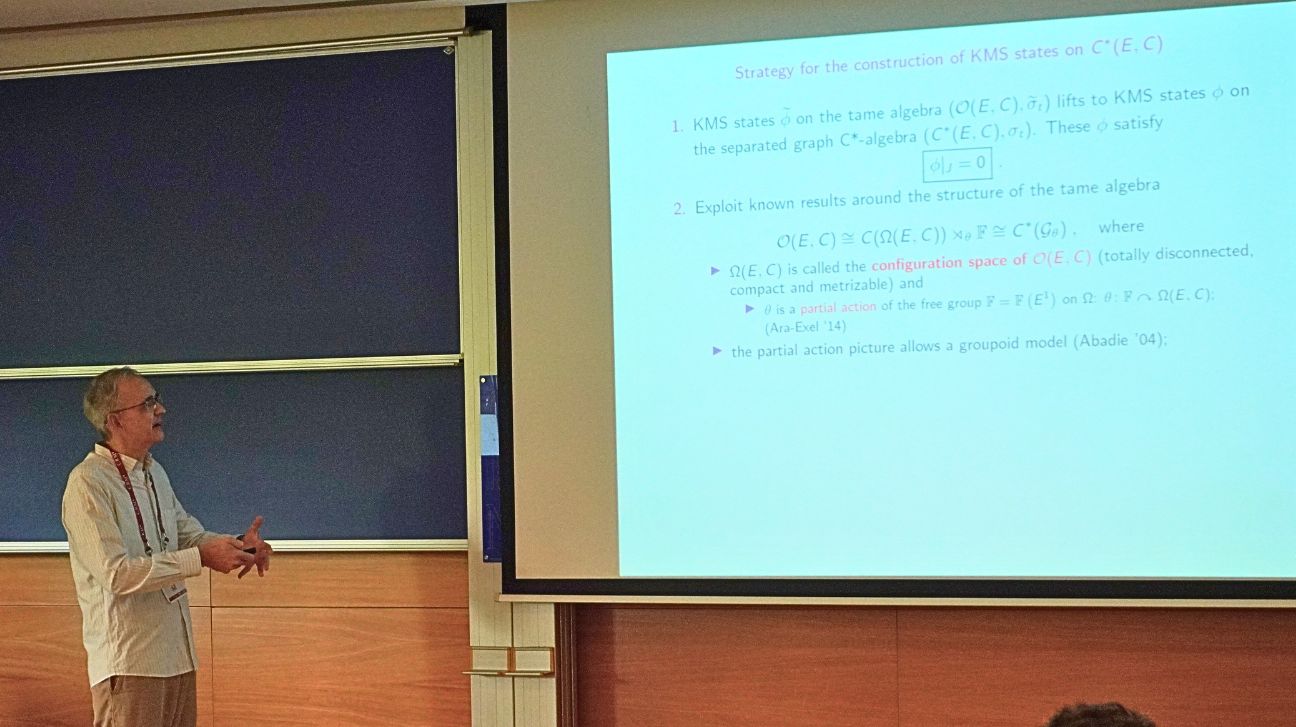
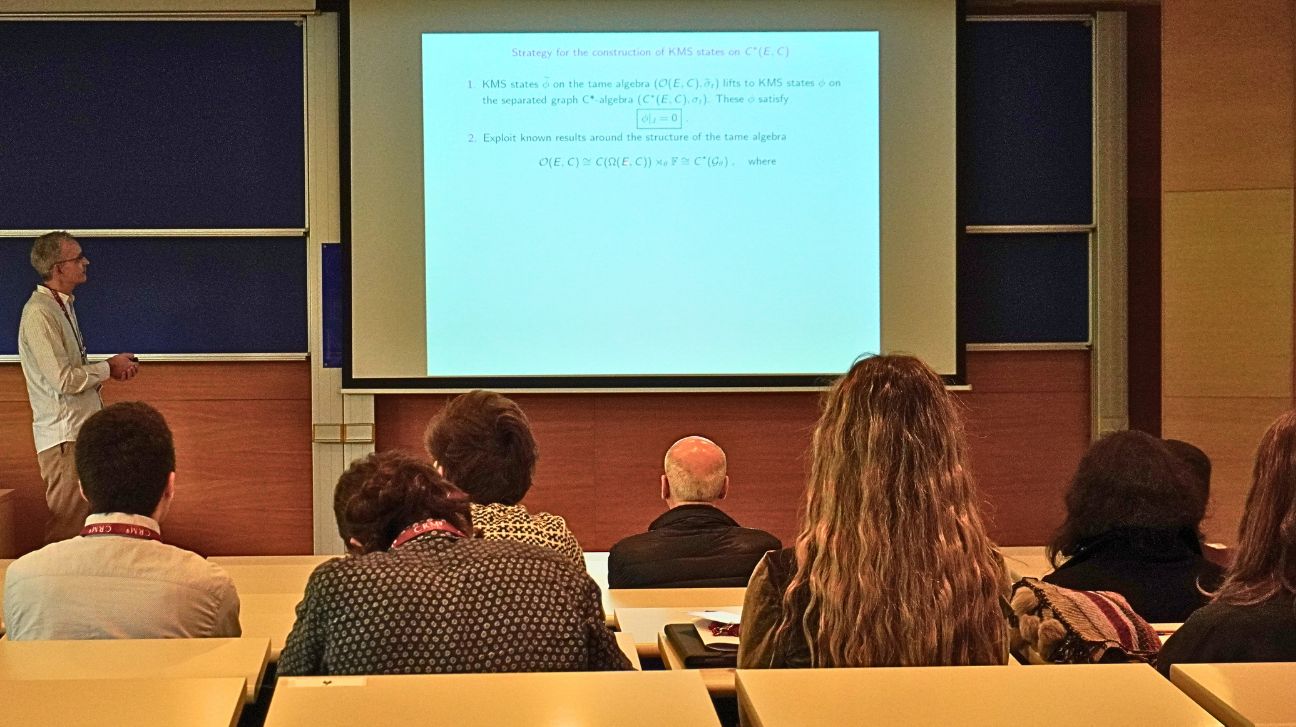
- Fernando Lledó (Universidad Carlos III de Madrid) opened the program with KMS States for Separated Graph Algebras – I, introducing a measure-theoretic approach to equilibrium states and laying the conceptual foundations for the topic.
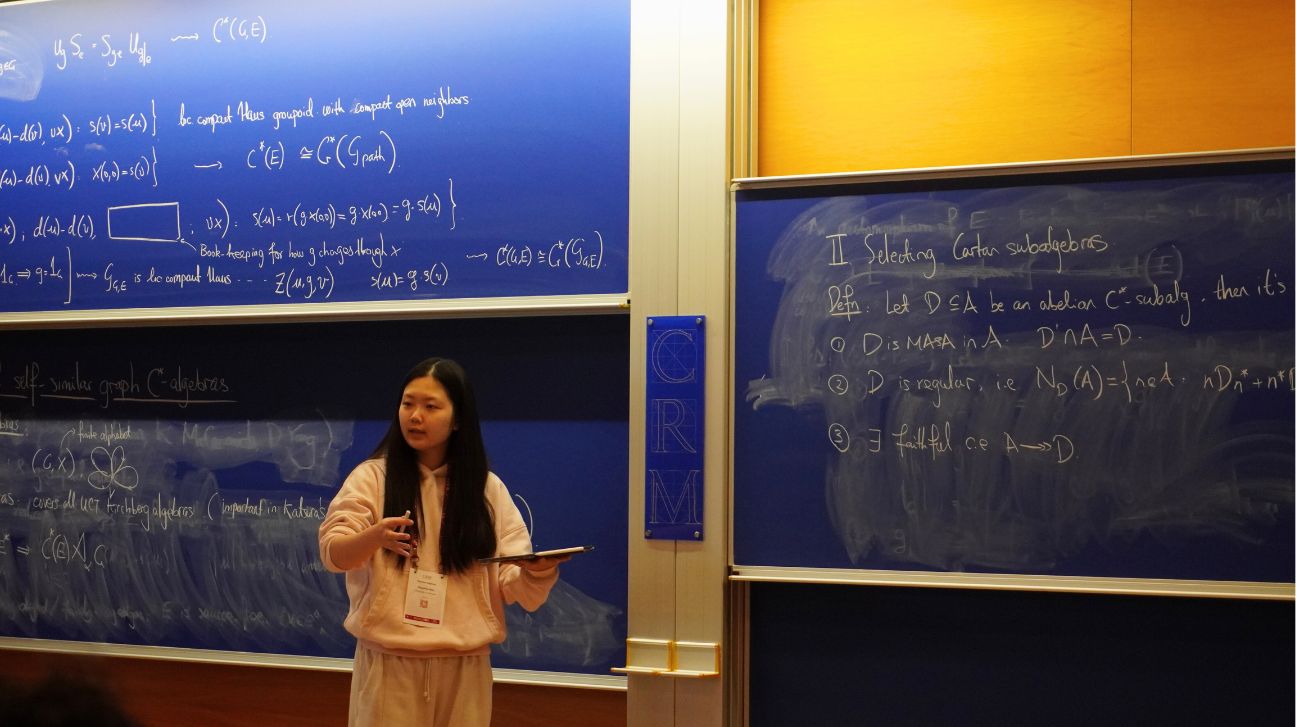
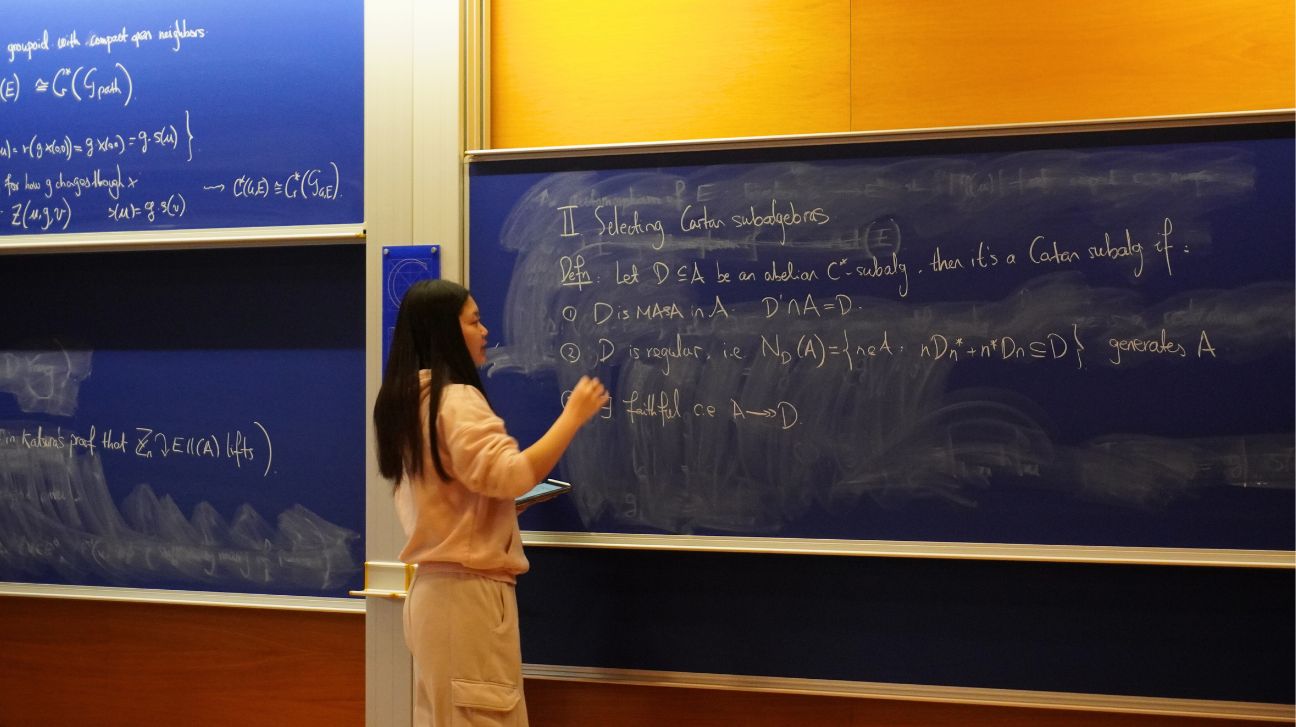
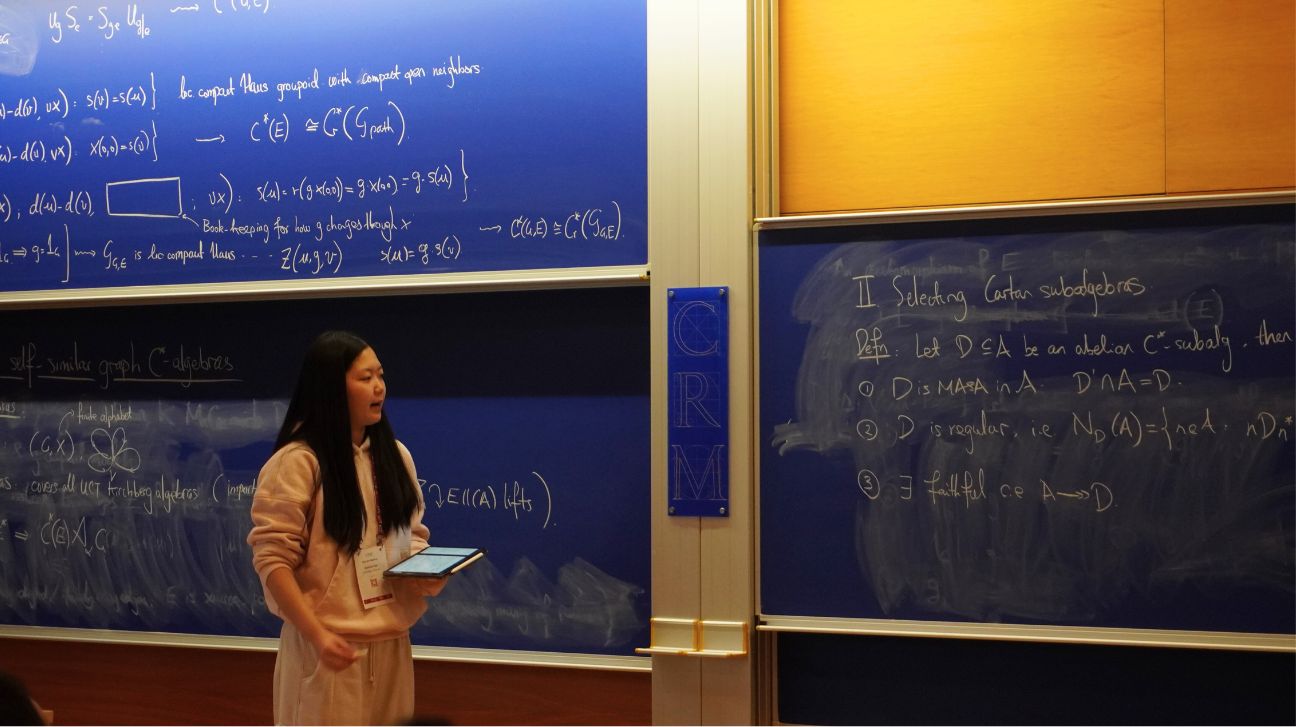
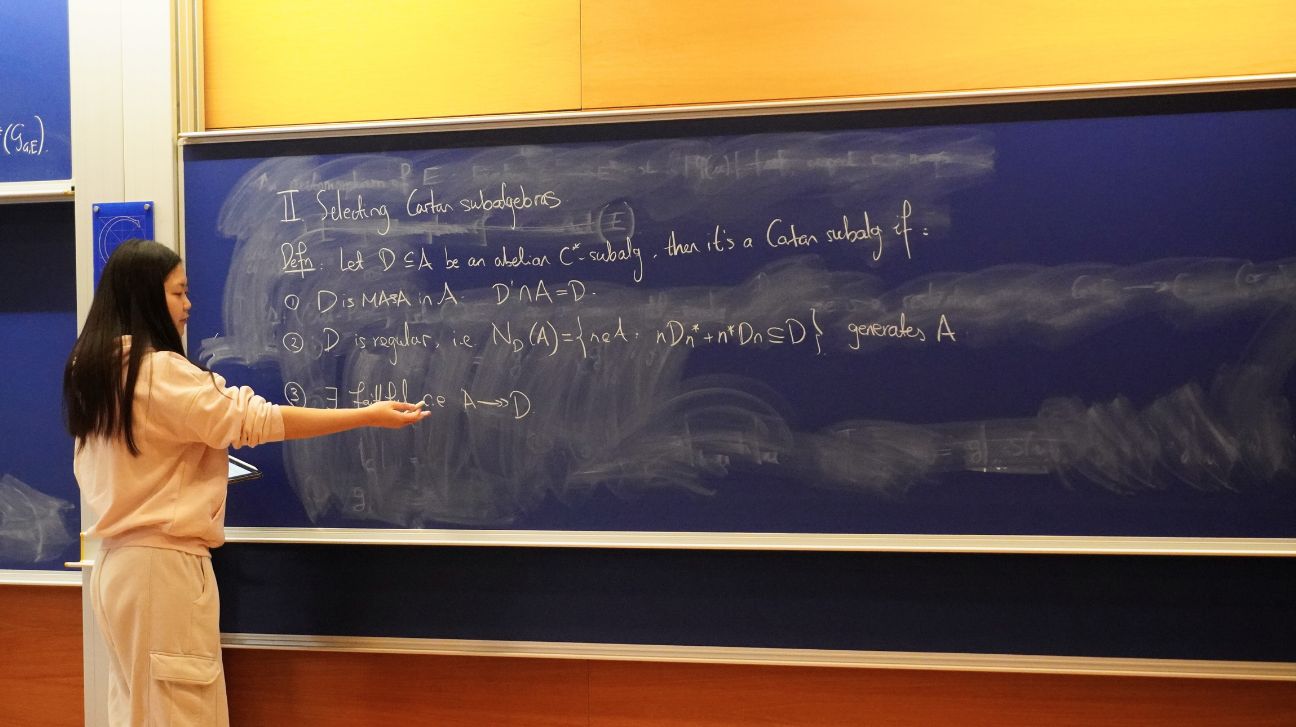
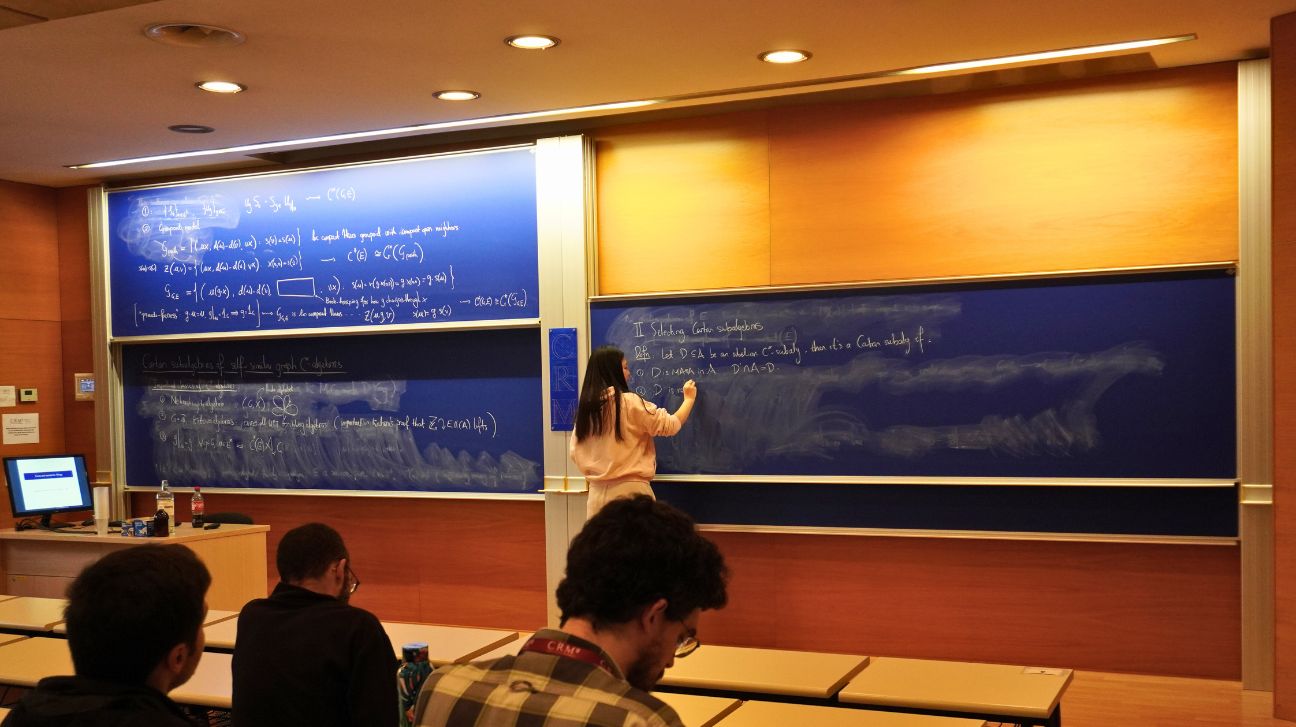
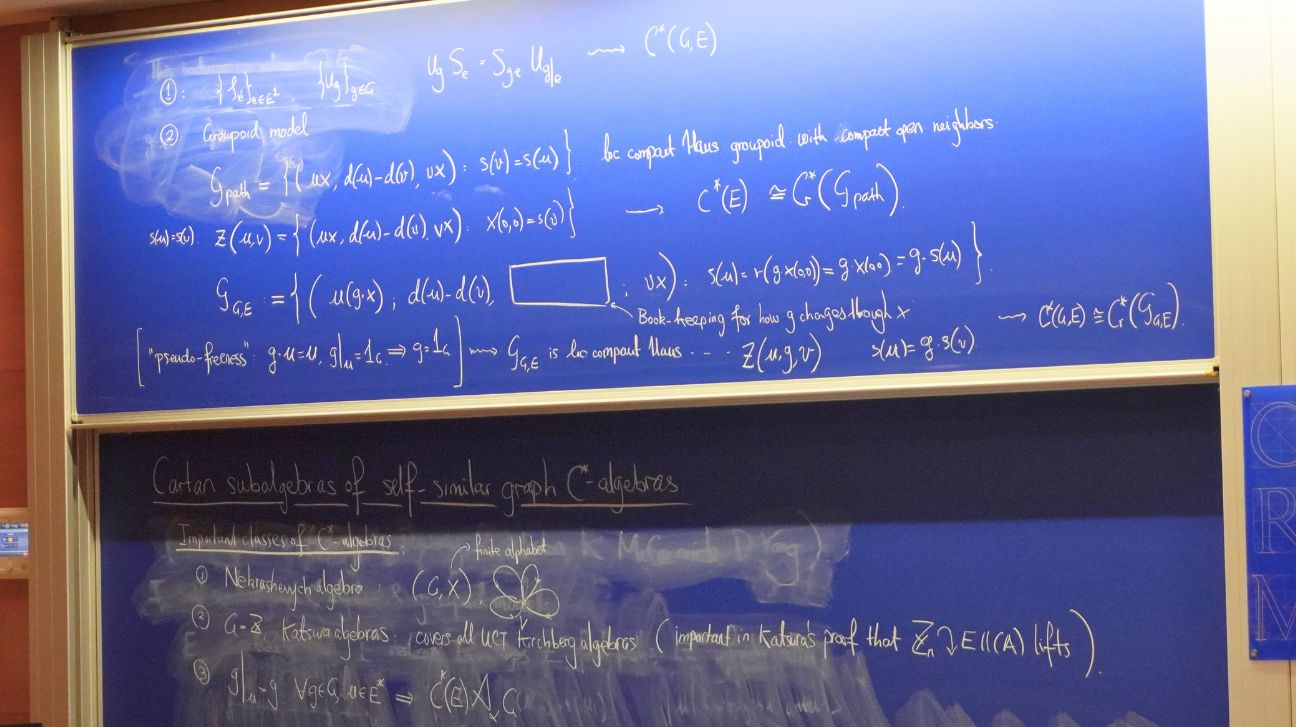
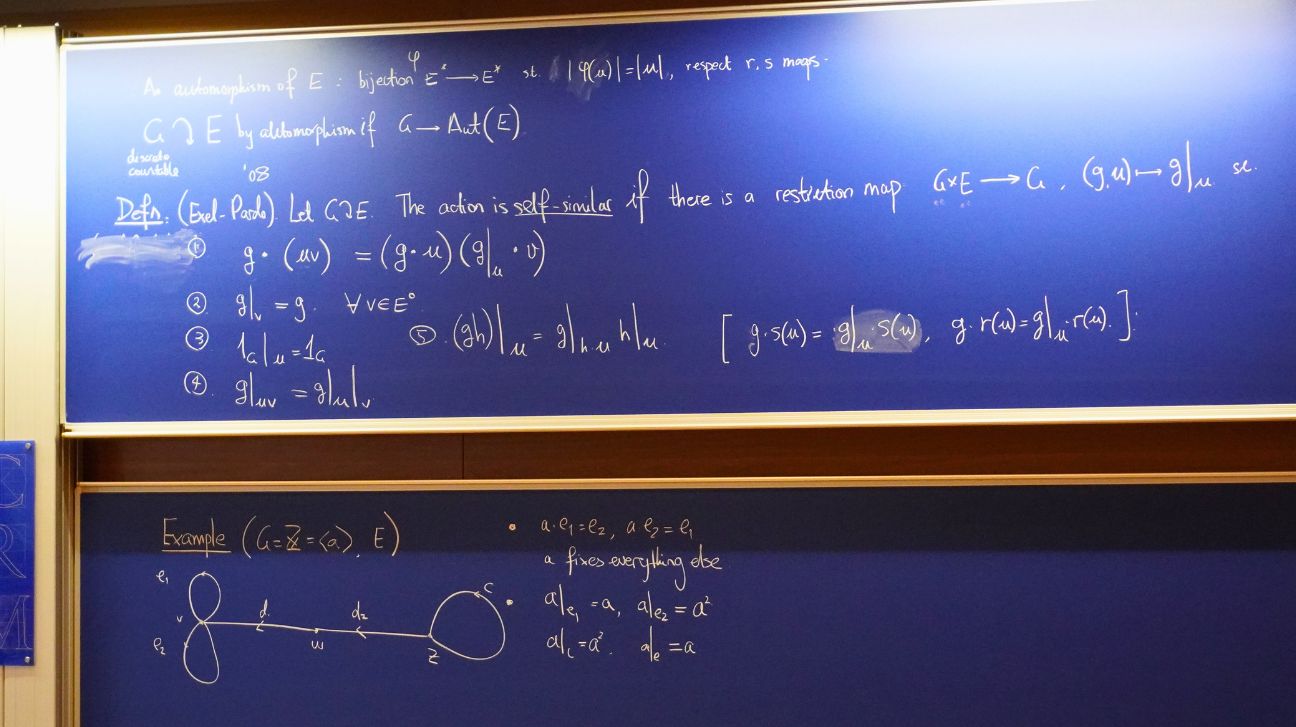
- Shanshan Hua (University of Münster) examined Cartan Subalgebras of Self-Similar Graph Algebras, extending known descriptions beyond the locally faithful setting and constructing new groupoid models that recover part of the original self-similar dynamics.
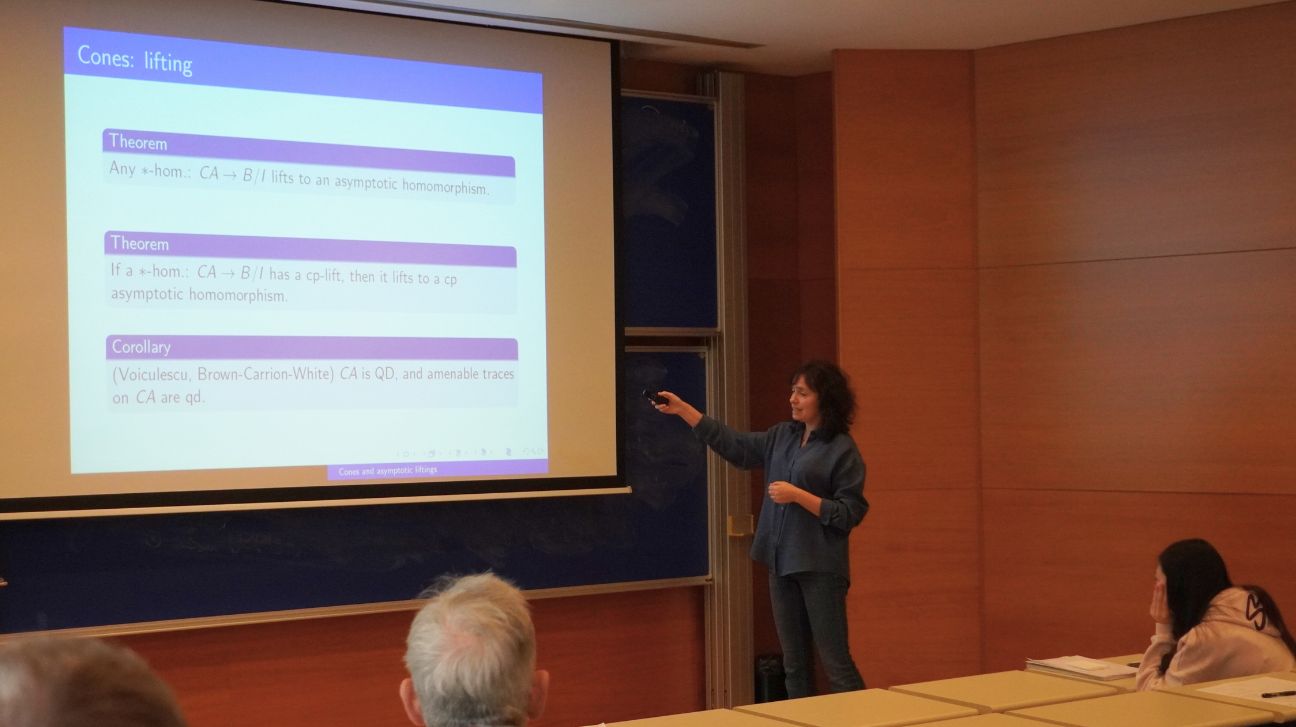
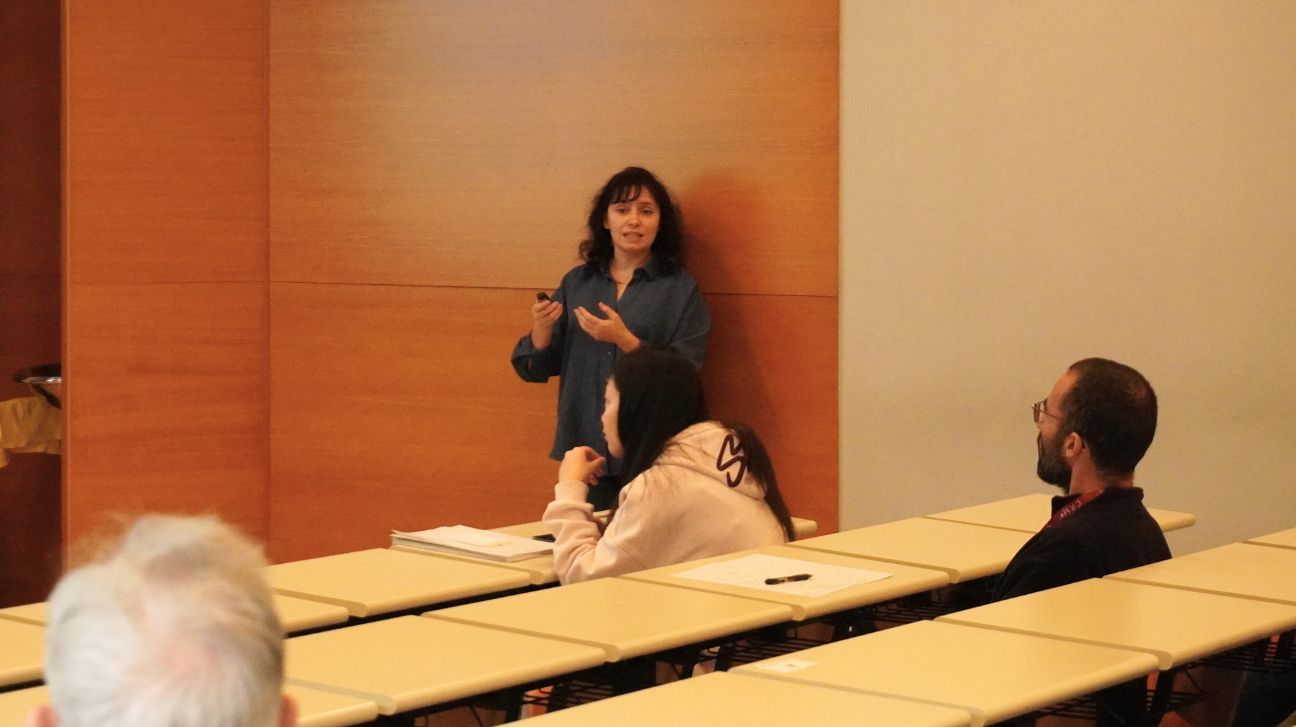
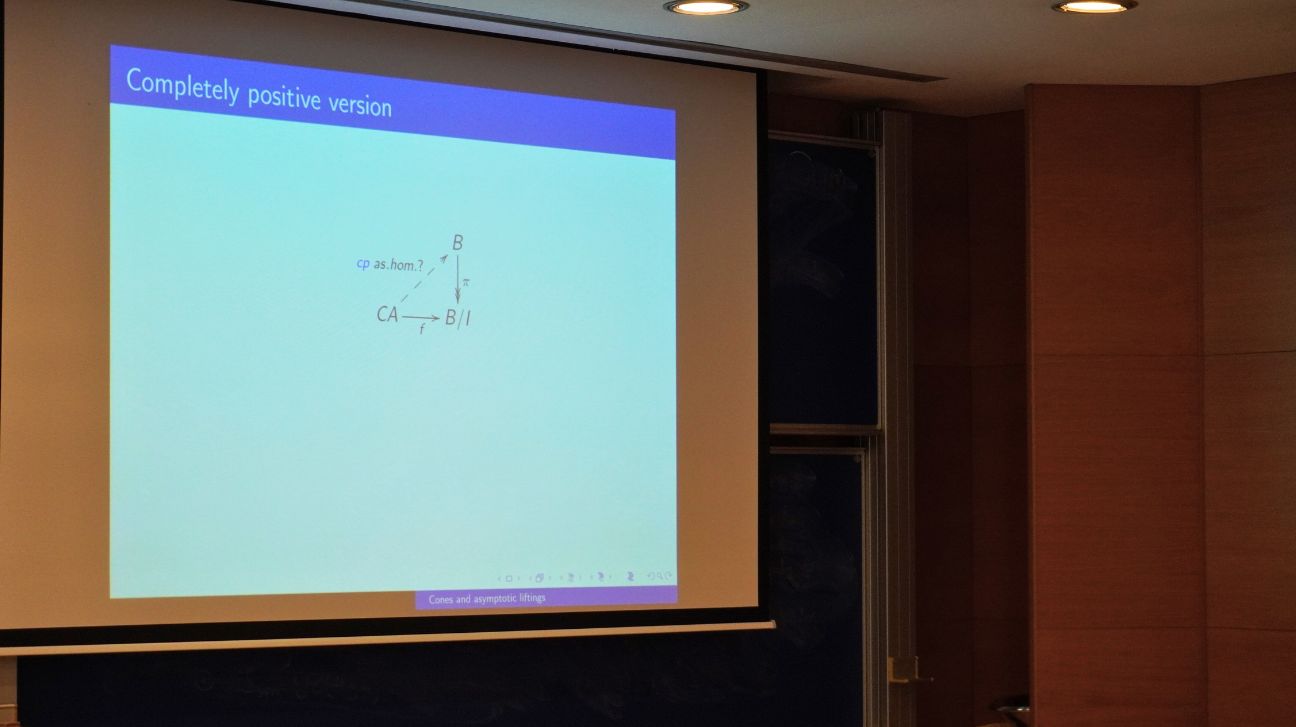
- Tatiana Shulman (University of Gothenburg) spoke on Cones and Asymptotic Liftings, focusing on cone C*-algebras and analysing both established and new properties—such as quasidiagonality and homotopy invariance—and their role in understanding deep algebraic phenomena.
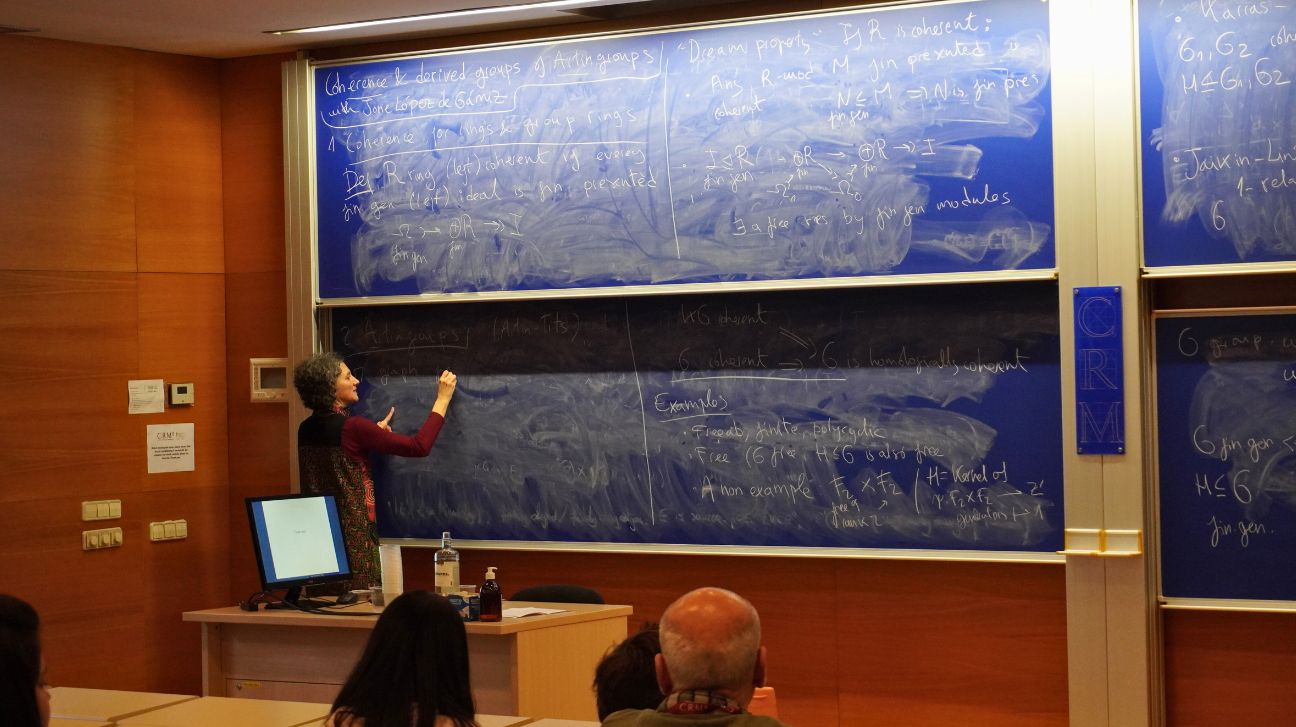
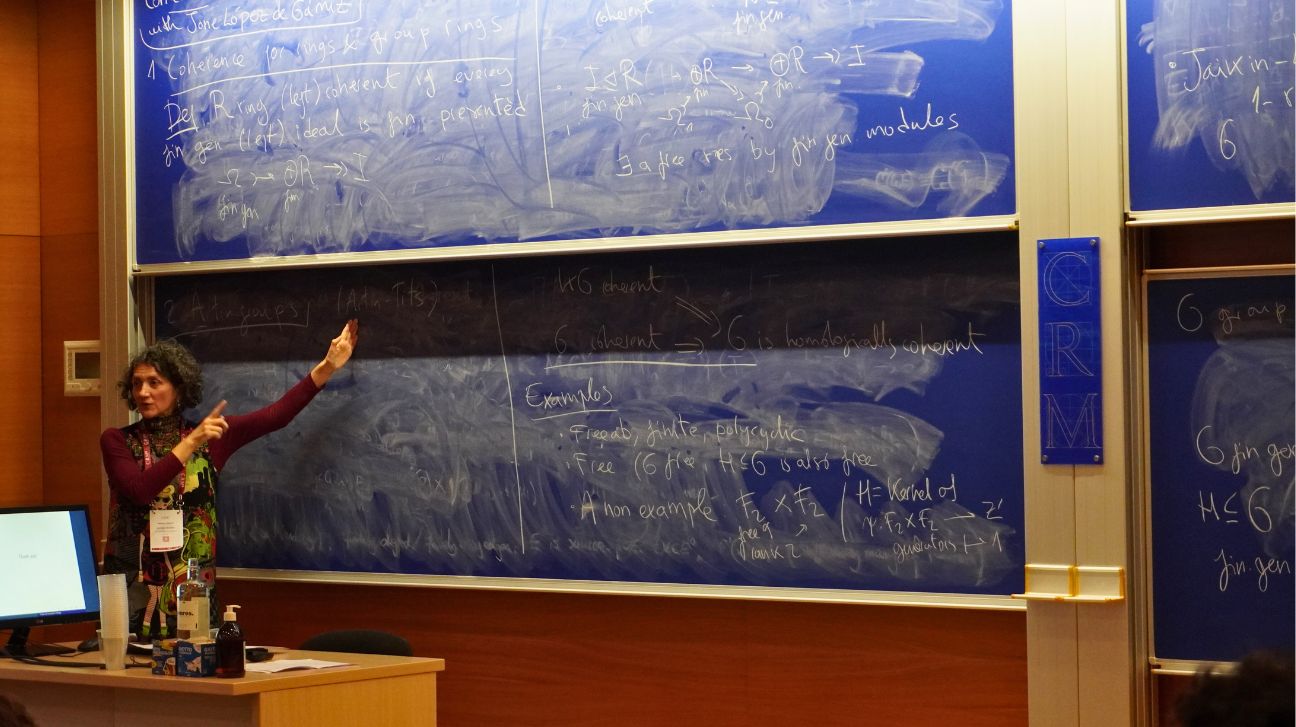
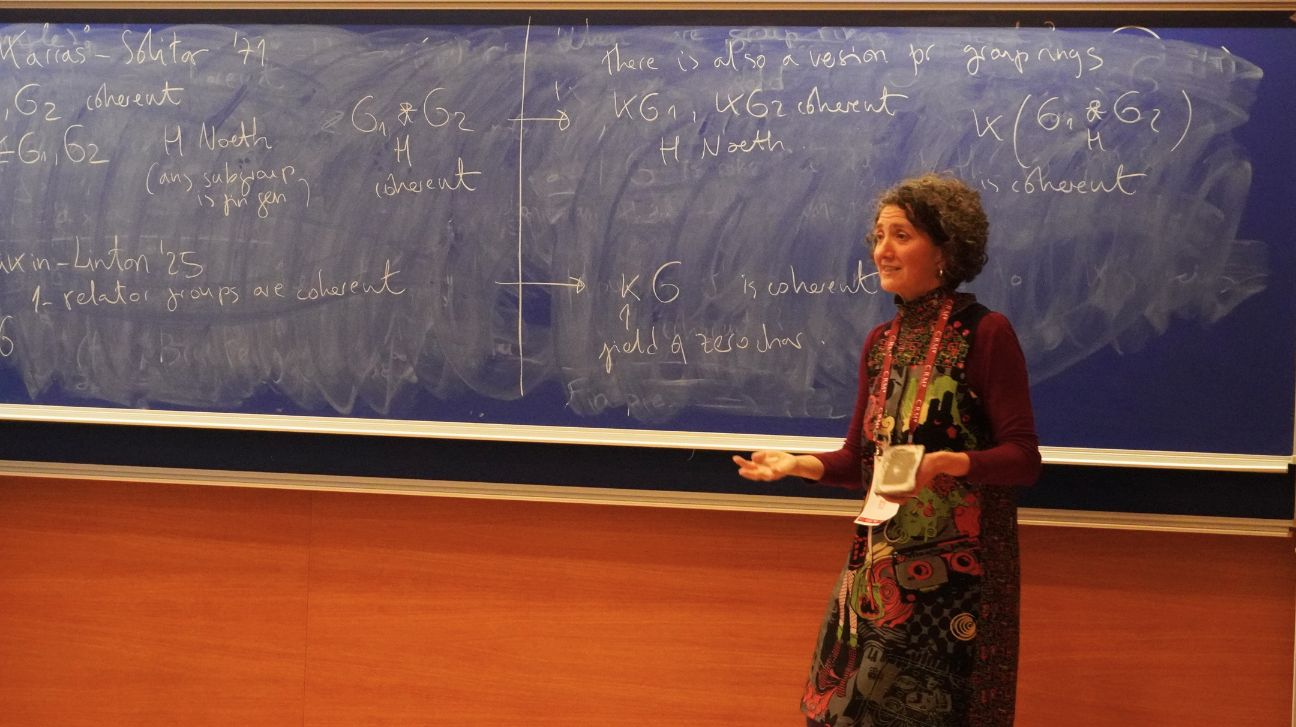
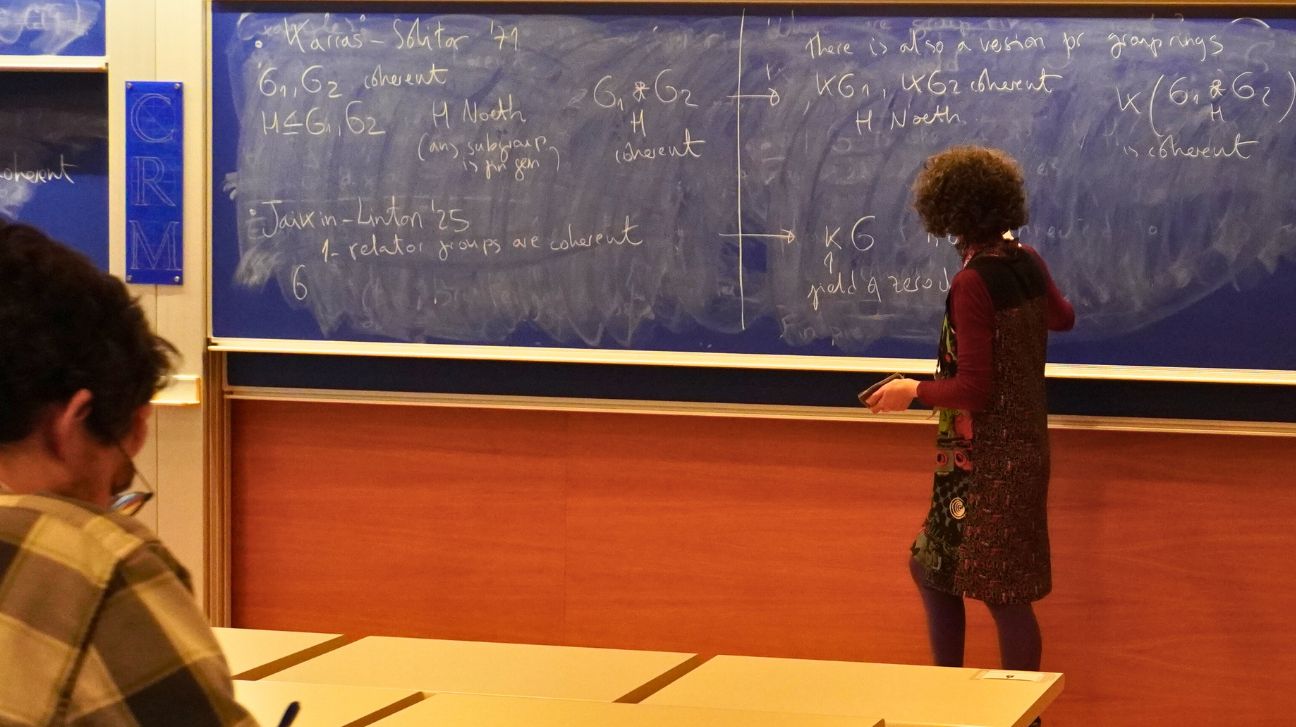
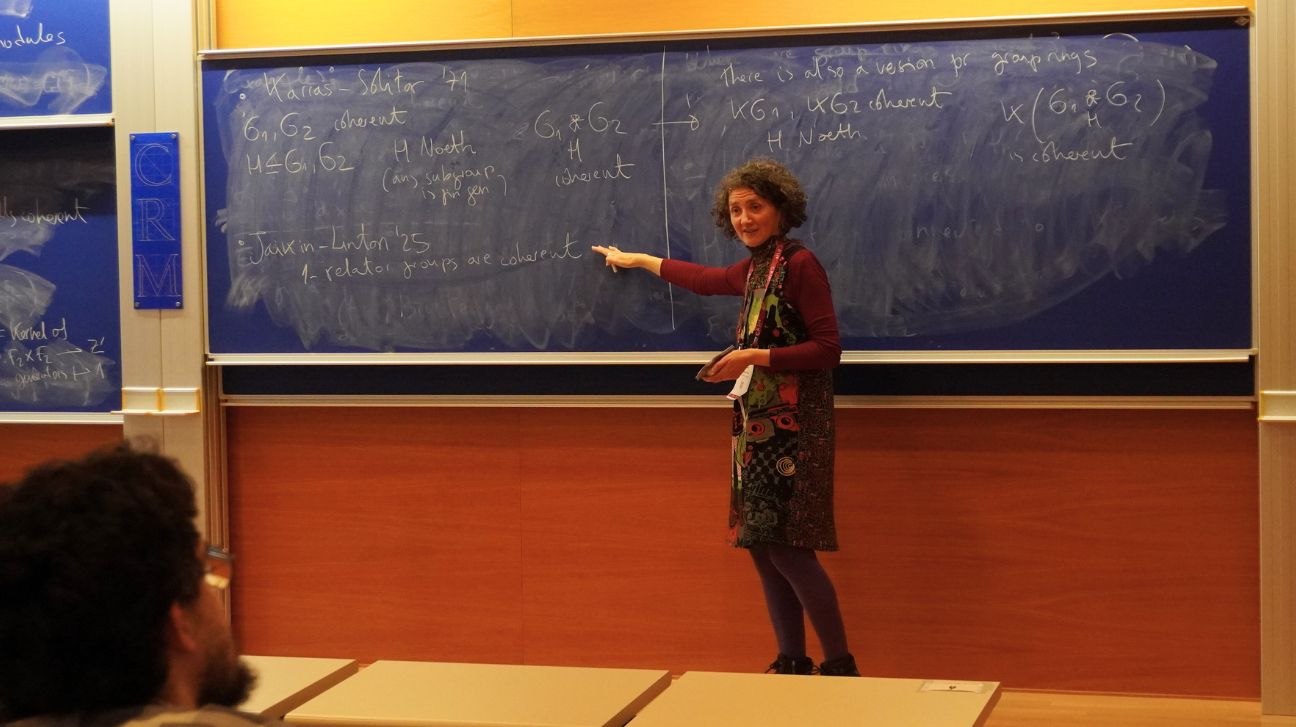
- Conchita Martínez (Universidad de Zaragoza) addressed Coherence and Derived Groups of Artin Groups, showing that the characterization of coherence in terms of the derived group holds in full generality and discussing its still poorly understood relationship with the coherence of group rings.
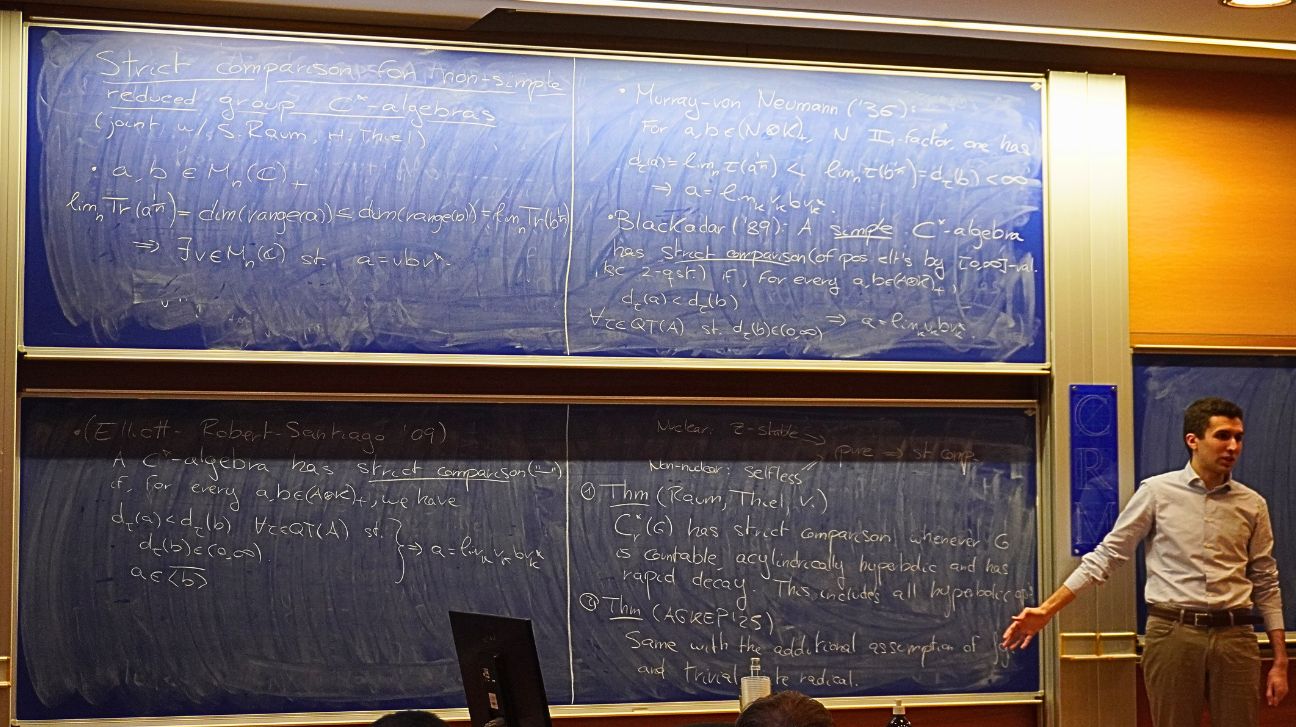
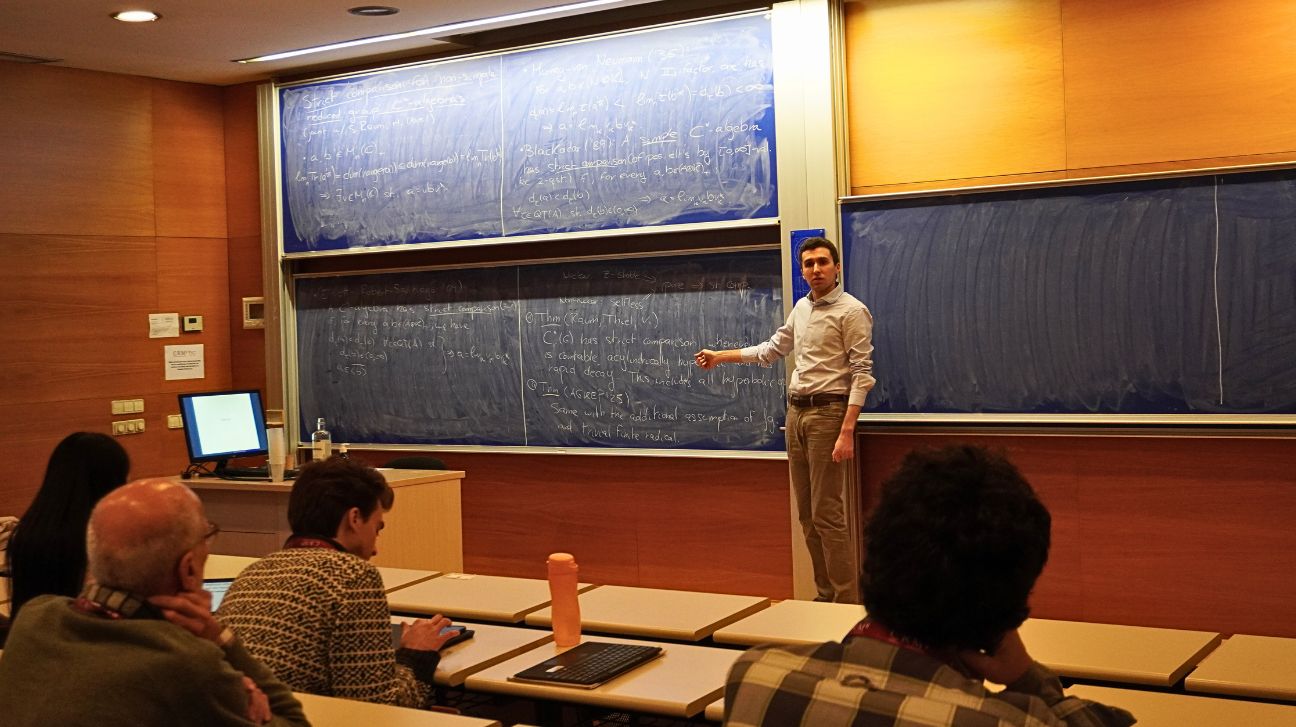
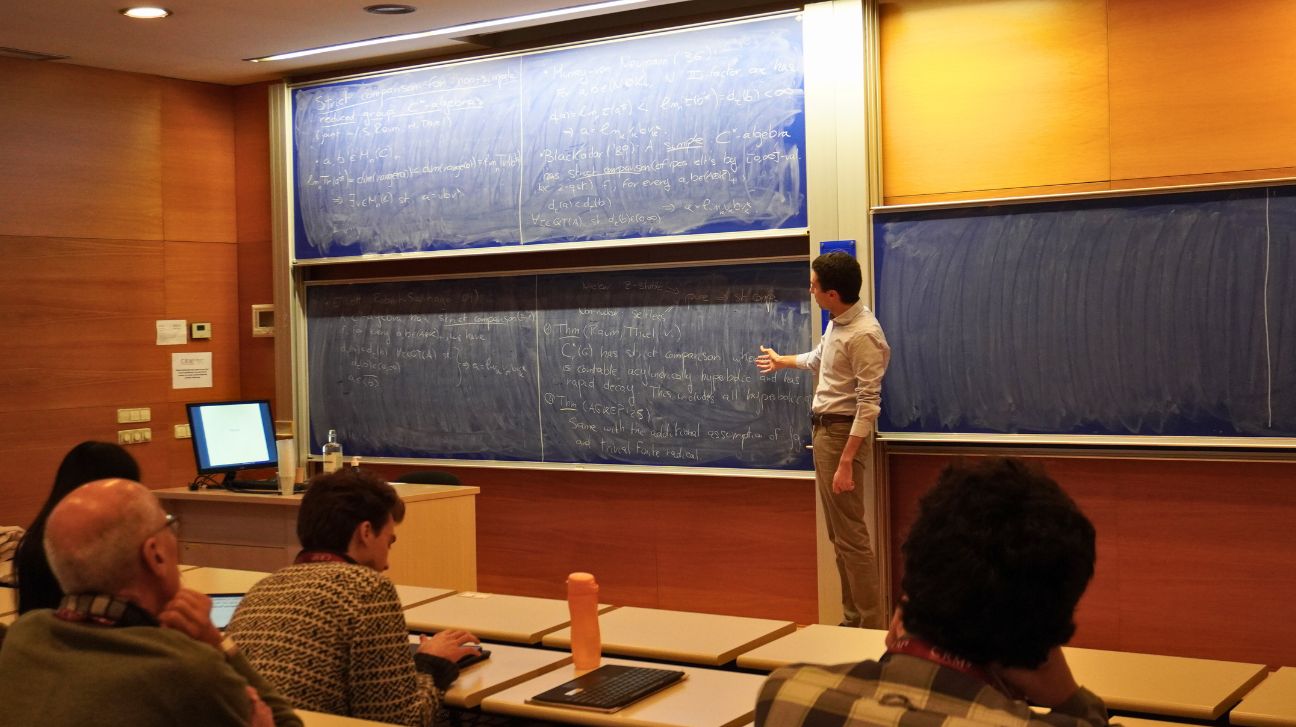
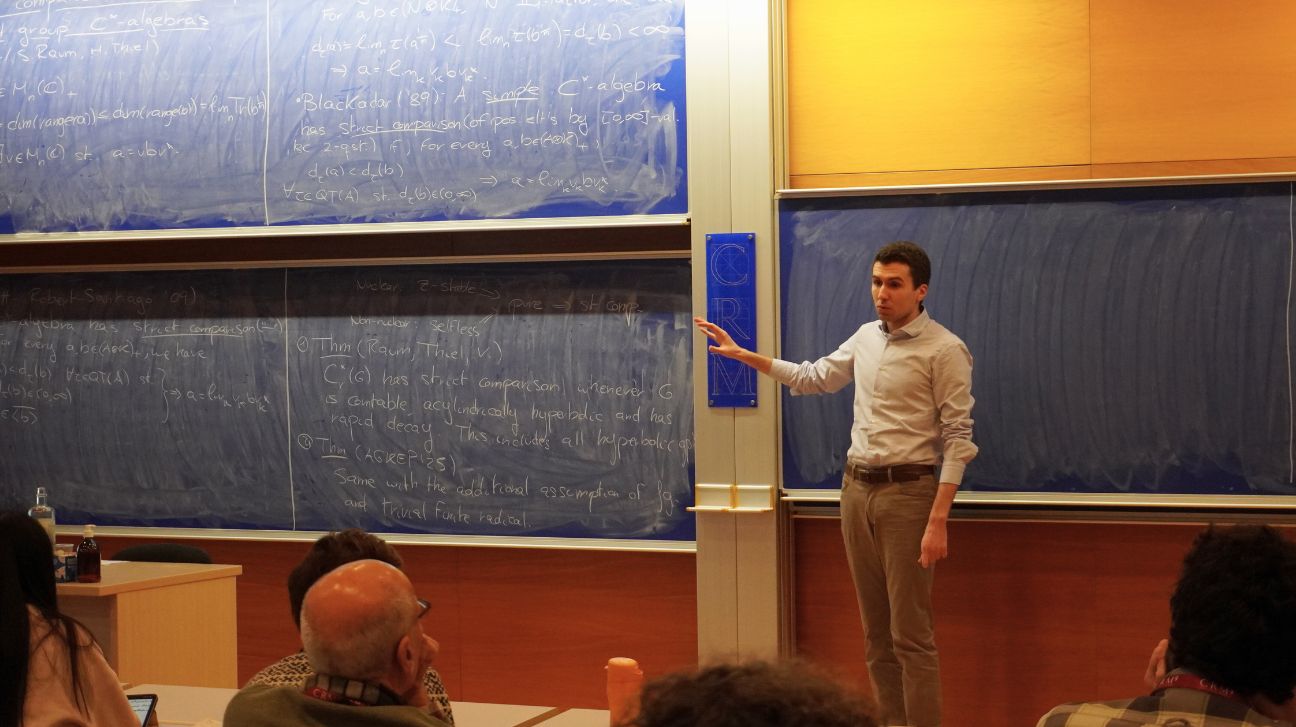
- Eduard Vilalta (Universitat Politècnica de Catalunya) presented Strict Comparison for Twisted Group C*-Algebras, highlighting recent progress on strict comparison and its versatility, with applications ranging from classification results to classical problems in group theory.
- Guillem Quingles (Universitat Autònoma de Barcelona) focused on The Cuntz Semigroup of Rings of Continuous Functions on One-Dimensional Spaces, describing this invariant in terms of monoids of intervals and revealing notable differences between real-valued and complex-valued function rings.
- Apurva Seth (University of Oxford) concluded the first day with The Radius of Comparison for Actions on Simple AH Algebras, constructing explicit actions of on simple C*-algebras that allow precise control of the radius of comparison before and after forming crossed products.
- Joachim Zacharias (University of Glasgow) reported on AF-Embeddability for Decomposition Rank One Algebras, addressing key structural questions relevant to the classification program for C*-algebras.
- Ben Bouwen (Czech Academy of Sciences) discussed Embeddings into the Ultrapower of the Jiang–Su Algebra, a central problem in the model theory of C*-algebras related to existential closure, showing that cones over separable C*-algebras embed into the ultrapower of the Jiang–Su algebra and proposing this embeddability as a new regularity property.
- Joan Claramunt (Universitat Politècnica de Catalunya) closed the event with KMS States for Separated Graph Algebras – II, presenting a second method to construct KMS states for general separated graph C*-algebras and broadening the range of available techniques for studying these systems.
A space for mathematical exchange
The CRM is particularly pleased to have hosted this fourth edition of the Barcelona Weekend on Operator Algebras, which has strengthened its role as a high-level forum for scientific exchange, encouraged dialogue across different algebraic perspectives, and reinforced the ties of an active, diverse, and steadily growing international research community.
|
|
CRM CommNatalia Vallina
|
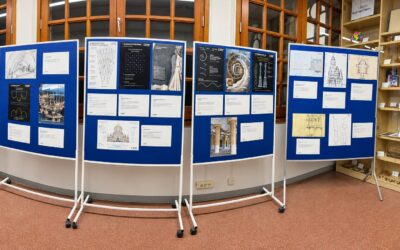
The CRM exhibition ‘Les matemàtiques de Gaudí’ moves to the University of Barcelona
After its October run at the UAB, the exhibition Les matemàtiques de Gaudí, produced by the CRM, can be seen at the University of Barcelona’s CRAI Biblioteca de Matemàtiques i Informàtica from 2 to 30 November 2026.
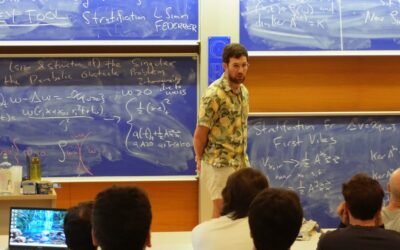
Advanced Course on Free Boundary Problems Opens the Intensive Weeks of the IRP
From 26 to 30 October, around forty researchers attended the Advanced Course on Free Boundary Problems at the CRM, three seven-hour mini-courses given by Bozhidar Velichkov (Università di Pisa), Max Engelstein (University of Minnesota) and Zihui Zhao (Johns Hopkins University). The course was the first of the two intensive weeks of the Intensive Research Programme on Analysis of Free Boundary Problems, which runs until 4 December.
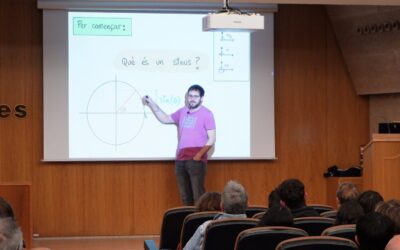
El CRM rep els estudiants de la prova de nivell de Bojos per les Matemàtiques 2027
Els aspirants a Bojos per les Matemàtiques 2027 van visitar el Centre de Recerca Matemàtica (CRM) dissabte 24 d’octubre, després de fer la prova de nivell a la Facultat de Ciències i Biociències de la UAB. En acabat, Tomás Sanz (UB-CRM) els va explicar què té a veure l’escalfament d’una barra de ferro amb els àudios de WhatsApp.
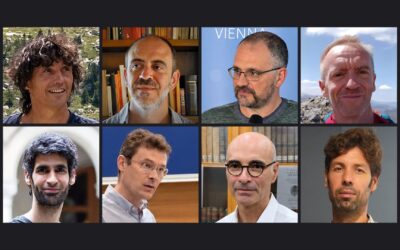
Eight CRM Researchers in the 2026 Stanford-Elsevier List of Highly Cited Scientists
The Centre de Recerca Matemàtica (CRM) has eight researchers in the 2026 update of the Stanford-Elsevier ranking of highly cited scientists, which John P. A. Ioannidis (Stanford University) and Jeroen Baas (Elsevier) compile from Scopus data. Xavier Cabré, Álvaro Corral, Tim Myers, Xavier Ros-Oton, Sergey Tikhonov and Xavier Tolsa appear both in the career-long ranking and in the one for 2025, and Diego Vidaurre and Simeon Ball in the 2025 ranking.
Fish schools and growing tissues: a workshop on how collective behaviour emerges
The Centre de Recerca Matemàtica (CRM) organised the Barcelona Workshop on Kinetic and Macroscopic Models in Biology with Friends II, held from 7 to 10 September at the Institut d’Estudis Catalans. More than thirty researchers discussed how order at the scale of tissues and animal groups arises from local interactions between individuals, in a programme that included talks by CRM researchers Daria Stepanova and Juan Arellano-Tintó. Two of the speakers, James Sharpe (EMBL Barcelona) and Chiara Villa (CNRS, Université Paris Cité), talked to the CRM about their research.
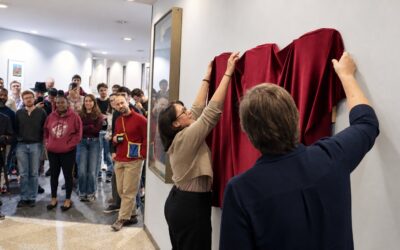
The CRM opens the academic year and unveils its Directors’ Gallery
A review of the year, the Communication Plan 2026–2030 and three research talks filled the morning of 19 October.The unveiling of the Directors’ Gallery.CRM CommPau VarelaCRMComm@crm.catGet the latest CRM news and activities in your inbox.Recent...
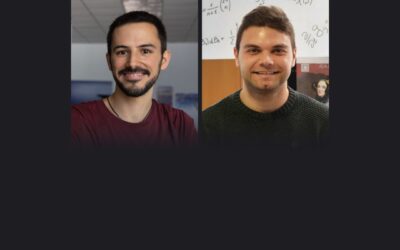
The CRM Mentoring Programme, as Told by One of Its Pairs
PhD student Joaquim Duran and mathematician Robert Cardona, one of the pairs in the CRM Mentoring ProgrammeJoaquim Duran (left) and Robert Cardona.CRM CommPau VarelaCRMComm@crm.catGet the latest CRM news and activities in your inbox.Recent...
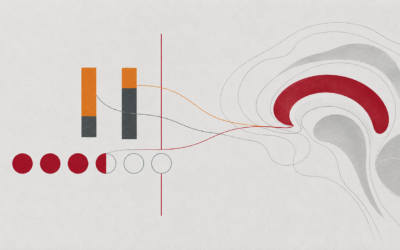
When the reward comes within reach, the brain changes what it compares
As the tokens piled up, choices got faster and more accurate at the same time. The yardstick for judging each offer had moved.CRM CommPau VarelaCRMComm@crm.catGet the latest CRM news and activities in your inbox.Recent newsletters →Two subjects...
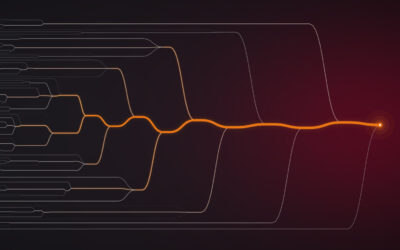
Almost every automaton can be reset with a short word
Guillaume Chapuy (Université Paris Cité, CNRS) and Guillem Perarnau (UPC, CRM) have shown that a random finite automaton with n states can, with high probability, be reset by a word of length of order √n log n. The result, published in ACM Transactions on Algorithms, pins the exponent at 1/2, the lower end of a decade of numerical estimates, and addresses the random version of the synchronization problem behind a conjecture Ján Černý posed in 1964 and which still remains open.
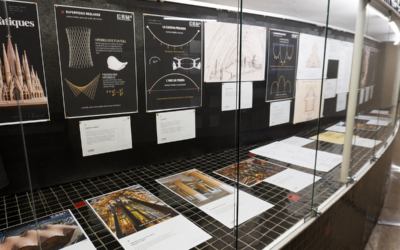
Exposició ‘Les matemàtiques de Gaudí’
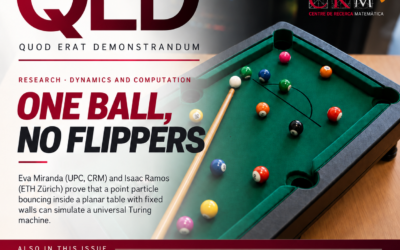
CRM quod erat demonstrandum | 48

ADA: Decoding Brain Signals Misaligned in Time
The study addresses a key limitation of current brain decoding techniques: the difficulty of interpreting internal mental processes whose temporal dynamics vary from trial to trial.Decoding what is happening in a person’s mind from their brain activity is one of the...