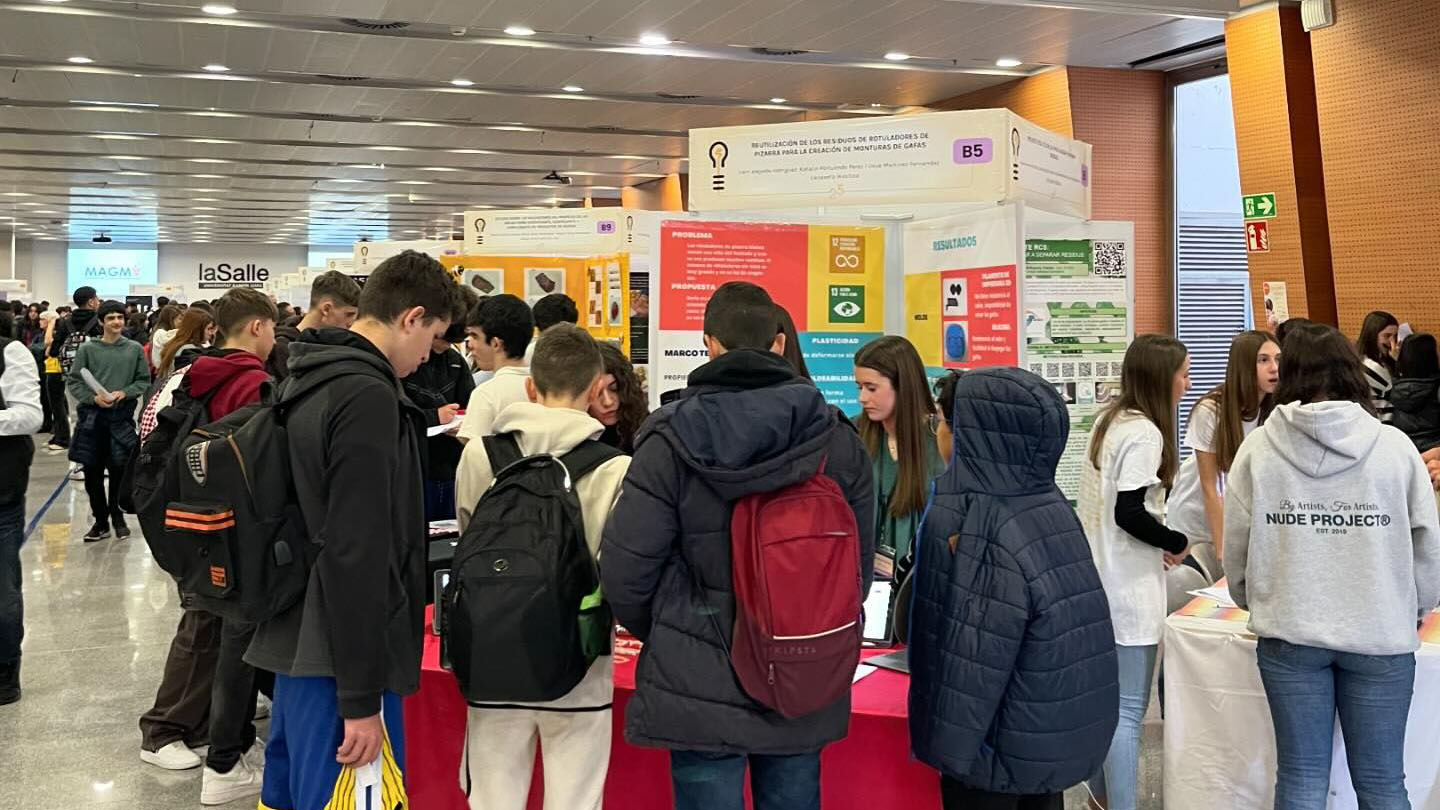
For the third year running, CRM visited Exporecerca Jove to award its prize to the student project with the strongest mathematical content. This edition, the jury selected two winners: Xavier Ortiz Quintana, who built a real-time 3D scanner using an iPhone and GPU acceleration, and Bruna Basas Jaumandreu, who trained a machine learning model to predict survival in pancreatic cancer patients.
Every March, a few hundred secondary school students take over a conference hall in Barcelona to explain their research projects to anyone willing to stop at their stand. The projects range widely: genetics, climate, sociology, and engineering. This year, the Centre de Recerca Matemàtica sent five people to look for mathematics in the mix.
It was CRM’s third time at Exporecerca Jove, the international research fair for students aged 12 to 19, organised by MAGMA. The institute has been a sponsor since the fair’s XXVII edition and awards a prize to the project with the strongest mathematical content: an invitation to participate in one of the scientific activities held at CRM.
After reviewing seven projects on 6 March, the jury selected two winners.
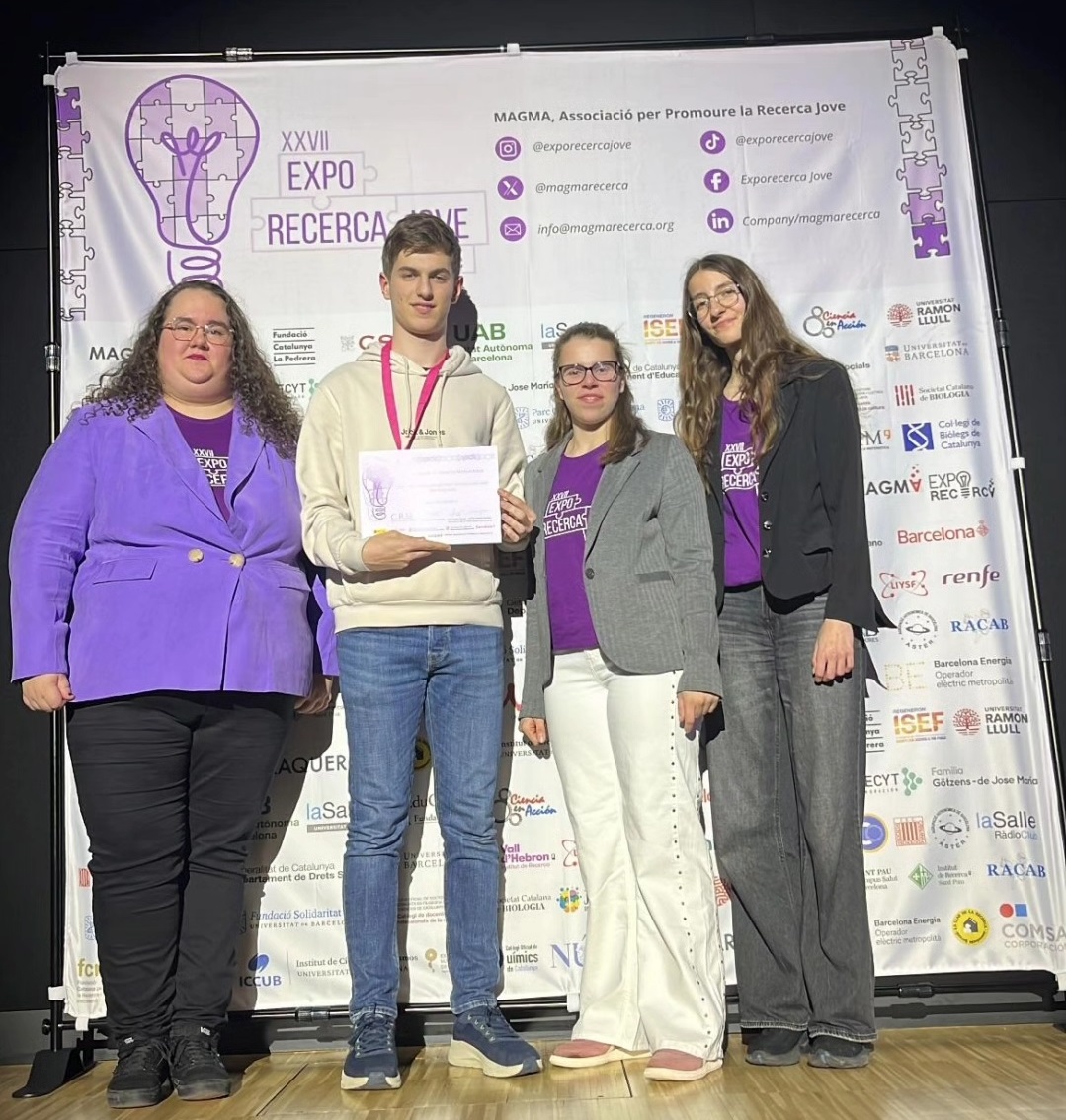
The first was Xavier Ortiz Quintana, a student at INS Montserrat Roig. His project reconstructed 3D models of real spaces in real time, using only a standard iPhone and a laptop. The setup sounds simple. The algorithm underneath is not. Depth data captured by the phone’s LiDAR sensor is integrated, frame by frame, into a mathematical structure called a Truncated Signed Distance Field. The TSDF is a volumetric representation that stores, for each point in a grid, a signed number: positive if the point is outside a surface, negative if it’s inside. The boundary where that number crosses zero is the surface itself. An algorithm called Marching Cubes then reads that grid and constructs a mesh of triangles that approximates the shape. It’s a technique from 1987, originally designed for medical imaging, here running on a GPU in a teenager’s bedroom. Xavier has published the full code on GitHub.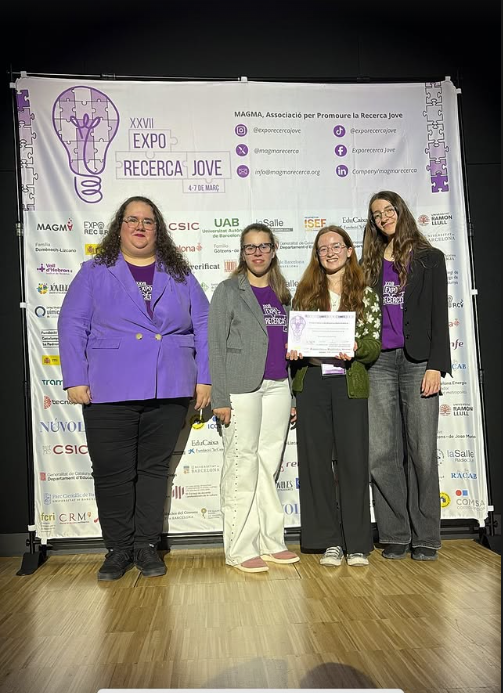
The second winner was Bruna Basas Jaumandreu, from La Salle Manresa, who trained a machine learning model to predict whether a pancreatic cancer patient would survive beyond 24 months after diagnosis. Pancreatic cancer is one of the deadliest: only about 13 per cent of patients survive five years. Part of the difficulty is late detection; another is that treatments work unevenly across patients. Bruna’s logistic regression model, built on clinical and mutational data from 2,336 patients and developed in collaboration with the Institute for Biomedical Research of Barcelona, reached 74.1 per cent accuracy. The variable that most increased survival probability was the surgical removal of the tumour. The one that most reduced it was age over 90. Both results are consistent with published studies, which is the kind of confirmation you want when working with a 185-patient validation cohort.
The jury walked the stands on a Friday morning in early March: Javier Guillán (PhD student), Ander Movilla (Beatriu de Pinós postdoctoral fellow), David Romero (director of the Knowledge Transfer Unit), and Pau Varela and Natalia Vallina from the Communications and Outreach team.
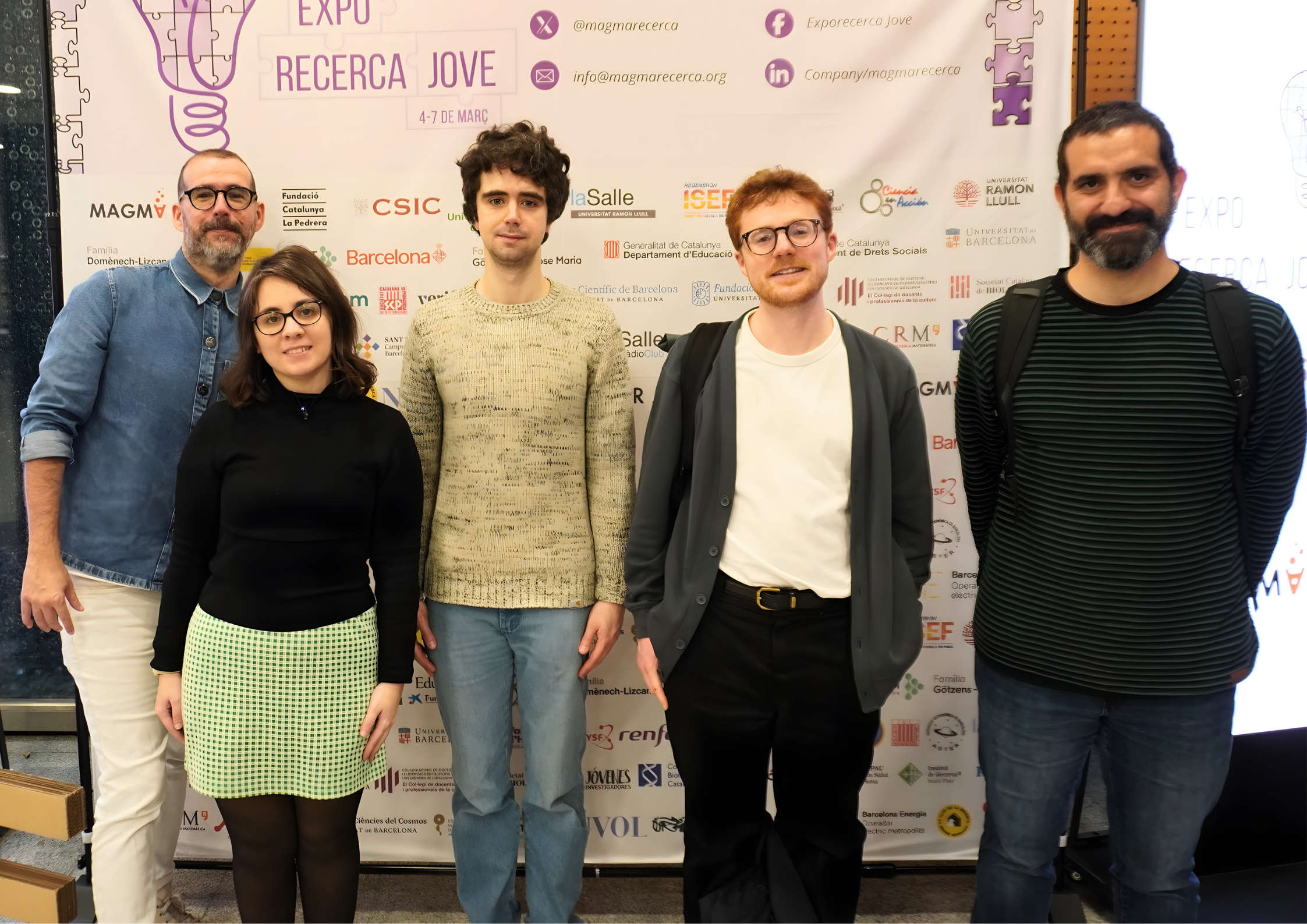
CRM’s prize is not a certificate. It is access: a place at one of the institute’s research days, seminars, or outreach events, where the winners will be in the room with working mathematicians. What they do with that is up to them.
Subscribe for more CRM News
|
|
CRM CommPau Varela
|
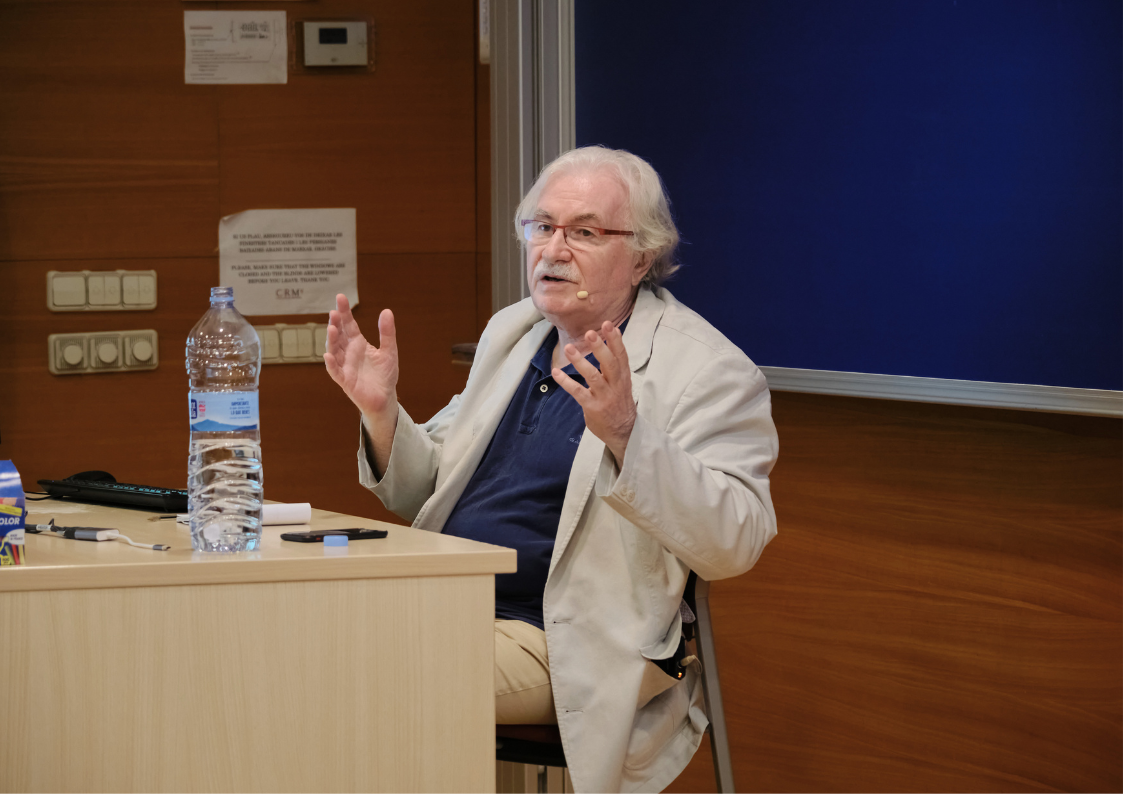
Yves Chevallard (1946–2026)
Yves Chevallard passed away on 16 March 2026. He was 79 years old. Born in Tunis, he trained at the École normale supérieure in Paris, where he earned an agrégation de mathématiques. He went on to become a professor at Aix-Marseille Université, and it was there, over...
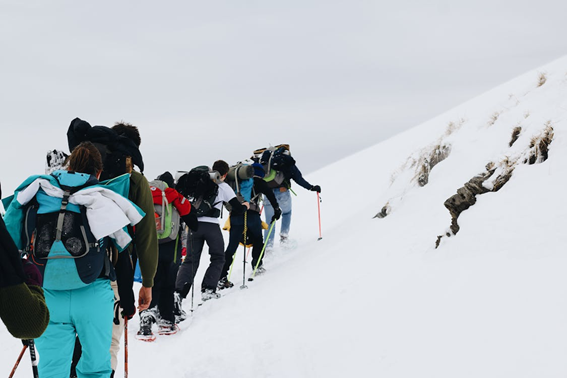
The CRM participates in a European project studying decision-making and risk perception in mountain environments
The NeuroMunt project (POCTEFA, coordinated by the Université de Perpignan Via Domitia) studies how people make decisions under risk conditions in mountain environments, bringing together researchers from France and Spain across disciplines ranging from complex...
One Day, One Family, One Place: Poisson Geometry at CRM
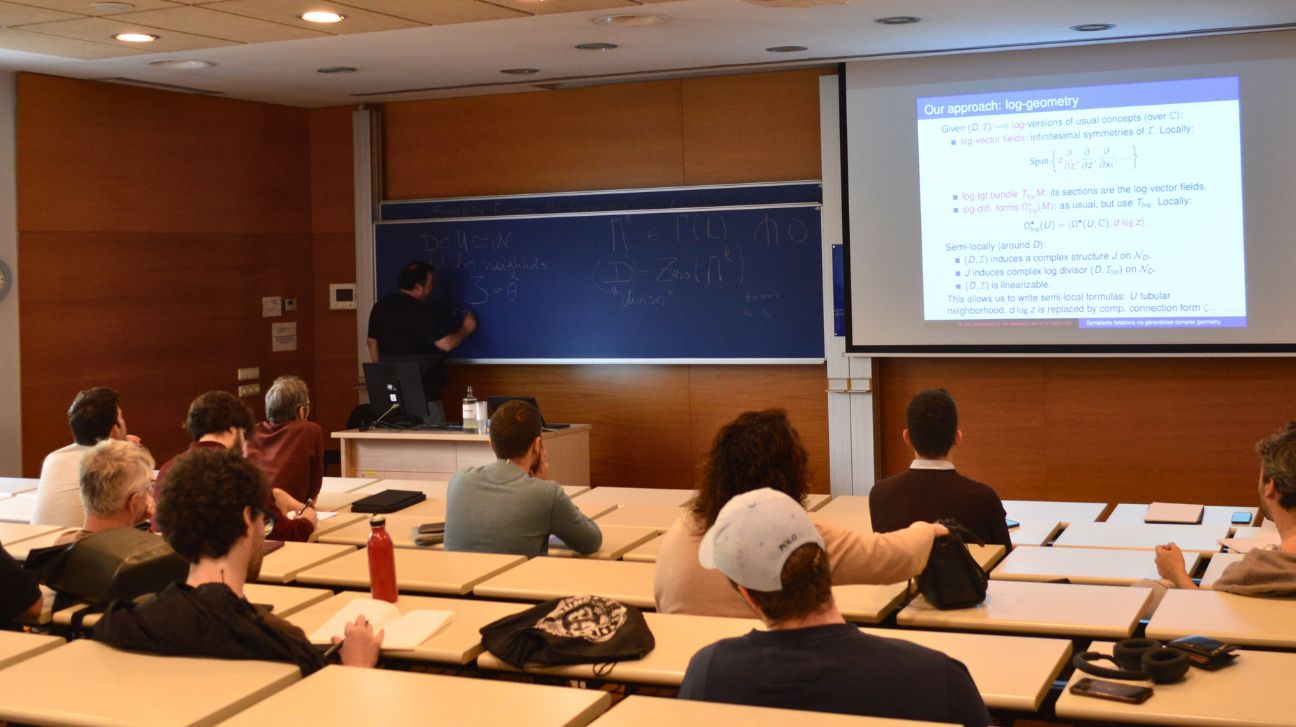
On March 23rd, 2026, the Centre de Recerca Matemàtica hosted the thematic day “Poisson Geometry and Its Relatives”, a full‑day event that brought together researchers exploring Poisson geometry and several of its neighbouring areas. The programme combined classical...
Life After the PhD: Three Roads Forward
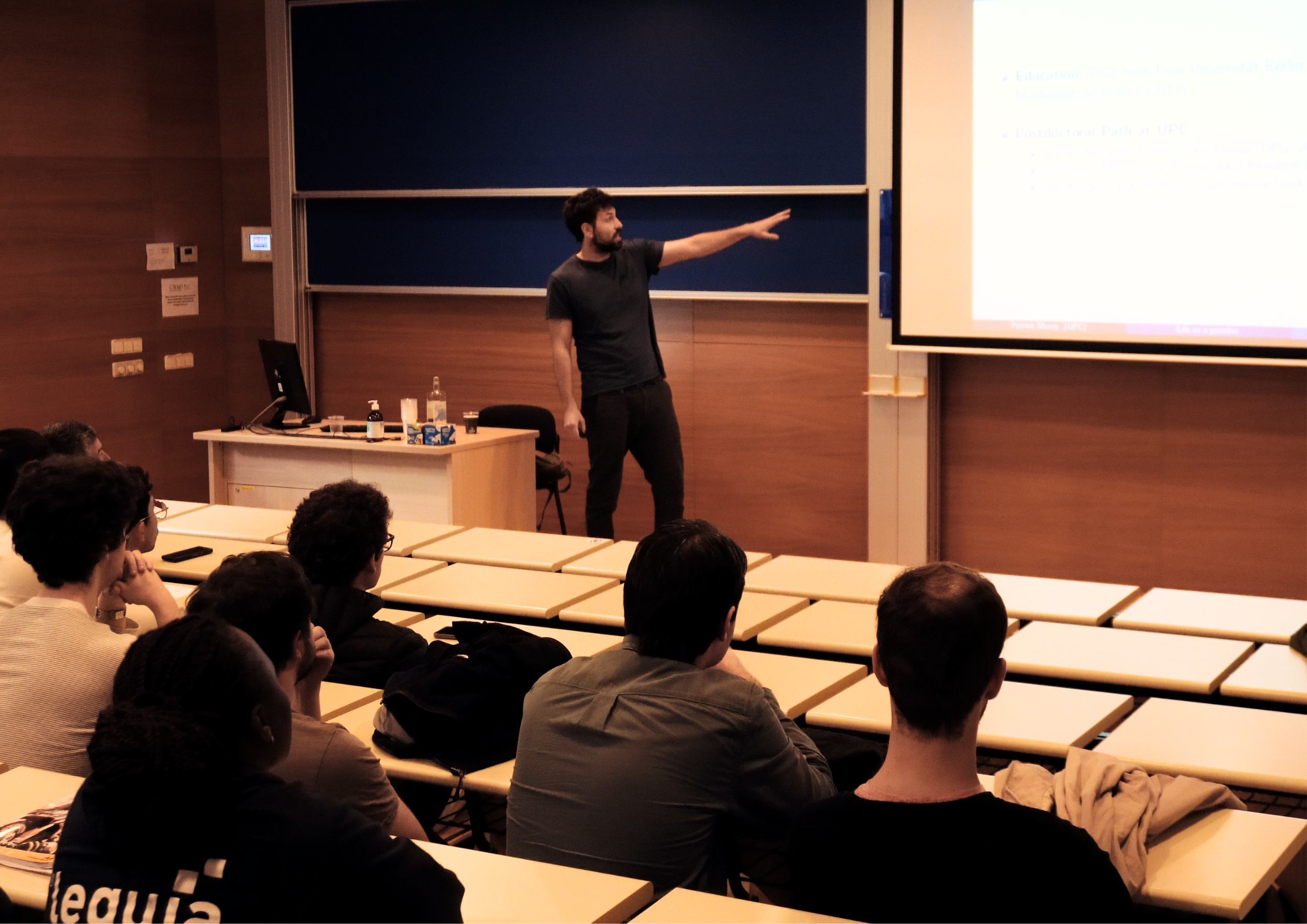
On March 18, the BGSMath held its first session on careers after a PhD in mathematics, bringing together three speakers with different professional trajectories and 46 early-career researchers from nine institutions.On March 18, the Barcelona Graduate School of Math...
CRM participates in the 2026 ERCOM annual meeting in Belgrade
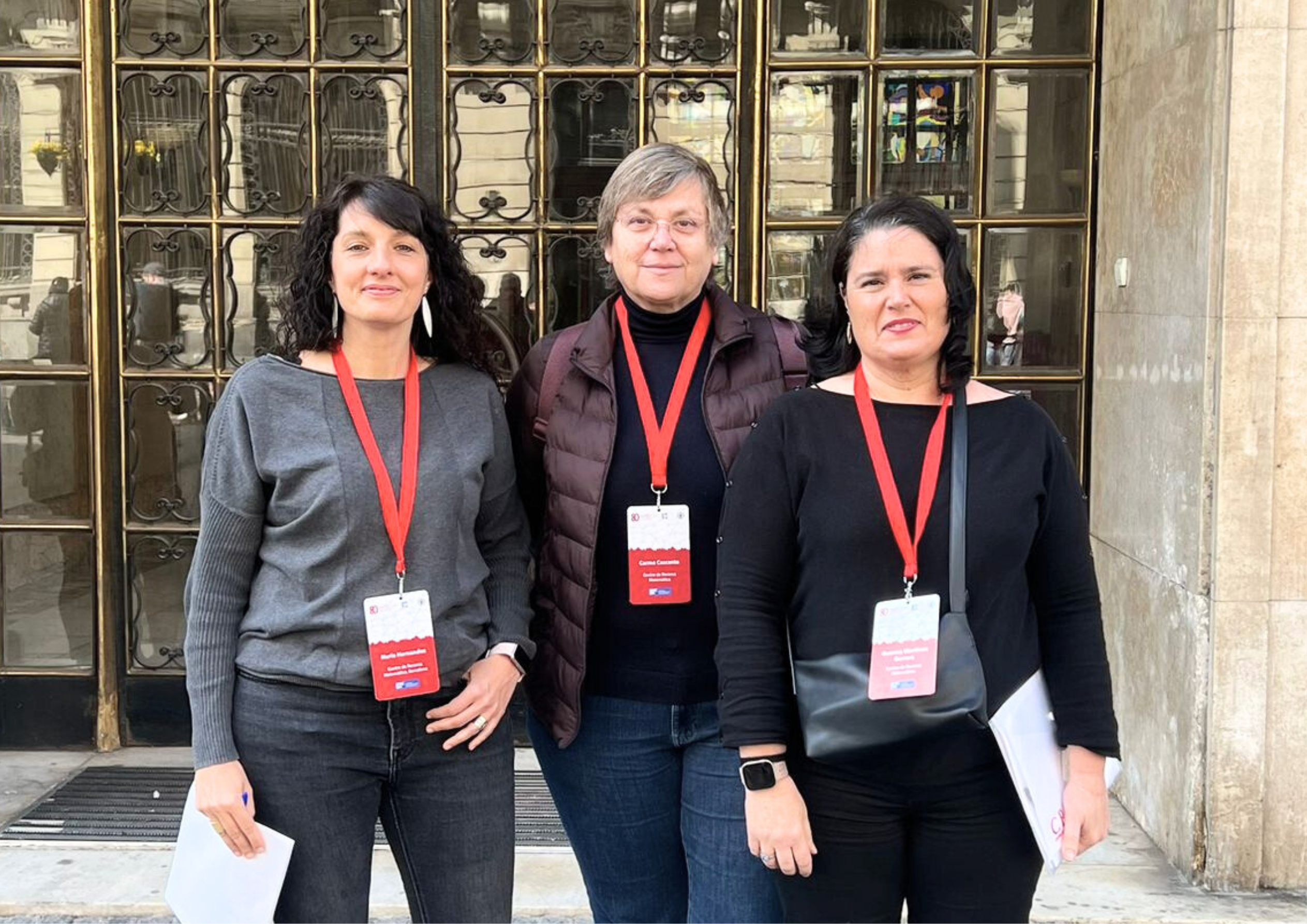
The CRM participated in the 2026 ERCOM annual meeting in Belgrade (20–21 March), represented by Director Carme Cascante, Manager Gemma Martínez, and Scientific Activities Manager Núria Hernández. The programme focused on multidisciplinarity, mathematics and the arts,...
5 Talks, 1 Topic: A Day of Combinatorics
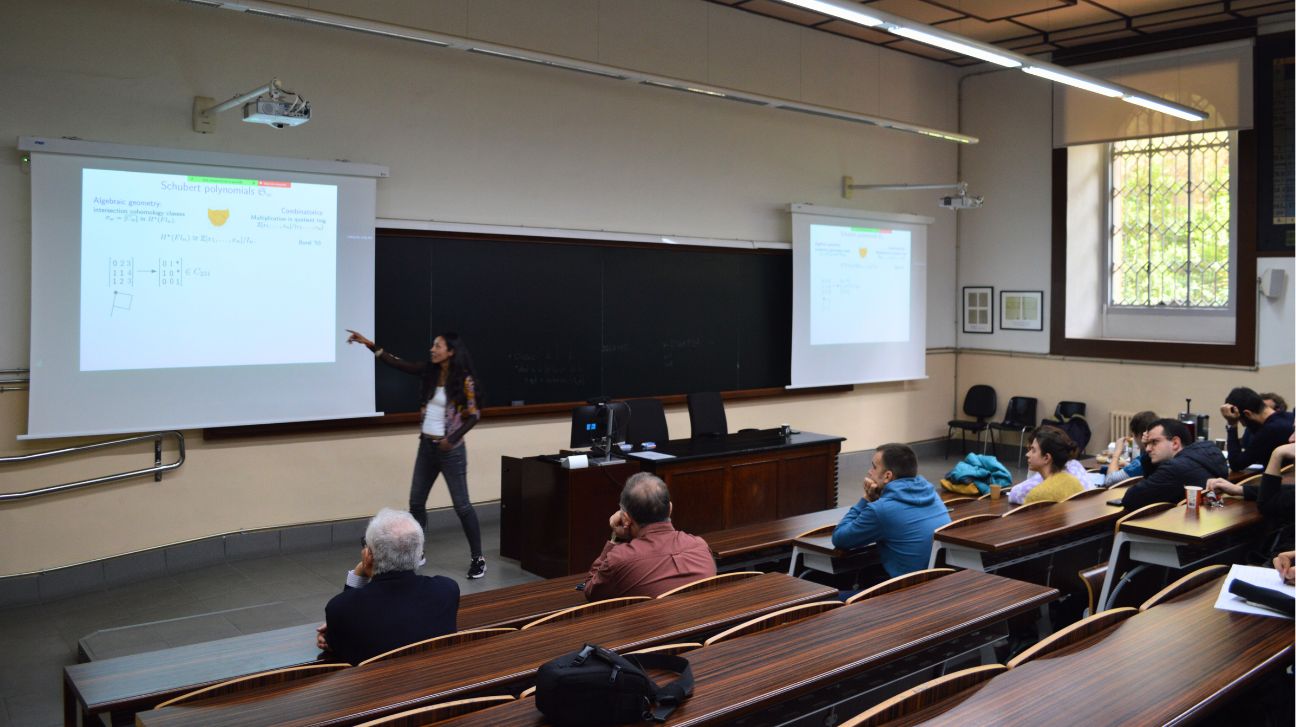
On March 18th, 2026, the 5 Talks in Combinatorics thematic day took place in the Joan Maragall Room at the Faculty of Philology and Communication of the University of Barcelona, in the historic building. The event focused on modern combinatorics and its connections...
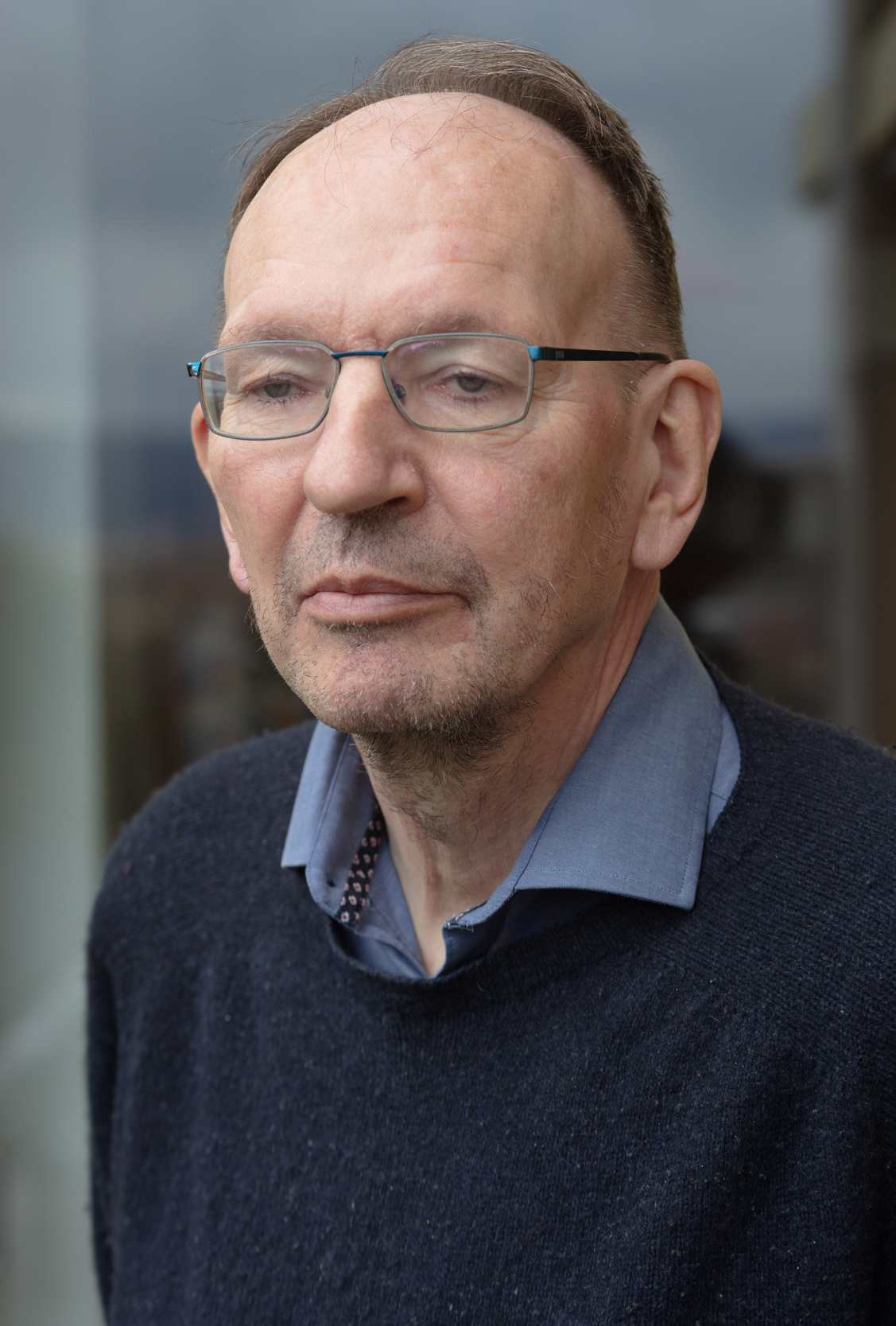
Gerd Faltings Awarded the 2026 Abel Prize for Transformative Work in Arithmetic Geometry
The Norwegian Academy of Science and Letters has recognised the German mathematician for solving two of the most enduring open problems in the field.The Norwegian Academy of Science and Letters announced today that the 2026 Abel Prize goes to Gerd Faltings, director...
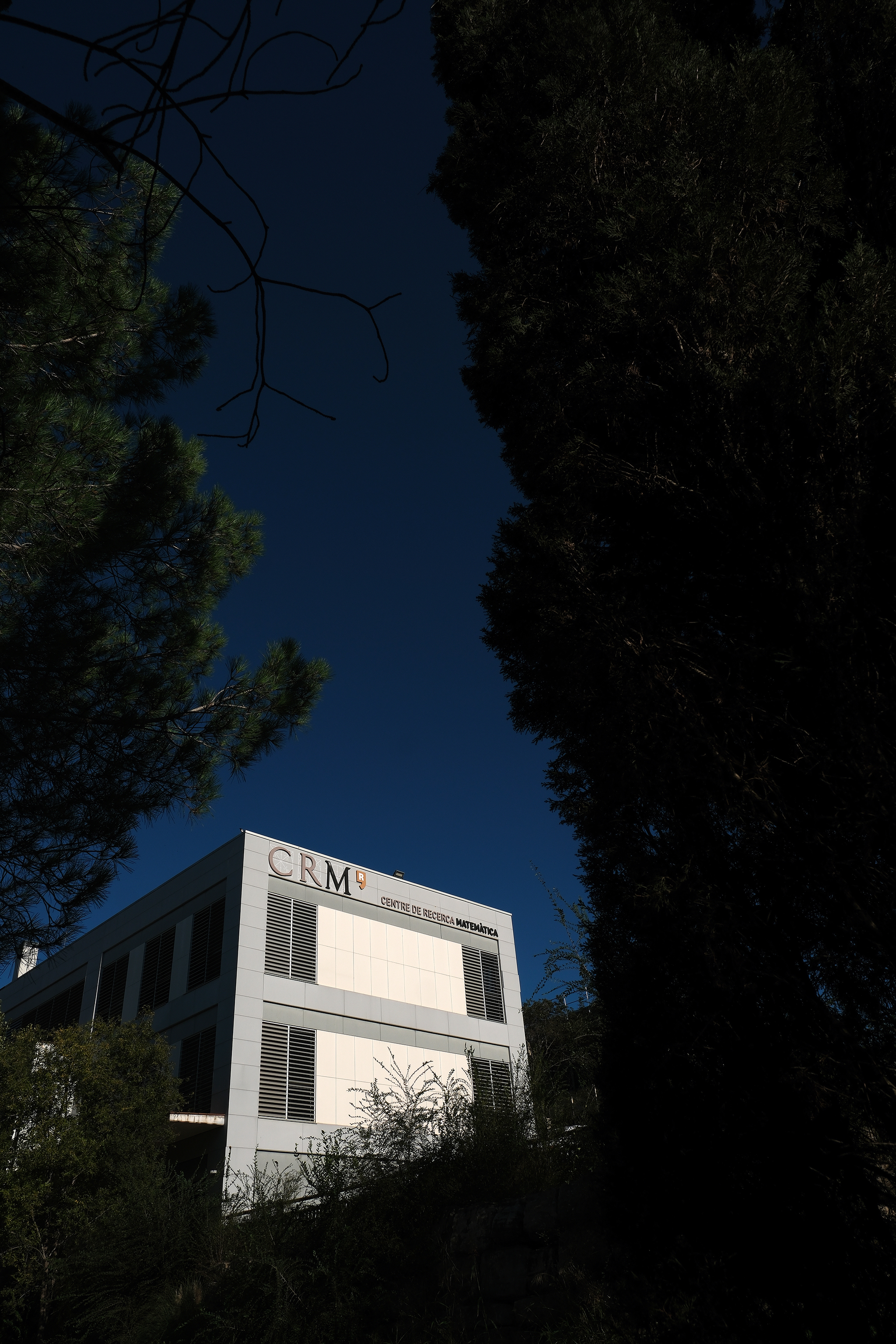
The Centre de Recerca Matemàtica Approves Its Strategic Plan for 2026–2030
The Centre de Recerca Matemàtica has approved its Strategic Plan for 2026 - 2030, setting priorities in research, training, and knowledge transfer. Four flagship initiatives anchor the scientific programme. The Centre de Recerca Matemàtica approved its Strategic Plan...

When Symmetry Breaks the Rules: From Askey–Wilson Polynomials to Functions
Researchers Tom Koornwinder (U. Amsterdam) and Marta Mazzocco (ICREA-UPC-CRM) published a paper in Indagationes Mathematicae exploring DAHA symmetries. Their work shows that these symmetries shift Askey–Wilson polynomials into a continuous functional setting,and...
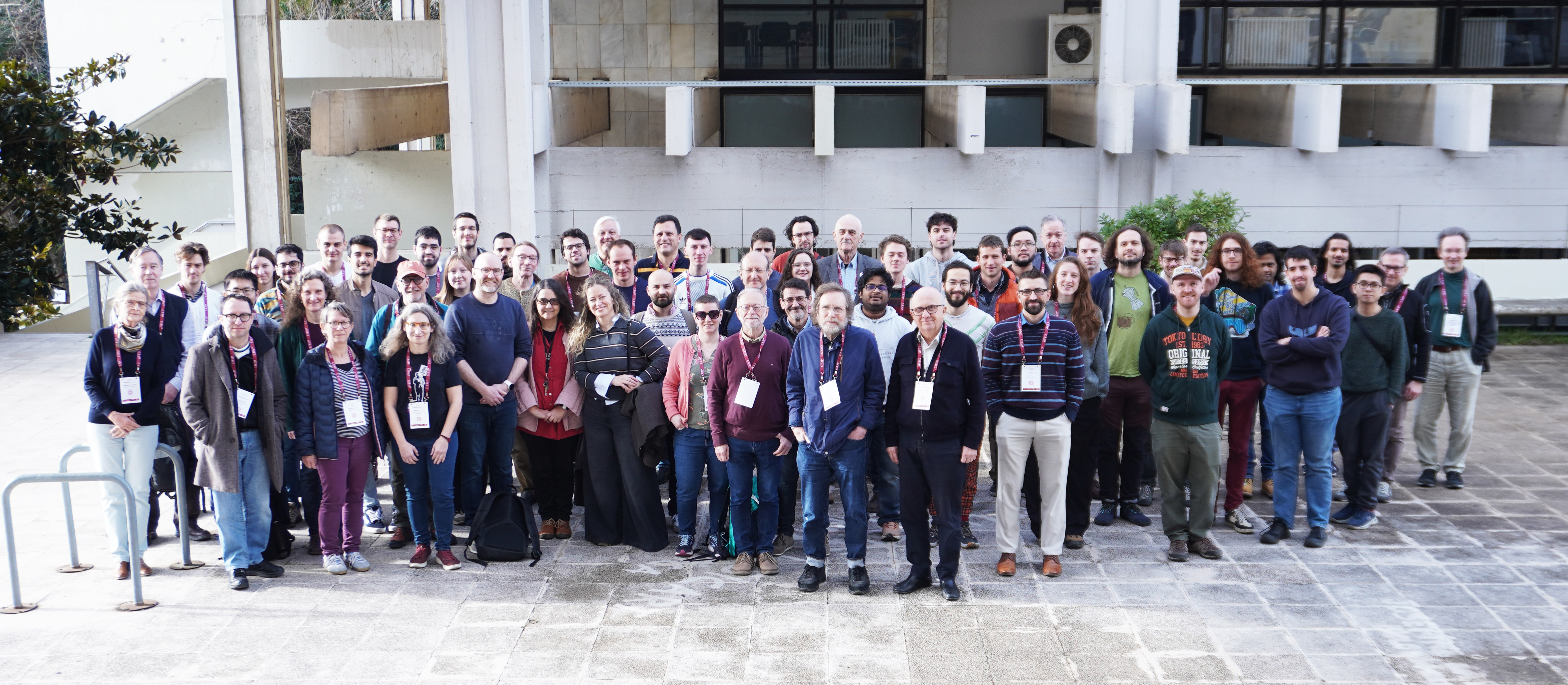
Homotopy Theory Conference Brings Together Diverse Research Perspectives
The Centre de Recerca Matemàtica hosted 75 mathematicians from over 20 countries for the Homotopy Structures in Barcelona conference, held February 9-13, 2026. Fourteen invited speakers presented research spanning rational equivariant cohomology theories, isovariant...
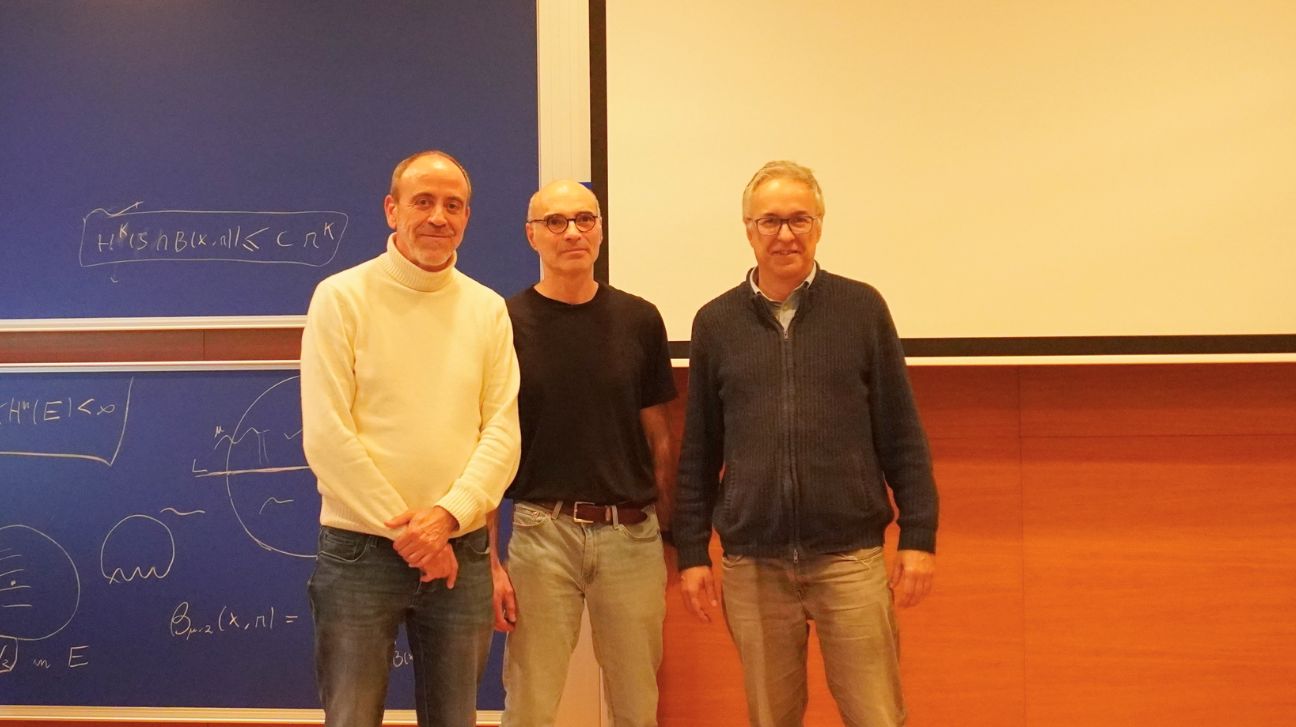
Three ICM speakers headline the first CRM Faculty Colloquium
On 19 February 2026, the Centre de Recerca Matemàtica inaugurated its first CRM Faculty Colloquium, a new quarterly event designed to bring together the mathematical community around the research carried out by scientists affiliated with the Centre. The CRM auditorium...