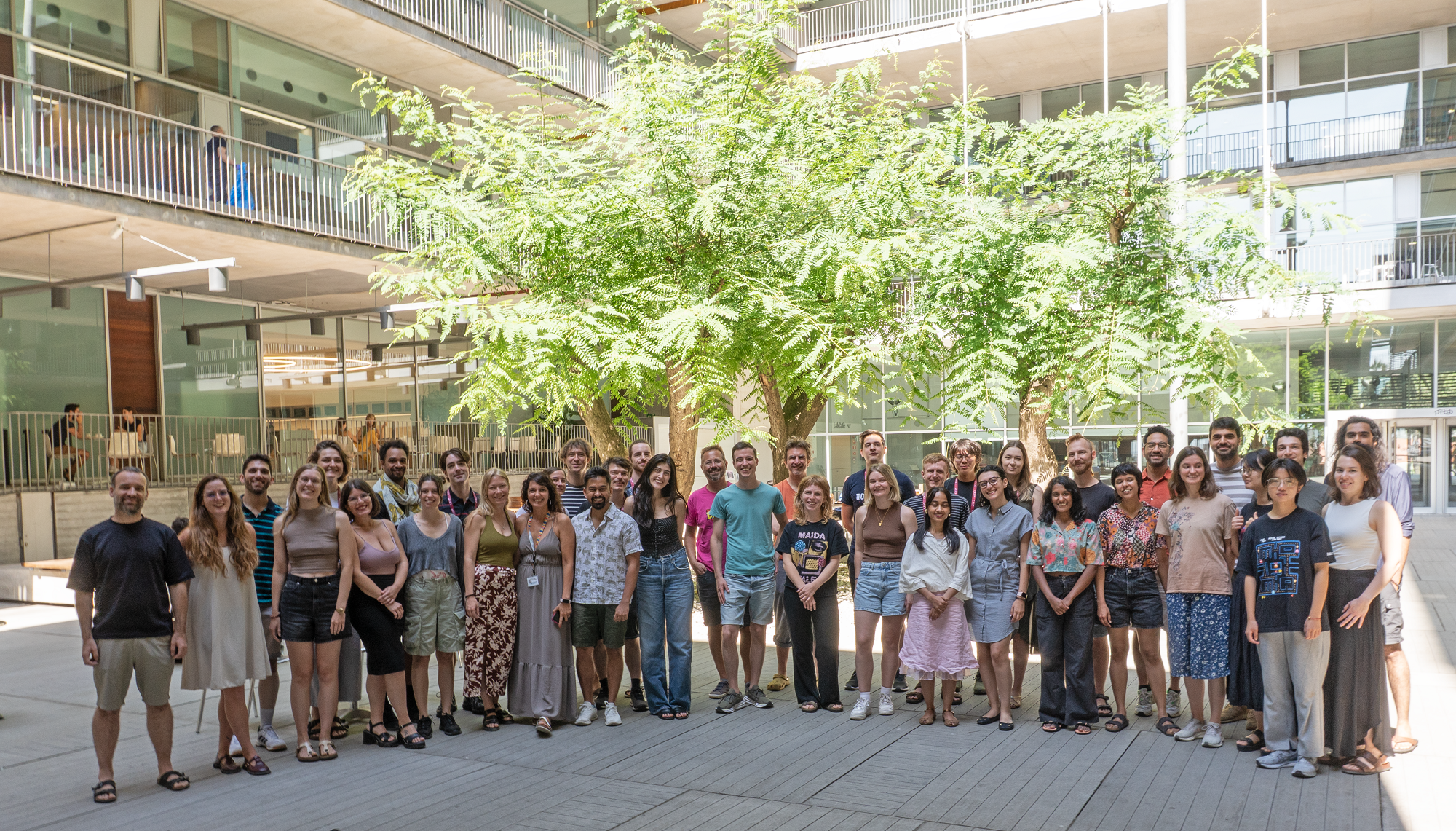
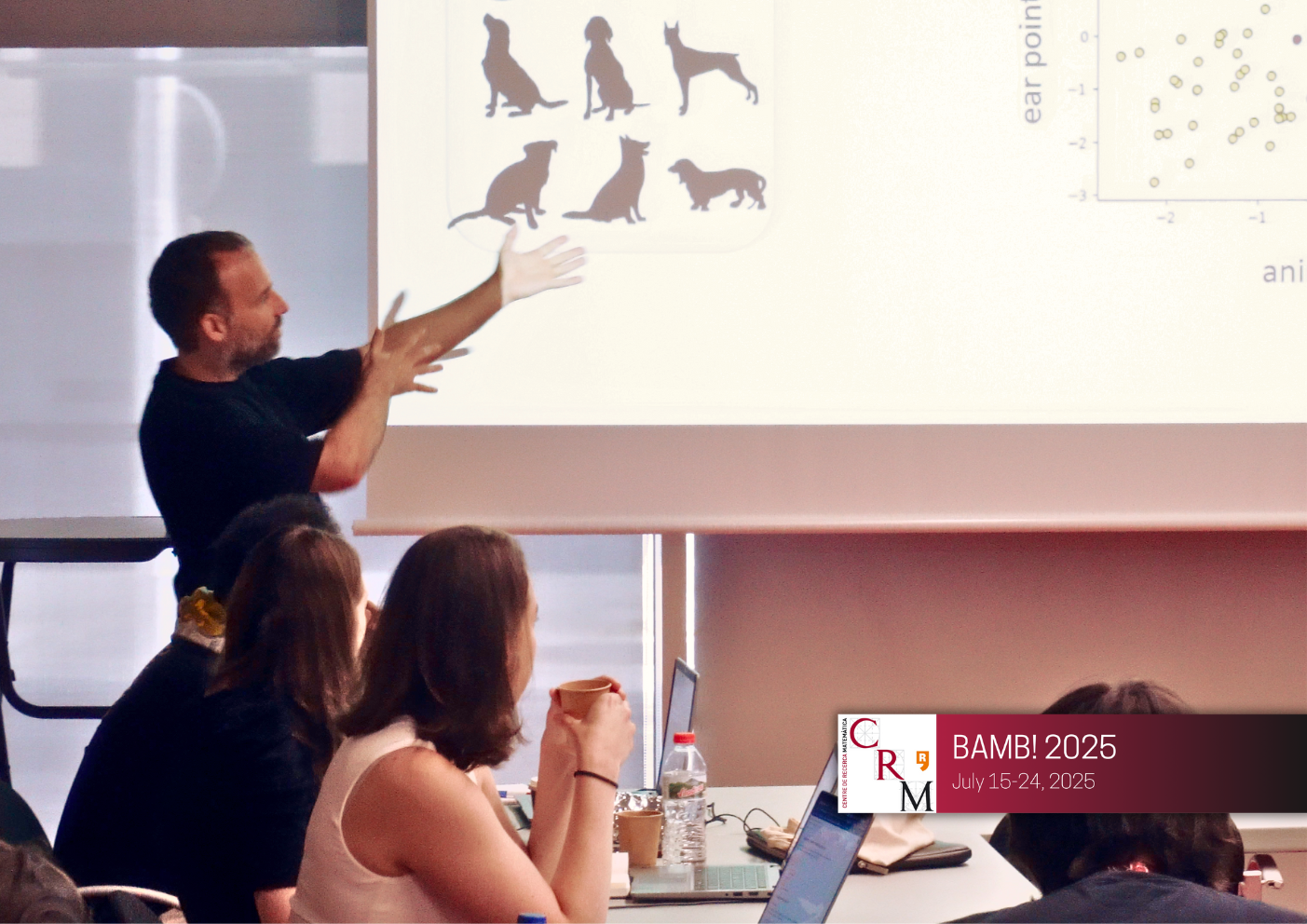
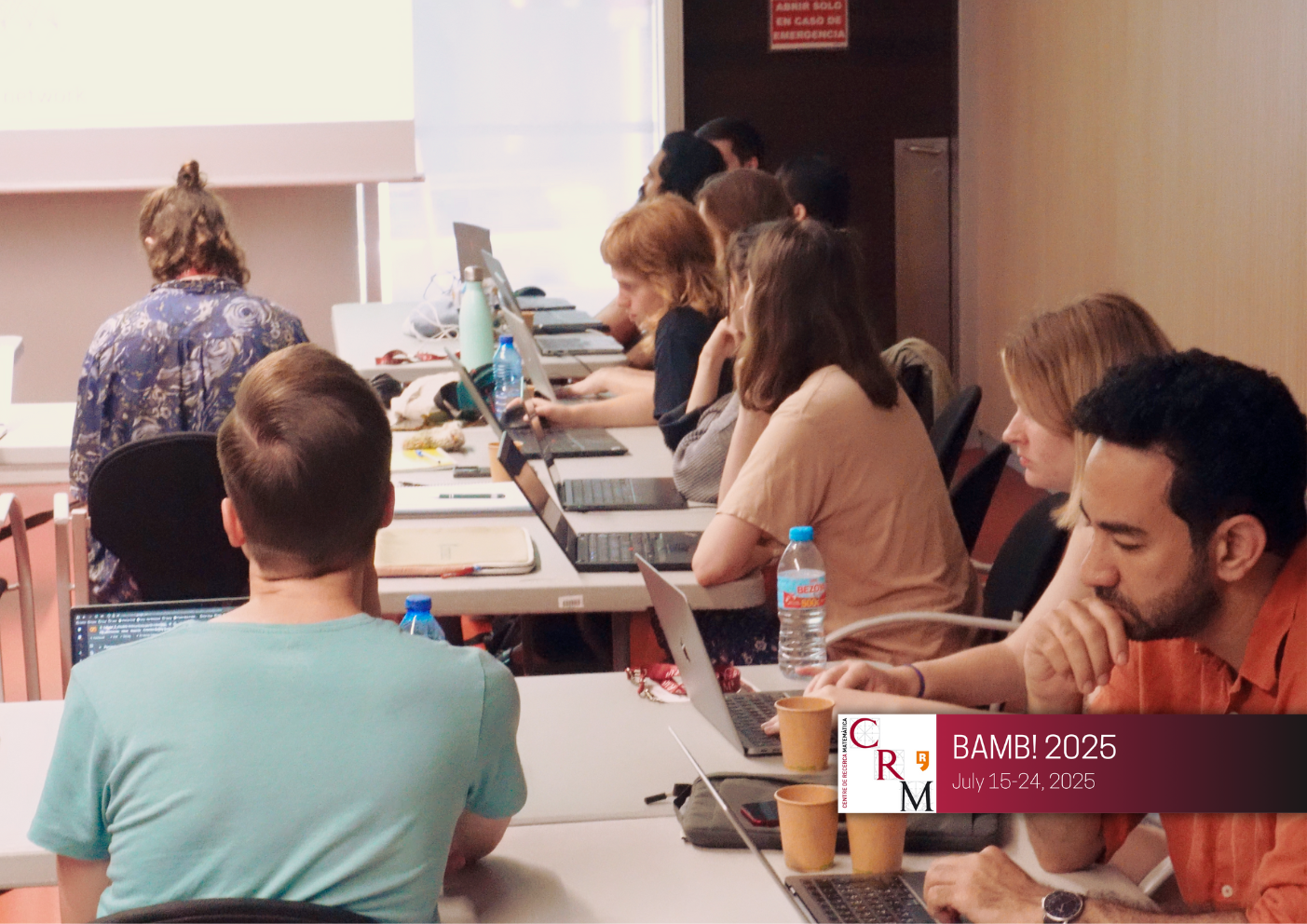
In a classroom right next to the Mediterranean, the fifth edition of the BAMB! summer school came to life. For nine days, 30 early-career researchers stepped away from their usual routines and immersed themselves in the elusive craft of modeling behavior. What they found was a set of techniques and a community of minds committed to asking questions about how animals, ourselves included, make sense of a world full of noise, pattern, and uncertainty.
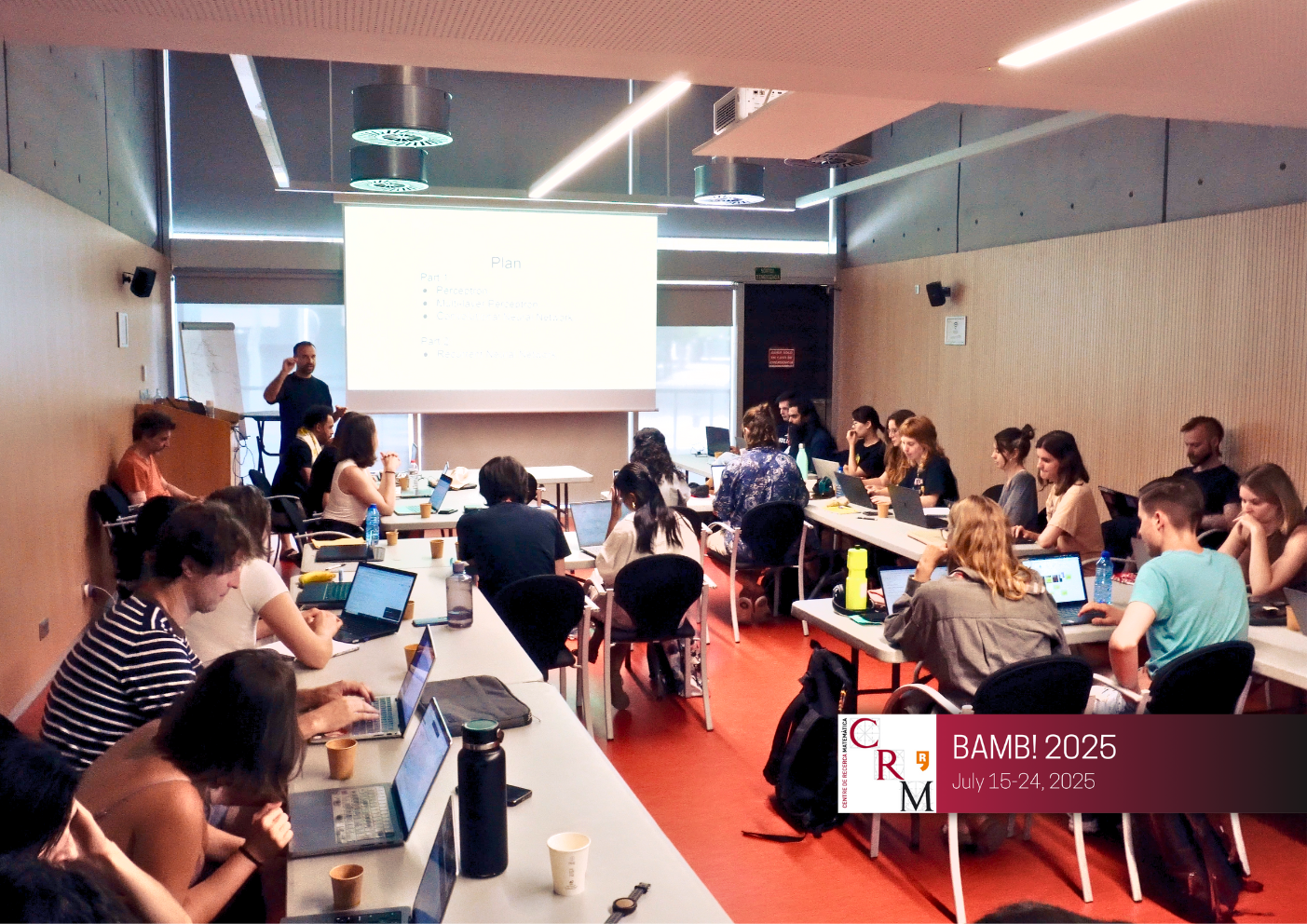
BAMB! was more than lectures. It was a place for connection and the quiet satisfaction of figuring things out together.
The school, officially titled Barcelona Summer School for Advanced Modeling of Behaviour, has established itself as one of the premier training grounds for computational neuroscientists in Europe. Organised by researchers from CRM, ENS Paris, Sorbonne University, Oxford/DeepMind, and the Paris Brain Institute, and hosted this year at the Parc de Recerca Biomèdica de Barcelona (PRBB), BAMB! 2025 stayed true to its founding principle: rigorous hands-on learning rooted in conceptual clarity.
Each day unfolded around a different modeling tradition. From parameter recovery and model comparison to reinforcement learning, Bayesian inference, latent variable models, and simulation-based techniques, the curriculum moved fast and with purpose.
The BAMB! School also centres around group projects designed to make the newly acquired knowledge resonate with each participant’s own research. On the final day, each team had ten minutes to present their approach. No one expected polished results. What mattered was the thinking behind the model, the clarity of the question, and the honest effort to answer it.
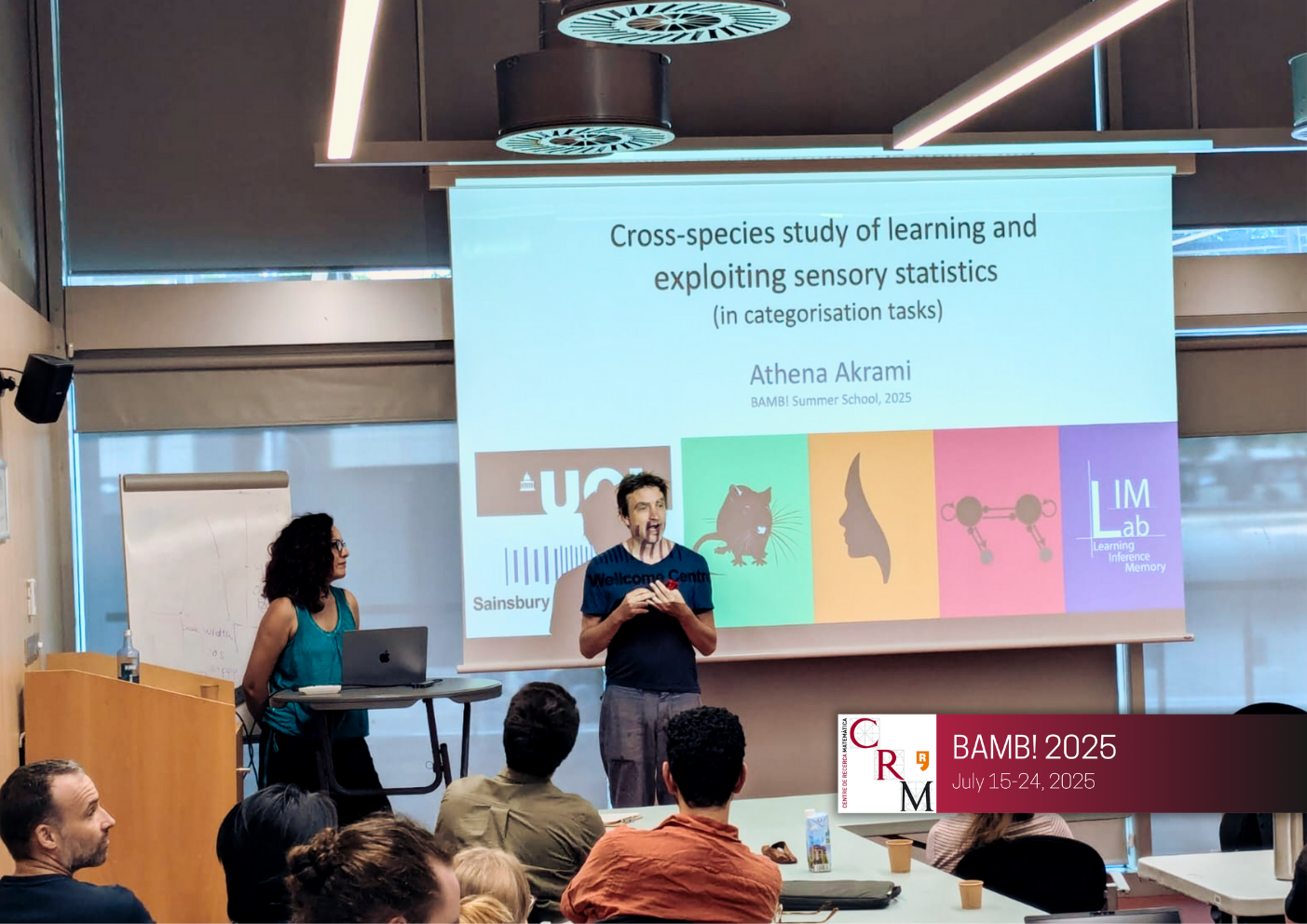
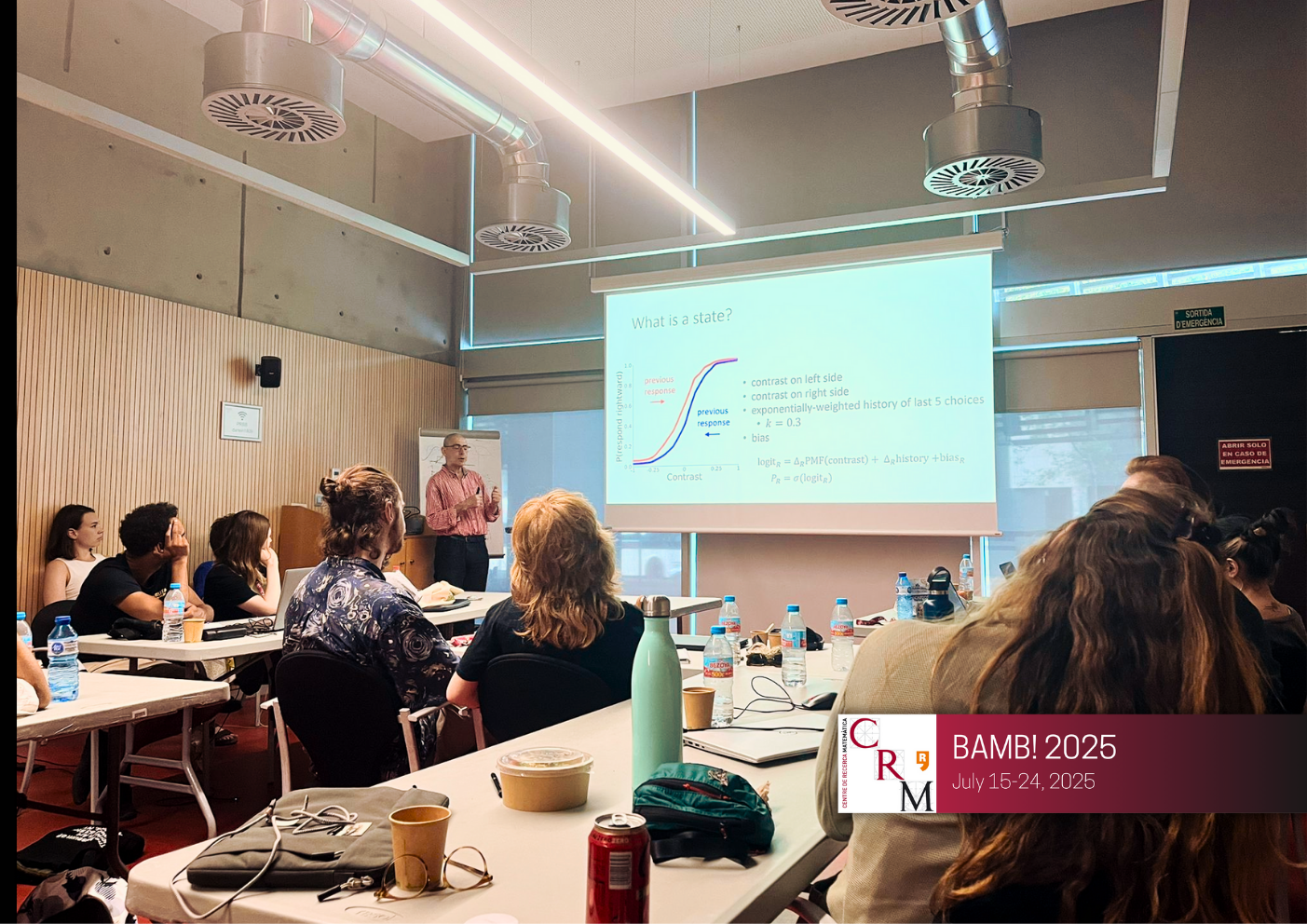
Two keynote talks closed two of the school’s days. The first was by Athena Akrami, from the Sainsbury Wellcome Centre at University College London. Her research asks how animals uncover patterns in the world and how they detect structure in noise, build abstract relationships, and carry those priors forward to guide behaviour. From the fluidity of working memory to the rigidity of perceptual biases, Akrami’s work captures cognition as a living system woven from past experience and statistical expectation.
Later in the week, Peter Dayan, director at the Max Planck Institute for Biological Cybernetics in Tübingen, took the stage. A pioneer at the intersection of artificial intelligence, neuroscience, and psychiatry, Dayan’s career has shaped how we understand learning, reward, and neuromodulation. His research deals with the brain’s decision-making machinery and its failure modes, always anchored in formal models.
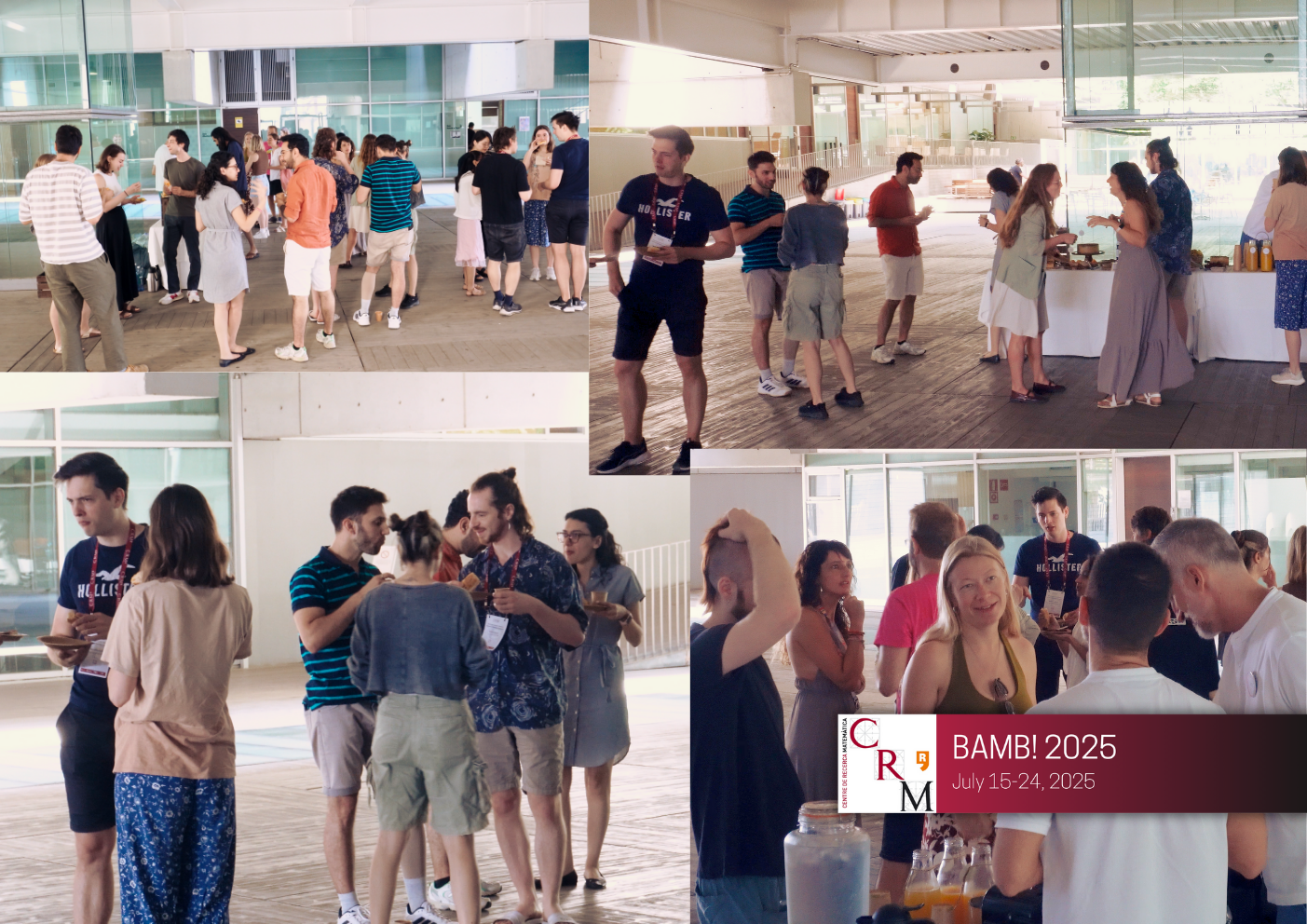
A place for community and connection
Beyond the lectures and tutorials, BAMB! was held together by something quieter: conversations over lunch, fragments of code exchanged at coffee breaks, one-to-one meetings where career anxieties found sympathetic ears. Faculty weren’t distant figures; they were co-conspirators. The teaching assistants were tireless, orbiting from laptop to laptop like helpful satellites, keeping the chaos just within bounds.
Huge thanks to the organising team, the brilliant teaching assistants, keynote speakers, and all the participants whose energy, curiosity, and collaboration made BAMB! 2025 such a memorable and inspiring experience. This was BAMB!’s fifth edition, and it hasn’t lost its edge.
Subscribe for more CRM News
|
|
CRM CommPau Varela
|

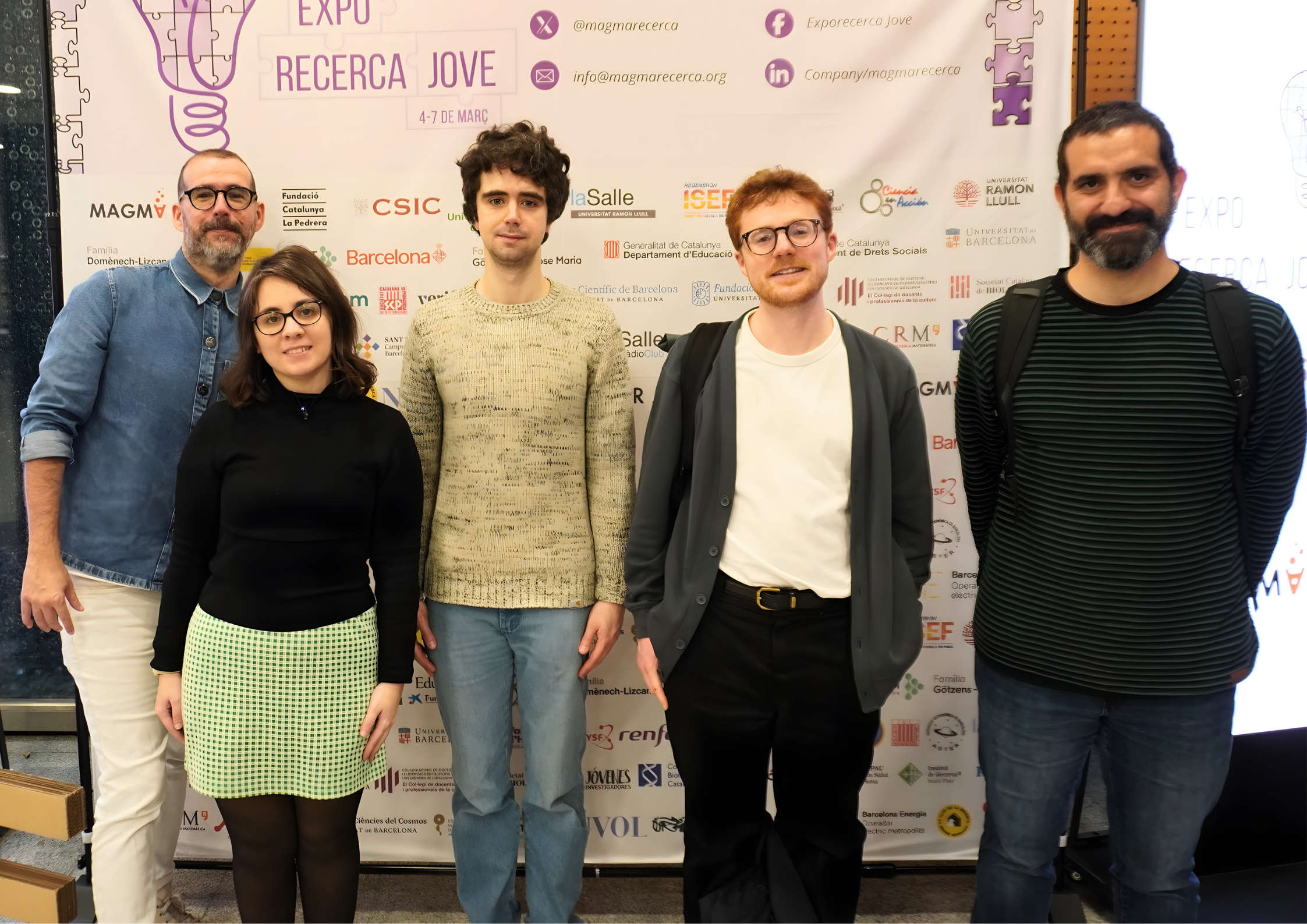
CRM Awards Its Prize at Exporecerca Jove for the Third Time
For the third year running, CRM visited Exporecerca Jove to award its prize to the student project with the strongest mathematical content. This edition, the jury selected two winners: Xavier Ortiz Quintana, who built a real-time 3D scanner using...

When Symmetry Breaks the Rules: From Askey–Wilson Polynomials to Functions
Researchers Tom Koornwinder (U. Amsterdam) and Marta Mazzocco (ICREA-UPC-CRM) published a paper in Indagationes Mathematicae exploring DAHA symmetries. Their work shows that these symmetries shift Askey–Wilson polynomials into a continuous functional setting,and...
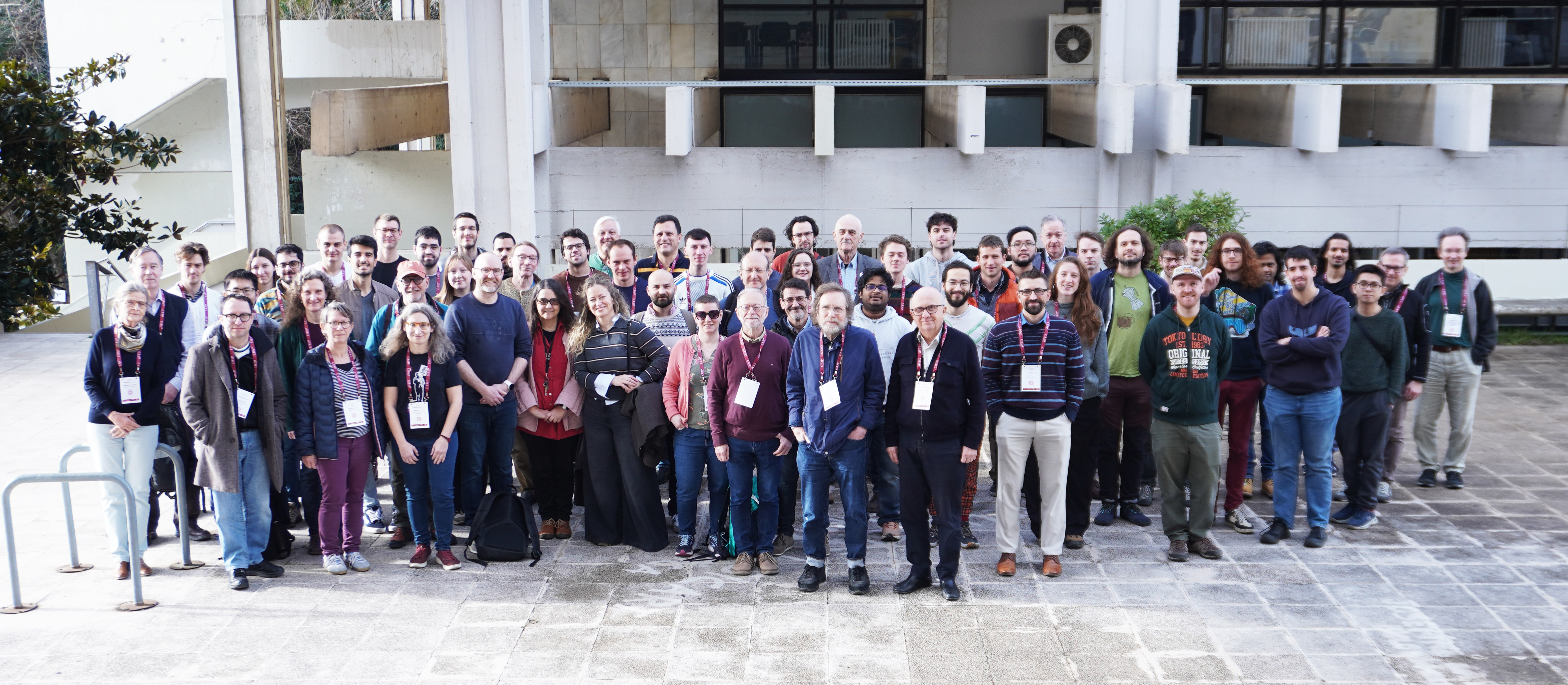
Homotopy Theory Conference Brings Together Diverse Research Perspectives
The Centre de Recerca Matemàtica hosted 75 mathematicians from over 20 countries for the Homotopy Structures in Barcelona conference, held February 9-13, 2026. Fourteen invited speakers presented research spanning rational equivariant cohomology theories, isovariant...
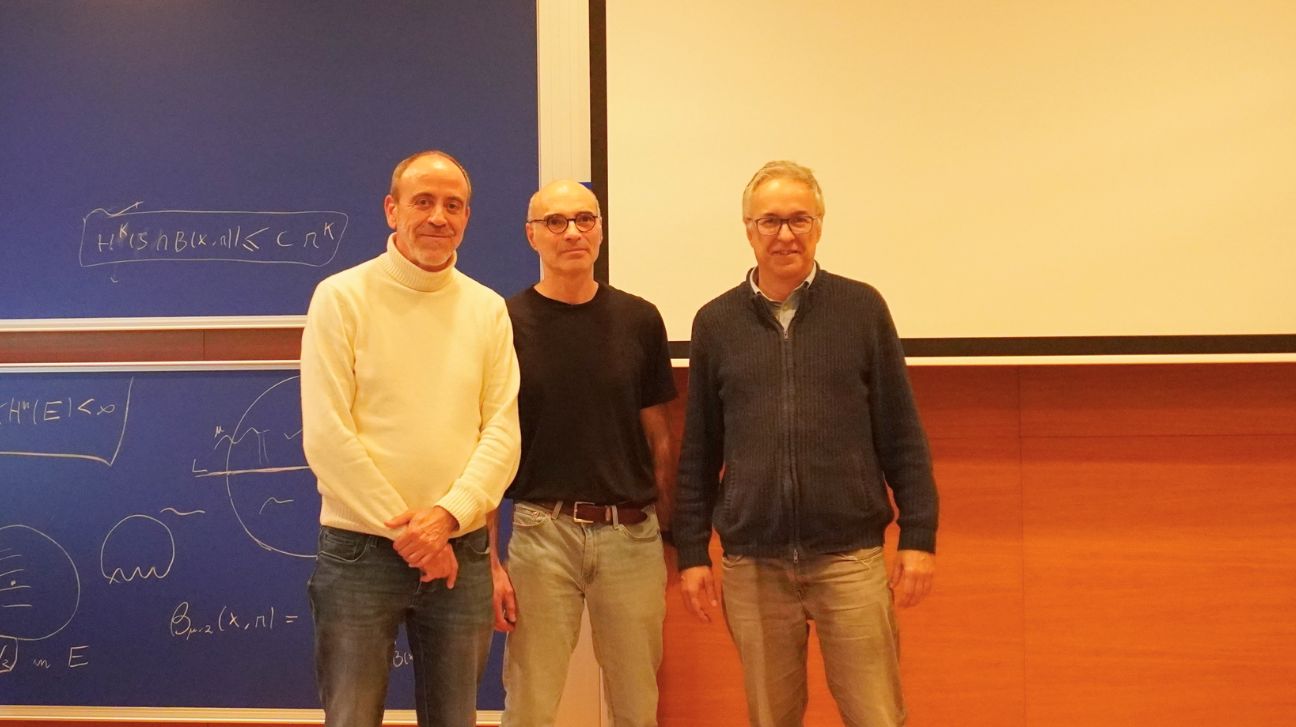
Three ICM speakers headline the first CRM Faculty Colloquium
On 19 February 2026, the Centre de Recerca Matemàtica inaugurated its first CRM Faculty Colloquium, a new quarterly event designed to bring together the mathematical community around the research carried out by scientists affiliated with the Centre. The CRM auditorium...
Trivial matemàtiques 11F-2026
Rescuing Data from the Pandemic: A Method to Correct Healthcare Shocks
When COVID-19 lockdowns disrupted healthcare in 2020, insurance companies discarded their data; claims had dropped 15%, and patterns made no sense. A new paper in Insurance: Mathematics and Economics shows how to rescue that information by...
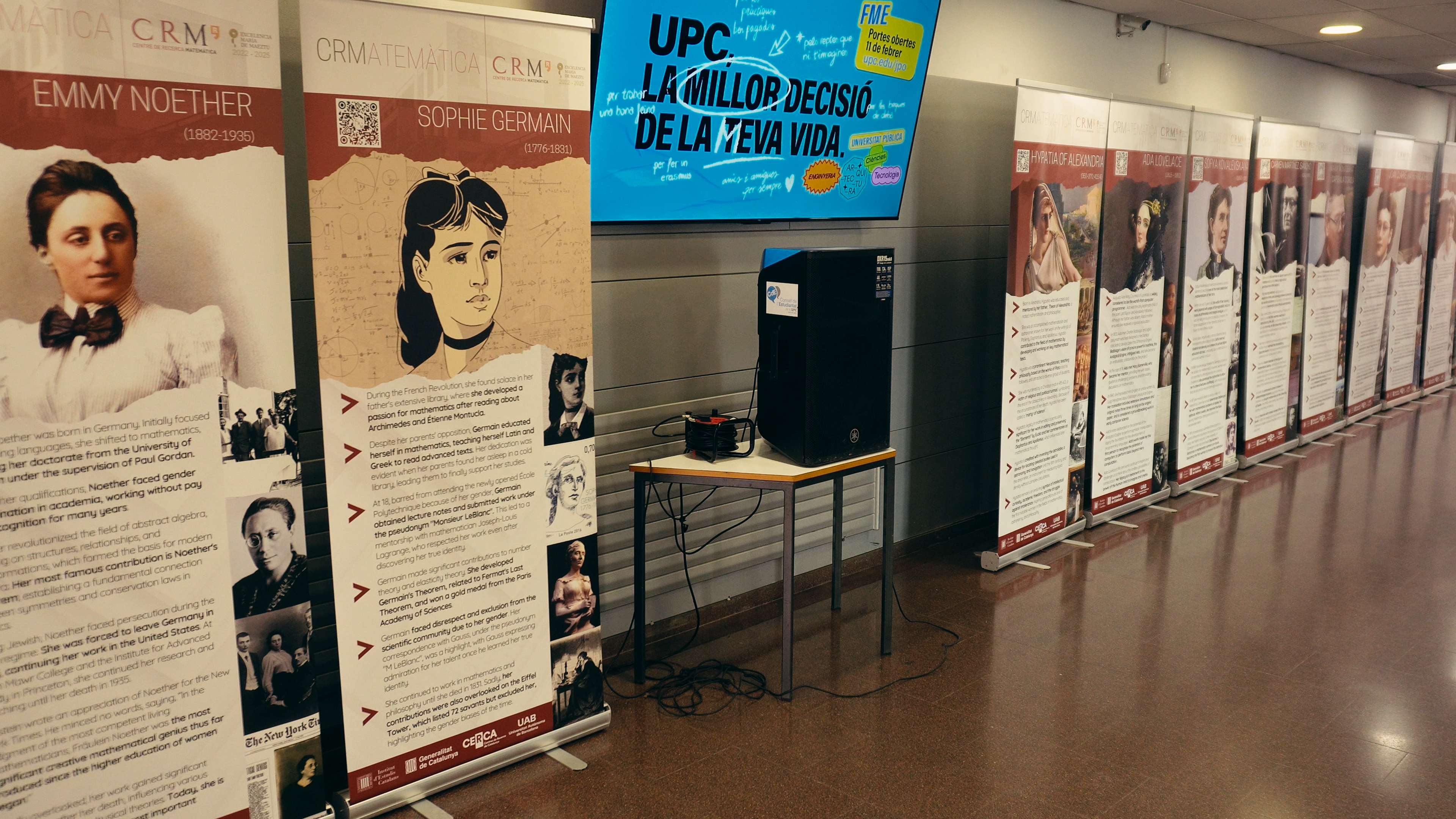
L’exposició “Figures Visibles” s’inaugura a la FME-UPC
L'exposició "Figures Visibles", produïda pel CRM, s'ha inaugurat avui al vestíbul de la Facultat de Matemàtiques i Estadística (FME) de la UPC coincidint amb el Dia Internacional de la Nena i la Dona en la Ciència. La mostra recull la trajectòria...
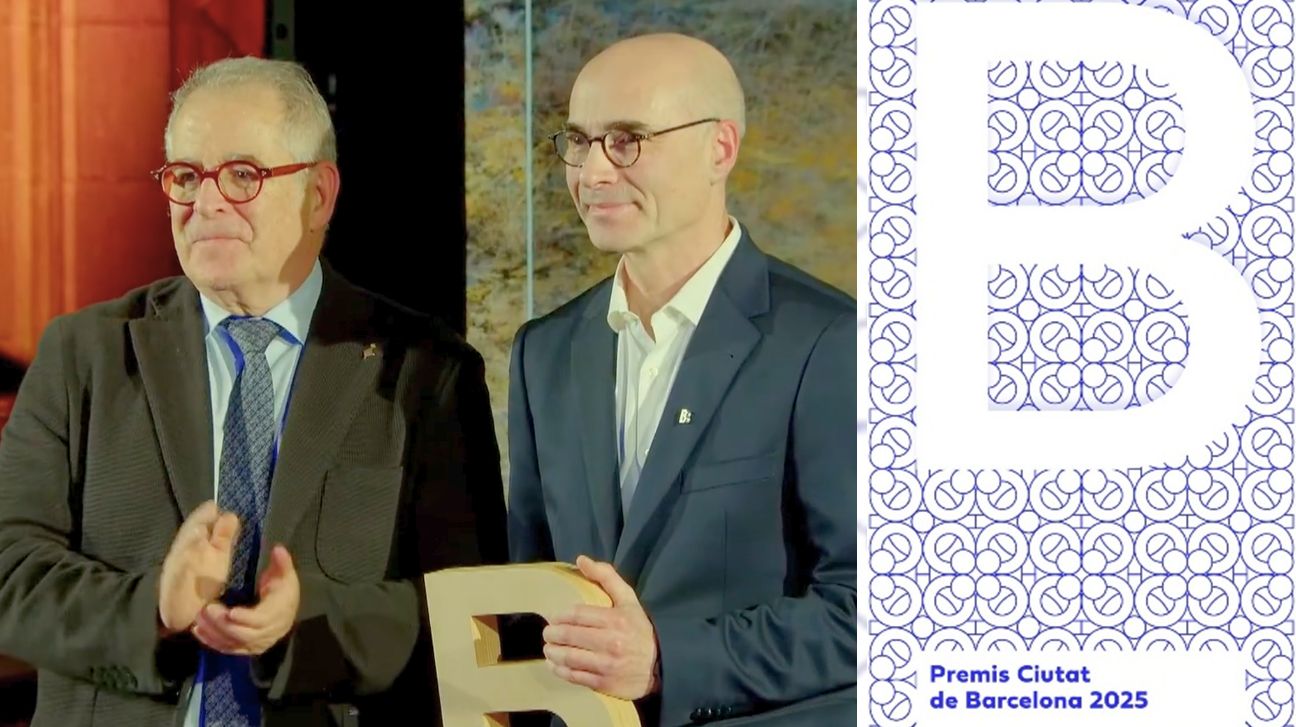
Xavier Tolsa rep el Premi Ciutat de Barcelona per un resultat clau en matemàtica fonamental
L’investigador Xavier Tolsa (ICREA–UAB–CRM) ha estat guardonat amb el Premi Ciutat de Barcelona 2025 en la categoria de Ciències Fonamentals i Matemàtiques, un reconeixement que atorga l’Ajuntament de Barcelona i que enguany arriba a la seva 76a edició. L’acte de...
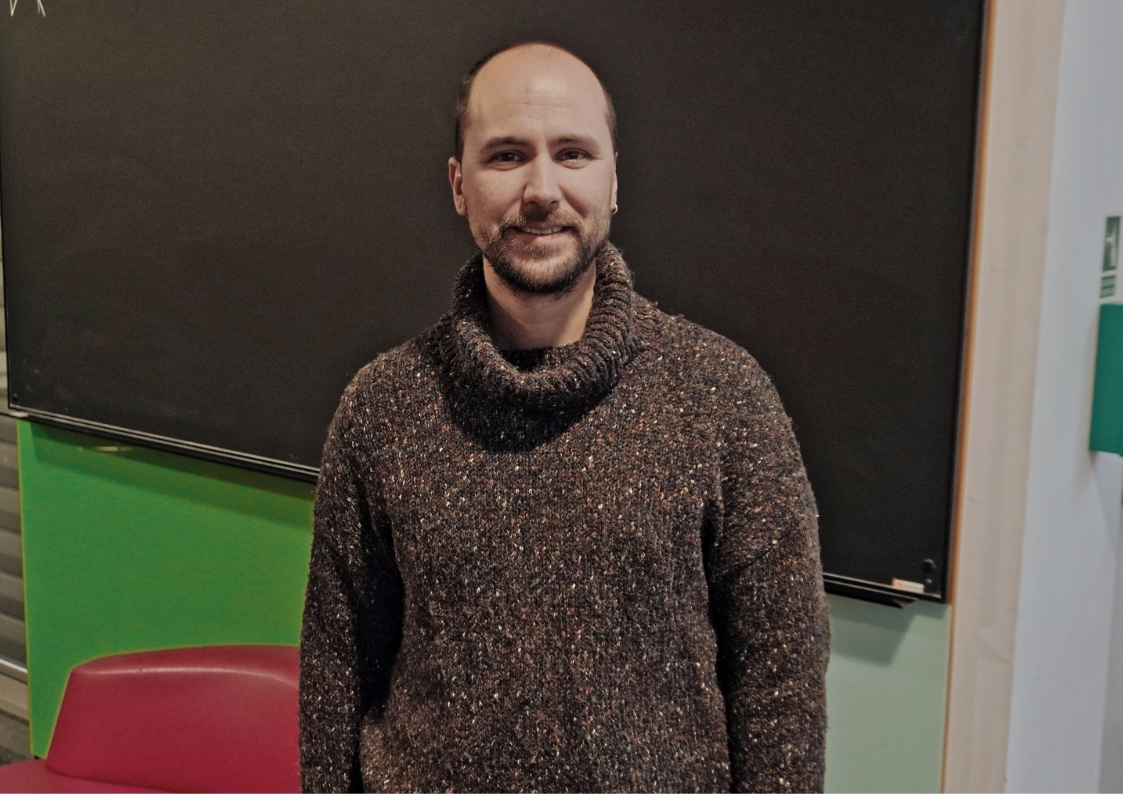
Axel Masó Returns to CRM as a Postdoctoral Researcher
Axel Masó returns to CRM as a postdoctoral researcher after a two-year stint at the Knowledge Transfer Unit. He joins the Mathematical Biology research group and KTU to work on the Neuromunt project, an interdisciplinary initiative that studies...
The 4th Barcelona Weekend on Operator Algebras: Open Problems, New Results, and Community
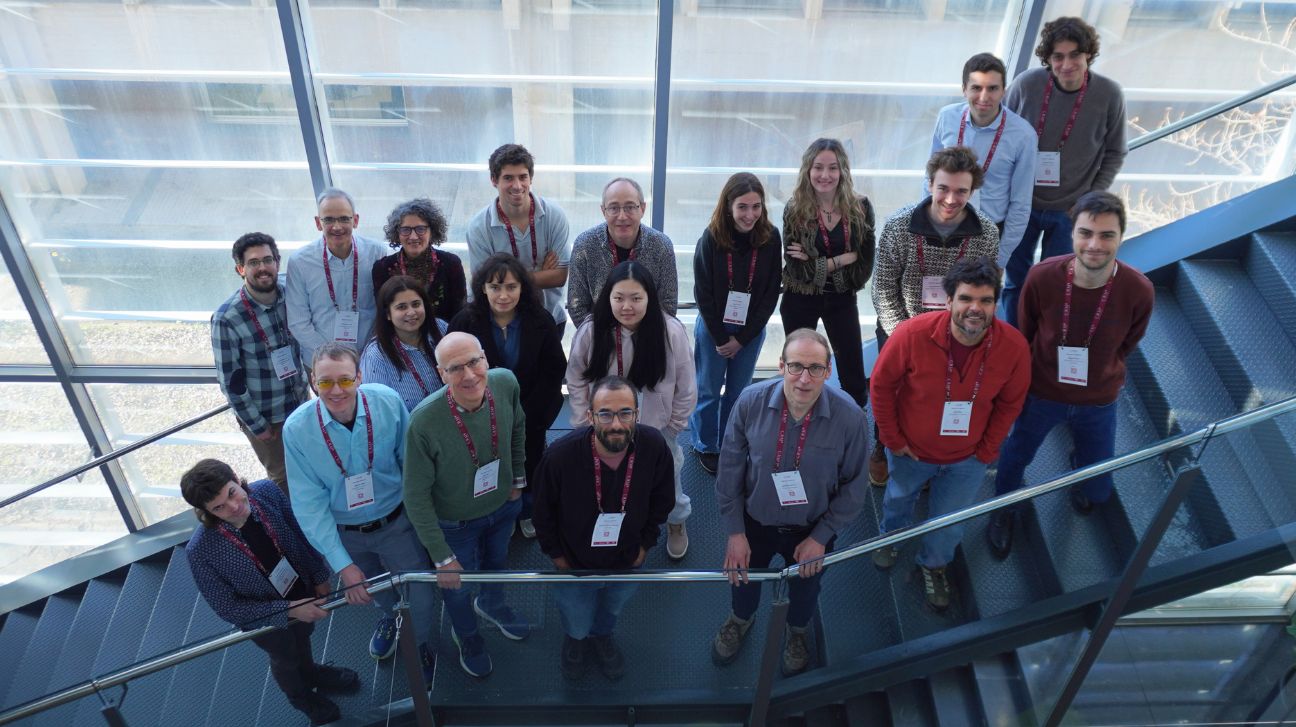
The 4th Barcelona Weekend on Operator Algebras, held at the CRM on January 30–31, 2026, brought together experts to discuss recent advances and open problems in the field.The event strengthened the exchange of ideas within the community and reinforced the CRM’s role...
From Phase Separation to Chromosome Architecture: Ander Movilla Joins CRM as Beatriu de Pinós Fellow
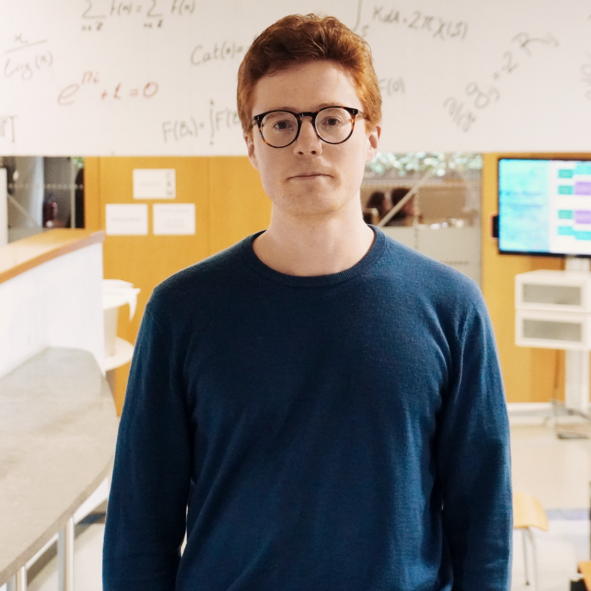
Ander Movilla has joined CRM as a Beatriu de Pinós postdoctoral fellow. Working with Tomás Alarcón, Movilla will develop mathematical models that capture not just the static architecture of DNA but its dynamic behaviour; how chromosome contacts shift as chemical marks...
Criteris de priorització de les sol·licituds dels ajuts Joan Oró per a la contractació de personal investigador predoctoral en formació (FI) 2026
A continuació podeu consultar la publicació dels criteris de priorització de les sol·licituds dels ajuts Joan Oró per a la contractació de personal investigador predoctoral en formació (FI 2026), dirigits a les universitats públiques i privades del...