
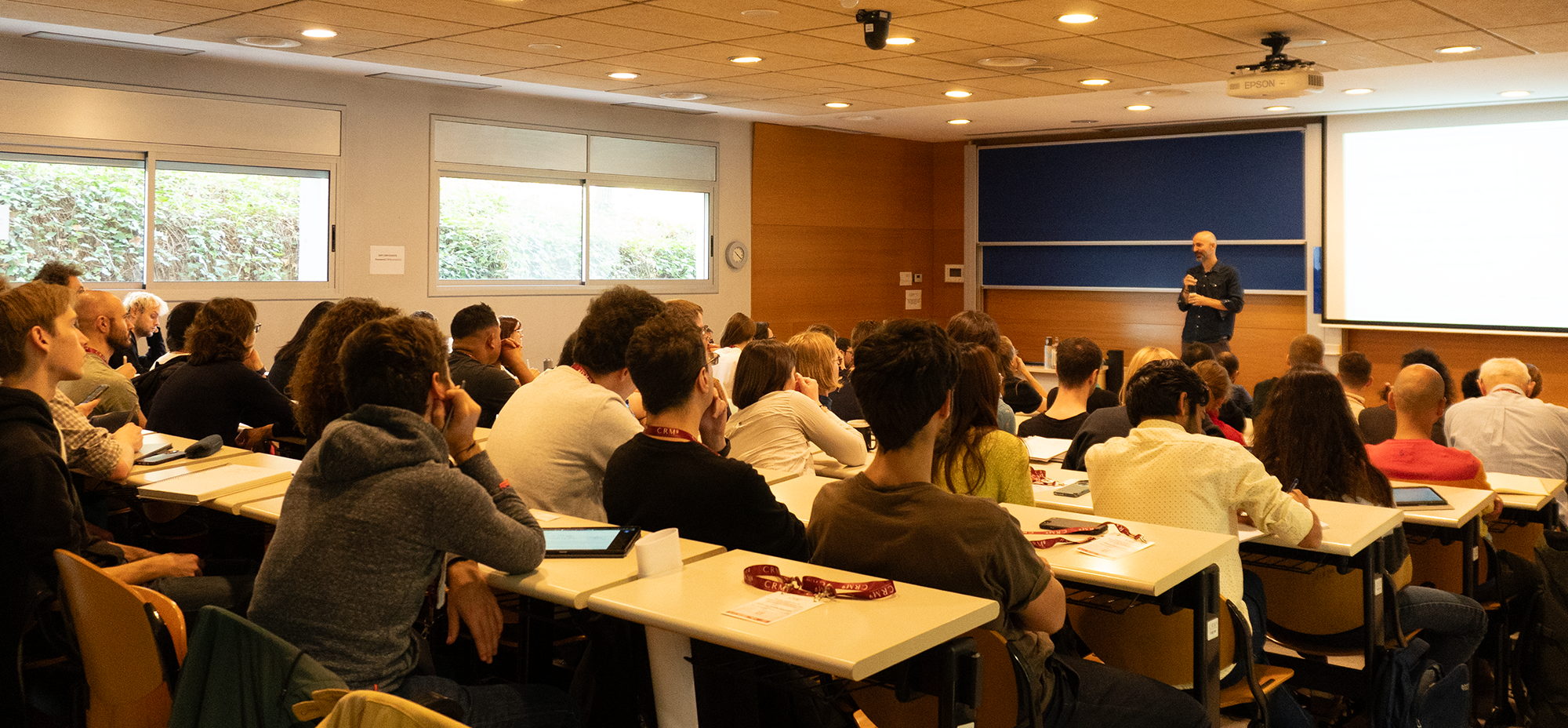
During five days, the CRM hosted the Closing Conference of the MDM Focused Research Programme on Combinatorial Geometries & Geometric Combinatorics. The event featured plenary talks, contributed sessions, and posters on topics from matroids and polytopes to tropical geometry and optimization. It showcased the vitality of the field and fostered international collaboration and new research directions.
From November 24 to 28, 2025, the Centre de Recerca Matemàtica (CRM) hosted the Closing Conference of the MDM Focused Research Programme on Combinatorial Geometries & Geometric Combinatorics. This event marked the culmination of two months of activities that included advanced courses, seminars, and collaborative projects on combinatorial geometry and matroid theory.
The conference brought together international experts and young researchers to share advances in areas such as polytopes, matroids, Chow polynomials, and combinatorial structures related to geometry. Over five days, the program featured invited talks, contributed presentations, and poster sessions, fostering scientific exchange in a collaborative environment.
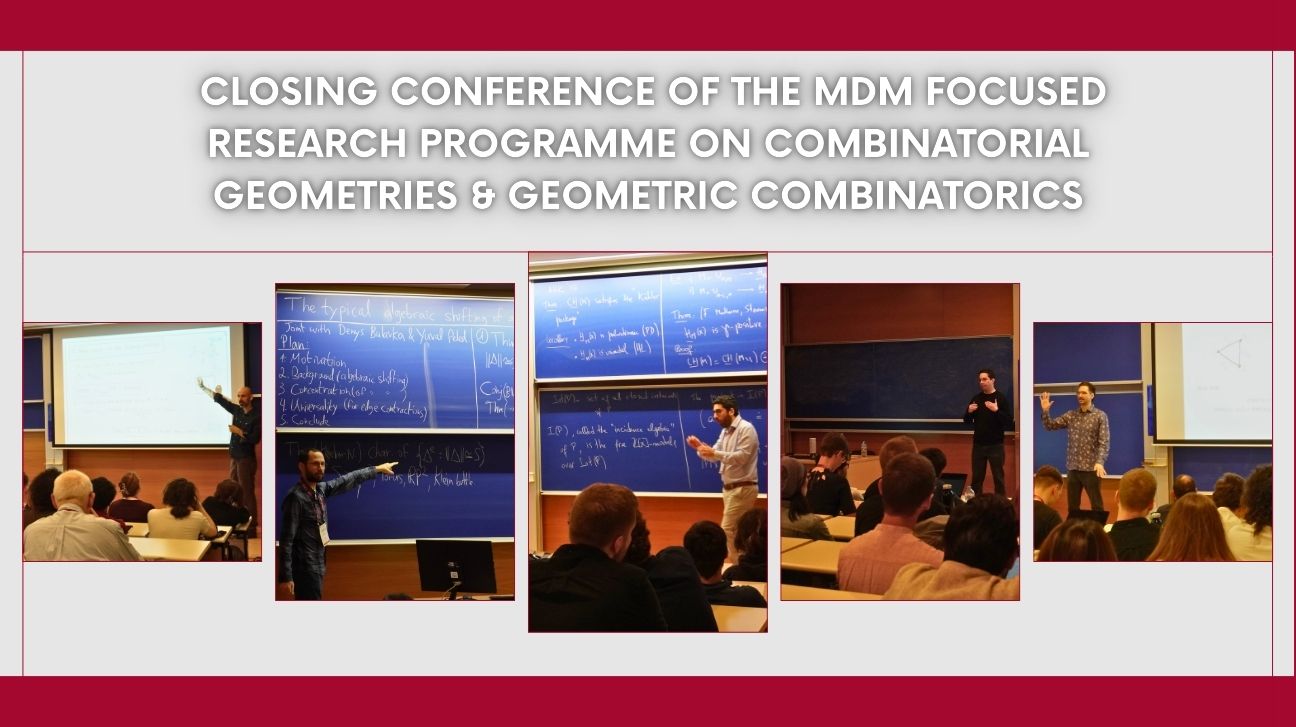
The program included eight plenary lectures addressing central topics in combinatorial geometry and matroid theory. Federico Ardila presented new inequalities for trees and matroids, connecting distance matrices with Lorentzian polynomials. Georg Loho showed how, based on Seymour’s decomposition, one can compute the basis generating polynomial of regular matroids without subtractions, enabling small ReLU neural networks for tropical optimisation. Giulia Codenotti analysed symmetric edge polytopes and their Ehrhart properties, while Luis Ferroni explored Chow polynomials and real-rootedness. Marie Brandenburg discussed minimal decompositions of piecewise linear functions via polyhedra. Spencer Backman introduced categorical associahedra and their realisation as polyhedral fans, linking combinatorics and moduli spaces. Kristóf Bérczi presented a new characterisation of skew-representable matroids using tensor products and rank inequalities, and Péter Csikvári examined progress and counterexamples related to the Merino–Welsh conjecture.
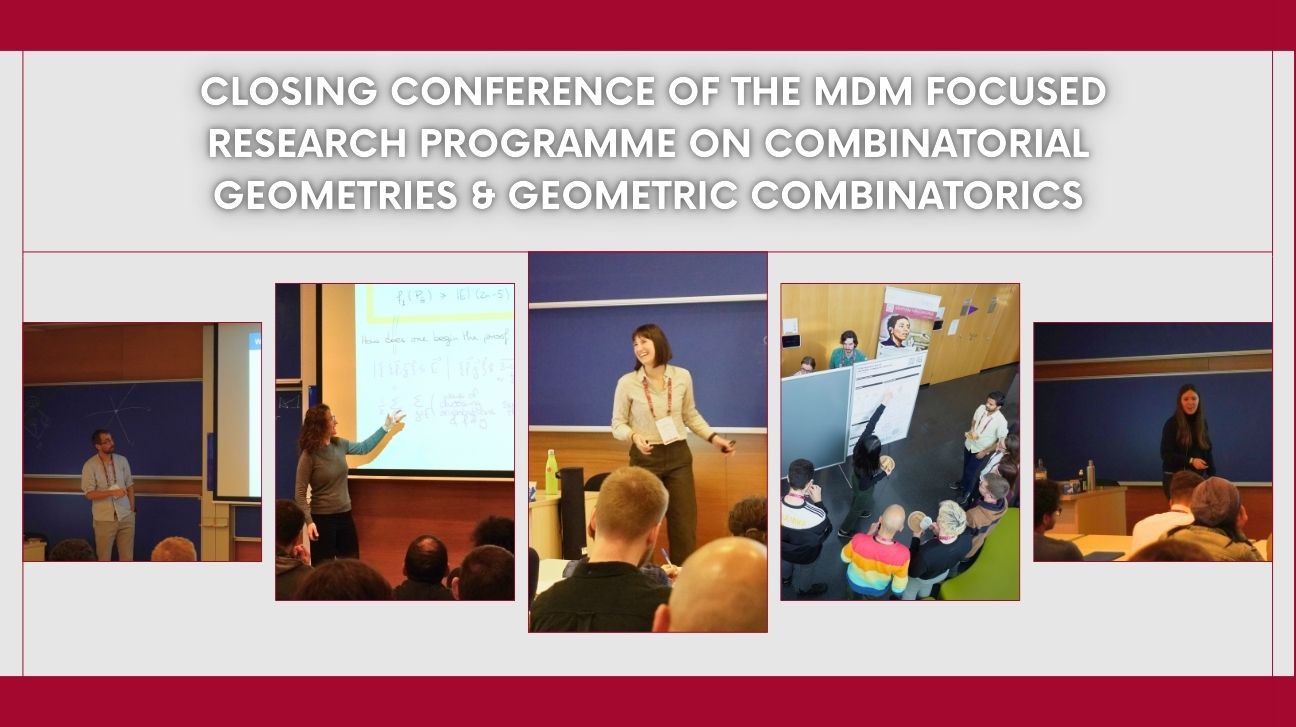
The contributed sessions showcased a wide range of approaches: from graph curve matroids and their connections to algebraic curves (Kevin Kühn), to the relationship between Chow polynomials and other families of polynomials, including the ab-index and chain polynomials (Elena Hoster), and advances on the Proximity Conjecture for group-labelled matroid bases (Tamás Schwarcz). Other talks explored topological and geometric properties such as shellings of tropical hypersurfaces (Lena Weis), root polytopes and their links to greedoids and Alexander polynomials (Lilla Tóthmérész), and computational classification of cube slices (Chiara Meroni). Further topics included the f-vector conjecture and h*-polynomials (Alex Fink), flow polytopes and framing lattices (César Ceballos), oriented valuated matroids in real tropical geometry (Ben Smith), smooth polytopes and symplectic geometry (Francisco Santos), algebraic shifting on surfaces (Eran Nevo), shellings of Bergman fans (Galen Dorpalen-Barry), and q-analogues of matroids (Relinde Jurrius).
Four poster sessions added breadth: polynomials and matroid properties, polyhedral structures, topological complexes, rigidity theory, symmetry, optimisation. Conversations ran long. Questions led to other questions. These sessions provided a dynamic space for exchanging ideas and exploring new research directions.
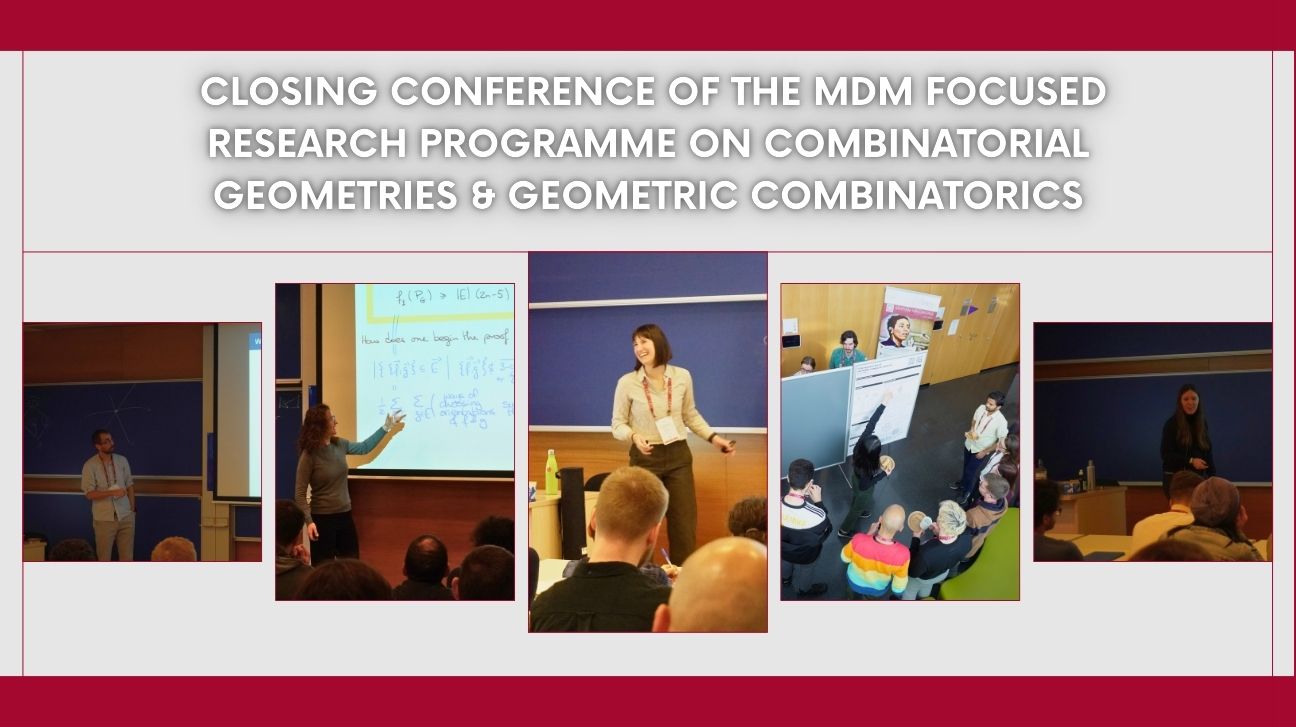
The conference highlighted the breadth and vitality of the field, with contributions ranging from combinatorial and geometric properties to computational applications and interdisciplinary connections with optimisation, neural network theory, and tropical geometry. Beyond the results presented, the event fostered dialogue between established researchers and emerging scholars, strengthening international collaboration and opening new avenues for research in combinatorial geometry and matroid theory.
It was the perfect closing for two months of work at the CRM; advanced courses, seminars, and collaborative projects that built slowly across September and October. Researchers arrived to study matroid decompositions and geometric structures; they left having constructed something less tangible but more useful: a shared vocabulary, a network of problems that spoke to each other. The talks in late November weren’t just presentations. They were what happens when you give people time to sit with ideas instead of racing past them, when conversations over coffee turn into conjectures, when someone’s offhand question in a seminar becomes another researcher’s opening. The conference didn’t end it. It marked a shift: from working together in the same building to working together across distance, carrying forward the questions they’d learned to ask.
|
|
CRM CommNatalia Vallina & Pau Varela
|

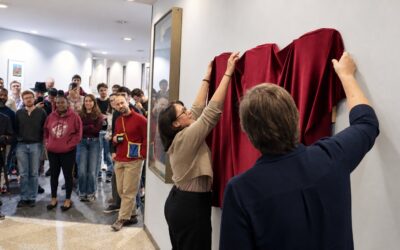
The CRM opens the academic year and unveils its Directors’ Gallery
A review of the year, the Communication Plan 2026–2030 and three research talks filled the morning of 19 October.The unveiling of the Directors’ Gallery.CRM CommPau VarelaCRMComm@crm.catGet the latest CRM news and activities in your inbox.Recent...
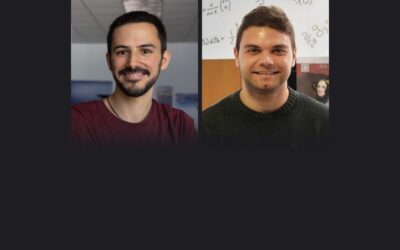
The CRM Mentoring Programme, as Told by One of Its Pairs
PhD student Joaquim Duran and mathematician Robert Cardona, one of the pairs in the CRM Mentoring ProgrammeJoaquim Duran (left) and Robert Cardona.CRM CommPau VarelaCRMComm@crm.catGet the latest CRM news and activities in your inbox.Recent...
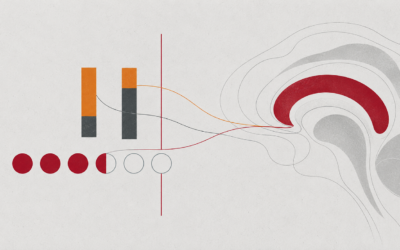
When the reward comes within reach, the brain changes what it compares
As the tokens piled up, choices got faster and more accurate at the same time. The yardstick for judging each offer had moved.CRM CommPau VarelaCRMComm@crm.catGet the latest CRM news and activities in your inbox.Recent newsletters →Two subjects...

Almost every automaton can be reset with a short word
Guillaume Chapuy (Université Paris Cité, CNRS) and Guillem Perarnau (UPC, CRM) have shown that a random finite automaton with n states can, with high probability, be reset by a word of length of order √n log n. The result, published in ACM Transactions on Algorithms, pins the exponent at 1/2, the lower end of a decade of numerical estimates, and addresses the random version of the synchronization problem behind a conjecture Ján Černý posed in 1964 and which still remains open.
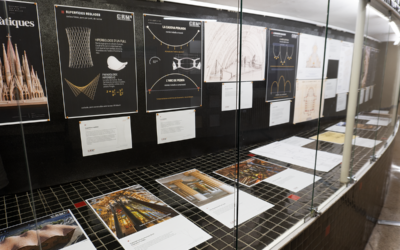
Exposició ‘Les matemàtiques de Gaudí’
CRM quod erat demonstrandum | 48

ADA: Decoding Brain Signals Misaligned in Time
The study addresses a key limitation of current brain decoding techniques: the difficulty of interpreting internal mental processes whose temporal dynamics vary from trial to trial.Decoding what is happening in a person’s mind from their brain activity is one of the...
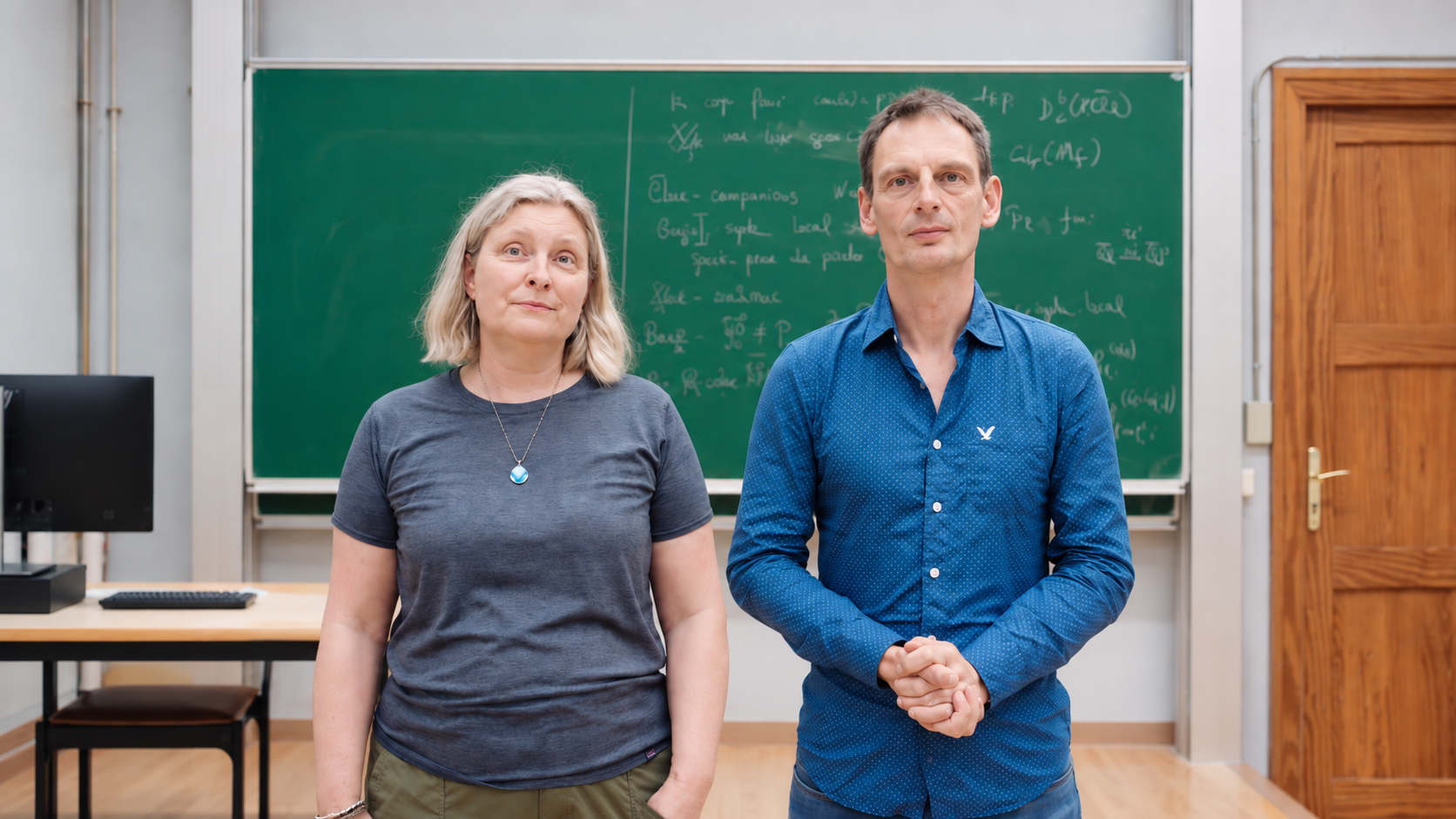
Rare curves, many points: Christophe Ritzenthaler and Rachel Pries on their research and the work around it
Christophe Ritzenthaler (Université de Rennes) and Rachel Pries (Colorado State University) both work on curves over finite fields: he hunts curves with as many points as possible, she hunts curves that almost never occur. In conversation with the CRM during their...

Call open for the 2027 Ferran Sunyer i Balaguer Prize
The Ferran Sunyer i Balaguer Foundation is accepting submissions for its 2027 prize, which awards 15,000 euros and publication in Birkhäuser's Progress in Mathematics series to an expository monograph on an active area of mathematical research. The deadline is 27...
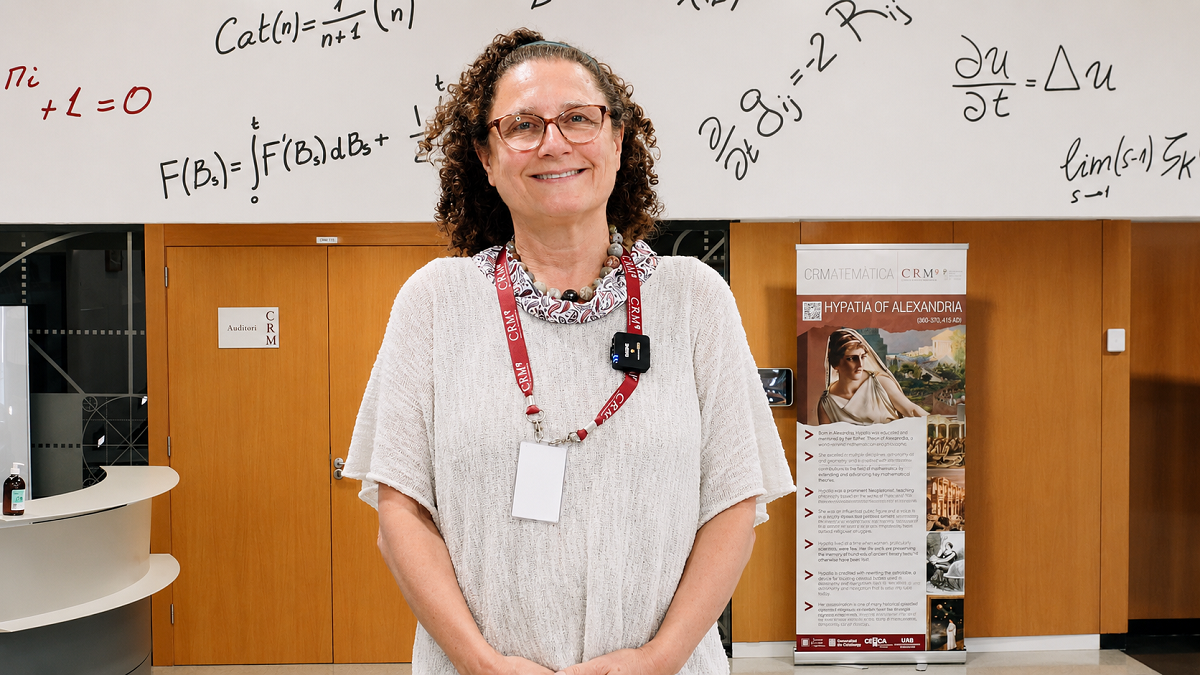
Susanna Terracini delivers the CRM Colloquium 2026
Susanna Terracini (Università di Torino) delivered the CRM Colloquium 2026 on 14 July, presenting a rigidity result for Kepler billiards obtained with Stefano Baranzini, Vivina Barutello and Irene De Blasi. She was at the centre as a member of the CRM Scientific...
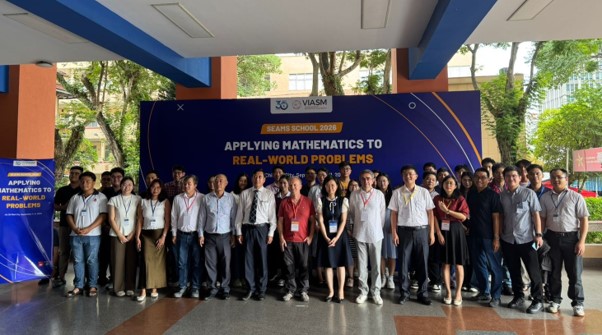
Ho Chi Minh City hosts the SEAMS School on applying mathematics to real-world problems
Students from across the region took courses and worked on group projects at a school co-organised by CRM researcher Tim Myers.CRM CommPau VarelaCRMComm@crm.catGet the latest CRM news and activities in your inbox.Recent newsletters →Between 4 and...

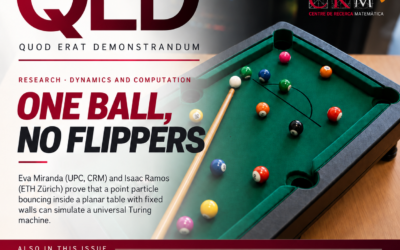
A single ball on a fixed table can compute: Eva Miranda and Isaac Ramos prove that two-dimensional billiards are Turing complete
Eva Miranda (UPC, CRM) and Isaac Ramos (ETH Zürich) show that a point particle bouncing inside a planar table with fixed walls can simulate a universal Turing machine, settling a question Cristopher Moore left open in 1990. The result grew out of a master’s project...