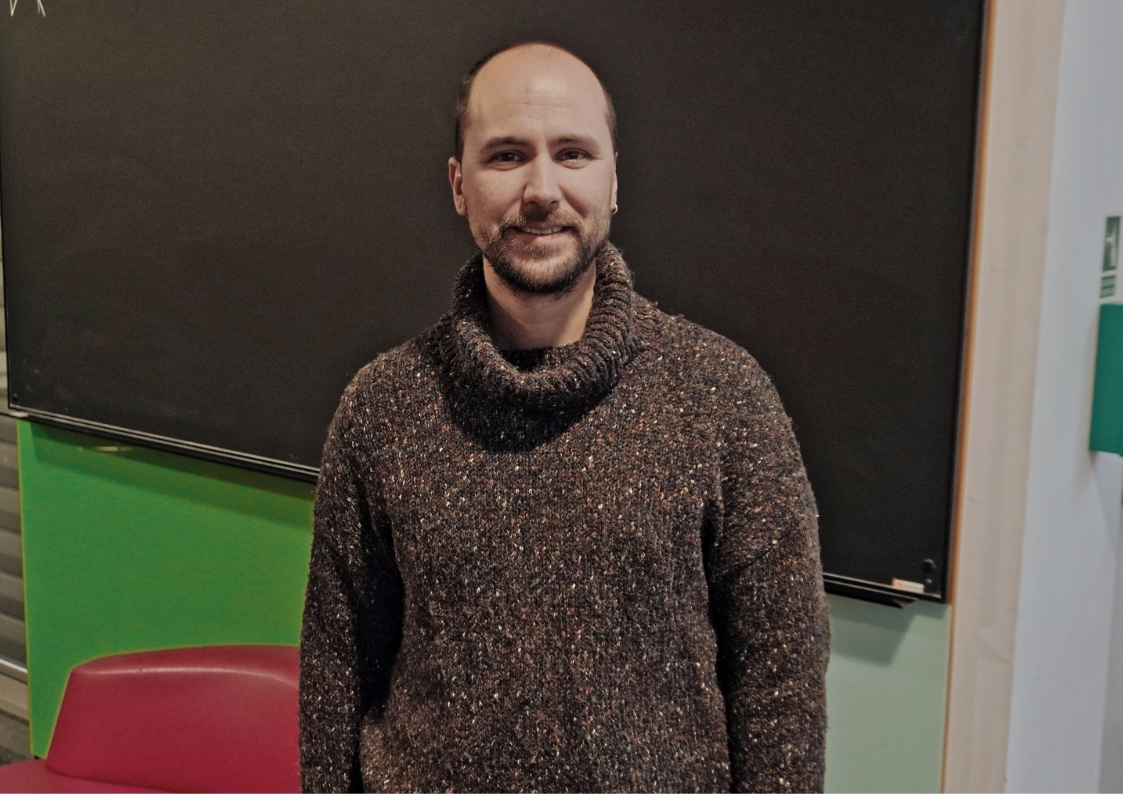
Axel Masó returns to CRM as a postdoctoral researcher after a two-year stint at the Knowledge Transfer Unit. He joins the Mathematical Biology research group and KTU to work on the Neuromunt project, an interdisciplinary initiative that studies physiological responses to mountain risks.
Axel Masó completed his PhD in physics at the Universitat Autònoma de Barcelona, studying stochastic processes with resets, mathematical models that describe random movements that repeatedly return to a starting point. “The inspiration was the movement of birds around a nest,” he explains, “a stochastic movement around a point, but with a return always to the same point.”
The week he defended his dissertation, he started working at the CRM Knowledge Transfer Unit. “I went from being in one very specific project for four years to being in three or four projects over two years, very diverse ones within the transfer unit,” Axel recalls. The shift was drastic: from the extended timeline of doctoral work to shorter research cycles, from a single theoretical question to multiple problems requiring tailored mathematical solutions.
“Looking back now, those two years feel like an entire training period,” he reflects. Even in his final months, starting yet another new project, the learning curve remained steep. The work fulfilled something his doctoral research hadn’t. “I had the birds in mind, but I was making my models thinking someone else would use them,” he says. “In contrast, at the KTU, I felt there was much more accountability; we were making models that were already grounded in very concrete situations. That gave me a lot of enthusiasm and really motivated me to work on something like that.”
“I don’t just need to do research, I need the research to matter. Doing research is a way to impact things I care about.”
The position required expanding his mathematical toolkit and working with diverse collaborators. Each project demanded not only different mathematical approaches but also different ways of communicating them, from private investors without scientific training to research centres requiring statistical or mathematical tools for specific projects. The challenge wasn’t merely technical; it was about translation. “Mathematics is probably the most rigorous thing humans have created,” Axel observes. “So, stepping outside that rigour to explain something, it’s an exercise.”
He describes a tension familiar to many researchers: mathematical work values complexity and precision, but external partners need clarity and utility. “When you’re doing it for yourself, you appreciate the difficulty, you explore all the complexity it has,” he explains. “But when you have to explain it to the people who will use it, you have to bring it down without it losing its value.”
After two years, he left CRM. Took a gap year. During that pause, something crystallised. “I’ve always had a very academic profile,” he says, “and I feel there’s a kind of wave or narrative around academic profiles that you’re wasting your time if you stay in academia because companies value you much more, you’ll have a much more stable, much calmer life, and here things go from two years to two years.” The thinking was compelling, and he considered opportunities outside academia. But after the break, “I feel I want to do what I want to do, which is research on something that motivates me.”
Return to CRM: The Neuromunt Project
Now he’s back at CRM as a postdoctoral researcher on the Neuromunt project, joining the Mathematical Biology research group in a shared position with the Knowledge Transfer Unit. Neuromunt is a three-year interdisciplinary initiative studying physiological responses to mountain risks. The project brings together mountain guides, rescue teams, university researchers, and sports science specialists. Partners include the Institut Nacional d’Educació Física de Catalunya, universities in Perpignan and Toulouse, the Universitat Politècnica de Catalunya, and CRM.
Field expeditions will collect electroencephalogram and electrocardiogram data from subjects facing winter mountain conditions. Axel’s work, working with the rest of the research team, centres on analysing these physiological signals. “We’ll try to study these electroencephalograms, for example, to see if there are signals of the risks that occur in the mountains in the reaction or activation of the brain,” he explains. The research connects directly to the mountain guides and rescue teams who will be among the study subjects. “The research results will have almost immediate impact because they themselves will be the subjects.”
The project also includes training programs for mountain guides, professional athletes, and rescue teams like GRAE (Grup d’Actuacions Especials dels Bombers), with mountain safety as a central focus. “It’s a very good project because of the diversity of people involved, from the most scientific part of research to people who are really in the mountains every day earning their living or facing these risks,” Axel says.
The move to Neuromunt represents a shift in research timeline and focus. “I don’t think I just need to do research, I need the research to have meaning,” Axel says. “I feel that doing research is a way to impact things that matter to me.” His time at the Knowledge Transfer Unit shaped this perspective. Working with different types of stakeholders reinforced that impact matters as much as methodology. “What I needed now was for the impact to interest me, not just that the research generates impact, but that I care about the impact.”
After experiencing different research contexts, from theoretical physics to applied mathematics with external partners, Axel has chosen to focus on a single project. “One thing that working at the transfer unit and all that diversity of projects made me realise is that I needed to return to a single project that really motivated me,” he says. “More than several projects that motivate me quite a bit.” When the Neuromunt position appeared, “I felt there would be nothing that would motivate me more than this right now.”
Like the stochastic processes he studied during his PhD, Axel has returned to his starting point. But the path matters. The bird doesn’t circle back to the nest unchanged. The detour through diverse projects, external partners, and that deliberate pause reshaped what he was looking for in research. He’s back at CRM, but with a clearer sense of what makes the work meaningful: not just the mathematics, but the impact it creates and whether that impact matters to him.
Sometimes you need to leave to understand why you came back.
Subscribe for more CRM News
|
|
CRM CommPau Varela
|
Yves Chevallard (1946–2026)
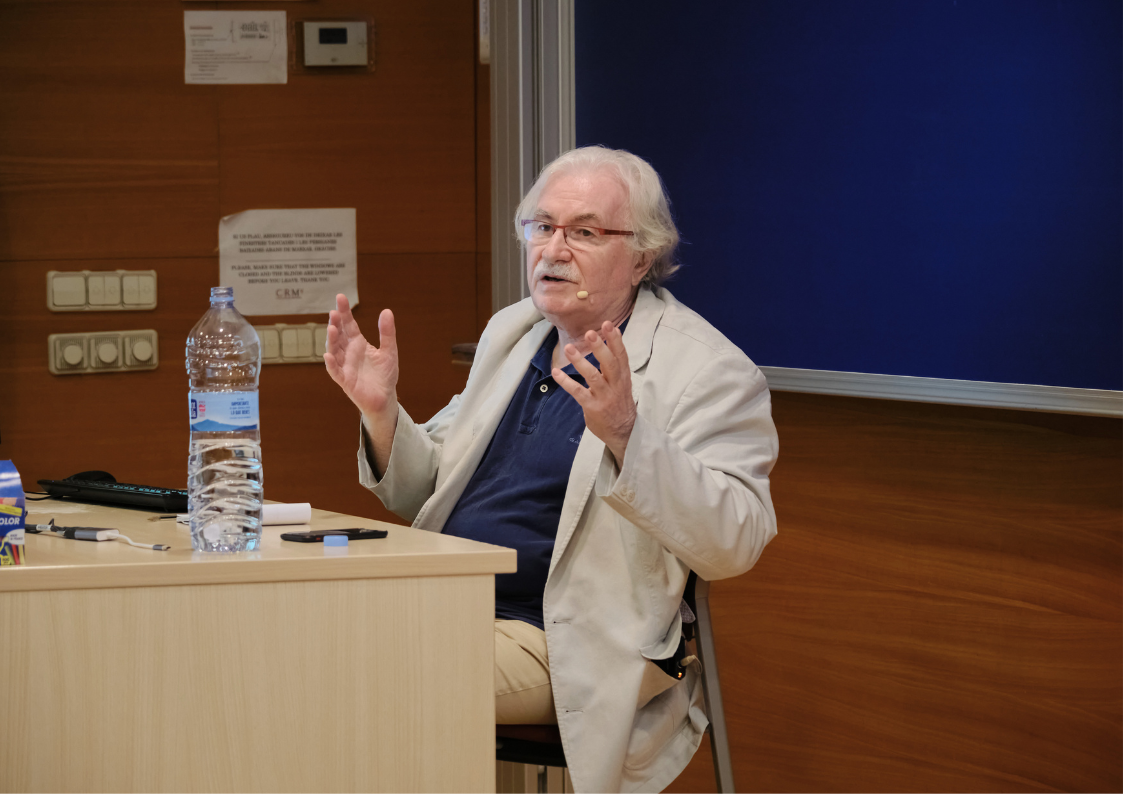
Yves Chevallard passed away on 16 March 2026. He was 79 years old. Born in Tunis, he trained at the École normale supérieure in Paris, where he earned an agrégation de mathématiques. He went on to become a professor at Aix-Marseille Université, and it was there, over...
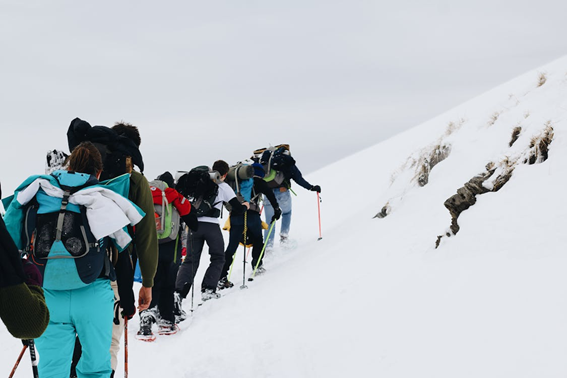
The CRM participates in a European project studying decision-making and risk perception in mountain environments
The NeuroMunt project (POCTEFA, coordinated by the Université de Perpignan Via Domitia) studies how people make decisions under risk conditions in mountain environments, bringing together researchers from France and Spain across disciplines ranging from complex...
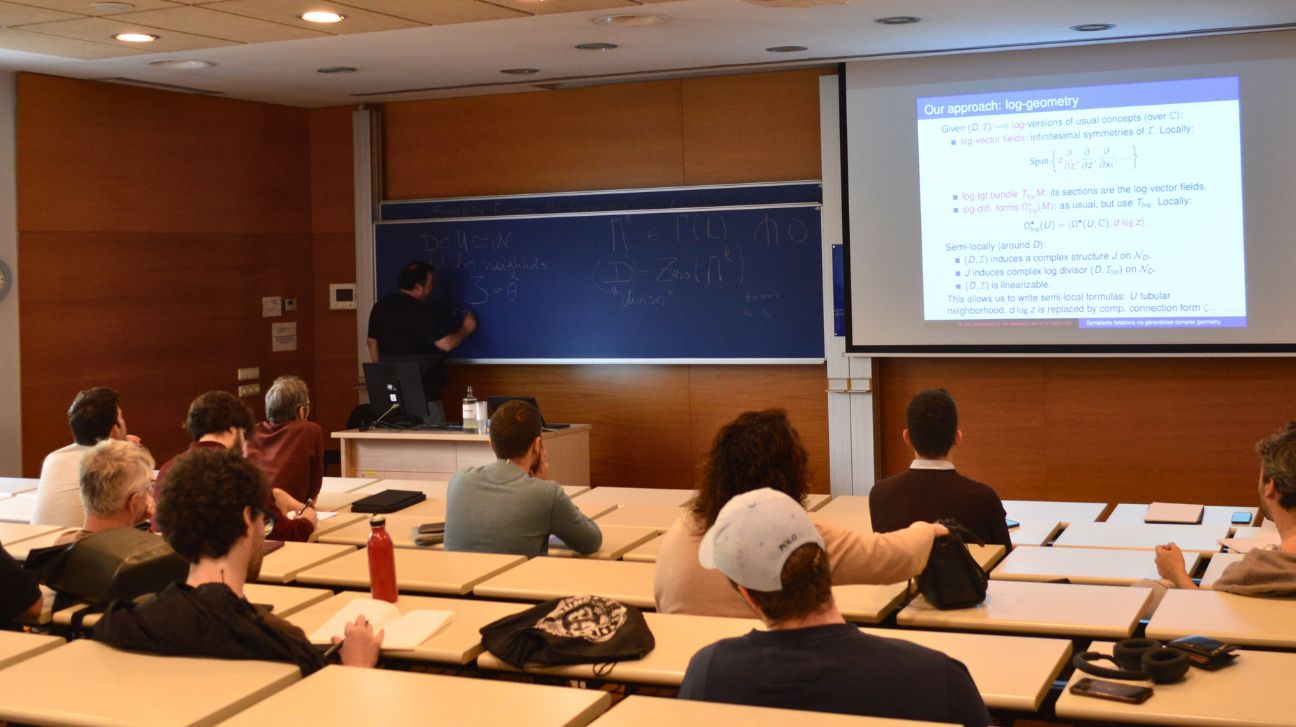
One Day, One Family, One Place: Poisson Geometry at CRM
On March 23rd, 2026, the Centre de Recerca Matemàtica hosted the thematic day “Poisson Geometry and Its Relatives”, a full‑day event that brought together researchers exploring Poisson geometry and several of its neighbouring areas. The programme combined classical...
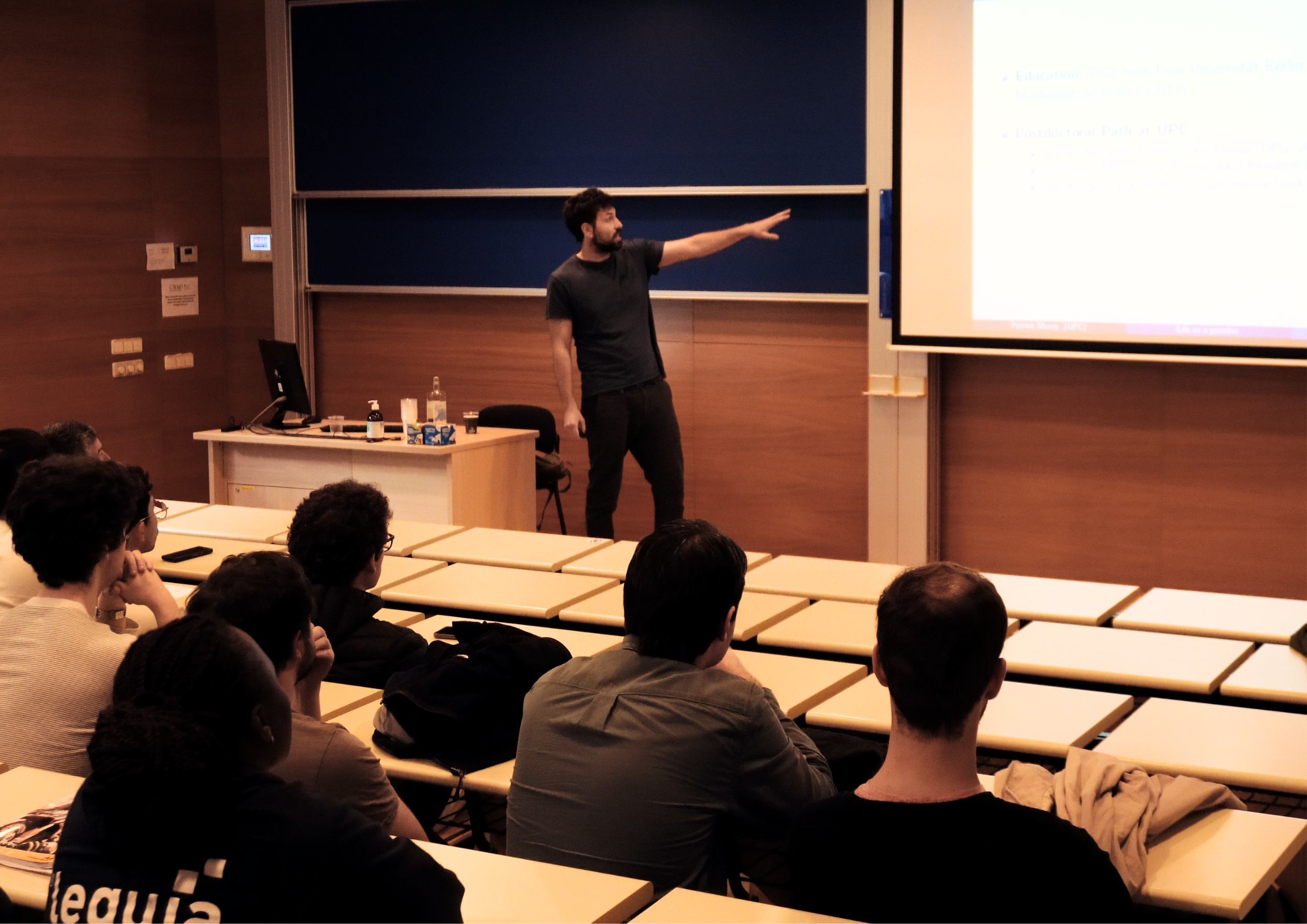
Life After the PhD: Three Roads Forward
On March 18, the BGSMath held its first session on careers after a PhD in mathematics, bringing together three speakers with different professional trajectories and 46 early-career researchers from nine institutions.On March 18, the Barcelona Graduate School of Math...
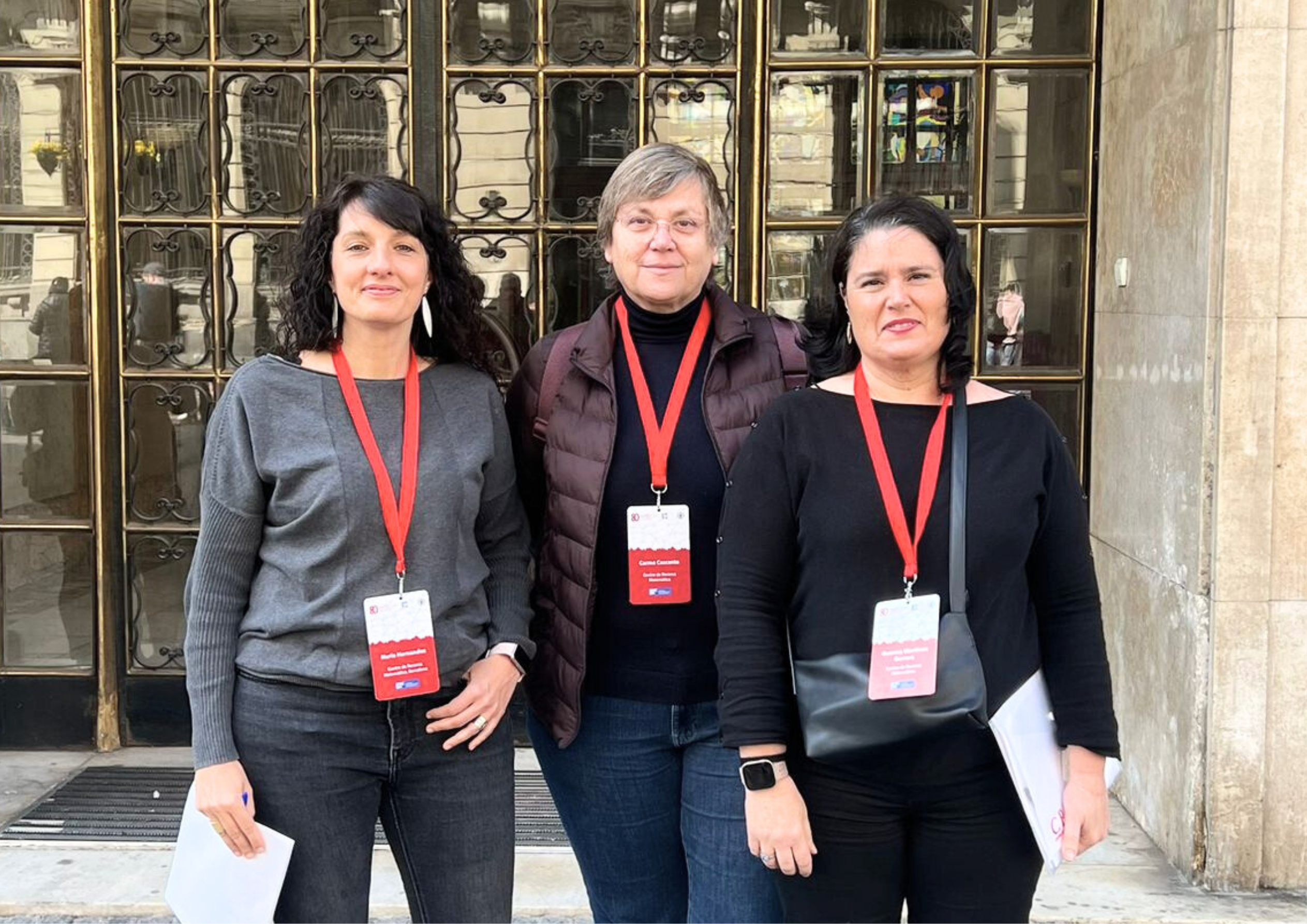
CRM participates in the 2026 ERCOM annual meeting in Belgrade
The CRM participated in the 2026 ERCOM annual meeting in Belgrade (20–21 March), represented by Director Carme Cascante, Manager Gemma Martínez, and Scientific Activities Manager Núria Hernández. The programme focused on multidisciplinarity, mathematics and the arts,...
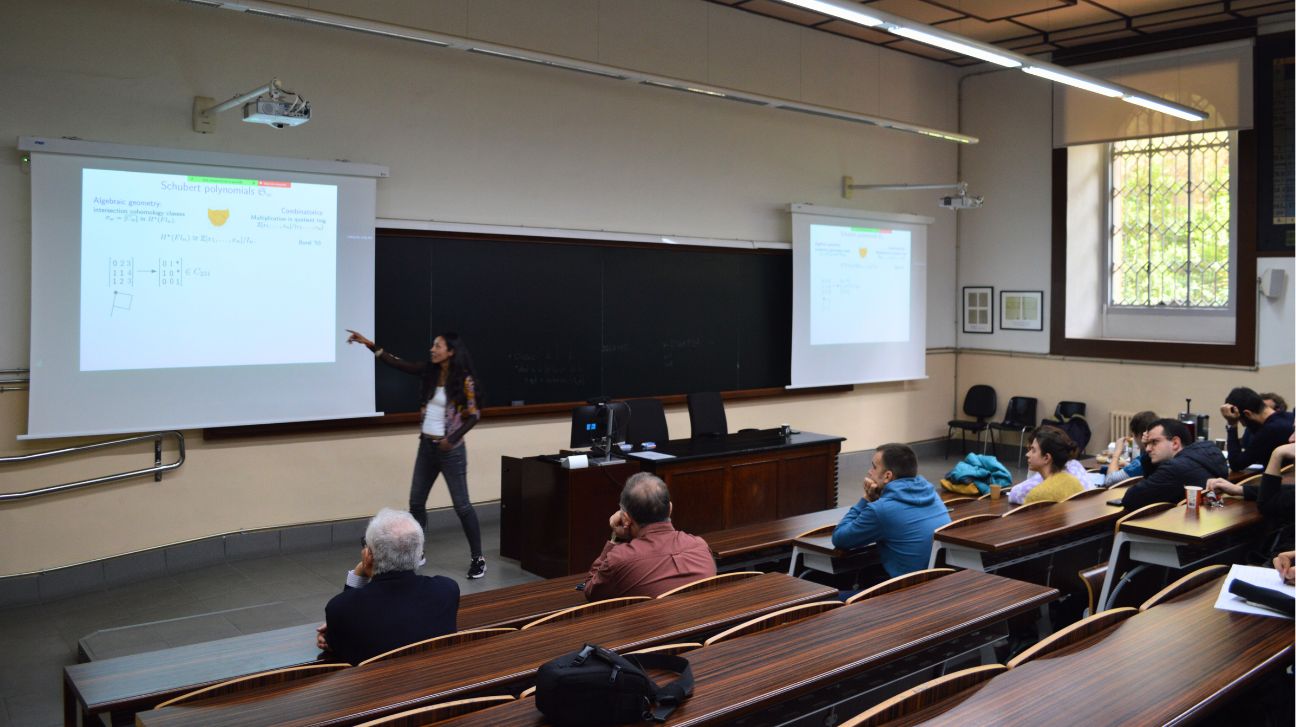
5 Talks, 1 Topic: A Day of Combinatorics
On March 18th, 2026, the 5 Talks in Combinatorics thematic day took place in the Joan Maragall Room at the Faculty of Philology and Communication of the University of Barcelona, in the historic building. The event focused on modern combinatorics and its connections...
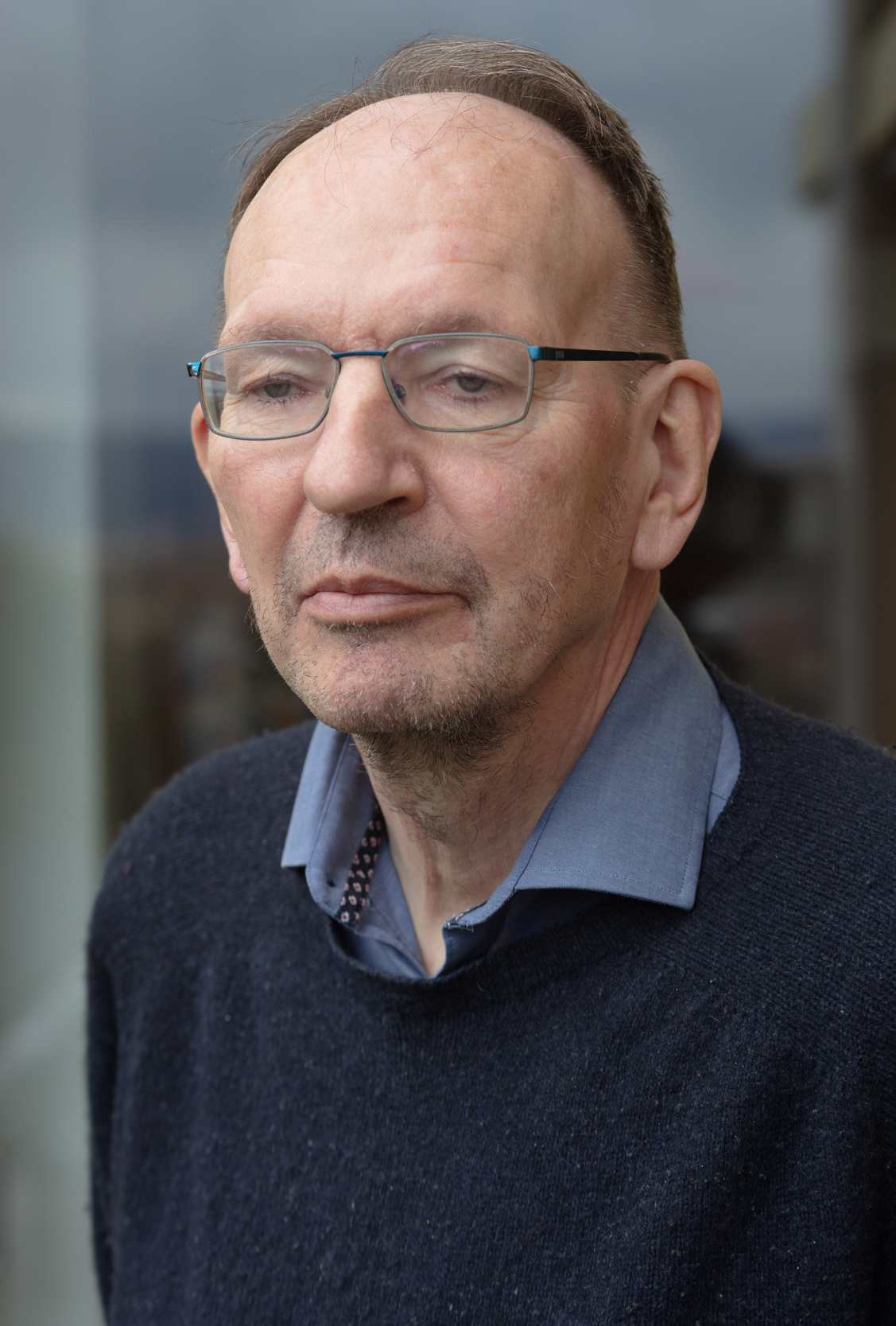
Gerd Faltings Awarded the 2026 Abel Prize for Transformative Work in Arithmetic Geometry
The Norwegian Academy of Science and Letters has recognised the German mathematician for solving two of the most enduring open problems in the field.The Norwegian Academy of Science and Letters announced today that the 2026 Abel Prize goes to Gerd Faltings, director...
The Centre de Recerca Matemàtica Approves Its Strategic Plan for 2026–2030
The Centre de Recerca Matemàtica has approved its Strategic Plan for 2026 - 2030, setting priorities in research, training, and knowledge transfer. Four flagship initiatives anchor the scientific programme. The Centre de Recerca Matemàtica approved its Strategic Plan...
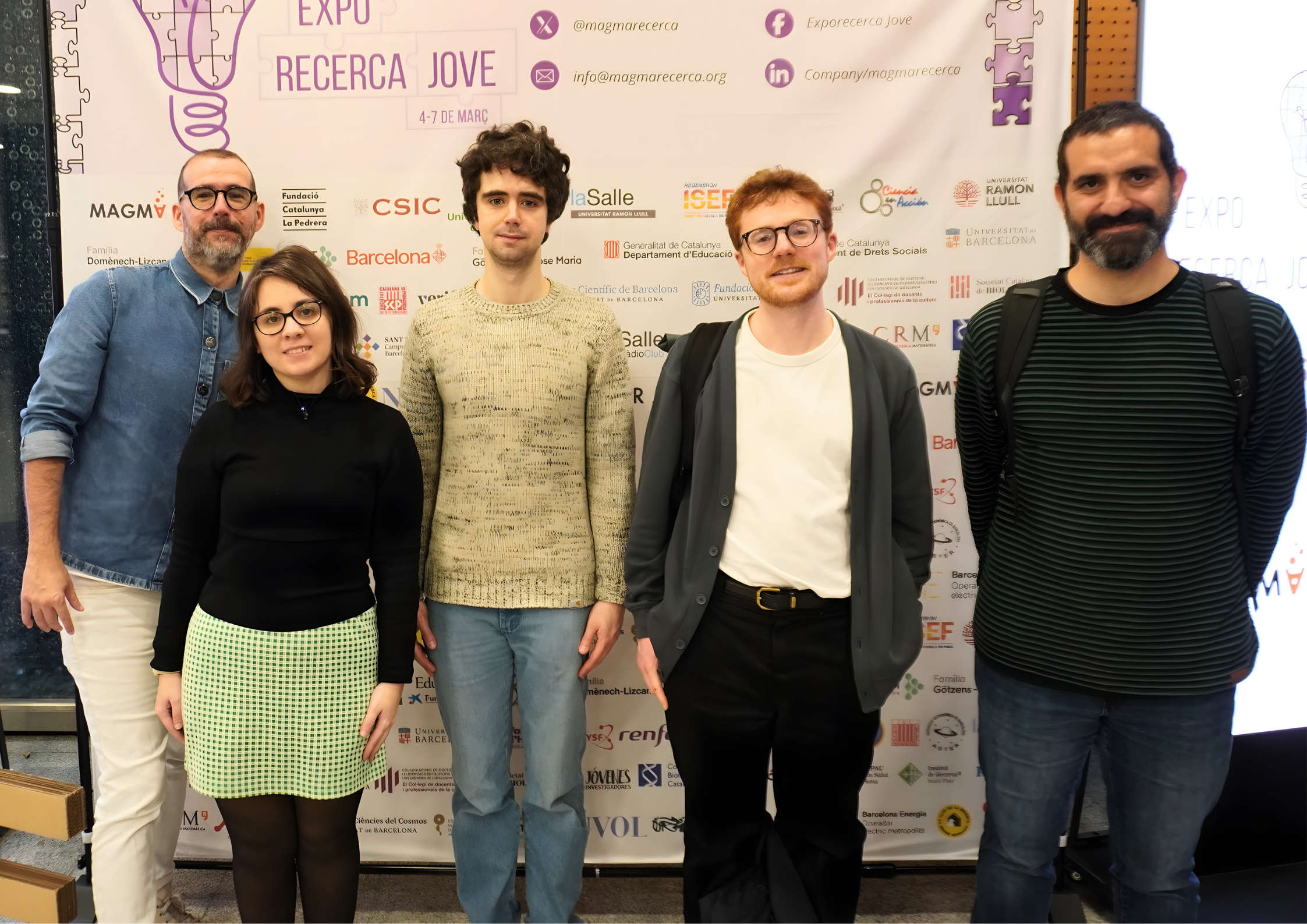
CRM Awards Its Prize at Exporecerca Jove for the Third Time
For the third year running, CRM visited Exporecerca Jove to award its prize to the student project with the strongest mathematical content. This edition, the jury selected two winners: Xavier Ortiz Quintana, who built a real-time 3D scanner using...

When Symmetry Breaks the Rules: From Askey–Wilson Polynomials to Functions
Researchers Tom Koornwinder (U. Amsterdam) and Marta Mazzocco (ICREA-UPC-CRM) published a paper in Indagationes Mathematicae exploring DAHA symmetries. Their work shows that these symmetries shift Askey–Wilson polynomials into a continuous functional setting,and...
Homotopy Theory Conference Brings Together Diverse Research Perspectives
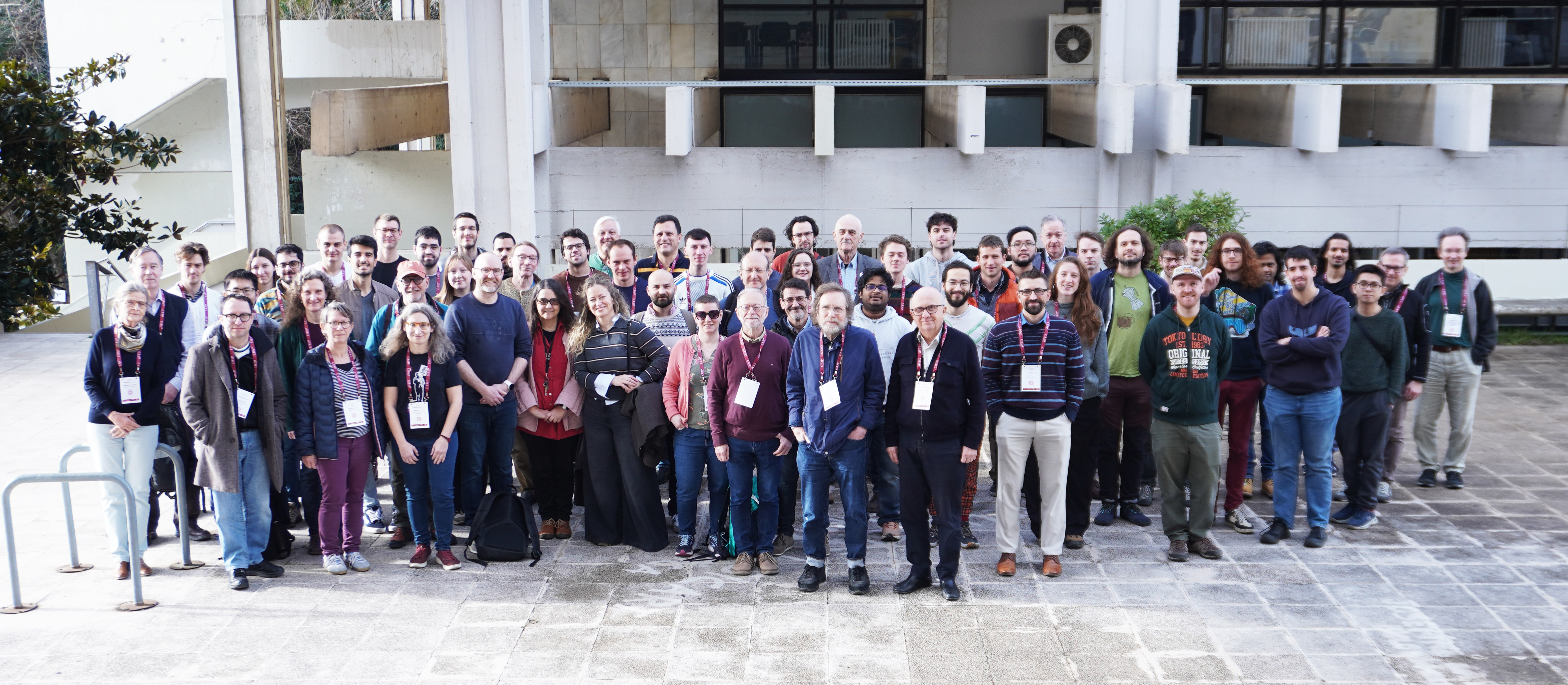
The Centre de Recerca Matemàtica hosted 75 mathematicians from over 20 countries for the Homotopy Structures in Barcelona conference, held February 9-13, 2026. Fourteen invited speakers presented research spanning rational equivariant cohomology theories, isovariant...
Three ICM speakers headline the first CRM Faculty Colloquium
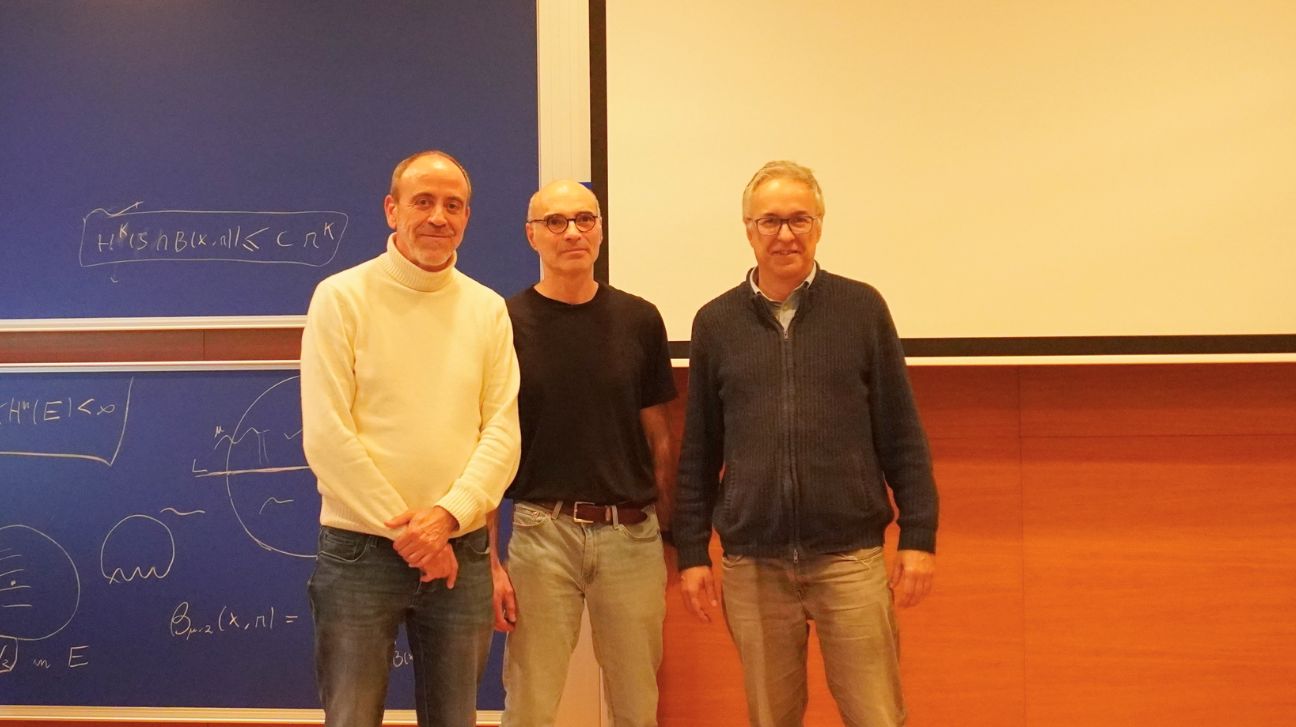
On 19 February 2026, the Centre de Recerca Matemàtica inaugurated its first CRM Faculty Colloquium, a new quarterly event designed to bring together the mathematical community around the research carried out by scientists affiliated with the Centre. The CRM auditorium...