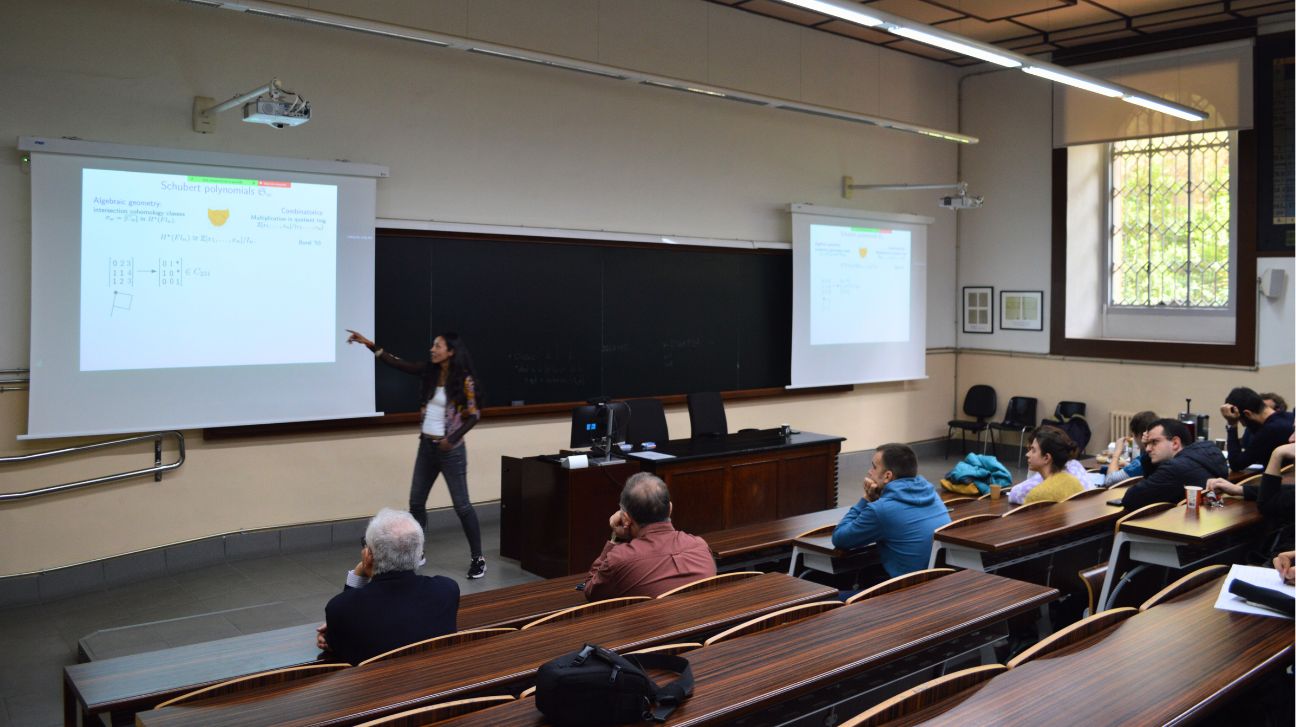
On March 18th, 2026, the 5 Talks in Combinatorics thematic day took place in the Joan Maragall Room at the Faculty of Philology and Communication of the University of Barcelona, in the historic building. The event focused on modern combinatorics and its connections with algebra, geometry, information theory, and discrete mathematics. Five international researchers participated in an intensive one-day programme.
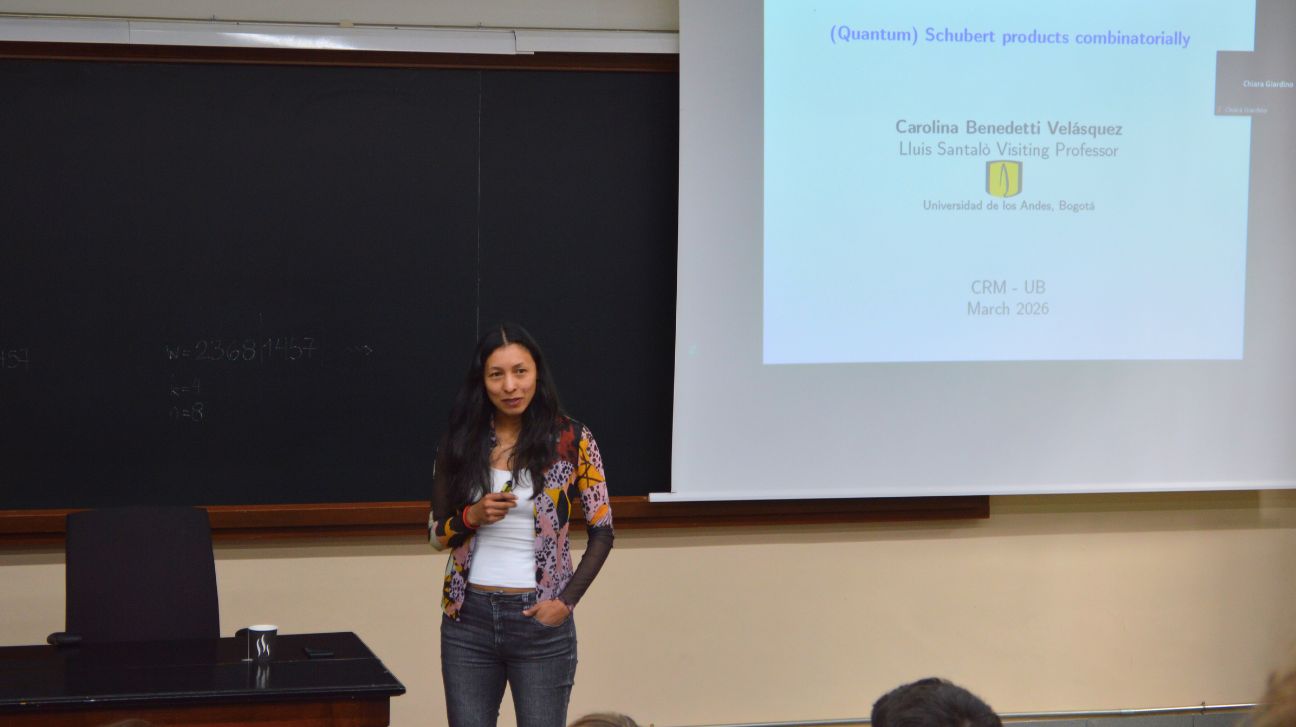
1. Carolina Benedetti Velásquez: opening talk and Lluís Santaló Fellow 2026
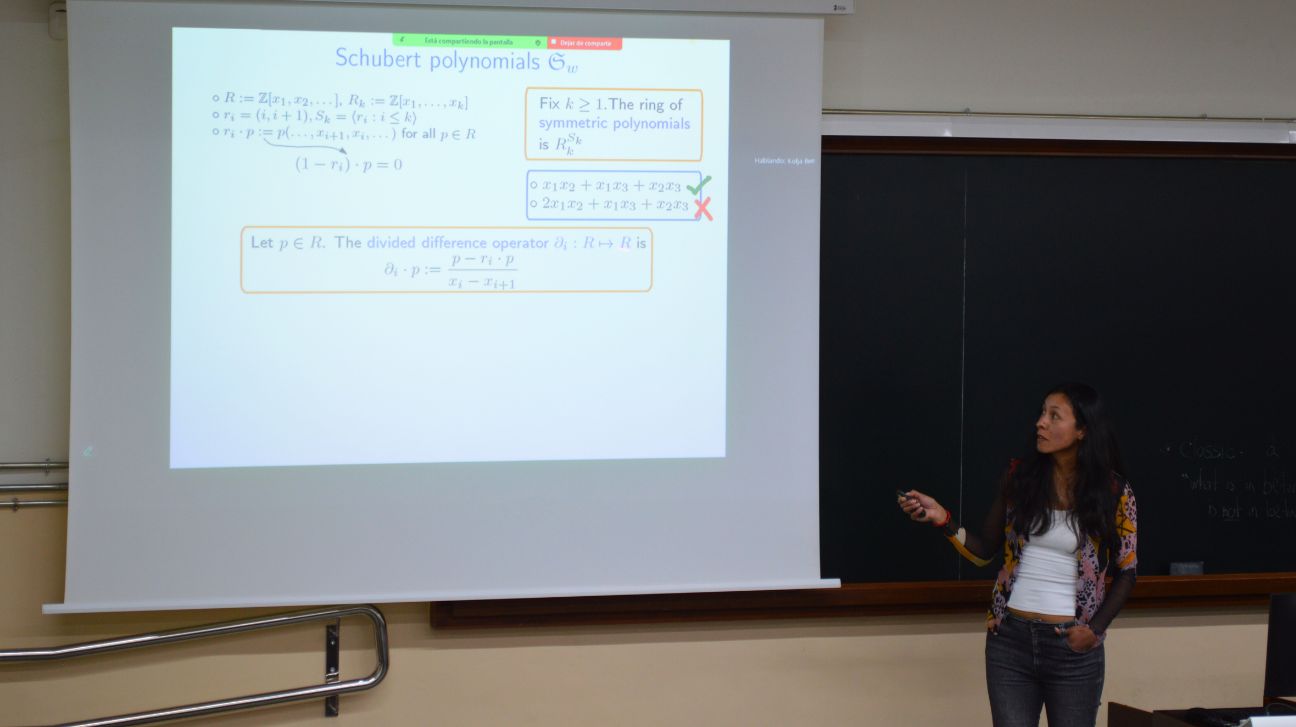
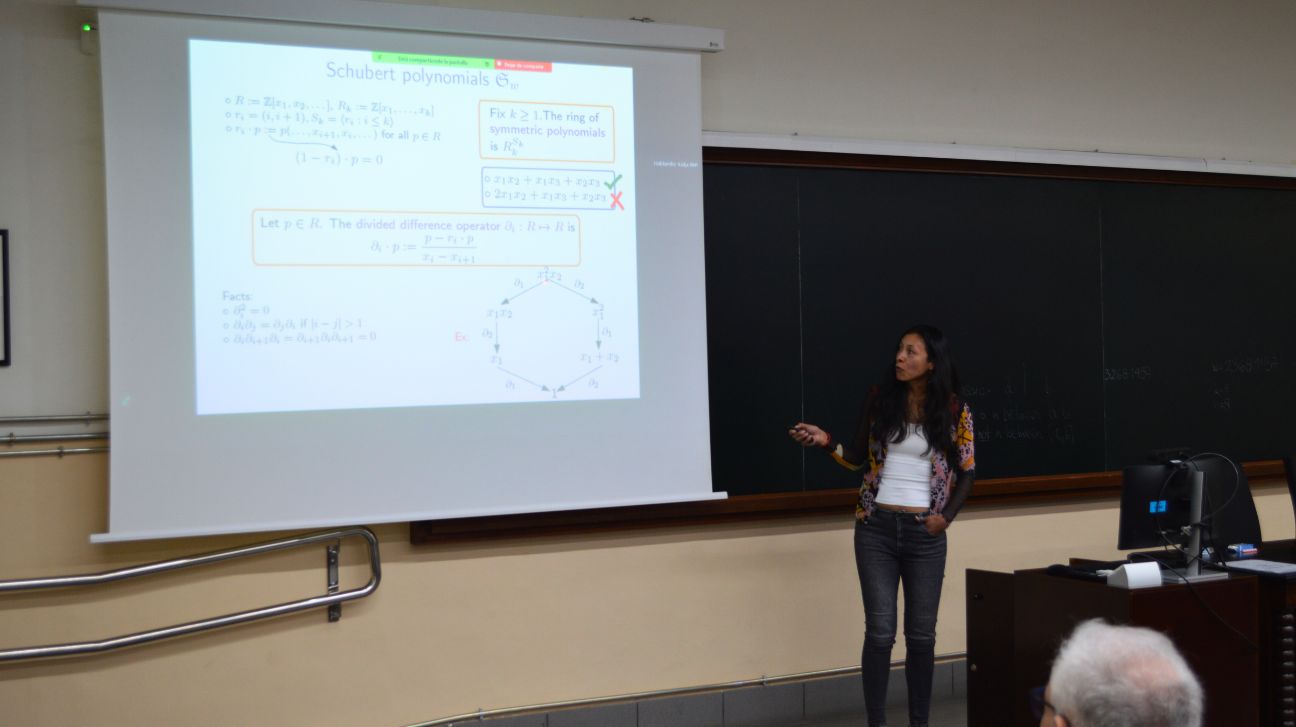
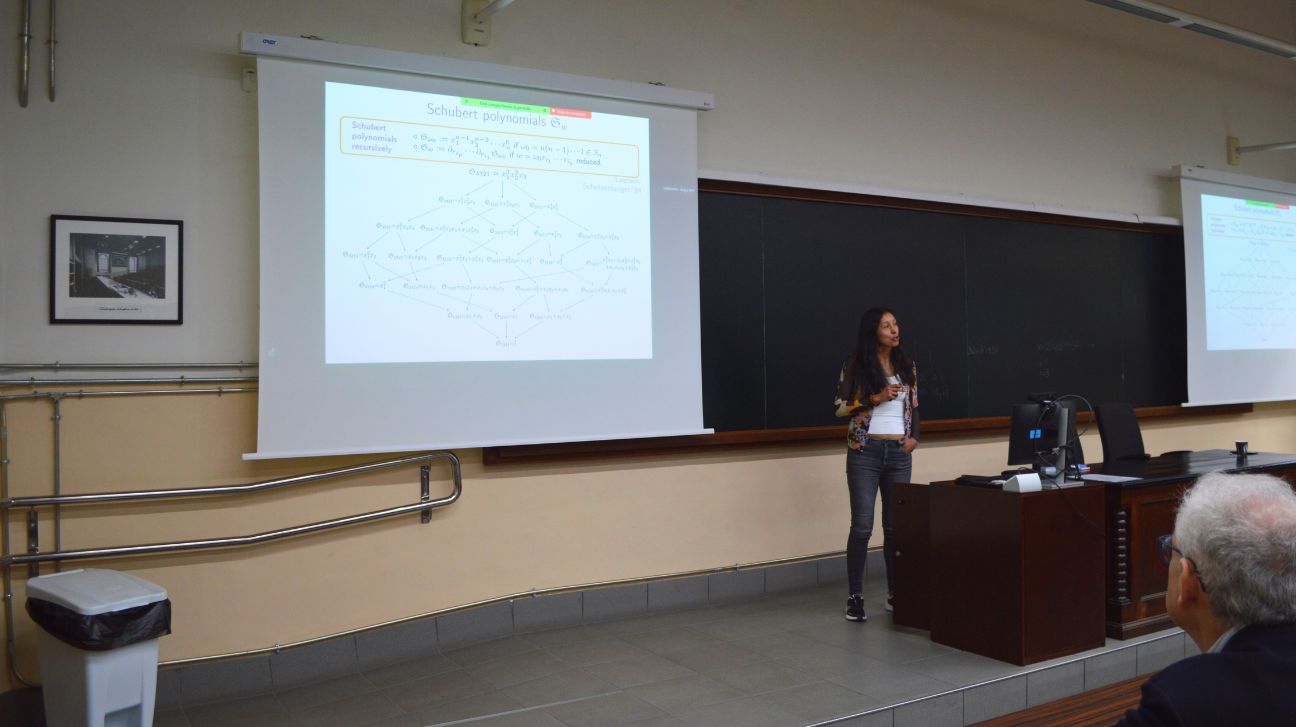
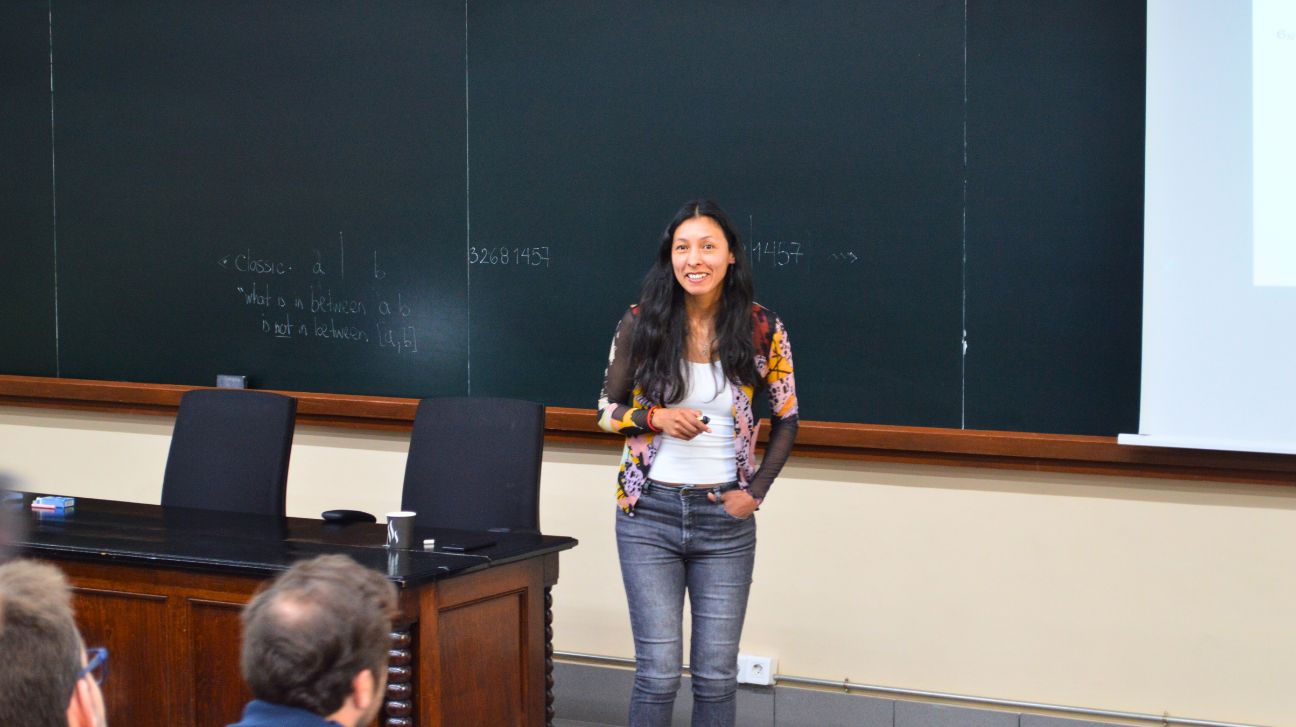
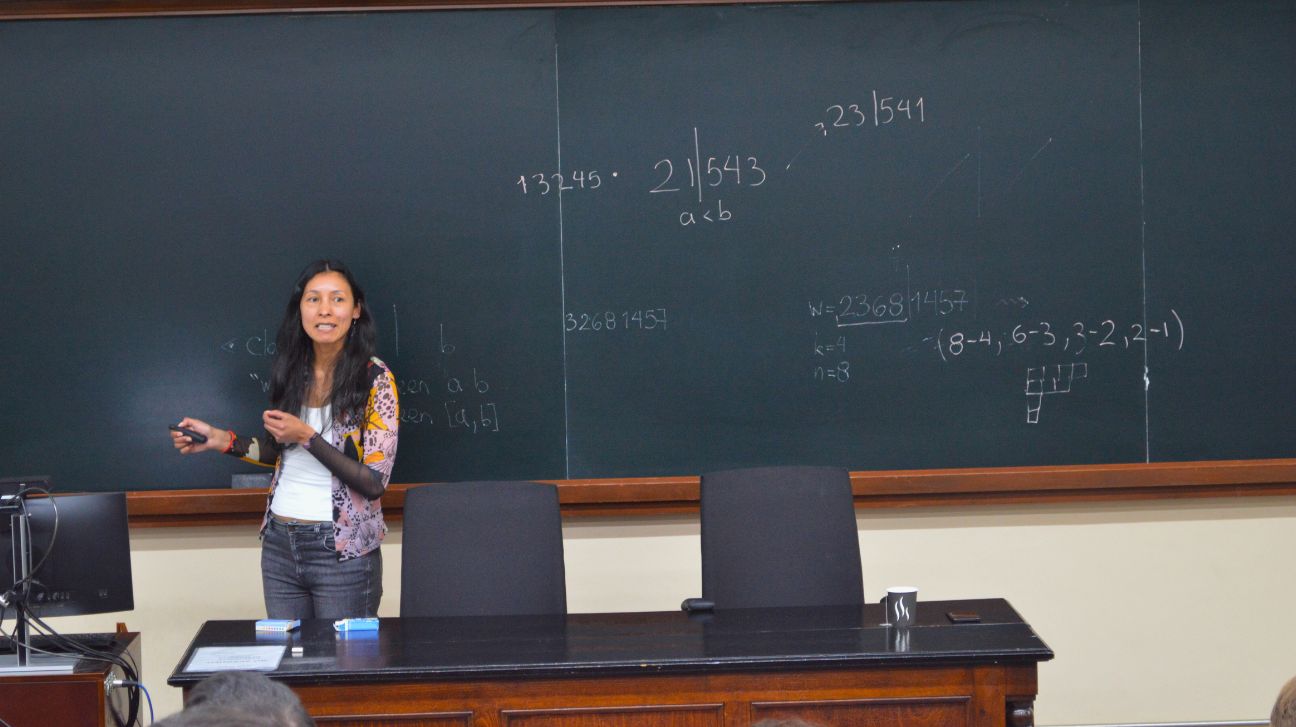
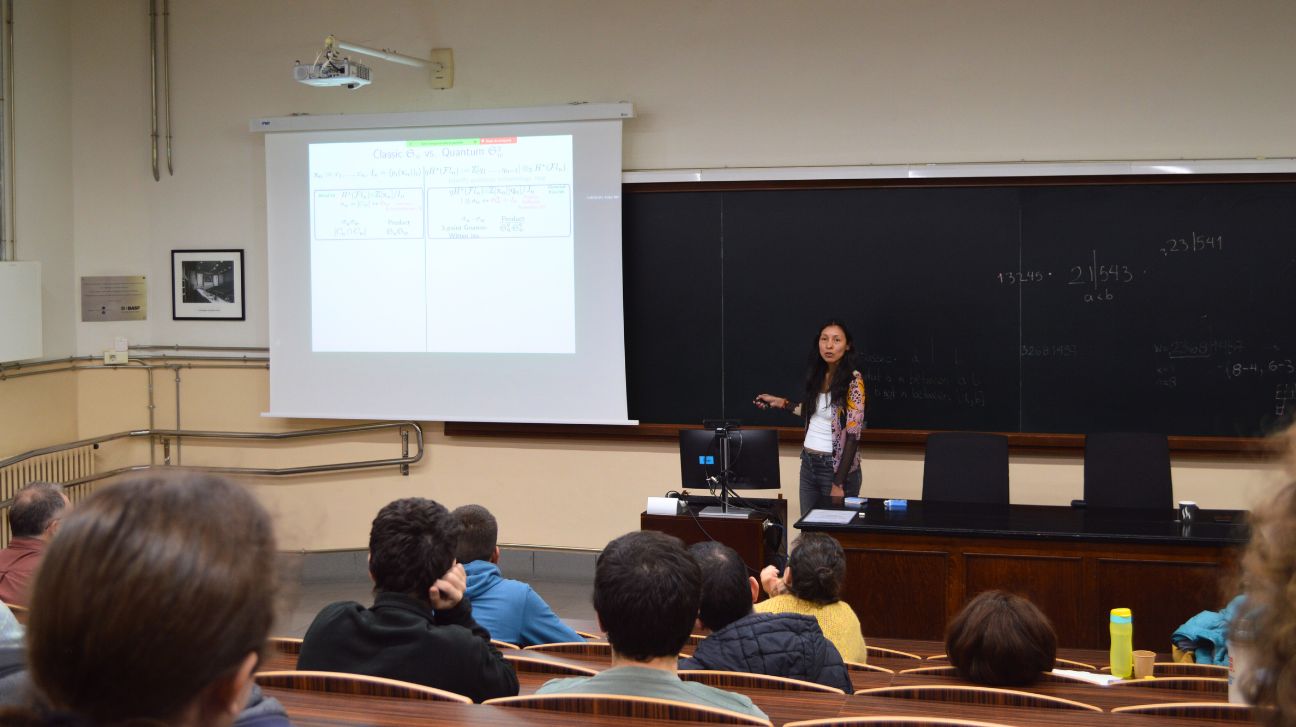
The first talk was delivered by Carolina Benedetti Velásquez, Associate Professor at the Department of Mathematics of the Universidad de los Andes (Bogotá, Colombia) and Lluís Santaló Fellow 2026—a visiting position created in memory of Lluís Santaló to host Latin American researchers during research stays in Catalonia.
Benedetti is a Colombian mathematician whose work focuses on combinatorics, algebraic structures, and geometry. She studied at the Universidad Nacional de Colombia, completed her MSc at the Universidad de los Andes, and obtained her PhD in 2013 from York University (Toronto, Canada), with the dissertation Combinatorial Hopf algebras and supercharacters. She has been a visiting professor at Michigan State University and is currently co–Executive Director of Mathematical Circles Colombia, as well as a member of the Comunidad Colombiana de Combinatoria and the Gender and Equity Commission.
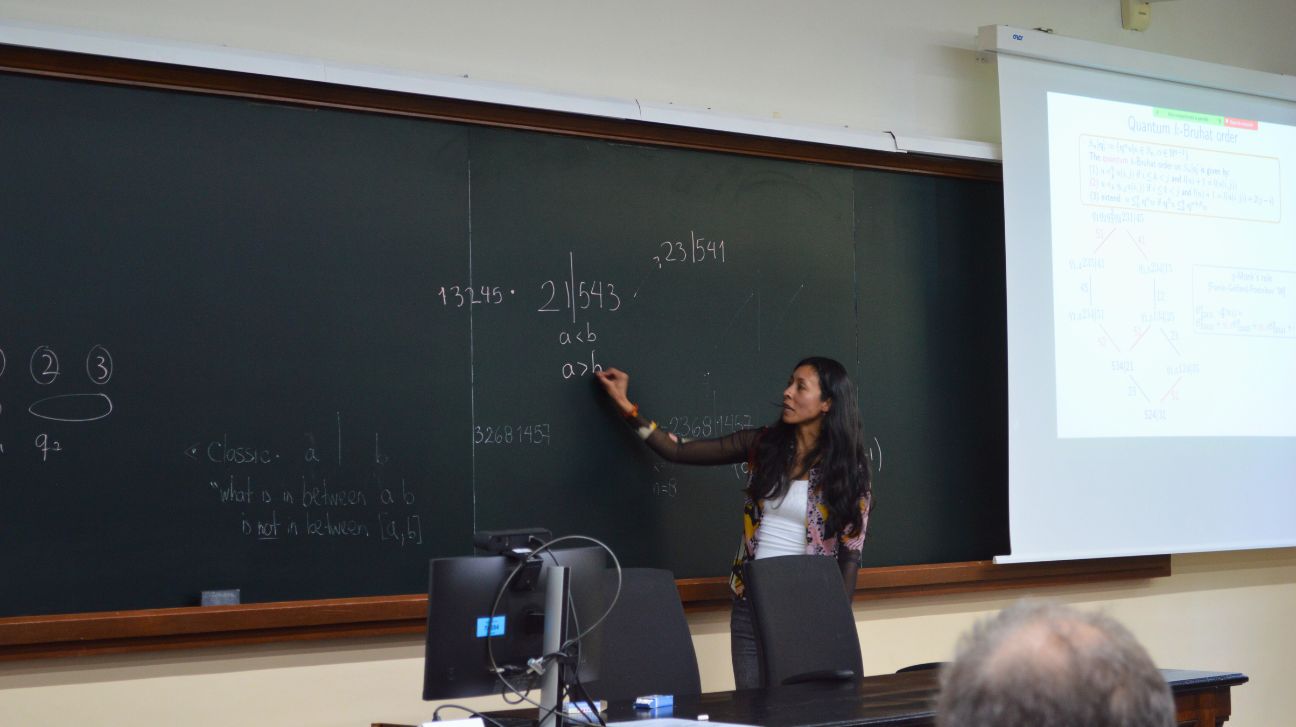
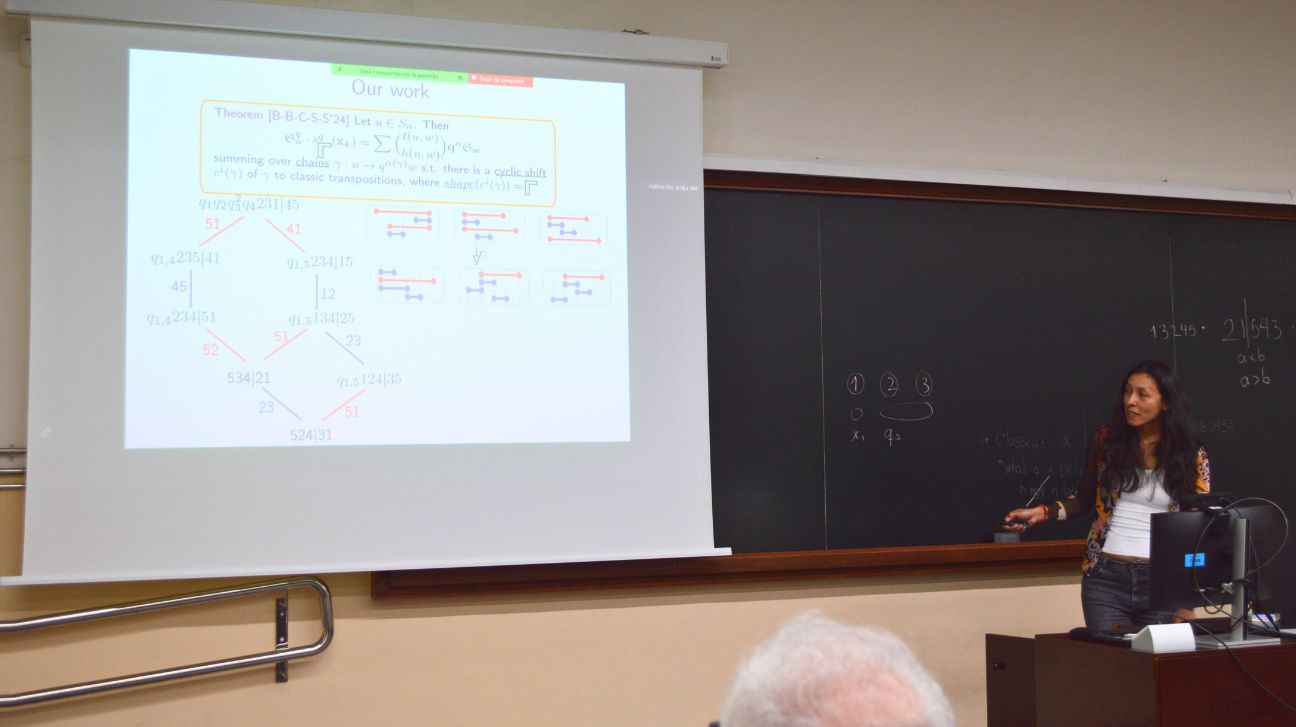
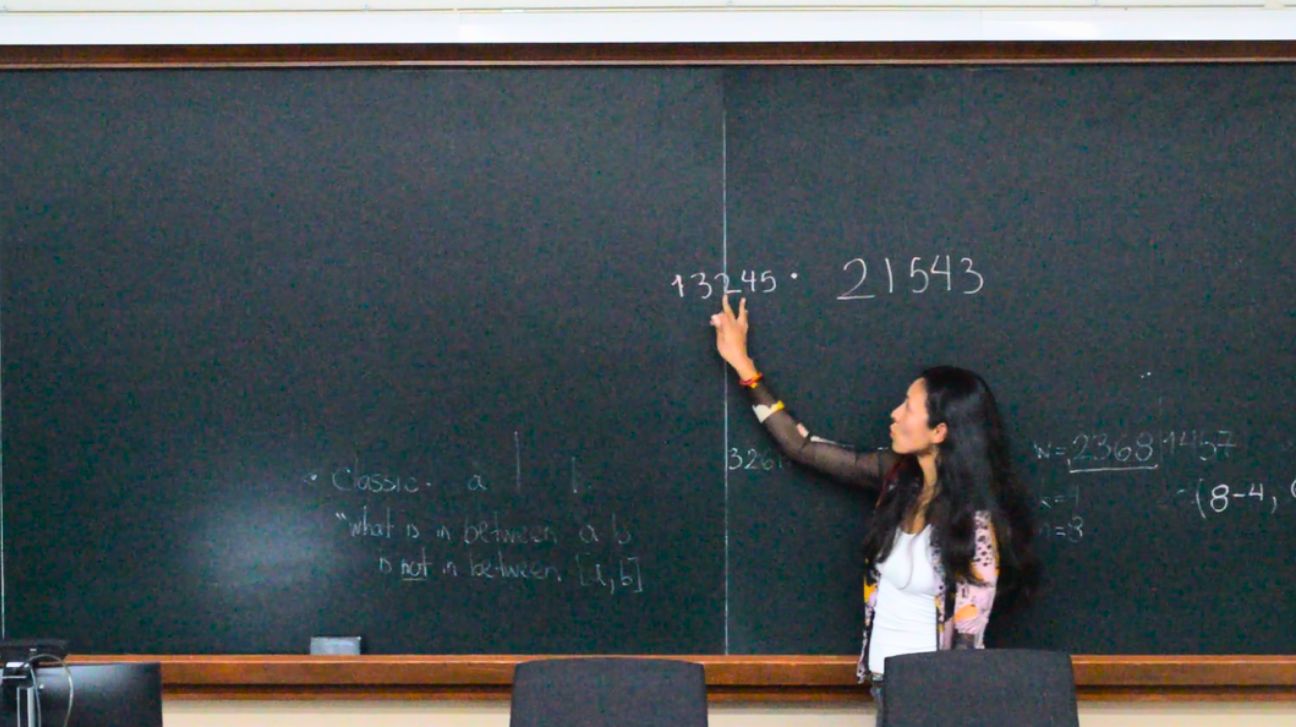
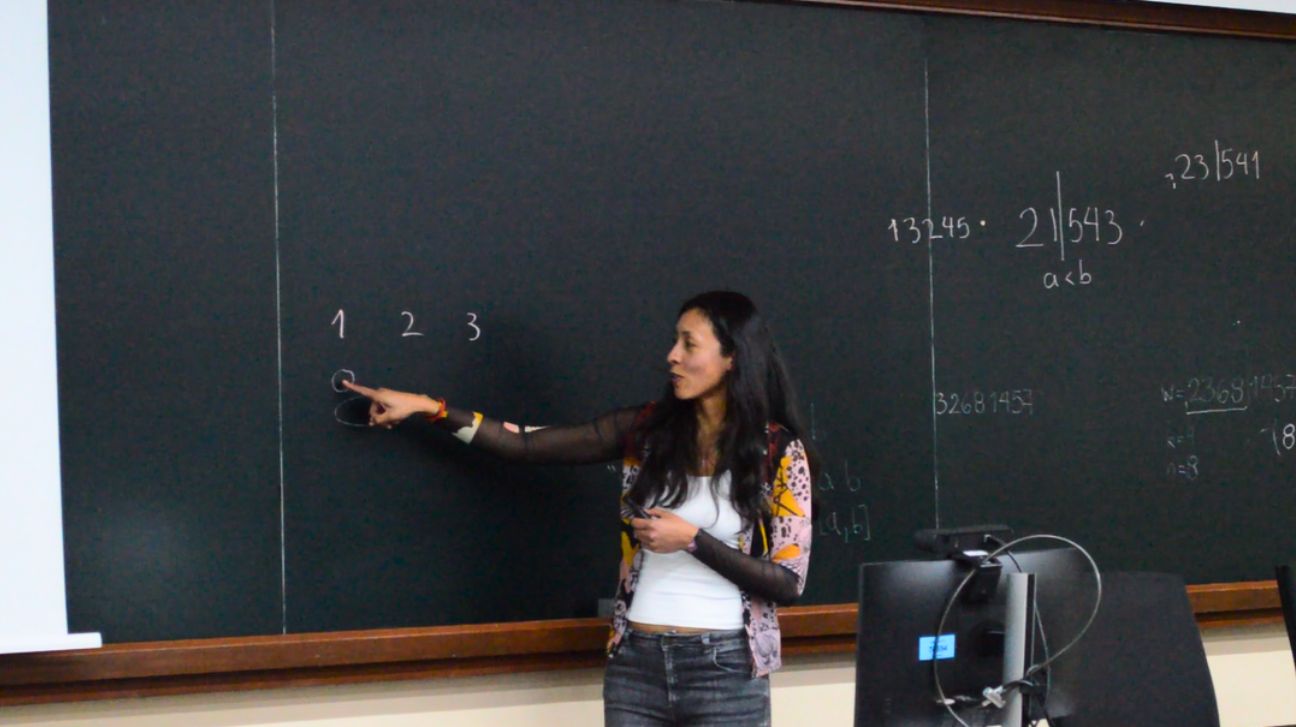
Combinatorics of some products of (quantum) Schubert polynomials
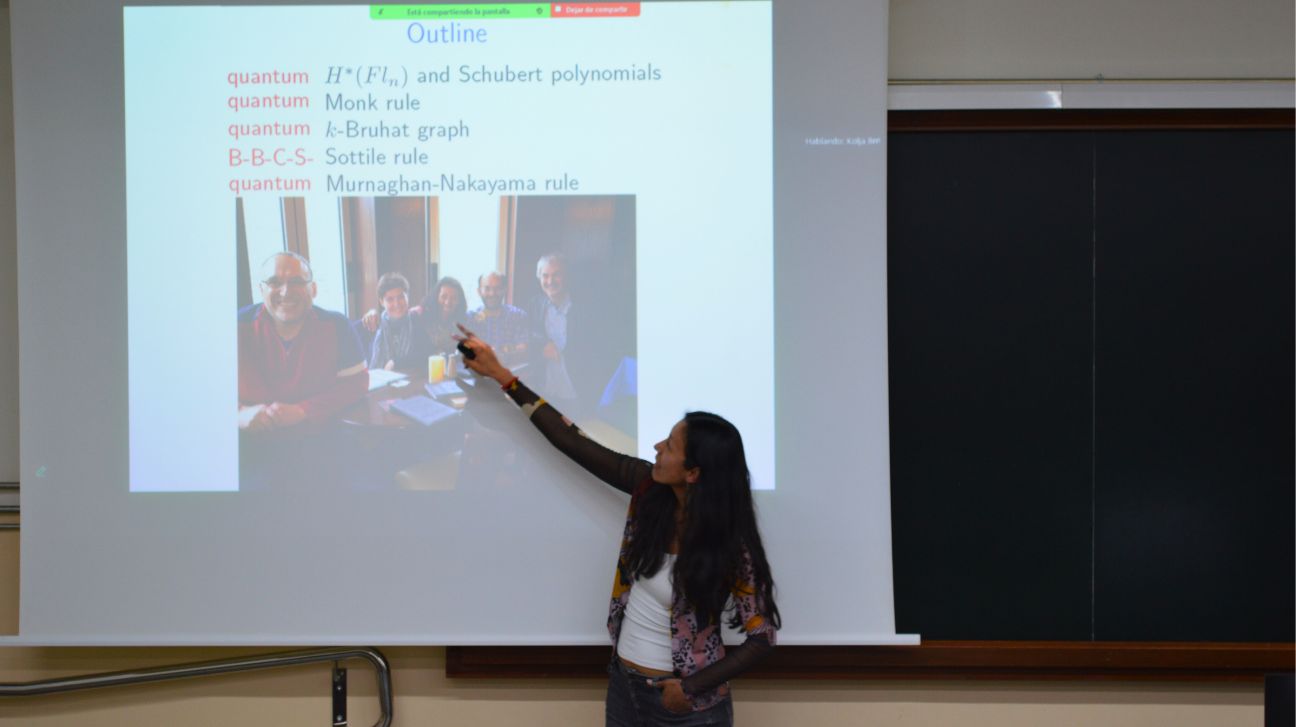
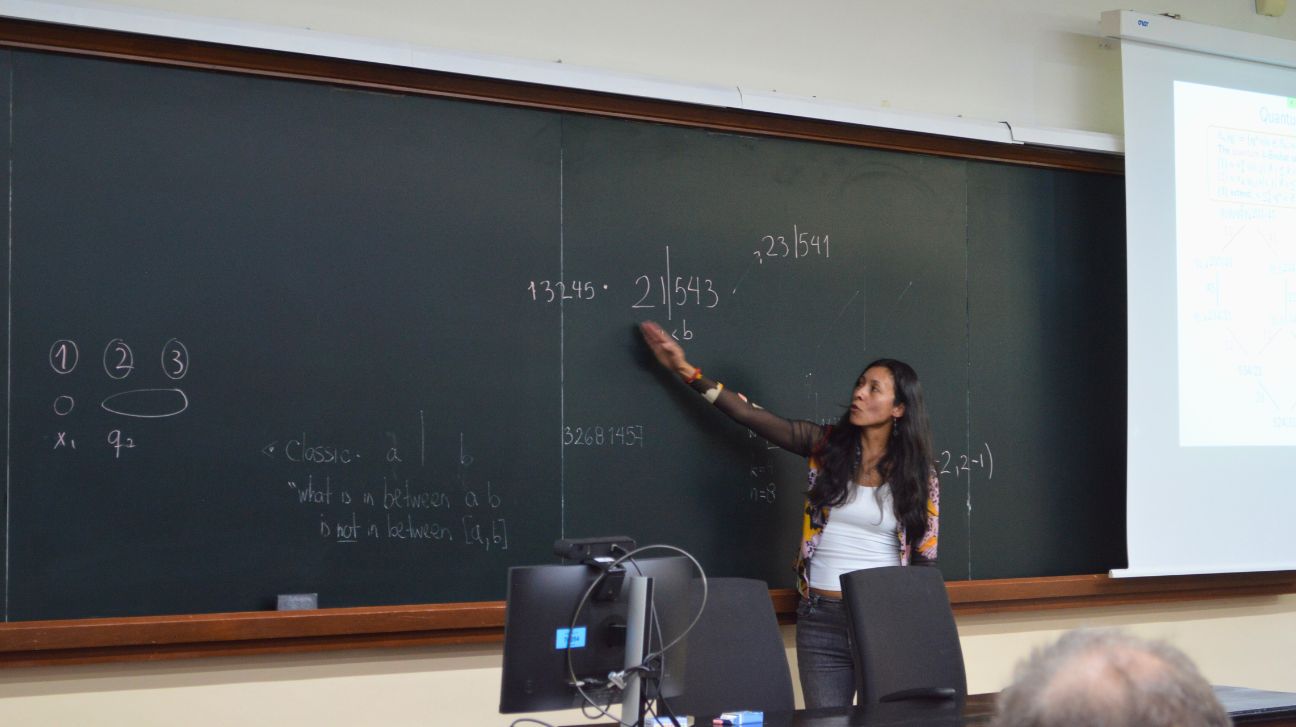
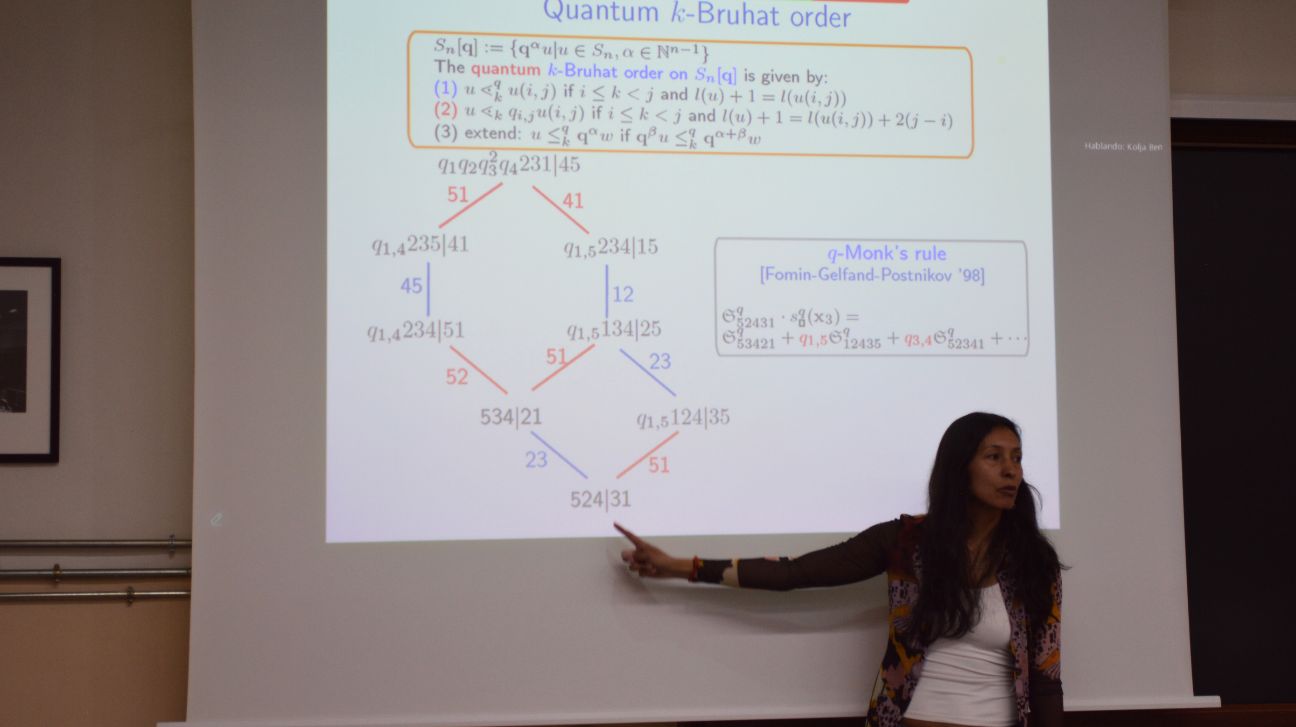
In her talk, Benedetti introduced Schubert polynomials, a fundamental basis of the polynomial ring over the integers, deeply connected to algebraic geometry through Schubert varieties. She showed how many of their properties can be expressed through permutation combinatorics and presented combinatorial rules for products of both classical and quantum versions.
The work presented is joint with N. Bergeron, L. Colmenarejo, F. Saliola, and F. Sottile.
2. Amanda Montejano — Discrete Versions of the Brunn–Minkowski Inequality
Next, Amanda Montejano (Universidad Nacional Autónoma de México) offered an overview of the various discrete formulations of the classical Brunn–Minkowski inequality, a cornerstone of convex geometry. She discussed the historical development of the problem and highlighted the use of heavy sets as a tool to derive meaningful inequalities in arbitrary dimensions.
3. Oriol Farràs Ventura — Polynomial Secret Sharing Schemes and Algebraic Matroids
The third talk was given by Oriol Farràs Ventura (Universitat Rovira i Virgili), who explored the connection between matroid theory and secret sharing schemes—cryptographic methods in which a secret can be recovered only from certain authorised subsets of information. As shown by Brickell and Davenport, the access structure of ideal schemes determines a matroid.
Farràs presented polynomial secret sharing schemes and proved that, over sufficiently large fields, the access structures of ideal polynomial schemes are determined by algebraic matroids.
4. Yannic Vargas — Nested pre-Lie operads on combinatorial species
After the lunch break, Yannic Vargas (CUNEF Universidad Madrid) introduced the concept of nested pre-Lie operads, a non-associative generalisation of classical operads in which horizontal associativity is replaced by a pre-Lie law. He showed how this structure arises naturally in graphs, trees, and set partitions, and discussed potential extensions to the braid arrangement.
5. Eleni Tzanaki — On interval hypergraphic polytopes
To close the day, Eleni Tzanaki (University of Crete) presented interval hypergraphic polytopes, a special class of hypergraphic polytopes whose hyperedges are intervals. These polytopes can be interpreted as deformations of the associahedron, and Tzanaki showed that their vertex posets correspond exactly to intervals in the Tamari lattice. She also characterised the interval hypergraphs that yield simple polytopes and described a new family of directed trees called weeping willows.
The event highlighted the diversity of perspectives that coexist in modern combinatorics—from deep algebraic structures to applications in information theory, as well as discrete geometry and polytope theory. It offered a vivid snapshot of a field that continues to expand in scope and connections.
|
|
CRM CommNatalia Vallina
|
Yves Chevallard (1946–2026)
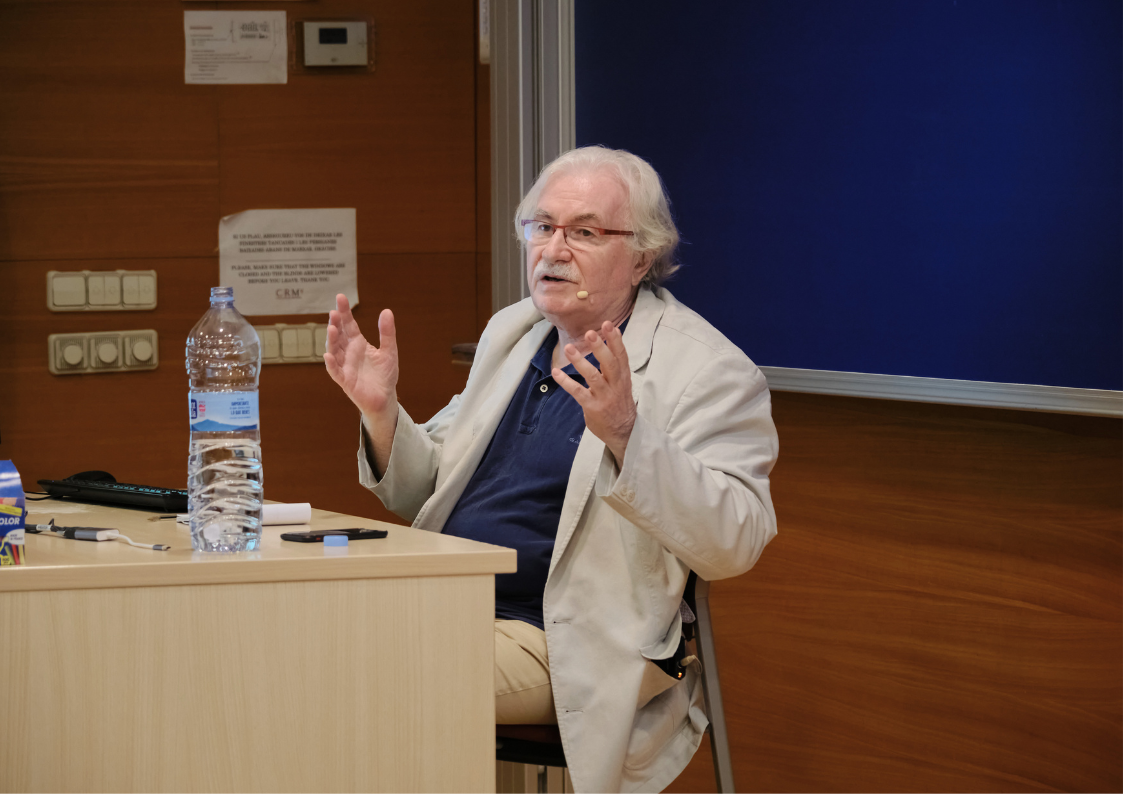
Yves Chevallard passed away on 16 March 2026. He was 79 years old. Born in Tunis, he trained at the École normale supérieure in Paris, where he earned an agrégation de mathématiques. He went on to become a professor at Aix-Marseille Université, and it was there, over...

The CRM participates in a European project studying decision-making and risk perception in mountain environments
The NeuroMunt project (POCTEFA, coordinated by the Université de Perpignan Via Domitia) studies how people make decisions under risk conditions in mountain environments, bringing together researchers from France and Spain across disciplines ranging from complex...
One Day, One Family, One Place: Poisson Geometry at CRM
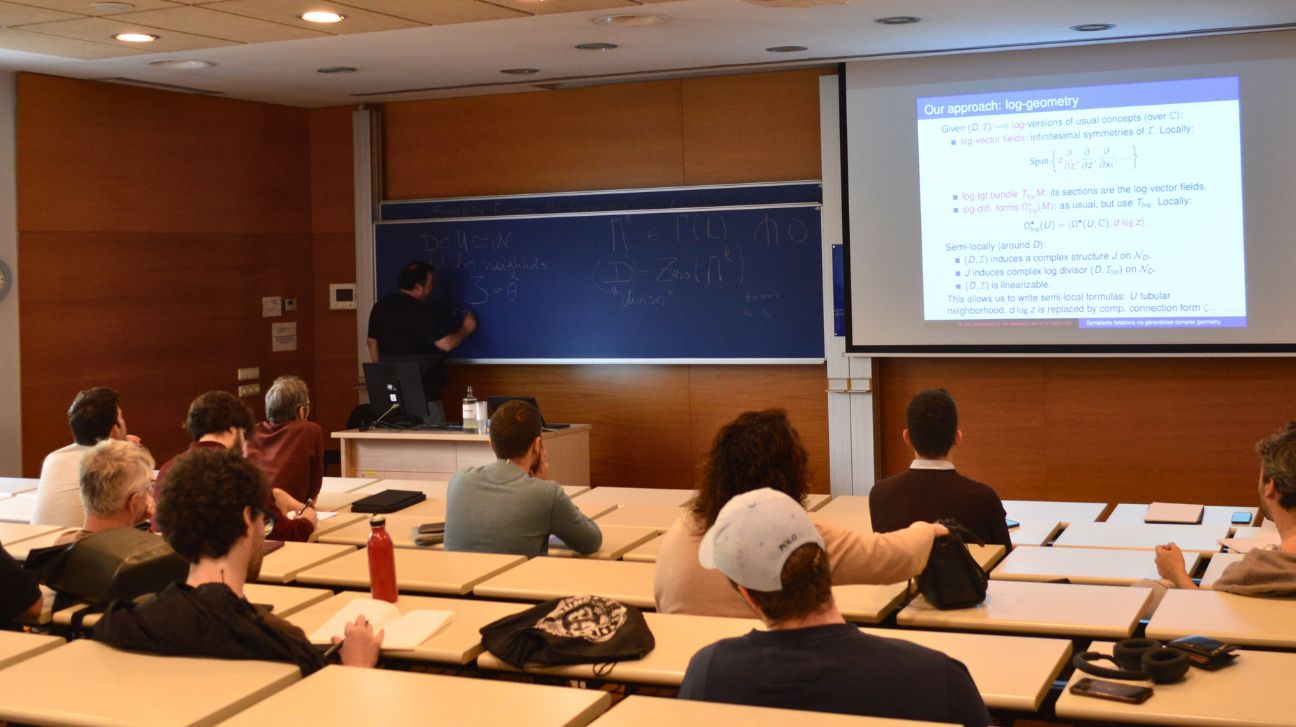
On March 23rd, 2026, the Centre de Recerca Matemàtica hosted the thematic day “Poisson Geometry and Its Relatives”, a full‑day event that brought together researchers exploring Poisson geometry and several of its neighbouring areas. The programme combined classical...
Life After the PhD: Three Roads Forward
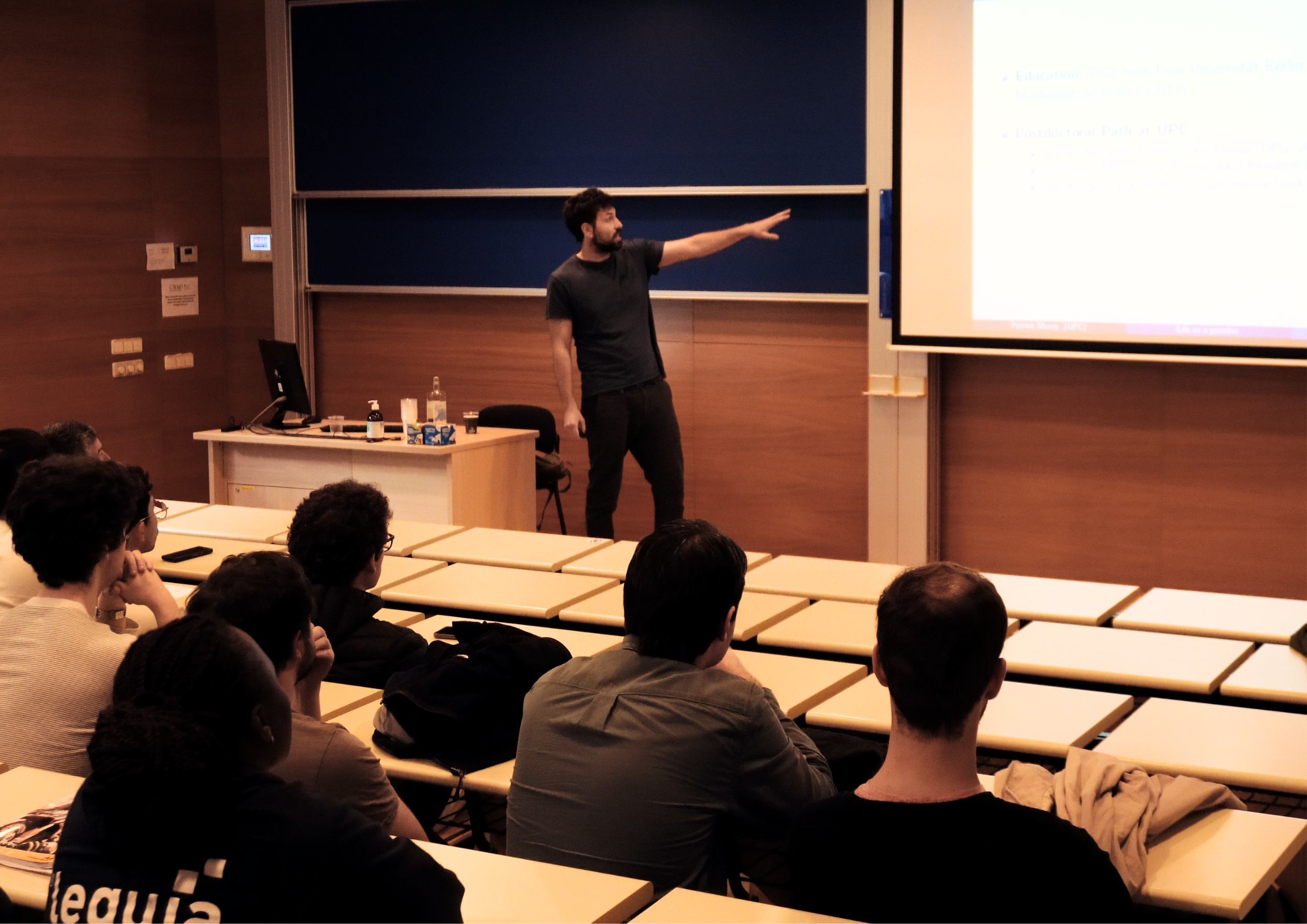
On March 18, the BGSMath held its first session on careers after a PhD in mathematics, bringing together three speakers with different professional trajectories and 46 early-career researchers from nine institutions.On March 18, the Barcelona Graduate School of Math...
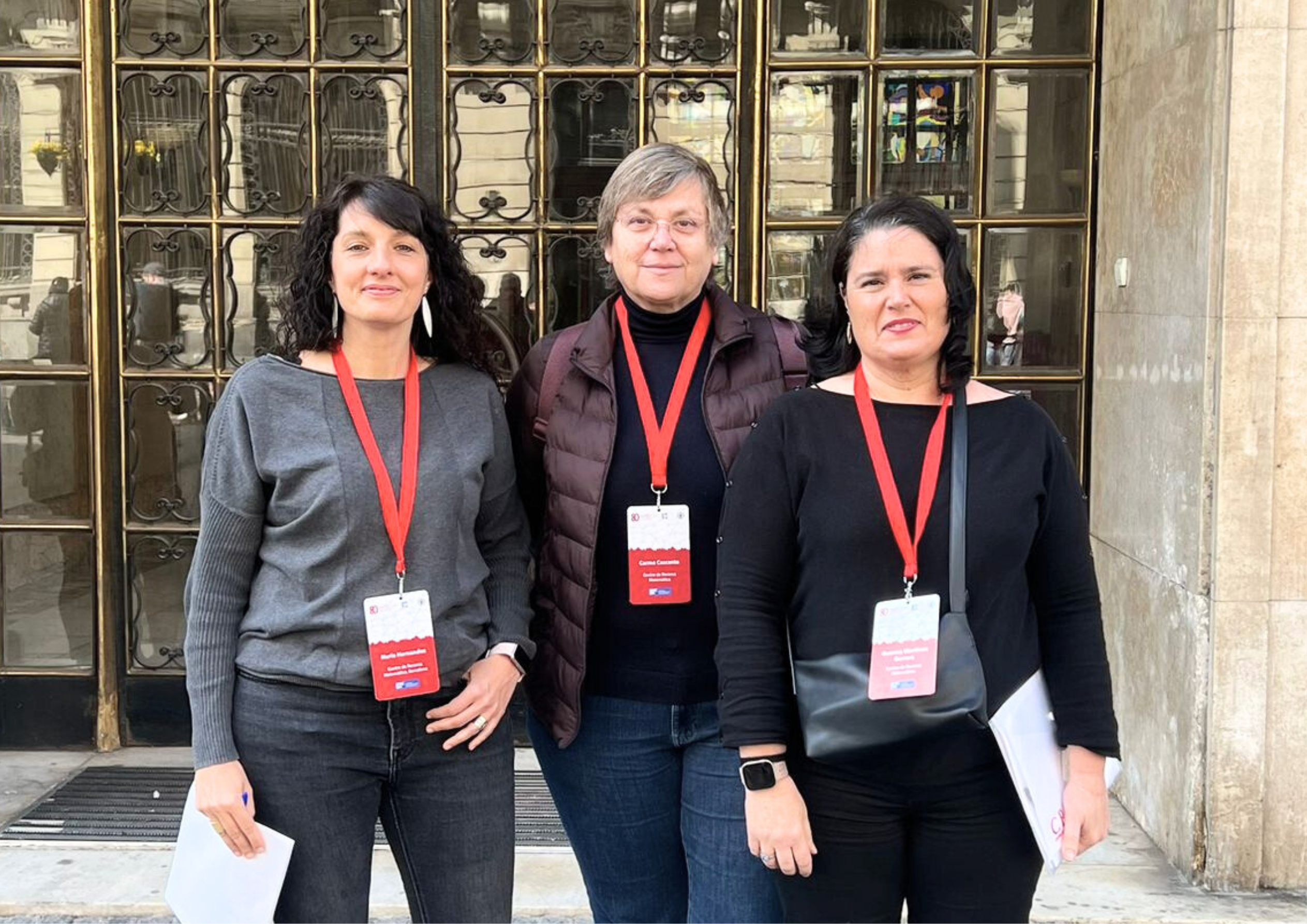
CRM participates in the 2026 ERCOM annual meeting in Belgrade
The CRM participated in the 2026 ERCOM annual meeting in Belgrade (20–21 March), represented by Director Carme Cascante, Manager Gemma Martínez, and Scientific Activities Manager Núria Hernández. The programme focused on multidisciplinarity, mathematics and the arts,...
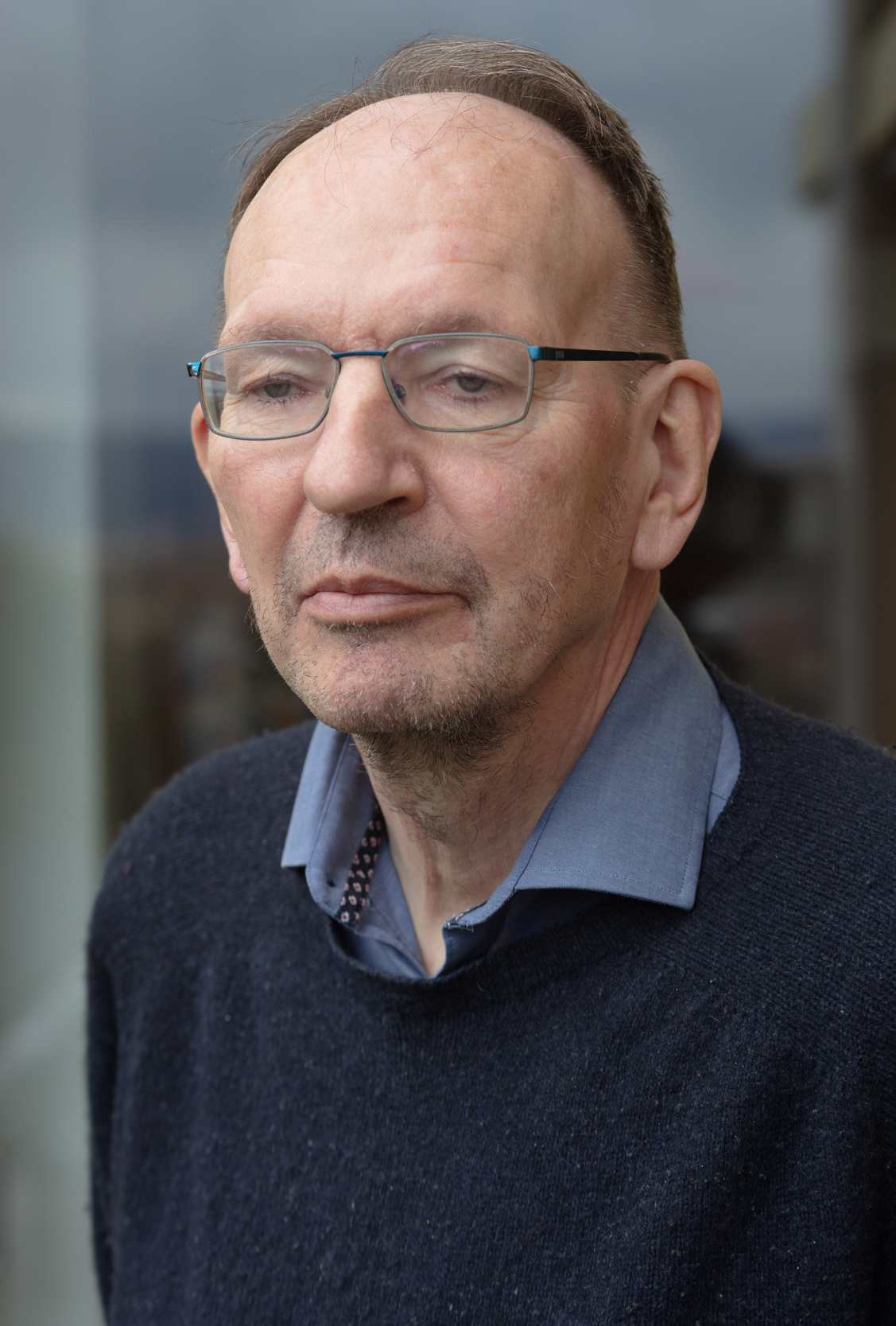
Gerd Faltings Awarded the 2026 Abel Prize for Transformative Work in Arithmetic Geometry
The Norwegian Academy of Science and Letters has recognised the German mathematician for solving two of the most enduring open problems in the field.The Norwegian Academy of Science and Letters announced today that the 2026 Abel Prize goes to Gerd Faltings, director...
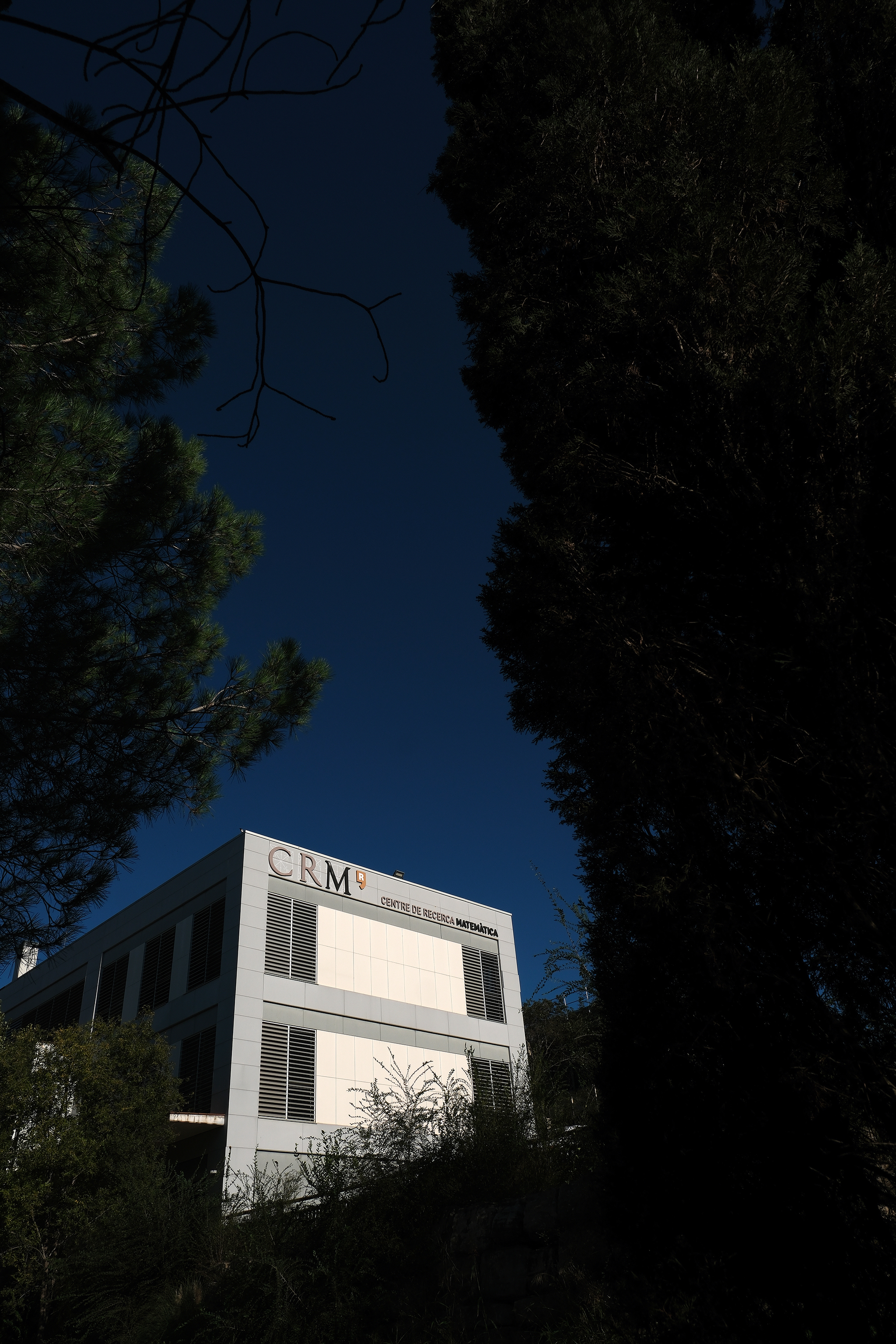
The Centre de Recerca Matemàtica Approves Its Strategic Plan for 2026–2030
The Centre de Recerca Matemàtica has approved its Strategic Plan for 2026 - 2030, setting priorities in research, training, and knowledge transfer. Four flagship initiatives anchor the scientific programme. The Centre de Recerca Matemàtica approved its Strategic Plan...
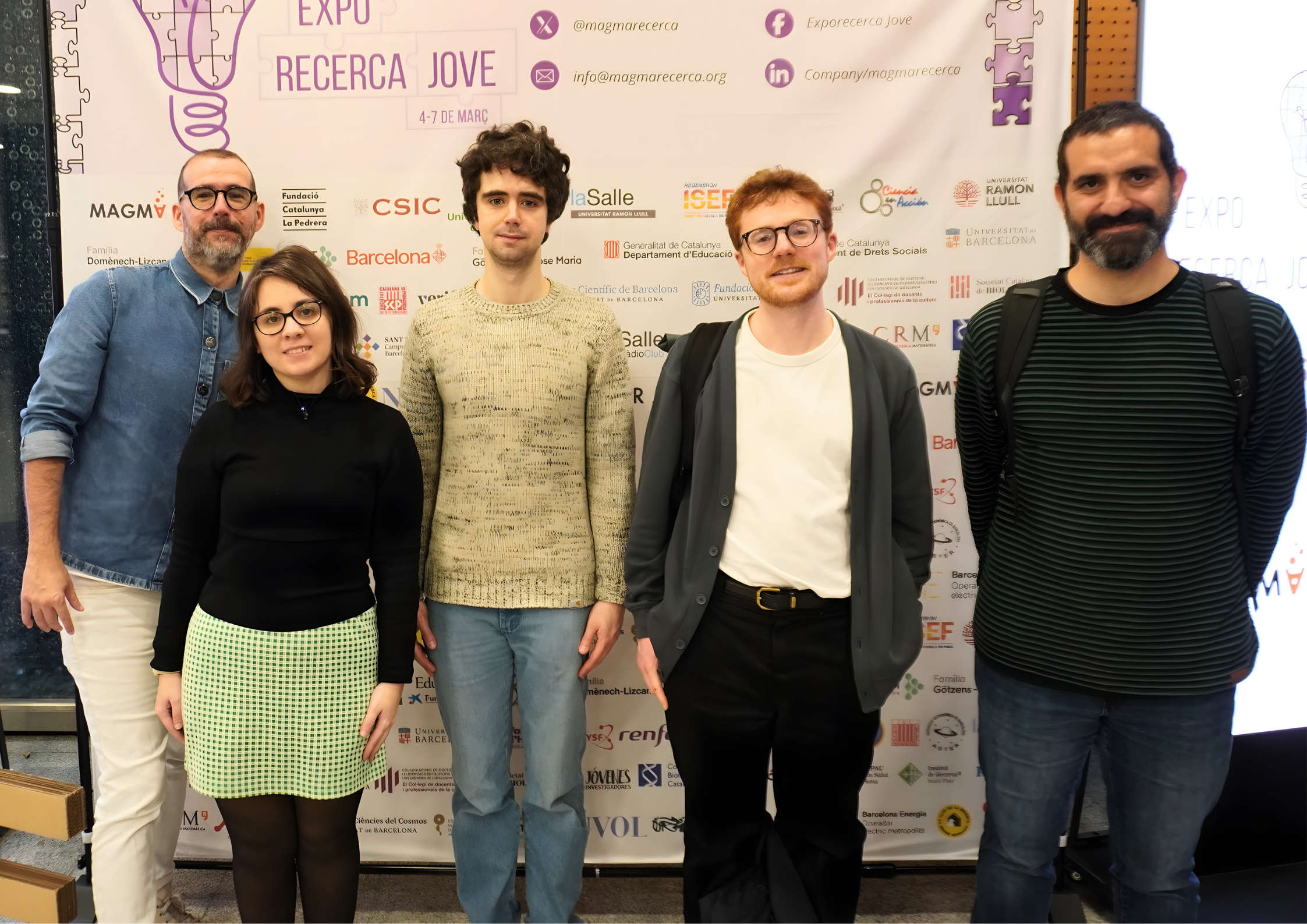
CRM Awards Its Prize at Exporecerca Jove for the Third Time
For the third year running, CRM visited Exporecerca Jove to award its prize to the student project with the strongest mathematical content. This edition, the jury selected two winners: Xavier Ortiz Quintana, who built a real-time 3D scanner using...

When Symmetry Breaks the Rules: From Askey–Wilson Polynomials to Functions
Researchers Tom Koornwinder (U. Amsterdam) and Marta Mazzocco (ICREA-UPC-CRM) published a paper in Indagationes Mathematicae exploring DAHA symmetries. Their work shows that these symmetries shift Askey–Wilson polynomials into a continuous functional setting,and...
Homotopy Theory Conference Brings Together Diverse Research Perspectives
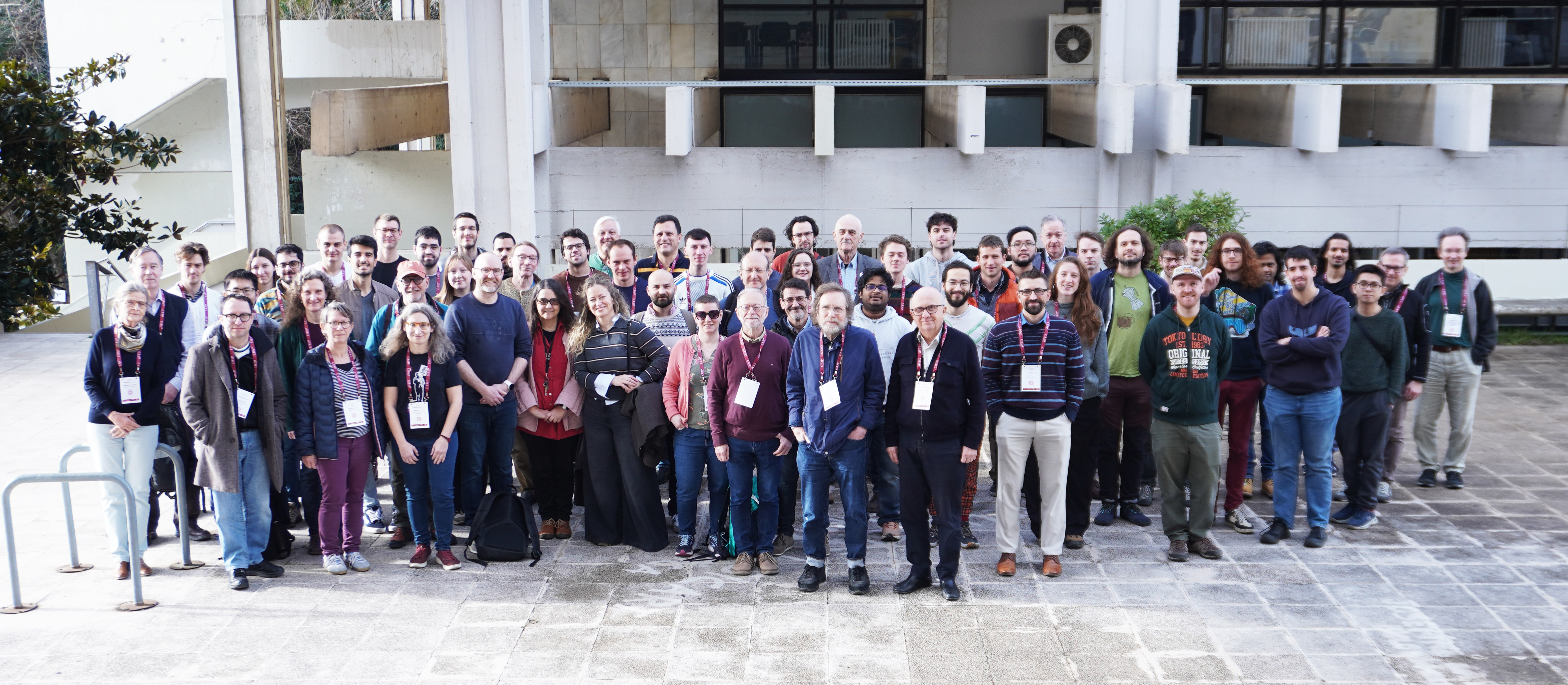
The Centre de Recerca Matemàtica hosted 75 mathematicians from over 20 countries for the Homotopy Structures in Barcelona conference, held February 9-13, 2026. Fourteen invited speakers presented research spanning rational equivariant cohomology theories, isovariant...
Three ICM speakers headline the first CRM Faculty Colloquium
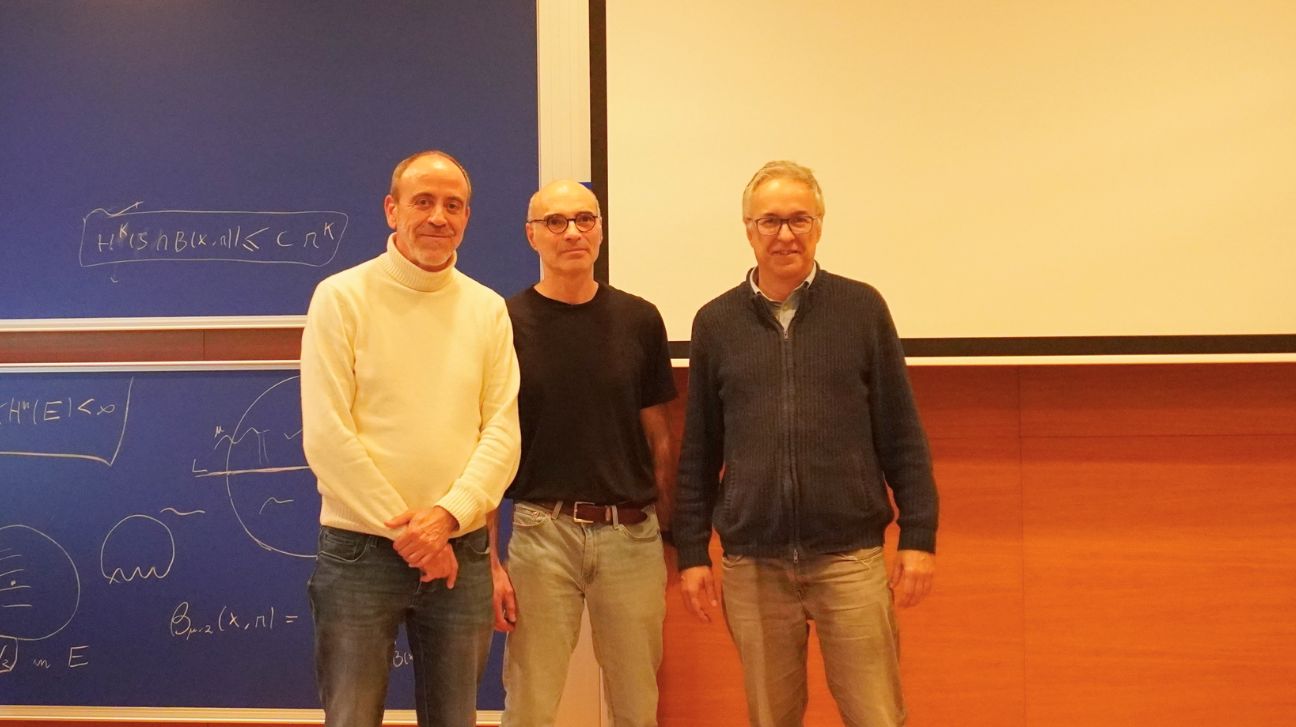
On 19 February 2026, the Centre de Recerca Matemàtica inaugurated its first CRM Faculty Colloquium, a new quarterly event designed to bring together the mathematical community around the research carried out by scientists affiliated with the Centre. The CRM auditorium...