

Researchers Tom Koornwinder (U. Amsterdam) and Marta Mazzocco (ICREA-UPC-CRM) published a paper in Indagationes Mathematicae exploring DAHA symmetries. Their work shows that these symmetries shift Askey–Wilson polynomials into a continuous functional setting,and introduce an explicit decomposition of the non‑symmetric Askey–Wilson function into symmetric and anti‑symmetric parts. This work offers new structural insight into how certain DAHA automorphisms act across polynomial and functional settings within the q‑Askey scheme, without altering the established links with representation theory.
 and non‑symmetric Askey–Wilson functions in Indagationes Mathematicae. In this work, the authors analyze the internal symmetries of double affine Hecke algebras (DAHA) and study how these symmetries act on Askey‑Wilson (AW) polynomials and functions, both in the symmetric and non‑symmetric settings.
At first glance, one expects symmetries to move neatly within the world of polynomials. But some symmetries behave like a zoom tool: once applied, the picture demands higher resolution. What looked discrete (polynomials) must be viewed in a continuous setting (functions) for the transformation to make full sense. The paper leverages this change of scale to illuminate where the natural language of DAHA symmetries truly lives.
The work focuses on the relationship between algebraic structures and special functions—fundamental objects in representation theory and mathematical analysis—with deep connections to harmonic analysis and mathematical physics.
A well‑known structure — still with unanswered questions
Double affine Hecke algebras (DAHA), introduced by Cherednik, are central in representation theory and in the study of special functions. In the rank‑one case, the DAHA of type  is closely related to Askey–Wilson polynomials and functions, which occupy the top level of the q‑Askey scheme of orthogonal polynomials.
Previous works had identified actions of various symmetry groups—such as modular groups or Weyl‑type groups—on operators associated with the DAHA and even on the algebra itself. However, a systematic account of how these symmetries act on the relevant eigenfunctions, in particular on Askey–Wilson polynomials and functions, was still missing. In particular, it was unclear whether these symmetries preserve the polynomial world or require a broader functional framework.
Moreover, the DAHA of type is related to the Painlevé VI equation through the quantization of its monodromy group. This naturally raises the question of to what extent the classical symmetries of Painlevé VI can be lifted to the DAHA level.
What happens when a symmetry changes the rules
In this work, the authors initiate a research programme aimed at studying—and potentially classifying—the symmetries of the DAHA of type and of the Zhedanov algebra, as well as understanding how the symmetries of these two structures are related and how they act on Askey–Wilson polynomials and functions.
One of the most striking results is the detailed analysis of a specific symmetry, denoted  , which acts in a simple way on the Askey–Wilson parameters. Surprisingly, this transformation does not preserve the class of polynomials, but instead maps Askey–Wilson polynomials to Askey–Wilson functions, revealing a natural mechanism that connects these two objects and showing that the functional setting is the most appropriate one for studying certain DAHA symmetries.
In other words, the symmetry works best when you change scale: from the discrete grid of polynomials (pixels) to the continuous image of functions.
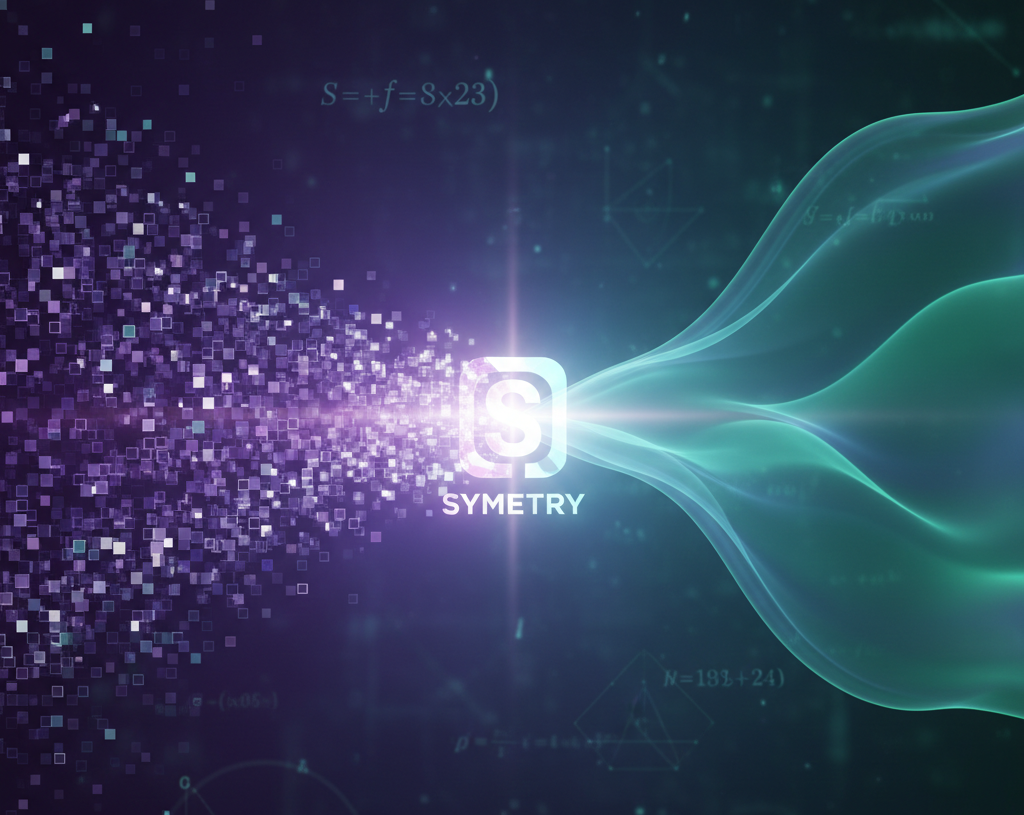
In addition, the authors propose a precise definition of the non-symmetric Askey–Wilson function in the rank‑one case, based on the Cherednik–Stokman kernel, and show that this function admits an explicit decomposition into a symmetric part and an anti-symmetric part. This decomposition allows for a clear description of its spectral properties and its behaviour under DAHA symmetries. Think of the non‑symmetric AW function like an image decomposed into two complementary color layers: warm tones (symmetric layer) and cool tones (anti‑symmetric layer). Each layer is meaningful on its own, but together they render the full picture with contrast and direction. This is exactly what the decomposition achieves: it reveals the internal structure that only becomes visible once you’ve changed scale from polynomials to functions.

Overall, the work combines techniques from algebra, analysis, and the theory of special functions, offering a unified perspective on how algebraic symmetries are reflected in concrete transformations of functions.
A wider landscape for special functions
The results of this article open several promising research directions. On the one hand, they clarify the role of DAHA automorphisms as bridges between different types of special functions, suggesting that analogous transformations may exist in higher rank or for other types of Hecke algebras.
On the other hand, the systematic study of non-symmetric Askey–Wilson functions reinforces their importance as fundamental objects, with potential applications in non-commutative harmonic analysis, representation theory, and models of mathematical physics related to quantum symmetries.
Finally, this work contributes to a deeper understanding of the q-Askey scheme and its internal symmetries, representing an important step towards a more global theory connecting orthogonal polynomials, Hecke algebras, and algebraic geometry.
Symmetry here acts like a change of scale: it asks us to move from the discrete world of polynomials to the continuous world of functions.
By shifting the focus to Askey–Wilson functions, this work shows where the natural language of DAHA symmetries truly lives.
From this unified viewpoint, new paths emerge toward deeper structures, richer connections, and future breakthroughs across mathematics and mathematical physics.

|
|
CRM CommNatalia Vallina
|
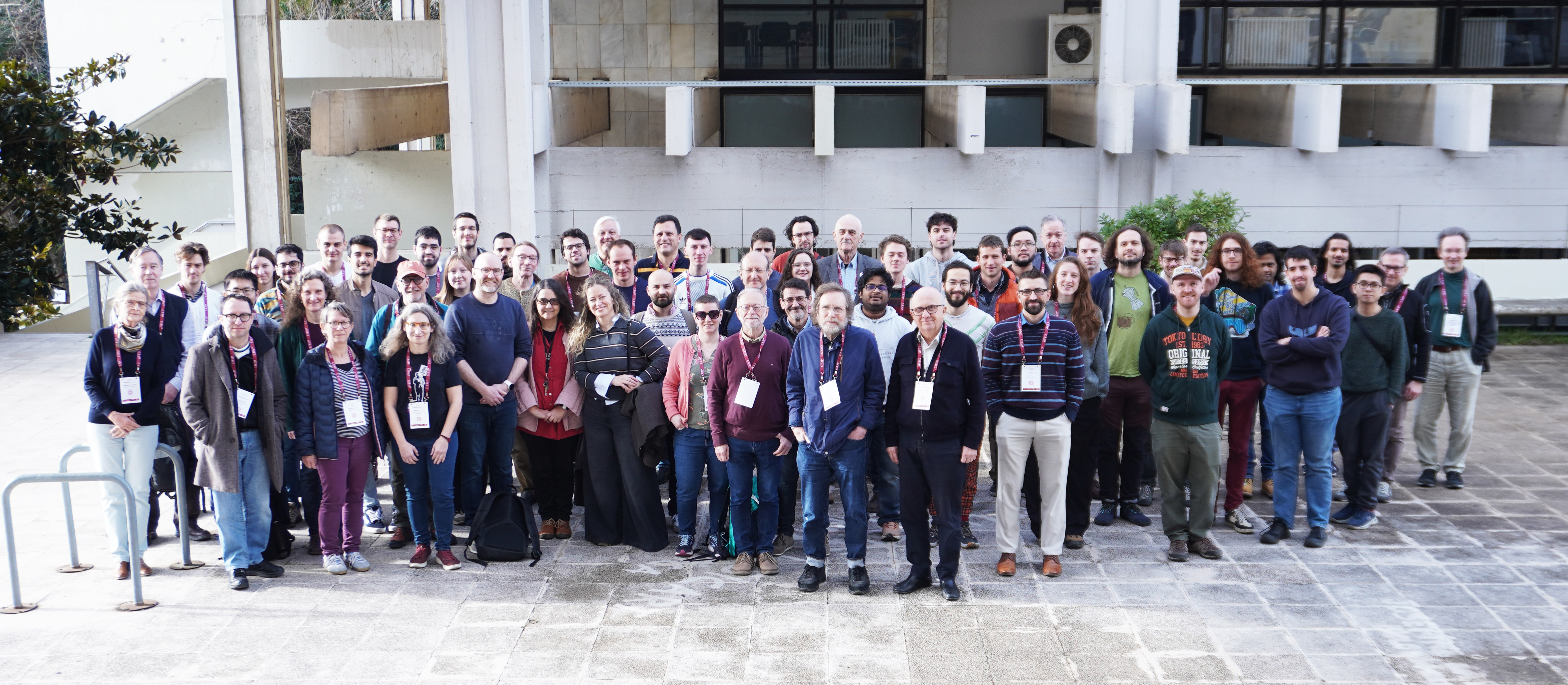
Homotopy Theory Conference Brings Together Diverse Research Perspectives
The Centre de Recerca Matemàtica hosted 75 mathematicians from over 20 countries for the Homotopy Structures in Barcelona conference, held February 9-13, 2026. Fourteen invited speakers presented research spanning rational equivariant cohomology theories, isovariant...
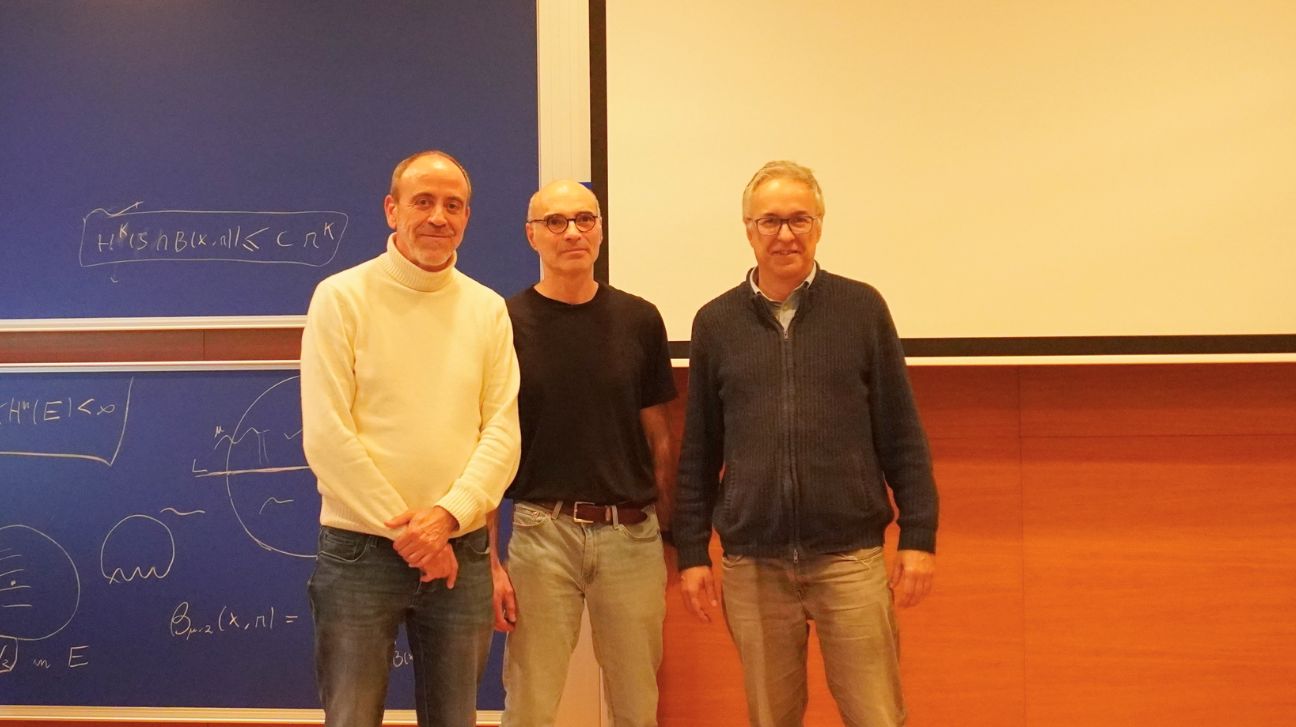
Three ICM speakers headline the first CRM Faculty Colloquium
On 19 February 2026, the Centre de Recerca Matemàtica inaugurated its first CRM Faculty Colloquium, a new quarterly event designed to bring together the mathematical community around the research carried out by scientists affiliated with the Centre. The CRM auditorium...

Trivial matemàtiques 11F-2026
Rescuing Data from the Pandemic: A Method to Correct Healthcare Shocks
When COVID-19 lockdowns disrupted healthcare in 2020, insurance companies discarded their data; claims had dropped 15%, and patterns made no sense. A new paper in Insurance: Mathematics and Economics shows how to rescue that information by...
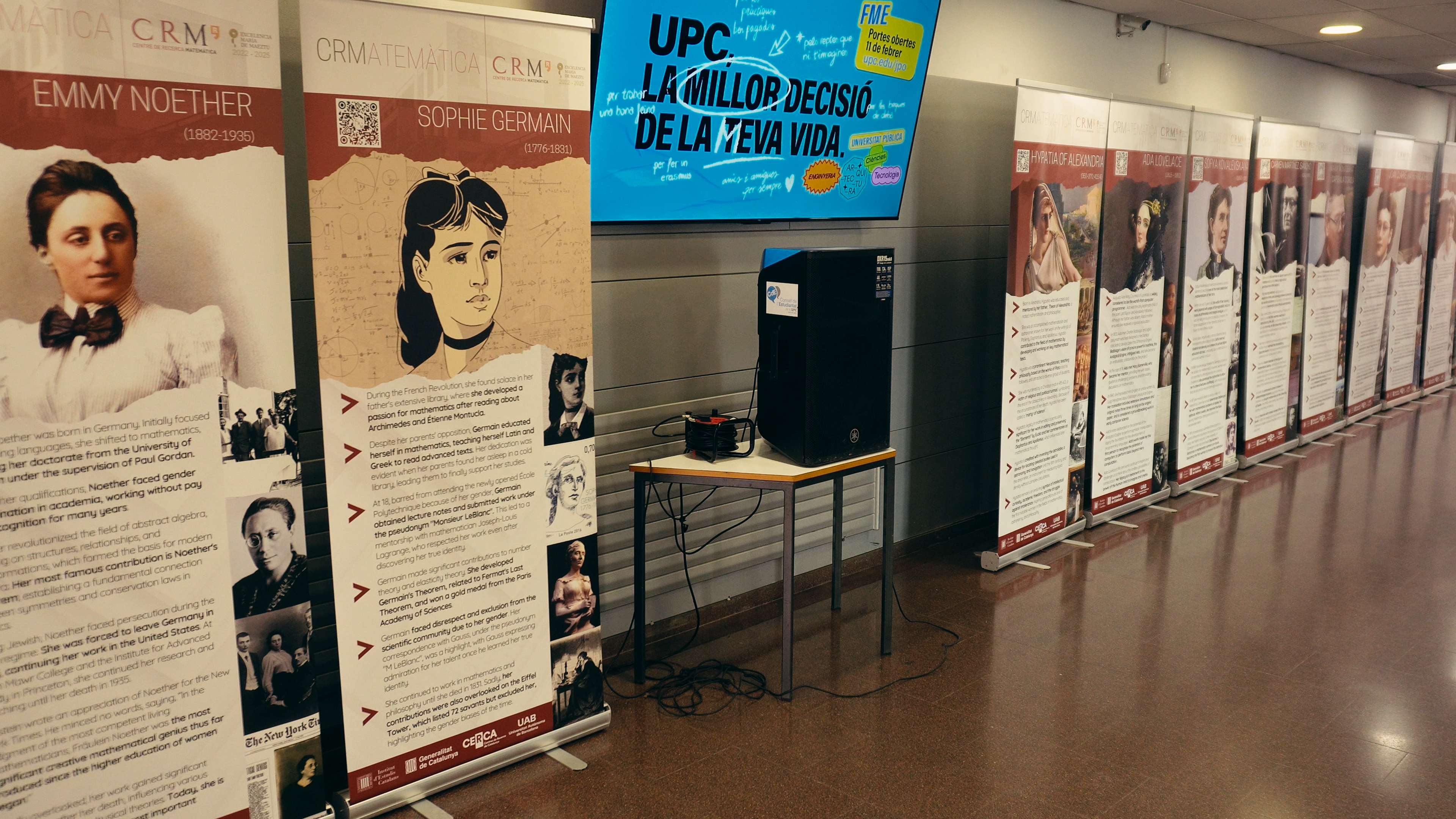
L’exposició “Figures Visibles” s’inaugura a la FME-UPC
L'exposició "Figures Visibles", produïda pel CRM, s'ha inaugurat avui al vestíbul de la Facultat de Matemàtiques i Estadística (FME) de la UPC coincidint amb el Dia Internacional de la Nena i la Dona en la Ciència. La mostra recull la trajectòria...
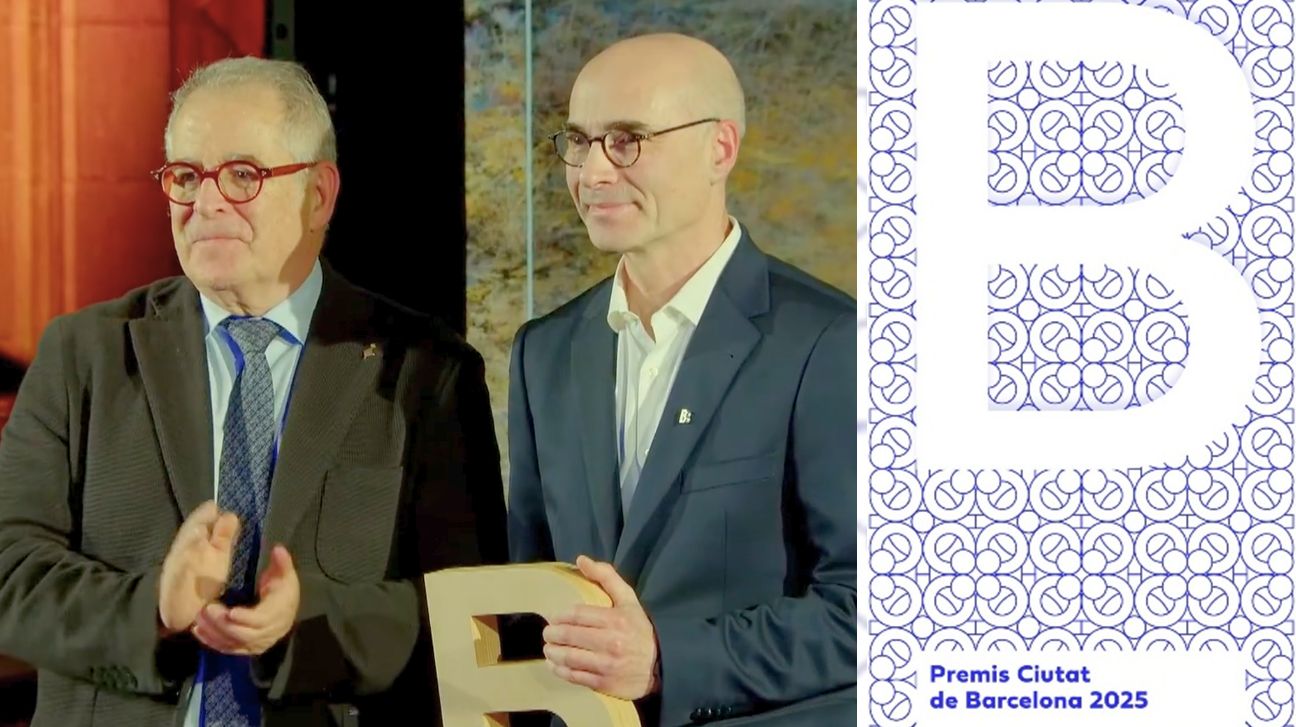
Xavier Tolsa rep el Premi Ciutat de Barcelona per un resultat clau en matemàtica fonamental
L’investigador Xavier Tolsa (ICREA–UAB–CRM) ha estat guardonat amb el Premi Ciutat de Barcelona 2025 en la categoria de Ciències Fonamentals i Matemàtiques, un reconeixement que atorga l’Ajuntament de Barcelona i que enguany arriba a la seva 76a edició. L’acte de...
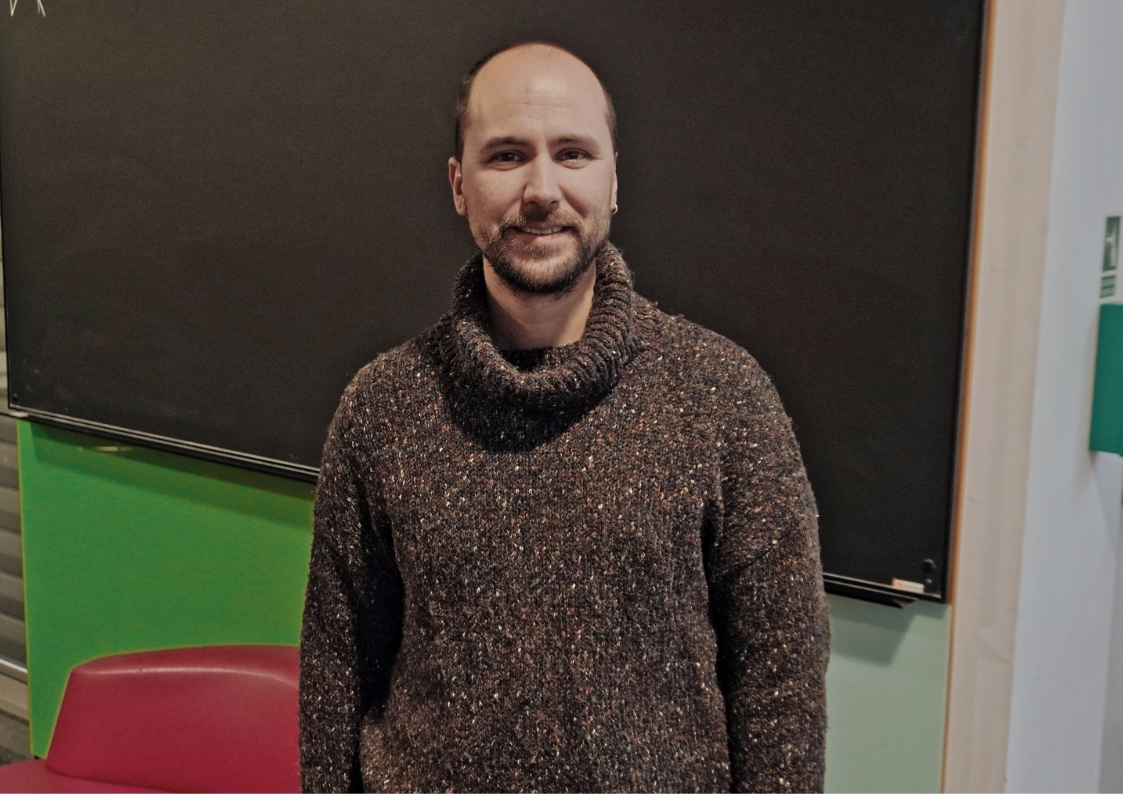
Axel Masó Returns to CRM as a Postdoctoral Researcher
Axel Masó returns to CRM as a postdoctoral researcher after a two-year stint at the Knowledge Transfer Unit. He joins the Mathematical Biology research group and KTU to work on the Neuromunt project, an interdisciplinary initiative that studies...
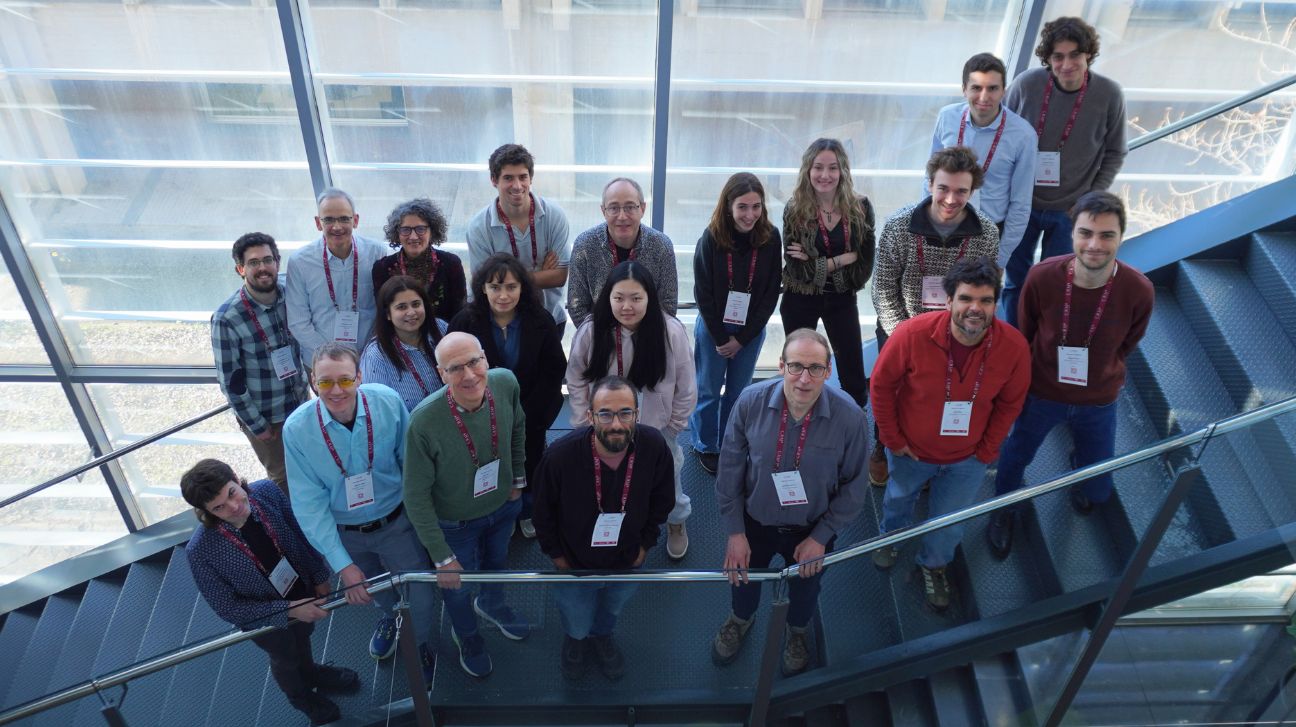
The 4th Barcelona Weekend on Operator Algebras: Open Problems, New Results, and Community
The 4th Barcelona Weekend on Operator Algebras, held at the CRM on January 30–31, 2026, brought together experts to discuss recent advances and open problems in the field.The event strengthened the exchange of ideas within the community and reinforced the CRM’s role...
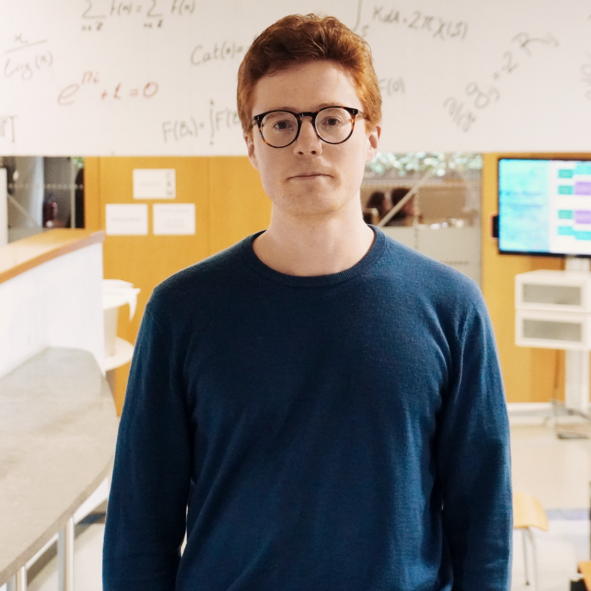
From Phase Separation to Chromosome Architecture: Ander Movilla Joins CRM as Beatriu de Pinós Fellow
Ander Movilla has joined CRM as a Beatriu de Pinós postdoctoral fellow. Working with Tomás Alarcón, Movilla will develop mathematical models that capture not just the static architecture of DNA but its dynamic behaviour; how chromosome contacts shift as chemical marks...

Criteris de priorització de les sol·licituds dels ajuts Joan Oró per a la contractació de personal investigador predoctoral en formació (FI) 2026
A continuació podeu consultar la publicació dels criteris de priorització de les sol·licituds dels ajuts Joan Oró per a la contractació de personal investigador predoctoral en formació (FI 2026), dirigits a les universitats públiques i privades del...
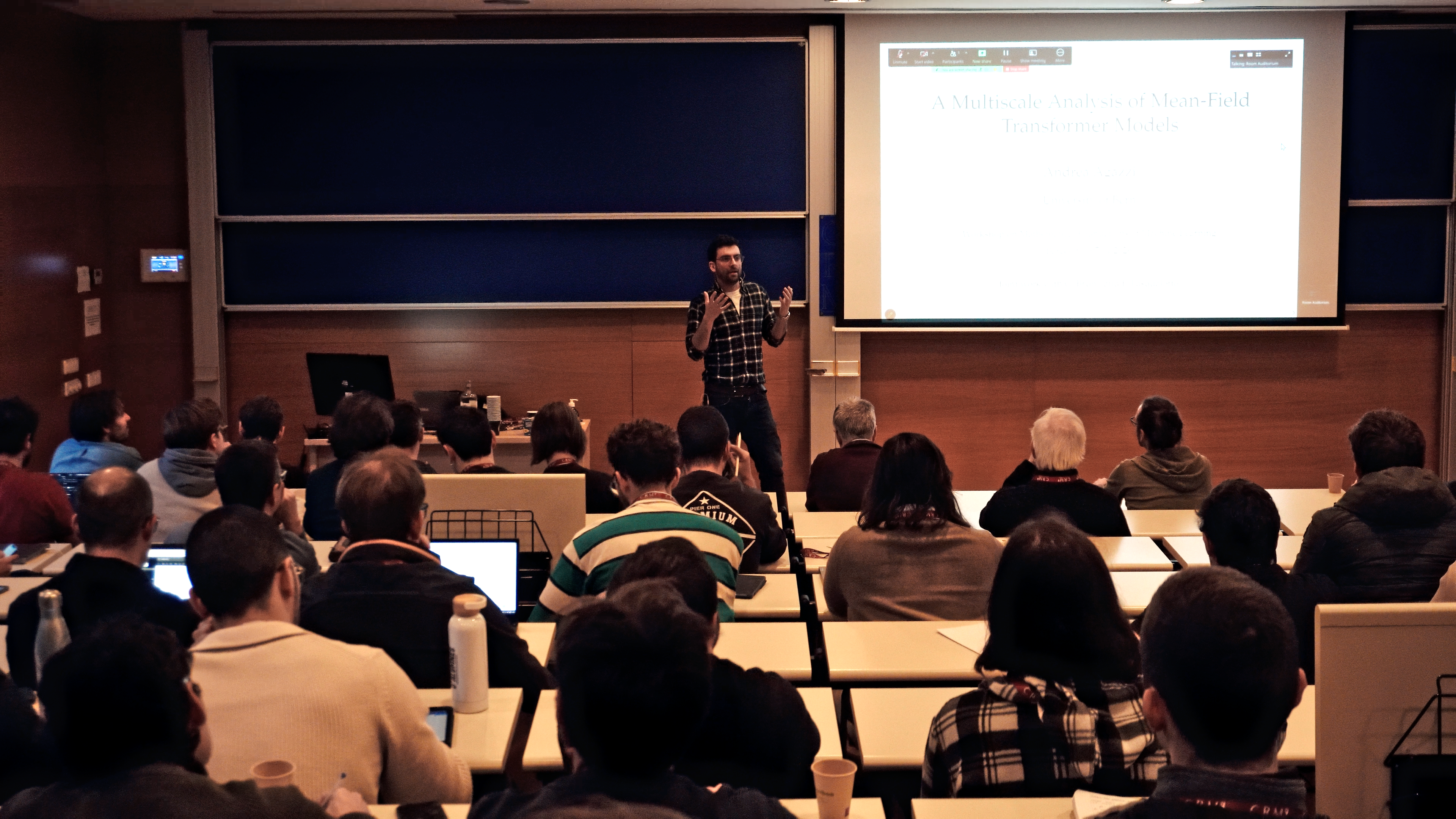
Mathematics and Machine Learning: Barcelona Workshop Brings Disciplines Together
Over 100 researchers gathered at the Centre de Recerca Matemàtica to explore the mathematical foundations needed to understand modern artificial intelligence. The three-day workshop brought together mathematicians working on PDEs, probability, dynamical systems, and...
Barcelona + didactics + CRM = CITAD 8
From 19 to 23 January 2026, the CRM hosted the 8th International Conference on the Anthropological Theory of the Didactic (CITAD 8), a leading international event in the field of didactics research that brought together researchers from different countries in...