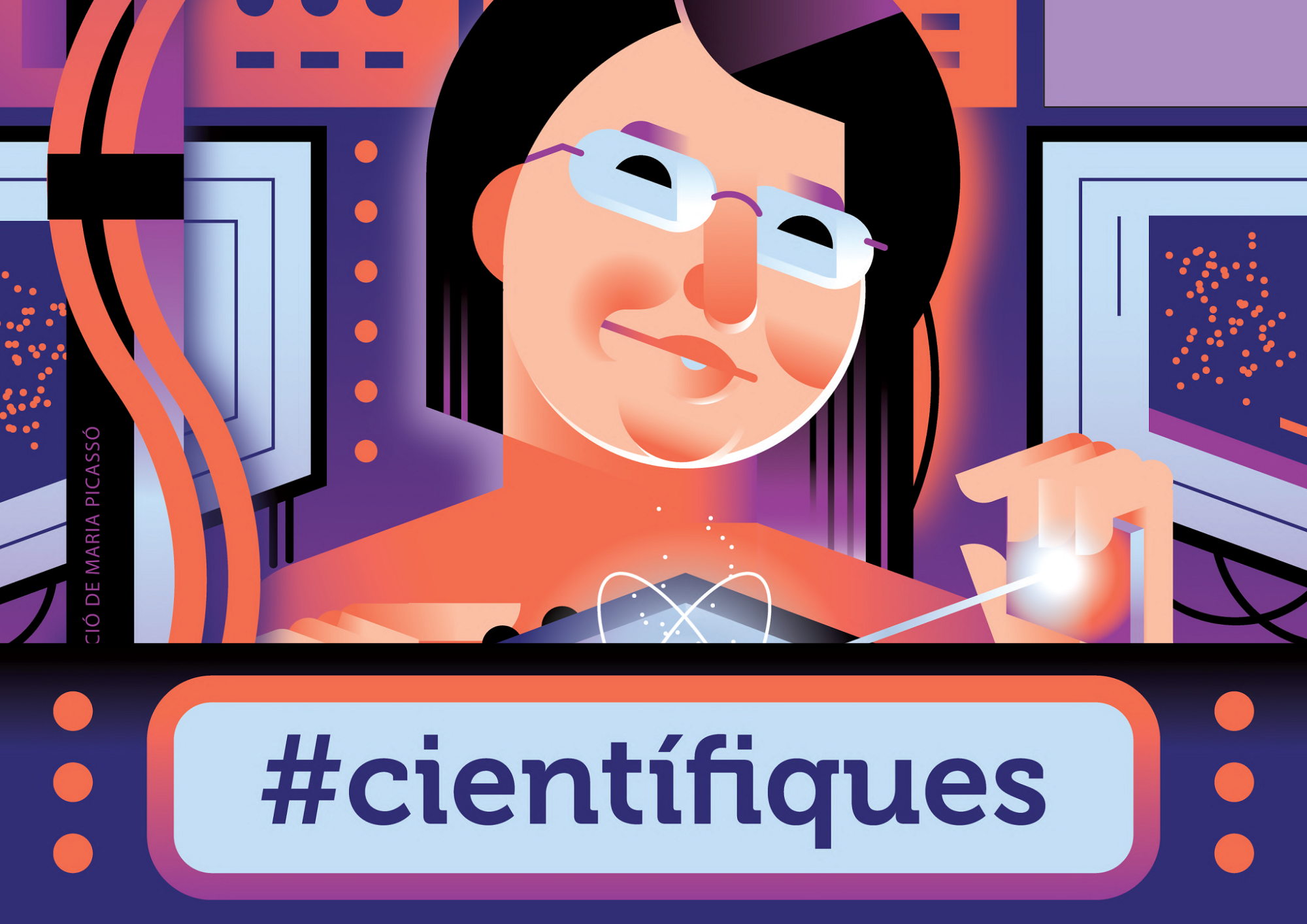
La investigadora Roser Homs (CRM) ha participat en l’edició d’aquest any de #científiques amb una xerrada a alumnes de primària, mostrant com les matemàtiques ajuden a reconstruir arbres filogenètics a partir de l’ADN.
Amb motiu del Dia Internacional de la Dona i la Nena a la Ciència, Roser Homs, investigadora postdoctoral Beatriu de Pinós del grup BIO-GEOMAP del Centre de Recerca Matemàtica (CRM), ha participat en la iniciativa #científiques, oferint una xerrada als alumnes de sisè de primària de l’Escola Pilar Mestres – Jaume Torrens de la Roca del Vallès.
#científiques és un projecte impulsat per la Fundació Catalana per a la Recerca i la Innovació (FCRI) amb l’objectiu de visibilitzar el paper de les dones en la ciència i la tecnologia i fomentar vocacions científiques entre els més joves. La iniciativa reuneix investigadores d’àmbits diversos que visiten escoles i instituts per compartir la seva experiència professional i acostar el món de la recerca als estudiants. Enguany, centenars de científiques han participat en la jornada, oferint xerrades a escoles d’arreu de Catalunya.
Durant la sessió, Homs ha explicat als nens i nenes què l’interessava quan tenia la seva edat, com és la seva feina actual i què necessita per desenvolupar-la. La trobada ha inclòs una activitat participativa on els estudiants han pogut posar en pràctica conceptes de filogenètica amb eines matemàtiques.
Els infants han treballat amb arbres filogenètics, un sistema per representar les relacions evolutives entre espècies. En un exercici pràctic, han hagut de determinar quina de les tres espècies proposades —el ximpanzé, l’orangutan i el goril·la— està més emparentada amb els humans a partir d’un fragment d’ADN. Utilitzant el mètode de màxima parsimònia, han calculat quines mutacions mínimes caldrien per explicar les seqüències d’ADN observades, trobant així l’arbre que millor descriu l’evolució d’aquests primats.
L’activitat ha estat molt ben acollida pels estudiants, que han descobert una aplicació inesperada de les matemàtiques. “M’ha sorprès molt positivament que quan els he preguntat si hi havia matemàtiques darrere l’esport, els videojocs, la música… la majoria han dit que sí i han intentat explicar-ne exemples”, ha comentat Homs. “La sensació que m’he endut és que potser està canviant una mica la percepció de les mates, almenys a primària”.
11 de febrer: fomentant les carreres científiques des de la base
Només el 28% de les persones que es dediquen a la investigació científica al món són dones. A les carreres STEM (ciència, tecnologia, enginyeria i matemàtiques), la xifra puja lleugerament al 35%, però segueix reflectint una desigualtat estructural. A Catalunya, la bretxa és encara més evident: tan sols el 24% de les places d’investigador principal i professor titular a les universitats són ocupades per dones. Aquestes dades, recollides per la UNESCO (2021) i la Generalitat de Catalunya (2022), mostren que les nenes i joves segueixen trobant obstacles per accedir i progressar en el món de la recerca.
La participació de Roser Homs i de moltes altres investigadores en aquesta edició de #científiques demostra la importancia de la divulgació per despertar vocacions, trencar estereotips i transformar la percepció de la ciència. Més enllà d’una assignatura escolar, iniciatives com aquesta també ajuden a descobrir les matemàtiques com una eina essencial per comprendre i interpretar el món, fent-les més properes i atractives per a les noves generacions.
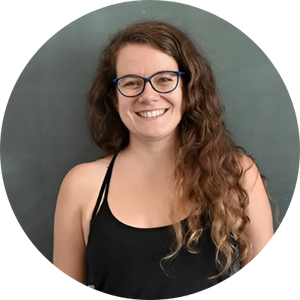
Roser Homs és investigadora postdoctoral Beatriu de Pinós al Centre de Recerca Matemàtica (CRM), on, dins el grup de Marta Casanellas, utilitza mètodes algebraics per abordar qüestions en filogenètica. Especialitzada en Estadística Algebraica i les seves aplicacions a les ciències de la vida, la seva recerca combina Àlgebra Commutativa, Geometria Algebraica i Àlgebra Computacional.
Subscribe for more CRM News
|
|
CRM CommPau Varela
|
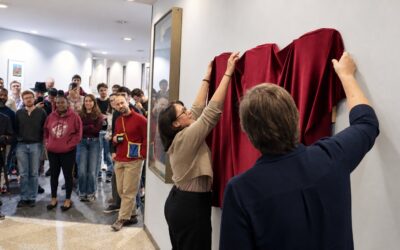
The CRM opens the academic year and unveils its Directors’ Gallery
A review of the year, the Communication Plan 2026–2030 and three research talks filled the morning of 19 October.The unveiling of the Directors’ Gallery.CRM CommPau VarelaCRMComm@crm.catGet the latest CRM news and activities in your inbox.Recent...
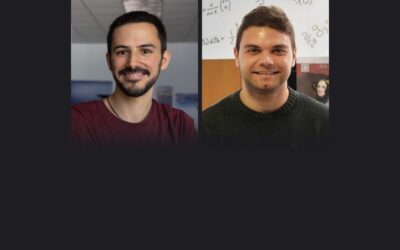
The CRM Mentoring Programme, as Told by One of Its Pairs
PhD student Joaquim Duran and mathematician Robert Cardona, one of the pairs in the CRM Mentoring ProgrammeJoaquim Duran (left) and Robert Cardona.CRM CommPau VarelaCRMComm@crm.catGet the latest CRM news and activities in your inbox.Recent...
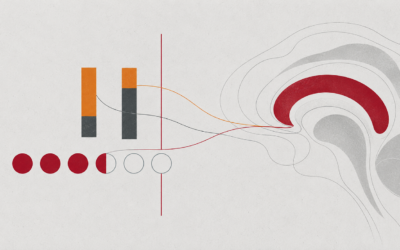
When the reward comes within reach, the brain changes what it compares
As the tokens piled up, choices got faster and more accurate at the same time. The yardstick for judging each offer had moved.CRM CommPau VarelaCRMComm@crm.catGet the latest CRM news and activities in your inbox.Recent newsletters →Two subjects...
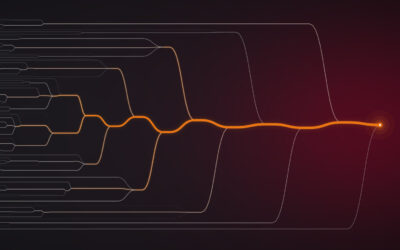
Almost every automaton can be reset with a short word
Guillaume Chapuy (Université Paris Cité, CNRS) and Guillem Perarnau (UPC, CRM) have shown that a random finite automaton with n states can, with high probability, be reset by a word of length of order √n log n. The result, published in ACM Transactions on Algorithms, pins the exponent at 1/2, the lower end of a decade of numerical estimates, and addresses the random version of the synchronization problem behind a conjecture Ján Černý posed in 1964 and which still remains open.
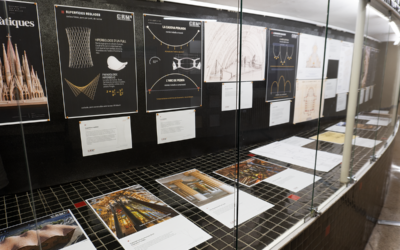
Exposició ‘Les matemàtiques de Gaudí’
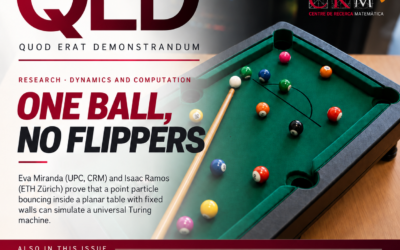
CRM quod erat demonstrandum | 48
ADA: Decoding Brain Signals Misaligned in Time
The study addresses a key limitation of current brain decoding techniques: the difficulty of interpreting internal mental processes whose temporal dynamics vary from trial to trial.Decoding what is happening in a person’s mind from their brain activity is one of the...
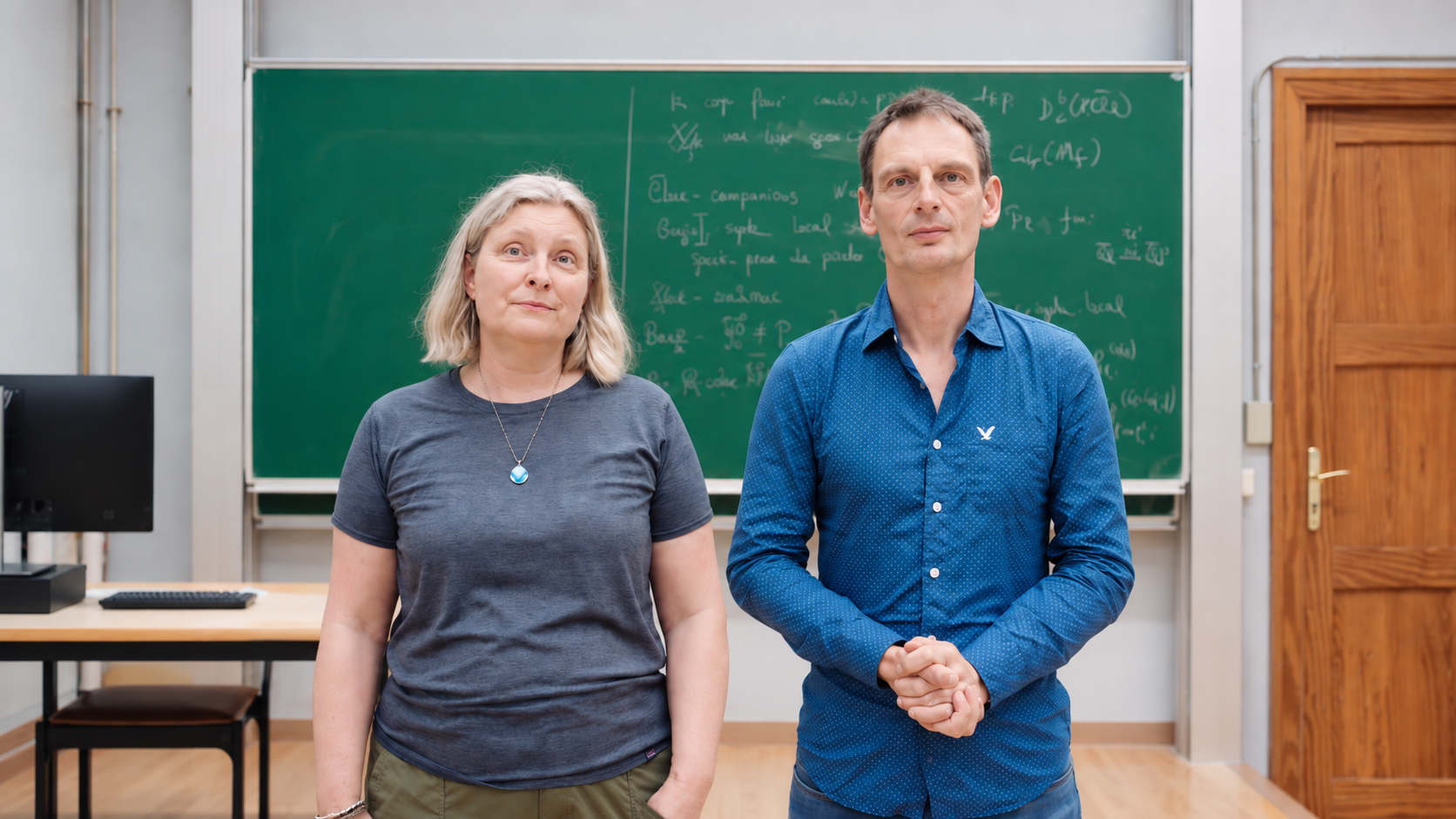
Rare curves, many points: Christophe Ritzenthaler and Rachel Pries on their research and the work around it
Christophe Ritzenthaler (Université de Rennes) and Rachel Pries (Colorado State University) both work on curves over finite fields: he hunts curves with as many points as possible, she hunts curves that almost never occur. In conversation with the CRM during their...
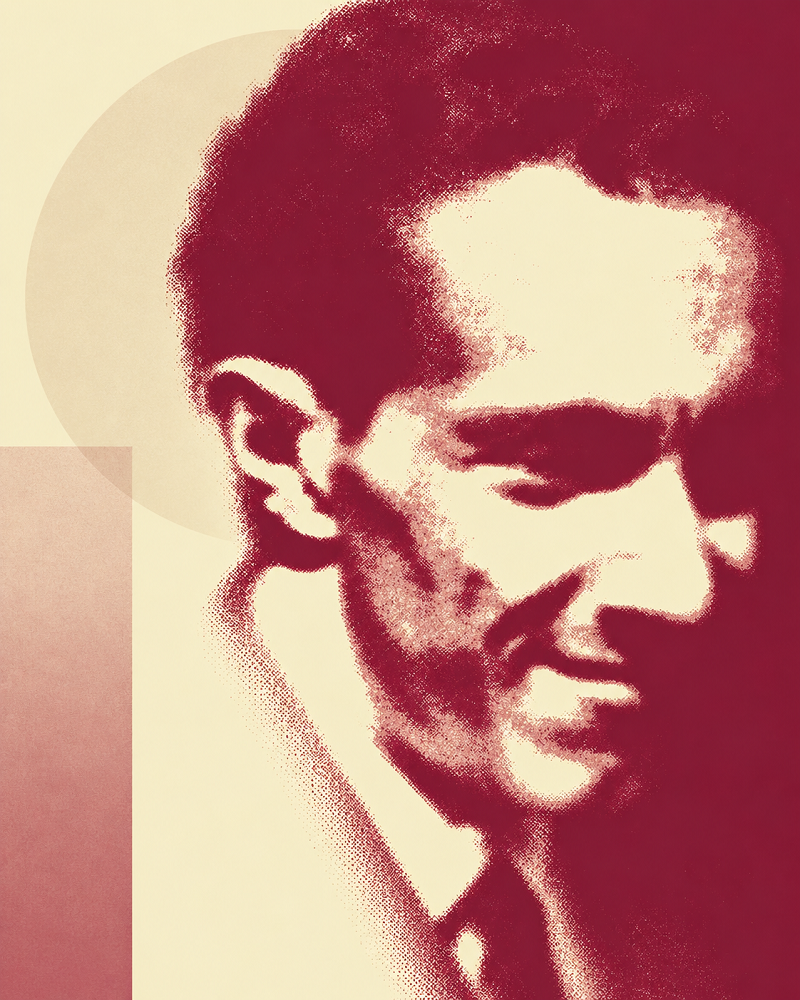
Call open for the 2027 Ferran Sunyer i Balaguer Prize
The Ferran Sunyer i Balaguer Foundation is accepting submissions for its 2027 prize, which awards 15,000 euros and publication in Birkhäuser's Progress in Mathematics series to an expository monograph on an active area of mathematical research. The deadline is 27...
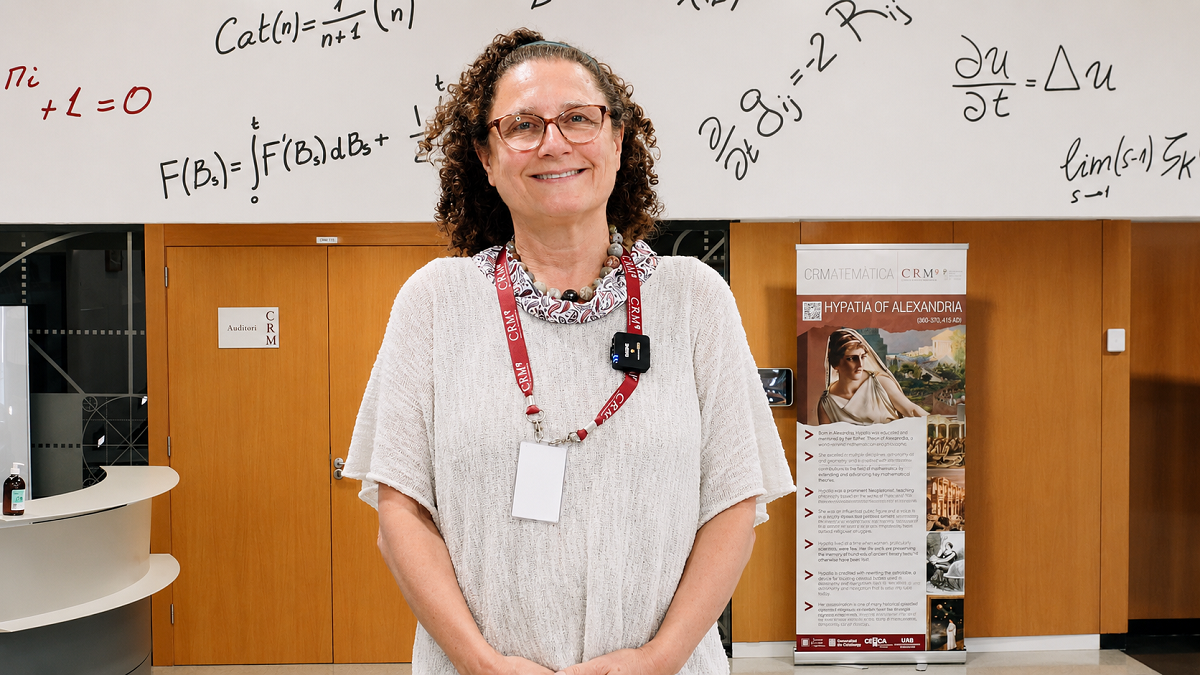
Susanna Terracini delivers the CRM Colloquium 2026
Susanna Terracini (Università di Torino) delivered the CRM Colloquium 2026 on 14 July, presenting a rigidity result for Kepler billiards obtained with Stefano Baranzini, Vivina Barutello and Irene De Blasi. She was at the centre as a member of the CRM Scientific...
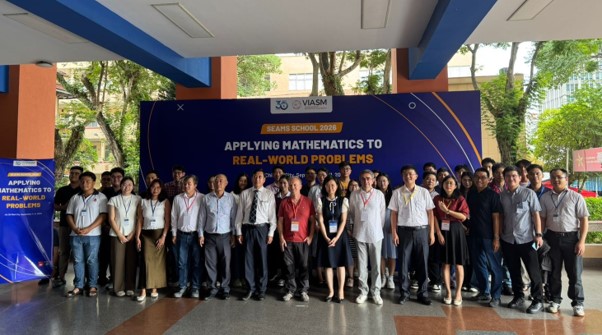
Ho Chi Minh City hosts the SEAMS School on applying mathematics to real-world problems
Students from across the region took courses and worked on group projects at a school co-organised by CRM researcher Tim Myers.CRM CommPau VarelaCRMComm@crm.catGet the latest CRM news and activities in your inbox.Recent newsletters →Between 4 and...

A single ball on a fixed table can compute: Eva Miranda and Isaac Ramos prove that two-dimensional billiards are Turing complete
Eva Miranda (UPC, CRM) and Isaac Ramos (ETH Zürich) show that a point particle bouncing inside a planar table with fixed walls can simulate a universal Turing machine, settling a question Cristopher Moore left open in 1990. The result grew out of a master’s project...