

From October 6–10, 2025, the Centre de Recerca Matemàtica hosted the XIII GEFENOL-DIFENSC Summer School, bringing together young researchers and leading experts to explore the role of statistical physics in understanding complex systems. The program featured courses on cancer modeling, active matter, stochastic thermodynamics, and non-equilibrium phenomena, alongside tutorials, invited talks, and poster sessions that showcased cutting-edge research across disciplines.
From October 6 to 10, 2025, the Centre de Recerca Matemàtica (CRM) hosted the XIII GEFENOL-DIFENSC Summer School on Statistical Physics of Complex Systems. This international event aims to train young researchers in the use of statistical physics to understand complex systems—an approach that has proven essential in fields ranging from biology and ecology to information theory and social dynamics.
The program featured four main courses delivered by internationally renowned lecturers:
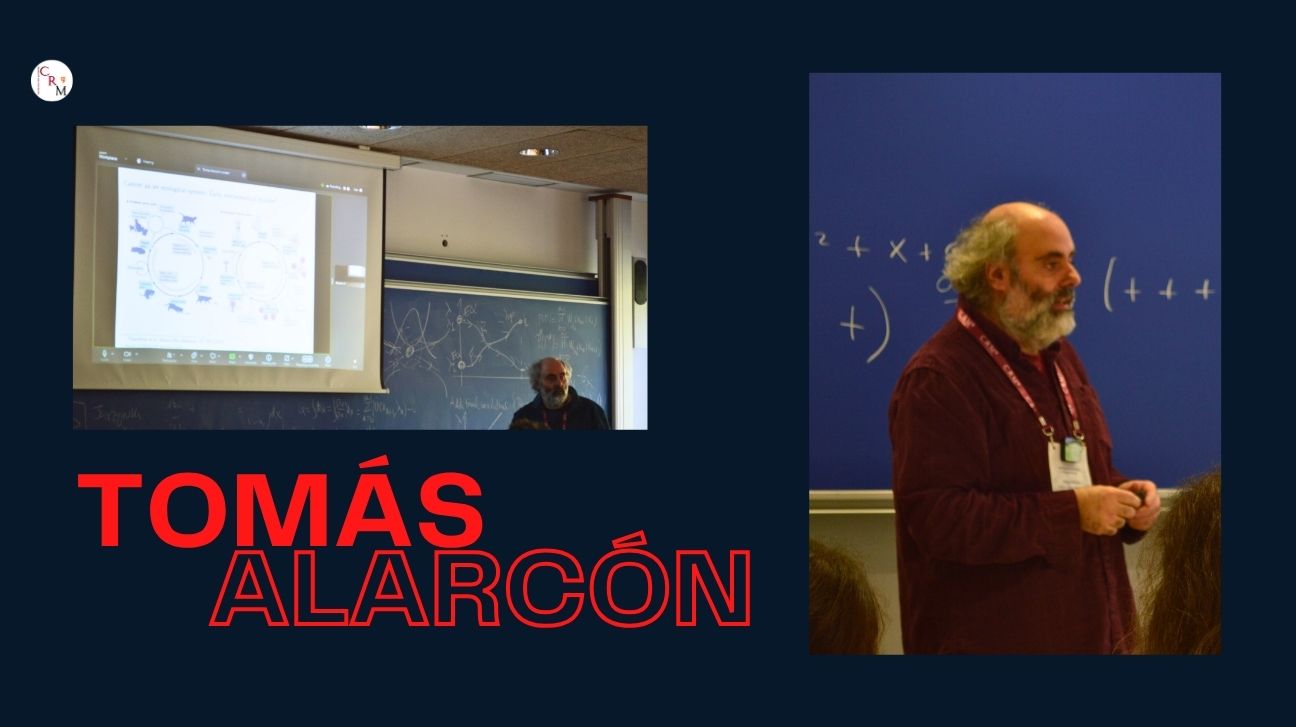
Tomás Alarcón (ICREA–CRM) delivered a course on Cancer as an Ecological Process, presenting tumours as evolving ecosystems. Mutated cells compete, cooperate, and adapt within hostile environments, offering new insights into why cancer emerges and why it remains so difficult to treat. Alarcón leads the cancer modelling group at CRM. His research focuses on mathematical biology, particularly multiscale and stochastic modelling of tumour growth, drug resistance, and tumour-induced angiogenesis. Since 2015, he has been an ICREA Research Professor and has helped position CRM as a reference centre in the application of mathematics to biomedicine.
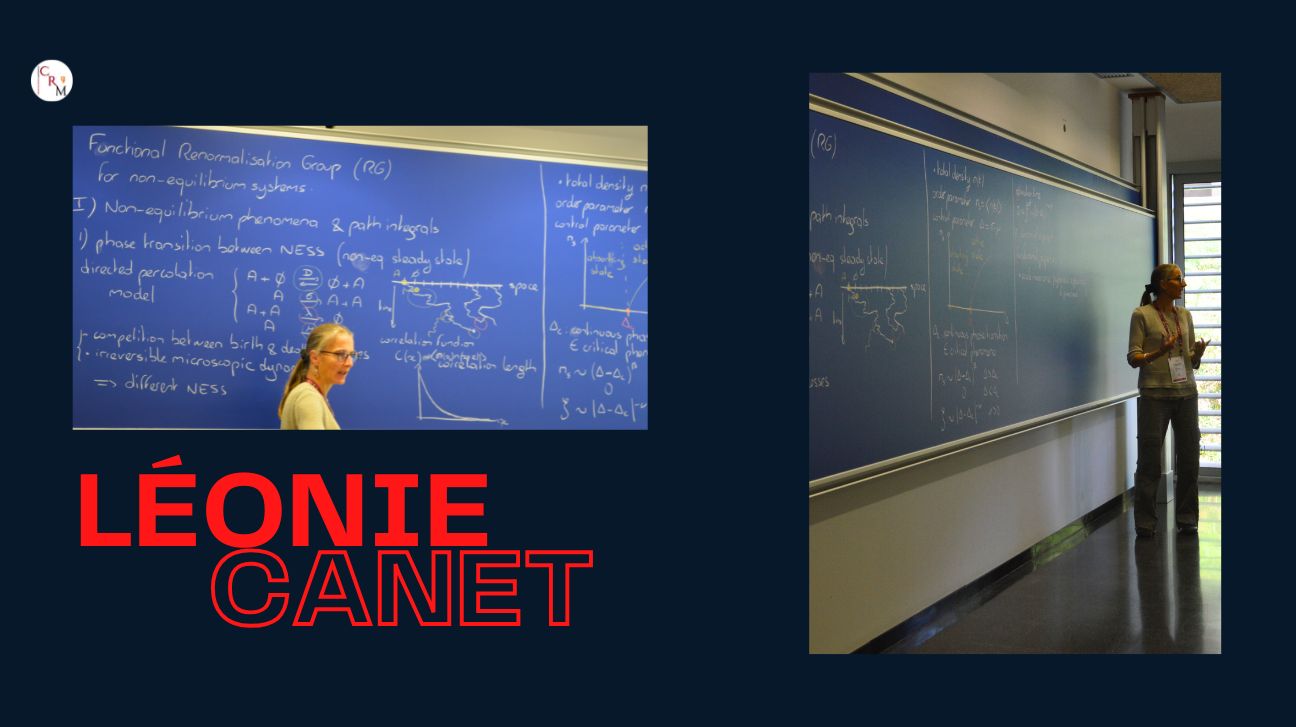
Léonie Canet (Université Grenoble Alpes) delivered a course on Functional Renormalisation Group for Nonequilibrium Systems, introducing the FRG formalism and its application to non-equilibrium critical phenomena. She focused on the kinetic roughening of stochastically growing interfaces, described by the Kardar-Parisi-Zhang equation. Canet is a prominent researcher in statistical physics, known for her contributions to non-perturbative renormalisation techniques and their use in understanding turbulence, reaction-diffusion systems, and universality far from equilibrium.
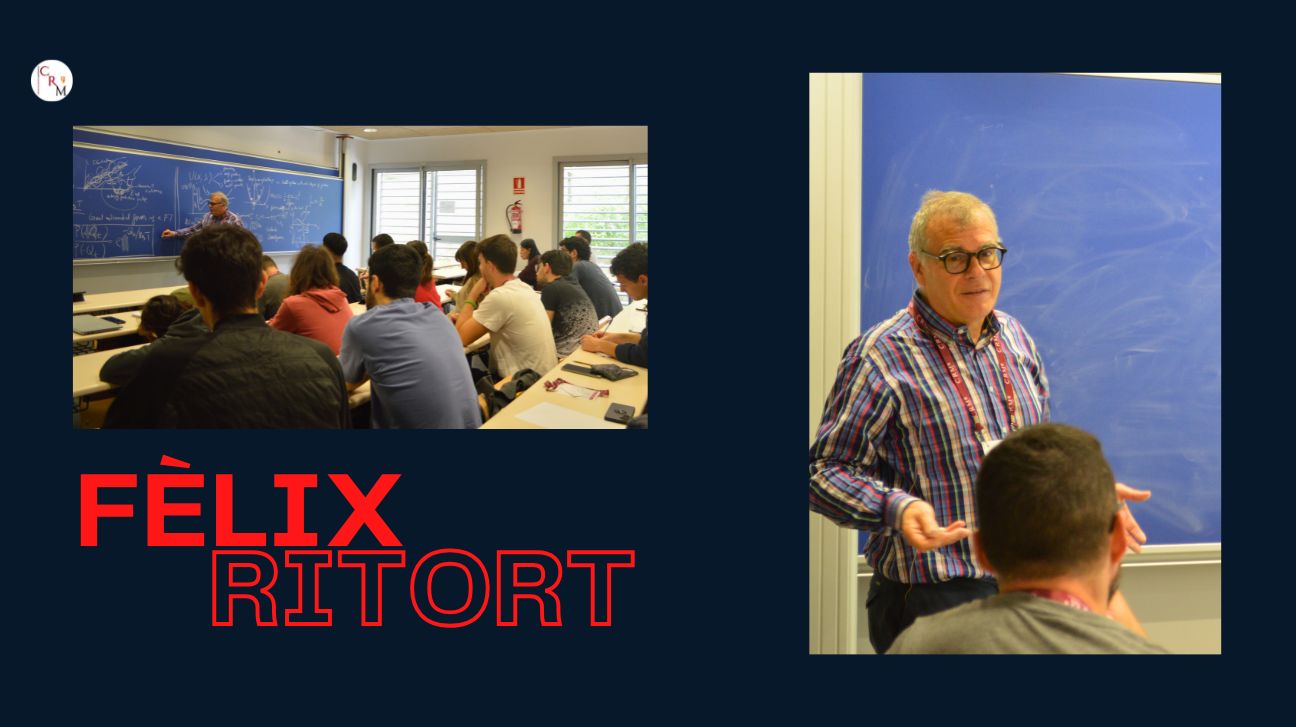
Fèlix Ritort (Universitat de Barcelona) delivered a course on Stochastic Thermodynamics: Theory and Experiments, presenting the essential concepts and tools to understand fluctuation theorems and the conversion of information into energy. Ritort is a full professor of condensed matter physics and leads the Small Biosystems Lab at UB, a world-renowned group in single-molecule biophysics. His research spans statistical physics, disordered systems, and non-equilibrium dynamics, with a strong focus on molecular thermodynamics. He earned his PhD under Nobel laureate Giorgio Parisi and has received multiple awards, including the ICREA Academia and the Bruker Prize for his contributions to molecular biophysics.
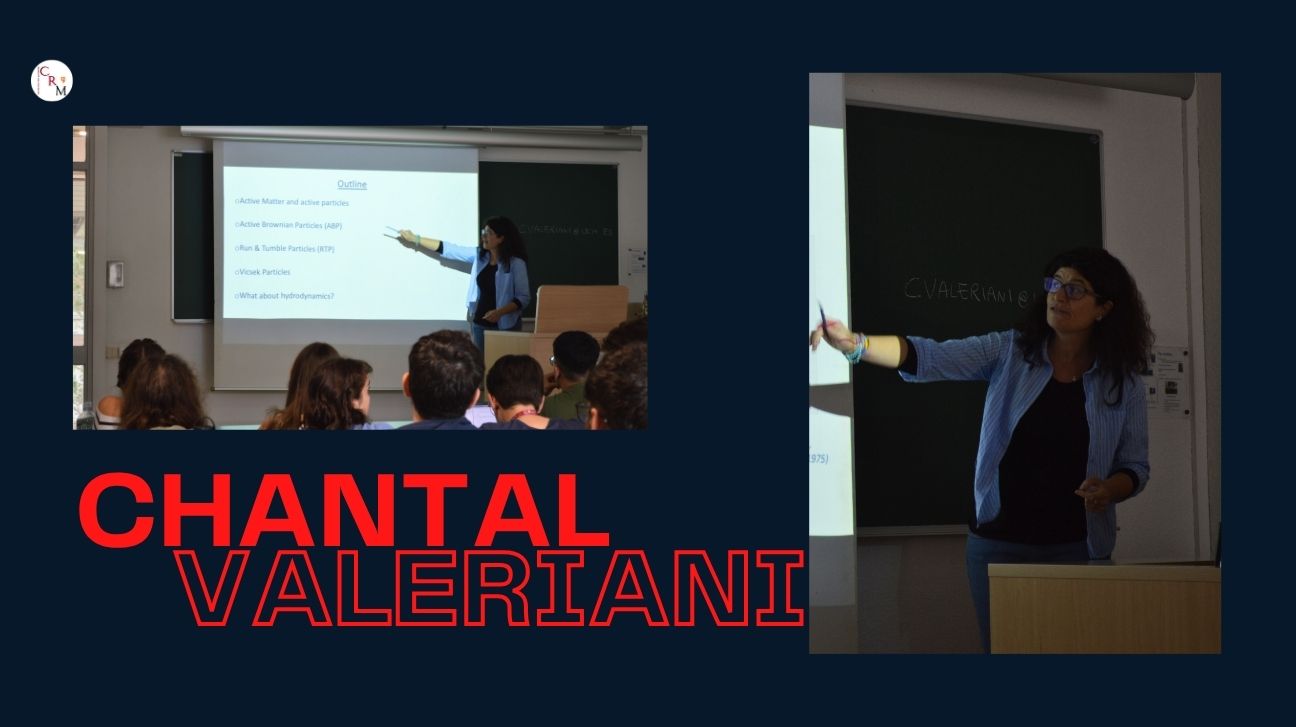
Chantal Valeriani (Universidad Complutense de Madrid) delivered a course on Collective Behaviour of Active Systems, focusing on how active matter—systems of energy-consuming units—exhibits large-scale collective motion. She introduced key models like Active Brownian Particles and the Vicsek model, and presented ActiveNet, a machine-learning tool that infers interaction forces from particle trajectories. With a PhD from the University of Amsterdam under Prof. Daan Frenkel and postdoctoral experience at the University of Edinburgh, she is a leading researcher in soft matter and active systems, and currently Associate Professor at UCM.
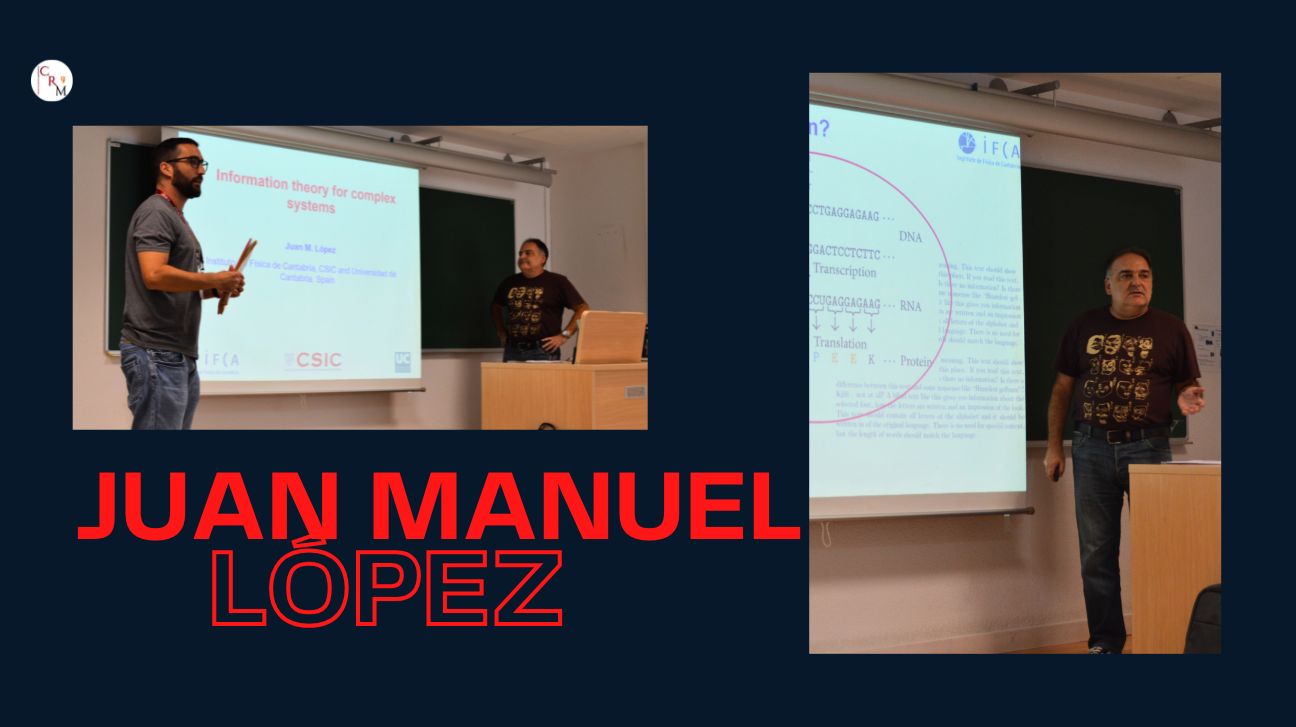
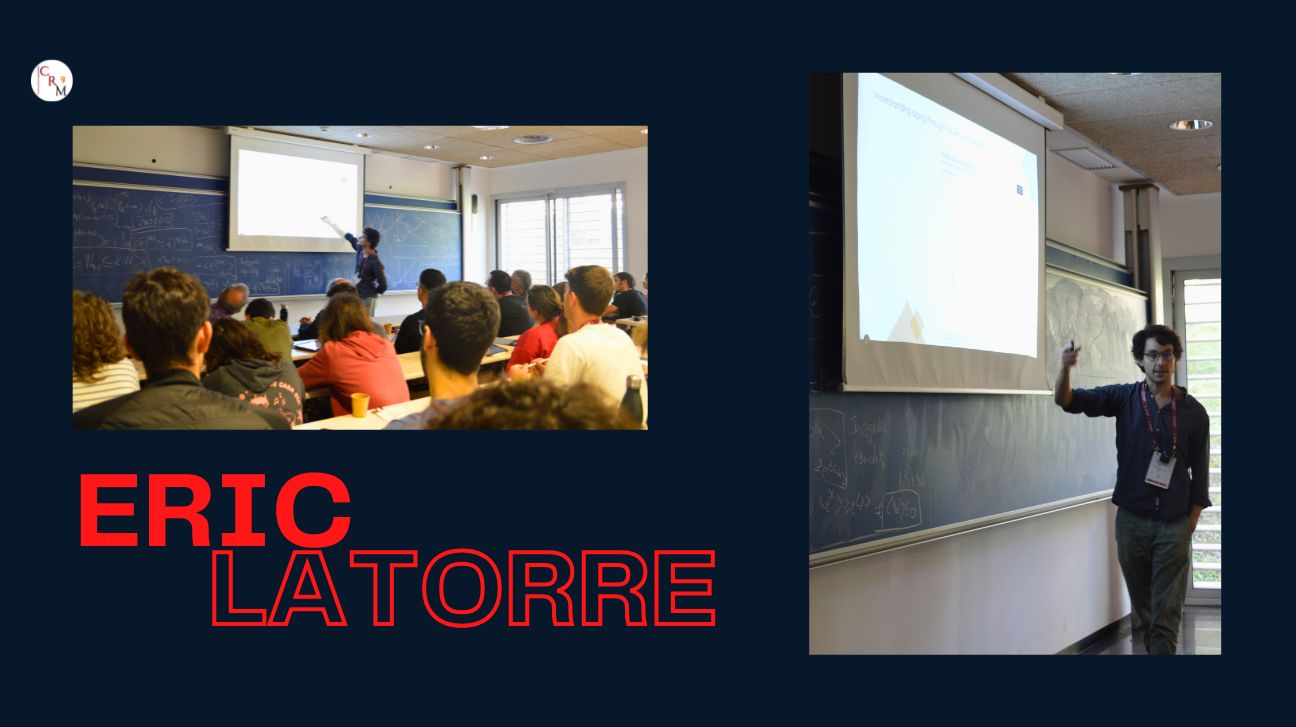
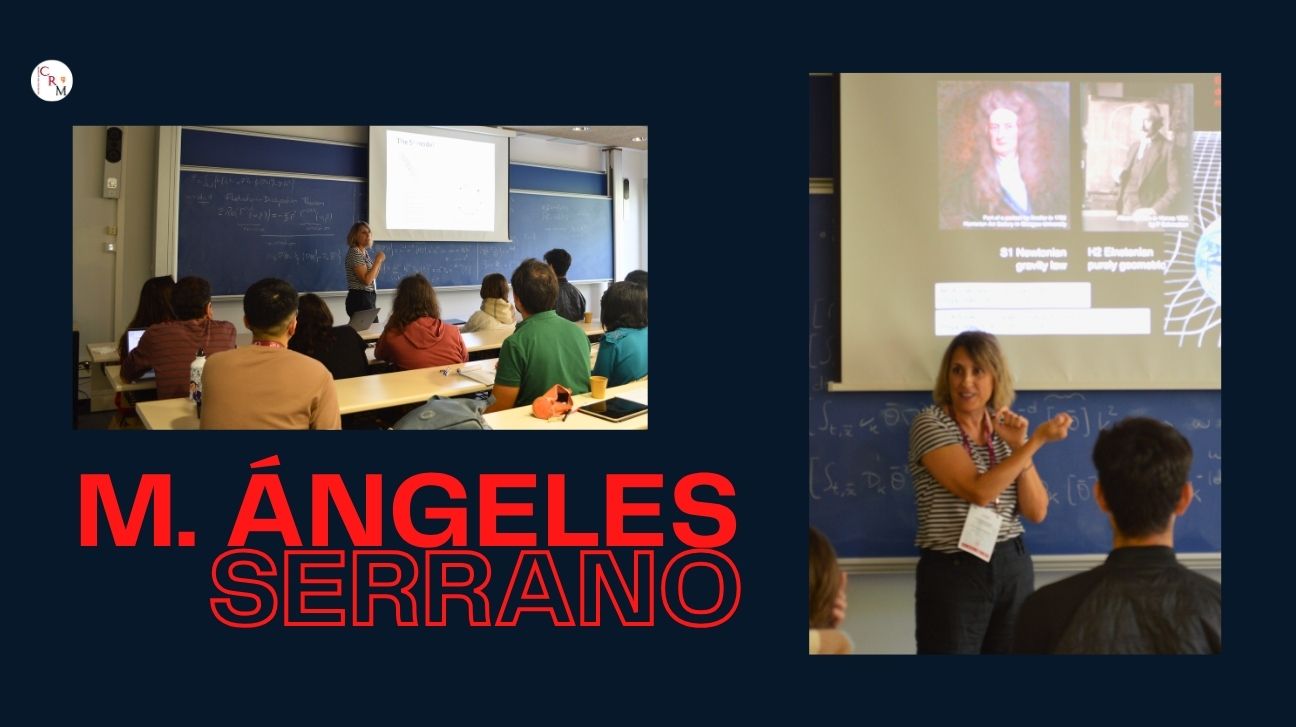
In addition to the main courses, the program was enriched by two invited tutorials: Juan Manuel López (Instituto de Física de Cantabria) introduced key ideas from information theory, while Isabel Pastor (Universitat de Barcelona) guided participants through a visit to Fèlix Ritort’s lab, offering a hands-on perspective on experimental biophysics. The school also featured invited talks on diverse topics: Albert Beardo (UAB) discussed transport phenomena beyond local equilibrium, Eric Latorre-Crespo (CRG–CRM) presented scaling laws in stem cell dynamics and aging, Javier Cristín (UAB) explored collective motion from spins to swarms, and M. Ángeles Serrano (ICREA–UB) addressed the statistical mechanics of hyperbolic random graphs. The event concluded with closing remarks by Jordi Mompart (UAB).
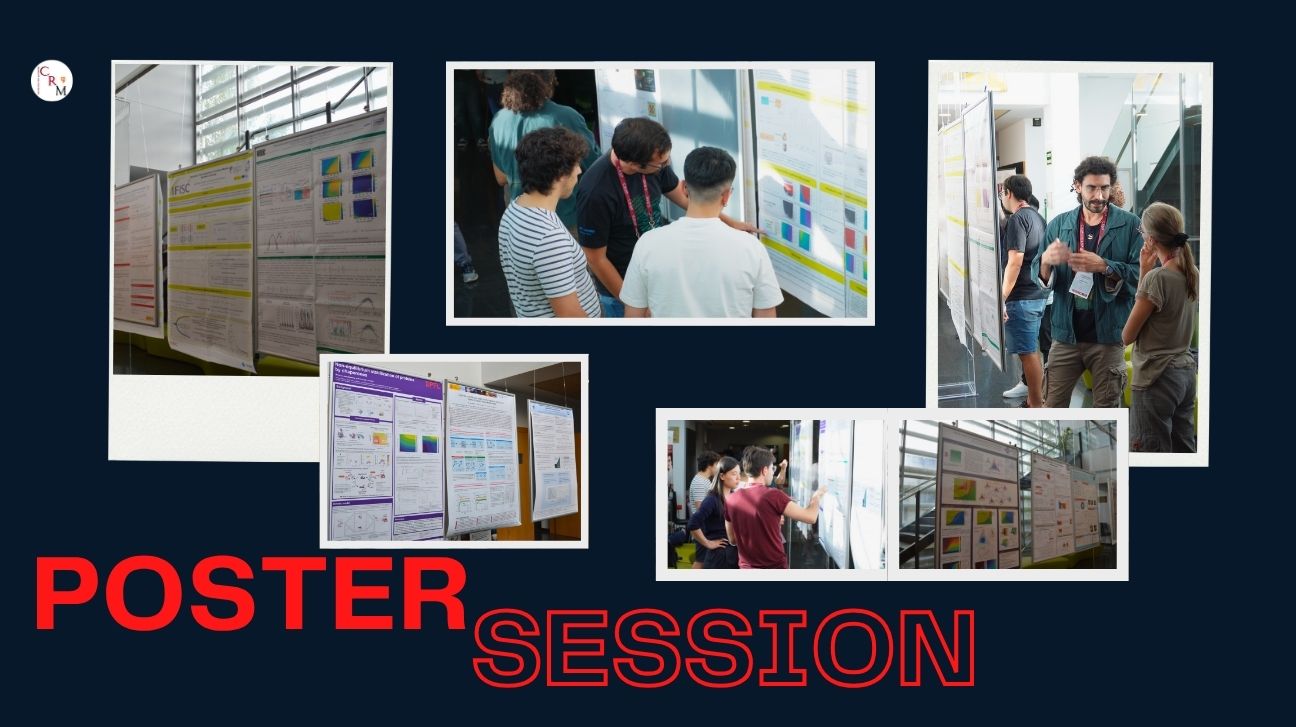
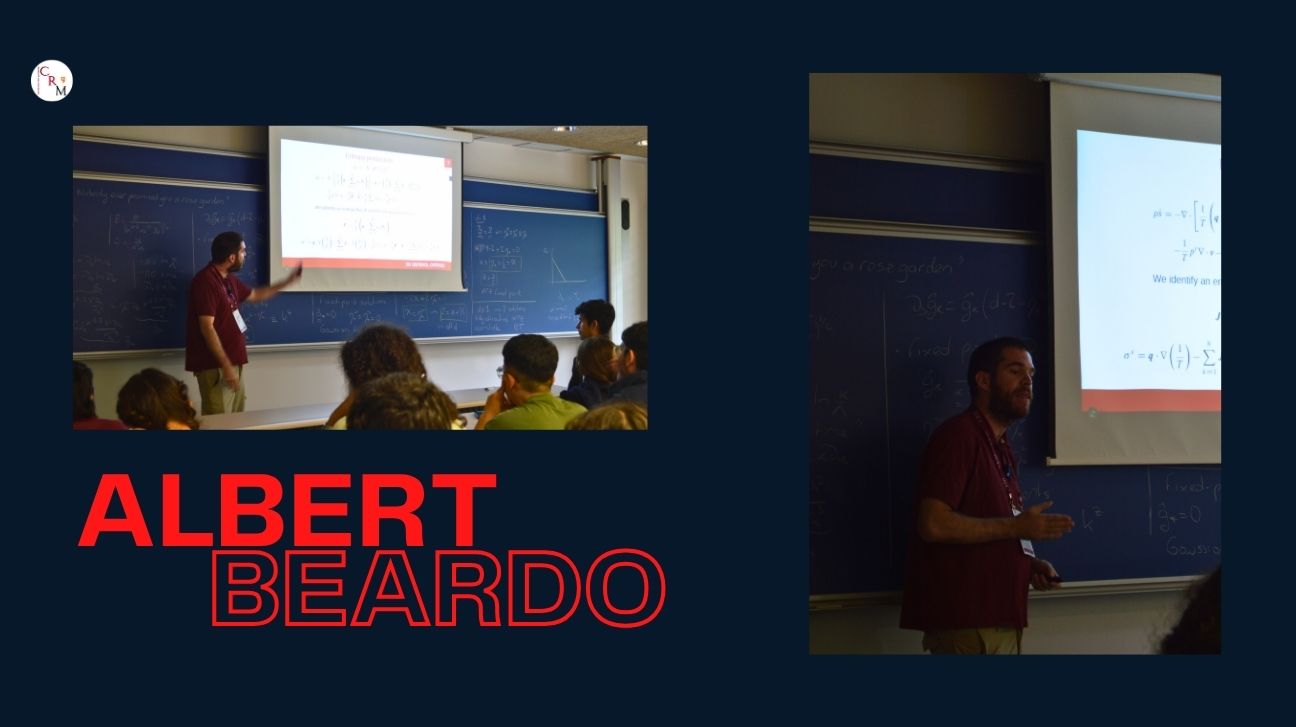
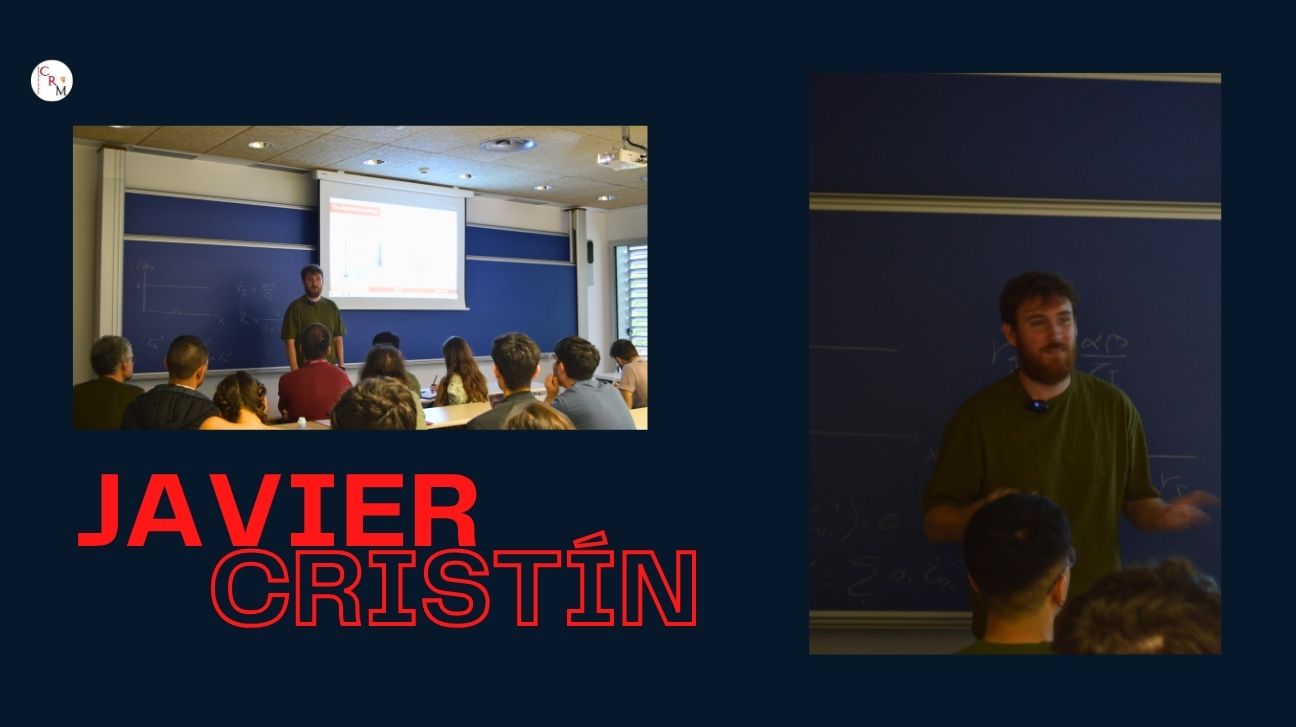
The school also featured a vibrant poster session and a series of contributed talks by early-career researchers, showcasing cutting-edge work on topics such as bacterial motility, stochastic dynamics in fish schooling, protein stabilization, chaotic population models, and network-based approaches to molecular complexity. Presenters came from institutions across Europe, including Roma Tre University, EPFL, King’s College London, Universitat Politècnica de Catalunya, and CSIC, among others. These sessions provided a dynamic space for scientific exchange and highlighted the diversity of approaches within the field of statistical physics of complex systems.
|
|
CRM CommNatalia Vallina
|

The CRM opens the academic year and unveils its Directors’ Gallery
A review of the year, the Communication Plan 2026–2030 and three research talks filled the morning of 19 October.The unveiling of the Directors’ Gallery.CRM CommPau VarelaCRMComm@crm.catGet the latest CRM news and activities in your inbox.Recent...
The CRM Mentoring Programme, as Told by One of Its Pairs
PhD student Joaquim Duran and mathematician Robert Cardona, one of the pairs in the CRM Mentoring ProgrammeJoaquim Duran (left) and Robert Cardona.CRM CommPau VarelaCRMComm@crm.catGet the latest CRM news and activities in your inbox.Recent...
When the reward comes within reach, the brain changes what it compares
As the tokens piled up, choices got faster and more accurate at the same time. The yardstick for judging each offer had moved.CRM CommPau VarelaCRMComm@crm.catGet the latest CRM news and activities in your inbox.Recent newsletters →Two subjects...

Almost every automaton can be reset with a short word
Guillaume Chapuy (Université Paris Cité, CNRS) and Guillem Perarnau (UPC, CRM) have shown that a random finite automaton with n states can, with high probability, be reset by a word of length of order √n log n. The result, published in ACM Transactions on Algorithms, pins the exponent at 1/2, the lower end of a decade of numerical estimates, and addresses the random version of the synchronization problem behind a conjecture Ján Černý posed in 1964 and which still remains open.
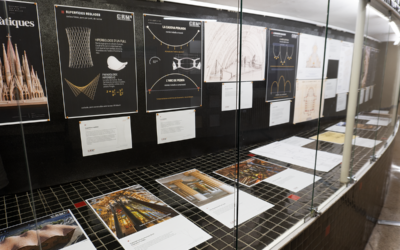
Exposició ‘Les matemàtiques de Gaudí’

CRM quod erat demonstrandum | 48

ADA: Decoding Brain Signals Misaligned in Time
The study addresses a key limitation of current brain decoding techniques: the difficulty of interpreting internal mental processes whose temporal dynamics vary from trial to trial.Decoding what is happening in a person’s mind from their brain activity is one of the...
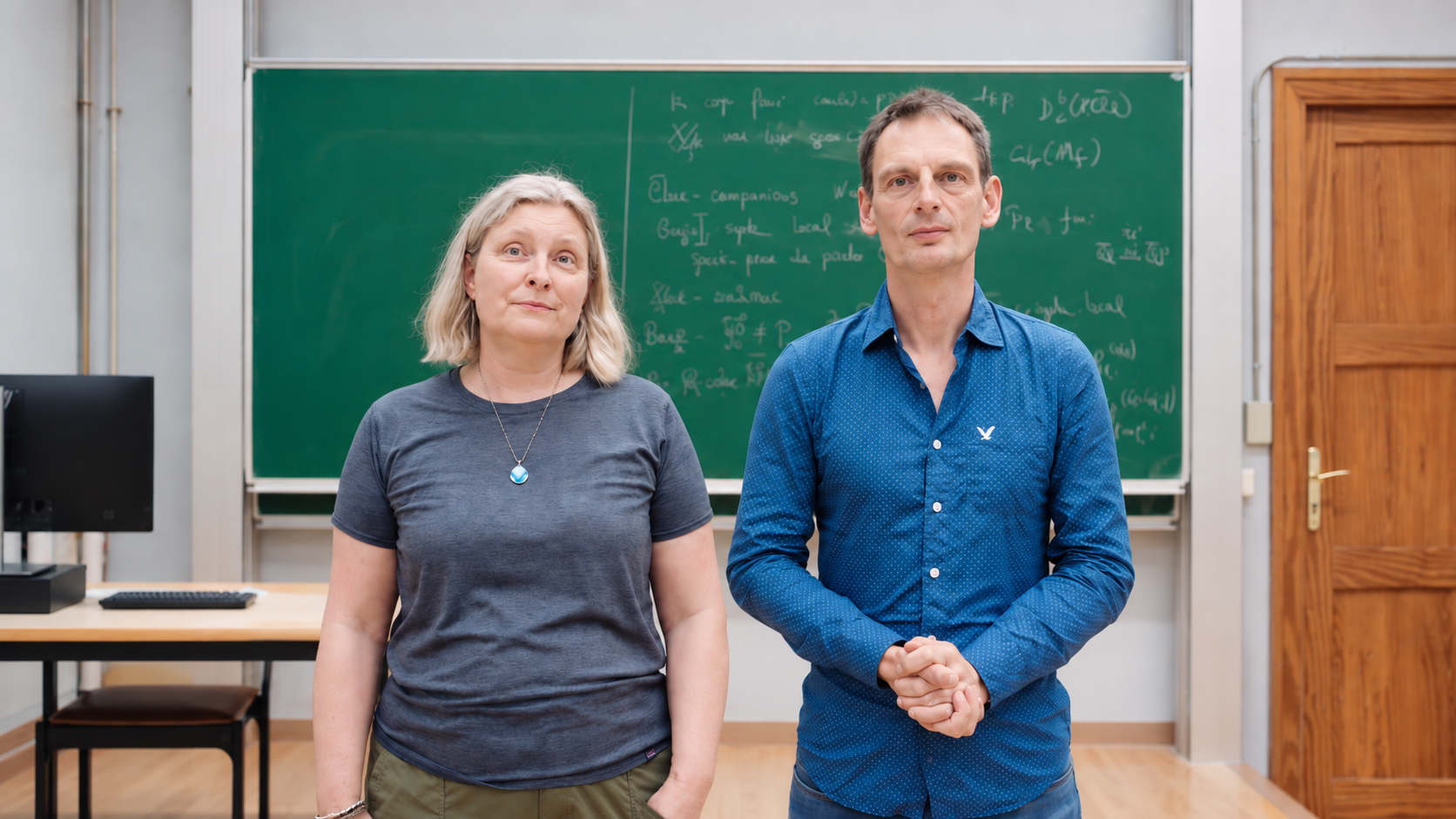
Rare curves, many points: Christophe Ritzenthaler and Rachel Pries on their research and the work around it
Christophe Ritzenthaler (Université de Rennes) and Rachel Pries (Colorado State University) both work on curves over finite fields: he hunts curves with as many points as possible, she hunts curves that almost never occur. In conversation with the CRM during their...

Call open for the 2027 Ferran Sunyer i Balaguer Prize
The Ferran Sunyer i Balaguer Foundation is accepting submissions for its 2027 prize, which awards 15,000 euros and publication in Birkhäuser's Progress in Mathematics series to an expository monograph on an active area of mathematical research. The deadline is 27...
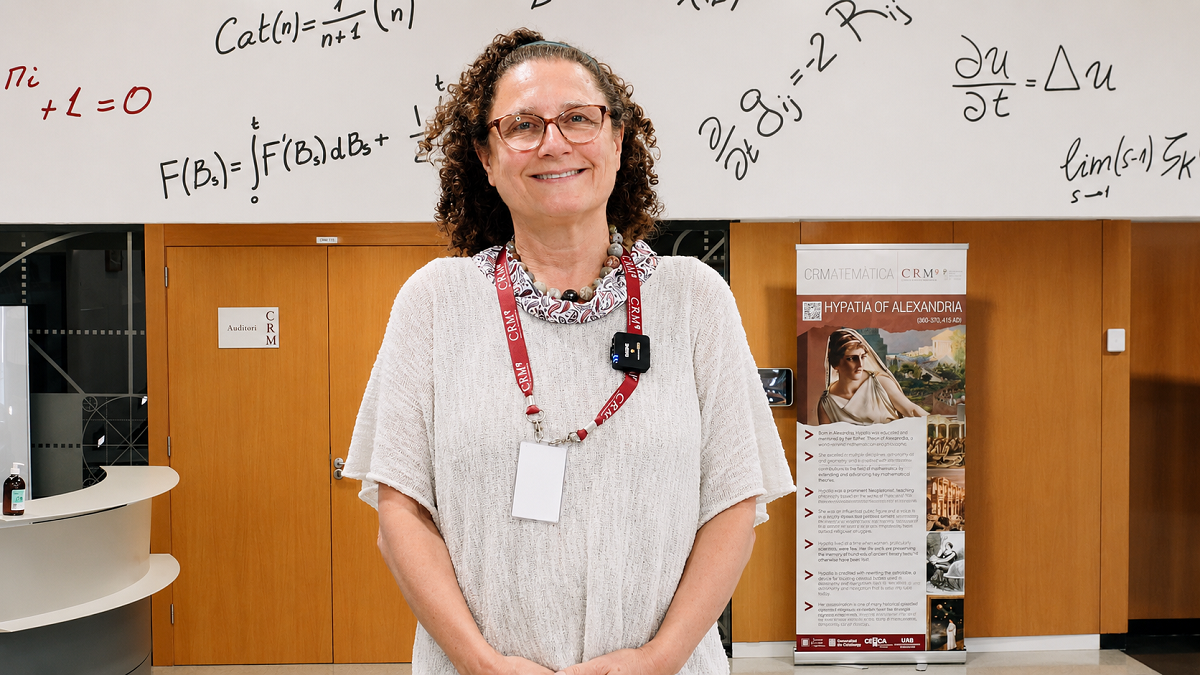
Susanna Terracini delivers the CRM Colloquium 2026
Susanna Terracini (Università di Torino) delivered the CRM Colloquium 2026 on 14 July, presenting a rigidity result for Kepler billiards obtained with Stefano Baranzini, Vivina Barutello and Irene De Blasi. She was at the centre as a member of the CRM Scientific...
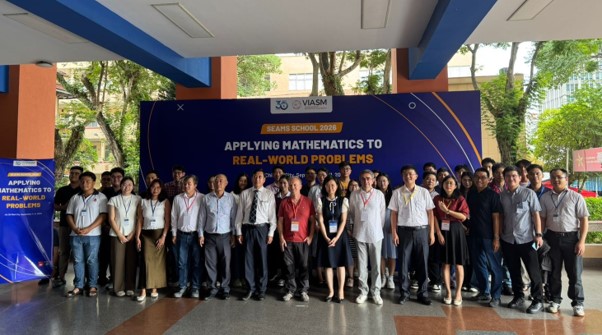
Ho Chi Minh City hosts the SEAMS School on applying mathematics to real-world problems
Students from across the region took courses and worked on group projects at a school co-organised by CRM researcher Tim Myers.CRM CommPau VarelaCRMComm@crm.catGet the latest CRM news and activities in your inbox.Recent newsletters →Between 4 and...

A single ball on a fixed table can compute: Eva Miranda and Isaac Ramos prove that two-dimensional billiards are Turing complete
Eva Miranda (UPC, CRM) and Isaac Ramos (ETH Zürich) show that a point particle bouncing inside a planar table with fixed walls can simulate a universal Turing machine, settling a question Cristopher Moore left open in 1990. The result grew out of a master’s project...