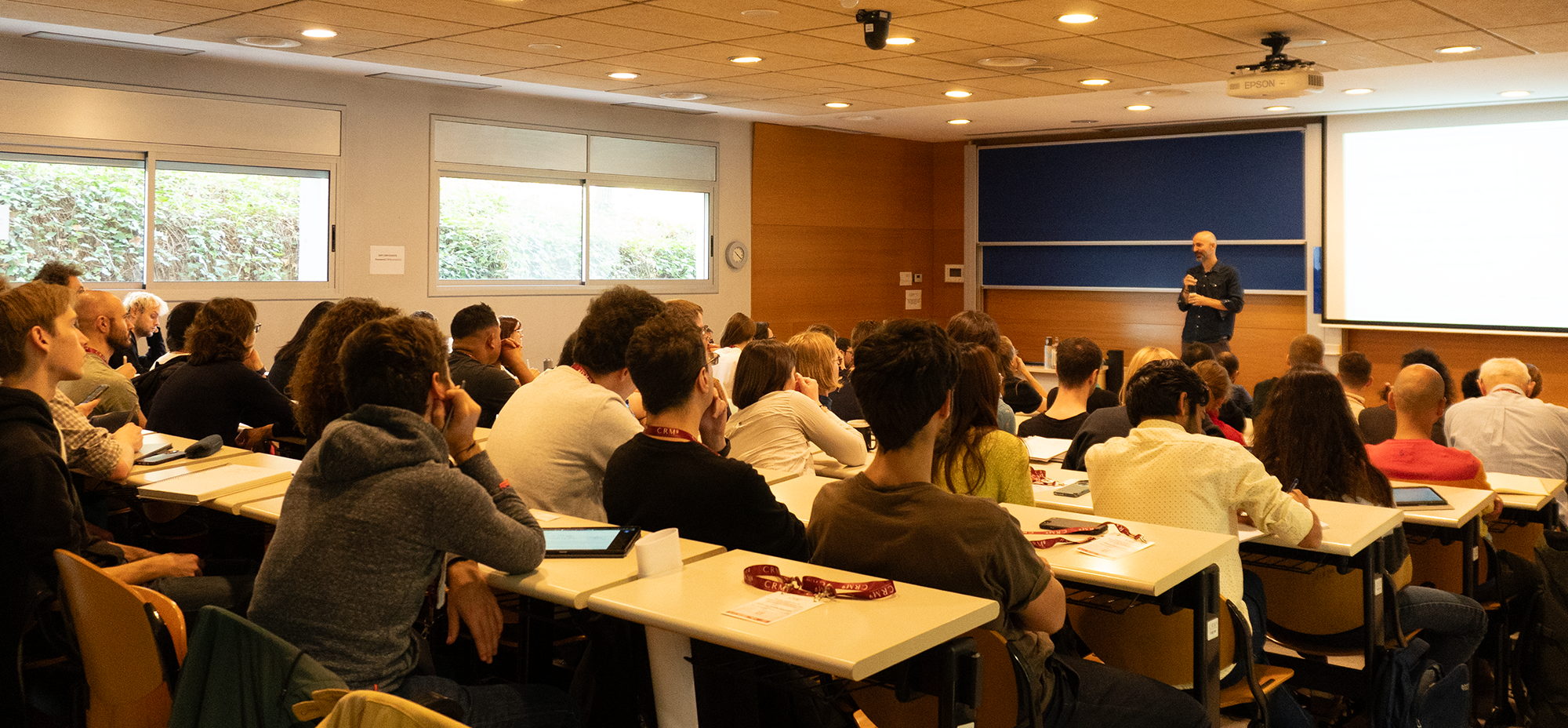
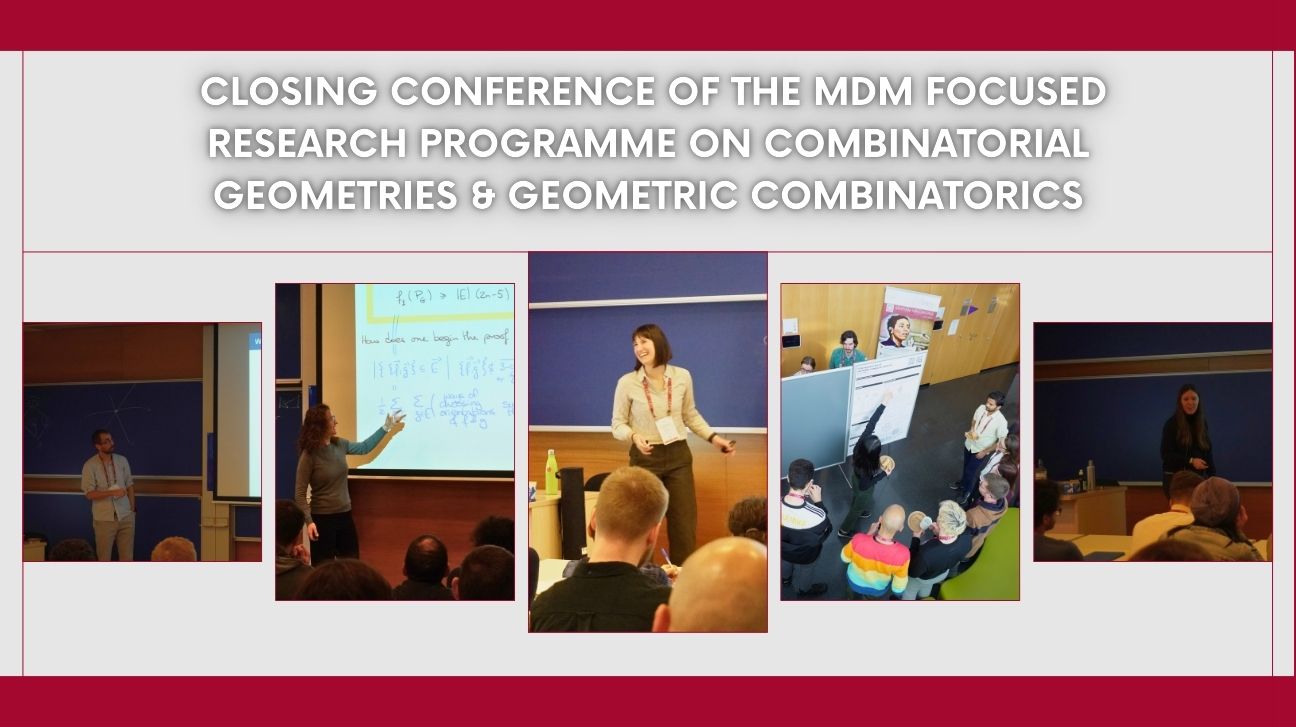
During five days, the CRM hosted the Closing Conference of the MDM Focused Research Programme on Combinatorial Geometries & Geometric Combinatorics. The event featured plenary talks, contributed sessions, and posters on topics from matroids and polytopes to tropical geometry and optimization. It showcased the vitality of the field and fostered international collaboration and new research directions.
From November 24 to 28, 2025, the Centre de Recerca Matemàtica (CRM) hosted the Closing Conference of the MDM Focused Research Programme on Combinatorial Geometries & Geometric Combinatorics. This event marked the culmination of two months of activities that included advanced courses, seminars, and collaborative projects on combinatorial geometry and matroid theory.
The conference brought together international experts and young researchers to share advances in areas such as polytopes, matroids, Chow polynomials, and combinatorial structures related to geometry. Over five days, the program featured invited talks, contributed presentations, and poster sessions, fostering scientific exchange in a collaborative environment.
The program included eight plenary lectures addressing central topics in combinatorial geometry and matroid theory. Federico Ardila presented new inequalities for trees and matroids, connecting distance matrices with Lorentzian polynomials. Georg Loho showed how, based on Seymour’s decomposition, one can compute the basis generating polynomial of regular matroids without subtractions, enabling small ReLU neural networks for tropical optimisation. Giulia Codenotti analysed symmetric edge polytopes and their Ehrhart properties, while Luis Ferroni explored Chow polynomials and real-rootedness. Marie Brandenburg discussed minimal decompositions of piecewise linear functions via polyhedra. Spencer Backman introduced categorical associahedra and their realisation as polyhedral fans, linking combinatorics and moduli spaces. Kristóf Bérczi presented a new characterisation of skew-representable matroids using tensor products and rank inequalities, and Péter Csikvári examined progress and counterexamples related to the Merino–Welsh conjecture.
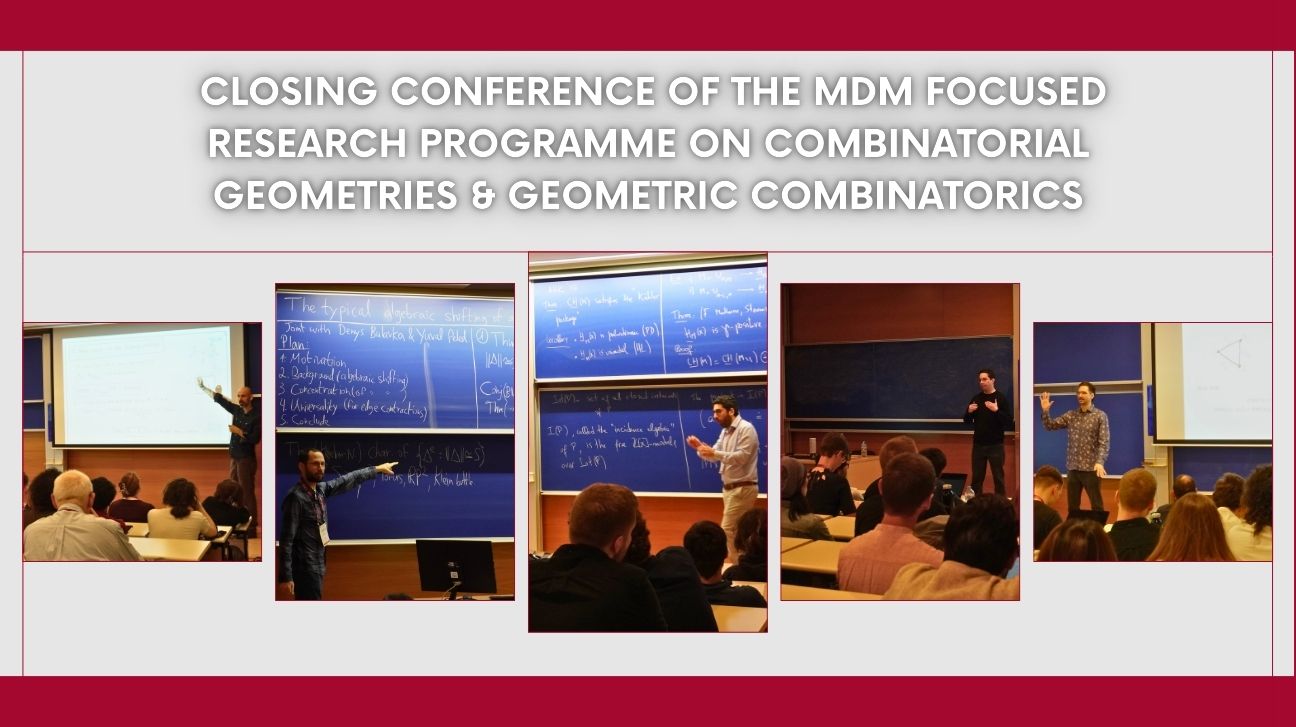
The contributed sessions showcased a wide range of approaches: from graph curve matroids and their connections to algebraic curves (Kevin Kühn), to the relationship between Chow polynomials and other families of polynomials, including the ab-index and chain polynomials (Elena Hoster), and advances on the Proximity Conjecture for group-labelled matroid bases (Tamás Schwarcz). Other talks explored topological and geometric properties such as shellings of tropical hypersurfaces (Lena Weis), root polytopes and their links to greedoids and Alexander polynomials (Lilla Tóthmérész), and computational classification of cube slices (Chiara Meroni). Further topics included the f-vector conjecture and h*-polynomials (Alex Fink), flow polytopes and framing lattices (César Ceballos), oriented valuated matroids in real tropical geometry (Ben Smith), smooth polytopes and symplectic geometry (Francisco Santos), algebraic shifting on surfaces (Eran Nevo), shellings of Bergman fans (Galen Dorpalen-Barry), and q-analogues of matroids (Relinde Jurrius).
Four poster sessions added breadth: polynomials and matroid properties, polyhedral structures, topological complexes, rigidity theory, symmetry, optimisation. Conversations ran long. Questions led to other questions. These sessions provided a dynamic space for exchanging ideas and exploring new research directions.
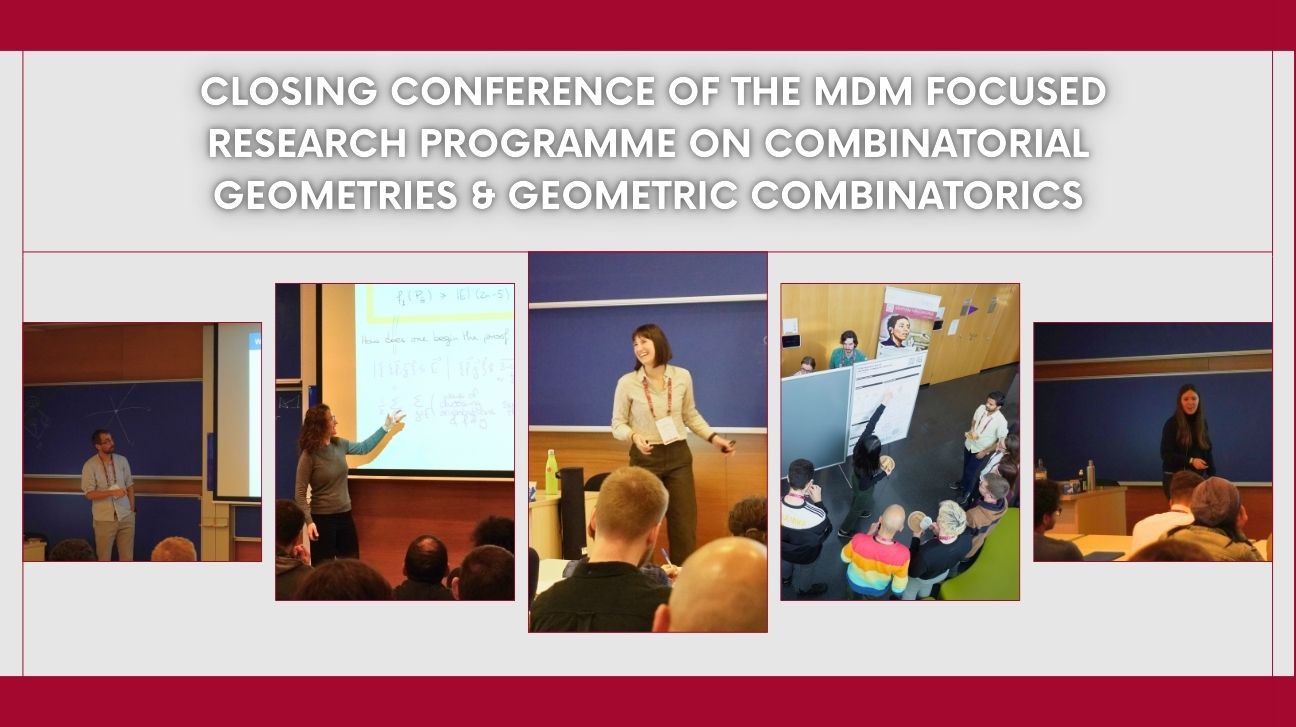
The conference highlighted the breadth and vitality of the field, with contributions ranging from combinatorial and geometric properties to computational applications and interdisciplinary connections with optimisation, neural network theory, and tropical geometry. Beyond the results presented, the event fostered dialogue between established researchers and emerging scholars, strengthening international collaboration and opening new avenues for research in combinatorial geometry and matroid theory.
It was the perfect closing for two months of work at the CRM; advanced courses, seminars, and collaborative projects that built slowly across September and October. Researchers arrived to study matroid decompositions and geometric structures; they left having constructed something less tangible but more useful: a shared vocabulary, a network of problems that spoke to each other. The talks in late November weren’t just presentations. They were what happens when you give people time to sit with ideas instead of racing past them, when conversations over coffee turn into conjectures, when someone’s offhand question in a seminar becomes another researcher’s opening. The conference didn’t end it. It marked a shift: from working together in the same building to working together across distance, carrying forward the questions they’d learned to ask.
|
|
CRM CommNatalia Vallina & Pau Varela
|
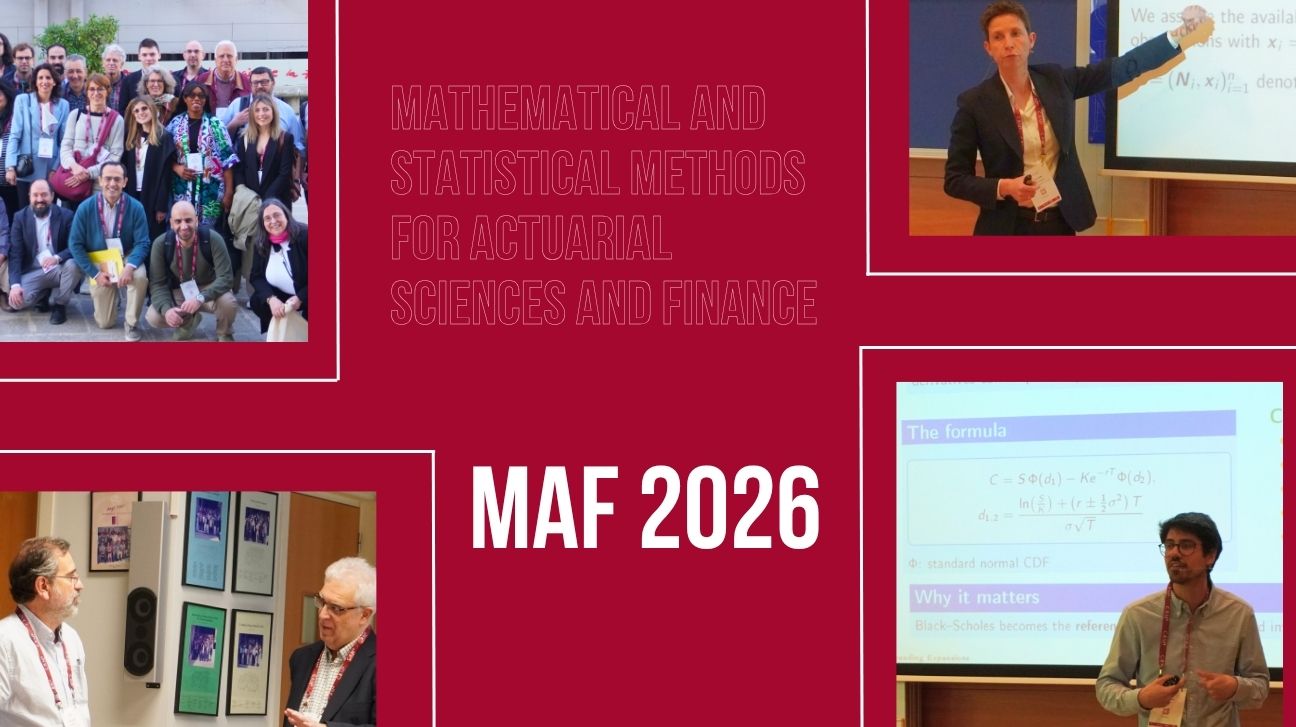
MAF 2026: Mathematics and Statistics at the Service of Actuarial Sciences and Finance
From 8 to 10 April 2026, the Centre de Recerca Matemàtica (CRM) hosted the Conference on Mathematical and Statistical Methods for Actuarial Sciences and Finance (MAF 2026). The conference is an international meeting that brings together mathematicians and...
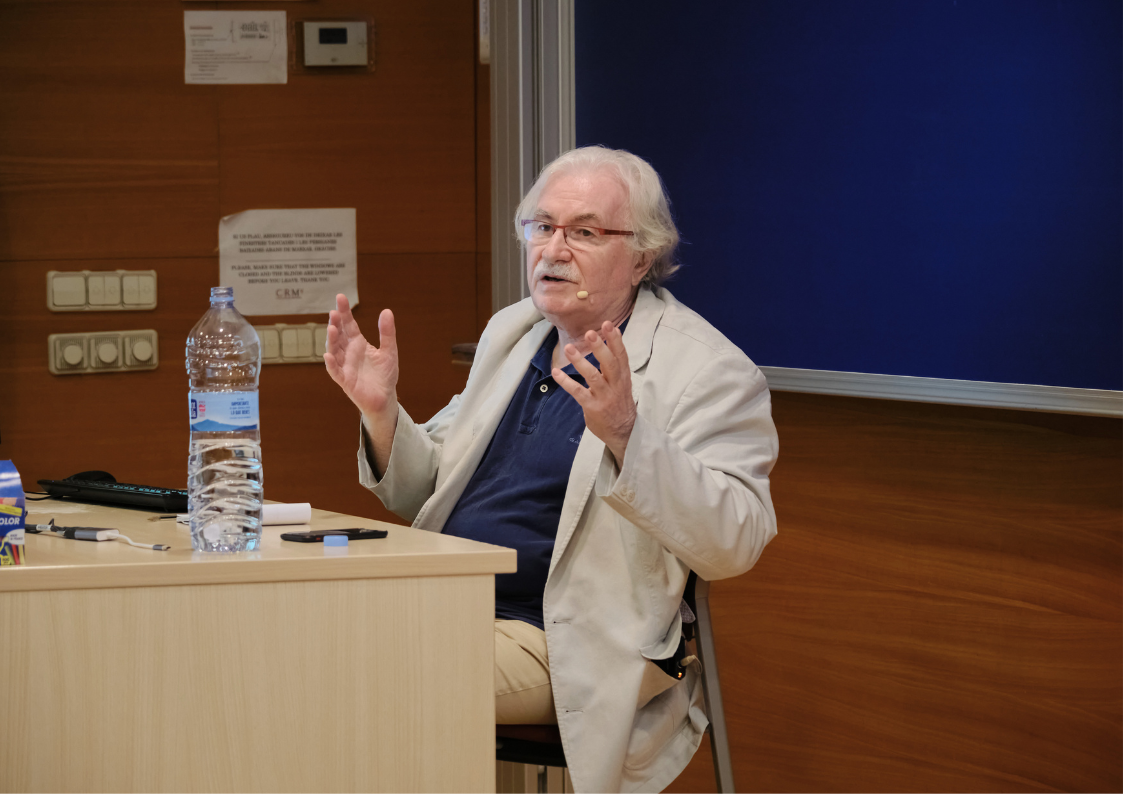
Yves Chevallard (1946–2026)
Yves Chevallard passed away on 16 March 2026. He was 79 years old. Born in Tunis, he trained at the École normale supérieure in Paris, where he earned an agrégation de mathématiques. He went on to become a professor at Aix-Marseille Université, and it was there, over...

The CRM participates in a European project studying decision-making and risk perception in mountain environments
The NeuroMunt project (POCTEFA, coordinated by the Université de Perpignan Via Domitia) studies how people make decisions under risk conditions in mountain environments, bringing together researchers from France and Spain across disciplines ranging from complex...
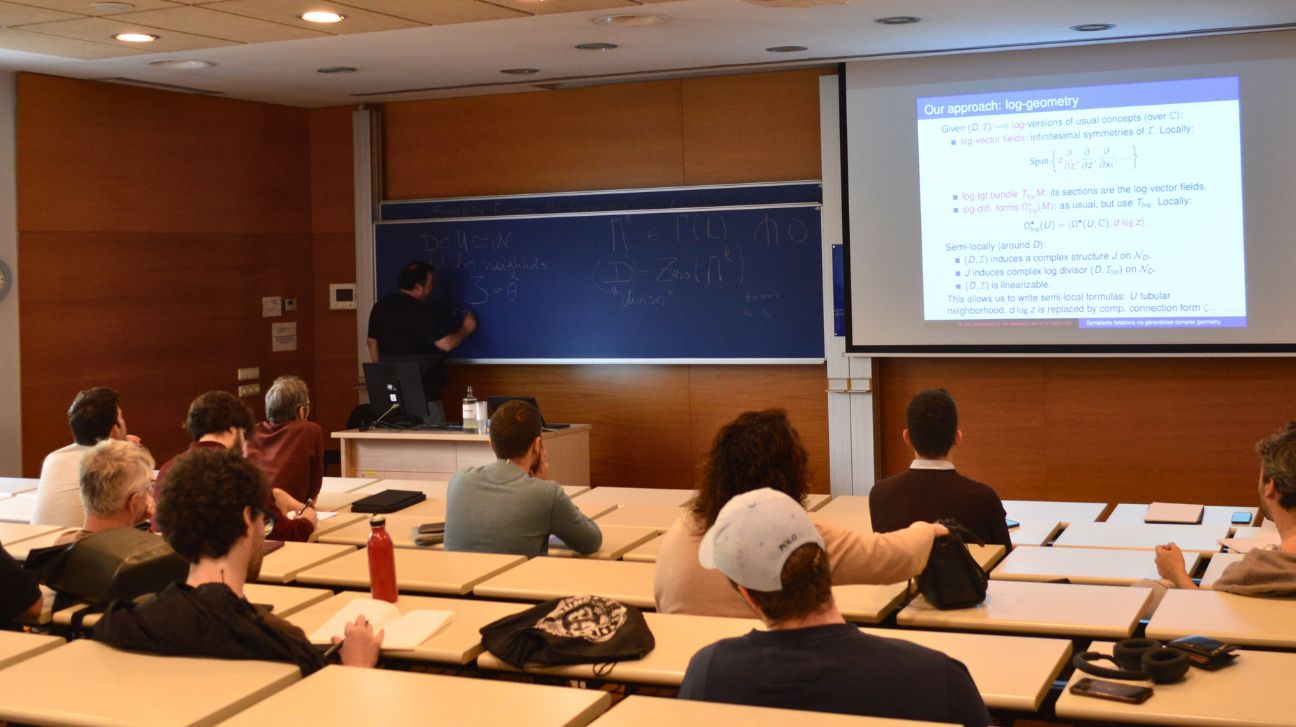
One Day, One Family, One Place: Poisson Geometry at CRM
On March 23rd, 2026, the Centre de Recerca Matemàtica hosted the thematic day “Poisson Geometry and Its Relatives”, a full‑day event that brought together researchers exploring Poisson geometry and several of its neighbouring areas. The programme combined classical...
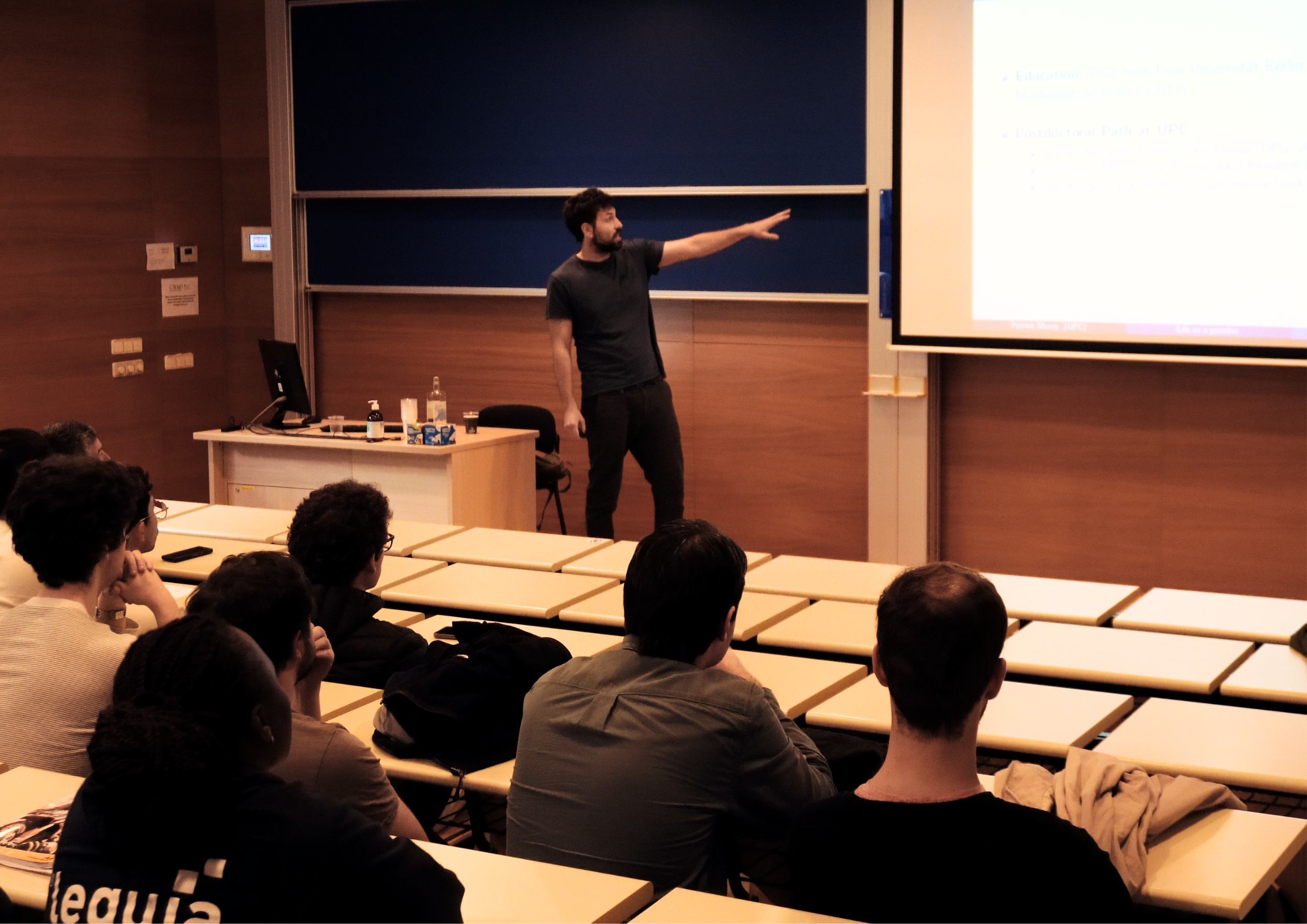
Life After the PhD: Three Roads Forward
On March 18, the BGSMath held its first session on careers after a PhD in mathematics, bringing together three speakers with different professional trajectories and 46 early-career researchers from nine institutions.On March 18, the Barcelona Graduate School of Math...
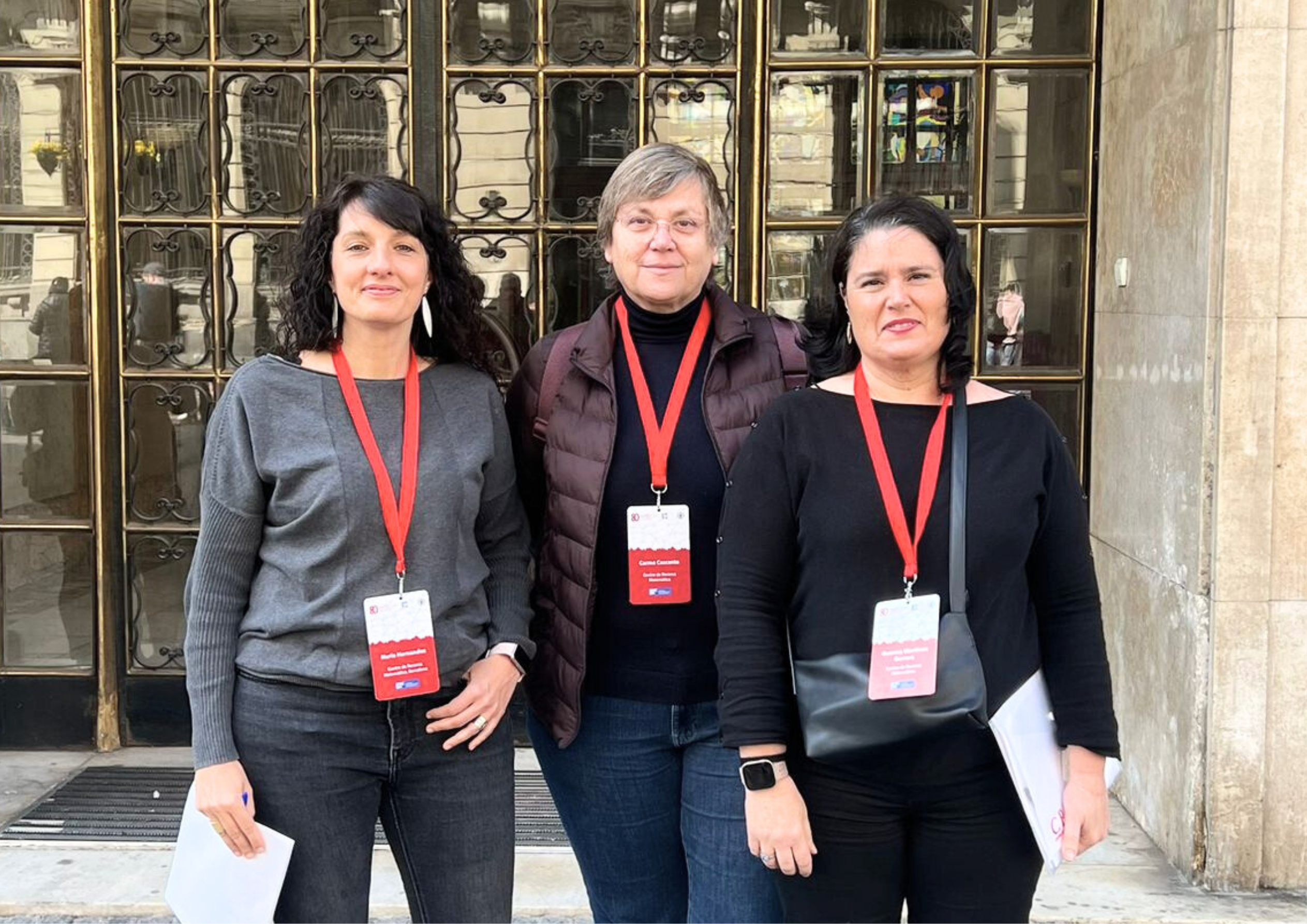
CRM participates in the 2026 ERCOM annual meeting in Belgrade
The CRM participated in the 2026 ERCOM annual meeting in Belgrade (20–21 March), represented by Director Carme Cascante, Manager Gemma Martínez, and Scientific Activities Manager Núria Hernández. The programme focused on multidisciplinarity, mathematics and the arts,...
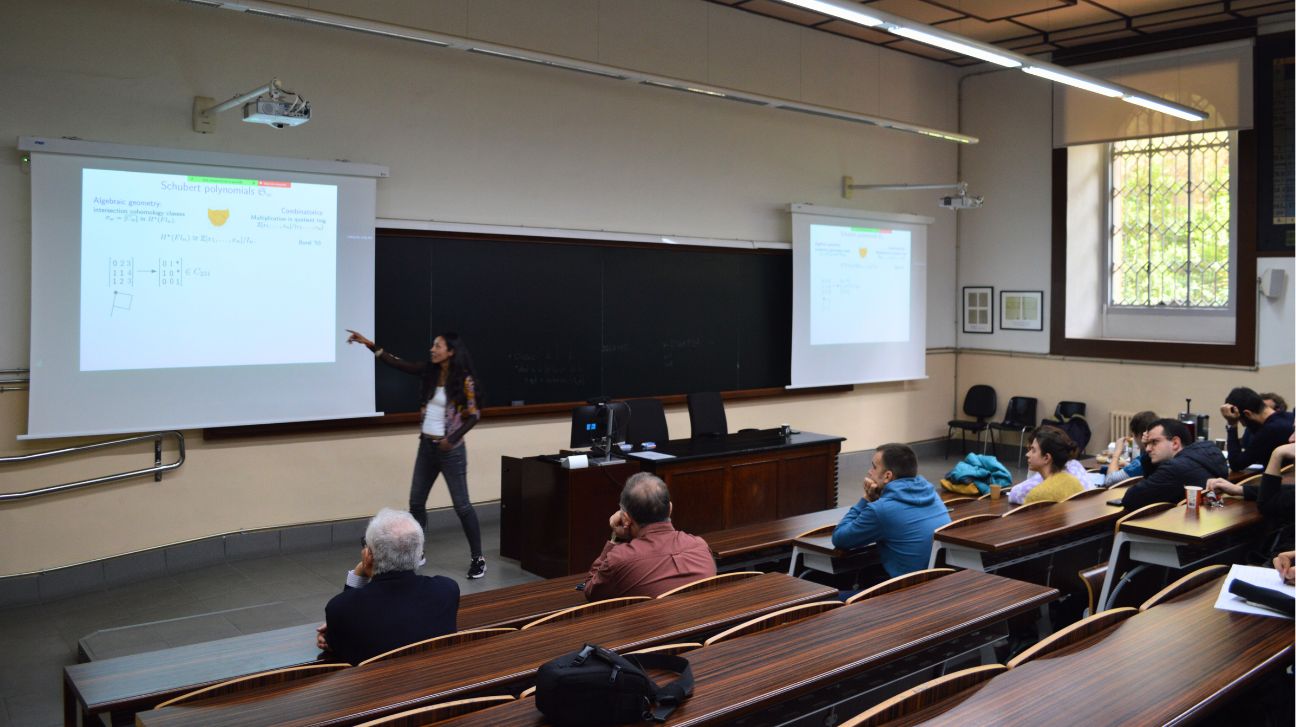
5 Talks, 1 Topic: A Day of Combinatorics
On March 18th, 2026, the 5 Talks in Combinatorics thematic day took place in the Joan Maragall Room at the Faculty of Philology and Communication of the University of Barcelona, in the historic building. The event focused on modern combinatorics and its connections...
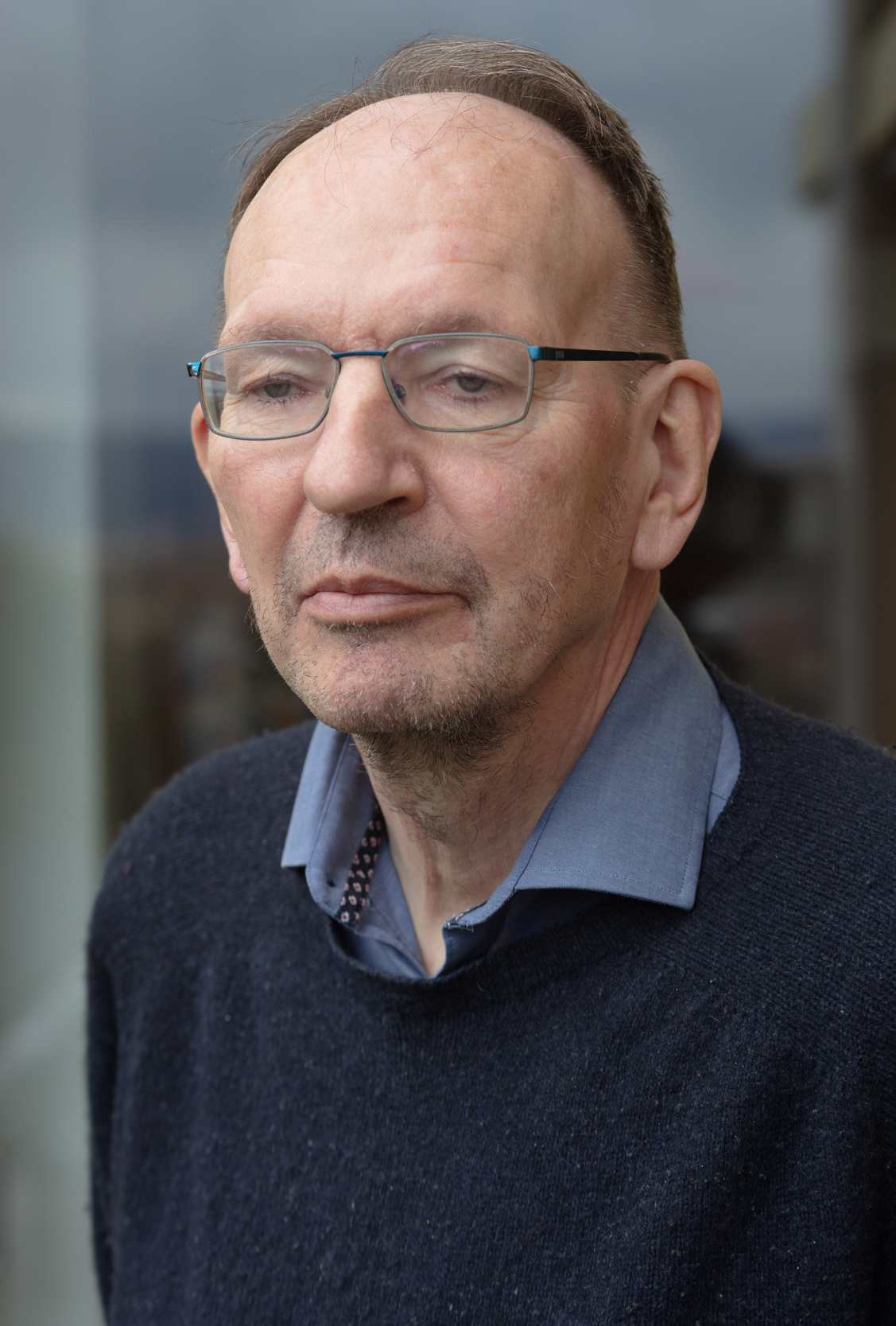
Gerd Faltings Awarded the 2026 Abel Prize for Transformative Work in Arithmetic Geometry
The Norwegian Academy of Science and Letters has recognised the German mathematician for solving two of the most enduring open problems in the field.The Norwegian Academy of Science and Letters announced today that the 2026 Abel Prize goes to Gerd Faltings, director...
The Centre de Recerca Matemàtica Approves Its Strategic Plan for 2026–2030
The Centre de Recerca Matemàtica has approved its Strategic Plan for 2026 - 2030, setting priorities in research, training, and knowledge transfer. Four flagship initiatives anchor the scientific programme. The Centre de Recerca Matemàtica approved its Strategic Plan...
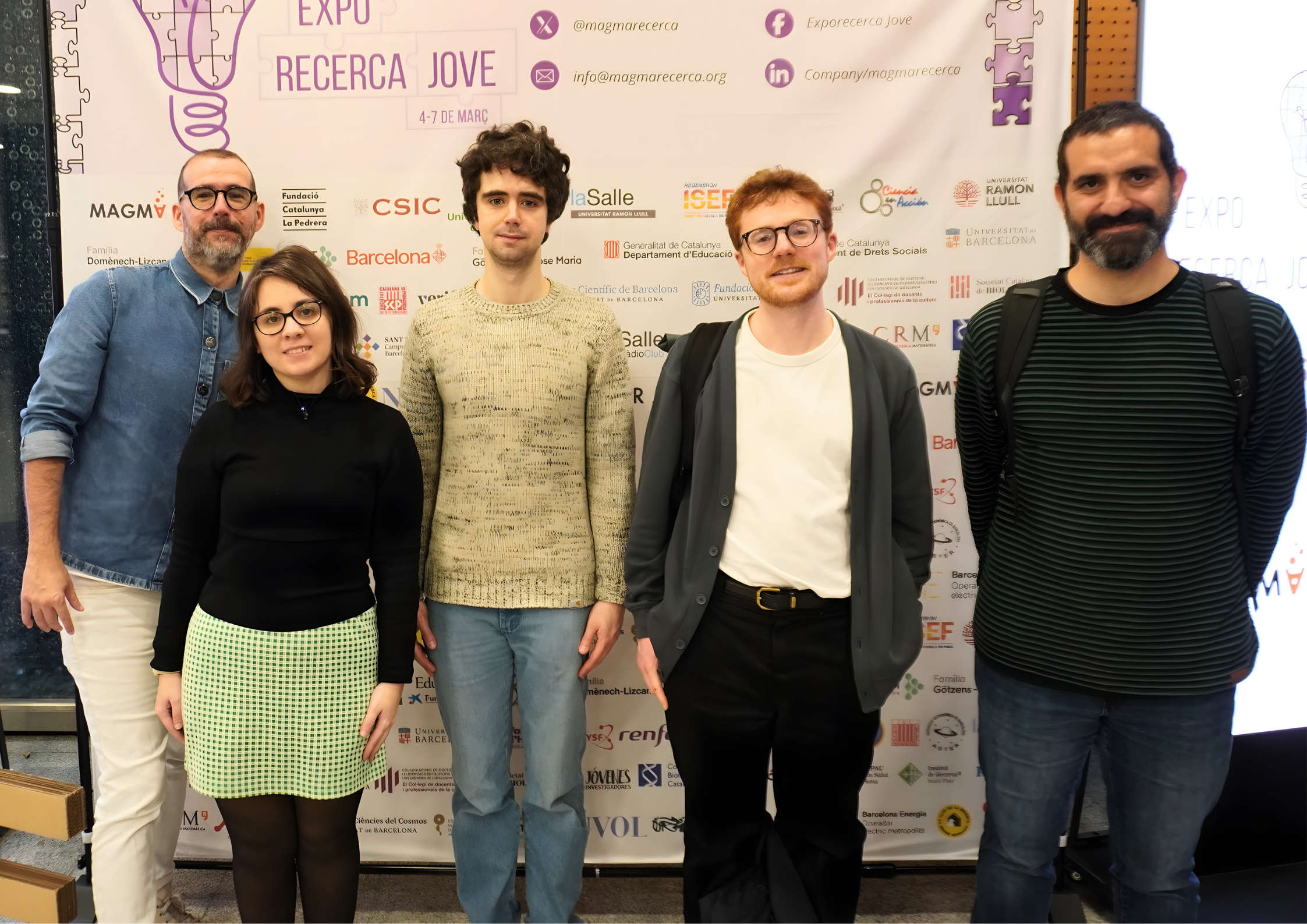
CRM Awards Its Prize at Exporecerca Jove for the Third Time
For the third year running, CRM visited Exporecerca Jove to award its prize to the student project with the strongest mathematical content. This edition, the jury selected two winners: Xavier Ortiz Quintana, who built a real-time 3D scanner using...

When Symmetry Breaks the Rules: From Askey–Wilson Polynomials to Functions
Researchers Tom Koornwinder (U. Amsterdam) and Marta Mazzocco (ICREA-UPC-CRM) published a paper in Indagationes Mathematicae exploring DAHA symmetries. Their work shows that these symmetries shift Askey–Wilson polynomials into a continuous functional setting,and...
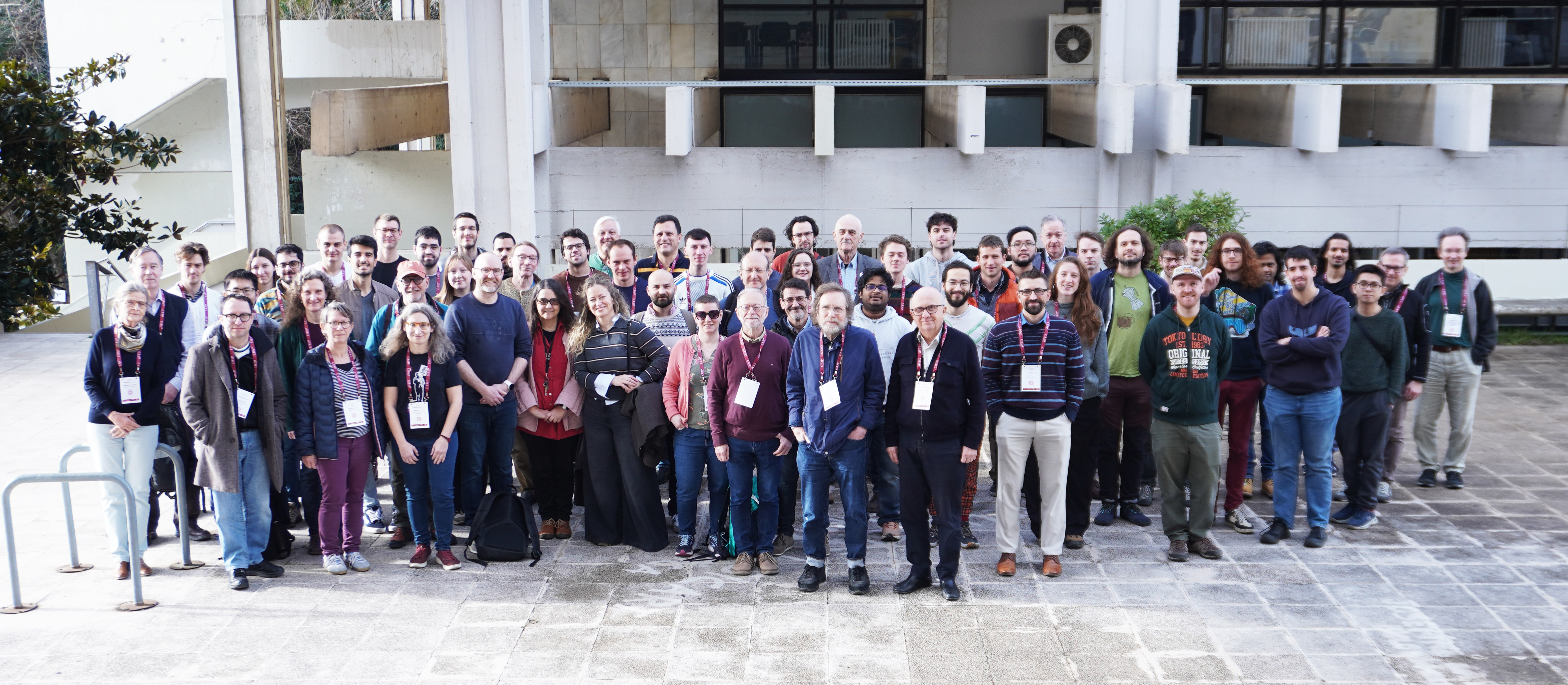
Homotopy Theory Conference Brings Together Diverse Research Perspectives
The Centre de Recerca Matemàtica hosted 75 mathematicians from over 20 countries for the Homotopy Structures in Barcelona conference, held February 9-13, 2026. Fourteen invited speakers presented research spanning rational equivariant cohomology theories, isovariant...