
organitzades pel CRM i l'IEC.
2026
REGISTRATION FEE
130 € (100 € for Members of the Catalan Society of Mathematics or Members of the Catalan Society of Biology).
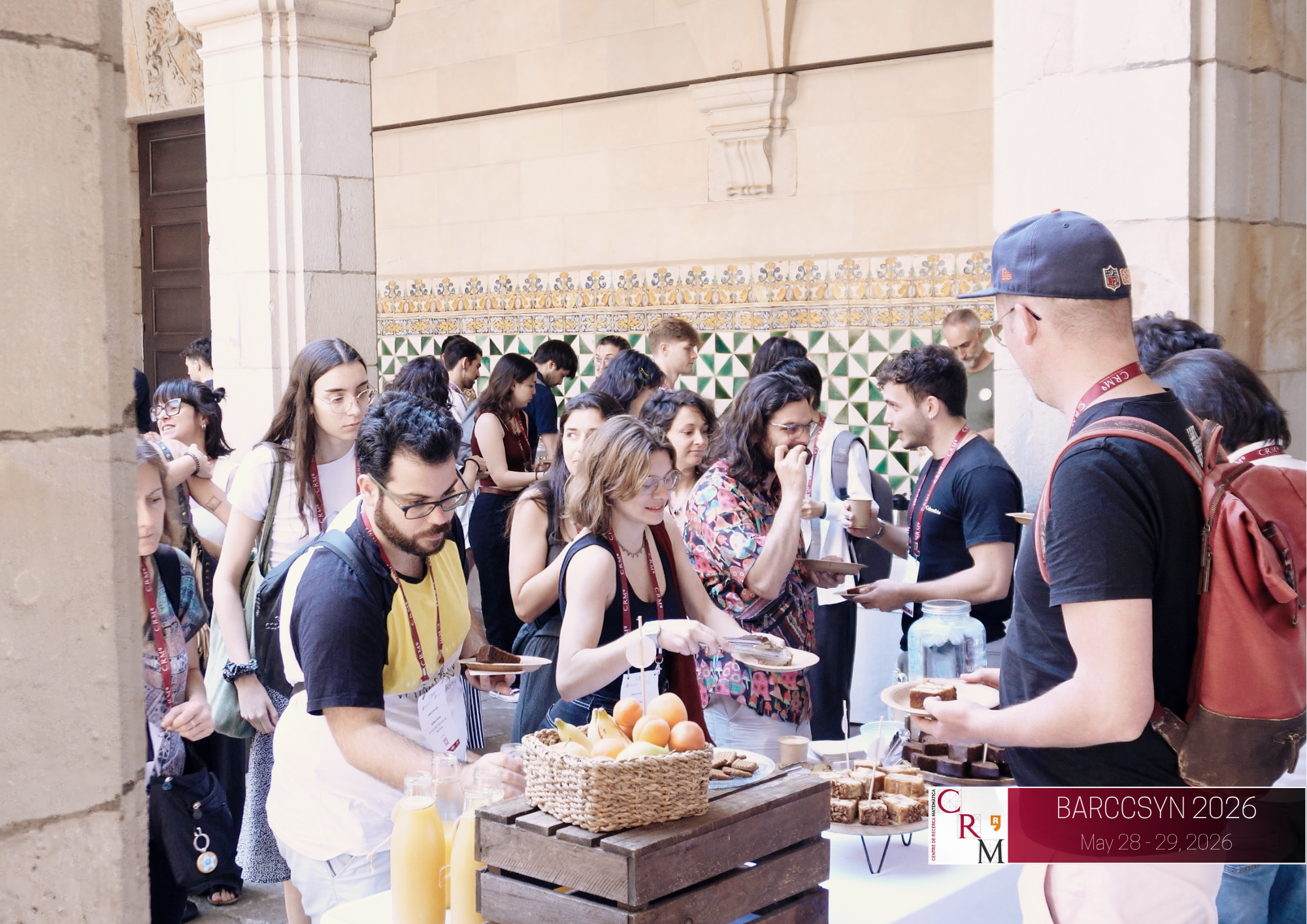
Registration includes coffee breaks, lunches, and a reception.
Barcelona Computational, Cognitive and Systems Neuroscience (BARCCSYN 2026)
Sign into May 29, 2026
Venue: Institut d'Estudis Catalans (IEC)
Room: Prat de la Riba
Institut d'Estudis Catalans
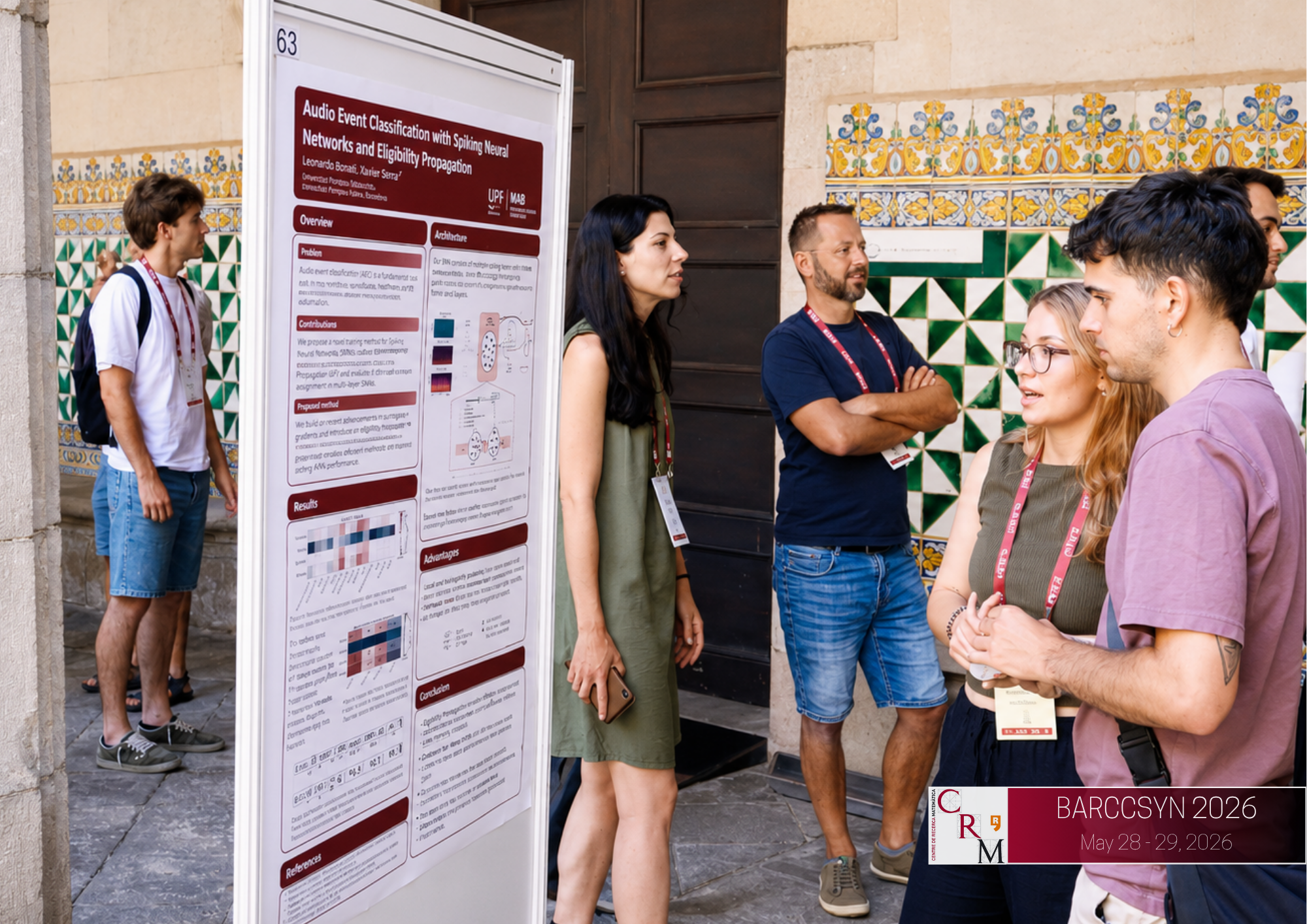
POSTERS
SCHEDULE
REGISTRATION
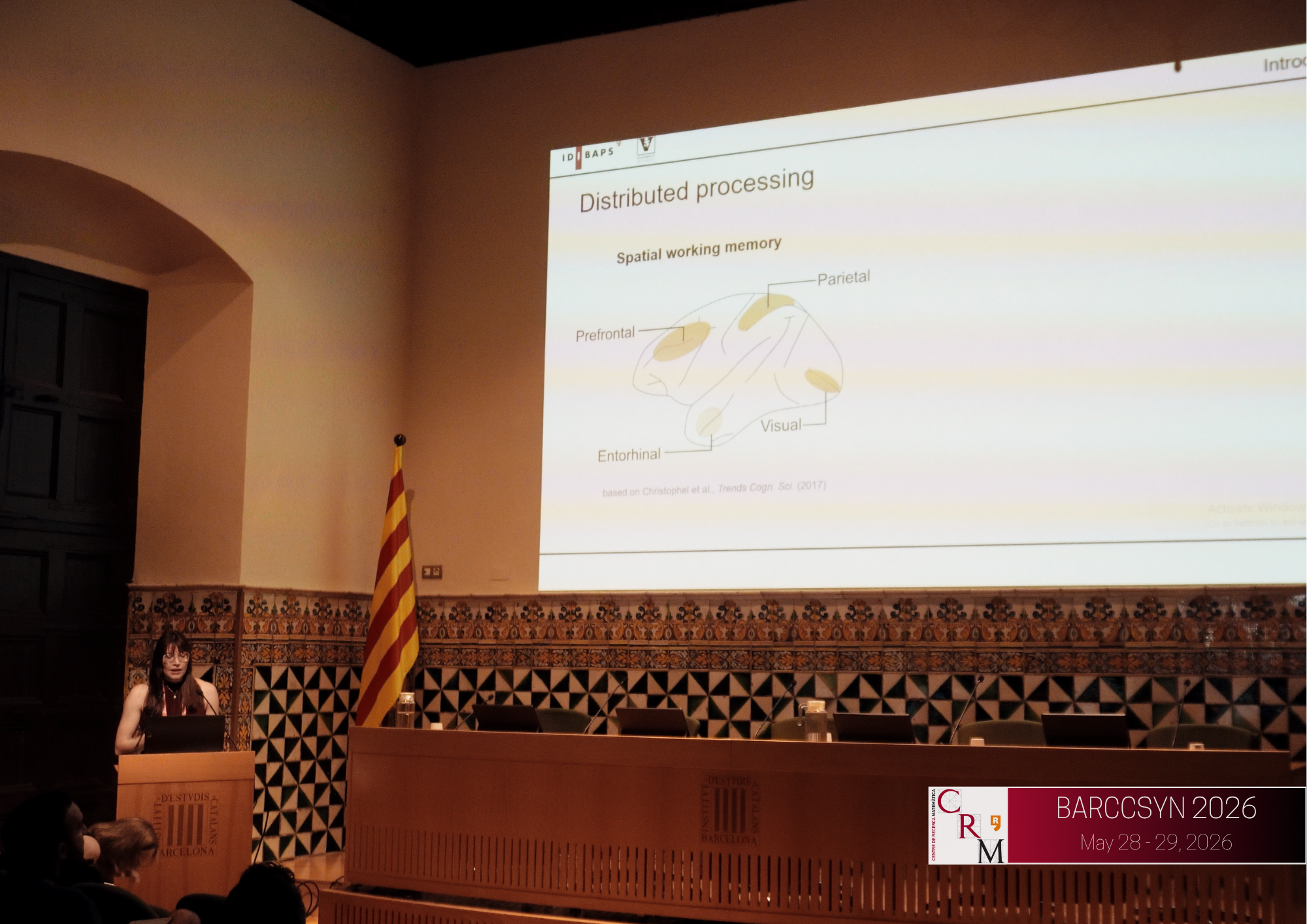
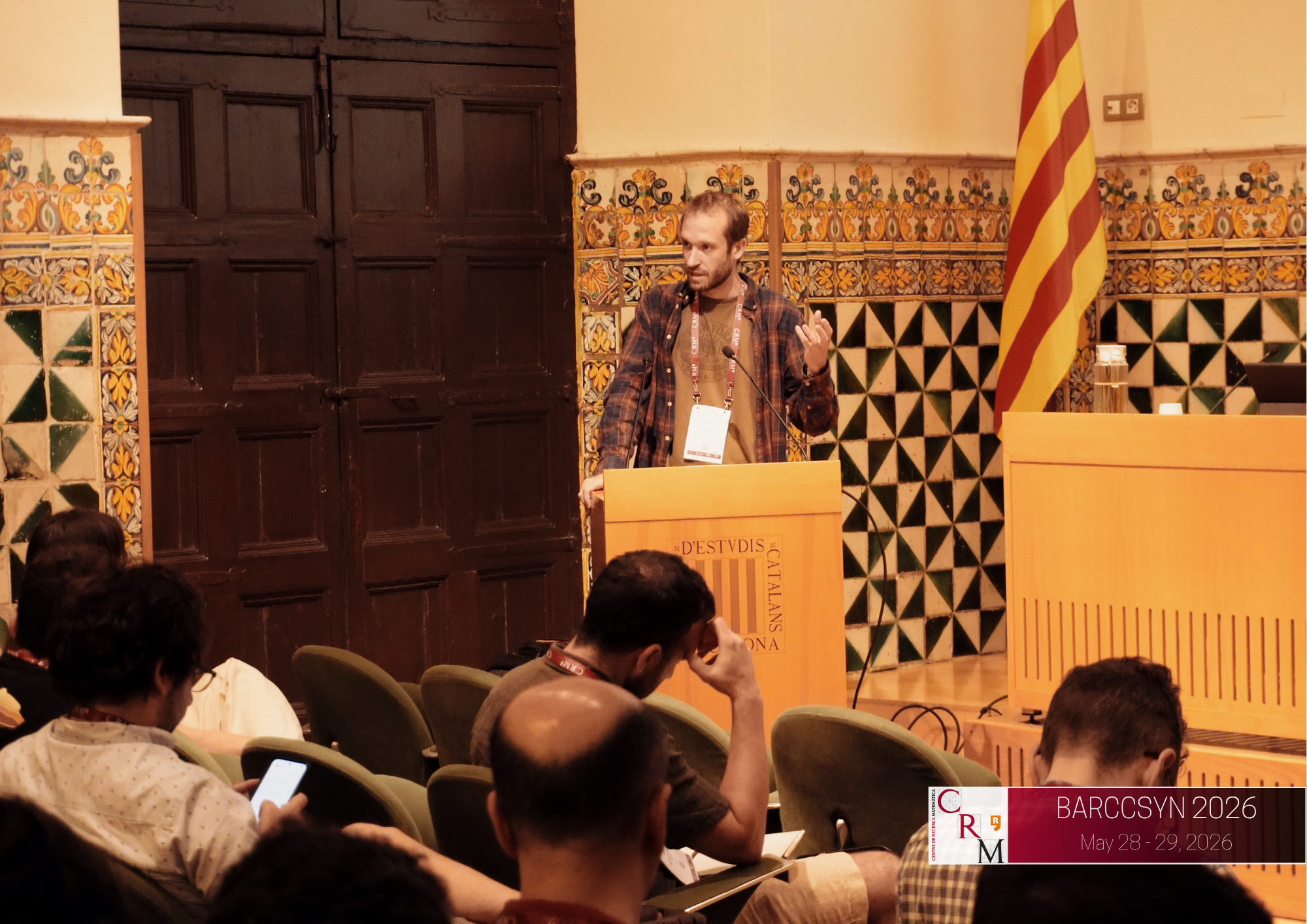
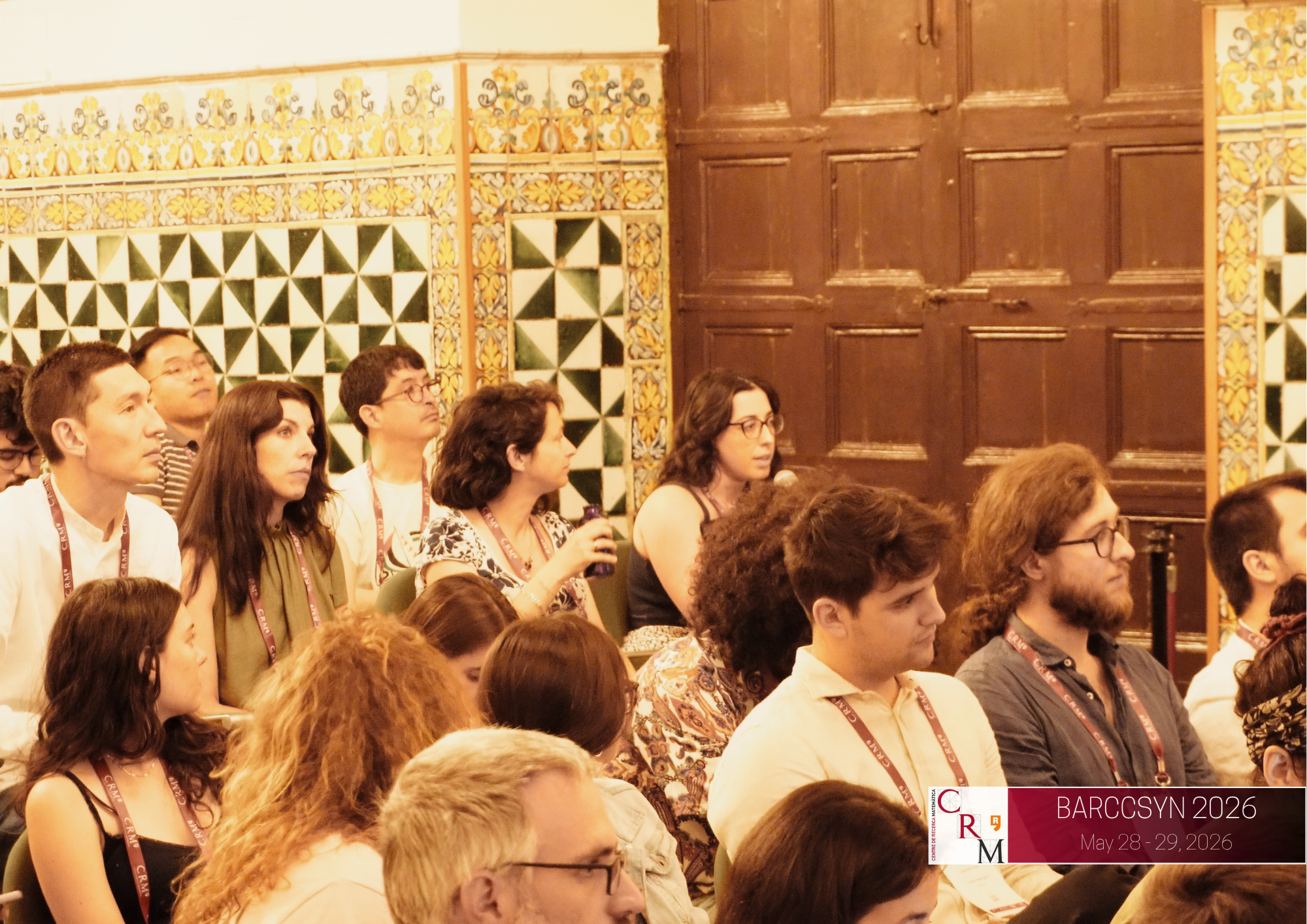
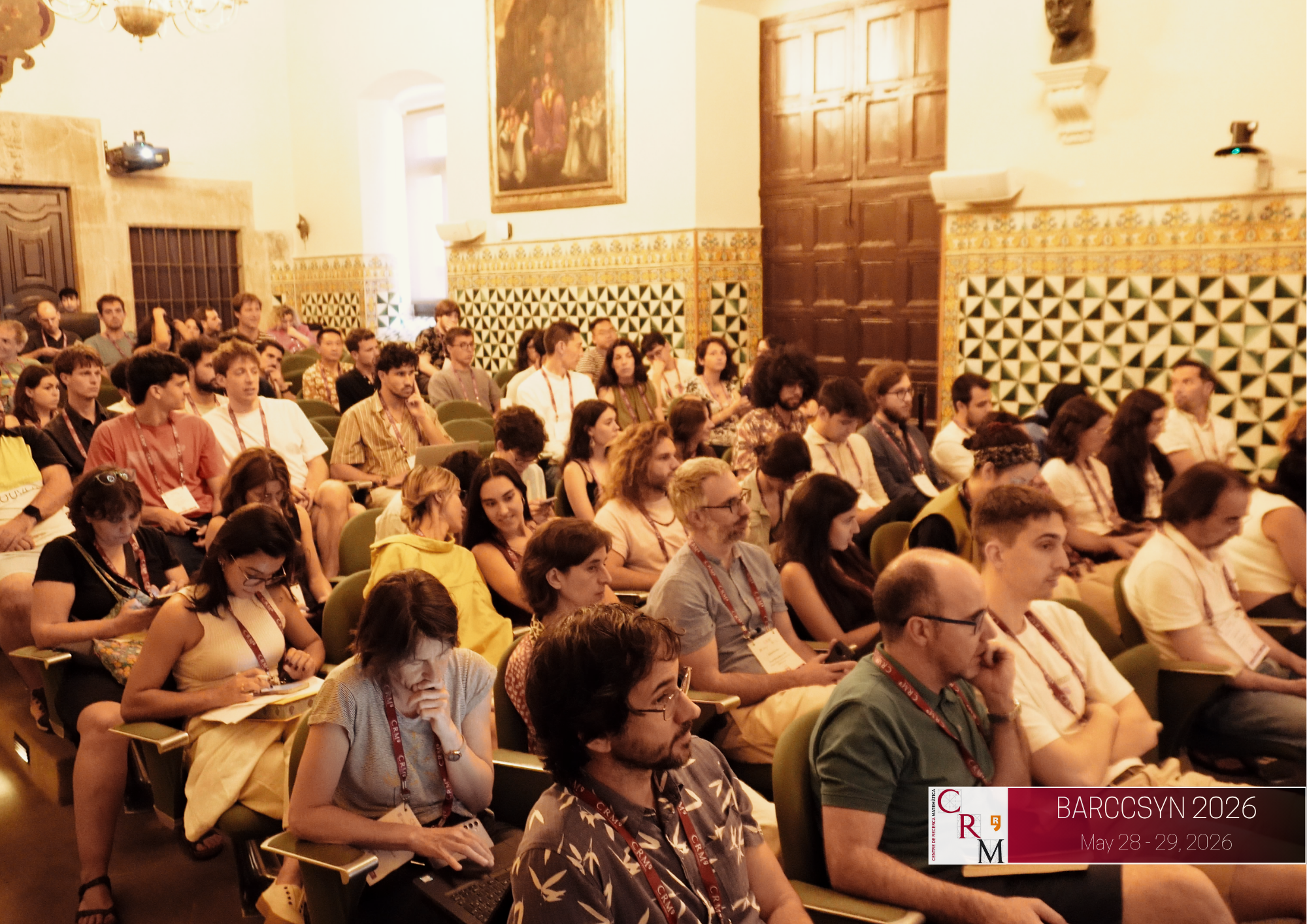
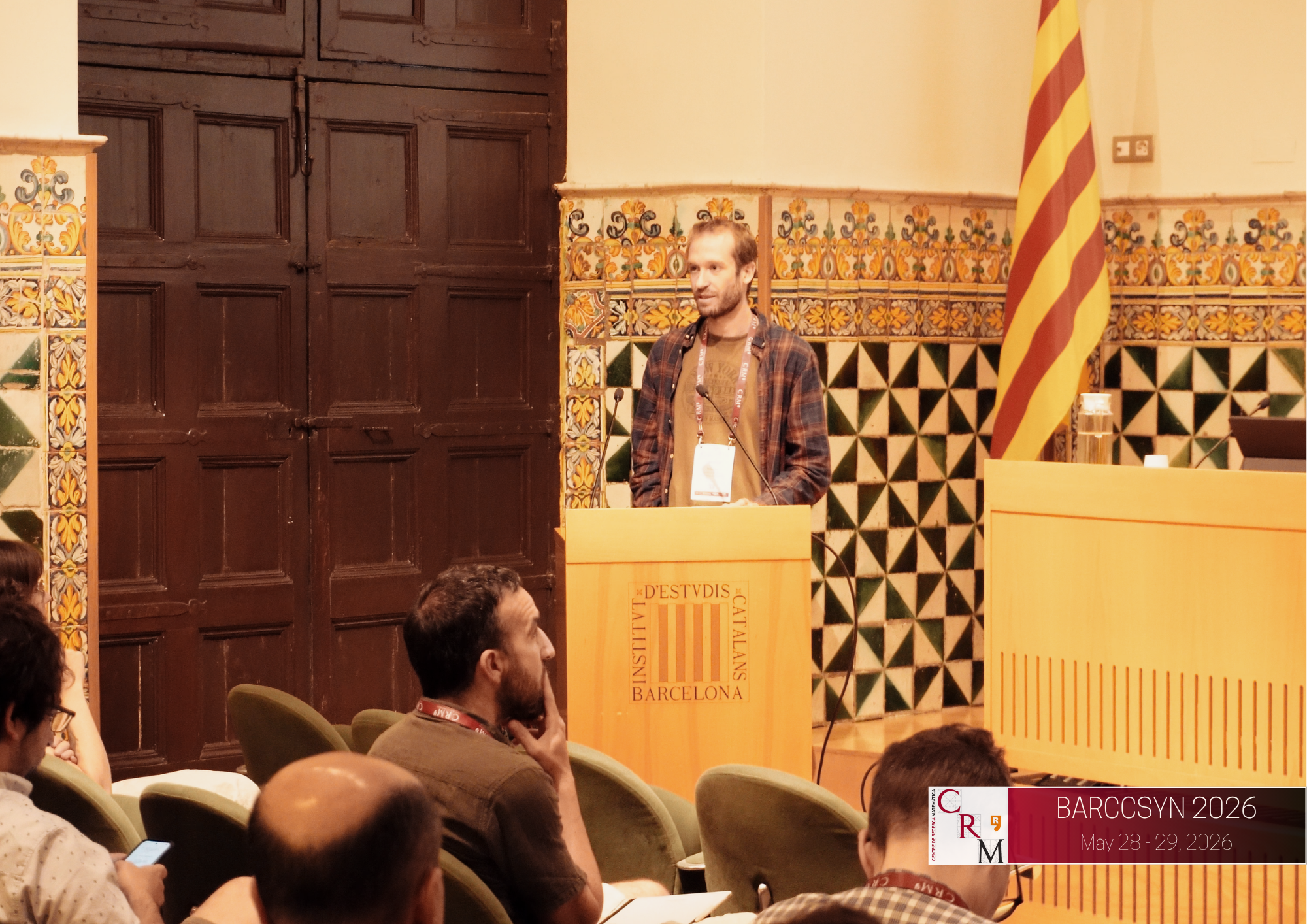
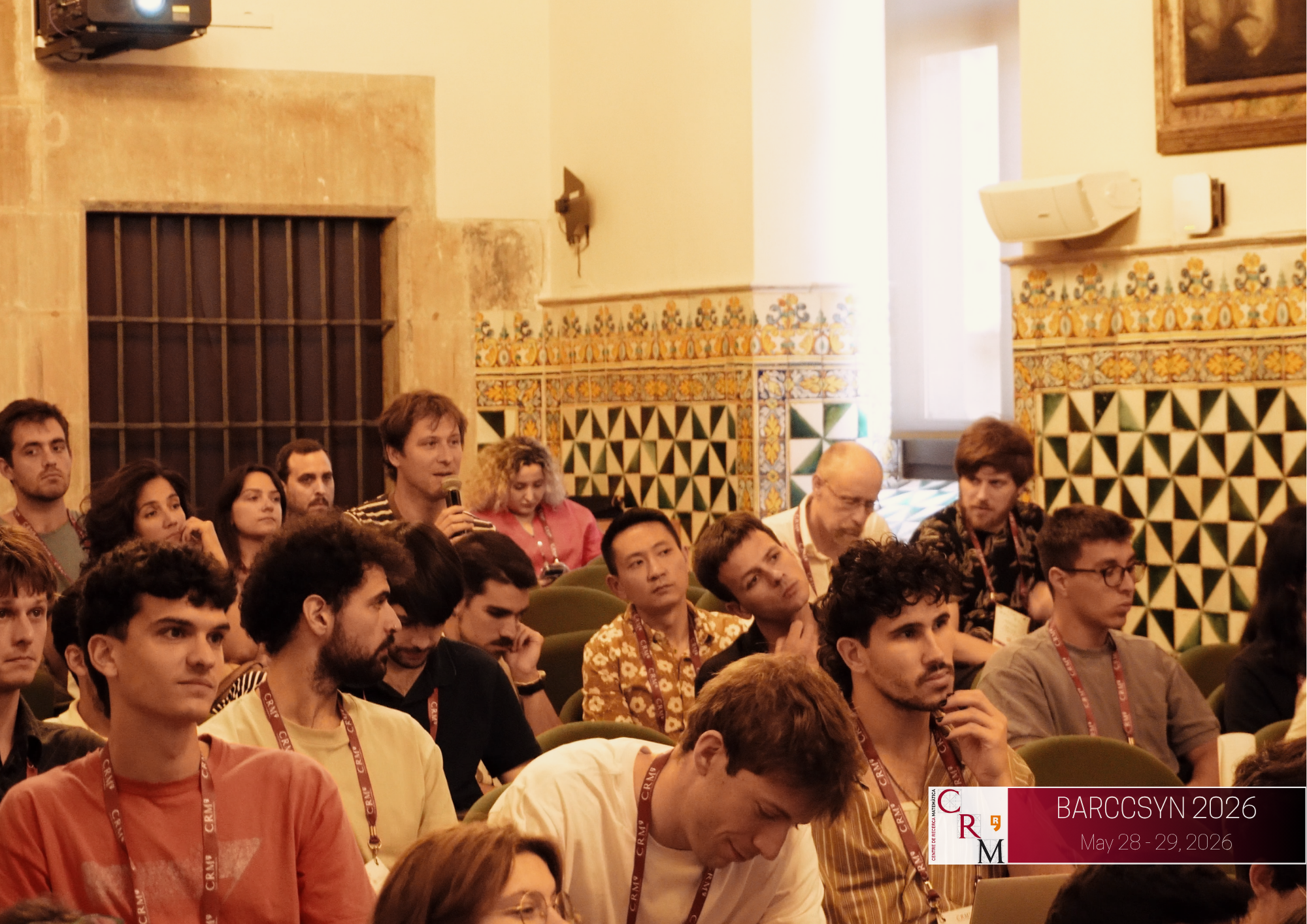
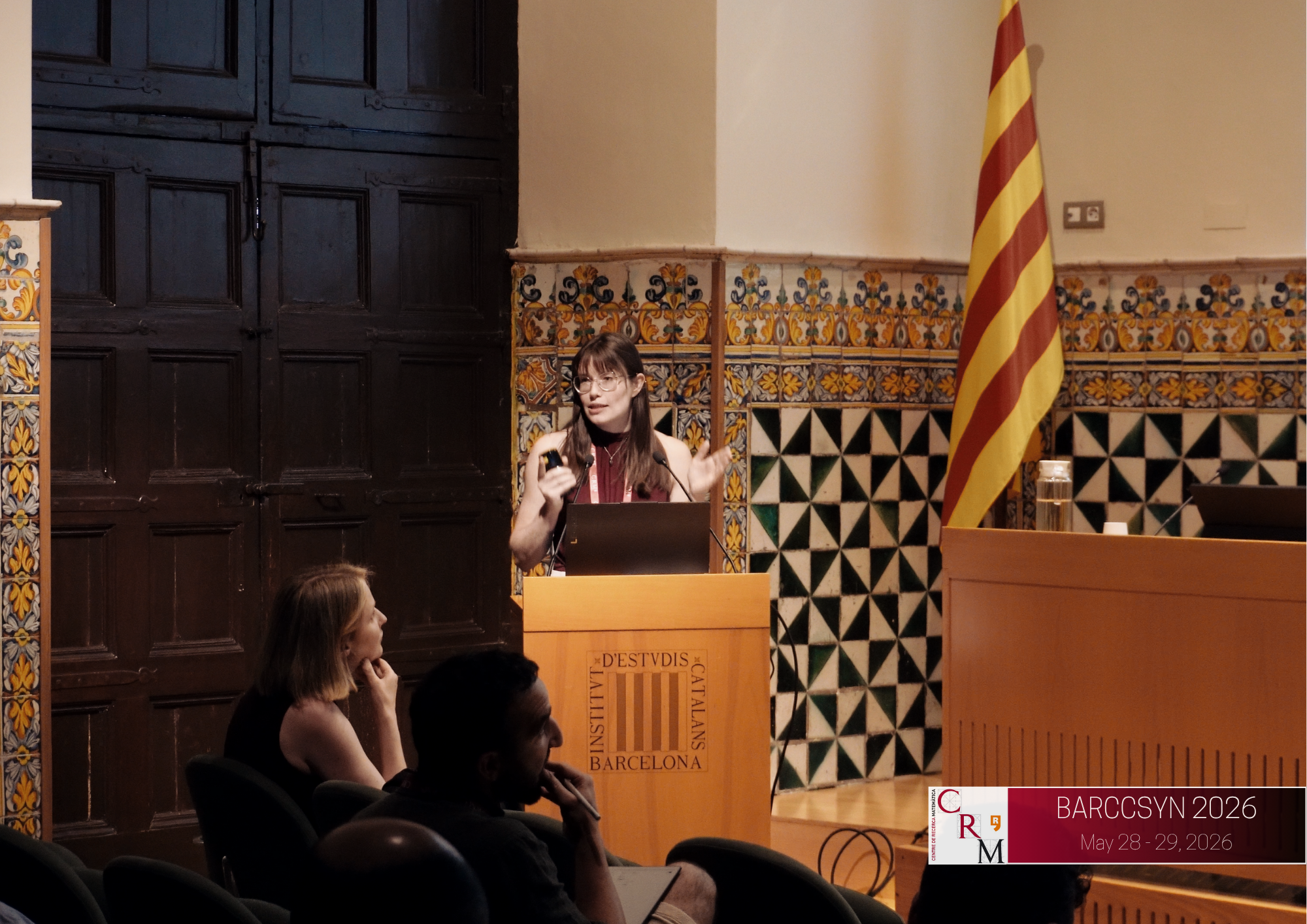
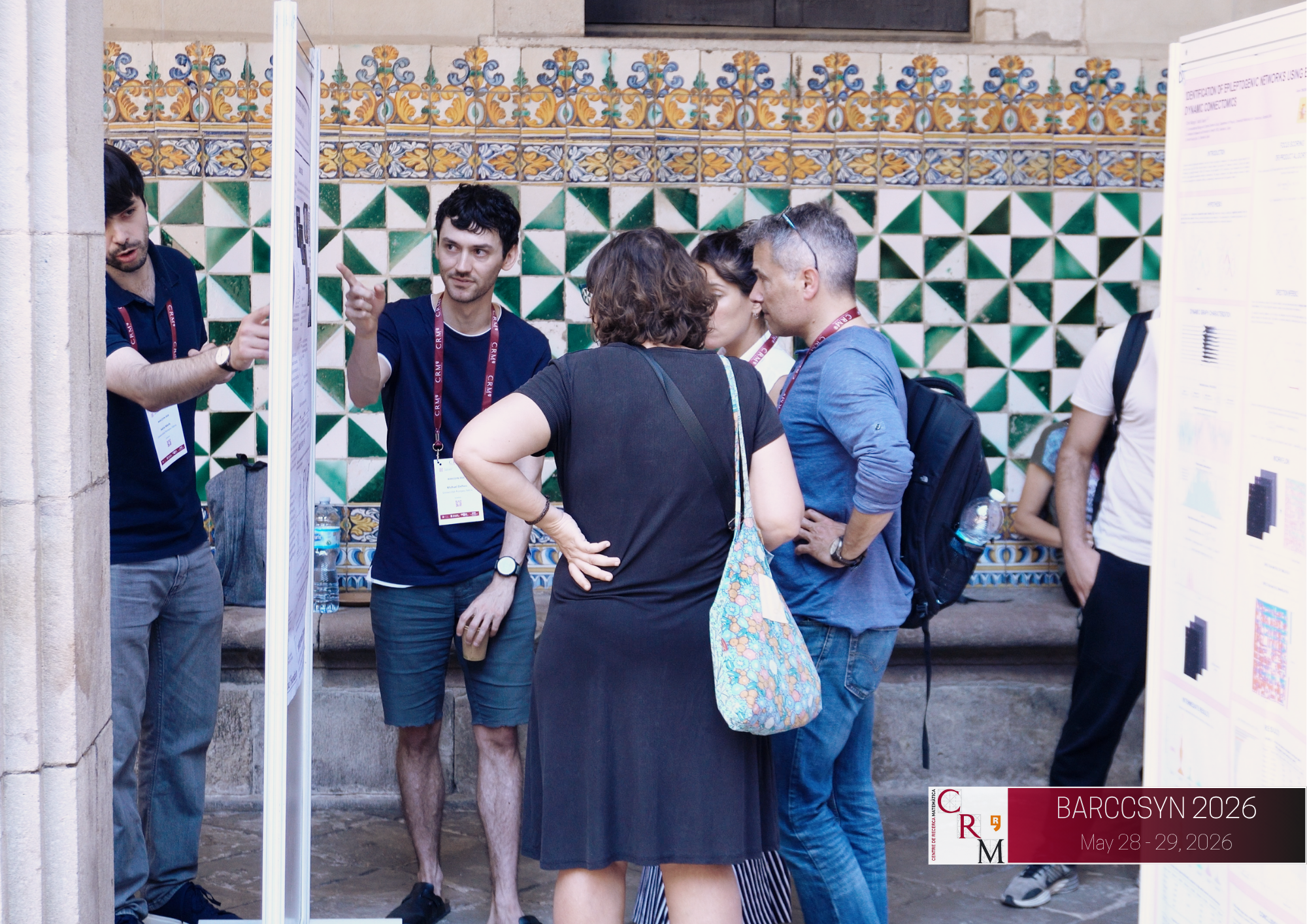
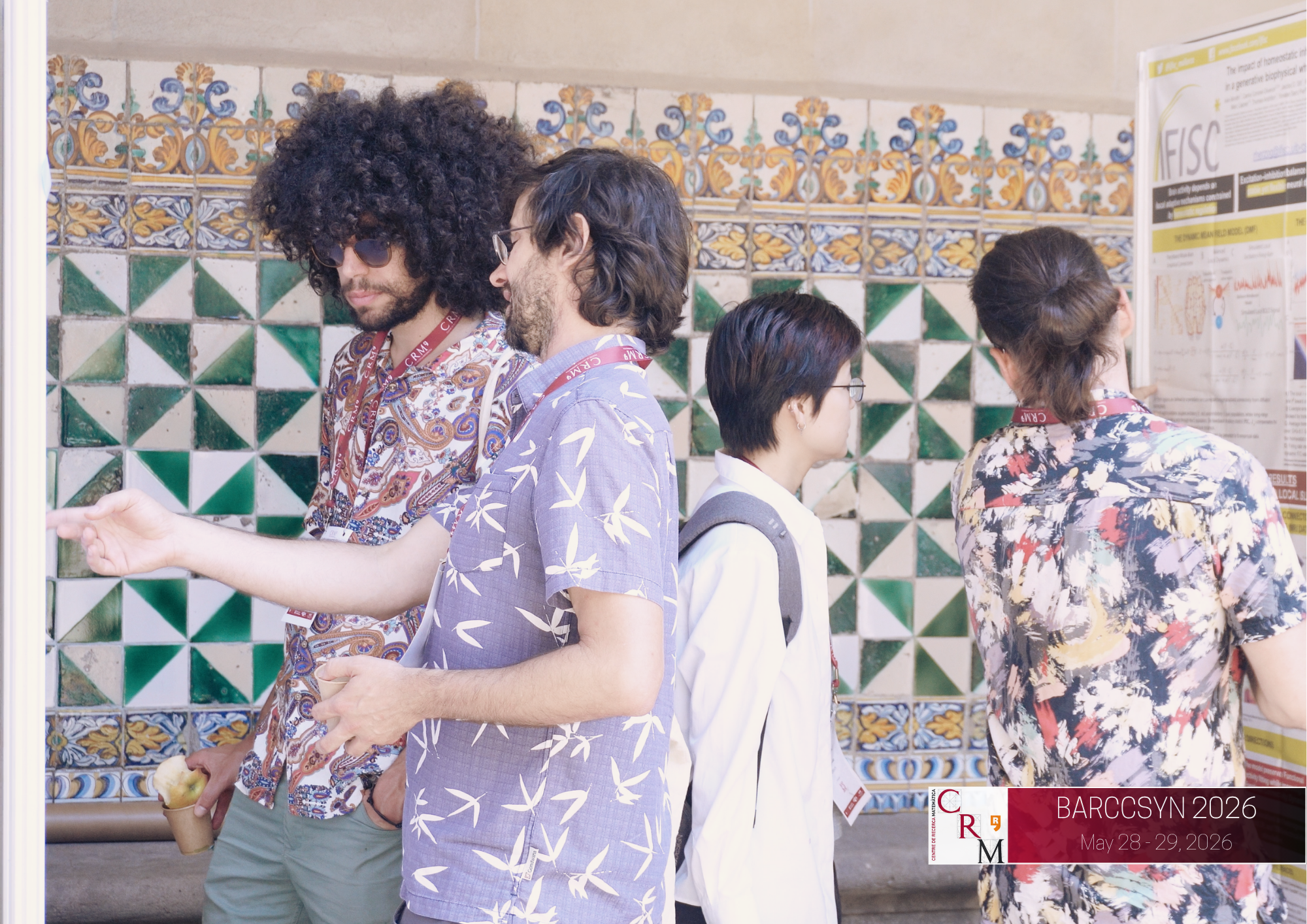
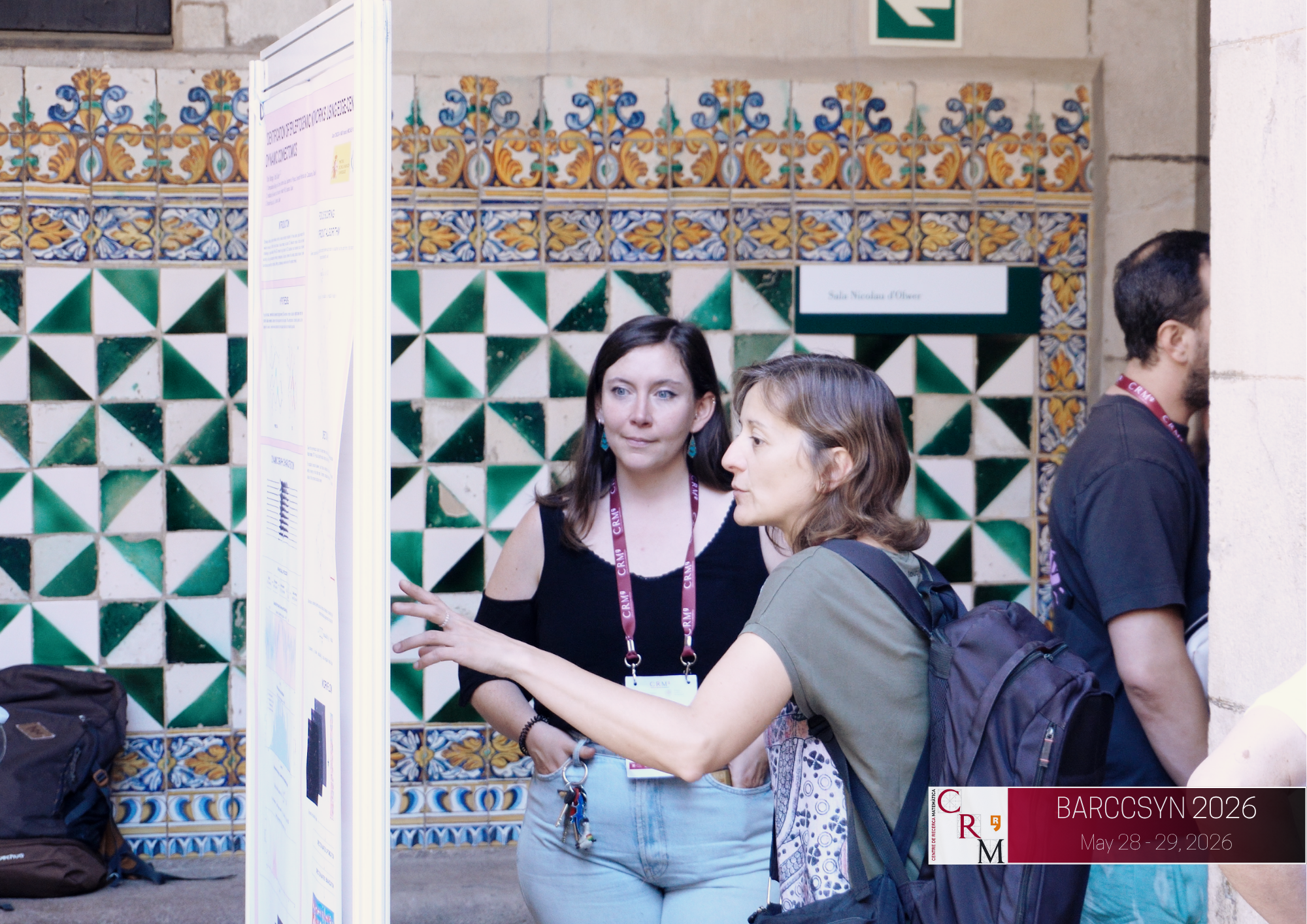
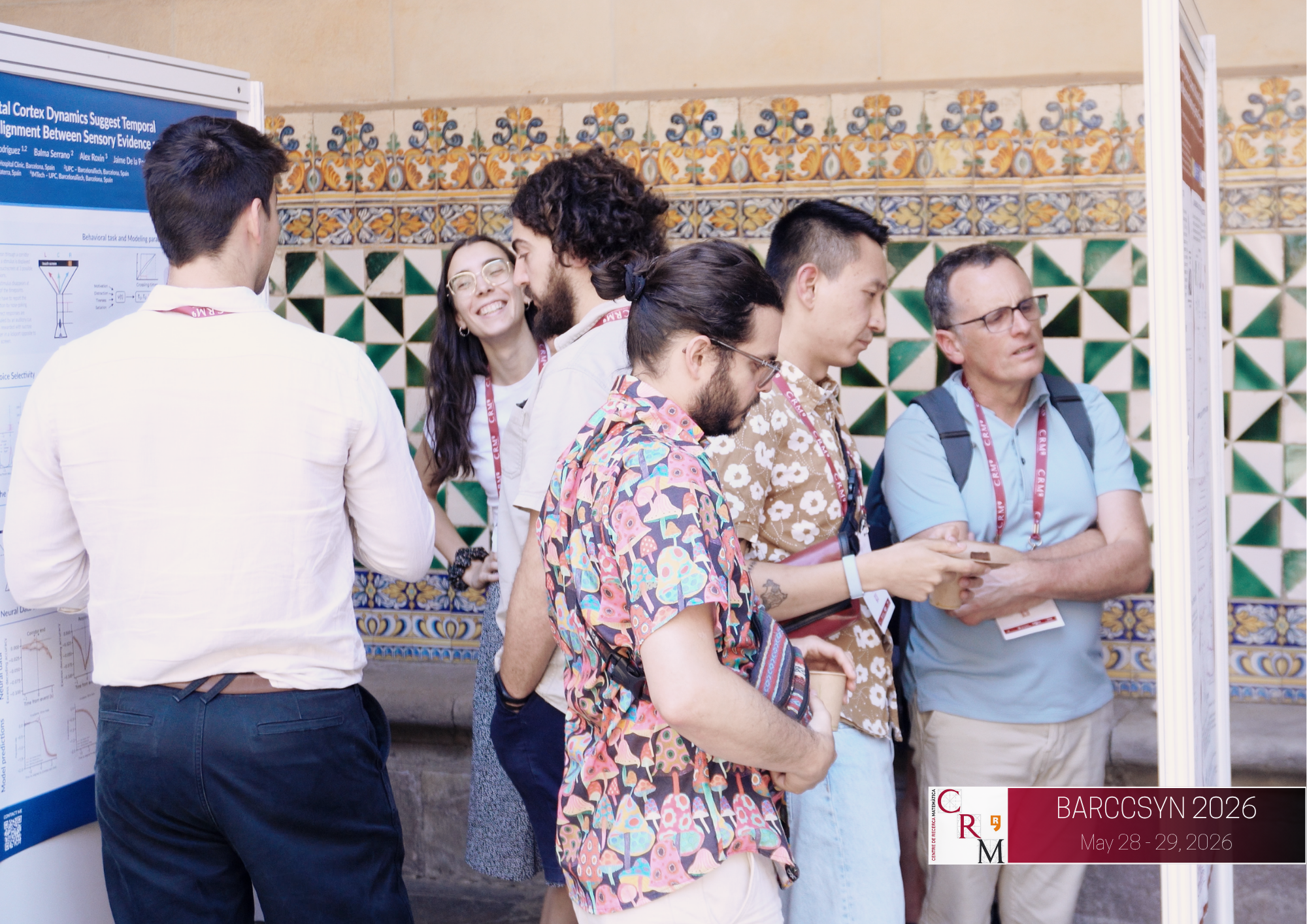
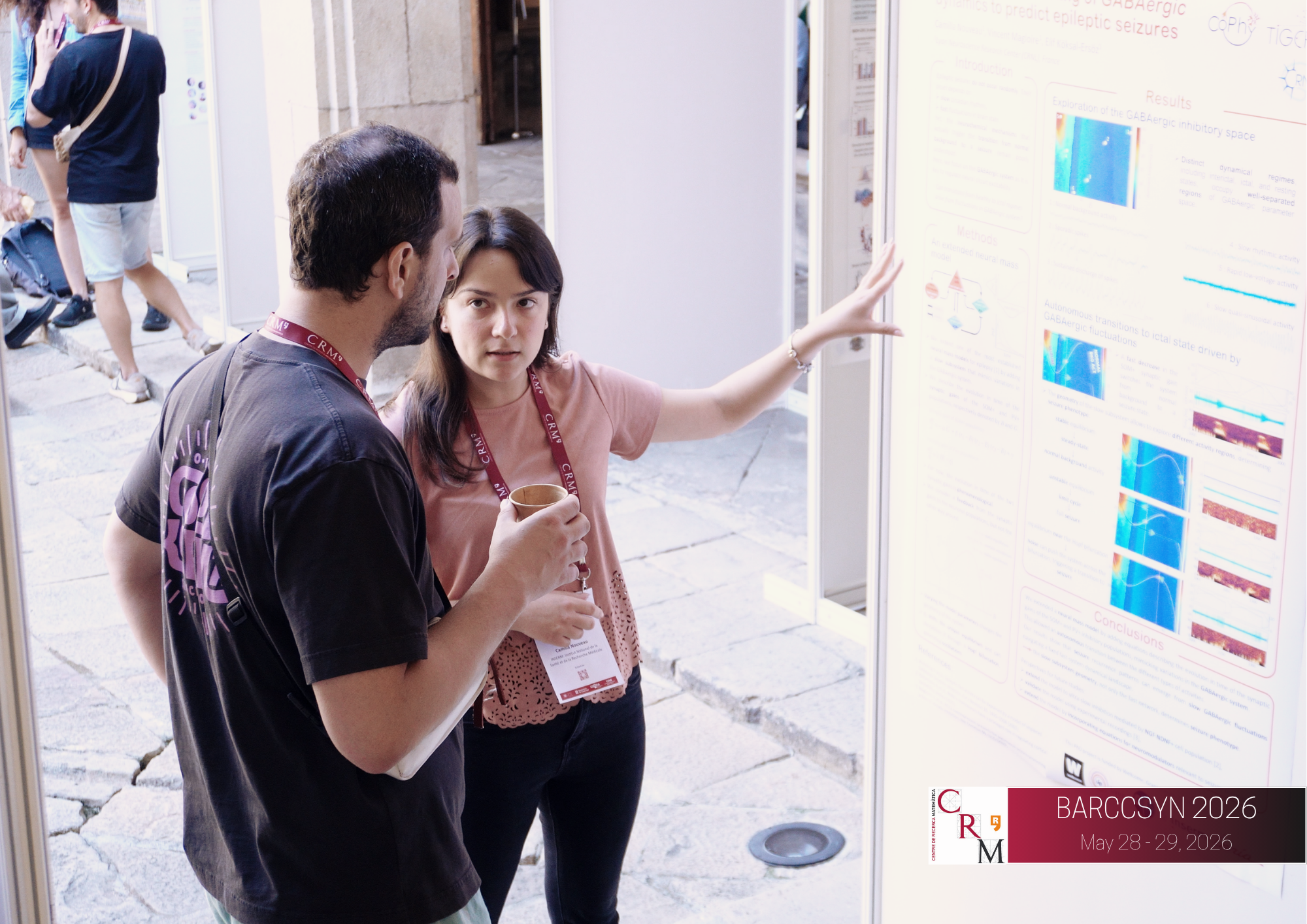
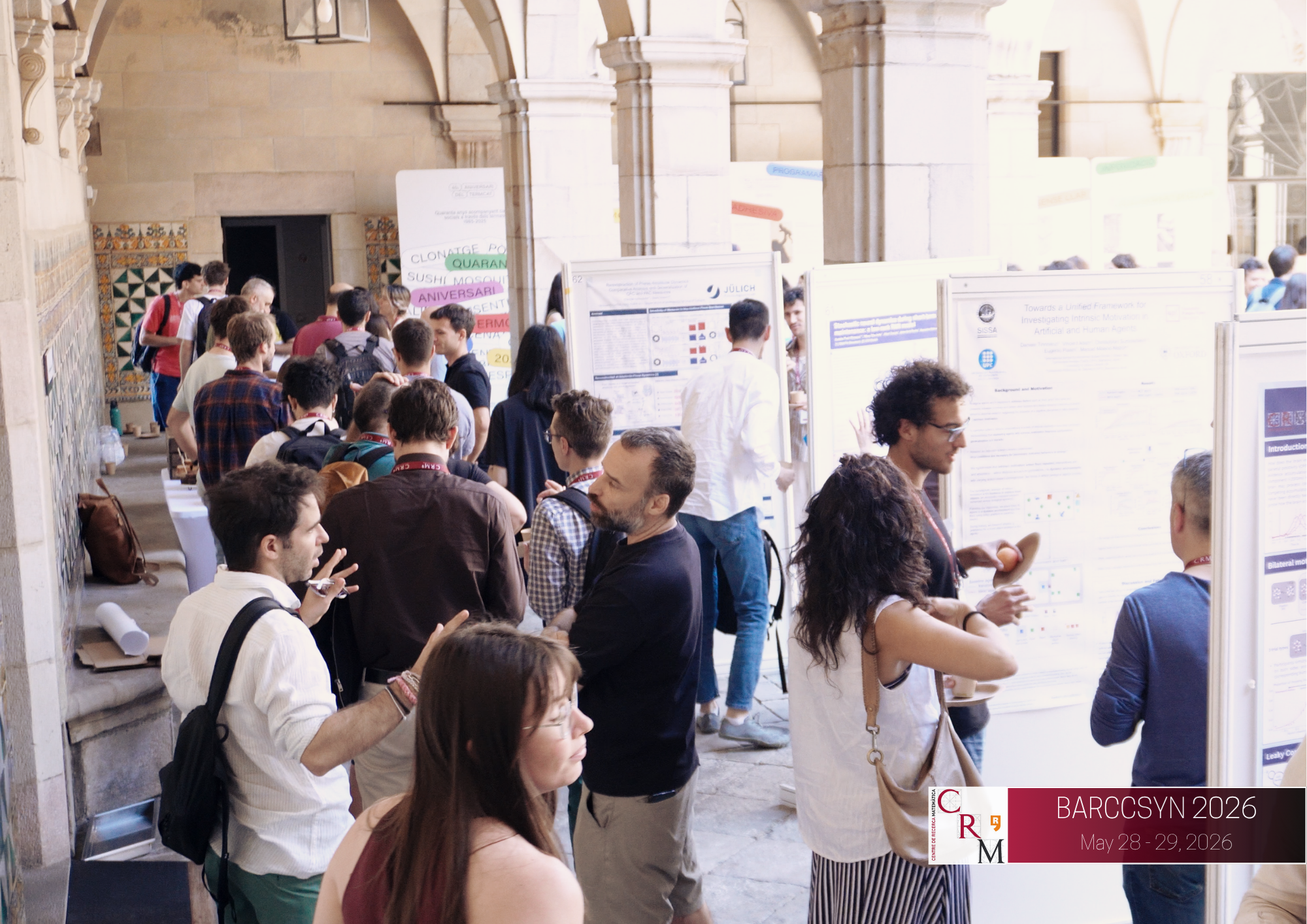
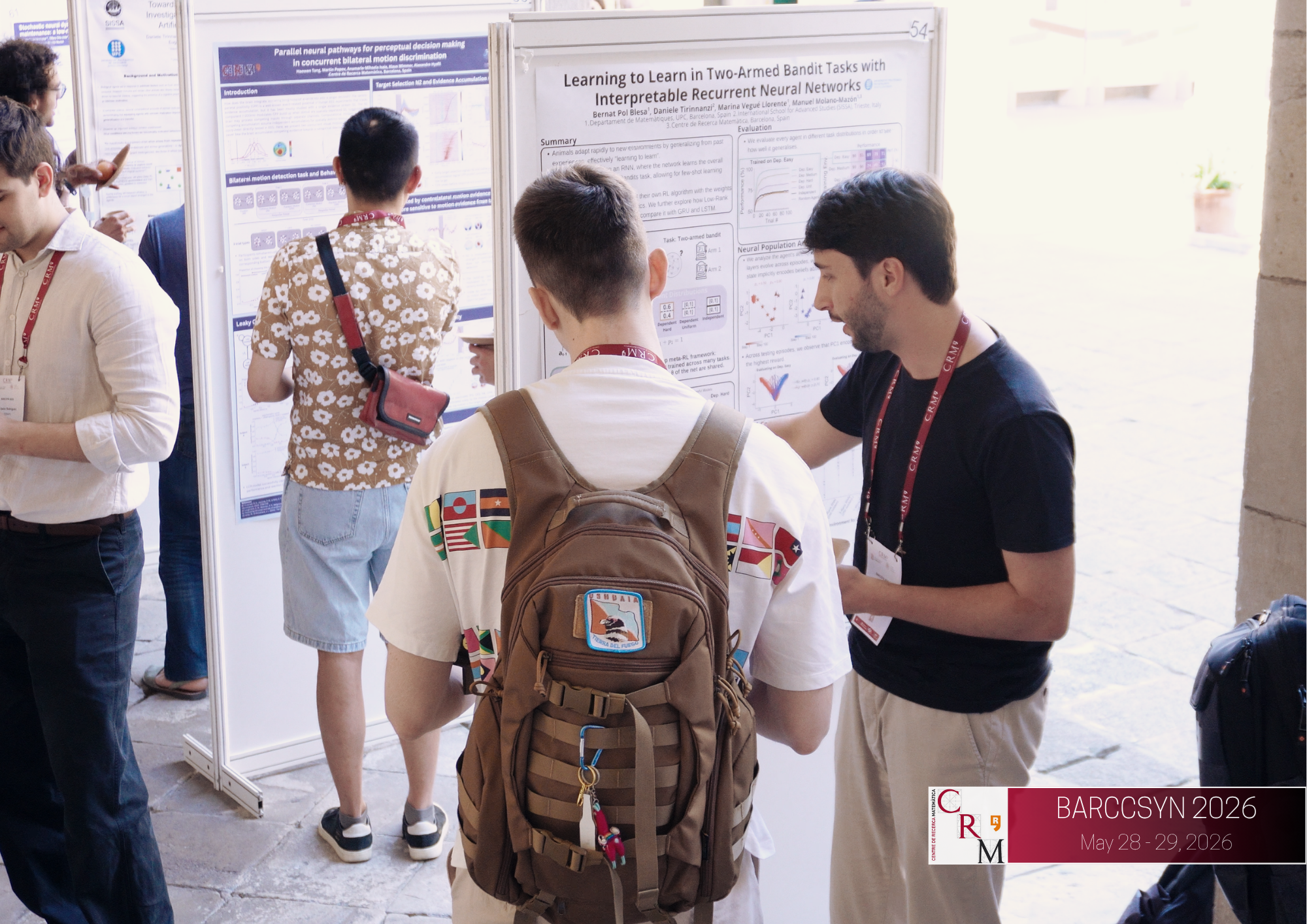
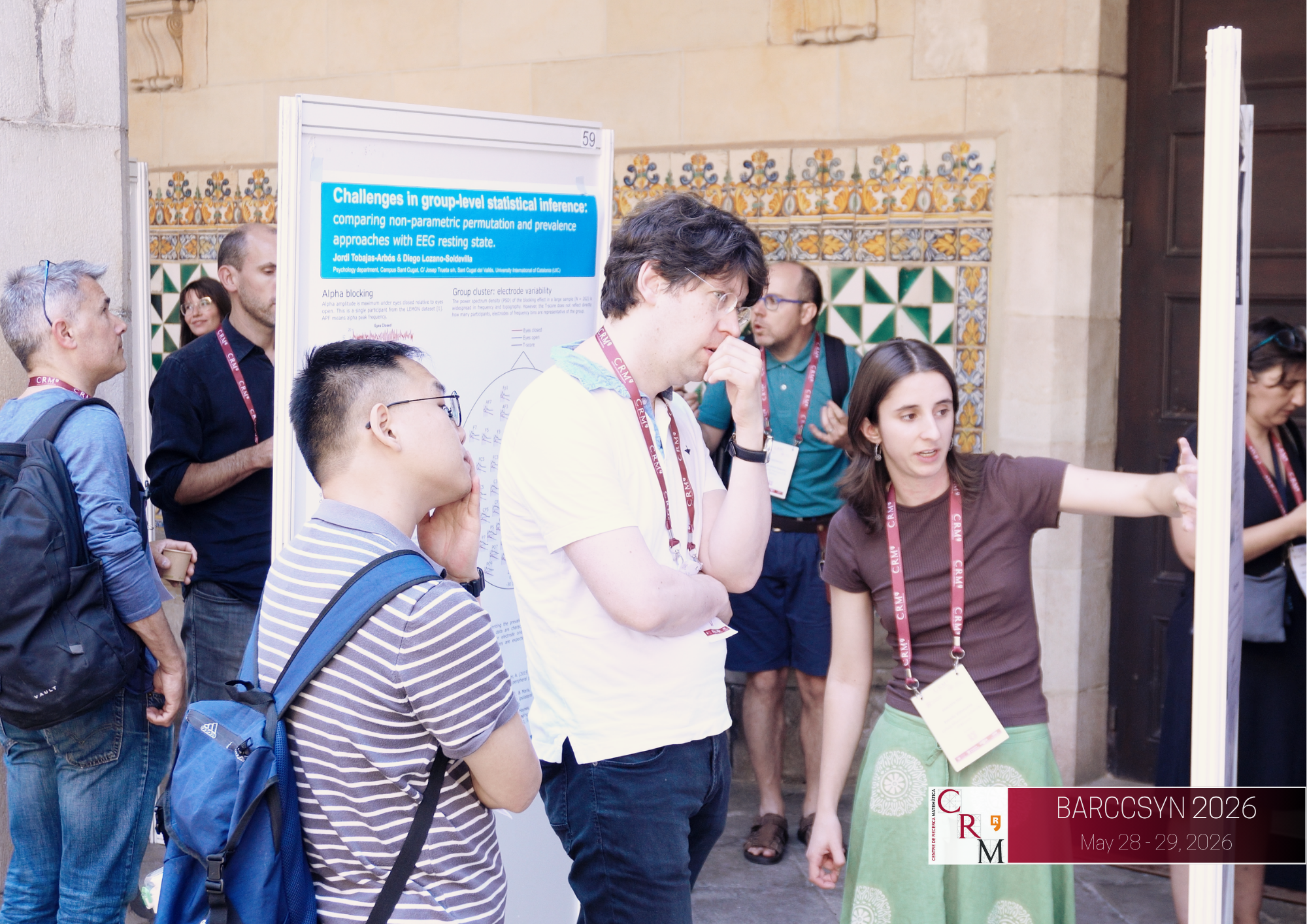
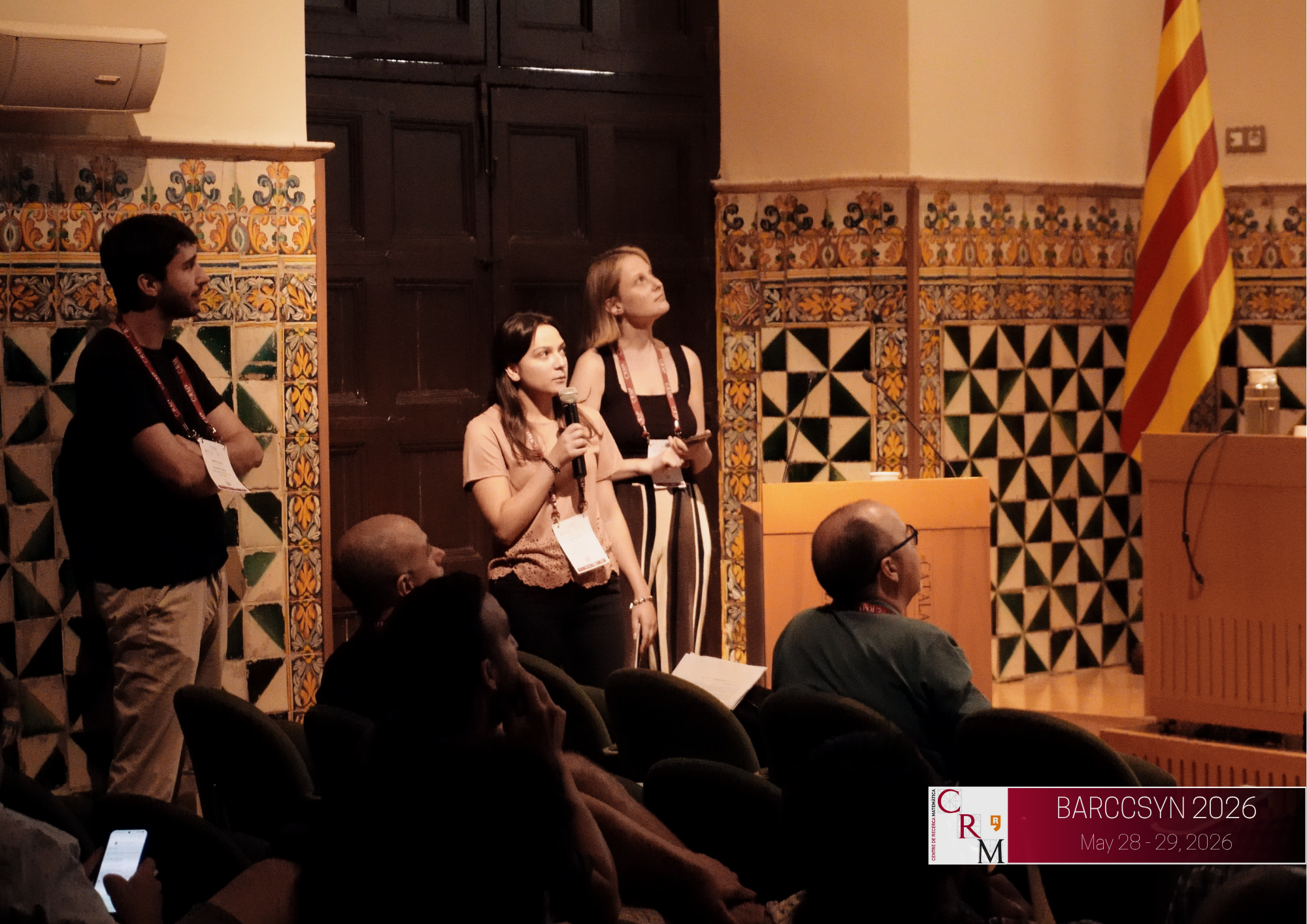
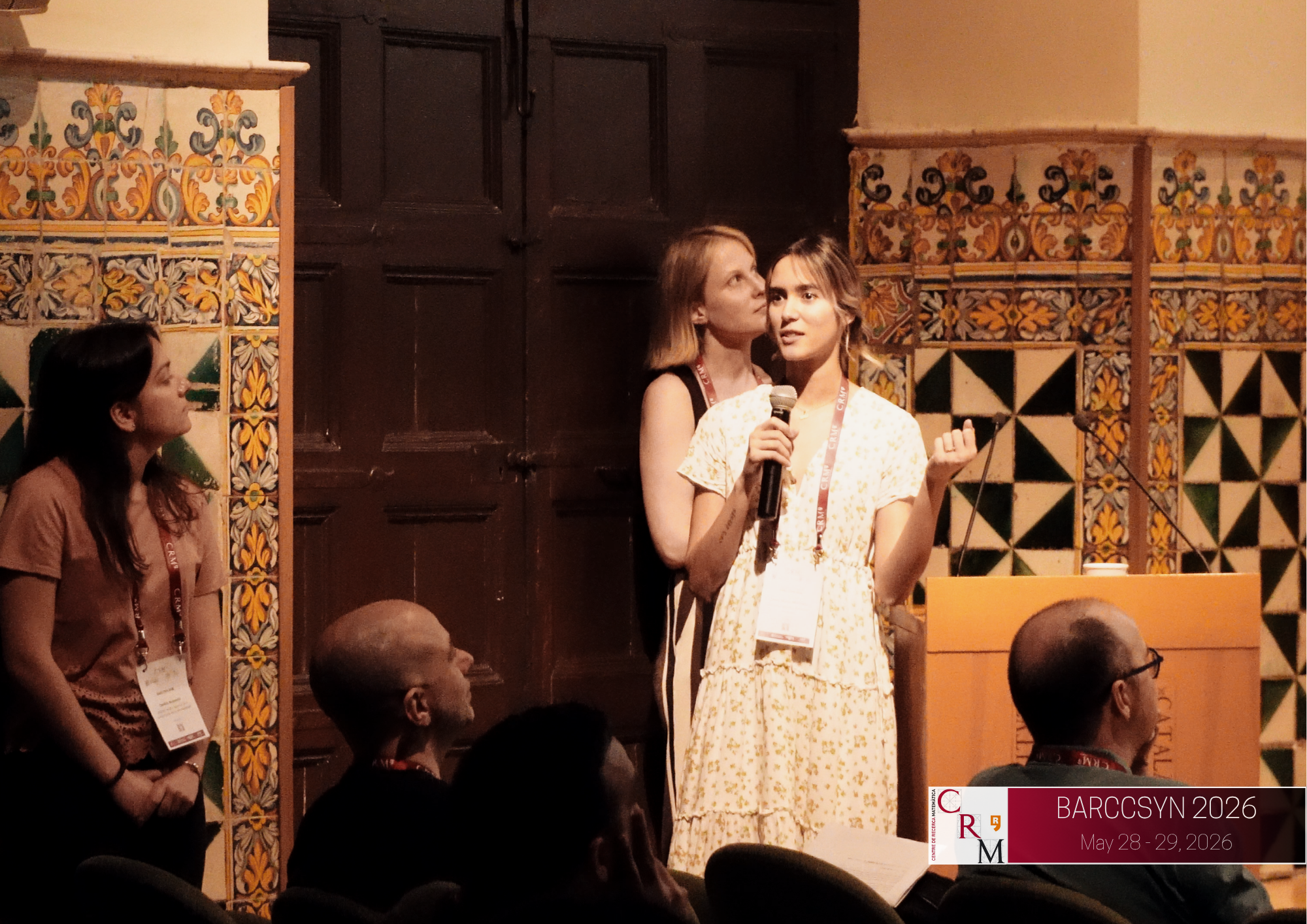
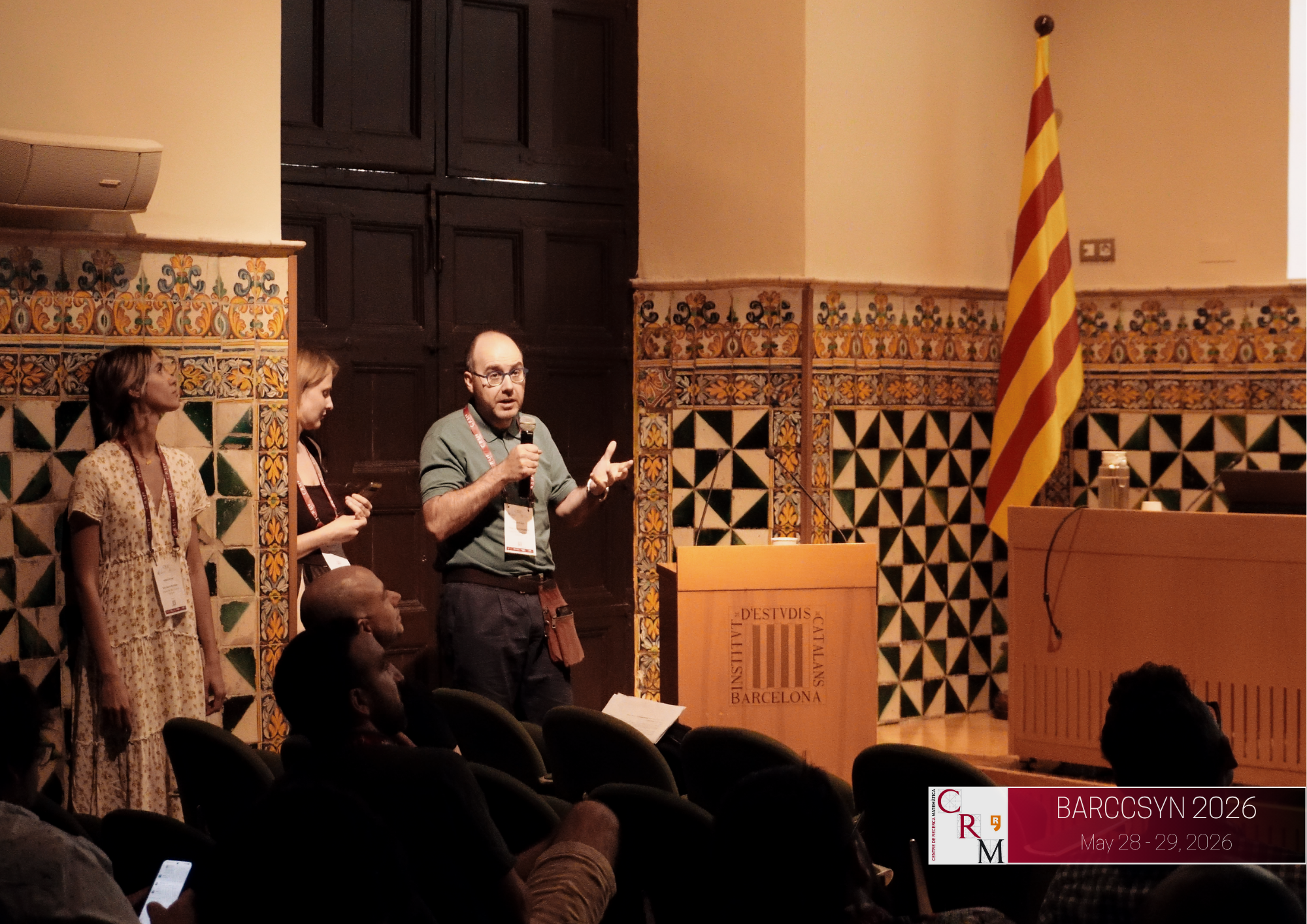
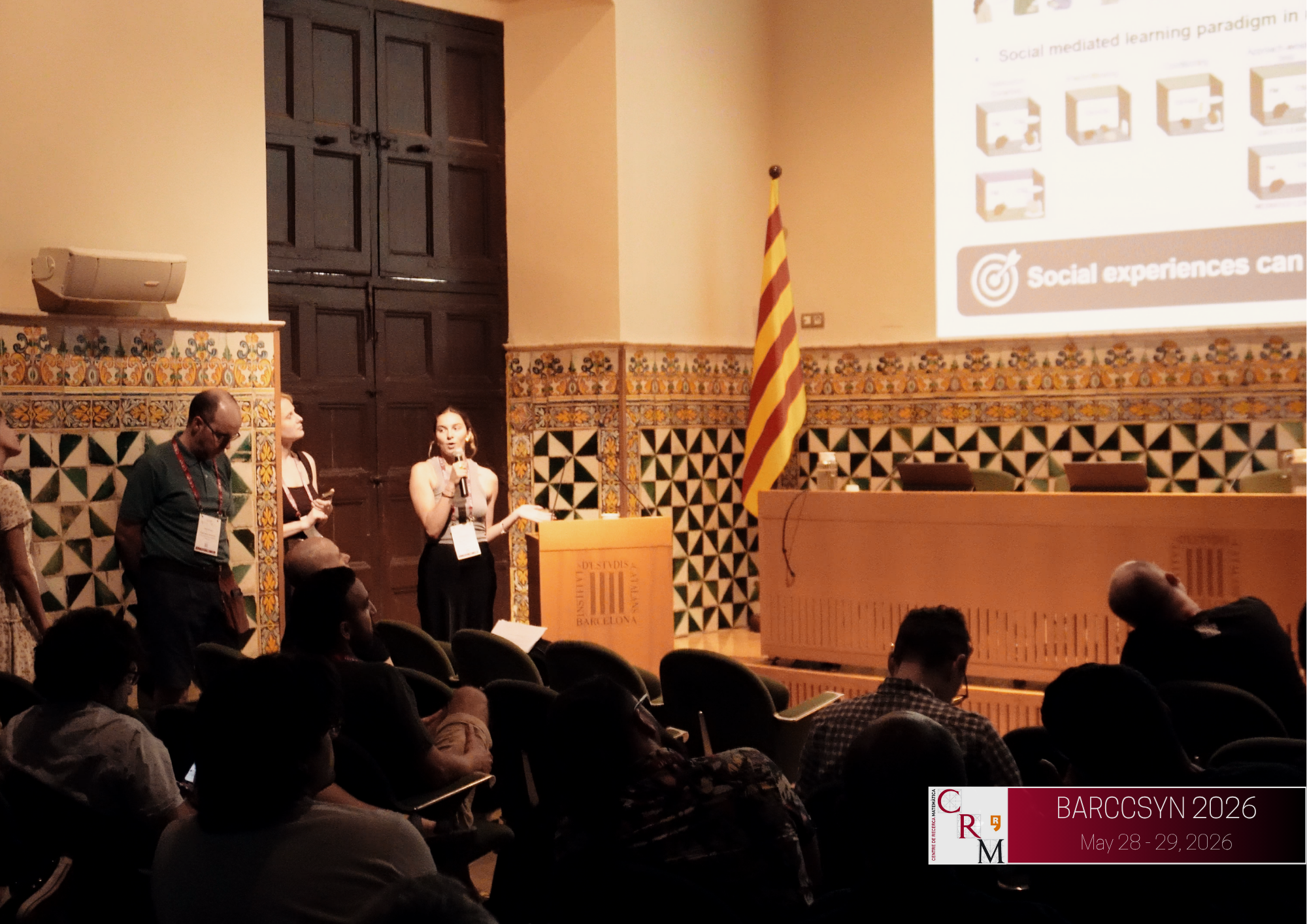
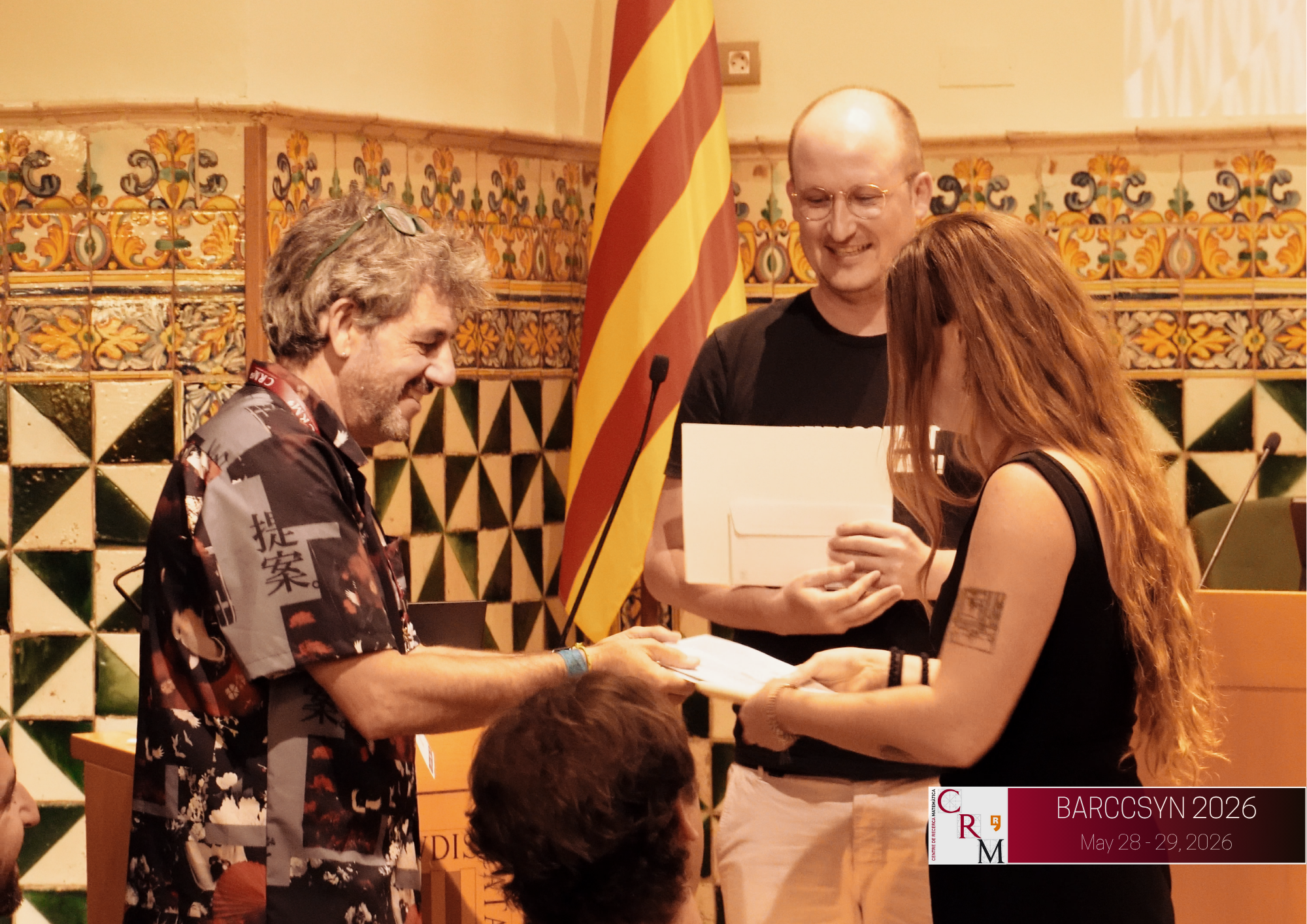
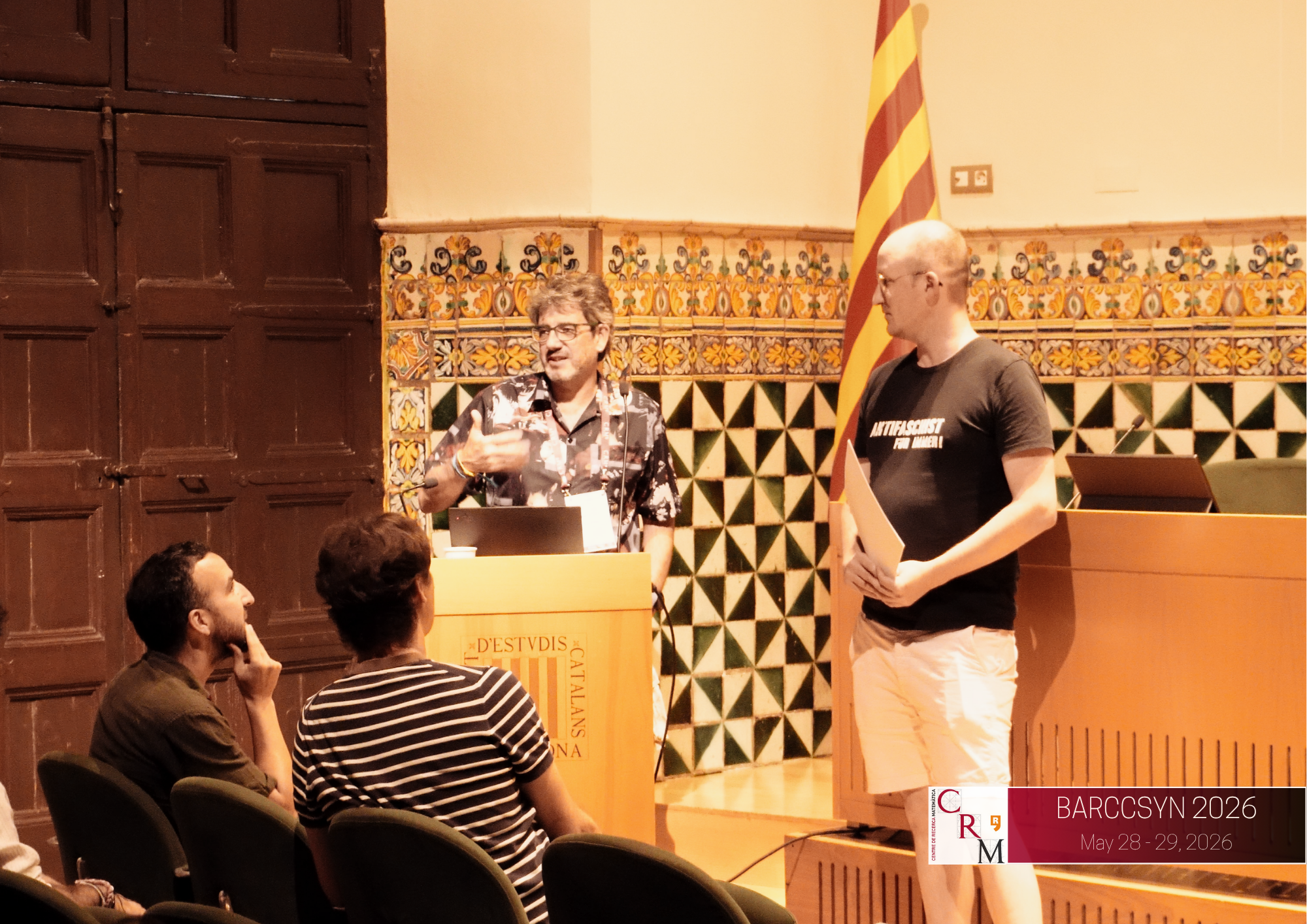
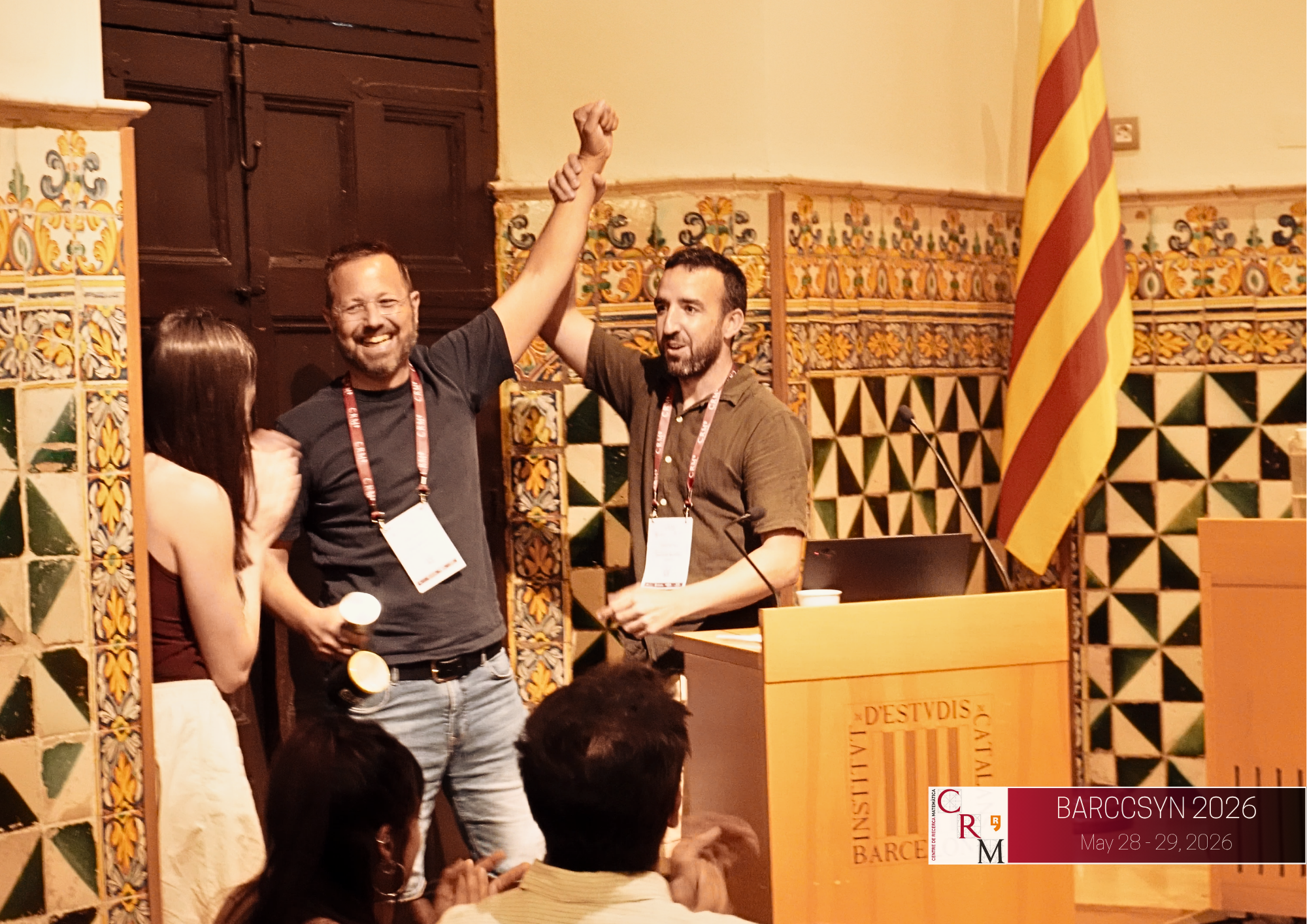
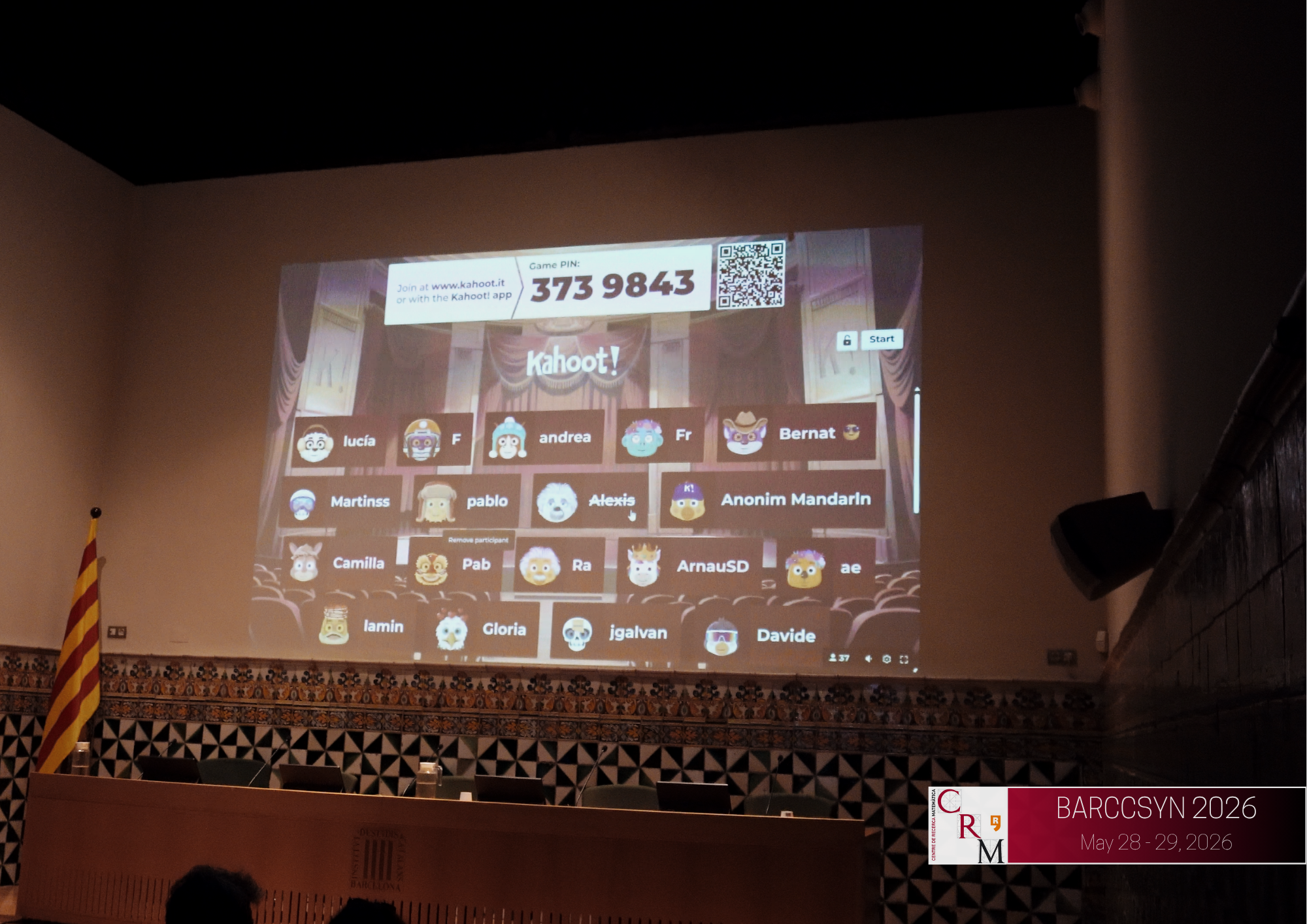
Introduction

BARCCSYN PAST EDITIONS
organizers
Jens-Bastian Eppler | Centre de Recerca Matemàtica
Alexandre Hyafil | Centre de Recerca Matemàtica
Hernando Martínez Vergara | IDIBAPS
Indre Pileckyte | IDIBAPS
Keynote speakers
Saskia Haegens
Columbia University, New York
Raoul-Martin Memmesheimer
University of Bonn
Sara Mederos
Hospital del Mar, Barcelona
SCHEDULE
| Time | Thursday 28 May | Time | Friday 29 May |
|---|---|---|---|
| 09:00 → 09:30 | Registration |
09:00 → 09:30 |
Cooperative actions of interneuron families support the hippocampal spatial code
Pablo Abad
Hospital del Mar Research Institute
|
| 09:30 → 09:40 | Welcome |
09:30 → 10:00 |
The emergence of spatial fields in mouse CA1 underlies learning of self-motion integration for estimating distance
Gloria Cecchini
CRM
|
| 09:40 → 10:10 |
Critical neuronal avalanches arise from excitation-inhibition balanced spontaneous activity
Adrián Ponce
UPC-CRM
|
10:00 → 11:00 |
Saskia Haegens
Columbia University
|
| 10:10 → 10:40 |
Bistable perception reveals a canonical computation in sensory processing
Alexandre Garcia-Duran
CRM
|
11:00 → 11:30 | Poster Blitz 2 |
| 10:40 → 11:10 | Poster Blitz 1 |
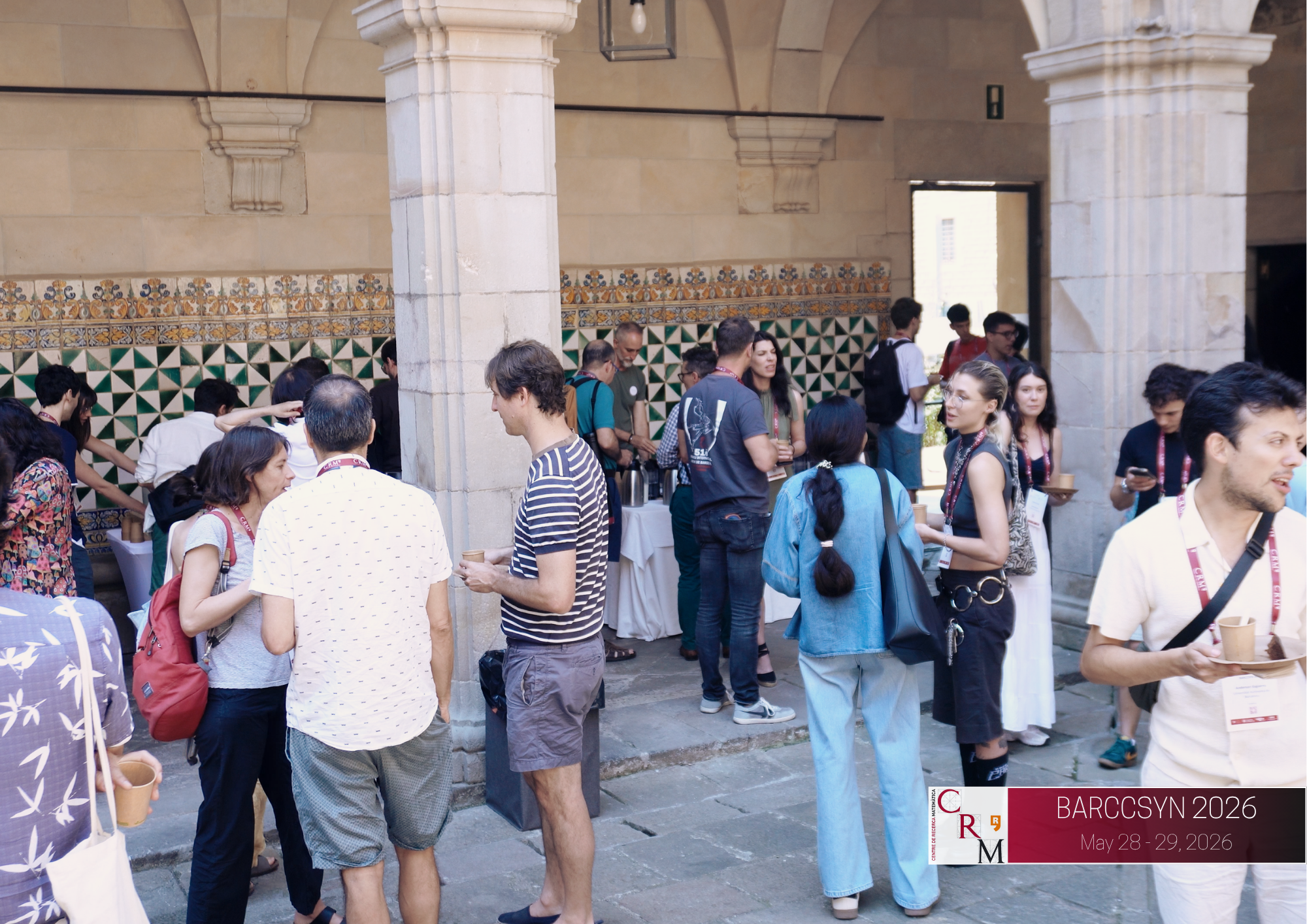
11:30 → 12:50 | Coffee Break (Poster Session II) + Group Picture |
| 11:10 → 12:30 | Coffee Break (Poster Session I) | 12:50 → 13:20 |
Distinct spatiotemporal encoding converges in the prefrontal-parietal network during working memory maintenance
Melanie Tschiersch
IDIBAPS
|
| 12:30 → 13:30 |
Raoul-Martin Memmesheimer
University of Bonn
|
13:20 → 13:50 |
The Deep Focus: Subcortical Networks Supporting Sustained Attention
Arnau Sans
ISTA
|
| 13:30 → 15:30 | Lunch Break | 13:50 → 15:30 | Lunch Break |
| 15:30 → 16:00 |
A dynamic attractor model of overlapping engrams for associative memory
Marta Boscaglia
University of Leicester
|
15:30 → 16:00 |
Dual encoding of slow and fast fluctuations in task-related vigor in rat dorso-medial striatum
Lluís Hernández
CRM
|
| 16:00 → 16:30 |
Perceptual Coupling in Ambiguous Vision: A Cusp Catastrophe Model of Multi-Stimulus Dynamics
Daniel van der Meer
University of Amsterdam
|
16:00 → 17:00 | Coffee Break (Poster Session II) |
| 16:30 → 17:30 | Coffee Break (Poster Session I) | 17:00 → 18:00 |
Sara Mederos
Hospital del Mar
|
| 17:30 → 18:00 |
Structure-Constrained Intrinsic Timescales Across Tasks
Kaichao Wu
IFISC (UIB-CSIC)
|
18:00 → 18:30 | Prizes, quiz and concluding remarks |
| 18:00 → 18:30 |
Structural basis of functional specialization in the dentate gyrus
Khashayar Baghizadeh
Universitat de Barcelona
|
18:30 → 19:30 | Reception |
| 20:00 | Farewell |
LIST OF PARTICIPANTS
| Name | Institution |
|---|---|
| Diego Lozano-Soldevilla | Universitat Internacional de Catalunya |
| Sofia Gil-Rodrigo | Universitat Pompeu Fabra |
| Fabio Mattiussi | Universitat Pompeu Fabra |
| F. Javier Rodríguez Martínez | IDIBAPS |
| Jordi Tobajas-Arbós | Universitat Internacional de Catalunya |
| Alexandre Hyafil | Centre de Recerca Matemàtica |
| Alexandra Antoniadou | Centre de Recerca Matemàtica |
| Klaus Wimmer | Centre de Recerca Matemàtica |
| Estefanía Moreno | Universitat de Barcelona |
| Michael DePass | Universitat Pompeu Fabra |
| Arnau Sans Dublanc | Institute of Science and Technology Austria (ISTA) |
| Antoni Guillamon Grabolosa | Universitat Politècnica de Catalunya |
| Gustavo Patow | Universitat de Girona |
| Ignacio Martín | Universitat de Girona |
| Albert Juncà | Universitat de Girona |
| Davide Colella | Delft University of Technology |
| Konstantinos Chatzimichail | IDIBAPS |
| Azamat Yeldesbay | Research Center Jülich |
| Marta Picco | Fundació Institut Hospital del Mar d'Investigacions Mèdiques |
| Anel Marie Martinez Felix | Hospital del Mar Research Institute |
| Laura Modol | Fundació Hospital del Mar Research Institute |
| Hernando Martinez Vergara | IDIBAPS |
| Nuo Dong | IDIBAPS |
| Mireia Comabella | Hospital del Mar Research Institute Barcelona |
| Beatriz Martins | Universitat Autònoma de Barcelona |
| Ipek Caliskan | Bilkent University |
| Raneem Shtaya | IDIBAPS |
| Xiaoge Bao | IDIBAPS |
| Elitza Maneva | Universitat Autònoma de Barcelona |
| Manuel Molano-Mazón | UPC |
| Silvana Silva Pereira | Universitat Autònoma de Barcelona |
| Indre Pileckyte | IDIBAPS |
| Sofia Pascoal | IDIBAPS |
| Daniel van der Meer | University of Amsterdam |
| Camilla Nouveau | INSERM: Institut national de la santé et de la recherche médicale |
| Pablo Estévez Gutiérrez | IDIBAPS |
| Estrella Villanueva Pivel | Ludwig Maximilian University of Munich |
| Kaichao Wu | IFISC(UIB-CSIC) |
| Adrián Ponce Alvarez | Universitat Politècnica de Catalunya |
| Thomas Morvan | IDIBAPS |
| Ignasi Cos | Universitat de Barcelona |
| Pablo Abad | Hospital del Mar Research Institute |
| Daniele Tirinnanzi | International School for Advanced Studies |
| Rúben Faria Correia | Universitat Autònoma de Barcelona |
| Manolis Mylonas | Universitat Pompeu Fabra |
| Daniele De Pasquale | Claude Bernard University Lyon 1 |
| Oriol Garcia | Universitat Politècnica de Catalunya |
| Adrià Tauste Campo | Universitat Politècnica de Catalunya |
| Laura Ribalta Vilella | IDIBAPS |
| Albert Estop | Universitat Autònoma de Barcelona |
| Yannick Bollmann | Universitat Autònoma de Barcelona |
| Adrià Marly | Universitat Pompeu Fabra |
| Oriol Monge Girones | Universitat Politècnica de Catalunya |
| Maiol Valentí | Universitat de Vic |
| Ignacio Del Castillo Berges | Hospital del Mar Research Institute |
| Manuel Andrés Hernández Alonso | Universitat de Barcelona |
| Emanuela Iannella | Hospital del Mar Research Institute |
| Andrea Gallardo Molina | Fundació Institut Hospital del Mar d'Investigacions Mèdiques |
| Irene Pilar Ayuso Jimeno | Hospital del Mar research Institute Barcelona |
| Vincent Adam | Universitat Pompeu Fabra |
| Marta Boscaglia | University of Leicester |
| Bernat Pol Blesa | Universitat Politècnica de Catalunya |
| Raul de Palma Aristides | Universitat de Les Illes Balears |
| Alexis Cerván | IDIBAPS |
| Javier Galván Fraile | IFISC |
| Caterina Barezzi | IDIBAPS |
| Rubén Amunátegui | Universitat de Les Illes Balears |
| Silvia Daun | University of Cologne |
| Alexandre Garcia-Duran | Centre de Recerca Matemàtica |
| Lucía Arancibia | Centre de Recerca Matemàtica |
| Pablo Crespo | Centre de Recerca Matemàtica |
| Haowen Tang | Centre de Recerca Matemàtica |
| Jens-Bastian Eppler | Centre de Recerca Matemàtica |
| Gloria Cecchini | Centre de Recerca Matemàtica |
| Demetrio Ferro | Universitat Pompeu Fabra |
| Lluís Hernández Navarro | Centre de Recerca Matemàtica |
| Alex Roxin | Centre de Recerca Matemàtica |
| Gemma Huguet Casades | Universitat Politècnica de Catalunya |
| Antonio Coll de San Simón Benito | Universitat de Les Illes Balears |
| Paula Gomez Sotres | Hospital del Mar Research Institute |
| Claudio Mirasso | Universitat de Les Illes Balears |
| Khashayar Baghizadeh Hosseini | Universitat de Barcelona |
| Dimitrios Chalkiadakis | Universitat de Les Illes Balears |
| Ernesto Biempica Gonzalez | Universitat Autònoma de Barcelona |
| Jaroslav Hlinka | Czech Academy of Sciences |
| João Ribeiros | Universitat Autònoma de Barcelona |
| Alexis Pérez-Bellido | Universitat Autònoma de Barcelona |
| Sara Puljic Castells | Universitat Autònoma de Barcelona |
| Albert Compte | IDIBAPS |
| Maimoona Siddiq Chaudhary | Universitat Pompeu Fabra |
| Rubén Moreno Bote | Universitat Pompeu Fabra |
| Adrià Moran | IDIBAPS |
| Jaime de la Rocha | IDIBAPS |
| Anderson Esguerra Acosta | Universitat Autònoma de Barcelona |
| Adam Ranson | Universitat Autònoma de Barcelona |
| Santiago Galella | Goethe University Frankfurt |
| Alexandre Mahrach | IDIBAPS |
| Diana Schutsch | Universitat Pompeu Fabra |
| Mireia Torralba Cuello | Universitat Politècnica de Catalunya |
| Melanie Tschiersch | IDIBAPS |
| Giulio Ruffini | Neuroelectrics Barcelona SL |
| Francesca Castaldo | Barcelona Computational Foundation |
| Marina Vegué | Universitat Politècnica de Catalunya |
| Manuel Valero García | Institut Hospital del Mar d'Investigacions Mèdiques (IMIM) |
| Pau Clusella | Universitat Politècnica de Catalunya |
| Linus Manubens-Gil | Universitat Politècnica de Catalunya |
| Jaume Capdevila Jové | Universitat Autònoma de Barcelona |
| Lucía Sánchez | IDIBAPS |
| Ernest Montbrió | Universitat Pompeu Fabra |
| Myles Forgey | Universitat Autònoma de Barcelona |
| Sara Mederos | Hospital del Mar |
| Raoul-Martin Memmesheimer | University of Bonn |
| Saskia Haegens | Columbia University, New York |
| Leonardo L. Gollo | Universitat de Les Illes Balears |
| Xavier Otazu | Universitat Autònoma de Barcelona |
| Lucia Torrescusa | Universitat Autònoma de Barcelona |
| Anamaria-Mihaela Isaia | Universitat Pompeu Fabra |
PRIZES
There will be prizes for the best students contributions.
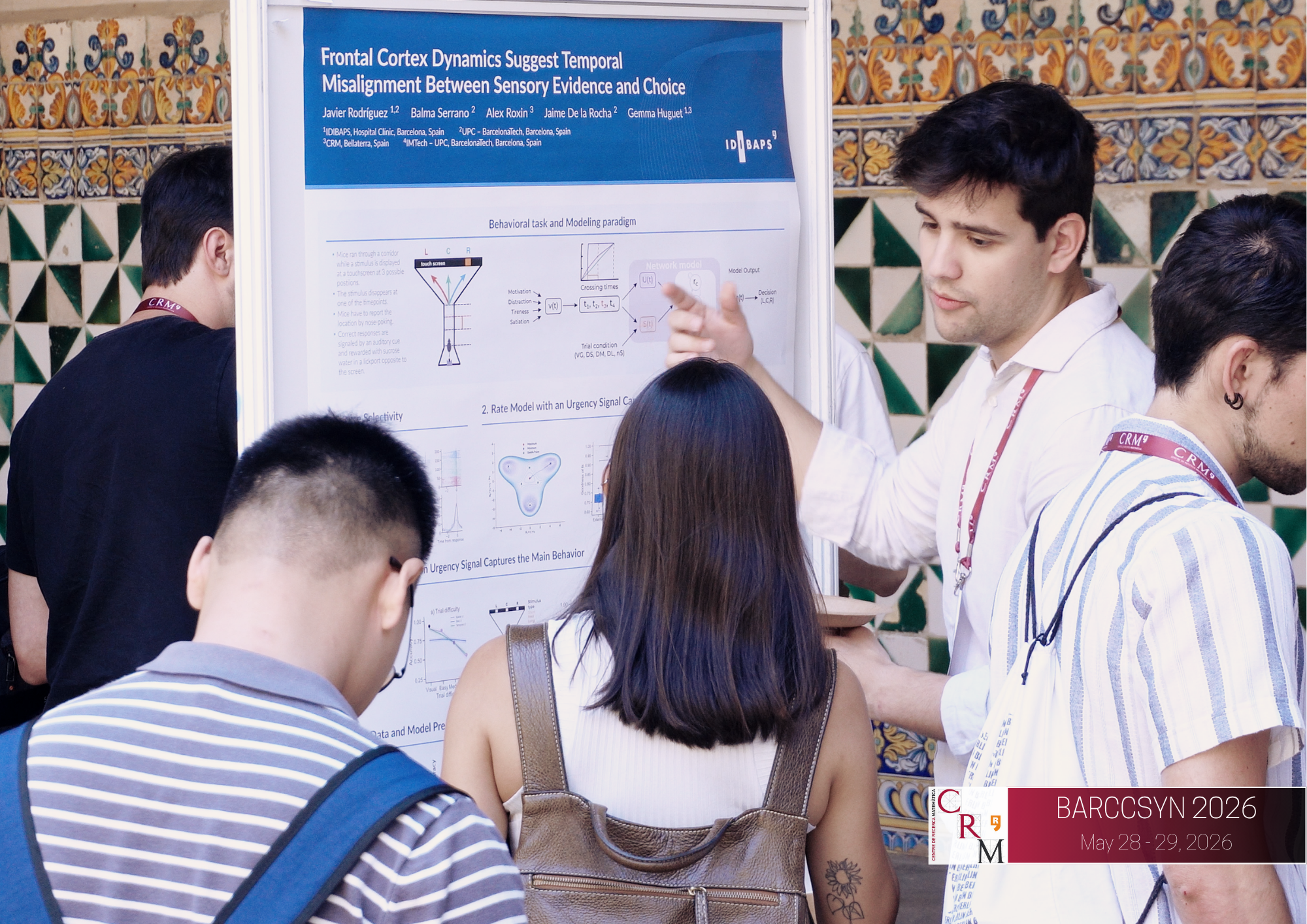
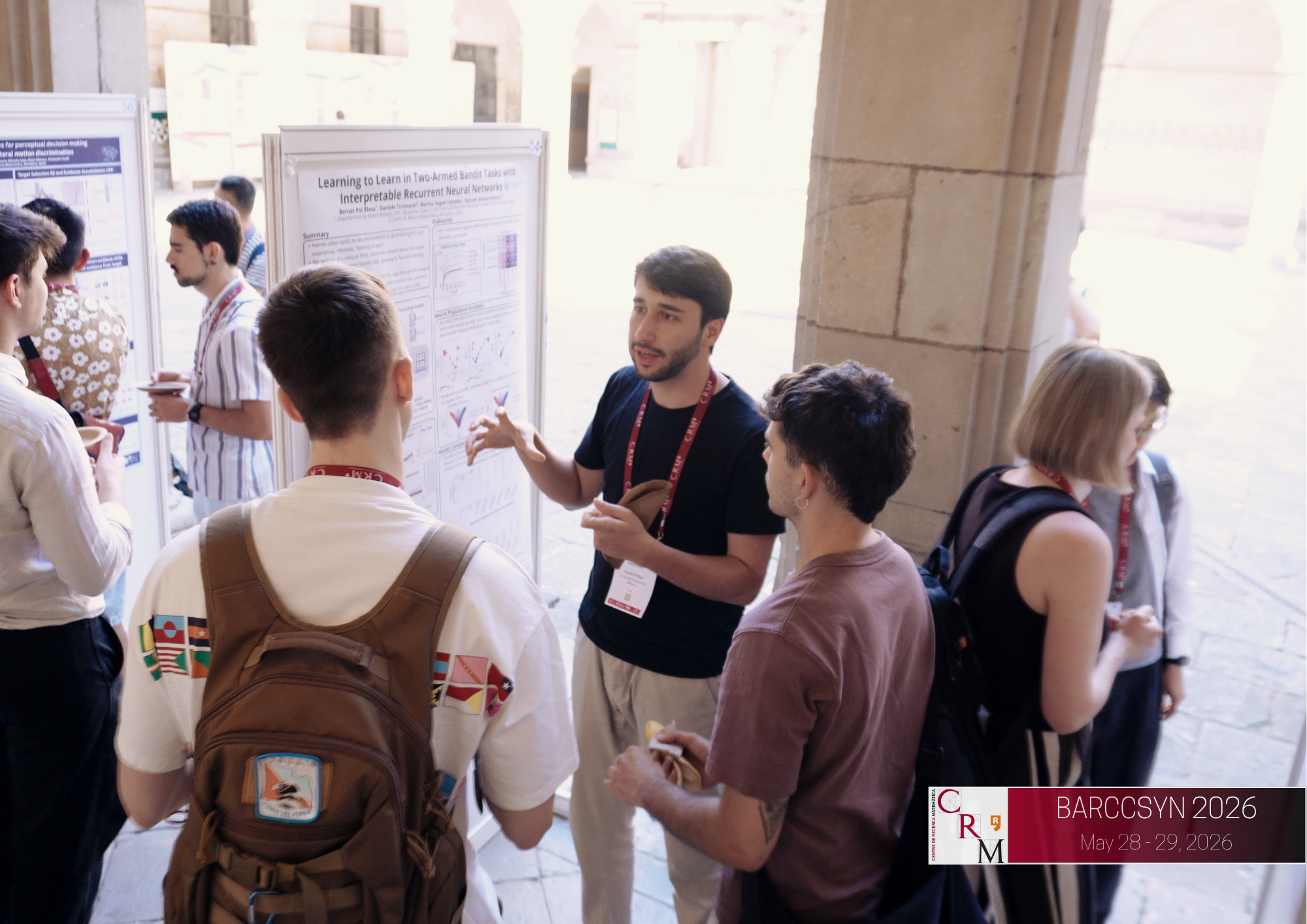
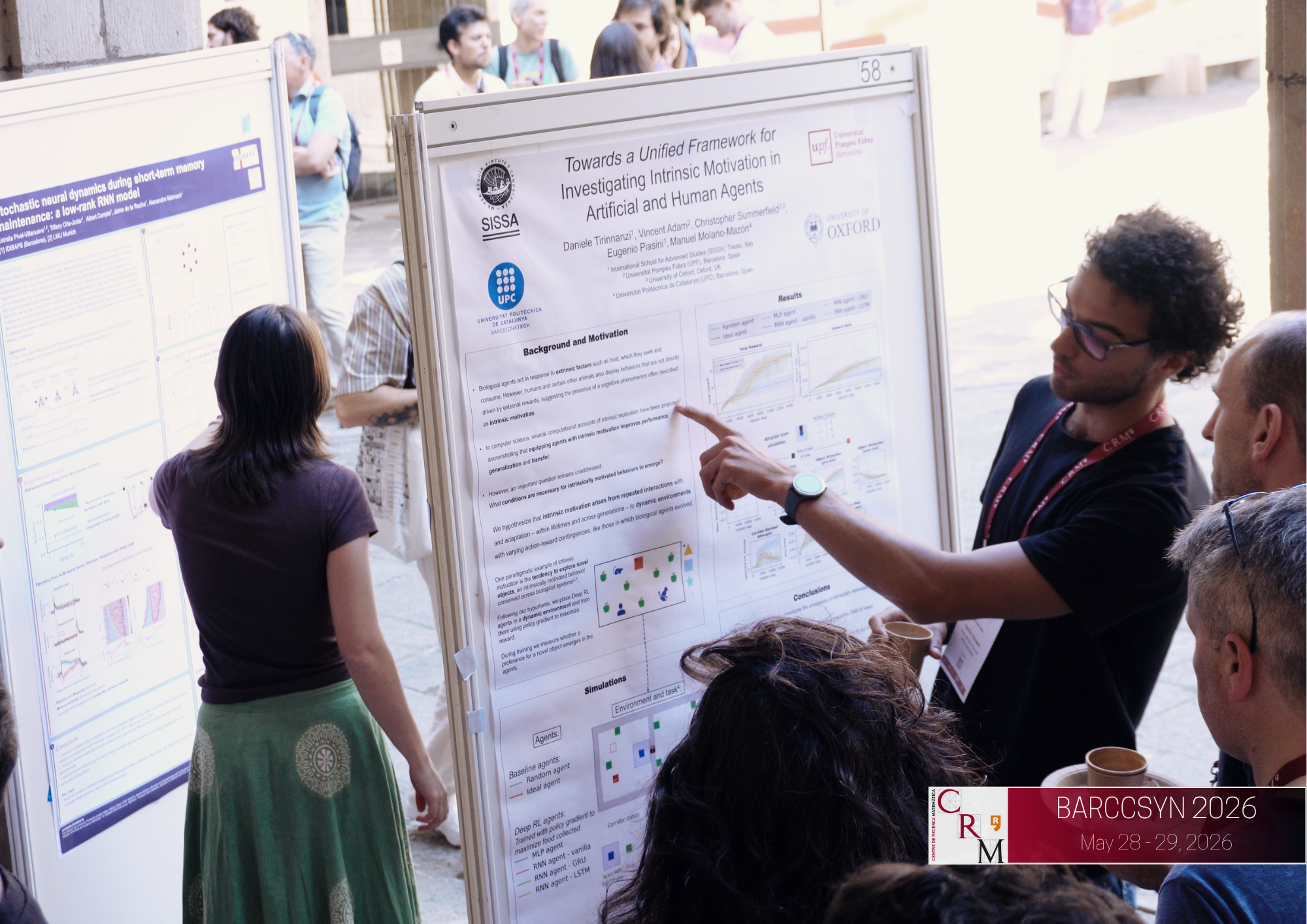
Poster and contributed talks
Participants may contribute with an oral presentation, a poster, and/or a poster blitz. Poster boards provided at the IEC measure 1 meter wide by 2 meters high; any poster size within these dimensions is acceptable.
-
- Deadline for abstract submission: April 16th, 2026 There will be no deadline extension!!
- Resolutions will be sent by April 23rd, 2026
registration
Registration deadline May 6th, 2026
CRM USER CREATION
After creating your CRM user account, you can log in on the activity webpage to complete your registration, or by clicking the button and then selecting ‘Sign in’.
REGISTER
INVOICE/PAYMENT INFORMATION
IF YOUR INSTITUTION COVERS YOUR REGISTRATION FEE: Please note that, in case your institution is paying for the registration via bank transfer, you will have to indicate your institution details and choose “Transfer” as the payment method at the end of the process.
UPF | UB | UPC | UAB
*If the paying institution is the UPF / UB/ UPC / UAB, after registering, please send an email to comptabilitat@crm.cat with your name and the institution internal reference number that we will need to issue the electronic invoice. Please, send us the Project code covering the registration if needed.
IDIBAPS
*If the paying institution is IDIBAPS, please send an email to comptabilitat@crm.cat with the Project reference code that will cover the registration cost, to be added to the invoice if necessary.
Paying by credit card
IF YOU PAY VIA CREDIT CARD but you need to provide the invoice to your institution to be reimbursed, please note that we will also need you to send an email to comptabilitat@crm.cat providing the internal reference number given by your institution and the code of the Project covering the registration (if necessary).
LODGING INFORMATION
ON-CAMPUS AND BELLATERRA
BARCELONA AND OFF-CAMPUS
acknowledgement




 |
For inquiries about this event, please contact the Head of Scientific Events, Ms Núria Hernández, at nhernandez@crm.cat
|
CRM Events code of conduct
All activities organized by the CRM are required to comply with the following Code of Conduct.
CRM Code of Conduct
scam warning
We are aware of a number of current scams targeting participants at CRM activities concerning registration or accommodation bookings. If you are approached by a third party (eg travellerpoint.org, Conference Committee, Global Travel Experts or Royal Visit) asking for booking or payment details, please ignore them.
Please remember:
i) CRM never uses third parties to do our administration for events: messages will come directly from CRM staff
ii) CRM will never ask participants for credit card or bank details
iii) If you have any doubt about an email you receive please get in touch

Sustainable Events
We are committed to organising sustainable events that minimise environmental impact and create a positive legacy for the host community. We support organisers in designing events aligned with the UN 2030 Sustainable Development Goals, reducing negative environmental impacts and promoting responsible practices.
All materials provided during our activities are responsibly sourced, including recycled pens and plastic-free badges. We work with responsible suppliers, and our catering partners use fully compostable materials while offering vegetarian and vegan options, with at least one event day being fully vegetarian.
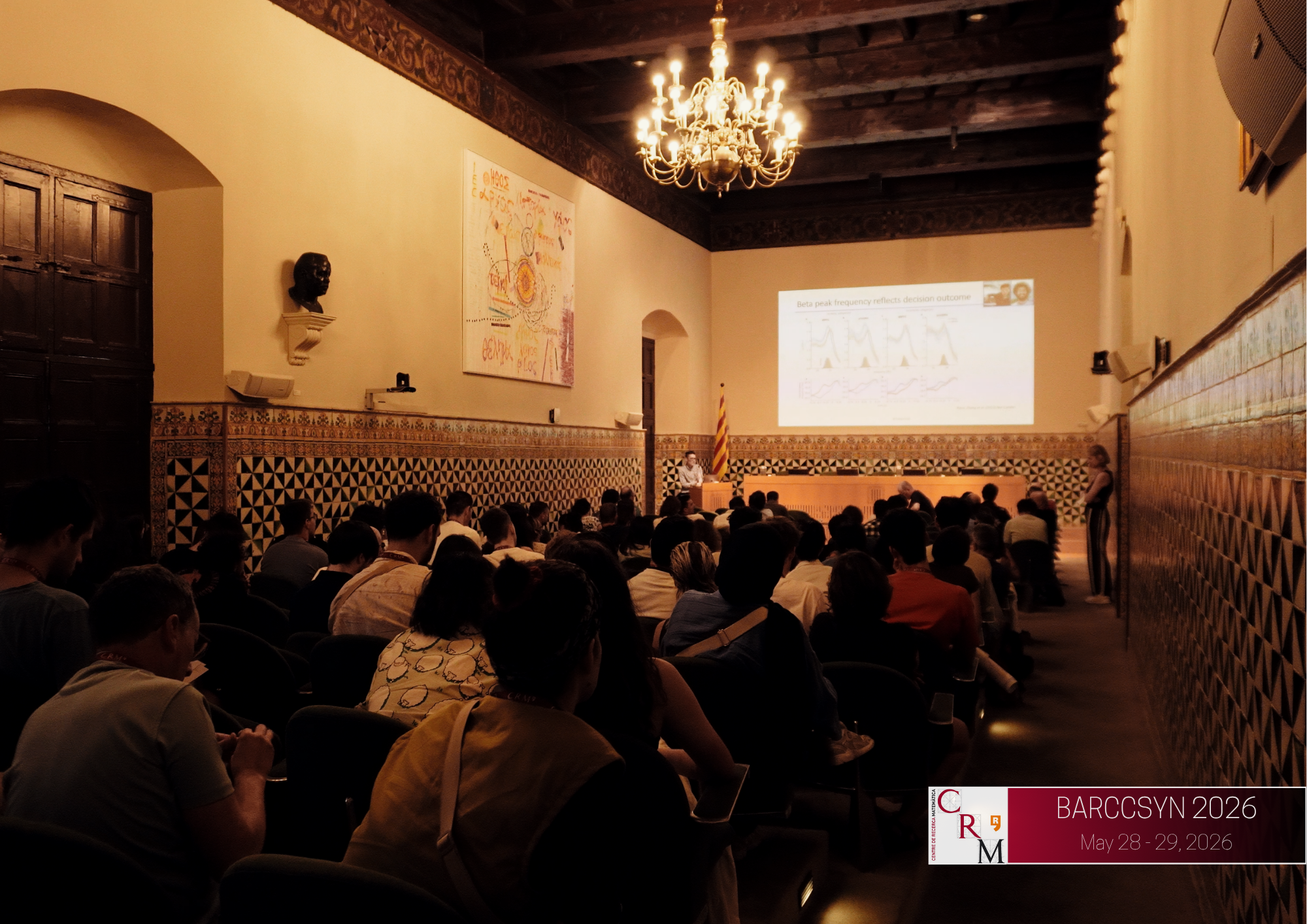
We recently proposed that the beta rhythm (15–30 Hz) provides a key aspect of routing information through the brain, namely, the formation of flexible, transient neural ensembles. We tested this hypothesis using spike and LFP recordings in non-human primates and MEG/EEG in healthy human participants performing a categorical decision-making task. We found that beta-band frequency shifts in frontal cortex signal categorical decision outcomes, with activity in these bands predicting the behavioral response. These results further substantiate the idea that beta provides the scaPolding for the formation of neural ensembles. We argue that beta frequency shifts arise from changes in connectivity between weakly coupled oscillators and that, more than a spectral fingerprint, they reflect an active mechanism to (re)-activate behaviorally relevant communication channels in the brain.
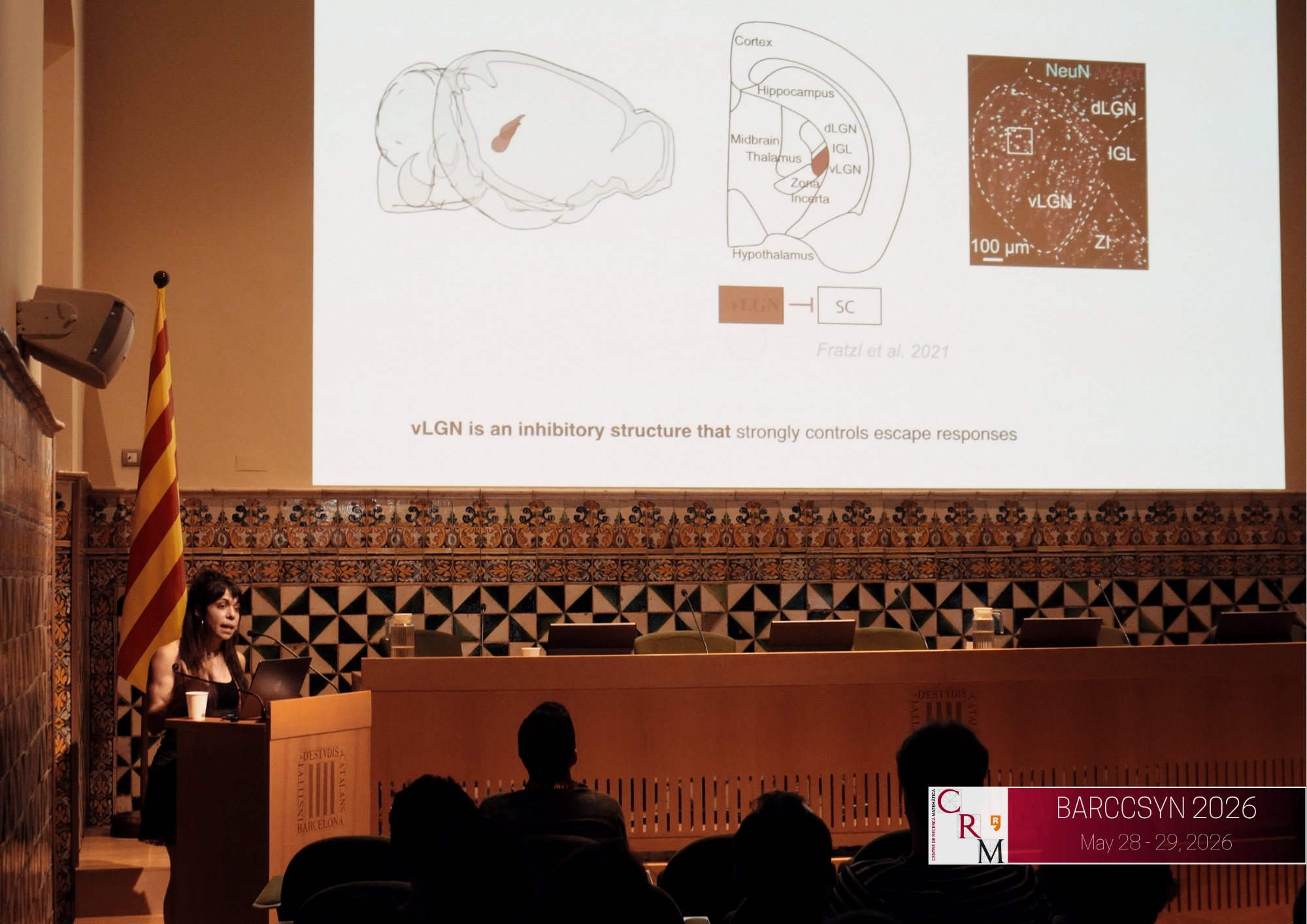
To understand adaptive behavior, we must understand how decisions are computed and updated through experience. For example, when facing a potential threat, animals may initially rely on instinctive responses, such as escape, yet with experience they can suppress these reactions as the environment is reinterpreted. In this talk, I will show how these transformations arise from interactions between cortical and subcortical circuits that dynamically reshape decision variables in aversive contexts.
Using an ethologically grounded paradigm in which mice escape from an overhead looming stimulus that mimics an aerial predator, I will show that repeated exposure leads to suppression of this instinctive response. We find that higher visual areas instruct this learning through projections to the inhibitory ventrolateral geniculate nucleus (vLGN). Neural population recordings reveal that specific vLGN neurons increase their activity across learning and are necessary for the expression of escape suppression, indicating that cortical inputs instruct learning, while plasticity within vLGN implements the learned behavioral change.
I will then extend this framework to show how vLGN integrates inputs from retrosplenial cortex and hypothalamic circuits to regulate decisions between safety and exploration. These pathways carry distinct signals related to prior experience and internal state, and their coordinated activity shapes when animals decide to leave safety. ogether, these results reveal circuit mechanisms through which experience reshapes decision-making in aversive environments.
Finally, I will present ongoing work showing how acute stress induces persistent changes in hippocampal dynamics, linking experience-dependent updating of threat with longer-lasting circuit adaptations that may be relevant for anxiety and PTSD.
Change is ubiquitous in living beings. In particular, the connectome and neural representations can change. Nevertheless, behaviors and memories often persist over long times. In a standard model, associative memories are represented by assemblies of strongly interconnected neurons. For faithful storage these assemblies are assumed to consist of the same neurons over time. We propose a contrasting memory model with complete temporal remodeling of assemblies, based on experimentally observed changes of synapses and neural representations. The assemblies and thus the memory engrams drift freely as noisy autonomous network activity and spontaneous synaptic turnover induce neuron exchange. The gradual exchange allows plasticity to conserve the representational structure and keep inputs, outputs, and assemblies consistent. This leads to persistent memory. We develop statistical physics-inspired descriptions to quantitatively model the drift of assemblies in single brain regions and throughout the brain. This allows to predict the future dynamics of the neurobiologically observed initial drift of memory representations. The results suggest that the brain operates in a regime where engrams drift, both deterministically and randomly, to induce their emergent redistribution and thereby the consolidation of memories.