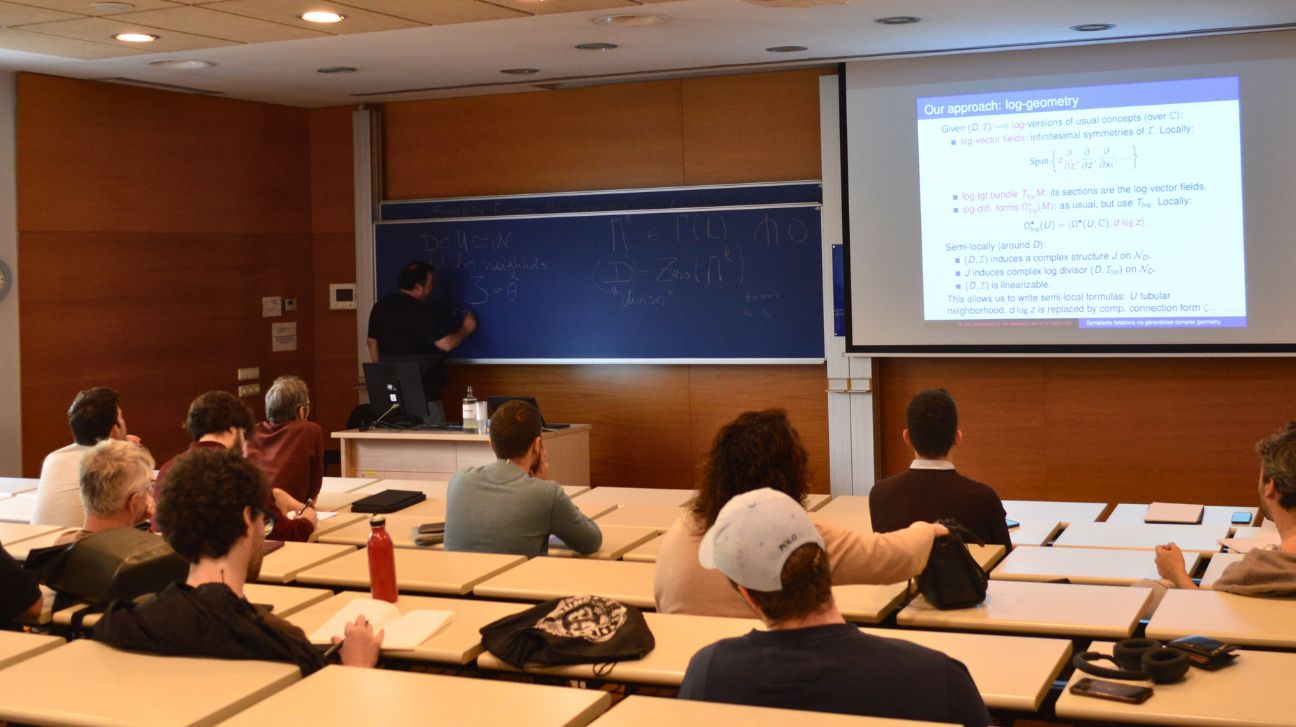
On March 23rd, 2026, the Centre de Recerca Matemàtica hosted the thematic day “Poisson Geometry and Its Relatives”, a full‑day event that brought together researchers exploring Poisson geometry and several of its neighbouring areas. The programme combined classical ideas, new perspectives, and ongoing developments across symplectic geometry, generalized geometry, and higher Lie groupoids.
Morning Sessions: Symmetric Structures and New Perspectives
The day began with F. Moučka (Universitat Autònoma de Barcelona) and his talk “Symmetric cousin of Poisson geometry”.Filip Moučka is a Ph.D. researcher working between the Universitat Autònoma de Barcelona and the Czech Technical University, specializing in differential and generalized geometry, with recent work focused on developing the theory of symmetric Poisson structures. Moučka introduced a symmetric counterpart to classical Poisson geometry, based on symmetric bivector fields paired with torsion-free connections —an alternative framework that mirrors some of the key features of the classical theory while relying on symmetric rather than skew‑symmetric structures. The talk also highlighted connections with well‑known geometric tools and algebraic structures.
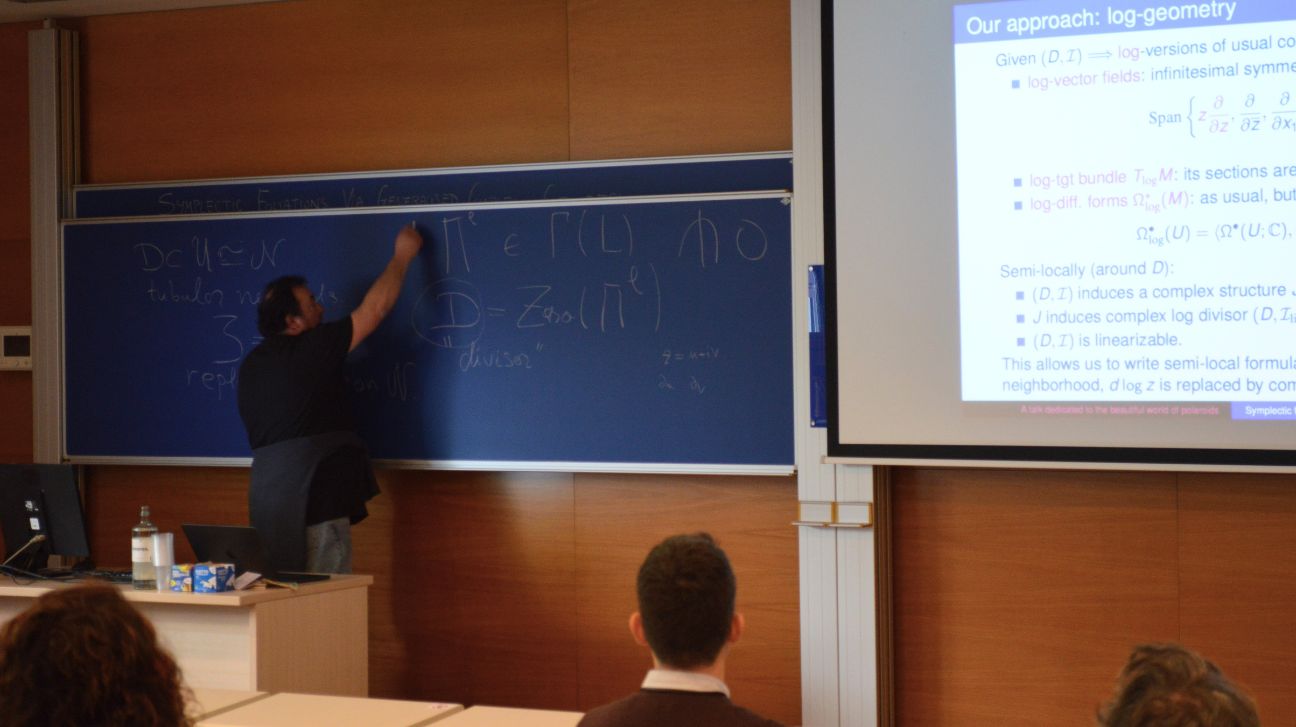
M. Crainic during his talk.
After the coffee break, M. Crainic (University of Utrecht) presented “The Lawson-Mitsumatsu symplectic foliation via generalized complex geometry”.Marius Crainic is Professor at Utrecht University, a leading figure in Poisson Geometry and related areas (symplectic and contact, foliations), G-structures, Lie pseudo-groups and groupoids and, more recently, the geometric study of PDEs. His talk revisited a fundamental and still challenging problem: building symplectic foliations of codimension one. By looking at these constructions through the lens of generalized complex geometry, he showed how certain classical results—particularly Mitsumatsu’s construction—can be understood in a more transparent and conceptual way. The talk emphasized how tools from generalized complex geometry shed new light on foundational questions in foliation theory.
Afternoon Sessions: Low‑Regularity Poisson Geometry and Higher Groupoids
In the afternoon, R. Cardona (Universitat de Barcelona – CRM) gave the talk “Towards a C⁰‑Poisson geometry”. Robert Cardona is an assistant professor at the University of Barcelona and a CRM researcher, whose work spans geometry, topology, and dynamical systems. He discussed Poisson homeomorphisms as C⁰-limits of Poisson diffeomorphisms and proposed the first steps toward a theory of “C⁰‑Poisson geometry”. The presentation explored an interplay between flexibility—emerging in low-regularity settings—and rigidity, which persists in the behavior of symplectic foliations and coisotropic submanifolds. Cardona also introduced the idea of “clean intersection points,” a notion relevant both for smooth and singular symplectic foliations.
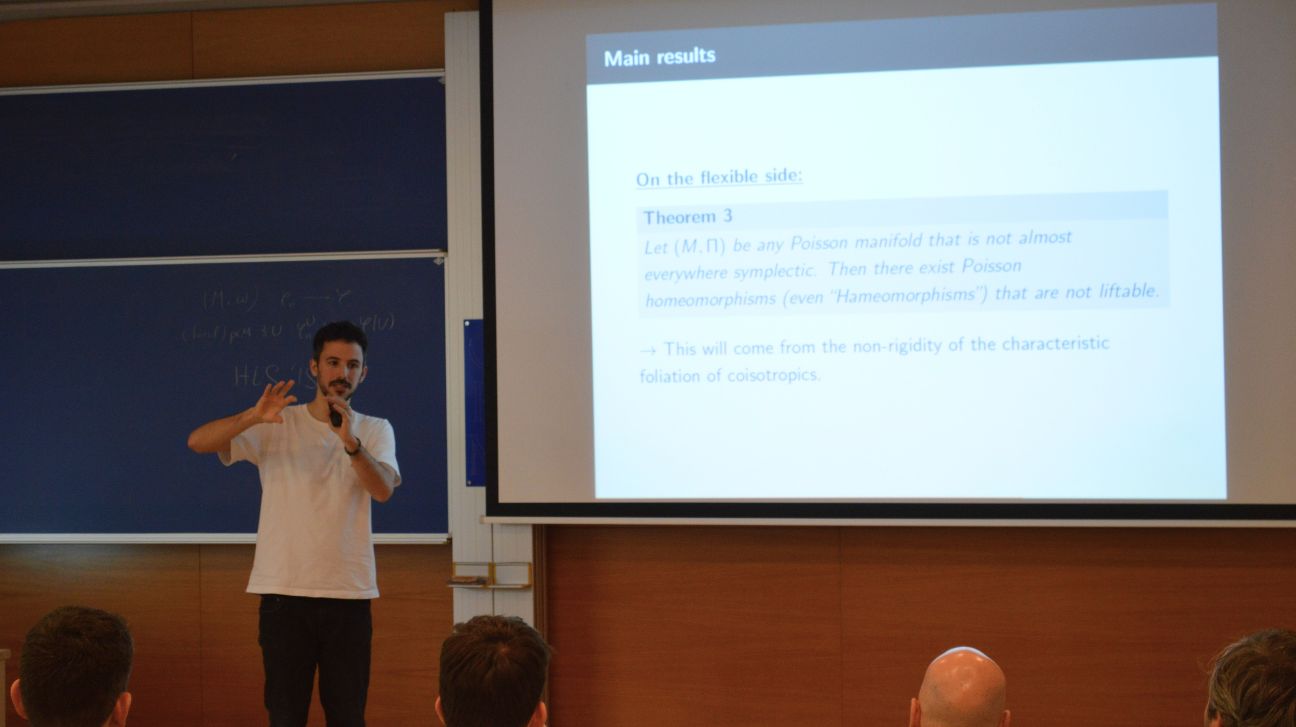
R. Cardona during his talk
The final talk of the day, “Differentiation and van Est isomorphism for higher Lie groupoids”, was given by A. Cabrera (Universitat Politècnica de Catalunya). Alejandro Cabrera is a differential geometer working on symplectic and Poisson geometry, Lie algebroids, and Lie groupoids, with research bridging pure geometry and mathematical physics, including applications to quantization and geometric mechanics. Cabrera introduced a general procedure to differentiate higher Lie groupoids and simplicial manifolds by considering cochains with higher‑order vanishing on degenerate simplices. This approach extends the classical differentiation of Lie groups and groupoids and leads to a generalized van Est map. The talk concluded with a van Est isomorphism theorem under suitable connectivity conditions and several applications.
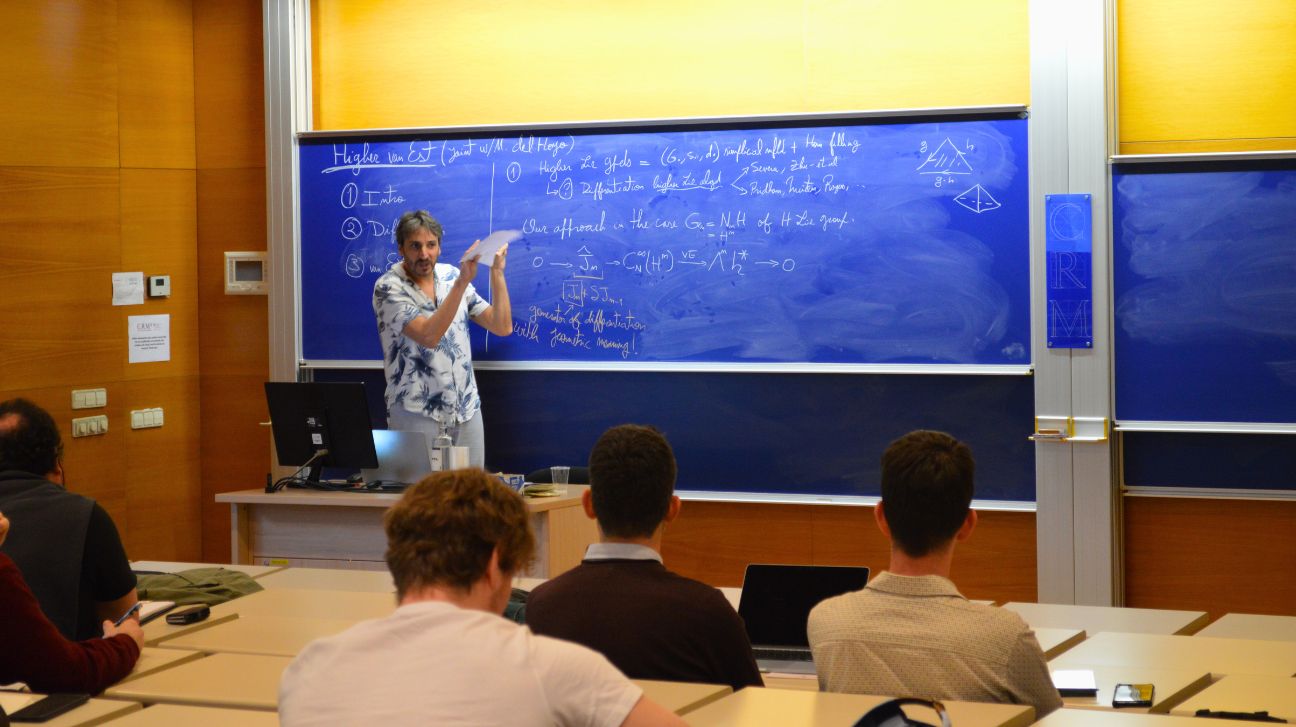
A. Cabrera during his talk.
A Day Highlighting the Breadth of Modern Geometry
Poisson Geometry and Its Relatives showcased the richness and diversity of today’s geometric landscape. From new symmetric structures and low‑regularity phenomena to conceptual advances in foliations and the theory of higher groupoids, the event illustrated how active and interconnected these fields are. It was a day that brought together a scientific community to exchange ideas.
|
|
CRM CommNatalia Vallina
|

CRM quod erat demonstrandum | 48

ADA: Decoding Brain Signals Misaligned in Time
The study addresses a key limitation of current brain decoding techniques: the difficulty of interpreting internal mental processes whose temporal dynamics vary from trial to trial.Decoding what is happening in a person’s mind from their brain activity is one of the...
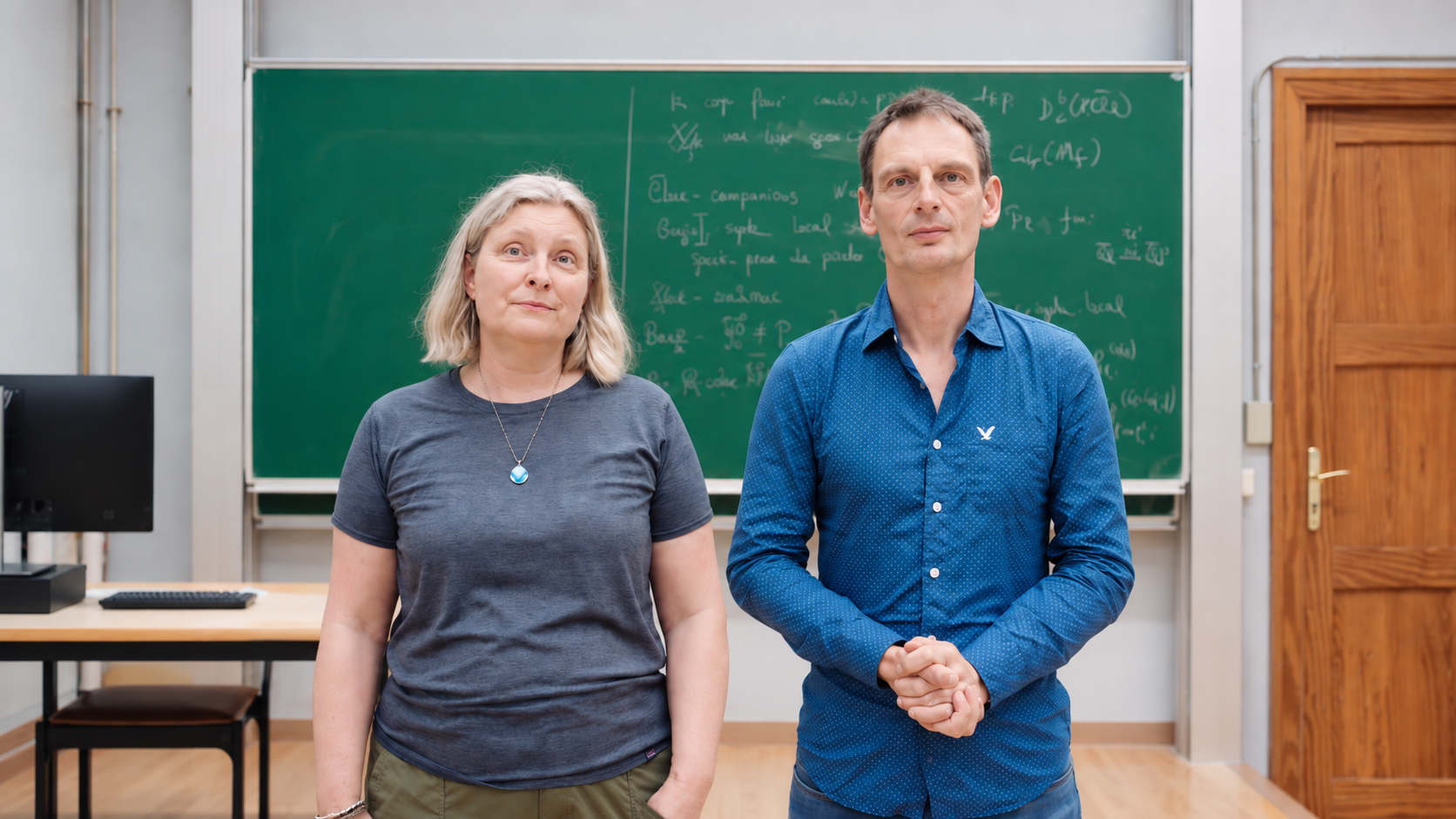
Rare curves, many points: Christophe Ritzenthaler and Rachel Pries on their research and the work around it
Christophe Ritzenthaler (Université de Rennes) and Rachel Pries (Colorado State University) both work on curves over finite fields: he hunts curves with as many points as possible, she hunts curves that almost never occur. In conversation with the CRM during their...

Call open for the 2027 Ferran Sunyer i Balaguer Prize
The Ferran Sunyer i Balaguer Foundation is accepting submissions for its 2027 prize, which awards 15,000 euros and publication in Birkhäuser's Progress in Mathematics series to an expository monograph on an active area of mathematical research. The deadline is 27...
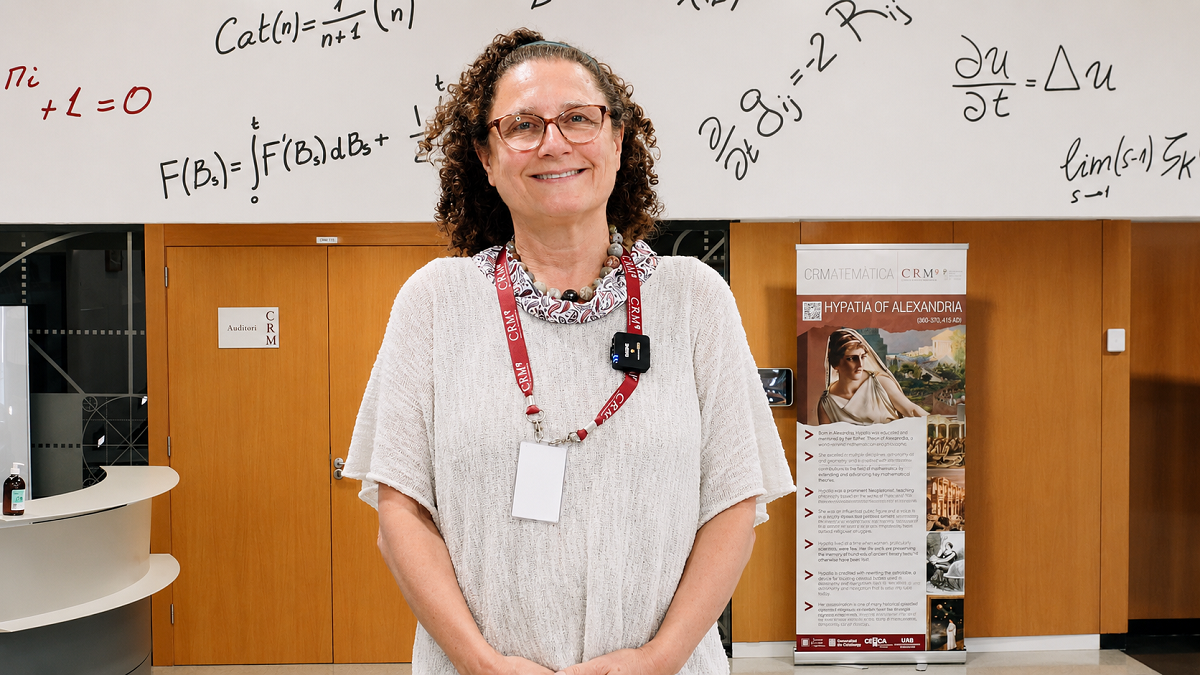
Susanna Terracini delivers the CRM Colloquium 2026
Susanna Terracini (Università di Torino) delivered the CRM Colloquium 2026 on 14 July, presenting a rigidity result for Kepler billiards obtained with Stefano Baranzini, Vivina Barutello and Irene De Blasi. She was at the centre as a member of the CRM Scientific...
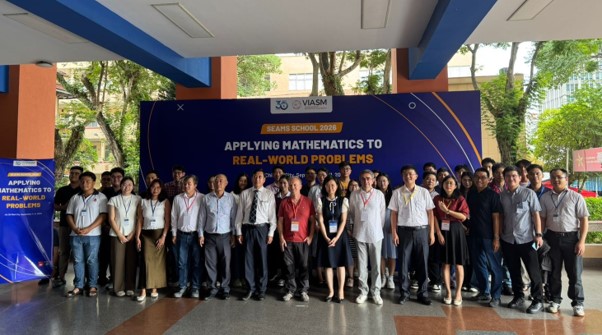
Ho Chi Minh City hosts the first SEAMS School on applying mathematics to real-world problems
More than fifty students from six countries spent a week at the University of Science, VNU-HCM, learning how mathematics gets used outside a mathematics department. CRM researcher Tim Myers co-organised the school and lectured on moving boundary problems. The...

A single ball on a fixed table can compute: Eva Miranda and Isaac Ramos prove that two-dimensional billiards are Turing complete
Eva Miranda (UPC, CRM) and Isaac Ramos (ETH Zürich) show that a point particle bouncing inside a planar table with fixed walls can simulate a universal Turing machine, settling a question Cristopher Moore left open in 1990. The result grew out of a master’s project...
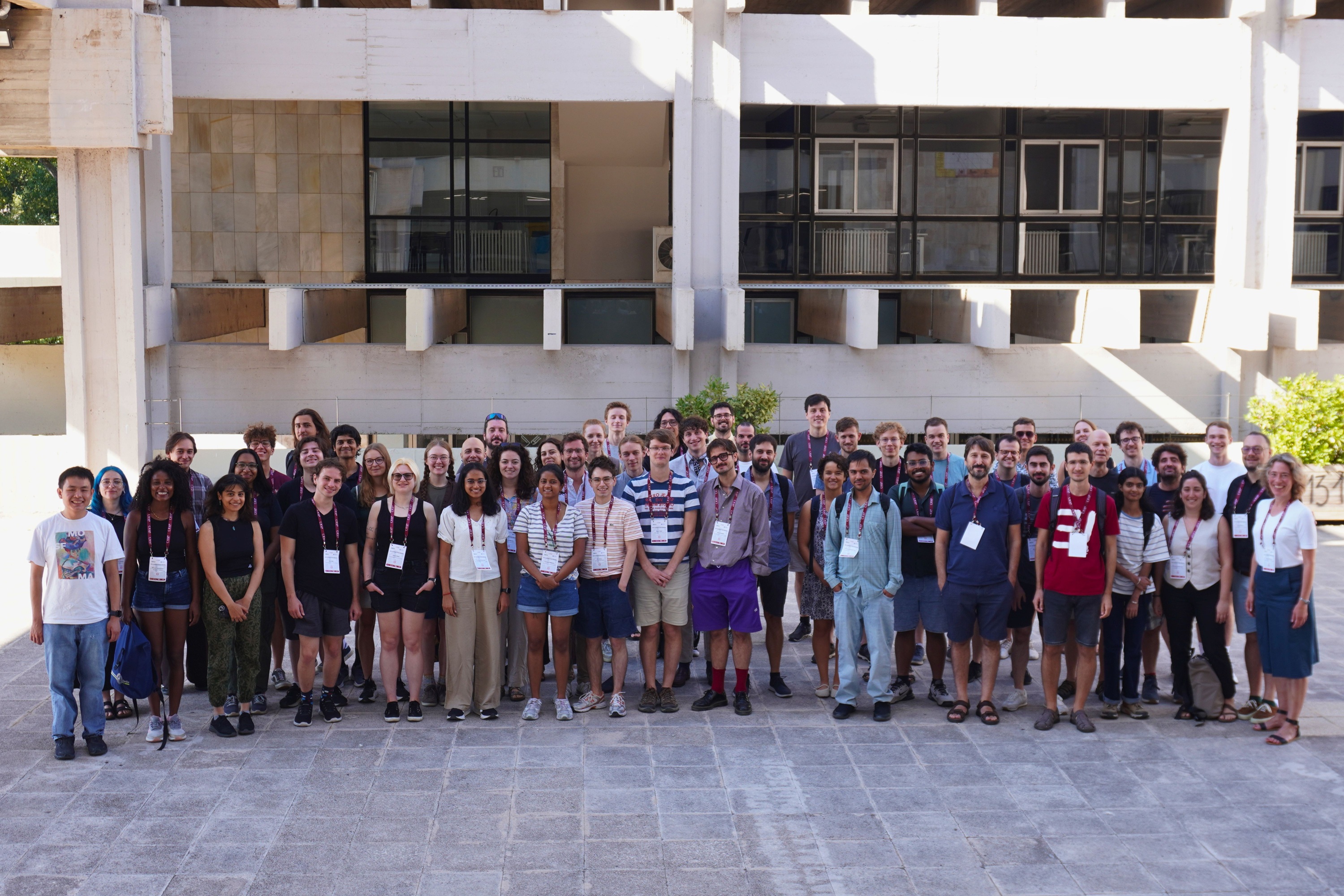
BMS-BGSMath Junior Meeting 2026: Barcelona and Berlin Strengthen Scientific Ties
From 2 to 4 September 2026, the Centre de Recerca Matemàtica (CRM) hosted the BMS-BGSMath Junior Meeting 2026, a three-day event jointly organised by the Berlin Mathematical School (BMS) and the Barcelona Graduate School of Mathematics (BGSMath), with the Centre de...
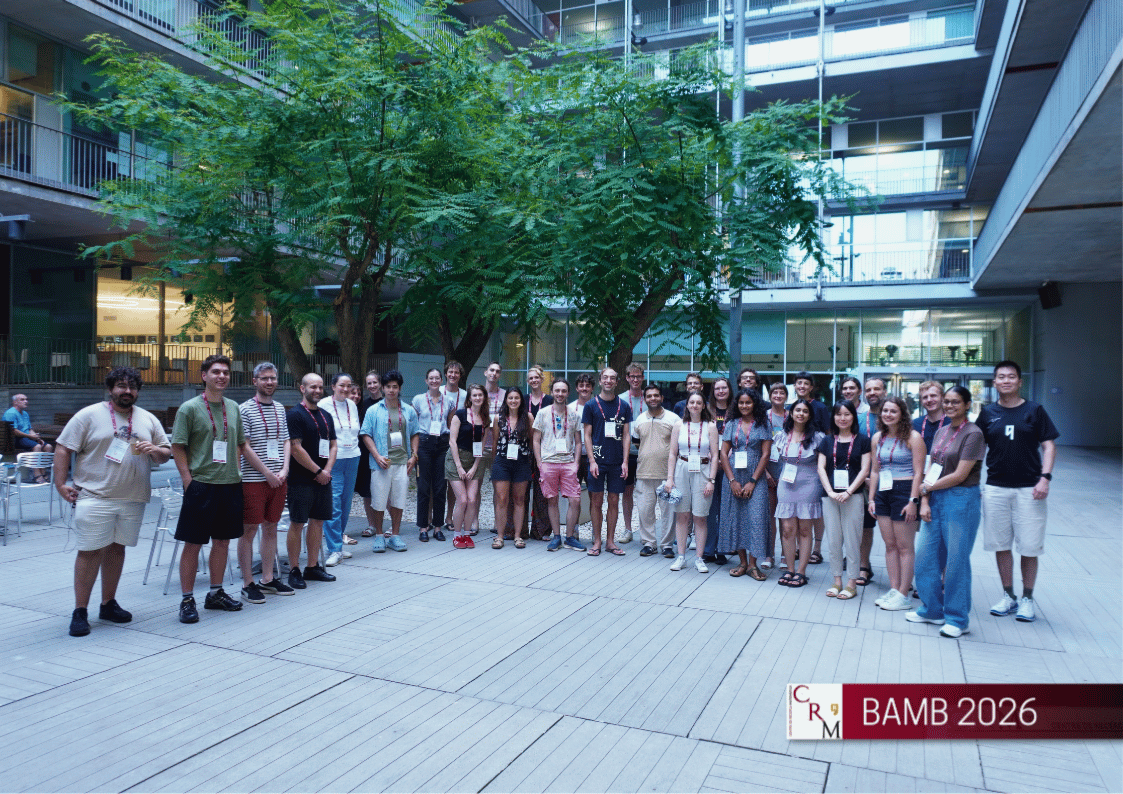
The CRM organises the 2026 Barcelona Summer School for Advanced Modeling of Behavior
The Centre de Recerca Matemàtica held the sixth edition of BAMB!, the Barcelona Summer School for Advanced Modeling of Behavior, from 12 to 23 July 2026 at the Parc de Recerca Biomèdica de Barcelona. Thirty early-career researchers from fourteen countries followed...
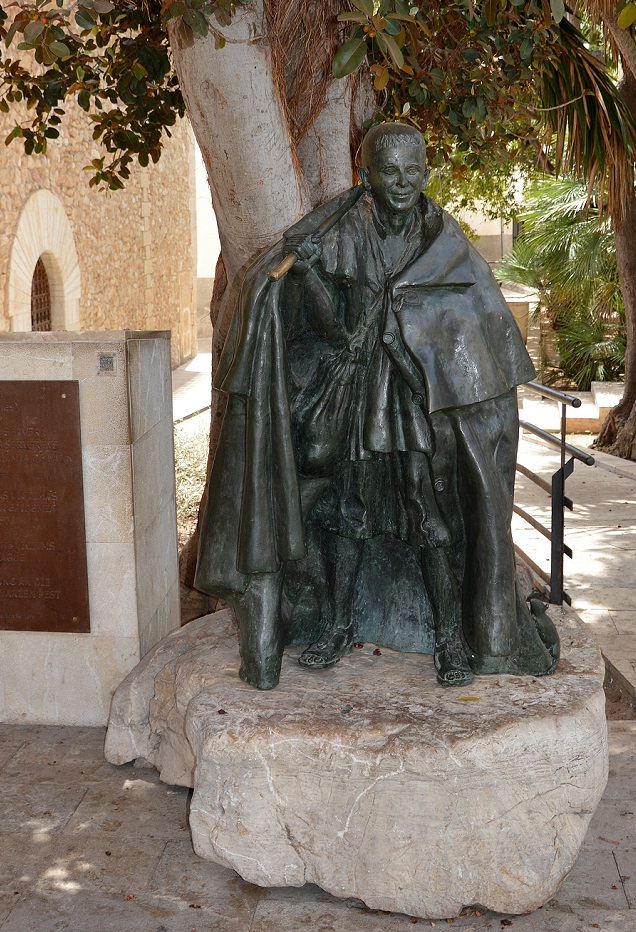
Mallorca’s 1820 plague did not behave like a classic bubonic outbreak, study finds
A study in PNAS by Pere Puig (UAB, CRM) and Joana Maria Pujadas-Mora (UOC, ICREA) reports what happens when the daily health records kept in Son Servera and Capdepera during the 1820 outbreak are analysed with a Bayesian epidemiological model: an unusually short...
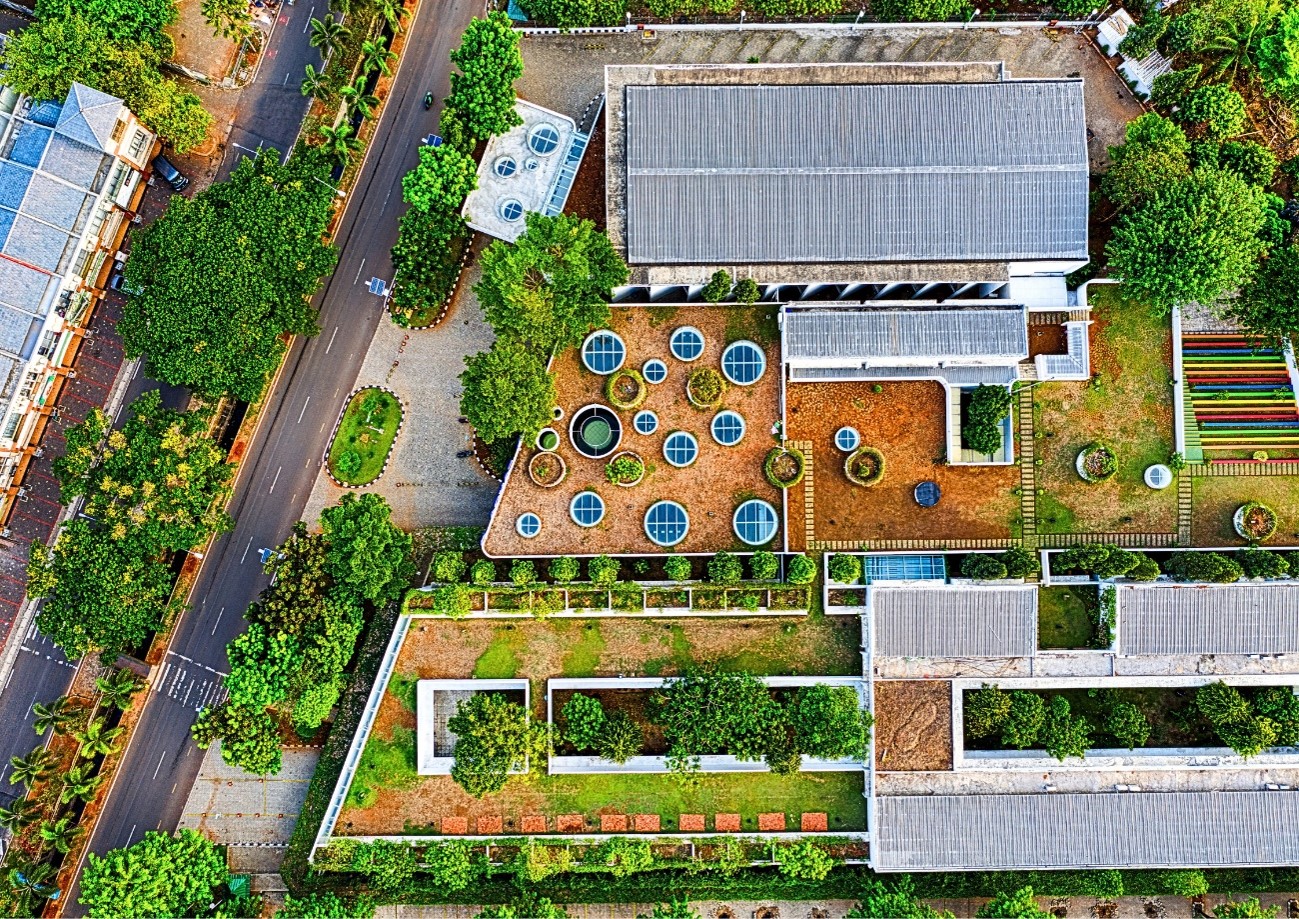
A recent study quantifies the vegetable production potential of Barcelona’s rooftops
A study published in Cities by researchers at ICTA-UAB, with collaboration from the CRM's Knowledge Transfer Unit, estimates that 65 hectares of municipal rooftop could supply 31% of the tomatoes consumed in Barcelona each year.Barcelona has 65 hectares of rooftop...