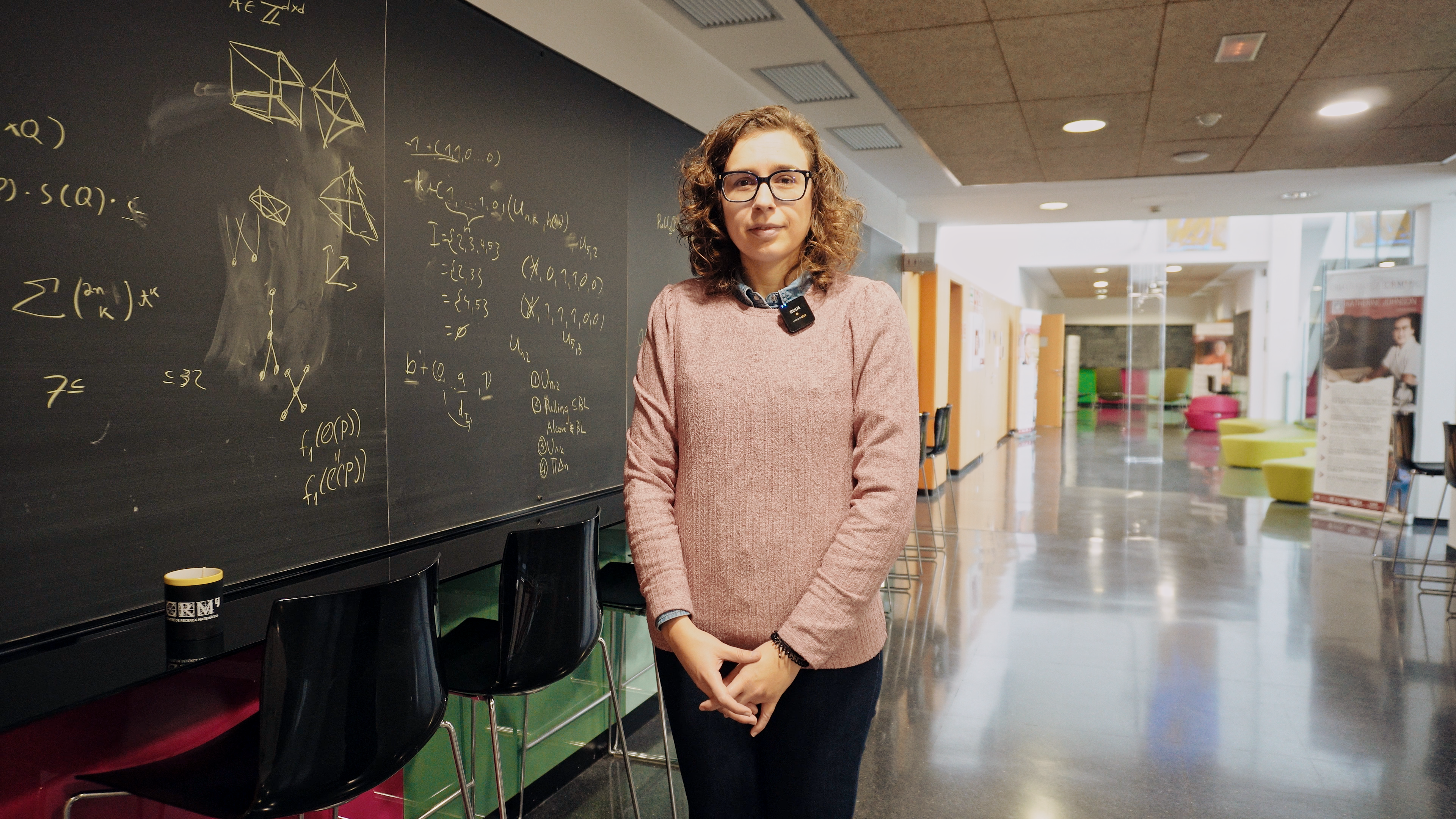
From October to November 2025, María Ángeles García Ferrero held the CRM Chair of Excellence, collaborating with Joaquim Ortega-Cerdà on concentration inequalities and teaching a BGSMath course on the topic. Her main research focuses on the Calderón problem, determining a medium’s internal electrical conductivity from surface measurements, which has applications in medical imaging for distinguishing stroke types and monitoring brain function.
In October and November 2025, María Ángeles García Ferrero (ICMAT – Institute of Mathematical Sciences) spent two months at CRM as the Maria de Maeztu Chair of Excellence, working on problems that sound almost like magic: how to see what’s hidden, how to know what you can’t measure directly, how to reconstruct the invisible.
Her main field is inverse problems, the mathematics of gaining information about an unknown object from related data. “In particular, I work on the Calderón problem, which attempts to determine the electrical conductivity of a medium from measurements of voltage and current at the boundary,” she explains. It’s the kind of problem that only makes sense when you think about what it enables. If you can measure electrical signals on the surface of a human skull, can you map what’s happening inside the brain? If you know how electricity flows through different tissues, can you distinguish a stroke caused by bleeding from one caused by blockage?
She came to the field during her first postdoc. “It was connected with what I had done previously, but it was something different,” she says. The shift opened a new door, and what pulled her through was the applicability. “The applications of these problems, which in particular involve medical imaging techniques, were one of the reasons that made me stick with this topic. So, it interests me mathematically, but the real-world motivation gives me additional incentives to dedicate myself to it.”
Working with Joaquim Ortega-Cerdà
However, at CRM, García Ferrero worked on something different: concentration inequalities for holomorphic functions, a topic she developed through her collaboration with Joaquim Ortega-Cerdà (Universitat de Barcelona – CRM). “It’s a topic I got to know thanks to him,” she says. “Honestly, listening to him talk about any subject and not becoming interested is very difficult.”
The work they’re pursuing is both a continuation and an expansion. In a previous paper, they studied how concentrated polynomials can be when restricted to domains of the complex plane. Now they’re generalising that result, though not all the tools that worked before are available in the new setting. It’s the kind of problem that requires building new machinery.
From October 27 to November 5, García Ferrero taught a BGSMath course on precisely this topic: concentration inequalities for holomorphic functions. Five sessions, each two hours long. The course covered uncertainty principles, spaces of holomorphic functions, the Lieb conjecture on generalised Wehrl entropy, and the stability of these inequalities. It’s a field where conjectures from the late 1970s have only recently been proven and where quantitative stability results are still emerging.
The Calderón Problem
On November 19, García Ferrero gave a colloquium at the Maria de Maeztu Closing Conference, a gathering of the CRM research community marking the completion of a four-year strategic research program. The María de Maeztu distinction, awarded by Spain’s Ministry of Science and Innovation, recognises research units that demonstrate exceptional international scientific leadership. It provides substantial funding and connects CRM to the SOMMa alliance of Spain’s top research centres and units of excellence. It’s one of the highest honours in Spanish research.
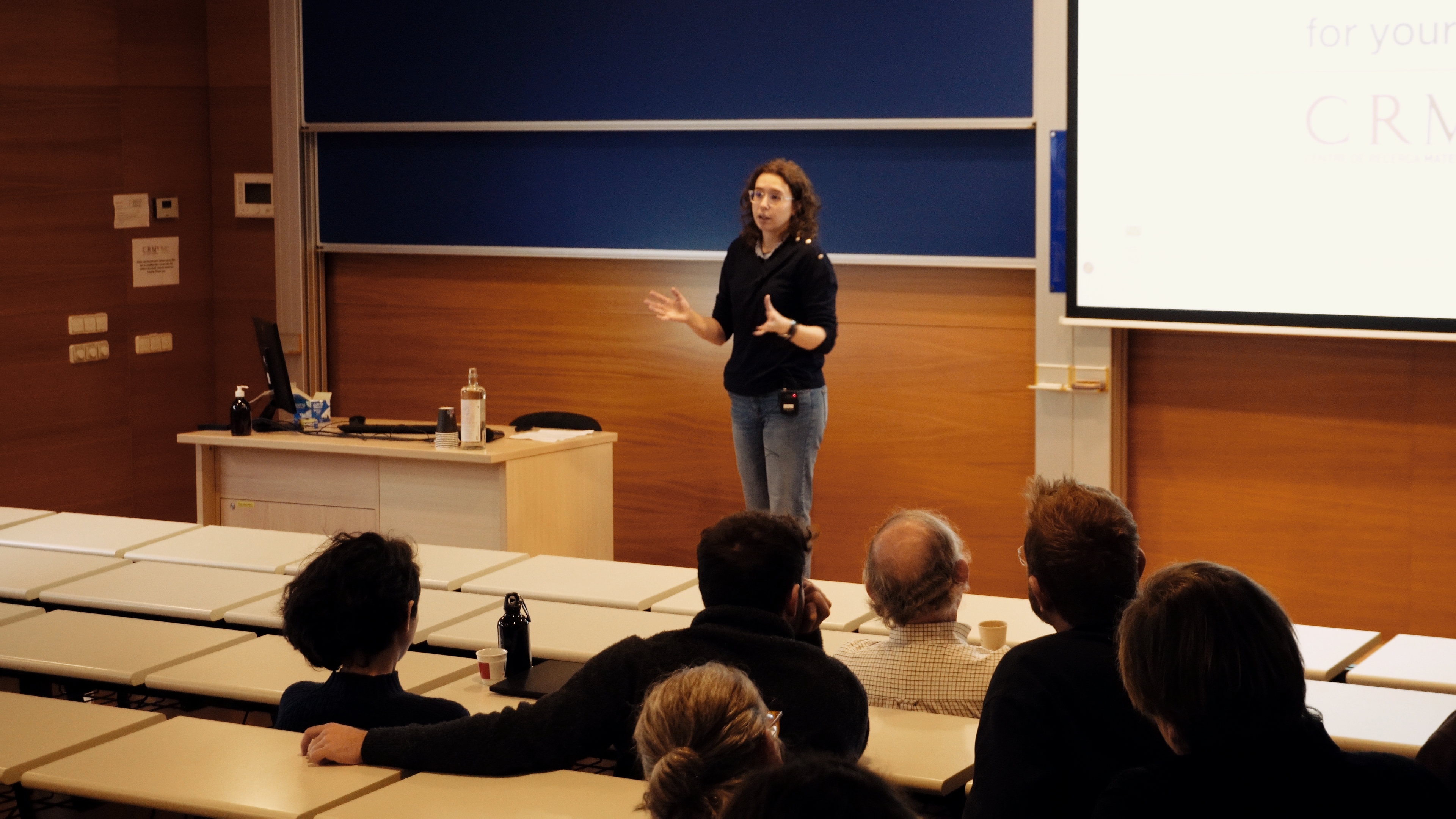
Her talk returned to her main research: the inverse conductivity problem, also known as the Calderón problem. Named after Argentine mathematician Alberto Calderón, who posed it in 1980, the setup sounds deceptively simple. If you can measure voltage and current on the surface of an object, can you determine its internal electrical conductivity?
Think of it as X-rays, but instead of using radiation, you’re using electrical measurements. You apply voltage at the boundary, measure the resulting current, and try to reconstruct what must be happening inside. In medical imaging, this translates to Electrical Impedance Tomography (EIT). Different tissues conduct electricity differently: blood, bone, healthy tissue, tumorous tissue, bleeding, and blockages. If you can solve the Calderón problem, you can monitor brain function or monitor the lung activity of premature infants without invasive procedures or the risks of repeated X-rays.
“I think initiatives such as the MdM Chair of Excellence are important because sometimes we look for role models in our day-to-day life. This opportunity I’ve had to come here and talk with students, with people visiting CRM and also the universities in Barcelona, I think it helps a lot to give visibility to this role of women in mathematics, but in an approachable way.”
García Ferrero’s talk walked through the main questions: Can you uniquely determine the conductivity? If so, how stable is the reconstruction? Does a small measurement error lead to a catastrophic error in the recovered conductivity? And can you actually compute it? In one dimension, the problem has no solution at all: completely different conductivities can produce identical boundary measurements. In two dimensions, uniqueness was proven in 2006 for bounded conductivities. In three or more dimensions, the breakthrough came in the 1980s from John Sylvester and Gunther Uhlmann, but only for very smooth conductivities.
The talk also touched on what makes the problem mathematically delicate. The stability is logarithmic, meaning that to improve your reconstruction accuracy by a factor of 10, you need to improve your measurement accuracy exponentially. This isn’t just a technical annoyance; it is fundamental to the problem’s structure. Under certain special assumptions (for instance, if the conductivity is piecewise constant with known jump locations), the stability improves dramatically. But in the general case, you’re stuck with logarithmic stability.
The colloquium covered the full arc: the problem’s origins in geophysical prospecting and medical imaging, the mathematical framework of Dirichlet-to-Neumann maps that encode the boundary measurements, the construction of CGO solutions that make reconstruction possible, and the ongoing work to handle ever-more-realistic conductivity profiles. It was technical but accessible, pitched to an audience of mathematicians across specialities. And it showcased exactly what the María de Maeztu program aims to support: frontier research with both mathematical depth and real-world impact.
Visibility from the day-to-day
The Chair of Excellence program doesn’t just fund research visits. It’s designed to bring senior women mathematicians into sustained contact with the CRM community. “I think it’s important because sometimes we look for role models in our day-to-day life,” García Ferrero says. “This opportunity I’ve had to come here and talk with students, with people visiting CRM and also the universities in Barcelona, I think it helps a lot to give visibility to the role of women in mathematics, but in an approachable way.”
Visibility isn’t just about seeing someone at a conference. It’s about proximity. It’s about the conversations that happen in corridors, the questions asked after a course, the presence that becomes ordinary rather than exceptional. For García Ferrero, the Chair also carried personal significance. “At a personal level, it’s an honour because of the centre that grants it, because of the people I know are behind it. It’s a very important recognition. And at an even more personal level, the opportunity to return to the mathematical community in Barcelona, where I already spent time before, it’s an opportunity I couldn’t pass up.”
She’s based at ICMAT in Madrid now, a tenured researcher, elected to the Executive Committee of the European Mathematical Society in 2024. But for two months, her office was at CRM, her collaboration was with Ortega-Cerdà, and her work was on polynomials and concentration inequalities. The inverse problem she’s always working on (how to reconstruct the hidden from the visible) took on a different form. And the visibility she provided, simply by being present, working through problems in real time, is exactly what the program was designed for.
You can watch the full interview with María Ángeles García Ferrero on the CRM YouTube channel:
|
|
CRM CommPau Varela
|
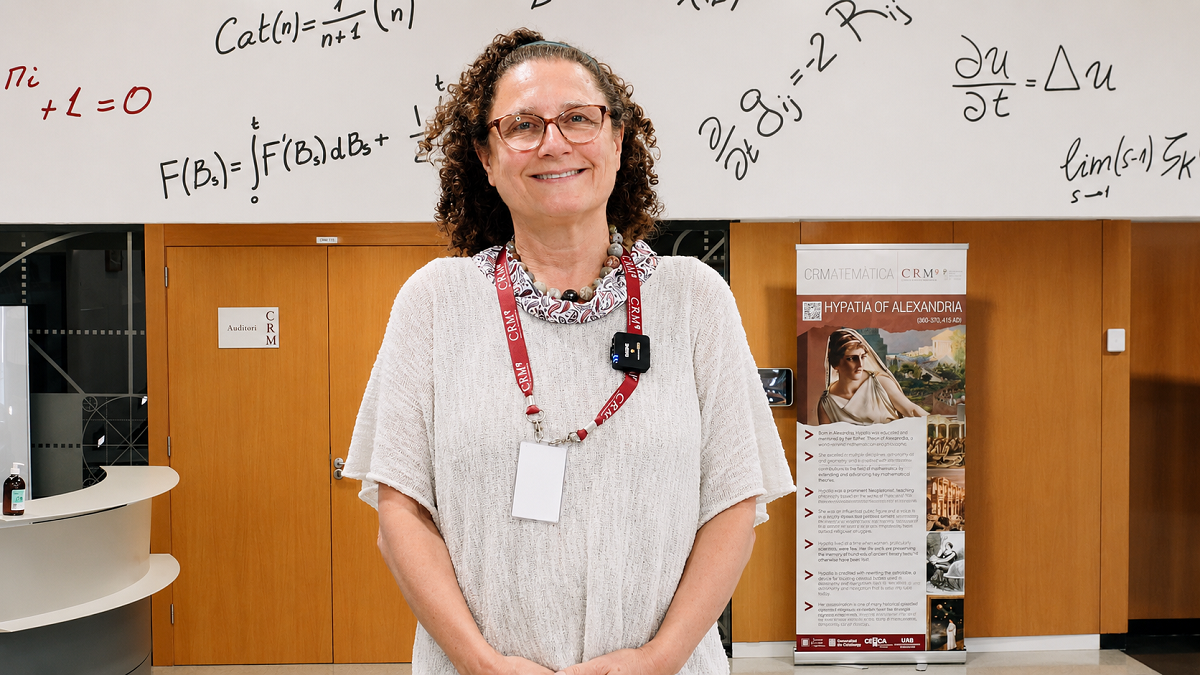
Susanna Terracini delivers the CRM Colloquium 2026
Susanna Terracini (Università di Torino) delivered the CRM Colloquium 2026 on 14 July, presenting a rigidity result for Kepler billiards obtained with Stefano Baranzini, Vivina Barutello and Irene De Blasi. She was at the centre as a member of the CRM Scientific...
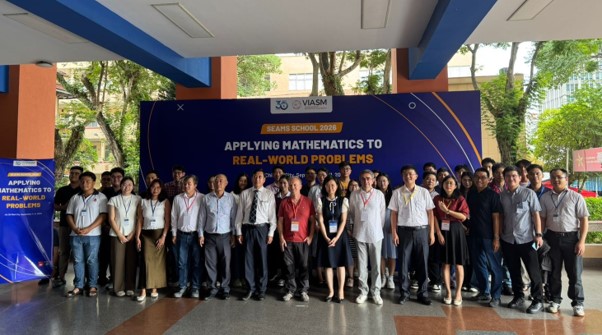
Ho Chi Minh City hosts the first SEAMS School on applying mathematics to real-world problems
More than fifty students from six countries spent a week at the University of Science, VNU-HCM, learning how mathematics gets used outside a mathematics department. CRM researcher Tim Myers co-organised the school and lectured on moving boundary problems. The...

A single ball on a fixed table can compute: Eva Miranda and Isaac Ramos prove that two-dimensional billiards are Turing complete
Eva Miranda (UPC, CRM) and Isaac Ramos (ETH Zürich) show that a point particle bouncing inside a planar table with fixed walls can simulate a universal Turing machine, settling a question Cristopher Moore left open in 1990. The result grew out of a master’s project...
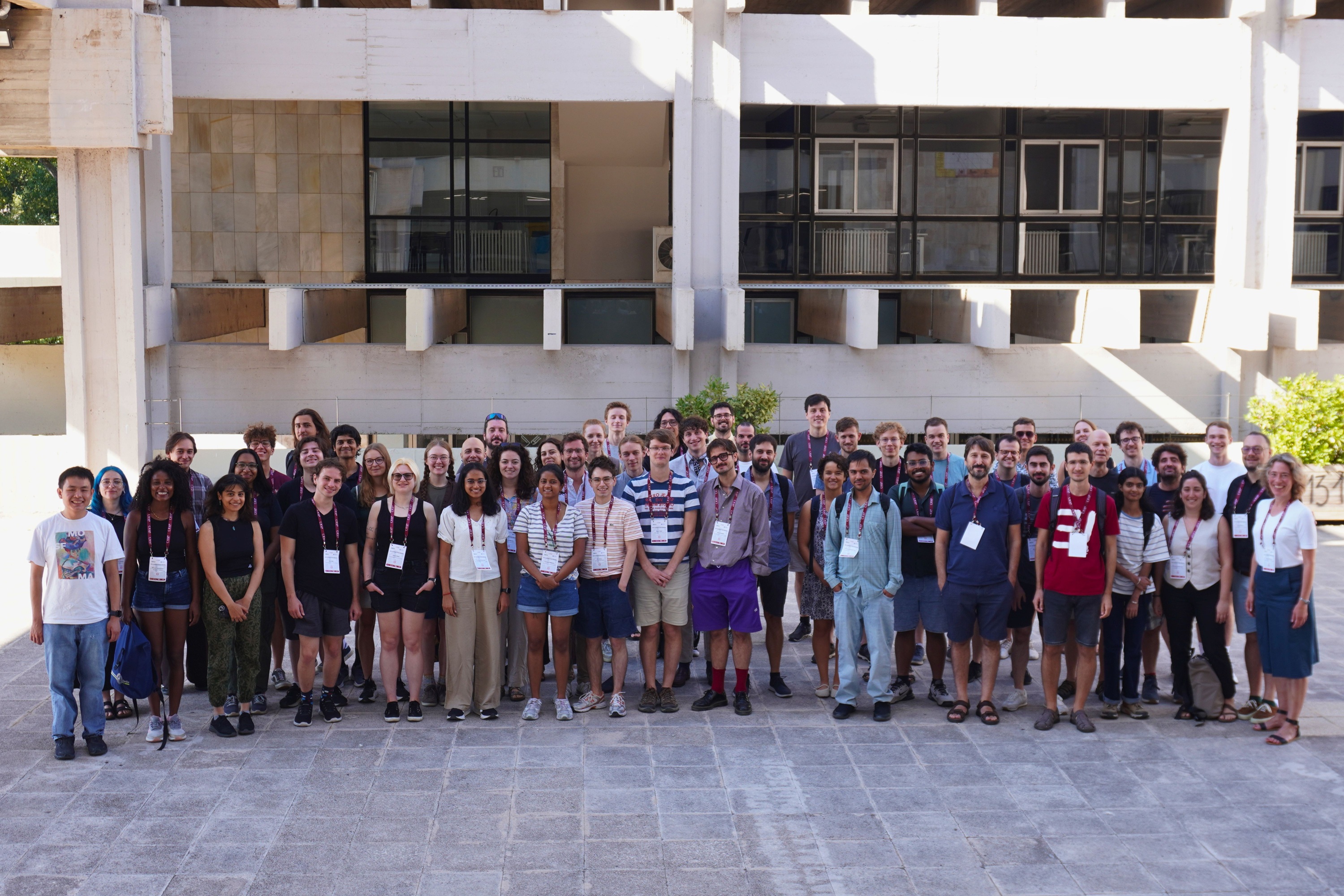
BMS-BGSMath Junior Meeting 2026: Barcelona and Berlin Strengthen Scientific Ties
From 2 to 4 September 2026, the Centre de Recerca Matemàtica (CRM) hosted the BMS-BGSMath Junior Meeting 2026, a three-day event jointly organised by the Berlin Mathematical School (BMS) and the Barcelona Graduate School of Mathematics (BGSMath), with the Centre de...
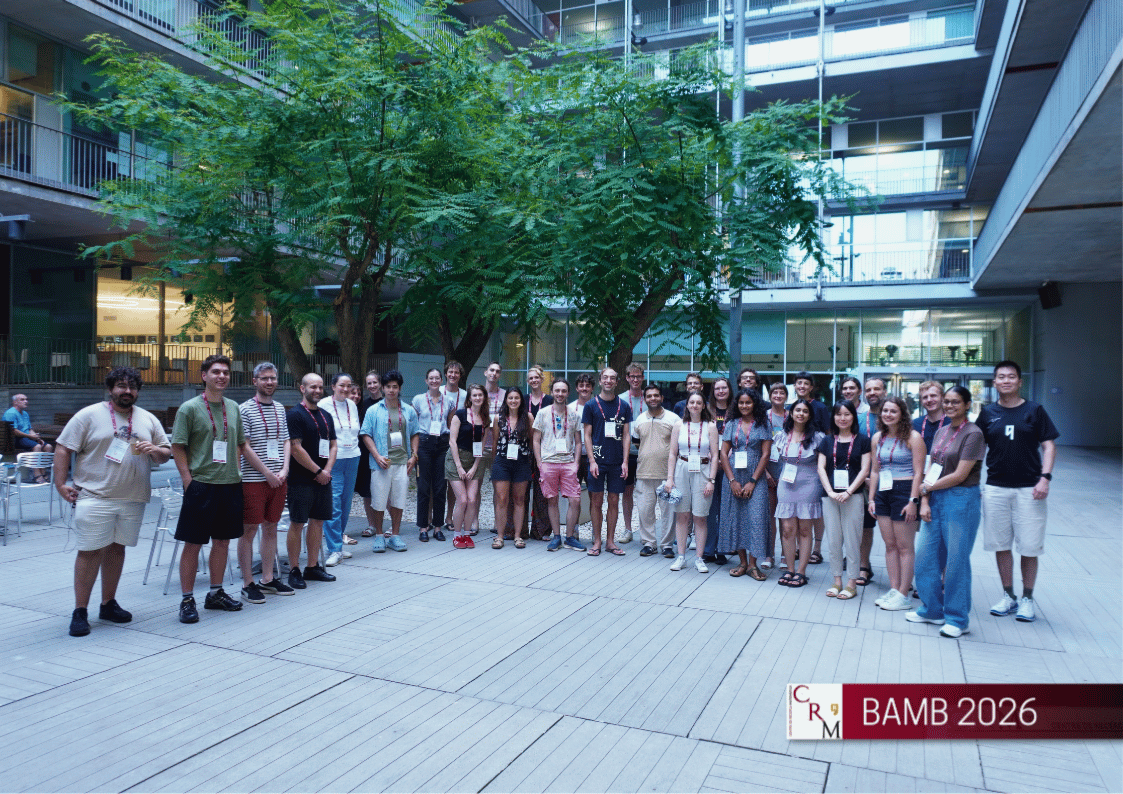
The CRM organises the 2026 Barcelona Summer School for Advanced Modeling of Behavior
The Centre de Recerca Matemàtica held the sixth edition of BAMB!, the Barcelona Summer School for Advanced Modeling of Behavior, from 12 to 23 July 2026 at the Parc de Recerca Biomèdica de Barcelona. Thirty early-career researchers from fourteen countries followed...
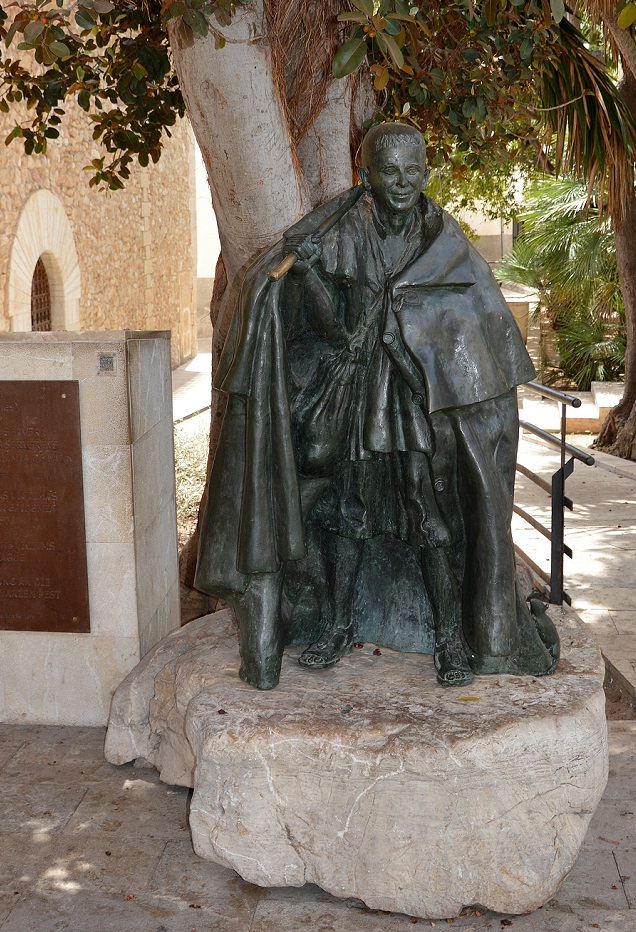
Mallorca’s 1820 plague did not behave like a classic bubonic outbreak, study finds
A study in PNAS by Pere Puig (UAB, CRM) and Joana Maria Pujadas-Mora (UOC, ICREA) reports what happens when the daily health records kept in Son Servera and Capdepera during the 1820 outbreak are analysed with a Bayesian epidemiological model: an unusually short...
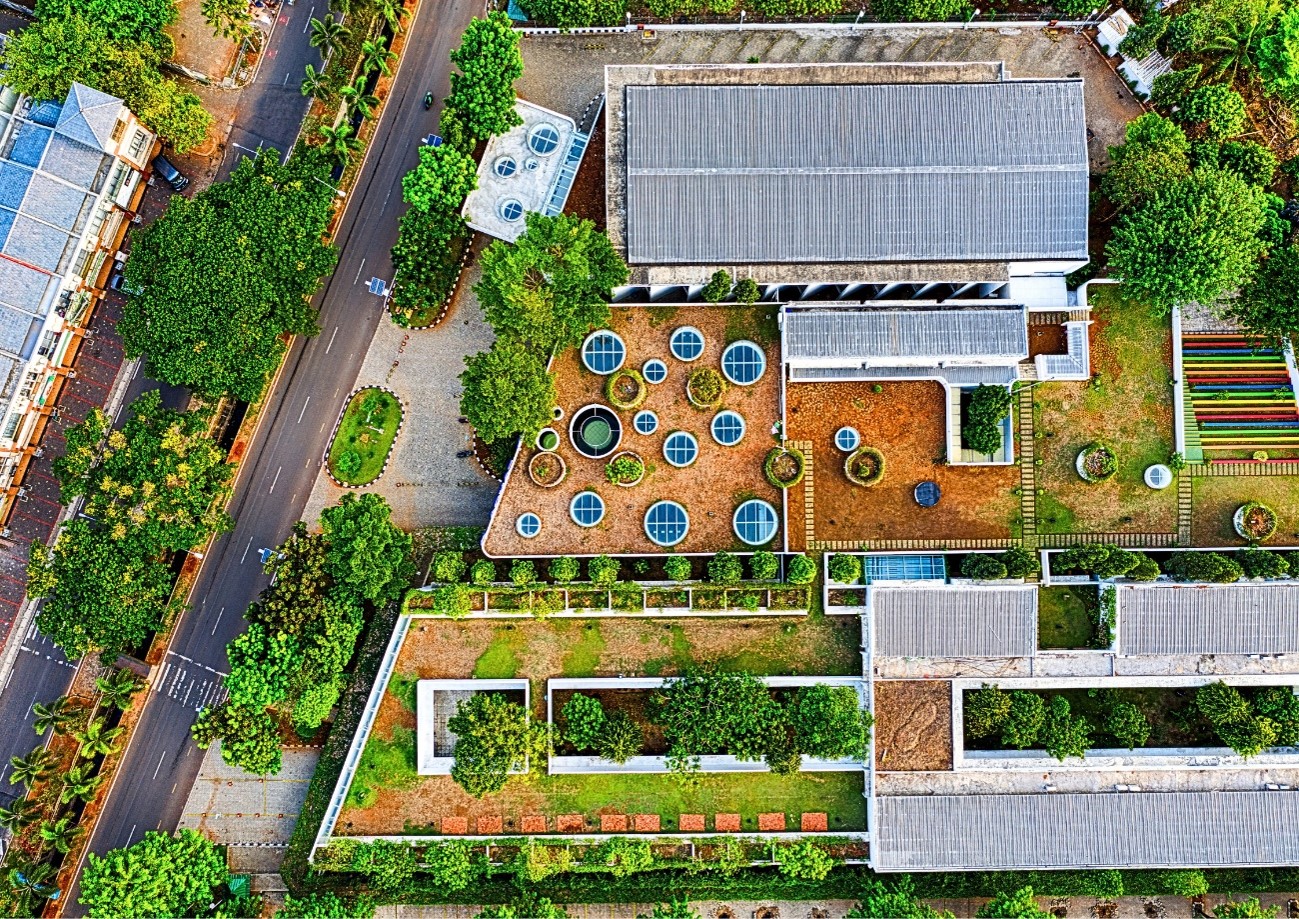
A recent study quantifies the vegetable production potential of Barcelona’s rooftops
A study published in Cities by researchers at ICTA-UAB, with collaboration from the CRM's Knowledge Transfer Unit, estimates that 65 hectares of municipal rooftop could supply 31% of the tomatoes consumed in Barcelona each year.Barcelona has 65 hectares of rooftop...
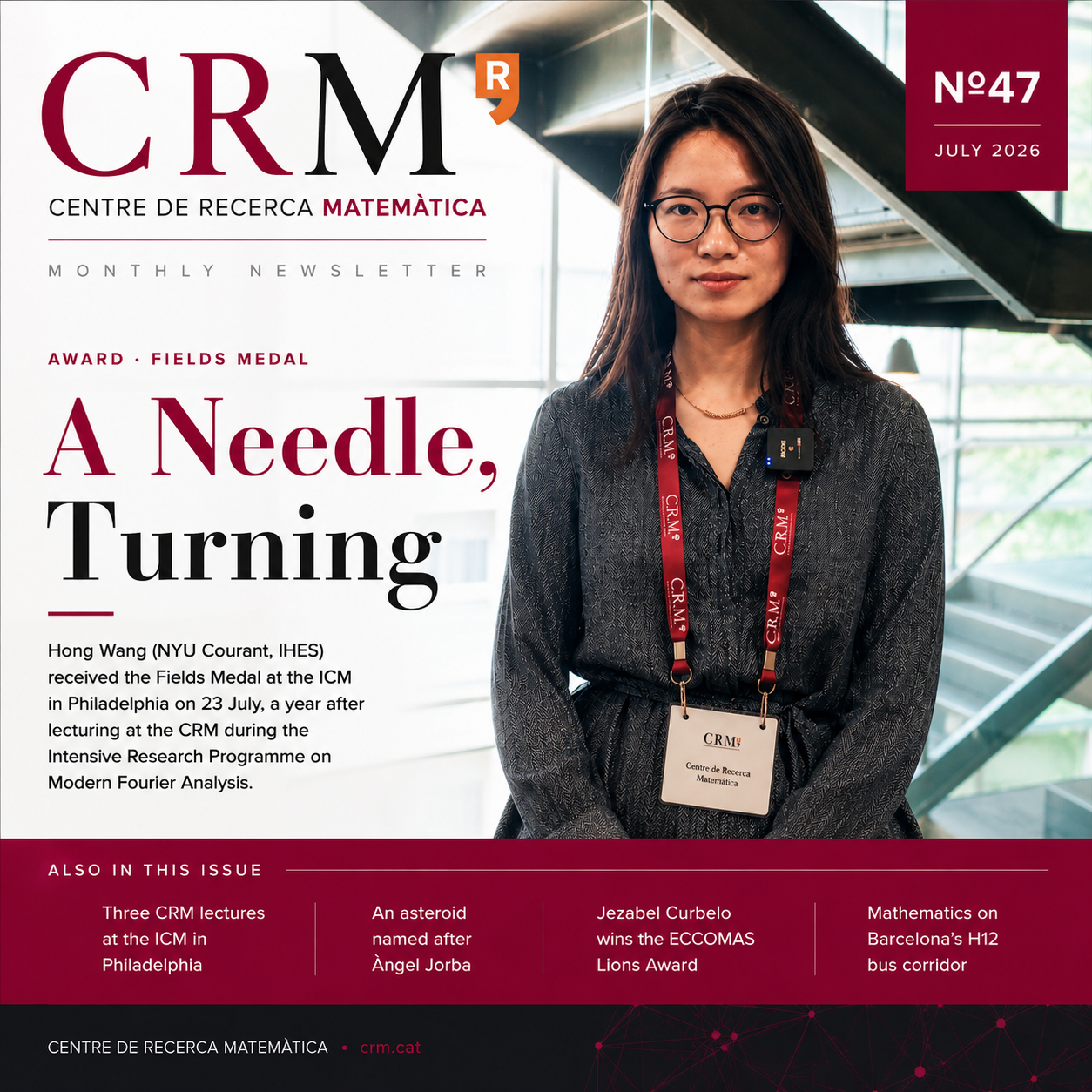
CRM July Newsletter
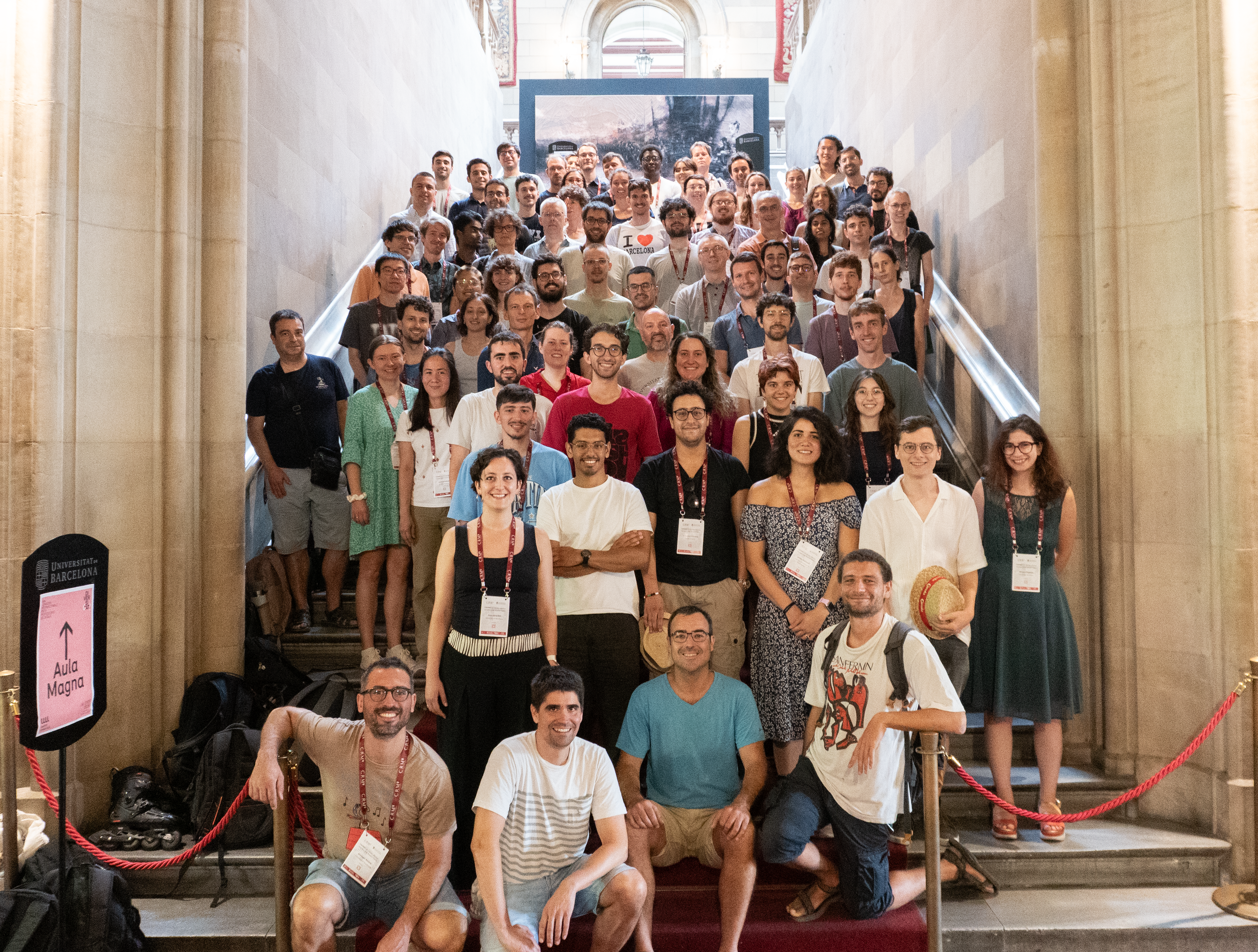
CAVARET 2 brings together 83 researchers on curves and abelian varieties at the Universitat de Barcelona
The second edition of CAVARET, "Curves, Abelian VArieties and RElated Topics", took place at the Faculty of Mathematics and Computer Science of the Universitat de Barcelona from 13 to 17 July 2026. Sixteen invited lectures and ten posters brought together 83...
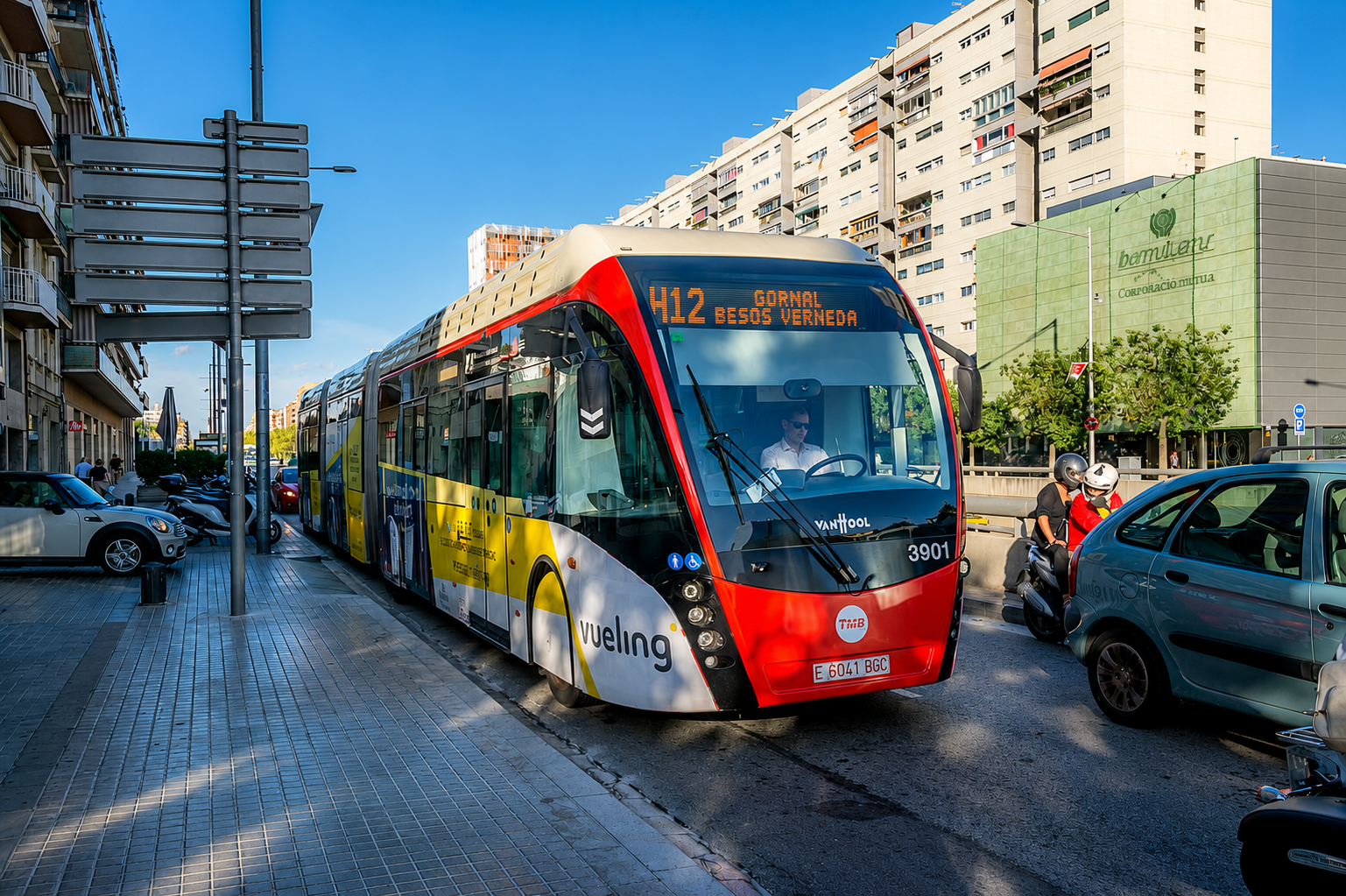
Mathematics on board: CRM’s demand forecasting model enters service on Barcelona’s H12 corridor
The H12 has run along Gran Via for years. What TMB switched on in July is the set of upgrades designed for it inside eBRT2030, a Horizon Europe project testing electric Bus Rapid Transit in six European cities. Behind it, forecasting passenger demand at every stop...
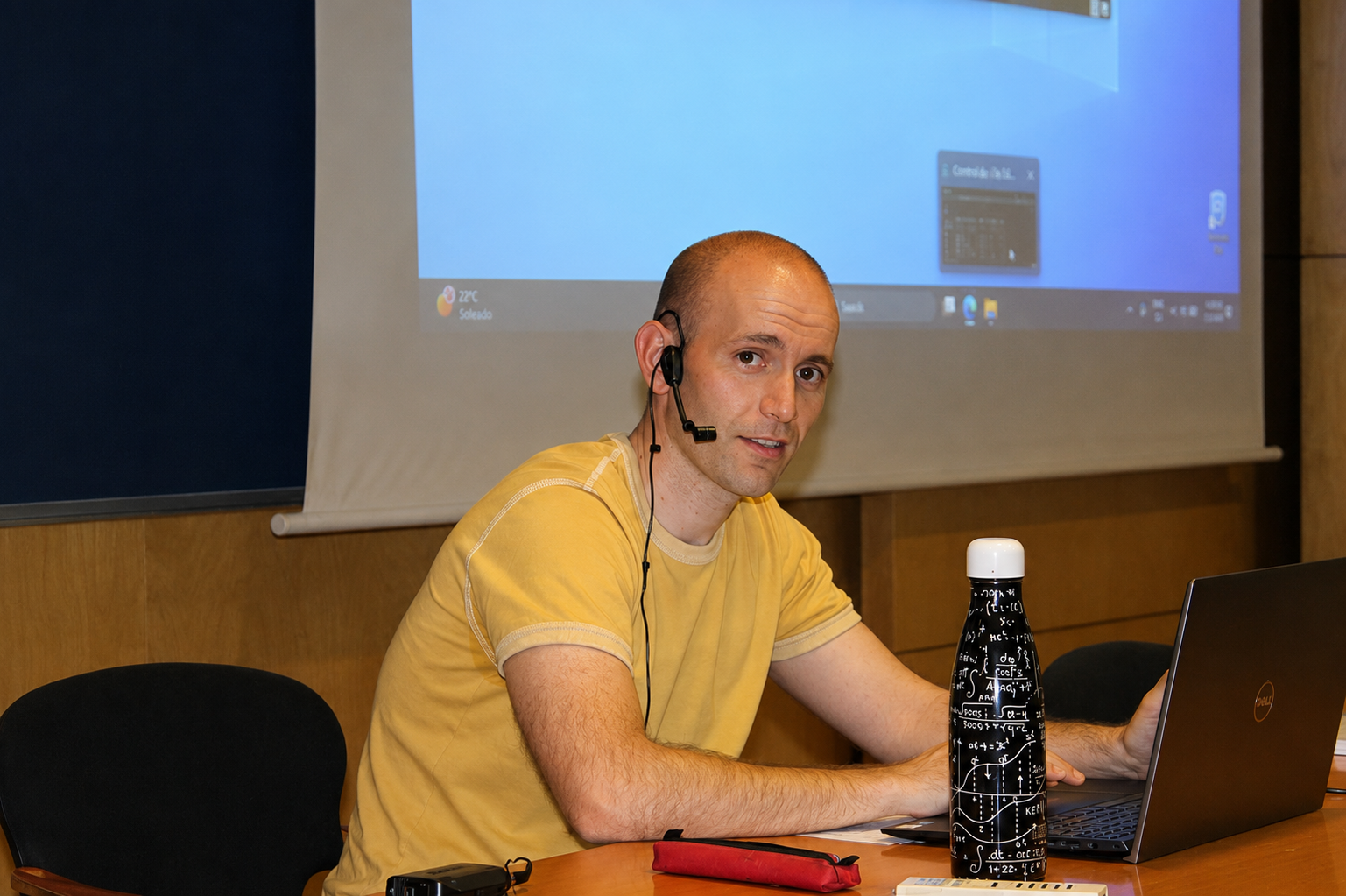
Dídac Gil Rams defends his doctoral thesis on the splitting of separatrices in generalized standard maps
Supervised by Inmaculada Baldomá and Pau Martín, the thesis proves the existence of chaotic dynamics in a broad family of area-preserving maps and combines classical analysis with computer-assisted proof. The defence took place on 3 July 2026 at the FME (UPC).Dídac...
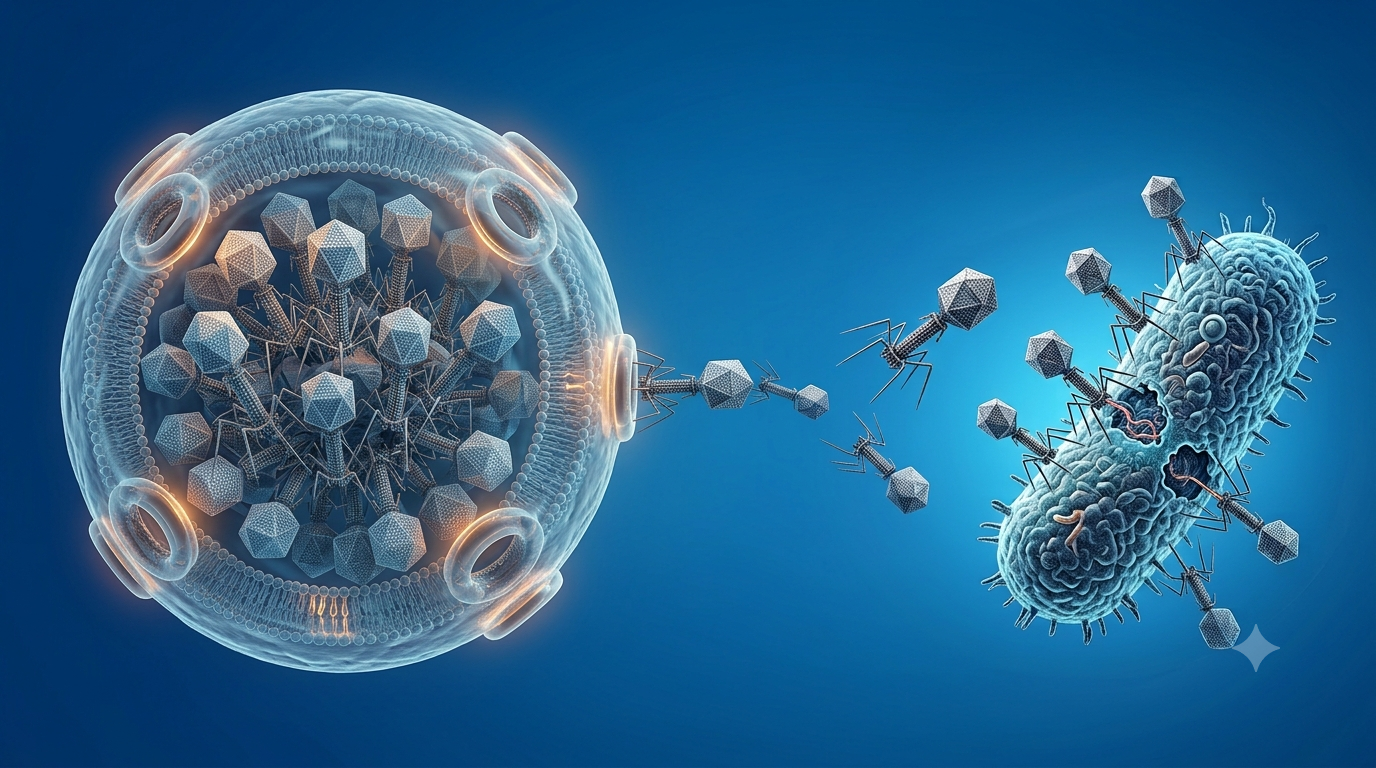
How to Protect Bacteriophages Without Trapping Them? Mathematics to Improve an Alternative to Antibiotics
Bacteriophages — viruses capable of infecting and destroying bacteria — are considered one of the most promising alternatives to tackle the growing problem of antibiotic resistance. However, for these treatments to work, phages must overcome several obstacles before...