
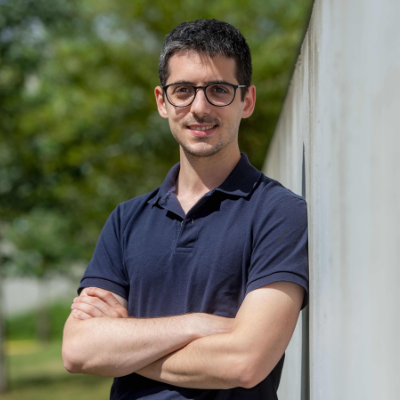
Guillem Blanco, professor del Departament de Matemàtiques de la Universitat Politècnica de Catalunya (UPC) i investigador adscrit al Centre de Recerca Matemàtica (CRM), ha estat distingit amb el Premi José Luis Rubio de Francia 2024, atorgat per la Reial Societat Matemàtica Espanyola (RSME). El premi reconeix anualment joves investigadors per la seva trajectòria i aportacions en recerca matemàtica.
La recerca de Blanco se centra en l’àmbit de la geometria algebraica, i en particular en l’estudi de singularitats algebraiques i analítiques mitjançant eines de la teoria dels D-mòduls. Entre els seus interessos hi ha invariants com els polinomis de Bernstein–Sato, els ideals multiplicadors i de Hodge, els nombres de salt o la funció zeta complexa, que permeten comprendre millor el comportament de les singularitats dins d’una varietat algebraica.
Un dels resultats més destacats pel jurat ha estat la resolució de la conjectura de Yano, una qüestió oberta durant dècades que relaciona les arrels del polinomi de Bernstein–Sato amb els nombres espectrals de singularitats de corbes planes. Blanco va abordar aquest problema com a part de la seva tesi doctoral, i el va publicar com a autor únic a Inventiones Mathematicae (2021). “El meu interès per la conjectura de Yano va ser causat pels meus directors de tesi, la Maria Alberich i el Josep Àlvarez”, explica. “Van ser ells qui van creure que potser era possible avançar en el problema i me’l van proposar… Jo vaig acceptar una mica sense saber ben bé on em ficava.”
Blanco valora el premi com un impuls i una oportunitat per donar visibilitat a la seva àrea de recerca: “Rebre el premi Rubio de Francia significa un reconeixement que m’impulsa a seguir treballant en les meves línies d’investigació. També suposa una oportunitat única per donar a conèixer la meva àrea de recerca (singularitats algebraiques) a altres matemàtics i futurs estudiants.”
El jurat també ha destacat altres contribucions de Blanco, com els seus teoremes sobre la funció zeta complexa (Advances in Mathematics, 2019) o l’aplicació de tècniques computacionals al càlcul d’invariants (Mathematics of Computation, 2022). El conjunt de la seva recerca es caracteritza per la combinació de tècniques de camps diversos, com l’àlgebra commutativa, l’anàlisi, la geometria diferencial o la topologia. “És una àrea amb problemes oberts molt estimulants que connecten les singularitats amb altres branques de les matemàtiques”, afegeix.
El CRM felicita Guillem Blanco per aquest reconeixement i per la seva contribució a un camp de recerca actiu i amb profundes connexions dins les matemàtiques contemporànies.
|
|
CRM CommPau Varela
|

When the reward comes within reach, the brain changes what it compares
As the tokens piled up, choices got faster and more accurate at the same time. The yardstick for judging each offer had moved.CRM CommPau VarelaCRMComm@crm.catGet the latest CRM news and activities in your inbox.Recent newsletters →Two subjects...

Almost every automaton can be reset with a short word
Guillaume Chapuy (Université Paris Cité, CNRS) and Guillem Perarnau (UPC, CRM) have shown that a random finite automaton with n states can, with high probability, be reset by a word of length of order √n log n. The result, published in ACM Transactions on Algorithms, pins the exponent at 1/2, the lower end of a decade of numerical estimates, and addresses the random version of the synchronization problem behind a conjecture Ján Černý posed in 1964 and which still remains open.
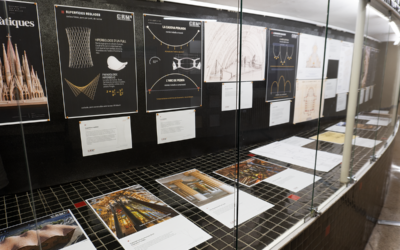
Exposició ‘Les matemàtiques de Gaudí’
CRM quod erat demonstrandum | 48

ADA: Decoding Brain Signals Misaligned in Time
The study addresses a key limitation of current brain decoding techniques: the difficulty of interpreting internal mental processes whose temporal dynamics vary from trial to trial.Decoding what is happening in a person’s mind from their brain activity is one of the...
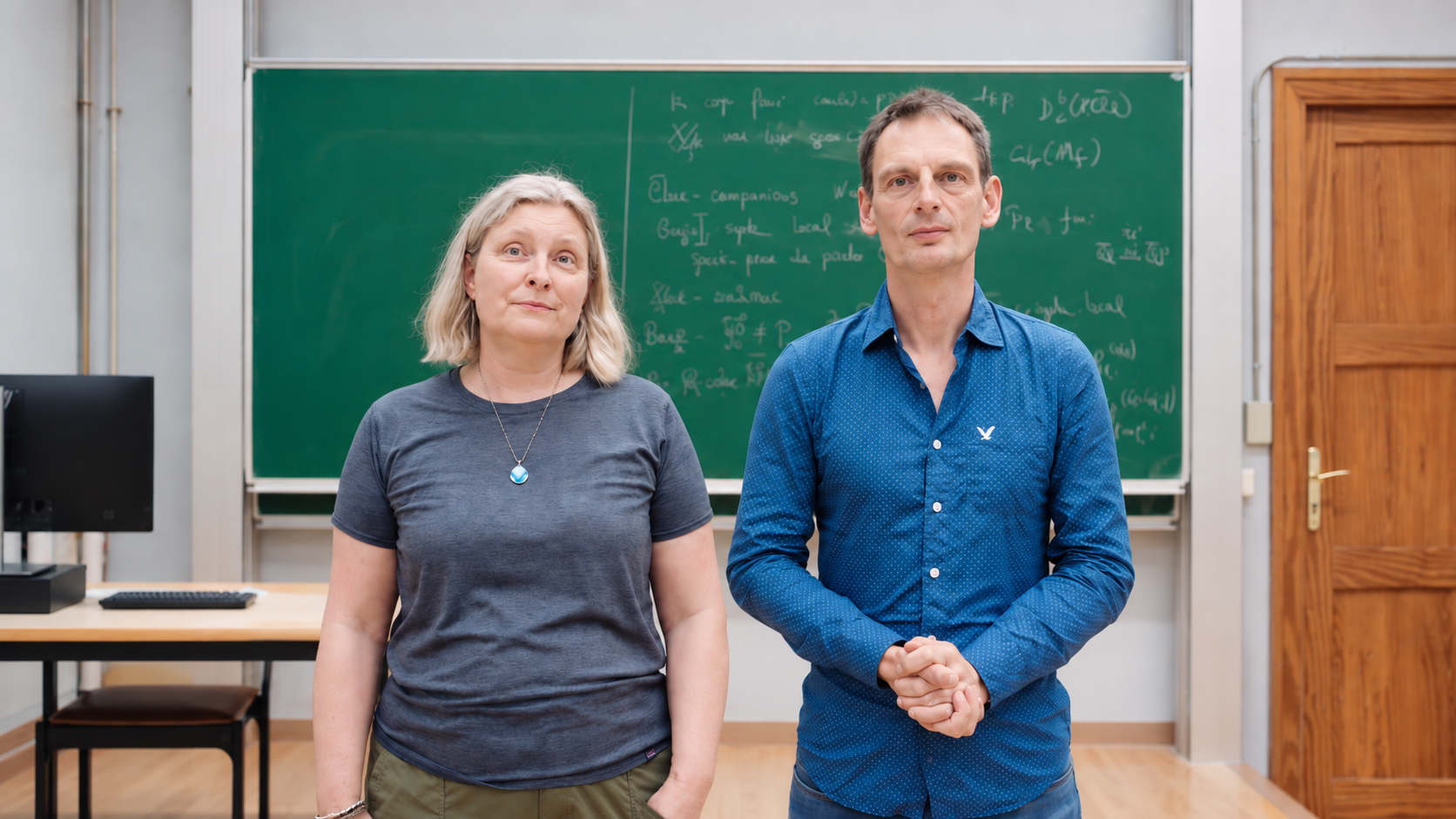
Rare curves, many points: Christophe Ritzenthaler and Rachel Pries on their research and the work around it
Christophe Ritzenthaler (Université de Rennes) and Rachel Pries (Colorado State University) both work on curves over finite fields: he hunts curves with as many points as possible, she hunts curves that almost never occur. In conversation with the CRM during their...

Call open for the 2027 Ferran Sunyer i Balaguer Prize
The Ferran Sunyer i Balaguer Foundation is accepting submissions for its 2027 prize, which awards 15,000 euros and publication in Birkhäuser's Progress in Mathematics series to an expository monograph on an active area of mathematical research. The deadline is 27...
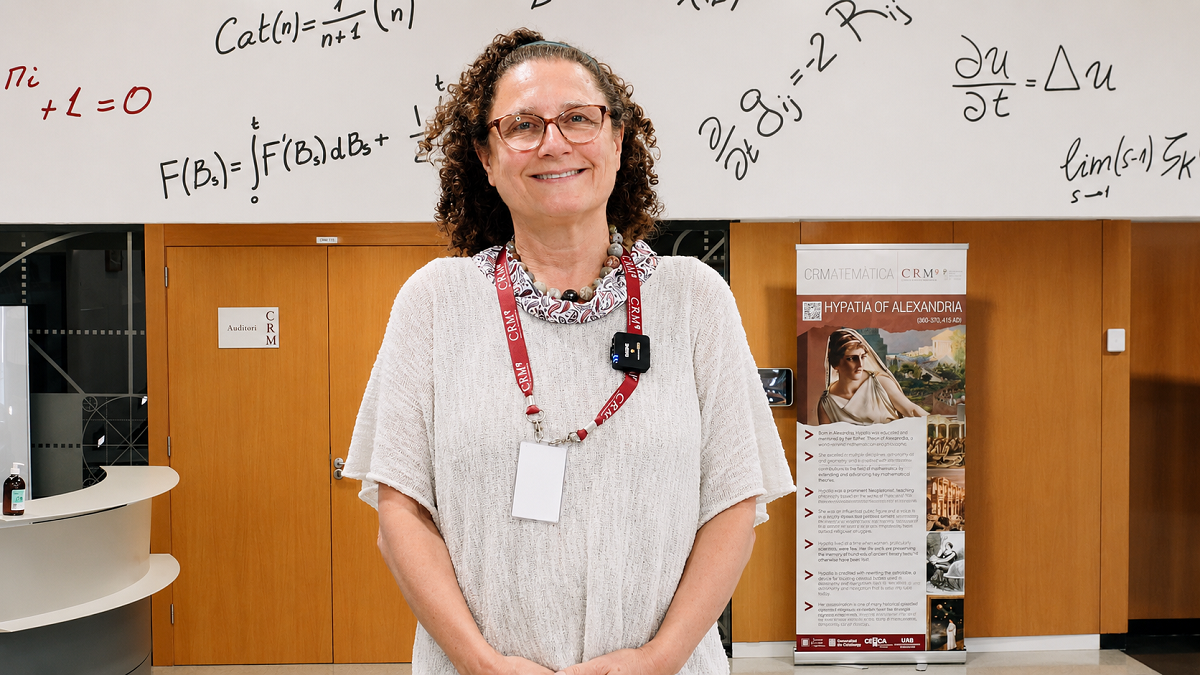
Susanna Terracini delivers the CRM Colloquium 2026
Susanna Terracini (Università di Torino) delivered the CRM Colloquium 2026 on 14 July, presenting a rigidity result for Kepler billiards obtained with Stefano Baranzini, Vivina Barutello and Irene De Blasi. She was at the centre as a member of the CRM Scientific...
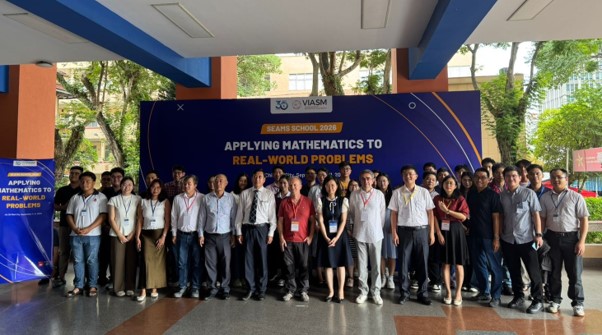
Ho Chi Minh City hosts the SEAMS School on applying mathematics to real-world problems
Students from across the region took courses and worked on group projects at a school co-organised by CRM researcher Tim Myers.CRM CommPau VarelaCRMComm@crm.catGet the latest CRM news and activities in your inbox.Recent newsletters →Between 4 and...

A single ball on a fixed table can compute: Eva Miranda and Isaac Ramos prove that two-dimensional billiards are Turing complete
Eva Miranda (UPC, CRM) and Isaac Ramos (ETH Zürich) show that a point particle bouncing inside a planar table with fixed walls can simulate a universal Turing machine, settling a question Cristopher Moore left open in 1990. The result grew out of a master’s project...
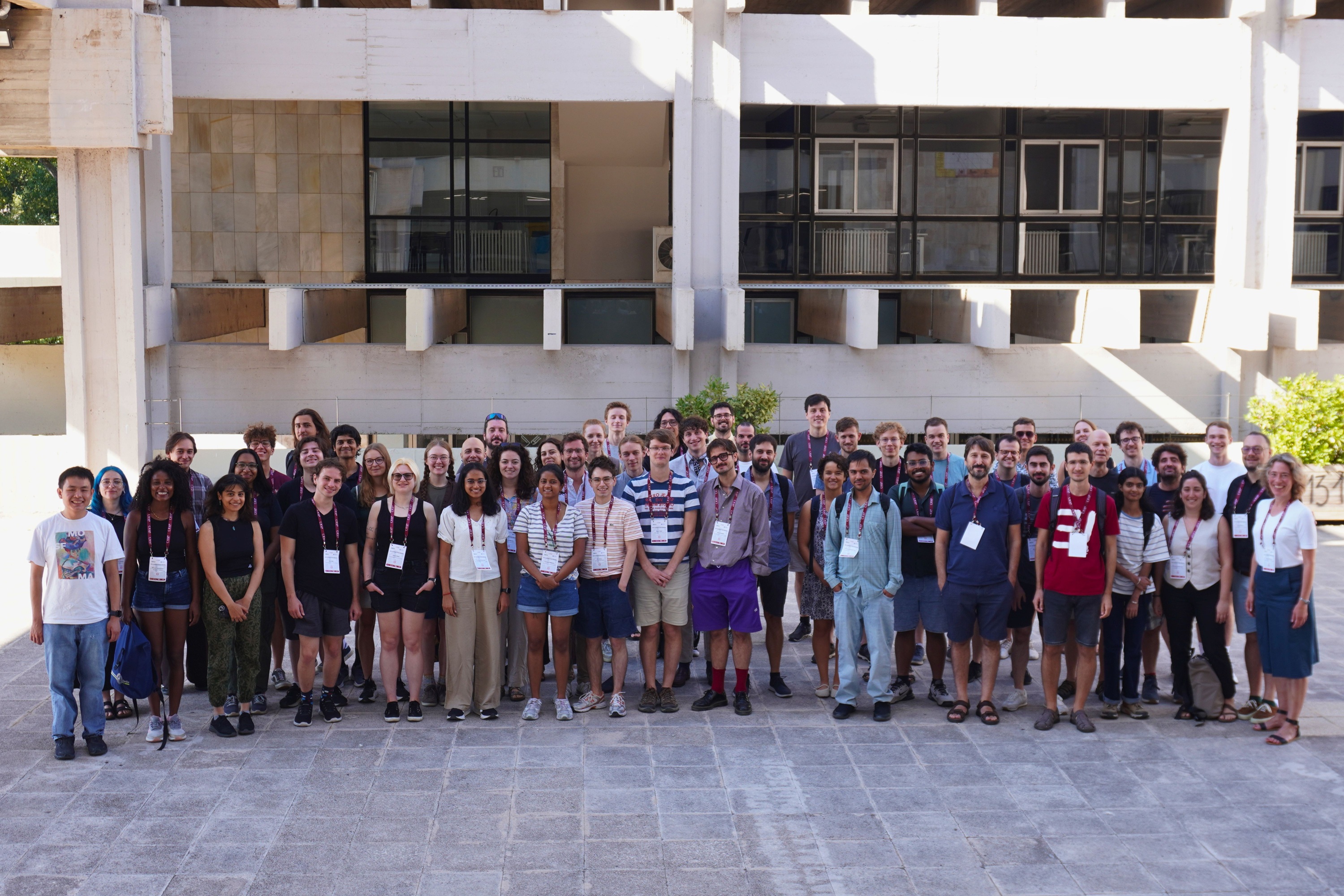
BMS-BGSMath Junior Meeting 2026: Barcelona and Berlin Strengthen Scientific Ties
From 2 to 4 September 2026, the Centre de Recerca Matemàtica (CRM) hosted the BMS-BGSMath Junior Meeting 2026, a three-day event jointly organised by the Berlin Mathematical School (BMS) and the Barcelona Graduate School of Mathematics (BGSMath), with the Centre de...
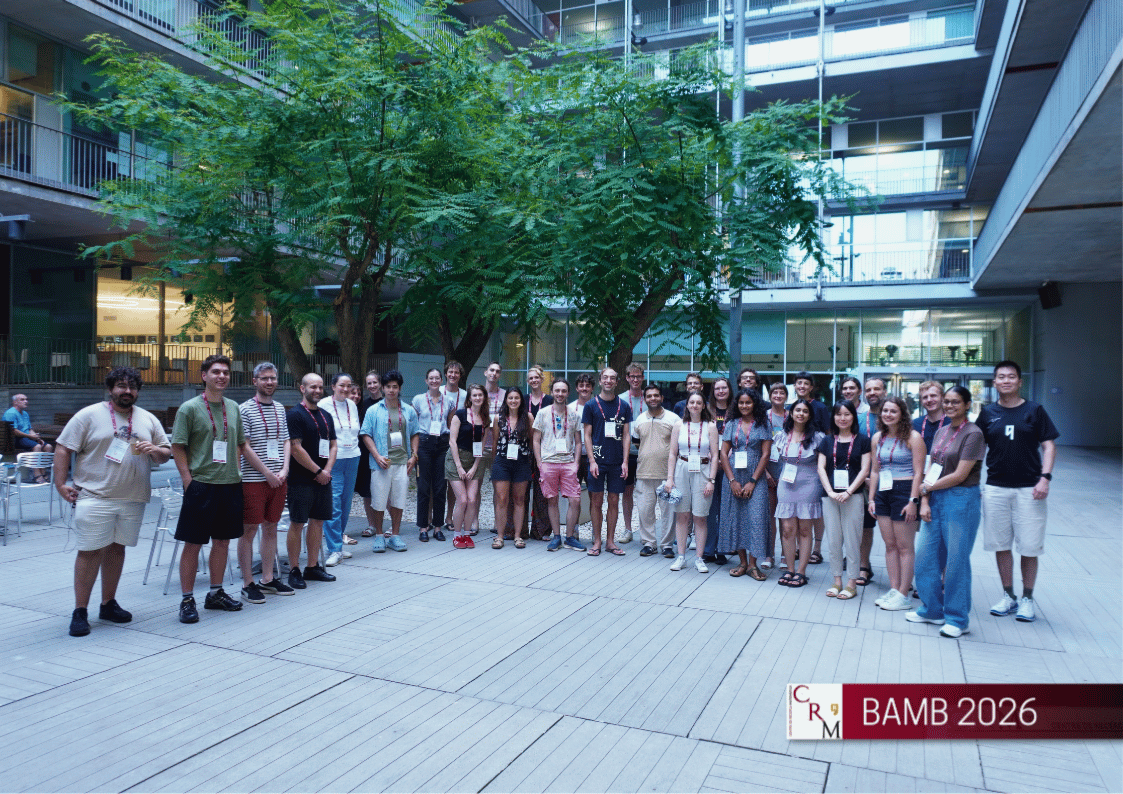
The CRM organises the 2026 Barcelona Summer School for Advanced Modeling of Behavior
The Centre de Recerca Matemàtica held the sixth edition of BAMB!, the Barcelona Summer School for Advanced Modeling of Behavior, from 12 to 23 July 2026 at the Parc de Recerca Biomèdica de Barcelona. Thirty early-career researchers from fourteen countries followed...