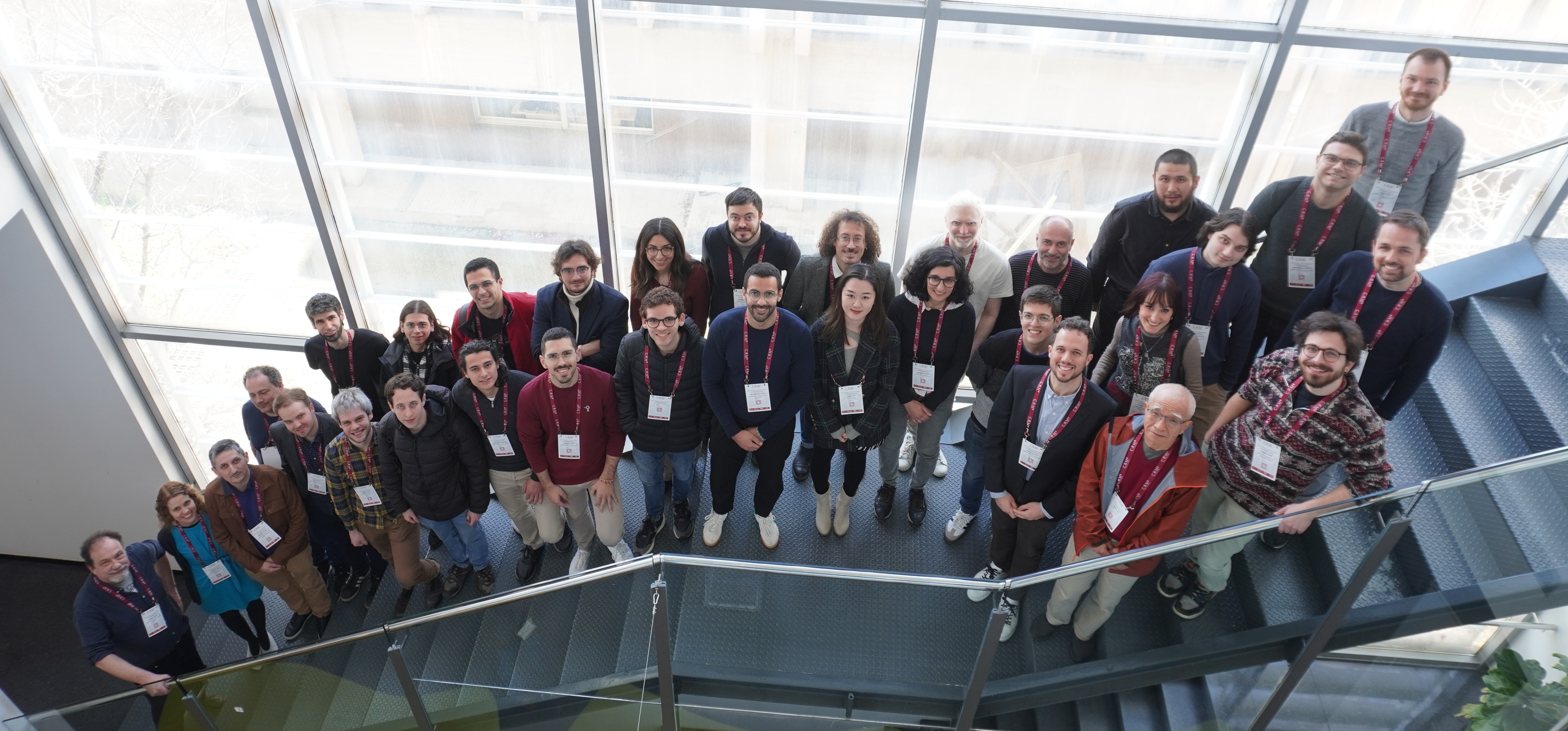
On 24-25 March 2025, the Centre de Recerca Matemàtica (CRM) hosted the ‘School on New Frontiers in Homogenization and Fractional Calculus’ to celebrate the 50th anniversary of Γ-convergence. This mathematical technique was introduced by Ennio De Giorgi and Tullio Franzoni in 1975.
Discover what Γ-convergence is here
Γ-convergence is a powerful technique in mathematical analysis, particularly in the calculus of variations. It is used to study the convergence of the shape of functions and functionals (which are mappings from a space of functions to real numbers).
This technique is crucial in applications in mechanics. For example, in the study of the behavior of heterogeneous materials, Γ-convergence helps to understand the macroscopic properties of materials from their microscopic structures. Similarly, it is a key tool for studying discrete-to-continuum transitions and optimization problems, providing stability under perturbations, as well as those involving variational principles such as image processing or fracture mechanics.
To illustrate, Γ-convergence is like a guide that ensures a chef, as they experiment with different recipes, will eventually create the ideal dish.
The event brought together leading experts in the fields of homogenization and fractional calculus to discuss the latest developments and applications of these mathematical techniques. Topics included phase transitions and asymptotic analysis of partial differential equations, as well as nonlocal problems, which are becoming increasingly relevant in materials science.
It also featured a series of lectures and discussions that highlighted the current state of research and provided valuable insights into the future direction of these fascinating areas of mathematics.
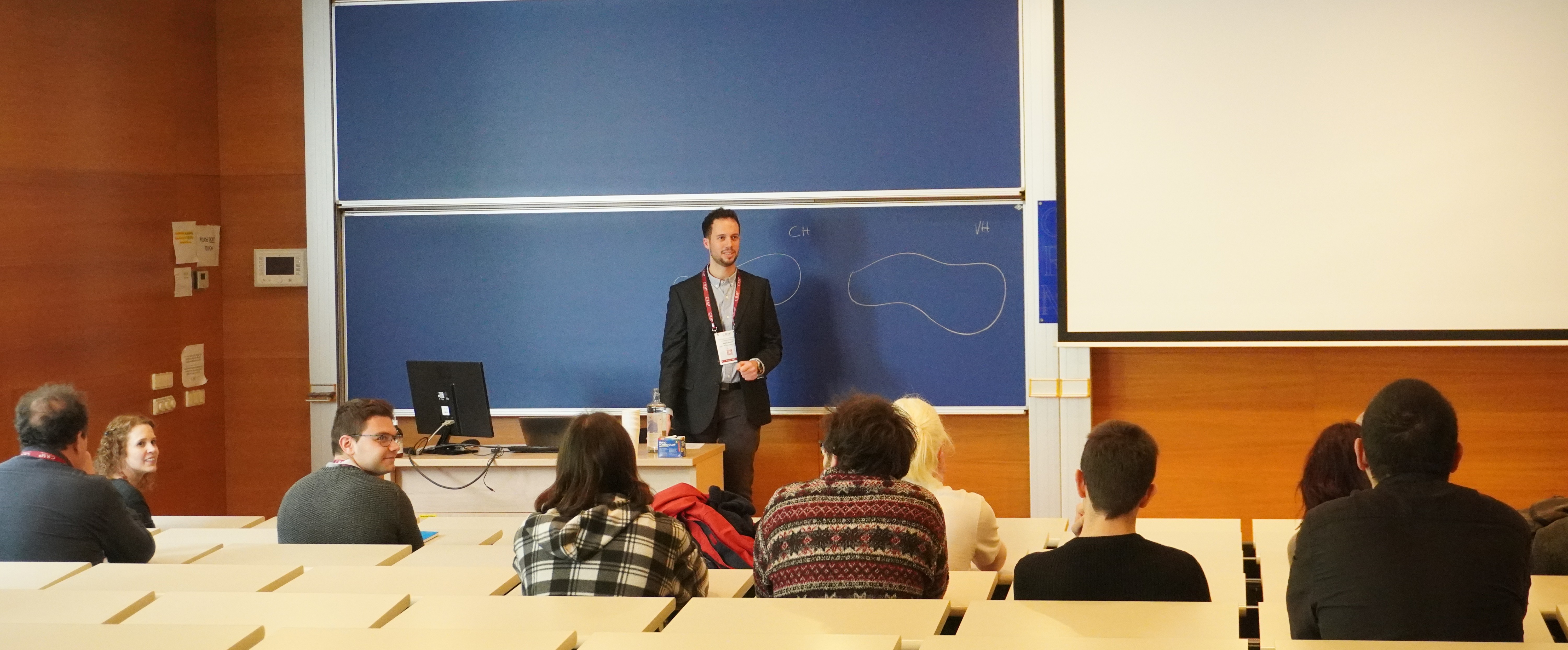
Alberto Maione during his presentation to the course.
In particular, the speakers were:
Andrea Braides, Full Professor at the University of Rome “Tor Vergata”. His research focuses on the calculus of variations, Γ-convergence, and homogenization. During the event, Braides gave a detailed overview about recent results on singular perturbations with fractional and higher-order seminorms, in the framework of phase transitions and of free-discontinuity problems.
Maicol Caponi, fixed-term Researcher at the University of L’Aquila. His research focuses on the calculus of variations, partial differential equations, and fracture dynamics, with applications in material science. In his talk, he spoke about recent results with collaborators, where the authors derived a strain-gradient theory for plasticity as the Γ-limit of discrete dislocation fractional energies, without the introduction of a core-radius.
Alessandro Carbotti, a Postdoc at the University of Salento, whose research focuses on fractional analysis, sub-Riemannian geometry and partial differential equations. Carbotti presented a new approach to the H-convergence problem involving nonlocal linear operators in fractional divergence form. If symmetry is also assumed, he showed that the H-compactness of the operators is equivalent to the Γ-convergence of the associated energies.
Patrick Dondl, Full Professor at the University of Freiburg (Germany), whose research focuses on numerical methods for partial differential equations and applications in mechanics. In his talk, he presented a numerical method for approximating the fractional Laplacian, approximating the operator using a basis formed by dilated and shifted tensor products of sinc functions.
Alex Ferrer, Associate Researcher at CIMNE and “Serra-Hunter” Associate Professor at Universitat Politècnica de Catalunya. His research focuses on structural optimization and additive manufacturing. In his talk, he presented the dehomogenization method for stress minimization in lattice structures, highlighting its efficiency compared to multi-scale topology optimization. Ferrer explained the use of homogenization to optimize macroscopic structures and addressed singularities in the orientation field, validating the methodology with numerical examples.
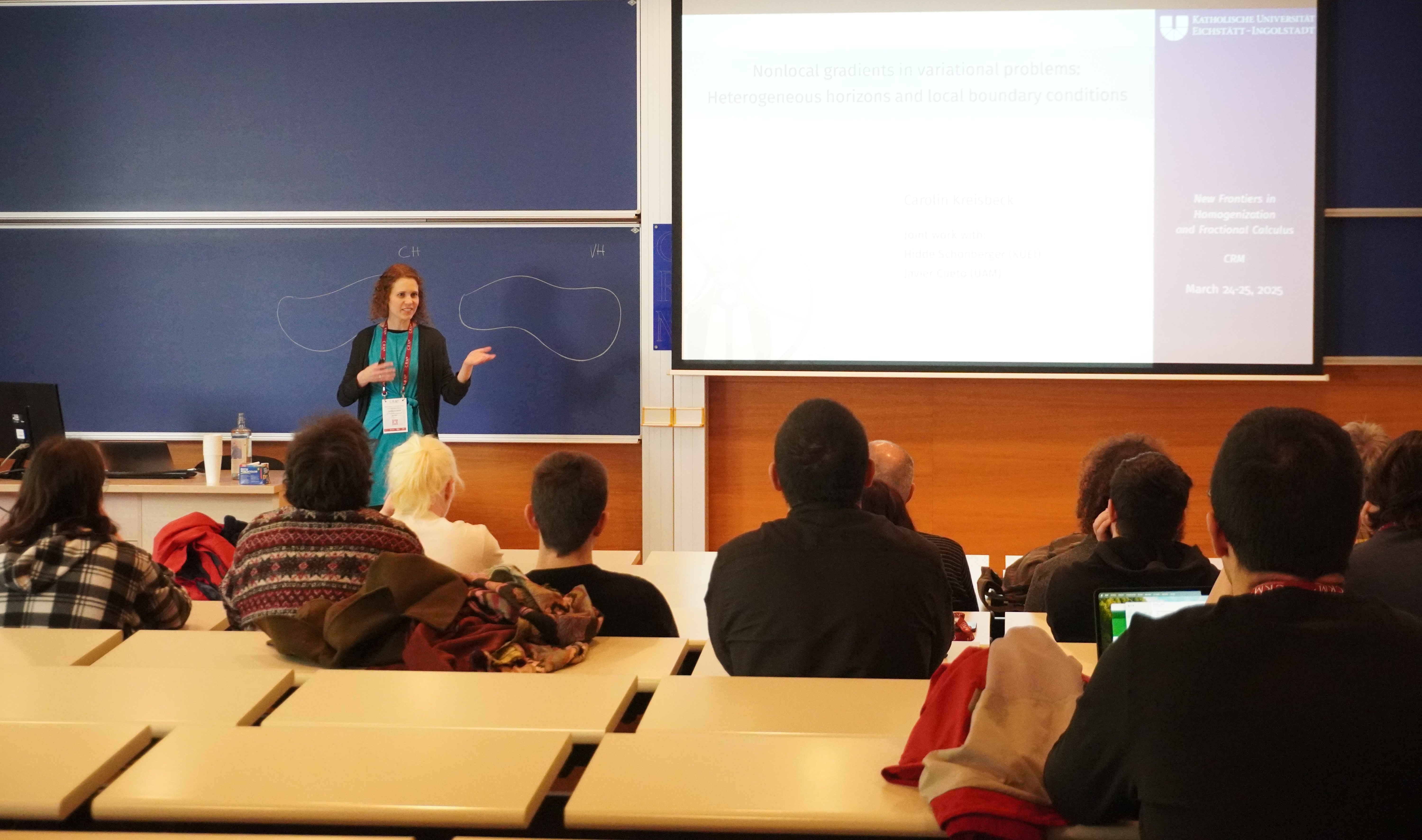
Carolin Kreisbeck during her talk.
Carolin Kreisbeck, Full Professor at the Catholic University of Eichstätt-Ingolstadt, whose research focuses on the calculus of variations and nonlinear partial differential equations, with applications in material science. Kreisbeck explored variational problems with integral functionals involving nonlocal gradients, focusing on Sobolev spaces, trace operators, and Poincaré inequalities. She established existence of minimizers for functionals with quasiconvex or polyconvex Lagrangians, depending on heterogeneous nonlocal gradients.
Fabio Paronetto, Associate Professor at the University of Padua. His research focuses on the asymptotic behavior of solutions of elliptic and parabolic partial differential equations. He talked about the existence and uniqueness of solutions of forward-backward parabolic equations, extending classical results and providing a G-compactness result for sequences of such operators.
Xavier Ros-Oton, ICREA Research Professor and Full Professor at the University of Barcelona, is known for the study of regularity theory for partial differential equations, integro-differential operators, and free boundary problems. Ros-Oton presented recent results on the regularity of solutions of the Boltzmann equation, a fundamental equation in statistical mechanics, which models the evolution of gas. He extended previous results by Imbert and Silvestre, demonstrating that if certain observables, such as mass and pressure, remain bounded, then the solutions are smooth.
Simone Verzellesi, a Postdoc at the University of Padua, whose research focuses on the calculus of variations and sub-Riemannian geometry. In his talk, he presented recent results for sequences of anisotropic integral functionals depending on Lipschitz continuous vector fields. He discussed about the properties of the anisotropic functional setting, and showed integral representation results for these functionals, as well as Γ-compactness results for sequences of anisotropic integral functionals.
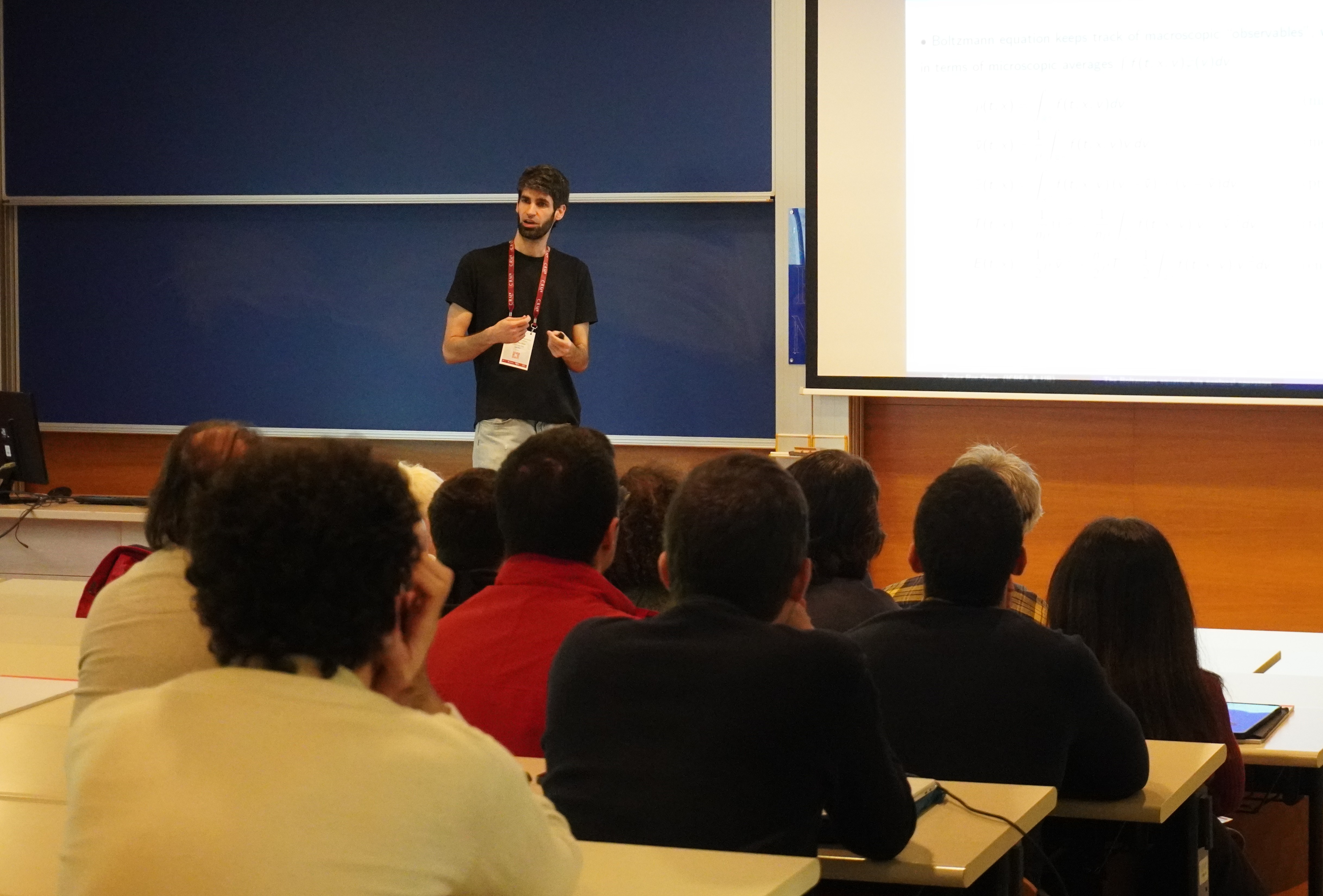
Xavier Ros-Oton during his talk.
This event was organised during the Research in Groups programme “A Mathematical Approach to the Homogenization of Nonlocal Composite Materials: H-convergence, G-convergence, and Γ-convergence” that took place at CRM for three weeks in March 2025. This initiative aims to foster deep collaboration between international researchers who share similar expertise and interests. It is a dynamic partnership in which researchers come together to tackle complex problems, explore new ideas, come up with innovative solutions, and push the boundaries of their respective fields.
In essence, the “Research in Groups” programme is a creative partnership for researchers to achieve more than they could do separately, pushing the frontiers of knowledge and innovation.
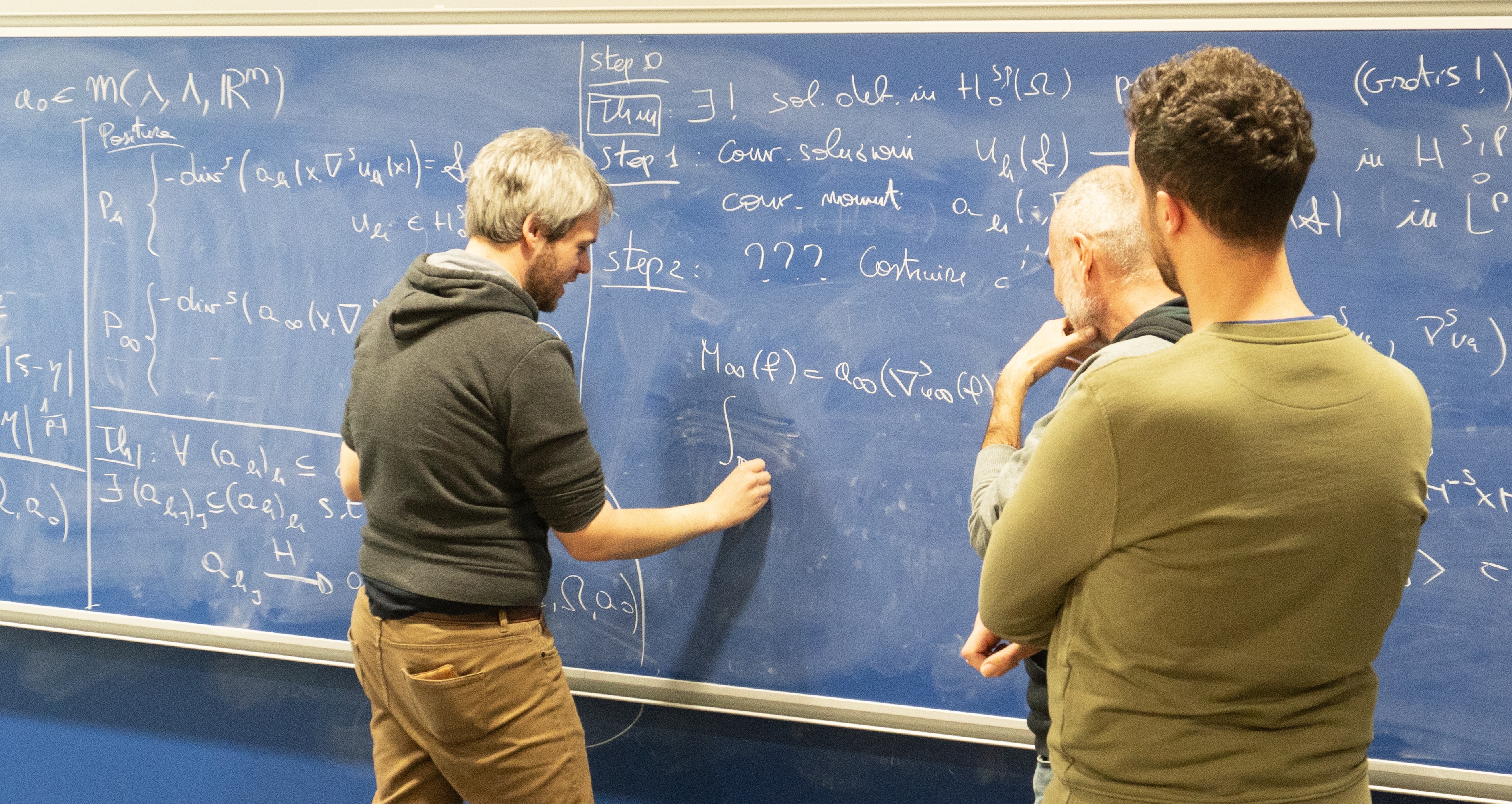
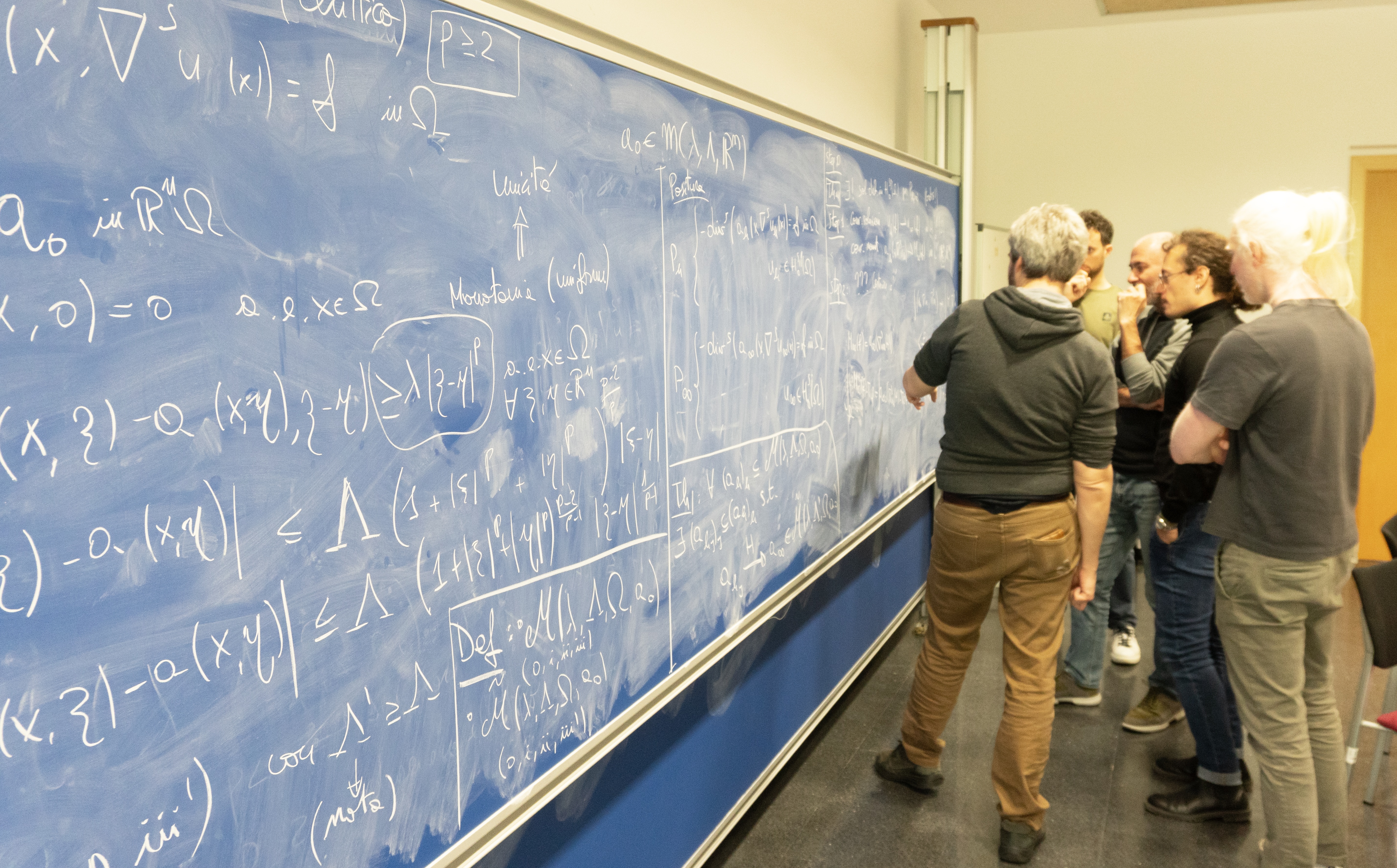
Researchers from the Research in Pairs programme solving problems together.
Overall, the School on New Frontiers in Homogenization and Fractional Calculus was a success, fostering collaboration and innovation to advance the understanding of these mathematical techniques.
Subscribe for more CRM News
|
|
CRM CommNatalia Vallina
|
When the reward comes within reach, the brain changes what it compares
As the tokens piled up, choices got faster and more accurate at the same time. The yardstick for judging each offer had moved.CRM CommPau VarelaCRMComm@crm.catGet the latest CRM news and activities in your inbox.Recent newsletters →Two subjects...

Almost every automaton can be reset with a short word
Guillaume Chapuy (Université Paris Cité, CNRS) and Guillem Perarnau (UPC, CRM) have shown that a random finite automaton with n states can, with high probability, be reset by a word of length of order √n log n. The result, published in ACM Transactions on Algorithms, pins the exponent at 1/2, the lower end of a decade of numerical estimates, and addresses the random version of the synchronization problem behind a conjecture Ján Černý posed in 1964 and which still remains open.
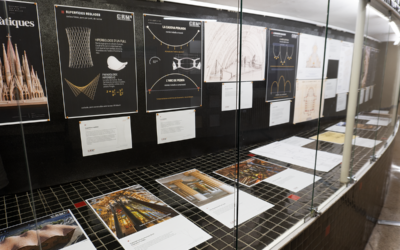
Exposició ‘Les matemàtiques de Gaudí’
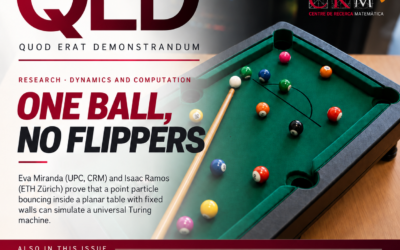
CRM quod erat demonstrandum | 48

ADA: Decoding Brain Signals Misaligned in Time
The study addresses a key limitation of current brain decoding techniques: the difficulty of interpreting internal mental processes whose temporal dynamics vary from trial to trial.Decoding what is happening in a person’s mind from their brain activity is one of the...
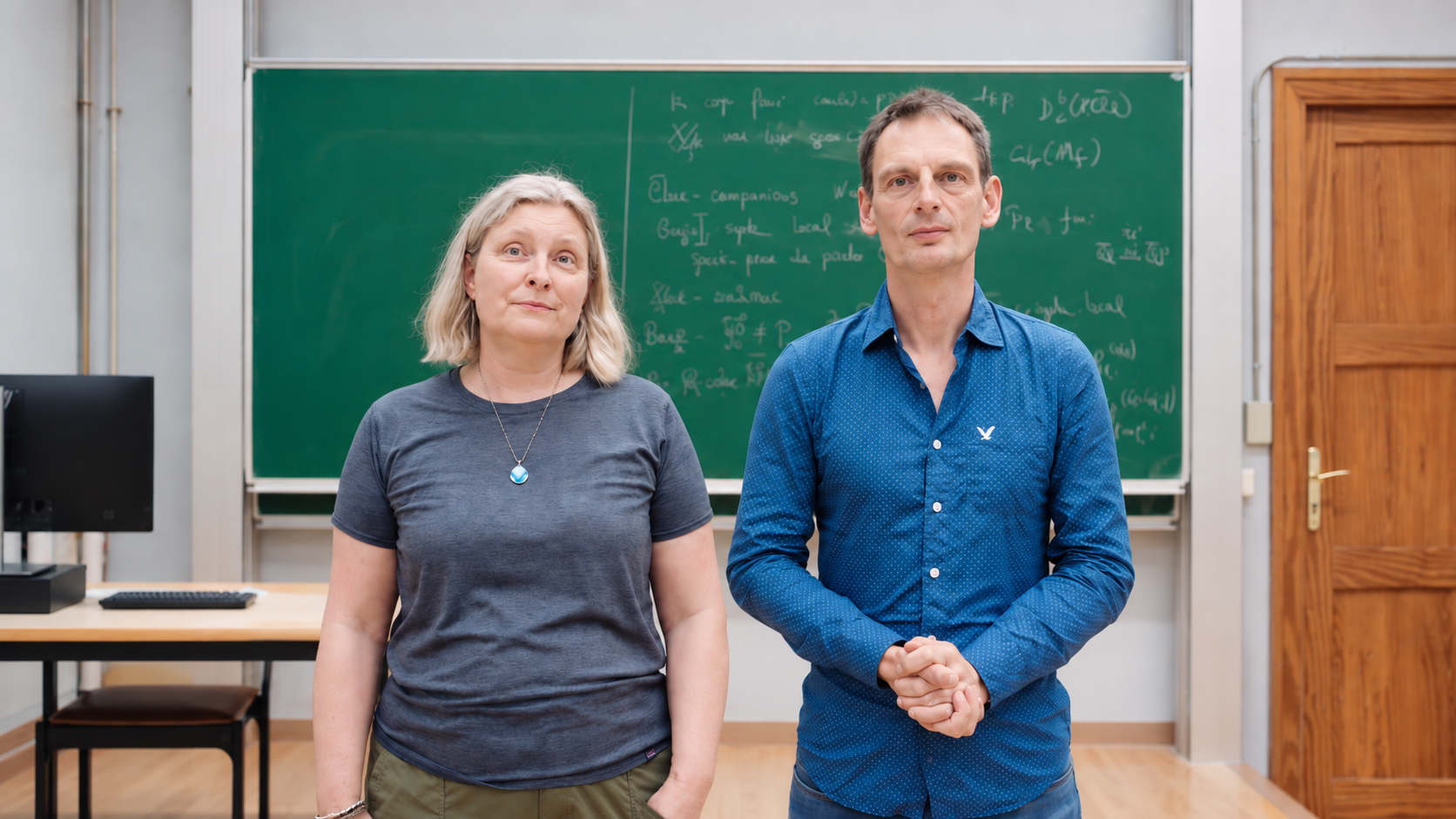
Rare curves, many points: Christophe Ritzenthaler and Rachel Pries on their research and the work around it
Christophe Ritzenthaler (Université de Rennes) and Rachel Pries (Colorado State University) both work on curves over finite fields: he hunts curves with as many points as possible, she hunts curves that almost never occur. In conversation with the CRM during their...

Call open for the 2027 Ferran Sunyer i Balaguer Prize
The Ferran Sunyer i Balaguer Foundation is accepting submissions for its 2027 prize, which awards 15,000 euros and publication in Birkhäuser's Progress in Mathematics series to an expository monograph on an active area of mathematical research. The deadline is 27...
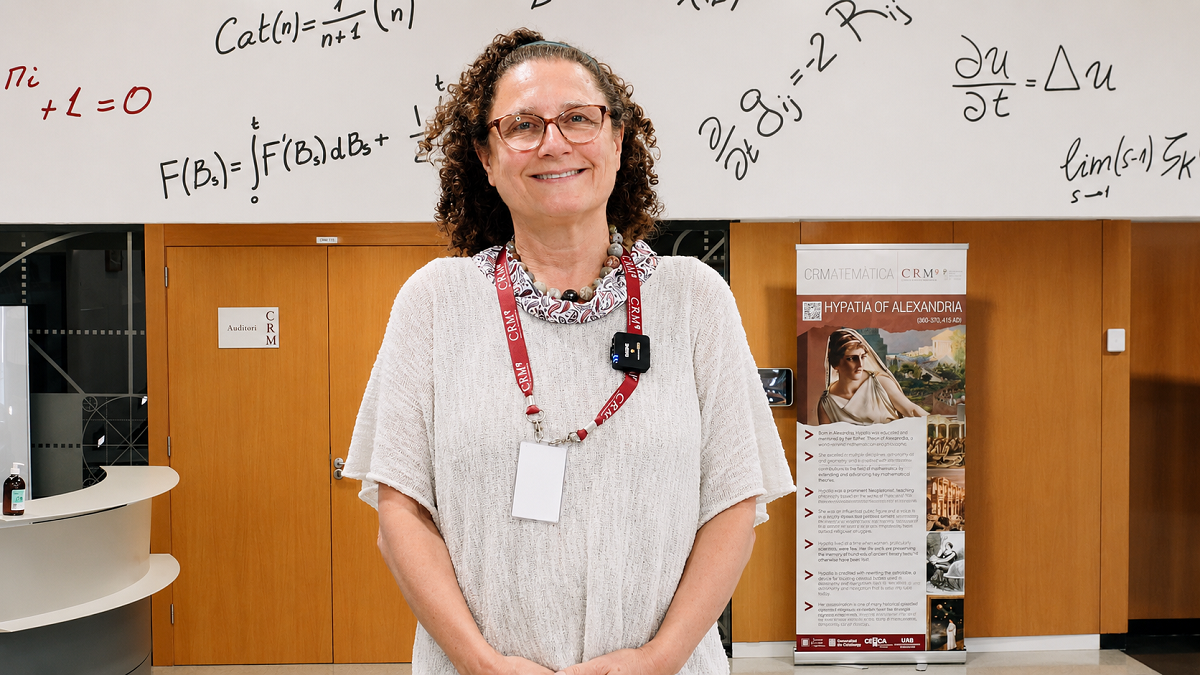
Susanna Terracini delivers the CRM Colloquium 2026
Susanna Terracini (Università di Torino) delivered the CRM Colloquium 2026 on 14 July, presenting a rigidity result for Kepler billiards obtained with Stefano Baranzini, Vivina Barutello and Irene De Blasi. She was at the centre as a member of the CRM Scientific...
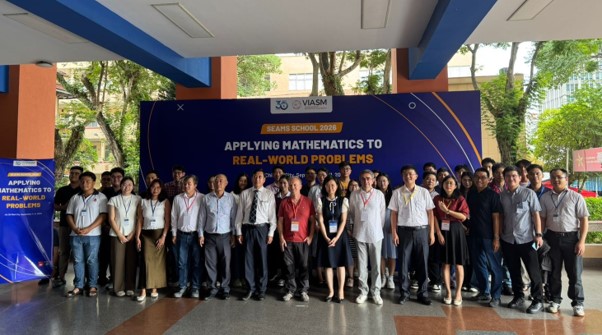
Ho Chi Minh City hosts the SEAMS School on applying mathematics to real-world problems
Students from across the region took courses and worked on group projects at a school co-organised by CRM researcher Tim Myers.CRM CommPau VarelaCRMComm@crm.catGet the latest CRM news and activities in your inbox.Recent newsletters →Between 4 and...

A single ball on a fixed table can compute: Eva Miranda and Isaac Ramos prove that two-dimensional billiards are Turing complete
Eva Miranda (UPC, CRM) and Isaac Ramos (ETH Zürich) show that a point particle bouncing inside a planar table with fixed walls can simulate a universal Turing machine, settling a question Cristopher Moore left open in 1990. The result grew out of a master’s project...
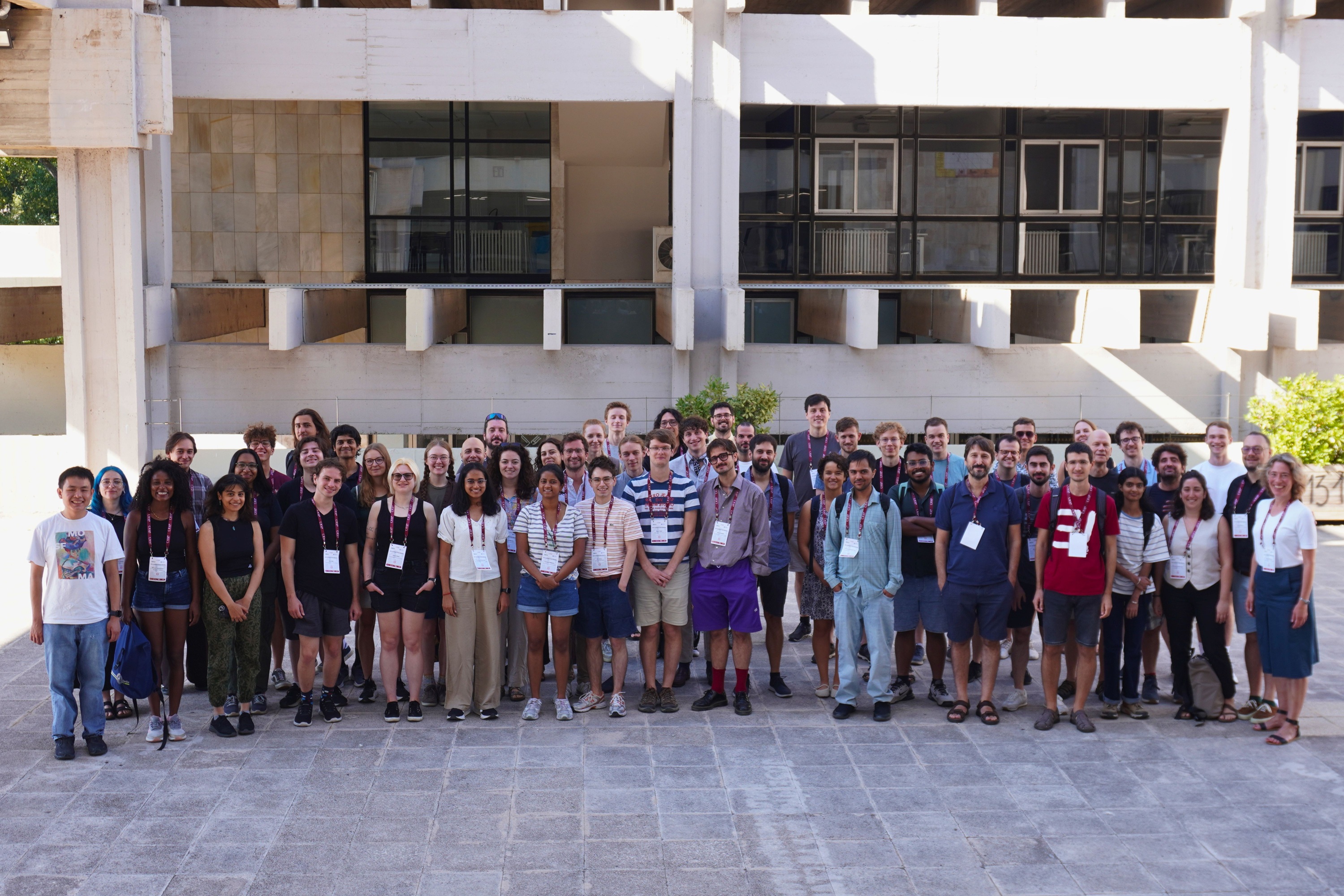
BMS-BGSMath Junior Meeting 2026: Barcelona and Berlin Strengthen Scientific Ties
From 2 to 4 September 2026, the Centre de Recerca Matemàtica (CRM) hosted the BMS-BGSMath Junior Meeting 2026, a three-day event jointly organised by the Berlin Mathematical School (BMS) and the Barcelona Graduate School of Mathematics (BGSMath), with the Centre de...
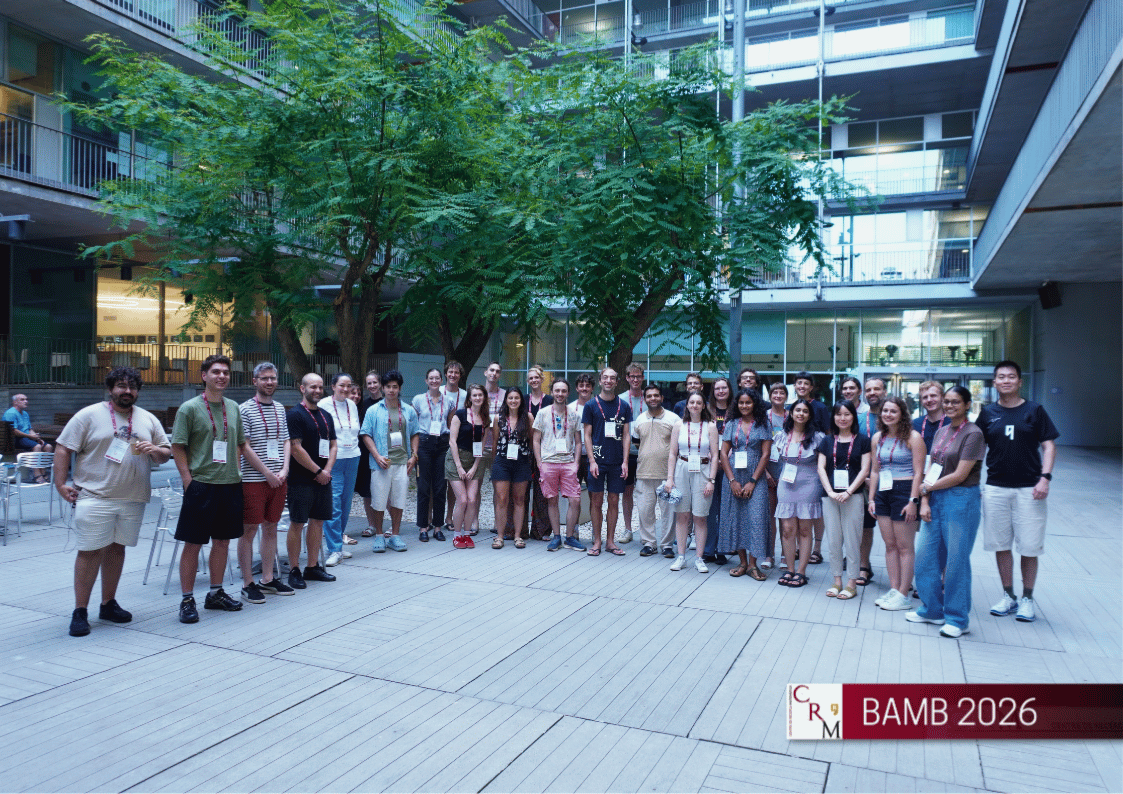
The CRM organises the 2026 Barcelona Summer School for Advanced Modeling of Behavior
The Centre de Recerca Matemàtica held the sixth edition of BAMB!, the Barcelona Summer School for Advanced Modeling of Behavior, from 12 to 23 July 2026 at the Parc de Recerca Biomèdica de Barcelona. Thirty early-career researchers from fourteen countries followed...