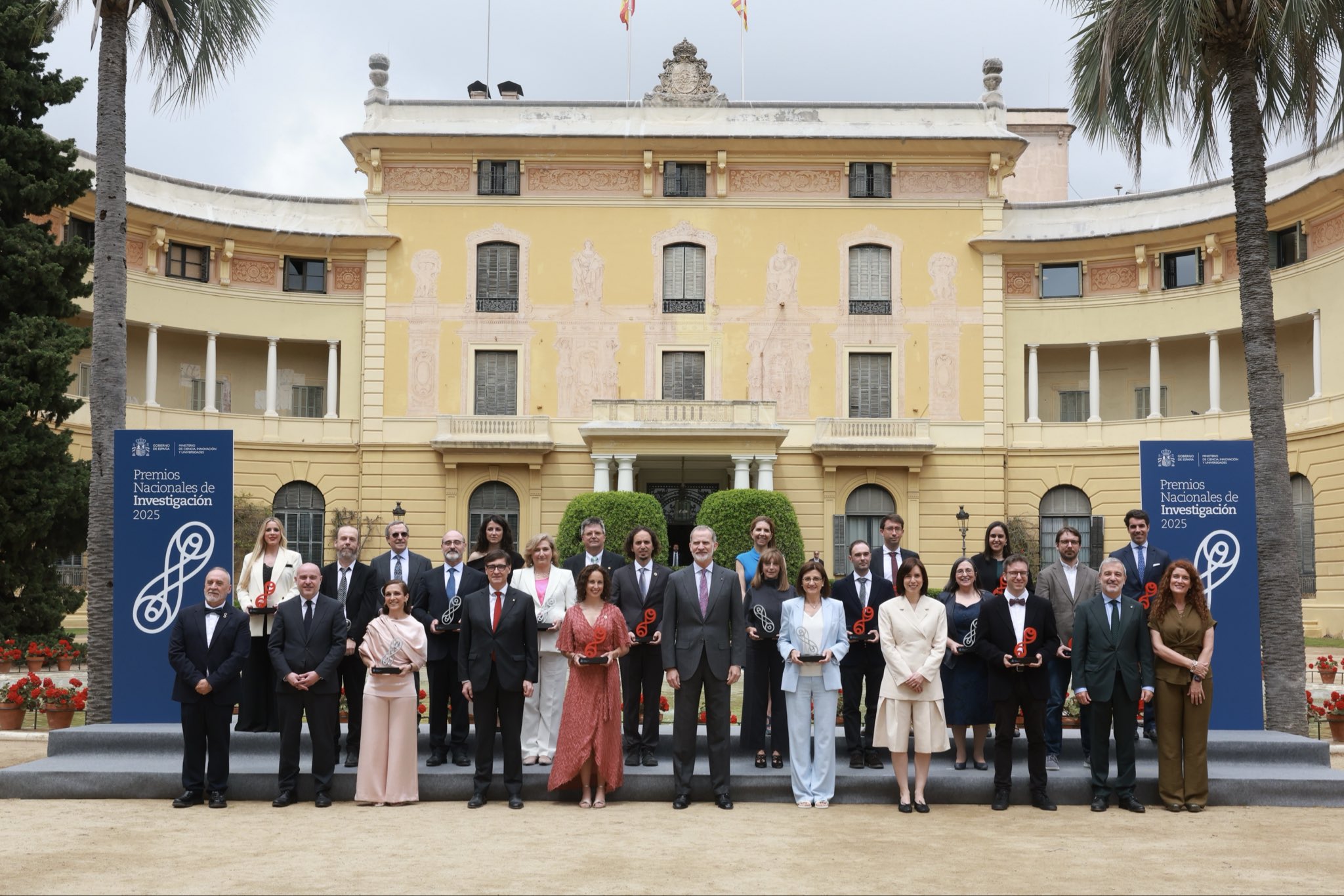
Jezabel Curbelo, full professor at the Universitat Politècnica de Catalunya and researcher at the Centre de Recerca Matemàtica, received the 2025 National Research Award for Young Researchers in Mathematics and ICT this Monday at a ceremony presided over by King Felipe VI at the Palau de Pedralbes in Barcelona. The award recognises her work in fluid dynamics applied to geophysics, with research spanning the atmosphere, the ocean, and the Earth’s interior.
Full professor at the Universitat Politècnica de Catalunya and researcher at the Centre de Recerca Matemàtica, Jezabel Curbelo received the 2025 National Research Award for Young Researchers in the María Andresa Casamayor category (Mathematics and ICT) at a ceremony held this Monday at the Palau de Pedralbes in Barcelona. The prize highlights her work in fluid dynamics applied to geophysics.
King Felipe VI presided over the ceremony, where twenty researchers were honoured by the Ministry of Science, Innovation and Universities. Half of this year’s recipients work at scientific institutions in Catalonia. Curbelo was joined by nine other young researchers under the age of forty, alongside ten senior figures recognised for their international trajectory. Each award carries an endowment of 30,000 euros.
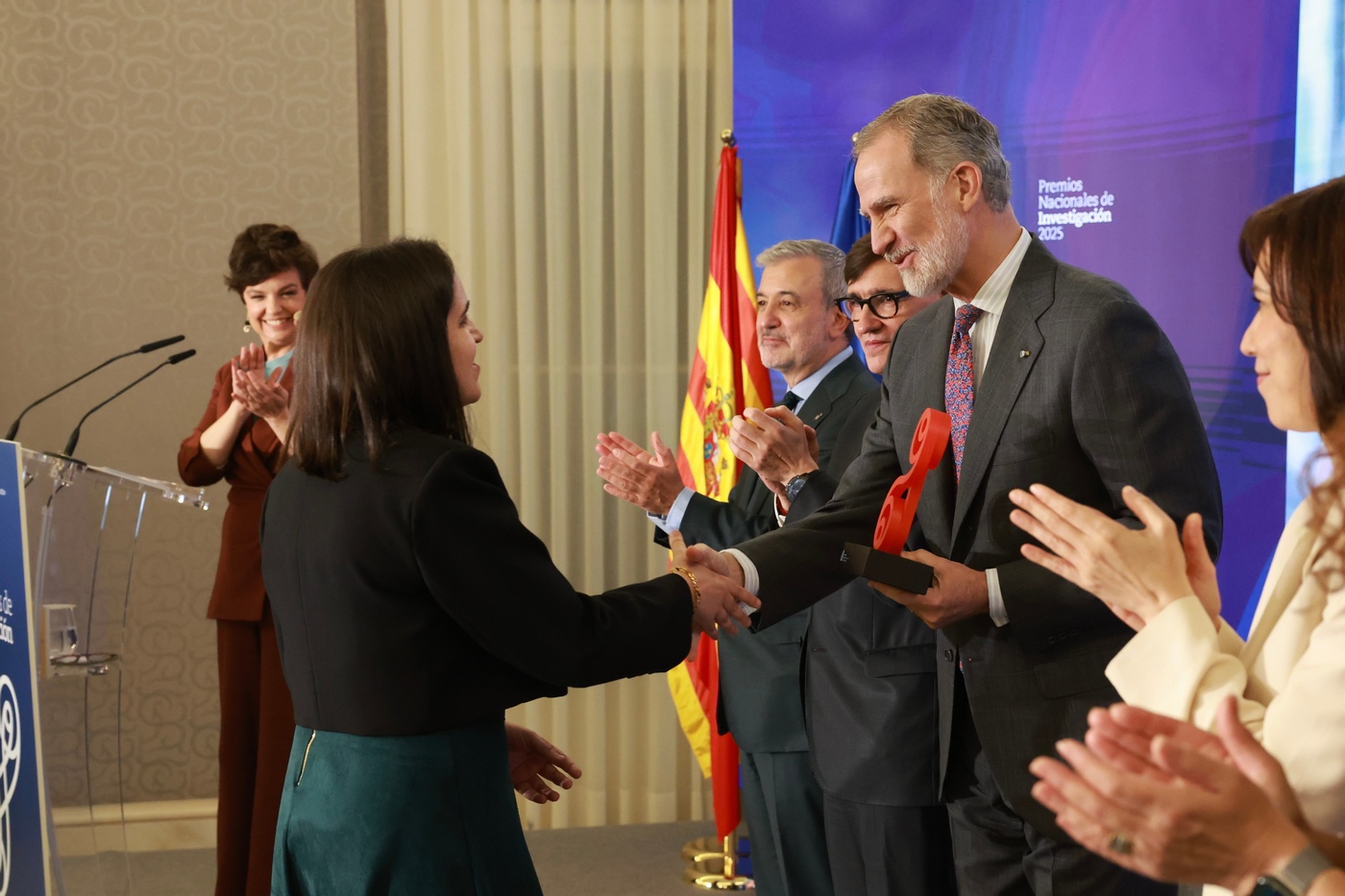
In his address, the King argued that scientific talent must be “accompanied, supported, sustained and recognised” by both individuals and institutions, citing the nineteenth-century Catalan inventor Narcís Monturiol, whose pioneering submarine never moved past the experimental stage for lack of financial backing. The Minister of Science, Innovation and Universities, Diana Morant, described Barcelona as “one of the principal research hubs in southern Europe”. At the same time, the President of the Generalitat, Salvador Illa, pointed to Catalonia’s more than 33,000 active researchers.
For Curbelo, the recognition arrives at a key point in her trajectory: “It is a great joy! It is an honour to see the work carried out over these years recognised, and also a source of motivation to keep moving forward and looking for new challenges.”
Her research focuses on fluid dynamics applied to geophysics, particularly on the simulation and modelling of complex processes in the atmosphere, the ocean, and the Earth’s interior. She is currently leading projects that seek new ways to understand climate change, such as the Ramón Areces Foundation-funded project CLaCos – Deciphering Climate Change, and developing techniques based on particle trajectories to study geophysical fluid systems. Her recent work tracking jet streams as coherent Lagrangian structures is one example of this approach. “Right now, I am working on several projects, on the one hand, deciphering climate change, and on the other, applying a dynamical perspective to study different geophysical fluid systems using various techniques based on particle trajectories and spectral clustering methods of these trajectories.”
“Applied mathematics is a very powerful tool to provide solutions to problems that have a great impact on everyday life.”
Her academic career has taken her through leading international centres and universities such as ICMAT in Madrid, UCLA in the United States, and the Laboratoire de Géologie de Lyon, before joining UPC and CRM. She emphasises the profound impact of these experiences on her scientific approach: “They have completely shaped my way of doing science and have been key to my training and development. I would not be here answering this interview or have received this award if it weren’t for all the people I have had the good fortune to work with.”
Beyond scientific results, Curbelo highlights the social importance of applied mathematics: “I would like people to understand that applied mathematics is a very powerful tool to provide solutions to problems that have a great impact on everyday life. Moreover, it is not a solitary job: doing research in applied mathematics means collaborating with physicists, engineers, oceanographers… and this joint effort allows us to address questions that would be very difficult, or impossible, to solve separately.”
With this recognition, Jezabel Curbelo strengthens her position as one of the leading voices in applied mathematics in Spain. The CRM warmly congratulates Jezabel on this award.
Jezabel Curbelo is a full professor at the Universitat Politècnica de Catalunya (UPC). Previously, she was a “Ramón y Cajal” research fellow at the UPC (July 2020–June 2025), Visiting Assistant Researcher in the Department of Atmospheric and Oceanic Sciences at the University of California, Los Angeles (2019 and 2020), and Assistant Professor (“Profesor Ayudante Doctor”, 2016–2020) in the Department of Mathematics at the Universidad Autónoma de Madrid.
She also held postdoctoral positions as a LabEX LIO fellow at the Laboratoire de Géologie de Lyon: Terre, Planètes, Environnement (CNRS, ENS, Lyon 1), and as a Juan de la Cierva Formación postdoc at the Escuela Técnica Superior de Ingeniería Aeronáutica y del Espacio of the Universidad Politécnica de Madrid. She began her academic career as a PhD student in the JAE-Predoc program at the Instituto de Ciencias Matemáticas (ICMAT), where she also worked as a teaching assistant (2012–2014).
She co-organizes the UB-UPC Dynamical Systems Seminar. She serves as an editor for Nonlinear Processes in Geophysics and The EMS Magazine (European Mathematical Society), and is Early Career Editor for Physica D: Nonlinear Phenomena.
Currently, she is Deputy Director of Research in the Department of Mathematics at the UPC and Science Officer of NP6: Turbulence, Transport and Diffusion in the Nonlinear Processes in Geoscience division of the European Geosciences Union.
|
|
CRM CommPau Varela
|
When the reward comes within reach, the brain changes what it compares
As the tokens piled up, choices got faster and more accurate at the same time. The yardstick for judging each offer had moved.CRM CommPau VarelaCRMComm@crm.catGet the latest CRM news and activities in your inbox.Recent newsletters →Two subjects...

Almost every automaton can be reset with a short word
Guillaume Chapuy (Université Paris Cité, CNRS) and Guillem Perarnau (UPC, CRM) have shown that a random finite automaton with n states can, with high probability, be reset by a word of length of order √n log n. The result, published in ACM Transactions on Algorithms, pins the exponent at 1/2, the lower end of a decade of numerical estimates, and addresses the random version of the synchronization problem behind a conjecture Ján Černý posed in 1964 and which still remains open.
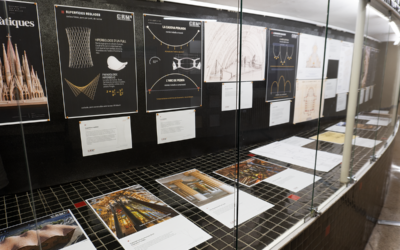
Exposició ‘Les matemàtiques de Gaudí’
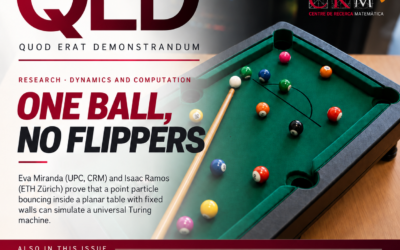
CRM quod erat demonstrandum | 48

ADA: Decoding Brain Signals Misaligned in Time
The study addresses a key limitation of current brain decoding techniques: the difficulty of interpreting internal mental processes whose temporal dynamics vary from trial to trial.Decoding what is happening in a person’s mind from their brain activity is one of the...
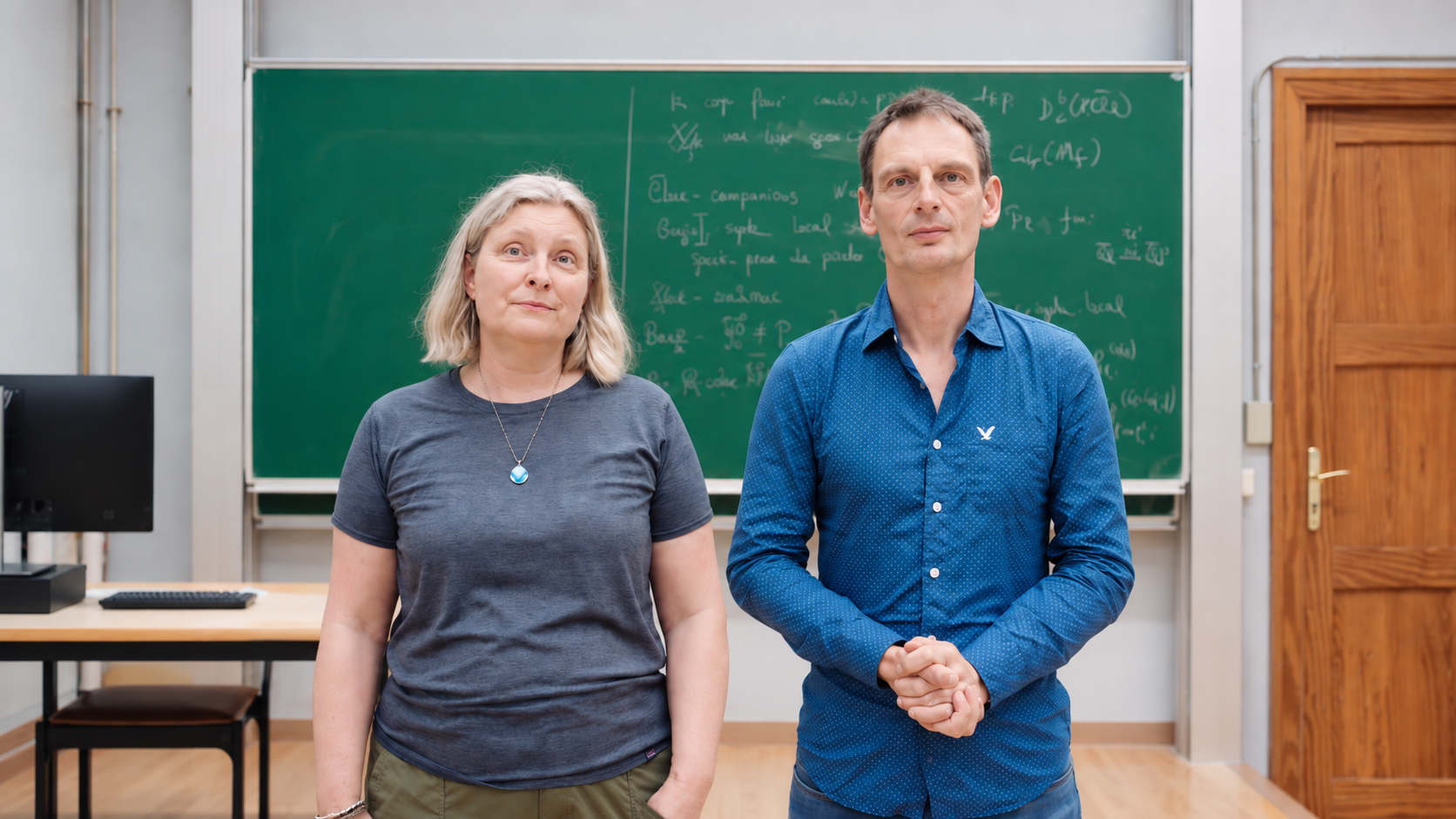
Rare curves, many points: Christophe Ritzenthaler and Rachel Pries on their research and the work around it
Christophe Ritzenthaler (Université de Rennes) and Rachel Pries (Colorado State University) both work on curves over finite fields: he hunts curves with as many points as possible, she hunts curves that almost never occur. In conversation with the CRM during their...
Call open for the 2027 Ferran Sunyer i Balaguer Prize
The Ferran Sunyer i Balaguer Foundation is accepting submissions for its 2027 prize, which awards 15,000 euros and publication in Birkhäuser's Progress in Mathematics series to an expository monograph on an active area of mathematical research. The deadline is 27...
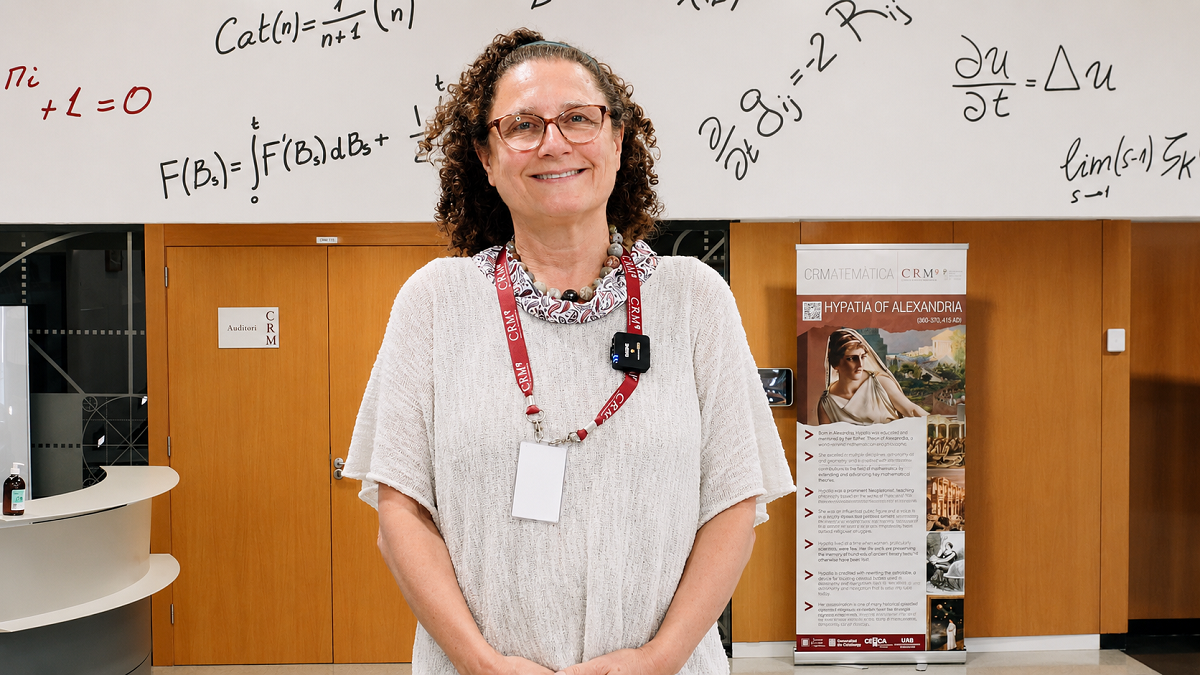
Susanna Terracini delivers the CRM Colloquium 2026
Susanna Terracini (Università di Torino) delivered the CRM Colloquium 2026 on 14 July, presenting a rigidity result for Kepler billiards obtained with Stefano Baranzini, Vivina Barutello and Irene De Blasi. She was at the centre as a member of the CRM Scientific...
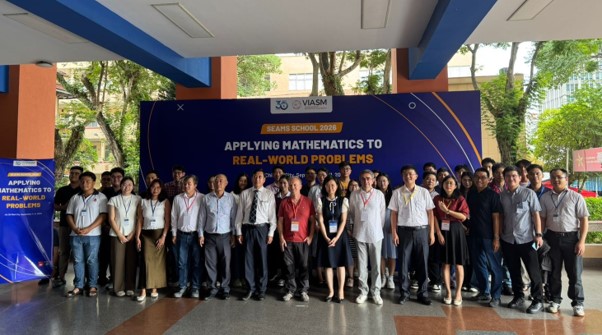
Ho Chi Minh City hosts the SEAMS School on applying mathematics to real-world problems
Students from across the region took courses and worked on group projects at a school co-organised by CRM researcher Tim Myers.CRM CommPau VarelaCRMComm@crm.catGet the latest CRM news and activities in your inbox.Recent newsletters →Between 4 and...

A single ball on a fixed table can compute: Eva Miranda and Isaac Ramos prove that two-dimensional billiards are Turing complete
Eva Miranda (UPC, CRM) and Isaac Ramos (ETH Zürich) show that a point particle bouncing inside a planar table with fixed walls can simulate a universal Turing machine, settling a question Cristopher Moore left open in 1990. The result grew out of a master’s project...
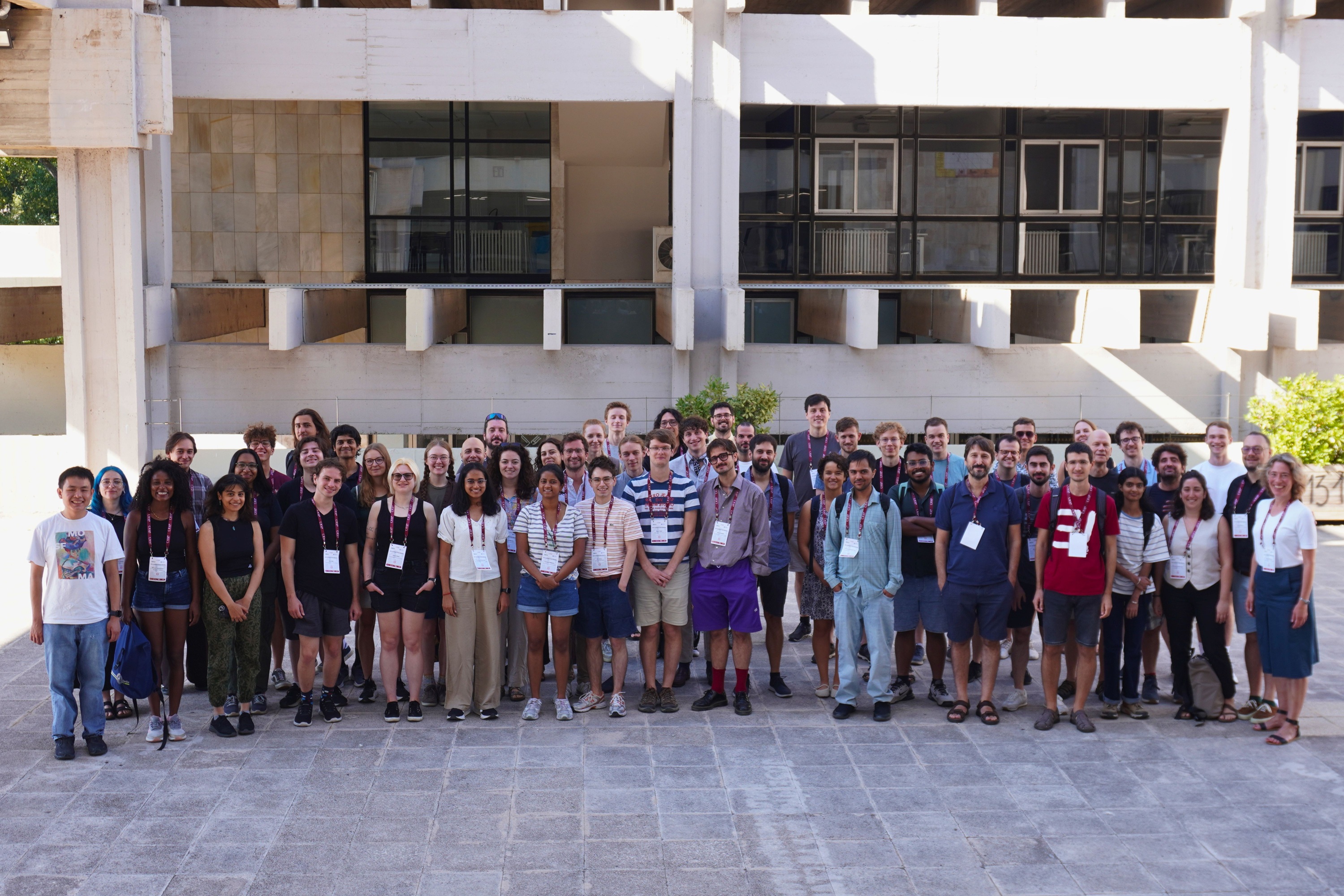
BMS-BGSMath Junior Meeting 2026: Barcelona and Berlin Strengthen Scientific Ties
From 2 to 4 September 2026, the Centre de Recerca Matemàtica (CRM) hosted the BMS-BGSMath Junior Meeting 2026, a three-day event jointly organised by the Berlin Mathematical School (BMS) and the Barcelona Graduate School of Mathematics (BGSMath), with the Centre de...
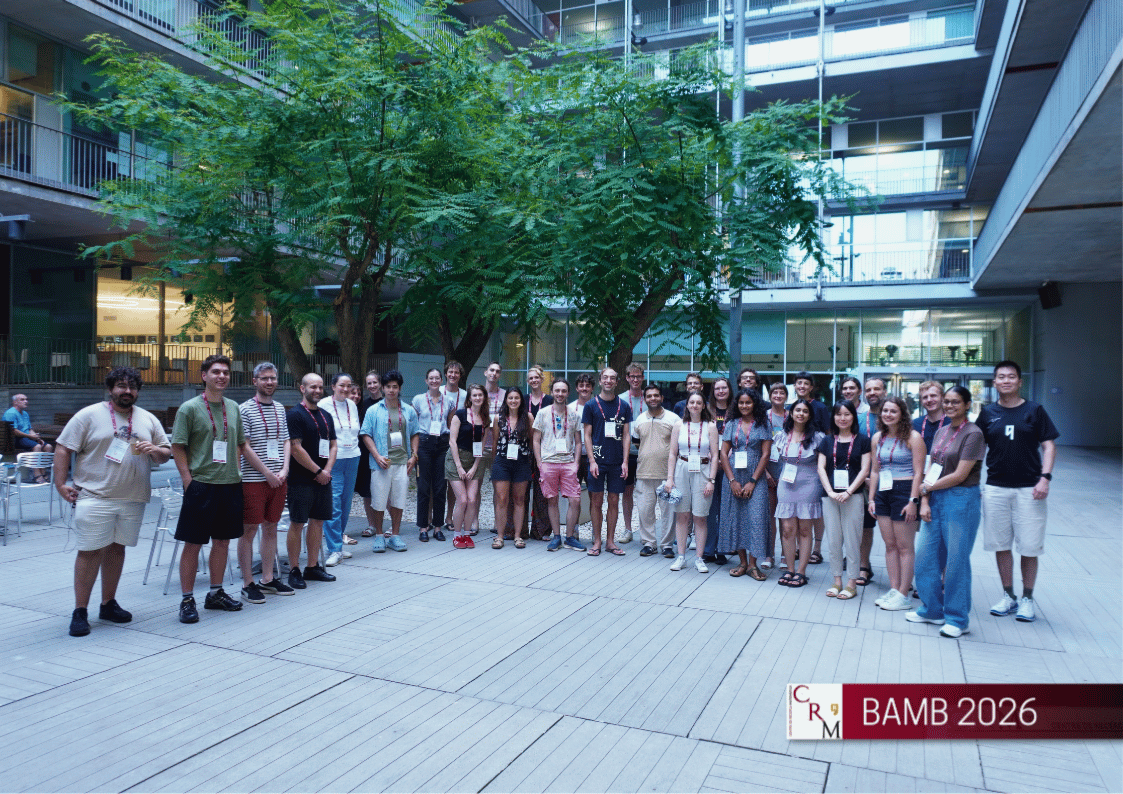
The CRM organises the 2026 Barcelona Summer School for Advanced Modeling of Behavior
The Centre de Recerca Matemàtica held the sixth edition of BAMB!, the Barcelona Summer School for Advanced Modeling of Behavior, from 12 to 23 July 2026 at the Parc de Recerca Biomèdica de Barcelona. Thirty early-career researchers from fourteen countries followed...