
Imagine you hear a song you loved years ago. The same rush of feeling returns, as if no time had passed since the first time those notes hit you. It’s tempting to believe that this reaction is etched into the brain, as unchanging as stone. For decades, that was the reassuring story of neuroscience: once learned, a memory was thought to sit neatly in place, locked into a fixed neural circuit; a tidy library of patterns, silent until summoned.
The truth, though, is much less tidy.
In Current Opinion in Neurobiology, a review titled “Statistical learning and representational drift: A dynamic substrate for memories” challenges that long-standing belief. Written by Jens-Bastian Eppler (Centre de Recerca Matemàtica), Matthias Kaschube (Goethe University Frankfurt), and Simon Rumpel (University Medical Center Mainz), the paper confronts a paradox at the heart of brain science: if neurons and synapses are in constant flux, how is it that perception and memory feel so stable?
That mismatch is what scientists call representational drift. To us, “memories feel stable,” Eppler says, “and in our behaviour they are. If you learn something as a child, you will often remember it for the rest of your life. But we have no idea how this stability emerges.” For a long time, the dominant view was that the brain stored memories in circuits that stayed put, changing only when something new was learned. “Researchers have now found that if you see the same thing on different days, the activity in your brain is different,” Eppler explains. “You look at the red traffic light; you still know what it is, but in your brain, different sets of neurons are active.”
Hints of this phenomenon first appeared in the 2000s, as methods weren’t strong enough to prove it before that. Scientists could only record activity for a single day in an animal before the experiment ended. “Now,” Eppler notes, “we can follow brain activity over longer periods, and everywhere people have looked, there is this representational drift.” The term itself only gained traction in recent years.
“The brain is so unstable, and at the same time, the behaviour is stable. For me, there’s a huge paradox.”
So, what explains the paradox: neurons changing, memories stable? Eppler points to synaptic plasticity, the way connections between neurons constantly shift. “Hebbian plasticity is often described as ‘neurons that fire together, wire together.’ That means that if two neurons are active together, they will form a stronger connection between them. And this is happening all the time in our brain.” Each new sound, image, or movement leaves its trace, altering the network. In the review’s terms, stability reflects a balance between Hebbian learning and stochastic synaptic ‘temperature,’ which sets how much the network wanders.
Over time, some neurons fire for multiple experiences, overlapping patterns reshape the synapses, and the whole system drifts. “If you see something often, then the connections are strengthened a lot,” Eppler says. This is what neuroscientists call statistical learning: the brain quietly tracking how often things occur together, an idea first developed to explain how infants learn language by hearing sounds again and again.
Here lies the key: what remains stable is not the individual activity patterns, but their similarities. As Eppler puts it, “People discovered everything is changing. And then they looked for similarity maps.” He gives the example of colours: “red and orange may activate completely different neurons from one day to the next, but across days, orange is always closer to red than to blue. The similarities are stable, not the activities themselves.”
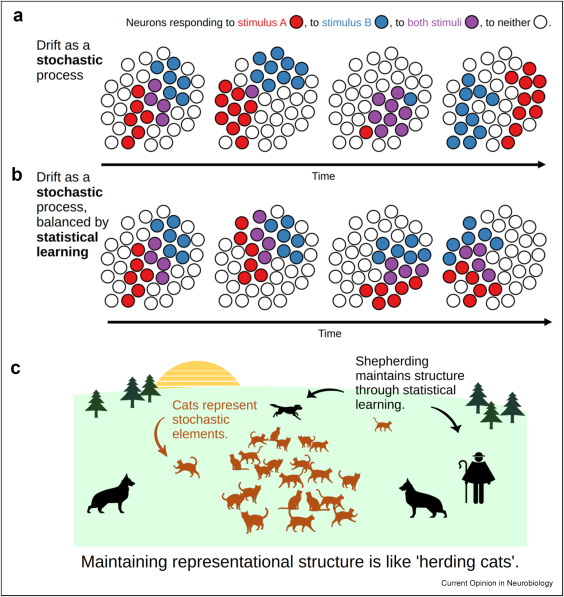 To explain how order emerges amid chaos, the research team used a very original image: herding cats: “In this metaphor, the cats are the stochastic changes; there’s always something changing randomly. The shepherds that are herding the cats would be the statistical learning. They will never achieve a 100% perfect job; the activities are still changing, but they manage to do well enough. The overall structure of the herd is maintained.” Tellingly, the overall map can re-form after disruptions; even when specific neurons are ablated, the relational structure recovers within days.
Even emotions like boredom fit into the picture. “Boredom is a very strong negative emotion; if we are bored, we don’t get enough input. And this makes our brain’s memories unstable. The idea is boredom makes us seek new experiences, and then just by the statistics of these experiences, our activity is kept together.” In other words, boredom pushes us back into situations where the shepherd can herd the cats again.
The same framework changes how we think about forgetting. Instead of a flaw, it may be the natural result of drift: random changes slowly erode some traces, while new Hebbian learning overwrites others. “It allows the system to clear out information that’s no longer relevant,” Eppler says.
All of this requires mathematics to make sense. “Some years ago, people could only measure single cells, and then you didn’t need a lot of maths; you could say it’s on, it’s off, you give a firing rate. But now you have these massive recordings of thousands of neurons, you need some clear way to describe them,” Eppler says. “The underlying thing that is generating them is a network. Not every possibility is achievable; it is highly constrained by the network. And here, I think, there’s a huge contribution mathematical concepts can make.”
That contribution is not just technical. It reshapes how we picture memory itself. Not a fixed photograph tucked away, but something more like a melody played by an orchestra in constant flux, with musicians changing seats and instruments but the tune persisting.
“Memories feel stable to us,” Eppler reflects. “But that stability is not because the brain is static. It’s because it keeps learning, all the time, even when nothing new seems to happen.”
Citation:
Eppler, J.-B., Kaschube, M., & Rumpel, S. (2025). Statistical learning and representational drift: A dynamic substrate for memories. Current Opinion in Neurobiology, 87, 102022. https://doi.org/10.1016/j.conb.2025.102022
crm researchers
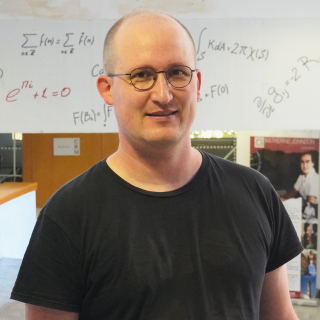
Jens-Bastian Eppler completed his BSc and MSc in Physics at Goethe University Frankfurt, including a year abroad at Copenhagen University. He received his PhD in Physics from Goethe University in 2022, affiliated with the Frankfurt Institute for Advanced Studies, where he specialized in theoretical and computational neuroscience. After his doctorate, he remained in Frankfurt as a postdoctoral researcher until 2024, spending two months at the Institut de la Vision in Paris in 2023. Since 2024, he has been a postdoctoral researcher in Alex Roxin’s lab at the Centre de Recerca Matemàtica (CRM).
Subscribe for more CRM News
|
|
CRM CommPau Varela
|

When the reward comes within reach, the brain changes what it compares
As the tokens piled up, choices got faster and more accurate at the same time. The yardstick for judging each offer had moved.CRM CommPau VarelaCRMComm@crm.catGet the latest CRM news and activities in your inbox.Recent newsletters →Two subjects...

Almost every automaton can be reset with a short word
Guillaume Chapuy (Université Paris Cité, CNRS) and Guillem Perarnau (UPC, CRM) have shown that a random finite automaton with n states can, with high probability, be reset by a word of length of order √n log n. The result, published in ACM Transactions on Algorithms, pins the exponent at 1/2, the lower end of a decade of numerical estimates, and addresses the random version of the synchronization problem behind a conjecture Ján Černý posed in 1964 and which still remains open.
Exposició ‘Les matemàtiques de Gaudí’
CRM quod erat demonstrandum | 48
ADA: Decoding Brain Signals Misaligned in Time
The study addresses a key limitation of current brain decoding techniques: the difficulty of interpreting internal mental processes whose temporal dynamics vary from trial to trial.Decoding what is happening in a person’s mind from their brain activity is one of the...
Rare curves, many points: Christophe Ritzenthaler and Rachel Pries on their research and the work around it
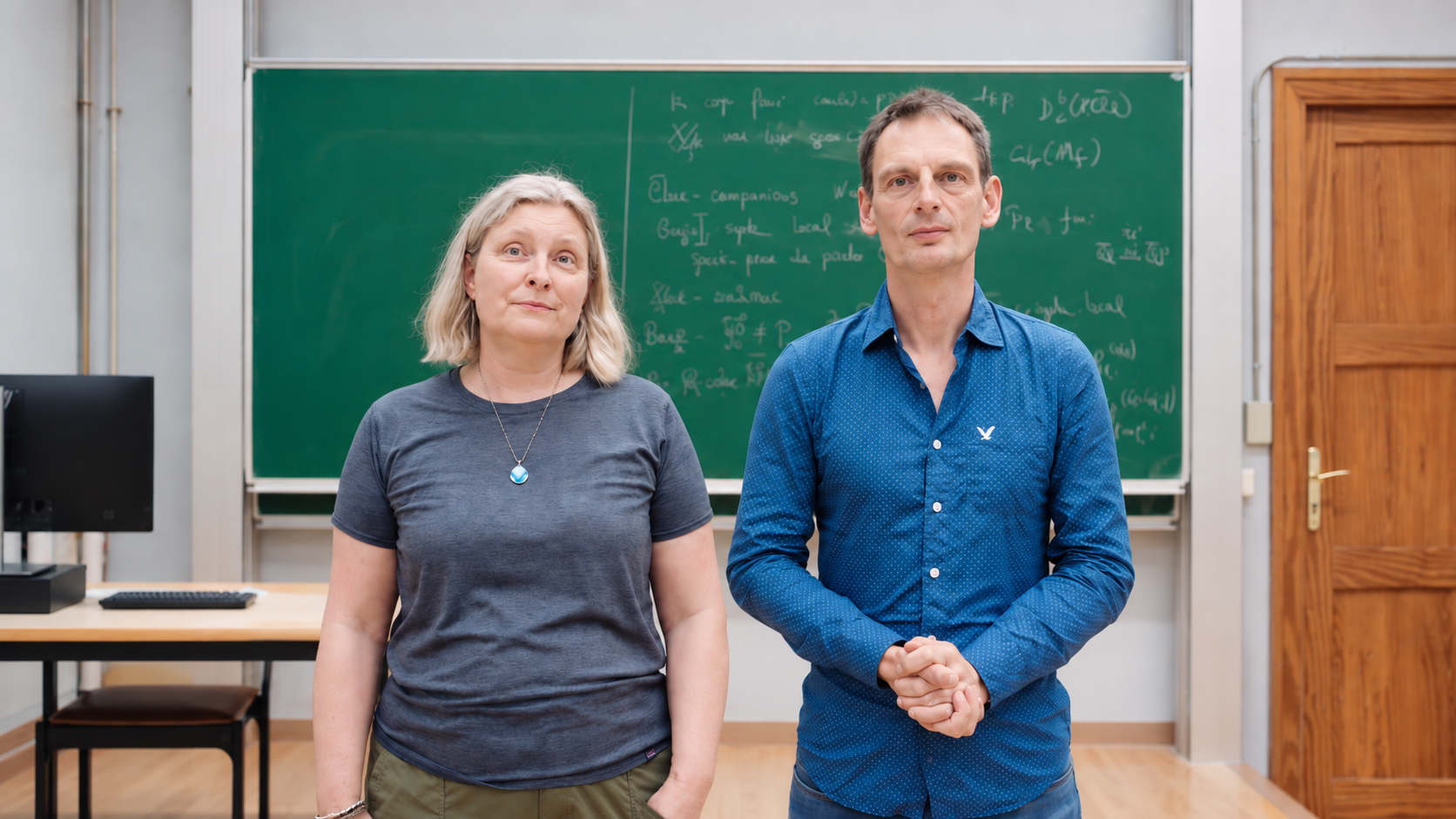
Christophe Ritzenthaler (Université de Rennes) and Rachel Pries (Colorado State University) both work on curves over finite fields: he hunts curves with as many points as possible, she hunts curves that almost never occur. In conversation with the CRM during their...
Call open for the 2027 Ferran Sunyer i Balaguer Prize
The Ferran Sunyer i Balaguer Foundation is accepting submissions for its 2027 prize, which awards 15,000 euros and publication in Birkhäuser's Progress in Mathematics series to an expository monograph on an active area of mathematical research. The deadline is 27...
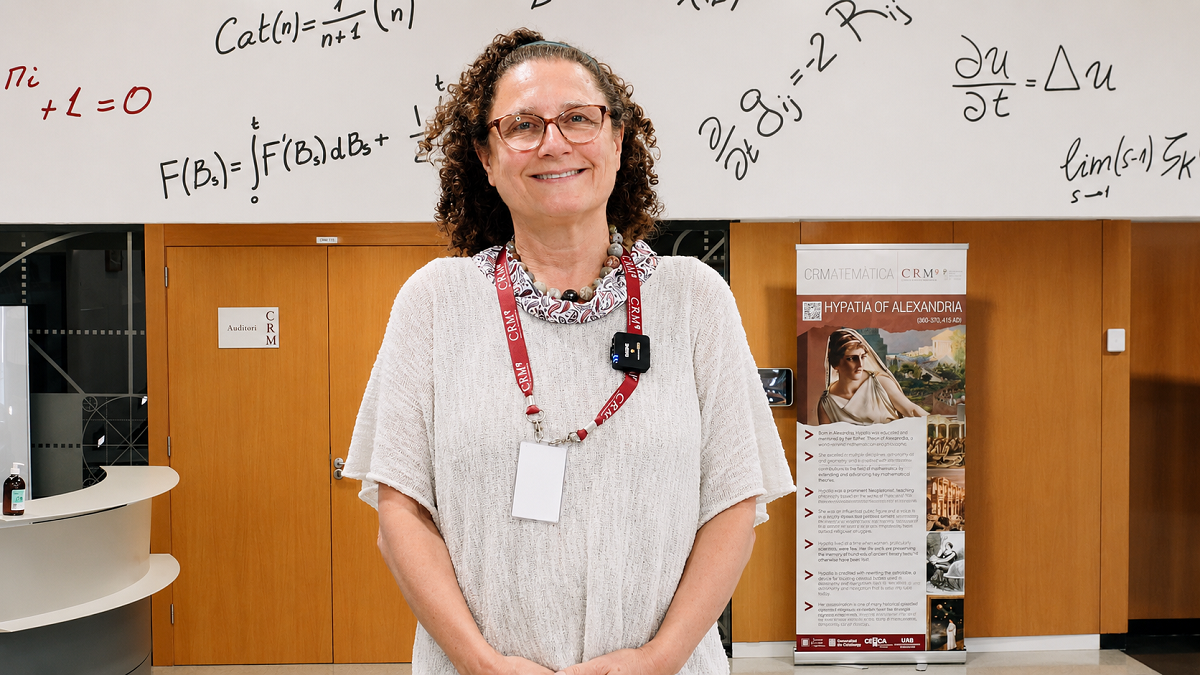
Susanna Terracini delivers the CRM Colloquium 2026
Susanna Terracini (Università di Torino) delivered the CRM Colloquium 2026 on 14 July, presenting a rigidity result for Kepler billiards obtained with Stefano Baranzini, Vivina Barutello and Irene De Blasi. She was at the centre as a member of the CRM Scientific...
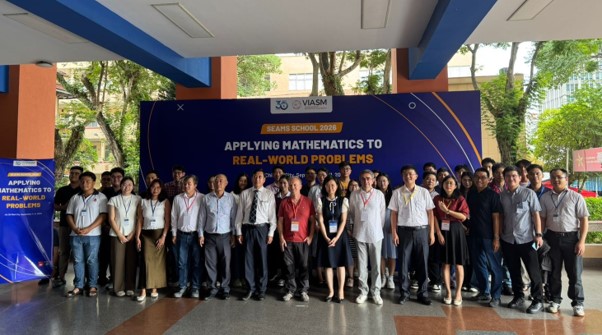
Ho Chi Minh City hosts the SEAMS School on applying mathematics to real-world problems
Students from across the region took courses and worked on group projects at a school co-organised by CRM researcher Tim Myers.CRM CommPau VarelaCRMComm@crm.catGet the latest CRM news and activities in your inbox.Recent newsletters →Between 4 and...

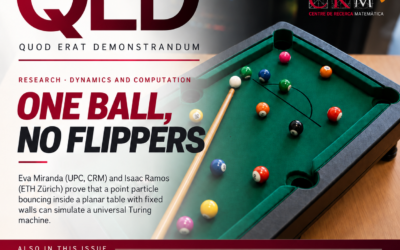
A single ball on a fixed table can compute: Eva Miranda and Isaac Ramos prove that two-dimensional billiards are Turing complete
Eva Miranda (UPC, CRM) and Isaac Ramos (ETH Zürich) show that a point particle bouncing inside a planar table with fixed walls can simulate a universal Turing machine, settling a question Cristopher Moore left open in 1990. The result grew out of a master’s project...
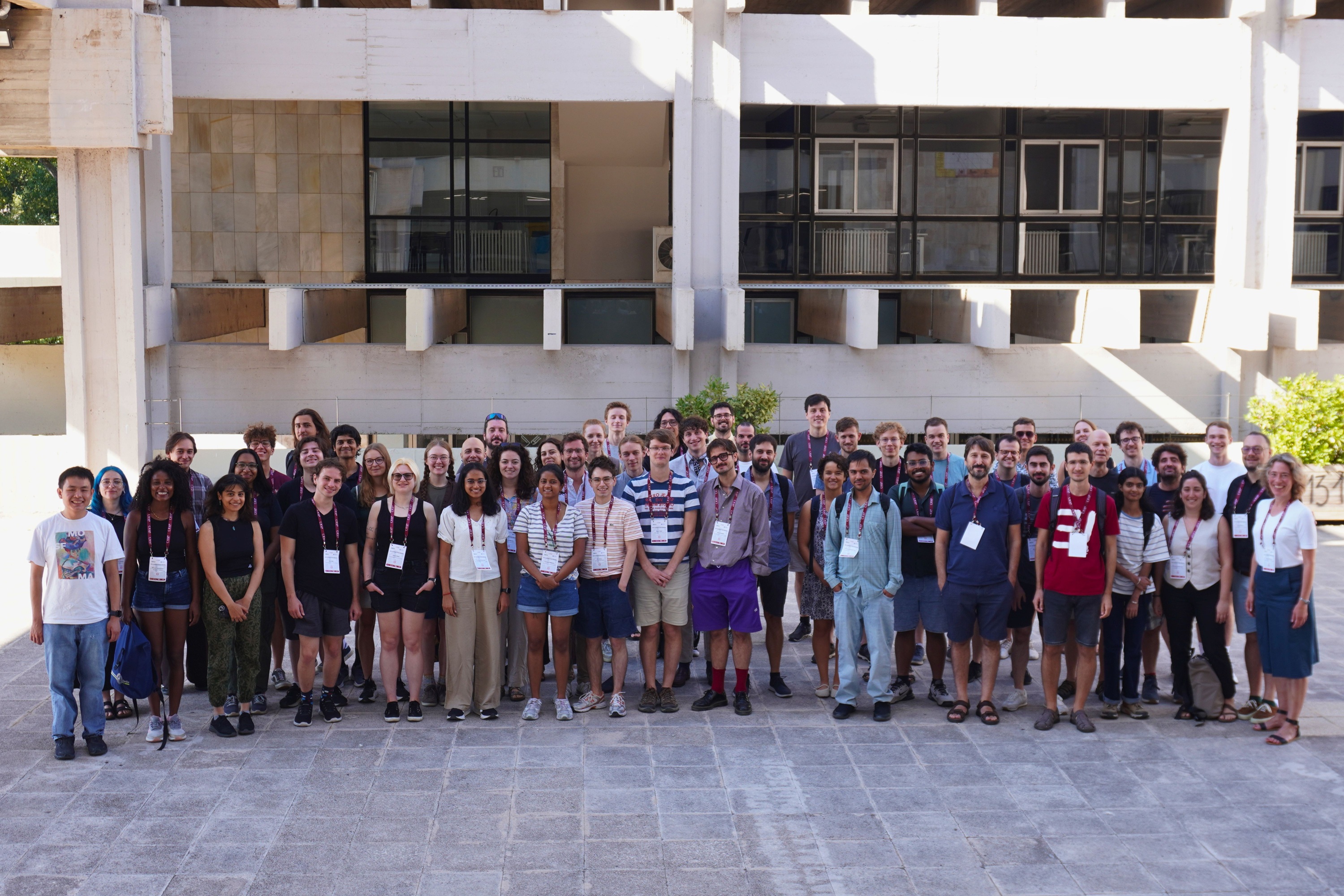
BMS-BGSMath Junior Meeting 2026: Barcelona and Berlin Strengthen Scientific Ties
From 2 to 4 September 2026, the Centre de Recerca Matemàtica (CRM) hosted the BMS-BGSMath Junior Meeting 2026, a three-day event jointly organised by the Berlin Mathematical School (BMS) and the Barcelona Graduate School of Mathematics (BGSMath), with the Centre de...
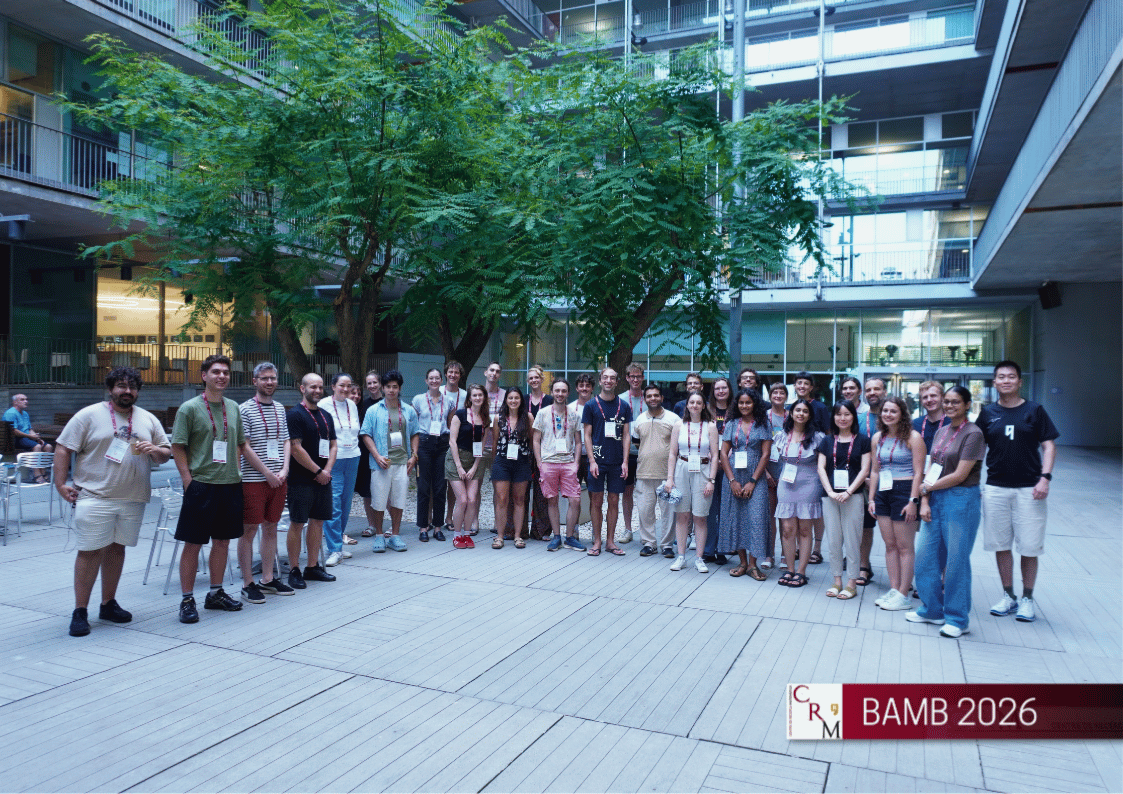
The CRM organises the 2026 Barcelona Summer School for Advanced Modeling of Behavior
The Centre de Recerca Matemàtica held the sixth edition of BAMB!, the Barcelona Summer School for Advanced Modeling of Behavior, from 12 to 23 July 2026 at the Parc de Recerca Biomèdica de Barcelona. Thirty early-career researchers from fourteen countries followed...