
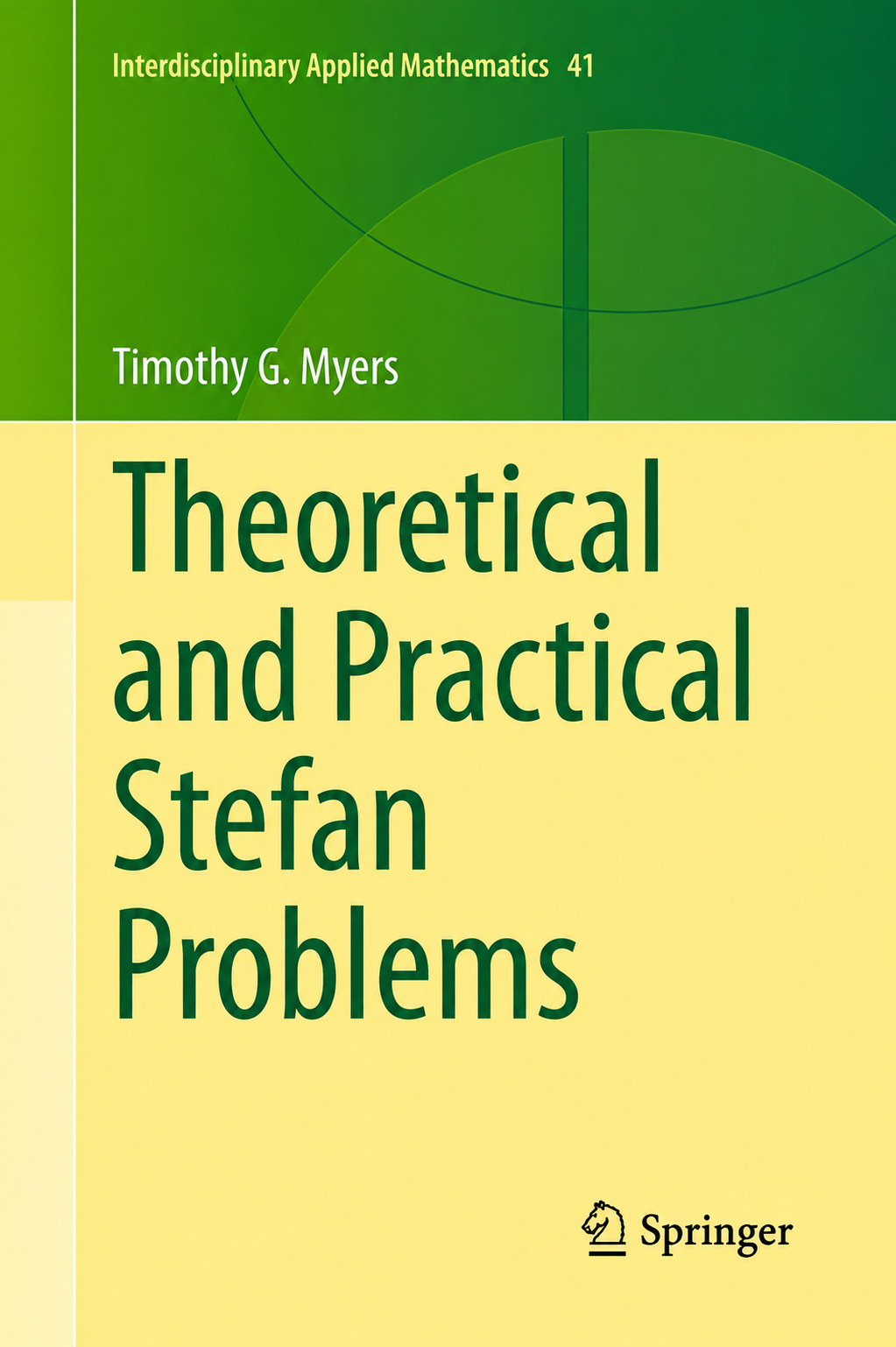
Springer has published Theoretical and Practical Stefan Problems, by Tim Myers, Senior Researcher at the CRM. The book appears as volume 63 of the Interdisciplinary Applied Mathematics series and is intended for graduate students and researchers in applied mathematics, engineering, physics and chemistry.
Stefan problems describe processes in which a material changes phase: ice melting into water, a liquid solidifying, a crystal growing. What makes them mathematically awkward is that the boundary between the two phases moves, and its position is not given in advance. It is part of the unknown. The heat equation must be solved in a domain whose shape depends on the very solution being sought. The class of problems takes its name from Josef Stefan, the Austrian physicist who studied the growth of polar ice at the end of the nineteenth century, and it has since become a standard framework for phase-change processes across the physical sciences and industry.
The first three chapters set out the formulation of the classical Stefan problem together with exact and approximate solution methods, and introduce the applied techniques used later in the text, among them non-dimensionalisation, perturbation methods and lubrication theory. The remaining chapters move beyond the classical setting to formulations where the material properties or the phase-change temperature are no longer constant.
Throughout, the theory is developed from physical situations. The book treats phase change in the presence of a flowing liquid, in the context of microvalves and of ice accretion on aircraft, as well as the solidification of a supercooled liquid and the melting and growth of nanoparticles and nanocrystals, where the smallness of the sample shifts the phase-change temperature itself. A closing chapter considers what happens when heat no longer flows according to Fourier’s law, a regime relevant at very small scales and very short times. A collection of hints to the exercises completes the volume, which runs to 200 pages.
Tim Myers is a Senior Researcher at the CRM, Adjunct Professor at the Universitat Politècnica de Catalunya and Adjunct Professor of Industrial Mathematics at the University of Limerick. He has worked at universities in the United Kingdom, South Africa, Australia, Canada, Argentina and South Korea, coordinates the European Study Groups with Industry, and is involved in several initiatives to bring practical mathematics to the Global South. His current research is focussed on environmental applications.
Theoretical and Practical Stefan Problems. Timothy G. Myers. Interdisciplinary Applied Mathematics 63, Springer, 2025. DOI: 10.1007/978-3-032-04826-4.
|
|
CRM CommPau Varela
|
Newsletter
Get the latest CRM news and activities delivered to your inbox
Subscribe now
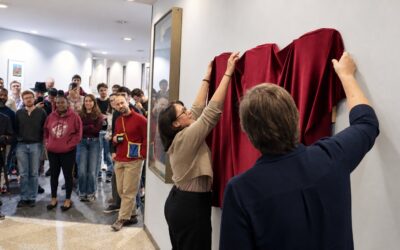
The CRM opens the academic year and unveils its Directors’ Gallery
A review of the year, the Communication Plan 2026–2030 and three research talks filled the morning of 19 October.The unveiling of the Directors’ Gallery.CRM CommPau VarelaCRMComm@crm.catGet the latest CRM news and activities in your inbox.Recent...
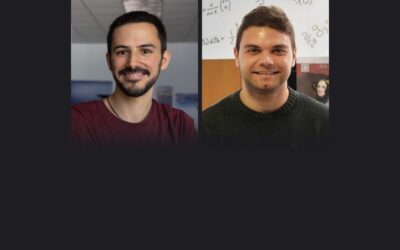
The CRM Mentoring Programme, as Told by One of Its Pairs
PhD student Joaquim Duran and mathematician Robert Cardona, one of the pairs in the CRM Mentoring ProgrammeJoaquim Duran (left) and Robert Cardona.CRM CommPau VarelaCRMComm@crm.catGet the latest CRM news and activities in your inbox.Recent...
When the reward comes within reach, the brain changes what it compares
As the tokens piled up, choices got faster and more accurate at the same time. The yardstick for judging each offer had moved.CRM CommPau VarelaCRMComm@crm.catGet the latest CRM news and activities in your inbox.Recent newsletters →Two subjects...

Almost every automaton can be reset with a short word
For a random automaton with n states, a word of about √n log n letters is almost always enough to reset it.CRM CommPau VarelaCRMComm@crm.catGet the latest CRM news and activities in your inbox.Recent newsletters →Picture a conveyor belt carrying...
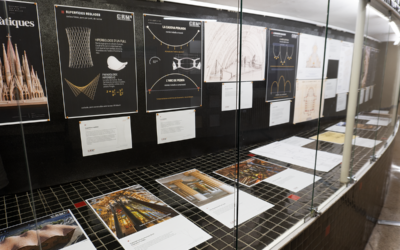
Exposició ‘Les matemàtiques de Gaudí’
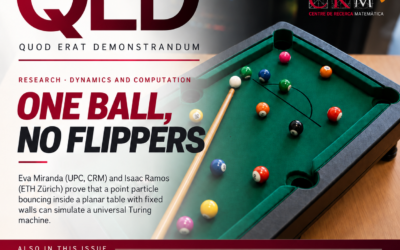
CRM quod erat demonstrandum | 48

ADA: Decoding Brain Signals Misaligned in Time
The study addresses a key limitation of current brain decoding techniques: the difficulty of interpreting internal mental processes whose temporal dynamics vary from trial to trial.Decoding what is happening in a person’s mind from their brain activity is one of the...
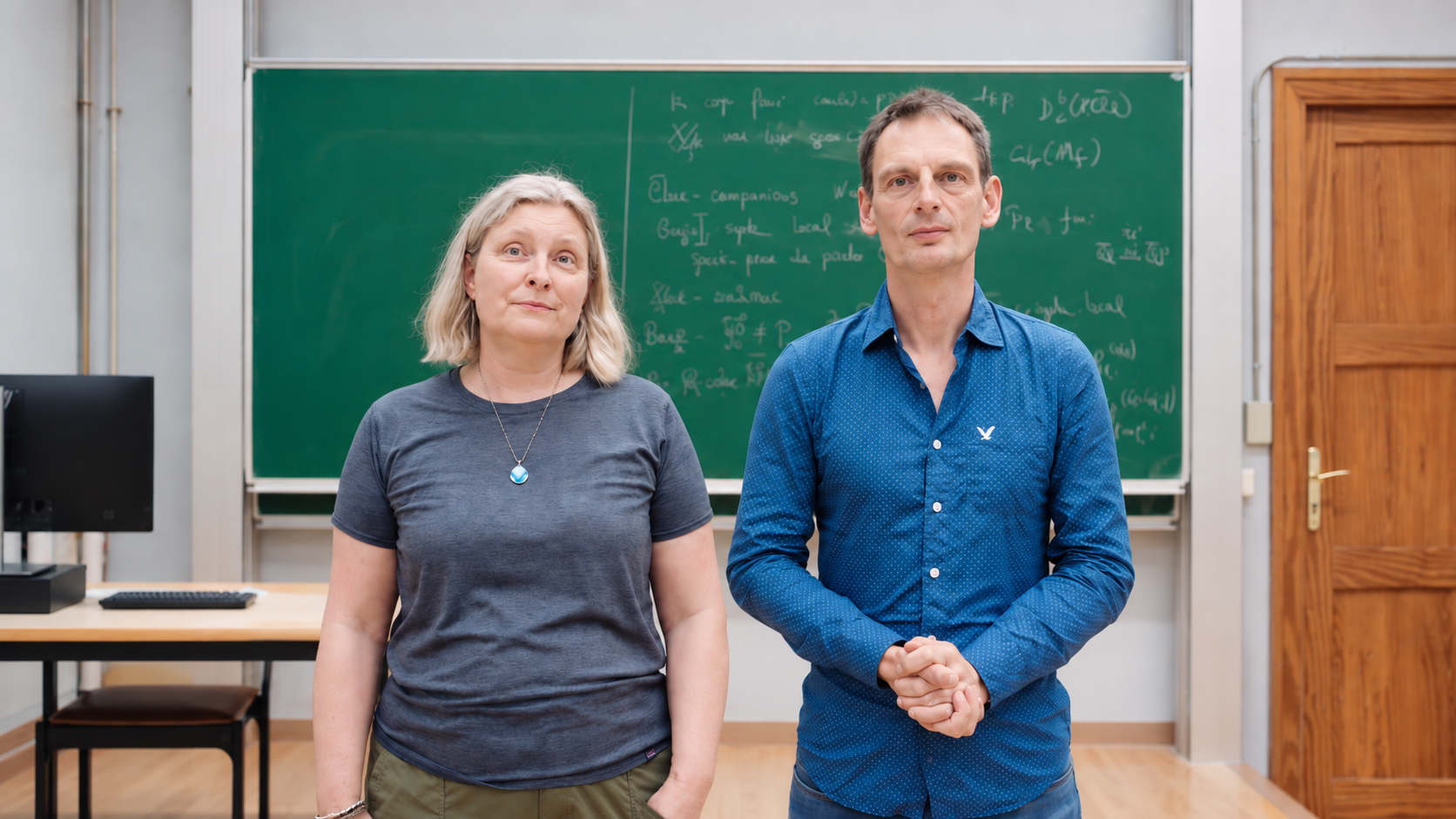
Rare curves, many points: Christophe Ritzenthaler and Rachel Pries on their research and the work around it
Christophe Ritzenthaler (Université de Rennes) and Rachel Pries (Colorado State University) both work on curves over finite fields: he hunts curves with as many points as possible, she hunts curves that almost never occur. In conversation with the CRM during their...
Call open for the 2027 Ferran Sunyer i Balaguer Prize
The Ferran Sunyer i Balaguer Foundation is accepting submissions for its 2027 prize, which awards 15,000 euros and publication in Birkhäuser's Progress in Mathematics series to an expository monograph on an active area of mathematical research. The deadline is 27...
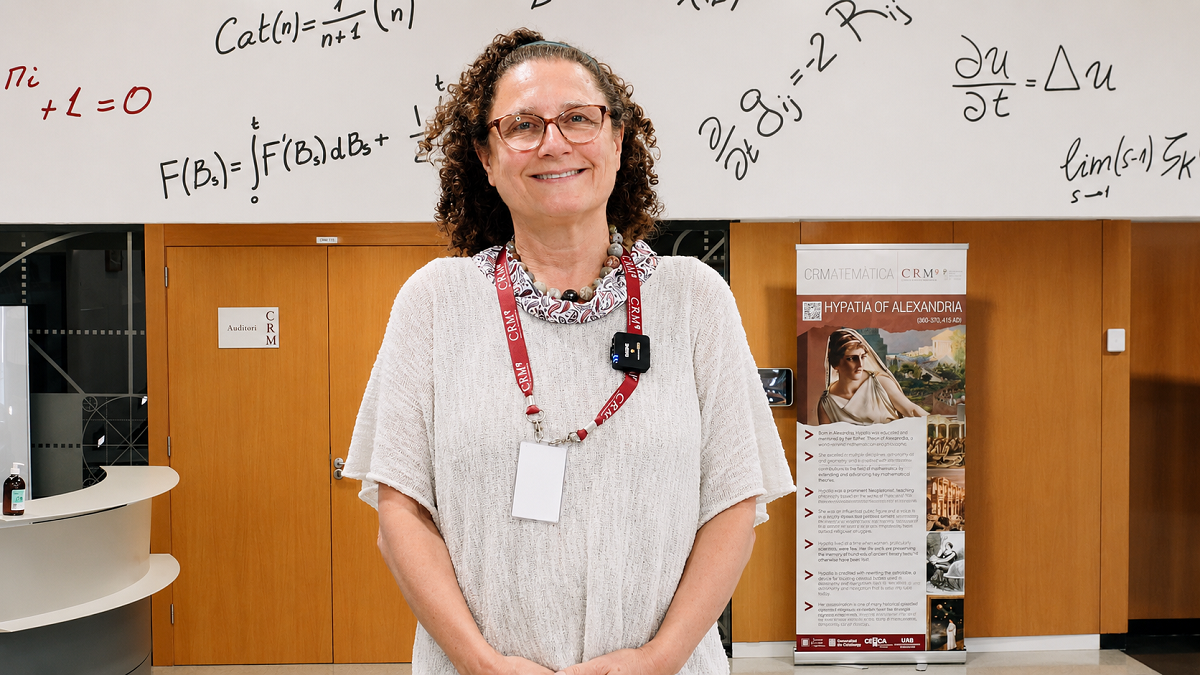
Susanna Terracini delivers the CRM Colloquium 2026
Susanna Terracini (Università di Torino) delivered the CRM Colloquium 2026 on 14 July, presenting a rigidity result for Kepler billiards obtained with Stefano Baranzini, Vivina Barutello and Irene De Blasi. She was at the centre as a member of the CRM Scientific...
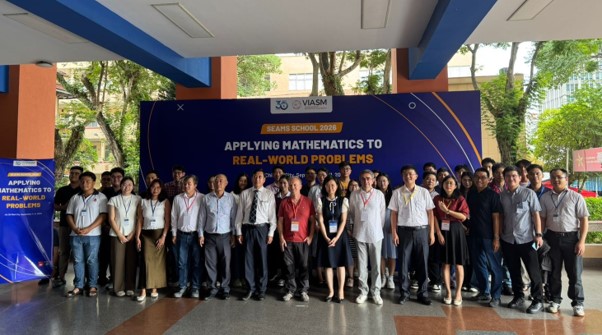
Ho Chi Minh City hosts the SEAMS School on applying mathematics to real-world problems
Students from across the region took courses and worked on group projects at a school co-organised by CRM researcher Tim Myers.CRM CommPau VarelaCRMComm@crm.catGet the latest CRM news and activities in your inbox.Recent newsletters →Between 4 and...

A single ball on a fixed table can compute: Eva Miranda and Isaac Ramos prove that two-dimensional billiards are Turing complete
Eva Miranda (UPC, CRM) and Isaac Ramos (ETH Zürich) show that a point particle bouncing inside a planar table with fixed walls can simulate a universal Turing machine, settling a question Cristopher Moore left open in 1990. The result grew out of a master’s project...